
In creating the all-new high-performance Ford GT, the pioneers behind the supercar designed it not only to win races but also to serve as a test bed for new technologies and ideas for future vehicles across Ford’s vehicle lineup.
“When we began work on the all-new Ford GT in 2013, the team had three goals,†said Raj Nair, Ford executive vice president of Product Development and chief technical officer. “The first was to use it as a training ground for our engineers as we develop future engine technology and stretch our understanding of aerodynamics. Then, to push the boundaries of advanced material usage, such as lightweight carbon fiber. Finally, we set out to win the Le Mans 24 Hours, referred to by many as the ultimate test of endurance and efficiency.â€
At the same time the team was developing the GT, Ford combined several of its performance teams – Ford SVT, Team RS, Ford Racing, performance vehicle parts and merchandise licensing – into a single group called Ford Performance.
“Without this kind of integrated teamwork and combined organization, it would have been impossible to deliver the all-new Ford GT in its current form,†said Dave Pericak, global director, Ford Performance. “This kind of collaboration was critical to not only bringing Ford GT back to life but for experimenting with the kind of innovations needed to create the ultimate supercar.â€
GT has proven power to inspire. The 2005 Ford GT, for instance, featured a lightweight aluminum alloy body that helped reduce weight to improve performance.
Lessons learned from its production led to the innovative use of high-strength aluminum alloy in today’s Ford F-Series pickup trucks and the all-new Ford Expedition full-size SUV – shedding hundreds of pounds of weight, while also improving capability, performance and fuel efficiency.

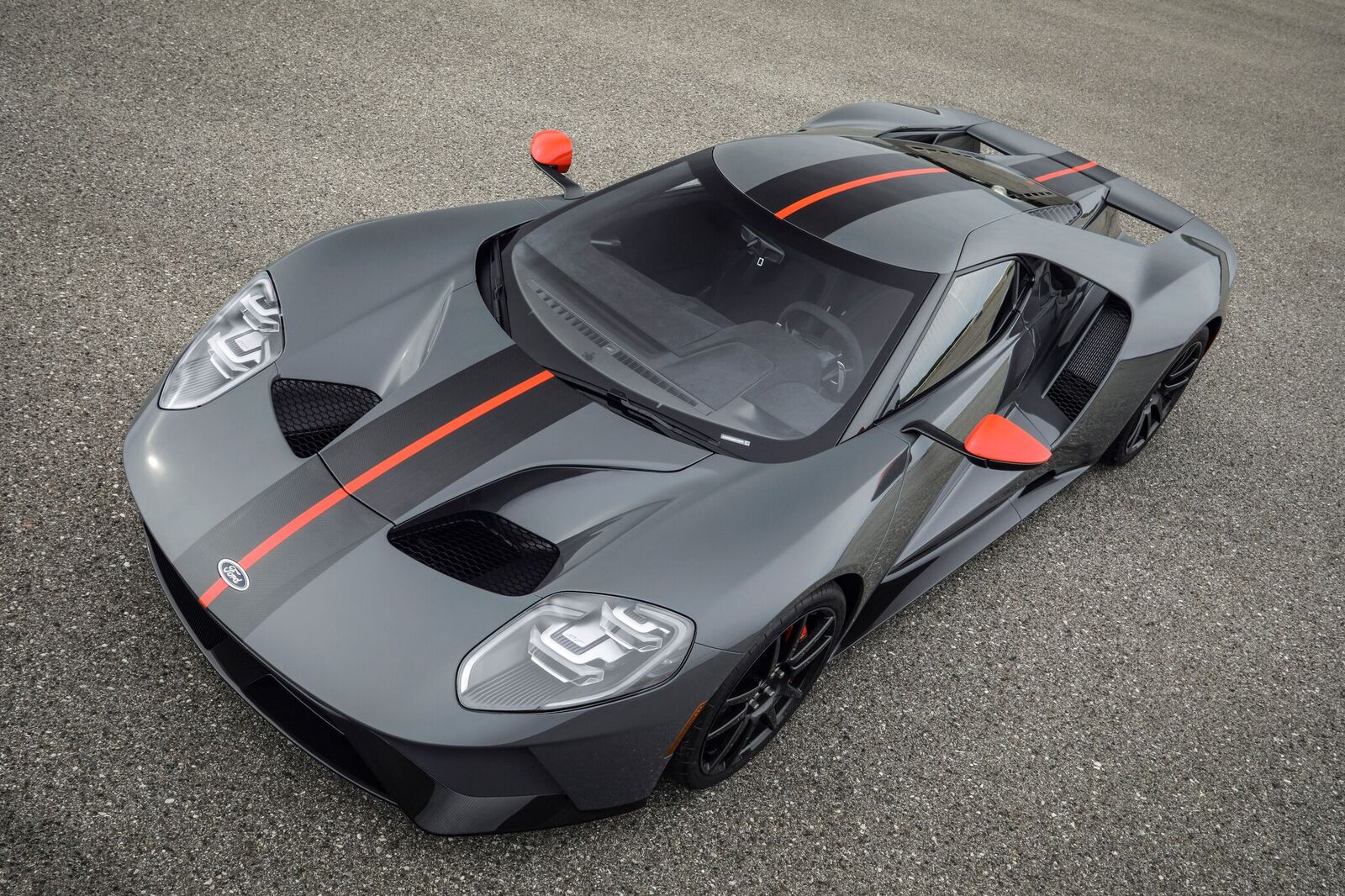
While GT looks fast standing still, the team optimized every shape to make it as aerodynamic as possible.
A key goal was to reduce drag and optimize downforce – which helps give the supercar stability and grip on the track while accelerating, cornering and braking.
GT’s aerodynamics change on demand to meet varying driving conditions, thanks to moveable elements around the body, including special ducts in the front, and a large deployable wing. The flaps open and close depending on whether GT’s wing is up or down, so the car remains aerodynamically balanced from front to back at all speeds. When the wing is up, the ducts close to increase downforce; when the wing is down, the ducts open to decrease downforce.
The supercar’s wing includes all-new Ford technology – a patent-pending design that changes the shape of the airfoil for maximum efficiency when fully deployed. The unique design also includes a small gurney flap which, when combined with the shape change, results in a 14 percent improvement in overall efficiency.
Even the engine helps GT’s aerodynamics. The compact six-cylinder design of the car’s EcoBoost® engine allowed the team to taper its fuselage to more efficient dimensions than a larger V8 would have allowed. In addition, the low placement of the engine’s turbochargers and outboard placement of the turbo intercoolers ahead of the rear wheels help to taper the fuselage around the engine.
The GT’s aerodynamics produce positive downforce in all conditions. At high ride height, the downforce has a balance of 30 percent front. In low ride height, the downforce balance is maintained at 29 percent front.

Carbon fiber is an important new element that helps GT deliver both weight savings and sleek body shapes in ways not possible with steel or aluminum.
Working with partners, including Multimatic and DowAksa, Ford is developing new ways to enable future faster, high-volume production of carbon fiber parts.
For example, GT’s iconic flying buttresses that extend from the roof to the rear fenders wouldn’t be possible in steel or aluminum because of the limitations of conventional metal stamping. Yet, carbon fiber can be shaped into complex geometric designs because it’s cut to a specific shape as a cloth and strengthened by curing at a high temperature.
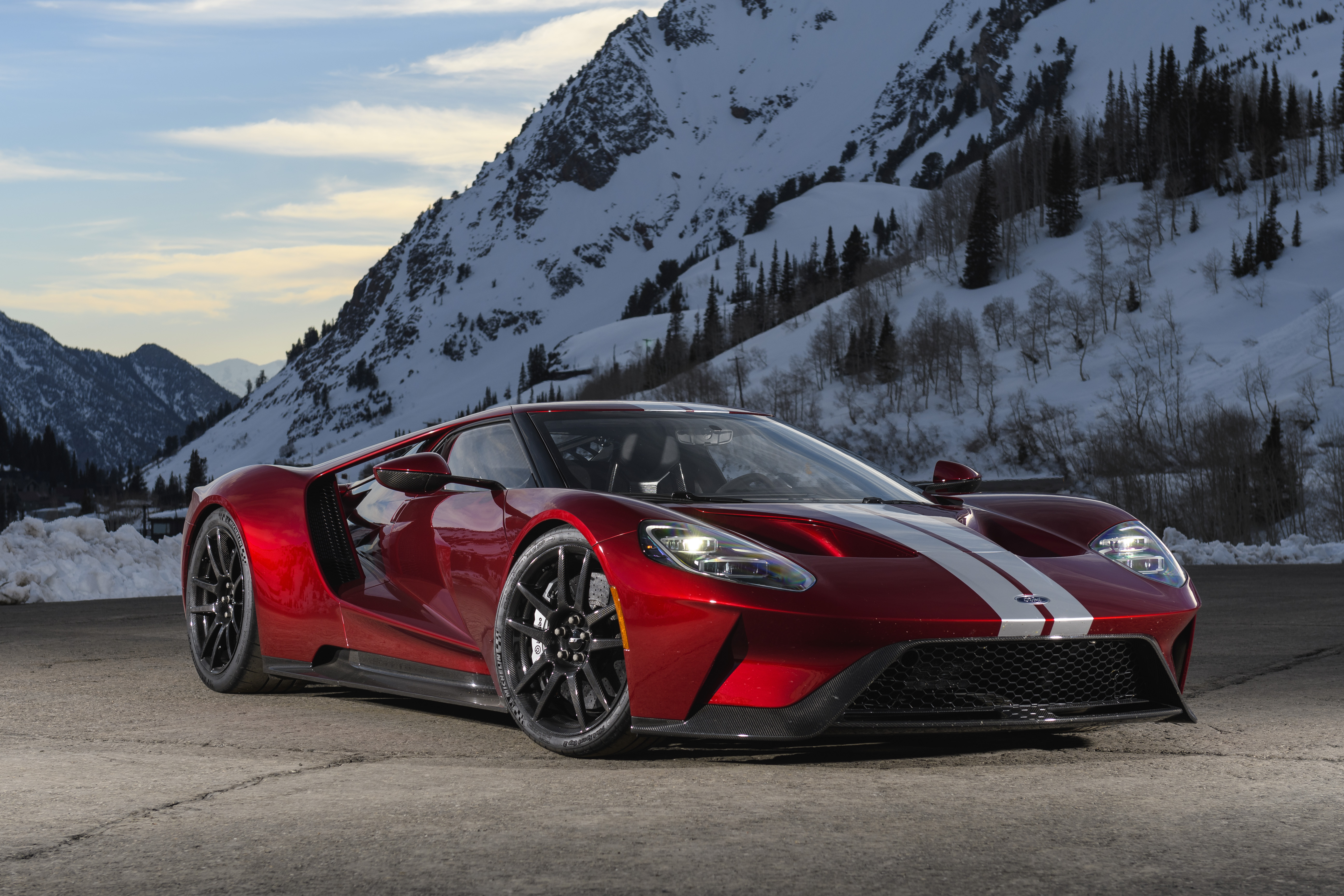
Ford GT’s 3.5-liter EcoBoost engine is the company’s most powerful EcoBoost ever, delivering 647 horsepower. It was developed alongside the GT race engine and the 3.5-liter EcoBoost engine used in the F-150 Raptor high-performance off-road pickup, which shares almost 60 percent of its parts with GT’s engine.
For instance, during racing, the test engine’s crankshafts in the Daytona Prototype were cracking under grueling conditions. With little time to get ready for the Sebring endurance race that year, the team made a key decision to substitute the Daytona prototype’s race crankshaft with a pre-production F-150 Raptor crankshaft. The Daytona prototype won its first race at Sebring that year.
“We pushed the engine’s limits beyond what we might consider in traditional development programs, which is important as we continue to advance EcoBoost technology as a centerpiece of the company’s global lineup,†said Bob Fascetti, Ford vice president, powertrain engineering.
The team also created innovative anti-lag turbo technology that can help maximize the GT’s ability to power out of corners. This technology works by keeping the throttle open when the driver is not stepping on the gas pedal. The fuel injectors are off but turbo speed and boost are maintained for faster engine response and acceleration as soon as they hit the gas.
Further improving engine performance, GT features an all-new port and direct dual fuel-injection setup to enhance engine response. The engine is paired with a responsive seven-speed dual-clutch transaxle for nearly instantaneous gear changes and exceptional driver control.

“All of the weight savings and engine advancements served a singular purpose – creating the fastest, most-efficient Ford GT ever,†Pericak said. “Once that was achieved, we reinvested some of those weight savings in truly innovative technology that made the car even faster and more fun to drive.â€
That includes GT’s hydraulic suspension, which changes ride height with a turn of the knob, which adjusts drive modes.
The suspension lowers the supercar from normal mode into track mode – a 50 millimeter or nearly 2-inch difference the driver can see and feel. Track mode raises the wing and closes the front splitter ducts for optimal downforce for spirited, closed-course driving.
When the GT changes modes from high to low ride height, changes in spring rates, matching damper settings, and active aerodynamics, come together to create two unique cars in one.
Another feature of the hydraulic suspension – front-lift mode – helps GT clear speedbumps and driveways. The driver can raise the front of the car on demand at speeds below 25 mph. The system automatically returns to normal lower ride height when it reaches 25 mph.
GT’s role as a technology test bed is evident throughout the supercar, with some innovations, such as carbon fiber lightweighting, serving as longer-term possibilities, while others are hitting showrooms soon. For example, all-digital dashboardtechnology, similar to that in the supercar’s, is available in the 2018 Mustang, and is coming to additional new Ford vehicles.
Additionally, the company’s push into customized driving modes that help customers fit a vehicle’s performance to specific conditions is expanding rapidly. Ford GT’s track mode, also offered in Mustang and other performance models, helps enthusiasts maximize racing performance, while the all-new F-150 Raptor features Baja off-road mode.
As new Ford GTs continue to roll into owner driveways, other Ford customers can expect to find a little bit of the supercar in their future vehicles as well.




Green SM launches 500 electric SUVs in Southern California with company-employed drivers and a fleet it owns.
Green SM has entered the U.S. market with a 500-vehicle electric fleet in Los Angeles, introducing a ride-hailing model built around company-owned cars and full-time drivers. The Vietnamese company is betting that consistent service and an employment-based workforce can help it stand out in a market dominated by Uber and Lyft.
Green SM launches its U.S. ride-hailing service with a fleet of 500 VinFast VF 8 electric SUVs.
A Fleet Built Around the VinFast VF 8
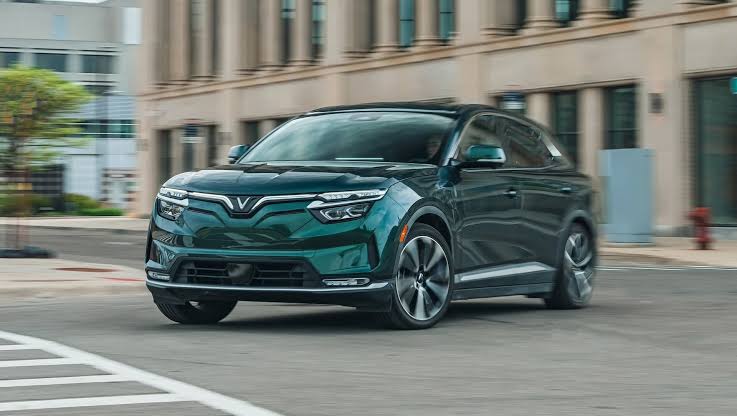
Every vehicle in Green SM’s initial Los Angeles fleet is a five-seat VinFast VF 8 electric SUV. The company says its vehicles are operating across Los Angeles County and extending into Orange County.
Customers can request rides through the Green SM app, call the company’s hotline or hail a vehicle on the street. Fares depend on time and distance, while the company is promoting discounted rides to attract new customers.
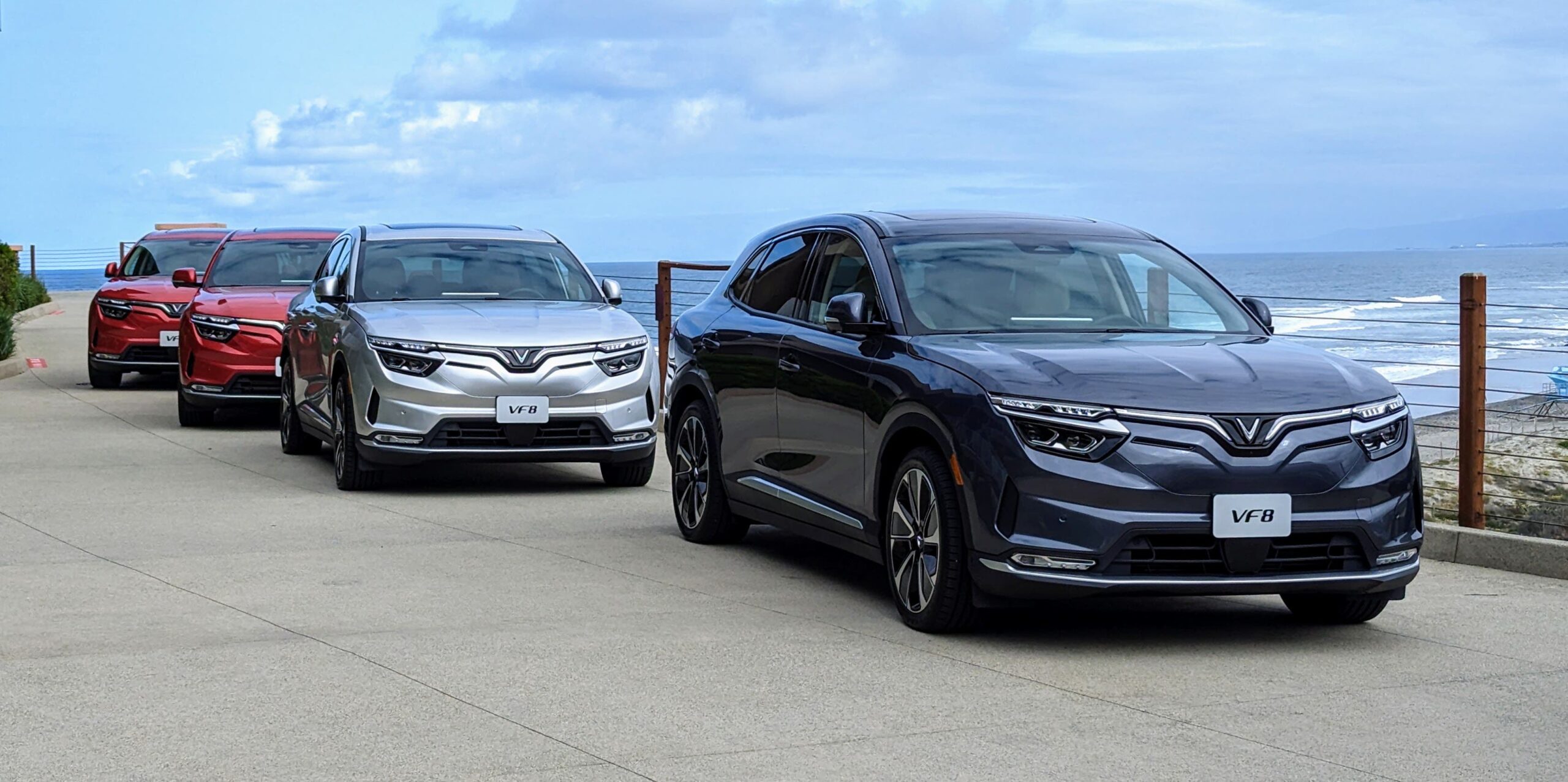
The VF 8 serves as Green SM’s primary vehicle for its Los Angeles operations.
Company Drivers Instead of Gig Workers
Green SM’s main distinction is its employment model. The company owns its vehicles and employs its drivers, providing training, maintenance and scheduled shifts rather than relying on independent contractors using their own cars.
The approach is designed to create a more consistent service experience. Drivers complete a selection and onboarding process before beginning work, while the company manages the vehicles and their upkeep.
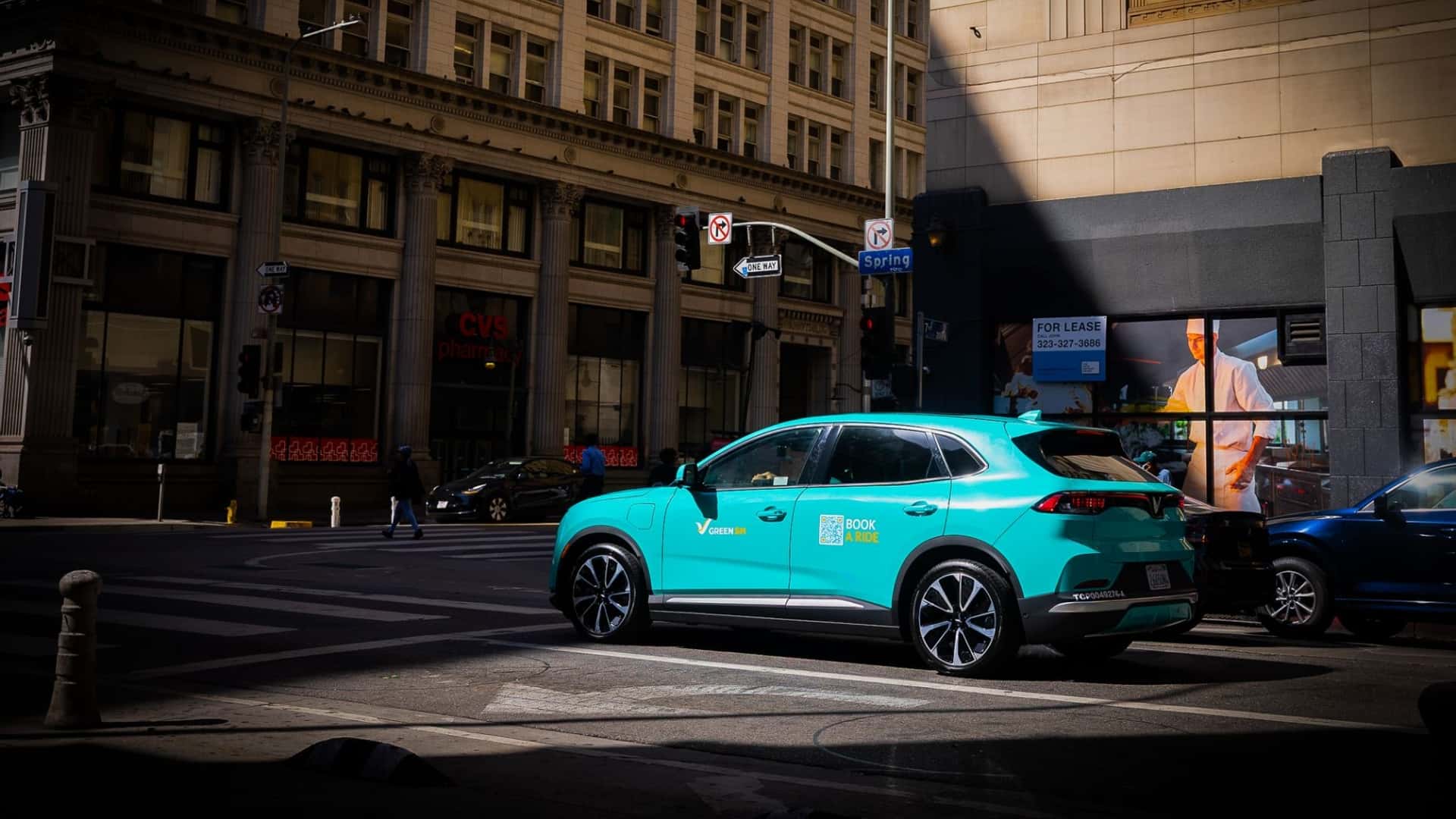
Green SM employs its drivers directly and manages the vehicles used for its ride-hailing service.
Discounts for Early Customers
Green SM is offering new customers 50% off their first five rides, with a maximum discount of $12 per trip. Its Green Pass membership also includes 10 monthly vouchers offering 30% off, capped at $10 per ride.
The company has also identified airport transfers as a potential service. However, the arrangements and timing for operations at Los Angeles International Airport have not been publicly detailed.
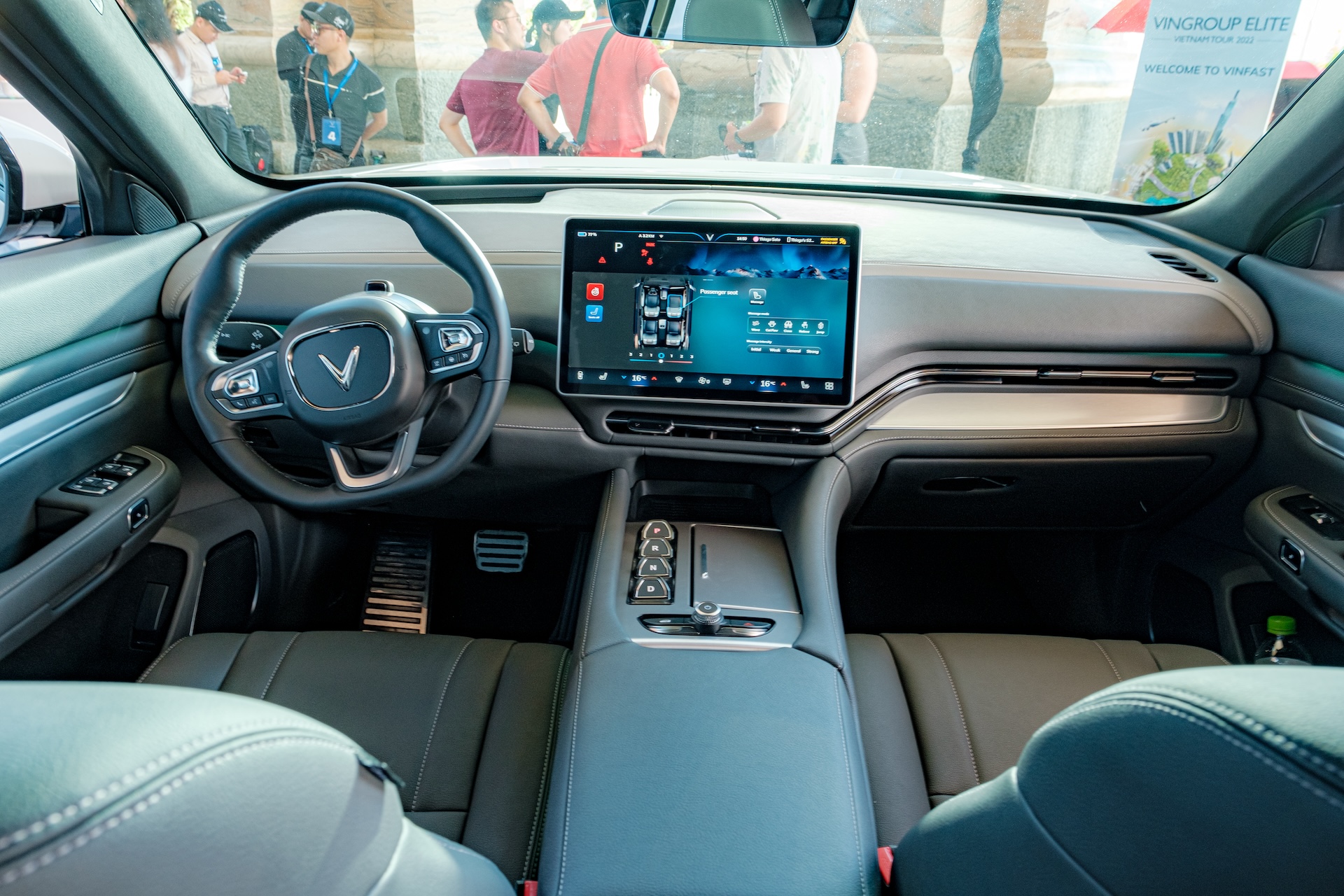
The VF 8’s cabin provides the passenger space used for Green SM’s ride-hailing trips.
Green SM Enters a Competitive Market
Los Angeles is Green SM’s first U.S. market. The business began in Vietnam in 2023 and has since expanded into other international markets.
Its arrival adds another competitor to Southern California’s evolving transportation sector, where conventional ride-hailing companies and autonomous vehicle services are expanding their presence. Green SM’s strategy centers on combining electric vehicles with company-managed operations rather than relying on a gig-based workforce.
Green SM is entering a competitive market as electric and autonomous transportation services continue to expand.
The company’s long-term prospects will depend on customer demand, service reliability and its ability to expand beyond its initial fleet. For now, its Los Angeles launch offers a different approach to electric ride-hailing in the United States.

The automaker is inviting select R1 and R2 owners to try a new route-based driving assistant before a wider U.S. rollout.
Rivian is preparing to expand its driver-assistance technology with Point to Point, a system designed to handle more of a journey than conventional hands-free highway assistance. The first phase will be limited to selected customers, with a broader rollout planned for 2027.

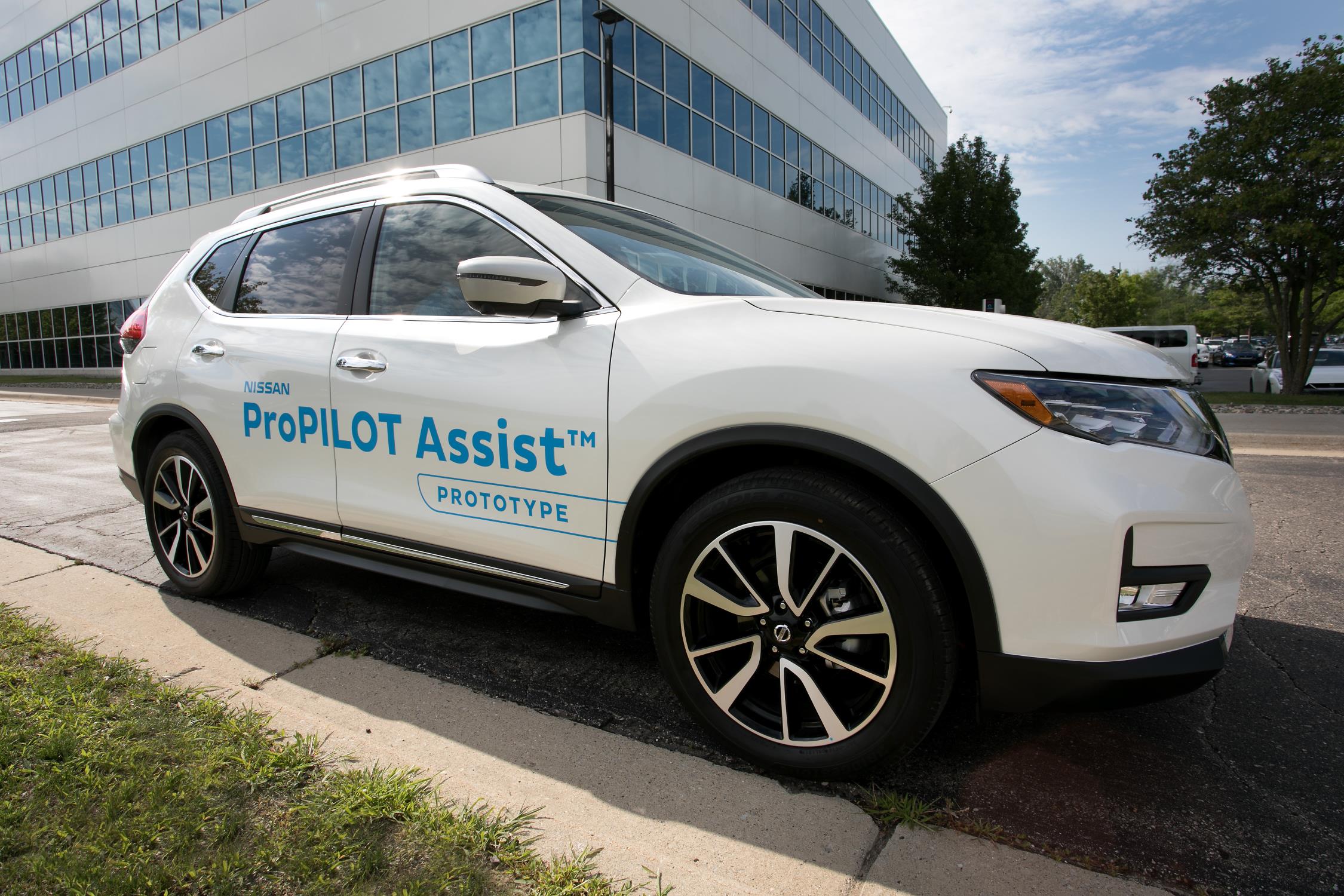
Rivian is starting its latest driving technology program with eligible owners of newer R1 models and the R2.
From Highway Assistance to Full Routes
Point to Point builds on Rivian’s existing Universal Hands-Free system. It is designed to follow a planned route, including turns, highway merges and surface streets, while the driver remains responsible for supervising the vehicle.
The technology combines the vehicle’s sensors and cameras with Rivian’s Large Driving Model, which interprets surrounding conditions and helps determine how the vehicle should respond.

Point to Point aims to manage more of a planned journey while requiring the driver to remain attentive.
Who Can Join the Early Access Program?
The initial program targets eligible Gen 2 R1 and R2 owners in California and Florida. Applicants must have an active paid Autonomy+ subscription; free trials do not qualify.
Rivian will consider existing use of its driver-assistance features, recent safety records and a balance of vehicle models and regions when selecting participants. Owners can register their interest through the Autonomy Early Access tile in their Rivian account.

Eligible owners can register their interest through their Rivian account.
Testing Comes With Conditions
Selected participants must use the preview features weekly, report issues and complete monthly surveys. They must also agree to data collection that includes location and camera data, under a non-disclosure agreement.
The program is unpaid, and Rivian can reassess participants’ eligibility every 30 days. First-generation R1 vehicles and Canadian owners are excluded from the initial phase.

Camera and sensor data are part of the technology Rivian is developing and evaluating.
A Wider Rollout Is Planned for 2027
Rivian expects Point to Point to reach a broader group of Autonomy+ customers in 2027, following the early-access phase. Feedback from interested owners outside California and Florida may also help inform which states are considered for expansion.
The R2 is among the vehicles targeted for the initial program, with wider availability expected to follow.
Point to Point remains a Level 2 driver-assistance system, not fully autonomous driving. Drivers must stay attentive and be ready to take control at all times.
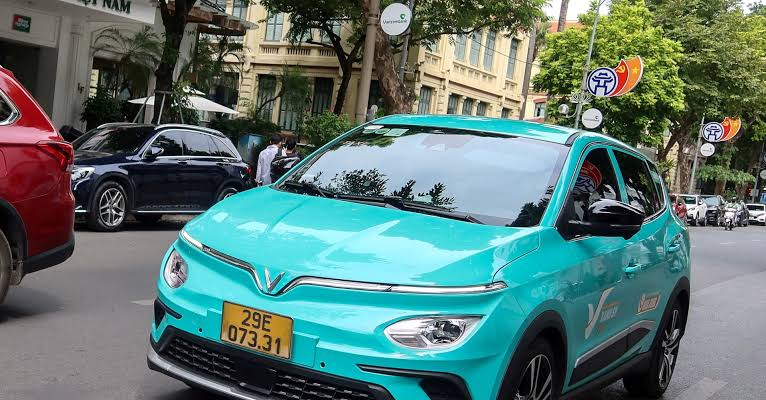
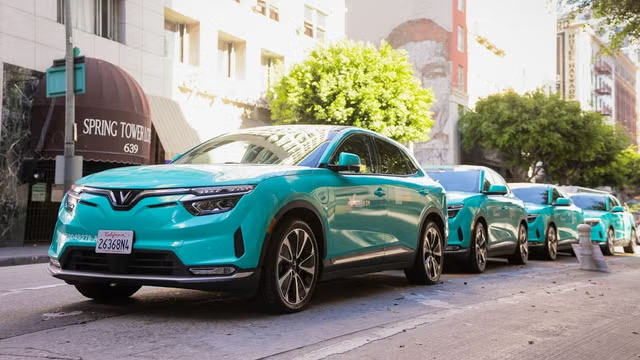
Green and Smart Mobility enters the U.S. market with an all-electric taxi and ride-hailing service.
GSM Expands Into the United States
Los Angeles is GSM’s first U.S. market and its ninth country of operation. Before entering the United States, the company operated in Vietnam, Laos, Indonesia, the Philippines, India, Kazakhstan, Denmark and the Netherlands.
The launch gives GSM a presence in North America as it pursues a broader international expansion strategy. Its all-electric fleet also connects the company’s growth to the development of electric mobility services, particularly in major cities where taxis and ride-hailing vehicles can accumulate substantial daily mileage.

GSM is expanding its all-electric mobility business into the United States with its launch in Los Angeles.
The scale of the company’s U.S. operation, including its initial fleet size, service coverage and passenger pricing, will be important factors in determining how quickly it can establish a presence in the local market.
VinFast Connection and Electric Vehicle Strategy
GSM is closely linked to VinFast, the Vietnamese electric vehicle manufacturer. The taxi operator has previously said it intends to purchase up to one million VinFast electric vehicles between 2026 and 2030, a target that would make fleet demand a significant part of its relationship with the automaker.
The planned purchases could support VinFast by creating a large potential source of demand for its vehicles. For GSM, meanwhile, using electric vehicles across its mobility operations aligns its fleet strategy with its focus on all-electric transportation.

VinFast is the vehicle supplier connected to GSM’s plans for expanding its electric mobility fleet.
However, the stated purchase target is a multi-year intention rather than confirmation that all the vehicles have already been ordered or delivered. The pace of deployment will depend on the company’s expansion plans and the operational requirements of each market.
GSM’s International Expansion Plans
The Los Angeles launch forms part of a wider international growth strategy. GSM has previously outlined plans to deploy fleets in the United States and Sweden, as well as expand its presence in the Netherlands. The company has also indicated that it wants to enter additional European markets in 2027.
Its U.S. entry is therefore one part of a larger effort to build an international electric mobility business. Expanding across multiple markets could increase the company’s operating scale, although each country presents different regulatory requirements, competitive conditions and customer expectations.

GSM is seeking to expand its electric taxi operations beyond its established Asian and European markets.
The company’s financial scale is another area of interest as it prepares for a potential Hong Kong stock market listing. GSM has been preparing for a possible pre-IPO phase, while previous valuation discussions have placed the business at approximately $20 billion, based on advice reportedly received by the company.
Vietnamese brokerage VNDirect estimated that GSM generated approximately $1 billion in gross merchandise value in 2025. Gross merchandise value represents the total value of transactions facilitated through a business and should not be confused with revenue or profit. GSM does not publicly disclose detailed financial results.
What the Los Angeles Launch Means for GSM
GSM’s entry into Los Angeles establishes its first North American operation and expands its international footprint to nine markets. The company’s strategy combines electric vehicle deployment, ride-hailing services and an existing relationship with VinFast.
The next indicators to watch will include fleet expansion, geographic coverage, passenger demand and the company’s ability to compete with established ride-hailing operators. Its potential listing in Hong Kong could also become an important milestone as it seeks to finance and scale its international business.
For now, the Los Angeles launch marks a significant geographic expansion for GSM. Its longer-term success will depend on how effectively it translates its experience in other markets into a competitive U.S. operation.
-

 NOW TRENDING2 months ago
Tesla Cybercab Gets September 3 Austin Launch Date
-

 TEST DRIVES2 months ago
2025 Ford Bronco Sport Badlands: The Adventure SUV You Can Drive Every Day
-

 TEST DRIVES2 months ago
2026 Toyota GR Supra MkV Final Edition
-

 NOW TRENDING1 month ago
Aston Martin DBX Becomes Harry Da Souza’s Ride in MobLand
-

 NOW TRENDING2 months ago
Tesla Cybercab Puts U.S. Regulations to the Test
-
 Formula12 months ago
FIA Reveals Second ADUO Results With Red Bull-Ford Still on Top
-

 NOW TRENDING2 months ago
2027 Hyundai Tucson Hybrid Gets a Power Boost
-
 NOW TRENDING2 months ago
Hyundai Reports Strong Hybrid Sales in August 2026
You must be logged in to post a comment Login