
Tesla’s new V4 Supercharger sets the stage for the next generation of EV charging.
Tesla has officially flipped the switch on its first V4 Supercharger, signaling a major upgrade to its charging network. The debut station, first opened in Europe, is now part of a global expansion plan that will gradually bring the next-gen chargers to North America. The V4 system is not just faster–it’s smarter, more versatile, and ready to support Tesla’s upcoming high-voltage vehicles.
What Sets the V4 Apart
Compared to V3 chargers, which peak at 250 kW, the new V4 units deliver up to 325 kW in North America, with infrastructure prepared to eventually reach 500 kW. This is crucial for larger EVs like the Cybertruck. Tesla has even bundled the launch with perks like a year of free Cybertruck charging, though the move is as much a branding play as a functional benefit. Additionally, longer cables and CCS compatibility make the network accessible to more EV models, expanding Tesla’s ecosystem beyond its own cars.
Speed, Access, and Impact
Beyond raw performance, the V4 platform addresses convenience and usability. The extended cables and CCS support cater to a growing variety of EVs, ensuring smoother charging sessions for all users. This evolution underscores Tesla’s commitment to maintaining its lead in charging infrastructure while staying ahead of regulators and rivals in a rapidly changing EV market.

Why This Matters
Tesla’s dominance in charging has been a cornerstone of its appeal. V4 strengthens that position, enabling faster turnaround times and preparing for next-generation vehicles. Meanwhile, Tesla’s legacy models, like a near-pristine 2008 Roadster with only 574 miles, highlight the brand’s growth and the significance of a reliable, high-speed charging network over the past 15 years.
The Road Ahead
The V4 rollout represents more than just faster charging. It’s a statement about Tesla’s vision: a future-proof, user-friendly infrastructure designed to stay ahead of the competition. As the EV market grows and regulatory pressures mount, Tesla’s charging ecosystem may remain one of its most strategic advantages, keeping drivers connected and the company at the forefront of electrification.








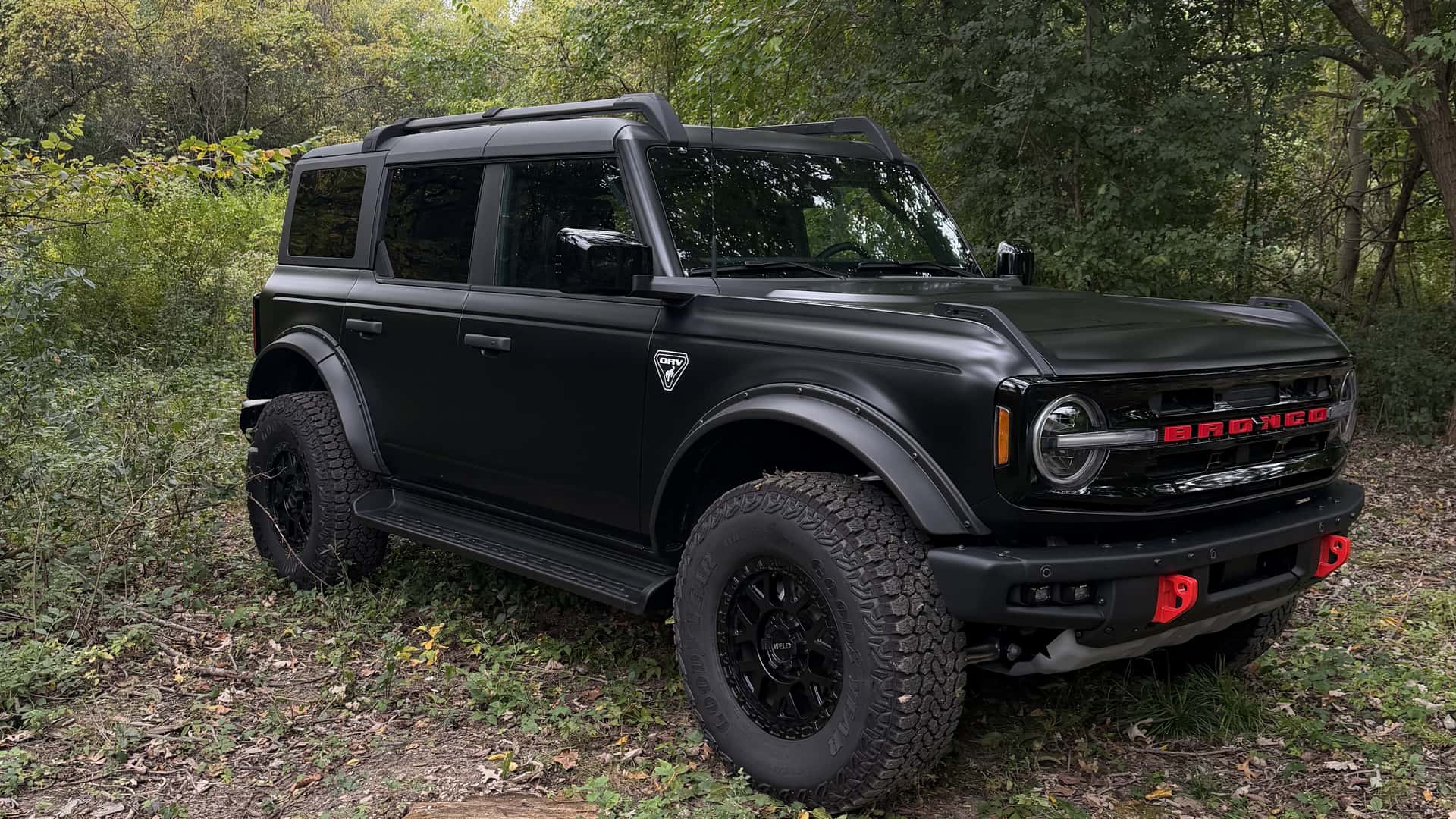
Ford’s new Bronco ORV package adds FOX suspension, Raptor underbody protection and off-road hardware to select models. But the $18,995 price excludes tires and installation.
Ford wants to make it easier to build a trail-ready SUV without sourcing every part separately. The Ford Bronco ORV Package bundles suspension, protection, lighting and styling upgrades into one dealer-installed option. However, its $18,995 starting price makes it a serious investment for Bronco owners.
Available for select four-door 2025 and 2026 Bronco Base, Big Bend and Outer Banks models, the package comes through Ford Custom Garage. It is an accessory package rather than a separate Bronco trim, and compatibility depends on the vehicle’s existing equipment.
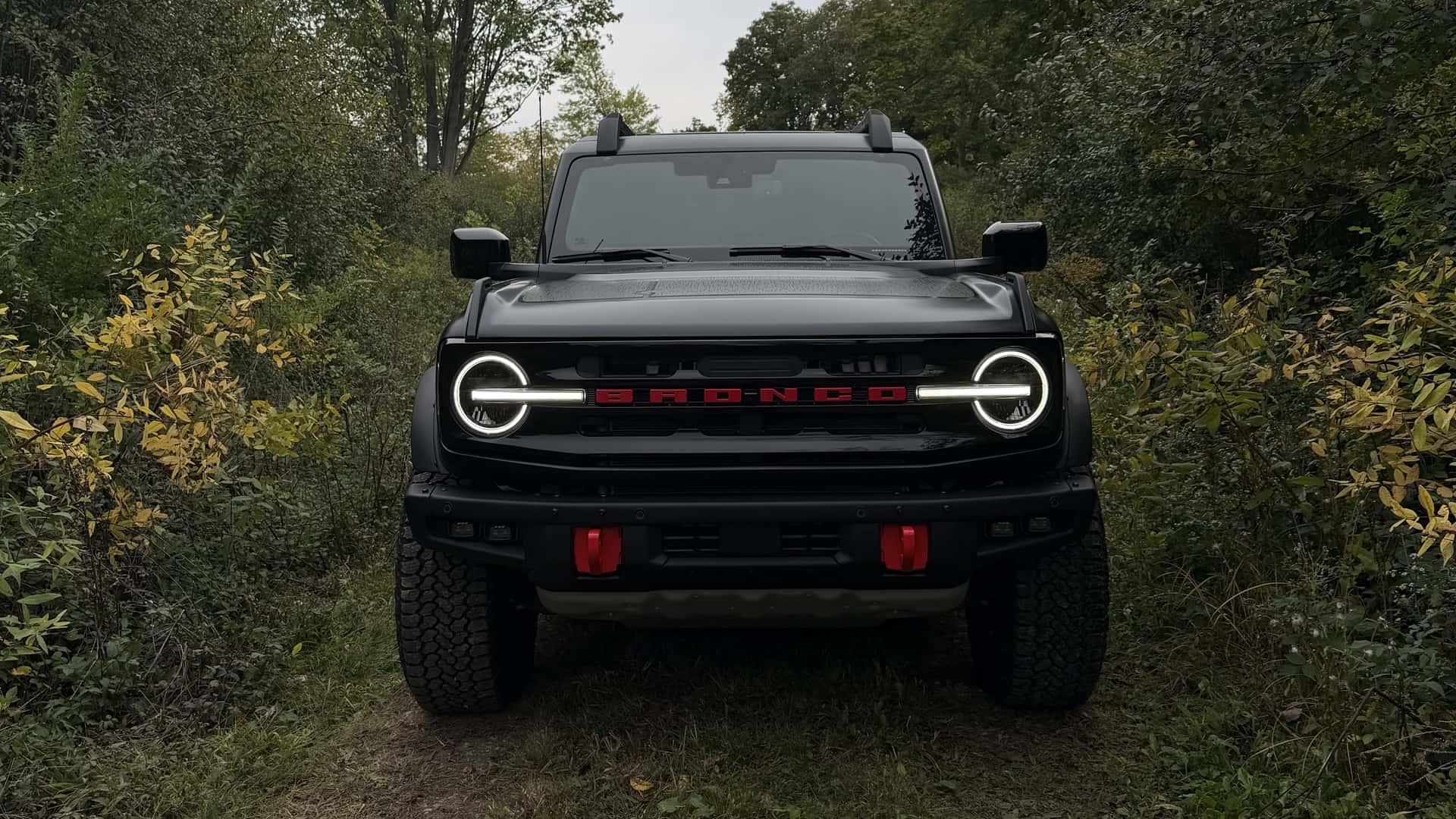
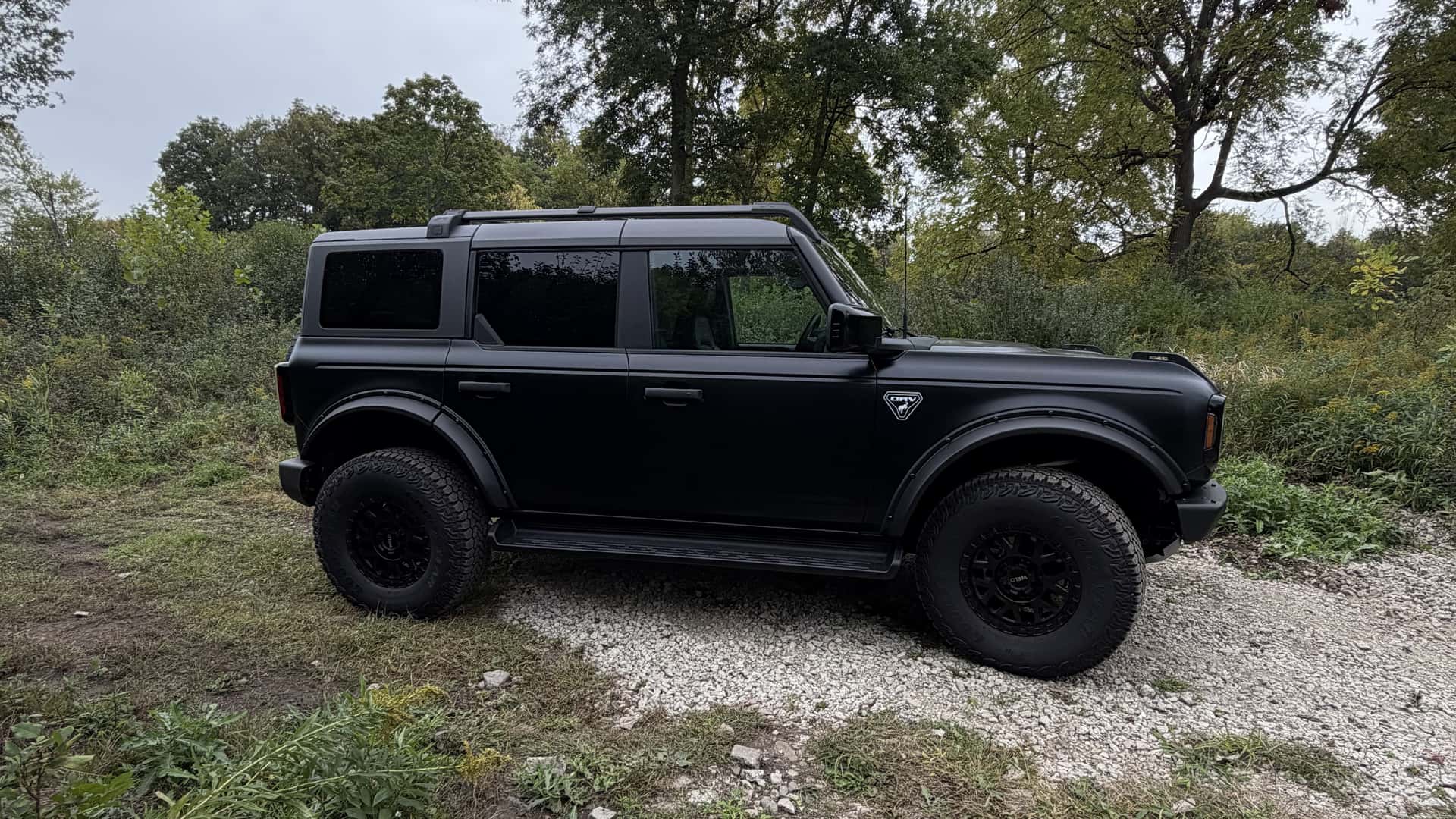
The Bronco ORV package adds trail-focused equipment to selected four-door models.
What Does the $18,995 Bronco ORV Package Include?
The main upgrades focus on off-road capability. A FOX suspension kit works alongside underbody skid plates and fuel-tank protection borrowed from the Bronco Raptor. Rocker-panel armor adds protection along the lower body, while a modular front bumper retains parking-aid functionality.
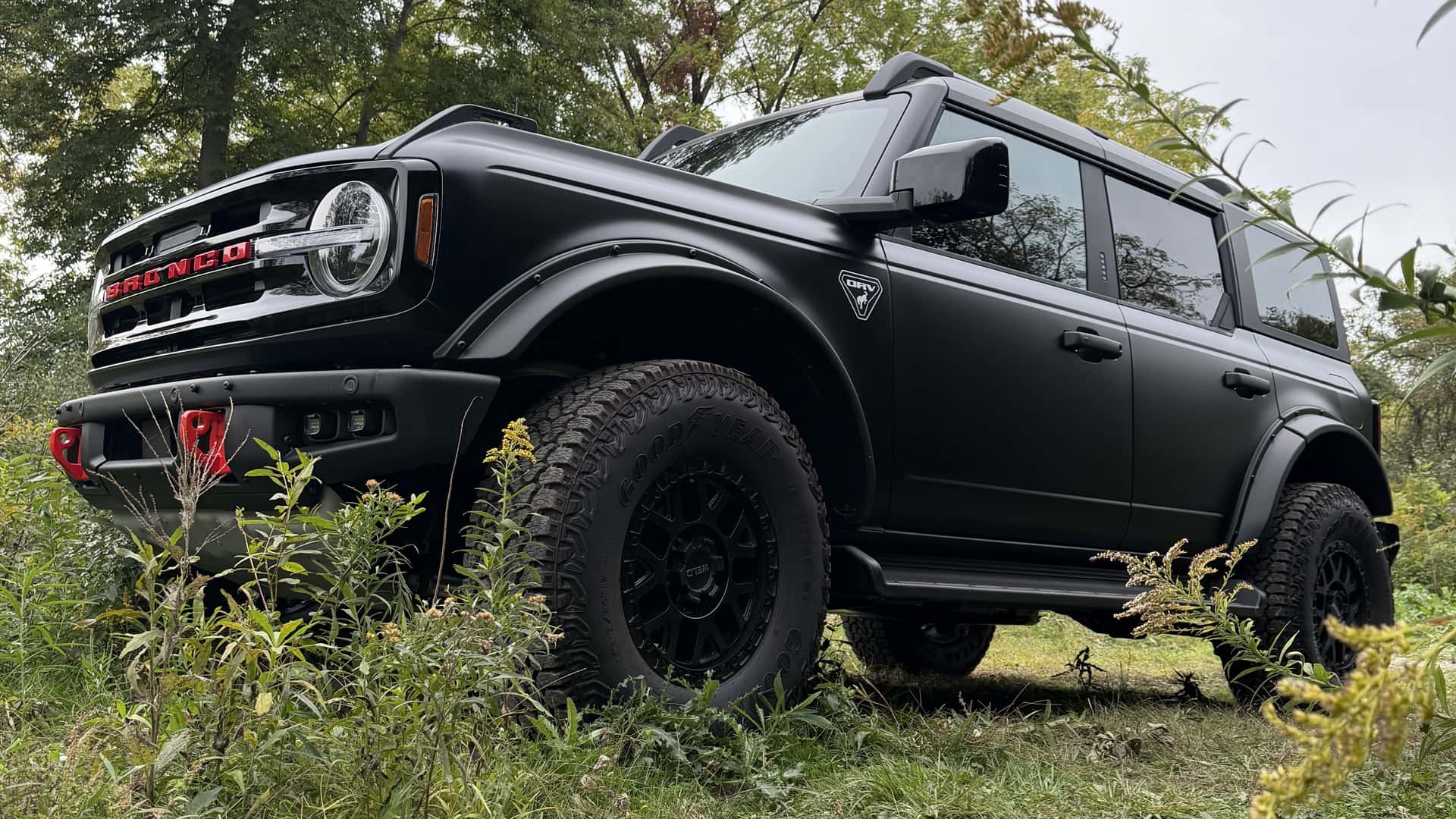
FOX suspension and Raptor-derived protection are among the package’s key hardware upgrades.
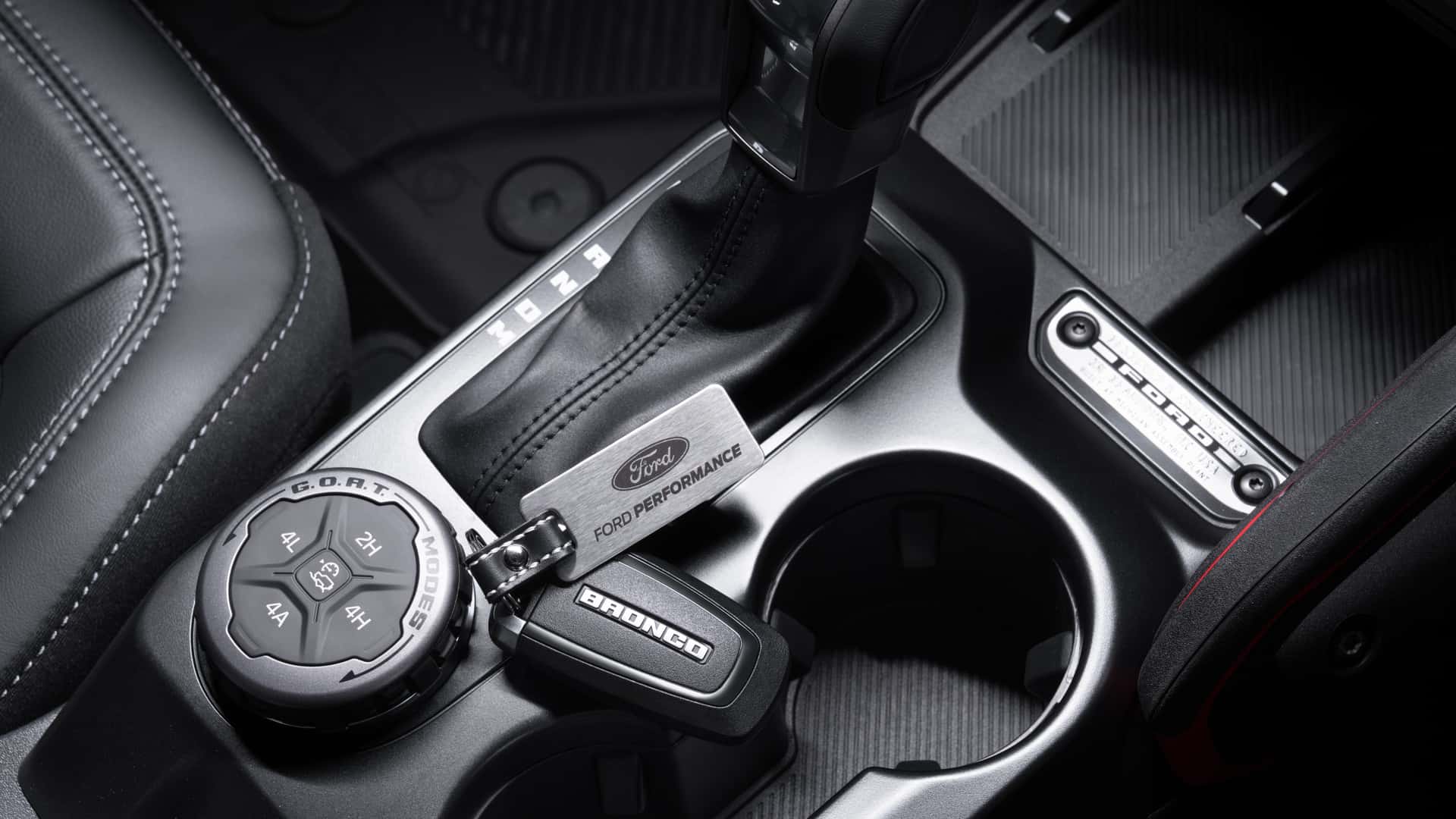
The package also includes RIGID auxiliary LED lighting, an auxiliary switch kit and a Ford Performance ProCal tool. These components add lighting control and vehicle-specific calibration capabilities for the upgraded setup.
The front bumper and auxiliary lighting give the Bronco additional trail-focused equipment.
Black Wheels and Red Accents Complete the Look
Ford has added visual changes to distinguish the ORV-equipped Bronco from standard versions. The package includes 17-inch black WELD wheels, Havoc fender flares, red tow hooks, red grille accents, a stealth hood decal and distinctive ORV branding.
Black wheels, wider fender flares and protective side panels give the SUV a tougher appearance.
Which Broncos Can Get the ORV Package?
The package is available for select four-door Base, Big Bend and Outer Banks models from the 2025 and 2026 model years. The Bronco Badlands and Bronco Raptor are excluded. Ford also warns that factory options, including camera equipment, the Lux package and the Sasquatch package, can affect compatibility.
The ORV package is designed for selected Bronco configurations, so buyers should confirm fitment before ordering.
Warranty and Final Cost
Ford includes a supplemental three-year/36,000-mile warranty that begins on the vehicle’s in-service date. Installation by a Ford dealer or ASE-certified technician does not void the standard new-vehicle warranty.
However, the $18,995 manufacturer’s suggested retail price is not the final bill. Tires are sold separately, and installation charges can vary by dealer. Buyers should confirm the complete cost and vehicle compatibility before placing an order.
The Bronco ORV gives owners a convenient route to a coordinated off-road build, combining hardware and appearance upgrades in one package. Its price may appeal to buyers who value dealer installation and warranty coverage, but the additional tire and labor costs make it essential to calculate the full investment first.
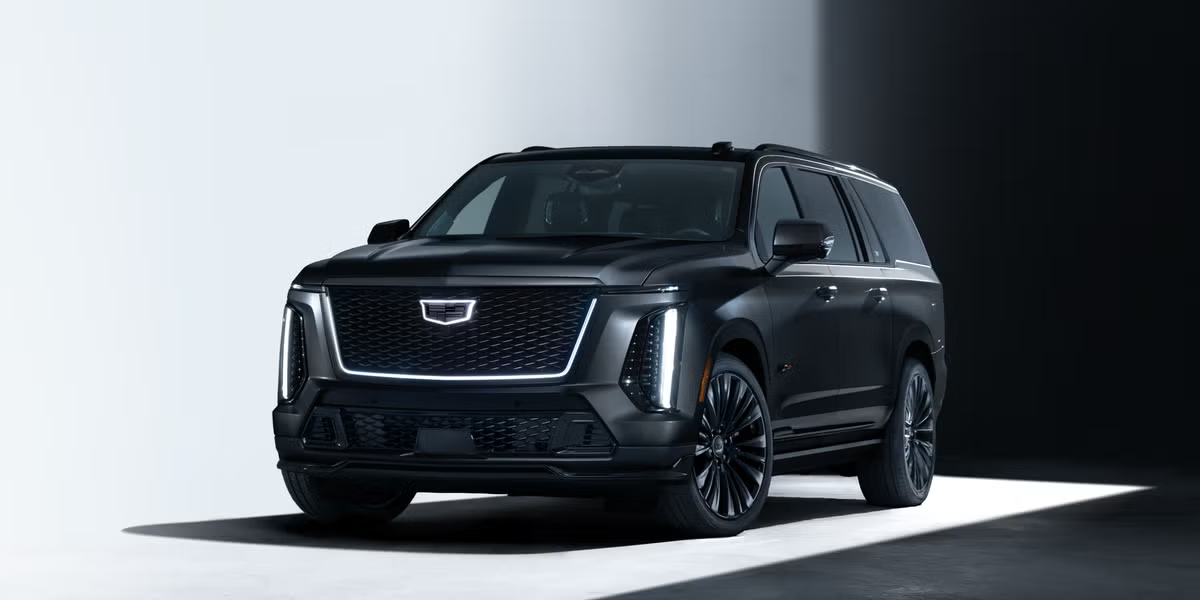
Just 252 examples will celebrate Cadillac’s 125th anniversary, pairing V-Series performance with exclusive finishes, carbon-fiber details and a distinctive blue-accented cabin.
A luxury SUV can make a statement through size, performance and technology. The 2027 Cadillac Escalade-V 125th Anniversary Collector Series adds another selling point: rarity. Cadillac will produce just 252 examples of this special edition, combining the imposing presence of the Escalade-V with exclusive details created to celebrate the brand’s 125-year history.
Starting at approximately $239,000, including destination freight, this edition targets buyers who want their SUV to stand out even among other high-end vehicles. Its appeal comes from a combination of limited production, distinctive materials and personalized commemorative details rather than a completely different exterior design

The limited-edition Escalade-V pairs its familiar imposing shape with exclusive anniversary styling.
A darker, sharper take on the Escalade-V
Cadillac will offer the anniversary model in two finishes: Midnight Stone Frost and Vibrant White Tricoat. Both emphasize the SUV’s substantial proportions, while a series of contrasting details gives the special edition a more distinctive identity.
The exterior package includes unique forged 24-inch wheels, blue brake calipers and dark-finish badges. Carbon fiber appears on the grille surround, lower rear fascia, mirror caps and engine cover, adding a motorsport-inspired touch to Cadillac’s flagship performance SUV.
The details extend beyond appearance. Heritage V-8 puddle lamps and commemorative markings referencing 1902–2027 connect the vehicle to Cadillac’s history. Buyers can also select their vehicle identification number and serial number, adding a personalized element to an already limited production run.
Santorini Blue makes the interior different
The cabin is where this Collector Series develops its own visual signature. Cadillac combines Black and Sheer Gray upholstery with Santorini Blue stitching and seat belts, creating a contrast against the darker interior surfaces.
That blue is more than a decorative choice. It draws inspiration from the V-Series emblem and connects the brand’s road cars with its racing identity, including the Cadillac V-Series.R race car. The color has appeared across performance vehicles and concepts before becoming the defining interior accent of this anniversary Escalade.

Santorini Blue adds a distinctive accent to the two-tone cabin, linking the SUV to Cadillac’s performance heritage.
Cadillac adds illuminated sill plates, exclusive interior badging, premium floor mats and a blue key fob. Together, these features give the limited edition a more individualized feel without abandoning the Escalade’s established luxury-focused interior design.
What makes a 252-unit Escalade worth $239,000?
The limited production run is central to the model’s appeal. With only 252 vehicles planned, the anniversary edition is considerably more exclusive than a regular Escalade-V. Its special finishes, carbon-fiber components and commemorative equipment give collectors several details to distinguish it from the standard model.
Cadillac has previously used its Collector Series to mark milestones in its performance history. The 2026 CT5-V Blackwing F1 Collector Series, for example, connected the brand’s performance identity with its entry into Formula 1. Now, the series expands to the Escalade, bringing that collector-focused approach to a large luxury SUV.

The rear design combines the Escalade-V’s commanding proportions with the special edition’s carbon-fiber accents.
The 2027 Escalade-V 125th Anniversary Collector Series will be sold in the United States and Canada, and orders are now open. Its starting price is approximately $239,000, including destination freight but excluding taxes, title and dealer fees. Dealers determine the final selling price.
Ultimately, this Escalade is designed for buyers who value exclusivity as much as luxury and performance. The 125th-anniversary branding tells part of the story, but the limited production, personalized identification and distinctive cabin details are what make this version different. Whether those features justify the premium will depend on how much buyers value owning a rare edition of Cadillac’s flagship SUV.
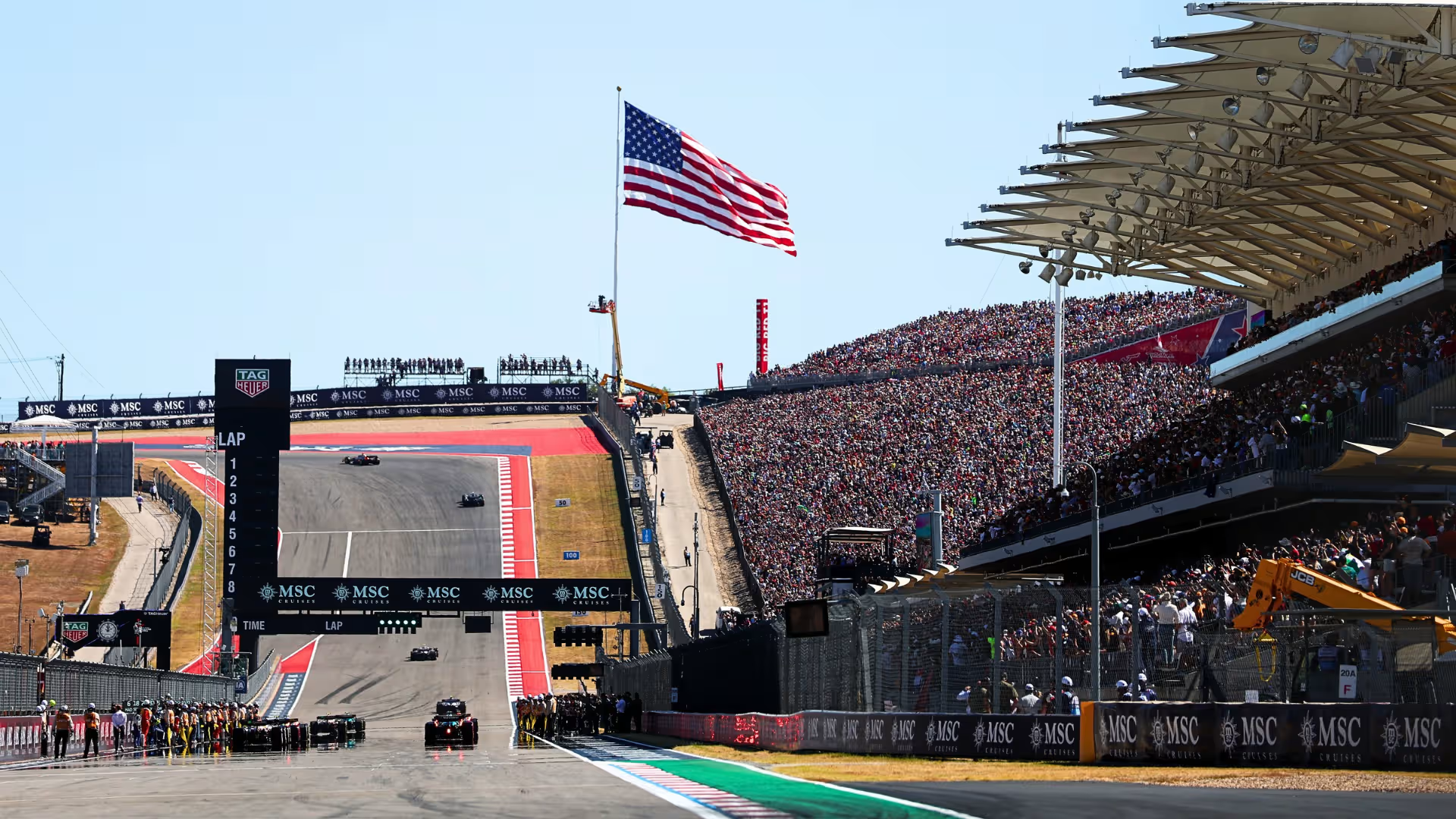
Kimi Antonelli arrives in Texas with a chance to become Formula 1’s youngest world champion, while Max Verstappen targets a third consecutive victory.
The 2026 United States Grand Prix takes centre stage this weekend as Formula 1 returns to Austin for Round 18 of the season. The main storyline is clear: Antonelli could secure his maiden drivers’ championship, but Verstappen’s recent resurgence promises a major challenge at the Circuit of The Americas.

Antonelli heads to Austin with a commanding championship lead and his first opportunity to clinch the title.
Antonelli’s first shot at the world title
Antonelli leads the standings with 340 points, ahead of Mercedes team-mate George Russell on 238 and Lewis Hamilton on 229. The Italian holds a 102-point advantage over Russell and could mathematically seal the championship this weekend.
However, the outcome depends on several results. Antonelli needs to win in Austin, Russell must finish ninth or lower, and Hamilton cannot finish higher than fifth. Even then, the title fight remains open if those conditions are not met.
Meanwhile, Verstappen arrives in Texas after winning the Malaysian and Singapore Grands Prix. The Red Bull driver has won four of the last five races held at Austin, making him one of the key contenders to watch.
Austin schedule: Practice, qualifying and race
The weekend follows the traditional format, with three practice sessions and no Sprint race. Friday features the first two sessions, while Saturday brings final practice and qualifying.
- Friday, October 23: Free Practice 1 at 12:30 p.m. local time and Free Practice 2 at 4 p.m.
- Saturday, October 24: Free Practice 3 at 12:30 p.m. and qualifying at 4 p.m.
- Sunday, October 25: The United States Grand Prix starts at 3 p.m. local time.
Each session will help teams refine their car setups before Sunday’s 56-lap race. Weather forecasts point to warm conditions, with little chance of rain during practice and qualifying. Sunday has a slightly higher possibility of showers, although dry conditions remain the main expectation.

The 5.513-kilometre Circuit of The Americas combines fast corners, heavy braking zones and technical sections.
The circuit’s biggest challenges
Austin is known for its steep climb into Turn 1, where drivers must choose their line carefully at the start. The first sector features rapid changes of direction, while the long back straight creates a major overtaking opportunity into Turn 12.
The circuit’s final sector brings another challenge, with slower corners demanding traction and careful throttle control. Track limits can also become a factor, particularly through the later turns.
Pirelli has selected the C2 hard, C3 medium and C4 soft compounds for this weekend. Tyre wear could play a decisive role because of the circuit’s layout and the high temperatures expected in Texas. A one-stop strategy may be attractive, but teams will need to assess degradation during practice before committing to a race plan.
Verstappen’s record and the key numbers
Verstappen won the 2025 United States Grand Prix and has established an impressive record at the Texas venue. Lewis Hamilton remains the circuit’s most successful driver, with six victories, while Michael Schumacher and Hamilton share the record for the most poles at four apiece.
The current lap record is 1:36.169, set by Charles Leclerc with Ferrari in 2019. This year’s race covers 56 laps, adding up to 308.405 kilometres.

Verstappen arrives after consecutive victories and will aim to continue his strong run at the Texas circuit.
A weekend with major championship implications
Austin opens a demanding run of three consecutive race weekends across the Americas, followed by events in Mexico City and São Paulo. That schedule leaves little time for teams to recover from mistakes or introduce major changes.
For Antonelli, the United States Grand Prix represents an early opportunity to turn a strong season into a historic title triumph. For Verstappen, it is a chance to extend his winning streak and disrupt Mercedes’ momentum.
The first answers will come in Friday’s practice sessions. By qualifying on Saturday, the teams should have a clearer picture of the pace and tyre performance that could decide Sunday’s race.
-
 TEST DRIVES2 months ago
2025 Ford Bronco Sport Badlands: The Adventure SUV You Can Drive Every Day
-
 TEST DRIVES2 months ago
2026 Toyota GR Supra MkV Final Edition
-
 NOW TRENDING1 month ago
Aston Martin DBX Becomes Harry Da Souza’s Ride in MobLand
-
 Formula12 months ago
FIA Reveals Second ADUO Results With Red Bull-Ford Still on Top
-

 NOW TRENDING2 months ago
Tesla Cybercab Puts U.S. Regulations to the Test
-
 NOW TRENDING2 months ago
2027 Hyundai Tucson Hybrid Gets a Power Boost
-
 NOW TRENDING2 months ago
Hyundai Reports Strong Hybrid Sales in August 2026
-
 NOW TRENDING2 months ago
Nissan Z Nismo Finally Gets a Manual Transmission in Japan
You must be logged in to post a comment Login