
El 7 de marzo de 2016, BMW celebraba sus 100 años de existencia como empresa. Durante este periodo, un pequeño fabricante de motores aeronáuticos con sede en el norte de Múnich se ha transformado en fabricante líder de automóviles y motocicletas Premium, así como en proveedor de servicios financieros y de movilidad Premium. En el camino, BMW siempre ha demostrado ser una empresa altamente innovadora, que ha definido el cambio y mirado hacia el futuro. Hoy, BMW Group es un grupo de empresas internacional con sedes de producción y ensamblado en 14 países y una red de ventas global. La empresa hace contribuciones significativas para diseñar la movilidad del futuro.
Viendo la historia de BMW Group, se revelan una gran variedad de eventos y decisiones que ejercieron un gran impacto en el desarrollo de la empresa y, al mismo tiempo, son un reflejo de su carácter. Productos pioneros y trayectorias estratégicas tienen una deuda de gratitud con estos momentos visionarios. Todos ellos se basaron en el coraje de intentar algo nuevo y seguir caminos desconocidos. La ambición de la empresa siempre ha sido lograr más que simplemente lo básico y competir con los mejores, además de tener la capacidad de aceptar retos y salir de ellos con todavía mayor decisión.
100 hitos en la historia de BMW
7 de marzo de 1916
Bayerische Flugzeugwerke AG se establece como sucesor del fabricante de aviones Gustav-Otto-Flugmaschinenfabrik con oficina registrada en Lerchenauer Straße en Múnich. En 1922, la construcción de motor, el nombre y la marca de Bayerische Motorenwerke AG se transfirieron a esta compañía. Por tanto, se considera la fecha de establecimiento del “Nuevo BMW AG”.
21 de julio de 1917
El fabricante de motores aeronáuticos Rapp-Motorenwerke GmbH, fundado en 1913, entra en el registro con el nombre de Bayerische Motoren Werke GmbH, y, poco después, se establecen las nuevas instalaciones en Moosacher Straße en Múnich.
10 de diciembre de 1917
El logo redondo de la marca con las letras BMW y el estilizado propulsor diseñado con los colores nacionales de Bavaria, azul y blanco, se introduce con el número 221388 en el Registro de Marcas de la Oficina de Patentes Imperial. Al final de los años 20, esta librea aparece por primera vez en anuncio como un estilizado propulsor rotatorio, que desde entonces ha formado la base de la interpretación del logo.
17 de junio de 1919
El piloto de pruebas Zeno Diemer alcanza una altitud de 9.760 metros con su avión fabricado por Deutsche Flugzeugwerke con motor BMW IV de seis cilindros en línea, marcando un nuevo récord de altitud.
6 de julio de 1922
Bayerische Flugzeugwerke AG toma el control de la empresa llamada Bayerische Motoren Werke, el logo de la marca y la construcción del motor de su propietario, Knorr-Bremse AG.
28 de septiembre de 1923
En el Salón del Automóvil de Berlín se presenta la BMW R 32: la primera moto fabricada con la marca, desarrollada bajo la dirección de Max Friz, con un motor Bóxer bicilíndrico horizontal de cuatro tiempos.
2 de febrero de 1924
El ingeniero y piloto de carreras Rudolf Schleicher logra el mejor tiempo con una BMW R 32 en la subida a Mittenwalder Gsteig y consigue la primera victoria de BMW en la historia de los deportes de motor.
1 de octubre de 1928
BMW toma el control del fabricante de coches Fahrzeugfabrik Eisenach en Turingia, dónde se fabrica el micro coche Dixi 3/15 PS como versión con licencia de British Austin Seven. Esto convierte a la empresa en fabricante de automóviles.
22 de marzo de 1929
El primer BMW 3/15 PS sale de la línea de fabricación en el edificio alquilado al fabricante de autobuses Ambi-Budd en el antiguo campo de aviación de Berlin-Johannisthal.
22 de junio de 1931
El “Rail Zeppelin” con motor BMW VI de doce cilindros construido por el diseñador de trenes Franz Kruckenberg alcanza una velocidad de 230 km/h y marca por tanto un nuevo record mundial de velocidad para vehículos sobre vía.
1 de marzo de 1932
BMW termina el acuerdo de licencia con Austin y poco después presenta el primer automóvil de la empresa diseñado en casa; el BMW 3/20 PS con un nuevo motor de cuatro cilindros y chasis de acero con dos puertas.
22 de julio de 1932
El piloto Wolfgang von Gronau despega con el hidroavión Dornier “Wal” (ballena), con dos motores de 600 CV y doce cilindros del tipo BMW VIIa, para completar la primera circunvalación del mundo con una distancia total de 44.800 kilómetros.
11 de febrero de 1933
Se presenta el BMW 303 en el Salón Internacional del Automóvil de Berlín como el primer coche de seis cilindros de la marca y también el primer modelo que lleva la parrilla del radiador en forma de riñón típica de BMW.
21 de diciembre de 1934
La construcción de motores aeronáuticos se traspasa a una empresa dedicada con efectos retroactivos a 1 de enero de 1934 y se convierte en BMW Flugmotorenbau GmbH.
15 de febrero de 1936
El BMW 326 se presenta en el Salón Internacional del Automóvil de Berlín como el nuevo modelo de gama media con motor en línea de seis cilindros, diseñado con bastidor con sección en caja, chasis redondeado aerodinámico y sistema de freno hidráulico.
14 de junio de 1936
El deportivo de dos litros BMW 328 se presenta en público por primera vez en la carrera Eifel de Nürburgring – Ernst Jakob Henne consigue inmediatamente la primera victoria al volante del nuevo modelo.
28 de noviembre de 1937
El piloto de BMW Works, Ernst Henne inicia el último de muchos récords y marca el récord de velocidad de 279,503 km/h con una moto BMW con carenado completo y turbo, un récord que no se rompió hasta 14 años después.
8 de junio de 1939
Georg “Schorsch” Meier se convierte en el primer piloto no británico que gana la Senior-TT en la Isla de Man, con una moto BMW.
30 de septiembre de 1939
BMW AG toma el control de todas las acciones de Brandenburgische Motorenwerke GmbH en Berlin-Spandau. BMW ya había estado cooperando con la empresa en el desarrollo de motores aeronáuticos refrigerados por aire.
28 de abril de 1940
Fritz Huschke von Hanstein y Walter Bäumer consiguen la victoria en la general de la carrera de resistencia Mille Miglia en Italia al volante de un BMW 328 Touring Coupé, y también ganan la clasificación de equipos para BMW.
30 de abril de 1945
Soldados de la Armada de los EEUU alcanzan la llamada planta de sombra y el campo de Allach cerca de Múnich. A partir de diciembre de 1939, prisioneros de guerra, convictos, trabajadores forzados y prisioneros de campos de concentración han sido utilizados allí y en otras sedes para fabricar motores de aviones.
17 de diciembre de 1948
Empieza de nuevo la producción de motocicletas en Múnich. Una BMW R 24 con motor monocilíndrico se fabrica allí como el primer vehículo de BMW AG de la postguerra.
11 de marzo de 1954
El BMW 502 se presentó en el Salón del Automóvil de Ginebra, con un motor de ocho cilindros, el primer V8 completamente de aleación del mundo que se utiliza en un coche producido en serie.
12 de septiembre de 1954
Después de su victoria en la última carrera en Monza, Wilhelm Noll y Fritz Cron logran su primer título del Campeonato del Mundo de Sidecar compitiendo con una BMW. Para 1974, BMW había conseguido recoger 19 títulos mundiales de pilotos y 20 de constructores en esta disciplina.
1 de octubre de 1954
BMW adquiere la licencia para fabricar un micro coche de dos plazas con puerta delantera al fabricante italiano Iso. El BMW Isetta tiene muchos detalles refinados, lleva motores de moto BMW y se publicita como “Motocoupé”, el modelo más vendido del mercado de la marca durante los años 50.
15 de enero de 1955
Se presenta una nueva serie de modelos en el Salón del Automóvil de Bruselas, con la BMW R 50 y la BMW R 69, fabricadas con suspensión de basculante completo. La gama define el programa de motos de BMW hasta 1969.
22 de septiembre de 1955
El BMW 507 hace su primera aparición pública en el Salón Internacional del Automóvil de Frankfurt. Este roadster había sido creado por el diseñador Albrecht Graf Goertz con un motor de ocho cilindros con 150cv y es celebrado por la prensa como “El sueño del Isar”.
9 de junio de 1959
El Consejo de dirección de BMW AG presenta el nuevo BMW 700 Coupé a periodistas internacionales en una presentación de prensa. Este coche pondría los cimientos de la fabricación rentable a gran escala de automóviles.
9 de diciembre de 1959
En la Junta General Anual de BMW AG, un pequeño grupo de accionistas impide la venta a Daimler-Benz AG. El accionista principal Herbert Quandt decide comprometerse más para asegurar la independencia de BMW.
30 de noviembre de 1960
La Junta General Anual de BMW AG aprueba el plan de reestructuración para la remodelación de la empresa y eso marca la trayectoria de un futuro de éxito.
21 de septiembre de 1961
El BMW 1500 celebra su lanzamiento mundial en el Salón Internacional del Automóvil de Frankfurt, es el comienzo del increíble éxito de la “Nueva Clase”.
29 de junio de 1964
El positivo desarrollo del negocio anima a la Junta General Anual de BMW AG a decidir el pago de dividendos a los accionistas por primera vez desde el final de la guerra.
18 de junio de 1965
BMW AG vende el resto de las acciones de BMW Triebwerkbau GmbH a MAN AG y termina su implicación en la fabricación de motores aeronáuticos.
7 de marzo de 1966
El dos puertas BMW 1600 se presenta a los invitados ante la Bavarian State Opera House con ocasión de la celebración del 50 aniversario de la empresa.
2 de enero de 1967
BMW AG toma el control de la empresa Hans Glas GmbH, que fabrica varios vehículos incluyendo el micro coche Goggomobil, varios otros modelos y maquinaria agrícola.
25 de septiembre de 1968
Los nuevos modelos de seis cilindros BMW 2500 y BMW 2800 se presentan en una rueda de prensa en el Lago Tegernsee. Después de un descanso de varios años, la marca vuelve a entrar en la clase de lujo con estos automóviles.
31 de diciembre de 1968
BMW AG concluye otro año de récord. Se producen por primera vez más de 100.000 automóviles en un año.
13 de mayo de 1969
Finaliza la producción de motocicletas en la planta principal de BMW en Múnich. La producción se traslada a la sede de Berlín, donde empieza a salir el nuevo BMW Serie 5 de la línea de fabricación a partir de septiembre de 1969.
16 de marzo de 1971
La empresa entra en el negocio de los servicios financieros con el establecimiento de BMW Kredit GmbH.
20 de octubre de 1971
La nueva pista de pruebas y trial de BMW se abre en Aschheim, cerca de Múnich.
24 de mayo de 1972
Se establece BMW Motorsport GmbH. Es responsable de todas las actividades de deportes de motor y del desarrollo de coches de carrera y especialmente de automóviles deportivos con permiso de circulación por carretera.
31 de agosto de 1972
BMW AG funda BMW (South Africa) (Pty) Ltd. y es accionista mayoritario de esta empresa de ventas y producción. Eso convierte la planta de Rosslyn en Sudáfrica en la primera sede de producción fuera de Alemania.
10 de septiembre de 1972
En los Juegos Olímpicos de Múnich, se utiliza un BMW 1602 Elektro como vehículo de apoyo para la carrera de maratón. Es el primer coche puramente eléctrico bajo la marca BMW.
12 de septiembre de 1972
BMW lanza una nueva estructura para designaciones de modelos, con el primer BMW Serie 5 como el sucesor de la “Nueva Clase”. Eso le da a BMW denominaciones de modelos claramente definidas que son fáciles de recordar y el principio del sistema continúa hasta hoy. Los primeros dígitos representan la serie y los dos siguientes el modelo, basado en la capacidad del motor.
8 de enero de 1973
Cuando se establece la filial de BMW en Francia, la empresa empieza a tomar el control de las actividades de ventas en los mercados internacionales.
18 de mayo de 1973
Se abren oficialmente el nuevo edificio administrativo y el BMW Museum. La construcción de la estructura del “Cuatro Cilindros” y del “Museo cúpula” se habían completado a tiempo para los Juegos Olímpicos del año anterior.
27 de septiembre de 1973
Empieza la producción en la modernizada y ampliada planta de Dingolfing. Al principio, los modelos BMW Serie 5 se fabricaban allí.
14 de junio de 1975
Un BMW 3.0 CSL diseñado por el artista norteamericano Alexander Calder es el primer BMW Art Car que empieza las 24 Horas de Le Mans.
Es el principio de una colección de arte fascinante y única que BMW sigue aumentando hoy en día.
30 de junio de 1975
En el Estadio Olímpico de Múnich, el Consejo de Dirección de BMW AG presenta el BMW Serie 3, que se lanza como sucesor del exitoso BMW Serie 02 con nueva tecnología y nueva denominación del modelo.
3 de febrero de 1976
BMW Motorsport GmbH recibe el encargo de establecer una “escuela de conducción” que se ha convertido en BMW Driving Experience y MINI Driving Experience, ofreciendo un programa de formación y experiencia para disfrutar más y de forma más segura al volante. El primer curso oficial empezó el 22 de abril de 1977.
11 de marzo de 1976
Los cupés del nuevo BMW Serie 6 se presentan en el Salón Internacional del Automóvil de Ginebra.
5 de octubre de 1978
El BMW M1 se presenta en el Mundial del Automóvil de París. Es un deportivo con 277cv desarrollado por BMW Motorsport GmbH. Su versión de competición causa sensación en las carreras, incluyendo las Procar Series en el programa de carreras de apoyo de Fórmula 1 en Europa en 1979 y 1980.
21 de junio de 1979
Ceremonia innovadora para la planta de Steyr, Austria, que hoy en día sirve de centro de competencia para el desarrollo y producción de varios vehículos, incluyendo los motores BMW diésel.
20 de enero de 1981
El piloto de carreras francés Hubert Auriol gana el Rally París Dakar con una BMW R 80 G/S y demuestra la fiabilidad del modelo Enduro lanzado el año anterior, con motor Bóxer flat-twin.
13 de junio de 1983
BMW presenta la primera serie de coches en la historia de la empresa con motor diésel, el BMW 524td con motor turbo diésel de seis cilindros en línea con 85 kW/115cv.
15 de octubre de 1983
En el Gran Premio de Sudáfrica, el piloto brasileño Nelson Piquet se convierte en Campeón del Mundo de Fórmula 1 al volante del Brabham BMW, solamente 630 días después del debut de BMW en el evento y también es el primer campeón con un vehículo con motor turbo.
1 de enero de 1985
BMW Technik GmbH se establece como depósito de pensamiento autónomo e incubadora de innovación, que desarrolla conceptos visionarios de vehículos y componentes.
12 de septiembre de 1985
BMW presenta el primer modelo con tracción a las cuatro ruedas en el Salón Internacional del Automóvil, el BMW 325i tracción total y el extremadamente deportivo BMW M3.
5 de marzo de 1987
El BMW 750i se presenta en el Salón del Automóvil de Ginebra, el primer modelo de doce cilindros que sale de una línea de producción alemana desde el final de la guerra.
22 de mayo de 1987
La nueva planta de BMW en Regensburg se abre oficialmente. El primer modelo que se fabricó allí desde finales de 1986 es el BMW Serie 3 berlina.
11 de septiembre de 1987
El BMW Z1 roadster desarrollado por BMW Technik GmbH se presenta en el Salón Internacional del Automóvil en Frankfurt.
15 de noviembre de 1987
El piloto de carreras italiano Roberto Ravaglia se convierte en el primer Campeón del Mundo de Turismos pilotando un BMW M3 con el equipo Schnitzer Motorsport.
27 de abril de 1990
Se abre oficialmente el Centro de Investigación e Ingeniería (FIZ – hoy conocido como Centro de Investigación e Innovación) con una ceremonia de gala en el distrito Milbertshofen de Múnich. Unos 7.000 investigadores, ingenieros, diseñadores, directivos y técnicos trabajan aquí en una relación muy estrecha.
1 de julio de 1990
BMW AG une sus fuerzas con Rolls-Royce Plc para establecer la empresa independiente Rolls-Royce GmbH para el desarrollo, construcción y venta de turbinas de avión y esa “joint venture” lleva a la empresa de nuevo a sus orígenes. Tras la remodelación de la empresa, BMW AG vende sus acciones de Rolls-Royce plc a final de 1999.
10 de marzo de 1992
La nueva planta de BMW Fahrzeugtechnik GmbH se abre en la sede tradicional de Eisenach. Allí se fabrican herramientas de prensado para la red de producción de la empresa.
1 de agosto de 1993
BMW Motorsport GmbH, establecida en 1972 cambia su nombre a BMW M GmbH Gesellschaft für individuelle Automobile (BMW M GmbH: Para individualistas).
29 de enero de 1994
Con la firma del contrato de compra, BMW AG toma el control de British Rover Group, que incluye las marcas Rover, MG, MINI y Land Rover.
8 de abril de 1994
Se establece BMW Group Mobile Tradition y a partir de 2008 es la responsable de todos los requerimientos relativos a la empresa y a la historia de producto como BMW Group Classic.
8 de septiembre de 1994
La producción de vehículos se inicia en la planta BMW en Spartanburg en el estado norteamericano de Carolina del Sur, un BMW 318i es el primer modelo en salir de la línea de producción. La inauguración oficial se celebra el 15 de noviembre.
8 de junio de 1998
La empresa anuncia la continuación de la marca MINI, adquirida por la compra de Rover Group, en un diseño independiente.
14 de junio de 1998
El BMW 320d es el primer vehículo con motor diésel que gana las 24 Horas de Nürburgring.
10 de enero de 1999
BMW presenta el concepto de vehículo de Sports Activity Vehicle en el Salón del Automóvil de Detroit. El BMW X5 combina la deportividad típica de la marca con las cualidades versátiles de un vehículo con tracción a las cuatro ruedas y, por tanto, establece un nuevo segmento de mercado con este concepto.
1 de octubre de 1999
BMW AG y Rover Group se fusionan en BMW Group, con la nueva estructura destacando la función de Grupo de la empresa como paraguas que acoge a varias marcas.
29 de octubre de 1999
La Torre BMW conocida como el “Cuatro Cilindros” y el vecino BMW Museum se consideran sedes de herencia y quedan sujetas a protección.
9 de mayo de 2000
BMW AG vende Rover Group sin las marcas MINI ni Land Rover a Phoenix Venture Group y dos semanas después Ford Motor Corporation toma el control de Land Rover. Solamente MINI se queda formando parte de BMW Group.
26 de abril de 2001
Algunos meses después del relanzamiento de la marca, el primer MINI sale de la cadena de montaje en la modernizada planta de producción en Oxford, Gran Bretaña, el hogar original del Mini Clásico.
13 de septiembre de 2001
Presentación mundial del nuevo BMW Serie 7 en el Salón del Automóvil de Frankfurt. BMW introduce su revolucionario sistema de control iDrive pro primera vez en la cuarta generación de la berlina de lujo.
31 de diciembre de 2002
BMW Group cierra el año con un nuevo récord de ventas. Por primera vez, más de un millón de coches BMW y MINI se venden en un año.
3 de enero de 2003
Desde el comienzo del año, la marca Rolls-Royce ha sido oficialmente parte de BMW Group. Rolls-Royce Motor Cars Limited presenta el primer modelo de la nueva era en las nuevas oficinas de la empresa en Goodwood: el Rolls-Royce Phantom.
20 de mayo de 2004
Se abre la planta de producción en Dadong, en Shenyang, en el noreste de China. La planta se opera en “joint-venture” con Brilliance China Automotive Holdings Ltd.
25 de septiembre de 2004
El puro placer de conducir típico de la marca se experimenta por primera vez en el segmento compacto con el BMW Serie 1 presentado en el Salón del Automóvil de París.
13 de mayo de 2005
Se abre la planta BMW de Leipzig diseñada por el arquitecto estrella Zaha Hadid. Los primeros coches fabricados allí son vehículos de la Serie 3 y les siguen otros modelos.
7 de septiembre de 2005
BMW Group aparece por primera vez en el Índice de Sostenibilidad Dow Jones como el fabricante de automóviles más sostenible.
13 de septiembre de 2006
Cuando se inicia la producción de la nueva generación de modelos MINI, empieza a operar el nuevo Triángulo Británico de Producción MINI, con sedes en Swindon, Hams Hall y Oxford.
27 de septiembre de 2007
El Consejo de dirección de BMW AG presenta la nueva estrategia corporativa Number ONE con el objetivo de conseguir un crecimiento rentable a largo plazo.
17 de octubre de 2007
Se abre el BMW Welt. El edificio de diseño futurista y uso multifuncional ofrece una experiencia de marca única. Clientes de todo el mundo pueden recibir su coche nuevo en un ambiente típico de la marca.
19 de noviembre de 2008
El MINI E se presenta en el Salón del Automóvil de Los Ángeles. Es un coche pequeño completamente eléctrico para pruebas y tráfico diario. Es un producto del proyecto i creado por BMW Group para el desarrollo de soluciones de movilidad innovadoras.
21 de febrero de 2011
La nueva submarca BMW i se presenta en BMW Welt. Las innovaciones desarrolladas por la empresa para la submarca incluyen coches eléctricos e innovadores servicios de movilidad.
1 de abril de 2011
El servicio de coche Premium compartido DriveNow empieza a operar como “joint venture” entre BMW Group y Sixt AG en Múnich.
1 de septiembre de 2011
La planta de fibra de carbono situada en Moses Lake en el estado norteamericano de Washington se pone en marcha como “joint venture” entre BMW Group y SGL Group. La planta suministra la materia prima para la producción de habitáculos de pasajeros para los modelos BMW i3 y BMW i8, que están hechos de plástico reforzado con fibra de carbono (PRFC).
15 de enero de 2012
El equipo privado alemán X-raid lleva al MINI ALL4 Racing a la victoria en el Rally Dakar. El coche fue diseñado sobre la base del MINI Countryman y fue especialmente desarrollado para rallys de resistencia.
29 de abril de 2012
Después de 18 años, BMW regresa a la German Touring Car Masters (DTM) en Hockenheim el 21 de octubre ganando tres títulos. El canadiense Bruno Spengler se convierte en Campeón de la DTM con el BMW M3 DTM, y BMW gana los títulos de constructores y equipos.
24 de mayo de 2012
Se abre la planta de Tiexi en Shenyang como la segunda sede de producción en China, operada por BMW Group y Brilliance China Automotive Holdings Ltd.
18 de septiembre de 2013
Empieza la producción del BMW i3 en la planta BMW de Leipzig. Teso permite a BMW Group poner el primer coche eléctrico Premium en la carretera. El coche fue diseñado desde cero para ese tipo de motor.
26 de febrero de 2014
BMW Group Classic anuncia su traslado a unas nuevas instalaciones. Esto representa el regreso a las raíces históricas de la empresa. La compra de la parcela de Moosacher Straße, Múnich, a Knorr-Bremse AG devuelve las primeras instalaciones de producción a la propiedad de la empresa.
5 de junio de 2014
Las primeras unidades del deportivo híbrido BMW i8 se entregan a los clientes en el BMW Welt, en Múnich.
10 de junio de 2015
El nuevo BMW Serie 7 se presenta en BMW Welt. La sexta generación de la berlina de lujo ofrece innovaciones únicas, incluyendo la estructura con núcleo de carbono, el control de gestos BMW y el aparcamiento por control remoto.
6 de diciembre de 2015
BMW i recibe el premio “Momentum of Change” de las Naciones Unidas en la Conferencia de la ONU sobre el Clima en París por su compromiso por ampliar la infraestructura pública de carga. Este es el punto álgido en una serie única de título nacionales e internacionales en el sector del automóvil, incluyendo el “Grünes Lenkrad” (Volante Verde) para el BMW i3 y el “World Green Car Award” ganados consecutivamente por el BMW i3 y el BMW i8. Estos premios ya se entregaron a la marca BMW i y sus vehículos durante la fase de lanzamiento al mercado.
6 de enero de 2016
La empresa utiliza el estudio BMW i Vision Future Interaction como base para presentar innovaciones pioneras en las áreas de control y conducción autónoma en el Consumer Electronics Show (CES) de Las Vegas.
7 de marzo de 2016
Se celebra el centenario de la empresa en un evento de gala en el Olympiahalle de Múnich.



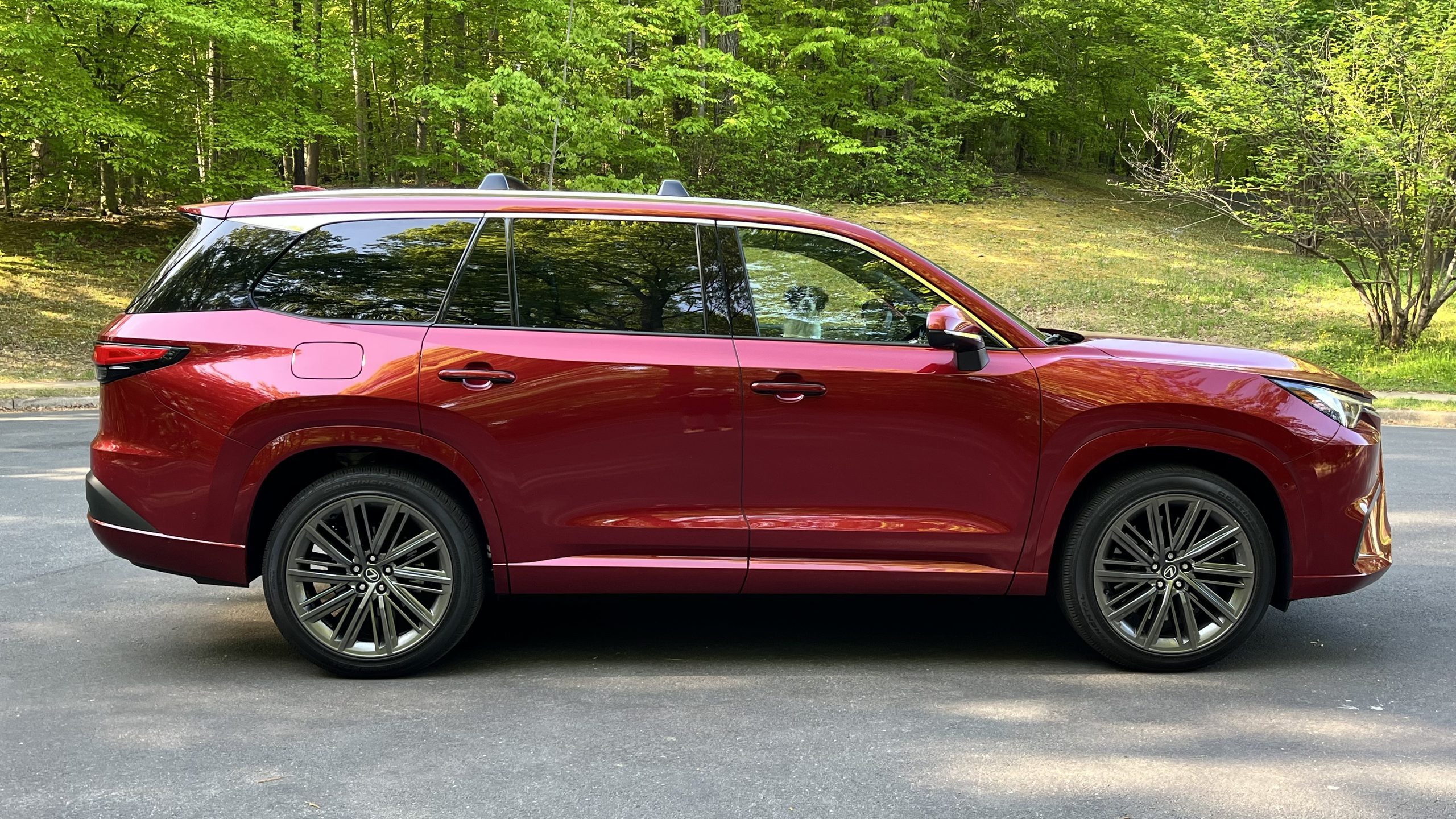
What if your next luxury SUV could drive on electricity during the week and take the entire family on a road trip without worrying about charging stations?
That’s the promise of the 2026 Lexus TX 550h+ Luxury AWD, a three-row plug-in hybrid that combines 404 horsepower, an estimated 33 miles of all-electric range, and the comfort expected from a flagship Lexus family SUV.
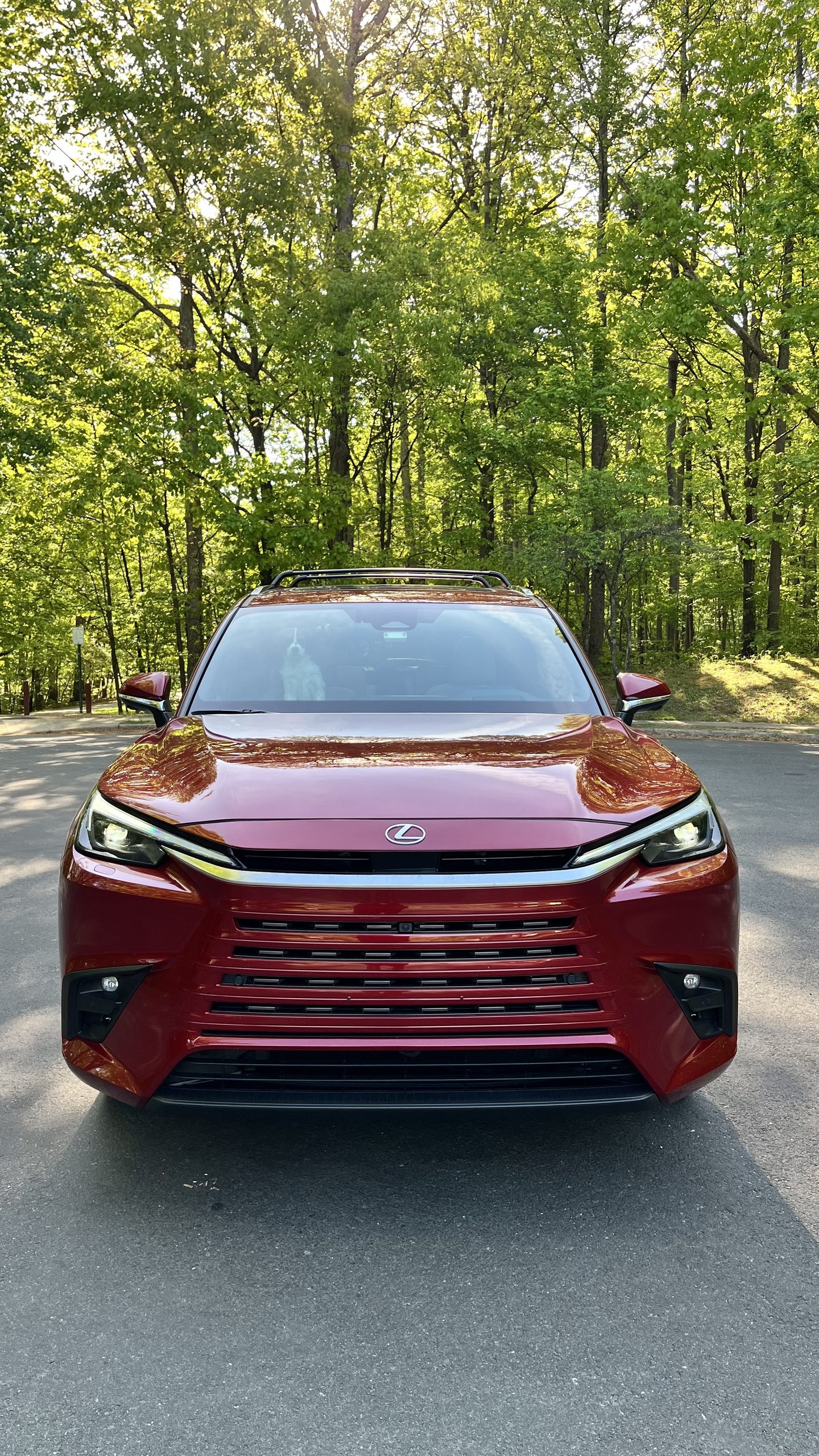
In a market where electrification often forces buyers to reconsider how they drive, the TX 550h+ offers a refreshingly practical alternative. It doesn’t ask families to change their routines. Instead, it adapts to them.
With a featured price of $85,639, however, this level of flexibility doesn’t come cheap. The question is whether Lexus has created one of the smartest luxury family SUVs available or simply one of the most expensive ways to save gasoline.
33 Electric Miles That Could Change Your Daily Routine
The most important number in the TX 550h+ isn’t its horsepower. It’s 33.
That’s the estimated distance this Lexus can travel using electricity alone before relying on its gasoline engine.
For families with relatively short commutes, those miles could cover school drop-offs, grocery shopping, office trips, and afternoon activities without consuming gasoline. Charge at home overnight, and the next morning begins with another opportunity to drive electrically.
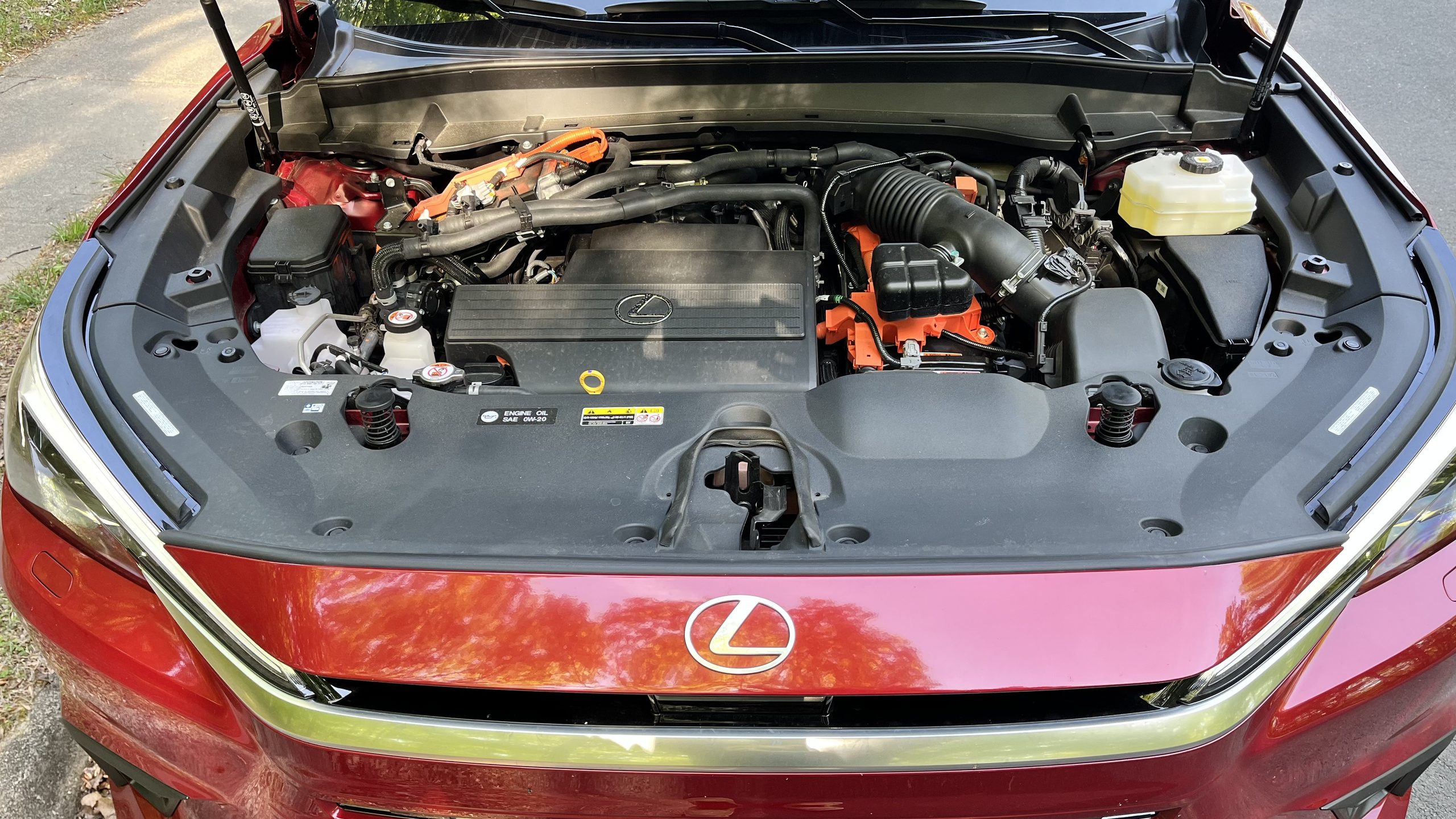
The system uses an 18.1-kWh lithium-ion battery that can be fully recharged in approximately three hours using a compatible 240-volt Level 2 charging setup under ideal conditions. A standard 120-volt household outlet is also supported, although charging takes considerably longer.
And when the battery’s usable electric range is depleted, the TX continues operating as a conventional hybrid, delivering an EPA-estimated 29 mpg combined. Its overall efficiency rating reaches 76 MPGe when accounting for electricity and gasoline use.
The result is a vehicle that makes electrification convenient rather than complicated.
Of course, 33 miles won’t cover every family’s daily driving, and colder temperatures, highway speeds, and climate-control demands can reduce electric range. But for households able to charge regularly, the potential to significantly reduce gasoline consumption is substantial.
A 404-Horsepower V6 With Nothing to Prove
Luxury doesn’t always need to announce itself.
Under the hood, Lexus combines a naturally aspirated 3.5-liter V6 with electric motors, an electronically controlled continuously variable transmission, and DIRECT4 all-wheel drive.
Together, they produce 404 horsepower—enough for Lexus to estimate a 0–60 mph time of approximately 5.9 seconds.
That’s impressive performance for a three-row SUV weighing roughly 5,400 pounds.
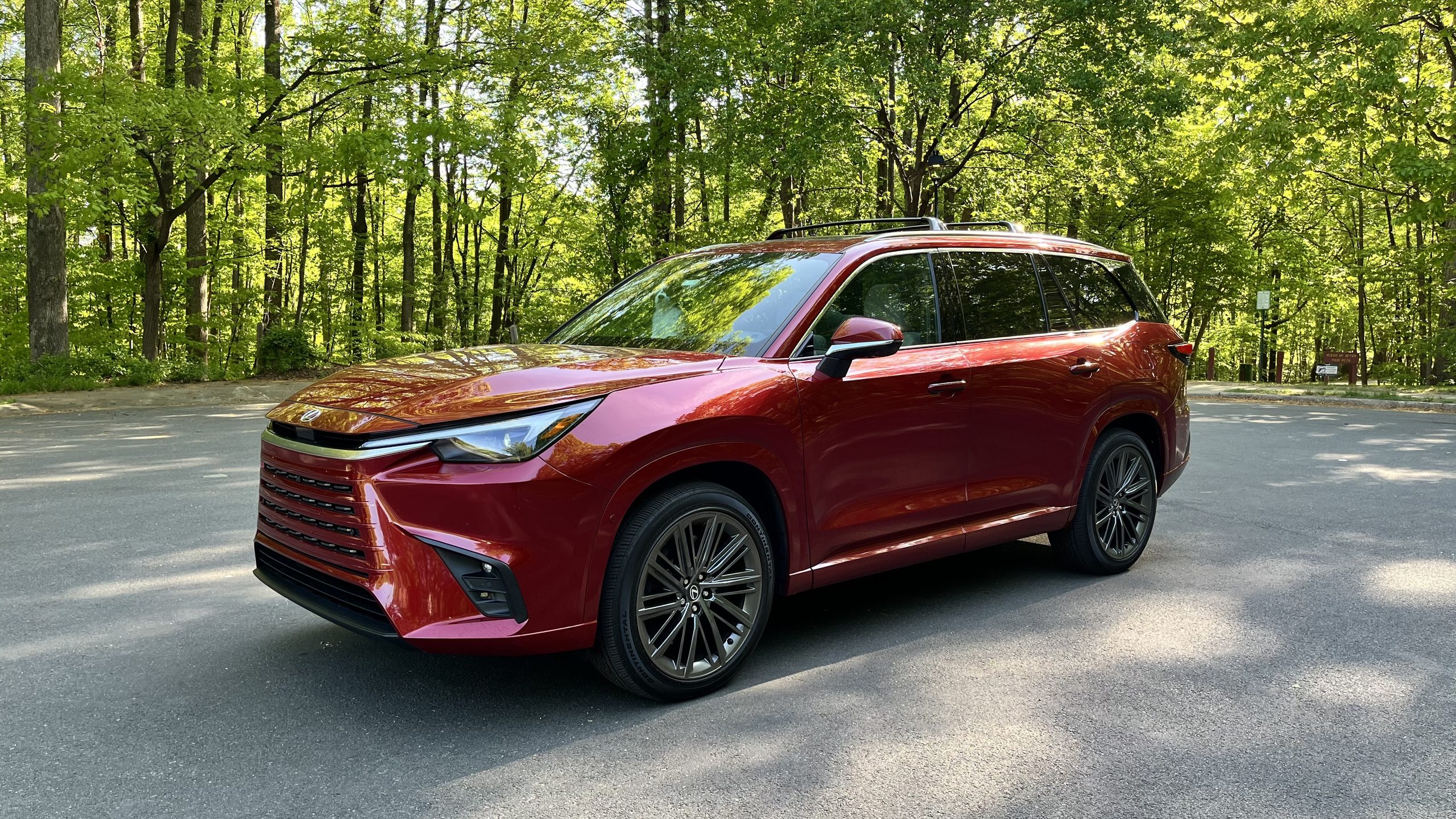
Yet the TX 550h+ isn’t designed to compete with aggressively tuned performance SUVs. Its mission is different: delivering confident acceleration, smooth power delivery, and the kind of effortless capability that makes everyday driving feel less demanding.
The V6 also gives the TX a distinctive position within the Lexus lineup. While the TX 500h uses a turbocharged four-cylinder hybrid powertrain, the plug-in model pairs electrification with the character of a six-cylinder engine.
The electronically controlled transmission prioritizes smoothness and efficiency rather than traditional gear changes. Drivers expecting the sharper responses of a sport-oriented SUV may find its character less engaging.
But that’s not necessarily a weakness.
For a vehicle designed around family comfort, refinement matters more than drama.
Inside, Lexus Understands What Families Actually Need
The TX 550h+ makes one of its strongest arguments the moment passengers settle into the cabin.
Rather than treating the third row as an afterthought, Lexus designed the TX around genuine three-row usability.
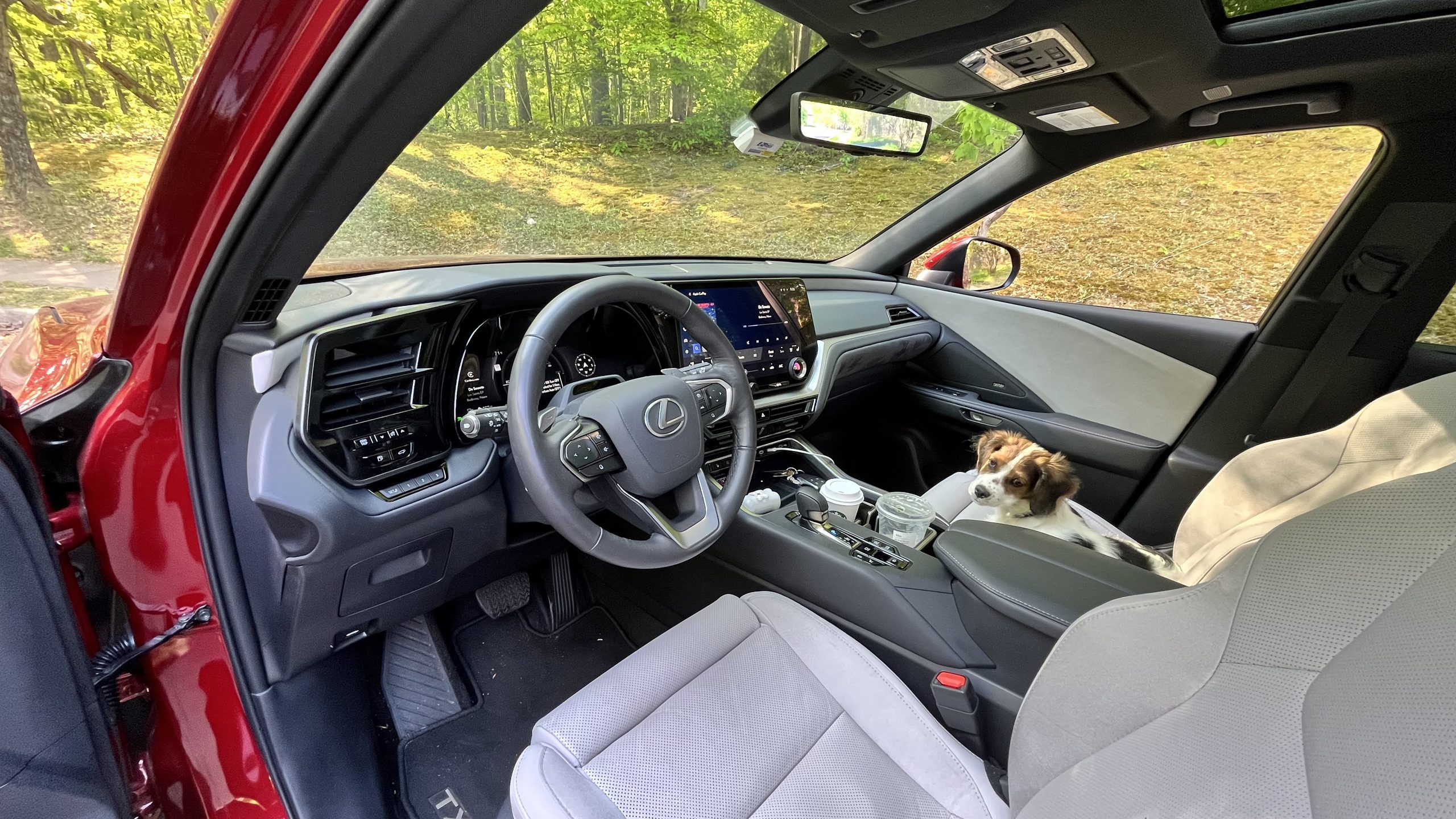
The six-passenger configuration features second-row captain’s chairs, creating a more spacious environment while allowing easier access to the rear seats. Available comfort amenities include heated and ventilated second-row seating and sunshades.
Up front, semi-aniline leather upholstery, heated and ventilated seats, and a heated steering wheel reinforce the premium atmosphere.
Technology is equally prominent. A 14-inch Lexus Interface touchscreen anchors the dashboard, complemented by a 12.3-inch digital instrument display, wireless smartphone integration, and available premium features such as a head-up display and Mark Levinson audio system.
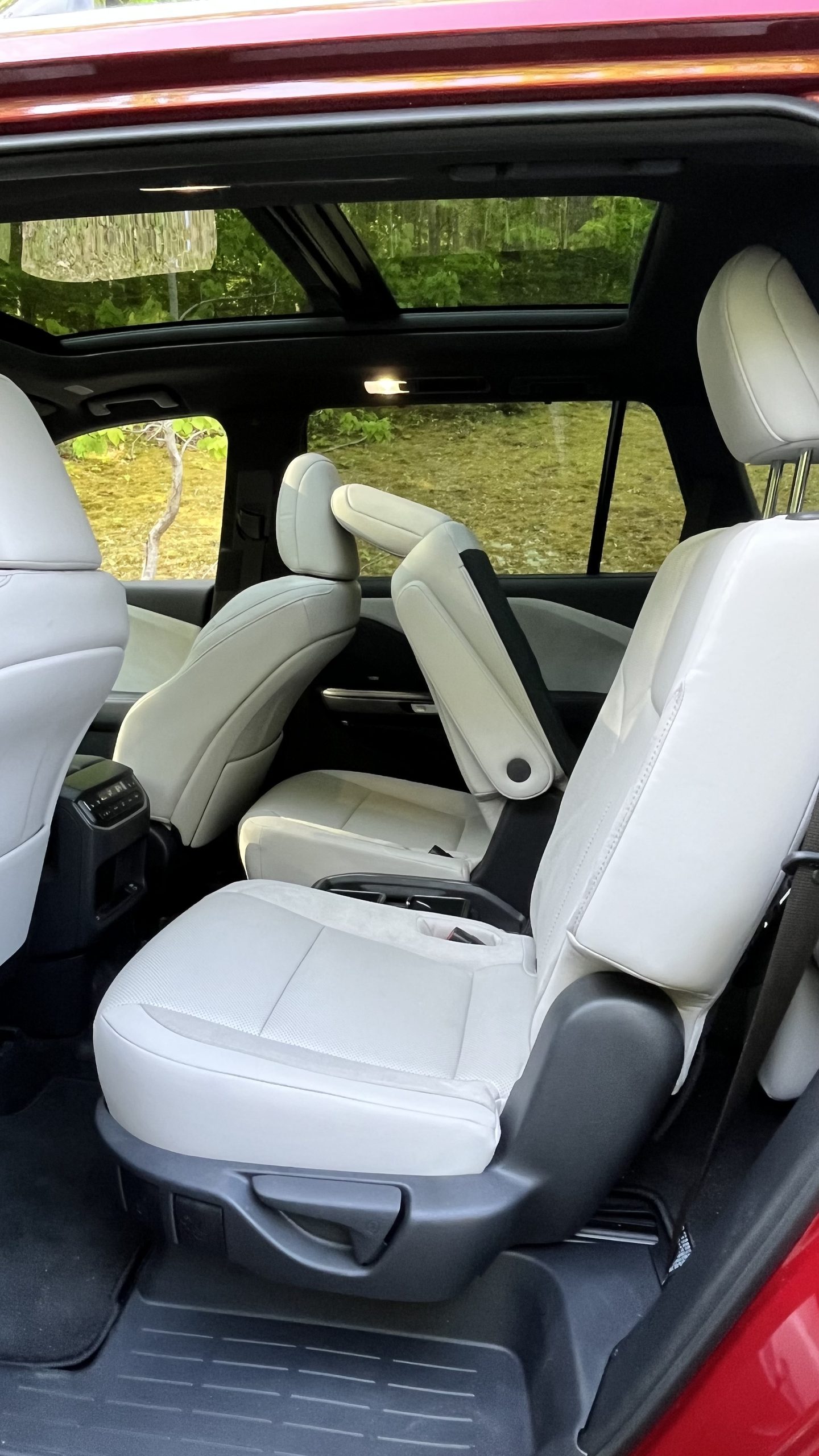
But the TX’s greatest luxury may be its practicality.
With 20.2 cubic feet of cargo space behind the third row and up to 97 cubic feet with the rear seating folded, it can transition from family transportation to a surprisingly capable cargo carrier.
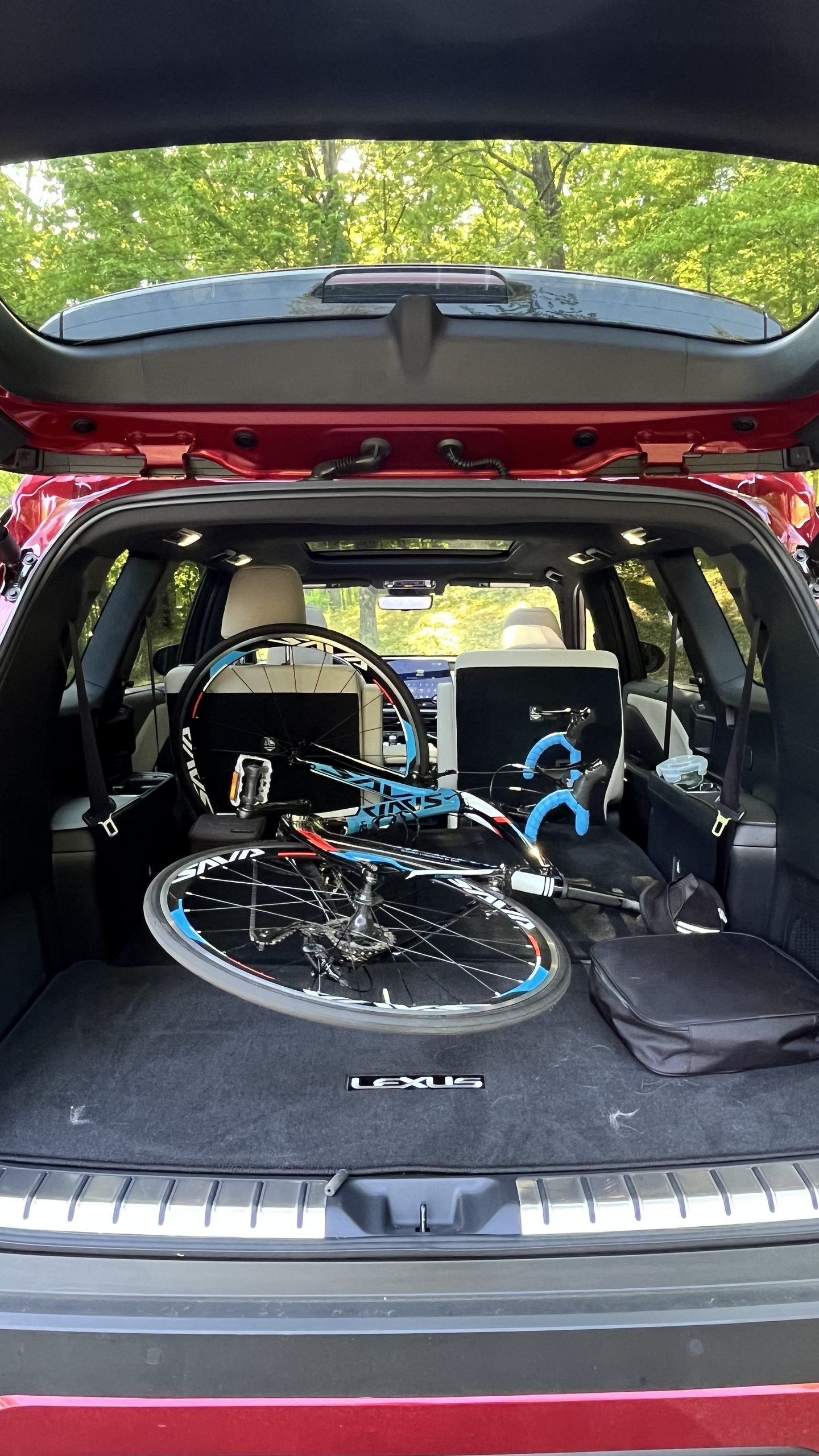
There are compromises. Six seats won’t satisfy families needing seven or eight passenger positions, and using all three rows naturally limits luggage capacity.
Still, Lexus has clearly prioritized the needs of passengers rather than simply maximizing the number of seats.
Technology That Makes a Large SUV Easier to Live With
At more than 203 inches long, the TX is a substantial vehicle. Maneuvering something this size through crowded parking lots and narrow urban spaces can become part of the ownership experience.
Lexus addresses that challenge with an extensive collection of driver-assistance and convenience technologies.
Lexus Safety System+ 3.0 comes standard, providing features designed to assist with collision avoidance, lane keeping, and highway driving.
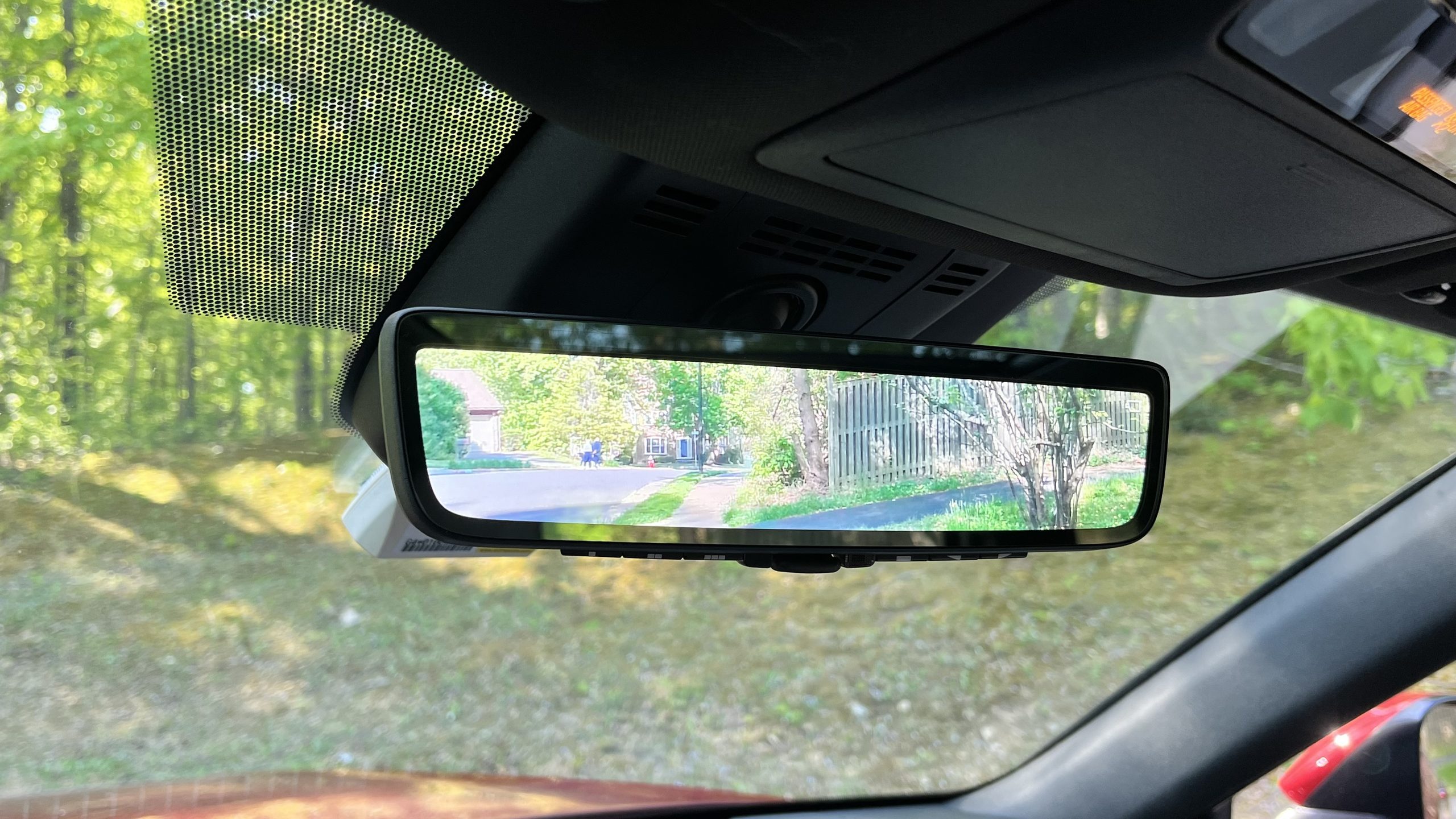
Depending on equipment, additional systems such as a panoramic view monitor, Traffic Jam Assist, and Advanced Park can make daily driving and parking less stressful.
These systems don’t replace an attentive driver, but they can reduce some of the effort associated with operating a large family SUV.
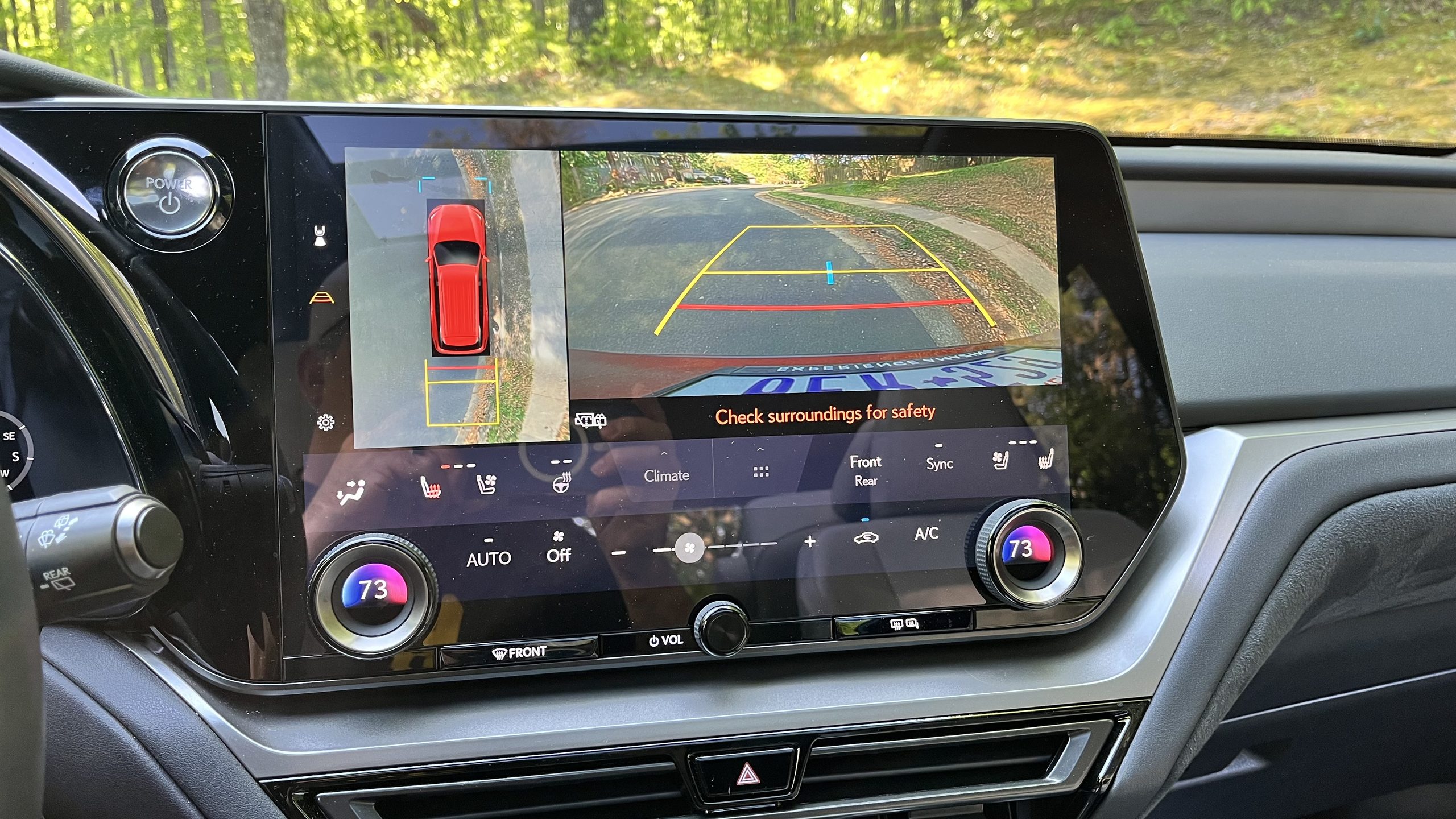
And that’s precisely where the TX makes sense: technology should make life easier, not more complicated.
Is an $85,639 Lexus Really Worth It?
This is where the conversation becomes more interesting.
The 2026 TX 550h+ Luxury AWD carried an announced starting MSRP of $81,060 including delivery, while the featured vehicle is priced at $85,639.
That’s a considerable investment, even in today’s luxury SUV market.
For comparison, Lexus also offers the TX 500h, a conventional hybrid producing 366 horsepower and delivering an estimated 27 mpg combined.
The TX 500h costs considerably less, making it an attractive alternative for drivers who don’t have convenient access to home charging.
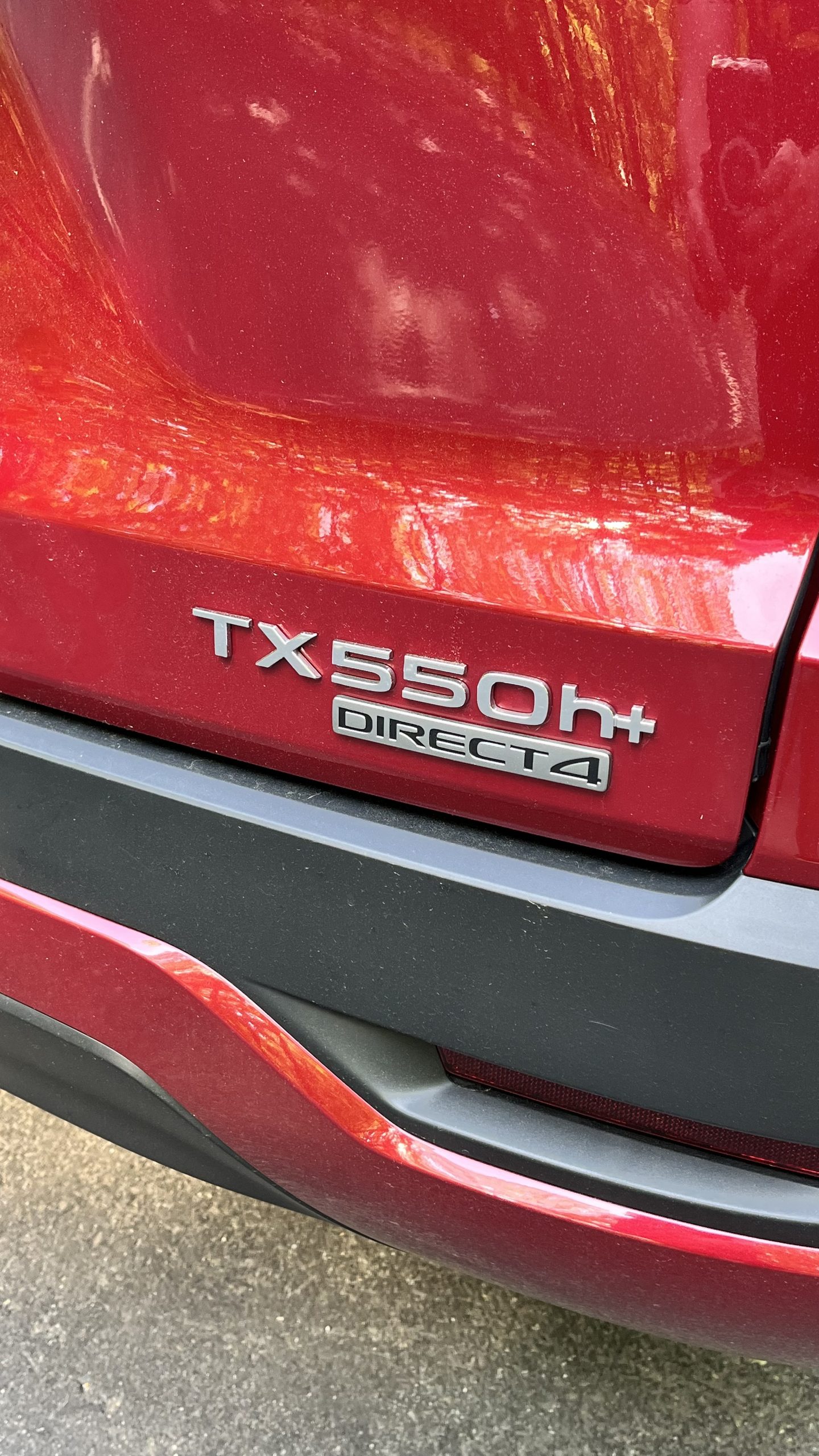
And that’s the important distinction.
The TX 550h+ doesn’t automatically become the more economical choice simply because it can run on electricity. Actual savings depend on electricity costs, gasoline prices, driving distances, charging habits, and the initial purchase-price difference.
Buyers who rarely plug in may struggle to justify the premium.
But for families who can recharge consistently, the appeal extends beyond fuel savings. There’s the convenience of electric driving around town, the flexibility of gasoline for longer journeys, and the ability to enjoy both without committing to a fully electric vehicle.
The TX 550h+ is less about finding the cheapest way to drive and more about finding a comfortable balance between two technologies.
One More Reason the 2026 Model Matters
There’s an unexpected twist to the TX 550h+ story.
Lexus has confirmed that the plug-in hybrid version will be discontinued for the 2027 model year.
That makes the 2026 TX 550h+ the final model-year opportunity to purchase this particular combination of V6 power, plug-in hybrid efficiency, and three-row Lexus luxury, subject to remaining inventory.
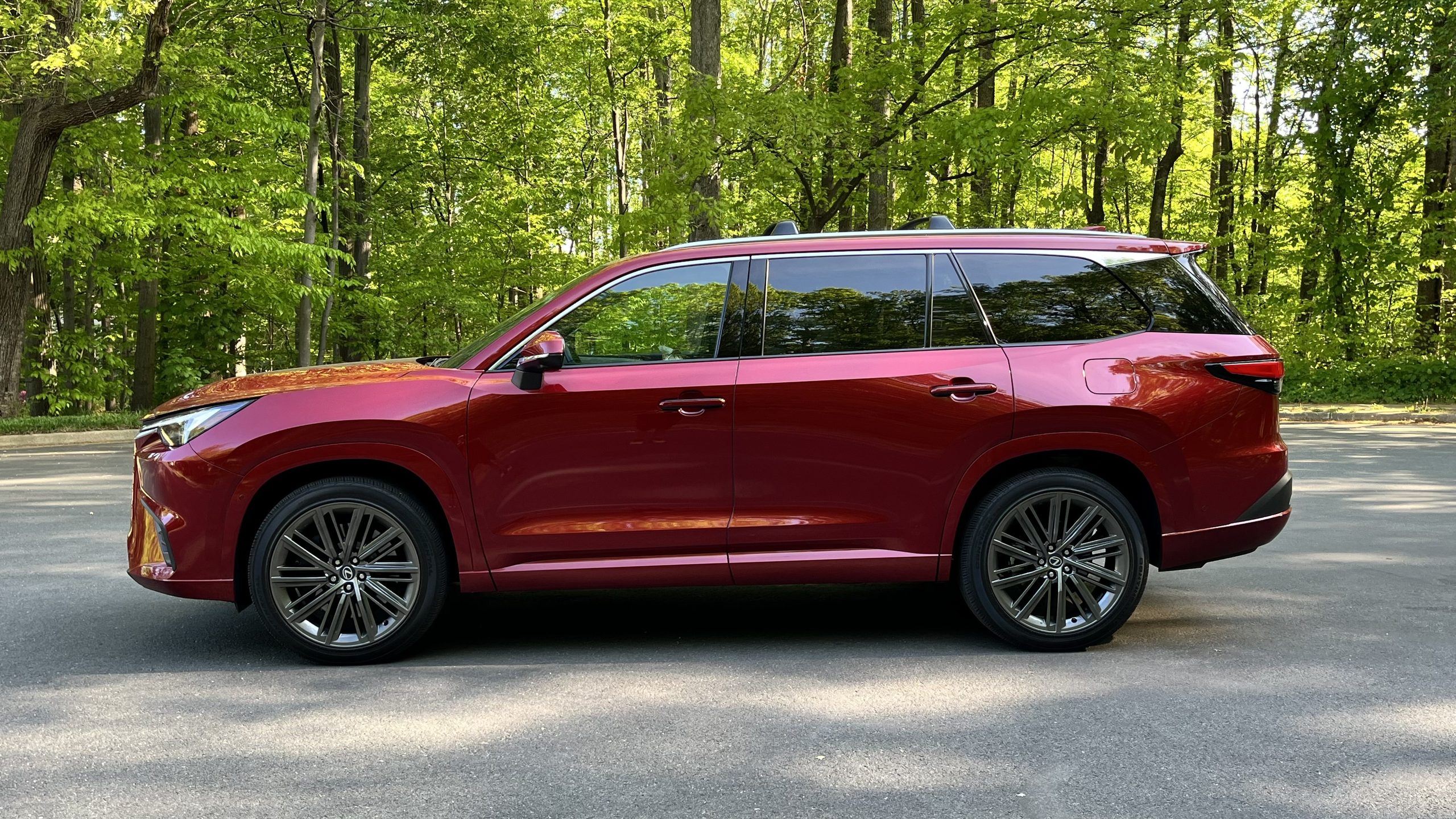
It also makes the vehicle more distinctive within the Lexus lineup, although discontinuation alone shouldn’t be interpreted as a guarantee of stronger resale value.
For buyers who specifically want a plug-in hybrid luxury SUV with a six-cylinder engine, the decision may now carry greater urgency.
The Carsfera Verdict: Luxury That Fits Real Life
The 2026 Lexus TX 550h+ doesn’t need dramatic styling, an aggressive exhaust note, or extraordinary acceleration figures to make its point.
Its appeal is more intelligent than that.
It offers the possibility of electric driving for everyday errands, the freedom of a gasoline-backed hybrid for longer journeys, and a spacious, beautifully equipped cabin designed around the people who matter most.
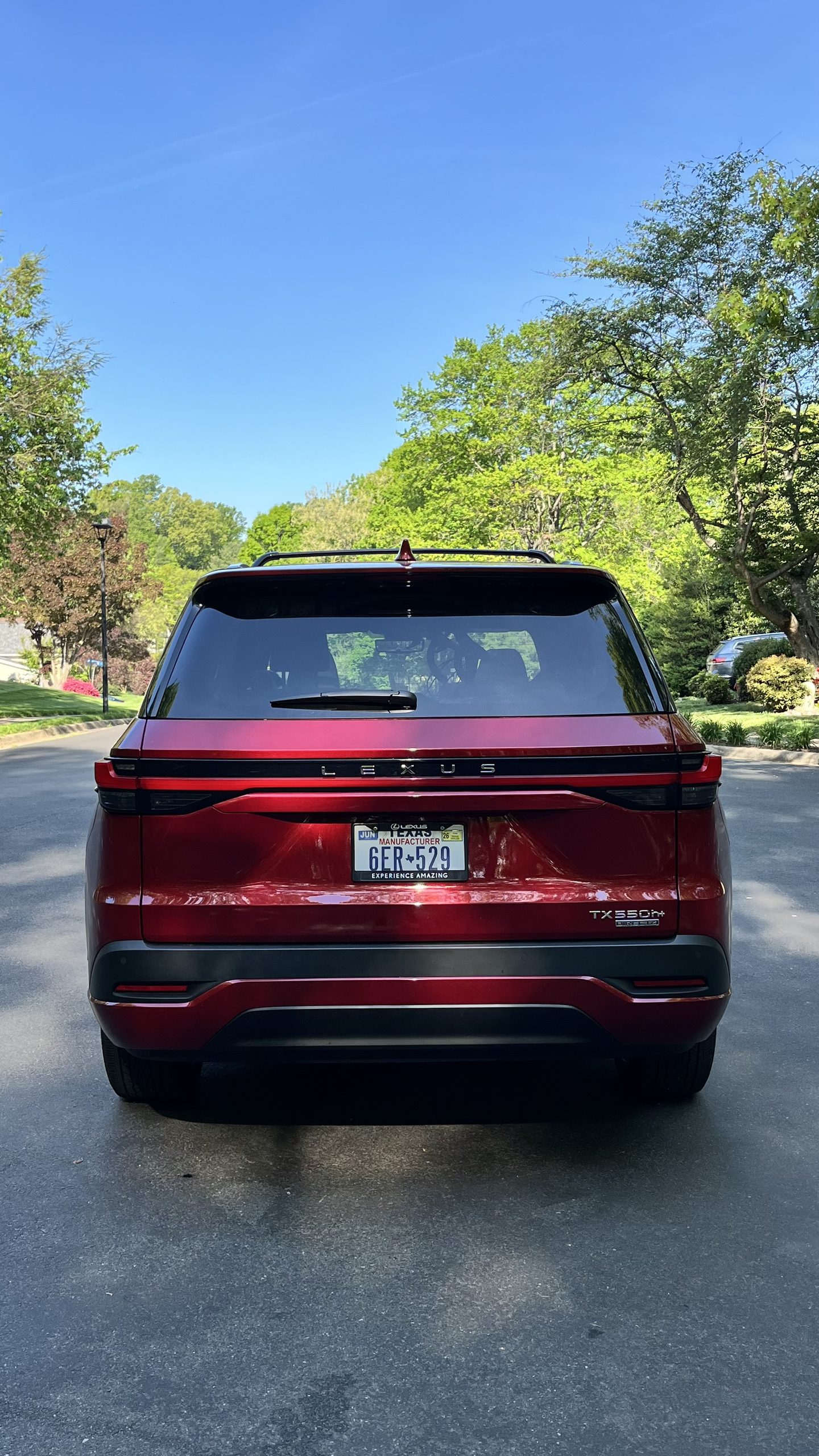
It’s not perfect. The price is substantial, the electric range is limited compared with a fully electric SUV, and buyers who cannot charge regularly may find better value elsewhere in the TX lineup.
But for the right household, those compromises may be surprisingly easy to accept.
The TX 550h+ represents a compelling vision of luxury: not simply having more power, more technology, or more expensive materials, but having a vehicle that asks less of you.
And perhaps that’s what modern family luxury should be about.
Would you spend $85,000 on a three-row Lexus that could handle much of your weekly driving on electricity? Or would you choose a conventional hybrid instead?
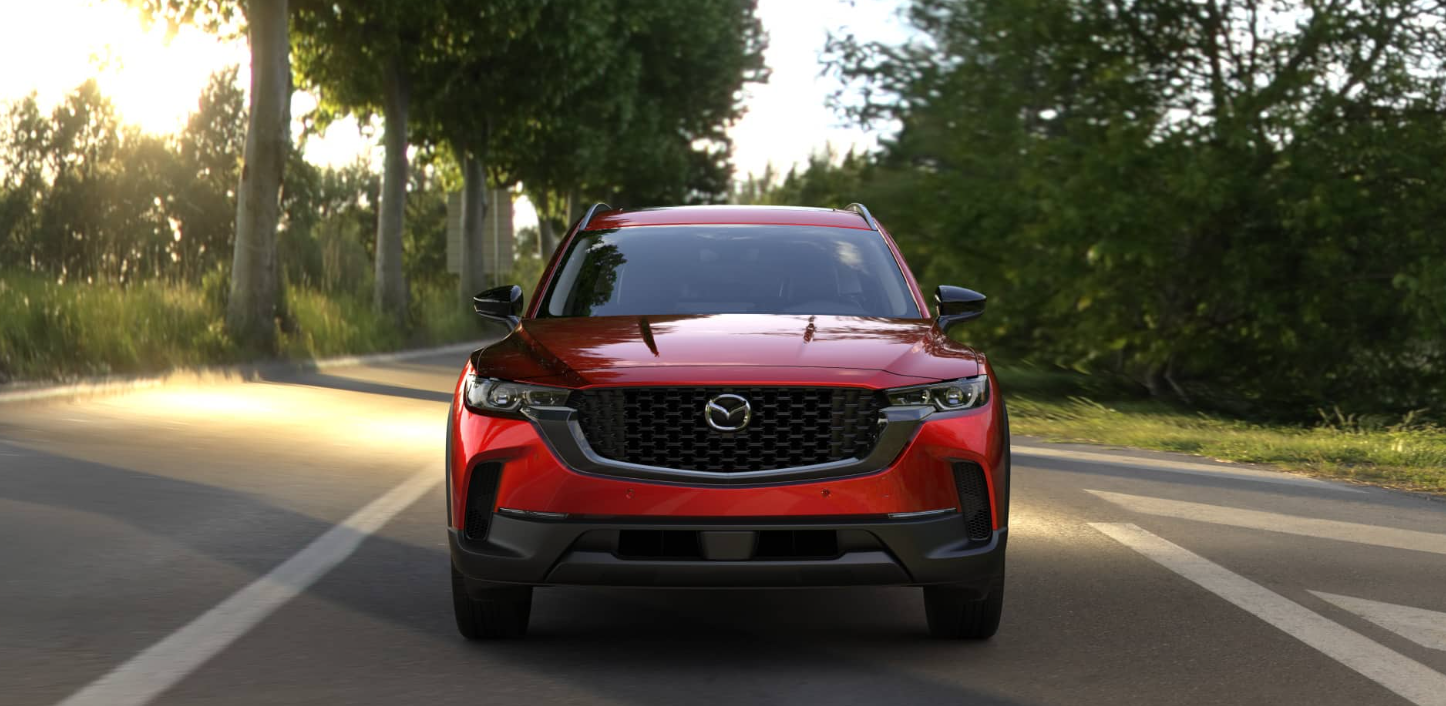
The compact SUV market is packed with practical choices. Most offer similar features, similar fuel economy, and similar levels of comfort. For many buyers, that’s enough.
Mazda has taken a different approach.
The 2026 Mazda CX-50 2.5 Turbo Premium Plus AWD isn’t trying to be just another crossover designed to blend into traffic. Instead, it targets drivers who want the practicality of an SUV without losing the engagement and confidence that make driving enjoyable in the first place.
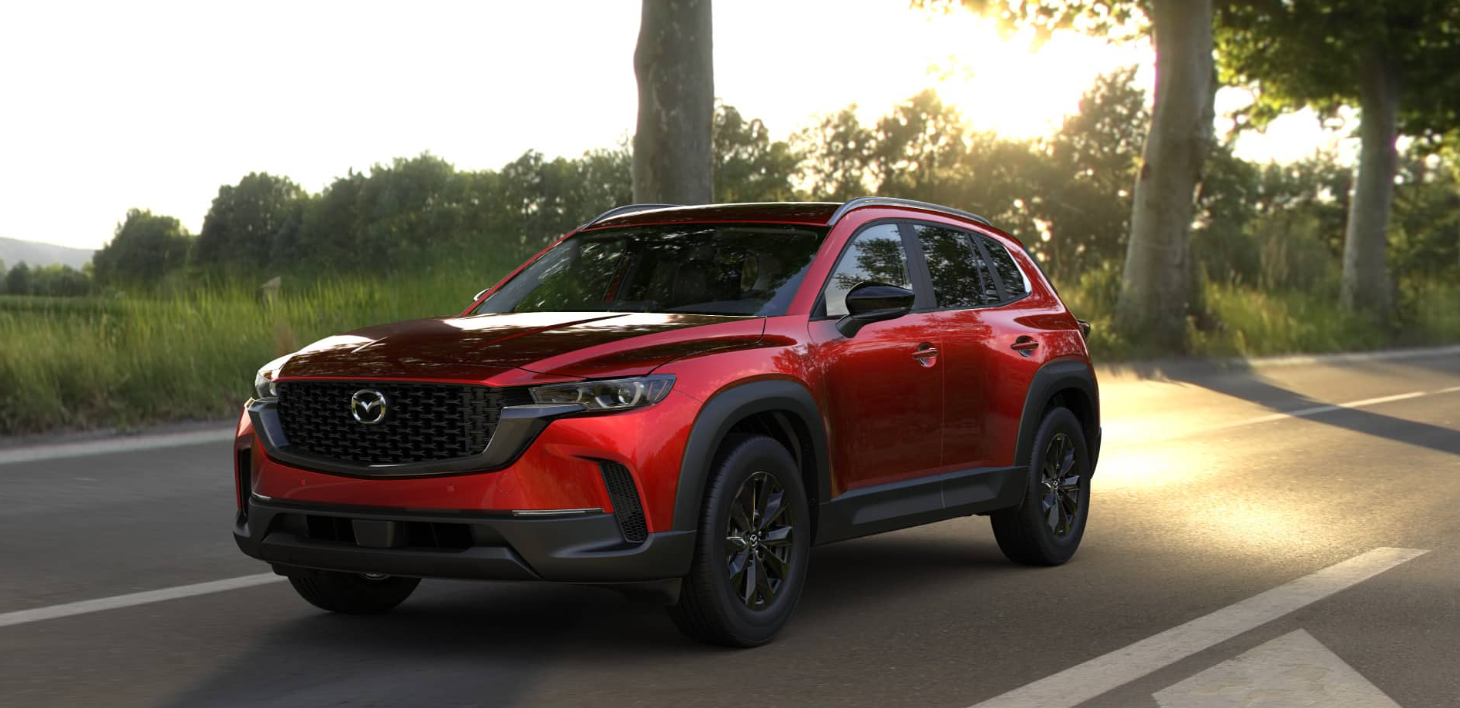
After spending time evaluating the CX-50 Turbo Premium Plus, it’s clear that Mazda continues to focus on something many competitors have largely abandoned: creating vehicles with genuine personality.
Refined
One look at the CX-50 explains why it stands out in crowded parking lots.
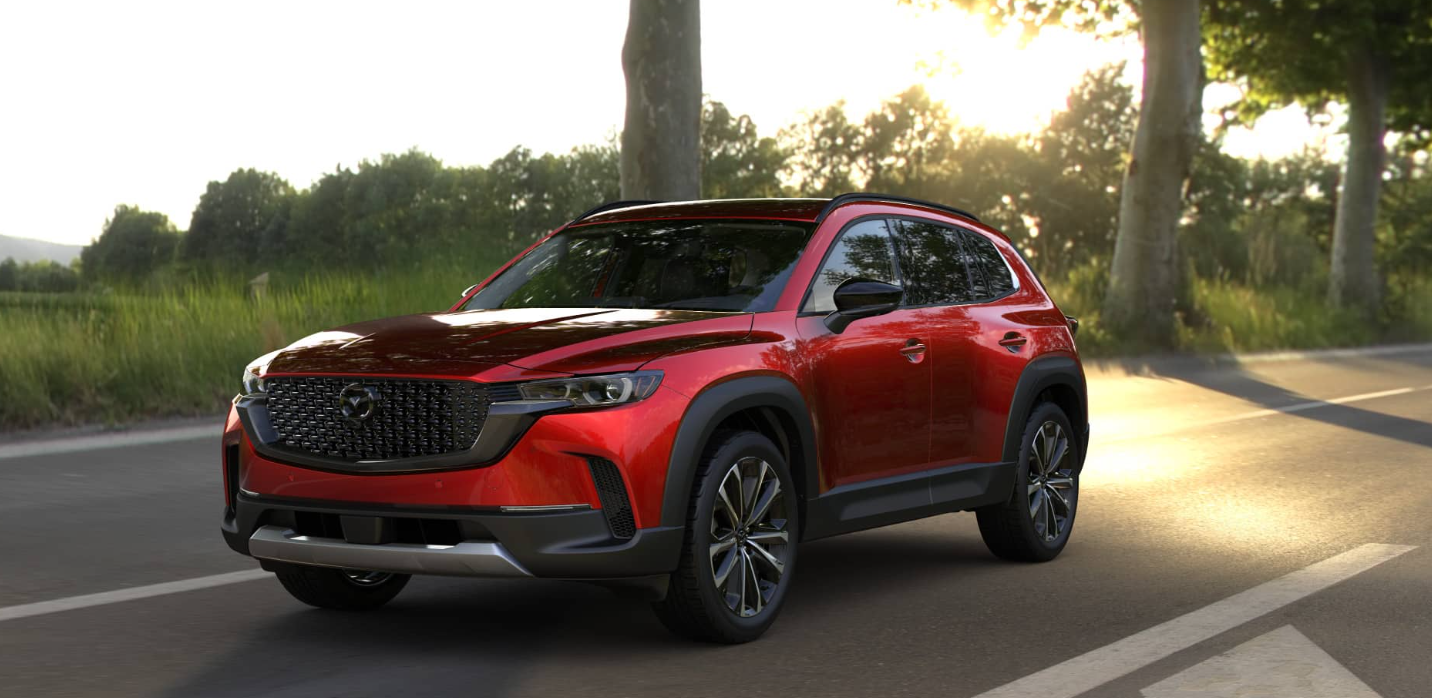
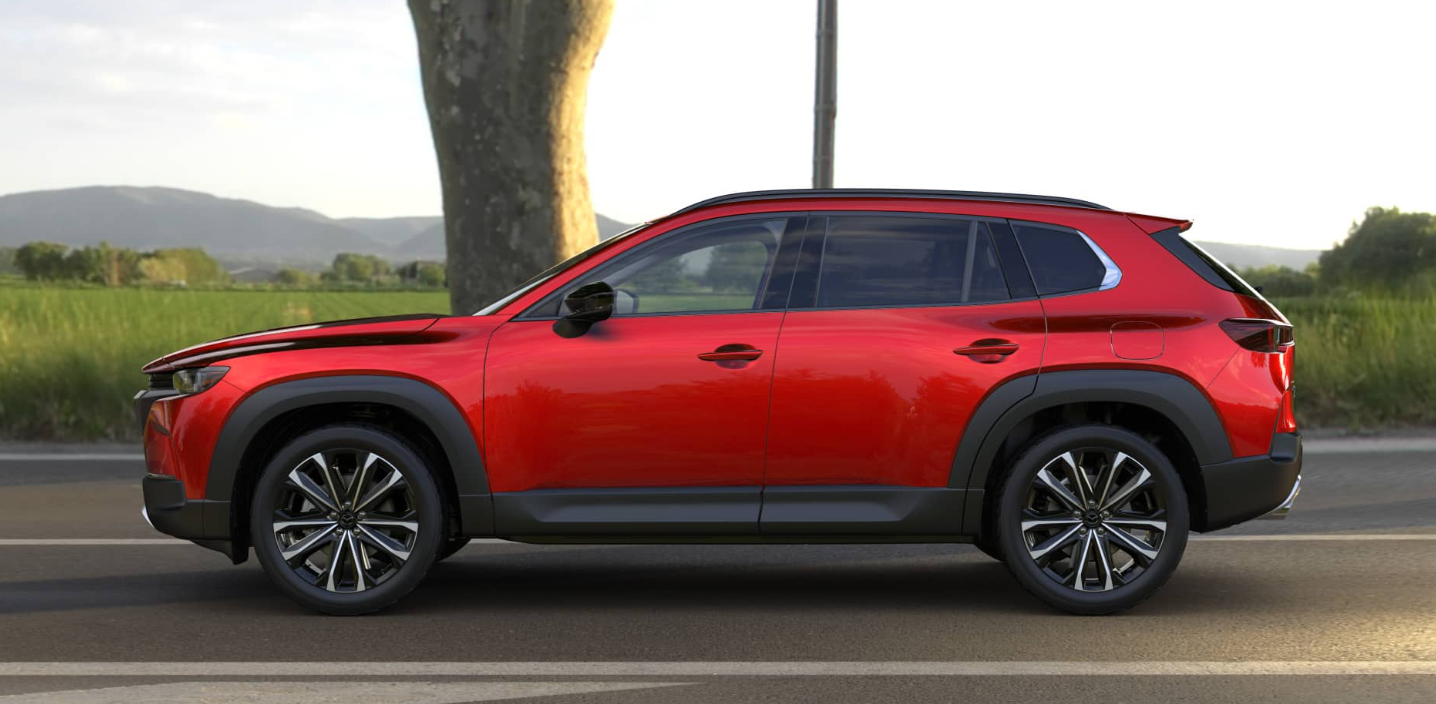
Compared to many compact SUVs, the CX-50 sits wider and lower, giving it a more athletic stance. The proportions feel purposeful, with styling that balances rugged capability and premium design. The vehicle presents an especially upscale appearance that wouldn’t look out of place next to luxury-branded competitors.
Mazda has done an impressive job creating a crossover that feels adventurous without looking overstyled. The design is clean, mature, and likely to age well.
For buyers who value appearance as much as practicality, the CX-50 immediately makes a strong first impression.
Turbo Power Makes a Difference
The biggest reason many shoppers gravitate toward this trim level is what’s under the hood.
The CX-50 Turbo Premium Plus is powered by Mazda’s turbocharged 2.5-liter four-cylinder engine, producing up to 256 horsepower and 320 lb-ft of torque when using premium fuel.
Those numbers translate into real-world performance that feels noticeably stronger than many competitors in the segment.
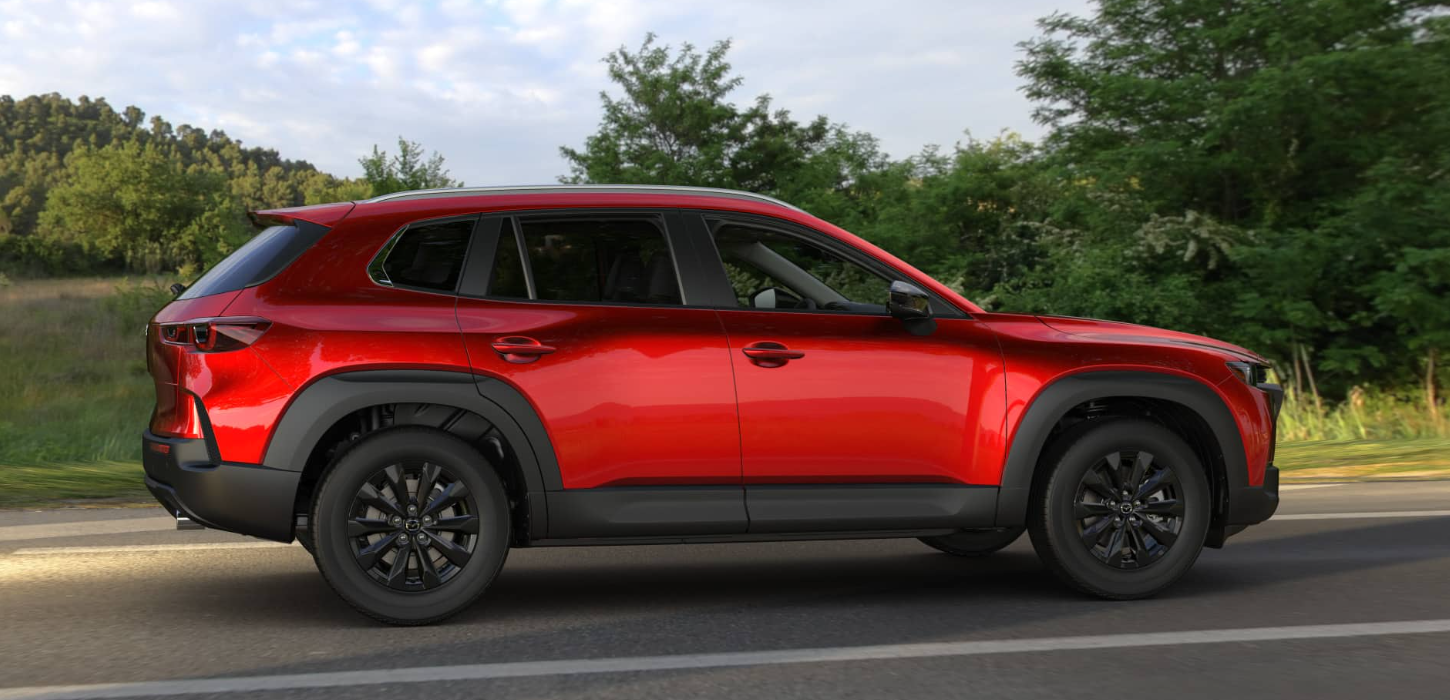
Whether entering a fast-moving highway, overtaking slower traffic, or tackling steep grades, the turbocharged engine delivers power with minimal effort. The SUV never feels strained or underpowered, even with passengers and cargo onboard.
It’s not a performance SUV in the traditional sense, but it offers enough acceleration to make everyday driving more enjoyable and less stressful.
That’s something many compact crossovers struggle to achieve.
One of the Best Driving Experiences in the Segment
Where the CX-50 truly separates itself from many rivals is in how it drives.
Mazda has built a reputation for creating vehicles that feel more connected to the road than their competitors, and the CX-50 continues that tradition.
The steering has a natural weight that inspires confidence without feeling heavy. The suspension strikes an effective balance between comfort and control, allowing the vehicle to remain composed through corners while still providing a comfortable ride during daily commuting.
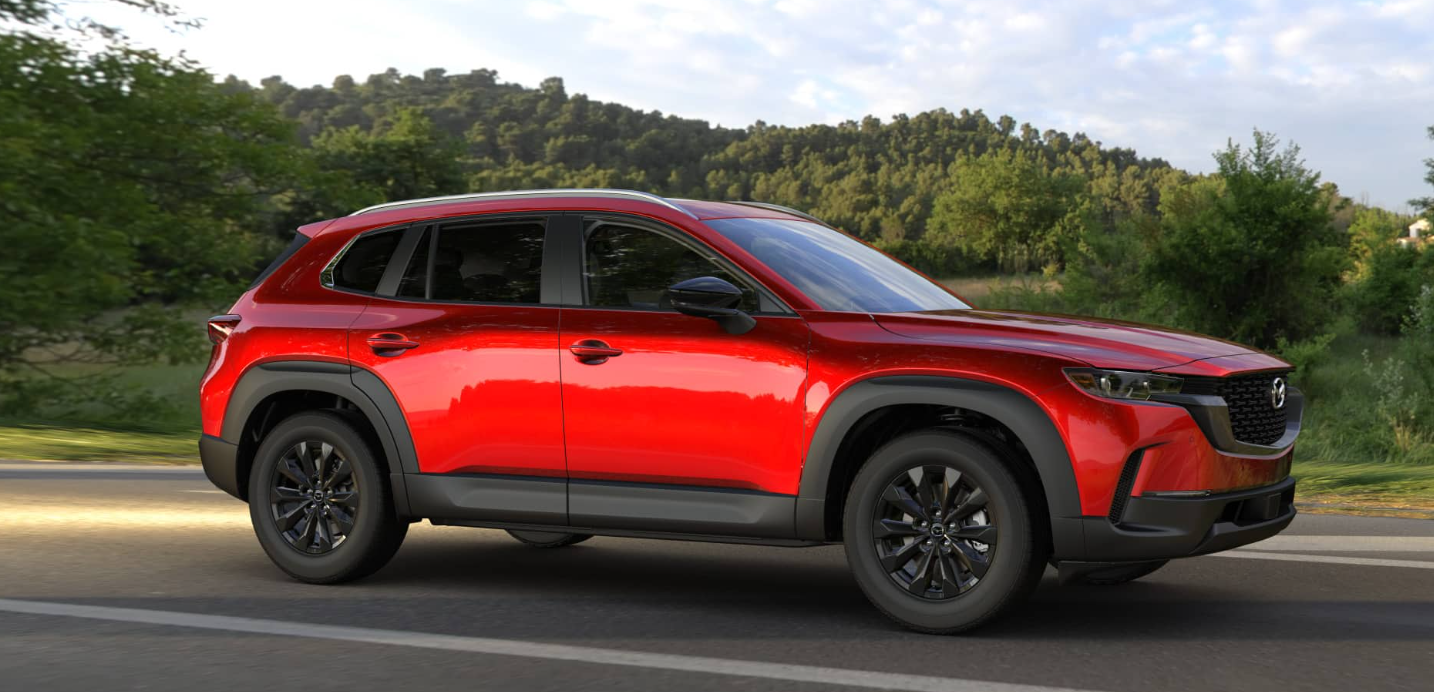
Unlike some crossovers that feel disconnected or overly soft, the CX-50 maintains a sense of responsiveness that drivers will notice immediately.
Standard all-wheel drive further enhances that confidence.
Whether driving through rain, snow, gravel roads, or simply navigating winding back roads, the CX-50 feels secure and predictable. The AWD system works seamlessly in the background, helping the vehicle maintain traction without drawing attention to itself.
For buyers comparing the CX-50 against popular options like the Toyota RAV4, Honda CR-V, Hyundai Tucson, or even Mazda’s own CX-5, driving dynamics remain one of Mazda’s strongest advantages.
Premium Features Without a Luxury Badge
The Premium Plus trim sits at the top of the CX-50 lineup, and it shows.
The cabin feels thoughtfully designed and well executed, with materials and technology that create a near-luxury experience.
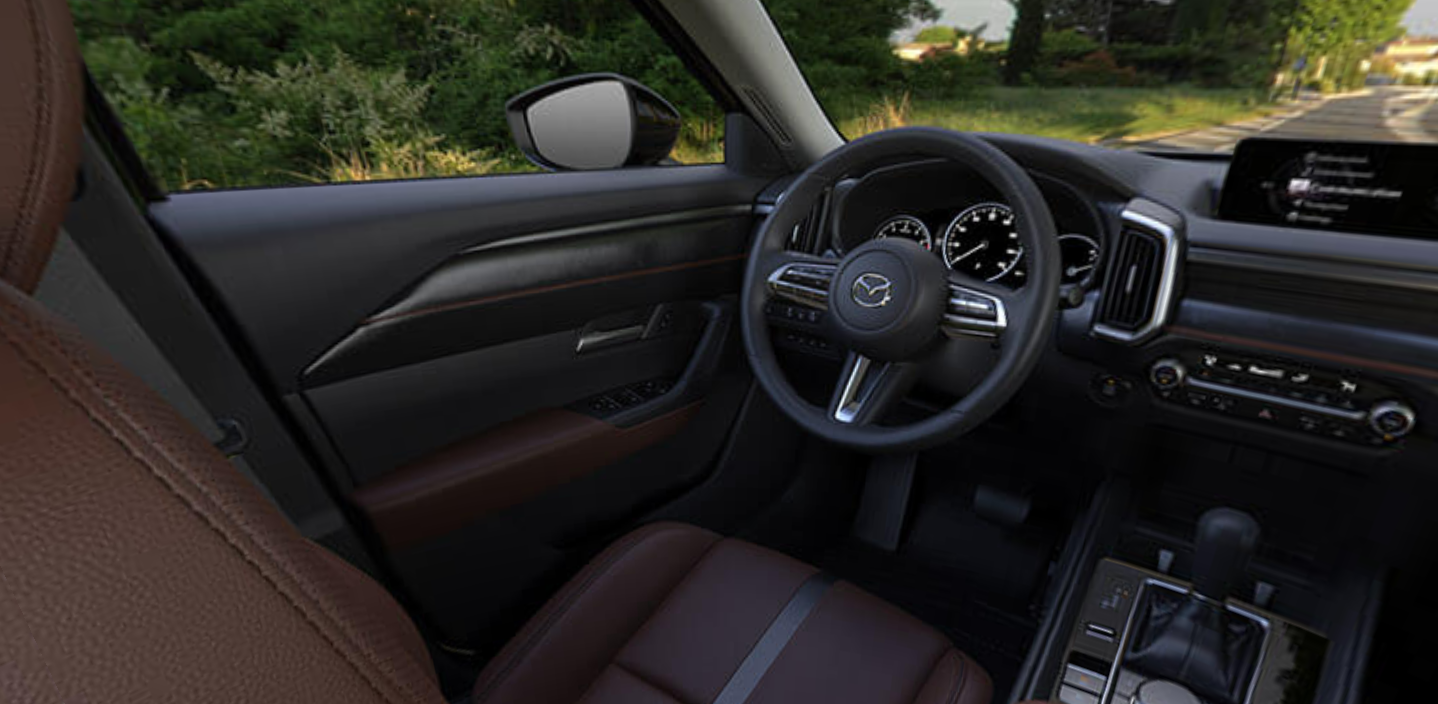
Leather-trimmed seating surfaces, ventilated front seats, heated rear seats, a panoramic moonroof, wireless smartphone connectivity, wireless charging, and a Bose premium audio system all contribute to a cabin that feels more expensive than its price tag suggests.
The available 360-degree camera system and front and rear parking sensors also make maneuvering easier in tight spaces, while Mazda’s suite of advanced safety technologies provides additional peace of mind for families and commuters alike.
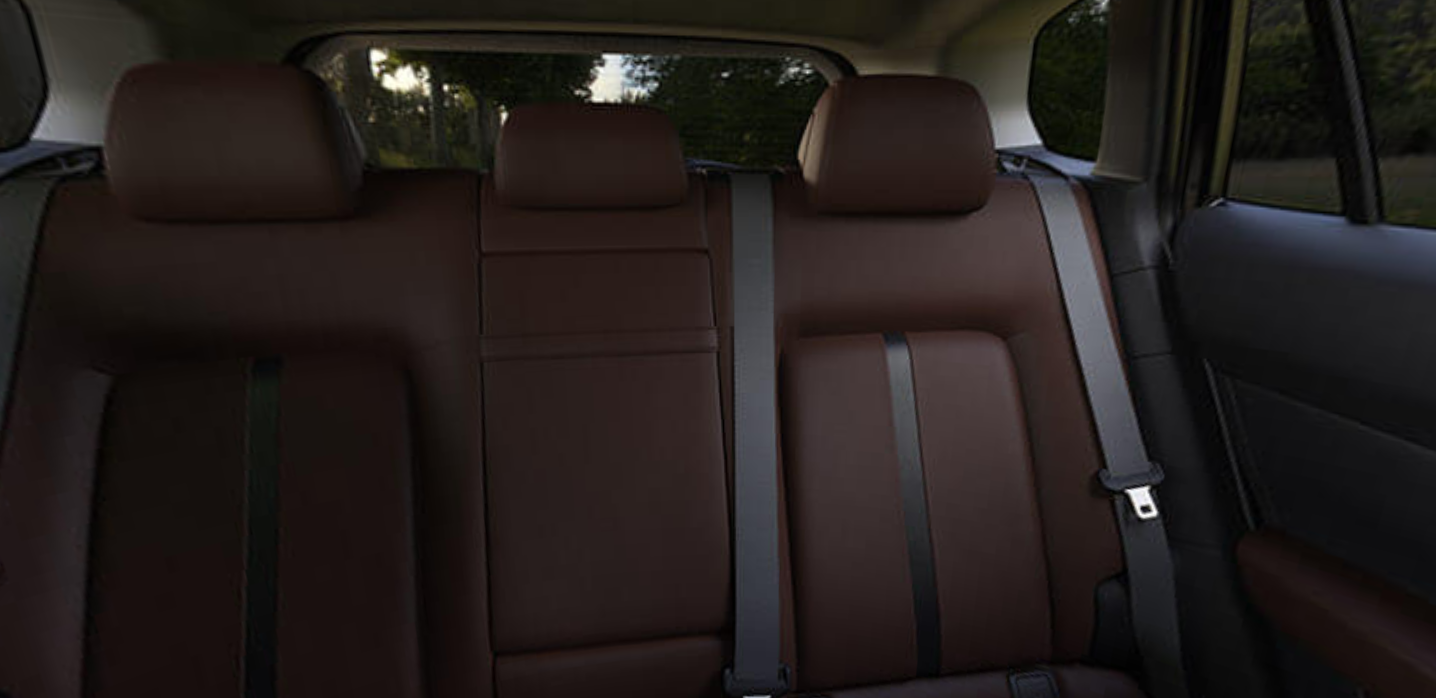
One of Mazda’s greatest strengths continues to be interior design. Rather than overwhelming drivers with excessive screens and flashy gimmicks, the company focuses on creating a clean, functional, and upscale environment.
The result is a cabin that feels premium without trying too hard.
Fuel Economy Remains Competitive
Performance often comes at the expense of efficiency, but the CX-50 Turbo manages to strike a reasonable balance.
EPA estimates are rated at 23 mpg in the city, 29 mpg on the highway, and 25 mpg combined.
Those figures won’t lead the segment, but they remain competitive considering the turbocharged engine, standard all-wheel drive, and strong performance capabilities.
For most buyers, the slight tradeoff in fuel economy will be worth the added power and driving enjoyment.
Utility That Fits Most Lifestyles
Despite its focus on driving dynamics, the CX-50 still fulfills the practical expectations buyers have for a compact SUV.
Cargo space measures 31.4 cubic feet behind the second row. While that figure doesn’t lead the class, it provides enough room for groceries, luggage, sports equipment, and the demands of everyday life.
The turbocharged model also offers a towing capacity of up to 3,500 pounds, making it capable of handling small boats, utility trailers, personal watercraft, or lightweight campers.
For outdoor enthusiasts and active families, that extra capability adds meaningful versatility.
The CX-50 may not be the largest vehicle in its segment, but it delivers enough utility for most real-world situations.
Value and Pricing
With a total MSRP of approximately $45,215 including destination and options, the CX-50 Turbo Premium Plus competes in the upper end of the compact SUV category.
At first glance, that price may seem ambitious.
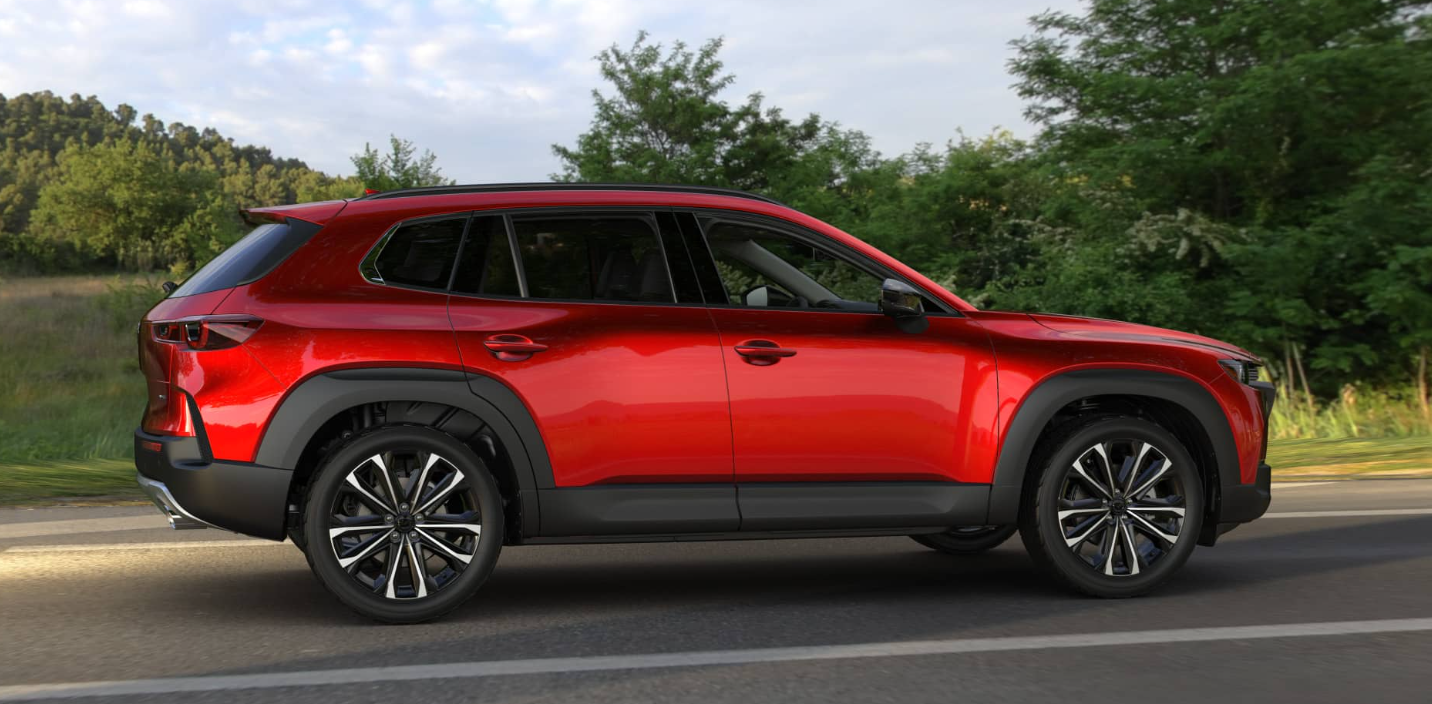
However, when buyers consider the level of equipment, premium interior quality, standard all-wheel drive, turbocharged performance, advanced safety features, and distinctive design, the value proposition becomes easier to understand.
In many ways, the CX-50 offers a near-luxury experience without requiring buyers to step into a luxury brand.
That alone will make it appealing to many shoppers.
Final Thoughts
The 2026 Mazda CX-50 2.5 Turbo Premium Plus AWD won’t be the ideal choice for someone whose only priority is maximum cargo capacity.
There are larger and roomier options available.
What Mazda offers instead is something increasingly rare in the crossover segment: character.
The CX-50 combines strong performance, confident handling, premium features, attractive styling, and everyday practicality into a package that feels genuinely enjoyable to drive.
For buyers who view driving as more than simply getting from one place to another, that’s a meaningful advantage.
The compact SUV segment is full of competent vehicles. The CX-50 stands out because it manages to be competent while still feeling special.
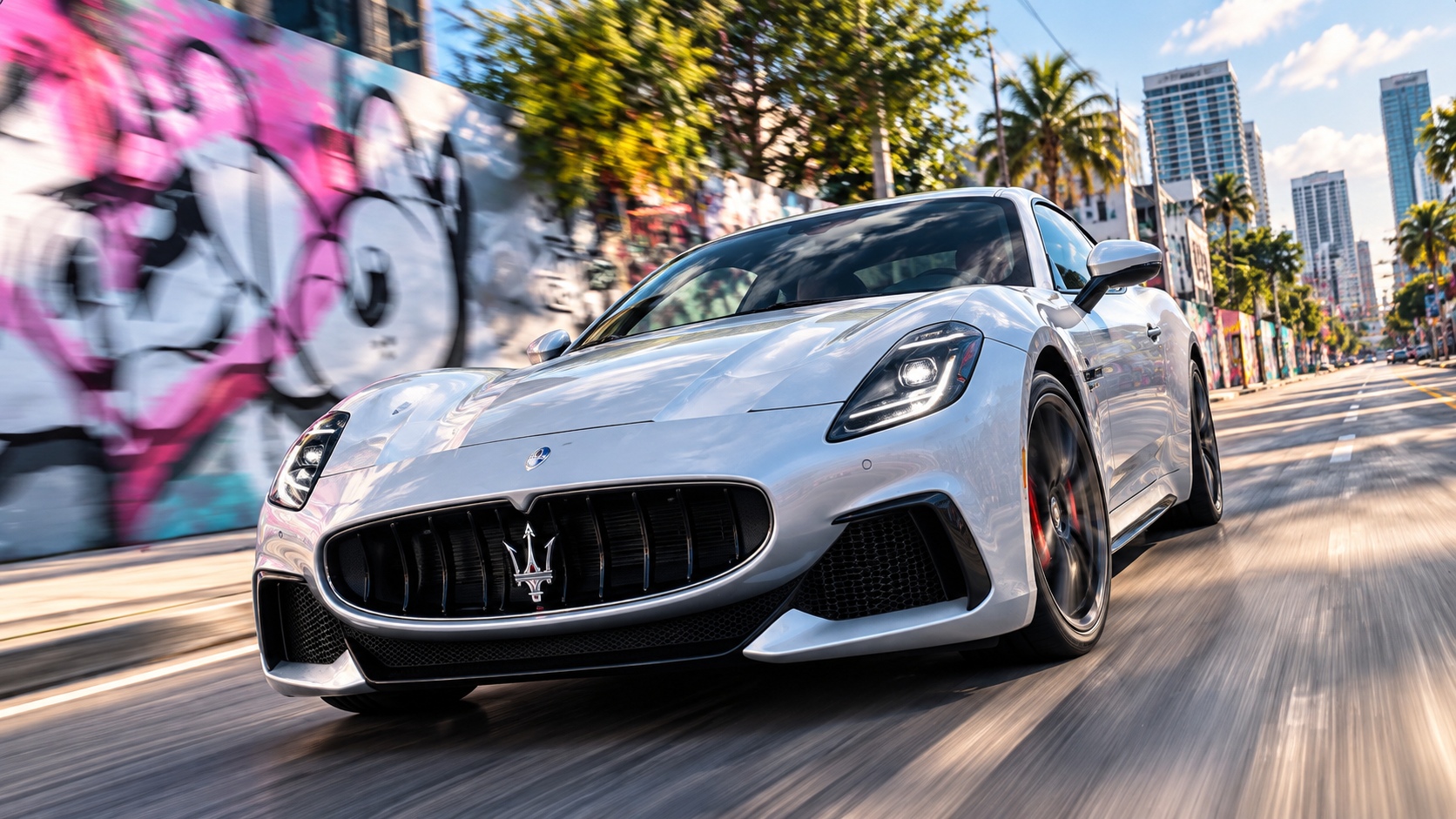
Carsfera takes Maserati’s performance-focused GranTurismo through Miami and Wynwood to discover what happens when 542 horsepower, Italian craftsmanship and one of America’s most expressive cities meet.

There are certain cars that make more sense once you spend several days with them. The specifications may tell you how much power they produce, how quickly they accelerate and how much they cost, but they don’t necessarily explain what it feels like to have one sitting outside your hotel in the morning, drive it through traffic in the afternoon and then take the longer route home simply because you’re enjoying the car.
The 2026 Maserati GranTurismo Trofeo became that kind of car for me in Miami.
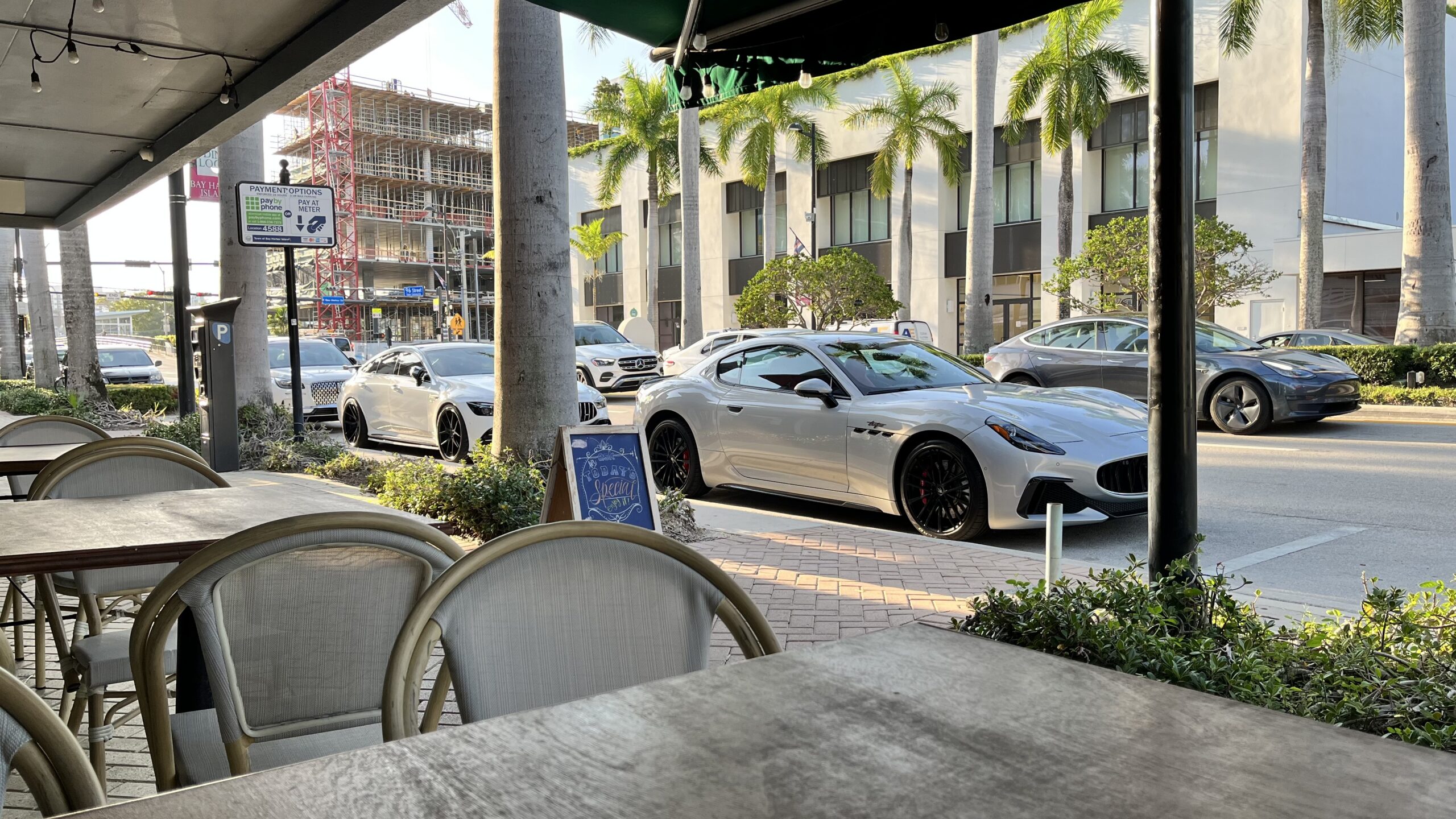
I had already spent time with the GranTurismo in Virginia, where the highways and secondary roads gave me an opportunity to appreciate what Maserati has done with this generation. What stood out wasn’t one dramatic performance number. It was how naturally the car combined speed, comfort and sophistication. It felt like a proper grand tourer, something you could genuinely imagine driving for hours rather than something designed around a ten-minute burst of excitement.
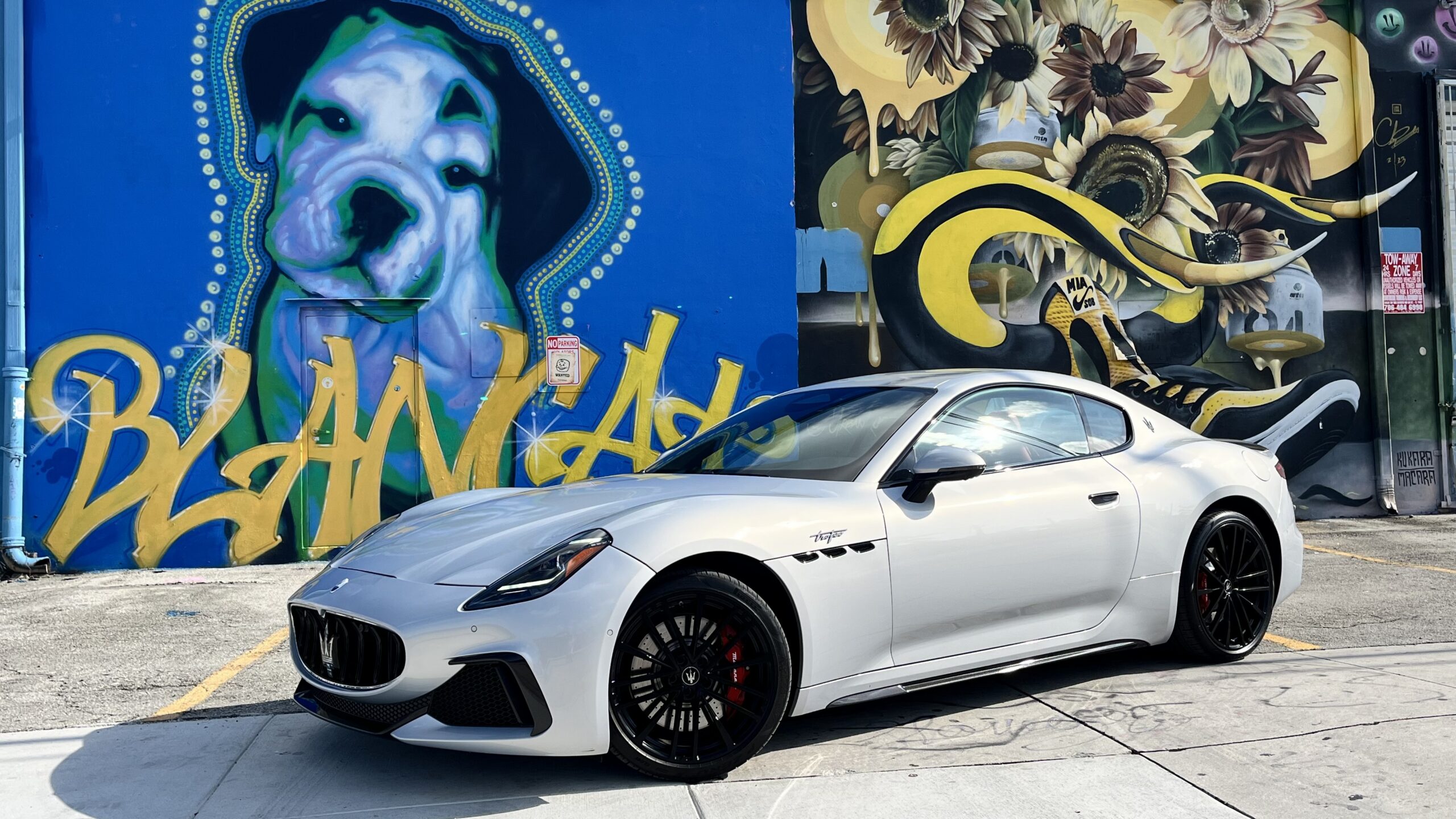
Miami introduced me to the other side of that personality.
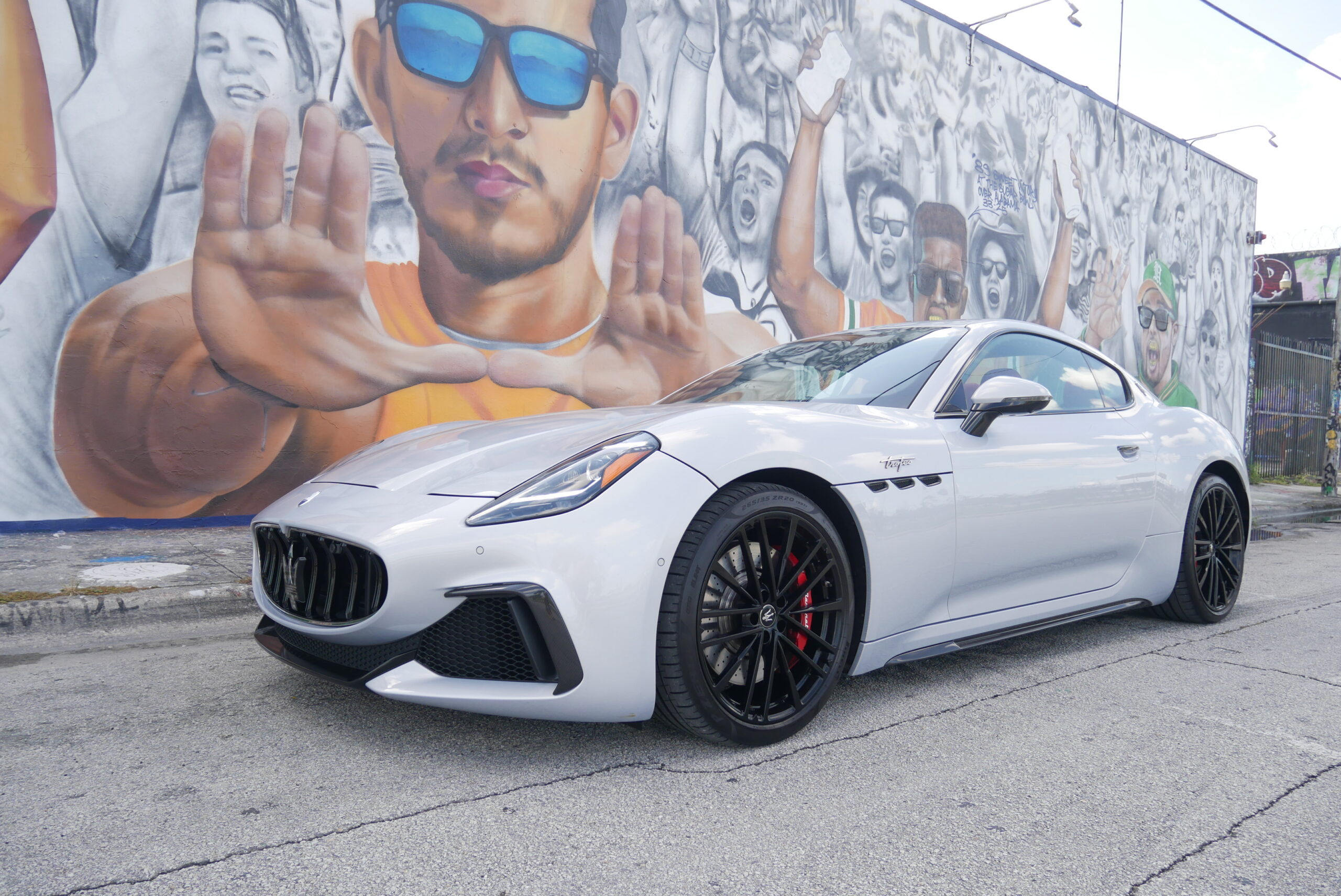
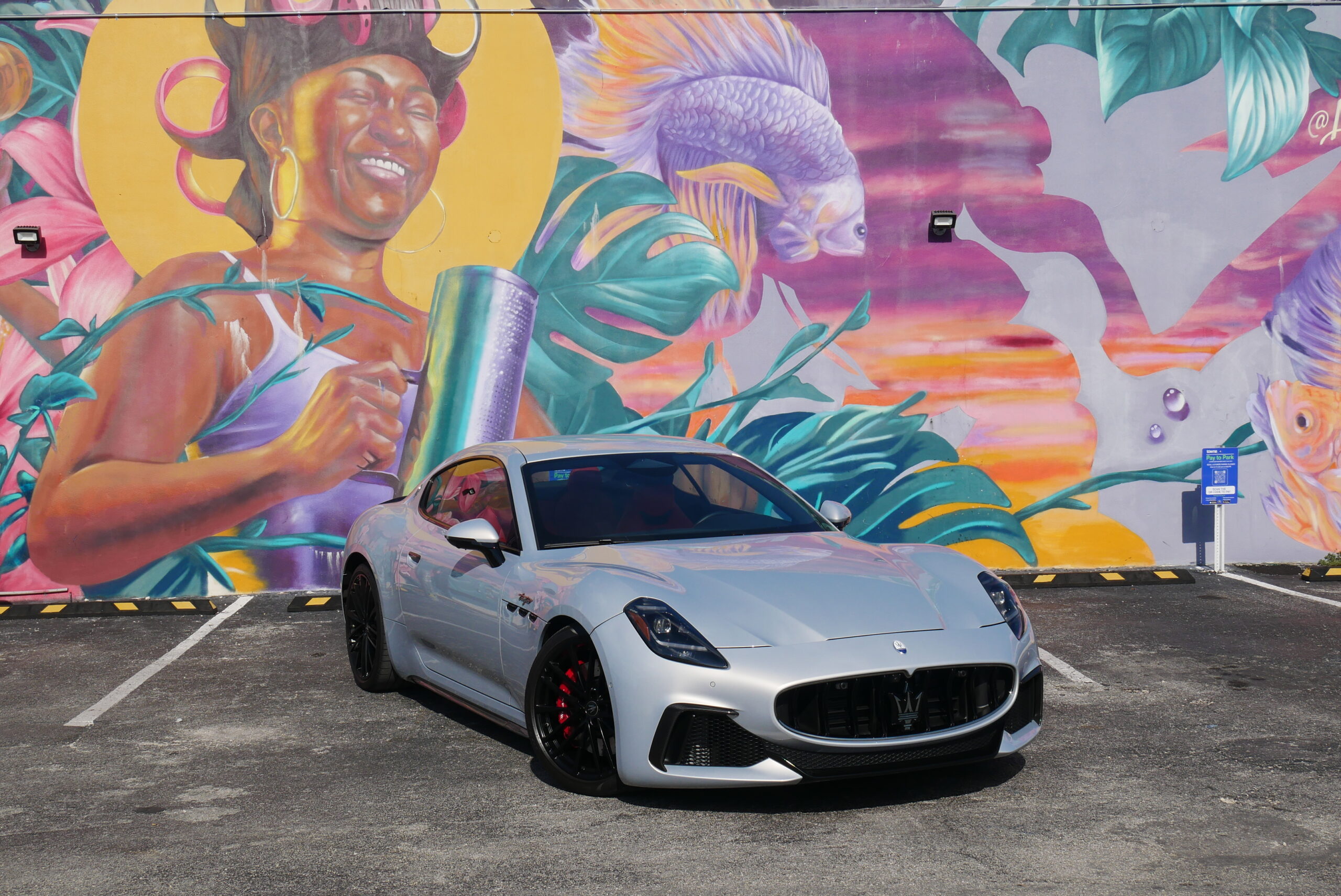
Our Trofeo arrived finished in Bianco Astro, with a red full-grain perforated leather interior, carbon-fiber details, Carbon Macrotwill trim, staggered 20- and 21-inch Pegaso-design wheels and an upgraded Sonus Faber audio system.
Its base price was $166,000. With options, the car sitting in front of me carried an MSRP of $185,830.
At that price, it needed to feel special.
After several days driving it around South Florida, I began to understand where that feeling comes from.
Seeing the GranTurismo Trofeo in Miami
Miami is an interesting place to experience an automobile like this because the city has its own visual personality. There is color everywhere, especially when you move through Wynwood. Buildings become canvases, traffic is unpredictable, people are constantly moving, and exotic and luxury cars aren’t particularly unusual.
Yet the Maserati still attracted attention.
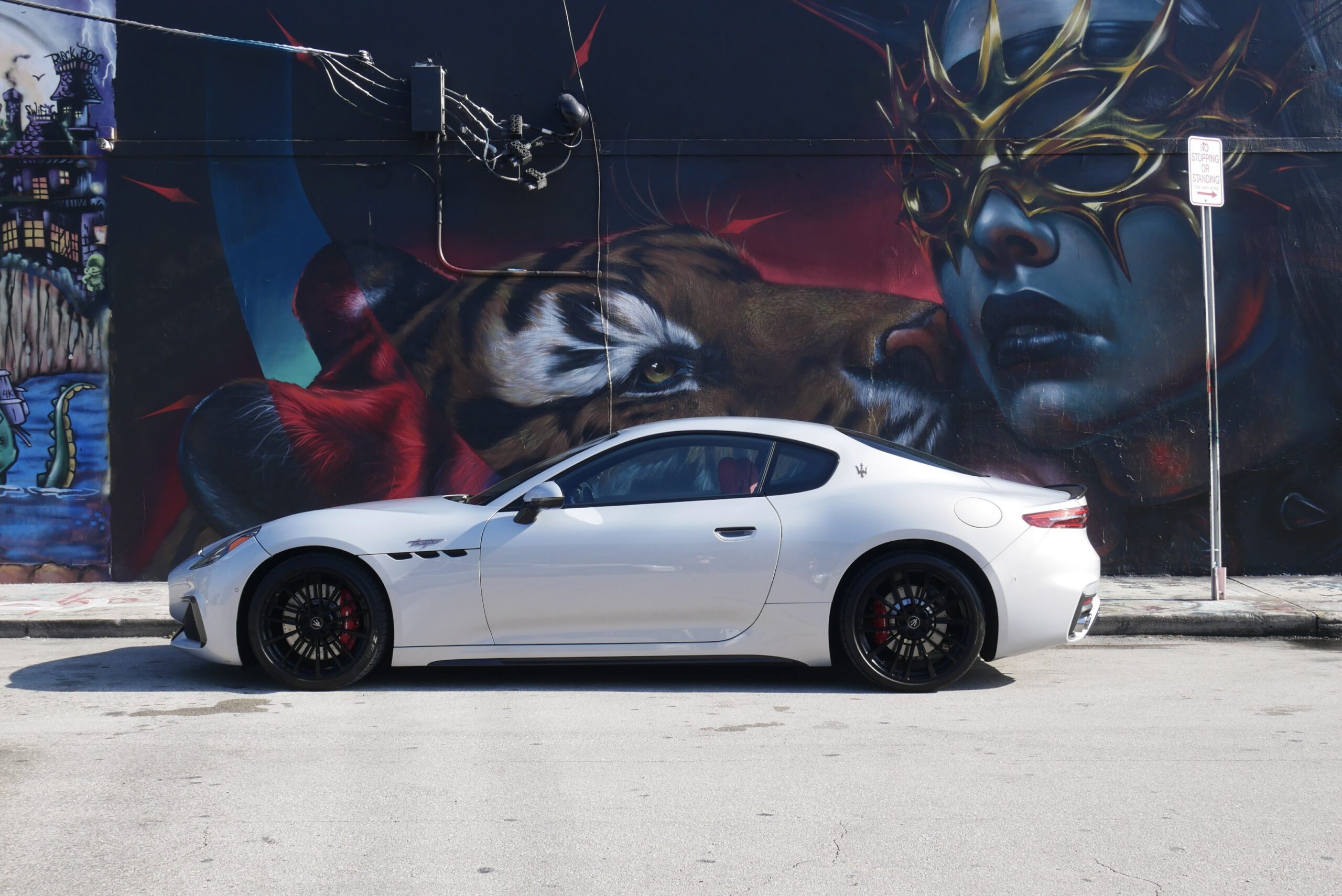
The Bianco Astro paint initially seemed like a relatively conservative specification for a car with this much personality, but seeing it under the Florida sun changed my opinion. The white finish allowed the GranTurismo’s proportions to become the focus.
The hood stretches far ahead of the cabin. The roofline falls gently toward the rear. The body has enough muscle around the wheels to communicate performance without relying on oversized wings or excessive aerodynamic decoration.
Against the murals of Wynwood, the simplicity of the white exterior worked particularly well. Later, driving toward Miami Beach, the same car took on a completely different character. Palm trees, modern architecture, hotels, bright sunlight and the blue Florida sky somehow made the GranTurismo look exactly where it belonged.
That is something Maserati has historically understood very well.
A Maserati doesn’t necessarily need to be the loudest car parked outside a restaurant to make you notice it.
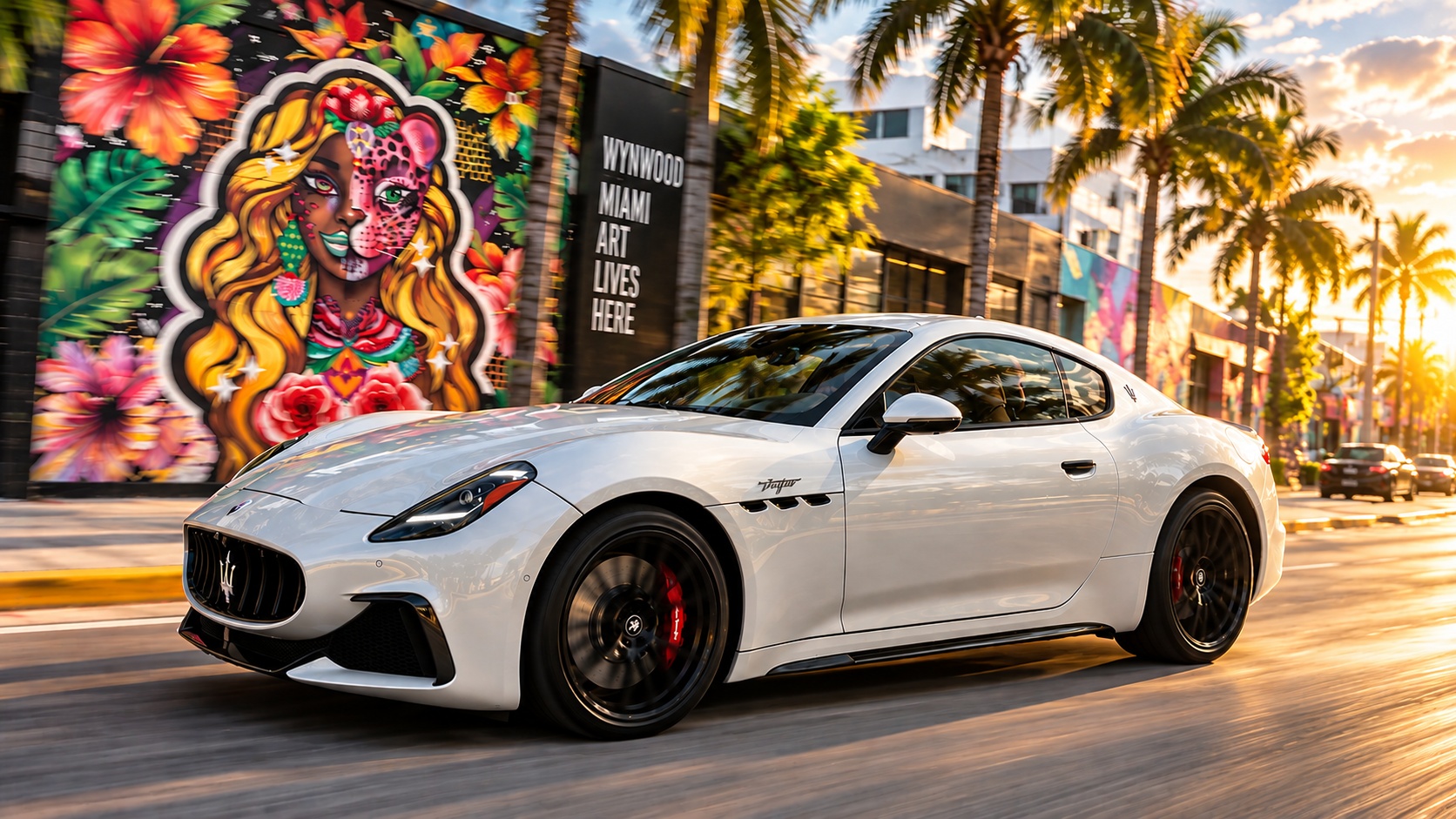
The GranTurismo Trofeo has presence without trying too hard to manufacture it.
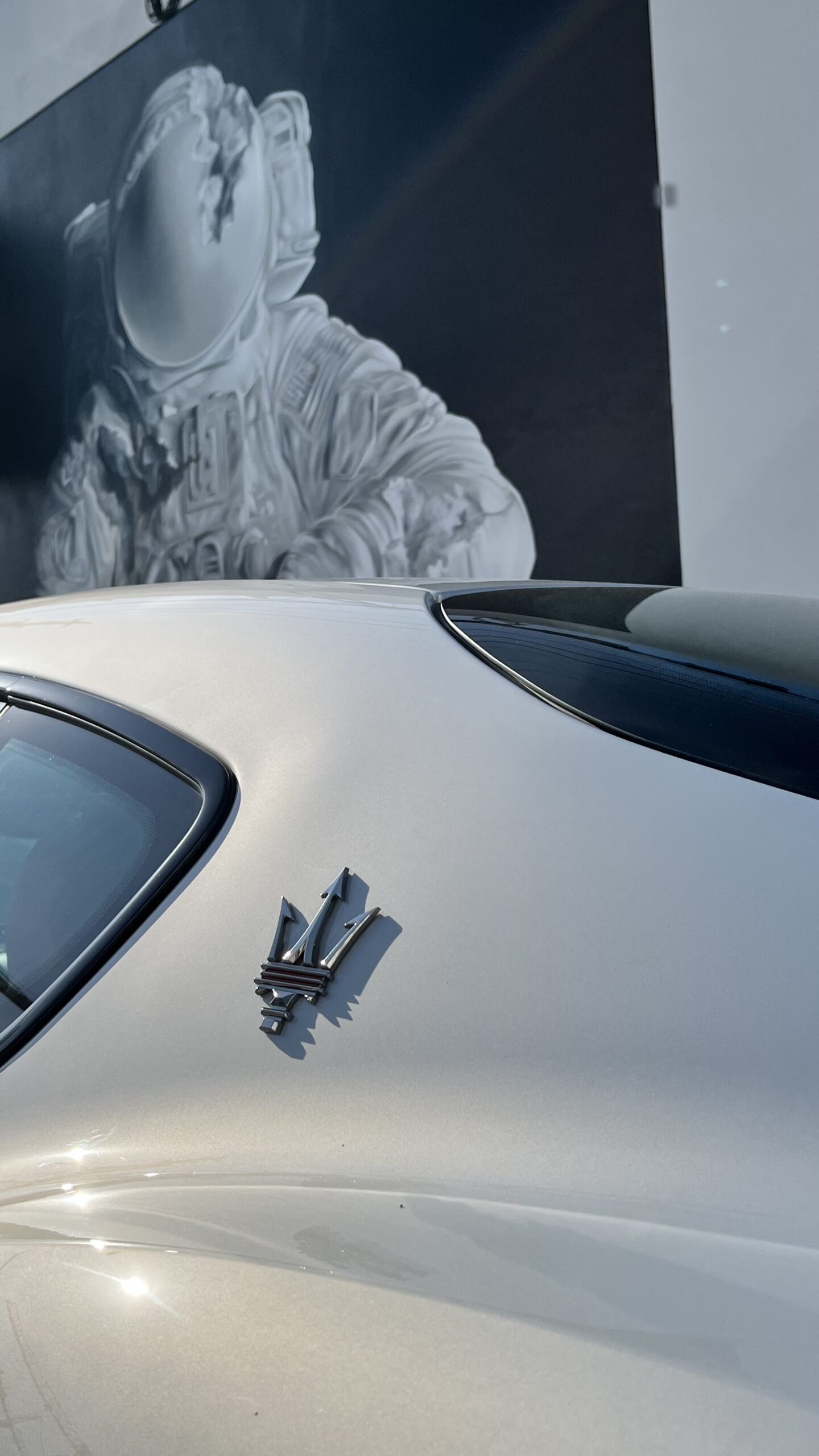
Our car’s $2,880 carbon-fiber rear spoiler added a little more aggression, while the Trofeo’s unique fascias, carbon-fiber exterior elements, gloss-black details, black-chrome badging and quad exhaust outlets subtly separated it from the regular GranTurismo.
I appreciated that restraint.
It would have been easy for Maserati to cover the Trofeo with aerodynamic pieces and turn it into something that looked more like a track-focused special edition. Instead, you still immediately recognize the elegance of the GranTurismo underneath.
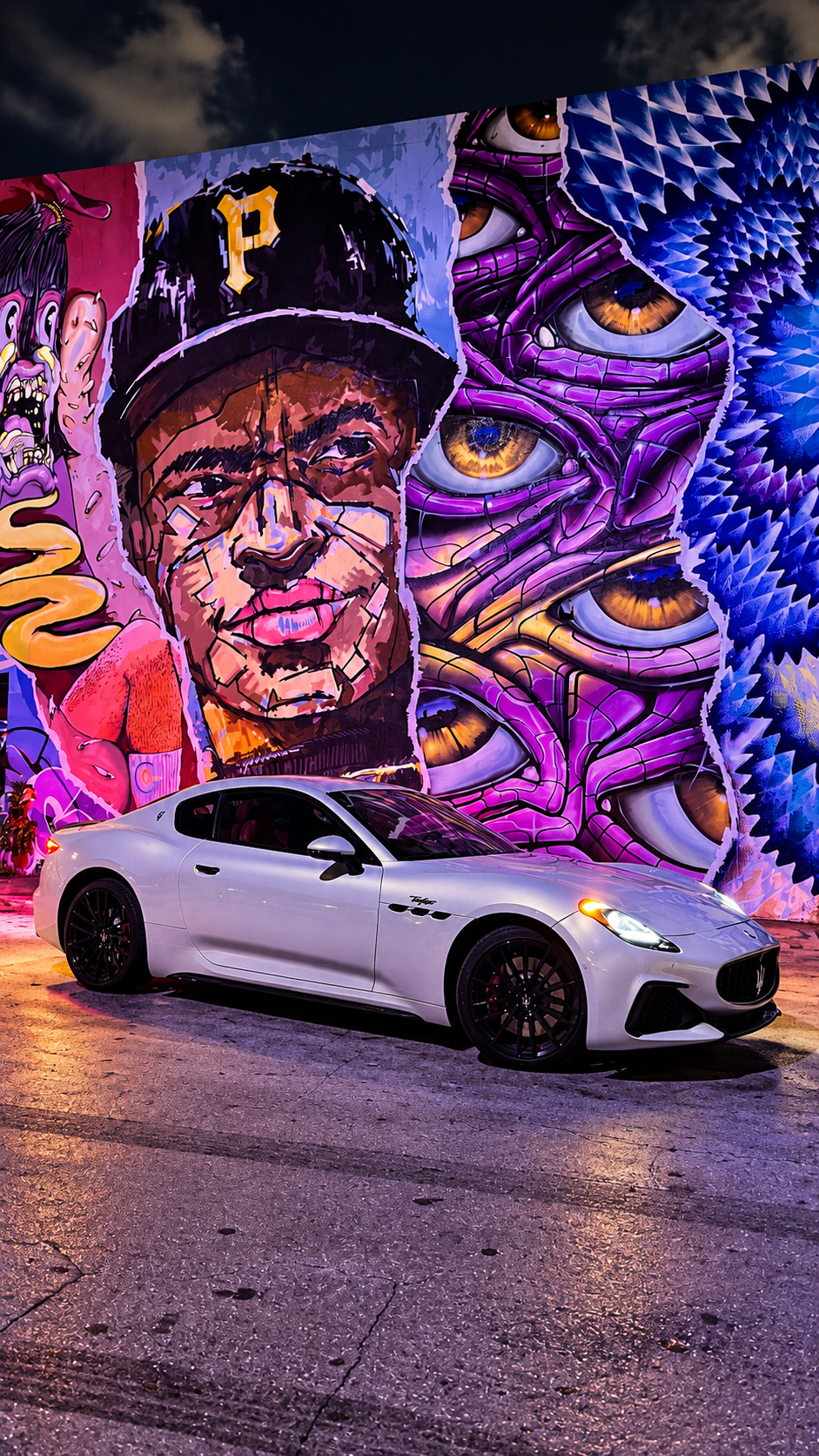
The Trofeo simply looks as though it has been spending more time at the gym.
The Red Interior Changes the Experience
Opening the driver’s door was probably my favorite visual moment with this particular specification.
The exterior is almost understated in white. Then you open the door and discover an interior covered in red full-grain perforated leather and carbon fiber.
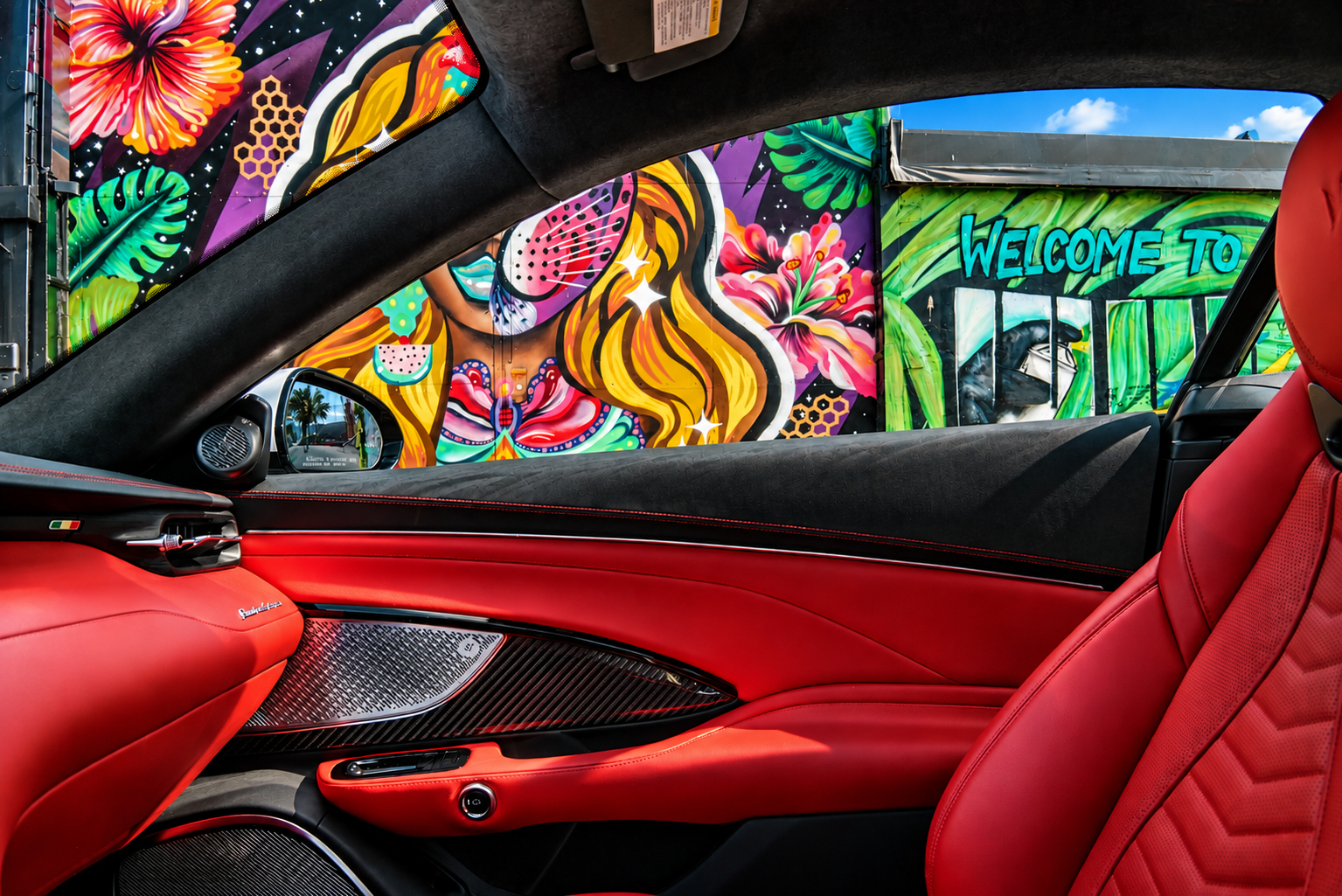
Suddenly, the personality of the car makes sense.
The GranTurismo I drove in Virginia had a much more traditional luxury atmosphere, with warmer colors and open-pore wood. It felt elegant and sophisticated, exactly as you would expect from an Italian grand tourer.
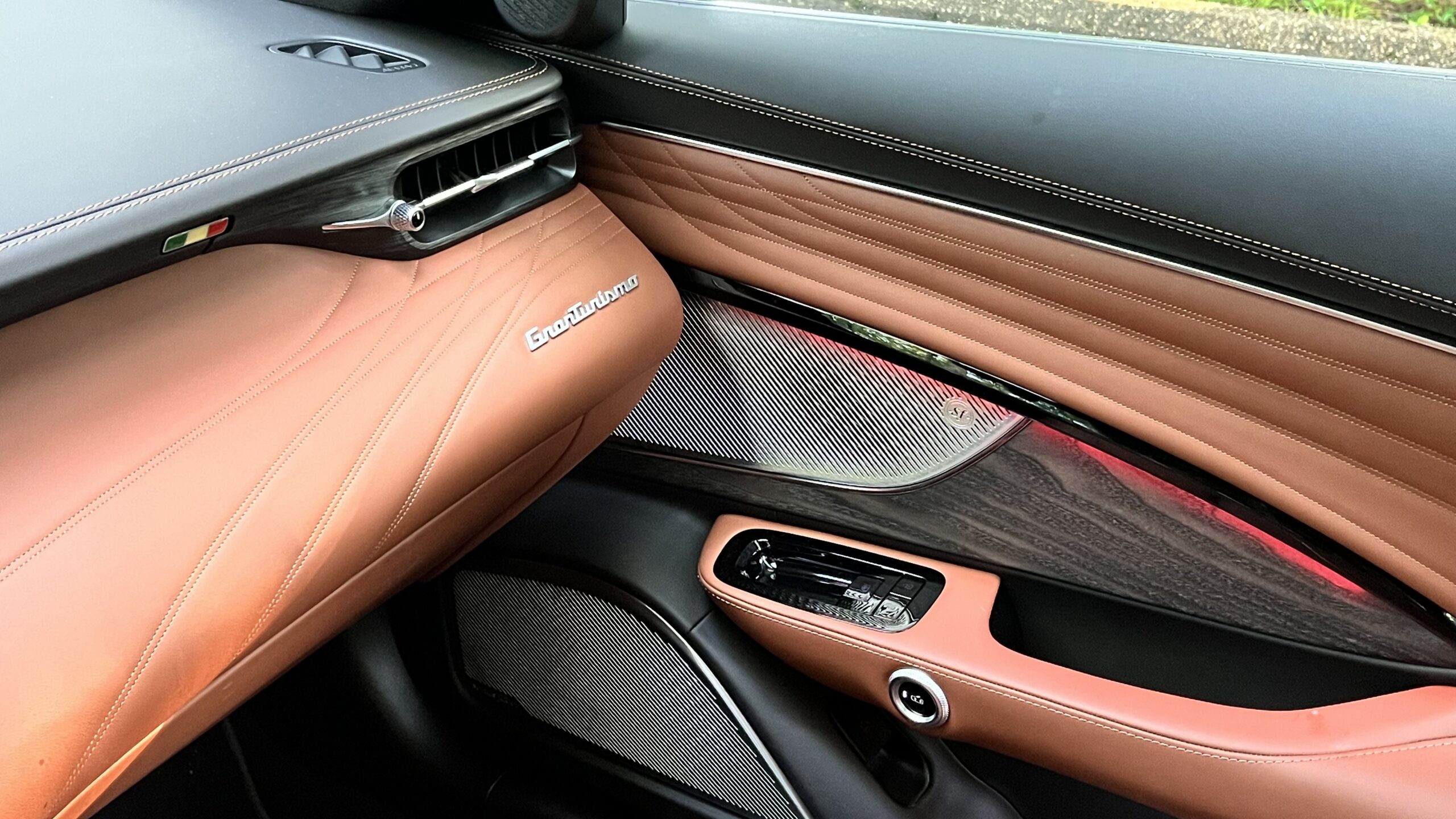
The Trofeo felt younger. More energetic.
Not necessarily less luxurious, just more focused on the person sitting behind the steering wheel.
The Carbon Macrotwill trim, a $2,650 option on our test car, fits that personality beautifully. The aluminum column-mounted paddle shifters are another detail I enjoyed because they feel substantial in your hands. They’re not decorative pieces attached to the steering wheel. They look and feel like something you’re actually going to want to use.
And you will.
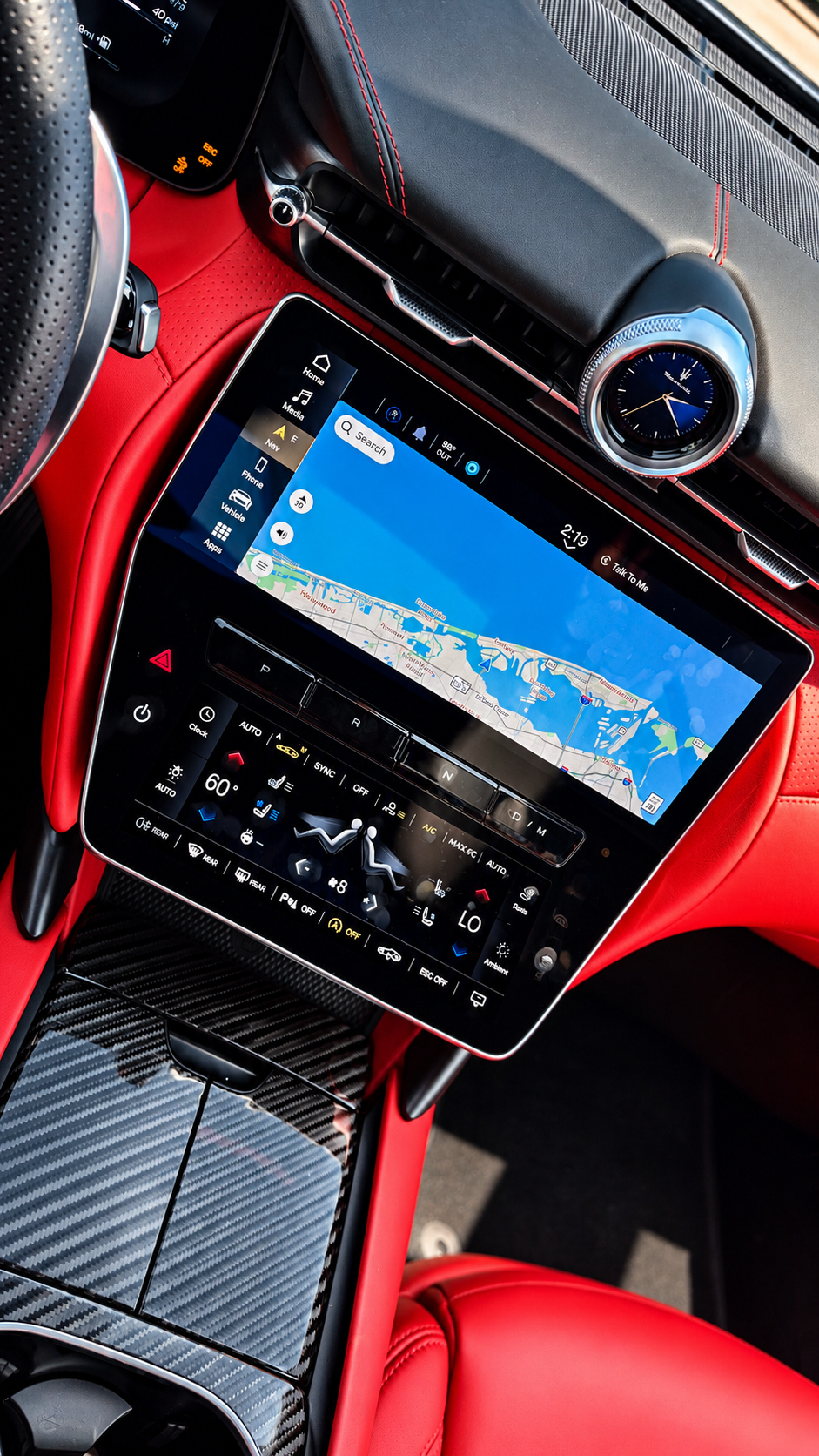
The seats deserve attention as well. A grand tourer can’t simply look beautiful; it has to remain comfortable after the novelty of the first hour disappears. The Trofeo provides 18-way power-adjustable front seats with driver memory, heating and enough adjustment to find a genuinely comfortable driving position.
Technology is integrated throughout the cabin without completely taking over the experience. There’s a 12.3-inch digital instrument cluster, accompanied by Maserati’s 12-inch and 8.8-inch central displays. Navigation, Apple CarPlay, Android Auto, wireless charging and connected features are all present.
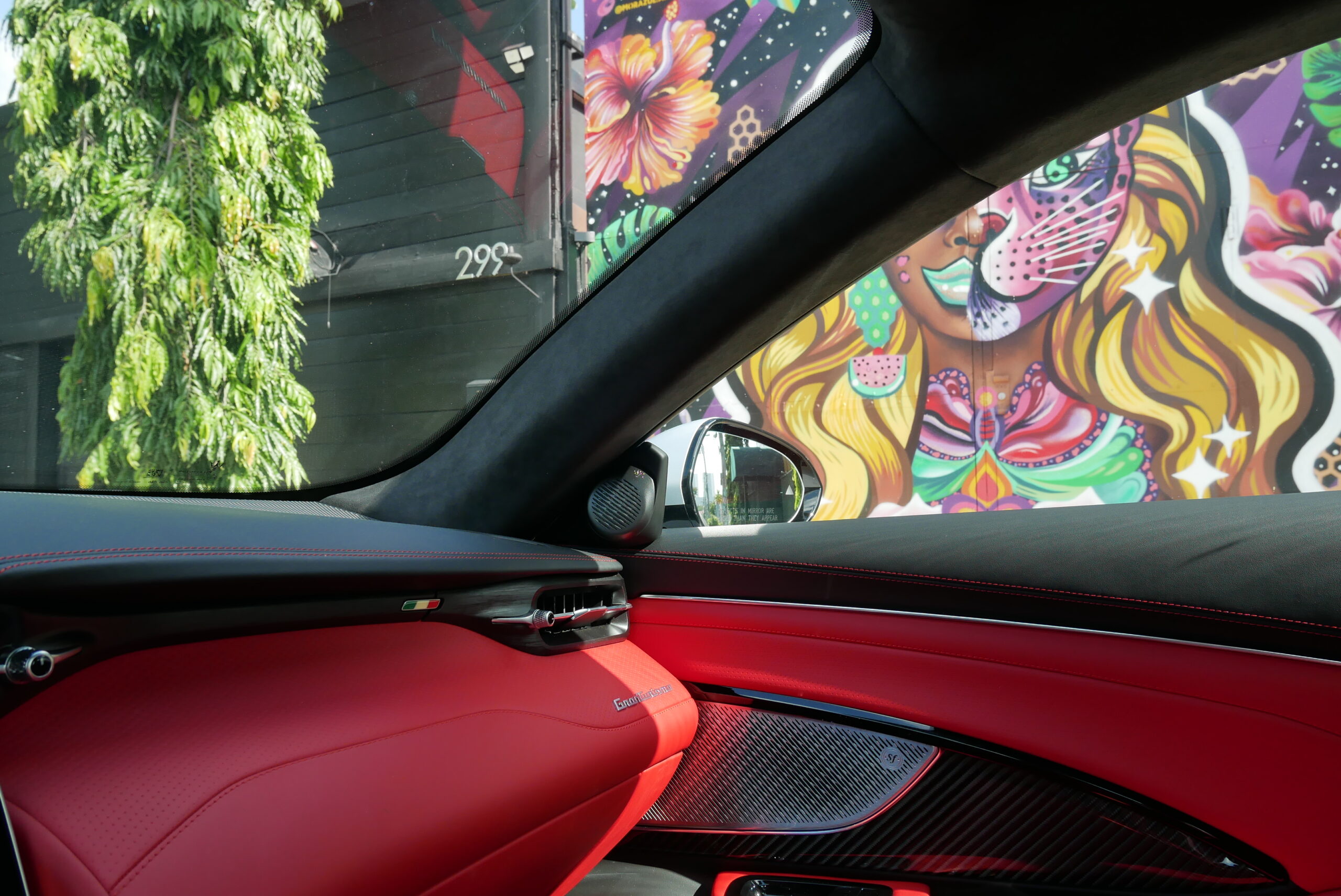
Our car also had the high-premium Sonus Faber audio system, a $4,890 option.
It’s an impressive system.
But there were plenty of moments when I preferred listening to something else.
The car itself.
The Nettuno Is What Makes the Trofeo Special
This is where my opinion of the Trofeo really began to form.
Under the hood is Maserati’s 3.0-liter twin-turbocharged Nettuno V6, paired with an eight-speed ZF automatic transmission and Maserati’s Q4 all-wheel-drive system.
The chassis includes adaptive air suspension, Skyhook electronic active damping and an electronic limited-slip differential. There is launch control and four selectable driving modes: Comfort, GT, Sport and Corsa.
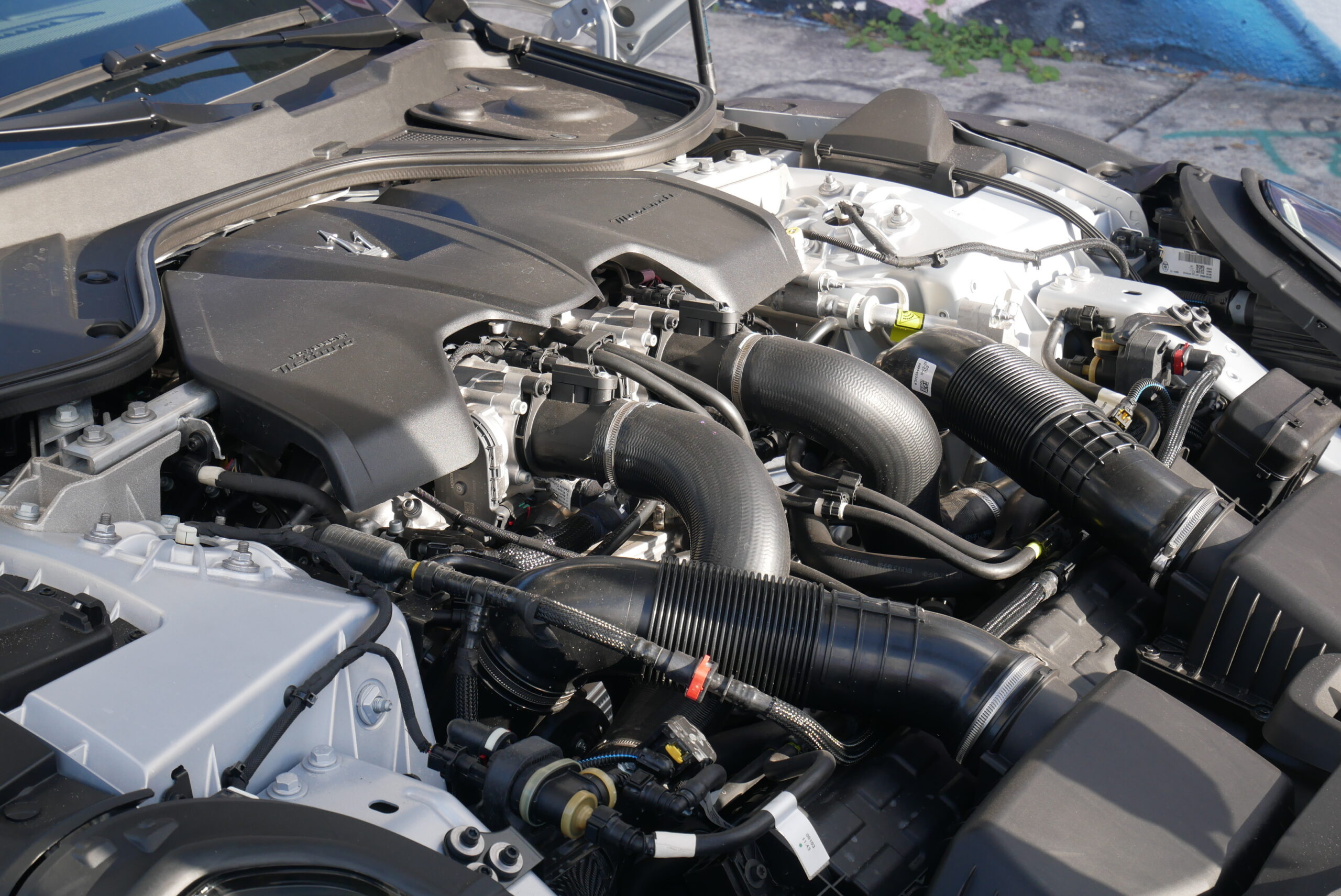
You can read all of that on a specification sheet. What the specification sheet can’t adequately explain is how broad the personality of this powertrain feels from the driver’s seat.
The Nettuno is the finest Maserati engine I have personally experienced. And I don’t say that simply because the Trofeo is fast. Of course it’s fast.
What impressed me more was how easily the engine changes character depending on what you’re asking from the car.
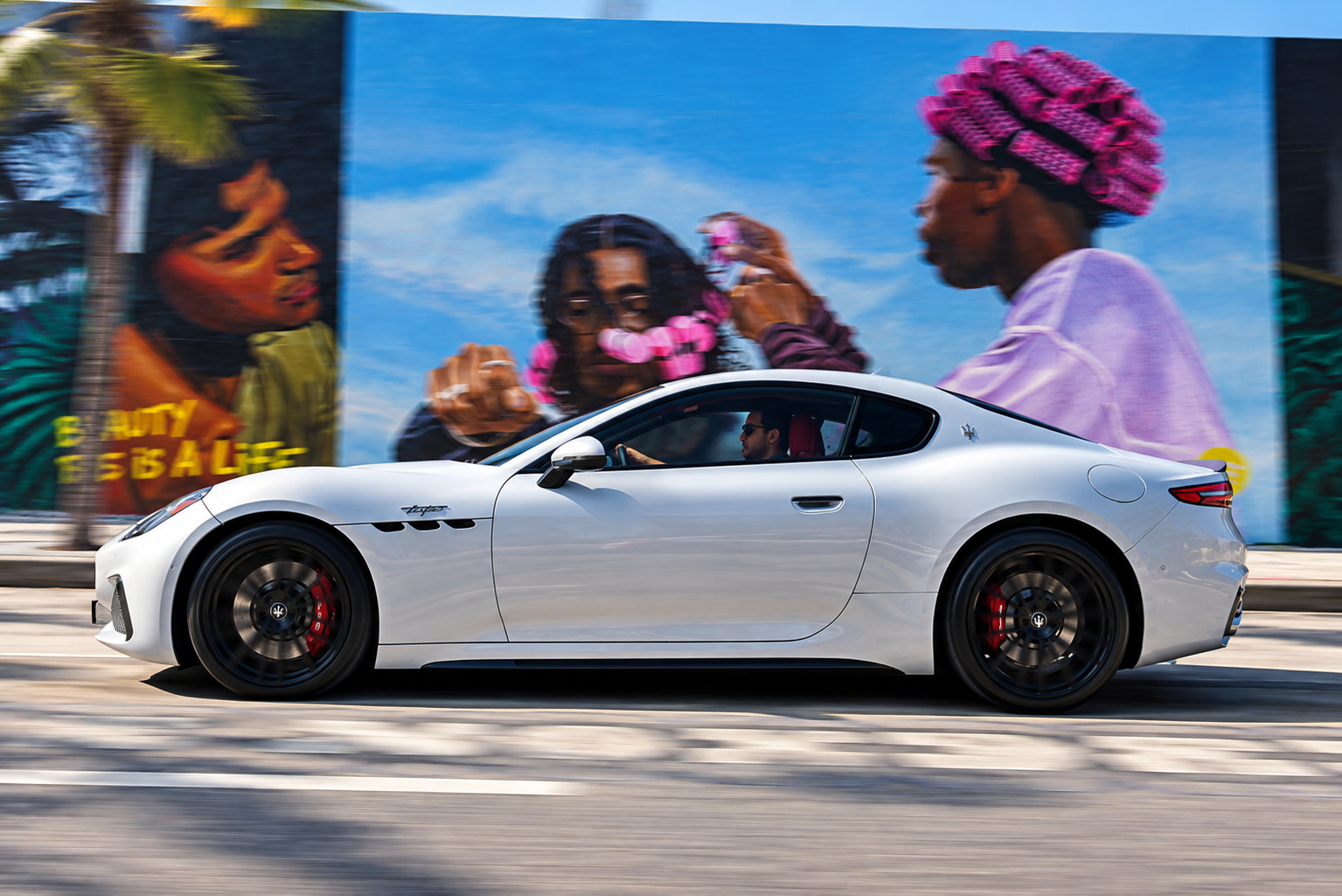
Miami traffic isn’t particularly interested in how much performance your Maserati has. There were plenty of moments when I was simply moving from one traffic light to another, surrounded by SUVs, delivery vehicles and people trying to change lanes at the last possible second.
In those situations, the Trofeo behaves remarkably normally.
The transmission isn’t constantly trying to prove something. The suspension doesn’t punish you over imperfect pavement, and the engine can remain relatively relaxed. You can drive the car through Miami Beach at an ordinary pace and enjoy the steering, seating position, interior and atmosphere without feeling as though the car is begging you to drive twice the speed limit.
That’s important.
Because eventually the traffic opens. And that’s when you reach for Sport.
The change isn’t theatrical for the sake of being theatrical. The throttle simply becomes more responsive, the transmission starts holding gears with greater purpose and the exhaust becomes more present behind you.
Push further into Corsa, and you discover the side of the Trofeo that was hiding while you were sitting in traffic ten minutes earlier.
The car tightens around you. Now the aluminum paddles that looked so beautiful when you opened the door become part of the experience. The engine feels more urgent. The transmission becomes more aggressive. You begin looking farther down the road and paying more attention to what your right foot is doing.
This is why I enjoyed the Nettuno so much. It’s not an engine that gives you one experience all the time. It lets the GranTurismo be a GranTurismo first. Then, when you ask for more, it gives you considerably more.
Miami Is Actually a Good Place to Understand This Car
Nobody thinks of Miami as the place to test the ultimate limits of a performance car.
There are no mountain passes waiting outside South Beach, and you’re probably going to spend considerably more time on I-95 than attacking a series of perfect corners.
But that’s precisely why driving the Trofeo here was useful. This is how many owners are actually going to use the car.
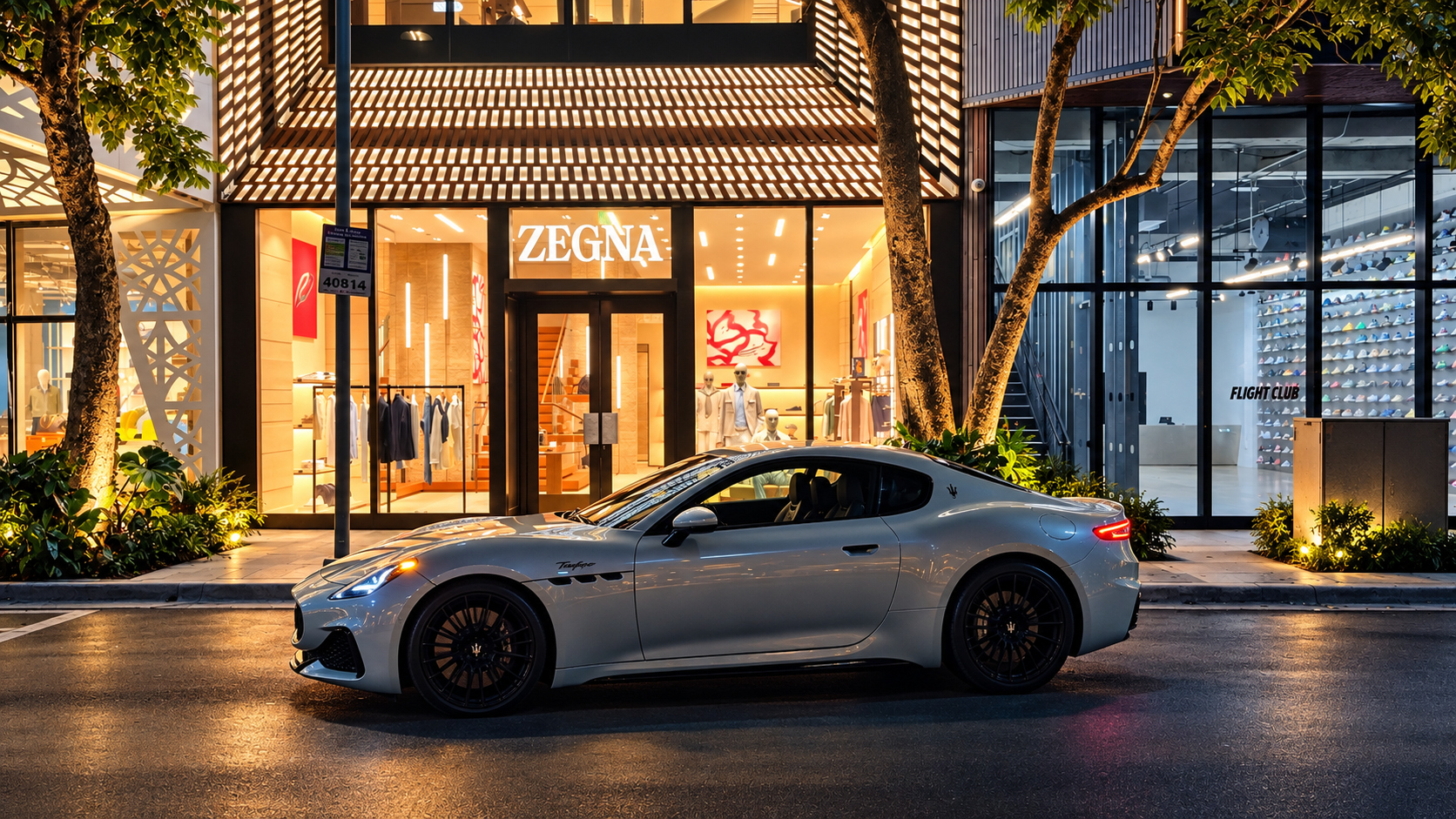
You’re going to drive to dinner. You’re going to sit in traffic. You’re going to take it to a hotel. You’re going to cover long stretches of highway. You’re going to deal with heat, rough pavement and those Florida rainstorms that seem capable of appearing five minutes after you were looking at a perfectly blue sky.
The Trofeo has to work in all of those situations before its performance becomes relevant.
And it does.
What Does $185,830 Actually Buy?
Our GranTurismo Trofeo started at $166,000, but several significant options pushed the final price considerably higher.
The carbon-fiber rear spoiler added $2,880. Carbon Macrotwill trim cost another $2,650. The high-premium Sonus Faber system added $4,890, red brake calipers were $1,320, the ADAS Base Package added $5,180, the Comfort Package another $1,240, and the Sport Design Package contributed $1,670.
Final MSRP:
$185,830.
That’s real money, even in this segment.
And I think anyone considering this car should look beyond the question of whether $185,830 buys enough performance. It does.
But so do plenty of other cars. At this level, horsepower alone isn’t particularly difficult to find. Neither is acceleration. What becomes harder to find is personality.
And perhaps most importantly, it gives you something you can’t really measure:
A reason to want to drive it.
GranTurismo or GranTurismo Trofeo?
Driving these two cars in two different parts of the country made the answer much clearer to me.
The GranTurismo I drove in Virginia is probably the easier car to understand.
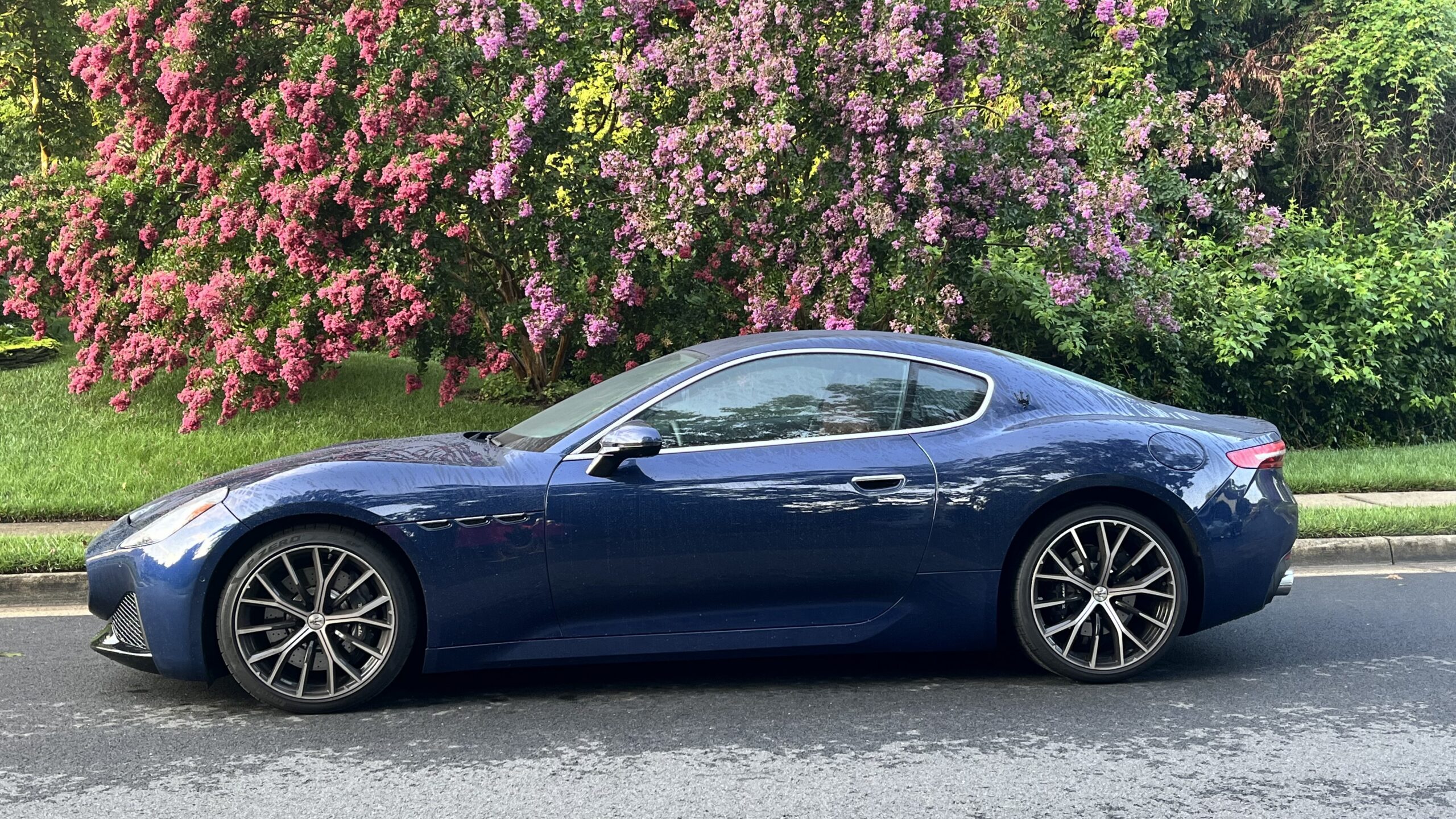
It’s elegant, fast, comfortable and beautifully suited to covering distance. It reminded me what a proper GT should be. You don’t finish a long drive feeling as though the car has been fighting you for the last three hours.
The Trofeo takes that same philosophy and adds another layer.
It’s still comfortable. It’s still elegant. It still feels like a Maserati GranTurismo.
But there’s more anticipation every time you get behind the wheel because you know another version of the car is sitting there waiting for you.
The standard GranTurismo makes the journey enjoyable.
The Trofeo makes you wonder whether there’s a more interesting road to get there.
That, more than anything else, describes the difference I felt between them.
Who Is This Car Really For?
I don’t think the GranTurismo Trofeo is simply for someone who wants the most expensive or most powerful version of the GranTurismo.
The buyer who will appreciate this car most is probably someone who could own a dedicated sports car but doesn’t necessarily want to live with one every day.
Maybe you want to leave Washington or Miami in the morning and drive several hundred miles without arriving exhausted.
Maybe you want to take someone to dinner without making them climb into a car that feels designed primarily for a racetrack.
Maybe you care about Italian design and the small details that make an automobile feel different every time you approach it.
But when the road opens, you still want something serious underneath your right foot.
That’s the person I think Maserati built the Trofeo for.
It doesn’t force you to decide whether you want the elegant car or the exciting one before leaving the house.
You get both.
Copyright Notice: All photographs and images featured in this article are © Carsfera.com / Carsfera Media unless otherwise credited. No image may be copied, reproduced, republished, distributed, modified, licensed, or used for any commercial purpose under any circumstances without prior written authorization from Carsfera.com. All rights reserved.
-
 TEST DRIVES2 months ago
2026 Toyota GR Supra MkV Final Edition
-
 NOW TRENDING1 month ago
Aston Martin DBX Becomes Harry Da Souza’s Ride in MobLand
-
 Formula12 months ago
FIA Reveals Second ADUO Results With Red Bull-Ford Still on Top
-
 NOW TRENDING2 months ago
Tesla Cybercab Puts U.S. Regulations to the Test
-
 NOW TRENDING2 months ago
2027 Hyundai Tucson Hybrid Gets a Power Boost
-
 NOW TRENDING2 months ago
Hyundai Reports Strong Hybrid Sales in August 2026
-
 NOW TRENDING2 months ago
Nissan Z Nismo Finally Gets a Manual Transmission in Japan
-
 INTELLIGENT MOBILITY1 month ago
Tesla Cybercab Cannot Be Charged at Home—Here’s Why
You must be logged in to post a comment Login