
En la carrera de 24 horas de Nürburgring, el MINI John Cooper Works de Bulldog Racing desafió todos los pronósticos durante 40 vueltas. Los aficionados quedaron encantados con el esfuerzo de lucha y el piloto rojo se convirtió rápidamente en el favorito de los espectadores.
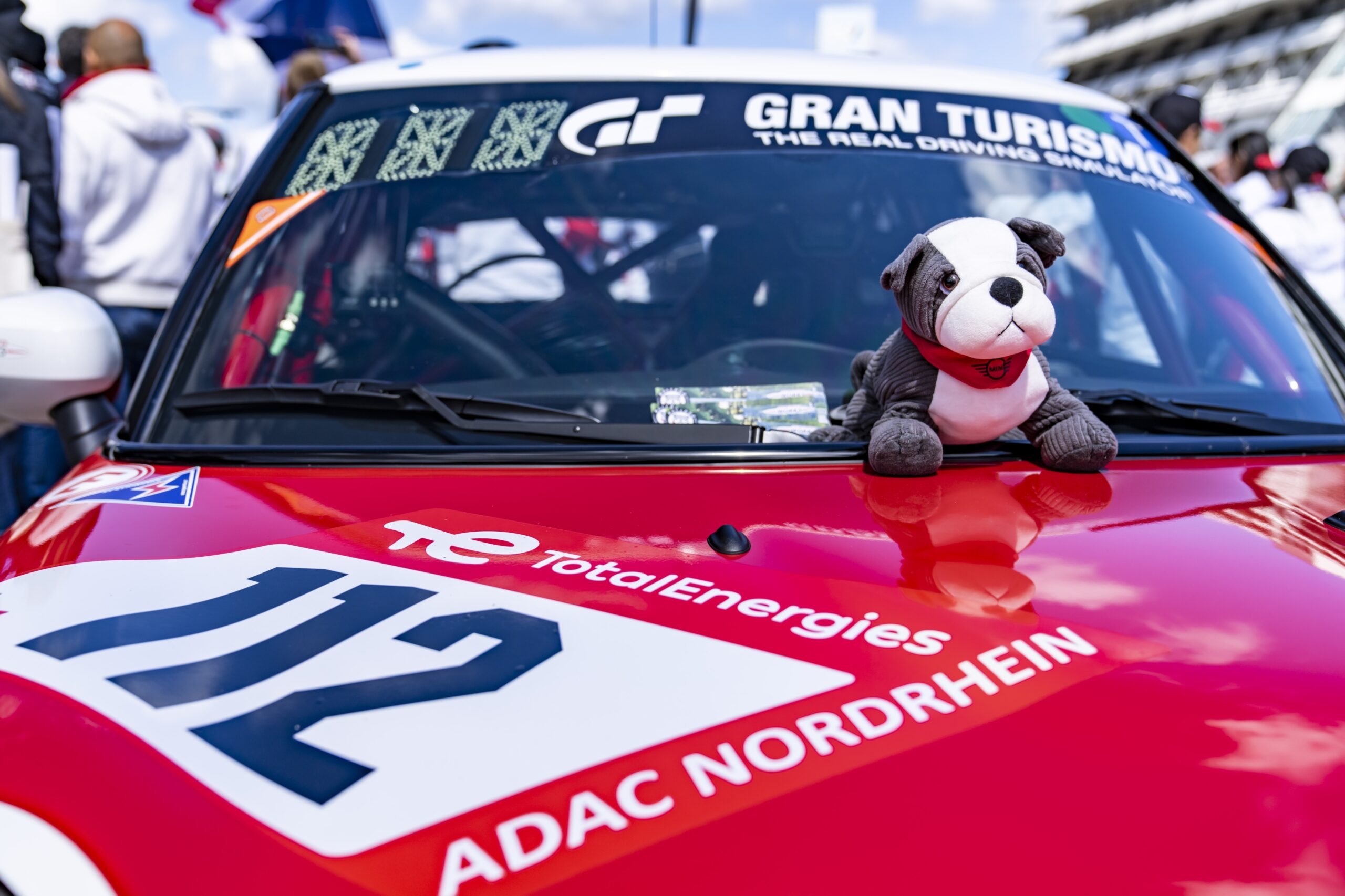
El Gran Premio de Fórmula 1 de Mónaco tiene un mayor factor de glamour. Hay más coches de alta tecnologÃa en las 24 horas de Le Mans. Pero ningún evento automovilÃstico desprende tanta fascinación como las 24 horas de Nürburgring. Aquà compiten auténticos profesionales con verdaderos aficionados, donde los coches de carreras de alta tecnologÃa se encuentran con los vehÃculos de producción. Esto es precisamente lo que hace tan atractiva la salvaje persecución a través del “infierno verde”. AquÃ, las carreras se siguen celebrando en su forma más original. En el legendario Nordschleife de Nürburgring se garantizan emocionantes duelos rueda a rueda y una intensa actividad automovilÃstica. Precisamente por eso, los aficionados acuden a la catedral del automovilismo alemán.
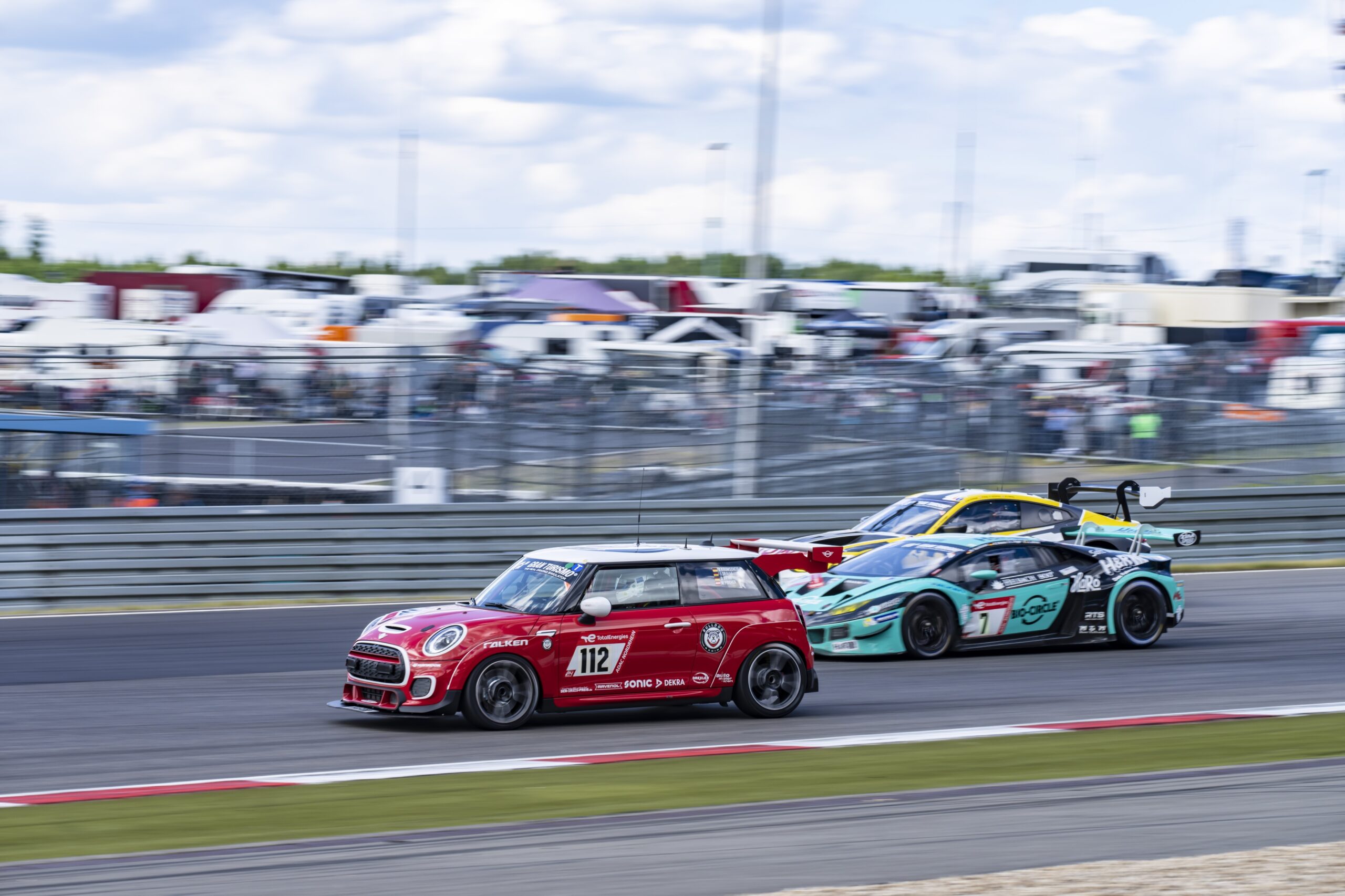
Un total de 230.000 aficionados a las carreras fueron el marco adecuado para la 50ª edición de las 24 horas de Nürburgring. En medio de todo ello se encontraba el MINI John Cooper Works de color rojo brillante de Bulldog Racing, que se convirtió en el favorito del público después de unas pocas vueltas y recibió aplausos a cada paso.
Y esto a pesar de que las condiciones eran cualquier cosa menos ideales para el MINI. Mientras que los grandes equipos se prepararon para la carrera con un inmenso compromiso de hombres y materiales, Bulldog Racing sacó al MINI JCW casi espontáneamente de la pila bautismal. Teniendo en cuenta que hasta septiembre del año pasado no se dio luz verde al proyecto de la “carrera de 24 horas”, está claro que no todo va a ir sobre ruedas. Por eso, el equipo tuvo que enviar el MINI JCW al circuito de 25,378 kilómetros con una potencia considerablemente reducida debido a un problema técnico durante las dos primeras sesiones de clasificación. El viernes por la noche, los incansables esfuerzos de los mecánicos dieron sus frutos, ya que encontraron el defecto y lo arreglaron inmediatamente. El resultado: el MINI grabó un mejor tiempo personal en el asfalto de Eifel durante la sesión del viernes, de una hora de duración, a pesar de una desafortunada zona de Código 60, en la que los coches se ralentizan a 60 km/h. Y lo que es más importante, el equipo Bulldog vio caras sonrientes por todas partes. El coche funcionó y los pilotos elogiaron el manejo neutral. Una garantÃa de tiempos rápidos en el Nordschleife.
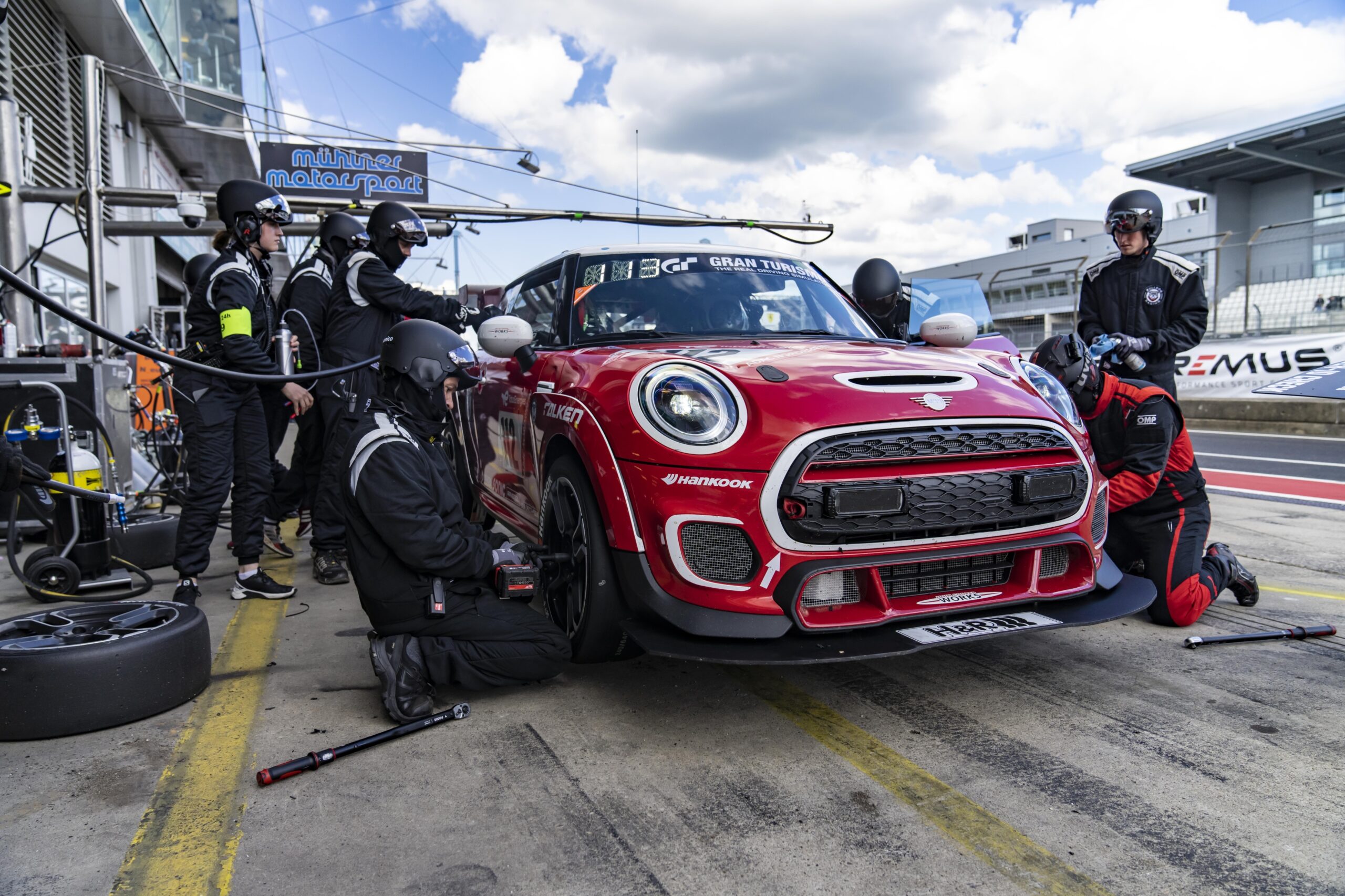
“El coche es realmente estupendo de conducir y muy divertido. En una carrera tan ajetreada como ésta, es importante concentrarse en la pista y en los competidores y poder confiar en tu coche”, se congratuló Markus Fischer.
El esperado enfrentamiento comenzó a las 16:00 horas del sábado. Uno de los 138 coches que aceptaron el reto “24 horas por el infierno verde” fue el MINI John Cooper Works de Bulldog Racing con el número de salida 112, que partÃa en la clase SP3T. Markus Fischer condujo el primer stint e inmediatamente se vio envuelto en tensas luchas por las posiciones, pero rápidamente encontró su ritmo y comenzó la carrera muy bien.
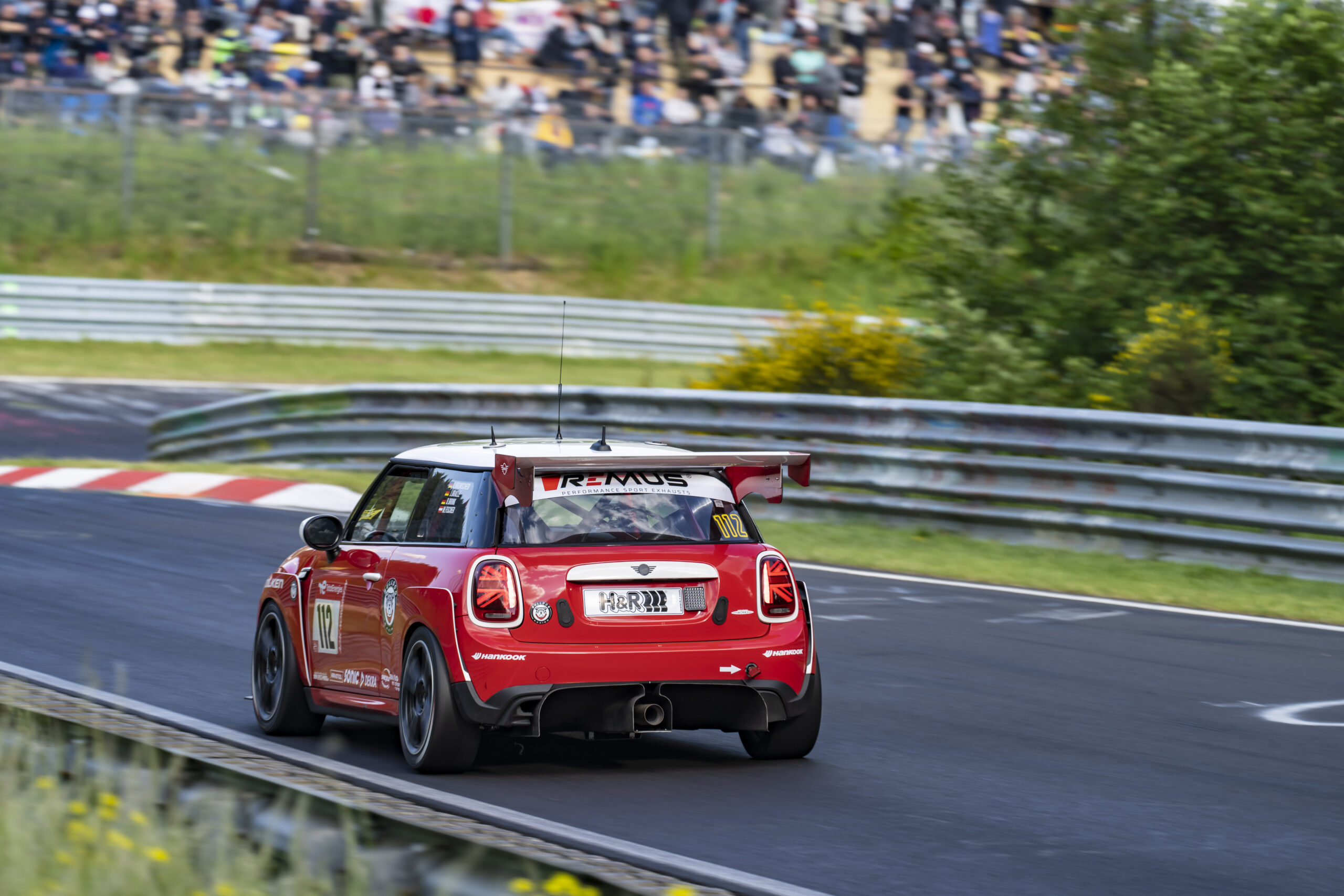
Mientras que los pilotos solÃan tantear el terreno primero, la carrera de 24 horas se ha convertido ahora en una carrera al sprint en la que se lucha por cada centésima de segundo desde el principio con un cuchillo entre los dientes. En consecuencia, la acción fue trepidante y los primeros accidentes no tardaron en llegar; Markus Fischer tuvo que evitar varias escaramuzas con el MINI de Bulldog Racing ya en la primera vuelta y fue ligeramente golpeado en una ocasión. Después de ocho vueltas, Danny Brink se puso al volante y continuó con éxito la carrera para ponerse al dÃa, adelantando a un competidor tras otro. Cuando Uwe Krumscheid se puso al volante después de 16 vueltas, el MINI de Bulldog Racing ya habÃa recuperado 21 posiciones en la clasificación general y luchaba por el quinto puesto en la potente clase SP3T. Una actuación de primera que demostró que el concepto del coche es absolutamente competitivo incluso en las condiciones más duras.
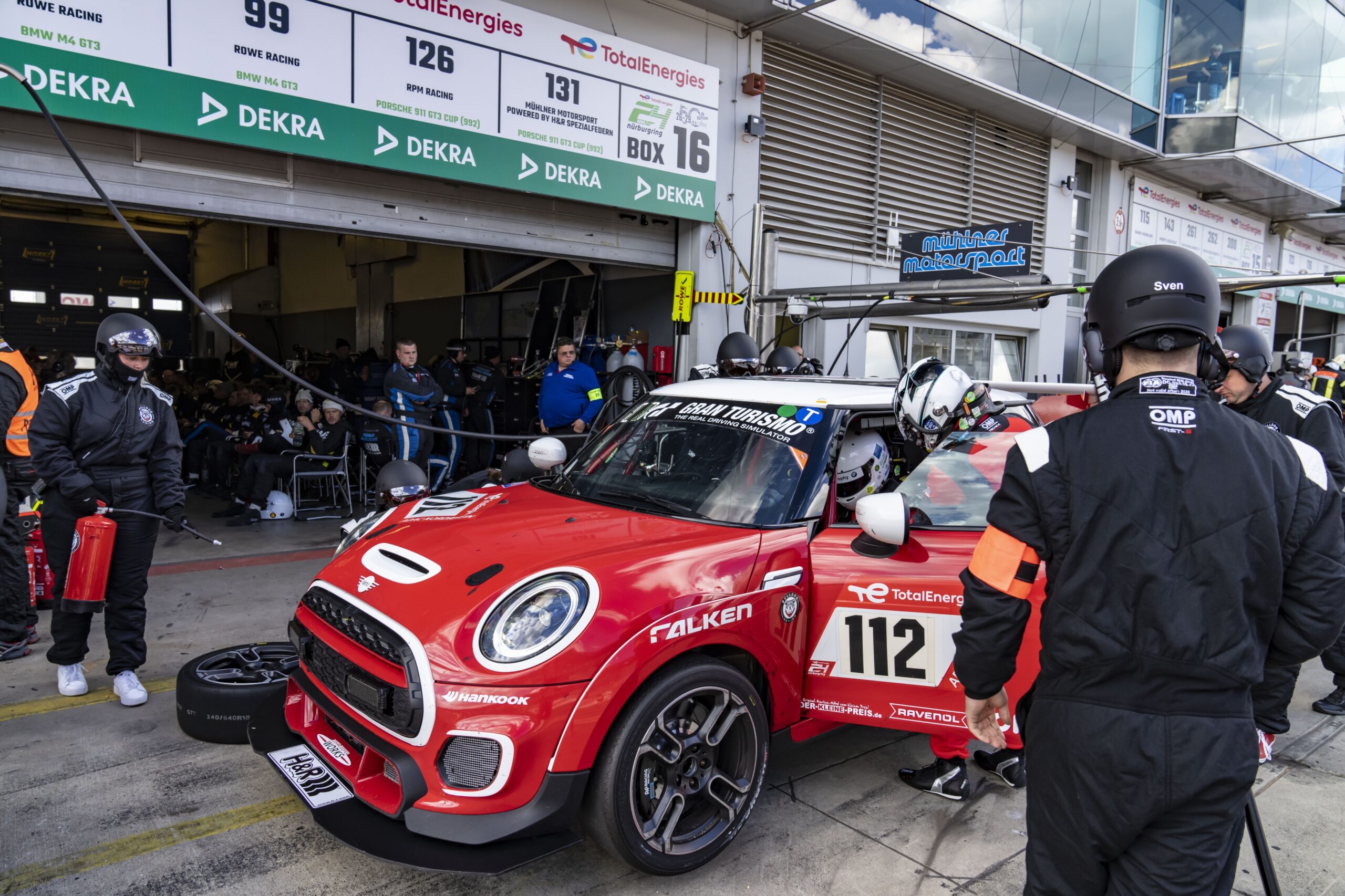
Las carreras continuaron siendo extremadamente inquietas y agitadas. La consecuencia fue una auténtica orgÃa de accidentes y las zonas de Código 60 resultantes exigieron la máxima concentración de los pilotos y les dificultaron encontrar un ritmo. Entonces ocurrió lo inevitable: en la 19ª vuelta de carrera, Uwe Krumscheid fue golpeado por segunda vez en el lado del conductor durante una maniobra de adelantamiento. En un primer momento, el MINI pudo continuar, pero media vuelta más tarde, el piloto rojo se vio condenado por los efectos tardÃos del “contacto enemigo”. En el tramo de Kallenhard, se detuvo ante el quitamiedos.
El coche fue remolcado y devuelto al paddock, lo que llevó más de una hora debido al gran número de accidentes. Inmediatamente se iniciaron los trabajos de reparación, porque rendirse no era una opción para el equipo Bulldog Racing. Con un impresionante trabajo en equipo, el trabajo se completó después de sólo 90 minutos y Jens Dralle dirigió el MINI de nuevo a la pista.
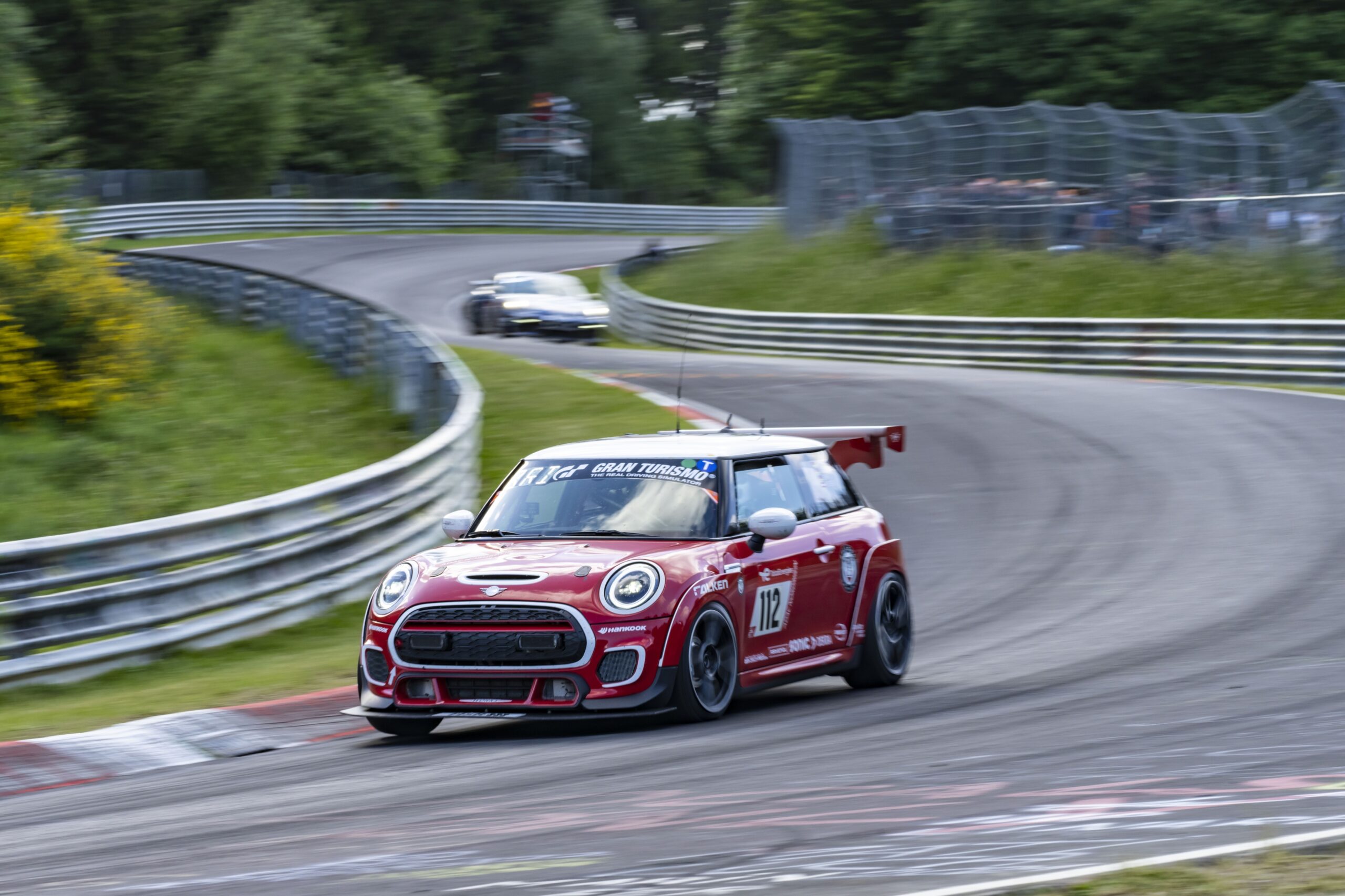
En la oscuridad, las condiciones eran extremadamente complicadas, ya que los numerosos accidentes habÃan dejado su huella y la pista estaba extremadamente sucia. Una pieza de carbono afilada puede causar daños masivos en un neumático. Precisamente esta suerte corrió el John Cooper Works y Jens Dralle tuvo que completar casi una vuelta entera del Nordschleife con un neumático pinchado. Este percance hizo retroceder al MINI de Bulldog Racing, pero el equipo siguió luchando con valentÃa. Esto no pasó desapercibido: la afición del corredor rojo crecÃa sin cesar y también los ánimos de celebración. En los tramos conocidos de la pista, los aficionados convirtieron la noche en dÃa con instalaciones de luz, láseres y fuegos artificiales. En cuanto apareció el MINI, estallaron los aplausos y los vÃtores.
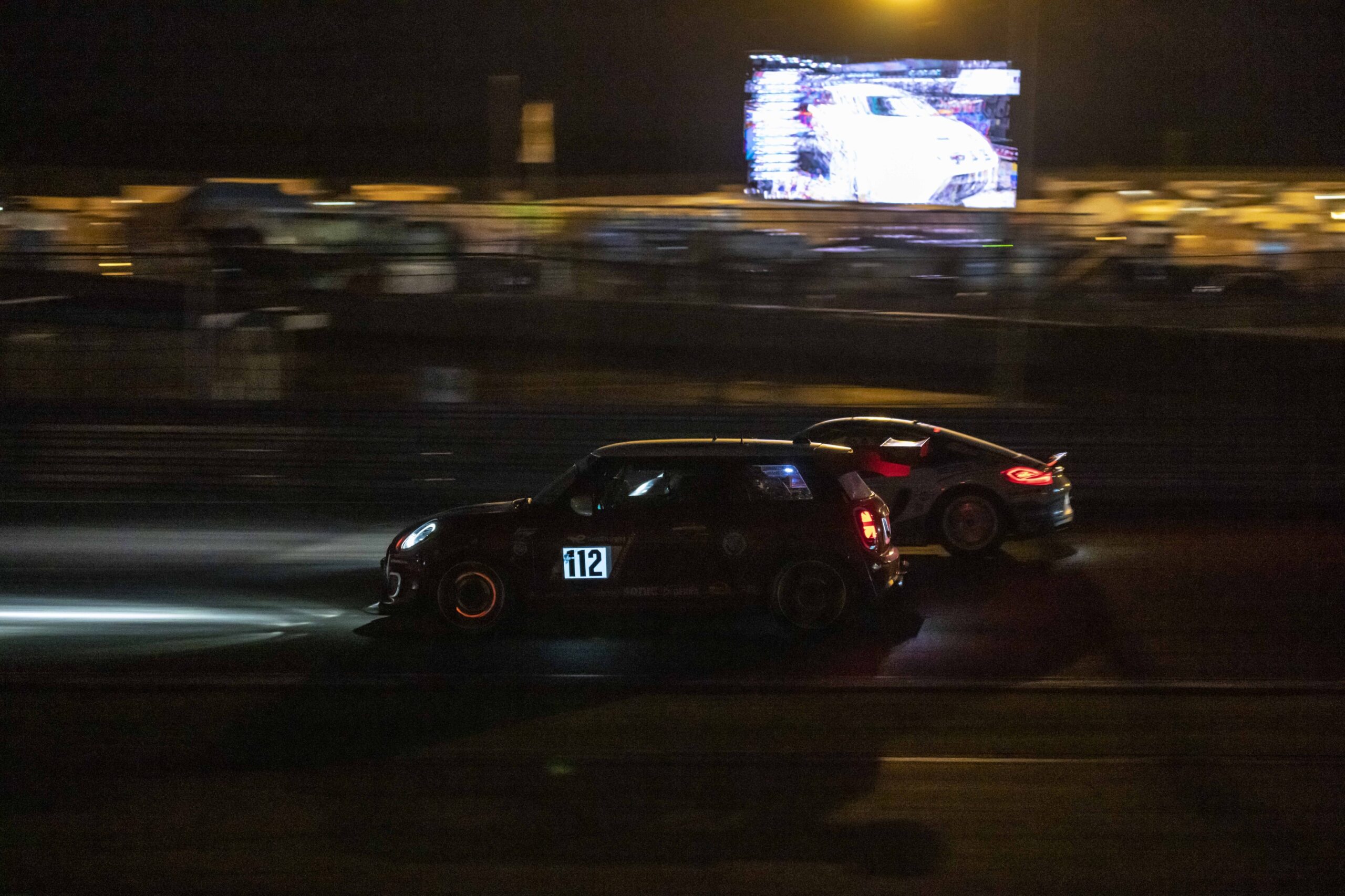
El increÃble apoyo inspiró a Markus Fischer, que enseguida marcó un nuevo mejor tiempo del equipo a pesar de los extensos trabajos de reparación realizados unas horas antes. Pero la alegrÃa sólo duró hasta la vuelta 40, cuando el MINI fue golpeado de nuevo por un competidor en el siguiente stint, de nuevo en el lado del conductor ya maltrecho por la segunda colisión. El impacto y la posterior recuperación del coche causaron grandes daños. En los boxes, rápidamente quedó claro que este nuevo accidente hacÃa imposible continuar de forma segura. La decisión unánime del equipo fue inmediata: el MINI John Cooper Works de Bulldog Racing quedó aparcado definitivamente.
A pesar del decepcionante resultado, la conclusión fue positiva. “El MINI John Cooper Works ha demostrado ser absolutamente competitivo incluso en las condiciones de carrera más duras, sobre todo si se tiene en cuenta que sólo empezamos este proyecto hace nueve meses. Mis felicitaciones y agradecimientos se dirigen sobre todo a todo el equipo, que ha dominado todas las situaciones complicadas de forma extraordinaria”, resume el jefe del equipo, Friedhelm Thelen.
La próxima aparición del coche será durante el Festival de Velocidad de Goodwood, en Inglaterra.



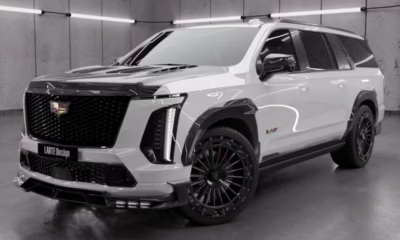



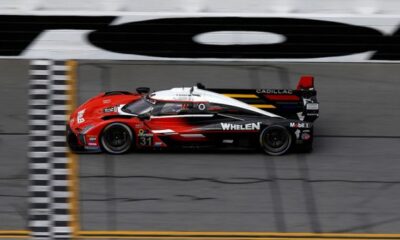





Cadillac has confirmed its IMSA and WEC driver rosters for the 2027 endurance racing season.
Cadillac Racing has announced its driver lineup for the 2027 season, outlining its plans for the IMSA WeatherTech SportsCar Championship and the FIA World Endurance Championship (WEC). The manufacturer will build on its successful 2026 IMSA campaign while introducing changes to its Hypercar program.
The announcement comes with two rounds remaining in the current WEC season. Cadillac will continue competing with its V-Series.R prototype, relying on established driver partnerships and additional endurance-racing experience to prepare for another demanding year.
Cadillac Confirms Three IMSA GTP Lineups
Cadillac will enter its fifth season in IMSA GTP competition with three V-Series.R programs. The driver combinations retain experienced full-season pairings while adding specialist drivers for endurance events.
Cadillac Whelen: No. 31
Jack Aitken and Frederik Vesti will compete throughout the season, with Earl Bamber joining for endurance races. The fourth driver for the Rolex 24 at Daytona has yet to be announced.

The No. 31 Cadillac Whelen will retain Jack Aitken and add Frederik Vesti as its full-season pairing for 2027.
Cadillac Wayne Taylor Racing: No. 10
Ricky Taylor and Filipe Albuquerque will form the full-season pairing, with Will Stevens supporting the team during endurance events. The combination gives the No. 10 entry continuity while adding experience for longer races.
Cadillac Wayne Taylor Racing: No. 40
Jordan Taylor and Louis Deletraz will drive the No. 40 throughout the season, with Norman Nato joining for endurance races. Cadillac will therefore have three distinct GTP entries, each with a designated full-season combination.
Cadillac’s stated objective is to carry its 2026 championship momentum into the 2027 campaign and compete for further titles. The Rolex 24 at Daytona will be an early test of the revised lineups, particularly as the teams prepare for one of the most demanding events on the IMSA calendar.
Antonio Felix da Costa Joins Cadillac’s WEC Program
Cadillac Hertz Team JOTA will continue campaigning the V-Series.R in the WEC Hypercar class for a third year. Its announced roster for the No. 12 and No. 38 cars includes Antonio Felix da Costa, Earl Bamber, Jack Aitken, Norman Nato, Ricky Taylor and Will Stevens.

Cadillac Hertz Team JOTA will introduce Antonio Felix da Costa and Ricky Taylor as part of its 2027 driver changes.
Felix da Costa brings extensive experience across prototype and GT racing. The Portuguese driver has won the FIA World Endurance Championship and claimed a class victory at the 24 Hours of Le Mans. His previous experience with JOTA also gives him familiarity with the team’s operations.
Ricky Taylor is another addition with established ties to Cadillac. He previously raced with Cadillac Hertz Team JOTA at Circuit of the Americas earlier in 2026 while Alex Lynn recovered from surgery. Taylor has recorded 32 victories and 76 podium finishes in his IMSA career, according to the figures cited in the announcement.
The combination of Felix da Costa and Taylor adds experience and technical knowledge to Cadillac’s WEC effort. However, the announcement lists the six drivers across the two cars without specifying their individual No. 12 and No. 38 assignments. Those pairings should not be assumed until Cadillac confirms them.
Alex Lynn and Sébastien Bourdais to Leave the Team
The 2027 changes also mark the end of Alex Lynn and Sébastien Bourdais’ current chapter with Cadillac Hertz Team JOTA. Both drivers will depart the team at the end of the 2026 season.
Cadillac credited the pair with important contributions to the development of its endurance-racing program. Their departures represent a significant change to a lineup that has included experienced competitors in the WEC’s top Hypercar category.

Alex Lynn and Sébastien Bourdais will leave Cadillac Hertz Team JOTA at the end of the 2026 season.
Cadillac’s 2027 plans combine continuity in IMSA with a revised driver roster in the WEC. The manufacturer will aim to translate that experience into results across both championships, beginning with the Rolex 24 at Daytona and the next WEC campaign. The remaining details to watch include the fourth driver for the No. 31 at Daytona and the final allocation of drivers between the two WEC entries.
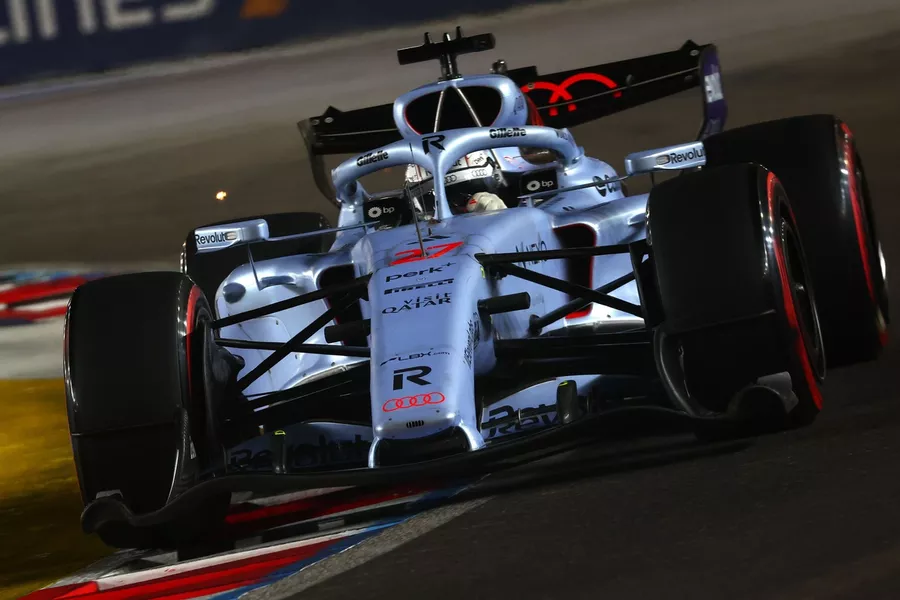
Nico Hulkenberg used racecraft and energy management to keep a faster George Russell behind in Singapore.
Nico Hulkenberg delivered one of Audi’s standout performances in Singapore by defending his position against a faster George Russell during the closing laps. The German combined precise positioning, strategic battery deployment and years of Formula 1 experience to protect a valuable result for the team.
Audi Found an Opportunity at Marina Bay
Singapore represented an important opportunity for Audi. The R26 had shown promising chassis performance throughout the season, with its aerodynamic efficiency helping compensate for weaknesses in the power unit. Although circuits with high temperatures had exposed some of those limitations, Marina Bay offered a different challenge that appeared better suited to the car’s strengths.
The circuit still features several straights where engine performance matters, but its slow corners, technical sections and limited overtaking opportunities place a premium on mechanical grip, aerodynamic balance and driver precision. Audi arrived hoping to convert that combination into valuable championship points.
The team ultimately achieved an important milestone by scoring in both Saturday’s sprint and Sunday’s Grand Prix. Hulkenberg played a central role in that success, making up positions at the start and then managing his race effectively despite facing rivals with different tyre strategies and stronger straight-line performance.

Nico Hulkenberg delivered a strong weekend for Audi at the Singapore Grand Prix.
Hulkenberg Made the Difference at the Start
Hulkenberg’s work began on the opening lap. Starting outside the top 10 in both events, the German needed to make immediate progress to put himself in contention for points.
During the wet sprint, he gained two positions by overtaking around the outside of Turn 5. In Sunday’s Grand Prix, he found space to pass Arvid Lindblad off the line before attacking Pierre Gasly at Turn 3. That move proved particularly important because both drivers had started on medium tyres, the same compound Audi selected for Hulkenberg.
The medium tyre initially left him at a disadvantage against competitors running softs. The softer compound offered additional grip throughout the weekend, helping some rivals find more pace in the opening phase of the race.
Nevertheless, Hulkenberg maintained a narrow gap to Liam Lawson while building a similar margin over Gasly. That balance allowed him to protect his position without compromising his entire race in an attempt to create a larger advantage.
Audi Reacted to Alpine’s Pit Stop Strategy
As the race progressed, Alpine needed a different approach to recover ground. The team became one of the first midfield contenders to stop in an attempt to gain an advantage through an undercut, hoping Gasly could emerge ahead after Hulkenberg made his own pit stop.
Audi responded by bringing Hulkenberg into the pits on the following lap. Although the stop was not particularly quick, it proved sufficient to keep him ahead of Gasly. The Alpine driver then lost further time in traffic behind Carlos Sainz and Isack Hadjar.
The sequence was significant because Singapore makes it difficult to recover positions once a driver becomes trapped behind another car. Track position, clean air and the timing of pit stops can therefore matter as much as outright pace.
By retaining his position, Hulkenberg put himself in a strong position for the closing stages. His remaining challenge was even tougher: keeping Russell behind despite the Mercedes driver’s apparent speed advantage.

Hulkenberg had to use every available advantage to defend against Russell’s faster Mercedes.
Race Intelligence Kept Russell Behind
The decisive phase came during the final laps, when Russell closed in on Hulkenberg. The Mercedes driver appeared to have enough pace to attack, but overtaking around Marina Bay remained difficult.
Allan McNish, Audi’s competition director, praised the German’s performance and highlighted his experience and tactical awareness.
McNish explained that Hulkenberg had to manage roughly 10 laps with Russell behind him. Although the Mercedes was faster, the Audi driver repeatedly found pace in the right parts of the circuit and defended without overcommitting.
That distinction was crucial. An overly aggressive defense could have compromised Hulkenberg’s exit speed, allowing Russell to gain the momentum needed to attempt a pass on the next straight. Instead, the German focused on leaving each corner in a position that made an attack difficult.
Russell came particularly close in the braking zone for Turn 7. However, Hulkenberg repeatedly emerged from the slower corners with enough of an advantage to protect the inside line under braking. That forced Russell toward the outside and limited his options.
Rather than trying to match the Mercedes at every point on the circuit, Hulkenberg concentrated on the sections where positioning mattered most. His defense became a calculated exercise in controlling the available space and preserving just enough speed to stay ahead.
Battery Deployment and a Helpful Tow
Hulkenberg’s defensive performance was not based on positioning alone. Energy management also played a significant role, as he strategically used electrical power to maximize his speed on the straights.
Instead of deploying energy uniformly around the lap, the German could sacrifice performance in selected corners to retain an additional boost for the sections where it was most useful. This approach helped him defend against Russell’s attacks while making the most of the Audi’s available power.
An additional benefit came from his position relative to Lawson. As the race developed, Hulkenberg moved closer to the car ahead and gained assistance from a tow on the straights. That aerodynamic benefit helped increase his speed and made it harder for Russell to complete an overtake.

Careful energy deployment and a tow helped Audi defend its track position in the closing stages.
Hulkenberg explained that he initially did not expect to keep Russell behind. However, he found a better rhythm as the stint progressed and reduced the gap to Lawson. The indirect tow then provided a further advantage on the straights.
Russell’s challenge was complicated by the need to manage his own car. With the battle continuing over several laps, he had to balance the pursuit with keeping his brakes within an effective operating range. That limited the extent to which he could attack continuously.
Why Hulkenberg’s Defense Matters for Audi
The Singapore performance showed how Audi can make the most of its strengths even when its car lacks the outright pace of a rival. The R26’s chassis characteristics, Hulkenberg’s experience and the team’s strategic response combined to protect a result that might otherwise have slipped away.
The weekend also highlighted the importance of energy management under the current technical regulations. Drivers must decide where to deploy electrical power, when to preserve it and how to coordinate those decisions with their positioning on track. In a circuit where overtaking opportunities are limited, those choices can determine the outcome of a battle.
For Audi, scoring in both the sprint and the Grand Prix represented a significant step forward. Hulkenberg’s defense against Russell was an especially clear example of how racecraft can narrow a performance gap without eliminating it.
The German did not need to make his Audi faster than the Mercedes everywhere. He needed to understand where Russell could attack, preserve enough energy to respond and exit the right corners with the advantage required to protect his position. That combination of precision and strategic thinking turned a difficult defensive assignment into one of Audi’s defining moments of the Singapore weekend.

James Vowles says Williams still faces major structural problems, with basic computer tasks taking minutes and aerodynamic processes running twice as slowly as those of leading rivals.
Williams is still working to overcome years of underinvestment, and team principal James Vowles has offered a striking example of the scale of the challenge. According to the British executive, a routine computer operation that should take one second can require around four minutes at the Formula 1 team.
The problem goes beyond the performance of the car itself. Williams must also improve its software, internal systems and development processes if it wants to close the gap to Formula 1’s leading constructors. Vowles believes rebuilding that infrastructure will take time, even with the team’s ongoing investment.
Williams Takes Twice as Long to Develop Aerodynamic Ideas
Vowles has repeatedly emphasized that Williams is still dealing with the consequences of decades of insufficient investment. The team cannot eliminate those weaknesses overnight, particularly under Formula 1’s budget cap, which limits how quickly resources can be deployed.
The team principal explained that some aerodynamic development processes take approximately twice as long at Williams as they do at leading competitors. From the moment an aerodynamicist develops an idea to the point when it can be evaluated in the wind tunnel, the process remains significantly slower.

Williams is working to improve its aerodynamic development processes as it attempts to close the gap to leading F1 teams.
That delay can affect the team’s ability to introduce improvements throughout a season. Even when engineers identify a promising concept, slower development and testing can postpone its arrival on the car, potentially reducing the team’s ability to respond to competitors.
The challenge is therefore not simply to produce better aerodynamic ideas. Williams must also build a technical structure capable of turning those ideas into usable components more efficiently.
A One-Second Computer Task Takes Four Minutes
One of Vowles’ most revealing examples concerns a routine operation used in aerodynamic design. Mirroring an object from one side of the car to the other should be a straightforward computer task, yet Williams’ systems can take approximately four minutes to complete it.
The team principal described how an engineer can click a button and then wait long enough to make a cup of tea. For a task that should take about one second, the delay illustrates how outdated software and internal systems can disrupt everyday work.

Slow internal software can add unnecessary waiting time to routine engineering work at Williams.
Vowles explained that the problem is not an isolated technical fault. Instead, it reflects years of underinvestment in the systems supporting the team’s engineers. He suggested that the two examples he described represent only a small part of a much larger collection of inefficiencies.
Those delays may appear insignificant individually, but their cumulative effect can be substantial. When hundreds of small problems affect different departments, they can consume working hours and slow the development process across an entire organization.
Williams Faces Hundreds of Small Problems
Inside Williams, the accumulated obstacles have been described as “a thousand paper cuts.” The phrase captures a structural problem in which no single issue explains the team’s difficulties, but numerous small inefficiencies combine to create a significant disadvantage.
These weaknesses can affect everything from computer-aided design to aerodynamic development and the speed at which engineering decisions become physical parts. Improving one system may help, but the wider challenge requires changes across multiple departments.

Williams needs improvements across its engineering systems and factory operations, not just a faster car.
Vowles estimates that the team will need another 12 to 18 months to bring many of these problems under control. Even then, further weaknesses may emerge as the organization improves and identifies new areas where it falls behind the leading teams.
The timeline highlights the scale of the task facing Williams. Progress depends not only on investment in the car but also on improving the tools, processes and working environment that allow engineers to develop it.
James Vowles’ Long-Term Plan for Williams
Vowles joined Williams as team principal in 2023 after spending years at Mercedes, giving him direct experience of the systems and working methods used by a championship-winning organization. That background provides a benchmark for the improvements he wants to introduce at Williams.
However, he has stressed that a team cannot reverse two decades of underinvestment in just three years while operating under a budget cap. Infrastructure upgrades, software improvements and more efficient development processes all require time and careful prioritization.
For Williams, the objective is to create an organization that can develop upgrades and respond to technical challenges at a speed comparable with its leading competitors. Until that happens, even strong engineering ideas may take too long to translate into performance on track.
The four-minute computer task illustrates why Williams’ recovery involves much more than the design of its next Formula 1 car. Closing the gap requires a faster, more reliable organization behind it, with improvements across hundreds of small processes that collectively influence performance.
-

 NOW TRENDING2 months ago
Tesla Cybercab Gets September 3 Austin Launch Date
-

 TEST DRIVES2 months ago
2025 Ford Bronco Sport Badlands: The Adventure SUV You Can Drive Every Day
-
 TEST DRIVES2 months ago
2026 Toyota GR Supra MkV Final Edition
-
 NOW TRENDING1 month ago
Aston Martin DBX Becomes Harry Da Souza’s Ride in MobLand
-

 NOW TRENDING2 months ago
Tesla Cybercab Puts U.S. Regulations to the Test
-
 Formula12 months ago
FIA Reveals Second ADUO Results With Red Bull-Ford Still on Top
-

 NOW TRENDING2 months ago
2027 Hyundai Tucson Hybrid Gets a Power Boost
-
 NOW TRENDING2 months ago
Hyundai Reports Strong Hybrid Sales in August 2026
You must be logged in to post a comment Login