
MEXICO CITY, Mexico. Wed. 11 Jan. 2023: Season 9 and a new era of the ABB FIA Formula E World Championship begins this Saturday with the competitive debut of the fastest, lightest, most powerful and efficient electric race car ever built – the GEN3 – in the 2023 Hankook Mexico City E-Prix at the Autódromo Hermanos Rodriguez circuit.

A capacity crowd of 40,000 spectators will fill the grandstands, with a carnival atmosphere in the famed Foro Sol stadium section welcoming the 22 drivers from 11 teams who will be competing in a race car performing at the very limit of innovation and pushing the boundaries of EV technology – the all-new GEN3.
NEW TEAMS, WORLD CLASS GRID
It was a busy off-season as every team manoeuvred for early position at the start of the GEN3 era. Just one team has retained the same driver line-up that finished last season.
DS Automobiles has partnered with PENSKE AUTOSPORT, signing two of the biggest names on the grid to launch their Season 9 campaign. Reigning champion Stoffel Vandoorne and Formula E’s only double champion Jean-Éric Vergne will drive for the DS PENSKE team. The pair were highly-competitive in testing recording the second and third fastest times respectively. Vandoorne will be looking to mount a strong title defence to match Vergne’s unique double-title honour.
Two iconic names in world motorsport – McLaren and Maserati – line up on the Formula E grid for the first time this season.

The former is among the greatest names in motorsport, with 20 Formula 1 World Championship titles, 180 Grand Prix wins and three Indianapolis 500 victories to its name, as well as a Le Mans 24 Hours win at the first attempt.
René Rast, multiple DTM champion and former Formula E racer, will compete in the distinctive papaya of the new NEOM McLaren Formula E Teamalongside Jake Hughes, who impressed in testing on the way to recording the fourth-quickest time of the week.
In partnership with MSG Racing, Maserati marks its return to single-seater competition for the first time in more than 60 years and is set to become the first Italian marque to compete in Formula E. Both Maserati and McLaren have cited Formula E as key to their EV development programmes with the championship’s intense sporting laboratory driving learnings from the racetrack to road models.
Maserati’s rich motorsport heritage is evident throughout their return to racing: launched on the streets of their Italian hometown of Modena in the iconic blue colour, the Maserati Tipo Folgore pays homage to the Trident’s first racing car, the Tipo 26.

Maserati MSG Racing will see the return of Edoardo Mortara who will look to build on his most successful Formula E campaign yet of four wins among six podium finishes last season alongside new teammate Maximilian Guenther. It was a strong start for the team in Valencia, where Guenther topped five of the seven timed sessions and set the benchmark pace in Spain at a third official Formula E test.
Jaguar TCS Racing is the only team on the grid to field an unchanged driver line-up. Mitch Evans was in the hunt for his first-ever Formula E world champion title until the final weekend of last season, ultimately finishing second. Across the garage, teammate Sam Bird was frustrated by an injury that meant he was unable to take part in the final two races of the season – numbers 99 and 100 in Formula E history – leaving Lucas di Grassi to become the only driver to achieve the ever-present feat.
André Lotterer joins Jake Dennis at the now Porsche-powered Avalanche Andretti Formula E team, while Season 6 champion António Félix Da Costa will partner Pascal Wehrlein at TAG Heuer Porsche Formula E Team.
Nick Cassidy stays at Envision Racing, where he is joined by long-standing Nissan driver and Season 2 champion Sébastien Buemi.

Buemi’s departure means Nissan Formula E Teamalso has a fully-refreshed line-up with Norman Natoand Sacha Fenestraz, who stood in for Antonio Giovinazzi in Seoul in the last race of Season 8.
Mahindra Racing welcomes ‘Mr 100’ and Season 3 champion Lucas di Grassi to partner Oliver Rowland.
NIO 333 Racing retains Dan Ticktum, who will partner with Sérgio Sette Câmara, who put in some impressive performances last year for DRAGON/PENSKE AUTOSPORT while Robins Frijnsand Nico Mueller will race for the new ABT CUPRA Formula E Team.
GEN3: A HUGE TECH LEAP
The 11 teams and 22 drivers in the ABB FIA Formula E World Championship have had private testing and three days together in Valencia to build up the mileage and acquaint themselves with their all-new GEN3 race car.
The GEN3 is a huge leap in technological development and innovation with engineers at the FIA and Formula E delivering the fastest, lightest, most powerful and efficient electric race car ever built, pushing the boundaries of EV development.
Capable of a 200mph (322kph) top speed, it is 53kg lighter with a smaller chassis optimised for street racing. An additional front powertrain adds 250kW to the 350kW at the rear, more than doubling the regenerative capacity of the current GEN2 car to 600kW, with more than 40% of the energy used in-race regenerated under braking.

SPORTING UPDATES FOR SEASON 9
Alongside the revolutionary technology on-track, Formula E’s sporting regulations have undergone updates aligned to the GEN3 era. A lap total will replace time in setting a race distance, with additional laps added for Safety Car and Full Course Yellow interruptions to racing.
Hankook Tire becomes the exclusive Technical Partner and Tyre Supplier of the ABB FIA Formula E World Championship from Season 9. Two years of research and development has gone into producing the Hankook iON Race tyre which in Formula E is used in all conditions, wet and dry. Nearly 30 percent of the new tyre is made of sustainable materials while Hankook completely recycles every set of tyres after use.
RETURN TO MEXICO CITY
This Saturday, Formula E makes a seventh visit to a circuit that has been a feature on the calendar since Season 2, save for a trip to Puebla in Season 7 – Autódromo Hermanos Rodriguez.
The 19-turn, 2.630km circuit is a perfect mix of long, fast straights and a technical infield section that passes right through the legendary Foro Sol stadium section where tens of thousands of fans sit.
A new chicane has been added on the back straight this season, while the ATTACK MODE activation zone is now on the outside of Turn 15 at the exit of the stadium section presenting more of a challenge this time around.

Last season, TAG Heuer Porsche Formula E Team dominated in Mexico City to claim their first ABB FIA Formula E World Championship race win.
Pascal Wehrlein led home teammate Andre Lotterer for a Porsche one-two with the team inflicting an extra lap on the field with just a couple of seconds remaining on the clock.
MEXICO CITY FACTS
- Mexico has been a mainstay on the Formula E calendar since its initial appearance in Season 2 with Mexico City hosting apart from Covid-hit Season 7 (with Puebla filling the gap). Only Germany (16) and USA (13) have hosted more races than Mexico (8).
- The 2023 Hankook Mexico City E-Prix will be run to a new track layout with a chicane being added after Turn 8, making the circuit the longest Formula E configuration around the Autódromo Hermanos RodrÃguez.
- The 19-turn layout will be the fourth different configuration across the seven Mexico City E-Prix.
- After eight years of the Formula E season commencing in Asia, Formula E will start its GEN3 journey in North America, with Mexico City being the fourth city to have hosted the opener (after Beijing, Hong Kong and Diriyah).
- The opening race isn’t always a clear indicator of who will clinch the championship in Formula E. In only two seasons has the Driver’s Champion won the opening race (Sébastien Buemi in Season 2 and Nyck de Vries in Season 6).
- Lucas di Grassi won the Season 3 Mexico City race from 15th on the grid, the lowest position any driver has won an E-Prix from.
- Of the six previous races in Mexico City, Sébastien Buemi has stood on the podium three times, more than any other driver.
- António Félix da Costa is coming up to his first Formula E race with his new team, Porsche. Da Costa will be hoping he starts the GEN3 era in the same way he started GEN2, which is with a win.
- Sébastien Buemi, Sam Bird and Lucas di Grassi are the only drivers to have raced in every season opening race (each having claimed at least one win at a season opener).
- The last visit to Mexico City saw Pascal Wehrlein claim his maiden Formula E victory. Seven drivers come into Mexico City in search of their first Formula E win.
- NIO 333 Racing will start Season 9 with the youngest driver pairing (with an average age of just 24 years and 45 days). Mahindra Racing will start the season with the oldest driver pairing (with an average age of 34 years 156 days).
- The last three Julius Baer Pole Positions in Mexico City have all been claimed by German drivers. However, pole position isn’t always the spot to be in Mexico City, with three of the six pole sitters having failed to make it to the chequered flag.
- Starting last in Mexico City isn’t always the end to a driver’s weekend. In three of the last four Mexico City E-Prixs, the driver starting in last has picked up points (with a ninth-place finish in each instance).






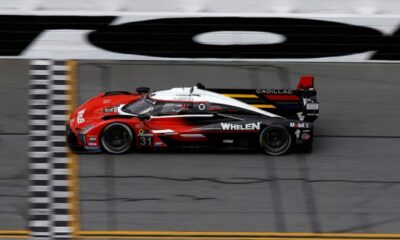




Cadillac has confirmed its IMSA and WEC driver rosters for the 2027 endurance racing season.
Cadillac Racing has announced its driver lineup for the 2027 season, outlining its plans for the IMSA WeatherTech SportsCar Championship and the FIA World Endurance Championship (WEC). The manufacturer will build on its successful 2026 IMSA campaign while introducing changes to its Hypercar program.
The announcement comes with two rounds remaining in the current WEC season. Cadillac will continue competing with its V-Series.R prototype, relying on established driver partnerships and additional endurance-racing experience to prepare for another demanding year.
Cadillac Confirms Three IMSA GTP Lineups
Cadillac will enter its fifth season in IMSA GTP competition with three V-Series.R programs. The driver combinations retain experienced full-season pairings while adding specialist drivers for endurance events.
Cadillac Whelen: No. 31
Jack Aitken and Frederik Vesti will compete throughout the season, with Earl Bamber joining for endurance races. The fourth driver for the Rolex 24 at Daytona has yet to be announced.

The No. 31 Cadillac Whelen will retain Jack Aitken and add Frederik Vesti as its full-season pairing for 2027.
Cadillac Wayne Taylor Racing: No. 10
Ricky Taylor and Filipe Albuquerque will form the full-season pairing, with Will Stevens supporting the team during endurance events. The combination gives the No. 10 entry continuity while adding experience for longer races.
Cadillac Wayne Taylor Racing: No. 40
Jordan Taylor and Louis Deletraz will drive the No. 40 throughout the season, with Norman Nato joining for endurance races. Cadillac will therefore have three distinct GTP entries, each with a designated full-season combination.
Cadillac’s stated objective is to carry its 2026 championship momentum into the 2027 campaign and compete for further titles. The Rolex 24 at Daytona will be an early test of the revised lineups, particularly as the teams prepare for one of the most demanding events on the IMSA calendar.
Antonio Felix da Costa Joins Cadillac’s WEC Program
Cadillac Hertz Team JOTA will continue campaigning the V-Series.R in the WEC Hypercar class for a third year. Its announced roster for the No. 12 and No. 38 cars includes Antonio Felix da Costa, Earl Bamber, Jack Aitken, Norman Nato, Ricky Taylor and Will Stevens.

Cadillac Hertz Team JOTA will introduce Antonio Felix da Costa and Ricky Taylor as part of its 2027 driver changes.
Felix da Costa brings extensive experience across prototype and GT racing. The Portuguese driver has won the FIA World Endurance Championship and claimed a class victory at the 24 Hours of Le Mans. His previous experience with JOTA also gives him familiarity with the team’s operations.
Ricky Taylor is another addition with established ties to Cadillac. He previously raced with Cadillac Hertz Team JOTA at Circuit of the Americas earlier in 2026 while Alex Lynn recovered from surgery. Taylor has recorded 32 victories and 76 podium finishes in his IMSA career, according to the figures cited in the announcement.
The combination of Felix da Costa and Taylor adds experience and technical knowledge to Cadillac’s WEC effort. However, the announcement lists the six drivers across the two cars without specifying their individual No. 12 and No. 38 assignments. Those pairings should not be assumed until Cadillac confirms them.
Alex Lynn and Sébastien Bourdais to Leave the Team
The 2027 changes also mark the end of Alex Lynn and Sébastien Bourdais’ current chapter with Cadillac Hertz Team JOTA. Both drivers will depart the team at the end of the 2026 season.
Cadillac credited the pair with important contributions to the development of its endurance-racing program. Their departures represent a significant change to a lineup that has included experienced competitors in the WEC’s top Hypercar category.

Alex Lynn and Sébastien Bourdais will leave Cadillac Hertz Team JOTA at the end of the 2026 season.
Cadillac’s 2027 plans combine continuity in IMSA with a revised driver roster in the WEC. The manufacturer will aim to translate that experience into results across both championships, beginning with the Rolex 24 at Daytona and the next WEC campaign. The remaining details to watch include the fourth driver for the No. 31 at Daytona and the final allocation of drivers between the two WEC entries.
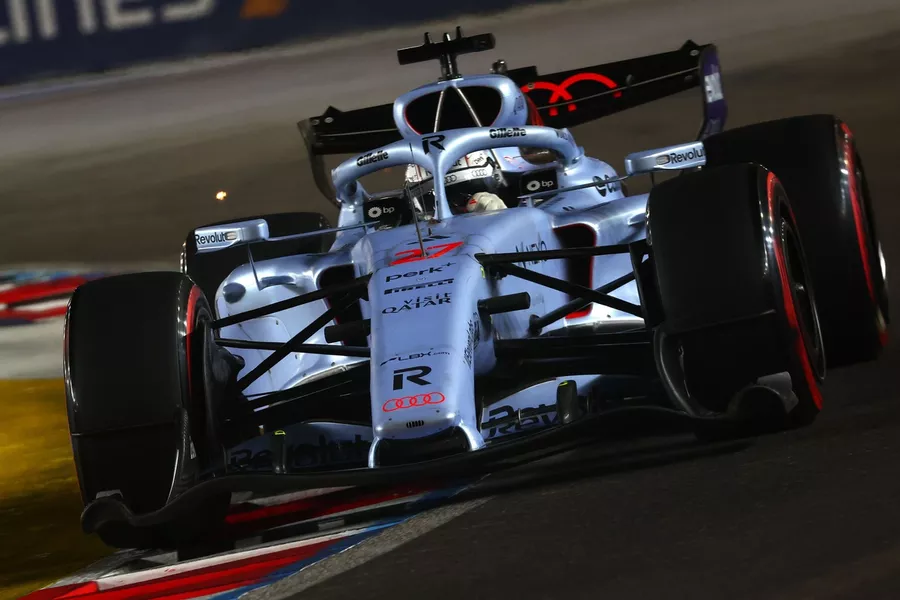
Nico Hulkenberg used racecraft and energy management to keep a faster George Russell behind in Singapore.
Nico Hulkenberg delivered one of Audi’s standout performances in Singapore by defending his position against a faster George Russell during the closing laps. The German combined precise positioning, strategic battery deployment and years of Formula 1 experience to protect a valuable result for the team.
Audi Found an Opportunity at Marina Bay
Singapore represented an important opportunity for Audi. The R26 had shown promising chassis performance throughout the season, with its aerodynamic efficiency helping compensate for weaknesses in the power unit. Although circuits with high temperatures had exposed some of those limitations, Marina Bay offered a different challenge that appeared better suited to the car’s strengths.
The circuit still features several straights where engine performance matters, but its slow corners, technical sections and limited overtaking opportunities place a premium on mechanical grip, aerodynamic balance and driver precision. Audi arrived hoping to convert that combination into valuable championship points.
The team ultimately achieved an important milestone by scoring in both Saturday’s sprint and Sunday’s Grand Prix. Hulkenberg played a central role in that success, making up positions at the start and then managing his race effectively despite facing rivals with different tyre strategies and stronger straight-line performance.

Nico Hulkenberg delivered a strong weekend for Audi at the Singapore Grand Prix.
Hulkenberg Made the Difference at the Start
Hulkenberg’s work began on the opening lap. Starting outside the top 10 in both events, the German needed to make immediate progress to put himself in contention for points.
During the wet sprint, he gained two positions by overtaking around the outside of Turn 5. In Sunday’s Grand Prix, he found space to pass Arvid Lindblad off the line before attacking Pierre Gasly at Turn 3. That move proved particularly important because both drivers had started on medium tyres, the same compound Audi selected for Hulkenberg.
The medium tyre initially left him at a disadvantage against competitors running softs. The softer compound offered additional grip throughout the weekend, helping some rivals find more pace in the opening phase of the race.
Nevertheless, Hulkenberg maintained a narrow gap to Liam Lawson while building a similar margin over Gasly. That balance allowed him to protect his position without compromising his entire race in an attempt to create a larger advantage.
Audi Reacted to Alpine’s Pit Stop Strategy
As the race progressed, Alpine needed a different approach to recover ground. The team became one of the first midfield contenders to stop in an attempt to gain an advantage through an undercut, hoping Gasly could emerge ahead after Hulkenberg made his own pit stop.
Audi responded by bringing Hulkenberg into the pits on the following lap. Although the stop was not particularly quick, it proved sufficient to keep him ahead of Gasly. The Alpine driver then lost further time in traffic behind Carlos Sainz and Isack Hadjar.
The sequence was significant because Singapore makes it difficult to recover positions once a driver becomes trapped behind another car. Track position, clean air and the timing of pit stops can therefore matter as much as outright pace.
By retaining his position, Hulkenberg put himself in a strong position for the closing stages. His remaining challenge was even tougher: keeping Russell behind despite the Mercedes driver’s apparent speed advantage.

Hulkenberg had to use every available advantage to defend against Russell’s faster Mercedes.
Race Intelligence Kept Russell Behind
The decisive phase came during the final laps, when Russell closed in on Hulkenberg. The Mercedes driver appeared to have enough pace to attack, but overtaking around Marina Bay remained difficult.
Allan McNish, Audi’s competition director, praised the German’s performance and highlighted his experience and tactical awareness.
McNish explained that Hulkenberg had to manage roughly 10 laps with Russell behind him. Although the Mercedes was faster, the Audi driver repeatedly found pace in the right parts of the circuit and defended without overcommitting.
That distinction was crucial. An overly aggressive defense could have compromised Hulkenberg’s exit speed, allowing Russell to gain the momentum needed to attempt a pass on the next straight. Instead, the German focused on leaving each corner in a position that made an attack difficult.
Russell came particularly close in the braking zone for Turn 7. However, Hulkenberg repeatedly emerged from the slower corners with enough of an advantage to protect the inside line under braking. That forced Russell toward the outside and limited his options.
Rather than trying to match the Mercedes at every point on the circuit, Hulkenberg concentrated on the sections where positioning mattered most. His defense became a calculated exercise in controlling the available space and preserving just enough speed to stay ahead.
Battery Deployment and a Helpful Tow
Hulkenberg’s defensive performance was not based on positioning alone. Energy management also played a significant role, as he strategically used electrical power to maximize his speed on the straights.
Instead of deploying energy uniformly around the lap, the German could sacrifice performance in selected corners to retain an additional boost for the sections where it was most useful. This approach helped him defend against Russell’s attacks while making the most of the Audi’s available power.
An additional benefit came from his position relative to Lawson. As the race developed, Hulkenberg moved closer to the car ahead and gained assistance from a tow on the straights. That aerodynamic benefit helped increase his speed and made it harder for Russell to complete an overtake.

Careful energy deployment and a tow helped Audi defend its track position in the closing stages.
Hulkenberg explained that he initially did not expect to keep Russell behind. However, he found a better rhythm as the stint progressed and reduced the gap to Lawson. The indirect tow then provided a further advantage on the straights.
Russell’s challenge was complicated by the need to manage his own car. With the battle continuing over several laps, he had to balance the pursuit with keeping his brakes within an effective operating range. That limited the extent to which he could attack continuously.
Why Hulkenberg’s Defense Matters for Audi
The Singapore performance showed how Audi can make the most of its strengths even when its car lacks the outright pace of a rival. The R26’s chassis characteristics, Hulkenberg’s experience and the team’s strategic response combined to protect a result that might otherwise have slipped away.
The weekend also highlighted the importance of energy management under the current technical regulations. Drivers must decide where to deploy electrical power, when to preserve it and how to coordinate those decisions with their positioning on track. In a circuit where overtaking opportunities are limited, those choices can determine the outcome of a battle.
For Audi, scoring in both the sprint and the Grand Prix represented a significant step forward. Hulkenberg’s defense against Russell was an especially clear example of how racecraft can narrow a performance gap without eliminating it.
The German did not need to make his Audi faster than the Mercedes everywhere. He needed to understand where Russell could attack, preserve enough energy to respond and exit the right corners with the advantage required to protect his position. That combination of precision and strategic thinking turned a difficult defensive assignment into one of Audi’s defining moments of the Singapore weekend.

James Vowles says Williams still faces major structural problems, with basic computer tasks taking minutes and aerodynamic processes running twice as slowly as those of leading rivals.
Williams is still working to overcome years of underinvestment, and team principal James Vowles has offered a striking example of the scale of the challenge. According to the British executive, a routine computer operation that should take one second can require around four minutes at the Formula 1 team.
The problem goes beyond the performance of the car itself. Williams must also improve its software, internal systems and development processes if it wants to close the gap to Formula 1’s leading constructors. Vowles believes rebuilding that infrastructure will take time, even with the team’s ongoing investment.
Williams Takes Twice as Long to Develop Aerodynamic Ideas
Vowles has repeatedly emphasized that Williams is still dealing with the consequences of decades of insufficient investment. The team cannot eliminate those weaknesses overnight, particularly under Formula 1’s budget cap, which limits how quickly resources can be deployed.
The team principal explained that some aerodynamic development processes take approximately twice as long at Williams as they do at leading competitors. From the moment an aerodynamicist develops an idea to the point when it can be evaluated in the wind tunnel, the process remains significantly slower.

Williams is working to improve its aerodynamic development processes as it attempts to close the gap to leading F1 teams.
That delay can affect the team’s ability to introduce improvements throughout a season. Even when engineers identify a promising concept, slower development and testing can postpone its arrival on the car, potentially reducing the team’s ability to respond to competitors.
The challenge is therefore not simply to produce better aerodynamic ideas. Williams must also build a technical structure capable of turning those ideas into usable components more efficiently.
A One-Second Computer Task Takes Four Minutes
One of Vowles’ most revealing examples concerns a routine operation used in aerodynamic design. Mirroring an object from one side of the car to the other should be a straightforward computer task, yet Williams’ systems can take approximately four minutes to complete it.
The team principal described how an engineer can click a button and then wait long enough to make a cup of tea. For a task that should take about one second, the delay illustrates how outdated software and internal systems can disrupt everyday work.

Slow internal software can add unnecessary waiting time to routine engineering work at Williams.
Vowles explained that the problem is not an isolated technical fault. Instead, it reflects years of underinvestment in the systems supporting the team’s engineers. He suggested that the two examples he described represent only a small part of a much larger collection of inefficiencies.
Those delays may appear insignificant individually, but their cumulative effect can be substantial. When hundreds of small problems affect different departments, they can consume working hours and slow the development process across an entire organization.
Williams Faces Hundreds of Small Problems
Inside Williams, the accumulated obstacles have been described as “a thousand paper cuts.” The phrase captures a structural problem in which no single issue explains the team’s difficulties, but numerous small inefficiencies combine to create a significant disadvantage.
These weaknesses can affect everything from computer-aided design to aerodynamic development and the speed at which engineering decisions become physical parts. Improving one system may help, but the wider challenge requires changes across multiple departments.

Williams needs improvements across its engineering systems and factory operations, not just a faster car.
Vowles estimates that the team will need another 12 to 18 months to bring many of these problems under control. Even then, further weaknesses may emerge as the organization improves and identifies new areas where it falls behind the leading teams.
The timeline highlights the scale of the task facing Williams. Progress depends not only on investment in the car but also on improving the tools, processes and working environment that allow engineers to develop it.
James Vowles’ Long-Term Plan for Williams
Vowles joined Williams as team principal in 2023 after spending years at Mercedes, giving him direct experience of the systems and working methods used by a championship-winning organization. That background provides a benchmark for the improvements he wants to introduce at Williams.
However, he has stressed that a team cannot reverse two decades of underinvestment in just three years while operating under a budget cap. Infrastructure upgrades, software improvements and more efficient development processes all require time and careful prioritization.
For Williams, the objective is to create an organization that can develop upgrades and respond to technical challenges at a speed comparable with its leading competitors. Until that happens, even strong engineering ideas may take too long to translate into performance on track.
The four-minute computer task illustrates why Williams’ recovery involves much more than the design of its next Formula 1 car. Closing the gap requires a faster, more reliable organization behind it, with improvements across hundreds of small processes that collectively influence performance.
-
 NOW TRENDING2 months ago
Tesla Cybercab Gets September 3 Austin Launch Date
-

 TEST DRIVES2 months ago
2025 Ford Bronco Sport Badlands: The Adventure SUV You Can Drive Every Day
-
 TEST DRIVES2 months ago
2026 Toyota GR Supra MkV Final Edition
-

 NOW TRENDING1 month ago
Aston Martin DBX Becomes Harry Da Souza’s Ride in MobLand
-
 NOW TRENDING2 months ago
Tesla Cybercab Puts U.S. Regulations to the Test
-
 Formula12 months ago
FIA Reveals Second ADUO Results With Red Bull-Ford Still on Top
-

 NOW TRENDING2 months ago
2027 Hyundai Tucson Hybrid Gets a Power Boost
-
 NOW TRENDING2 months ago
Hyundai Reports Strong Hybrid Sales in August 2026
You must be logged in to post a comment Login