
Un vistazo al interior del Audi RS Q e-tron recordará a cualquier aficionado a los coches a la cabina de un avión, con pantallas y displays que se extienden a lo ancho del salpicadero. Solo con su ayuda, el conductor y su copiloto podrán recorrer de forma rápida y con garantÃas de éxito miles de kilómetros a través del desierto.

Originalmente, en los rallies campo a través se establecÃa una clara división de tareas: el piloto conduce y el copiloto navega. Sin embargo, hace tiempo que estos papeles han cambiado. En la actualidad el reglamento limita las tareas de navegación con opciones y reglas muy precisas, y el antiguo roadbook en papel para seguir el recorrido ahora es digital. Con su concepto de control y manejo, el Audi RS Q e-tron redistribuye varias funciones entre el conductor y el copiloto.

Manejar el volante, acelerar y frenar son las principales tareas de Carlos Sainz, Mattias Ekström y Stéphane Peterhansel, que se concentran totalmente en el terreno. Ya no tienen que cambiar de marcha, porque el sistema de propulsión eléctrica con convertidor de energÃa del Audi RS Q e-tron no requiere de una transmisión manual. En el centro del puesto de conducción se encuentra la palanca del freno de mano, realizada en aluminio y acoplada al innovador sistema brake-by-wire, que combina el freno hidráulico con un sistema de recuperación de energÃa. De este modo, la acción de tirar del freno de mano, al igual que al frenar con el pie, también contribuye a recuperar energÃa. Pero el principal propósito del freno de mano en los rallies es inducir el deslizamiento del RS Q e-tron antes de las curvas mediante un breve bloqueo de las ruedas traseras que obliga al coche a girar y permite que los cambios de dirección sean especialmente ágiles.

Hay ocho botones en el volante, situados directamente delante del conductor. Entre otras cosas, controlan el claxon, los limpiaparabrisas y las entradas de datos en el software si el piloto quiere registrar una anomalÃa en el sistema mediante una marca de tiempo en la memoria. También se puede activar desde el volante el limitador de velocidad para las zonas en las que se prescribe una velocidad máxima. Detrás del volante y en el campo de visión inferior del conductor se ubica una pantalla que proporciona información sobre la presión de los neumáticos, el sentido de la marcha seleccionado por la transmisión eléctrica continua (hacia delante, hacia atrás o en punto muerto) y la velocidad actual. También muestra alertas para que el piloto pueda reaccionar inmediatamente en el caso de que, por ejemplo, se detecte una parada inminente del sistema o se desconecte la baterÃa de alto voltaje. Dos pequeños displays instalados por encima y hacia el parabrisas funcionan a modo de “repetidores” y aportan información esencial en el campo de visión: a la izquierda se muestra la dirección que indica la brújula, mientras que a la derecha aparece la velocidad a la que se circula.

Una pantalla situada justo en el centro del salpicadero, entre el conductor y el copiloto, ofrece información sobre la presión de los neumáticos, el reparto de frenada, el sistema brake-by-wire y muchas otras funciones. La información se resalta en color verde mientras los distintos sistemas funcionan de forma correcta, o en rojo cuando se produce un error. Debajo de esta pantalla se localiza un panel de interruptores cuyas teclas individuales reaccionan de forma sensible al tacto con un punto de presión. Audi ha programado diversas funciones en las 24 zonas de libre asignación predefinidas: por ejemplo, las velocidades máximas preseleccionadas habituales en las zonas de lÃmite de velocidad, o el accionamiento del aire acondicionado. Se pueden configurar diferentes niveles para que los 24 botones admitan distintas asignaciones, desplazando al final las funciones menos frecuentes. Por ejemplo, en caso de averÃa, desde estos botones es posible desconectar algunos sistemas para llegar con seguridad al destino de la etapa en modo de emergencia (“fail safe”).
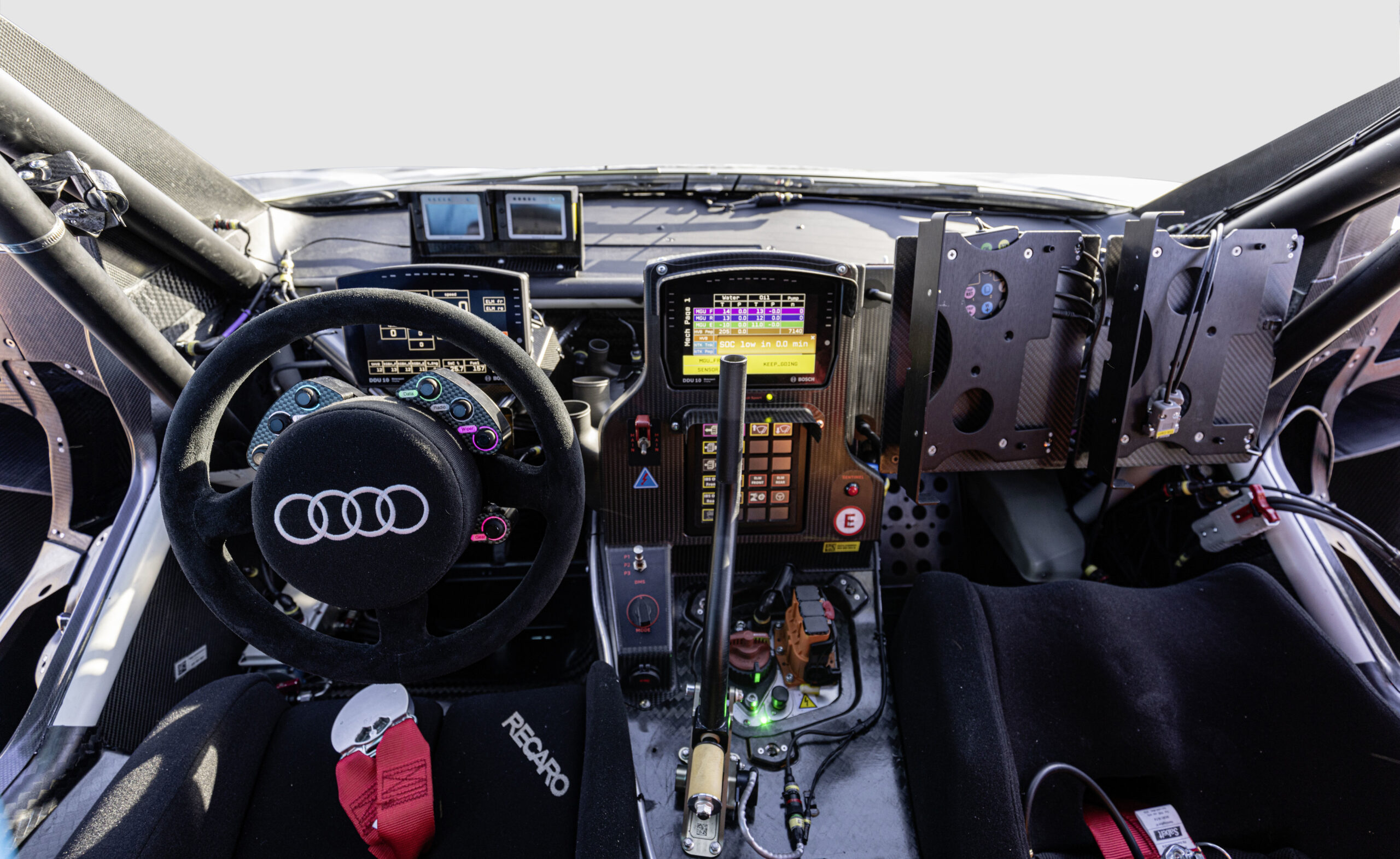
El manejo de este panel de interruptores corresponde al copiloto, a requerimiento del piloto. Además de su tarea principal, que es la navegación, el control de estos sistemas ha de hacerse de forma impecable mientras se circula por terrenos accidentados a velocidades de hasta 170 km/h, por lo que el copiloto asume una gran responsabilidad. “Ahora sólo dedico la mitad de mi energÃa a la navegación y concentro la otra mitad en el control y el manejo de los sistemas del coche, pero me encanta este nuevo reto”, declara Edouard Boulanger, copiloto de Stéphane Peterhansel.

El recorrido de la siguiente etapa ya no se publica la vÃspera, como en el pasado. Los equipos sólo reciben esta información cada mañana, 15 minutos antes de la salida de la etapa. Emil Bergkvist, que comparte cockpit con Mattias Ekström, considera que esto es una ventaja: “Como piloto, vengo de los rallies clásicos al sprint. Pero para mà este es el momento ideal para pasar a los raids como copiloto, porque incluso los que ya tienen experiencia en esta disciplina tendrán que acostumbrarse a estas nuevas reglas”.

Recibir la información del recorrido con poca antelación, asà como el cambio a un formato de libro de ruta digital, plantea grandes desafÃos. Para orientarse en el terreno y, al mismo tiempo, mantener la ruta prescrita, los tres copilotos, Emil Bergkvist, Edouard Boulanger y Lucas Cruz, tienen que consultar las pantallas de dos tablets que sustituyen a los anteriores roadbooks de papel, que se manejan con dos mandos a distancia conectados por cables. En el display de la izquierda, el libro de ruta muestra el recorrido. Sólo en caso de fallo de esta tablet la tripulación puede recurrir al roadbook de papel, que inicialmente se suministra sellado; de lo contrario, se enfrentan a una sanción. La tablet situada a la derecha contiene la navegación GPS y valida los waypoints digitales a los que cada participante debe dirigirse. Cuando el coche llega al radio de un waypoint, el conductor también ve las flechas de dirección en la pantalla que tiene a su derecha, debajo del parabrisas.

La mayor diferencia con el sistema de navegación que se utiliza en los coches de serie, en los que el dispositivo ayuda a encontrar los destinos con la mayor precisión posible en el tráfico por carretera, es que la navegación en los rallies campo a través debe seguir siendo un reto deportivo. Junto con la actuación del piloto, determina el éxito y la derrota. Por ello, el organizador sólo refleja en el roadbook direcciones a seguir con la brújula, distancias, pictogramas, indicaciones especiales y advertencias de peligro. Por lo tanto, el sistema de navegación en este tipo de competición es sólo una ayuda limitada para los equipos. Al mismo tiempo sirve al organizador como instrumento de control, ya que permite comprobar si los participantes han respetado la ruta y la velocidad en las zonas de control de velocidad a lo largo de cientos de kilómetros en terreno abierto.

El cockpit se completa con el sistema Iritrack en la consola central, para los primeros auxilios en caso de emergencia. Con esta tecnologÃa, la organización registra la velocidad, la posición actual del vehÃculo y puede detectar posibles accidentes. En caso de emergencia el copiloto puede informar directamente si los pasajeros están ilesos, si necesitan asistencia médica o si el equipo de rescate debe ayudar a otro participante que haya sufrido un accidente.
La precisión extrema, la velocidad y la gran cantidad de tareas a realizar caracterizan el trabajo digitalizado en el modernÃsimo puesto de conducción del Audi RS Q e-tron. Y, sin embargo, incluso en los rallies campo a través, es el factor humano el que determina el éxito deportivo.








Kimi Antonelli arrives in Texas with a chance to become Formula 1’s youngest world champion, while Max Verstappen targets a third consecutive victory.
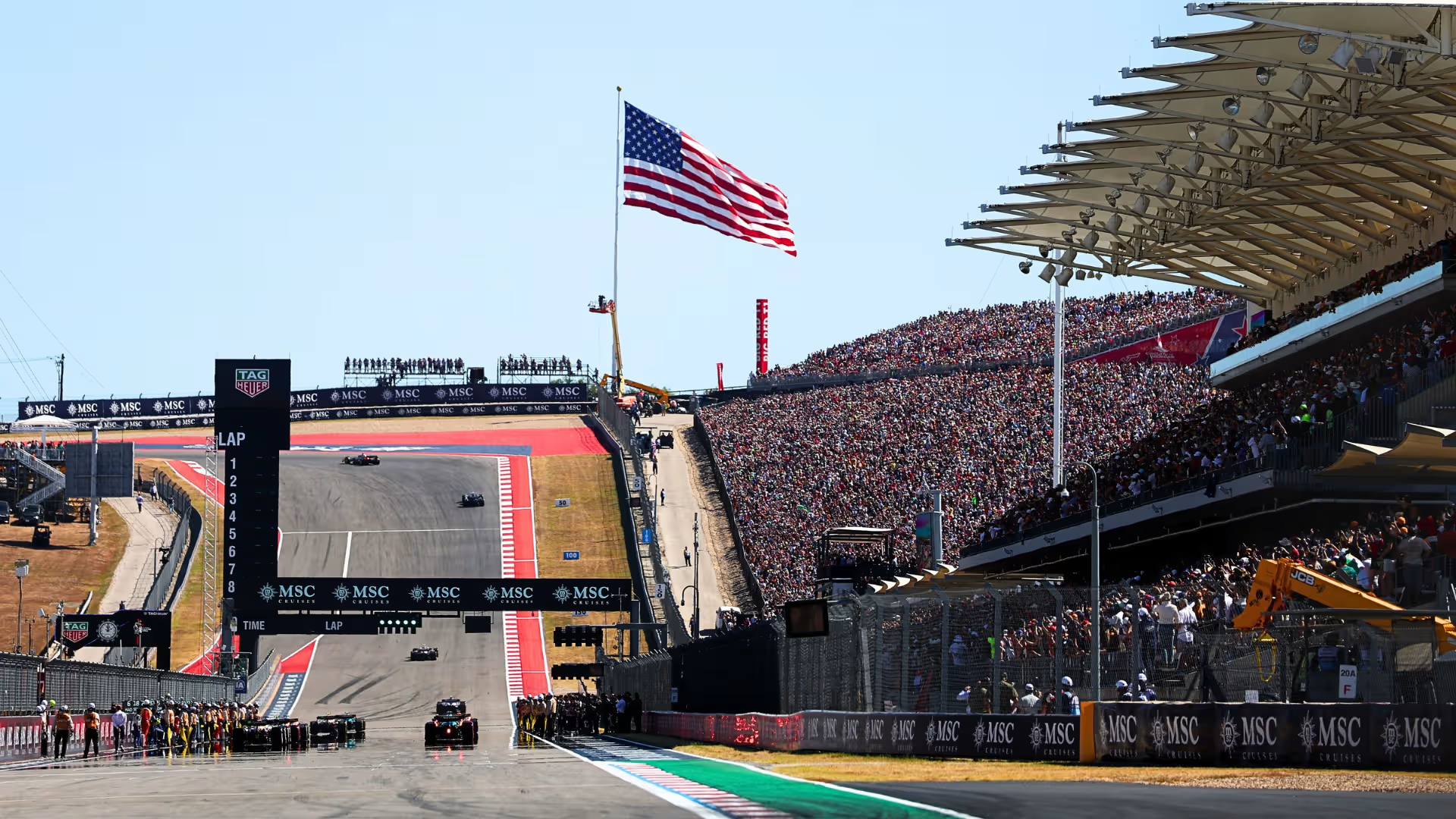
The 2026 United States Grand Prix takes centre stage this weekend as Formula 1 returns to Austin for Round 18 of the season. The main storyline is clear: Antonelli could secure his maiden drivers’ championship, but Verstappen’s recent resurgence promises a major challenge at the Circuit of The Americas.

Antonelli heads to Austin with a commanding championship lead and his first opportunity to clinch the title.
Antonelli’s first shot at the world title
Antonelli leads the standings with 340 points, ahead of Mercedes team-mate George Russell on 238 and Lewis Hamilton on 229. The Italian holds a 102-point advantage over Russell and could mathematically seal the championship this weekend.
However, the outcome depends on several results. Antonelli needs to win in Austin, Russell must finish ninth or lower, and Hamilton cannot finish higher than fifth. Even then, the title fight remains open if those conditions are not met.
Meanwhile, Verstappen arrives in Texas after winning the Malaysian and Singapore Grands Prix. The Red Bull driver has won four of the last five races held at Austin, making him one of the key contenders to watch.
Austin schedule: Practice, qualifying and race
The weekend follows the traditional format, with three practice sessions and no Sprint race. Friday features the first two sessions, while Saturday brings final practice and qualifying.
- Friday, October 23: Free Practice 1 at 12:30 p.m. local time and Free Practice 2 at 4 p.m.
- Saturday, October 24: Free Practice 3 at 12:30 p.m. and qualifying at 4 p.m.
- Sunday, October 25: The United States Grand Prix starts at 3 p.m. local time.
Each session will help teams refine their car setups before Sunday’s 56-lap race. Weather forecasts point to warm conditions, with little chance of rain during practice and qualifying. Sunday has a slightly higher possibility of showers, although dry conditions remain the main expectation.

The 5.513-kilometre Circuit of The Americas combines fast corners, heavy braking zones and technical sections.
The circuit’s biggest challenges
Austin is known for its steep climb into Turn 1, where drivers must choose their line carefully at the start. The first sector features rapid changes of direction, while the long back straight creates a major overtaking opportunity into Turn 12.
The circuit’s final sector brings another challenge, with slower corners demanding traction and careful throttle control. Track limits can also become a factor, particularly through the later turns.
Pirelli has selected the C2 hard, C3 medium and C4 soft compounds for this weekend. Tyre wear could play a decisive role because of the circuit’s layout and the high temperatures expected in Texas. A one-stop strategy may be attractive, but teams will need to assess degradation during practice before committing to a race plan.
Verstappen’s record and the key numbers
Verstappen won the 2025 United States Grand Prix and has established an impressive record at the Texas venue. Lewis Hamilton remains the circuit’s most successful driver, with six victories, while Michael Schumacher and Hamilton share the record for the most poles at four apiece.
The current lap record is 1:36.169, set by Charles Leclerc with Ferrari in 2019. This year’s race covers 56 laps, adding up to 308.405 kilometres.

Verstappen arrives after consecutive victories and will aim to continue his strong run at the Texas circuit.
A weekend with major championship implications
Austin opens a demanding run of three consecutive race weekends across the Americas, followed by events in Mexico City and São Paulo. That schedule leaves little time for teams to recover from mistakes or introduce major changes.
For Antonelli, the United States Grand Prix represents an early opportunity to turn a strong season into a historic title triumph. For Verstappen, it is a chance to extend his winning streak and disrupt Mercedes’ momentum.
The first answers will come in Friday’s practice sessions. By qualifying on Saturday, the teams should have a clearer picture of the pace and tyre performance that could decide Sunday’s race.
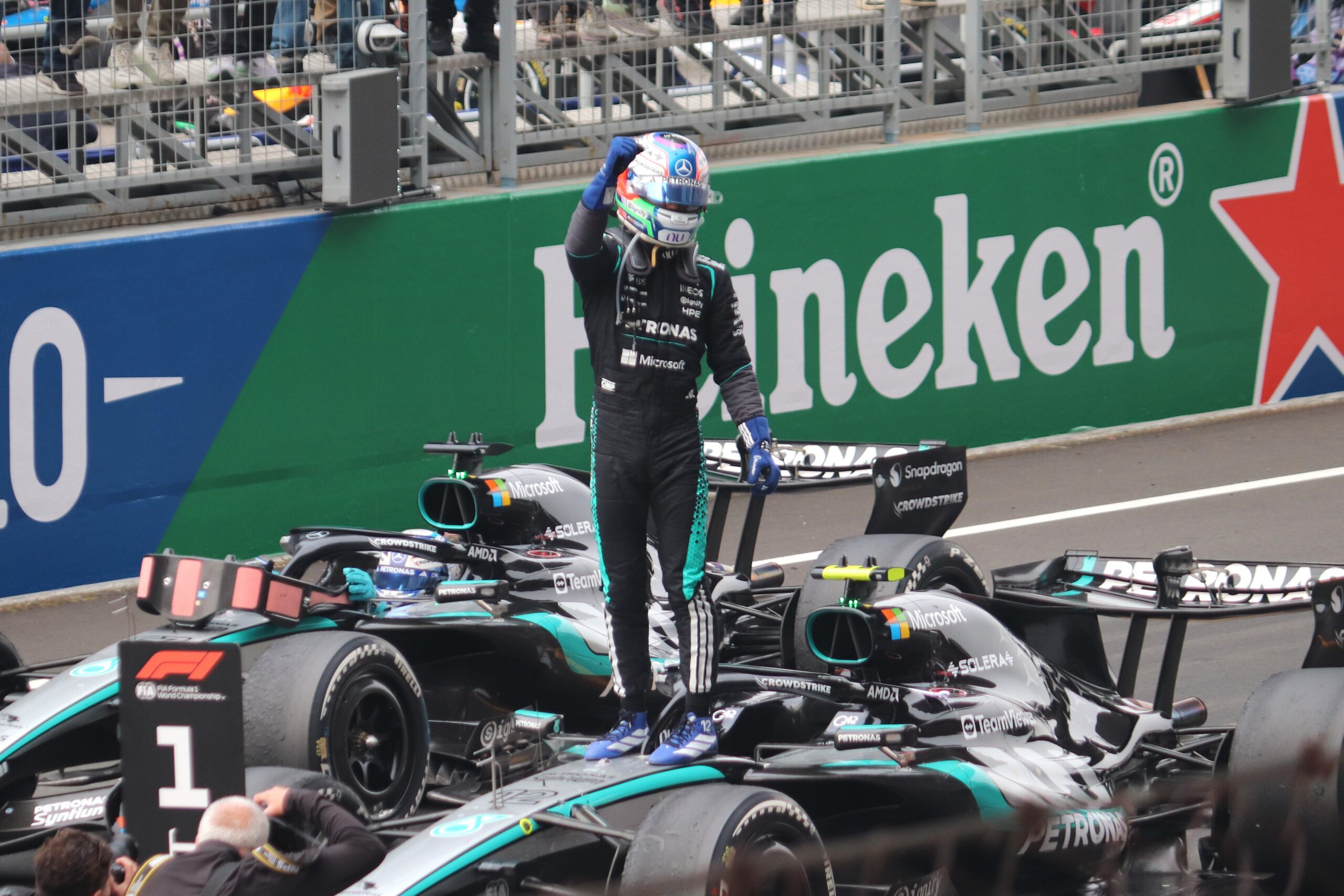
Kimi Antonelli leads the 2026 Formula 1 standings by 102 points and could mathematically secure his first world title at the United States Grand Prix.
Kimi Antonelli is getting closer to the biggest achievement of his Formula 1 career. After finishing on the podium at the Singapore Grand Prix, the Mercedes driver remains at the top of the championship with six rounds left in the season.

Antonelli has led the drivers’ championship since the Japanese Grand Prix.
Antonelli has collected 340 points, giving him a 102-point advantage over teammate George Russell, who sits second with 238. Lewis Hamilton is third with 229 points, 111 behind the leader. Despite the growing gap, five other drivers remain mathematically eligible to win the championship: Russell, Hamilton, Max Verstappen, Charles Leclerc and Lando Norris.
How many points remain?
Six rounds are left, beginning with the United States Grand Prix in Austin. A driver who wins every remaining Grand Prix can score a maximum of 150 points, leaving the championship mathematically open for several contenders.
However, the situation becomes increasingly difficult for Antonelli’s rivals. Their chances depend on the Italian scoring no additional points while they collect enough results to surpass his current total. Russell, Hamilton and Verstappen could mathematically secure the title as late as Qatar, while Leclerc and Norris would have to wait until the Abu Dhabi finale under the scenario outlined by the championship calculations.

Russell is Antonelli’s closest challenger with six rounds remaining.
What Antonelli needs to win in Austin
Antonelli could clinch the championship at the United States Grand Prix, but he would need a strong result combined with mistakes from his closest rivals. He must win the race, Russell must finish ninth or lower, and Hamilton must finish fifth or lower. Verstappen’s finishing position would not affect this particular scenario.
Under those conditions, Antonelli would score enough points relative to his rivals to secure the championship with races still remaining. The required margins are 23 points over Russell, 14 over Hamilton and six over Verstappen.

Victory in Austin could put Antonelli within reach of his first Formula 1 world title.
The United States Grand Prix therefore represents the earliest possible opportunity for Antonelli to become world champion. If the necessary results do not happen in Austin, he will have further opportunities across the final five rounds of the 2026 season.
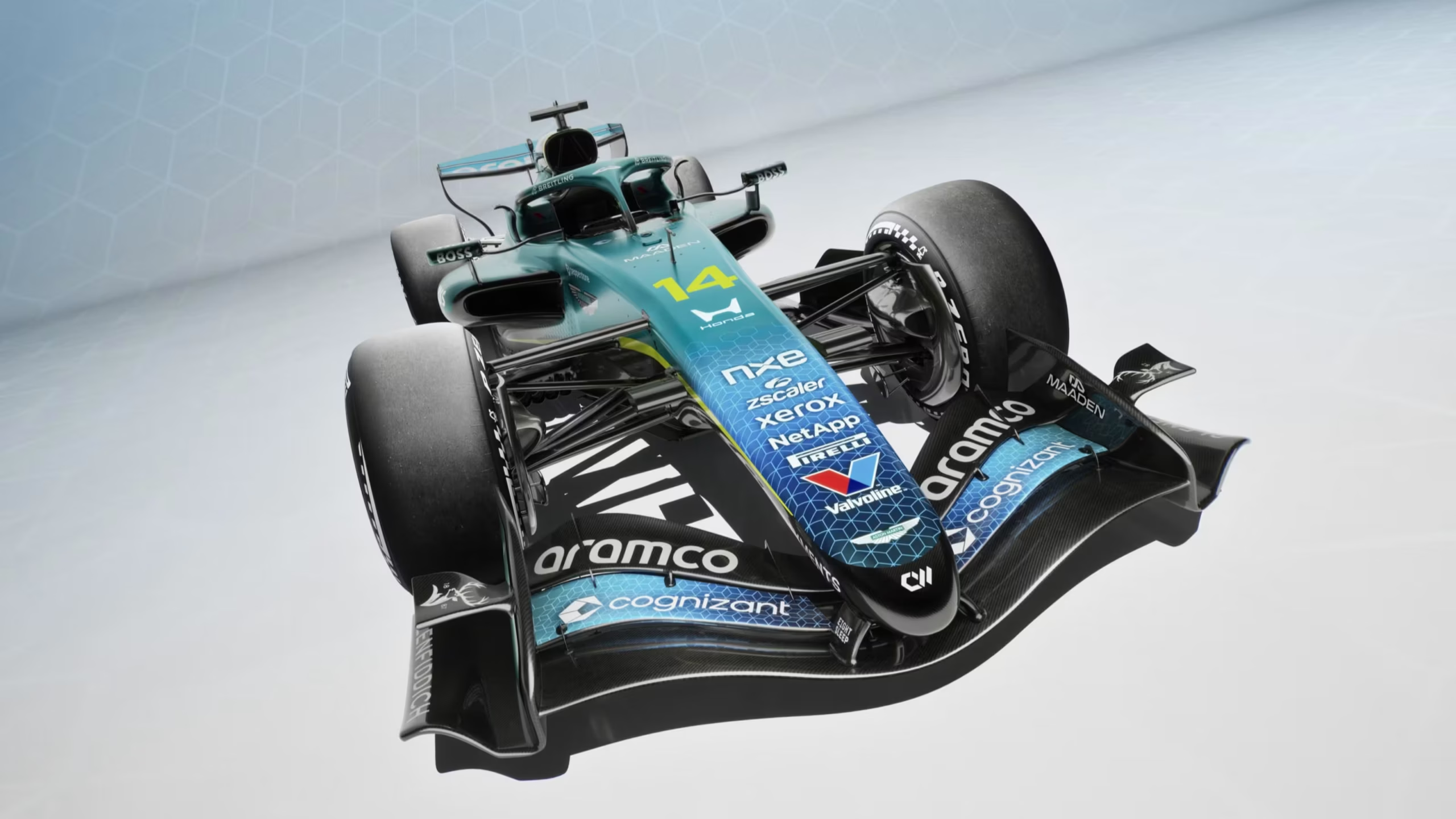
Aston Martin will showcase a special AMR26 livery at the United States Grand Prix, celebrating five years of its partnership with Cognizant.
Aston Martin is preparing a special appearance for the 2026 United States Grand Prix in Austin, where its AMR26 will mark five years of collaboration with Cognizant. The partnership began in 2021 and remains part of the team’s identity in Formula One.
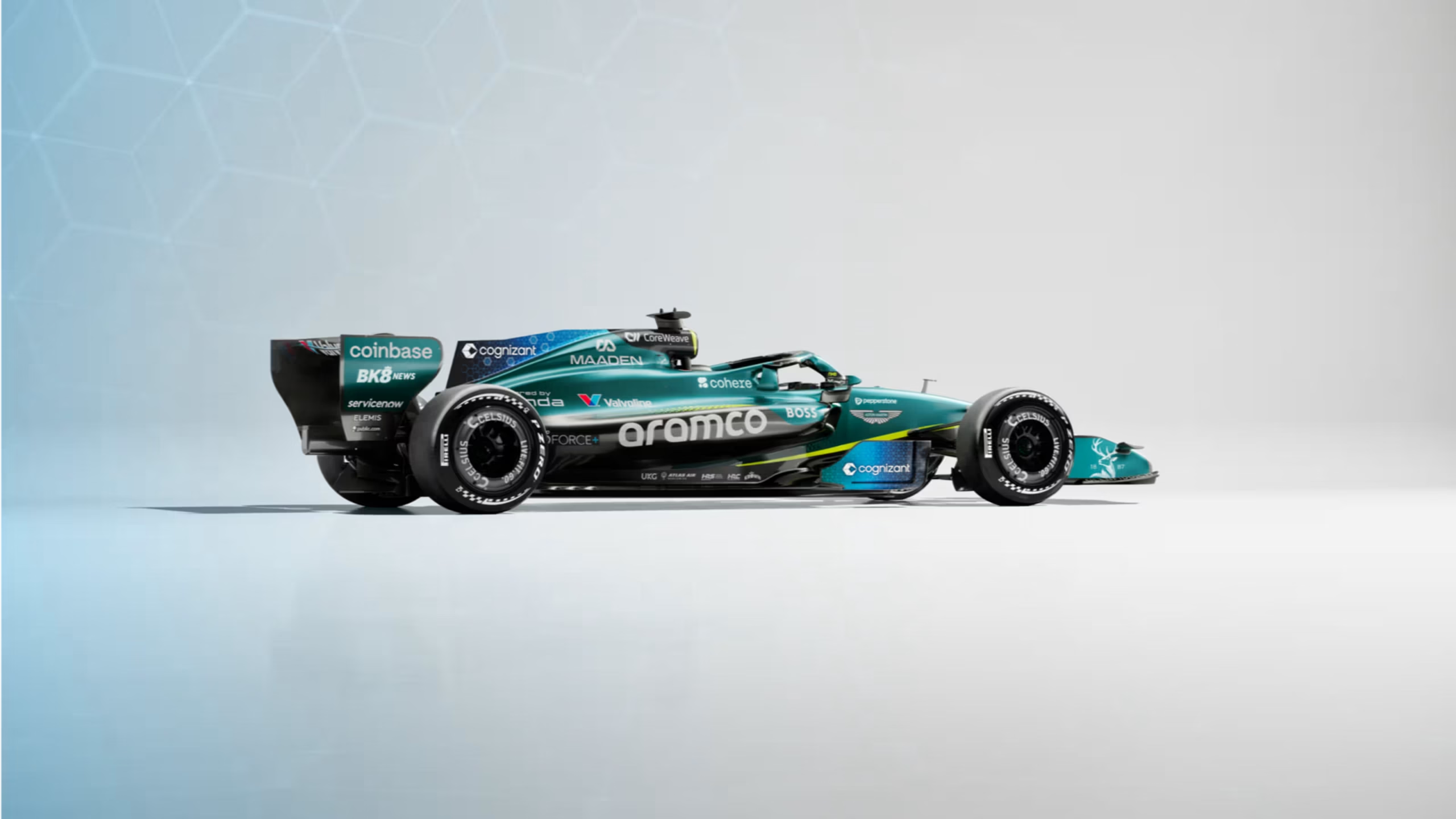
The AMR26 will carry a special design for the United States Grand Prix weekend.
Aston Martin Marks Five Years With Cognizant
The Austin Grand Prix provides the setting for Aston Martin to recognize the milestone. Since the partnership began in 2021, Cognizant has maintained a prominent association with the team’s Formula One program.
The anniversary also comes as the relationship expands into new areas of technology. Earlier in 2026, Cognizant became Aston Martin’s Global AI Services Partner, strengthening the technological dimension of the collaboration.
Technology and Formula One
Modern Formula One relies on data analysis, software and advanced computing to support decisions throughout a race weekend. Teams use these tools to evaluate performance, develop strategies and improve their operations.
Aston Martin’s expanded relationship with Cognizant reflects the growing role of artificial intelligence and digital technology in motorsport. However, the partnership’s announcement alone does not establish a specific performance gain for the AMR26.
Data analysis and digital tools are important parts of modern Formula One operations.
Austin Provides the Backdrop
The United States Grand Prix gives Aston Martin an opportunity to highlight the anniversary in front of American fans. The special livery will bring the partnership into focus during the Austin race weekend.
The design also connects the team’s on-track presence with a collaboration that has evolved since 2021. With Cognizant’s expanded role in artificial intelligence, the anniversary reflects both the history of the relationship and its continuing technological focus.
Aston Martin’s special AMR26 appearance will be one of the team’s key visual elements at the United States Grand Prix. Further details about the livery’s specific design features should be confirmed through the team’s official announcement.
-
 TEST DRIVES2 months ago
2026 Toyota GR Supra MkV Final Edition
-
 NOW TRENDING1 month ago
Aston Martin DBX Becomes Harry Da Souza’s Ride in MobLand
-
 Formula12 months ago
FIA Reveals Second ADUO Results With Red Bull-Ford Still on Top
-
 NOW TRENDING2 months ago
Tesla Cybercab Puts U.S. Regulations to the Test
-
 NOW TRENDING2 months ago
2027 Hyundai Tucson Hybrid Gets a Power Boost
-
 NOW TRENDING2 months ago
Hyundai Reports Strong Hybrid Sales in August 2026
-
 INTELLIGENT MOBILITY1 month ago
Tesla Cybercab Cannot Be Charged at Home—Here’s Why
-
 TEST DRIVES1 month ago
2026 Maserati GranTurismo Trofeo Review: Miami
You must be logged in to post a comment Login