
Un vistazo al interior del Audi RS Q e-tron recordará a cualquier aficionado a los coches a la cabina de un avión, con pantallas y displays que se extienden a lo ancho del salpicadero. Solo con su ayuda, el conductor y su copiloto podrán recorrer de forma rápida y con garantÃas de éxito miles de kilómetros a través del desierto.

Originalmente, en los rallies campo a través se establecÃa una clara división de tareas: el piloto conduce y el copiloto navega. Sin embargo, hace tiempo que estos papeles han cambiado. En la actualidad el reglamento limita las tareas de navegación con opciones y reglas muy precisas, y el antiguo roadbook en papel para seguir el recorrido ahora es digital. Con su concepto de control y manejo, el Audi RS Q e-tron redistribuye varias funciones entre el conductor y el copiloto.

Manejar el volante, acelerar y frenar son las principales tareas de Carlos Sainz, Mattias Ekström y Stéphane Peterhansel, que se concentran totalmente en el terreno. Ya no tienen que cambiar de marcha, porque el sistema de propulsión eléctrica con convertidor de energÃa del Audi RS Q e-tron no requiere de una transmisión manual. En el centro del puesto de conducción se encuentra la palanca del freno de mano, realizada en aluminio y acoplada al innovador sistema brake-by-wire, que combina el freno hidráulico con un sistema de recuperación de energÃa. De este modo, la acción de tirar del freno de mano, al igual que al frenar con el pie, también contribuye a recuperar energÃa. Pero el principal propósito del freno de mano en los rallies es inducir el deslizamiento del RS Q e-tron antes de las curvas mediante un breve bloqueo de las ruedas traseras que obliga al coche a girar y permite que los cambios de dirección sean especialmente ágiles.

Hay ocho botones en el volante, situados directamente delante del conductor. Entre otras cosas, controlan el claxon, los limpiaparabrisas y las entradas de datos en el software si el piloto quiere registrar una anomalÃa en el sistema mediante una marca de tiempo en la memoria. También se puede activar desde el volante el limitador de velocidad para las zonas en las que se prescribe una velocidad máxima. Detrás del volante y en el campo de visión inferior del conductor se ubica una pantalla que proporciona información sobre la presión de los neumáticos, el sentido de la marcha seleccionado por la transmisión eléctrica continua (hacia delante, hacia atrás o en punto muerto) y la velocidad actual. También muestra alertas para que el piloto pueda reaccionar inmediatamente en el caso de que, por ejemplo, se detecte una parada inminente del sistema o se desconecte la baterÃa de alto voltaje. Dos pequeños displays instalados por encima y hacia el parabrisas funcionan a modo de “repetidores” y aportan información esencial en el campo de visión: a la izquierda se muestra la dirección que indica la brújula, mientras que a la derecha aparece la velocidad a la que se circula.

Una pantalla situada justo en el centro del salpicadero, entre el conductor y el copiloto, ofrece información sobre la presión de los neumáticos, el reparto de frenada, el sistema brake-by-wire y muchas otras funciones. La información se resalta en color verde mientras los distintos sistemas funcionan de forma correcta, o en rojo cuando se produce un error. Debajo de esta pantalla se localiza un panel de interruptores cuyas teclas individuales reaccionan de forma sensible al tacto con un punto de presión. Audi ha programado diversas funciones en las 24 zonas de libre asignación predefinidas: por ejemplo, las velocidades máximas preseleccionadas habituales en las zonas de lÃmite de velocidad, o el accionamiento del aire acondicionado. Se pueden configurar diferentes niveles para que los 24 botones admitan distintas asignaciones, desplazando al final las funciones menos frecuentes. Por ejemplo, en caso de averÃa, desde estos botones es posible desconectar algunos sistemas para llegar con seguridad al destino de la etapa en modo de emergencia (“fail safe”).
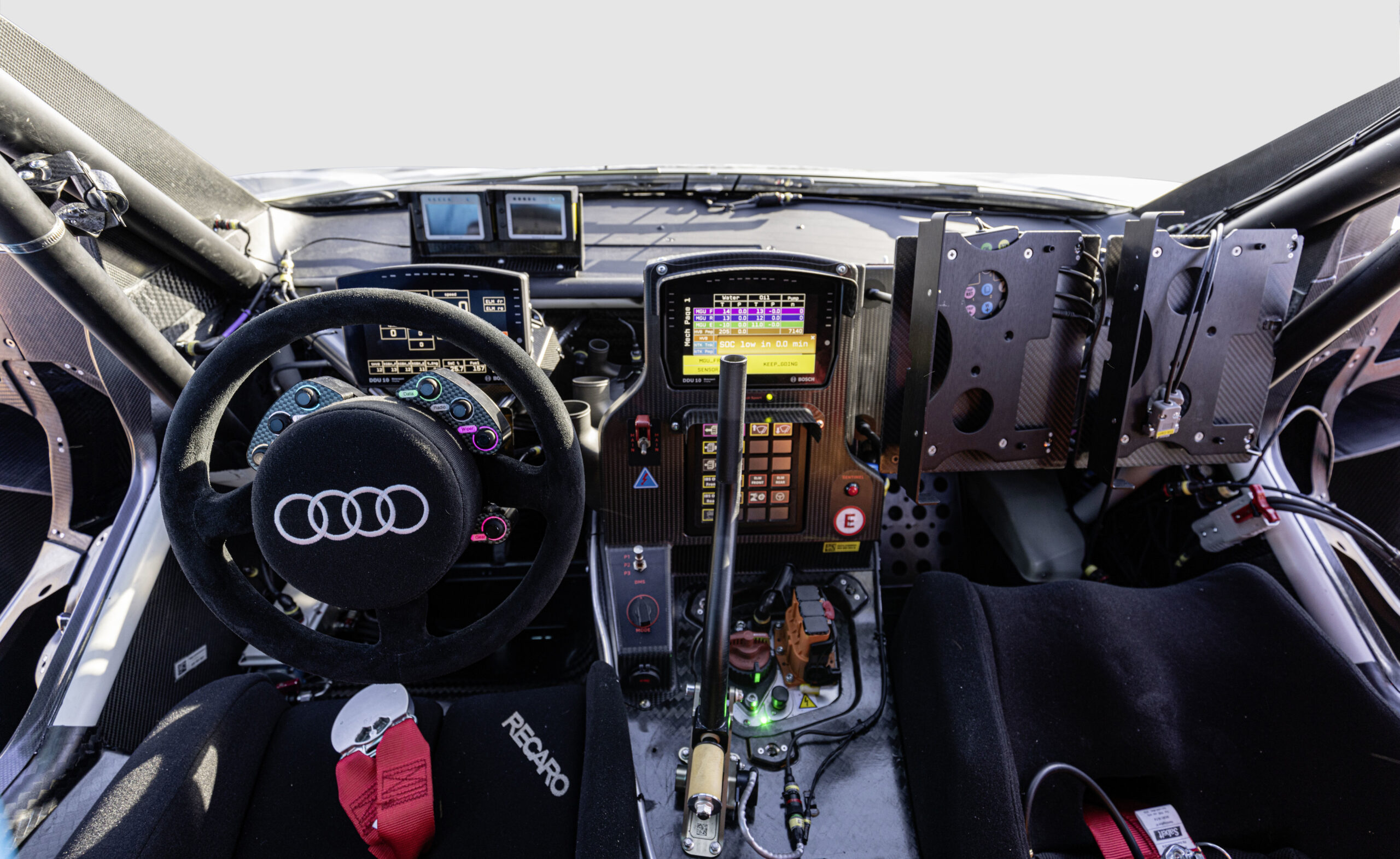
El manejo de este panel de interruptores corresponde al copiloto, a requerimiento del piloto. Además de su tarea principal, que es la navegación, el control de estos sistemas ha de hacerse de forma impecable mientras se circula por terrenos accidentados a velocidades de hasta 170 km/h, por lo que el copiloto asume una gran responsabilidad. “Ahora sólo dedico la mitad de mi energÃa a la navegación y concentro la otra mitad en el control y el manejo de los sistemas del coche, pero me encanta este nuevo reto”, declara Edouard Boulanger, copiloto de Stéphane Peterhansel.

El recorrido de la siguiente etapa ya no se publica la vÃspera, como en el pasado. Los equipos sólo reciben esta información cada mañana, 15 minutos antes de la salida de la etapa. Emil Bergkvist, que comparte cockpit con Mattias Ekström, considera que esto es una ventaja: “Como piloto, vengo de los rallies clásicos al sprint. Pero para mà este es el momento ideal para pasar a los raids como copiloto, porque incluso los que ya tienen experiencia en esta disciplina tendrán que acostumbrarse a estas nuevas reglas”.

Recibir la información del recorrido con poca antelación, asà como el cambio a un formato de libro de ruta digital, plantea grandes desafÃos. Para orientarse en el terreno y, al mismo tiempo, mantener la ruta prescrita, los tres copilotos, Emil Bergkvist, Edouard Boulanger y Lucas Cruz, tienen que consultar las pantallas de dos tablets que sustituyen a los anteriores roadbooks de papel, que se manejan con dos mandos a distancia conectados por cables. En el display de la izquierda, el libro de ruta muestra el recorrido. Sólo en caso de fallo de esta tablet la tripulación puede recurrir al roadbook de papel, que inicialmente se suministra sellado; de lo contrario, se enfrentan a una sanción. La tablet situada a la derecha contiene la navegación GPS y valida los waypoints digitales a los que cada participante debe dirigirse. Cuando el coche llega al radio de un waypoint, el conductor también ve las flechas de dirección en la pantalla que tiene a su derecha, debajo del parabrisas.

La mayor diferencia con el sistema de navegación que se utiliza en los coches de serie, en los que el dispositivo ayuda a encontrar los destinos con la mayor precisión posible en el tráfico por carretera, es que la navegación en los rallies campo a través debe seguir siendo un reto deportivo. Junto con la actuación del piloto, determina el éxito y la derrota. Por ello, el organizador sólo refleja en el roadbook direcciones a seguir con la brújula, distancias, pictogramas, indicaciones especiales y advertencias de peligro. Por lo tanto, el sistema de navegación en este tipo de competición es sólo una ayuda limitada para los equipos. Al mismo tiempo sirve al organizador como instrumento de control, ya que permite comprobar si los participantes han respetado la ruta y la velocidad en las zonas de control de velocidad a lo largo de cientos de kilómetros en terreno abierto.

El cockpit se completa con el sistema Iritrack en la consola central, para los primeros auxilios en caso de emergencia. Con esta tecnologÃa, la organización registra la velocidad, la posición actual del vehÃculo y puede detectar posibles accidentes. En caso de emergencia el copiloto puede informar directamente si los pasajeros están ilesos, si necesitan asistencia médica o si el equipo de rescate debe ayudar a otro participante que haya sufrido un accidente.
La precisión extrema, la velocidad y la gran cantidad de tareas a realizar caracterizan el trabajo digitalizado en el modernÃsimo puesto de conducción del Audi RS Q e-tron. Y, sin embargo, incluso en los rallies campo a través, es el factor humano el que determina el éxito deportivo.








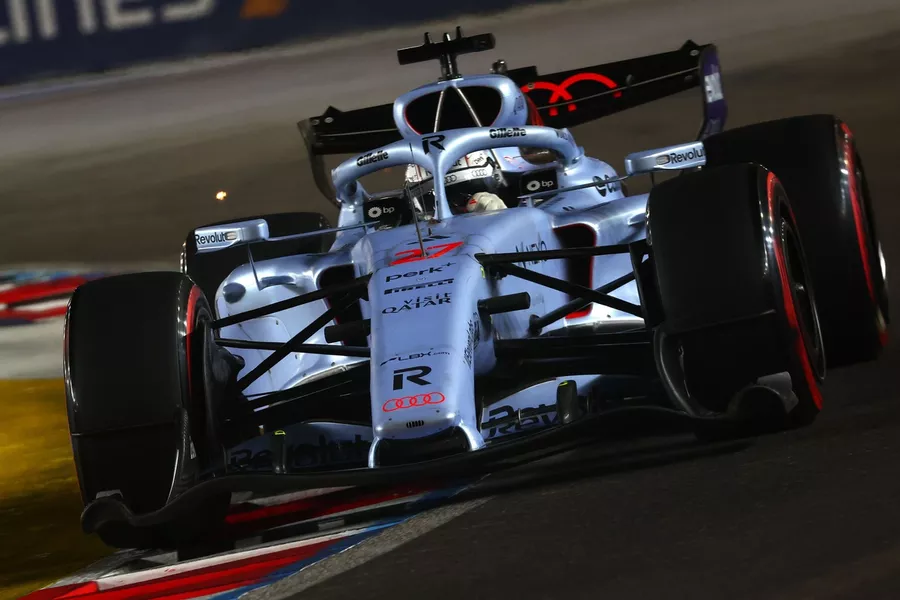
Nico Hulkenberg used racecraft and energy management to keep a faster George Russell behind in Singapore.
Nico Hulkenberg delivered one of Audi’s standout performances in Singapore by defending his position against a faster George Russell during the closing laps. The German combined precise positioning, strategic battery deployment and years of Formula 1 experience to protect a valuable result for the team.
Audi Found an Opportunity at Marina Bay
Singapore represented an important opportunity for Audi. The R26 had shown promising chassis performance throughout the season, with its aerodynamic efficiency helping compensate for weaknesses in the power unit. Although circuits with high temperatures had exposed some of those limitations, Marina Bay offered a different challenge that appeared better suited to the car’s strengths.
The circuit still features several straights where engine performance matters, but its slow corners, technical sections and limited overtaking opportunities place a premium on mechanical grip, aerodynamic balance and driver precision. Audi arrived hoping to convert that combination into valuable championship points.
The team ultimately achieved an important milestone by scoring in both Saturday’s sprint and Sunday’s Grand Prix. Hulkenberg played a central role in that success, making up positions at the start and then managing his race effectively despite facing rivals with different tyre strategies and stronger straight-line performance.

Nico Hulkenberg delivered a strong weekend for Audi at the Singapore Grand Prix.
Hulkenberg Made the Difference at the Start
Hulkenberg’s work began on the opening lap. Starting outside the top 10 in both events, the German needed to make immediate progress to put himself in contention for points.
During the wet sprint, he gained two positions by overtaking around the outside of Turn 5. In Sunday’s Grand Prix, he found space to pass Arvid Lindblad off the line before attacking Pierre Gasly at Turn 3. That move proved particularly important because both drivers had started on medium tyres, the same compound Audi selected for Hulkenberg.
The medium tyre initially left him at a disadvantage against competitors running softs. The softer compound offered additional grip throughout the weekend, helping some rivals find more pace in the opening phase of the race.
Nevertheless, Hulkenberg maintained a narrow gap to Liam Lawson while building a similar margin over Gasly. That balance allowed him to protect his position without compromising his entire race in an attempt to create a larger advantage.
Audi Reacted to Alpine’s Pit Stop Strategy
As the race progressed, Alpine needed a different approach to recover ground. The team became one of the first midfield contenders to stop in an attempt to gain an advantage through an undercut, hoping Gasly could emerge ahead after Hulkenberg made his own pit stop.
Audi responded by bringing Hulkenberg into the pits on the following lap. Although the stop was not particularly quick, it proved sufficient to keep him ahead of Gasly. The Alpine driver then lost further time in traffic behind Carlos Sainz and Isack Hadjar.
The sequence was significant because Singapore makes it difficult to recover positions once a driver becomes trapped behind another car. Track position, clean air and the timing of pit stops can therefore matter as much as outright pace.
By retaining his position, Hulkenberg put himself in a strong position for the closing stages. His remaining challenge was even tougher: keeping Russell behind despite the Mercedes driver’s apparent speed advantage.

Hulkenberg had to use every available advantage to defend against Russell’s faster Mercedes.
Race Intelligence Kept Russell Behind
The decisive phase came during the final laps, when Russell closed in on Hulkenberg. The Mercedes driver appeared to have enough pace to attack, but overtaking around Marina Bay remained difficult.
Allan McNish, Audi’s competition director, praised the German’s performance and highlighted his experience and tactical awareness.
McNish explained that Hulkenberg had to manage roughly 10 laps with Russell behind him. Although the Mercedes was faster, the Audi driver repeatedly found pace in the right parts of the circuit and defended without overcommitting.
That distinction was crucial. An overly aggressive defense could have compromised Hulkenberg’s exit speed, allowing Russell to gain the momentum needed to attempt a pass on the next straight. Instead, the German focused on leaving each corner in a position that made an attack difficult.
Russell came particularly close in the braking zone for Turn 7. However, Hulkenberg repeatedly emerged from the slower corners with enough of an advantage to protect the inside line under braking. That forced Russell toward the outside and limited his options.
Rather than trying to match the Mercedes at every point on the circuit, Hulkenberg concentrated on the sections where positioning mattered most. His defense became a calculated exercise in controlling the available space and preserving just enough speed to stay ahead.
Battery Deployment and a Helpful Tow
Hulkenberg’s defensive performance was not based on positioning alone. Energy management also played a significant role, as he strategically used electrical power to maximize his speed on the straights.
Instead of deploying energy uniformly around the lap, the German could sacrifice performance in selected corners to retain an additional boost for the sections where it was most useful. This approach helped him defend against Russell’s attacks while making the most of the Audi’s available power.
An additional benefit came from his position relative to Lawson. As the race developed, Hulkenberg moved closer to the car ahead and gained assistance from a tow on the straights. That aerodynamic benefit helped increase his speed and made it harder for Russell to complete an overtake.

Careful energy deployment and a tow helped Audi defend its track position in the closing stages.
Hulkenberg explained that he initially did not expect to keep Russell behind. However, he found a better rhythm as the stint progressed and reduced the gap to Lawson. The indirect tow then provided a further advantage on the straights.
Russell’s challenge was complicated by the need to manage his own car. With the battle continuing over several laps, he had to balance the pursuit with keeping his brakes within an effective operating range. That limited the extent to which he could attack continuously.
Why Hulkenberg’s Defense Matters for Audi
The Singapore performance showed how Audi can make the most of its strengths even when its car lacks the outright pace of a rival. The R26’s chassis characteristics, Hulkenberg’s experience and the team’s strategic response combined to protect a result that might otherwise have slipped away.
The weekend also highlighted the importance of energy management under the current technical regulations. Drivers must decide where to deploy electrical power, when to preserve it and how to coordinate those decisions with their positioning on track. In a circuit where overtaking opportunities are limited, those choices can determine the outcome of a battle.
For Audi, scoring in both the sprint and the Grand Prix represented a significant step forward. Hulkenberg’s defense against Russell was an especially clear example of how racecraft can narrow a performance gap without eliminating it.
The German did not need to make his Audi faster than the Mercedes everywhere. He needed to understand where Russell could attack, preserve enough energy to respond and exit the right corners with the advantage required to protect his position. That combination of precision and strategic thinking turned a difficult defensive assignment into one of Audi’s defining moments of the Singapore weekend.

James Vowles says Williams still faces major structural problems, with basic computer tasks taking minutes and aerodynamic processes running twice as slowly as those of leading rivals.
Williams is still working to overcome years of underinvestment, and team principal James Vowles has offered a striking example of the scale of the challenge. According to the British executive, a routine computer operation that should take one second can require around four minutes at the Formula 1 team.
The problem goes beyond the performance of the car itself. Williams must also improve its software, internal systems and development processes if it wants to close the gap to Formula 1’s leading constructors. Vowles believes rebuilding that infrastructure will take time, even with the team’s ongoing investment.
Williams Takes Twice as Long to Develop Aerodynamic Ideas
Vowles has repeatedly emphasized that Williams is still dealing with the consequences of decades of insufficient investment. The team cannot eliminate those weaknesses overnight, particularly under Formula 1’s budget cap, which limits how quickly resources can be deployed.
The team principal explained that some aerodynamic development processes take approximately twice as long at Williams as they do at leading competitors. From the moment an aerodynamicist develops an idea to the point when it can be evaluated in the wind tunnel, the process remains significantly slower.

Williams is working to improve its aerodynamic development processes as it attempts to close the gap to leading F1 teams.
That delay can affect the team’s ability to introduce improvements throughout a season. Even when engineers identify a promising concept, slower development and testing can postpone its arrival on the car, potentially reducing the team’s ability to respond to competitors.
The challenge is therefore not simply to produce better aerodynamic ideas. Williams must also build a technical structure capable of turning those ideas into usable components more efficiently.
A One-Second Computer Task Takes Four Minutes
One of Vowles’ most revealing examples concerns a routine operation used in aerodynamic design. Mirroring an object from one side of the car to the other should be a straightforward computer task, yet Williams’ systems can take approximately four minutes to complete it.
The team principal described how an engineer can click a button and then wait long enough to make a cup of tea. For a task that should take about one second, the delay illustrates how outdated software and internal systems can disrupt everyday work.

Slow internal software can add unnecessary waiting time to routine engineering work at Williams.
Vowles explained that the problem is not an isolated technical fault. Instead, it reflects years of underinvestment in the systems supporting the team’s engineers. He suggested that the two examples he described represent only a small part of a much larger collection of inefficiencies.
Those delays may appear insignificant individually, but their cumulative effect can be substantial. When hundreds of small problems affect different departments, they can consume working hours and slow the development process across an entire organization.
Williams Faces Hundreds of Small Problems
Inside Williams, the accumulated obstacles have been described as “a thousand paper cuts.” The phrase captures a structural problem in which no single issue explains the team’s difficulties, but numerous small inefficiencies combine to create a significant disadvantage.
These weaknesses can affect everything from computer-aided design to aerodynamic development and the speed at which engineering decisions become physical parts. Improving one system may help, but the wider challenge requires changes across multiple departments.

Williams needs improvements across its engineering systems and factory operations, not just a faster car.
Vowles estimates that the team will need another 12 to 18 months to bring many of these problems under control. Even then, further weaknesses may emerge as the organization improves and identifies new areas where it falls behind the leading teams.
The timeline highlights the scale of the task facing Williams. Progress depends not only on investment in the car but also on improving the tools, processes and working environment that allow engineers to develop it.
James Vowles’ Long-Term Plan for Williams
Vowles joined Williams as team principal in 2023 after spending years at Mercedes, giving him direct experience of the systems and working methods used by a championship-winning organization. That background provides a benchmark for the improvements he wants to introduce at Williams.
However, he has stressed that a team cannot reverse two decades of underinvestment in just three years while operating under a budget cap. Infrastructure upgrades, software improvements and more efficient development processes all require time and careful prioritization.
For Williams, the objective is to create an organization that can develop upgrades and respond to technical challenges at a speed comparable with its leading competitors. Until that happens, even strong engineering ideas may take too long to translate into performance on track.
The four-minute computer task illustrates why Williams’ recovery involves much more than the design of its next Formula 1 car. Closing the gap requires a faster, more reliable organization behind it, with improvements across hundreds of small processes that collectively influence performance.
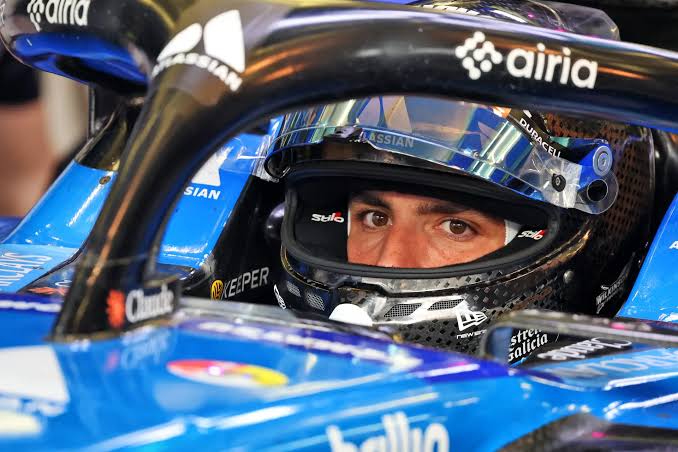
Carlos Sainz believes Formula 1’s new regulations are widening the performance gap, although he also sees positive changes.
Carlos Sainz has raised concerns about the competitive balance of Formula 1 under its new technical regulations, arguing that the grid is increasingly divided into distinct performance groups. The Williams driver believes the current situation could be described as a championship with two or even three competitive tiers, with the leading teams separated from the midfield and the struggling outfits at the back.
The debate over the latest power unit regulations has intensified since the start of the season. Drivers have questioned several aspects of the new cars, while software problems in Malaysia added further pressure on the sport to examine how the rules are working in practice. Sainz’s latest comments highlight another concern: whether the regulations are creating a wider gap between teams rather than bringing them closer together.

Carlos Sainz believes the new regulations have contributed to a more divided Formula 1 grid.
Sainz Sees Three Different Competitive Groups
Sainz points to the results on track as evidence that Formula 1 is becoming increasingly divided. In his assessment, the leading four teams currently form one group, while the rest of the field struggles to match their performance. He also believes a third tier can be identified among teams that remain significantly behind the midfield.
Cadillac, competing in its first Formula 1 season, and Aston Martin have faced particularly difficult challenges. Both have struggled to keep pace with the more competitive teams, although their circumstances differ. Cadillac is building its operation as a new entrant, while Aston Martin has been dealing with significant performance limitations.
History shows that major regulation changes can create substantial gaps between teams. As a new technical cycle develops, some manufacturers and constructors find competitive advantages earlier than others. Those differences can gradually shrink as teams improve their cars, refine their processes and learn how to extract more performance from the rules.
However, the central question is whether the current regulations will allow the field to converge quickly enough to maintain close racing throughout the grid.
Sergio Perez Questions the Budget Cap
Sergio Perez has offered a different perspective on the performance gap. The Cadillac driver argues that the team’s difficulties cannot be explained by its power unit alone. He also points to the challenges faced by a new and relatively small operation competing against established Formula 1 organizations.
Perez believes the current budget cap can place smaller teams at a disadvantage. During his time at Red Bull, he recalls an environment in which the team introduced upgrades almost every race weekend and concentrated its resources on improving performance.

Sergio Perez believes smaller teams can face additional challenges under Formula 1’s financial restrictions.
Aston Martin Highlights the Limits of Spending
Aston Martin’s struggles also illustrate why financial resources do not automatically translate into competitive performance. The team has faced significant difficulties this season, with Honda’s power unit identified as one of the key challenges, particularly early in the campaign.
A competitive Formula 1 car depends on several elements working together. Engine performance, aerodynamics, chassis design, reliability and the efficiency of the organization all influence the final result. Strong investment can help address weaknesses, but it cannot immediately eliminate technical problems or replace the time needed to develop a competitive package.
The situation also reinforces the importance of cooperation between constructors and power unit manufacturers. Even when a team has substantial resources, a lack of performance or reliability in one major area can limit the potential of the entire car.

Aston Martin’s early-season difficulties demonstrate that financial investment alone cannot guarantee performance.
For Formula 1, these challenges raise broader questions about how the current technical regulations affect the competitive order. The power unit rules, the financial framework and the teams’ ability to develop their cars will all influence how quickly the gaps can narrow.
Sainz Sees Positive Changes Despite the Problems
Despite his concerns, Sainz does not believe the new regulations have been negative in every respect. The Williams driver has highlighted increased overtaking as one of the potential benefits of the current rules, suggesting that the sport should assess the changes individually rather than dismissing the entire concept.
Sainz acknowledges that teams, power unit manufacturers, the FIA and Formula One Management are all trying to make the most of a framework established several years ago. The challenge now is to evaluate which elements are improving the racing and which are creating unwanted consequences.
His comments point toward a broader review of the regulations as Formula 1 considers its direction through 2030. Any future adjustments will need to balance competitive fairness, racing quality, technical challenges and the commercial interests of the championship.
The immediate priority is to understand why some teams are progressing more effectively than others and whether changes to the rules could address the biggest weaknesses without undermining the improvements already achieved. For Sainz, the sport must recognize both the advantages and disadvantages of the current system before deciding how to move forward.
Formula 1’s competitive order is not necessarily fixed for the remainder of the regulation cycle. However, the concerns raised by Sainz and Perez underline the importance of ensuring that the new rules deliver compelling racing across the grid, rather than leaving a growing number of teams fighting from a significant disadvantage.
-

 NOW TRENDING2 months ago
Tesla Cybercab Gets September 3 Austin Launch Date
-
 INTELLIGENT MOBILITY2 months ago
GM Super Cruise: How It Works and What Comes Next in 2028
-

 TEST DRIVES2 months ago
2025 Ford Bronco Sport Badlands: The Adventure SUV You Can Drive Every Day
-

 TEST DRIVES1 month ago
2026 Toyota GR Supra MkV Final Edition
-
 NOW TRENDING2 months ago
2027 Toyota Corolla Celebrates 60 Years With Special Edition
-

 NOW TRENDING2 months ago
2027 Jeep Wrangler Smoky Mountain Edition Debuts With 4×4
-

 NOW TRENDING2 months ago
Aston Martin Valen: The Most Powerful Front-Engined Supercar
-
 RACING2 months ago
FIA Reveals Second ADUO Results With Red Bull-Ford Still on Top
You must be logged in to post a comment Login