
NOW TRENDING
2026 Mazda CX-50 Hybrid vs Turbo: Which One Should You Buy?

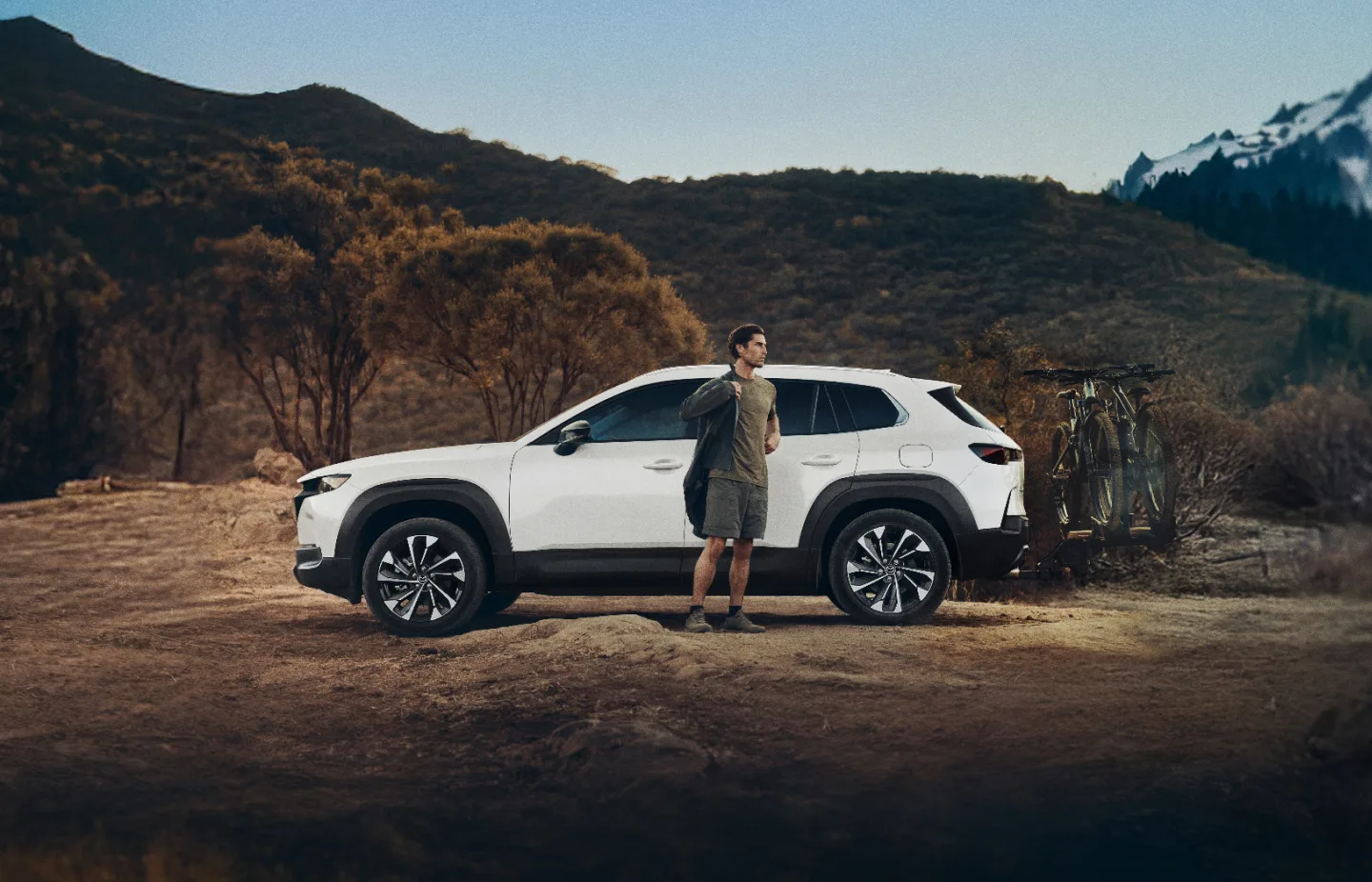
The Hybrid is the smarter commuter, but the Turbo remains the CX-50 for drivers who value acceleration, towing capacity and a more connected feel.
Mazda gives 2026 CX-50 buyers an unusually meaningful choice. The Hybrid promises 38 mpg combined and a lower starting price, while the Turbo delivers as much as 256 horsepower, considerably more torque and enough towing capacity for a small camper or boat.
This is not simply a decision between saving fuel and going faster. The two versions use different transmissions, different all-wheel-drive systems and slightly different packaging. They also suit different kinds of owners.
After comparing Mazda’s current U.S. specifications with Carsfera’s recent experience in the CX-50 Turbo Premium Plus, one answer becomes clear: most commuters should buy the Hybrid, but the Turbo earns its higher operating costs when performance or towing is part of the plan.
The Hybrid Starts Cheaper Than the Turbo
The 2026 CX-50 Hybrid Preferred starts at $34,750, while the least expensive CX-50 2.5 Turbo begins at $37,900. At the top of the lineup, Mazda currently lists the Hybrid Premium Plus from $40,450 and the Turbo Premium Plus from $42,900. Those figures exclude the $1,595 destination charge, taxes and dealer fees.
That pricing matters because buyers do not have to pay a premium just to access the more efficient powertrain. The Hybrid starts $3,150 below the Turbo, and the flagship Hybrid Premium Plus is $2,450 less than the equivalent Turbo Premium Plus based on Mazda’s current advertised prices.
Equipment is not identical trim for trim, so the comparison should not be reduced to price alone. Mazda specifically lists features such as a 360-degree camera, Front Cross Traffic Alert and Traffic Jam Assist for the Turbo Premium Plus. The Hybrid Premium Plus includes desirable equipment such as heated rear seats, a heated steering wheel, a head-up display and 19-inch wheels. Buyers should compare the complete equipment lists before treating the two flagship trims as direct equivalents.
For buyers who want leather, ventilated front seats and a Bose audio system without moving to the most expensive model, the Hybrid Premium at $38,150 may be the value sweet spot.
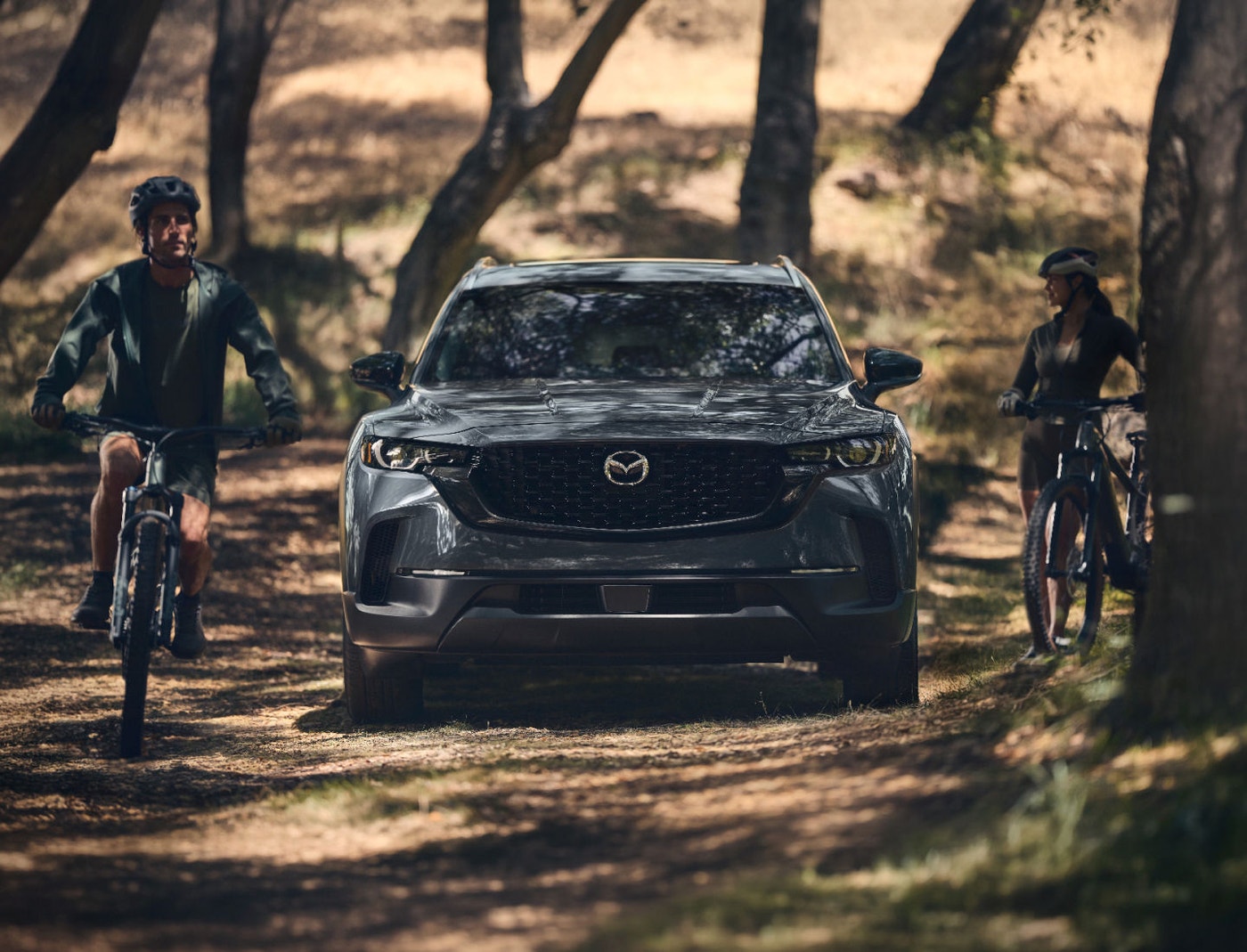
2026 Mazda CX-50 Hybrid on a wooded trail. Credit: Mazda North American Operations.
Fuel Savings Are Large Enough to Notice
The Hybrid combines a naturally aspirated 2.5-liter four-cylinder engine with three electric motors, an electronic continuously variable transmission and electric all-wheel drive. Total output is 219 horsepower, and Mazda estimates 39 mpg city, 37 mpg highway and 38 mpg combined.
The Turbo uses Mazda’s 2.5-liter turbocharged four-cylinder, a conventional six-speed automatic transmission and i-Activ all-wheel drive. With 93-octane premium fuel, it produces 256 horsepower and 320 pound-feet of torque. Regular 87-octane fuel reduces output to 227 horsepower and 310 pound-feet. EPA estimates stand at 23 mpg city, 29 mpg highway and 25 mpg combined.
The real-world difference is easy to understand. At 12,000 miles per year, a driver matching the combined estimates would use approximately 316 gallons in the Hybrid and 480 gallons in the Turbo. At $3.50 per gallon, the Hybrid would save about $575 annually. At $4 per gallon, the gap grows to roughly $657.
Actual results will vary with traffic, weather, driving style and fuel prices, but urban drivers have the most to gain. The Hybrid’s 39-mpg city estimate is 16 mpg better than the Turbo’s rating, making it especially attractive for commuting, school runs and frequent stop-and-go driving.
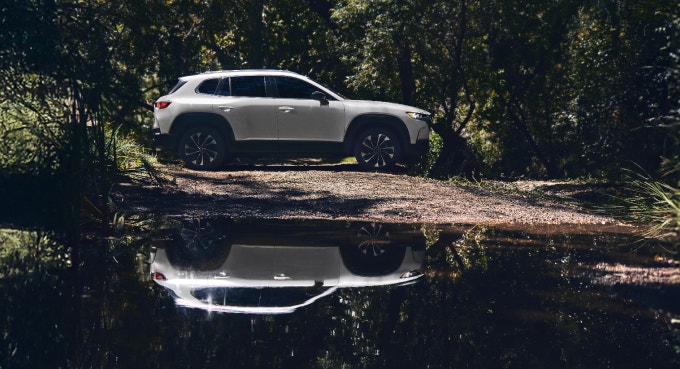
2026 Mazda CX-50 Hybrid beside a wooded pond. Credit: Mazda North American Operations.
The Turbo Still Delivers the Better Driving Experience
Efficiency is only part of the CX-50’s appeal. Mazda has built its reputation on steering feel and chassis tuning, and the Turbo is the version that best protects that identity.
During Carsfera’s evaluation of the 2026 Mazda CX-50 2.5 Turbo Premium Plus AWD, its naturally weighted steering, composed suspension and strong highway acceleration stood out. The conventional six-speed automatic also gives the Turbo a more familiar and direct response than the Hybrid’s eCVT.
The Hybrid is not slow, and its electric motors should provide useful response in everyday traffic. Mazda also gives it Power and Trail drive modes. However, drivers moving from the Turbo will notice the lower output, the different transmission character and the absence of the Turbo’s 320 pound-feet of peak torque.
Buyers who treat a crossover as an appliance will probably prefer the Hybrid. Those who regularly accelerate onto short highway ramps, drive on mountain roads or simply enjoy a stronger connection between the accelerator and the vehicle may find the Turbo worth the fuel penalty.
Towing and Cargo Capacity Change the Decision
The Turbo’s clearest functional advantage is towing. Mazda rates properly equipped Turbo models to tow up to 3,500 pounds when fitted with genuine towing accessories. The Hybrid is rated for up to 1,500 pounds.
That 2,000-pound difference separates occasional utility from genuine recreational capability. The Hybrid can handle a small trailer, but buyers planning to tow a compact travel trailer, personal watercraft or heavier utility trailer should begin with the Turbo.
The gas-powered CX-50 also has a small cargo advantage. Mazda lists 31.4 cubic feet behind the rear seat for the conventional model, compared with 29.2 cubic feet in the Hybrid. Both provide up to 56.3 cubic feet with the rear seats folded.
Losing 2.2 cubic feet will not matter to every family, but it is worth checking if the cargo area regularly carries a large stroller, pet crate or camping equipment.
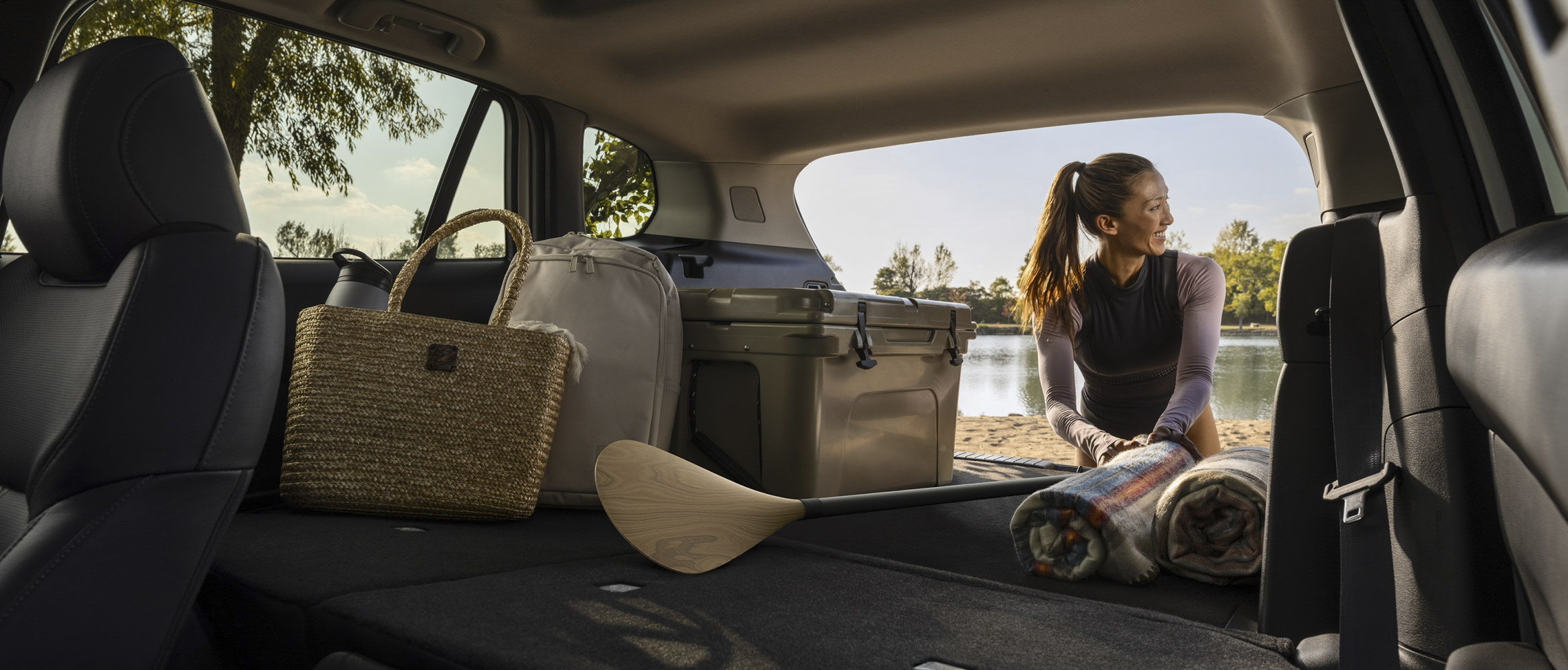
Cargo area of the 2026 Mazda CX-50 Hybrid. Credit: Mazda North American Operations.
Which 2026 Mazda CX-50 Should You Buy?
Choose the CX-50 Hybrid if most of your driving involves commuting, urban traffic or family errands. It costs less to enter, uses regular gasoline, delivers an estimated 38 mpg combined and can travel an estimated 551 miles on a full tank. It is the rational choice for buyers who want the CX-50’s styling and standard all-wheel drive without accepting compact-SUV fuel economy from a decade ago.
Choose the CX-50 Turbo if you tow more than 1,500 pounds, regularly carry heavy loads or care about acceleration and transmission response. It is also the better match for drivers who were attracted to the CX-50 because it feels more engaging than the typical compact crossover.
There is one important warning: buying the Turbo and filling it with regular fuel means accepting the lower 227-hp rating. That is still useful power, but shoppers should decide whether they are comfortable paying for premium gasoline before using the 256-hp figure as a reason to buy.
The Carsfera Verdict
The 2026 Mazda CX-50 Hybrid is the better choice for most American households. It is less expensive than the Turbo, substantially more efficient and still provides standard all-wheel drive, a useful cabin and the rugged design that distinguishes the CX-50 from softer compact SUVs.
The Turbo is not the losing option. It is the specialist. Its extra torque, conventional automatic transmission and 3,500-pound towing capacity give it abilities the Hybrid cannot duplicate. Carsfera’s experience with the Turbo Premium Plus also confirms that it remains one of the more satisfying compact crossovers to drive.
For a daily commute and weekend trips without a trailer, buy the Hybrid. For towing, stronger acceleration and the most distinctly Mazda driving experience, buy the Turbo.










-
 NOW TRENDING2 months ago
Aston Martin DBX Becomes Harry Da Souza’s Ride in MobLand
-
 TEST DRIVES2 months ago
2026 Maserati GranTurismo Trofeo Review: Miami
-

 INTELLIGENT MOBILITY2 months ago
Tesla Cybercab Navigation Problem Hits Austin Robotaxis
-
 INTELLIGENT MOBILITY2 months ago
2027 Nissan Rogue Hybrid: e-POWER Comes to America
-

 TEST DRIVES2 months ago
2026 Maserati GranTurismo Coupe
-
 Formula12 months ago
Cadillac F1 2026 Faces an Eight-Race Logistics Challenge
-
 NOW TRENDING2 months ago
Land Rover Defender Recall 2026: 23,677 JLR SUVs Affected
-
 NOW TRENDING2 months ago
Every 2026 Chevrolet With AWD or 4WD