
INTELLIGENT MOBILITY
Mercedes-Benz Bets on Nvidia to Advance Autonomous Driving

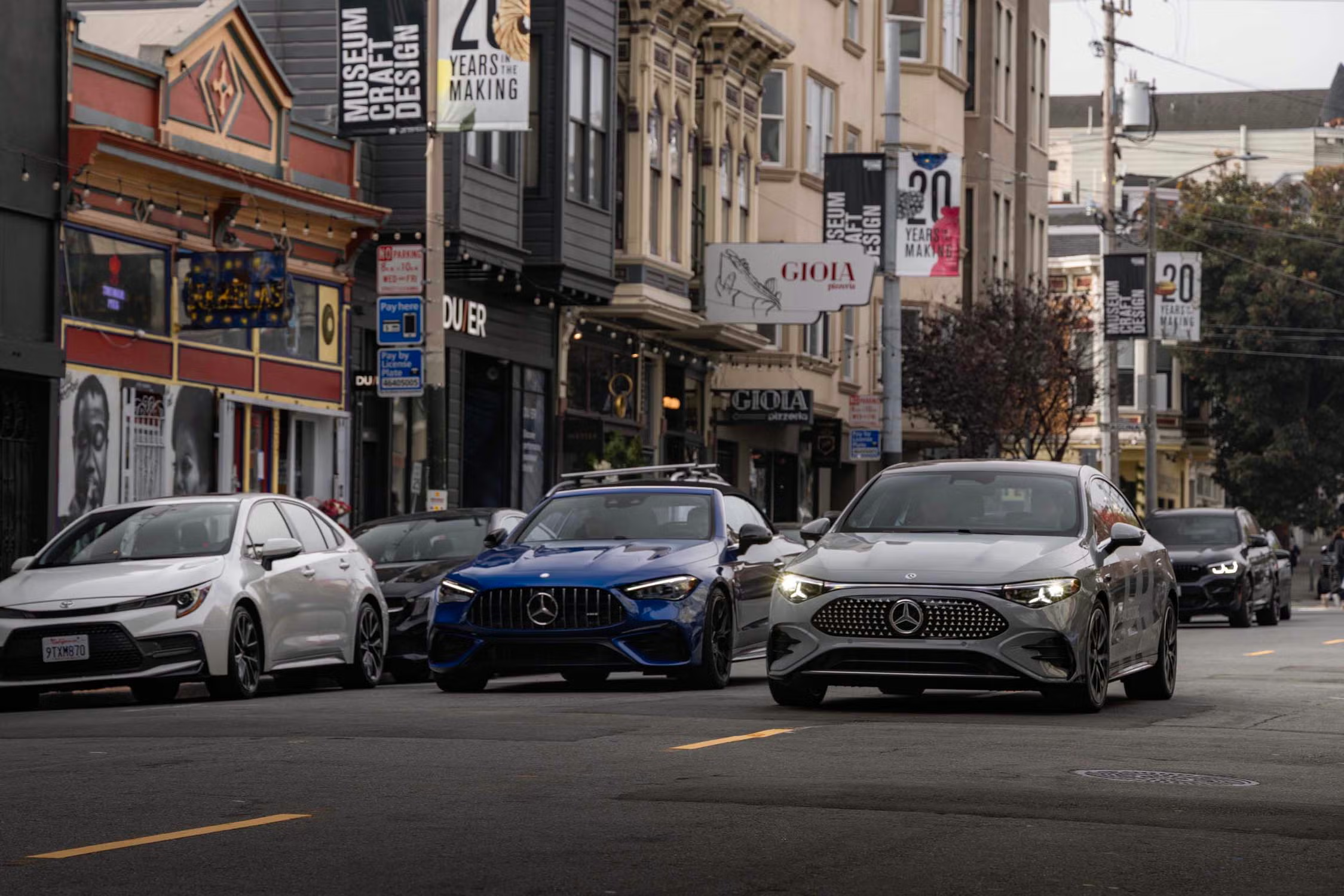
The expanded partnership will bring advanced computing, AI software and safety systems to future Mercedes-Benz vehicles.
Mercedes-Benz is strengthening its technology partnership with Nvidia to accelerate the development of advanced driving systems. The collaboration brings together high-performance computing, artificial intelligence and safety software, with the goal of helping future vehicles interpret road conditions and respond to increasingly complex traffic situations.

Mercedes-Benz is expanding the technology behind its next generation of driving systems.
A central part of the partnership is Nvidia Hyperion, a computing and sensor architecture designed for vehicles targeting Level 4 autonomous driving. The platform uses two Nvidia Drive AGX Thor processors and a standardized suite of vehicle sensors. It also supports over-the-air software updates, allowing compatible systems to receive improvements without requiring every update to be installed manually.
Level 4 autonomy refers to vehicles that can perform all driving tasks within specific operating conditions without continuous human control. It does not mean a vehicle can drive itself in every location or situation. Nvidia describes Hyperion as a production-ready platform for applications that include autonomous vehicles and robotaxi fleets.

Nvidia’s high-performance processors are designed to handle the demanding computing requirements of automated driving.
The partnership also includes Nvidia Alpamayo, an AI platform intended to help accelerate autonomous vehicle development. Its reasoning-based models and software tools can support systems that interpret driving situations and evaluate possible responses. Mercedes-Benz can use these capabilities as part of its work on future automated driving technology.
Simulation is another important element. Alpamayo supports closed-loop testing, allowing engineers to assess advanced driver assistance systems and autonomous driving functions in virtual environments. Developers can recreate challenging scenarios, examine how a system responds and refine its behavior before moving to further physical testing. This approach can make development more systematic, although simulation alone cannot replace real-world validation.
Safety technology forms a separate part of the agreement. Mercedes-Benz also uses Nvidia Halos, a full-stack safety system that includes software safeguards and redundancy for critical vehicle sensors. It supports safety validation throughout the vehicle development process, helping engineers assess how different components work together and how the system may respond when a component fails.

Vehicle testing and virtual simulations help engineers assess the reliability of automated driving functions.
Mercedes-Benz is not the only automaker investing in Nvidia’s automotive technology. General Motors announced a partnership with Nvidia in March 2025 to deploy AI-powered capabilities in future vehicles. Hyundai Motor Group has also expanded its collaboration with the company, targeting next-generation driver assistance systems and more advanced autonomous driving technology.
These agreements reflect a wider industry shift toward software-defined vehicles, in which computing platforms and software updates play an increasingly important role after a vehicle leaves the factory. Automakers are competing to develop more capable driving assistance while meeting demanding safety requirements. The level of automation available to customers will still depend on each vehicle’s hardware, software, regulatory approval and operating conditions.
The collaboration also extends beyond the road. Mercedes-Benz uses Nvidia engineering simulation tools within its Mercedes-Benz Cars Operations 360, known as MO360, a digital platform supporting its global manufacturing network. The system can create digital twins of production processes, giving teams a virtual representation of factory operations that they can analyze and optimize.

Digital twins help Mercedes-Benz analyze factory operations, production planning and manufacturing quality.
By applying digital tools to both vehicle development and manufacturing, Mercedes-Benz can use simulation and data analysis across different stages of its operations. The expanded Nvidia partnership brings these capabilities together with a broader push toward more advanced driving systems. However, the announcement does not confirm which production models will receive the full Hyperion architecture or when those vehicles will arrive. The practical impact will become clearer as Mercedes-Benz announces specific applications and validates the technology for road use.








-
 NOW TRENDING2 months ago
Aston Martin DBX Becomes Harry Da Souza’s Ride in MobLand
-
 TEST DRIVES2 months ago
2026 Maserati GranTurismo Trofeo Review: Miami
-
 INTELLIGENT MOBILITY2 months ago
Tesla Cybercab Navigation Problem Hits Austin Robotaxis
-
 INTELLIGENT MOBILITY2 months ago
Tesla Cybercab Cannot Be Charged at Home—Here’s Why
-
 INTELLIGENT MOBILITY2 months ago
2027 Nissan Rogue Hybrid: e-POWER Comes to America
-
 TEST DRIVES2 months ago
2026 Maserati GranTurismo Coupe
-
 Formula12 months ago
Cadillac F1 2026 Faces an Eight-Race Logistics Challenge
-

 NOW TRENDING2 months ago
2027 Lexus LS Gets Another Update, But Not in America