
INTELLIGENT MOBILITY
Tesla and SpaceX Merger Talks Raise a $500 Billion Question

Wall Street sees a potential deal, but the price Tesla shareholders receive remains a major point of disagreement.
A possible merger between Tesla and SpaceX is becoming a major talking point on Wall Street. Investors see strategic advantages in bringing Elon Musk’s automotive and aerospace businesses closer together, particularly as both expand their investments in artificial intelligence. Yet one question remains unresolved: how much should Tesla shareholders receive if the two companies combine?
The financial stakes are enormous. Tesla has a reported market valuation of approximately $1.5 trillion, and estimates of the premium its shareholders could receive range from almost nothing to around 35%. Depending on the final terms, that difference could amount to hundreds of billions of dollars. The exchange ratio would therefore play a central role in determining how value is distributed between the two groups of shareholders.

Elon Musk’s leadership of both companies has intensified speculation about a possible merger.
The deal is not finalized. Musk has acknowledged that he faces a conflict of interest, and the committees involved have yet to agree on the terms. Some investors expect a proposal in the coming months, but a possible transaction should not be confused with an approved agreement. Any deal would need to address the valuation of each company and the interests of their respective shareholders.
Trading activity has reflected the market’s attention. Tesla shares rose more than 3% on Wednesday, while SpaceX gained 11%. If the SpaceX increase holds, it would add approximately $210 billion to its market capitalization. These movements show how strongly expectations about a potential transaction can influence investor sentiment, even before the companies establish a final structure.
Why a merger could make strategic sense
Tesla and SpaceX are developing businesses with increasingly overlapping interests in artificial intelligence, computing and advanced engineering. Their joint work on the Terafab chip plant is one example. AI-related activities reportedly account for more than half of SpaceX’s revenue, adding another connection between the companies’ technology ambitions.
Supporters argue that combining the businesses could reduce duplicated corporate expenses, simplify decision-making and improve coordination across major infrastructure projects. Shared services and financing could also help the companies manage the costs of developing advanced computing systems and other capital-intensive technologies. In theory, a combined organization could coordinate investments that currently require separate corporate planning.

The companies’ overlapping interests in AI and engineering form a central part of the merger argument.
The financial challenge, however, is considerable. Analysts have warned that SpaceX’s expanding investment in AI and space infrastructure could put pressure on free cash flow. The figures cited in the reporting point to another $35 billion to $40 billion in spending during the fourth quarter. A merger could create opportunities to coordinate funding, but it would not remove the cost of building and operating these systems.
The potential benefits also depend on whether the companies can turn their long-term plans into commercially successful products. A larger corporate structure may provide access to capital and shared resources, but it can also introduce complexity. Combining two businesses with different operations, investment cycles and financial needs would require careful planning and execution.
Ambitious technology, significant risks
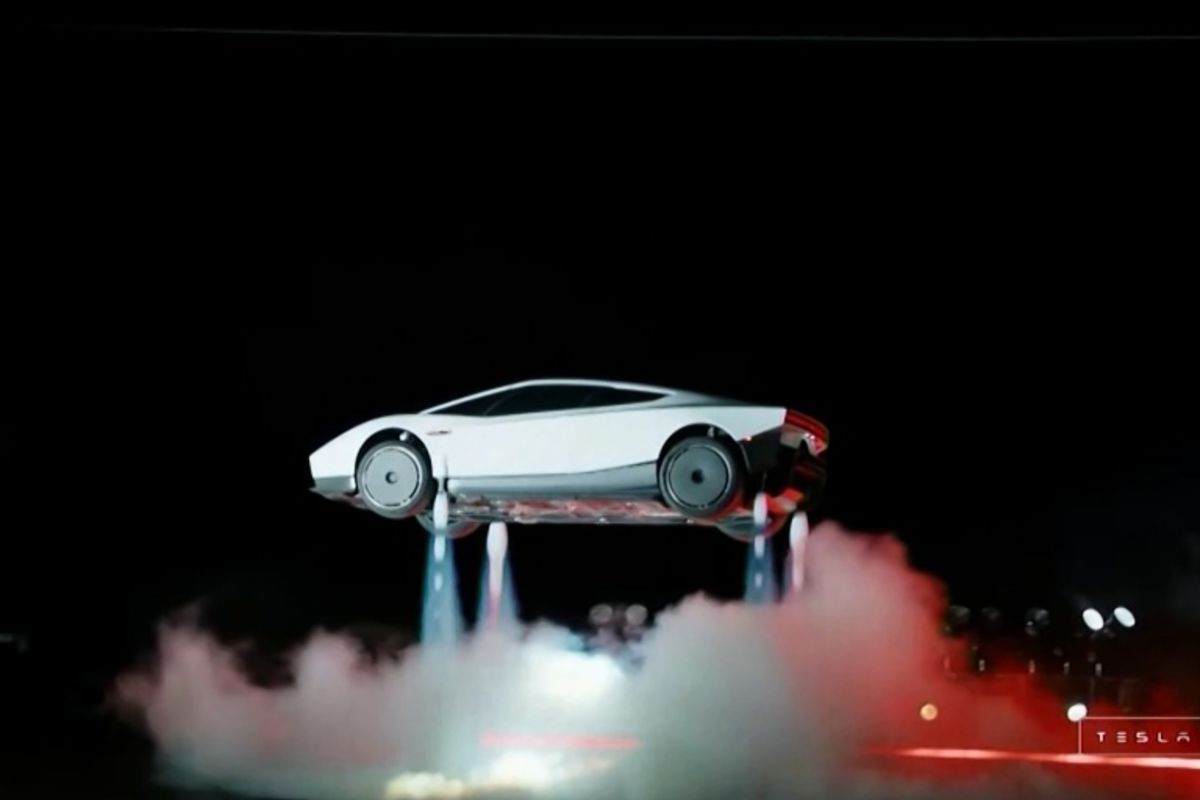
The companies have already offered examples of how their technologies might intersect. Tesla’s next-generation Roadster presentation featured a vehicle equipped with SpaceX rocket-thruster technology, illustrating one possible area of collaboration. The demonstration attracted attention, but a shared technology showcase is not, by itself, evidence that a merger would produce a specific commercial advantage.

The Roadster presentation highlighted a potential connection between Tesla’s automotive engineering and SpaceX technology.
Several of the technologies underpinning the companies’ ambitious valuations remain in development or have yet to reach commercial scale. These include data centers in orbit, autonomous taxi fleets operating at scale and humanoid robots. Bringing such projects to market will require years of engineering, infrastructure investment, testing and commercial execution.
That uncertainty complicates the valuation debate. Investors must weigh the potential of future businesses against the spending required to develop them, as well as the possibility that commercial adoption could take longer than expected. A merger could strengthen coordination, but it would not guarantee that these projects meet their targets or generate the returns anticipated by investors.

Humanoid robots and AI infrastructure represent part of the longer-term technological ambitions behind the merger discussion.
Governance is another critical issue. Since Musk leads both companies, investors will want transparency around the valuation process, the proposed exchange ratio and the safeguards used to manage conflicts of interest. The premium offered to Tesla shareholders could determine how value is distributed between the two investor groups, while the final structure would also shape the risks shareholders take on.
For Wall Street, the potential Tesla-SpaceX merger presents a balance between strategic opportunity and financial uncertainty. Supporters see a way to connect AI, automotive and aerospace operations, while skeptics must consider the cost, execution challenges and fairness of the proposed terms. Until the companies disclose an agreed structure, the premium Tesla shareholders might receive (and whether a transaction will proceed) remains uncertain.









-

 NOW TRENDING2 months ago
Aston Martin DBX Becomes Harry Da Souza’s Ride in MobLand
-
 TEST DRIVES2 months ago
2026 Maserati GranTurismo Trofeo Review: Miami
-
 INTELLIGENT MOBILITY2 months ago
Tesla Cybercab Navigation Problem Hits Austin Robotaxis
-

 INTELLIGENT MOBILITY2 months ago
Tesla Cybercab Cannot Be Charged at Home—Here’s Why
-
 INTELLIGENT MOBILITY2 months ago
2027 Nissan Rogue Hybrid: e-POWER Comes to America
-
 TEST DRIVES2 months ago
2026 Maserati GranTurismo Coupe
-
 Formula12 months ago
Cadillac F1 2026 Faces an Eight-Race Logistics Challenge
-

 NOW TRENDING2 months ago
2027 Lexus LS Gets Another Update, But Not in America