
RACING
Austrian Grand Prix FP1 and FP2 times: when Formula 1 practice starts Friday in the U.S.

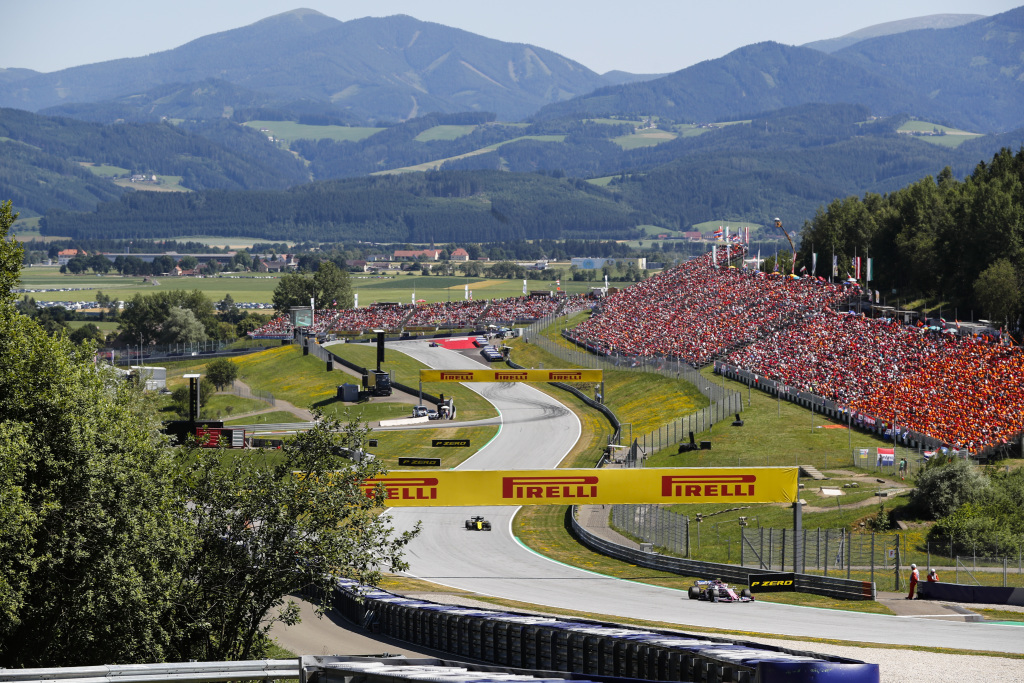
The Austrian Grand Prix FP1 and FP2 times are set for Friday at the Red Bull Ring, with McLaren, Ferrari, Mercedes and Red Bull back in action as six rookie drivers join the opening Formula 1 session.
Formula 1 returns this weekend with the 2026 Austrian Grand Prix, and Friday at the Red Bull Ring brings the first proper read on how the field stacks up after the short break following Barcelona. For fans in the United States, the key question is simple: what time do FP1 and FP2 start for the Austrian Grand Prix? The answer is important because this is shaping up to be one of the most interesting Fridays of the season so far, not only because of the title fight, but also because several teams are rolling out rookie drivers in the opening session.
The Austrian Grand Prix FP1 and FP2 times place the first practice sessions in the morning for U.S. viewers, with Free Practice 1 beginning at 7:30 a.m. ET / 4:30 a.m. PT and Free Practice 2 following at 11:00 a.m. ET / 8:00 a.m. PT on Friday. Both sessions last 60 minutes, and both could carry real weight for the rest of the weekend as teams continue to evaluate upgrades, setup direction and race pace at one of Formula 1’s shortest but most demanding circuits.
This year’s Austria Friday also comes with an extra layer of intrigue because six teams are handing FP1 duties to rookie or reserve drivers as part of Formula 1’s mandatory young-driver running rules. That means the opening session is not just about headline pace from Lando Norris, Lewis Hamilton, Kimi Antonelli, Max Verstappen and Oscar Piastri. It is also a key opportunity for names such as Jak Crawford, Luke Browning, Dino Beganovic and Paul Aron to get meaningful track time in current machinery. Formula 1’s official Austrian Grand Prix schedule lists FP1 at 13:30 local time and FP2 at 17:00 local time, which translates to the U.S. times below.
Austrian Grand Prix FP1 and FP2 times in the United States
Here are the Austrian Grand Prix FP1 and FP2 times for U.S. viewers on Friday, June 26:
Formula 1 Austrian Grand Prix Friday practice schedule
- FP1: 7:30 a.m. ET / 6:30 a.m. CT / 5:30 a.m. MT / 4:30 a.m. PT
- FP2: 11:00 a.m. ET / 10:00 a.m. CT / 9:00 a.m. MT / 8:00 a.m. PT
For reference, the sessions take place at the Red Bull Ring in Spielberg, Austria, where the local schedule is:
- FP1: 13:30–14:30 local time
- FP2: 17:00–18:00 local time
That timing makes Friday a very watchable day for East Coast viewers and still manageable for fans on the West Coast willing to get up early for FP1. It also means FP2 lands in a cleaner U.S. morning window, which should make it the more widely followed of the two sessions.
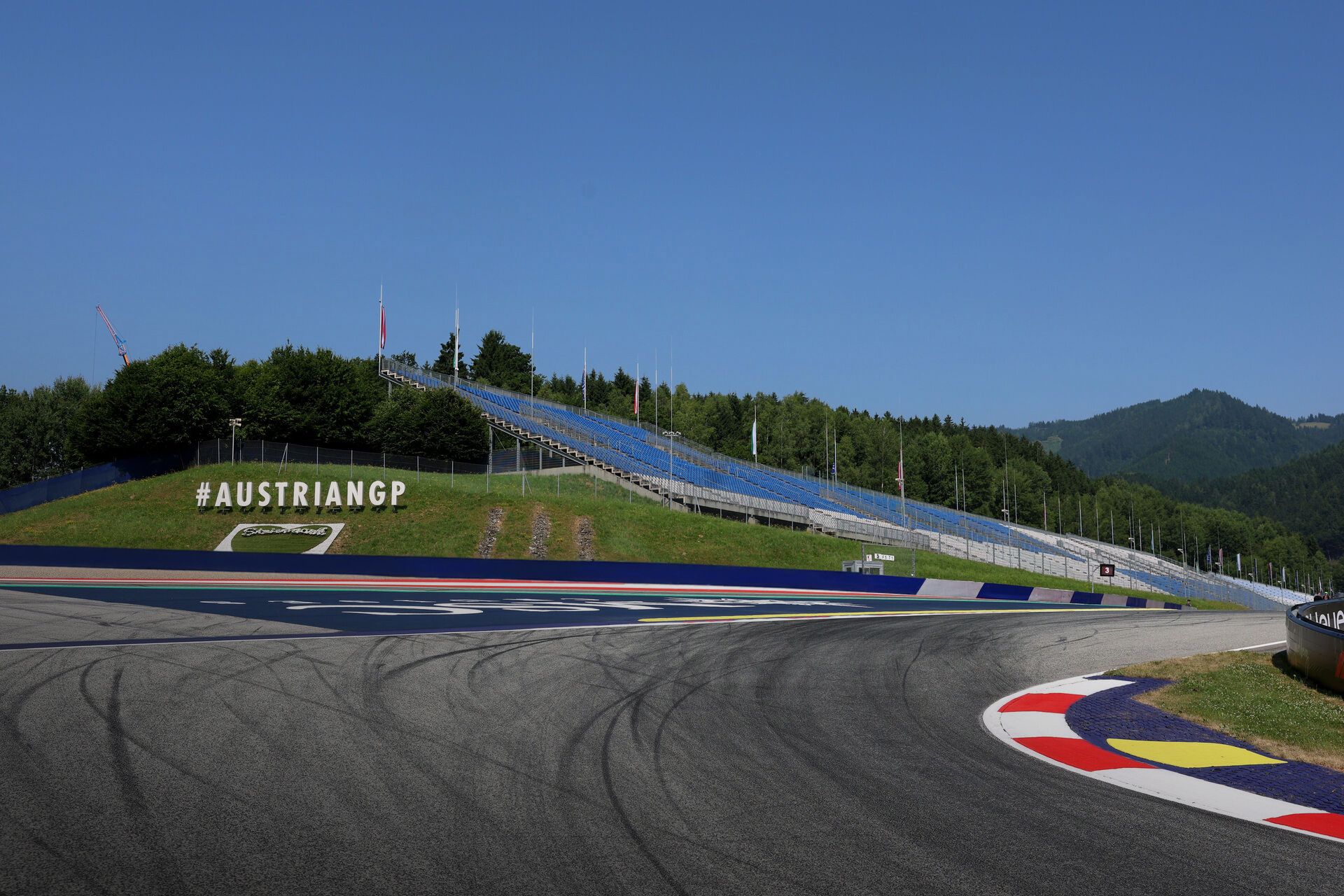
The Austrian Grand Prix FP1 and FP2 times put Friday practice in the morning for U.S. viewers, with Formula 1 back on track at the Red Bull Ring in Spielberg.
Why Friday matters at the Austrian Grand Prix
The Red Bull Ring is one of the shortest laps on the Formula 1 calendar, but it tends to produce a deceptively busy Friday because the circuit packs several different challenges into a compact layout. There are heavy braking zones, steep elevation changes, traction-sensitive exits and a fast final sector that rewards confidence and aero stability. That combination makes the first two practice sessions more useful than the short lap distance might suggest.
This weekend also arrives at an important moment in the championship narrative. Ferrari comes into Austria after Lewis Hamilton’s win in Barcelona, McLaren is trying to understand how much it can recover after a difficult stretch in development, and Mercedes continues to sit firmly in the title conversation with Kimi Antonelli still at the center of the championship fight. Red Bull, meanwhile, heads to its home circuit under pressure to respond in front of its own crowd.
That is why the Austrian Grand Prix FP1 and FP2 times matter beyond pure scheduling. Friday is the first real chance to see whether Ferrari’s momentum is sustainable, whether McLaren can look more comfortable at Spielberg than it did in recent races, and whether Mercedes can keep its grip on the front of the field.
McLaren, Ferrari, Mercedes and Red Bull all have something to prove on Friday
There are several major storylines to track once the green light comes on for FP1.
McLaren
McLaren arrives in Austria trying to stop the bleeding after admitting it has fallen behind in parts of the development race. Lando Norris has already acknowledged the team is effectively playing catch-up, and Austria is the first chance to see whether the Red Bull Ring can at least bring the MCL40 into a more competitive operating window. Oscar Piastri will be equally important here, especially because McLaren needs both cars extracting maximum points while it works through its upgrade path.
Ferrari
Ferrari enters the weekend with real momentum after Hamilton’s breakthrough victory in Spain, and the Scuderia’s pace is now impossible to ignore. Austria should offer another useful read on whether Ferrari can keep pressure on Mercedes and McLaren over a different style of circuit. There is also the added wrinkle that Charles Leclerc will not run in FP1, with his Ferrari handed to rookie Dino Beganovic for the opening session. Leclerc returns for FP2.
Mercedes
Mercedes remains one of the reference points of the 2026 season, and Austria gives Kimi Antonelli and George Russell another chance to build on that position. Antonelli’s title push has become one of the central stories of the year, while Russell continues to provide the benchmark of experience on the other side of the garage. If Mercedes is immediately quick in FP1 and FP2, it will only reinforce the sense that the team remains one of the strongest all-round packages in the field.
Red Bull
Red Bull’s home race always carries extra scrutiny, and that is especially true when the team is trying to protect its status near the front. Max Verstappen knows the Red Bull Ring better than almost anyone, and the layout has often suited him, but Friday will show whether the RBPT package has the pace to control the weekend or whether Red Bull will need to fight just to stay in the lead group.
Which rookie drivers will run in FP1 at the Austrian Grand Prix?
One of the biggest Friday subplots is the number of young or reserve drivers stepping into race seats for the opening hour. Formula 1’s rookie-session regulations require teams to hand over FP1 outings across the season, and Austria will feature six different replacements in the first practice session. Formula 1 confirmed the full FP1 rookie lineup ahead of the weekend.
FP1 rookie and reserve driver lineup for Austria
- Dino Beganovic replaces Charles Leclerc at Ferrari
- Ayumu Iwasa replaces Liam Lawson at Racing Bulls
- Ryo Hirakawa replaces Esteban Ocon at Haas
- Luke Browning replaces Carlos Sainz at Williams
- Paul Aron replaces Gabriel Bortoleto at Audi
- Jak Crawford replaces Lance Stroll at Aston Martin
That list matters because these are not random cameo appearances. Some of these drivers are deep into F1 reserve roles, some are highly rated future prospects, and several are being closely watched by teams for possible future opportunities.
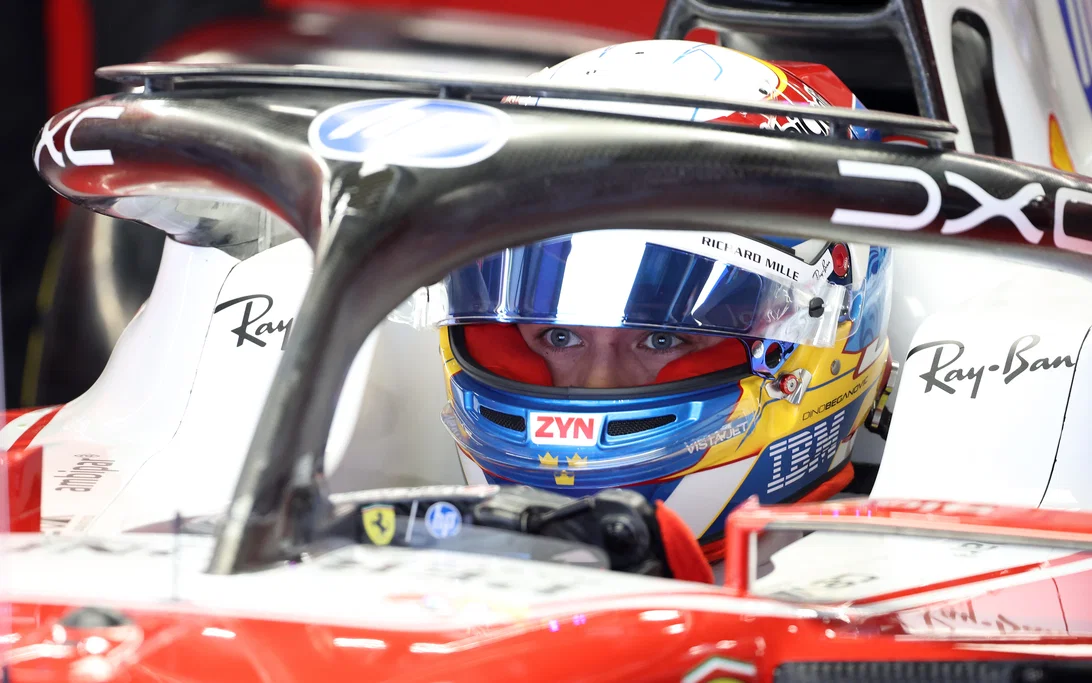
Six teams will field rookie or reserve drivers in FP1 at the Austrian Grand Prix, making the opening practice session one of the most important young-driver windows of the 2026 Formula 1 season.
The six FP1 drivers to watch in Austria
Dino Beganovic – Ferrari
Ferrari will hand its FP1 seat to Dino Beganovic, who steps in for Charles Leclerc. Beganovic has already built experience with Ferrari in practice running and remains one of the more closely followed members of the Ferrari Driver Academy. Austria is another important chance for him to show clean execution in a top-level environment, especially because Ferrari is now operating under genuine competitive pressure near the front of the grid. A smooth session matters here just as much as raw pace.
Ayumu Iwasa – Racing Bulls
Ayumu Iwasa returns for another official outing, this time taking over Liam Lawson’s Racing Bulls seat. Iwasa is no stranger to the Red Bull system and has already logged multiple FP1 appearances in recent seasons, but every session still matters because the Red Bull pipeline remains one of the most ruthless talent ladders in motorsport. The Japanese driver has speed, experience and strong single-seater credentials, and Austria gives him another public audition inside the wider Red Bull structure.
Ryo Hirakawa – Haas
At Haas, Ryo Hirakawa steps in for Esteban Ocon. Hirakawa is older and more experienced than the other names on this list, but under Formula 1’s definition he still qualifies for these rookie-session appearances because he has not started more than two Grands Prix. The Japanese driver brings a very different profile to FP1: rather than being a teenage or early-20s prospect, he arrives as an established endurance racer and a reserve driver who can provide useful feedback as Haas works through setup evaluation.
Luke Browning – Williams
Luke Browning replaces Carlos Sainz at Williams and may be one of the most interesting names in the session. Browning lost meaningful running in Barcelona when a technical issue prevented him from completing the FP1 program he had been scheduled to run, so Austria effectively becomes a reset. Williams will want mileage, clean data and composure, while Browning simply needs a normal session to show what he can do in current machinery.
Paul Aron – Audi
Paul Aron takes over Gabriel Bortoleto’s Audi for FP1, and his run deserves attention because Audi’s long-term future lineup remains one of the more interesting open questions in the paddock. Aron has already impressed in limited appearances and testing work, and Austria gives him another chance to strengthen his case as a serious F1 option. For Audi, the session is also useful because the team continues to build its own identity in the 2026 field and needs reliable data wherever it can get it.
Jak Crawford – Aston Martin
At Aston Martin, Jak Crawford replaces Lance Stroll for the opening session. Crawford is one of the most active young drivers in Aston Martin’s wider development setup and arrives with prior FP1 mileage, simulator work and recent test experience. He also knows the Red Bull Ring well from junior categories, which should help him settle in quickly. Of all the Friday replacement drivers, Crawford may be one of the most important to watch simply because he feels closer than most to a genuine future Formula 1 opportunity if the right seat opens.
Which full-time drivers will still shape the Friday story?
Even with six FP1 stand-ins, Friday is still going to revolve around the regulars once FP2 begins and the field is back at full strength.
Lando Norris and Oscar Piastri
McLaren needs answers from both drivers. Norris is under the spotlight because of his recent comments about development delays, while Piastri’s pace could be critical in showing whether Austria suits the MCL40 better than recent venues.
Lewis Hamilton and Charles Leclerc
Hamilton arrives with fresh momentum and a Ferrari that suddenly feels like a much more serious weekly threat. Leclerc will miss FP1 but becomes a key name in FP2, because Ferrari’s true pace read will only be complete once both race drivers are in the car.
Kimi Antonelli and George Russell
Mercedes still looks like one of the best-rounded teams in the field, and Antonelli’s title challenge means every Friday now matters a little more. Russell, meanwhile, remains one of the grid’s best references for where the car truly sits.
Max Verstappen
Verstappen at the Red Bull Ring is always a headline on its own. Even if Friday times do not tell the full story, his first runs of the weekend will immediately shape the mood around Red Bull’s home event.
The midfield names that could matter
Keep an eye on Fernando Alonso, Alex Albon, Carlos Sainz once he returns for FP2, Pierre Gasly, Franco Colapinto, Liam Lawson, Isack Hadjar and the Audi pair once the full lineup is restored. Austria’s short lap often compresses the midfield, which can make Friday timesheets look deceptively tight and set up a chaotic qualifying battle on Saturday.
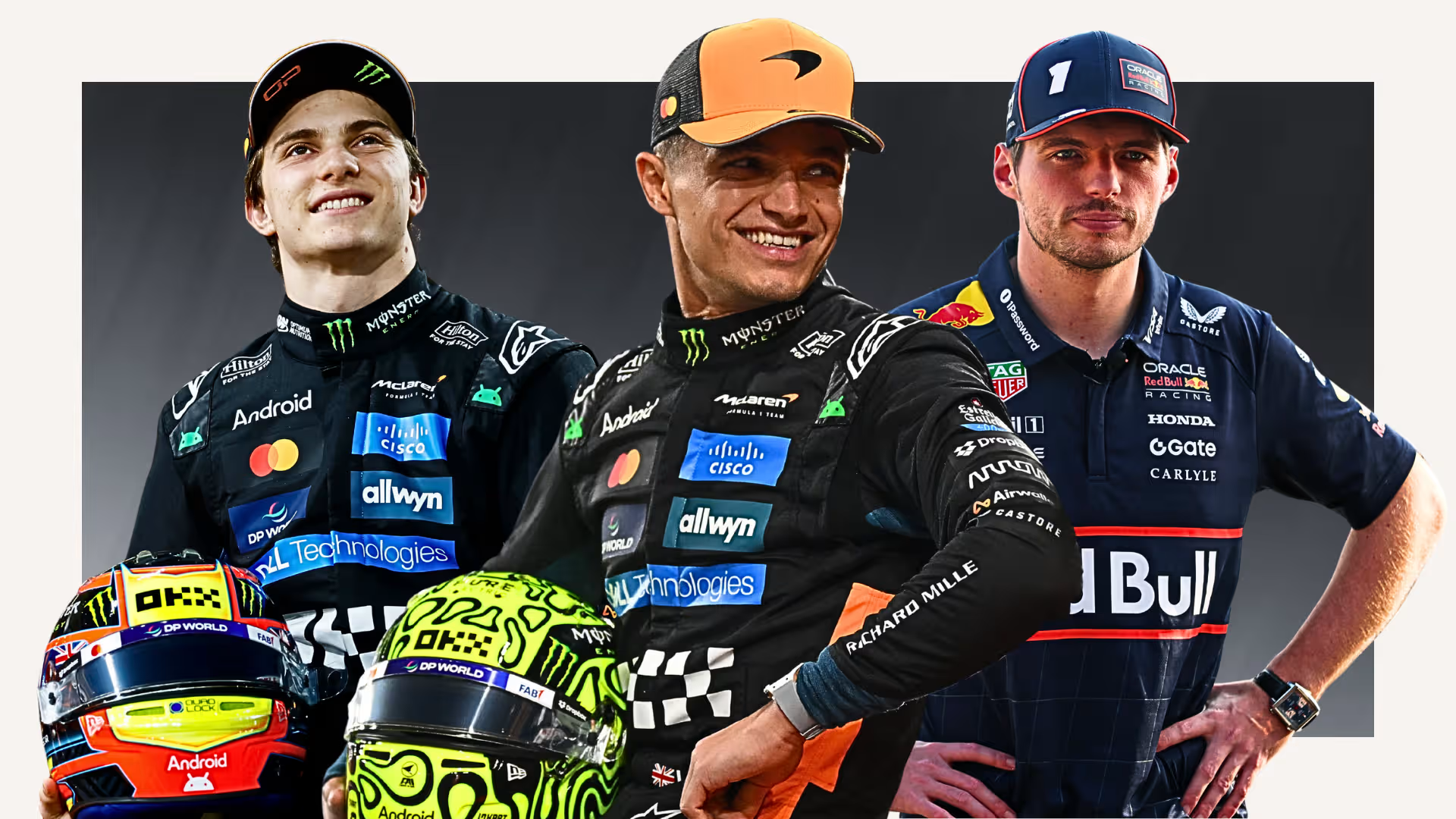
Friday in Austria is not only about rookie appearances: the battle between Ferrari, McLaren, Mercedes and Red Bull remains the main story once the full driver lineup returns for FP2.
Why FP2 may be the most important session of Friday
FP1 always gets attention because it is the first on-track session of the weekend, but FP2 may be the more revealing hour in Austria. That is because the full race-driver lineup is back in place, track conditions are a little more representative, and teams can shift from one-off evaluation work to longer runs, tire behavior and early race simulations.
For Ferrari, FP2 will be the first chance to compare Hamilton and Leclerc directly on the same Friday. For McLaren, it is the session where the team needs to understand whether the MCL40 can live in a better window over a longer run. For Mercedes and Red Bull, it is the first opportunity to send a clear message to the rest of the paddock about where they stand.
That is why anyone following the Austrian Grand Prix FP1 and FP2 times should circle both sessions, not just the first one. FP1 is great for storylines and rookie intrigue. FP2 is usually where the weekend starts to make real competitive sense.
Austrian Grand Prix Friday schedule: the key takeaway for U.S. viewers
If you are watching from the United States, the simple version is this: Formula 1 practice at the Austrian Grand Prix starts early Friday morning and continues into late morning depending on your time zone. The first hour is loaded with rookie intrigue and team experiments, while the second should give a much cleaner picture of the actual competitive order heading into Saturday.Friday in Austria is not only about rookie appearances: the battle between Ferrari, McLaren, Mercedes and Red Bull remains the main story once the full driver lineup returns for FP2.
Why FP2 may be the most important session of Friday
FP1 always gets attention because it is the first on-track session of the weekend, but FP2 may be the more revealing hour in Austria. That is because the full race-driver lineup is back in place, track conditions are a little more representative, and teams can shift from one-off evaluation work to longer runs, tire behavior and early race simulations.
For Ferrari, FP2 will be the first chance to compare Hamilton and Leclerc directly on the same Friday. For McLaren, it is the session where the team needs to understand whether the MCL40 can live in a better window over a longer run. For Mercedes and Red Bull, it is the first opportunity to send a clear message to the rest of the paddock about where they stand.
That is why anyone following the Austrian Grand Prix FP1 and FP2 times should circle both sessions, not just the first one. FP1 is great for storylines and rookie intrigue. FP2 is usually where the weekend starts to make real competitive sense.
Austrian Grand Prix Friday schedule: the key takeaway for U.S. viewers
If you are watching from the United States, the simple version is this: Formula 1 practice at the Austrian Grand Prix starts early Friday morning and continues into late morning depending on your time zone. The first hour is loaded with rookie intrigue and team experiments, while the second should give a much cleaner picture of the actual competitive order heading into Saturday.
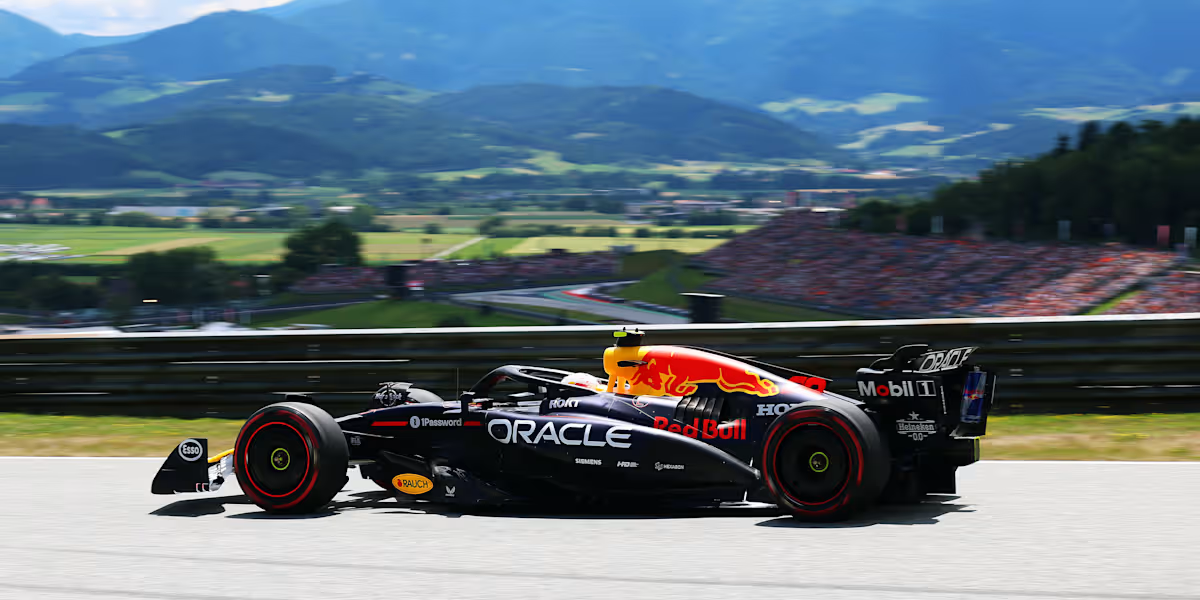
The Austrian Grand Prix FP1 and FP2 times put Friday’s Formula 1 running in an early U.S. window, with both sessions carrying real significance for the championship fight and the rookie-driver storylines.
So if you only need the essentials, here they are one more time: FP1 begins Friday at 7:30 a.m. ET / 4:30 a.m. PT, while FP2 starts at 11:00 a.m. ET / 8:00 a.m. PT. But this is one of those Fridays where the schedule is only part of the story. Between Ferrari’s momentum, McLaren’s need to respond, Mercedes’ title push, Red Bull’s home pressure and six rookie drivers stepping into the spotlight, Austria’s opening day has all the ingredients to be far more than a routine practice program.








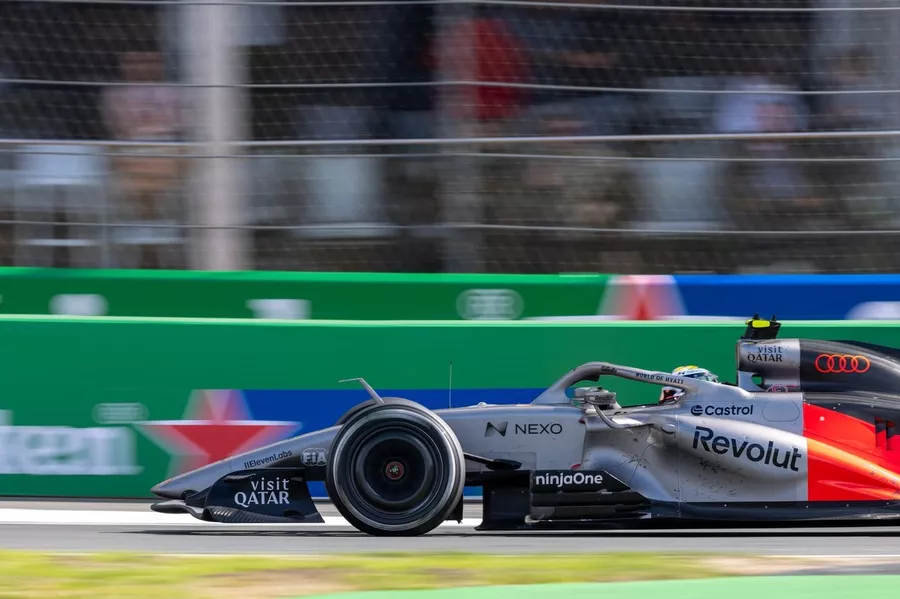
Nico Hülkenberg narrowly avoided hitting Audi teammate Gabriel Bortoleto after the Brazilian spun across the track during the opening lap of the Dutch Grand Prix.
Nico Hülkenberg revealed how he narrowly avoided a potentially huge accident with Audi teammate Gabriel Bortoleto during the opening lap of the 2026 Dutch Grand Prix.
The incident happened shortly after Max Verstappen crashed at the final corner. With the track still wet in places, Bortoleto lost control of his Audi and spun 360 degrees before coming to a stop in the middle of the circuit.
Hülkenberg arrived moments later and managed to avoid his teammate by passing around the left side of the stranded car.
Hülkenberg had almost no time to react
The track was mostly dry, but the final banked corner remained significantly wetter following the earlier rain.
That caught several drivers by surprise, including Bortoleto.
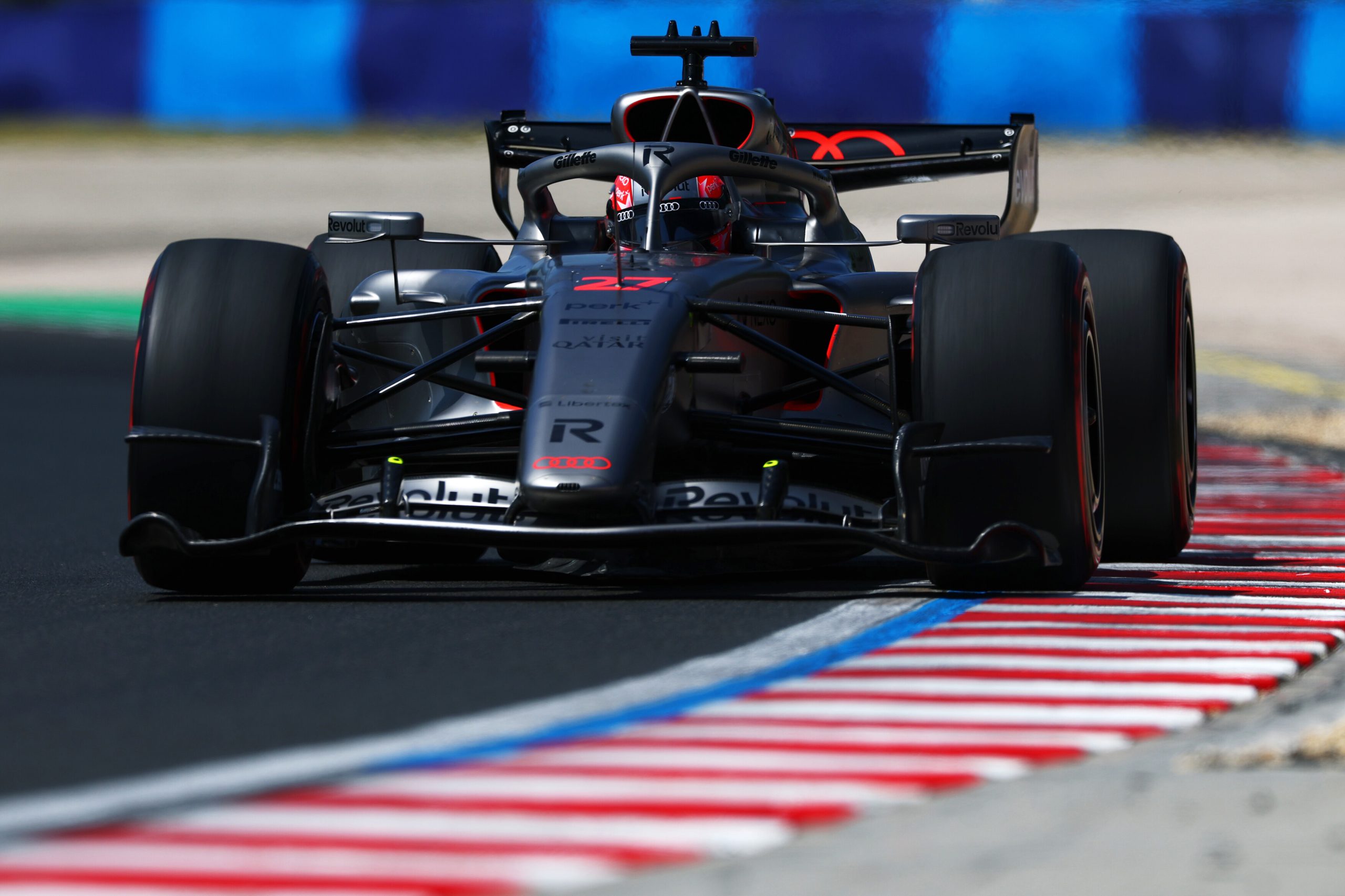
Nico Hülkenberg narrowly avoided Gabriel Bortoleto after the Brazilian spun across the track at Zandvoort.
Hülkenberg said the situation was extremely difficult because he could not immediately predict which direction Bortoleto’s car would move.
He waited as long as possible before committing to an escape route.
According to the Audi driver, luck also played a major role.
The gap between the two cars was so small that Hülkenberg said it felt as though “a sheet of paper” could have separated them.
Audi team principal calls it an incredible save
Audi competition director Allan McNish watched the incident from the pit wall while monitoring the onboard cameras from both cars.
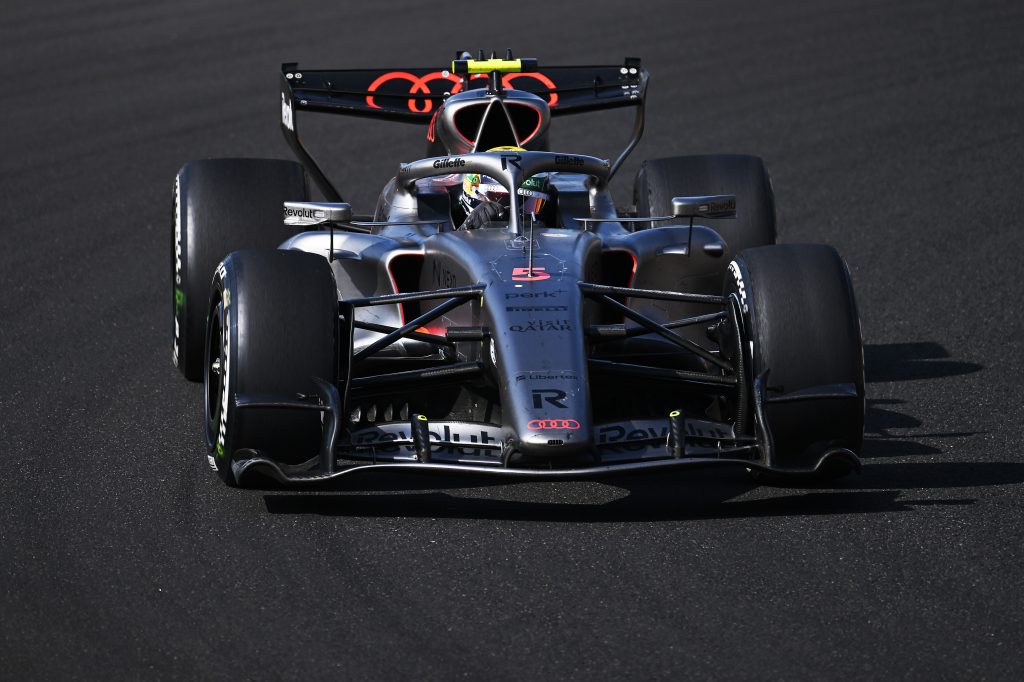
Audi competition director Allan McNish said the incident was even more alarming after reviewing the onboard footage.
McNish admitted that he initially did not realize just how close the two Audi cars had come to each other.
He compared the moment to a scene from “Days of Thunder”, highlighting how little margin Hülkenberg had for error.
From his experience as a former driver, McNish explained that avoiding an accident in such a situation requires a combination of instinct and judgment.
Drivers have to react immediately, but they must also determine how far they can move and which direction offers the safest escape.
Hülkenberg escaped while Bortoleto recovered
Bortoleto’s spin was particularly difficult to handle because the banking of the corner could have sent the car in an unpredictable direction.
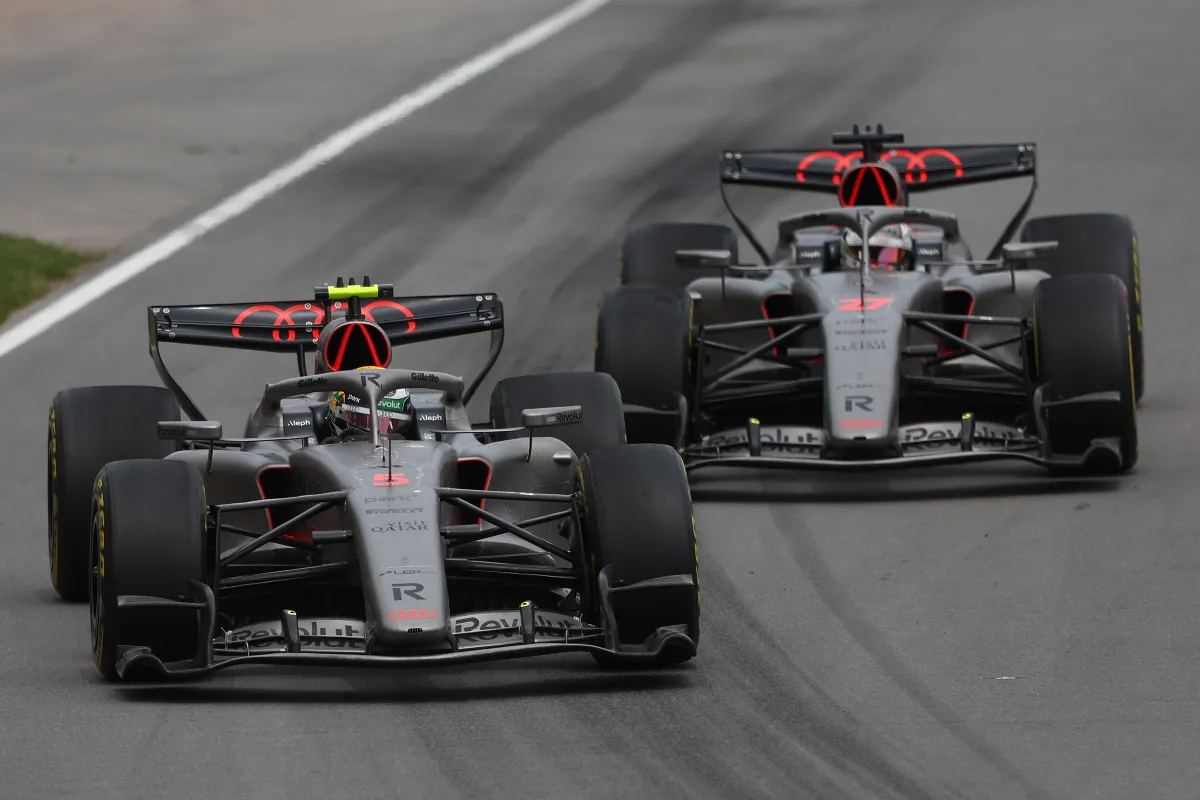
Bortoleto recovered from the spin while Hülkenberg escaped through the narrow gap beside his teammate.
McNish praised Bortoleto for keeping the car away from the wall and preventing an even bigger incident.
He also described Hülkenberg’s avoidance maneuver as an incredible save, saying it was difficult to determine whether instinct, skill, concentration, or a combination of all three made the difference.
The incident ultimately had no major consequences for either Audi driver.
Hülkenberg scored more points for Audi
Hülkenberg went on to finish eighth, scoring four points for Audi.
The result marked the team’s fourth consecutive points-scoring weekend.
Bortoleto had a more difficult afternoon and finished 13th after the opening-lap incident.
For Nico Hülkenberg Audi, the most memorable moment of the weekend was therefore not the final result but the extraordinary escape from what could have been a major teammate collision.
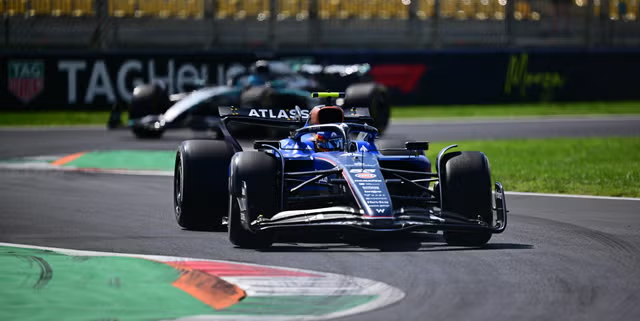
Carlos Sainz believes Williams should use Monza and Madrid to experiment ahead of its major Bakú upgrade after five races without finding answers.
Carlos Sainz believes Williams has reached a point where it needs to change its approach.
The Spaniard endured another difficult weekend at the Dutch Grand Prix, but his main concern is not Zandvoort itself. According to Sainz, Williams’ lack of performance has remained consistent across the last five races.
Williams needs to understand its problems
Sainz said the recent results are not simply the consequence of one particular circuit.
The same performance level has appeared repeatedly, leaving Williams without points in the five races leading into Zandvoort.
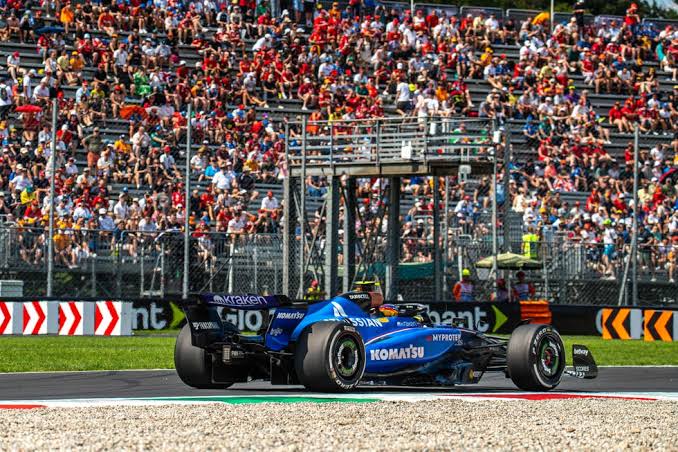
Carlos Sainz believes Williams must use the next two races to better understand its FW48 before the major upgrade arrives.
The Spaniard also experienced a difficult weekend personally, with inconsistent behavior from different components making it harder to find a suitable setup.
That prevented him from properly optimizing the FW48 for the race.
Sainz nevertheless believes the problems themselves could provide valuable information for Williams’ engineers.
Monza and Madrid could become test sessions
Williams is already targeting Bakú as a major turning point.
The team previously indicated that a substantial FW48 update would arrive there, with the goal of addressing several of the car’s behavioral weaknesses.
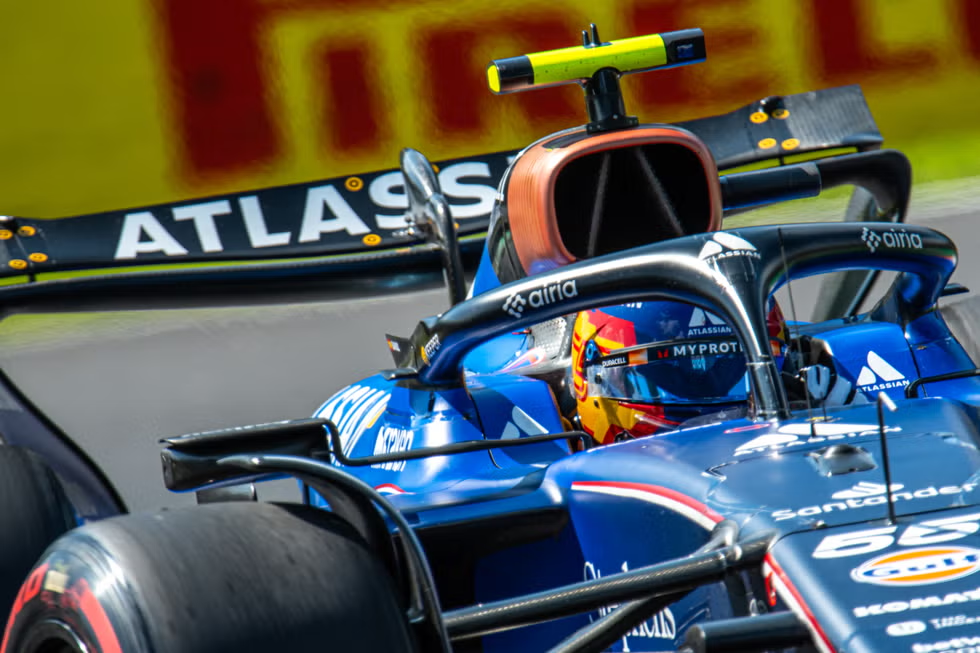
Williams plans a major development for Bakú, making Monza and Madrid important opportunities for further testing.
Before that upgrade arrives, however, Williams has races at Monza and Madrid.
Sainz believes the team should use those events to experiment with solutions that it would not normally consider.
Rather than simply trying to maximize the result at both races, Williams could sacrifice some short-term performance to learn more about the car.
That would give engineers additional information before the major Bakú package is introduced.
Sainz wants Williams to leave its comfort zone
The key objective is to understand why the FW48 has stopped progressing.
Sainz says Williams should try different approaches, even if some experiments fail.
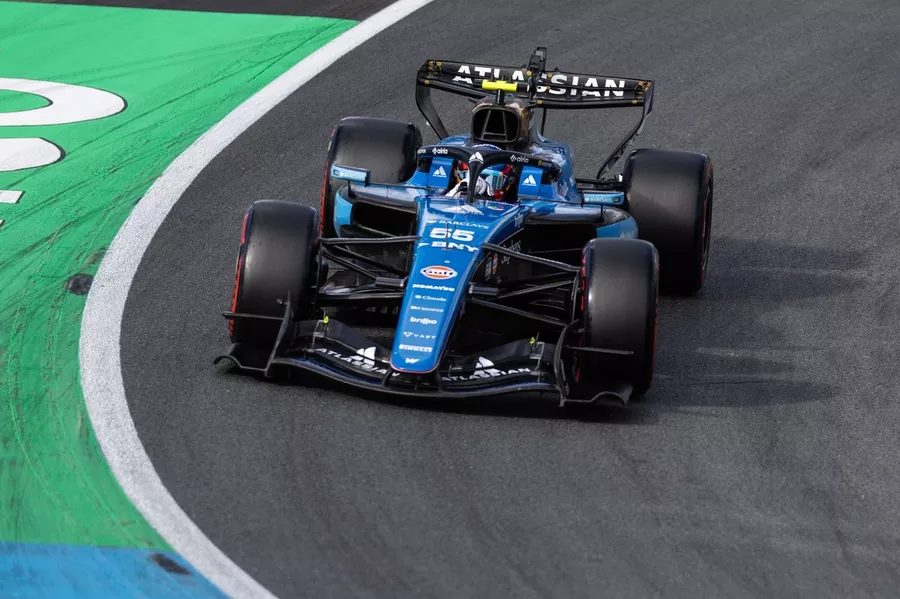
Sainz wants Williams to test outside its normal operating window before introducing the Bakú upgrade.
Those experiments could help the team identify weaknesses that have remained hidden during conventional setup work.
The Spaniard believes that information could make the difference once the major upgrade arrives.
After five consecutive races producing essentially the same picture, Sainz sees little value in simply waiting for the next development package.
The Carlos Sainz Williams partnership therefore enters an important phase. Monza and Madrid could become valuable laboratories for the team, giving Williams a final opportunity to understand the FW48 before the much-anticipated Bakú upgrade arrives.
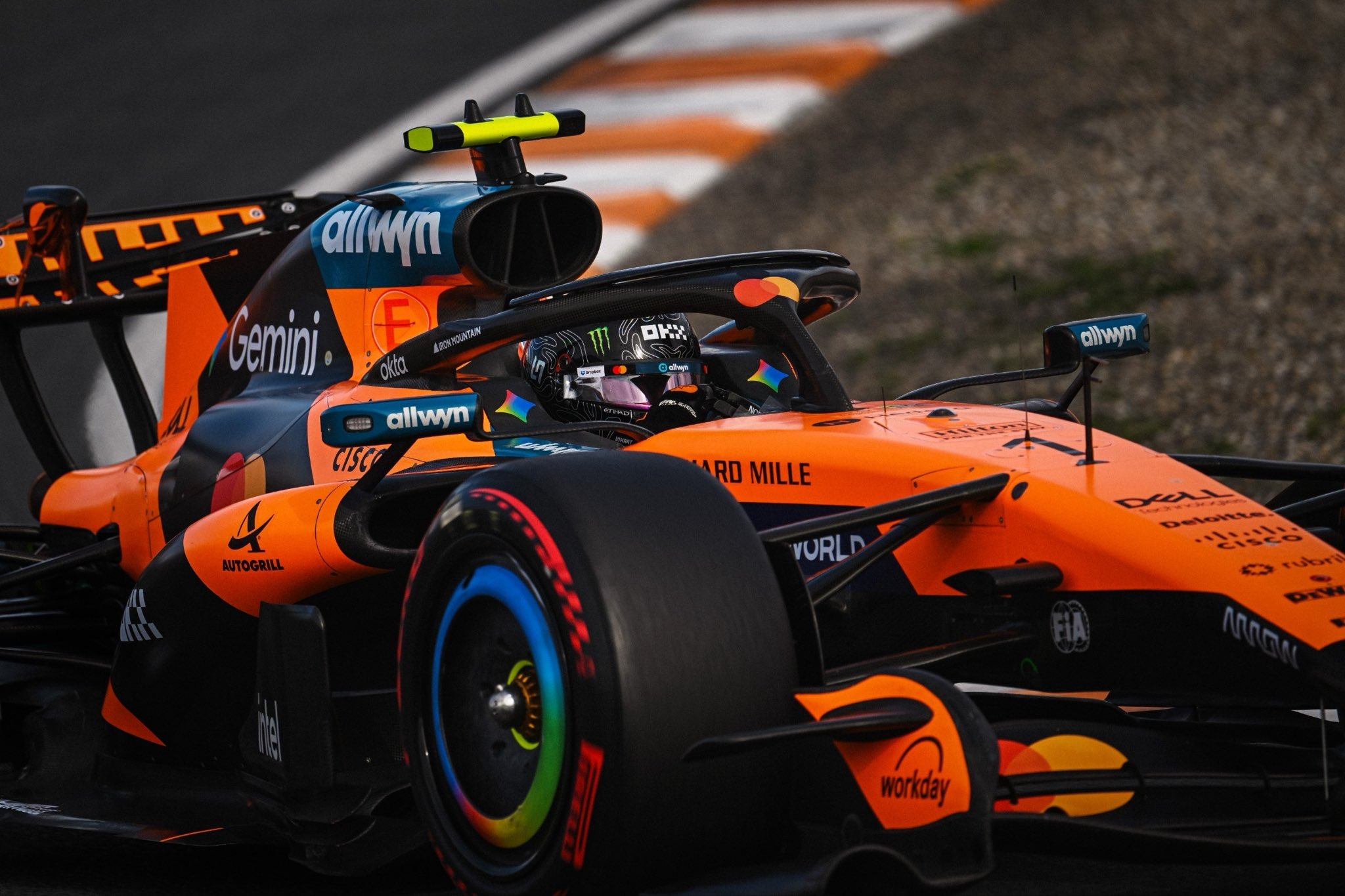
Lando Norris rejected Mercedes’ claim that McLaren has the fastest car, arguing that his recent victories are also the result of extracting more from the MCL40.
Lando Norris has pushed back against Mercedes’ assessment of the Formula 1 pecking order, arguing that McLaren’s recent victories are not simply the result of having the fastest car.
Andrea Kimi Antonelli and George Russell both described McLaren as the team to beat after the Dutch Grand Prix, but Norris believes his own performance has played a major role in allowing the MCL40 to consistently fight at the front.
The reigning world champion has now won the last two Grands Prix in Hungary and Zandvoort, starting both from pole position.
Norris believes his driving is making the difference
Mercedes dominated the opening phase of the 2026 season, winning the first six races from pole. McLaren and Ferrari have since closed the gap with major upgrades.
Antonelli, who finished second at Zandvoort, said Mercedes was clearly behind McLaren. Russell agreed after taking third.
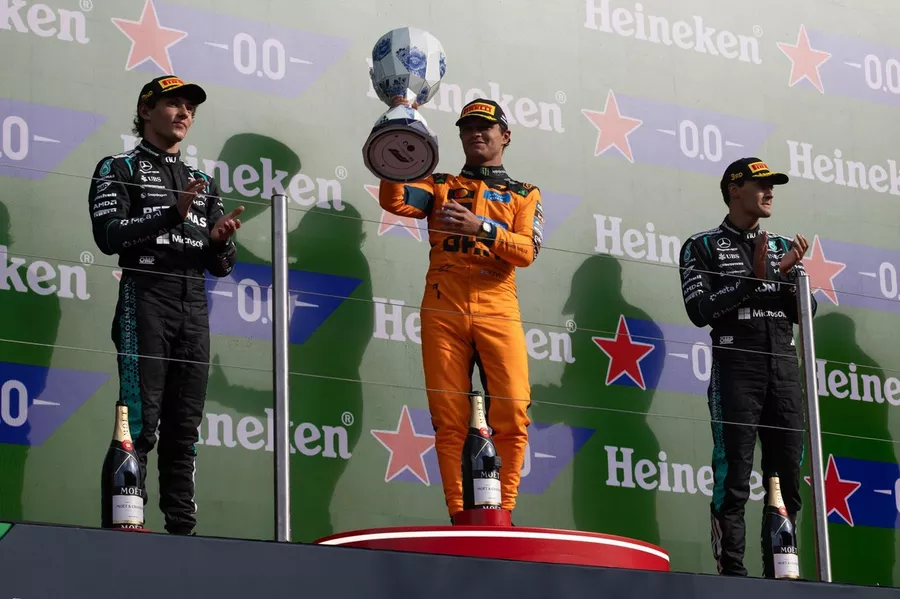
Lando Norris won at Zandvoort after starting from pole and holding off Mercedes during the race.
Norris does not completely agree with that assessment.
The McLaren driver argued that if he had not made the decisive move on Antonelli when he did, he would not have won the Dutch Grand Prix.
He also admitted that he rarely gives himself much credit, making his comments particularly notable.
Norris believes he is currently doing a better job than the rest of the field and that this is helping McLaren appear stronger than it might be on pure car performance.
Mercedes may still have the better all-round car
Norris does not claim that McLaren is definitively the strongest car in every situation.
Instead, he believes Mercedes has a more complete package across different track conditions, while McLaren has a more specific advantage in certain types of corners.
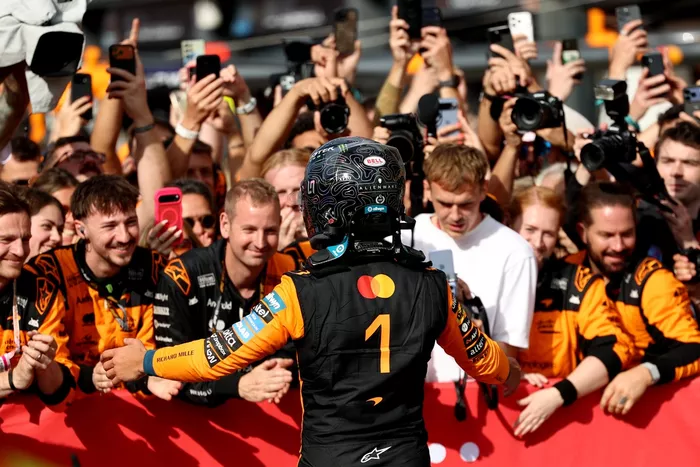
Norris says McLaren is particularly strong through high-speed corners, while Mercedes remains more competitive across a wider range of conditions.
At Zandvoort, Norris highlighted Turns 7 and 8 as areas where McLaren gained significant performance.
That makes circuit characteristics particularly important when comparing the two teams.
According to Norris, McLaren may not be the strongest everywhere, but his ability to maximize the car can close that difference.
Qualifying performances reinforce Norris’ argument
The comparison with Oscar Piastri is another reason Norris believes his own driving is contributing significantly to McLaren’s recent success.
Piastri finished sixth at Zandvoort and sits seventh in the championship, while Norris is fourth.
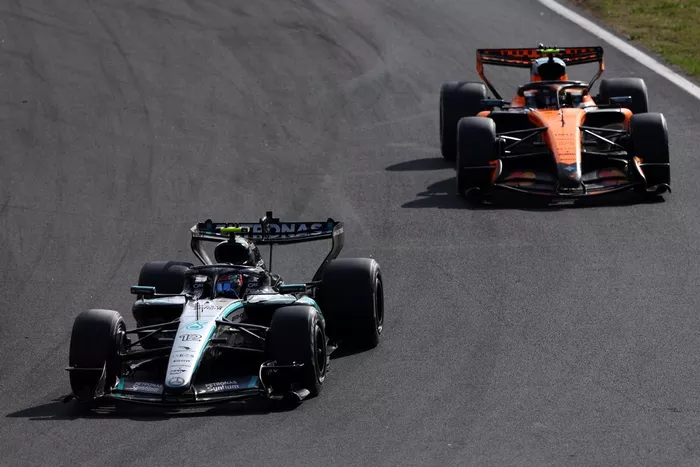
Lando Norris has built a significant qualifying advantage over McLaren teammate Oscar Piastri in 2026.
Norris currently leads Piastri 13-4 in qualifying, including Sprint qualifying sessions.
That gap has become an important reference point for Norris because it suggests that the MCL40’s performance is not the only factor determining McLaren’s results.
He also pointed to Saturday’s Sprint as evidence. Russell dominated from pole, while Norris had to fight to hold off Antonelli for third.
Instead of making major changes to the car overnight, Norris said he focused heavily on improving his driving.
Norris says he turned the weekend around himself
The McLaren driver believes his work between the Sprint and the Grand Prix was critical.
He said he worked extensively on his driving and regained confidence after a less successful Sprint result.
That confidence allowed him to maximize the car when it mattered most and ultimately convert pole position into victory.
For Lando Norris McLaren, the message is clear: the MCL40 is extremely competitive, but Norris believes his ability to extract the final performance is a major reason the team has won the last two races.
-

 NOW TRENDING2 months ago
Polestar to Exit U.S. Market After 2026 Due to Connected Vehicle Rules
-
 NOW TRENDING2 months ago
Tesla Model Y L Arrives in the U.S. With More Space and Three Rows
-

 RACING2 months ago
McLaren F1 Unveils Special Silverstone Livery Honoring Its History
-
 INTELLIGENT MOBILITY2 months ago
Audi A4 E-tron and Q7 E-tron Confirmed as New Electric Models
-
 TEST DRIVES2 months ago
A Week Driving Honda’s New Hybrid Coupe
-

 TEST DRIVES2 months ago
Ford Recalls More Than 741,000 Trucks and SUVs Over Rollaway Risk
-
 NOW TRENDING2 months ago
Toyota Reports Strong June and Q2 2026 U.S. Sales Growth
-

 INTELLIGENT MOBILITY2 months ago
GM Expands Super Cruise With Exclusive Hands-Free Towing Technology
You must be logged in to post a comment Login