
Formula1
Why Formula 1 Has Pit Lane Speed Limits And How They Are Measured

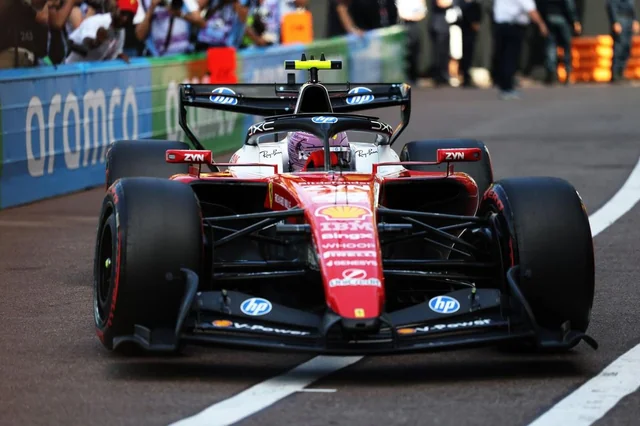
Pit lane speed limits are one of the most important safety regulations in Formula 1. The rule came under the spotlight during the Monaco Grand Prix, where several drivers received penalties for exceeding the limit by the smallest of margins.
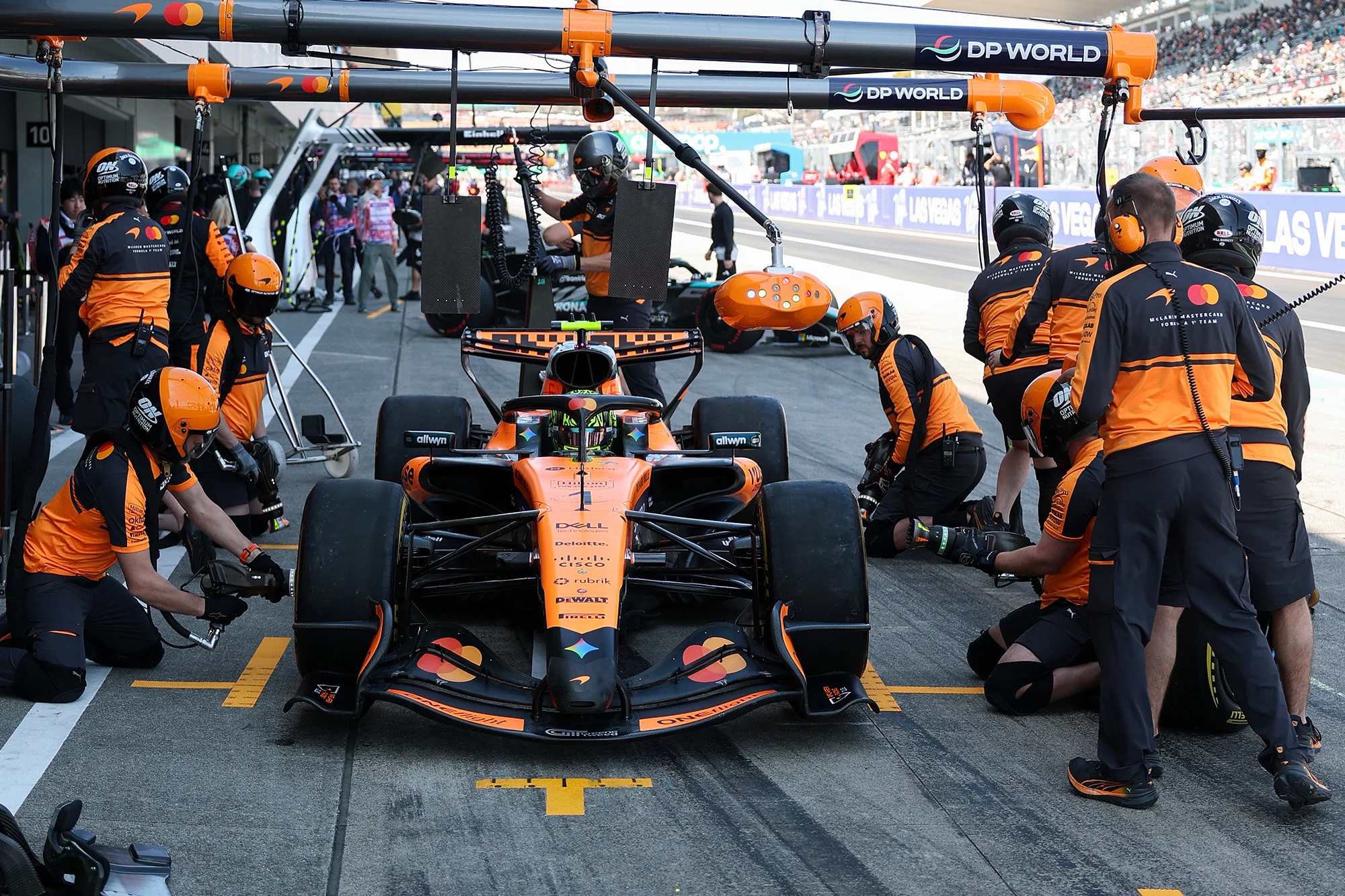
Pit lane speeding penalties played a significant role during the Monaco Grand Prix, affecting race strategy and ultimately influencing the final classification.
Several drivers were penalized after exceeding the speed limit while traveling through Monaco’s notoriously tight pit lane. In many cases, the difference was just a fraction of a kilometer per hour, yet the FIA’s monitoring systems leave virtually no room for error.
Why Formula 1 Introduced Pit Lane Speed Limits
For many years, Formula 1 operated without pit lane speed limits. In the early decades of the championship, pit areas were often poorly separated from the racing surface and safety standards were far less stringent than they are today.
As Formula 1 cars became faster and pit stops evolved into a crucial strategic element, concerns about safety increased. Following several incidents and near misses, pit lane speed limits were introduced during the 1994 season.
Today, the speed limit applies from the pit entry line to the pit exit line, with clear signage indicating the maximum speed permitted during each event.
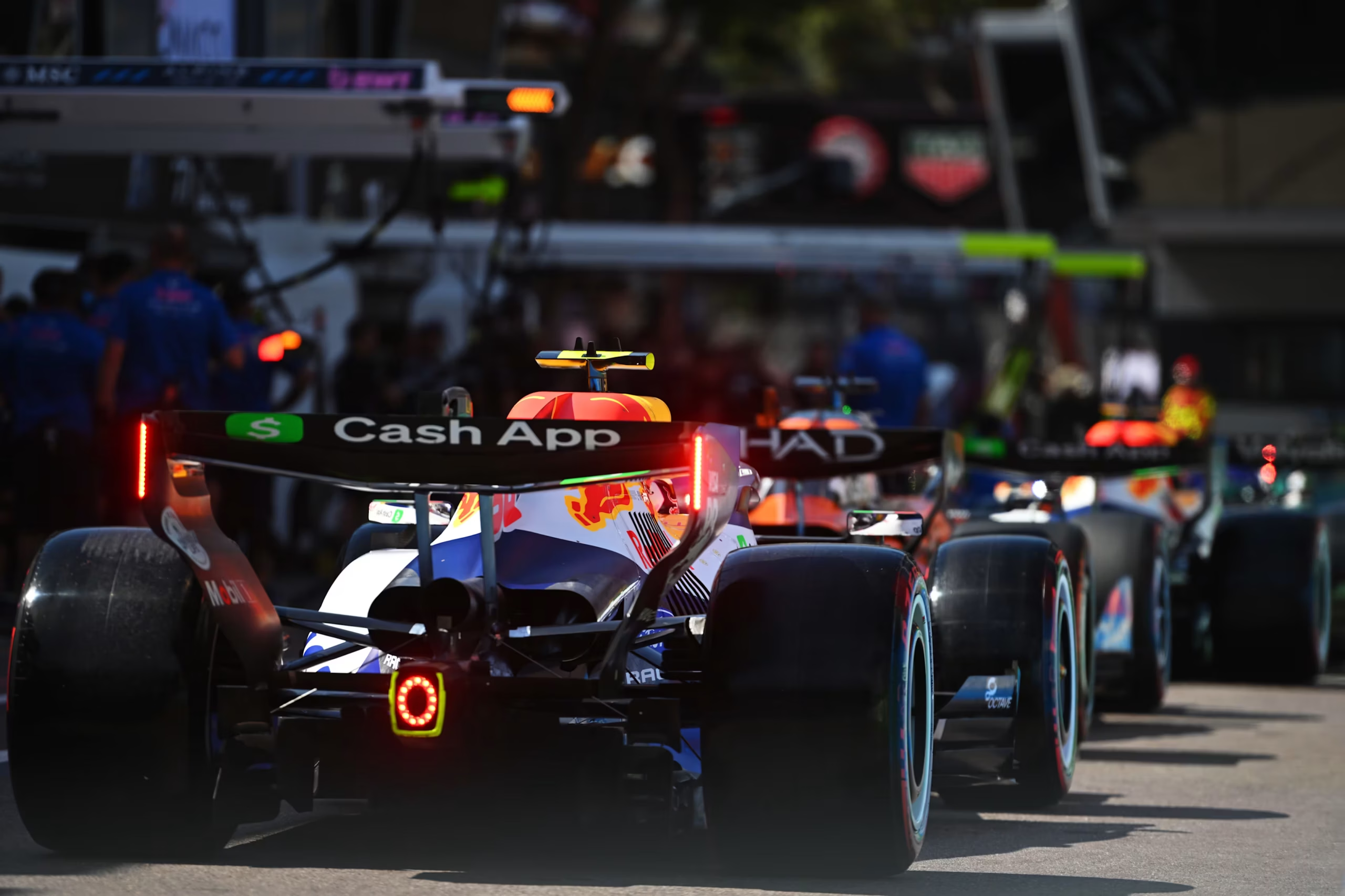
Monaco’s unique pit lane layout became a major talking point during Sunday’s Grand Prix.
What Is The Pit Lane Speed Limit In Formula 1?
For the 2026 Formula 1 season, the standard pit lane speed limit is 80 km/h.
However, certain circuits operate under a reduced limit of 60 km/h due to specific safety concerns. Monaco is one of those venues because of its narrow and congested pit lane, a challenge made even greater in 2026 following the arrival of the Cadillac Formula 1 team.
The reduced speed limit has strategic implications because drivers spend more time traveling through the pit lane, increasing the overall time lost during a pit stop.
During practice and qualifying sessions, teams can be fined for speeding. During races, drivers typically receive a five-second time penalty for exceeding the limit.
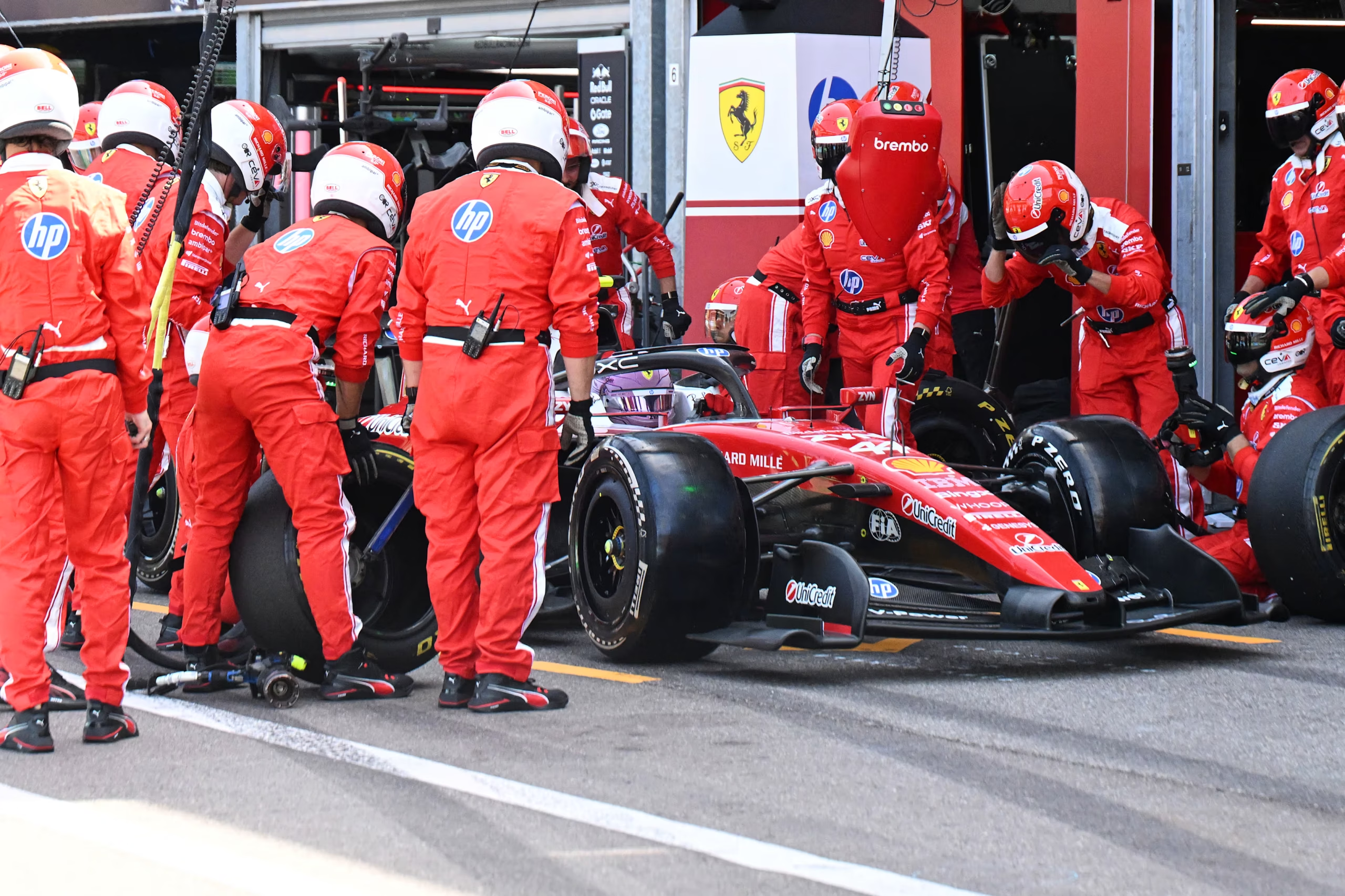
Lewis Hamilton served a five-second penalty during a pit stop at the Monaco Grand Prix.
The FIA can also impose more severe penalties if officials determine that a driver intentionally exceeded the limit to gain an advantage.
What makes the rule particularly unforgiving is the precision of the measurement system. During the Monaco Grand Prix, several infractions were recorded at just 60.1 km/h.
How Is Pit Lane Speed Measured?
Unlike public roads, Formula 1 does not rely on speed cameras or radar guns.
Instead, the FIA uses electronic timing loops and transponders installed on every car. These systems measure the time taken for a car to travel between specific points in the pit lane.
Using that information, the FIA calculates the car’s average speed throughout the monitored section.
Most pit lanes are relatively straightforward, running parallel to the start-finish straight and requiring minimal steering input from drivers.
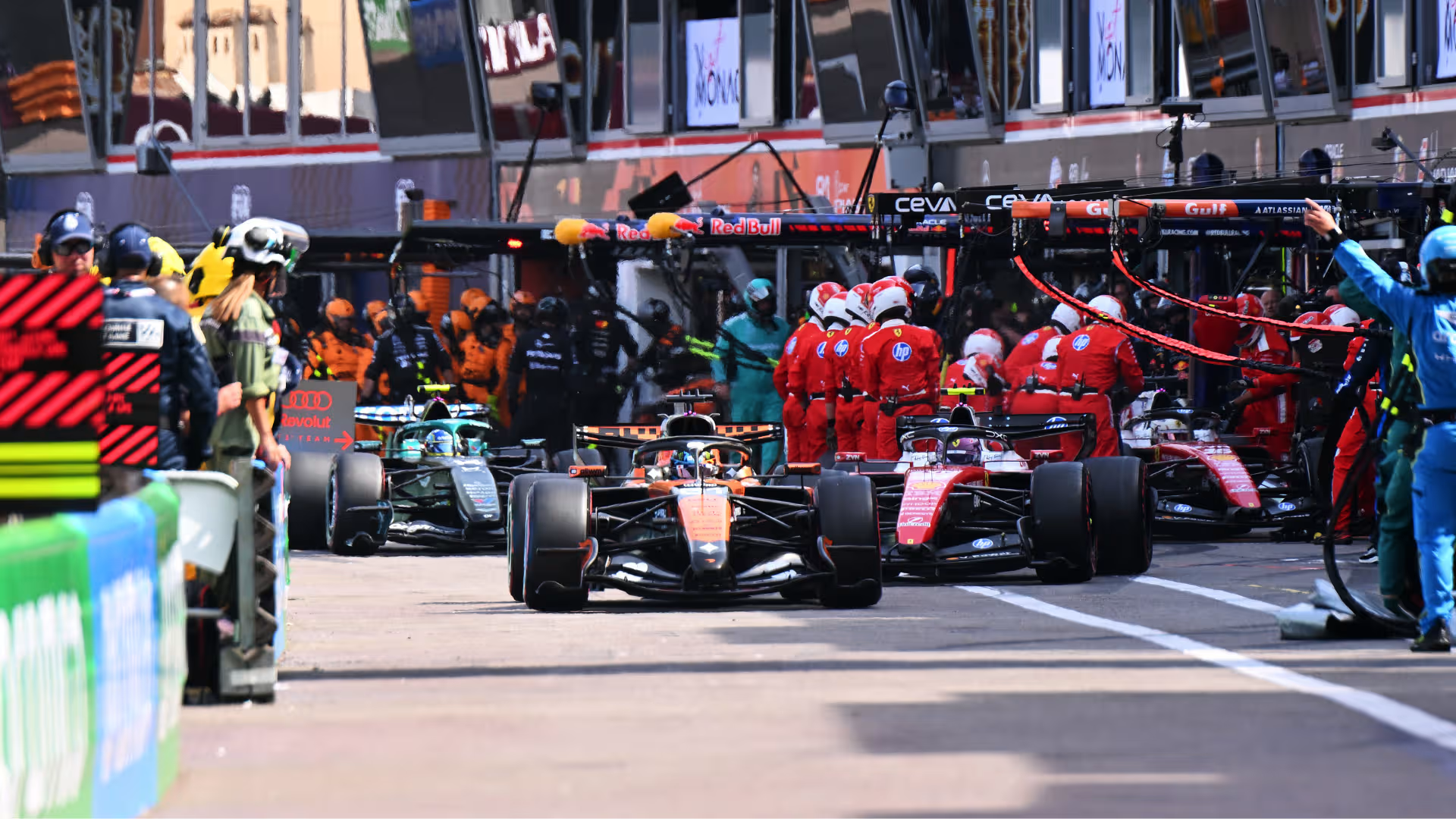
Electronic timing loops and FIA transponders are used to monitor pit lane speeds.
Monaco, however, presents a unique challenge. Drivers enter the pit lane before the final corner and must navigate a series of bends while remaining below the speed limit.
Because the timing system measures the distance between timing loops, aggressively cutting corners can slightly reduce the distance traveled, potentially causing the system to register a higher average speed.
How Penalties Are Applied
Pit lane speeding penalties are handled similarly to many other sporting penalties in Formula 1.
If a driver receives a five-second penalty and makes another pit stop, the team must wait five full seconds before touching the car or carrying out any service.
If the driver does not pit again, the penalty is added to their final race time after the checkered flag.
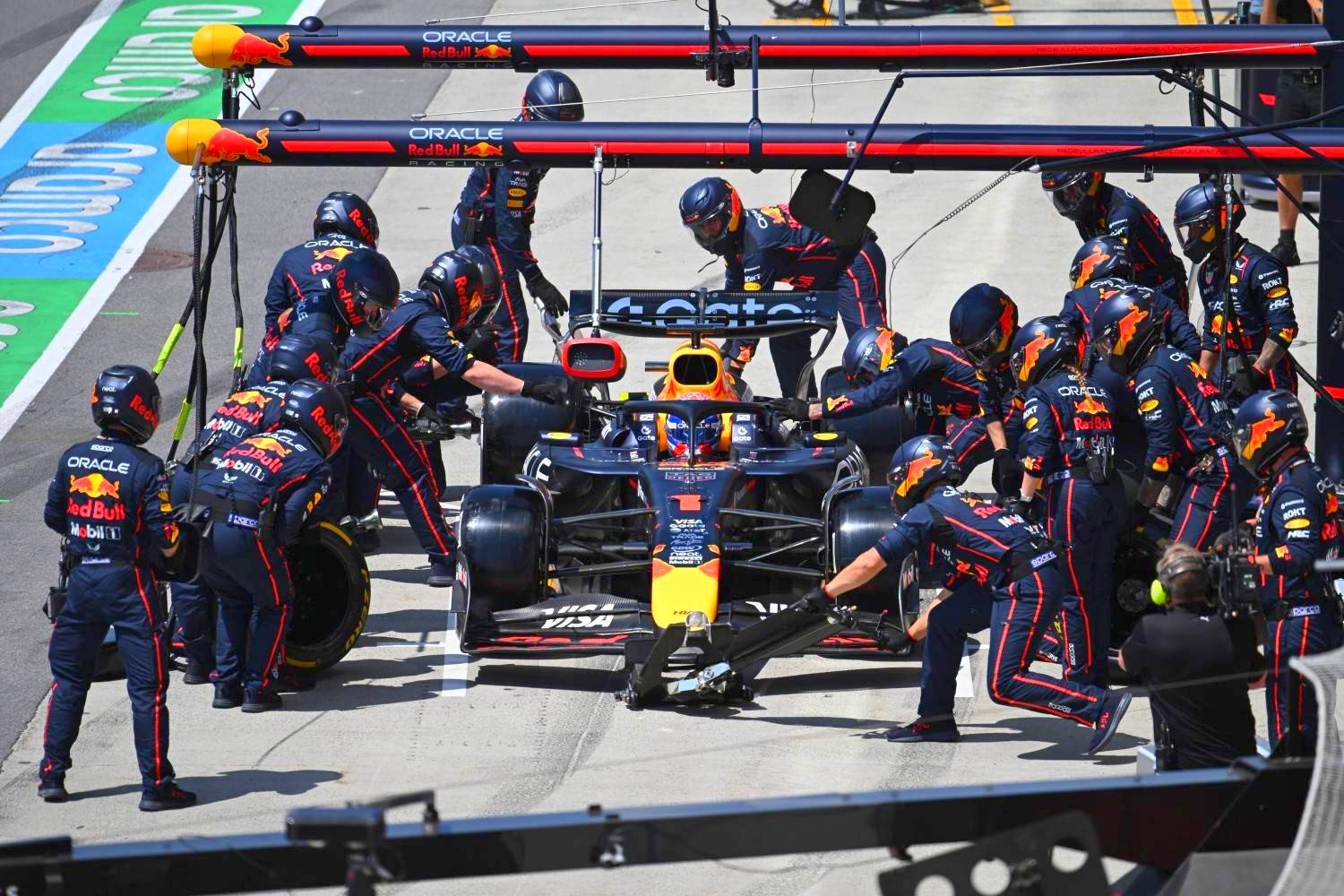
Teams must serve time penalties correctly during pit stops to avoid additional sanctions.
During the Monaco Grand Prix, Lewis Hamilton and Oscar Piastri served their penalties during pit stops, while Pierre Gasly had his penalty added to his final race result.
Mercedes also found itself in trouble when George Russell entered the pits and his penalty was not served correctly. As a result, the original five-second penalty was converted into a drive-through penalty, forcing Russell to make an additional trip through the pit lane.
A Small Margin For Error
Modern Formula 1 technology allows the FIA to monitor pit lane speeds with remarkable precision.
While the difference between 60.0 km/h and 60.1 km/h may seem insignificant, the regulations are applied equally to every competitor. As Monaco demonstrated, even the smallest mistake can have major consequences in a sport where every fraction of a second matters.








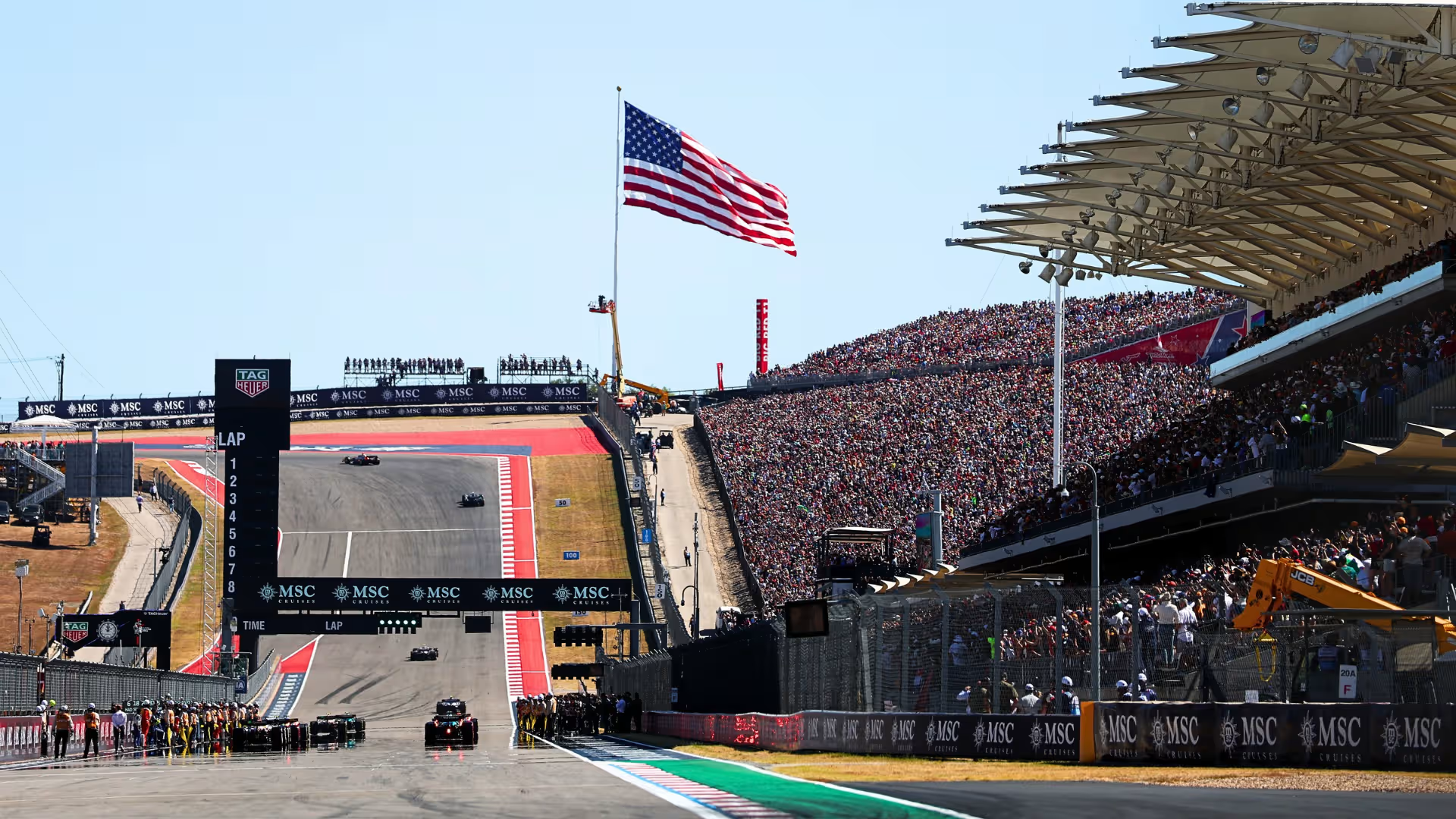
Kimi Antonelli arrives in Texas with a chance to become Formula 1’s youngest world champion, while Max Verstappen targets a third consecutive victory.
The 2026 United States Grand Prix takes centre stage this weekend as Formula 1 returns to Austin for Round 18 of the season. The main storyline is clear: Antonelli could secure his maiden drivers’ championship, but Verstappen’s recent resurgence promises a major challenge at the Circuit of The Americas.

Antonelli heads to Austin with a commanding championship lead and his first opportunity to clinch the title.
Antonelli’s first shot at the world title
Antonelli leads the standings with 340 points, ahead of Mercedes team-mate George Russell on 238 and Lewis Hamilton on 229. The Italian holds a 102-point advantage over Russell and could mathematically seal the championship this weekend.
However, the outcome depends on several results. Antonelli needs to win in Austin, Russell must finish ninth or lower, and Hamilton cannot finish higher than fifth. Even then, the title fight remains open if those conditions are not met.
Meanwhile, Verstappen arrives in Texas after winning the Malaysian and Singapore Grands Prix. The Red Bull driver has won four of the last five races held at Austin, making him one of the key contenders to watch.
Austin schedule: Practice, qualifying and race
The weekend follows the traditional format, with three practice sessions and no Sprint race. Friday features the first two sessions, while Saturday brings final practice and qualifying.
- Friday, October 23: Free Practice 1 at 12:30 p.m. local time and Free Practice 2 at 4 p.m.
- Saturday, October 24: Free Practice 3 at 12:30 p.m. and qualifying at 4 p.m.
- Sunday, October 25: The United States Grand Prix starts at 3 p.m. local time.
Each session will help teams refine their car setups before Sunday’s 56-lap race. Weather forecasts point to warm conditions, with little chance of rain during practice and qualifying. Sunday has a slightly higher possibility of showers, although dry conditions remain the main expectation.

The 5.513-kilometre Circuit of The Americas combines fast corners, heavy braking zones and technical sections.
The circuit’s biggest challenges
Austin is known for its steep climb into Turn 1, where drivers must choose their line carefully at the start. The first sector features rapid changes of direction, while the long back straight creates a major overtaking opportunity into Turn 12.
The circuit’s final sector brings another challenge, with slower corners demanding traction and careful throttle control. Track limits can also become a factor, particularly through the later turns.
Pirelli has selected the C2 hard, C3 medium and C4 soft compounds for this weekend. Tyre wear could play a decisive role because of the circuit’s layout and the high temperatures expected in Texas. A one-stop strategy may be attractive, but teams will need to assess degradation during practice before committing to a race plan.
Verstappen’s record and the key numbers
Verstappen won the 2025 United States Grand Prix and has established an impressive record at the Texas venue. Lewis Hamilton remains the circuit’s most successful driver, with six victories, while Michael Schumacher and Hamilton share the record for the most poles at four apiece.
The current lap record is 1:36.169, set by Charles Leclerc with Ferrari in 2019. This year’s race covers 56 laps, adding up to 308.405 kilometres.

Verstappen arrives after consecutive victories and will aim to continue his strong run at the Texas circuit.
A weekend with major championship implications
Austin opens a demanding run of three consecutive race weekends across the Americas, followed by events in Mexico City and São Paulo. That schedule leaves little time for teams to recover from mistakes or introduce major changes.
For Antonelli, the United States Grand Prix represents an early opportunity to turn a strong season into a historic title triumph. For Verstappen, it is a chance to extend his winning streak and disrupt Mercedes’ momentum.
The first answers will come in Friday’s practice sessions. By qualifying on Saturday, the teams should have a clearer picture of the pace and tyre performance that could decide Sunday’s race.
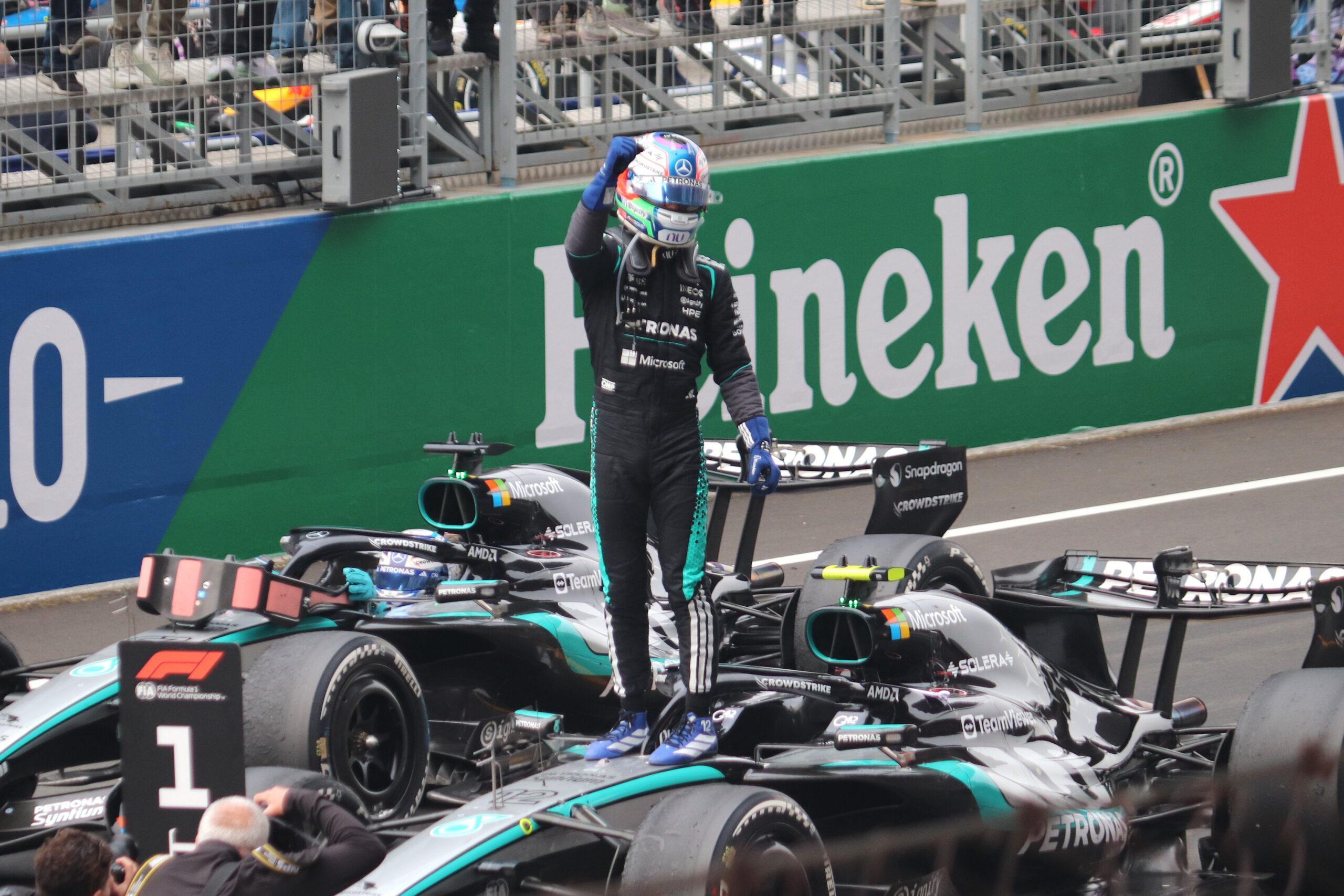
Kimi Antonelli leads the 2026 Formula 1 standings by 102 points and could mathematically secure his first world title at the United States Grand Prix.
Kimi Antonelli is getting closer to the biggest achievement of his Formula 1 career. After finishing on the podium at the Singapore Grand Prix, the Mercedes driver remains at the top of the championship with six rounds left in the season.

Antonelli has led the drivers’ championship since the Japanese Grand Prix.
Antonelli has collected 340 points, giving him a 102-point advantage over teammate George Russell, who sits second with 238. Lewis Hamilton is third with 229 points, 111 behind the leader. Despite the growing gap, five other drivers remain mathematically eligible to win the championship: Russell, Hamilton, Max Verstappen, Charles Leclerc and Lando Norris.
How many points remain?
Six rounds are left, beginning with the United States Grand Prix in Austin. A driver who wins every remaining Grand Prix can score a maximum of 150 points, leaving the championship mathematically open for several contenders.
However, the situation becomes increasingly difficult for Antonelli’s rivals. Their chances depend on the Italian scoring no additional points while they collect enough results to surpass his current total. Russell, Hamilton and Verstappen could mathematically secure the title as late as Qatar, while Leclerc and Norris would have to wait until the Abu Dhabi finale under the scenario outlined by the championship calculations.

Russell is Antonelli’s closest challenger with six rounds remaining.
What Antonelli needs to win in Austin
Antonelli could clinch the championship at the United States Grand Prix, but he would need a strong result combined with mistakes from his closest rivals. He must win the race, Russell must finish ninth or lower, and Hamilton must finish fifth or lower. Verstappen’s finishing position would not affect this particular scenario.
Under those conditions, Antonelli would score enough points relative to his rivals to secure the championship with races still remaining. The required margins are 23 points over Russell, 14 over Hamilton and six over Verstappen.

Victory in Austin could put Antonelli within reach of his first Formula 1 world title.
The United States Grand Prix therefore represents the earliest possible opportunity for Antonelli to become world champion. If the necessary results do not happen in Austin, he will have further opportunities across the final five rounds of the 2026 season.
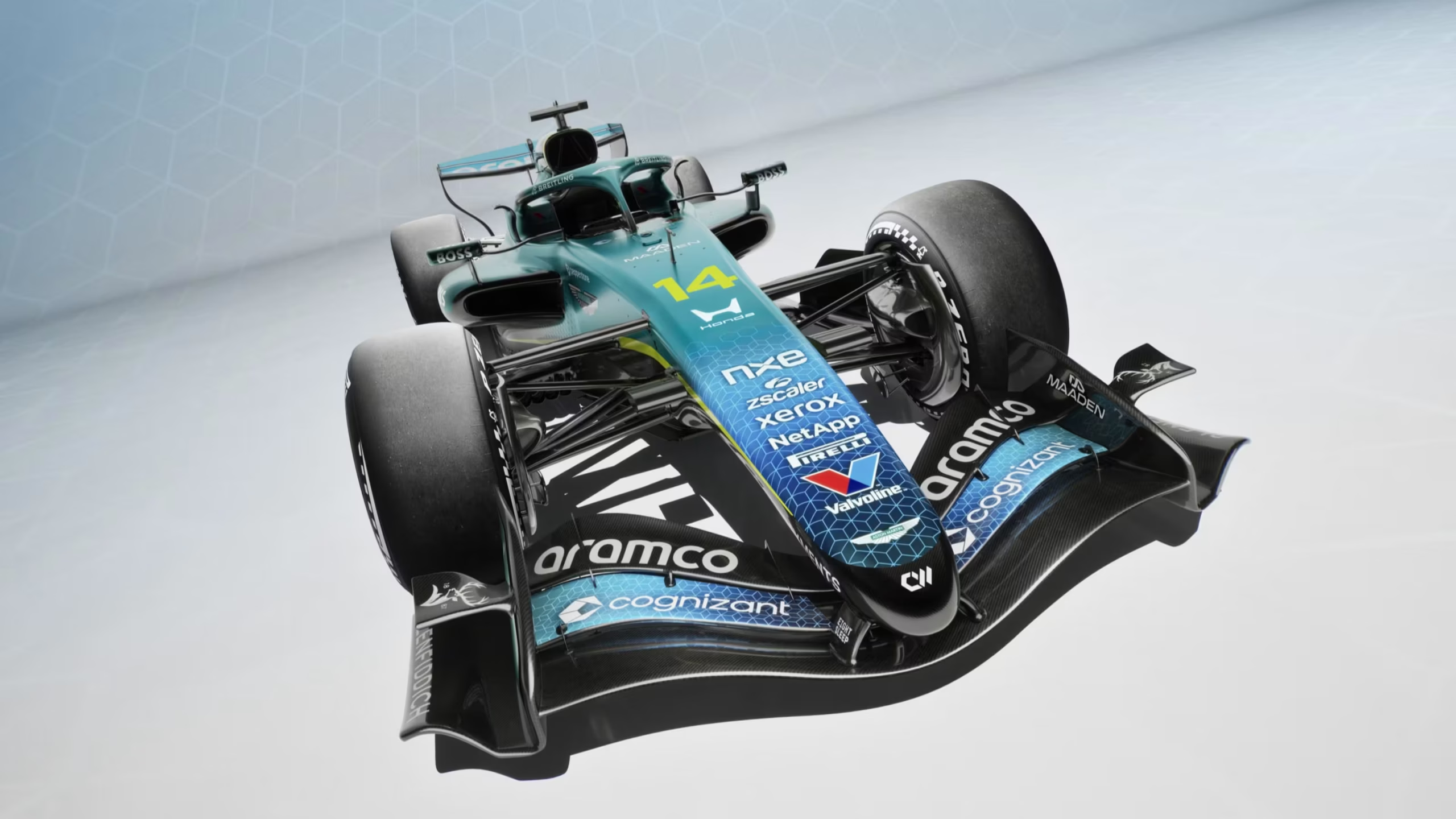
Aston Martin will showcase a special AMR26 livery at the United States Grand Prix, celebrating five years of its partnership with Cognizant.
Aston Martin is preparing a special appearance for the 2026 United States Grand Prix in Austin, where its AMR26 will mark five years of collaboration with Cognizant. The partnership began in 2021 and remains part of the team’s identity in Formula One.
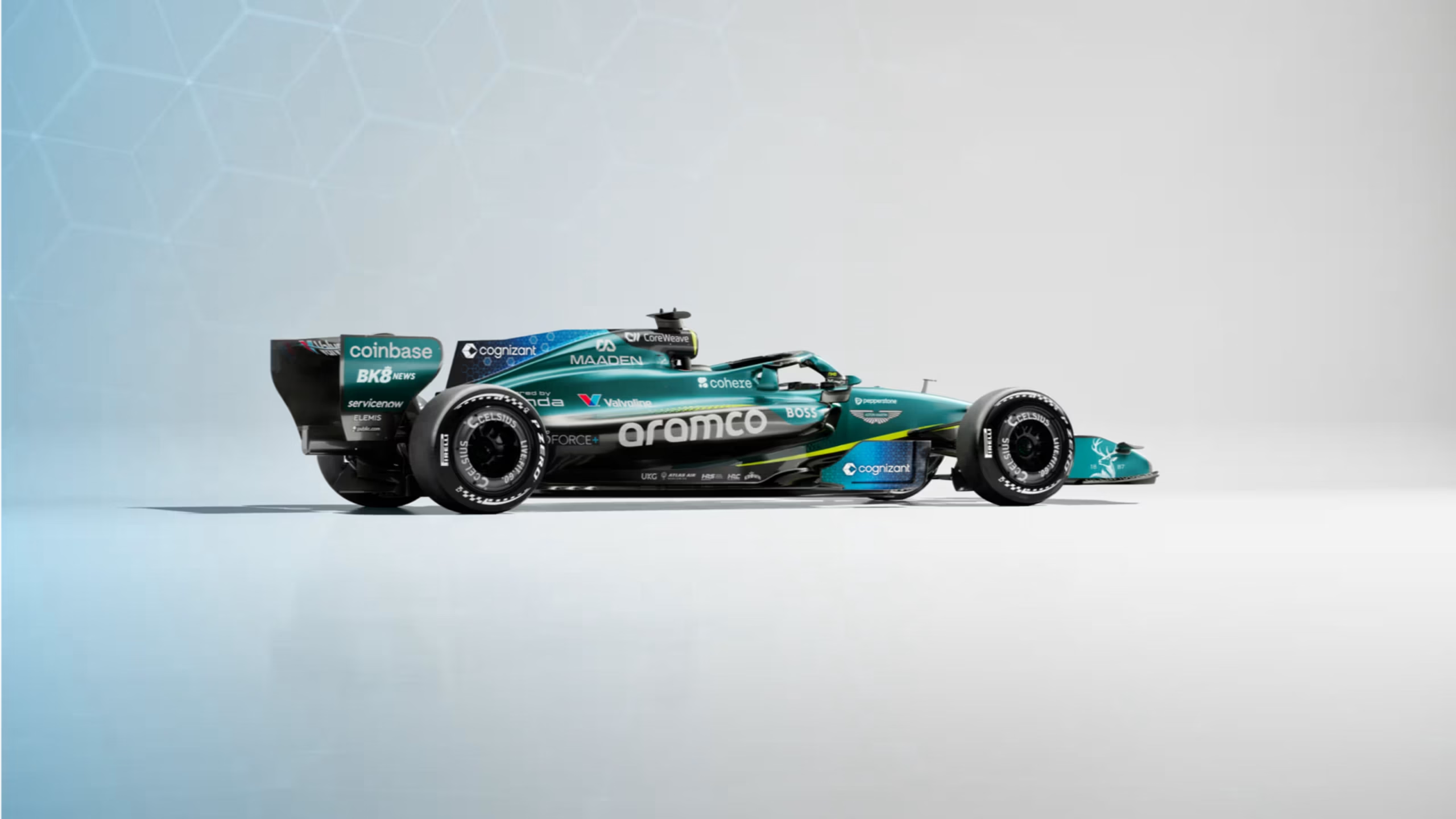
The AMR26 will carry a special design for the United States Grand Prix weekend.
Aston Martin Marks Five Years With Cognizant
The Austin Grand Prix provides the setting for Aston Martin to recognize the milestone. Since the partnership began in 2021, Cognizant has maintained a prominent association with the team’s Formula One program.
The anniversary also comes as the relationship expands into new areas of technology. Earlier in 2026, Cognizant became Aston Martin’s Global AI Services Partner, strengthening the technological dimension of the collaboration.
Technology and Formula One
Modern Formula One relies on data analysis, software and advanced computing to support decisions throughout a race weekend. Teams use these tools to evaluate performance, develop strategies and improve their operations.
Aston Martin’s expanded relationship with Cognizant reflects the growing role of artificial intelligence and digital technology in motorsport. However, the partnership’s announcement alone does not establish a specific performance gain for the AMR26.
Data analysis and digital tools are important parts of modern Formula One operations.
Austin Provides the Backdrop
The United States Grand Prix gives Aston Martin an opportunity to highlight the anniversary in front of American fans. The special livery will bring the partnership into focus during the Austin race weekend.
The design also connects the team’s on-track presence with a collaboration that has evolved since 2021. With Cognizant’s expanded role in artificial intelligence, the anniversary reflects both the history of the relationship and its continuing technological focus.
Aston Martin’s special AMR26 appearance will be one of the team’s key visual elements at the United States Grand Prix. Further details about the livery’s specific design features should be confirmed through the team’s official announcement.
-
 TEST DRIVES2 months ago
2025 Ford Bronco Sport Badlands: The Adventure SUV You Can Drive Every Day
-
 TEST DRIVES2 months ago
2026 Toyota GR Supra MkV Final Edition
-
 NOW TRENDING1 month ago
Aston Martin DBX Becomes Harry Da Souza’s Ride in MobLand
-
 Formula12 months ago
FIA Reveals Second ADUO Results With Red Bull-Ford Still on Top
-

 NOW TRENDING2 months ago
Tesla Cybercab Puts U.S. Regulations to the Test
-
 NOW TRENDING2 months ago
2027 Hyundai Tucson Hybrid Gets a Power Boost
-
 NOW TRENDING2 months ago
Hyundai Reports Strong Hybrid Sales in August 2026
-
 NOW TRENDING2 months ago
Nissan Z Nismo Finally Gets a Manual Transmission in Japan
You must be logged in to post a comment Login