
NOW TRENDING
Audi Breaks Every Limit With The Nuvolari, Its Most Powerful And Fastest Car Ever


The Audi Nuvolari is unlike anything the German brand has built before. With 1,001 horsepower, a top speed exceeding 350 km/h, and a production run limited to just 499 units, Audi’s first hypercar marks a new chapter for the four-ring manufacturer while previewing the future of its performance and design philosophy.

The Audi Nuvolari becomes the most powerful, fastest, and most exclusive production car in the brand’s history.
Audi has never produced a road car capable of matching the performance figures delivered by the new Nuvolari. Designed as a halo model for the brand, the hypercar combines cutting-edge hybrid technology, Formula 1-inspired aerodynamics, and a dramatic new design language.
The result is a machine that not only pushes Audi into an entirely new segment but also establishes new benchmarks for performance within the company’s history.
The Most Powerful Audi Ever Built
At the heart of the Audi Nuvolari is a hybrid powertrain producing a combined 1,001 horsepower.
The system combines a 4.0-liter twin-turbocharged V8 engine generating 800 horsepower with three axial-flux electric motors. Two are mounted on the front axle, while a third drives the rear axle, creating an advanced all-wheel-drive system.
Power is supplied by a 7.3-kWh battery pack, while the entire setup is closely related to the technology found in the Lamborghini Temerario.
Like its Italian cousin, the Nuvolari’s V8 can rev to an astonishing 10,000 rpm, delivering the kind of character normally associated with race cars rather than road-going supercars.

The Audi Nuvolari’s dramatic design introduces a bold new direction for the brand’s future models.
Audi has also developed the latest evolution of its famous quattro system. Known as quattro predictive ride, the setup allows the front electric motors to independently control torque delivery to each wheel, enhancing grip, agility, and stability.
Hypercar Performance
The numbers are as impressive as the technology behind them.
Audi claims the Nuvolari can accelerate from 0 to 100 km/h in just 2.6 seconds and from 0 to 200 km/h in 6.8 seconds. Launch Control comes as standard, ensuring drivers can extract maximum performance from every start.
Top speed exceeds 350 km/h, placing the Nuvolari in direct competition with some of the world’s most advanced performance cars.
Models such as the Ferrari SF90 XX, Lamborghini Revuelto, and Mercedes-AMG One are now firmly within Audi’s sights as the brand enters the hypercar segment for the first time.

For the first time in its history, Audi has created a production car with more than 1,000 horsepower.
Limited To Just 499 Units
Exclusivity will be a major part of the Nuvolari’s appeal.
Audi has confirmed that production will be limited to only 499 examples worldwide, making it one of the rarest vehicles the company has ever produced.
Pricing has not yet been announced, although it is expected to become the most expensive production Audi ever offered.
Deliveries are scheduled to begin during the final months of 2027.
Previewing Audi’s Future Design Language
Beyond its performance credentials, the Nuvolari serves another important purpose.
The hypercar introduces a new design language that will influence future Audi models. The styling remains faithful to the Concept C prototype unveiled earlier this year, preserving many of the dramatic details that generated strong reactions when the concept first appeared.
Its carbon-fiber bodywork contributes to both performance and exclusivity, while the overall silhouette signals a significant evolution in Audi’s design philosophy.

The connection to motorsport extends beyond aesthetics. Audi has incorporated active aerodynamic systems inspired by its Formula 1 program.
A hidden S-Duct at the front improves airflow and front-end grip, while an active rear wing can operate in three positions: Closed, Low Downforce, and High Downforce.
Under maximum load, the rear wing is capable of generating up to 400 kilograms of additional downforce.
Formula 1 Technology For The Road
The active aerodynamic system automatically adjusts according to driving conditions.
During high-speed runs, the wing reduces drag by moving into its low-downforce position. Under braking or while cornering, it switches to a high-downforce setting to maximize grip and stability.
Just like a Formula 1 DRS system, drivers can also manually control certain aerodynamic functions when conditions allow.

The cabin follows the same philosophy as the exterior, combining lightweight materials, advanced digital interfaces, and a driver-focused layout designed to deliver an immersive experience behind the wheel.
With 1,001 horsepower, Formula 1-inspired technology, and a design language destined to shape future Audi models, the Nuvolari represents one of the most ambitious projects in the brand’s history and establishes a new benchmark for what an Audi can be.The cabin follows the same philosophy as the exterior, combining lightweight materials, advanced digital interfaces, and a driver-focused layout designed to deliver an immersive experience behind the wheel.
With 1,001 horsepower, Formula 1-inspired technology, and a design language destined to shape future Audi models, the Nuvolari represents one of the most ambitious projects in the brand’s history and establishes a new benchmark for what an Audi can be.


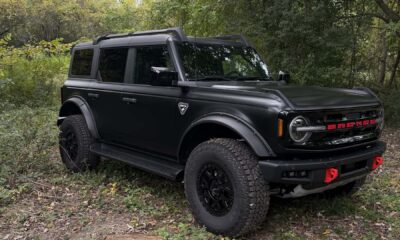







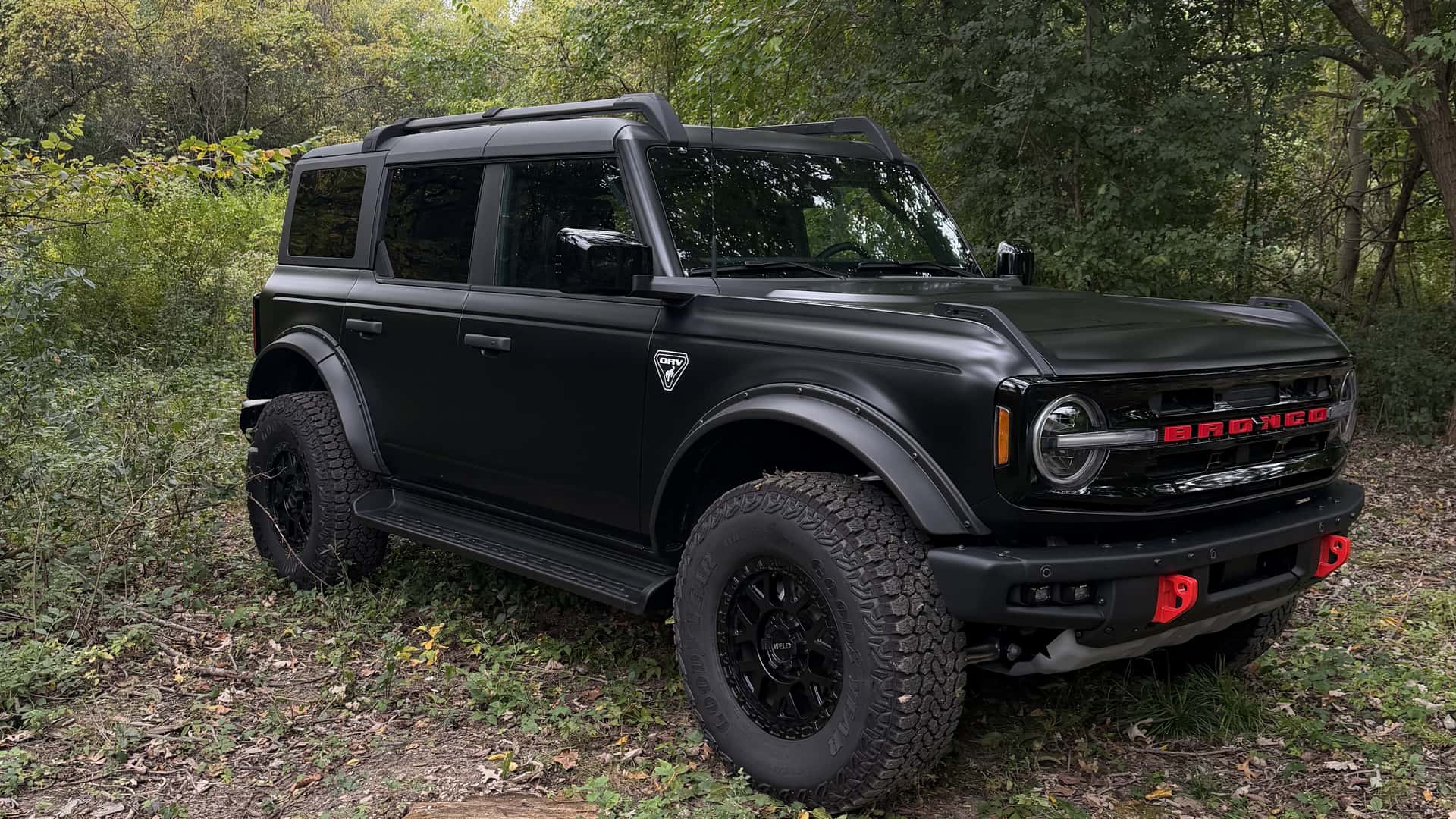
Ford’s new Bronco ORV package adds FOX suspension, Raptor underbody protection and off-road hardware to select models. But the $18,995 price excludes tires and installation.
Ford wants to make it easier to build a trail-ready SUV without sourcing every part separately. The Ford Bronco ORV Package bundles suspension, protection, lighting and styling upgrades into one dealer-installed option. However, its $18,995 starting price makes it a serious investment for Bronco owners.
Available for select four-door 2025 and 2026 Bronco Base, Big Bend and Outer Banks models, the package comes through Ford Custom Garage. It is an accessory package rather than a separate Bronco trim, and compatibility depends on the vehicle’s existing equipment.
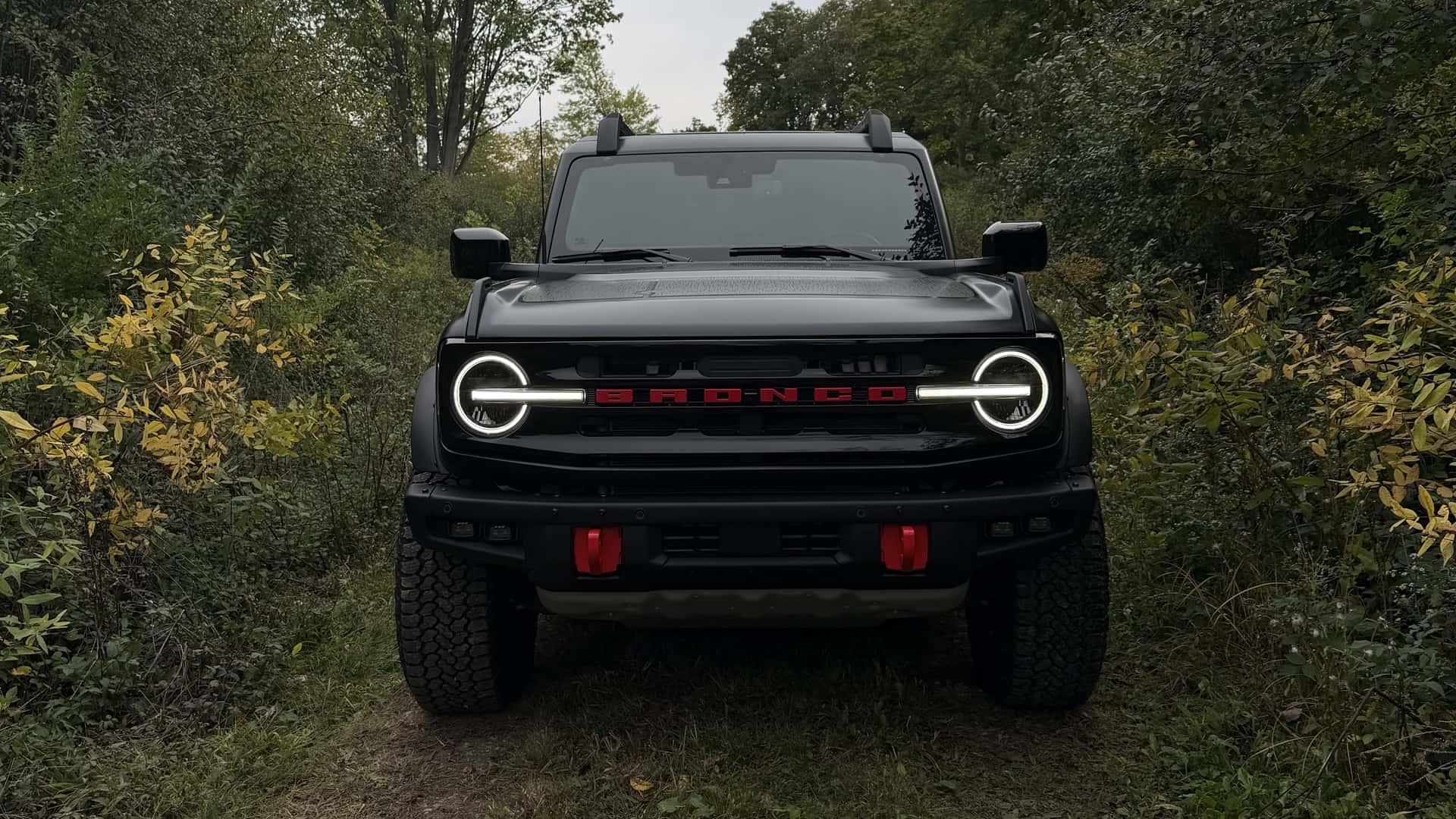
The Bronco ORV package adds trail-focused equipment to selected four-door models.
What Does the $18,995 Bronco ORV Package Include?
The main upgrades focus on off-road capability. A FOX suspension kit works alongside underbody skid plates and fuel-tank protection borrowed from the Bronco Raptor. Rocker-panel armor adds protection along the lower body, while a modular front bumper retains parking-aid functionality.
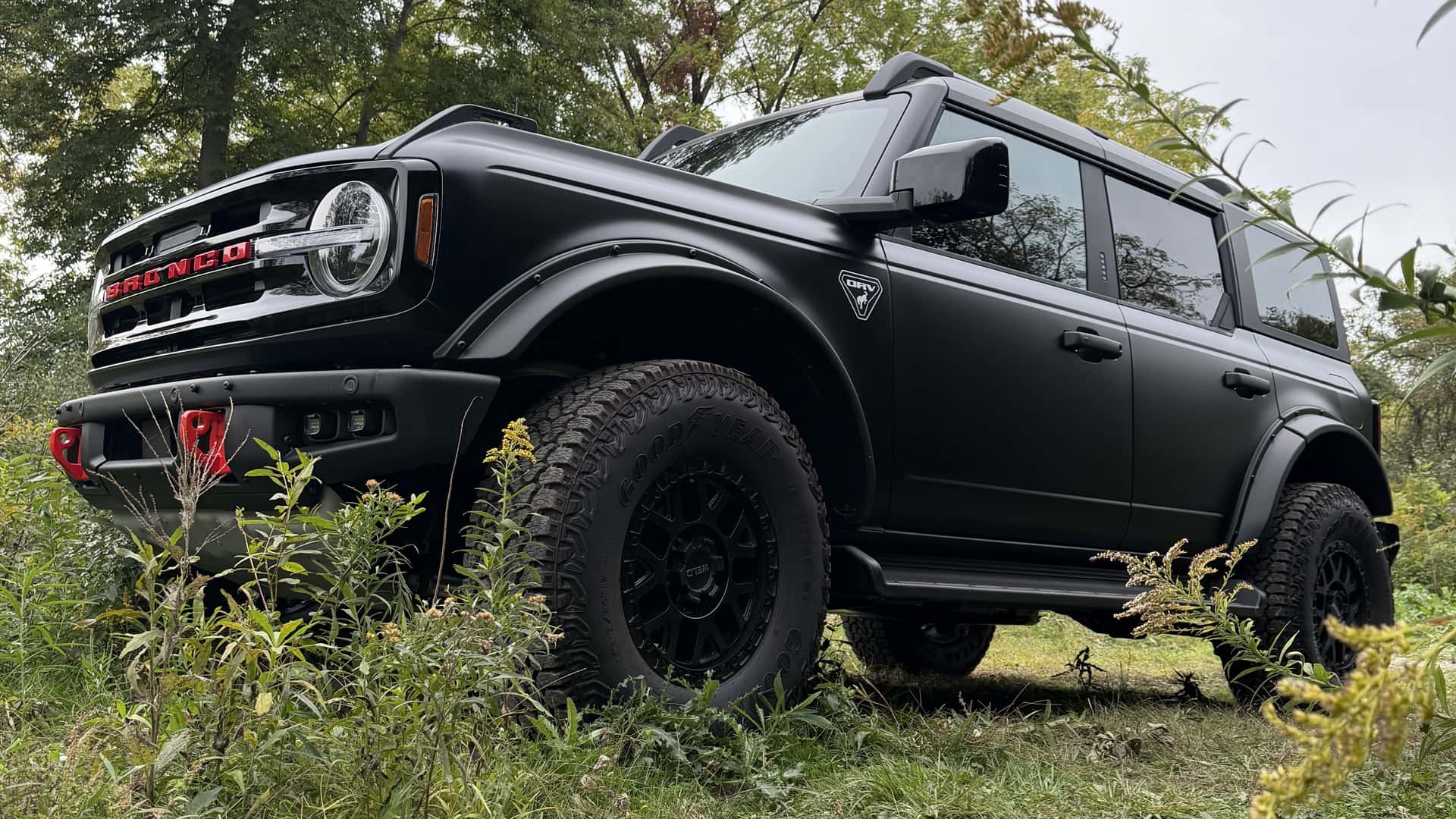
FOX suspension and Raptor-derived protection are among the package’s key hardware upgrades.
The package also includes RIGID auxiliary LED lighting, an auxiliary switch kit and a Ford Performance ProCal tool. These components add lighting control and vehicle-specific calibration capabilities for the upgraded setup.
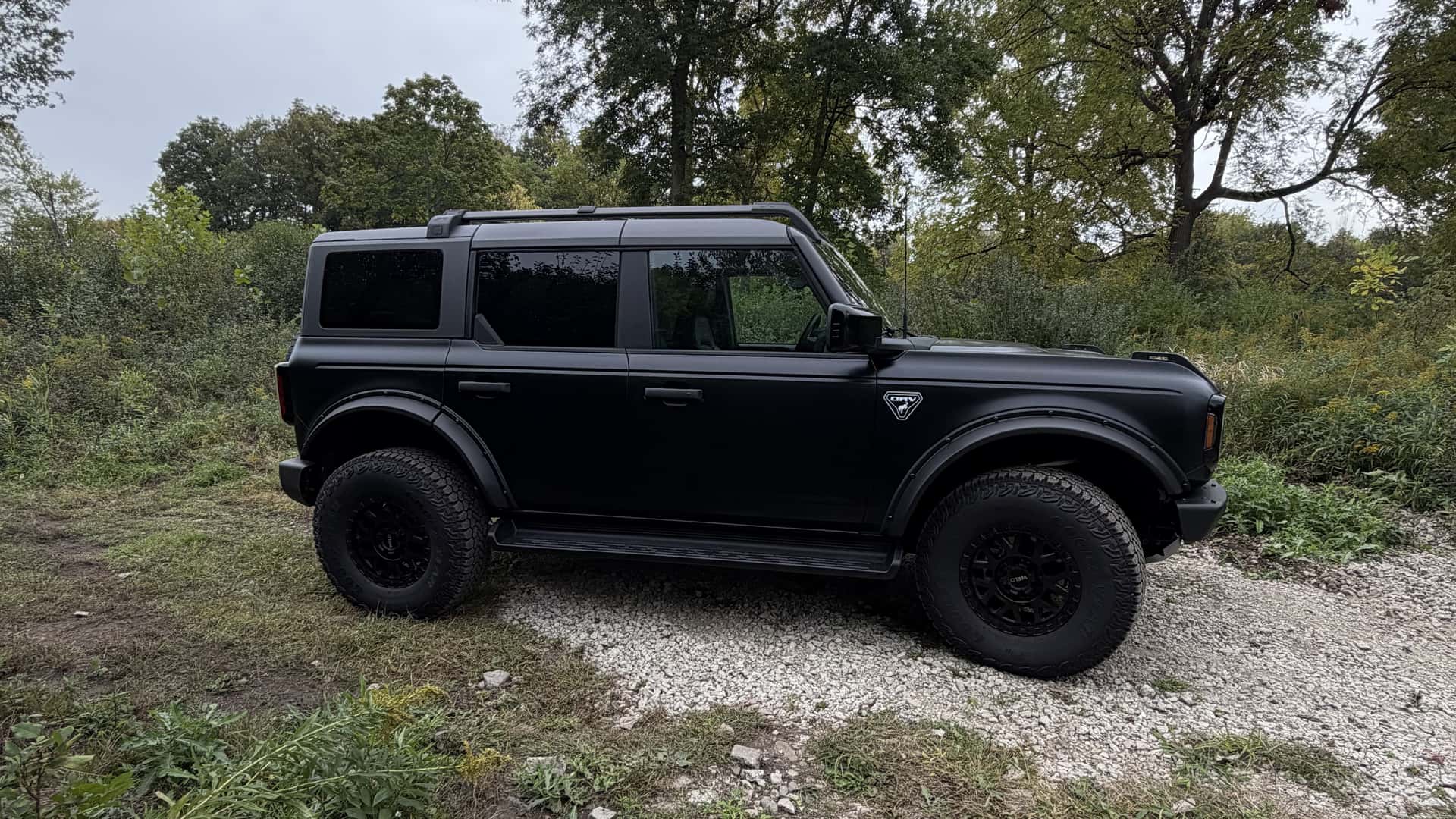
The front bumper and auxiliary lighting give the Bronco additional trail-focused equipment.
Black Wheels and Red Accents Complete the Look
Ford has added visual changes to distinguish the ORV-equipped Bronco from standard versions. The package includes 17-inch black WELD wheels, Havoc fender flares, red tow hooks, red grille accents, a stealth hood decal and distinctive ORV branding.
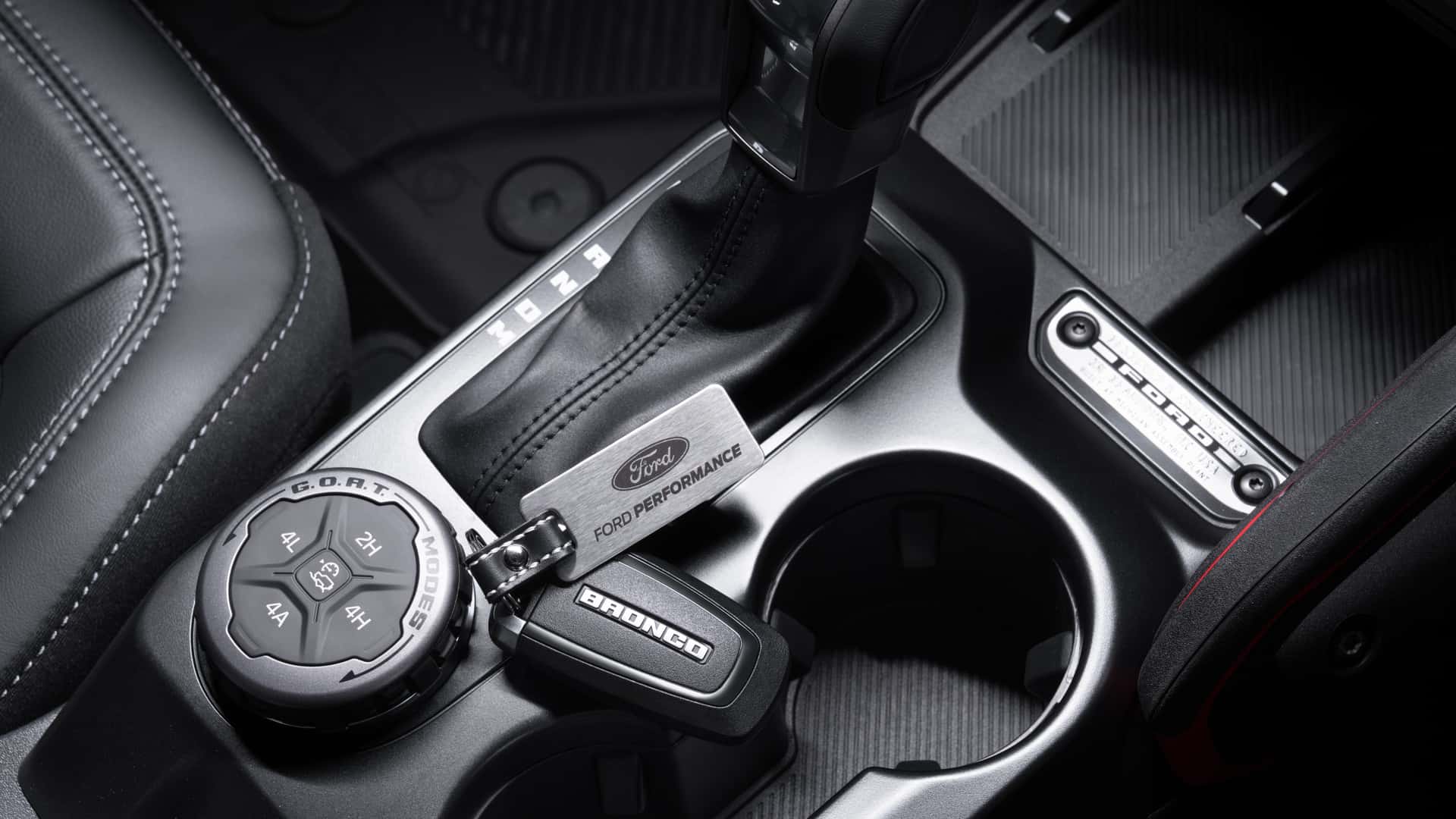
Black wheels, wider fender flares and protective side panels give the SUV a tougher appearance.
Which Broncos Can Get the ORV Package?
The package is available for select four-door Base, Big Bend and Outer Banks models from the 2025 and 2026 model years. The Bronco Badlands and Bronco Raptor are excluded. Ford also warns that factory options, including camera equipment, the Lux package and the Sasquatch package, can affect compatibility.
The ORV package is designed for selected Bronco configurations, so buyers should confirm fitment before ordering.
Warranty and Final Cost
Ford includes a supplemental three-year/36,000-mile warranty that begins on the vehicle’s in-service date. Installation by a Ford dealer or ASE-certified technician does not void the standard new-vehicle warranty.
However, the $18,995 manufacturer’s suggested retail price is not the final bill. Tires are sold separately, and installation charges can vary by dealer. Buyers should confirm the complete cost and vehicle compatibility before placing an order.
The Bronco ORV gives owners a convenient route to a coordinated off-road build, combining hardware and appearance upgrades in one package. Its price may appeal to buyers who value dealer installation and warranty coverage, but the additional tire and labor costs make it essential to calculate the full investment first.
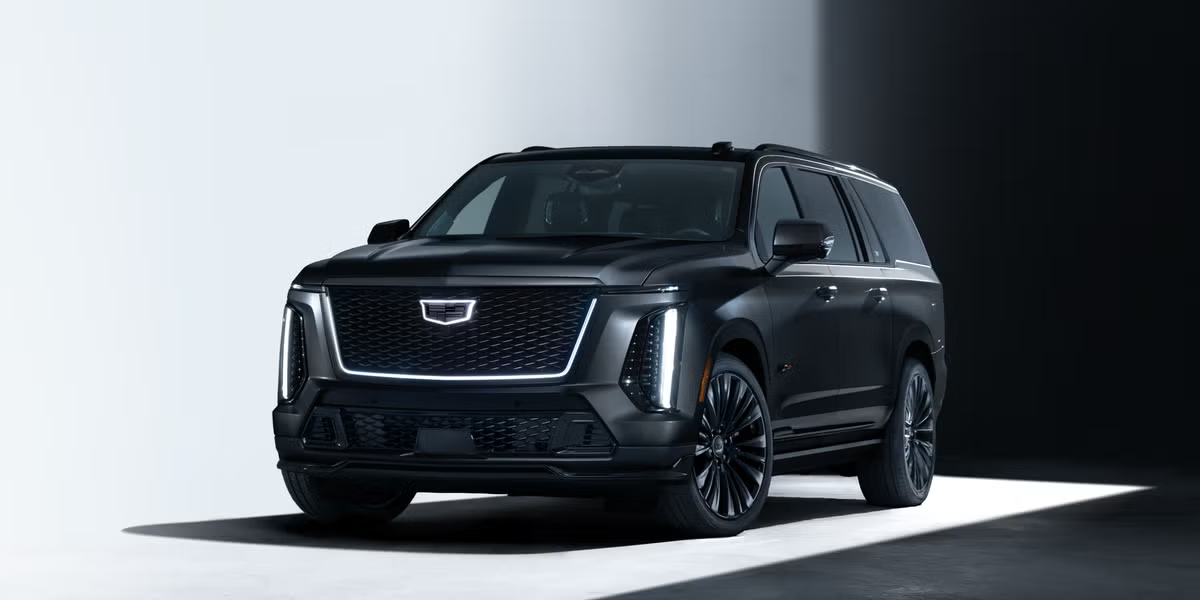
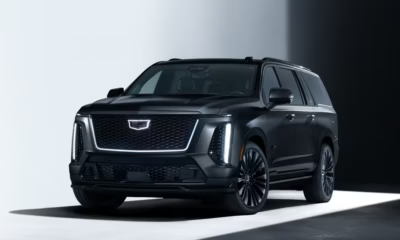
Just 252 examples will celebrate Cadillac’s 125th anniversary, pairing V-Series performance with exclusive finishes, carbon-fiber details and a distinctive blue-accented cabin.
A luxury SUV can make a statement through size, performance and technology. The 2027 Cadillac Escalade-V 125th Anniversary Collector Series adds another selling point: rarity. Cadillac will produce just 252 examples of this special edition, combining the imposing presence of the Escalade-V with exclusive details created to celebrate the brand’s 125-year history.
Starting at approximately $239,000, including destination freight, this edition targets buyers who want their SUV to stand out even among other high-end vehicles. Its appeal comes from a combination of limited production, distinctive materials and personalized commemorative details rather than a completely different exterior design

The limited-edition Escalade-V pairs its familiar imposing shape with exclusive anniversary styling.
A darker, sharper take on the Escalade-V
Cadillac will offer the anniversary model in two finishes: Midnight Stone Frost and Vibrant White Tricoat. Both emphasize the SUV’s substantial proportions, while a series of contrasting details gives the special edition a more distinctive identity.
The exterior package includes unique forged 24-inch wheels, blue brake calipers and dark-finish badges. Carbon fiber appears on the grille surround, lower rear fascia, mirror caps and engine cover, adding a motorsport-inspired touch to Cadillac’s flagship performance SUV.
The details extend beyond appearance. Heritage V-8 puddle lamps and commemorative markings referencing 1902–2027 connect the vehicle to Cadillac’s history. Buyers can also select their vehicle identification number and serial number, adding a personalized element to an already limited production run.
Santorini Blue makes the interior different
The cabin is where this Collector Series develops its own visual signature. Cadillac combines Black and Sheer Gray upholstery with Santorini Blue stitching and seat belts, creating a contrast against the darker interior surfaces.
That blue is more than a decorative choice. It draws inspiration from the V-Series emblem and connects the brand’s road cars with its racing identity, including the Cadillac V-Series.R race car. The color has appeared across performance vehicles and concepts before becoming the defining interior accent of this anniversary Escalade.

Santorini Blue adds a distinctive accent to the two-tone cabin, linking the SUV to Cadillac’s performance heritage.
Cadillac adds illuminated sill plates, exclusive interior badging, premium floor mats and a blue key fob. Together, these features give the limited edition a more individualized feel without abandoning the Escalade’s established luxury-focused interior design.
What makes a 252-unit Escalade worth $239,000?
The limited production run is central to the model’s appeal. With only 252 vehicles planned, the anniversary edition is considerably more exclusive than a regular Escalade-V. Its special finishes, carbon-fiber components and commemorative equipment give collectors several details to distinguish it from the standard model.
Cadillac has previously used its Collector Series to mark milestones in its performance history. The 2026 CT5-V Blackwing F1 Collector Series, for example, connected the brand’s performance identity with its entry into Formula 1. Now, the series expands to the Escalade, bringing that collector-focused approach to a large luxury SUV.

The rear design combines the Escalade-V’s commanding proportions with the special edition’s carbon-fiber accents.
The 2027 Escalade-V 125th Anniversary Collector Series will be sold in the United States and Canada, and orders are now open. Its starting price is approximately $239,000, including destination freight but excluding taxes, title and dealer fees. Dealers determine the final selling price.
Ultimately, this Escalade is designed for buyers who value exclusivity as much as luxury and performance. The 125th-anniversary branding tells part of the story, but the limited production, personalized identification and distinctive cabin details are what make this version different. Whether those features justify the premium will depend on how much buyers value owning a rare edition of Cadillac’s flagship SUV.
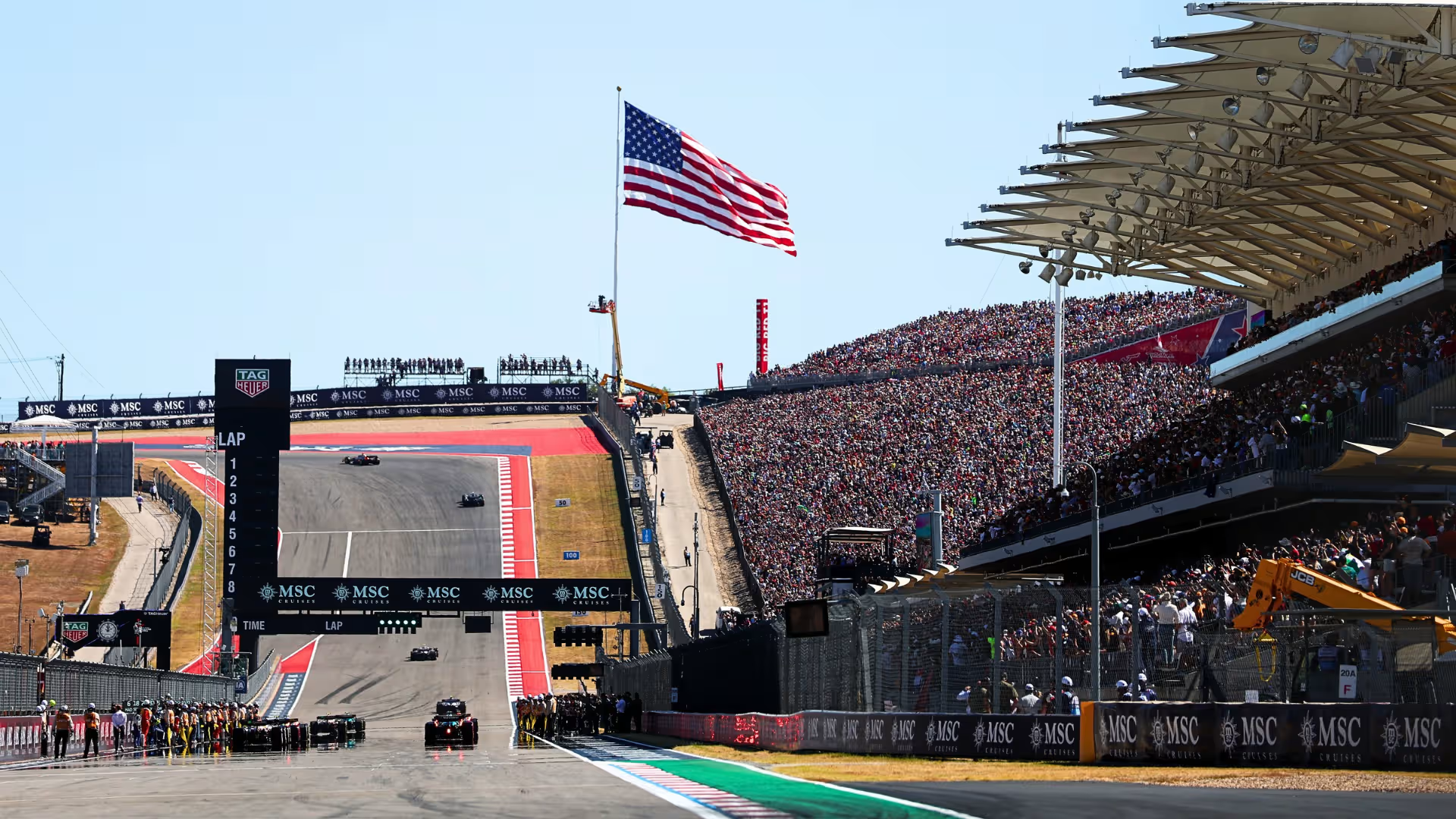
Kimi Antonelli arrives in Texas with a chance to become Formula 1’s youngest world champion, while Max Verstappen targets a third consecutive victory.
The 2026 United States Grand Prix takes centre stage this weekend as Formula 1 returns to Austin for Round 18 of the season. The main storyline is clear: Antonelli could secure his maiden drivers’ championship, but Verstappen’s recent resurgence promises a major challenge at the Circuit of The Americas.

Antonelli heads to Austin with a commanding championship lead and his first opportunity to clinch the title.
Antonelli’s first shot at the world title
Antonelli leads the standings with 340 points, ahead of Mercedes team-mate George Russell on 238 and Lewis Hamilton on 229. The Italian holds a 102-point advantage over Russell and could mathematically seal the championship this weekend.
However, the outcome depends on several results. Antonelli needs to win in Austin, Russell must finish ninth or lower, and Hamilton cannot finish higher than fifth. Even then, the title fight remains open if those conditions are not met.
Meanwhile, Verstappen arrives in Texas after winning the Malaysian and Singapore Grands Prix. The Red Bull driver has won four of the last five races held at Austin, making him one of the key contenders to watch.
Austin schedule: Practice, qualifying and race
The weekend follows the traditional format, with three practice sessions and no Sprint race. Friday features the first two sessions, while Saturday brings final practice and qualifying.
- Friday, October 23: Free Practice 1 at 12:30 p.m. local time and Free Practice 2 at 4 p.m.
- Saturday, October 24: Free Practice 3 at 12:30 p.m. and qualifying at 4 p.m.
- Sunday, October 25: The United States Grand Prix starts at 3 p.m. local time.
Each session will help teams refine their car setups before Sunday’s 56-lap race. Weather forecasts point to warm conditions, with little chance of rain during practice and qualifying. Sunday has a slightly higher possibility of showers, although dry conditions remain the main expectation.

The 5.513-kilometre Circuit of The Americas combines fast corners, heavy braking zones and technical sections.
The circuit’s biggest challenges
Austin is known for its steep climb into Turn 1, where drivers must choose their line carefully at the start. The first sector features rapid changes of direction, while the long back straight creates a major overtaking opportunity into Turn 12.
The circuit’s final sector brings another challenge, with slower corners demanding traction and careful throttle control. Track limits can also become a factor, particularly through the later turns.
Pirelli has selected the C2 hard, C3 medium and C4 soft compounds for this weekend. Tyre wear could play a decisive role because of the circuit’s layout and the high temperatures expected in Texas. A one-stop strategy may be attractive, but teams will need to assess degradation during practice before committing to a race plan.
Verstappen’s record and the key numbers
Verstappen won the 2025 United States Grand Prix and has established an impressive record at the Texas venue. Lewis Hamilton remains the circuit’s most successful driver, with six victories, while Michael Schumacher and Hamilton share the record for the most poles at four apiece.
The current lap record is 1:36.169, set by Charles Leclerc with Ferrari in 2019. This year’s race covers 56 laps, adding up to 308.405 kilometres.

Verstappen arrives after consecutive victories and will aim to continue his strong run at the Texas circuit.
A weekend with major championship implications
Austin opens a demanding run of three consecutive race weekends across the Americas, followed by events in Mexico City and São Paulo. That schedule leaves little time for teams to recover from mistakes or introduce major changes.
For Antonelli, the United States Grand Prix represents an early opportunity to turn a strong season into a historic title triumph. For Verstappen, it is a chance to extend his winning streak and disrupt Mercedes’ momentum.
The first answers will come in Friday’s practice sessions. By qualifying on Saturday, the teams should have a clearer picture of the pace and tyre performance that could decide Sunday’s race.
-
 TEST DRIVES2 months ago
2025 Ford Bronco Sport Badlands: The Adventure SUV You Can Drive Every Day
-
 TEST DRIVES2 months ago
2026 Toyota GR Supra MkV Final Edition
-
 NOW TRENDING1 month ago
Aston Martin DBX Becomes Harry Da Souza’s Ride in MobLand
-
 Formula12 months ago
FIA Reveals Second ADUO Results With Red Bull-Ford Still on Top
-

 NOW TRENDING2 months ago
Tesla Cybercab Puts U.S. Regulations to the Test
-
 NOW TRENDING2 months ago
2027 Hyundai Tucson Hybrid Gets a Power Boost
-
 NOW TRENDING2 months ago
Hyundai Reports Strong Hybrid Sales in August 2026
-
 NOW TRENDING2 months ago
Nissan Z Nismo Finally Gets a Manual Transmission in Japan
You must be logged in to post a comment Login