Chevrolet has launched the configurator for its wildest supercar yet, letting fans create versions that border on the impossible.
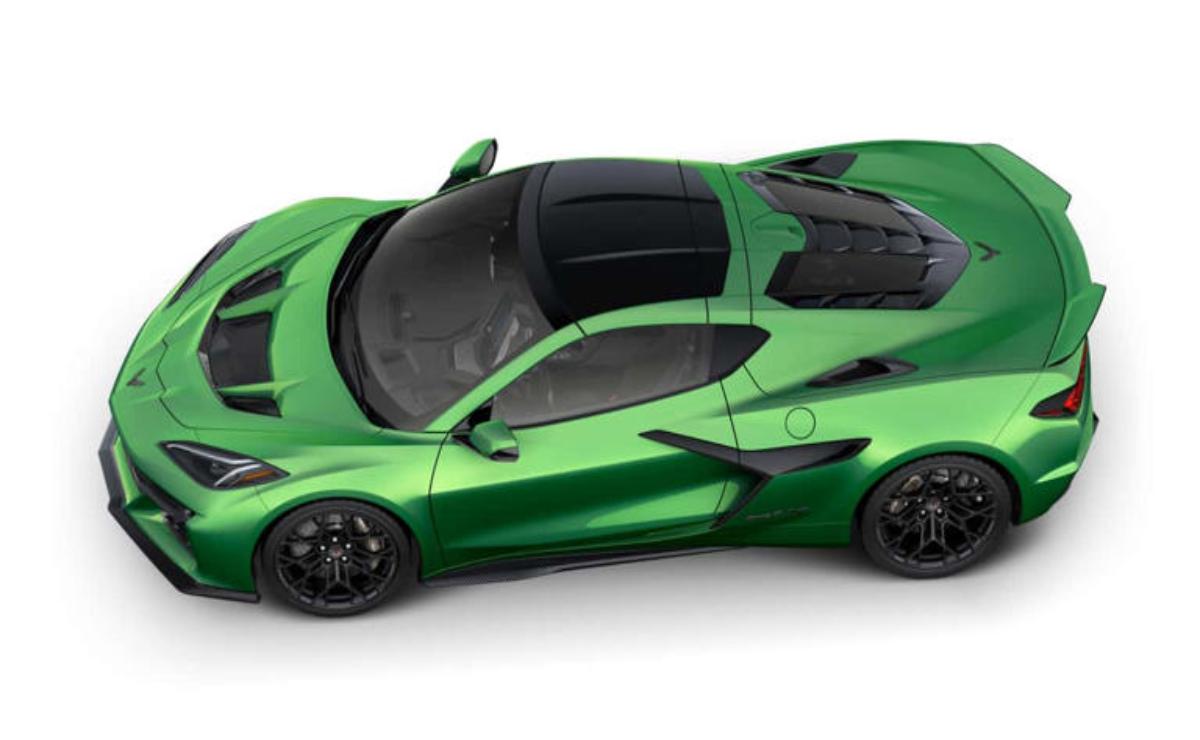
The arrival of the Chevrolet Corvette ZR1X, an even more extreme evolution of the already ferocious ZR1, has sparked a revolution among car enthusiasts. With 1,250 horsepower, razor-sharp design, and performance engineered to dominate the Nürburgring, this American supercar becomes a genuine rival to the very best machines from Ferrari and Lamborghini. And now, thanks to the official configurator, it’s possible to design it to taste with an almost endless list of options.
A supercar built for dreaming: colors, packages, and limitless customization
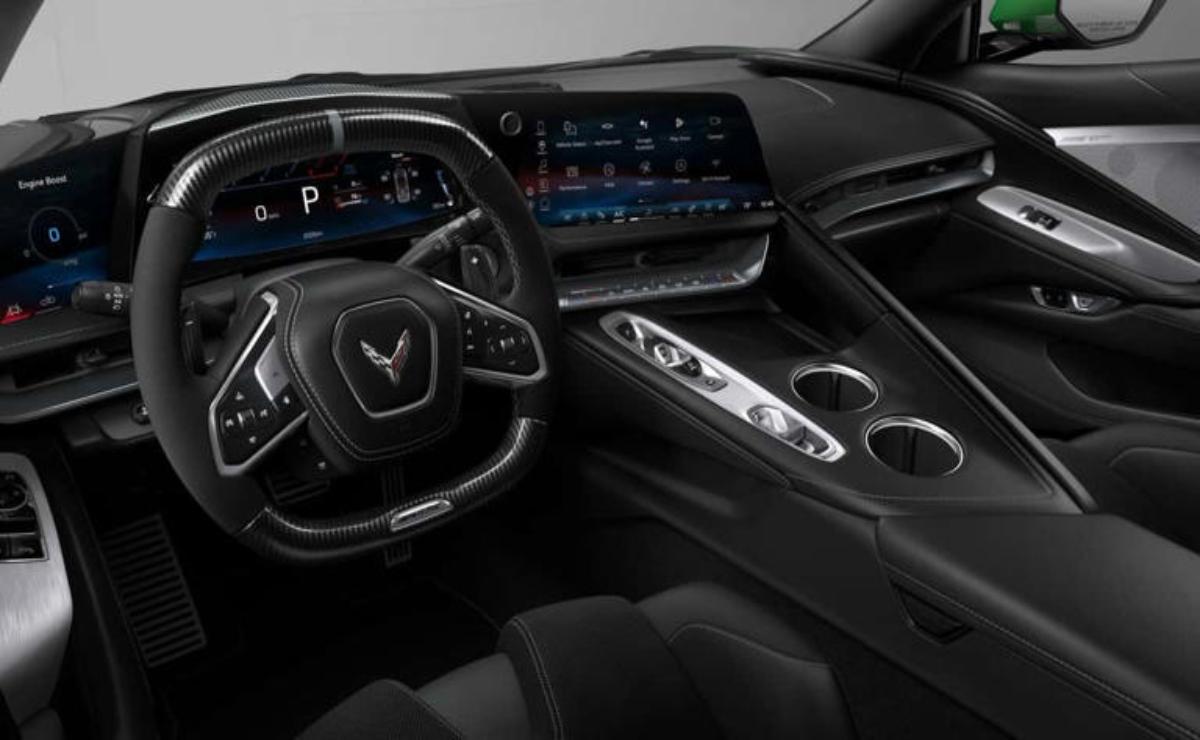
What stands out most is that, despite its absurd power output, Chevrolet offers the ZR1X as both a coupé and a convertible, in two trims: 1LZ and 3LZ, both powered by the same 5.5-liter V-8 delivering 1,250 hp. For many enthusiasts –and for this writer– the key is opting for the 3LZ trim, as it adds essential features like HD cameras, memory seats, a heated steering wheel, and a microfiber-wrapped interior. It’s the ideal blend of extreme performance and everyday usability.
The configurator includes a striking palette of colors, but one option truly stands out: Roswell Green, arguably one of the most beautiful paint shades offered on any modern performance car. Paired with Carbon Flash wheels –a far more sensible choice than the eye-watering carbon-fiber sets– it creates an aggressive look that perfectly matches the ZR1X’s character. Details like Bronze brake calipers enhance the racing aesthetic without going over the top.
Inside, the level of customization goes even further. Buyers can choose from multiple Napa leather combinations, microfiber finishes, and even asymmetrical seat patterns. One of the more interesting upgrades is the Competition Sport bucket seats, available for just $500, offering the ideal balance between support and comfort for a car engineered to be pushed hard on both road and track.
Where the ZR1X really flexes its potential is in its optional packages. From the ZTK Track Performance Package, which adds aerodynamic improvements and sharper handling, to the imposing Carbon Fiber Aero Package, each add-on transforms the Corvette into an even more monstrous machine. While the final price can climb quickly, it still remains a “bargain” when compared to other mid-engined hypercars exceeding 1,000 hp.
As for numbers, the ZR1X starts at $207,395 for the 1LZ and $218,395 for the 3LZ. Configured tastefully –as in the example analyzed here– the total comes to around $222,950. Hardly pocket change, but in a world where ultra-high-performance supercars easily surpass half a million dollars, the Corvette ZR1X stands out as a brutal, blisteringly fast, and surprisingly “affordable” entry in the realm of extreme performance machines.
NOW TRENDING
Koenigsegg’s Jesko Absolut Just Rewrote The Rules Of Straight-Line Speed
At a moment when the hypercar world is increasingly obsessed with hybrid power, electric torque and ever more complex performance formulas, Koenigsegg has just delivered a reminder that pure combustion is still capable of doing something outrageous. The Swedish brand’s Jesko Absolut has now smashed a fresh batch of acceleration and speed records, turning what was already one of the most extreme internal-combustion hypercars on the planet into something even more absurd.
But this is not just another “fast car goes fast” story. What makes the Jesko Absolut’s latest run so compelling is the way it did it. No hybrid assistance. No all-wheel-drive trickery. No giant battery filling in torque gaps. Just a twin-turbocharged V8, rear-wheel drive, obsessive aerodynamic efficiency and a level of acceleration that once again pushes the boundaries of what a gasoline-powered road car can still achieve in 2026.

Koenigsegg’s Jesko Absolut has once again underlined just how extreme a pure combustion hypercar can still be in the modern era.
The Numbers Are So Extreme They Almost Read Like EV Territory
The headline figures are the kind that instantly reset the scale of the conversation.
Koenigsegg says the Jesko Absolut ripped through the quarter-mile in just 8.54 seconds, crossing the line at 190 mph, while also covering the half-mile at 232.4 mph. Those are not just impressive numbers for a road-legal hypercar — they are the kind of figures normally associated with specialized drag machines or the most savage electrified performance weapons on the market.
That is what gives this story real weight. We are no longer talking about a combustion car merely “keeping up” with the EV era. We are talking about a machine that is still capable of producing acceleration results so violent that it remains fully relevant in a performance landscape increasingly shaped by instant electric torque and hybrid-assisted launch systems.
And the most remarkable part is that Koenigsegg has done it while staying faithful to a very different philosophy from the one most rivals now follow.
This Is A Hypercar Built Around Efficiency, Not Electrified Complexity
The Jesko Absolut was never designed as just another version of the Jesko. From the beginning, Koenigsegg positioned it as the more speed-focused, lower-drag interpretation of the car — the version optimized not for maximum circuit downforce, but for crushing straight-line velocity with the cleanest possible aerodynamic profile.
That matters because the Absolut’s latest record run is not just a power story. It is also an aero story. Koenigsegg has spent years obsessing over how to reduce drag, stabilize the car at extreme speeds and let the powertrain exploit every last bit of the chassis’ capability without the sort of giant wing-driven setup used by more track-oriented hypercars.
In other words, the Jesko Absolut is not simply fast because it has a huge engine. It is fast because the entire car has been engineered around one question: how far can a road-going combustion hypercar still push the laws of straight-line performance if every part of the package is optimized for speed?

The Absolut’s record performance is not just about horsepower — it is the result of a low-drag aerodynamic concept built specifically for extreme speed.
Koenigsegg Is Still Making The Case For The Internal-Combustion Hypercar
That may be the most interesting part of the whole story.
At a time when the top end of the performance world is splitting in two directions — hybrid megacars on one side and ultra-fast EVs on the other — Koenigsegg is still making a very different argument. It is saying there is still room for a hypercar that relies on combustion not as a nostalgic leftover, but as the central engineering idea. Not a compromise. Not a heritage play. A weapon.
The Jesko Absolut’s power comes from Koenigsegg’s 5.0-liter twin-turbo V8, an engine that in itself already feels like a defiant statement in a market increasingly defined by electrification. But the bigger point is not just that it still exists. It is that it is still capable of humiliating assumptions about what a pure combustion powertrain can do in modern high-performance road cars.
That gives the Jesko Absolut a different kind of importance. It is not merely a fast machine for collectors. It is also a rolling counterargument to the idea that combustion hypercars have already played all their best cards.
Rear-Wheel Drive Makes The Whole Thing Even Wilder
If the record times were produced by an all-wheel-drive hybrid with electric torque filling every traction gap, they would still be impressive. But they would feel more expected. The Jesko Absolut does not have that safety net.
This is a rear-wheel-drive hypercar producing extraordinary power, which makes its drag-strip numbers even more ridiculous. The engineering challenge is not just generating speed, but finding a way to deploy it cleanly without turning the car into a smoke machine every time the throttle is opened aggressively from a standstill.
That is part of what makes Koenigsegg such a fascinating company at this level of the market. It does not simply chase big numbers. It chases ways of making outrageous numbers work through clever engineering, transmission strategy, aero efficiency and an almost stubborn refusal to follow the easiest performance path.

The fact that the Jesko Absolut delivers these numbers through a rear-wheel-drive, twin-turbo V8 layout only makes the achievement more extraordinary.
Why The Jesko Absolut Matters Beyond One Set Of Records
The easiest way to read this story is as another hypercar headline designed to shock with giant numbers. But the Jesko Absolut matters because it reflects something bigger than one record run.
It shows that the internal-combustion hypercar is not done producing genuinely jaw-dropping moments. It shows that a brand with the right engineering obsession can still build a machine capable of challenging the entire logic of modern acceleration without leaning on a hybrid battery pack or an EV platform. And it shows that Koenigsegg remains one of the very few manufacturers willing to treat top-speed and acceleration performance not as marketing garnish, but as a full-blown technical mission.
That is why the Jesko Absolut’s latest records feel important. They are not just proof that Koenigsegg still knows how to build something fast. They are proof that, even in 2026, a pure V8 hypercar can still show the rest of the industry just how violent speed can be.
RACING
Audi Has Already Used F1’s New ADUO System To Bring An Updated Power Unit To The Track
Audi may have just pulled off one of the most interesting technical moves of the early 2026 Formula 1 season — and it happened almost in plain sight. While much of the attention in Barcelona was focused on Max Verstappen’s forced engine change after his Monaco failure, Audi quietly introduced an updated version of its power unit for Nico Hülkenberg and Gabriel Bortoleto, becoming the first manufacturer to take advantage of the new ADUO adjustment system under Formula 1’s 2026 regulations.
That alone makes the story significant. But the bigger message is what it says about Audi’s preparation. The revised internal combustion engine and turbocharger used in Barcelona were not a last-minute improvisation after the FIA’s communication in Monaco. Everything points to a manufacturer that had already been working behind the scenes, waiting only for the regulatory green light before putting a revised package on track.

Audi quietly became the first manufacturer to bring an updated 2026 power unit to the track under Formula 1’s new ADUO system.
Audi Has Moved Faster Than Anyone Expected Under The New ADUO Rules
The background to this story begins with the FIA’s first official evaluation of the ADUO period 1 results, covering the stretch from the Australian Grand Prix to the Montreal round. That first phase of analysis was designed to assess the competitive spread between the different 2026 power-unit manufacturers and determine whether any of them were eligible to benefit from the ADUO adjustment mechanism.
The process was already sensitive because the 2026 engine rules were introduced with a built-in system to avoid one manufacturer falling too far behind. If the FIA’s evaluation showed a significant deficit in performance, ADUO could allow targeted changes to help rebalance the field and prevent one supplier from becoming uncompetitive too early in the cycle.
Red Bull’s concerns over the relative performance of the power units reportedly pushed the FIA to repeat part of the evaluation process in order to double-check potential discrepancies. But crucially, the original classification was never suspended. It remained valid while further review continued in the background.
That is where Audi’s reaction becomes so interesting. While most people assumed any manufacturer that qualified for ADUO support would need time to interpret the FIA’s findings and prepare revised components, Audi appears to have already had a solution in motion.
Barcelona Hid The First Real ADUO-Driven Engine Update Of 2026
The clearest public clue came in the FIA’s routine Friday document listing the power-unit components used by each driver in Barcelona.
Most eyes naturally went to Verstappen, who had to change engines after his Monaco issue. But tucked into that same document was a much more revealing detail: both Audi-powered cars, driven by Hülkenberg and Bortoleto, were also running with a new internal combustion engine and a new turbocharger.
At the time, that information passed almost unnoticed. But what has since emerged is far more important. The updated units brought by Audi to Montmeló reportedly included non-radical but meaningful changes, with the emphasis placed above all on improving drivability and overall manageability rather than unlocking a huge headline-grabbing performance gain.
That makes this a landmark moment in the new rules cycle. Audi did not just swap in a fresh engine allocation component. It effectively became the first manufacturer in Formula 1 history to introduce an updated power unit through the opportunities created by the ADUO system.

The revised Audi engine package introduced in Barcelona was reportedly focused less on headline power and more on drivability and manageability.
The Most Important Part Of The Story Is How Ready Audi Already Was
What makes Audi’s move especially striking is the speed of its response.
The FIA’s first communication on the ADUO evaluation was delivered to teams during the Monaco Grand Prix weekend. Yet by the time Formula 1 reached Barcelona, Audi already had revised hardware at the circuit and ready to run. That turnaround is extremely fast for a modern Formula 1 power-unit project, even if the modifications were not described as a full redesign.
And that is why the real takeaway may not be the changes themselves, but what they reveal about Audi’s preparation. This does not look like a manufacturer that started working only after the FIA’s message arrived in Monaco. It looks much more like a company that had already identified the areas it wanted to improve, had already begun developing revised components and was simply waiting for the official framework to allow them to be introduced.
In other words, the ADUO ruling may have opened the door, but Audi was already standing in front of it.
Why Audi Focused On Drivability Instead Of Chasing A Big Headline Upgrade
That part of the story also makes technical sense.
At this stage of a brand-new engine cycle, the biggest weakness for a manufacturer is not always outright power. Sometimes the more urgent issue is how the power unit behaves in the car — how predictable it is, how smoothly it delivers performance, how usable it is over a race distance and how much confidence it gives the drivers and engineers when tuning the overall package.
If Audi’s first update was indeed aimed primarily at manageability, that suggests the company may have seen drivability and operational behavior as the fastest route to making the package more competitive. A power unit that is easier to use, easier to calibrate and easier to integrate with the rest of the car can immediately improve performance even without a dramatic increase in raw output.
That is especially relevant in 2026, when the interaction between the combustion engine, turbo systems, battery deployment and overall car balance is more delicate than ever. A manufacturer that can make its power unit easier to live with may unlock gains across the entire package, not just on the dyno.

Audi’s early ADUO update appears to have been focused on making the power unit easier to use and integrate rather than chasing a dramatic one-shot performance gain.
Audi’s Move Says A Lot About The Manufacturer Battle Already Taking Shape In 2026
This is why the Barcelona update matters beyond Audi alone.
The introduction of ADUO was always going to create a new layer of political and technical intrigue in the 2026 power-unit era. Formula 1 wanted a mechanism that could prevent one engine supplier from being permanently trapped at the back, but the real question was always how aggressively manufacturers would use it and how quickly they could react once the FIA’s evaluations began.
Audi has now answered that question before almost anyone else. Rather than waiting passively, it has already shown that ADUO can become a live development tool almost immediately. That sends a message not just about Audi’s urgency, but about how fast the power-unit war may escalate once each manufacturer starts identifying its weak points.
For Audi, the significance is obvious. The company is still in the early stages of building itself into a serious works force under the new regulations, and any sign of rapid adaptation matters. The Barcelona engine update may not have been a dramatic revolution, but it was a statement all the same: Audi is not waiting around to catch up.
Why This Matters More Than One Engine Change Weekend
The easiest way to misread this story would be to treat it as a routine component change with a little extra technical interest attached. It is much more than that.
Audi has become the first manufacturer to show what the 2026 ADUO mechanism can actually look like in practice. It has demonstrated that the system is not just a theoretical balancing tool sitting in the regulations. It can translate into real hardware, real track changes and real development speed within days of the FIA’s assessment process.
And that makes Barcelona feel like the beginning of a much bigger story. The first ADUO-assisted power-unit update is no longer a future possibility. Audi has already put it on track.
RACING
McLaren Can Still Dominate Parts Of 2026 Without Turning That Pace Into Wins — And That Is The Team’s Real Problem Right Now
McLaren has spent much of the 2026 Formula 1 season looking like one of the teams with the raw ingredients to control weekends. On pure pace, balance and overall car potential, the MCL40 has repeatedly shown enough to sit in the top group and, on the right circuit, even look like the most complete package on the grid. And yet that superiority has not translated into the kind of authority the stopwatch sometimes suggests it should.
That is what makes McLaren such an interesting team to read right now. The problem is not that the car is bad. It is not even that the team lacks speed. The bigger issue is that having a car capable of dominating parts of a season is not the same as consistently converting that advantage into victories, especially in a championship as volatile as 2026. McLaren’s challenge is no longer proving it belongs at the front. It is proving it knows how to turn front-running potential into ruthless race-winning efficiency.

McLaren has shown enough pace in 2026 to look like a front-running force, but turning that speed into consistent victories has been a more complicated story.
McLaren’s Ceiling Has Looked Extremely High — But The Results Have Not Always Matched It
That contradiction is the heart of the story.
There have been weekends this season where McLaren has looked absolutely capable of dictating the pace, either through one-lap speed, long-run balance or the sort of tyre management that becomes decisive once races start opening up strategically. The car has not looked like a fluke front-runner surviving on circumstances. It has looked like a genuine top-level package.
But Formula 1 is brutal to teams that are only intermittently complete. You can have the fastest car over one stint, the best balance through one sector or the strongest tyre life in one phase of a race and still leave a weekend without the result your pace deserved. That is exactly the trap McLaren keeps flirting with in 2026. The MCL40 has shown enough quality to dominate stretches of races or whole phases of a weekend, yet McLaren has not always been able to build those advantages into a fully controlled result.
That matters because once a team reaches the point where pace is no longer the main question, everything else gets exposed much more harshly.
The Real Gap Between McLaren And The Very Best Teams Is Not Always Speed
That may sound strange when discussing a Formula 1 title contender, but it is the right way to frame McLaren’s season.
When the field is this tight, the difference between winning and merely “being quick” often comes down to how cleanly the entire weekend is executed. It is about qualifying well enough to protect strategy options, understanding tyre behaviour before rivals do, reacting correctly to safety cars or Virtual Safety Cars, and making sure both drivers are extracting the same sort of performance from the car when conditions change.
That is where McLaren’s season has felt just a little unfinished. Not because the team is making catastrophic mistakes every Sunday, but because there have been too many moments where the car’s full potential has not ended up reflected in the final result. Sometimes that has been tyre behaviour. Sometimes it has been race management. Sometimes it has simply been the difficulty of getting both sides of the garage into the same performance window at the same time.

In a season this close at the front, McLaren’s problem has not always been raw pace — it has been turning that pace into a fully controlled weekend from qualifying to the chequered flag.
A Dominant Car In Theory Means Very Little If The Weekend Stays Fragile
That is why the phrase “McLaren can dominate without winning” actually makes sense in 2026.
Domination in Formula 1 is not only about leading every lap or disappearing into the distance. Sometimes it is about having a car that is inherently good enough to control a race if everything around it is executed properly. McLaren has looked close to that threshold at several points this year. The problem is that a dominant car on paper still becomes vulnerable the second the rest of the package is even slightly unstable.
If qualifying is messy, the race gets harder. If tyre preparation is not quite right, the advantage disappears over a stint. If one driver adapts better than the other, the team leaves performance on the table. If a strategic call lands a fraction too late, a weekend that should have produced a win becomes a podium or worse. McLaren is not lacking evidence that the MCL40 can be special. What it is lacking is the kind of cold, repeatable weekend control that the very best title-winning teams produce when they sense an opportunity.
That Is Why 2026 Feels Like A Test Of McLaren’s Maturity As Much As Its Car
This season is revealing something important about where McLaren really is in its competitive cycle.
Over the last couple of years, the team’s biggest mission was to get back to the front and build a car capable of fighting Mercedes, Ferrari and Red Bull over a full season. In many ways, McLaren has done that. It has produced a machine that belongs in the fight and a driver line-up good enough to exploit it. But the next step is always harder, because it is not just about joining the top group. It is about behaving like the team that expects to win.
That requires a different kind of sharpness. It requires turning promising Fridays into locked-in Saturdays and turning strong Sundays into weekends that feel inevitable rather than opportunistic. It means understanding not just when the car is quick, but why it is quick — and how to protect that advantage when conditions shift.

McLaren’s next step in 2026 is not proving it has a fast car — it is proving it can operate with the same ruthless consistency as a true championship-winning team.
McLaren’s 2026 Story Is No Longer About Potential — It Is About Conversion
That is why this is such a pivotal phase for the team. McLaren no longer needs sympathy for being “close.” It no longer needs praise simply for building a good car. The MCL40 has already shown enough for the conversation to move on from potential and onto conversion.
Can McLaren take a weekend where it looks like the fastest team and actually close the door? Can it stop leaving small openings that Mercedes, Ferrari or anyone else can exploit? Can it make the most of the kind of pace advantage that only really matters if it ends with trophies? Those are the questions that define the team’s current ceiling.
Because the uncomfortable truth for McLaren is this: you can dominate parts of a Formula 1 season without dominating the championship standings at all. If the pace is there but the execution still wobbles, the numbers will never fully reflect the car’s real strength. And right now, that feels like the line McLaren is trying to cross. The speed is convincing. The authority still needs to be.
-
INTELLIGENT MOBILITY8 months agoCustomers Demand a Manual Honda Prelude: Will It Ever Happen?
-
INTELLIGENT MOBILITY8 months agoRolls-Royce Phantom Centenary Edition: A Century of Luxury Taken to the Next Level
-
INTELLIGENT MOBILITY8 months agoHonda S2000: The Iconic Roadster Could Return, But Challenges Remain
-
INTELLIGENT MOBILITY8 months agoHonda NSX Reborn: Pininfarina and JAS Bring Back the V6 Legend with a Modern Twist
-
NOW TRENDING12 years agoToyota Partners goes Glam with Fashion
-
INTELLIGENT MOBILITY7 months ago10,000 RPM Madness: The Honda S2000 Resurrected with 580 HP and a Supercharged Heart
-
INTELLIGENT MOBILITY8 months agoFIFA World Cup 2026: The Importance of Electric Vehicles
-
INTELLIGENT MOBILITY8 months agoBYD Atto 8: The New 7-Seater PHEV SUV Arrives in Mexico

You must be logged in to post a comment Login