
INTELLIGENT MOBILITY
Land Rover Brings Dakar Winning Defender to the Road

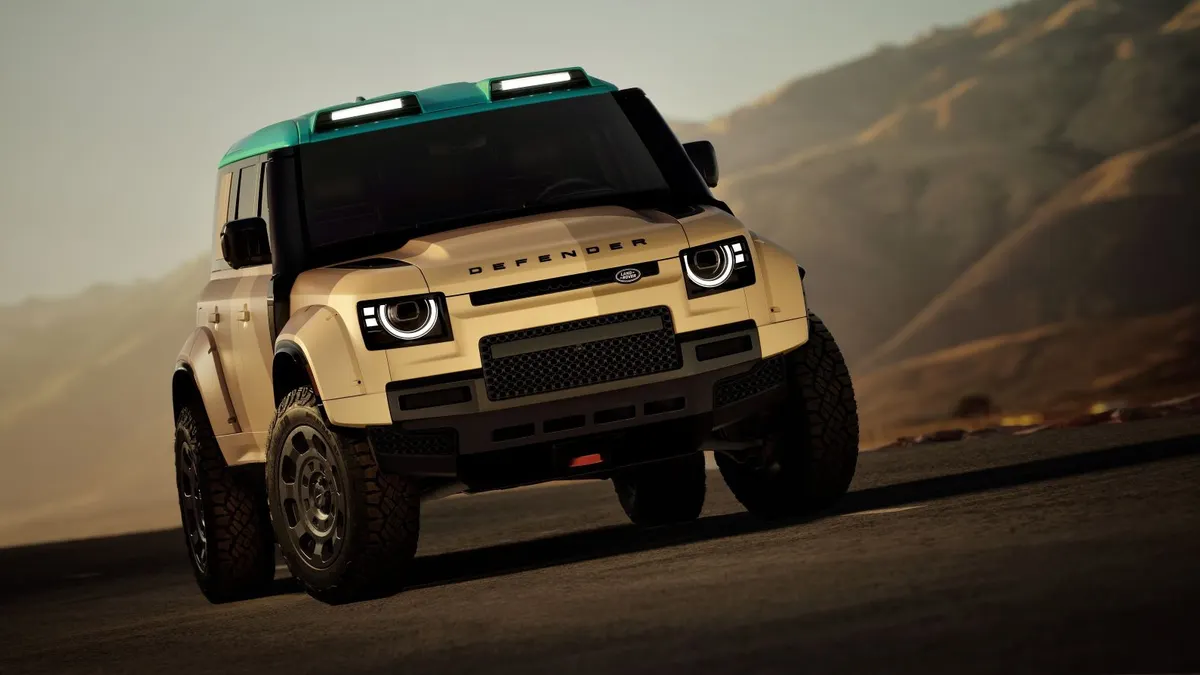
Land Rover is developing the limited-edition Defender Dakar, a road-legal version inspired by the D7X-R that won the 2026 Dakar Rally, with 636 hp and extreme off-road hardware.
Land Rover is turning its Dakar-winning Defender D7X-R into a road-legal special edition. The new Defender Dakar was unveiled as a prototype during Monterey Car Week and is planned for global markets in 2027.
The limited-run SUV will retain many of the features developed for the competition vehicle, while gaining a more powerful road-going version of its 4.4-liter twin-turbo V8.
Dakar technology for the road
The Defender Dakar will keep the same D7X body architecture, transmission, and driveline used by the D7X-R competition vehicle.
The racing-inspired SUV is based on the Defender OCTA, giving the new road version a strong foundation for extreme off-road driving.
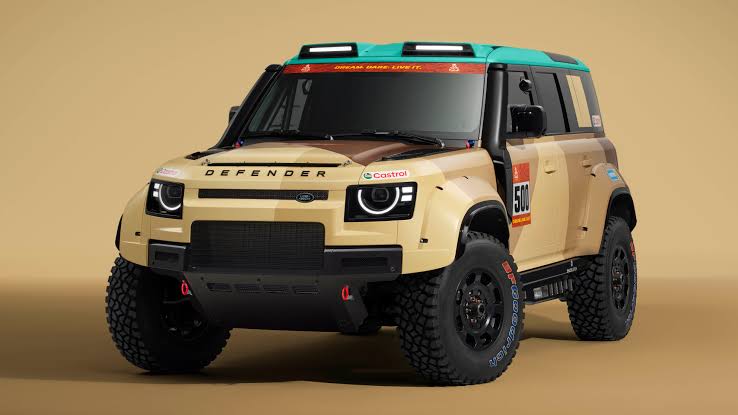
The Defender Dakar takes direct inspiration from the D7X-R that won the 2026 Dakar Rally.
Land Rover says three D7X-R competition vehicles finished first, second, and fourth in the Stock class during the 2026 Dakar Rally.
The road-going Defender will use the same basic architecture while adapting the hardware for road registration and regular customer use.
636 horsepower from a twin-turbo V8
The Defender Dakar will be powered by a 4.4-liter twin-turbocharged V8 producing 636 horsepower and 553 lb-ft of torque.
That gives the road car more power than the competition version, which is restricted by racing regulations.
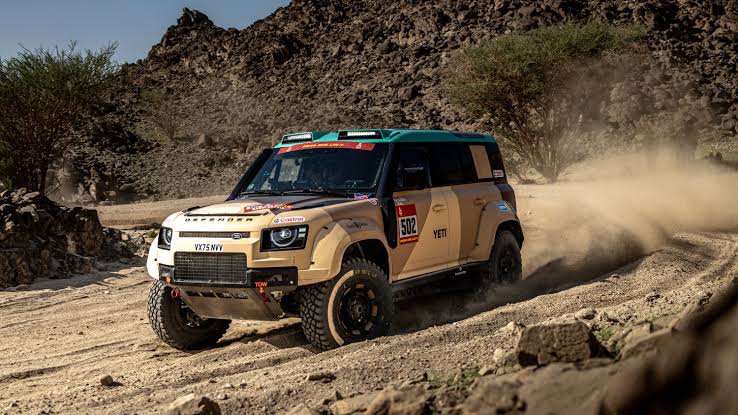
The Defender Dakar uses a 4.4-liter twin-turbo V8 producing 636 horsepower and 553 lb-ft of torque.
Land Rover has also upgraded the cooling system to support the higher output.
The SUV will ride on 35-inch all-terrain tires mounted on new forged 20-inch wheels. The suspension combines coil springs with motorsport-proven Bilstein Advanced dampers.
The result is a Defender designed to handle demanding terrain while maintaining the mechanical character of the Dakar racer.
Built for jumps, dunes, and gravel
The Defender Dakar receives several drive modes specifically developed around off-road performance.
New Dunes and Gravel modes are joined by a Flight Mode, which was originally developed for the competition vehicle to help manage jumps and landings.
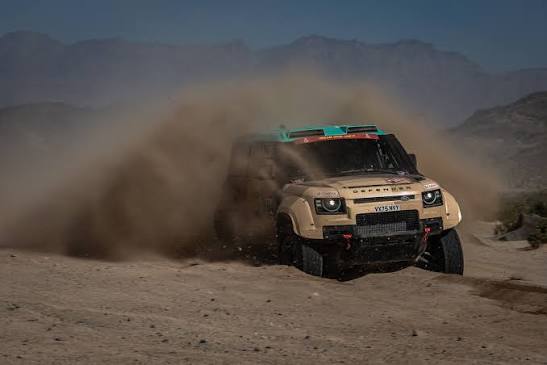
Dunes, Gravel, and Flight modes bring Dakar-inspired off-road technology to the road-legal Defender.
The exterior also receives extensive competition-inspired equipment.
Highlights include roof-mounted light pods, carbon-fiber raised air intakes, a carbon-fiber hood, extended wheel arches with exposed rivets, signature mud flaps, and a race-inspired metal front undershield.
The signature color combination is Dakar Sand with a Yanbu Turquoise roof, inspired directly by the D7X-R racing livery. Narvik Black and Alaska White will also be available, with an optional matte protective film.
A racing-inspired four-seat cabin
Inside, the Defender Dakar uses a 2+2 seating layout.
The front seats are specially designed for the vehicle, while optional four-point racing harnesses can be specified. Rear storage areas are designed to accommodate racing helmets.
The cargo area also receives dedicated hardware for carrying the spare wheel and an air compressor.
Land Rover is currently gauging customer interest in the limited-edition model, with a global launch planned for 2027.
The Defender Dakar is therefore shaping up to be one of the most extreme road-going versions of the SUV yet, combining a 636-hp V8, 35-inch tires, motorsport suspension technology, and direct influence from a vehicle that has already proven itself at the Dakar Rally.








NHTSA plans to modernize U.S. headlight regulations, potentially allowing more advanced adaptive beams, smarter LED systems and legal LED replacement bulbs.
The NHTSA headlight rules update could change how automakers bring advanced lighting technology to the U.S. market. The National Highway Traffic Safety Administration plans to revise Federal Motor Vehicle Safety Standard No. 108, a regulation governing vehicle lighting that the agency considers outdated.
The process will use negotiated rulemaking with up to 18 representatives from automakers, suppliers, safety organizations, researchers and engineering groups. The goal is to modernize lighting requirements while improving road safety and aligning U.S. regulations more closely with international standards.
Why the NHTSA Headlight Rules Matter
The review could address headlight glare, lighting performance, testing procedures and emerging technologies. One major issue is adaptive driving beams, which can maintain high-beam illumination while selectively dimming sections of the light pattern to avoid dazzling other drivers.
The United States began allowing these systems in 2022, but its regulatory framework differs from European standards. That gap has limited the functions automakers can offer on vehicles sold in the American market.
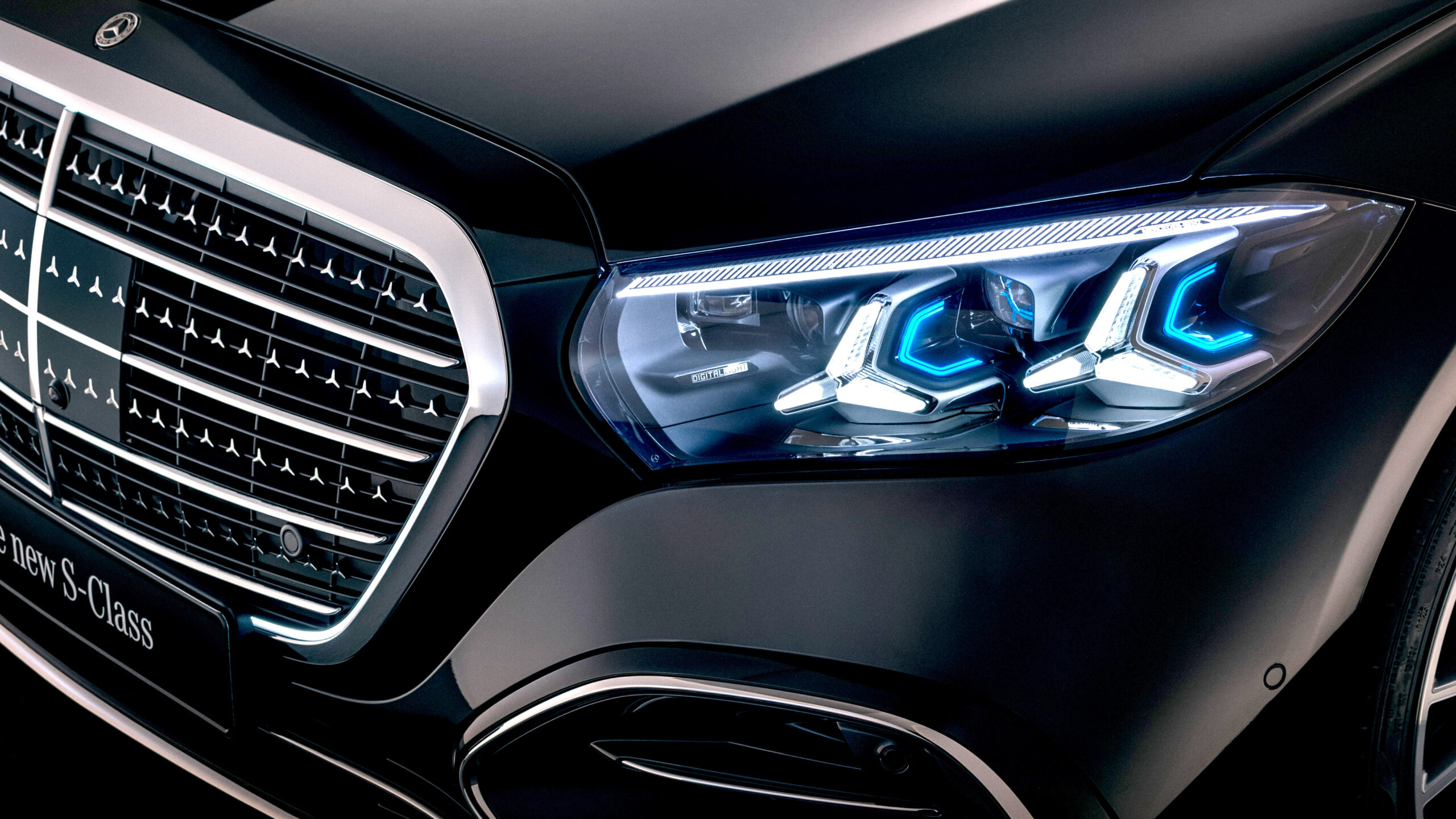
Advanced headlight systems could gain more capabilities if U.S. regulations move closer to international standards.
Automakers Could Unlock More Headlight Features
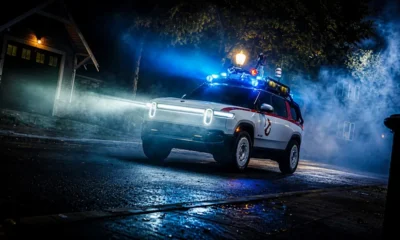
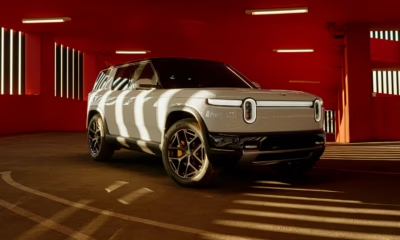
Several manufacturers have developed systems that comply with current U.S. requirements. Rivian and Tesla offer adaptive lighting technology, while Audi is preparing a U.S.-compatible version of its Digital Matrix headlights for the 2027 Q9 SUV.
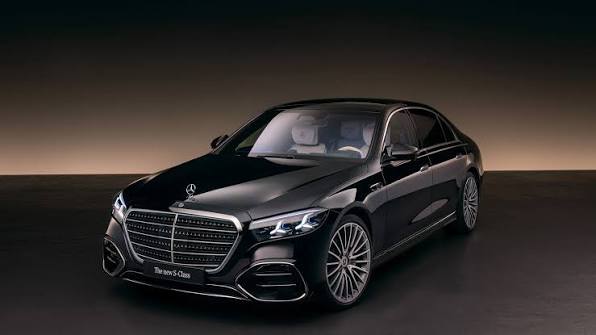
Mercedes-Benz is also expanding its Digital Light technology. The latest micro-LED system will offer a partial high-beam function on the 2027 S-Class, GLE and GLS. Other manufacturers have kept certain functions disabled through software, even when vehicles share hardware with models sold in other markets.
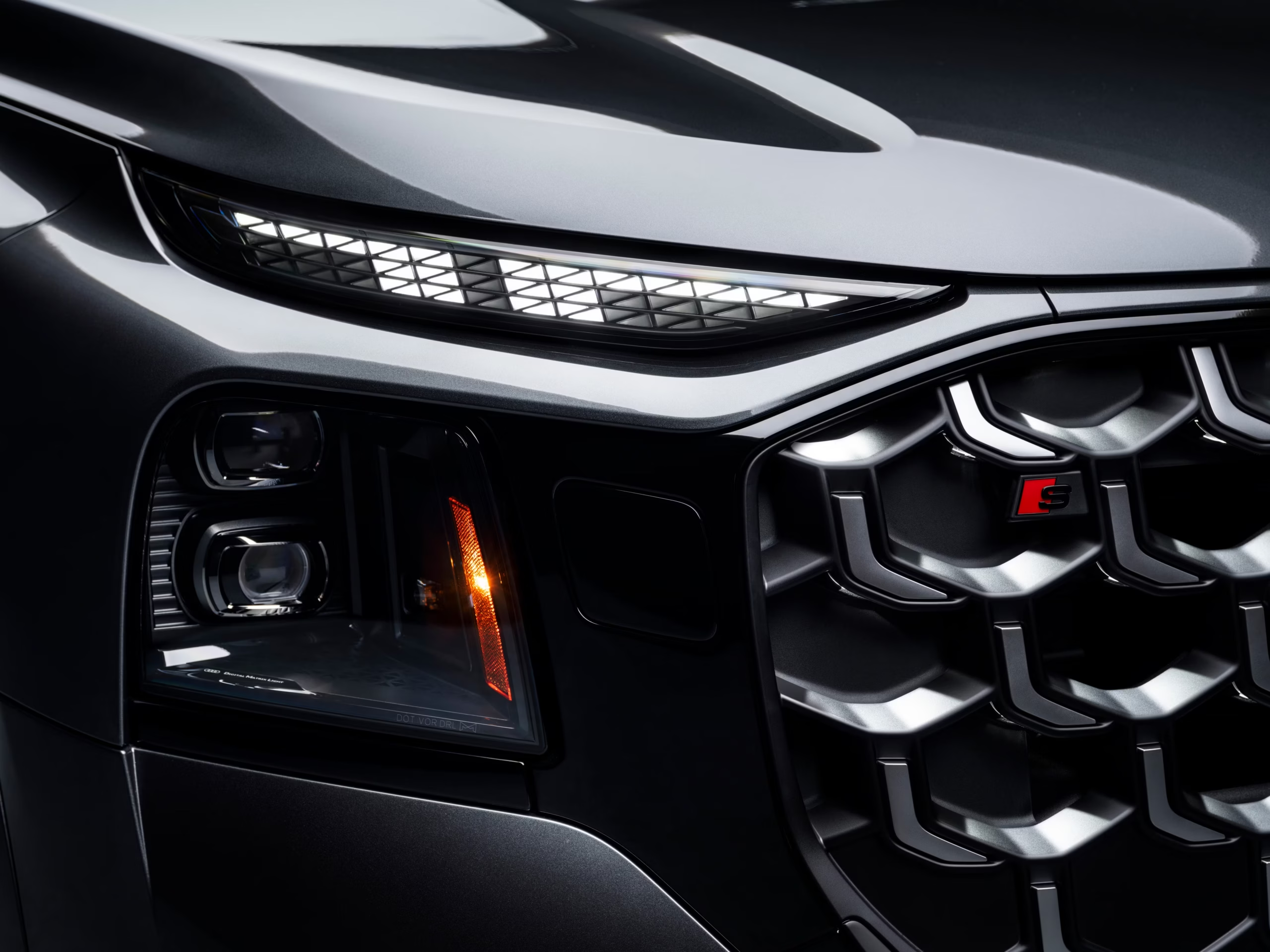
Audi’s Digital Matrix technology illustrates the advanced lighting functions that regulatory changes could help bring to more U.S. vehicles.
If the NHTSA headlight rules move closer to international standards, automakers could introduce more of these features without developing separate lighting systems for the United States. Some vehicles already have the necessary hardware, meaning certain capabilities could potentially become available through software updates. However, any upgrade would depend on the final regulations, vehicle hardware and manufacturer decisions.
Examples of affected technology include Porsche HD-Matrix Design LED headlights, Audi Matrix LED headlights and BMW Adaptive LED systems. Some BMW configurations include hardware for glare-free high-beam assistance, but the function remains deactivated for the U.S. market.
Could LED Replacement Bulbs Become Legal?
The proposed review could also address regulations for replaceable light sources. Current federal requirements make it difficult to use drop-in LED bulbs as replacements for conventional halogen bulbs in many applications.
For a replacement LED bulb to comply, it would need to meet the applicable requirements for light distribution and performance, not simply fit inside the existing housing. A regulatory change could establish a clearer path for road-legal LED retrofit products that meet federal safety standards.
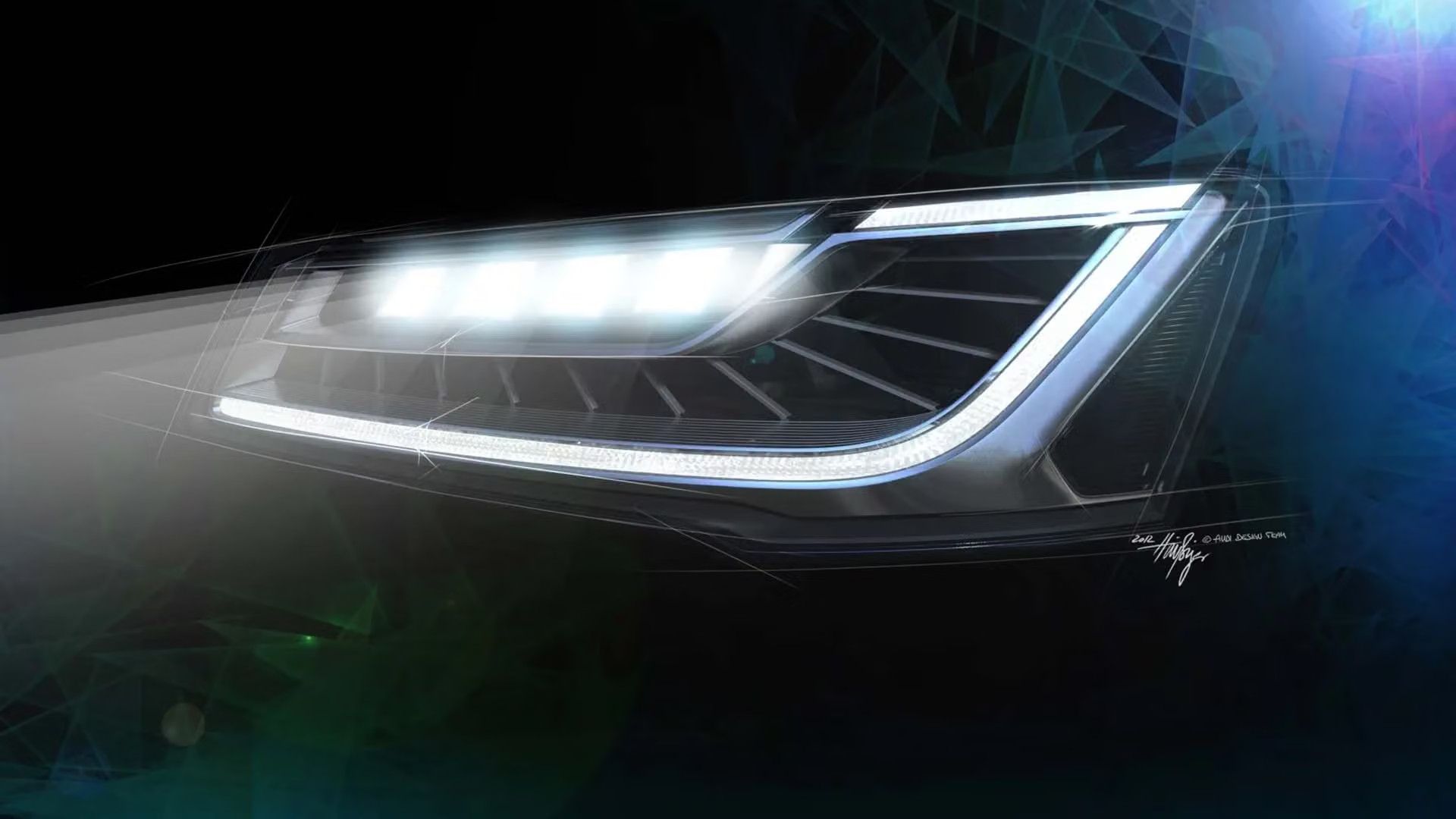
Updated requirements could help define a path for LED retrofit bulbs that meet federal lighting standards.
Public Comments Remain Open
The NHTSA headlight rules review could influence future vehicle lighting, from glare-control technology to replacement bulbs. The agency is accepting public comments through November 9, giving drivers, engineers and industry stakeholders an opportunity to weigh in on the proposed process.
Any changes will depend on the outcome of the rulemaking process. For now, the announcement signals a potential shift toward more modern lighting regulations in the United States.
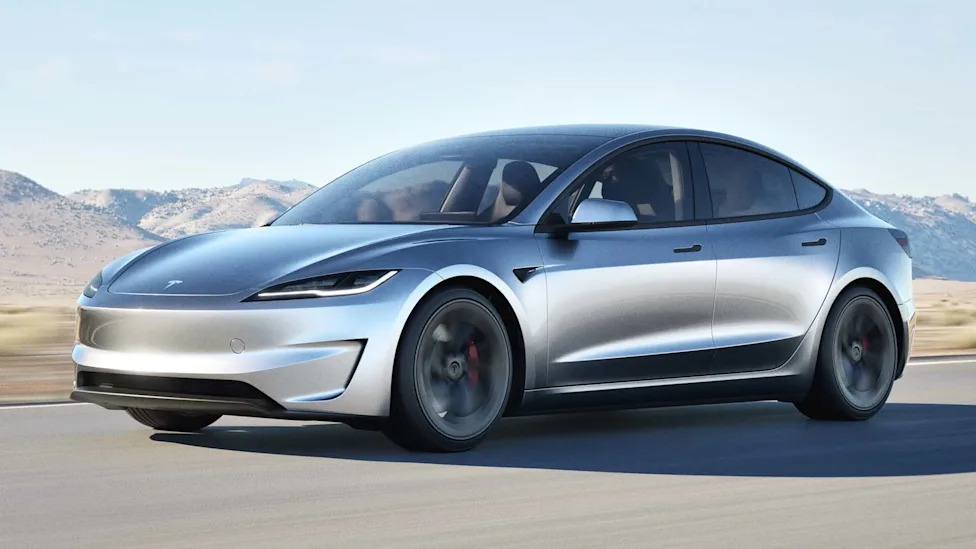
Tesla is finally bringing vehicle-to-home charging to the Model 3 and Model Y, allowing compatible cars to provide backup electricity through a Powerwall 3 system.
Tesla is expanding the energy capabilities of its two best-known electric vehicles. The Model 3 and Model Y can now support vehicle-to-home (V2H) bidirectional charging, allowing their batteries to provide electricity to a home during a power outage.
The feature has already been available on the Cybertruck, but Tesla’s volume-selling EVs require specific hardware to use it. The rollout is also being introduced gradually, meaning not every Model 3 or Model Y is compatible.
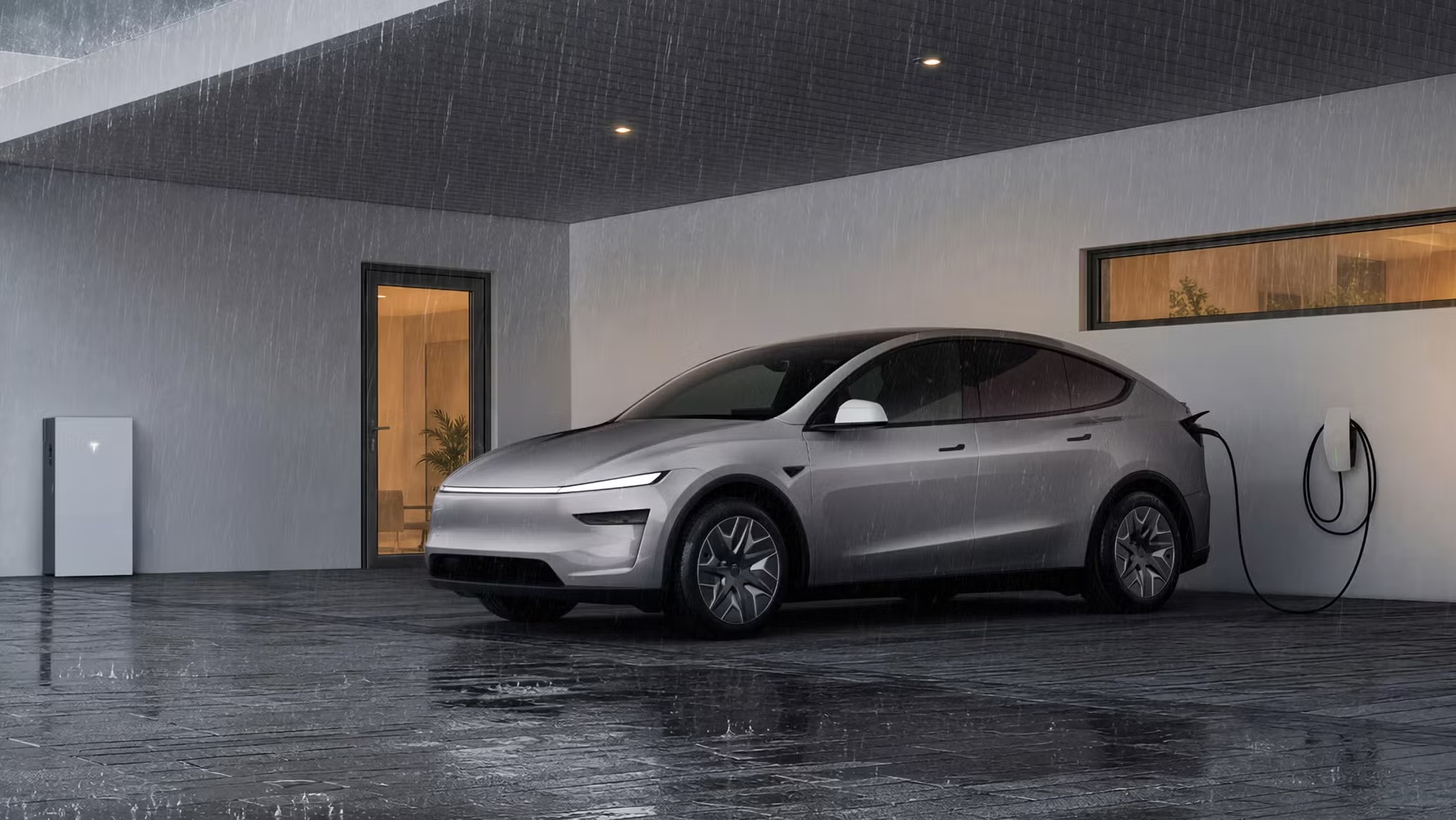
Compatible Model 3 and Model Y vehicles can now provide backup electricity to a home.
Model 3 and Model Y Need New Hardware
Tesla’s V2H functionality is enabled by a new inverter known as PCS2 Lite, short for Power Conversion System.
The hardware is related to the PCS2 inverter used by the Cybertruck. However, there is an important difference between the systems.
The Cybertruck can provide electricity directly to a home, while the Model 3 and Model Y require additional Tesla Energy hardware.
Compatible vehicles need a Powerwall 3 home battery and either a Tesla Universal Wall Connector or a Gen 3 Wall Connector.
Tesla says support for older Powerwall versions is expected to arrive in the future.
The additional hardware requirement makes the feature more difficult to adopt for owners who do not already have a compatible home energy system.
Which Tesla Vehicles Support V2H?
Tesla says Model 3 and Model Y vehicles ordered in the United States after October 1 will have the required capability.
Some vehicles produced before that date are also compatible.
Owners can check an individual vehicle through the Powershare Support section in the software menu. The information appears under the Additional Vehicle Information screen.
That check is important because the feature depends on the vehicle’s specific inverter hardware rather than simply being enabled through a software update.
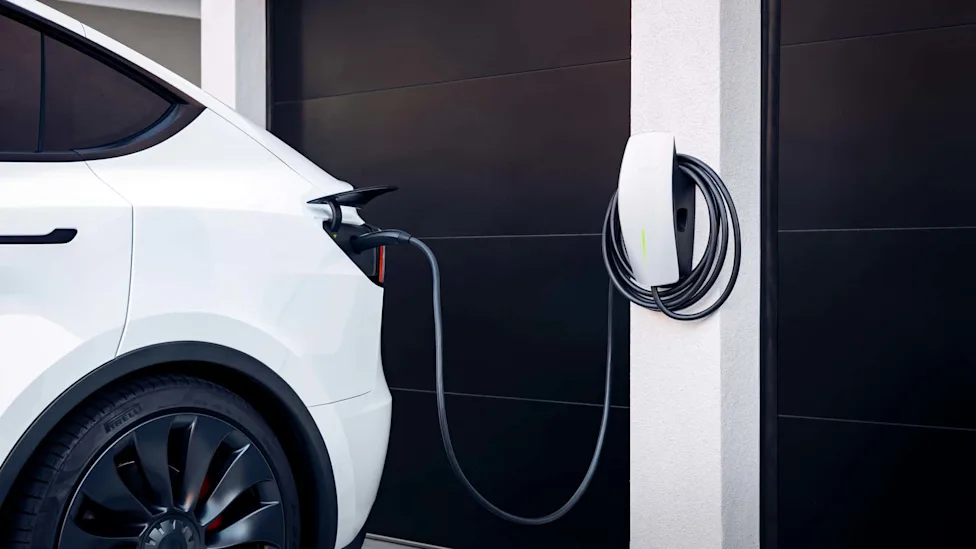
Powerwall 3 is a required part of Tesla’s current Model 3 and Model Y V2H setup.
The Powerwall Acts as a Backup to the Backup
Tesla’s approach is different from some other vehicle-to-home systems because the Powerwall 3 remains part of the energy chain.
During a power outage, the home can first use the energy stored in the Powerwall.
Once that battery is depleted, the compatible Model 3 or Model Y can begin supplying electricity to the home while also recharging the Powerwall.
That means the vehicle effectively becomes a backup for the home’s existing backup battery.
The arrangement can also reduce the amount of time the vehicle needs to remain directly involved in powering the house. Once the outage ends, the vehicle can return to normal use.
How Much Backup Power Can a Tesla Provide?
The amount of energy available depends on the vehicle’s battery capacity and state of charge when the backup system is activated.
The home’s energy demand also plays a major role. Running essential appliances and lights will consume much less electricity than attempting to power every system in a house.
Tesla estimates that a standard Model 3 or Model Y battery can extend backup power for an average home by approximately two days.
Vehicles equipped with larger battery packs, including Premium and Performance models, can extend that period to more than two days.
The maximum power output is rated at 11.5 kW, giving the Model 3 and Model Y a substantial amount of available power for household backup.
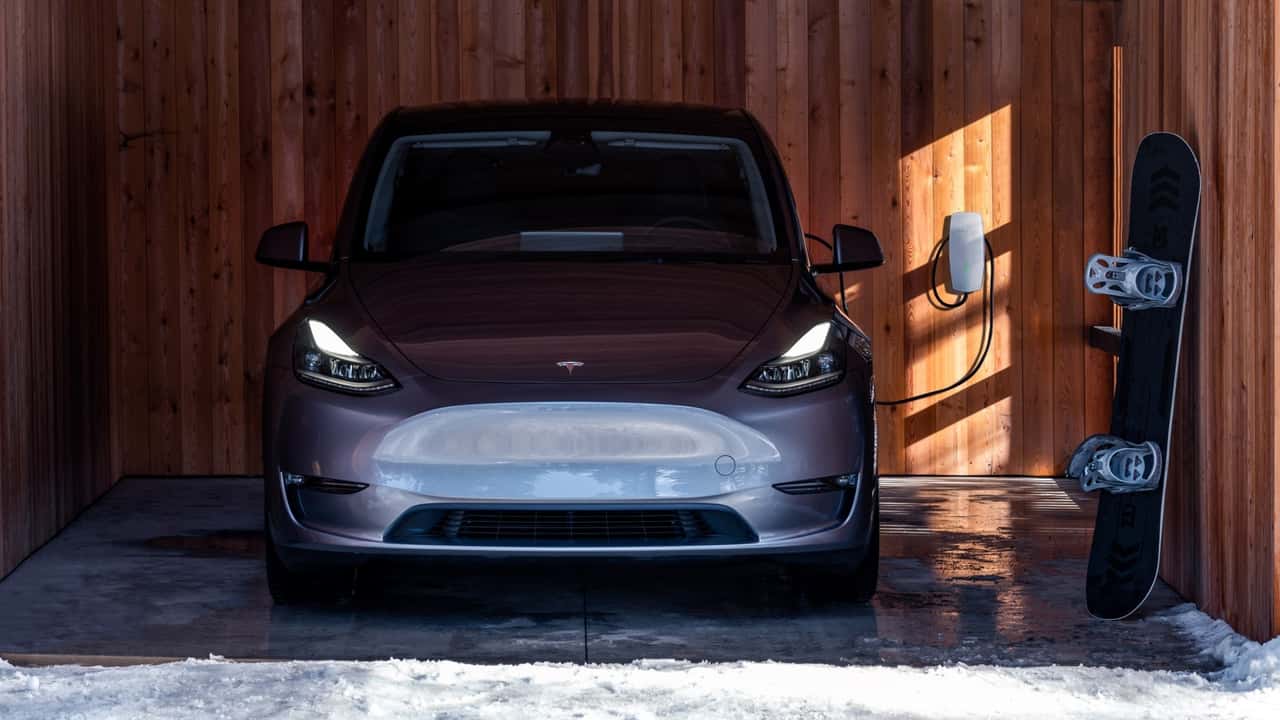
Tesla estimates that compatible vehicles can add roughly two days of backup power for an average home.
Tesla Is Late to the V2H Market
The arrival of V2H on the Model 3 and Model Y is significant because several competing EV manufacturers have offered vehicle-to-home functionality for years.
Tesla has also been active in the home energy market through its Powerwall products, making the absence of V2H from its highest-volume vehicles particularly notable.
The company had previously discussed moving toward vehicle electronics capable of supporting bidirectional energy flow.
Now, that technology is finally reaching the Model 3 and Model Y through the new PCS2 Lite hardware.
Older Model 3 and Model Y Vehicles Could Get an Upgrade
Owners of older Tesla vehicles may not necessarily be excluded forever.
Tesla service documentation includes a draft procedure for upgrading a Model Y from PCS1 to PCS2 Lite hardware.
That suggests a retrofit could be technically possible. However, it remains unclear whether the same approach will work with the Model 3 or whether Tesla will offer a retrofit program to customers.
For now, the safest assumption is that V2H availability depends on the specific hardware installed in the vehicle.
A Major New Role for Tesla’s EV Batteries
The addition of V2H gives the Tesla Model 3 and Model Y a new function beyond transportation.
Compatible vehicles can now become part of a home’s energy system, using their large battery packs to provide electricity during outages and extend the usefulness of a Powerwall 3 installation.
The 11.5-kW maximum output and estimated multi-day backup capability make the system potentially valuable for households that already have Tesla’s energy hardware.
For Tesla owners without the required equipment, however, the cost and hardware requirements remain significant.
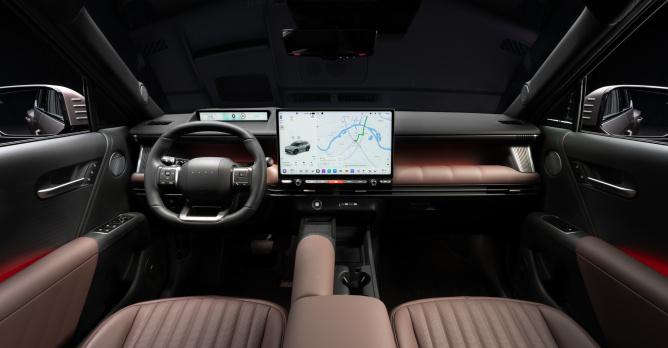
Hyundai will introduce Pleos Connect in the U.S. with the 2027 Tucson, bringing Android Automotive, built-in AI and native apps.
Hyundai is preparing a major technology upgrade for the U.S. market with the arrival of Pleos Connect in the 2027 Tucson. The new infotainment platform combines Android Automotive OS, over-the-air updates, connected services and an artificial-intelligence assistant designed to understand natural language.
The system will be available on U.S.-specification Hyundai vehicles equipped with 17-inch or 12.9-inch centre displays. Rather than treating infotainment as a fixed system installed when a vehicle leaves the factory, Hyundai is positioning Pleos Connect as part of its broader move towards software-defined vehicles.
That change could make future Hyundai models more adaptable throughout their lifecycles. The company plans to collect and analyse data from vehicles equipped with Pleos Connect and its Gleo AI assistant, using that information to develop new software experiences and deliver updates remotely.
Hyundai expects Pleos Connect to reach around 20 million vehicles by 2030, making the platform an important part of its long-term software strategy. The Tucson will be the first U.S. model to introduce the technology.

The 2027 Hyundai Tucson will introduce Pleos Connect to U.S. customers with large 17-inch or 12.9-inch displays.
Gleo AI Turns The Infotainment System Into A Digital Assistant
One of Pleos Connect’s biggest features is Gleo AI, an in-vehicle assistant powered by a large language model. Unlike traditional voice systems that rely heavily on predefined commands, Gleo AI is designed to understand conversational requests and interpret what the driver is trying to accomplish.
Drivers can use natural language to search for destinations, request navigation and refine their route. The system can understand context and handle multiple commands, making interactions more similar to a conversation than a sequence of rigid voice instructions.
Gleo AI can also access vehicle-specific information. Drivers can ask questions about their Hyundai and use voice commands to control supported functions, including climate settings.
The assistant can also provide information from the vehicle’s owner’s manual. That could make unfamiliar functions easier to understand without requiring the driver to search through menus or physical documentation.
The technology is particularly relevant as Hyundai moves towards software-defined vehicles. The vehicle becomes a platform that can evolve after purchase rather than remaining fixed at the moment of delivery.

Gleo AI is designed to understand natural-language requests and help drivers with navigation, vehicle functions and information.
Google And HERE Bring Connected Navigation To Tucson
Pleos Connect also introduces a redesigned navigation experience. The system combines HERE Maps and Google Places with real-time mapping and routing information.
Hyundai has designed the interface around a large, customisable display. Navigation can be shown in either portrait or landscape orientation, while compatible applications can operate alongside the map.
Floating information cards provide route information without completely covering the navigation screen. This approach is designed to keep important details visible while preserving a clear view of the route.
The system also includes pre-installed map data for the U.S. That means navigation can continue to provide useful information in areas where mobile connectivity is limited.
Connectivity is another important part of the platform. Pleos Connect supports wireless Apple CarPlay and Android Auto, alongside Bluetooth 5.4 and Wi-Fi 6.
This combination allows Hyundai to provide its own connected ecosystem while still giving drivers access to familiar smartphone-based services.

Pleos Connect combines HERE Maps and Google Places with a large-screen interface designed for flexible navigation and multitasking.
A New App Store Could Keep The Tucson Updated
Pleos Connect also introduces the Pleos App Market, allowing native applications to run directly on the vehicle’s Android Automotive-based platform.
The marketplace will support entertainment, lifestyle, productivity, mobility and vehicle-related services. Streaming music and video applications are among the types of services Hyundai plans to offer.
One important advantage is that applications can receive updates independently of Hyundai’s broader infotainment software updates. That creates a more flexible ecosystem in which individual services can evolve without requiring a complete system update.
Hyundai is also developing an API for third-party developers. Applications created for Pleos Connect will go through cybersecurity and verification procedures before becoming available to customers.
The strategy could significantly change how drivers interact with their cars over time. Instead of relying on an infotainment system that remains largely unchanged for years, Hyundai is building a platform that can add new functions and services after the vehicle has been purchased.
The 2027 Tucson therefore represents more than a new infotainment upgrade. It marks an important step in Hyundai’s transition towards software-defined vehicles, where artificial intelligence, connected services and over-the-air updates become increasingly central to the ownership experience.
-
 NOW TRENDING2 months ago
Tesla Cybercab Gets September 3 Austin Launch Date
-
 NOW TRENDING2 months ago
Audi’s New SUVs Could Help Reverse Its Sales Decline in 2026
-
 TEST DRIVES2 months ago
2025 Ford Bronco Sport Badlands: The Adventure SUV You Can Drive Every Day
-
 INTELLIGENT MOBILITY2 months ago
GM Super Cruise: How It Works and What Comes Next in 2028
-
 TEST DRIVES1 month ago
2026 Toyota GR Supra MkV Final Edition
-
 NOW TRENDING2 months ago
2027 Toyota Corolla Celebrates 60 Years With Special Edition
-
 NOW TRENDING2 months ago
Rivian R2 Autonomy+ Adds New Hands-Free Driving Features
-
 RACING2 months ago
Mercedes Solves Its Biggest F1 Problem After Four Seasons
You must be logged in to post a comment Login