
INTELLIGENT MOBILITY
GM Super Cruise: How It Works and What Comes Next in 2028

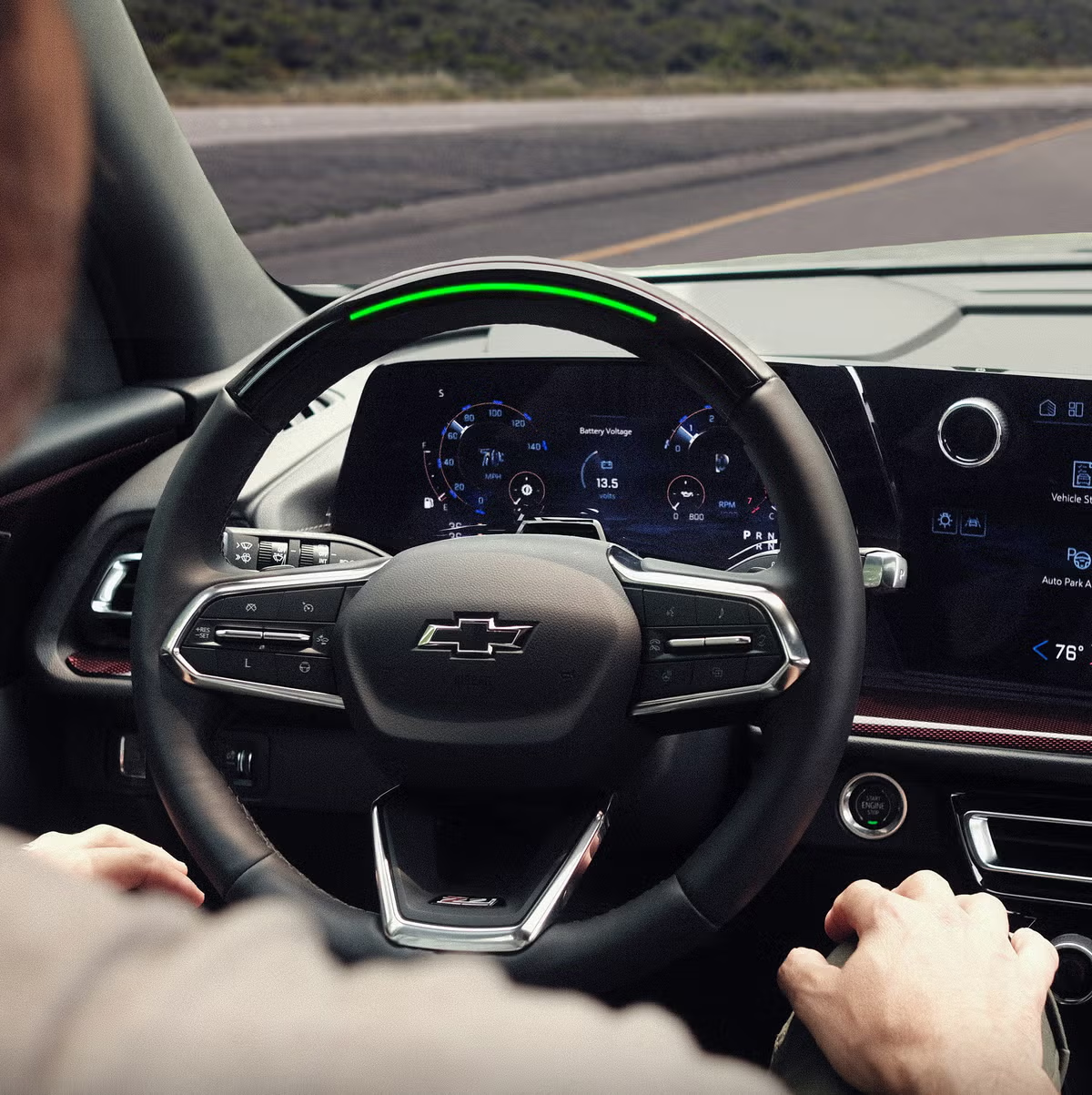
GM’s Super Cruise already offers hands-free driving on compatible roads, while a new generation aims to add eyes-off capability starting with the Cadillac Escalade IQ in 2028.
General Motors is continuing to expand Super Cruise, its advanced driver-assistance system for compatible roads in North America. Nearly 750,000 Super Cruise-equipped vehicles are already on the road, with the technology helping drivers manage steering, acceleration, and braking in certain conditions.
GM is now preparing the next stage. The future version is expected to let drivers take their eyes off the road on approved routes, beginning with highways and potentially expanding to additional road types later.
What is GM Super Cruise?
Super Cruise is a driver-assistance system that combines sensors, cameras, computers, and high-definition mapping to understand the road and surrounding traffic.
When activated, the system can control steering, acceleration, and braking on compatible roads. Drivers can take their hands off the steering wheel, but they must continue watching the road and remain ready to take control.
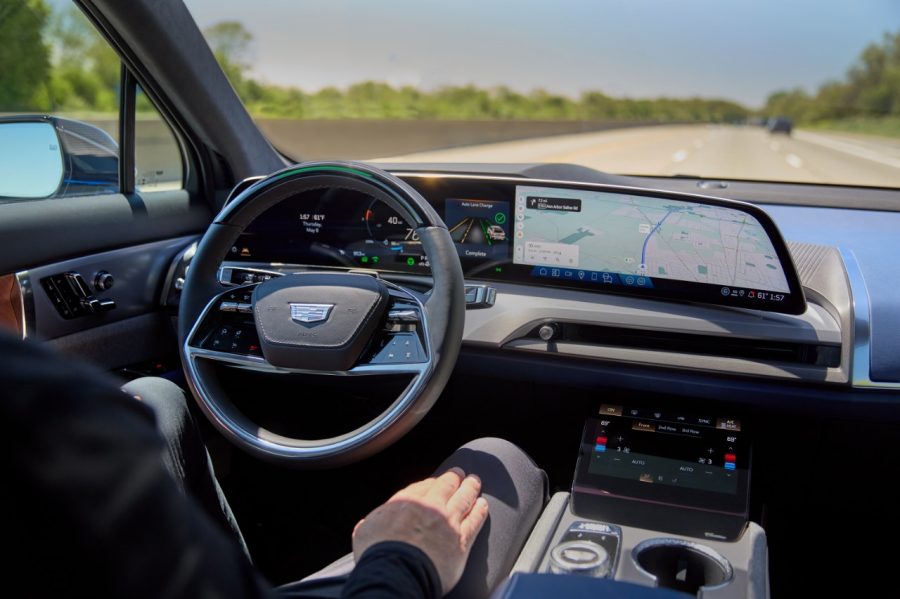
GM Super Cruise allows drivers to go hands-free on compatible mapped roads while maintaining attention on traffic.
The system originally focused on divided highways. Its capabilities have since expanded to additional mapped roads with clearly visible lane markings.
Super Cruise is available on more than 20 GM models across Cadillac, Chevrolet, and GMC. The technology ranges from vehicles such as the Chevrolet Bolt to high-end Cadillac models.
It can also support hands-free towing on equipped trucks.
Super Cruise is included for three years with eligible vehicles. After that period, GM offers subscription plans starting at $39.99 per month, with discounts available for annual billing.
How is Super Cruise different?
One of Super Cruise’s biggest advantages is its ability to determine the vehicle’s position with a high level of precision.
Rather than simply knowing which road the vehicle is traveling on, the system can identify the lane itself. That allows the vehicle to better understand lane markings, road geometry, and surrounding conditions.
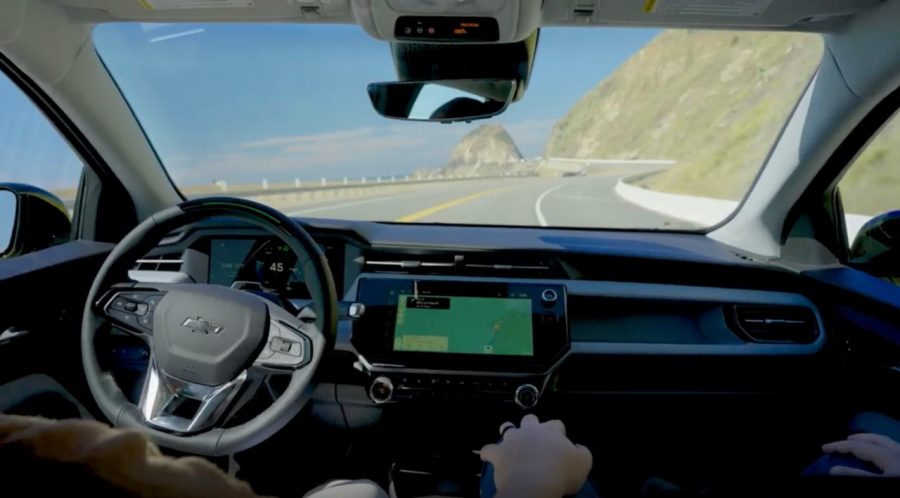
High-definition maps help Super Cruise understand lane positions, road geometry, and other details with greater precision.
GM creates its high-definition maps using specially equipped vehicles fitted with LiDAR sensors.
These sensors use reflected light to build a three-dimensional picture of the surrounding environment. The mapping data is then matched with information collected by the vehicle’s own sensors.
That combination helps Super Cruise determine where the vehicle is located and what it should expect from the road ahead.
What is next for Super Cruise?
GM is developing a new generation of the system that will eventually introduce eyes-off driving on certain mapped roads.
The company plans to launch the technology in 2028, with the Cadillac Escalade IQ expected to be the first model to receive it.
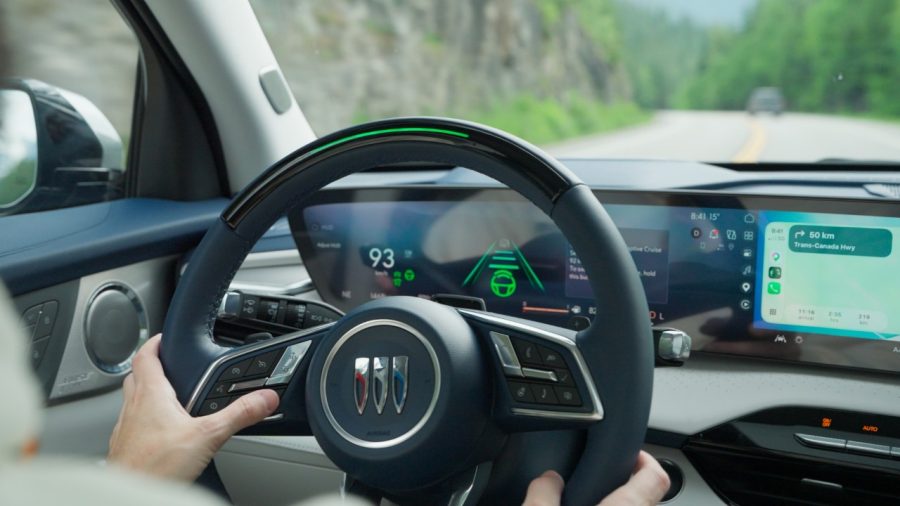
GM plans to introduce its next-generation eyes-off Super Cruise system on the Cadillac Escalade IQ in 2028.
The future system is already being tested on hundreds of prototype vehicles equipped with new sensors and electronic hardware.
Like the current system, the next generation is expected to expand across multiple GM brands and vehicle price points over time.
GM is also working toward a longer-term goal in which its vehicles could eventually drive on behalf of their owners.
How does GM test Super Cruise?
GM uses a broad testing strategy before introducing new autonomous driving features into production vehicles.
Engineers test systems through closed-course evaluations, supervised public-road driving, and computer simulations. A trained driver remains behind the wheel during public-road testing and can intervene whenever necessary.
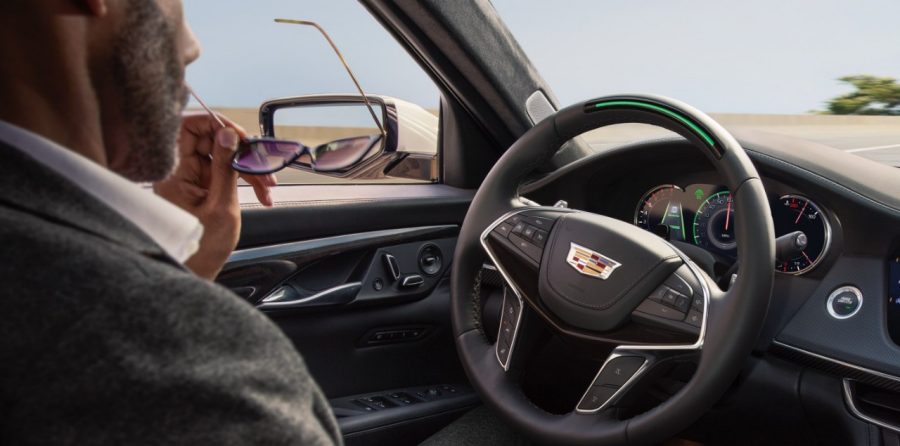
GM combines real-world road testing with large-scale simulations to validate new Super Cruise capabilities.
Simulation plays a major role in the development process. GM says its engineers can simulate the equivalent of 100 years of driving every day.
Those simulations allow engineers to test both common situations and rare edge cases. Examples include unexpected lane departures, complicated intersections, and interactions with other vehicles.
The company can also take situations identified by production vehicles and test fleets, recreate them in simulation, and modify them to evaluate different outcomes.
The GM Super Cruise system therefore continues to evolve through a combination of real-world data, high-definition mapping, hardware development, and simulation.
Today, it provides hands-free driving while requiring drivers to keep their eyes on the road. The next major milestone comes in 2028, when GM plans to introduce an eyes-off version and take another step toward its broader autonomous-driving ambitions








-
 NOW TRENDING2 months ago
Land Rover Defender Recall 2026: 23,677 JLR SUVs Affected
-
 NOW TRENDING2 months ago
Hyundai September 2026 Sales Hit Record 77,439
-
 NOW TRENDING2 months ago
2027 Silverado HD: New 8.3L Duramax V8 Revealed
-
 NOW TRENDING2 months ago
Cadillac EVs 2026: All Five Electric Models Explained
-

 NOW TRENDING2 months ago
Porsche Gas Macan Returns in 2028 as EV Plans Evolve
-
 NOW TRENDING2 months ago
2027 Toyota Grand Highlander Woodland Adds Adventure
-
 INTELLIGENT MOBILITY2 months ago
GM and PG&E Make Home EV Charging Easier for Buyers
-
 INTELLIGENT MOBILITY2 months ago
Waymo Safety Data Shows 82% Fewer Injury Crashes