
Formula1
Aston Martin Struggles at Spa, Eyes Hungary F1 Upgrade

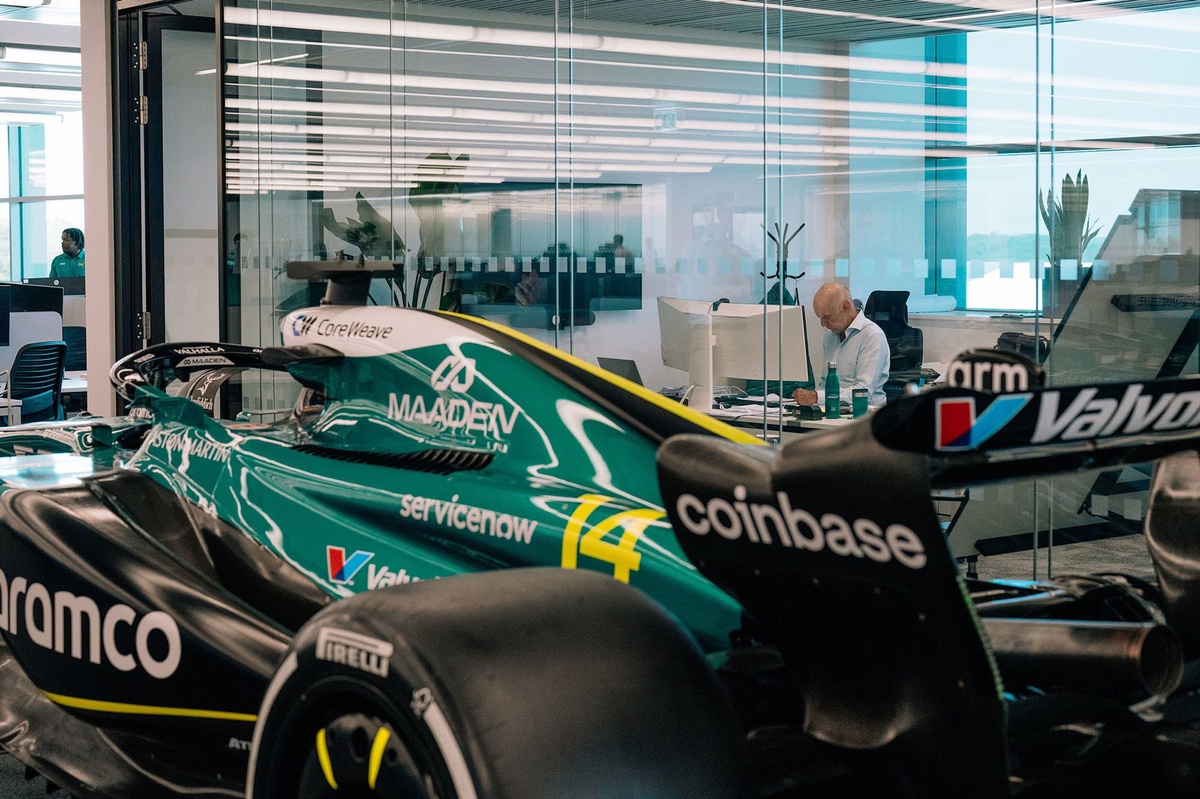
Aston Martin endured a difficult Friday at Spa and is already looking ahead to a major AMR26 upgrade package set to debut in Hungary.
Aston Martin’s Hungary upgrade has become the team’s main source of hope after a difficult start to the 2026 Belgian Grand Prix weekend. The Silverstone-based squad expected Spa-Francorchamps to expose the weaknesses of the AMR26, but Friday proved even more challenging as the car finished several seconds away from the front.
With Spa placing significant demands on power and energy efficiency, Aston Martin struggled to compete even within the midfield. The team’s immediate objective is now to complete the Belgian Grand Prix before turning its attention to the major upgrade package scheduled to arrive at the next race in Budapest.

Aston Martin struggled for performance during Friday’s running at Spa-Francorchamps.
Aston Martin Faces a Difficult Belgian Grand Prix
Lance Stroll admitted that Aston Martin has limited options to dramatically improve its situation before Sunday’s race. The team will continue working on setup changes overnight, but the Canadian acknowledged that the AMR26’s fundamental limitations will make significant progress difficult.
The priority is therefore to extract everything possible from the current package while gathering useful information. Aston Martin entered the weekend knowing Spa could be one of its weakest circuits of the season, making the difficult Friday performance less surprising internally.
Stroll made it clear that the team simply needs to get through the Belgian Grand Prix before focusing on what could become a much more important weekend in Hungary.

Lance Stroll expects another challenging weekend before Aston Martin introduces its major upgrade.
Aston Martin Hungary Upgrade Becomes the Main Focus
Despite the lack of competitiveness, Aston Martin is continuing to follow its normal race-weekend procedures. The team is evaluating tires, completing long runs and refining operational processes in preparation for the moment when the car becomes more competitive.
Mike Krack emphasized that Aston Martin cannot afford to relax simply because the AMR26 is currently off the pace. Strategy execution, pit stops and trackside operations must remain at a high level regardless of the team’s position in the competitive order.
That preparation could become particularly important when the Aston Martin Hungary upgrade arrives. The team hopes the new package will provide a significant step forward and allow the AMR26 to compete more consistently against its midfield rivals.

Aston Martin hopes its major Hungary upgrade will unlock significantly more performance from the AMR26.
Hungary Could Mark a Turning Point for the AMR26
Aston Martin has accepted that the current run of races could be particularly difficult, but Budapest represents an opportunity to begin changing the direction of its season. The upcoming package will therefore face considerable expectations after the team’s struggles at Spa.
The immediate challenge remains completing the Belgian Grand Prix as professionally as possible and maximizing every available opportunity. Even without a competitive car, the team wants to ensure its operational performance is ready for when additional pace arrives.
Once Spa is over, however, attention will quickly shift toward Budapest. Aston Martin is counting on its Hungary upgrade to deliver a much-needed improvement and provide the AMR26 with the performance required to begin a stronger second half of the 2026 Formula 1 season.









Cadillac has confirmed its IMSA and WEC driver rosters for the 2027 endurance racing season.
Cadillac Racing has announced its driver lineup for the 2027 season, outlining its plans for the IMSA WeatherTech SportsCar Championship and the FIA World Endurance Championship (WEC). The manufacturer will build on its successful 2026 IMSA campaign while introducing changes to its Hypercar program.
The announcement comes with two rounds remaining in the current WEC season. Cadillac will continue competing with its V-Series.R prototype, relying on established driver partnerships and additional endurance-racing experience to prepare for another demanding year.
Cadillac Confirms Three IMSA GTP Lineups
Cadillac will enter its fifth season in IMSA GTP competition with three V-Series.R programs. The driver combinations retain experienced full-season pairings while adding specialist drivers for endurance events.
Cadillac Whelen: No. 31
Jack Aitken and Frederik Vesti will compete throughout the season, with Earl Bamber joining for endurance races. The fourth driver for the Rolex 24 at Daytona has yet to be announced.

The No. 31 Cadillac Whelen will retain Jack Aitken and add Frederik Vesti as its full-season pairing for 2027.
Cadillac Wayne Taylor Racing: No. 10
Ricky Taylor and Filipe Albuquerque will form the full-season pairing, with Will Stevens supporting the team during endurance events. The combination gives the No. 10 entry continuity while adding experience for longer races.
Cadillac Wayne Taylor Racing: No. 40
Jordan Taylor and Louis Deletraz will drive the No. 40 throughout the season, with Norman Nato joining for endurance races. Cadillac will therefore have three distinct GTP entries, each with a designated full-season combination.
Cadillac’s stated objective is to carry its 2026 championship momentum into the 2027 campaign and compete for further titles. The Rolex 24 at Daytona will be an early test of the revised lineups, particularly as the teams prepare for one of the most demanding events on the IMSA calendar.
Antonio Felix da Costa Joins Cadillac’s WEC Program
Cadillac Hertz Team JOTA will continue campaigning the V-Series.R in the WEC Hypercar class for a third year. Its announced roster for the No. 12 and No. 38 cars includes Antonio Felix da Costa, Earl Bamber, Jack Aitken, Norman Nato, Ricky Taylor and Will Stevens.

Cadillac Hertz Team JOTA will introduce Antonio Felix da Costa and Ricky Taylor as part of its 2027 driver changes.
Felix da Costa brings extensive experience across prototype and GT racing. The Portuguese driver has won the FIA World Endurance Championship and claimed a class victory at the 24 Hours of Le Mans. His previous experience with JOTA also gives him familiarity with the team’s operations.
Ricky Taylor is another addition with established ties to Cadillac. He previously raced with Cadillac Hertz Team JOTA at Circuit of the Americas earlier in 2026 while Alex Lynn recovered from surgery. Taylor has recorded 32 victories and 76 podium finishes in his IMSA career, according to the figures cited in the announcement.
The combination of Felix da Costa and Taylor adds experience and technical knowledge to Cadillac’s WEC effort. However, the announcement lists the six drivers across the two cars without specifying their individual No. 12 and No. 38 assignments. Those pairings should not be assumed until Cadillac confirms them.
Alex Lynn and Sébastien Bourdais to Leave the Team
The 2027 changes also mark the end of Alex Lynn and Sébastien Bourdais’ current chapter with Cadillac Hertz Team JOTA. Both drivers will depart the team at the end of the 2026 season.
Cadillac credited the pair with important contributions to the development of its endurance-racing program. Their departures represent a significant change to a lineup that has included experienced competitors in the WEC’s top Hypercar category.

Alex Lynn and Sébastien Bourdais will leave Cadillac Hertz Team JOTA at the end of the 2026 season.
Cadillac’s 2027 plans combine continuity in IMSA with a revised driver roster in the WEC. The manufacturer will aim to translate that experience into results across both championships, beginning with the Rolex 24 at Daytona and the next WEC campaign. The remaining details to watch include the fourth driver for the No. 31 at Daytona and the final allocation of drivers between the two WEC entries.
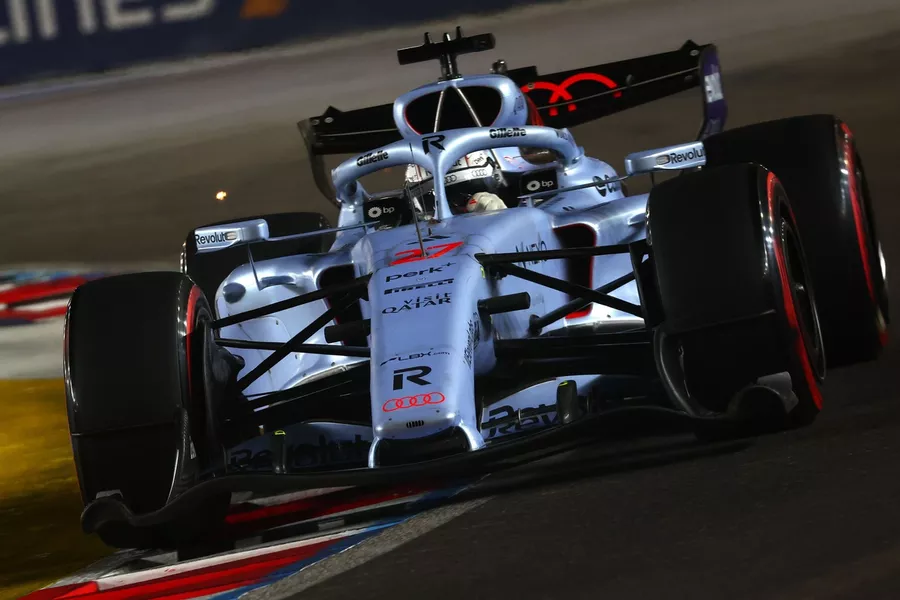
Nico Hulkenberg used racecraft and energy management to keep a faster George Russell behind in Singapore.
Nico Hulkenberg delivered one of Audi’s standout performances in Singapore by defending his position against a faster George Russell during the closing laps. The German combined precise positioning, strategic battery deployment and years of Formula 1 experience to protect a valuable result for the team.
Audi Found an Opportunity at Marina Bay
Singapore represented an important opportunity for Audi. The R26 had shown promising chassis performance throughout the season, with its aerodynamic efficiency helping compensate for weaknesses in the power unit. Although circuits with high temperatures had exposed some of those limitations, Marina Bay offered a different challenge that appeared better suited to the car’s strengths.
The circuit still features several straights where engine performance matters, but its slow corners, technical sections and limited overtaking opportunities place a premium on mechanical grip, aerodynamic balance and driver precision. Audi arrived hoping to convert that combination into valuable championship points.
The team ultimately achieved an important milestone by scoring in both Saturday’s sprint and Sunday’s Grand Prix. Hulkenberg played a central role in that success, making up positions at the start and then managing his race effectively despite facing rivals with different tyre strategies and stronger straight-line performance.

Nico Hulkenberg delivered a strong weekend for Audi at the Singapore Grand Prix.
Hulkenberg Made the Difference at the Start
Hulkenberg’s work began on the opening lap. Starting outside the top 10 in both events, the German needed to make immediate progress to put himself in contention for points.
During the wet sprint, he gained two positions by overtaking around the outside of Turn 5. In Sunday’s Grand Prix, he found space to pass Arvid Lindblad off the line before attacking Pierre Gasly at Turn 3. That move proved particularly important because both drivers had started on medium tyres, the same compound Audi selected for Hulkenberg.
The medium tyre initially left him at a disadvantage against competitors running softs. The softer compound offered additional grip throughout the weekend, helping some rivals find more pace in the opening phase of the race.
Nevertheless, Hulkenberg maintained a narrow gap to Liam Lawson while building a similar margin over Gasly. That balance allowed him to protect his position without compromising his entire race in an attempt to create a larger advantage.
Audi Reacted to Alpine’s Pit Stop Strategy
As the race progressed, Alpine needed a different approach to recover ground. The team became one of the first midfield contenders to stop in an attempt to gain an advantage through an undercut, hoping Gasly could emerge ahead after Hulkenberg made his own pit stop.
Audi responded by bringing Hulkenberg into the pits on the following lap. Although the stop was not particularly quick, it proved sufficient to keep him ahead of Gasly. The Alpine driver then lost further time in traffic behind Carlos Sainz and Isack Hadjar.
The sequence was significant because Singapore makes it difficult to recover positions once a driver becomes trapped behind another car. Track position, clean air and the timing of pit stops can therefore matter as much as outright pace.
By retaining his position, Hulkenberg put himself in a strong position for the closing stages. His remaining challenge was even tougher: keeping Russell behind despite the Mercedes driver’s apparent speed advantage.

Hulkenberg had to use every available advantage to defend against Russell’s faster Mercedes.
Race Intelligence Kept Russell Behind
The decisive phase came during the final laps, when Russell closed in on Hulkenberg. The Mercedes driver appeared to have enough pace to attack, but overtaking around Marina Bay remained difficult.
Allan McNish, Audi’s competition director, praised the German’s performance and highlighted his experience and tactical awareness.
McNish explained that Hulkenberg had to manage roughly 10 laps with Russell behind him. Although the Mercedes was faster, the Audi driver repeatedly found pace in the right parts of the circuit and defended without overcommitting.
That distinction was crucial. An overly aggressive defense could have compromised Hulkenberg’s exit speed, allowing Russell to gain the momentum needed to attempt a pass on the next straight. Instead, the German focused on leaving each corner in a position that made an attack difficult.
Russell came particularly close in the braking zone for Turn 7. However, Hulkenberg repeatedly emerged from the slower corners with enough of an advantage to protect the inside line under braking. That forced Russell toward the outside and limited his options.
Rather than trying to match the Mercedes at every point on the circuit, Hulkenberg concentrated on the sections where positioning mattered most. His defense became a calculated exercise in controlling the available space and preserving just enough speed to stay ahead.
Battery Deployment and a Helpful Tow
Hulkenberg’s defensive performance was not based on positioning alone. Energy management also played a significant role, as he strategically used electrical power to maximize his speed on the straights.
Instead of deploying energy uniformly around the lap, the German could sacrifice performance in selected corners to retain an additional boost for the sections where it was most useful. This approach helped him defend against Russell’s attacks while making the most of the Audi’s available power.
An additional benefit came from his position relative to Lawson. As the race developed, Hulkenberg moved closer to the car ahead and gained assistance from a tow on the straights. That aerodynamic benefit helped increase his speed and made it harder for Russell to complete an overtake.

Careful energy deployment and a tow helped Audi defend its track position in the closing stages.
Hulkenberg explained that he initially did not expect to keep Russell behind. However, he found a better rhythm as the stint progressed and reduced the gap to Lawson. The indirect tow then provided a further advantage on the straights.
Russell’s challenge was complicated by the need to manage his own car. With the battle continuing over several laps, he had to balance the pursuit with keeping his brakes within an effective operating range. That limited the extent to which he could attack continuously.
Why Hulkenberg’s Defense Matters for Audi
The Singapore performance showed how Audi can make the most of its strengths even when its car lacks the outright pace of a rival. The R26’s chassis characteristics, Hulkenberg’s experience and the team’s strategic response combined to protect a result that might otherwise have slipped away.
The weekend also highlighted the importance of energy management under the current technical regulations. Drivers must decide where to deploy electrical power, when to preserve it and how to coordinate those decisions with their positioning on track. In a circuit where overtaking opportunities are limited, those choices can determine the outcome of a battle.
For Audi, scoring in both the sprint and the Grand Prix represented a significant step forward. Hulkenberg’s defense against Russell was an especially clear example of how racecraft can narrow a performance gap without eliminating it.
The German did not need to make his Audi faster than the Mercedes everywhere. He needed to understand where Russell could attack, preserve enough energy to respond and exit the right corners with the advantage required to protect his position. That combination of precision and strategic thinking turned a difficult defensive assignment into one of Audi’s defining moments of the Singapore weekend.

James Vowles says Williams still faces major structural problems, with basic computer tasks taking minutes and aerodynamic processes running twice as slowly as those of leading rivals.
Williams is still working to overcome years of underinvestment, and team principal James Vowles has offered a striking example of the scale of the challenge. According to the British executive, a routine computer operation that should take one second can require around four minutes at the Formula 1 team.
The problem goes beyond the performance of the car itself. Williams must also improve its software, internal systems and development processes if it wants to close the gap to Formula 1’s leading constructors. Vowles believes rebuilding that infrastructure will take time, even with the team’s ongoing investment.
Williams Takes Twice as Long to Develop Aerodynamic Ideas
Vowles has repeatedly emphasized that Williams is still dealing with the consequences of decades of insufficient investment. The team cannot eliminate those weaknesses overnight, particularly under Formula 1’s budget cap, which limits how quickly resources can be deployed.
The team principal explained that some aerodynamic development processes take approximately twice as long at Williams as they do at leading competitors. From the moment an aerodynamicist develops an idea to the point when it can be evaluated in the wind tunnel, the process remains significantly slower.

Williams is working to improve its aerodynamic development processes as it attempts to close the gap to leading F1 teams.
That delay can affect the team’s ability to introduce improvements throughout a season. Even when engineers identify a promising concept, slower development and testing can postpone its arrival on the car, potentially reducing the team’s ability to respond to competitors.
The challenge is therefore not simply to produce better aerodynamic ideas. Williams must also build a technical structure capable of turning those ideas into usable components more efficiently.
A One-Second Computer Task Takes Four Minutes
One of Vowles’ most revealing examples concerns a routine operation used in aerodynamic design. Mirroring an object from one side of the car to the other should be a straightforward computer task, yet Williams’ systems can take approximately four minutes to complete it.
The team principal described how an engineer can click a button and then wait long enough to make a cup of tea. For a task that should take about one second, the delay illustrates how outdated software and internal systems can disrupt everyday work.

Slow internal software can add unnecessary waiting time to routine engineering work at Williams.
Vowles explained that the problem is not an isolated technical fault. Instead, it reflects years of underinvestment in the systems supporting the team’s engineers. He suggested that the two examples he described represent only a small part of a much larger collection of inefficiencies.
Those delays may appear insignificant individually, but their cumulative effect can be substantial. When hundreds of small problems affect different departments, they can consume working hours and slow the development process across an entire organization.
Williams Faces Hundreds of Small Problems
Inside Williams, the accumulated obstacles have been described as “a thousand paper cuts.” The phrase captures a structural problem in which no single issue explains the team’s difficulties, but numerous small inefficiencies combine to create a significant disadvantage.
These weaknesses can affect everything from computer-aided design to aerodynamic development and the speed at which engineering decisions become physical parts. Improving one system may help, but the wider challenge requires changes across multiple departments.

Williams needs improvements across its engineering systems and factory operations, not just a faster car.
Vowles estimates that the team will need another 12 to 18 months to bring many of these problems under control. Even then, further weaknesses may emerge as the organization improves and identifies new areas where it falls behind the leading teams.
The timeline highlights the scale of the task facing Williams. Progress depends not only on investment in the car but also on improving the tools, processes and working environment that allow engineers to develop it.
James Vowles’ Long-Term Plan for Williams
Vowles joined Williams as team principal in 2023 after spending years at Mercedes, giving him direct experience of the systems and working methods used by a championship-winning organization. That background provides a benchmark for the improvements he wants to introduce at Williams.
However, he has stressed that a team cannot reverse two decades of underinvestment in just three years while operating under a budget cap. Infrastructure upgrades, software improvements and more efficient development processes all require time and careful prioritization.
For Williams, the objective is to create an organization that can develop upgrades and respond to technical challenges at a speed comparable with its leading competitors. Until that happens, even strong engineering ideas may take too long to translate into performance on track.
The four-minute computer task illustrates why Williams’ recovery involves much more than the design of its next Formula 1 car. Closing the gap requires a faster, more reliable organization behind it, with improvements across hundreds of small processes that collectively influence performance.
-

 NOW TRENDING2 months ago
Tesla Cybercab Gets September 3 Austin Launch Date
-

 TEST DRIVES2 months ago
2025 Ford Bronco Sport Badlands: The Adventure SUV You Can Drive Every Day
-
 TEST DRIVES2 months ago
2026 Toyota GR Supra MkV Final Edition
-

 NOW TRENDING1 month ago
Aston Martin DBX Becomes Harry Da Souza’s Ride in MobLand
-

 NOW TRENDING2 months ago
Tesla Cybercab Puts U.S. Regulations to the Test
-
 Formula12 months ago
FIA Reveals Second ADUO Results With Red Bull-Ford Still on Top
-

 NOW TRENDING2 months ago
2027 Hyundai Tucson Hybrid Gets a Power Boost
-

 INTELLIGENT MOBILITY1 month ago
Tesla Cybercab Cannot Be Charged at Home—Here’s Why
You must be logged in to post a comment Login