
Formula1
Red Bull Extends Laurent Mekies’ Contract Through 2031

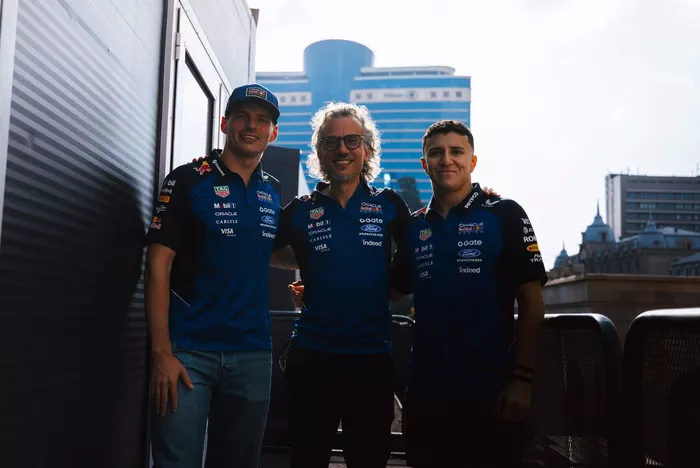
Red Bull has secured long-term leadership continuity after its recent Formula 1 resurgence.
Red Bull Racing has extended Laurent Mekies’ contract as CEO and team principal through the end of the 2031 season, confirming its commitment to the Frenchman following a significant turnaround in 2026. The decision comes after Max Verstappen secured consecutive victories in Malaysia and Singapore, restoring Red Bull’s ability to challenge for race wins.
The announcement reinforces the team’s long-term strategy after a period of considerable change. Mekies took charge in July 2025 following Christian Horner’s departure, inheriting a team facing sporting pressure and internal uncertainty. Now, with renewed momentum on track and key personnel secured for the future, Red Bull has made clear that Mekies will remain central to its next chapter.
Red Bull Rewards Mekies After a Difficult Transition
Mekies’ appointment in July 2025 marked the end of Horner’s two-decade leadership of Red Bull Racing. Before taking the top role at Milton Keynes, the Frenchman had led the sister team Racing Bulls and held senior positions at Ferrari and the FIA.
His arrival came during a challenging period for the organization. Red Bull had to manage a leadership transition while trying to recover its competitive form. Under Mekies, the team made substantial progress during the second half of 2025, with Verstappen finishing just two points short of the Drivers’ Championship.
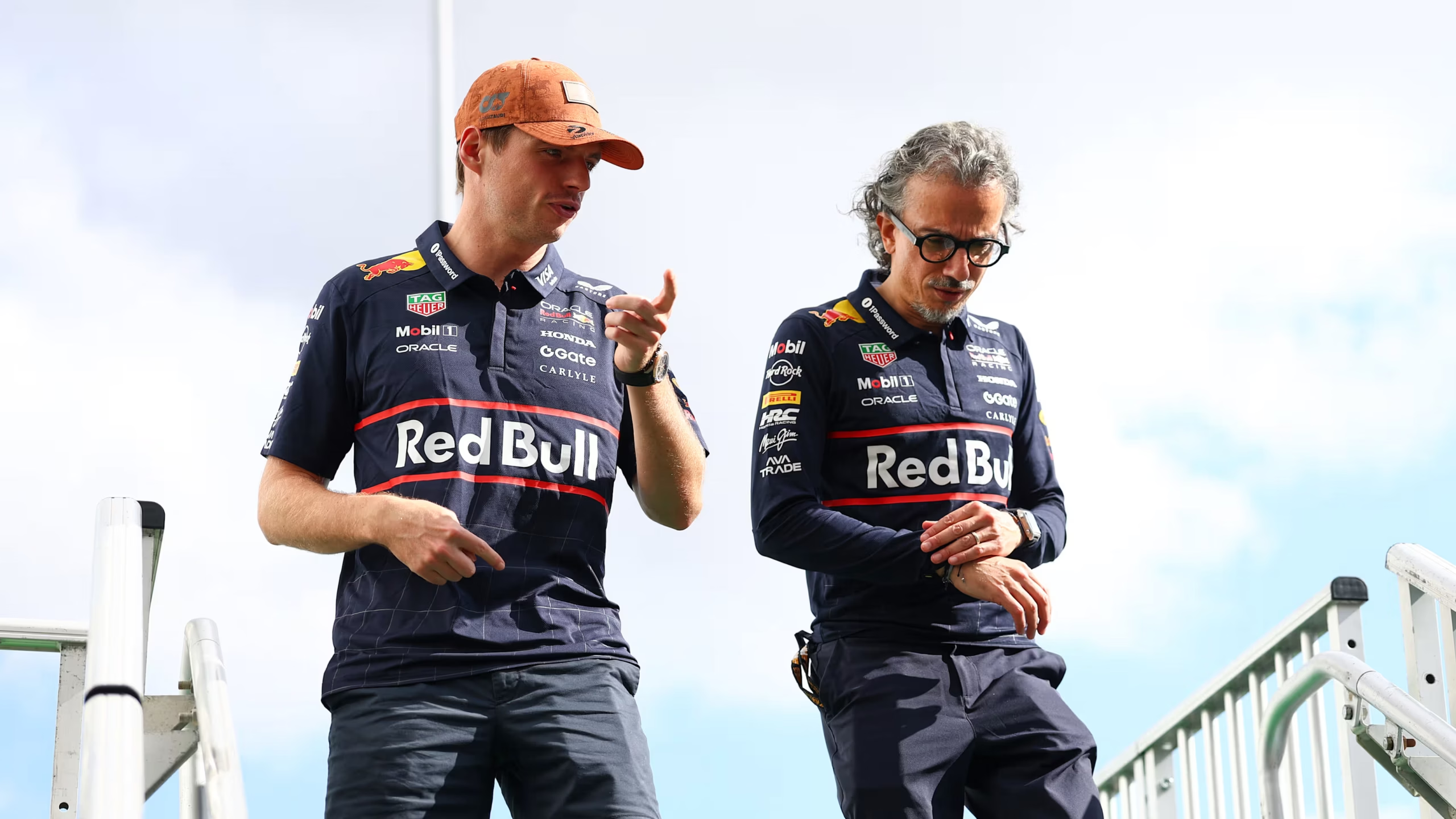
Red Bull has committed to Mekies through 2031 after he guided the team through a major leadership transition.
The start of 2026 brought another challenge: Red Bull entered a new technical era with its own power unit for the first time. The early part of the season did not meet the team’s expectations, but its performance improved as the campaign progressed.
Verstappen’s victory in Malaysia marked Red Bull’s first win of the season. A week later, the team delivered an even stronger performance in Singapore, winning both the Sprint and the Grand Prix. Those results demonstrated that Red Bull’s recovery had translated into victories rather than simply improved pace.
The contract extension reflects the organization’s confidence in Mekies’ leadership and its belief that continuity will help sustain that progress.
Red Bull Owners Back a Long-Term Vision
The decision was announced by shareholder Mark Mateschitz during a team debrief at the Milton Keynes headquarters following the victories in Malaysia and Singapore. Red Bull’s shareholders, Chalerm Yoovidhya and Mateschitz, highlighted the importance of teamwork and a stable environment for continued success.
They credited Mekies with guiding the organization through a significant transition while preserving the competitive culture associated with Red Bull Racing. Their message was clear: the extension is intended to support a long-term project, not simply reward a short run of positive results.
Oliver Mintzlaff, Red Bull’s CEO for corporate projects and investments, also emphasized the value of continuity. Mekies combines technical knowledge with strategic thinking
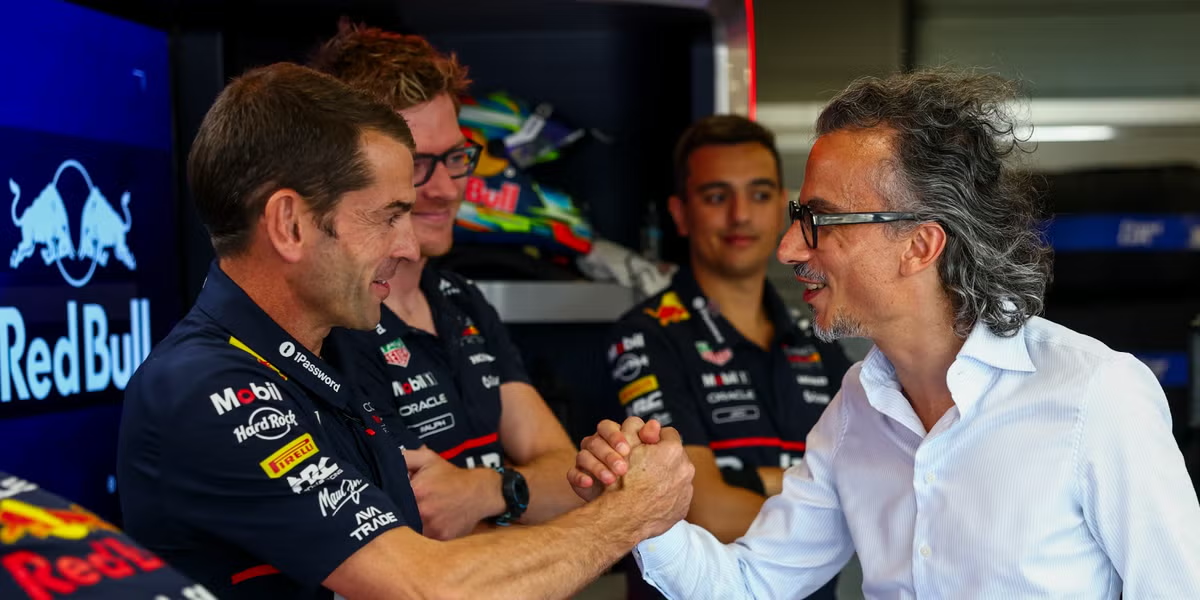
Red Bull’s leadership sees continuity at the top as an important part of its long-term Formula 1 ambitions.
The contract provides Mekies with a longer planning horizon as the team develops its car, power unit and technical organization. Formula 1 performance depends on decisions made over several seasons, from engineering recruitment and infrastructure investment to the development direction of future cars.
A stable leadership structure can help align those decisions, although results will ultimately depend on how effectively the organization converts its resources and technical capabilities into performance on track.
Verstappen and Hadjar Strengthen Red Bull’s Future
Mekies’ renewal is part of a broader effort to secure Red Bull’s key personnel. Verstappen has a contract through 2030, while Isack Hadjar has been confirmed to remain with the senior team for the 2027 season.
Verstappen remains the team’s central competitive reference. His recent victories in Malaysia and Singapore have provided an immediate demonstration of Red Bull’s progress, while his long-term commitment gives the organization continuity in its driver line-up.
Hadjar’s position is also important. The Frenchman has delivered encouraging performances alongside Verstappen in 2026, offering Red Bull a more stable pairing as it prepares for the coming seasons.
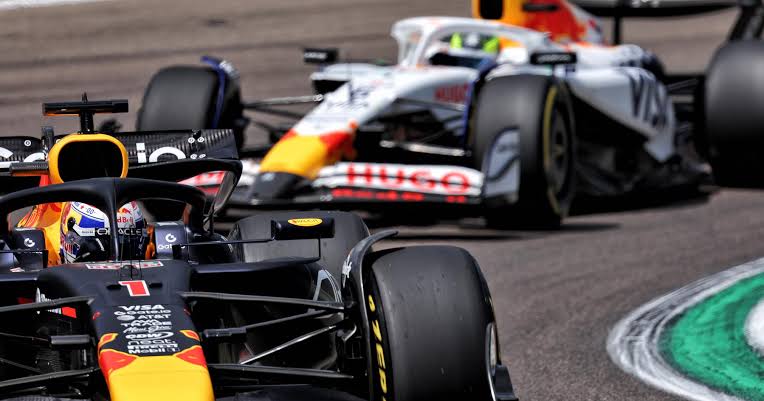
Red Bull is building its next phase around leadership continuity and a driver line-up featuring Verstappen and Hadjar.
Beyond the drivers, the team is relying on technical leaders to translate its ambitions into a competitive package. Pierre Waché’s aerodynamic and vehicle-development group and Ben Hodgkinson’s power-unit organization are central to that effort.
The power-unit project is particularly significant because 2026 marks Red Bull’s first season competing with its own power unit. Integrating engine development with chassis and aerodynamic work creates both a substantial technical challenge and an opportunity to align the car’s major systems more closely.
Mekies said he was proud to continue working with Red Bull and thanked the shareholders, the wider team and everyone involved in the project for their confidence. He also pointed to the contributions of Waché and Hodgkinson as central to the team’s future.
Red Bull Wants Its Recovery to Become a New Era
The victories in Malaysia and Singapore have changed the tone around Red Bull’s season, but the team still has work to do to establish sustained competitiveness. A strong run of races is encouraging, yet maintaining that level requires consistent development, reliable operations and the ability to respond to rivals’ improvements.
The extension through 2031 gives Mekies the time and authority to pursue that longer-term objective. It also signals that Red Bull wants to avoid another major leadership change while adapting to a new technical landscape.
Securing Verstappen, Hadjar and key technical personnel further supports that strategy. The combination gives Red Bull a clearer framework for planning future cars, developing its power unit and maintaining a consistent approach to race operations.
However, a long contract alone cannot guarantee championships. Red Bull must continue improving its performance, manage its technical program effectively and turn promising race weekends into regular results.
Mekies arrived at Milton Keynes to lead the team through a period of uncertainty. After helping restore its ability to win races, he now has a long-term mandate to build on that progress. Red Bull’s objective is no longer just to recover from a difficult transition, but to establish a competitive foundation that can last through the end of the decade.








-

 NOW TRENDING2 months ago
Aston Martin DBX Becomes Harry Da Souza’s Ride in MobLand
-

 TEST DRIVES2 months ago
2026 Maserati GranTurismo Trofeo Review: Miami
-

 INTELLIGENT MOBILITY2 months ago
Tesla Cybercab Navigation Problem Hits Austin Robotaxis
-

 INTELLIGENT MOBILITY2 months ago
2027 Nissan Rogue Hybrid: e-POWER Comes to America
-

 TEST DRIVES2 months ago
2026 Maserati GranTurismo Coupe
-
 Formula12 months ago
Cadillac F1 2026 Faces an Eight-Race Logistics Challenge
-

 NOW TRENDING2 months ago
Land Rover Defender Recall 2026: 23,677 JLR SUVs Affected
-
 NOW TRENDING2 months ago
Every 2026 Chevrolet With AWD or 4WD