
Formula1
Horner Reveals Why Red Bull Ruled Out Alonso for 2025

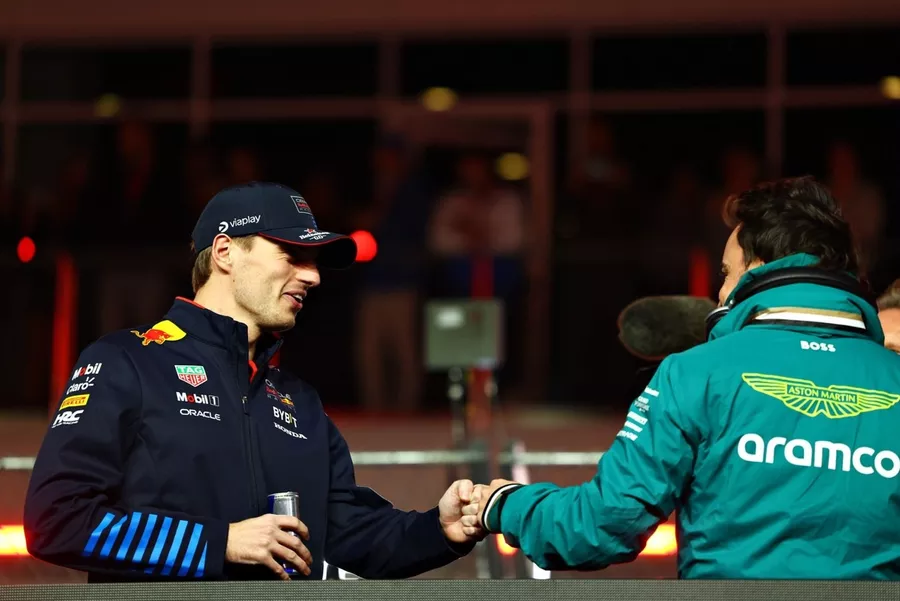
Christian Horner says Fernando Alonso wanted to join Max Verstappen at Red Bull, but internal opposition stopped the deal.
Christian Horner has revealed that Red Bull considered signing Fernando Alonso to partner Max Verstappen for the 2025 Formula 1 season. According to the former team principal, the Spanish driver was interested in the opportunity, but opposition from within the organization ultimately prevented the move.
The revelation appears in Horner’s forthcoming autobiography, Drive, and offers a new perspective on one of the most intriguing hypothetical driver line-ups in recent Formula 1 history. Horner says Helmut Marko opposed the idea, apparently representing the position of Verstappen’s management circle, although he insists that the Dutchman himself was not responsible for blocking the deal.
For Horner, the decision was a disappointment. He believed Alonso could have been a strong addition to Red Bull at a time when Sergio Pérez was struggling to reproduce his earlier performances.
Alonso Was Interested in Joining Verstappen at Red Bull
Red Bull began exploring alternatives for its second seat during the 2024 season as Pérez’s results deteriorated. Although the Mexican driver had previously helped the team secure important championship results, his declining form raised questions about whether he remained the right long-term partner for Verstappen.
Alonso emerged as a potential candidate. The two-time world champion was still demonstrating his competitiveness with Aston Martin, and his experience, racecraft and technical feedback made him an attractive option for a team seeking a stronger driver pairing.
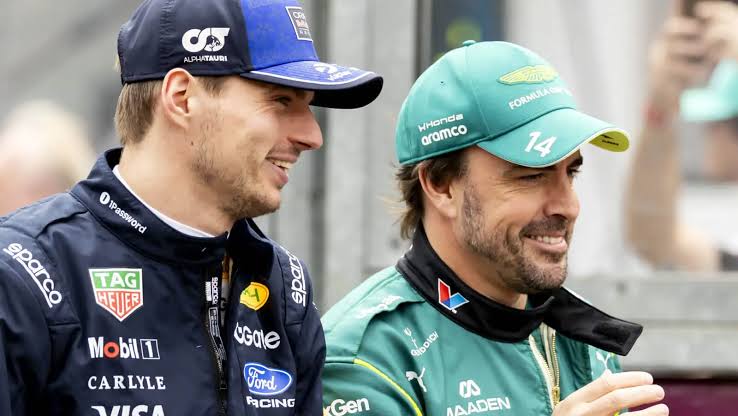
Alonso and Verstappen could have formed one of the most experienced and competitive driver pairings on the 2025 grid.
Horner says conversations took place during the Japanese Grand Prix in April 2024, before Alonso had announced his contract extension with Aston Martin.
“During the Japanese Grand Prix, Fernando even told me that he was really looking forward to driving alongside Max the following season,” Horner recalled.
The account suggests that the possibility went beyond speculation about a hypothetical partnership. According to Horner, Alonso personally expressed enthusiasm about the prospect of sharing a garage with Verstappen.
At the time, Red Bull needed to decide whether to retain Pérez or pursue another driver. Alonso would have offered a very different profile from the Mexican, bringing two world championships, extensive experience and a record of competing at the front with several teams.
However, the proposed partnership never progressed to a completed agreement.
Helmut Marko Opposed the Alonso Deal
According to Horner, Marko subsequently made it clear that the proposed signing was not welcomed by the relevant people within Red Bull.
“Afterward, Helmut, apparently on behalf of Verstappen’s management, made it clear that they were not happy with the idea,” Horner explained.
That account places Marko at the centre of the opposition, but it does not establish precisely who made the final decision. Horner also draws a distinction between the position he says was communicated to him and Verstappen’s own views.
“I immediately knew that order had not come from Max. But someone, at some point, had decided that it was not the right move for Red Bull. I was disappointed,” he said.
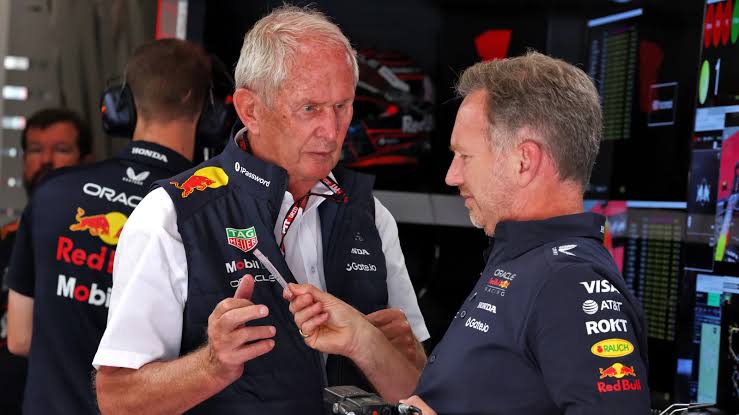
Horner’s account describes an internal disagreement over the driver line-up, with Marko reportedly opposing Alonso’s arrival.
Horner believed Verstappen was confident enough in his own abilities to compete against any teammate. From that perspective, bringing Alonso into the team would not necessarily have threatened the Dutchman’s position as Red Bull’s leading driver.
Nevertheless, the precise reasoning behind the reported opposition remains unclear. Horner’s account does not establish whether the decision was based on sporting considerations, management preferences or concerns about the dynamics of having two highly competitive champions in the same team.
Alonso’s future was settled shortly afterward. On April 11, 2024, Aston Martin announced that he would remain with the team, effectively ending the possibility of a Red Bull move for 2025.
Charles Leclerc Was Another Driver Horner Wanted
Alonso was not the only leading driver Horner considered as a potential teammate for Verstappen. Charles Leclerc, Ferrari’s Monegasque star, had also attracted the former Red Bull boss’s attention.
Horner recalled speaking with Nicolas Todt, Leclerc’s representative, during the 2023 Qatar Grand Prix. He believed the Ferrari driver could have been an excellent fit for Red Bull, citing his outright speed, competitive character and commitment.
“I thought he could be the perfect driver for us,” Horner recalled.
However, Horner says Marko also rejected that possibility.
“Shortly afterward, Helmut told me to forget about Charles as well. Just as with Fernando, it was not going to happen,” he explained.
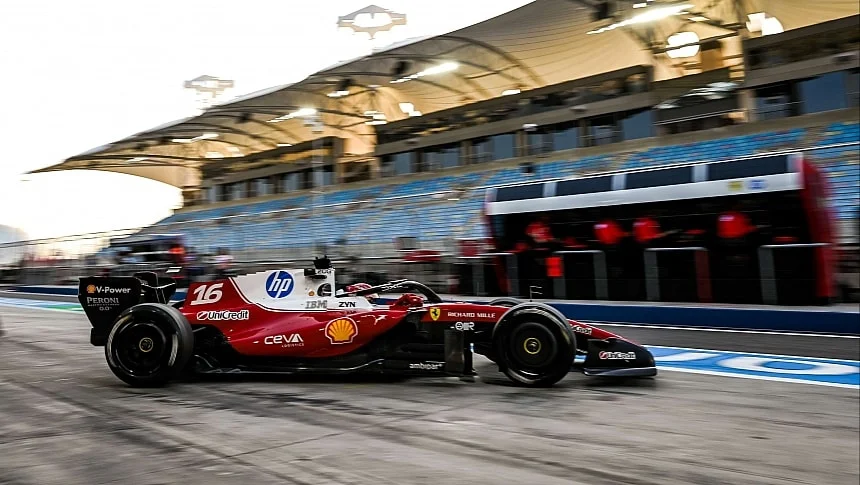
Leclerc was another driver Horner considered before Red Bull settled on its eventual line-up.
The revelations raise questions about how much influence internal disagreements had over Red Bull’s driver decisions. However, the available account does not fully establish who had the final authority over each potential signing or the complete reasoning behind the rejections.
What is clear from Horner’s recollection is that he wanted to consider alternatives beyond Pérez as the team evaluated its future.
Red Bull’s Subsequent Driver Changes Raised More Questions
Pérez received a contract extension during 2024, but his time at Red Bull ended after that season. Liam Lawson was selected for the 2025 campaign, only to be replaced by Yuki Tsunoda after the opening two Grands Prix.
The rapid change highlighted the difficulty Red Bull faced in finding a driver capable of delivering consistent results alongside Verstappen. Lawson had limited Formula 1 experience when he was promoted, and the pressure of the role proved considerable.
Horner admitted that he had reservations about the decision to promote the New Zealander.
“I was not comfortable. He was young and inexperienced, with only 11 F1 races behind him, and we were asking an enormous amount of him,” Horner recalled.
The search for alternatives continued beyond the immediate second-seat decision. Horner also held discussions with Carlos Sainz about a possible move for 2026, but that opportunity did not materialize. Horner was dismissed from his Red Bull role shortly after meeting the Spanish driver, according to his account.
These developments provide context for his disappointment over the Alonso and Leclerc possibilities. Both drivers had substantial experience and established records, but neither joined Verstappen at Red Bull.
What an Alonso-Verstappen Partnership Could Have Meant
A partnership between Alonso and Verstappen would have brought together two world champions with different racing backgrounds and highly competitive reputations. It would also have created a demanding challenge for Red Bull’s management, particularly in balancing strategy, development priorities and the expectations of two leading drivers.
Alonso’s experience could have helped Red Bull evaluate its car and technical direction, while Verstappen’s pace would have provided an immediate benchmark. At the same time, combining two drivers accustomed to competing for major results would have required careful management.
There is no way to know whether the pairing would have delivered more victories or created additional internal tension. Those outcomes would have depended on the car’s competitiveness, the relationship between the drivers and how the team handled difficult sporting decisions.
Horner’s account nevertheless offers a glimpse into an alternative path Red Bull considered during a period of uncertainty over its driver line-up.
The former team principal says he was disappointed that the move did not happen, but his explanation leaves one important question unanswered: who ultimately decided that Alonso should not join Verstappen?
For now, the proposed partnership remains one of Formula 1’s most compelling what-if scenarios. Red Bull chose a different route, and the subsequent changes to its second seat demonstrated how difficult it can be to find the right balance alongside a dominant lead driver.








-

 NOW TRENDING2 months ago
Aston Martin DBX Becomes Harry Da Souza’s Ride in MobLand
-
 TEST DRIVES2 months ago
2026 Maserati GranTurismo Trofeo Review: Miami
-
 INTELLIGENT MOBILITY2 months ago
Tesla Cybercab Navigation Problem Hits Austin Robotaxis
-
 INTELLIGENT MOBILITY2 months ago
2027 Nissan Rogue Hybrid: e-POWER Comes to America
-
 TEST DRIVES2 months ago
2026 Maserati GranTurismo Coupe
-
 Formula12 months ago
Cadillac F1 2026 Faces an Eight-Race Logistics Challenge
-

 NOW TRENDING2 months ago
Land Rover Defender Recall 2026: 23,677 JLR SUVs Affected
-
 NOW TRENDING2 months ago
Every 2026 Chevrolet With AWD or 4WD