
INTELLIGENT MOBILITY
Rivian’s R2 Has Officially Moved From Promise To Street And That Changes Everything For The Brand In America


Rivian has officially begun public customer deliveries of the R2, and that makes this one of the most important moments in the company’s history since the launch of the R1T and R1S. The headline is simple enough: the all-new mid-size electric SUV is now reaching its first real customers, and Rivian has also started opening order invitations for existing reservation holders. But the significance of the moment goes much deeper than that. The Rivian R2 is not just another product launch. It is the vehicle that has to take Rivian from a niche premium EV maker with strong brand cachet into a much broader, more scalable player in the American market.
That is why this milestone matters so much. The R2 is the model designed to bring Rivian’s design language, software experience and adventure-focused identity to a significantly larger audience than the pricier R1T and R1S ever could. It sits in a much more mainstream part of the market, it starts at a meaningfully lower price point, and it has been engineered to become the foundation for Rivian’s next phase of volume growth in the U.S. If the company wants to prove it can move beyond being one of the EV industry’s most interesting boutique brands and become a durable long-term force, the Rivian R2 is the product that has to make that happen.
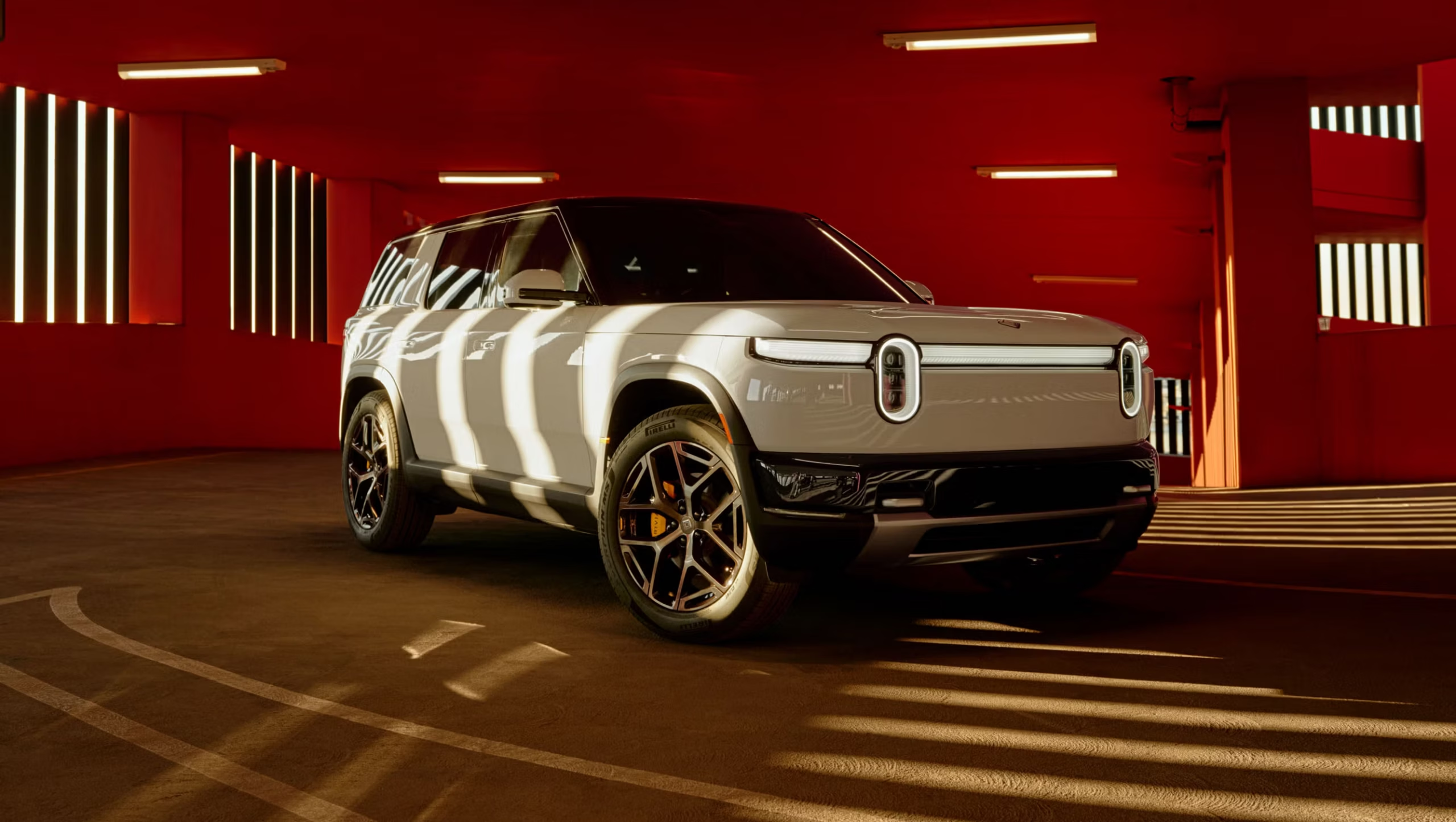
Public deliveries of the Rivian R2 have officially begun, turning the company’s most important next-generation EV from a promise into a real product on American roads.
Rivian Is No Longer Selling The Idea Of The R2: It Is Finally Delivering It
That shift from concept to customer driveway is the real story.
Rivian first unveiled the R2 in March 2024 as the model that would help bring the brand’s design, technology and off-road character to a broader audience. Since then, the SUV has carried enormous strategic weight. It has been discussed as Rivian’s volume play, its pricing bridge to a larger customer base, and its best chance to compete in the heart of the American electric SUV market rather than at the premium fringes. Now, with public customer deliveries officially underway, the conversation changes. Rivian is no longer asking people to imagine what the R2 could mean. It is finally putting the vehicle into the hands of paying buyers.
That matters because there is a big difference between unveiling a promising EV and actually delivering it at scale. The EV market is full of brands that looked compelling on paper but struggled once the conversation shifted from prototypes and reservation numbers to manufacturing, pricing discipline, logistics and customer handoff. By beginning external deliveries of the Rivian R2, the company has crossed into the part of the story that actually decides whether the model can fulfill its promise.
The Rivian R2 Is The Vehicle That Has To Expand The Brand Beyond The R1 Crowd
The R1T and R1S established Rivian’s identity. The R2 has to broaden it.
That is a crucial distinction. Rivian’s first-generation products helped the company build a strong brand image around rugged design, EV capability, premium software integration and a certain outdoorsy, lifestyle-driven cool factor. But they also lived in a relatively expensive space. The R2 is designed to reach a much wider part of the market, and that is exactly why it matters so much more commercially. Rivian needs a vehicle that can attract customers who like the company’s ethos but were never going to spend R1 money.
On paper, the Rivian R2 looks built for that role. It is a mid-size electric SUV rather than a full-size adventure truck or a larger premium SUV. It uses a new platform engineered for a lower price point. And it enters a part of the U.S. market where there is much more room to grow if Rivian can execute properly. This is not the halo product designed to show what the brand can do at its most ambitious. It is the model designed to turn Rivian into a more mainstream EV player without stripping away what makes the brand feel distinct in the first place.
Rivian Is Launching The R2 In A Way That Feels Deliberately Premium, Even If The Goal Is Greater Scale
The first version available tells you a lot about Rivian’s strategy.
Public deliveries begin with the R2 Performance with Launch Package, which starts at $57,990 in the U.S. and serves as the top-spec launch configuration. That means Rivian is not opening the R2 story with its most affordable trim. It is starting with the most powerful, most feature-rich version — a familiar tactic in the EV world, but one that also makes sense for a company still trying to protect margins and maintain a premium image even as it expands.
The numbers are strong enough to support that positioning. The R2 Performance delivers 656 horsepower, 609 lb-ft of torque, a 0–60 mph time as quick as 3.6 seconds and an EPA-estimated range of up to 330 miles. It also brings semi-active suspension, dual-motor all-wheel drive, a tow package with 4,400 pounds of towing capacity, and a package of premium cabin and technology features designed to keep the R2 feeling like a Rivian first and a “smaller, cheaper model” second.
That is an important point. Rivian is trying to make the R2 more accessible than the R1 family, but it is not trying to turn it into a stripped-down EV crossover that abandons the brand’s personality. The launch strategy suggests Rivian still wants the R2 to feel aspirational, design-led and capability-focused — just in a package that opens the door to many more buyers.
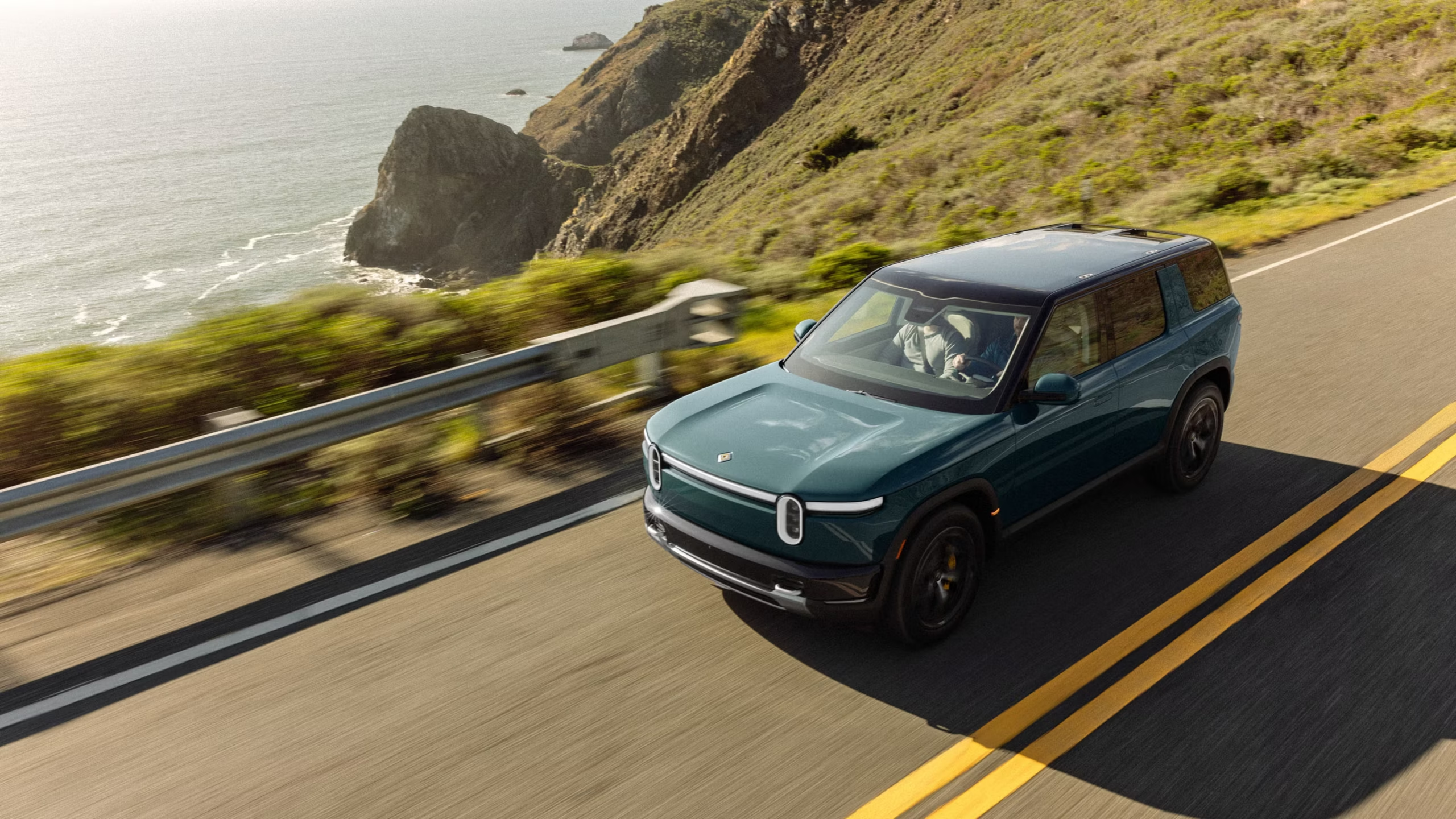
Rivian is starting R2 deliveries with the high-spec Performance Launch Package, signaling that the brand wants scale without giving up its premium identity.
The Real Importance Of The R2 Is That It Puts Rivian In A Much Bigger Part Of The U.S. EV Market
This is where the Rivian R2 becomes more than just a new model.
The American EV market does not only need six-figure trucks or expensive flagship SUVs. It needs products that sit closer to the center of the market — vehicles that are still aspirational and technologically advanced, but priced and sized to appeal to a broader group of buyers. That is exactly the space Rivian is targeting with the R2. It is smaller than the R1S, more approachable in price, and far better positioned to compete for customers who might otherwise be looking at a Tesla Model Y, a future mid-size electric SUV from legacy brands, or even a well-equipped hybrid crossover while waiting to see how the EV market settles.
That does not mean the R2 is cheap or mass-market in the traditional sense. It still carries a Rivian identity, and its initial pricing keeps it well above the bargain end of the segment. But it represents a much more scalable opportunity than anything Rivian has offered before. If the R1 family established the company’s credibility, the R2 is the vehicle that could establish its volume relevance.
There is also a timing factor here. Rivian is beginning deliveries at a moment when the EV market in the U.S. has become more demanding. Consumers are more price-sensitive, interest rates remain a factor, and buyers are no longer rewarding every EV startup simply for existing. That means the R2 cannot rely on novelty alone. It has to justify itself as a genuinely compelling product in a market that is already much tougher than the one Rivian entered with the R1T.
Rivian’s Software, Autonomy And Cabin Experience Are A Huge Part Of The R2 Pitch
The R2 is not just supposed to be a smaller Rivian. It is supposed to be a more scalable Rivian built around the company’s core software strengths.
That is why Rivian has packed the R2 with many of the ingredients it believes will define its future: a vertically integrated electrical architecture, over-the-air updates, a new infotainment stack, haptic steering-wheel controls, dual digital displays and a more advanced autonomy hardware platform. Rivian says the R2 includes 11 HDR cameras totaling 65 megapixels, a five-radar system, and the hardware foundation for Autonomy+, its hands-free assisted-driving platform across 3.5 million miles of roads in the U.S. and Canada.
That matters because Rivian increasingly wants to be understood not just as an EV manufacturer, but as a software-defined vehicle company. The R2 is one of the clearest expressions of that ambition so far. It is designed to evolve over time, to gain new features via software, and to offer a digital experience that feels native to the vehicle rather than bolted on from a supplier menu. In a market where more and more EVs are competing on screens, connectivity and driver-assistance capability as much as on battery size, that could be one of Rivian’s most valuable differentiators.
The Reservation And Ordering Process Shows Rivian Is Trying To Manage Demand Carefully
Rivian is also being deliberate about how it opens the order pipeline.
Existing R2 reservation holders are receiving order invitations in rolling batches rather than all at once, with timing influenced by factors such as reservation date and delivery location. Current Rivian owners are also getting accelerated timing in some cases, while the company says all reservation holders should receive an estimate for their order invitation timing by the end of June. Once invited, customers can configure their trim, wheels, color and interior directly through their Rivian account.
That is a smart approach for a brand in Rivian’s position. The company wants the R2 rollout to feel exciting, but it also needs to keep customer expectations aligned with actual production and delivery capacity. Managing reservation holders in waves helps Rivian avoid the kind of chaos that can happen when demand, supply and communication all move at different speeds.
It also reinforces the idea that the R2 is entering a very different phase. This is no longer a product that exists mainly in teaser images and speculative pricing charts. It is becoming a real production vehicle with real queue management, real handoffs and real customers waiting for delivery windows.
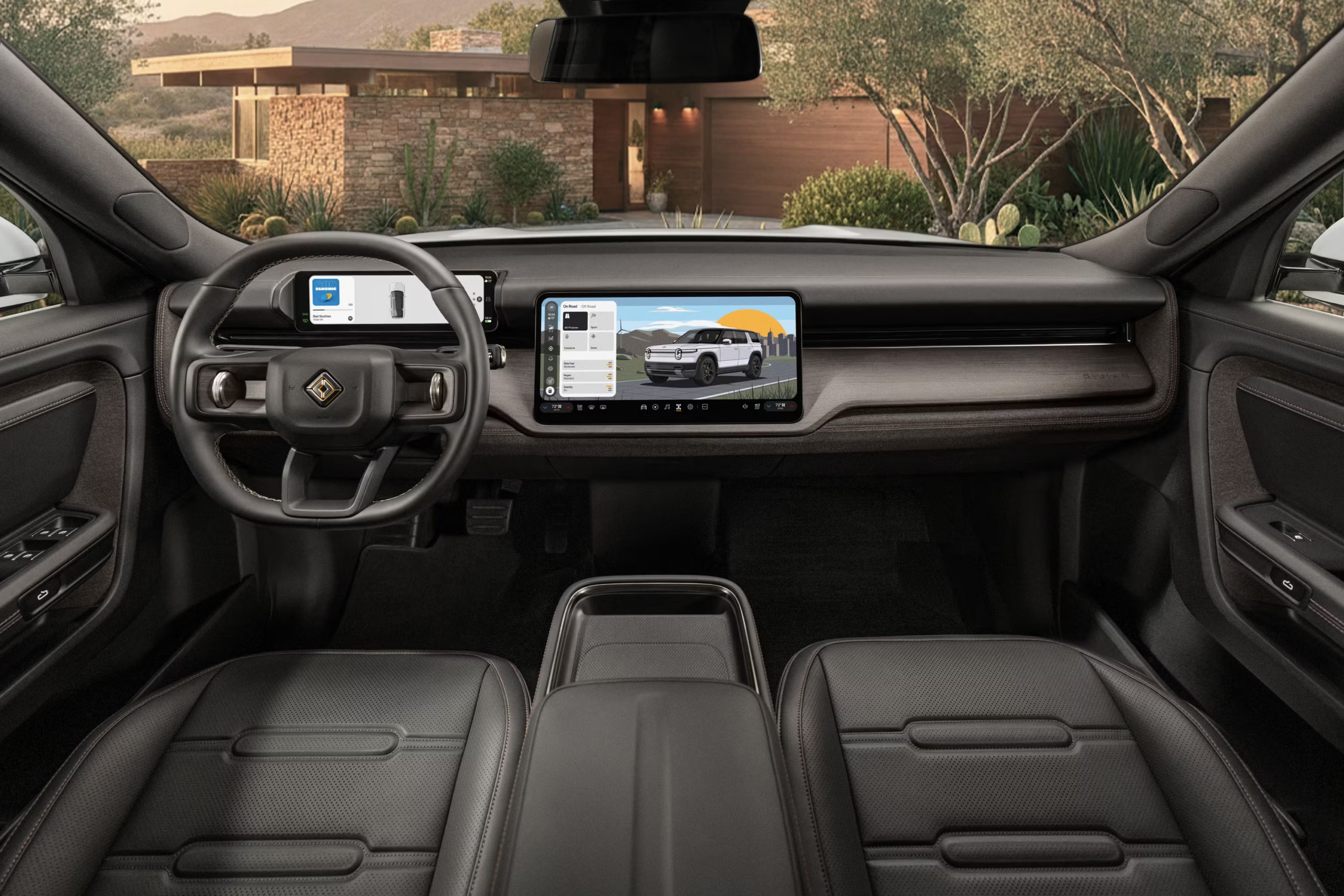
The R2 is central to Rivian’s software-defined vehicle strategy, pairing a more accessible price point with advanced driver-assistance hardware, dual displays and OTA-ready architecture.
Rivian Needs The R2 To Be More Than Popular It Needs It To Be Foundational
That is the part of the story that makes this launch so important.
Rivian does not simply need the R2 to be well-reviewed or socially popular. It needs it to become a true foundation for the company’s next stage of growth. The R2 has to help broaden the customer base, support production expansion, improve Rivian’s long-term business mix and create a stronger bridge to the future vehicles and platforms the company still wants to build.
That future is already taking shape around the R2. Rivian has made clear that its Normal, Illinois plant is producing the SUV now, while a second facility in Georgia is expected to add substantial capacity later in the decade. Rivian has even increased the planned initial production capacity of the Georgia site to 300,000 units annually in its first phase, underscoring how central the company believes its mid-size platform will become.
This is why the R2 cannot be viewed as a side project or simply a “smaller R1.” It is the vehicle around which Rivian is trying to build a much more durable industrial story in America. That story includes higher production volumes, a broader product base, deeper software monetization and, eventually, a more stable long-term business than one built only around premium adventure vehicles.
The R2 Could End Up Being The Car That Decides What Rivian Actually Becomes
The R1T and R1S made Rivian interesting. The R2 may be the model that decides what the company actually becomes.
If the rollout goes well, the Rivian R2 could become the vehicle that turns Rivian from a highly admired EV startup into a more complete American automaker with real scale. It has the right format for that: a mid-size SUV, a lower price point than the R1 family, a strong tech story, and enough Rivian character to avoid becoming generic. It also arrives at a moment when buyers are more demanding and the EV market is less forgiving, which means success will matter even more because it will have been earned in a tougher environment.
That is why the start of public deliveries matters so much. It marks the moment when the R2 stops being Rivian’s future plan and starts becoming Rivian’s real-world test. Can the company take its brand beyond early adopters? Can it scale without losing its identity? Can it turn software, design and EV capability into a broader commercial success? The answers will not come in a single delivery event, but the process has now officially begun.
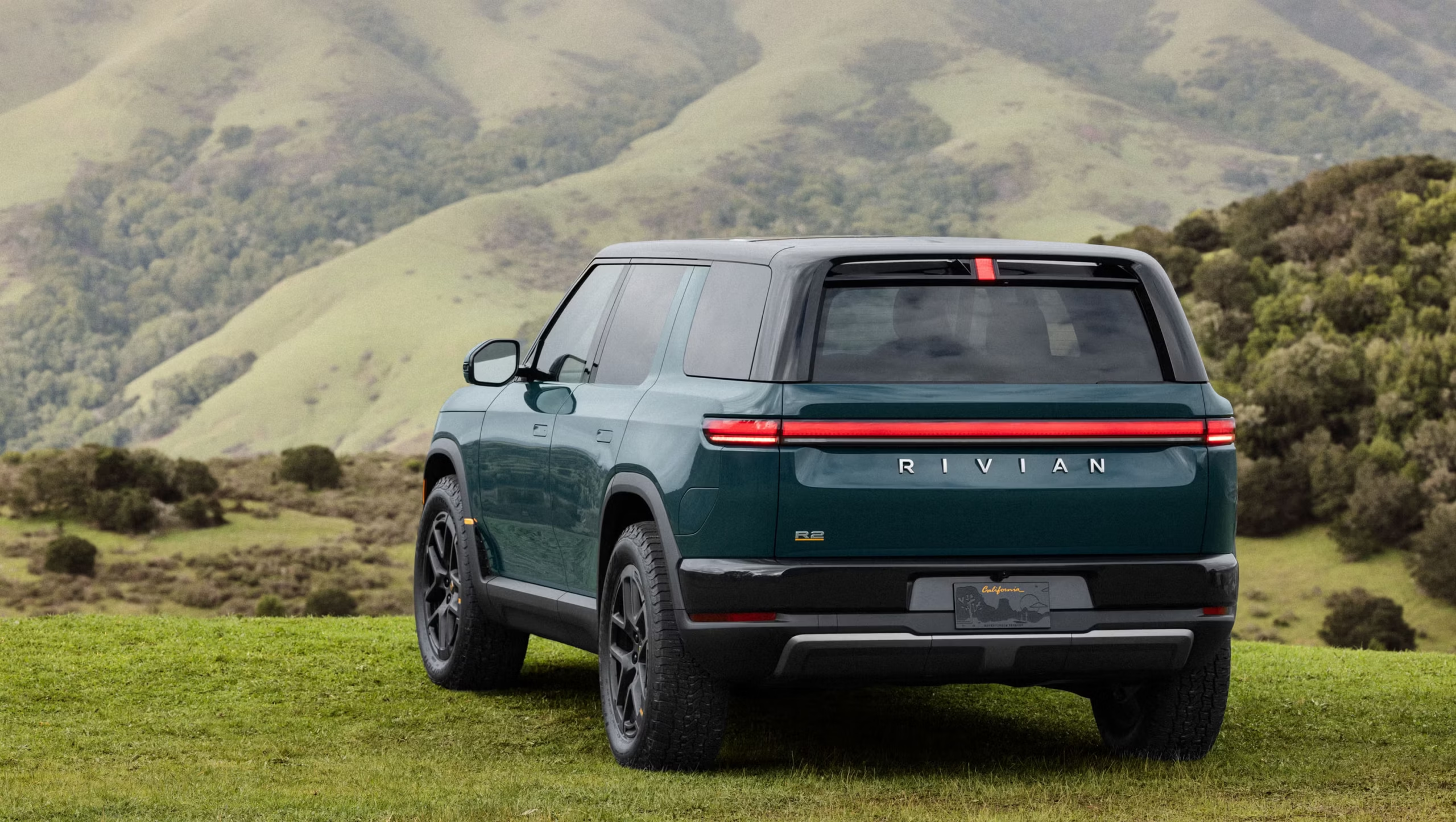
The R2 is more than a new electric SUV for Rivian: it is the model that has to carry the brand from premium niche player toward much broader relevance in the U.S. market.
And that is why this moment feels bigger than a normal launch. Rivian is not simply handing over keys to another new EV. It is beginning the rollout of the vehicle that has to prove the brand can translate admiration into scale. The R2 has the design, the specs and the software story to make that possible, but public deliveries are where those ideas stop being theoretical and start meeting the realities of manufacturing, customer expectations and a highly competitive U.S. market.
If the Rivian R2 succeeds, it will do more than add another SUV to the brand’s lineup. It will become the product that gave Rivian a credible path to grow beyond the boutique phase of its life and into something much larger. For a company still trying to define its long-term place in the American EV landscape, there may not be a more important vehicle on sale right now.






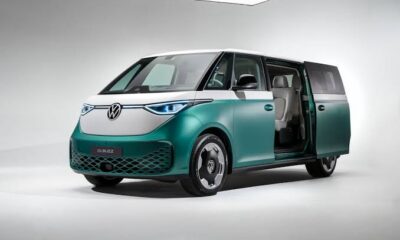



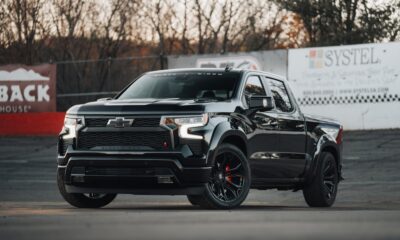




GM Energy and PG&E are giving eligible California EV buyers access to a home charger and smart-charging incentives directly through participating Chevrolet, GMC and Cadillac dealers.
GM and PG&E bring home charging into the showroom
General Motors is making home EV charging part of the buying process for some customers in Northern and Central California.
GM Energy and Pacific Gas and Electric Company are launching the Smart Charge Bundle. The program gives eligible PG&E residential customers access to a home charger and smart-charging support when they purchase or lease a new Chevrolet, GMC or Cadillac EV through a participating dealer.
The goal is straightforward.
Customers can discuss charging needs before they leave the dealership. They can also enroll in the utility program and select a qualifying GM Energy charger as part of the process.

Eligible customers can choose a GM Energy PowerShift Charger or PowerUp 2 charger at no additional hardware cost.
GM says the value can reach $1,999, depending on the charger and the vehicle purchase or lease path. Installation, permits and electrical upgrades are separate customer expenses.
That distinction is important.
The charger hardware can be included under the offer, but getting the equipment installed at the home is not covered by the hardware incentive.
What the two GM Energy chargers do
The GM Energy PowerUp 2 is a Level 2 home charger.
The PowerShift Charger offers additional capabilities when paired with compatible GM Energy equipment and an eligible vehicle. Those systems can support bidirectional charging, allowing energy to move from the home to the EV and, with the required equipment and grid connection, from the EV back to the home.
That second function can be useful during a power outage.
A properly equipped home and compatible GM EV can use stored vehicle energy for backup power. GM has already been working with utilities on programs designed to expand those capabilities.

GM has demonstrated home charging and energy-management equipment with the GMC Sierra EV.
The new Smart Charge Bundle, however, is focused first on making standard home charging easier to access.
That matters because charging is one of the main questions for people considering an EV for the first time.
Customers need to know where they will charge, which equipment they need and how charging could affect their electricity bill.
GM and PG&E are trying to answer those questions before the vehicle reaches the customer’s driveway.
Smart charging can lower charging costs
The program goes beyond the charger itself.
Eligible customers can participate in PG&E’s EV Charge Manager program. Participating households may receive a $15 monthly bill credit and could save up to an additional $50 per month by shifting charging to lower-cost periods.
Actual savings will vary.
They depend on utility rates, program rules and the customer’s charging behavior. The monthly figures therefore represent potential benefits, not guaranteed savings for every participant.
Managed charging works by scheduling charging during periods when electricity demand and costs are lower.
Customers still remain in control. GM says they can override a managed charging session when they need to charge immediately.

The Chevrolet Silverado EV can be paired with GM Energy home energy equipment for compatible vehicle-to-home applications.
The software layer for the new program comes from WeaveGrid, which works with GM and PG&E to manage charging.
The system is designed to help shift charging away from periods of higher demand. That can also help reduce localized strain on the electrical grid.
This approach is part of a larger strategy.
GM and PG&E have been testing ways for electric vehicles to interact with the grid. GM says the companies are targeting a future in which up to 52,000 GM EVs could participate in grid-balancing programs in Northern California by 2030.
Who can get the Smart Charge Bundle?
The program is not available to every EV buyer.
Eligible customers must be PG&E residential customers in a qualifying area of Northern or Central California. They must purchase or lease a new Chevrolet, GMC or Cadillac EV through a participating dealership.
The offer runs through February 2027 or until program capacity is reached.
Customers must also live in a qualifying single-family or detached home and have permission to install a charger there.
There are additional requirements.
Participants must complete enrollment, accept the program’s terms and use GM Energy’s preferred installer network to receive the charger. An active OnStar service plan with location services enabled is also required. Customers cannot already be enrolled in another qualifying smart-charging or demand-response program.
GM wants charging to become part of the EV purchase
The Smart Charge Bundle reflects a broader change in how automakers are approaching EV ownership.
Instead of treating the vehicle and home charging equipment as separate purchases, GM is bringing the two conversations together.
That could make the process easier for first-time buyers.
The program also builds on GM’s existing work with PG&E. The utility and automaker previously launched a vehicle-to-everything pilot that can help compatible GM EVs provide power to properly equipped homes and could support future grid applications.
The new bundle focuses on a simpler starting point: buy the EV, arrange the charger and understand the smart-charging program at the same time.
For eligible California customers, the GM Energy and PG&E Smart Charge Bundle creates a more integrated path into home EV charging, while also introducing potential monthly utility savings and laying groundwork for broader vehicle-to-grid applications.
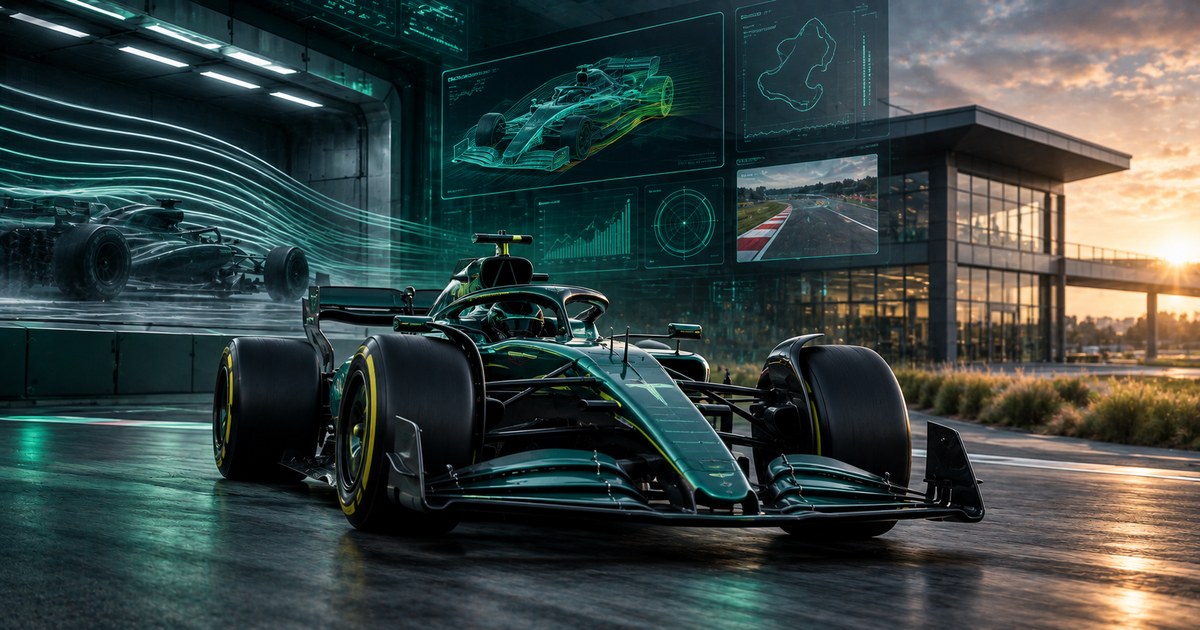
Aston Martin is using artificial intelligence with its CoreWeave AI.R Tunnel to improve aerodynamic correlation and turn massive amounts of F1 data into faster decisions.
Aston Martin is putting AI to work in Formula 1
Artificial intelligence is becoming part of Aston Martin’s daily Formula 1 operation.
The team is working with CoreWeave to process large amounts of information and turn it into useful engineering and race-strategy insights. The project covers areas that range from aerodynamic correlation to competitor radio analysis.
The latest details were published by Aston Martin on September 21, 2026. The team says millions of data points are generated during every Grand Prix weekend, making speed of analysis increasingly important.
The objective is not to replace engineers.
Instead, Aston Martin wants its engineers to find important information faster. In Formula 1, saving even a few seconds can affect a setup change or a strategy decision.
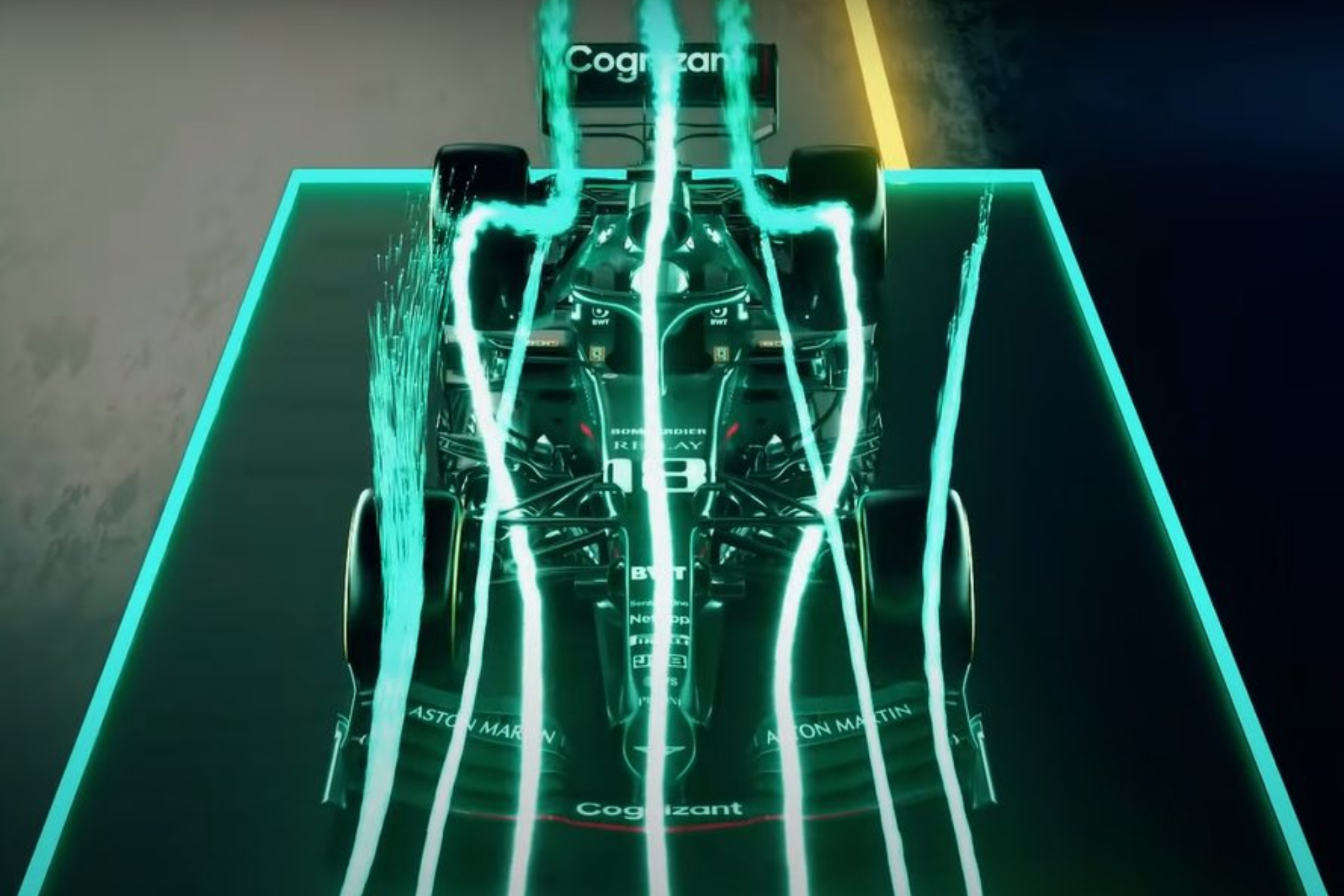
The CoreWeave AI.R Tunnel became a central part of Aston Martin’s technical operation as the team prepared for the 2026 regulations.
The wind tunnel is at the center of the first application.
Aston Martin’s CoreWeave AI.R Tunnel provides precise aerodynamic measurements. However, a laboratory cannot reproduce every condition found at a Formula 1 circuit.
The team points to changing kerb heights, weather conditions and dirty air as examples.
Those variables can create a gap between what simulations predict and what the driver experiences on track. That difference is known as aerodynamic correlation.
AI helps Aston Martin close the correlation gap
Aston Martin describes correlation as one of the biggest challenges in modern F1 aerodynamics.
The team and CoreWeave developed analytical methods that compare historical race data with vehicle-dynamics research. The goal is to identify the factors that can cause real-world performance to differ from controlled testing.
The result is a more accurate prediction of how aerodynamic components could behave at a Grand Prix.
That information can then be used before the cars arrive at the circuit.
Aston Martin says its Vehicle Engineering team uses the insights in the week before a race to help calibrate the car’s setup. The aim is simple: make the car behave as closely as possible to the engineers’ expectations during the first practice session.
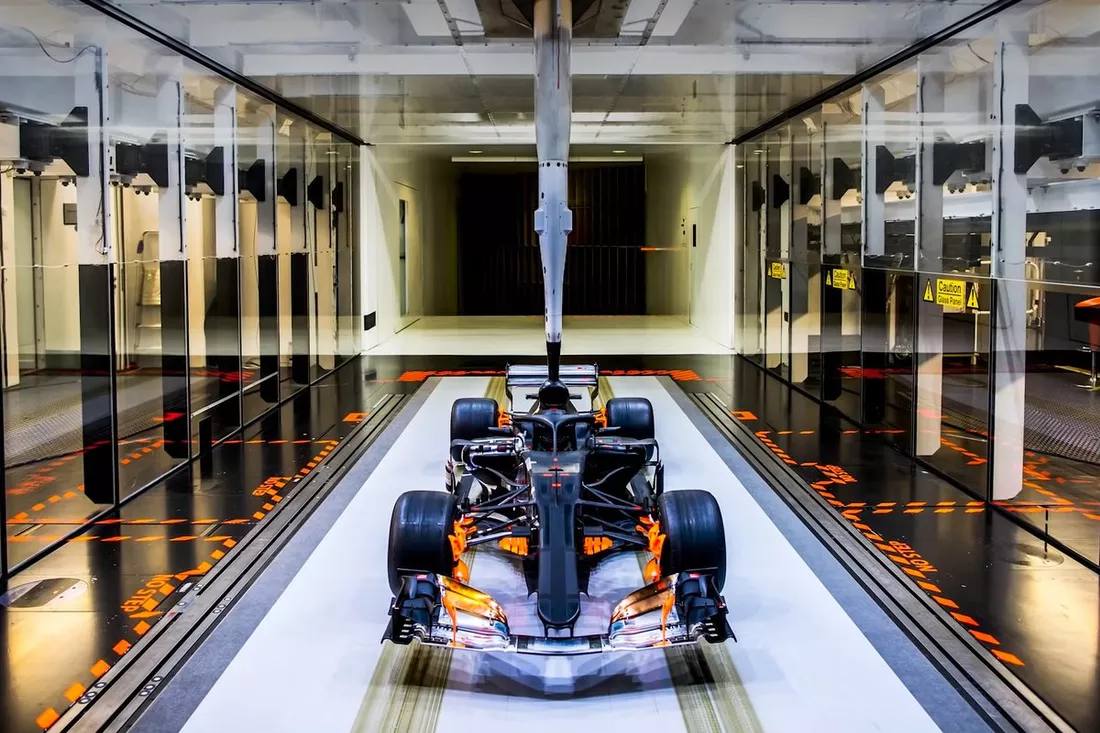
CoreWeave branding is visible on Aston Martin’s Formula 1 machinery as the partnership expands into AI-powered engineering.
The second application happens during the race itself.
Aston Martin says engineers can face 22 competitor radio channels plus more than 15 internal channels at the same time. Finding a specific piece of information manually can take valuable minutes.
That becomes a problem when a strategy decision has to be made quickly.
AI turns F1 radio into searchable data
CoreWeave has built a system that listens to, transcribes and categorizes radio communications.
The tool processes competitor and internal audio. Engineers can then search the information through a dedicated interface instead of manually reviewing long audio streams or noisy transcripts.
The system also uses a large language model to standardize terms.
For example, different ways of saying “Turn 1” can be organized as T1, making the information easier to filter.
This can help answer questions about tire performance, grip, strategy or driver feedback much faster.
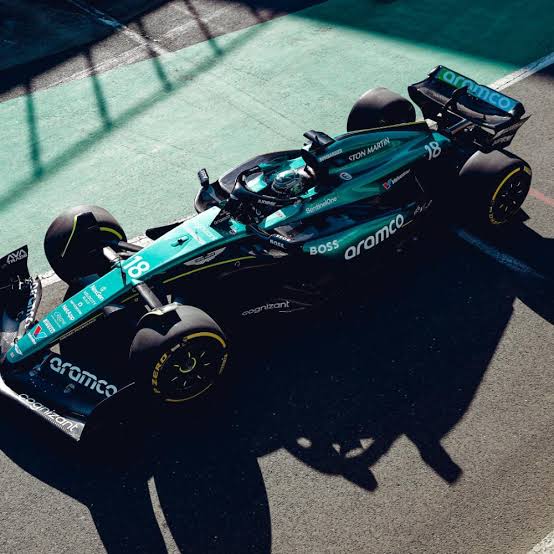
Race engineers remain responsible for interpreting the data and making the decisions during a Grand Prix.
The scale of the system is significant.
At the 2026 Monaco Grand Prix, Aston Martin says the platform processed tens of hours of radio, thousands of messages and hundreds of thousands of words.
CoreWeave has also described a broader system capable of processing 40 radio channels simultaneously. Its technical report says the platform can transcribe, categorize and make those feeds searchable within seconds.
That system was tested during the final two races of the 2025 season before being deployed for 2026. CoreWeave says its development included 75 model iterations, seven hours of hand-annotated F1 radio and more than 3,000 labeled samples.
AI is another tool for Aston Martin’s engineers
Aston Martin is clear about the role of the technology.
AI is not replacing the people making decisions. Instead, it changes how much information those people can process and how quickly they can access it.
That distinction matters in Formula 1.
An AI system can organize data. It can identify patterns. It can surface relevant information.
But engineers still need to decide what that information means for the car.
The same principle applies to aerodynamic development. The AI can help predict how a component will behave, but the engineering team still decides which solution should be developed and tested.
The AI work fits a larger technical transformation
Aston Martin’s AI project is part of a much broader investment at its AMR Technology Campus in Silverstone.
The team’s new wind tunnel began operation in 2025 and was created to support both the existing car and the transition to the 2026 regulations.
Adrian Newey has also acknowledged that Aston Martin started its 2026 development cycle later than many rivals. He said the first 2026 model did not enter the AI.R Tunnel until mid-April, leaving the team roughly four months behind in that phase of aerodynamic testing.
That makes efficient use of every available development tool even more important.
The AI work is therefore not a separate experiment. It is part of Aston Martin’s effort to connect simulation, wind-tunnel data, vehicle dynamics and race information more effectively.
The Aston Martin AI and CoreWeave partnership shows how Formula 1 is moving beyond simply collecting more data. The focus is increasingly on finding the right information quickly and turning it into decisions that can improve the car on the track.
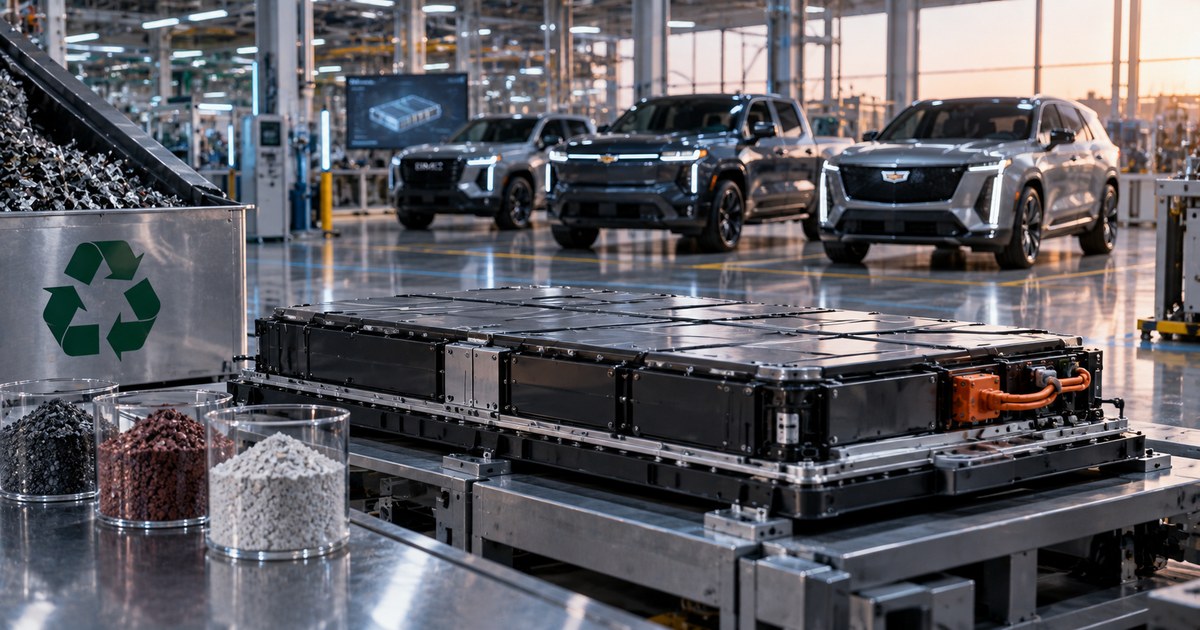
GM has completed a closed-loop battery recycling pilot in the U.S., using recovered nickel, cobalt and manganese to make new EV battery cells.
GM completes its closed-loop battery pilot
General Motors has completed a major step in its EV battery recycling strategy.
The automaker says materials recovered from end-of-life GM EV batteries were refined and used to produce new battery cells. The project is designed to show how critical battery materials can move through a circular supply chain instead of being used only once.
GM announced the milestone on September 22, 2026. The company says the pilot was built with partners across battery recycling, materials processing and cell manufacturing.
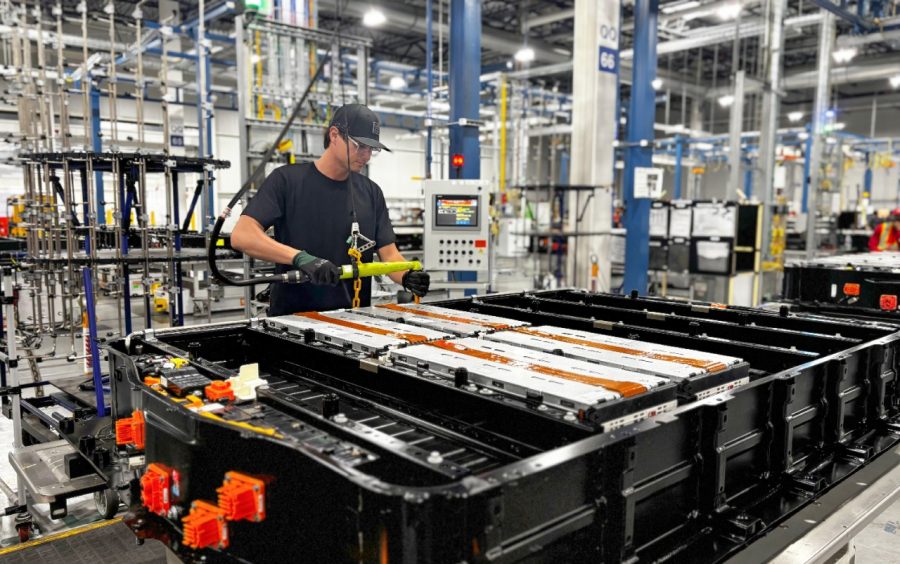
GM shows battery modules being installed with cells made from recycled battery materials at Factory ZERO.
The process started with 80 end-of-life GM EV batteries.
Cirba Solutions recovered and recycled those batteries. The material was then converted into black mass, a mixture created during the breakdown and separation of used lithium-ion batteries.
Black mass is only an intermediate step. It must be processed further before its valuable minerals can return to battery production.
More than 12 metric tons of new material
GM says the recovered black mass was turned into more than 12 metric tons of cathode active material.
That material contained 100% recycled nickel, cobalt and manganese. Those three minerals are important parts of many EV battery cathodes and can influence cost, safety and performance.
The recycled material also had to meet the same requirements as newly sourced material.
GM says it was tested for quality, safety and performance before it could be used in new battery cells. The company reports that cells made with the recycled material performed as well as cells made with virgin material during validation.
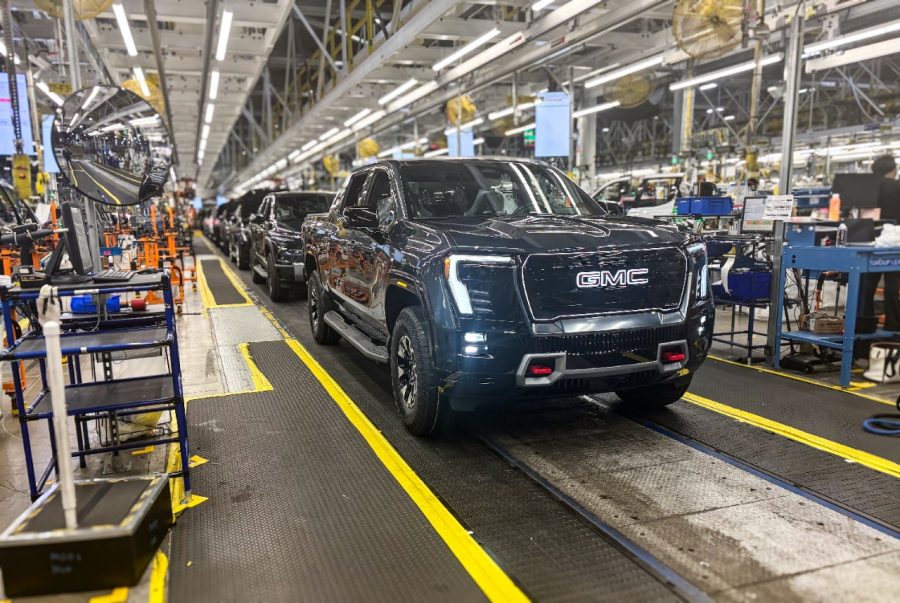
One of the first GMC Sierra EVs using battery cells made with recycled materials rolls off the Factory ZERO line.
Once the material passed testing, Ultium Cells produced new battery cells with the recycled cathode active material.
GM then assembled those cells into battery modules and packs at Factory ZERO in Michigan and Spring Hill in Tennessee.
The first vehicles using these batteries are already leaving GM production lines. The list includes the Cadillac LYRIQ, LYRIQ-V, VISTIQ, ESCALADE IQ and ESCALADE IQL, along with the Chevrolet Silverado EV Trail Boss and GMC Sierra EV AT4.
That is an important part of the pilot. The recycled material has moved beyond testing and into vehicles destined for customers.
Why recycling matters for EV batteries
Battery recycling can have a role beyond waste reduction.
GM says raw materials are among the largest cost drivers in battery cells. Recovering those materials could help support lower battery costs over time, reduce reliance on newly extracted resources and strengthen supply-chain resilience.
Current recycling technology can recover up to 95% of nickel, cobalt and manganese and up to 80% of lithium, depending on the battery chemistry and recycling process. GM notes that future technologies could increase those recovery rates.
This does not mean every used EV battery will follow the exact same path. Battery condition, chemistry and application can change what happens next.
Recycling is only one part of the process
GM is also looking beyond recycling.
The company says its remanufacturing and refurbishment programs are designed to reuse more than 70% of pack components. That can extend the useful life of battery hardware before recycling becomes necessary.
Used batteries can also serve another purpose.
GM and Redwood Materials are deploying roughly 10,000 second-life GM batteries into energy infrastructure. GM says the program includes the largest second-life battery microgrid in North America.
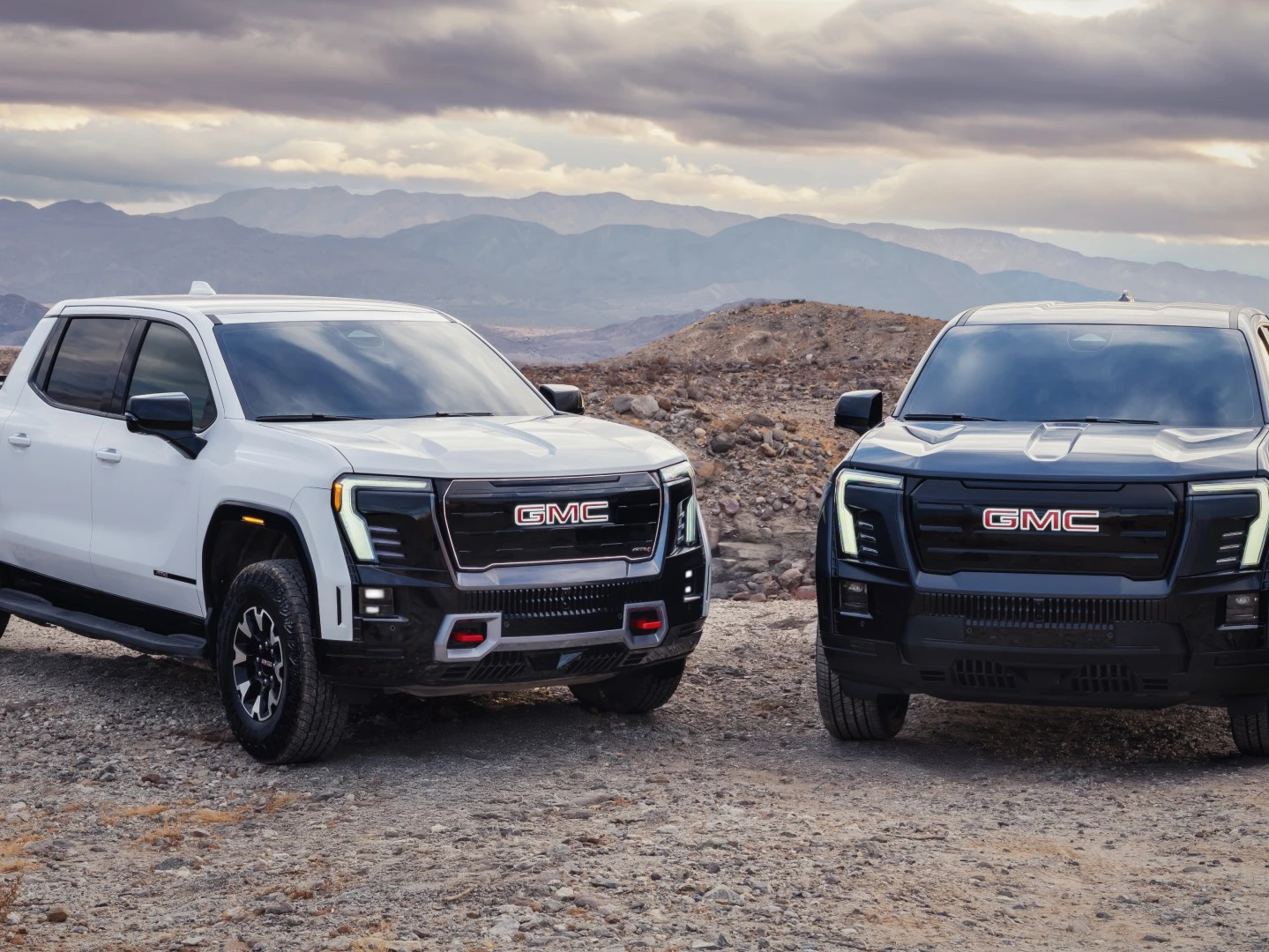
GM is also developing second-life and vehicle-to-grid applications for EV batteries.
This creates several possible stages in a battery’s life.
A battery can first power an EV. Later, it can potentially be reused for stationary energy storage. At the end of that second phase, its materials can be recovered and returned to battery manufacturing.
That approach gives GM a broader battery lifecycle strategy instead of relying on recycling alone.
A U.S. battery supply chain is taking shape
The pilot also connects recycling with GM’s American battery manufacturing network.
The company worked with Cirba Solutions, Ultium Cells, LG Energy Solution and other partners to move recovered materials through recycling, refinement, testing and cell production.
GM says the experience will provide data for future projects. That will become increasingly important as more EV batteries reach the end of their first vehicle life over the coming years.
The company also continues to work on energy-storage applications. Earlier this year, GM said it was expanding its work with Redwood Materials on second-life batteries and developing additional battery solutions for the U.S. energy system.
For now, the new closed-loop pilot provides a clear example of how GM EV battery recycling can connect an old battery pack with a new EV.
The process has already moved recovered nickel, cobalt and manganese back into new battery cells, helping demonstrate a circular path from used batteries to new U.S.-built electric vehicles.
-
 NOW TRENDING1 month ago
Tesla Cybercab Gets September 3 Austin Launch Date
-
 INTELLIGENT MOBILITY2 months ago
GM Updates Infotainment System With Smarter Features
-
 NOW TRENDING2 months ago
2027 Audi Q9 and SQ9 Debut as Brand’s Largest SUVs
-
 NOW TRENDING2 months ago
2027 Hyundai Tucson Spied With New Design and Hybrid Power
-

 NOW TRENDING2 months ago
2026 Toyota GRMN Corolla Debuts as the Ultimate Hot Hatch
-
 NOW TRENDING2 months ago
Every GM Assembly Plant Operating in the U.S. in 2026
-

 NOW TRENDING2 months ago
Ferrari Sold Out Through 2027 as Demand Hits New High
-
 NOW TRENDING1 month ago
Audi’s New SUVs Could Help Reverse Its Sales Decline in 2026
You must be logged in to post a comment Login