
Formula1
Aston Martin Explains Alonso’s Bouncing and Oil Leak in Baku

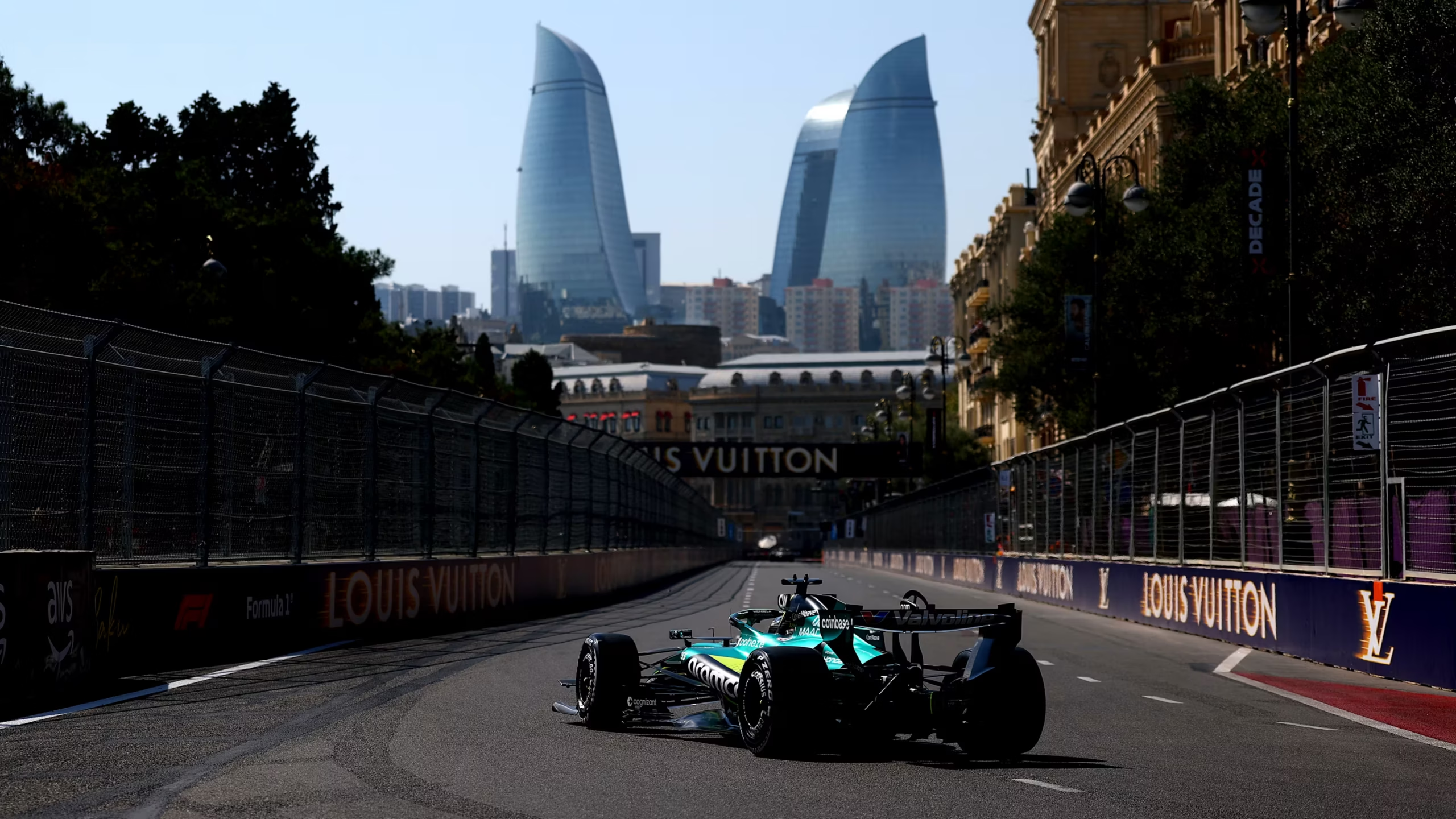
Aston Martin says it was deliberately testing very low ride heights in Baku, while Fernando Alonso’s FP2 running ended early because of a suspected oil leak.
Aston Martin faces a difficult Baku weekend
Aston Martin arrived in Baku expecting a difficult weekend. The long straights of the Azerbaijan circuit expose one of the AMR26’s biggest weaknesses: efficiency at high speed.
Thursday’s practice sessions confirmed those concerns.
Both Fernando Alonso and Lance Stroll finished near the bottom of the timesheets. Alonso ended FP2 in 22nd, while Stroll was 21st. The team also confirmed that both cars will start the Grand Prix from the back because of power-unit penalties.
The problem was not completely unexpected.
Baku places a huge emphasis on straight-line performance. It also leaves very little room for mistakes because of its walls and narrow sections. Aston Martin knew its package would face a major test in Azerbaijan.
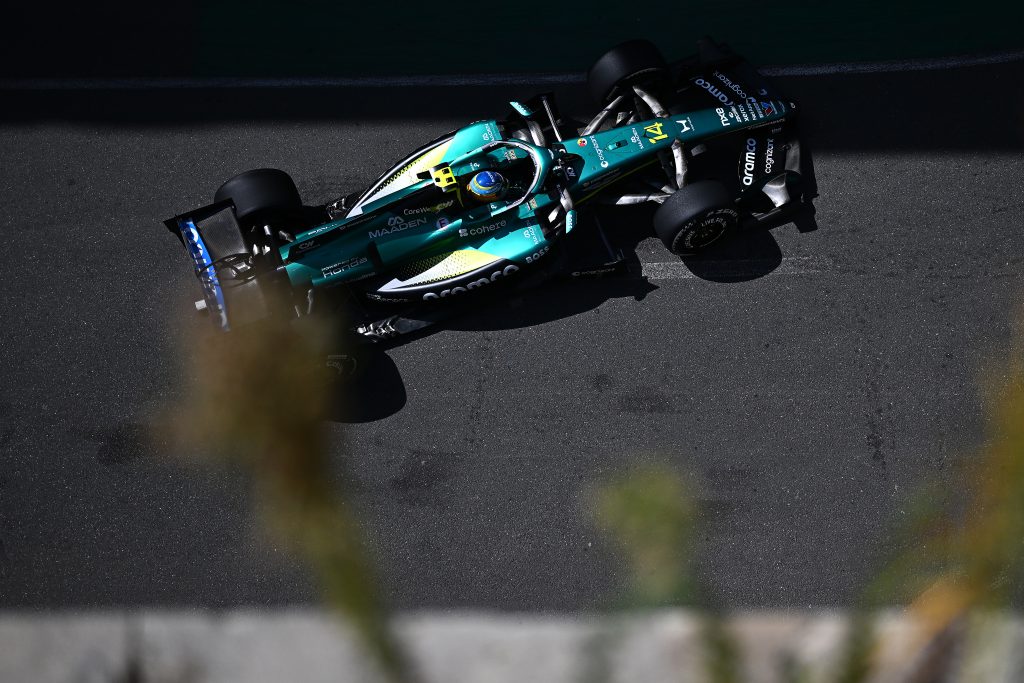
Fernando Alonso completed only limited running in FP2 after Aston Martin detected a suspected oil leak.
Alonso completed 24 laps in FP1. His afternoon was much shorter, with only a handful of laps before the team stopped the car.
Mike Krack, Aston Martin’s Chief Trackside Officer, said the team detected a suspected oil leak and did not have enough time to fully investigate it during the session.
The team planned to inspect the car overnight and repair it ahead of Friday practice.
That makes the incident less alarming than a major mechanical failure.
For now, Aston Martin has described it as a problem that needs to be investigated rather than a serious component failure.
Why was the Aston Martin bouncing so much?
Another issue attracted attention during the opening day.
Video from Baku showed the AMR26 making heavy contact with the track surface in some high-speed sections. The behavior looked like significant bottoming.
Krack, however, explained that Aston Martin was deliberately experimenting with very low ride heights.
The team was trying to find the best compromise between aerodynamic performance, floor wear and different fuel loads. That meant testing several ride-height scenarios during practice.
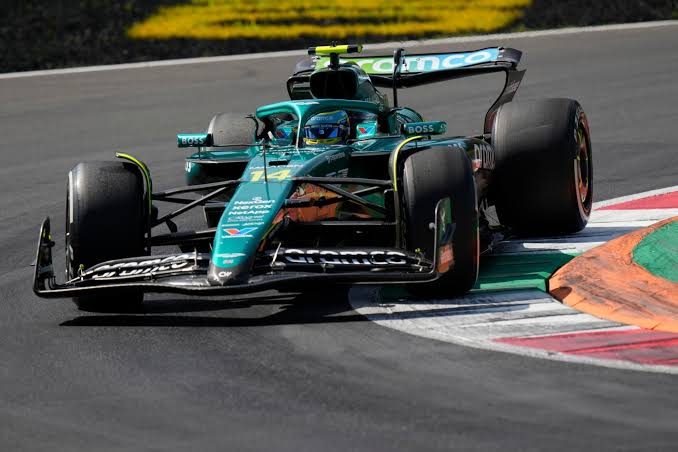
Lance Stroll also struggled for outright pace as Aston Martin evaluated its setup on Baku’s low-grip street circuit.
The practice sessions are precisely where teams can make those experiments.
A qualifying lap demands a different setup from a long race stint. Fuel load, tire behavior and the amount of time spent at high speed can all change the ideal ride height.
That explains why Aston Martin was willing to push the car close to the limit during Thursday’s running.
The goal was not necessarily to eliminate every contact with the track. It was to determine how low the team could run the car without creating excessive wear or instability.
Grid penalties change Aston Martin’s priorities
The situation becomes more complicated because both Alonso and Stroll already have major grid penalties.
Alonso took a fifth internal combustion engine, a fifth turbocharger and a ninth power-unit ancillary component. Stroll also exceeded the permitted allocations for several components.
The FIA therefore confirmed penalties that put both Aston Martin drivers on the back row regardless of their qualifying results.
Alonso’s penalty totals 25 places, while Stroll’s amounts to 20 places.
That changes the value of qualifying.
Aston Martin still needs to maximize the car’s performance. But there is less benefit in chasing an extremely aggressive qualifying strategy when both cars are already locked into the back row.
Krack also acknowledged a human factor. Knowing in advance that the penalties are coming can affect the intensity of the qualifying effort.
Baku exposes the Aston Martin package
The biggest problem remains performance.
Aston Martin’s official Baku report shows Alonso and Stroll ended Thursday in P22 and P21. Their top speeds were also around 320 km/h, but the lap-time deficit remained significant.
That suggests the problem is not simply the engine.
The AMR26 is also struggling to generate enough overall performance on a circuit where every weakness is magnified.
Baku combines a long full-throttle section with slow corners. The car therefore needs both efficiency and strong traction.
That combination is difficult for Aston Martin at the moment.
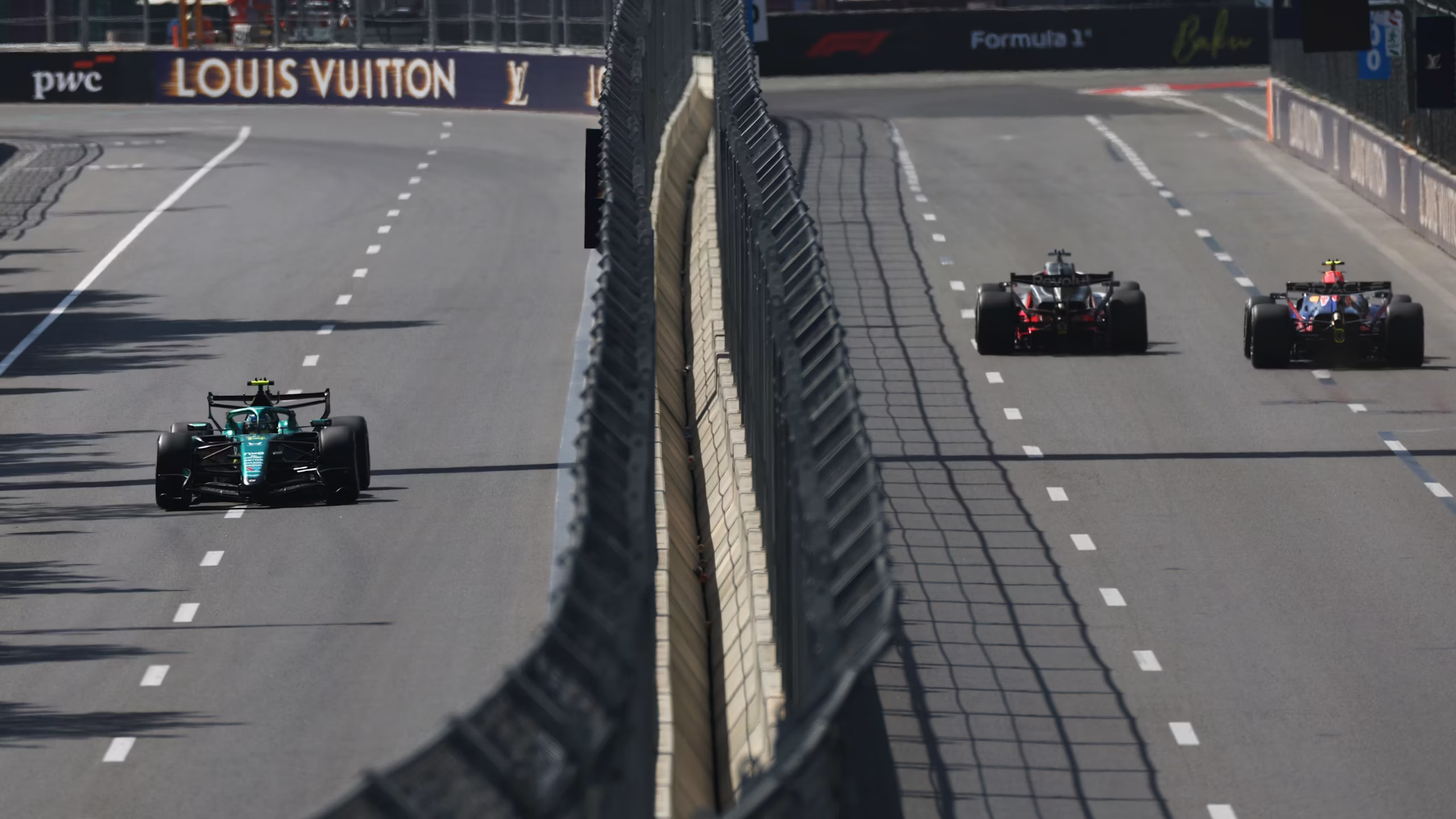
The AMR26 is facing one of its toughest technical challenges of the 2026 season in Baku.
The team is also dealing with Honda power-unit changes.
Aston Martin and Honda agreed that Baku was an appropriate place to introduce additional components, even though doing so triggered penalties. The decision reflects the team’s focus on the remaining races while continuing its development work.
That means Friday’s sessions will be about more than lap times.
The team needs to understand the setup changes, confirm the oil-leak repair and gather useful information for the race.
Alonso’s FP2 problem was not the only concern
The combination of poor pace, setup experimentation and penalties has made Thursday one of the more difficult days of Aston Martin’s season.
Still, the team has reasons to keep working.
Alonso completed enough FP1 mileage to provide useful information. Stroll also completed a reasonable number of laps across the day. The main task now is to combine that data with Friday’s running and find a setup that works better on the street circuit.
The Aston Martin Baku 2026 weekend therefore enters its next phase with several questions still open.
The team has to confirm Alonso’s car is reliable, understand how low it can run without excessive bottoming and extract more performance from a package that has struggled on Baku’s long straights.
With both drivers already facing back-row starts, Aston Martin’s priority is now to maximize every available opportunity and turn a difficult weekend into useful data for the final races of 2026.









-
 NOW TRENDING2 months ago
Aston Martin DBX Becomes Harry Da Souza’s Ride in MobLand
-
 TEST DRIVES2 months ago
2026 Maserati GranTurismo Trofeo Review: Miami
-

 INTELLIGENT MOBILITY2 months ago
Tesla Cybercab Navigation Problem Hits Austin Robotaxis
-

 INTELLIGENT MOBILITY2 months ago
Tesla Cybercab Cannot Be Charged at Home—Here’s Why
-

 INTELLIGENT MOBILITY2 months ago
2027 Nissan Rogue Hybrid: e-POWER Comes to America
-
 TEST DRIVES2 months ago
2026 Maserati GranTurismo Coupe
-
 Formula12 months ago
Cadillac F1 2026 Faces an Eight-Race Logistics Challenge
-

 NOW TRENDING2 months ago
2027 Lexus LS Gets Another Update, But Not in America