
NOW TRENDING
2028 Volkswagen ID. Buzz Return Delayed in the U.S.

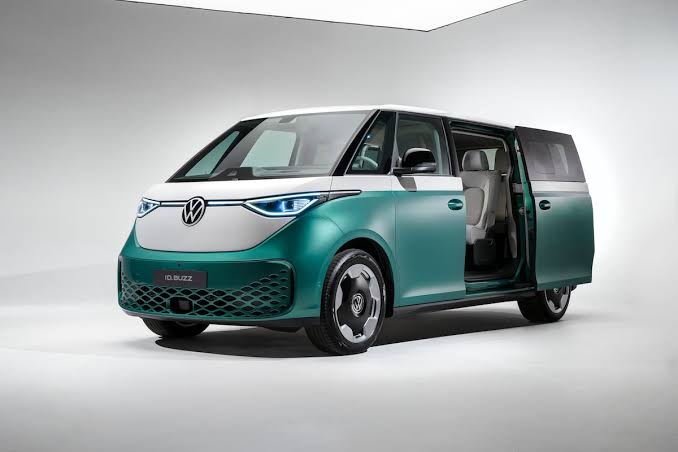
Volkswagen has pushed the U.S. return of the ID. Buzz to the 2028 model year, with sales now expected to begin in the first half of 2027.
Volkswagen delays the ID. Buzz again
The Volkswagen ID. Buzz will skip another model year in the United States.
After already missing the 2026 model year, the electric van will now also skip 2027. Volkswagen’s return plan has been moved to the 2028 model year, with U.S. sales expected to begin during the first half of 2027.
The change is the latest delay for the retro-styled EV.
Volkswagen had previously said the ID. Buzz would return for the 2027 model year. The company had even announced several updates before that plan was pushed back again.
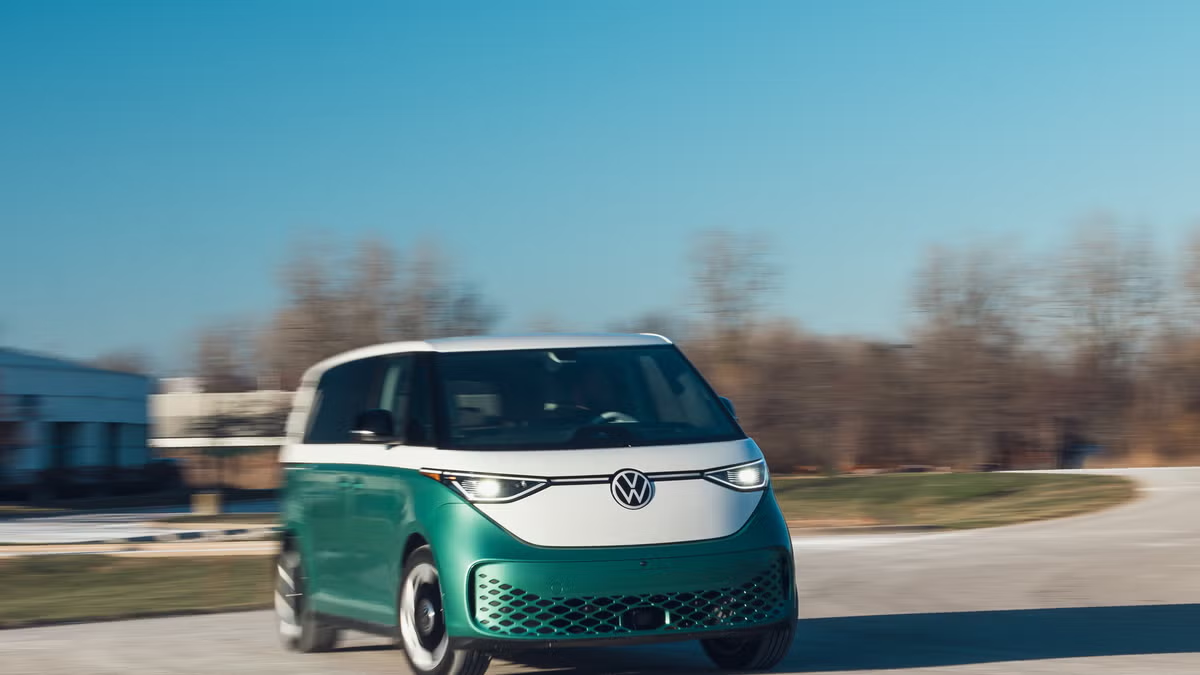
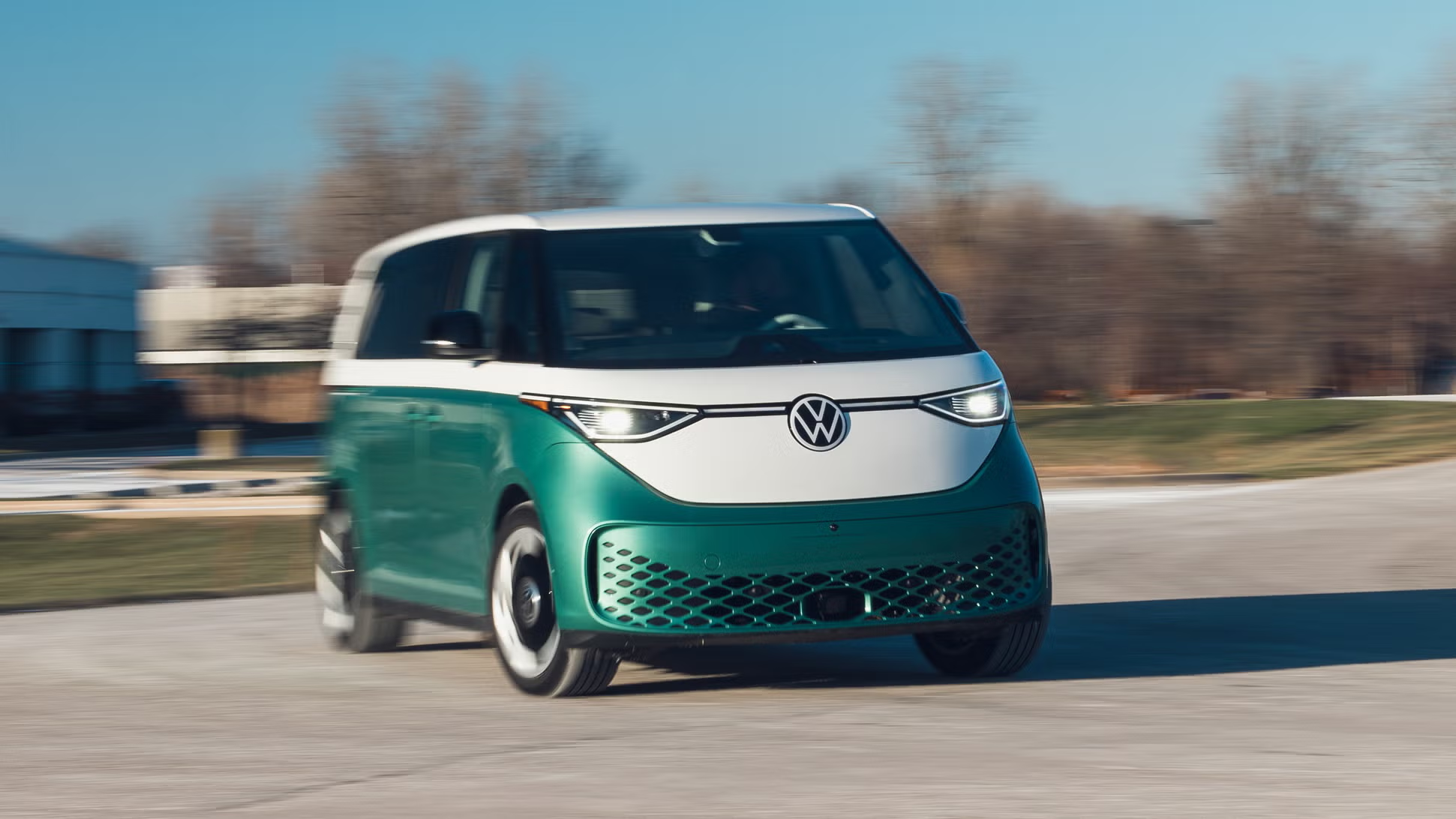
The U.S.-specification ID. Buzz launched for the 2025 model year with its distinctive retro-inspired design.
Volkswagen still lists the 2025 ID. Buzz on its U.S. website.
The current U.S. model starts at $59,995 before destination charges. Volkswagen also highlights seating for seven, available 4MOTION all-wheel drive and up to 145.5 cubic feet of cargo space with the second row folded and the third row removed.
That existing inventory is part of the reason for the extended wait.
Reports indicate Volkswagen still has 2025 ID. Buzz vans at U.S. dealerships, while no new U.S.-market shipments arrived for the 2026 model year.
The 2028 model will bring more changes
The next U.S. ID. Buzz is not simply a delayed version of the 2025 van.
Volkswagen had already announced several changes for the model that was supposed to arrive for 2027. Those updates are now expected to carry over to the 2028 model-year vehicle.
One of the biggest changes is the move to a North American Charging Standard (NACS) charging port. That will make the van more compatible with the growing U.S. fast-charging network.
Volkswagen also planned a new Tourer version focused on camping and outdoor use.
The company is now adding more changes to the delayed model. They include reworked software, vehicle-to-load functionality and digital-key integration.
Volkswagen’s official U.S. media material shows the ID. Buzz cabin with its large center display and open dashboard layout.
The U.S. ID. Buzz already offers a spacious cabin.
Volkswagen lists more than 160 cubic feet of passenger volume and says the van has industry-leading third-row legroom. The technical data lists 42.4 inches of third-row legroom.
The current U.S. model also supports DC fast charging at up to 200 kW.
Volkswagen estimates a 10-to-80 percent charging session in roughly 26 minutes under the appropriate conditions.
Sales have been slower than Volkswagen expected
The ID. Buzz arrived in the United States for the 2025 model year.
Volkswagen sold 6,140 units in 2025. Through the first half of 2026, the company sold another 2,481 examples.
Those numbers help explain the unusual U.S. product strategy.
The ID. Buzz has been positioned as a high-profile electric vehicle with a distinctive design. However, its relatively high price and limited range at launch have made the U.S. market challenging. Current Volkswagen inventory pages still show the 2025 model available in the United States.
The new delay gives Volkswagen more time to update the product before bringing it back.
That could also allow the company to clear remaining 2025 inventory before the next version reaches American dealerships.
Volkswagen’s U.S. materials highlight the ID. Buzz’s flexible interior, with the rear seats designed around passengers and cargo.
The van’s practicality remains one of its strongest features.
The 2025 U.S. model can seat seven people and offers removable third-row seating. With the second row folded and the third row removed, Volkswagen quotes up to 145.5 cubic feet of cargo capacity.
That makes the ID. Buzz different from most electric SUVs.
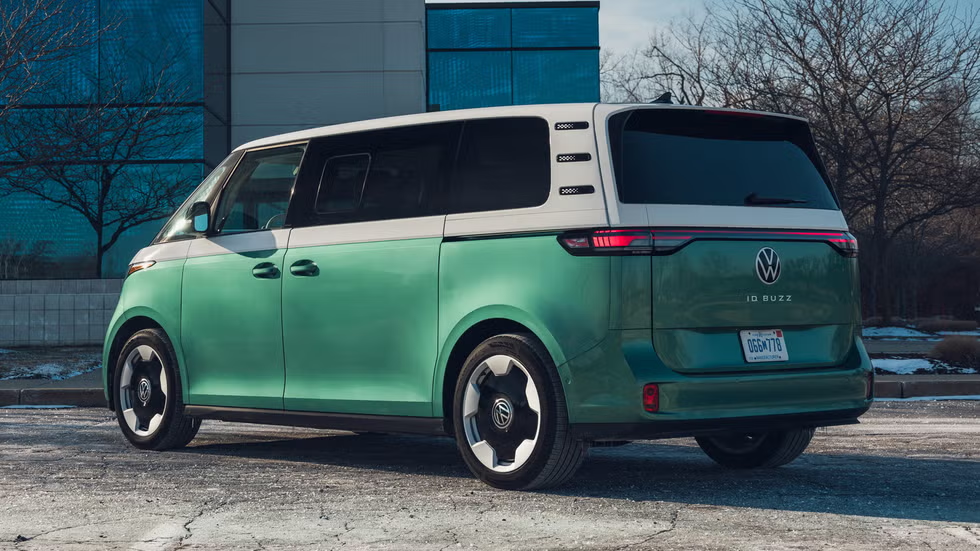
Its tall body and sliding doors give it a more traditional minivan layout. At the same time, the styling is designed to recall the classic Volkswagen Bus.
When will the 2028 ID. Buzz arrive?
Volkswagen now plans to return the ID. Buzz to the U.S. market during the first half of 2027, but it will be sold as a 2028 model-year vehicle.
The automaker says more details will be released in the coming months.
Pricing for the 2028 model has not yet been announced. The current U.S. ID. Buzz starts at $59,995, but Volkswagen has not said whether the new model will retain that price or receive an adjustment.
The new version will therefore arrive with a longer wait and a longer list of changes.
The 2028 Volkswagen ID. Buzz is now expected to return to the U.S. in the first half of 2027 with updated software, NACS charging, vehicle-to-load capability, digital-key integration and the previously announced Tourer variant.







Chevrolet is giving its most affordable SUVs more standard safety technology, larger screens and new trim options for the 2027 model year.
Chevrolet is making major changes to the Trax and Trailblazer for 2027. Both compact SUVs receive more than 20 standard safety and driver-assistance features, larger displays and built-in Google technology with Gemini.
The updated SUVs are scheduled to arrive at dealerships in spring 2027. The changes come after the Trax and Trailblazer recorded their strongest combined sales performance yet.
Chevrolet says it has delivered more than 250,000 Trax and Trailblazer SUVs combined this year, giving the two models an increasingly important role in the brand’s lineup.

The 2027 Chevrolet Trax receives updated styling, new technology and additional standard safety features.
More Than 20 Safety Features Become Standard
The biggest upgrade for both SUVs comes from an improved electrical and software architecture. It allows Chevrolet to offer more than 20 standard safety and driver-assistance features across the 2027 Trax and Trailblazer lineup.
New systems include Reverse Automatic Braking, Side Bicyclist Alert, Rear Cross Traffic Braking, Front Park Assist and Intersection Automatic Emergency Braking.
Several existing features also remain standard. These include Adaptive Cruise Control, Front and Rear Park Assist, Safety Alert Seat and Blind Zone Steering Assist.
The broader standard equipment should make the two SUVs more competitive with newer rivals, particularly for buyers who place a high priority on driver assistance without moving into more expensive trims.
Bigger Screens and Google Gemini
Chevrolet is also giving the Trax and Trailblazer a more modern cabin. Every 2027 model comes with an 11.0-inch driver information display and an 11.3-inch infotainment screen.
The infotainment system features Google built-in with Gemini, bringing Google’s latest artificial intelligence technology directly into the vehicle’s interface.
Chevrolet is also including 12 months of OnStar One for new buyers. The service adds features such as an in-vehicle Wi-Fi hotspot and video streaming alongside the standard OnStar services.

The updated cabin features larger displays and built-in Google technology with Gemini.
Trax Gets a Simpler Lineup
Chevrolet is simplifying the 2027 Trax lineup to three versions: the entry-level model, RS and Activ.
The Trax also receives several exterior updates. These include a redesigned grille, new wheels, all-LED taillamps and a redesigned liftgate.
For the first time, buyers can also choose a power liftgate.
Each trim has its own visual identity. The entry-level version gets higher-contrast wheels, while the RS features 19-inch wheels, the largest wheel size available across the Trax lineup.
The Activ retains its distinctive front-end design. Both the Trax and Trailblazer also introduce a new Storm Sky Gray interior color.
Chevrolet says the Trax remains the segment leader and accounts for roughly one-fifth of the brand’s volume in its class.
Trailblazer Adds the Z71 Trim
The biggest change for the 2027 Chevrolet Trailblazer is the arrival of the Z71 trim.
Chevrolet has used the Z71 name for decades. The badge first appeared in 1963 and became associated with the brand’s off-road-oriented trucks before expanding to SUVs and other vehicles.
The Trailblazer Z71 brings a more adventure-focused setup. All-wheel drive comes standard, along with an off-road-tuned suspension, a skid plate and sport-terrain tires.
The cabin also receives a specific treatment. The Z71 combines Jet Black and Storm Sky Gray with orange accents to create a more rugged appearance.

The new Trailblazer Z71 adds standard all-wheel drive and hardware aimed at adventure-focused buyers.
Chevrolet Is Strengthening Its Affordable SUV Lineup
The 2027 updates give the Chevrolet Trax and Trailblazer more technology without fundamentally changing their roles in the lineup.
The Trax continues to focus on accessible urban and everyday driving, while the Trailblazer gains a more distinctive personality with the new Z71.
More standard safety technology is arguably the most important change. Larger screens, Google Gemini and additional connected services also bring the two SUVs closer to the technology levels expected from newer vehicles.
With both models arriving at dealerships in spring 2027, Chevrolet is positioning its two most affordable SUVs for another strong year.

BMW’s new iX4 brings coupe-inspired styling to the Neue Klasse family, with up to 603 horsepower and as much as 428 miles of range.
BMW is expanding its Neue Klasse electric lineup with the new BMW iX4, a sleeker sibling to the recently introduced iX3. The electric SUV combines a coupe-like roofline with BMW’s latest EV technology and two all-wheel-drive powertrains.
Production is scheduled to begin early next year. The lineup will initially include the iX4 50 xDrive and the performance-focused iX4 M60 xDrive.

The BMW iX4 combines a sporty silhouette with the latest Neue Klasse design language.
The BMW iX4 Offers Up to 603 HP
The entry-level BMW iX4 50 xDrive uses two electric motors to produce 463 horsepower and 475 pound-feet of torque. It can accelerate from 0 to 60 mph in 4.7 seconds and reaches a top speed of 130 mph.
The iX4 M60 xDrive takes performance much further. Its dual-motor setup generates 603 hp and 645 lb-ft of torque, matching the output of the iX3 M60.
That extra power cuts the 0-60 mph time to just 3.7 seconds. The M60 also has a higher top speed of 149 mph, giving the electric SUV a much stronger performance focus.
| Model | Power | Torque | 0-60 mph | Top speed |
|---|---|---|---|---|
| iX4 50 xDrive | 463 hp | 475 lb-ft | 4.7 sec. | 130 mph |
| iX4 M60 xDrive | 603 hp | 645 lb-ft | 3.7 sec. | 149 mph |
Up to 428 Miles of Electric Range
Both versions use a 112.2-kWh usable battery pack. BMW estimates that the iX4 50 xDrive can travel up to 428 miles on a single charge.
The automaker has not yet released an official range figure for the iX4 M60. Its larger wheels, performance hardware and higher output are likely to result in a shorter range.
The iX4 also offers practical capability. With the optional trailer hitch, the electric SUV can tow up to 4,400 pounds.

The iX4 brings BMW’s latest Panoramic iDrive technology into a coupe-style electric SUV.
Neue Klasse Design Meets BMW M Hardware
The iX4 follows BMW’s latest design direction, including the brand’s familiar kidney grille and twin-headlight arrangement. Every version comes with the M Sport Package as standard.
The package includes 20-inch M wheels, while M Sport brakes with blue calipers are available as an option.
The M60 adds a more aggressive appearance. It features a black diffuser, black M mirror caps and dedicated M badging. It also rides on standard 21-inch wheels.
The performance model can also be equipped with BMW’s M Yellow Lights. An M-specific spoiler adds additional rear-axle downforce, reinforcing the M60’s sportier character.
The M60 Gets a More Focused Chassis
BMW has given the iX4 M60 more than additional electric power. The performance version comes standard with Adaptive M Suspension, featuring electronically controlled dampers and variable-ratio sport steering.
The suspension also receives bespoke spring and damper tuning, along with anti-roll bar links at the front axle.
An electronically controlled M Sport differential helps improve traction. The M60 also introduces two dedicated drive modes, M Sport and M Sport Plus, which modify the steering and chassis settings for a more performance-oriented driving experience.
Inside, the M60 receives an M Sport steering wheel with a red 12 o’clock marker. The standard seven-speaker audio system is replaced by a 13-speaker Harman Kardon system.

The iX4 M60 adds distinctive M details and chassis technology to the Neue Klasse SUV.
BMW iX4 Targets the Premium Electric SUV Market
The new BMW iX4 gives BMW another way to approach the rapidly expanding premium electric SUV segment. Its coupe-inspired body separates it visually from more traditional SUVs, while the Neue Klasse technology keeps it closely related to BMW’s latest EV strategy.
The iX4 50 xDrive focuses on a balance of performance, practicality and long-distance range. Its 428-mile estimated range makes it the more efficiency-oriented choice.
The M60, meanwhile, puts performance at the center of the package. With 603 hp, a 3.7-second 0-60 mph time and a 149-mph top speed, it becomes one of the most aggressive electric SUVs in BMW’s new lineup.
BMW is expected to begin production of the iX4 early next year, adding another important model to its expanding Neue Klasse family.

George Russell will start from the back of the grid in Singapore after Mercedes confirmed a power-unit penalty following his engine failure in Sepang.
George Russell’s fight in the 2026 Formula 1 championship has become even more difficult. After retiring from the Malaysian Grand Prix with an engine problem, the Mercedes driver will now face a grid penalty at the Singapore Grand Prix.
Russell had been in contention for a podium in Sepang before the failure ended his race. The retirement also cost him valuable points in his battle with Mercedes teammate Andrea Kimi Antonelli.
Now, Russell arrives at Marina Bay 84 points behind Antonelli. Starting from the back of the grid will make his championship challenge even more demanding.

George Russell faces a difficult Singapore weekend after Mercedes confirmed a power-unit penalty.
Russell Will Start From the Back of the Grid
Mercedes has confirmed that Russell will need additional power-unit components in Singapore after the failure in Sepang.
The British driver has already used four power units during the 2026 season. As a result, another component change will trigger a 10-place grid penalty.
Mercedes team principal Toto Wolff confirmed that Russell will therefore start from the back of the grid on Sunday.
The timing is particularly difficult.
Russell lost a potential podium in Malaysia when his engine problem occurred late in the race. Instead of scoring a major result, he left Sepang without the points he had been fighting for.
Now, Mercedes must give him the strongest possible car for a recovery drive.
The situation also creates an interesting comparison with Antonelli.
The Italian driver received a similar penalty at Monza last month. Despite starting 19th, Antonelli won the race and overcame the disadvantage.
Russell will now face a similar challenge in Singapore.

Mercedes will need to support Russell closely as the driver starts the race from the back.
Mercedes May Have to Change Its Engine Plan
The penalty could also affect Mercedes’ original power-unit strategy.
The team had planned to wait until the United States Grand Prix in Austin before introducing an upgraded engine component.
That plan would have allowed Mercedes to use the updated power unit after Singapore and accept the associated grid penalty at a circuit where overtaking opportunities are generally more favorable.
The engine failure in Malaysia has changed that situation.
Mercedes now has to decide whether to introduce the updated component in Singapore or continue with its available power-unit allocation.
The decision could have implications for the remaining races of the season.
It also highlights one of Mercedes’ biggest challenges in 2026: managing power-unit reliability while competing for the championship.
Power-Unit Reliability Has Become a Mercedes Concern
Mercedes has enjoyed a highly competitive season, but reliability problems have repeatedly interrupted its progress.
Antonelli experienced a power-unit issue in Barcelona.
Russell then suffered problems while leading in Canada and again while fighting for a podium in Sepang.
Those failures have created additional pressure on the team’s power-unit allocation.
For Russell, the consequences are now especially significant.
A driver already trying to close an 84-point championship gap will start from the back at a circuit where track position can be difficult to recover.
That makes every qualifying and Sprint result particularly important for Mercedes this weekend.

Singapore’s narrow street circuit will make Russell’s recovery drive particularly challenging.
Mercedes Still Has Questions About Its Latest Upgrade
Russell’s power-unit penalty is not Mercedes’ only concern in Singapore.
The team is also still trying to understand whether its latest aerodynamic package actually delivered the expected performance gain.
The upgrade debuted in Malaysia, but the weekend produced mixed results.
Mercedes found additional aerodynamic load in some corners, yet the car did not show the expected straight-line advantage.
The team also struggled with balance and tire management.
That has prompted Mercedes to compare the latest package with the previous specification during the Singapore weekend.
The two cars could potentially run different configurations to give the engineers a clearer comparison.
Singapore should provide useful information because its characteristics are very different from those of Sepang.
The Marina Bay circuit features mostly low- and medium-speed corners, along with bumps, curbs and high temperatures.
That could help Mercedes determine whether the Malaysian problems were caused by the new package, the setup or the track conditions.
Russell Faces a Major Recovery Mission
The Singapore Grand Prix now presents Mercedes with two objectives.
The team needs to understand its latest upgrade while giving Russell the tools to recover from the back of the grid.
For Russell, the championship situation is becoming increasingly difficult. The Sepang retirement already created a significant points deficit, and the Singapore penalty adds another obstacle.
But the Antonelli example from Monza shows that a back-of-grid start does not automatically eliminate the possibility of a strong result.
Mercedes will therefore need to maximize every opportunity.
Russell’s Singapore weekend may be one of the most important recovery challenges of his 2026 season.
-

 NOW TRENDING1 month ago
Tesla Cybercab Gets September 3 Austin Launch Date
-
 NOW TRENDING2 months ago
Audi’s New SUVs Could Help Reverse Its Sales Decline in 2026
-
 TEST DRIVES1 month ago
2025 Ford Bronco Sport Badlands: The Adventure SUV You Can Drive Every Day
-
 TEST DRIVES1 month ago
2026 Toyota GR Supra MkV Final Edition
-
 INTELLIGENT MOBILITY2 months ago
GM Super Cruise: How It Works and What Comes Next in 2028
-
 NOW TRENDING2 months ago
Toyota Camry Recall Expands to More Than 500,000 Vehicles in the U.S.
-
 NOW TRENDING2 months ago
2027 Toyota Corolla Celebrates 60 Years With Special Edition
-
 NOW TRENDING2 months ago
Rivian R2 Autonomy+ Adds New Hands-Free Driving Features
You must be logged in to post a comment Login