
INTELLIGENT MOBILITY
GM EV Battery Recycling Now Powers New EV Batteries

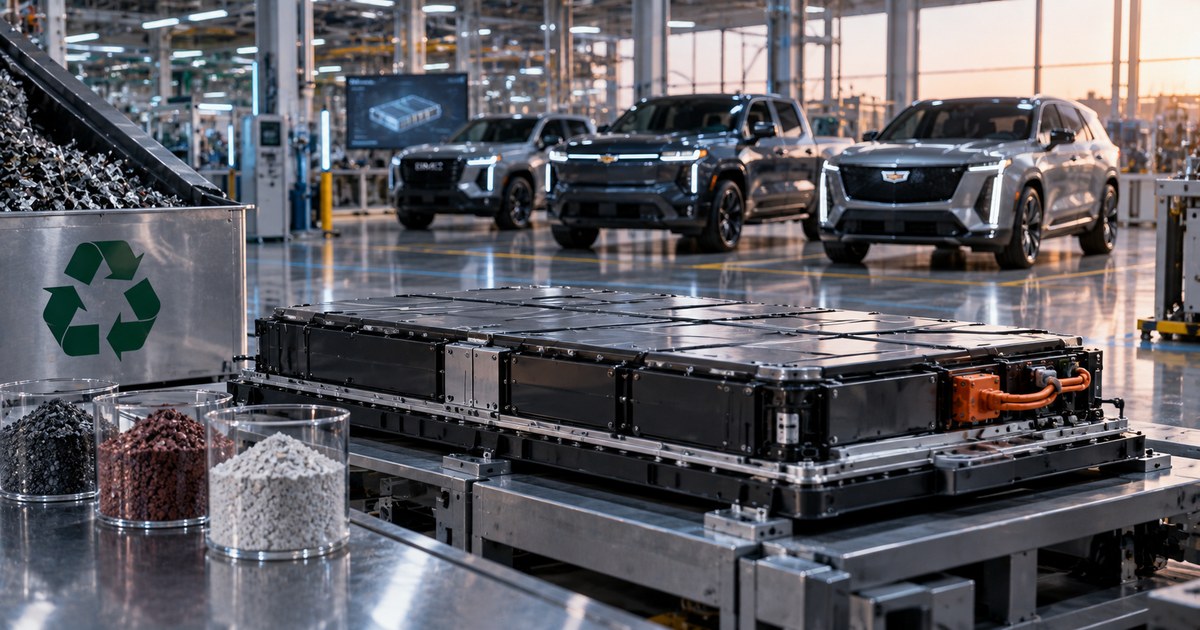
GM has completed a closed-loop battery recycling pilot in the U.S., using recovered nickel, cobalt and manganese to make new EV battery cells.
GM completes its closed-loop battery pilot
General Motors has completed a major step in its EV battery recycling strategy.
The automaker says materials recovered from end-of-life GM EV batteries were refined and used to produce new battery cells. The project is designed to show how critical battery materials can move through a circular supply chain instead of being used only once.
GM announced the milestone on September 22, 2026. The company says the pilot was built with partners across battery recycling, materials processing and cell manufacturing.
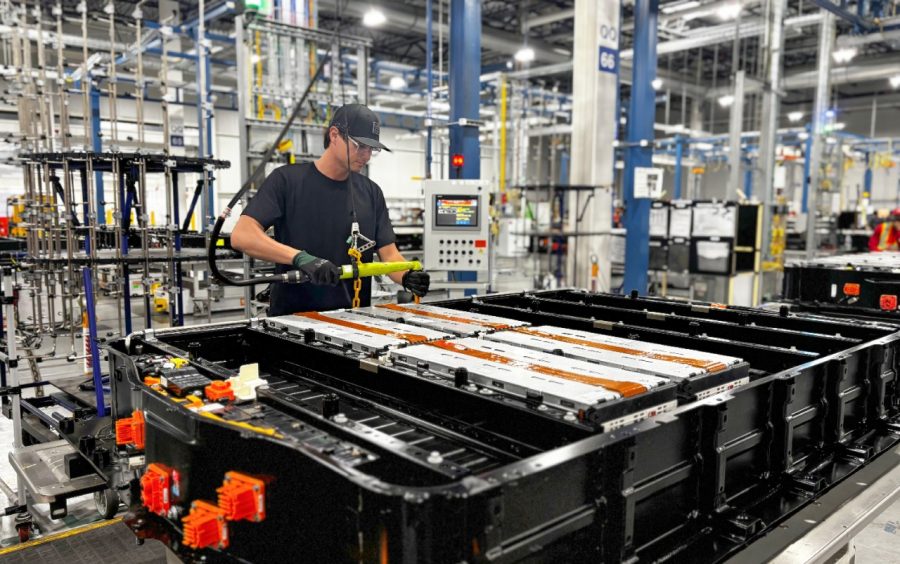
GM shows battery modules being installed with cells made from recycled battery materials at Factory ZERO.
The process started with 80 end-of-life GM EV batteries.
Cirba Solutions recovered and recycled those batteries. The material was then converted into black mass, a mixture created during the breakdown and separation of used lithium-ion batteries.
Black mass is only an intermediate step. It must be processed further before its valuable minerals can return to battery production.
More than 12 metric tons of new material
GM says the recovered black mass was turned into more than 12 metric tons of cathode active material.
That material contained 100% recycled nickel, cobalt and manganese. Those three minerals are important parts of many EV battery cathodes and can influence cost, safety and performance.
The recycled material also had to meet the same requirements as newly sourced material.
GM says it was tested for quality, safety and performance before it could be used in new battery cells. The company reports that cells made with the recycled material performed as well as cells made with virgin material during validation.
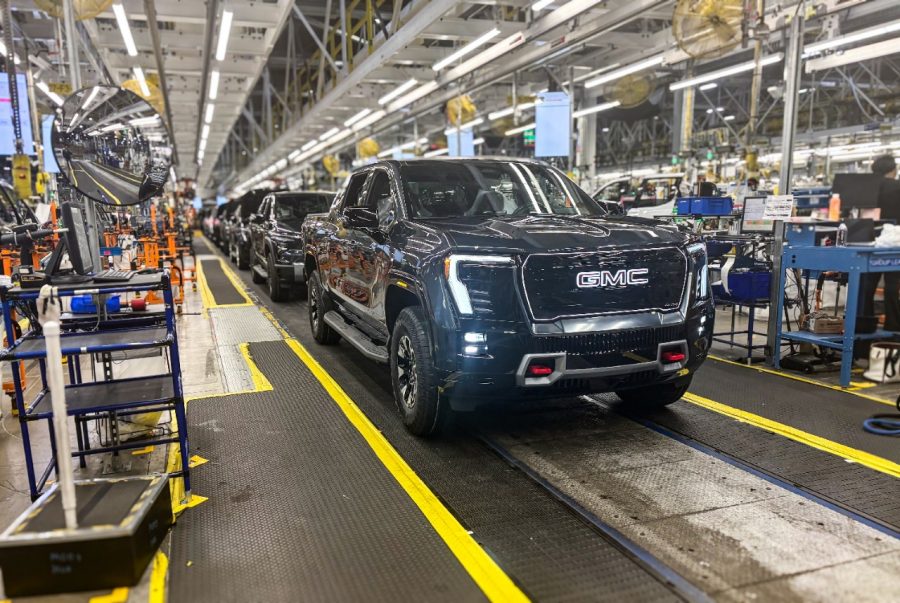
One of the first GMC Sierra EVs using battery cells made with recycled materials rolls off the Factory ZERO line.
Once the material passed testing, Ultium Cells produced new battery cells with the recycled cathode active material.
GM then assembled those cells into battery modules and packs at Factory ZERO in Michigan and Spring Hill in Tennessee.
The first vehicles using these batteries are already leaving GM production lines. The list includes the Cadillac LYRIQ, LYRIQ-V, VISTIQ, ESCALADE IQ and ESCALADE IQL, along with the Chevrolet Silverado EV Trail Boss and GMC Sierra EV AT4.
That is an important part of the pilot. The recycled material has moved beyond testing and into vehicles destined for customers.
Why recycling matters for EV batteries
Battery recycling can have a role beyond waste reduction.
GM says raw materials are among the largest cost drivers in battery cells. Recovering those materials could help support lower battery costs over time, reduce reliance on newly extracted resources and strengthen supply-chain resilience.
Current recycling technology can recover up to 95% of nickel, cobalt and manganese and up to 80% of lithium, depending on the battery chemistry and recycling process. GM notes that future technologies could increase those recovery rates.
This does not mean every used EV battery will follow the exact same path. Battery condition, chemistry and application can change what happens next.
Recycling is only one part of the process
GM is also looking beyond recycling.
The company says its remanufacturing and refurbishment programs are designed to reuse more than 70% of pack components. That can extend the useful life of battery hardware before recycling becomes necessary.
Used batteries can also serve another purpose.
GM and Redwood Materials are deploying roughly 10,000 second-life GM batteries into energy infrastructure. GM says the program includes the largest second-life battery microgrid in North America.
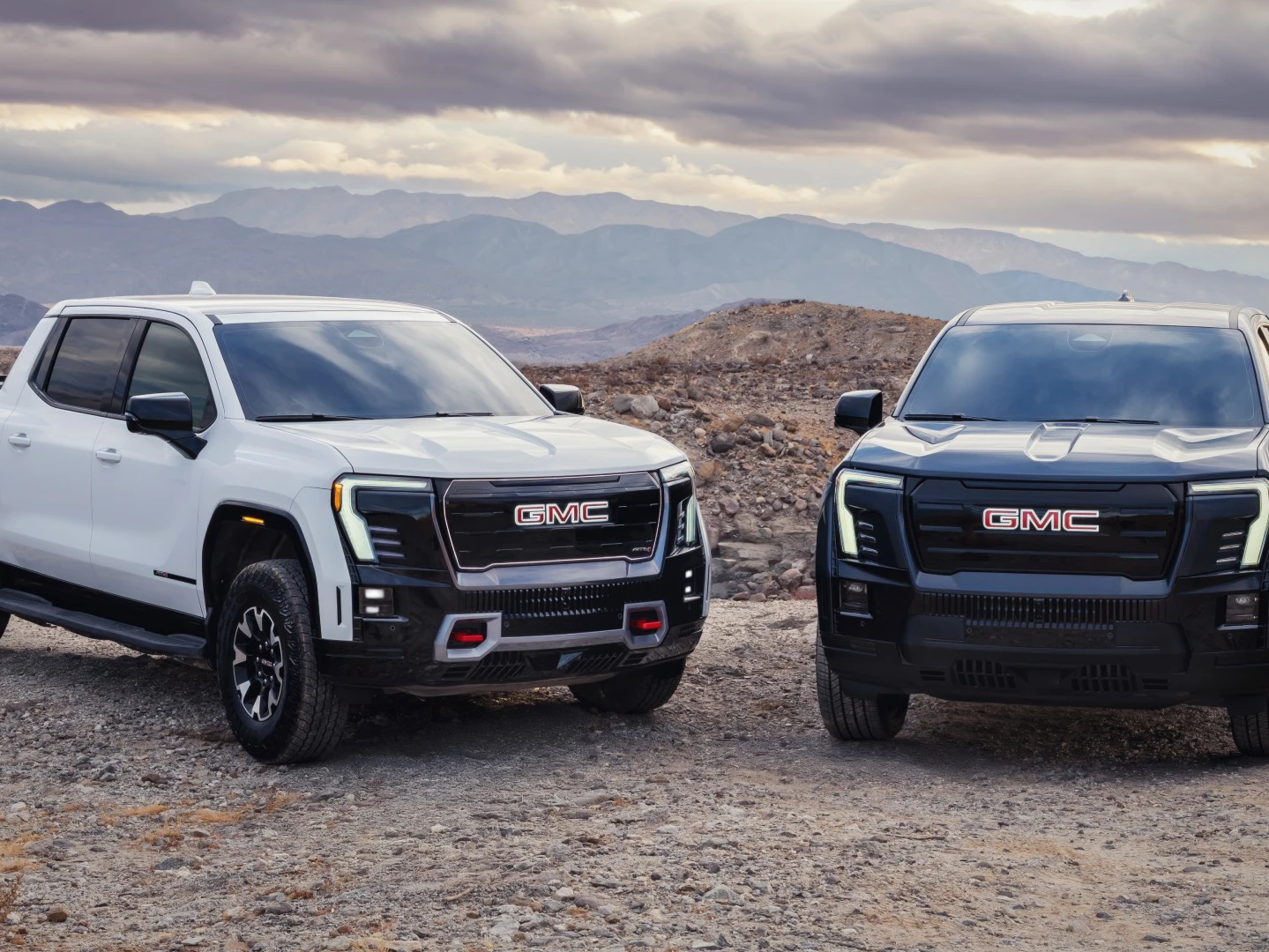
GM is also developing second-life and vehicle-to-grid applications for EV batteries.
This creates several possible stages in a battery’s life.
A battery can first power an EV. Later, it can potentially be reused for stationary energy storage. At the end of that second phase, its materials can be recovered and returned to battery manufacturing.
That approach gives GM a broader battery lifecycle strategy instead of relying on recycling alone.
A U.S. battery supply chain is taking shape
The pilot also connects recycling with GM’s American battery manufacturing network.
The company worked with Cirba Solutions, Ultium Cells, LG Energy Solution and other partners to move recovered materials through recycling, refinement, testing and cell production.
GM says the experience will provide data for future projects. That will become increasingly important as more EV batteries reach the end of their first vehicle life over the coming years.
The company also continues to work on energy-storage applications. Earlier this year, GM said it was expanding its work with Redwood Materials on second-life batteries and developing additional battery solutions for the U.S. energy system.
For now, the new closed-loop pilot provides a clear example of how GM EV battery recycling can connect an old battery pack with a new EV.
The process has already moved recovered nickel, cobalt and manganese back into new battery cells, helping demonstrate a circular path from used batteries to new U.S.-built electric vehicles.










-

 NOW TRENDING2 months ago
Aston Martin DBX Becomes Harry Da Souza’s Ride in MobLand
-

 TEST DRIVES2 months ago
2026 Maserati GranTurismo Trofeo Review: Miami
-
 INTELLIGENT MOBILITY2 months ago
Tesla Cybercab Navigation Problem Hits Austin Robotaxis
-

 INTELLIGENT MOBILITY2 months ago
Tesla Cybercab Cannot Be Charged at Home—Here’s Why
-
 INTELLIGENT MOBILITY2 months ago
2027 Nissan Rogue Hybrid: e-POWER Comes to America
-

 TEST DRIVES2 months ago
2026 Maserati GranTurismo Coupe
-

 Formula12 months ago
Cadillac F1 2026 Faces an Eight-Race Logistics Challenge
-

 NOW TRENDING2 months ago
2027 Lexus LS Gets Another Update, But Not in America