
NOW TRENDING
Mercedes-Benz Gives The S-Class A Massive Mid-Cycle Overhaul To Keep Its Luxury Flagship On Top

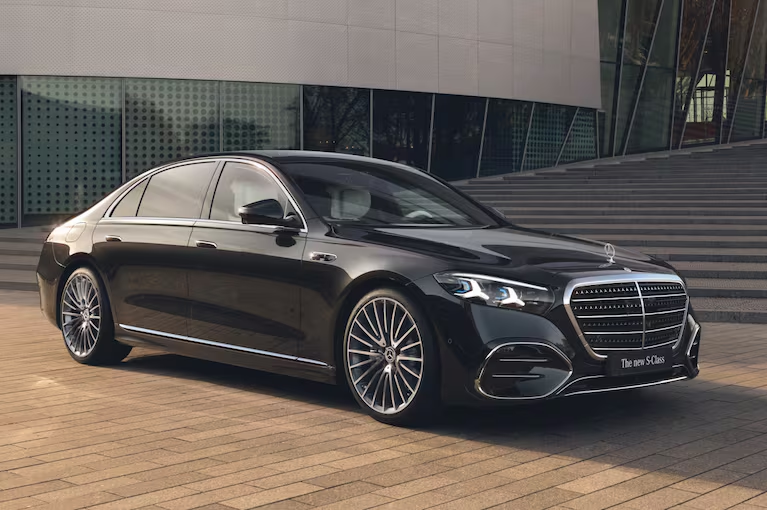
Mercedes-Benz has unveiled a deeply updated S-Class, and this is far more than the kind of routine facelift usually expected halfway through a model cycle. The brand says more than 50 percent of the luxury sedan has been newly developed, re-engineered or refined, turning this into one of the most extensive same-generation updates the S-Class has ever received.
That matters because the S-Class is still the car Mercedes uses to define what its flagship should be in the United States: a rolling showcase for luxury, technology, comfort and engineering ambition. With this update, the brand is not simply freshening the look of its full-size sedan. It is reasserting the S-Class as one of the most important luxury cars on the American market at a time when even premium buyers are increasingly pulled toward SUVs.

Mercedes-Benz has given the S-Class one of the most comprehensive same-generation updates in the model’s history.
Mercedes Didn’t Just Refresh The S-Class — It Reworked It
The key to this story is scale.
Mercedes says roughly 2,700 components of the S-Class were newly developed or revised as part of this update, a figure that immediately separates this car from the average mid-cycle refresh. The result is a sedan that gets a more assertive visual presence, a much more advanced digital backbone, new comfort features, refined powertrains and an even stronger emphasis on rear-seat luxury.
From the outside, the most obvious changes include a larger grille with illuminated surround, a new optional illuminated standing hood star, updated DIGITAL LIGHT headlamps with a new twin-star signature and redesigned taillights that make the S-Class look even more dramatic at night. It is a familiar silhouette, but one now designed to project even more presence in the premium segment’s most image-conscious spaces.
The New S-Class Is Also A Much Bigger Technology Story
One of the biggest upgrades sits beneath the surface.
The updated S-Class is now powered by MB.OS, Mercedes-Benz’s new vehicle-wide software architecture and supercomputer system. In practice, that means the sedan becomes a far more integrated digital product, with the ability to handle over-the-air updates across multiple vehicle functions, more advanced driver assistance capability and a new generation of infotainment features built around the latest MBUX ecosystem.
That includes a standard MBUX Superscreen, fourth-generation MBUX infotainment, a new MBUX Virtual Assistant supported by generative AI, navigation based on Google technology and expanded MB.DRIVE assistance systems. Mercedes is also preparing additional functionality to arrive later via software updates, which shows just how central software has become to the S-Class formula.

Mercedes is using the new S-Class to push its latest MB.OS software architecture and a much more advanced in-car digital experience.
Mercedes Wants The S-Class To Feel More Like A Private Lounge — Or A Mobile Office
The S-Class has always been about more than the driver, and this update leans even harder into that identity.
Mercedes is pitching the rear cabin as a true “boardroom on wheels,” with available 13.1-inch rear entertainment displays, new rear MBUX remote controls and integrated video conferencing capability through apps like Microsoft Teams, Zoom and Webex. Up front, the sedan also gains a long list of comfort-focused refinements, including heated front seatbelts, new Digital Vent Control, enhanced air purification and a cabin layout designed to feel even more serene and more premium than before.
This is where the S-Class still plays a different game than most luxury SUVs. It is not trying to mimic a high-riding family hauler with more leather. It is doubling down on the traditional flagship-sedan formula: a car designed to isolate, pamper and impress whether you are in the driver’s seat or being chauffeured in the back.
The Mechanical Updates Matter Too
Mercedes did not stop at screens and lighting.
The new S-Class continues with a range of electrified powertrains, including updated six-cylinder and V8 gasoline engines as well as a plug-in hybrid. The S 580 4MATIC now features a revised V8 with 530 horsepower, while the S 500 4MATIC receives an updated inline-six with higher torque. The S 580e 4MATIC plug-in hybrid also returns with a stronger combined output of 576 horsepower.
Chassis upgrades are just as important. Mercedes says the sedan’s suspension systems now use intelligent damping that can react to road imperfections before the car reaches them, while rear-axle steering remains part of the package to preserve maneuverability in a car of this size. The point is clear: the S-Class is still supposed to be the benchmark for effortless refinement, not just a tech showcase.

The updated S-Class leans even further into rear-seat luxury, productivity and long-distance comfort.
Mercedes Is Making A Statement About What A Flagship Luxury Sedan Should Still Be
There is a bigger message behind this launch.
At a time when many luxury brands are putting more energy into SUVs, electric crossovers and software ecosystems, Mercedes is still investing heavily in the S-Class as a statement product. And not in a symbolic way, either. This is a major engineering and technology push for a model that could easily have been treated as a slower-selling halo sedan.
Instead, Mercedes chose to make the S-Class more digital, more customizable, more comfortable and more sophisticated in almost every direction. The brand is even expanding its MANUFAKTUR Made to Measure program with over 150 exterior colors and 400-plus interior colors, reinforcing the idea that the S-Class remains one of the purest expressions of bespoke luxury in the Mercedes lineup.
The S-Class Still Matters — And Mercedes Knows It
That is why this update matters today.
The new S-Class is not just another luxury sedan refresh. It is Mercedes-Benz making a very deliberate move to keep its flagship relevant in a market that increasingly rewards size, screens, personalization and software-driven features, but still expects the best sedans to deliver a level of comfort and prestige SUVs struggle to match.

Mercedes is using the updated S-Class to reinforce its place at the top of the full-size luxury sedan segment in the U.S.
For American luxury buyers who still want the traditional flagship formula at its highest level, Mercedes is making one thing clear: the S-Class is not fading quietly into the background. It is evolving into an even more connected, more personalized and more ambitious version of the car that has defined the brand’s luxury identity for decades.









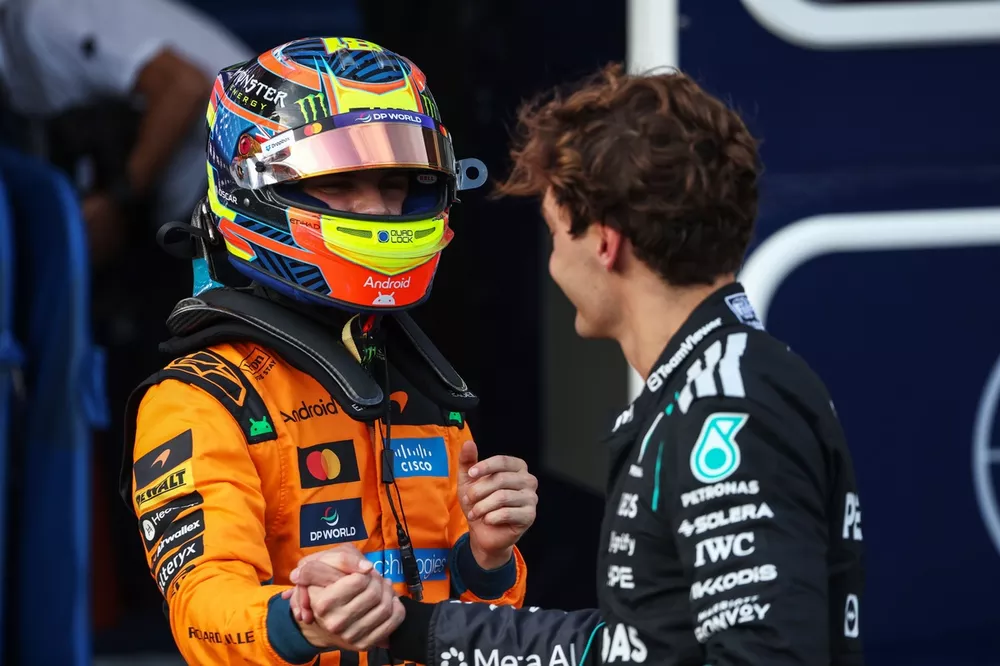
Oscar Piastri will start third at the 2026 Azerbaijan Grand Prix after McLaren found a late step in performance, although George Russell remained out of reach in the final phase of qualifying.
McLaren found its speed when it mattered
Oscar Piastri will start the 2026 Azerbaijan Grand Prix from P3 after a strong qualifying session at the Baku City Circuit.
McLaren had struggled to show its full potential during practice. The team then unlocked more performance in Q3, allowing Piastri and Lando Norris to briefly move to the front of the timing screen.
Piastri eventually stopped the clock at 1:43.364, just 0.001 seconds behind Charles Leclerc. George Russell claimed pole position with a 1:42.526.
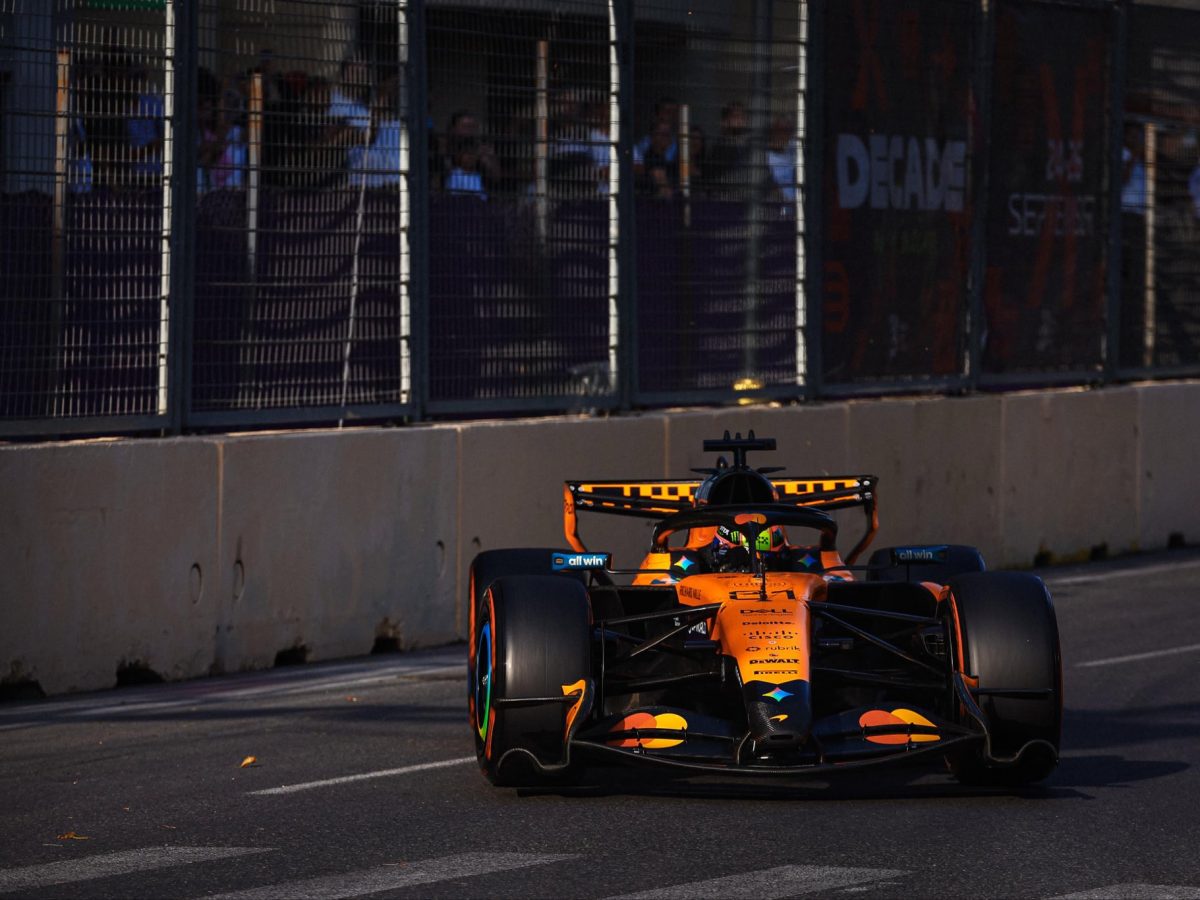
Piastri’s MCL40 looked stronger as qualifying progressed, despite McLaren starting the session on the back foot.
The jump in performance was familiar to Piastri.
“We seem like we’re a bit on the back foot through practice,” the Australian explained after qualifying. He added that McLaren repeatedly finds an extra step once qualifying begins.
The first Q3 runs created even more optimism.
Piastri and Norris temporarily occupied the top two positions. Russell then produced a much faster final run and took pole by 0.837 seconds over Leclerc.
For Piastri, the difference was clear.
He said there was “no hope against George” after seeing the Mercedes driver complete his final lap.
The wind made Baku even harder
Piastri also pointed to the strong and changing wind as one of the biggest challenges around Baku.
The conditions were already noticeable in practice. McLaren reported stronger gusts on Friday, with the wind contributing to several yellow flags during FP3.
The Australian said that keeping the car stable was difficult even on the straights.
A sudden gust could change the balance of the MCL40 from one lap to the next. Piastri also noted that wind-speed differences could be substantial, forcing drivers to adapt constantly.
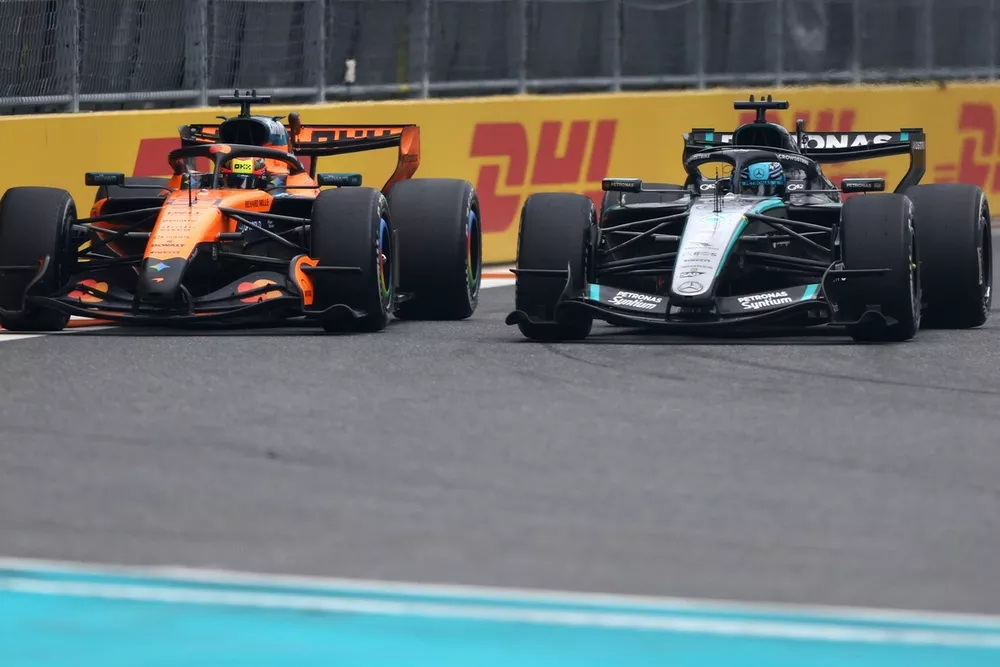
Piastri will start on the second row alongside Leclerc, with Russell taking pole position in Baku.
That is especially important at a street circuit.
Baku combines long straights with slow corners and very little margin for error. McLaren’s technical team described the circuit as a difficult compromise between straight-line speed and corner performance.
The team also introduced upgrades this weekend.
McLaren said the new package was performing as expected, while an overnight revision to the floorboards proved effective during Friday’s running.
That progress helped Piastri find the final tenths he needed.
McLaren has a strong starting position for the race
Starting third gives Piastri a clear opportunity to fight at the front.
McLaren expects the race to be complicated. The team highlighted tire degradation, Safety Cars and changing race conditions as factors that could alter the order.
That creates an important difference from qualifying.
Russell may have been far ahead over one lap, but McLaren’s own analysis suggests its race pace looked stronger than its qualifying pace during Thursday’s running.
Piastri also has a strong record at this circuit.
He won the 2024 Azerbaijan Grand Prix after a long battle with Charles Leclerc. McLaren is therefore returning to a venue that has already produced one of the Australian’s best Formula 1 results.
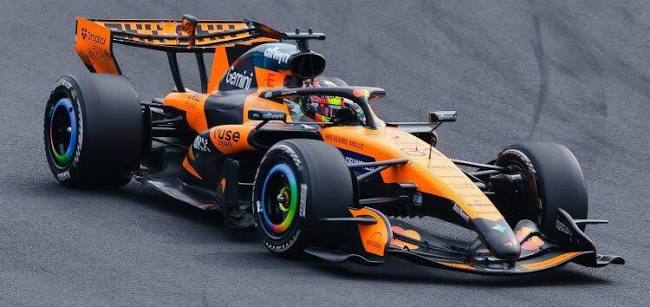
The MCL40 takes on the narrow castle section of Baku, one of the most demanding parts of the circuit.
The second McLaren will start further back.
Norris qualified P5 after locking up on his final qualifying lap. He also admitted that McLaren still has some straight-line performance issues to solve.
That leaves Piastri as McLaren’s best-placed driver on the Baku grid.
The Australian’s objective is now straightforward: stay in the leading group and be ready when the race changes shape.
The Oscar Piastri Baku qualifying result gives McLaren a strong starting position after a difficult practice period. Piastri will line up third behind Russell and Leclerc, with the race offering another chance to turn McLaren’s late qualifying pace into a podium challenge.
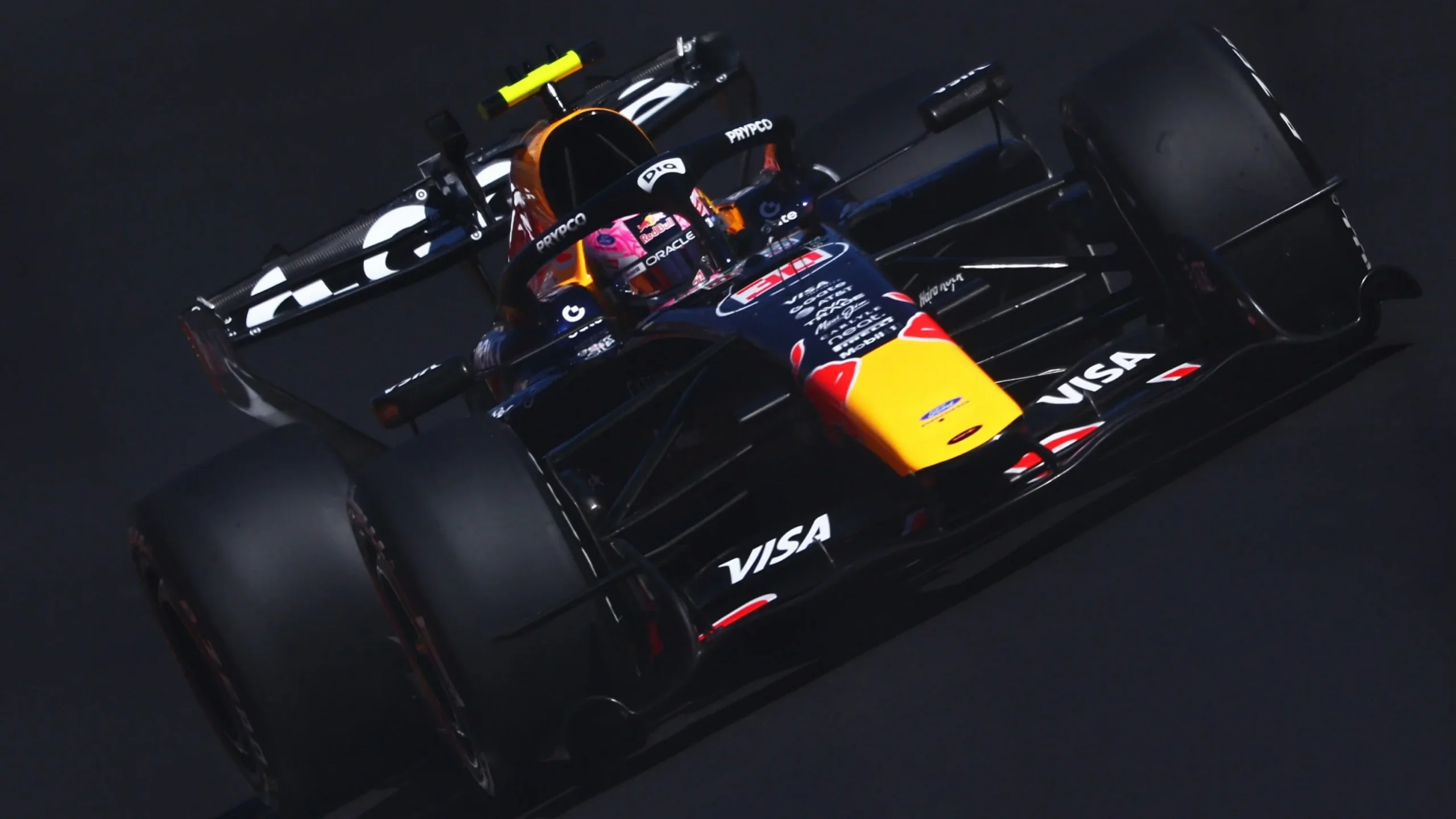
Isack Hadjar returned to Formula 1 after missing three races and delivered fourth place in Baku qualifying, just 0.137 seconds from Charles Leclerc.
Hadjar makes an impressive F1 comeback
Isack Hadjar made a strong return to Formula 1 in Azerbaijan, qualifying fourth for Red Bull at the Baku City Circuit.
The Frenchman had not raced since the Hungarian Grand Prix in July. He then missed the races in Zandvoort, Monza and Madrid because of a wrist injury.
Despite that long absence, Hadjar immediately reached Q3 and posted a 1:43.500. That placed him fourth on the grid behind George Russell, Charles Leclerc and Oscar Piastri.
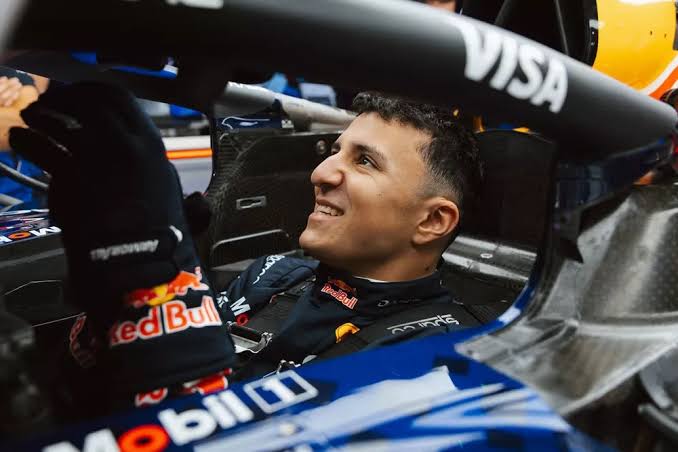
Hadjar returned to competition in Baku and qualified fourth on his first weekend back after his wrist injury.
The gap to second place was particularly small.
Hadjar finished only 0.137 seconds behind Leclerc. He was also ahead of Max Verstappen, who qualified eighth in the second Red Bull.
Russell was in a different league during the final phase. The Mercedes driver took pole with a 1:42.526, beating Leclerc by 0.837 seconds.
For Hadjar, however, the most important part of the session was how he managed his own return.
Hadjar chose a cautious approach
Hadjar admitted that the Baku weekend required a different mindset.
After almost two months away from racing, he deliberately avoided taking unnecessary risks during the narrow sections of the circuit. The objective was to build confidence step by step before pushing harder in qualifying.
He said he wanted to make sure he did not touch the walls.
That approach allowed him to increase his commitment throughout the weekend. By Q2, Hadjar felt comfortable enough to take more risks and eventually pushed closer to the limit in Q3.
The result was his best qualifying position since the season-opening Australian Grand Prix, where he had started third.
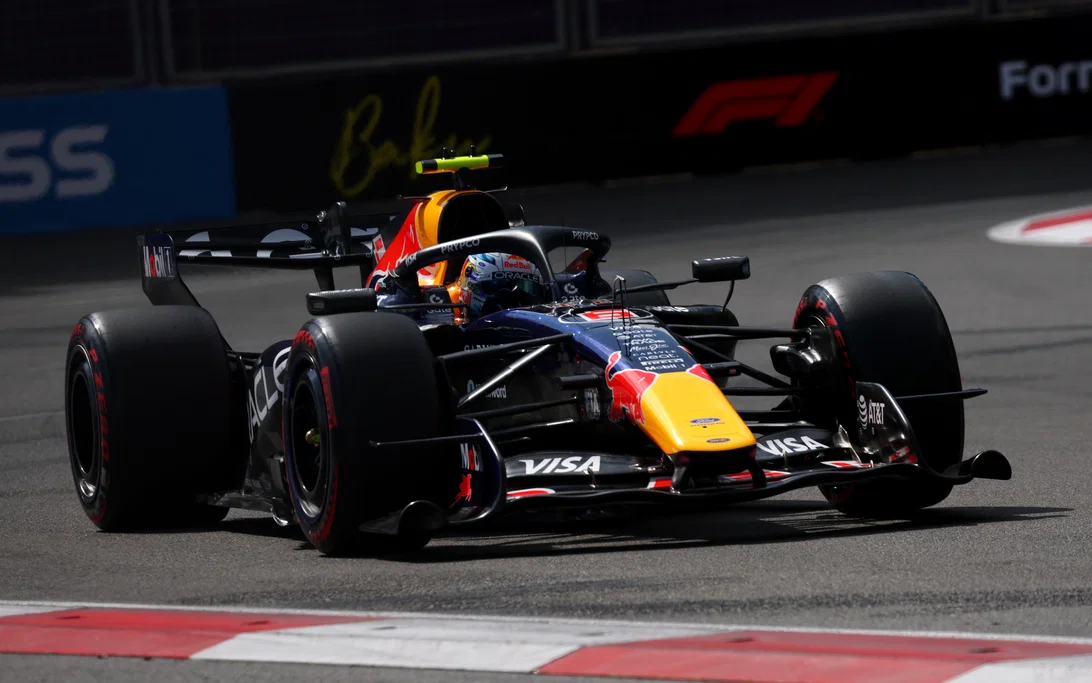
Hadjar is continuing his first season with Red Bull after moving from Racing Bulls at the start of 2026.
His comments after qualifying also revealed how much he believes he left on the table.
Hadjar said that, had he raced the three weekends he missed, he felt he would have been second on the grid.
That is his own assessment rather than a result that can be measured directly. What can be measured is the qualifying gap: only 0.137 seconds separated him from Leclerc.
The Red Bull feels better than before
Hadjar also noticed a change in his Red Bull since his last race.
The Frenchman said the car felt better through the corners than it had when he last drove it in Budapest. He also highlighted an improvement in balance.
That progress was important at Baku.
The circuit combines extremely long straights with slow corners and almost no margin for error. A driver needs confidence in the rear of the car before committing fully between the walls.
Red Bull’s official assessment was similarly positive. The team said Hadjar had built his rhythm “very cleverly” throughout the weekend and delivered the P4 it had hoped for on his return.
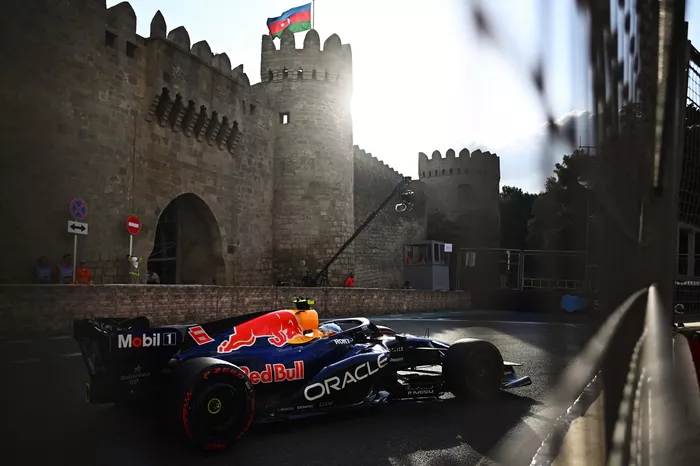
The Baku City Circuit provided Hadjar with a demanding test immediately after his return to F1 competition.
There is still a clear performance gap to Mercedes.
Hadjar said Mercedes was particularly strong on the long straight in the third sector. That difference could become important during the race because Baku offers several opportunities to gain or lose time through straight-line speed.
For Red Bull, the P4 starting position nevertheless gives the team a strong opportunity to fight near the front.
Hadjar returns without setting a specific target
Hadjar is not putting a specific finishing position on his return.
Instead, he wants to be close to the drivers ahead and make the most of the Red Bull’s pace. His priority is to build on the confidence gained during qualifying.
The fact that he completed a full qualifying session without major issues is already significant after his long absence.
The official starting grid confirms that Hadjar will line up fourth, behind Russell, Leclerc and Piastri.
That puts him directly in the fight at the front.
A strong start to Hadjar’s second Red Bull chapter
Hadjar’s Baku qualifying also arrives as Red Bull confirms that he will remain with the team for 2027. Team principal Laurent Mekies said the objective is for the young driver to continue progressing at his current rate.
His return therefore carries more significance than a single qualifying result.
Hadjar came back after three missed races, managed the physical and competitive challenge carefully and finished fourth in qualifying. He also closed the session with a gap of just 0.137 seconds to the front row.
The Isack Hadjar Baku comeback has therefore started with a clear result: P4 on the grid and a competitive Red Bull underneath him.
Now the next test is Saturday’s race, where Hadjar will have his first opportunity in almost two months to turn that qualifying pace into a Grand Prix result.
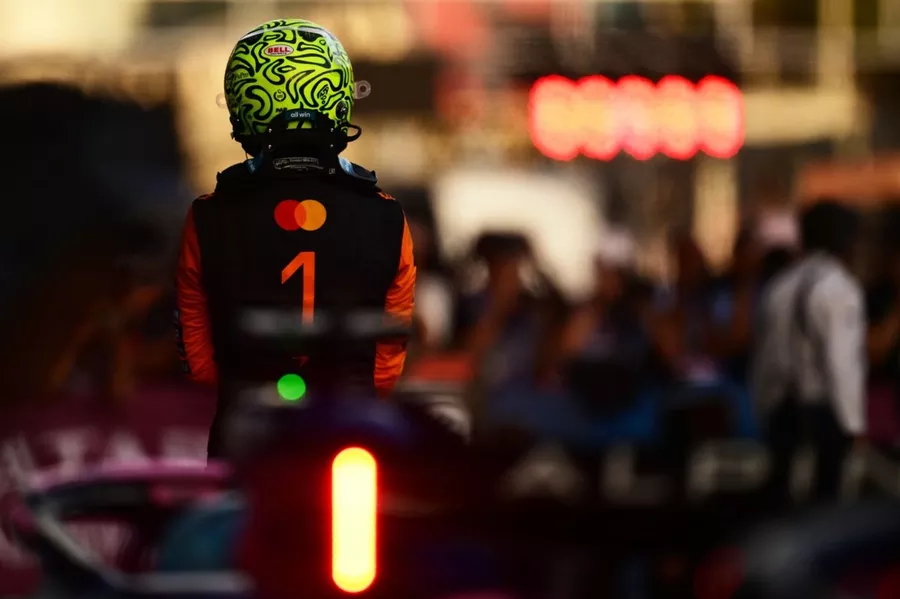
Lando Norris qualified fifth in Baku after a final-lap lock-up, but the McLaren driver says straight-line speed remains one of the team’s biggest problems.
Norris leaves Baku qualifying frustrated
Lando Norris will start the 2026 Azerbaijan Grand Prix from fifth place after a difficult qualifying session in Baku.
The McLaren driver said the car felt competitive enough to attack the session. However, he believes the MCL40 is still losing too much time on the long straights of the Baku City Circuit.
Norris ended qualifying with a 1:43.672. His teammate Oscar Piastri took third with a 1:43.364, only 0.001 seconds behind Charles Leclerc in second. George Russell claimed pole by more than eight tenths.
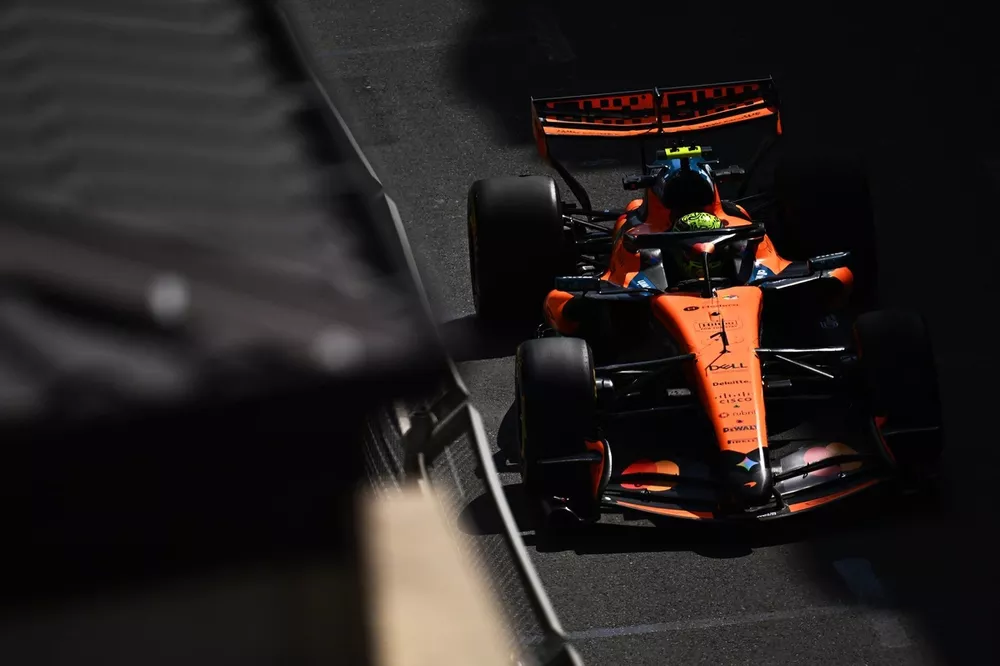
Norris found McLaren in a better window during qualifying, but the team continued to lose performance on Baku’s long straights.
McLaren had struggled during Thursday practice. Its new upgrade package showed encouraging signs, but the circuit’s characteristics did not suit the car particularly well.
The team made overnight changes and continued working on the new floor. McLaren said the revised floorboards performed as expected during Friday running.
That work helped the team unlock more performance in qualifying.
Norris reached Q3 and initially put himself in a strong position. His final attempt, however, went wrong when he locked up at Turn 3 while pushing for a better grid position.
Straight-line speed remains the key problem
The lock-up was not the only reason Norris finished fifth.
After qualifying, he highlighted the car’s lack of straight-line speed as a major limitation. That is especially costly in Baku because the circuit features one of the longest flat-out sections on the Formula 1 calendar.
Norris said the car felt good during the session. The problem was extracting enough lap time from it when compared with Mercedes.
The gap to pole was therefore difficult to overcome.
McLaren’s own qualifying report confirms that the MCL40 was affected by the characteristics of the circuit. The team also expects Mercedes and Red Bull to remain strong during the race.
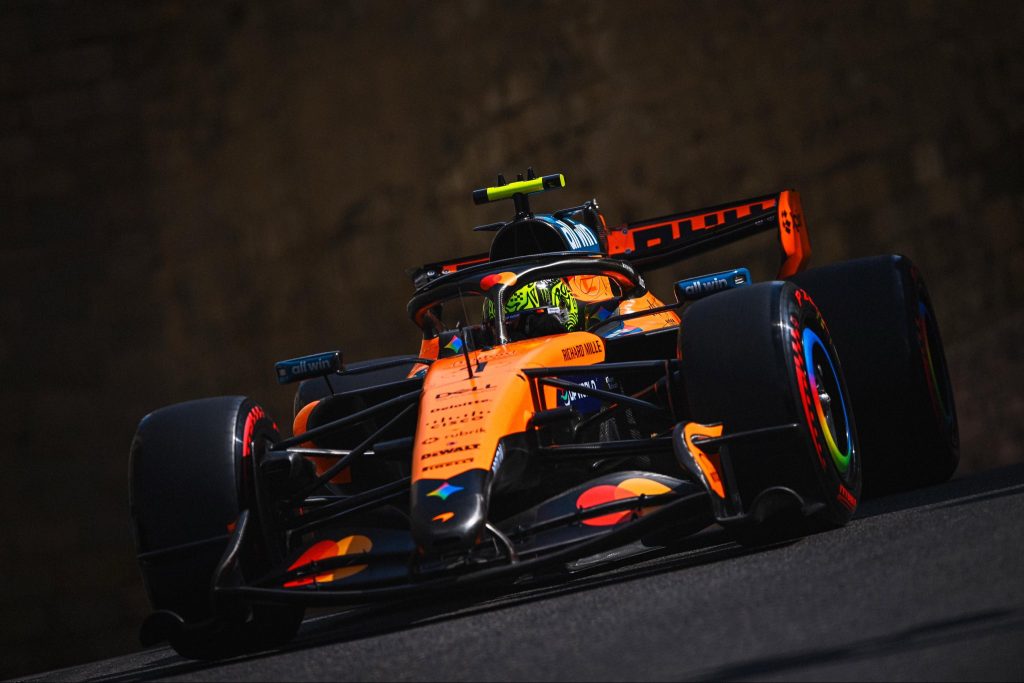
Oscar Piastri put the second McLaren third on the grid, giving the team a stronger qualifying result than its practice pace had suggested.
The comparison with Piastri is also significant.
Piastri qualified third, while Norris ended up fifth. The Australian’s lap was just one thousandth away from Leclerc’s Ferrari.
That means the McLaren does have enough performance to challenge near the front. It simply has not been able to deliver that pace consistently across both cars and every part of the circuit.
Norris also acknowledged that his teammate’s car appeared to have a stronger balance in Baku.
That difference has made the situation more frustrating for the reigning World Champion. The problem is not simply the overall speed of the McLaren. It is how the car converts its performance into lap time at this particular circuit.
The final lap was a calculated risk
Norris did not hide his responsibility for the fifth-place result.
He knew that improving on the Mercedes cars would require an aggressive approach. Instead of settling for a guaranteed position, he pushed for a much stronger final lap.
That decision produced the lock-up.
McLaren says Norris was on course to challenge for a higher position before the mistake compromised his final run.
There was also a strategic element.
Mercedes was operating at another level in qualifying. Russell took pole with a huge margin, while Kimi Antonelli’s crash in Q1 and Max Verstappen’s yellow-flag-affected final run changed the normal order at the front.
Norris therefore had little to lose by trying something aggressive.
McLaren still has a chance in the race
Starting fifth does not eliminate McLaren’s chances in Baku.
The circuit often produces unusual races. Safety Cars, tire management and changing track conditions can alter the order quickly.
Piastri also believes the team’s race pace could be stronger than its one-lap performance. McLaren’s official report says the team expects a close fight with Red Bull and Ferrari, while Mercedes appears to have a clear advantage at the front after qualifying.
Overtaking, however, could remain difficult.
That makes starting position important. Norris will need a clean opening phase and a strong strategy to move toward the podium.
For McLaren, the bigger concern goes beyond one race.
The team brought a new upgrade package to Baku. Its performance has met expectations, but the circuit has exposed weaknesses that the engineers still need to address.
Norris therefore leaves qualifying with a mixed result.
Fifth place keeps him in contention, but the straight-line speed deficit remains a clear obstacle. His aggressive final lap showed how hard he was willing to push, yet the Mercedes pace and the characteristics of the Baku circuit prevented McLaren from fighting for pole.
-
 NOW TRENDING1 month ago
Tesla Cybercab Gets September 3 Austin Launch Date
-
 INTELLIGENT MOBILITY2 months ago
GM Updates Infotainment System With Smarter Features
-
 NOW TRENDING2 months ago
2027 Audi Q9 and SQ9 Debut as Brand’s Largest SUVs
-
 NOW TRENDING2 months ago
2027 Hyundai Tucson Spied With New Design and Hybrid Power
-
 NOW TRENDING2 months ago
2026 Toyota GRMN Corolla Debuts as the Ultimate Hot Hatch
-
 NOW TRENDING2 months ago
Every GM Assembly Plant Operating in the U.S. in 2026
-
 NOW TRENDING2 months ago
Ferrari Sold Out Through 2027 as Demand Hits New High
-
 NOW TRENDING2 months ago
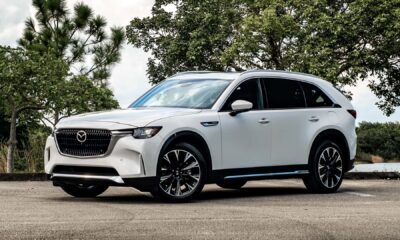
Mazda Plans Updates for CX-70 and CX-90 After Sales Drop
You must be logged in to post a comment Login