
NOW TRENDING
Honda Warns U.S. Factory Plans Depend on USMCA

Honda may delay or abandon plans for an eighth North American assembly plant unless the U.S., Canada, and Mexico extend the USMCA trade agreement.
Honda is reconsidering plans for a new North American assembly plant as uncertainty over the future of the USMCA trade agreement continues.
Noriya Kaihara, Honda’s executive vice president, said the automaker is approaching full production capacity in the region and needs additional manufacturing capacity. However, the company could change course if the trade agreement between the United States, Canada, and Mexico is not extended.
Honda could make a decision within two years
Honda wants the potential new plant to be operating around 2030, but Kaihara said the company expects to make a decision within the next one to two years.
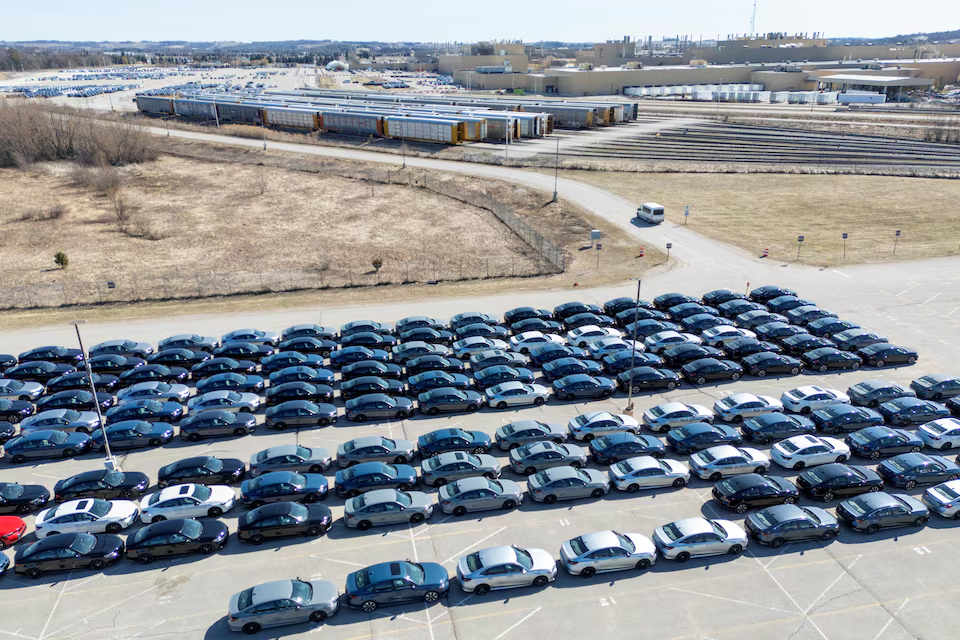
Honda says uncertainty surrounding the USMCA could influence its decision on a new North American factory.
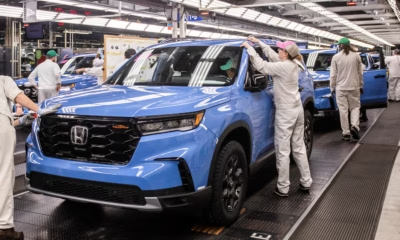
The automaker currently operates multiple manufacturing facilities across North America, including plants in Ohio, Indiana, Alabama, and Mexico.
The potential investment would therefore be another step in expanding Honda’s regional manufacturing footprint.
But without greater certainty around trade rules, Honda may have to reconsider where and how it invests.
Tariffs are adding another layer of uncertainty
The USMCA negotiations are taking place as manufacturers face a shifting tariff environment across North America.
Honda says it is not currently passing tariff costs on to North American customers, but continued uncertainty could make long-term investment decisions more difficult.
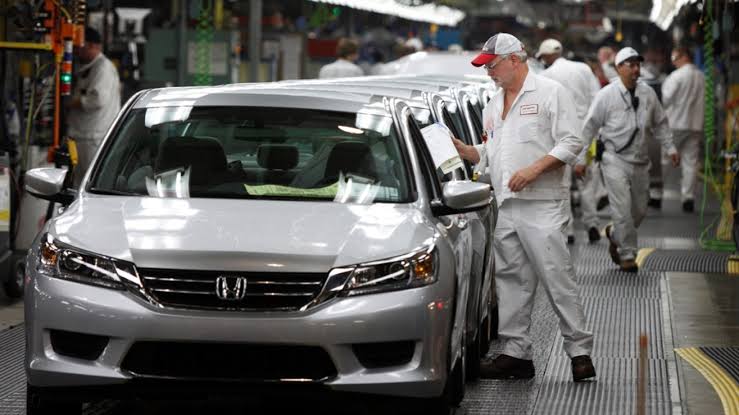
Honda says it is absorbing current tariff costs rather than immediately passing them on to customers.
The issue is broader than Honda.
Other automakers have also warned that uncertainty over North American trade policy can delay decisions involving factories, suppliers, and technology investments.
For Honda, a stable regional trade framework could make it easier to commit billions of dollars to additional production capacity.
Honda is shifting its focus toward hybrids
The potential factory decision comes as Honda changes its product strategy.
In May, the company said it would increase investment in hybrid vehicles as demand changes and reduce its previous EV ambitions. Honda now plans to launch 15 next-generation hybrid models globally by the fiscal year ending March 2030, with North America identified as a priority market.
Honda also plans to make all of its North American auto plants capable of producing hybrid vehicles and is reallocating excess capacity in Ohio toward gasoline and hybrid production.
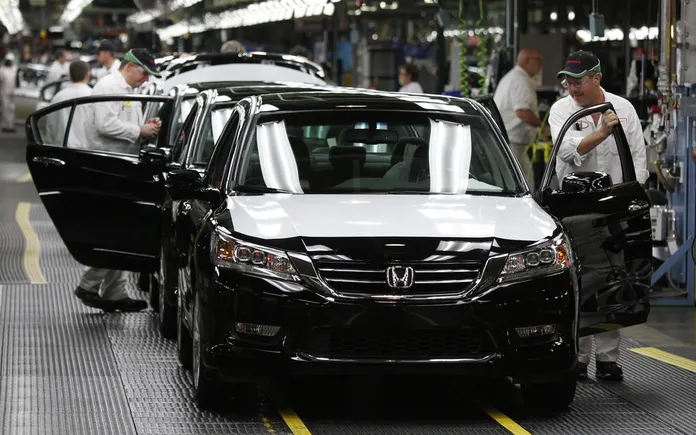
Honda is redirecting production capacity toward gasoline and hybrid vehicles as it recalibrates its electrification strategy.
The shift reflects strong demand for fuel-efficient vehicles as gasoline prices remain elevated.
Honda reported that its vehicle sales increased 36% in July, giving the company its strongest July in seven years, according to Reuters.
Honda’s North American strategy is changing
Honda has already scaled back some of its EV plans.
The company indefinitely suspended its planned $11 billion Canadian EV and battery project and canceled three U.S.-market EV programs. At the same time, Honda announced that production of its U.S.-bound five-door Civic Hybrid would move from Japan to Indiana.
The potential new plant would therefore arrive at a time when Honda is reassessing both its manufacturing footprint and powertrain strategy.
For Honda North America plant plans, the future now depends partly on whether the company receives enough certainty from the USMCA negotiations to justify another major investment in the region.








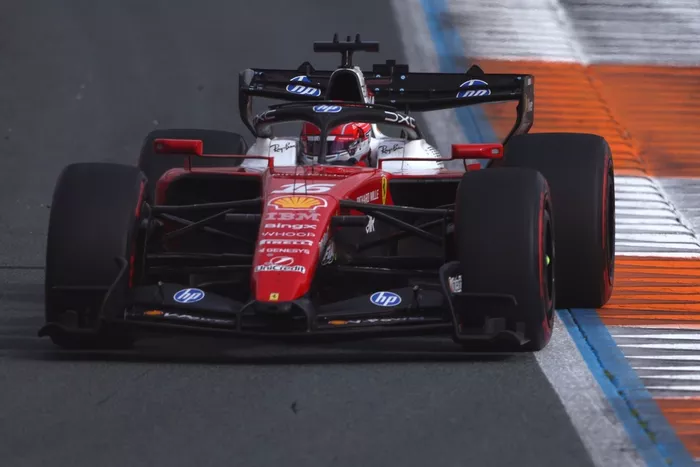
Ferrari has completed its new ADUO2 power units, but the team will make the final decision on their Monza debut after completing the last reliability checks.
Ferrari has two new ADUO2 power units ready for use. However, the team has not yet confirmed whether they will make their debut at the Italian Grand Prix.
The engines have been completed for several weeks. Ferrari is still waiting for the final validation before sending them to Monza.
Ferrari must complete the final reliability checks
The updated 067/6 power unit has to pass a demanding durability program.
Under the current rules, an engine must complete the equivalent of at least six races on the test bench without a reliability failure.
The summer shutdown at Maranello also extended the validation process.
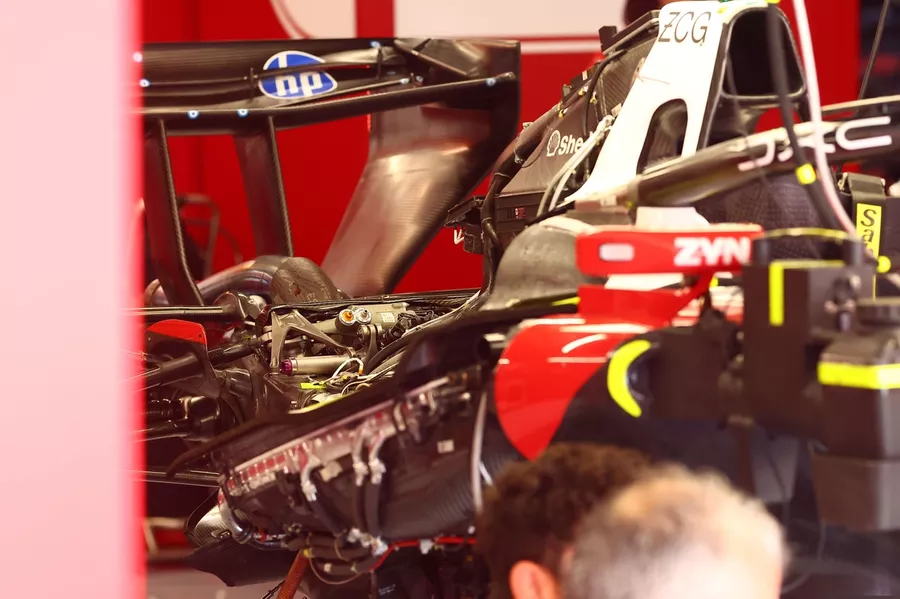
Ferrari’s new ADUO2 power units are ready, but final reliability checks will determine whether they race at Monza.
Ferrari has 21 test cells available for engine development. Budget restrictions, however, limit how many dynamometers can be used at the same time.
That makes the process slower.
A single reliability problem can also force engineers to restart part of the approval process.
Ferrari therefore does not want to rush the decision.
The new engine could add around 15 horsepower
The biggest attraction of the ADUO2 package is its potential performance gain.
The updated six-cylinder engine is expected to produce around 15 additional horsepower.
Ferrari has also revised the power curve to improve energy deployment around the lap.
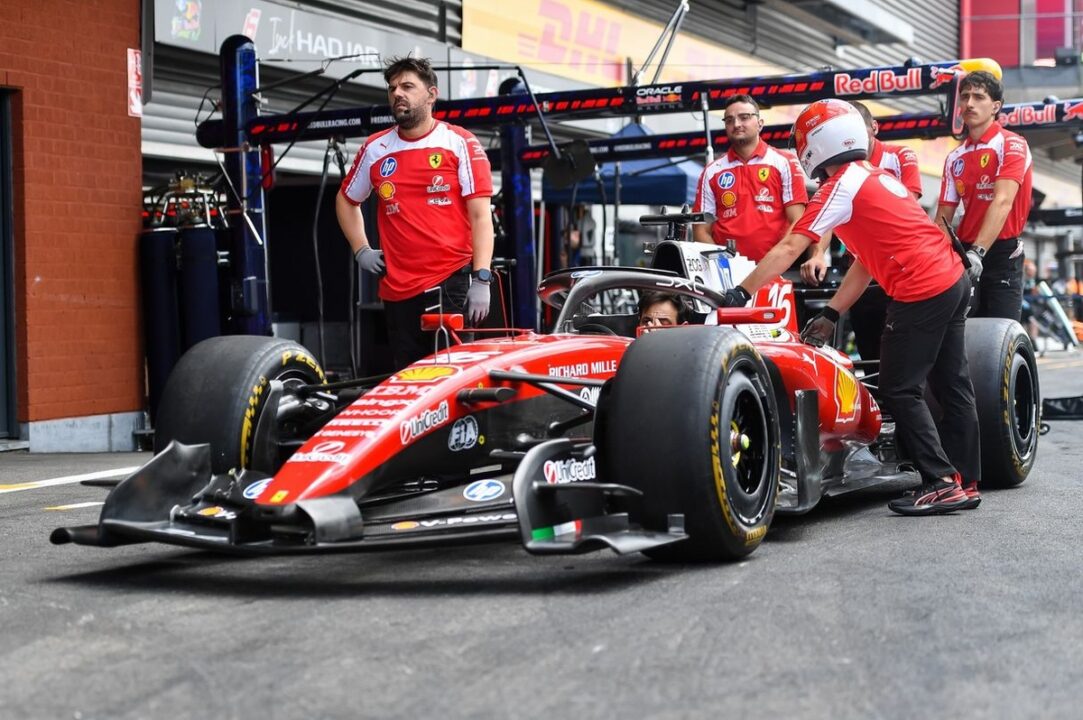
The Ferrari ADUO2 upgrade could deliver around 15 extra horsepower and a revised power curve.
The update includes changes to the Garrett turbocharger and combustion chamber.
Ferrari has also worked with Shell on a new fuel specification approved for Monza.
The combination should improve combustion efficiency and hybrid-system recovery.
Most importantly, Ferrari hopes the package will reduce its power deficit to Mercedes.
Monza could become a key test
Monza is one of the best circuits for measuring engine performance.
The track places a heavy emphasis on straight-line speed and acceleration.
That makes the Italian GP an important benchmark for Ferrari and its new power unit.
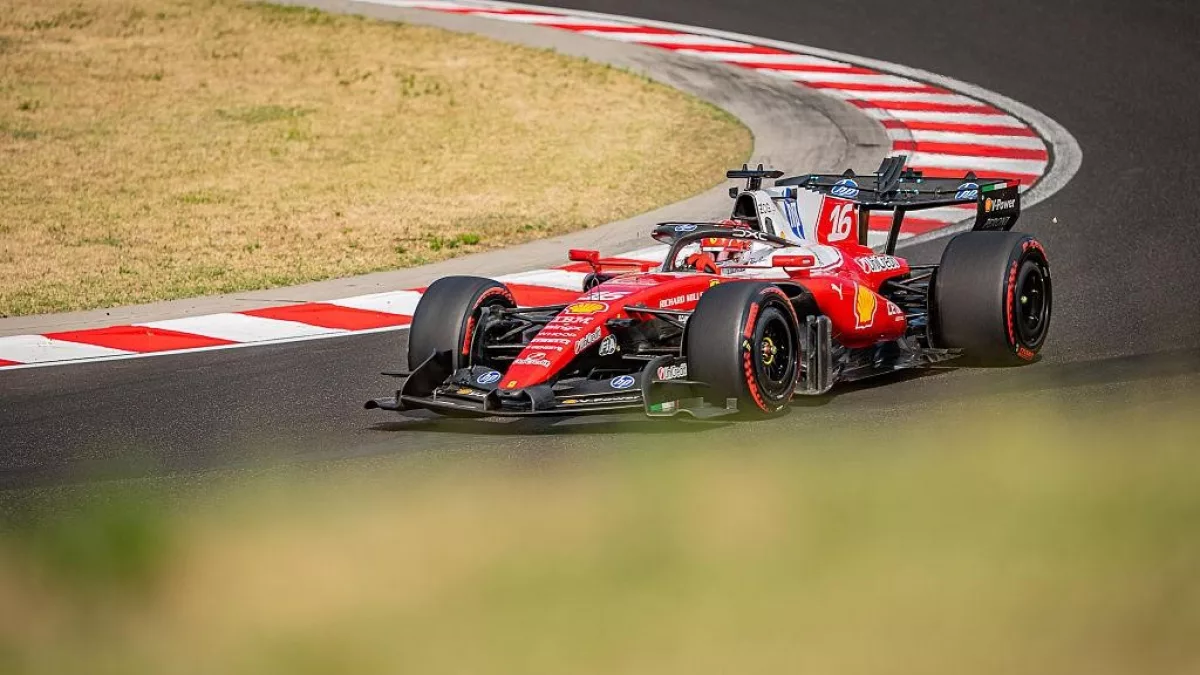
Lewis Hamilton and Charles Leclerc could use the ADUO2 engine as Ferrari looks to close the gap to Mercedes.
Ferrari is not necessarily expecting to dominate the weekend.
Mercedes remains the benchmark on paper.
Ferrari’s main objective is to stay close enough to create a chance to fight for victory.
Kimi Antonelli will also receive a new Mercedes power unit at Monza. He is expected to start at least 20 places lower than his qualifying position because of his grid penalty.
That could create an opportunity for Ferrari.
Ferrari will also use its latest aerodynamic package
The Scuderia will combine the potential engine upgrade with the aerodynamic developments introduced at Zandvoort.
Those changes include revisions to the floor and diffuser.
Ferrari believes the package could work well with Monza’s low-downforce setup.
The team also believes the SF-26 may have carried slightly too much aerodynamic load at Zandvoort.
Energy management was another weakness.
Hamilton and Charles Leclerc qualified only fifth and sixth after struggling to maximize the available energy over a lap.
Monza will provide a much clearer test because there is no Sprint race.
Ferrari will have three free-practice sessions to optimize the engine, energy deployment, and aerodynamic setup.
For the Ferrari ADUO2 engine, Monza could become one of the most important weekends of the 2026 season.
If the new power unit delivers the expected gain and remains reliable, Ferrari could finally make significant progress against Mercedes.
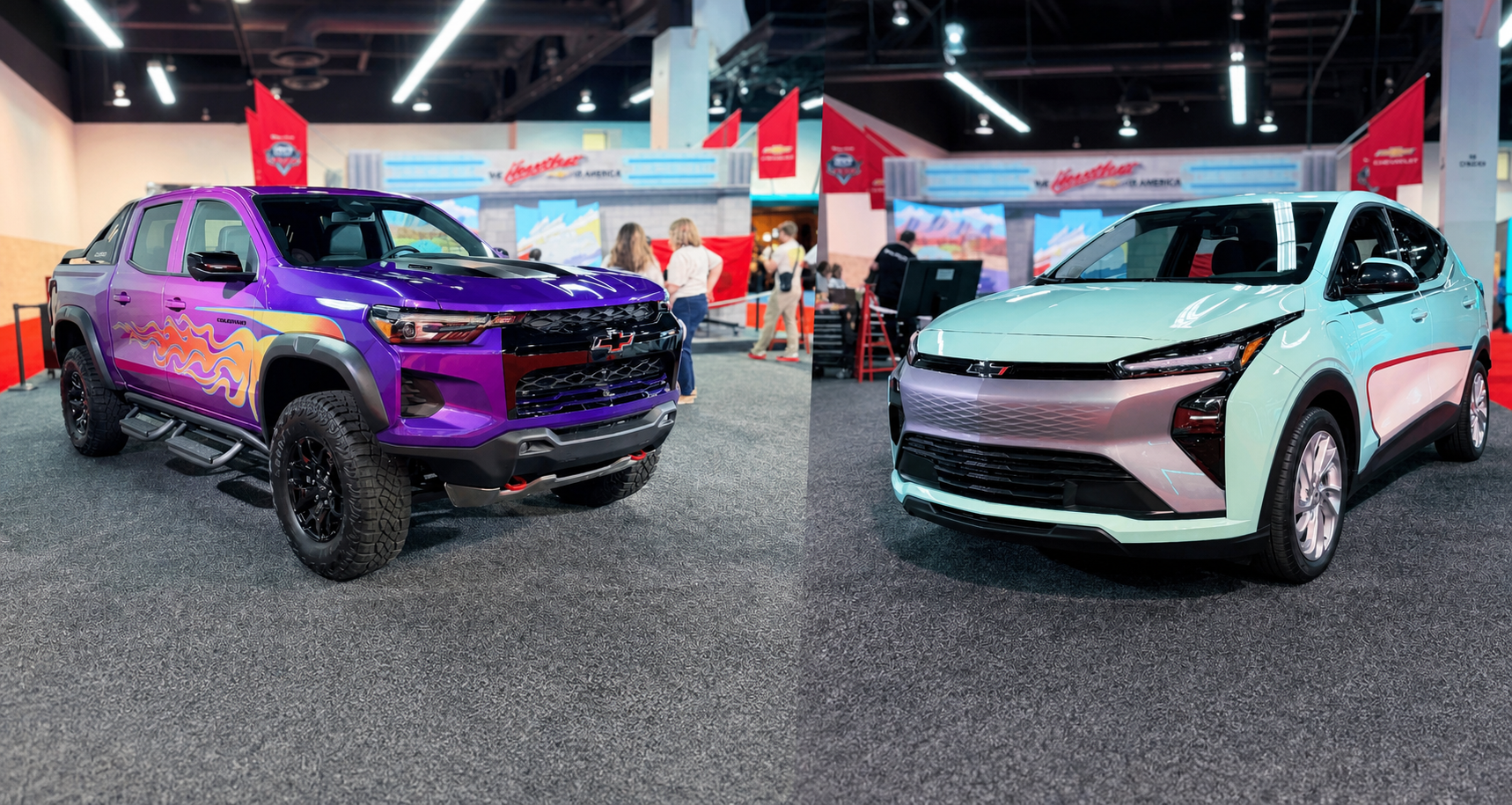
Chevrolet and Disney transformed a 2026 Colorado and 2027 Bolt into full-size tributes to Ramone and Flo for the 20th anniversary of Pixar’s Cars.
Chevrolet has brought two of Pixar’s most recognizable Cars characters to life with full-size vehicle wraps.
For the 20th anniversary of the animated movie, General Motors displayed a 2026 Chevrolet Colorado inspired by Ramone and a 2027 Chevrolet Bolt inspired by Flo at D23: The Ultimate Disney Fan Event.
The project combines Pixar’s characters with Chevrolet’s current lineup while showcasing both gasoline and electric vehicles.
Ramone and Flo Get Modern Chevrolet Forms
The two vehicles were designed by Disney and wrapped by Graphix Concepts specifically for the D23 event.
Ramone’s real-world counterpart is the 2026 Chevrolet Colorado, while Flo is represented by the 2027 Chevrolet Bolt.
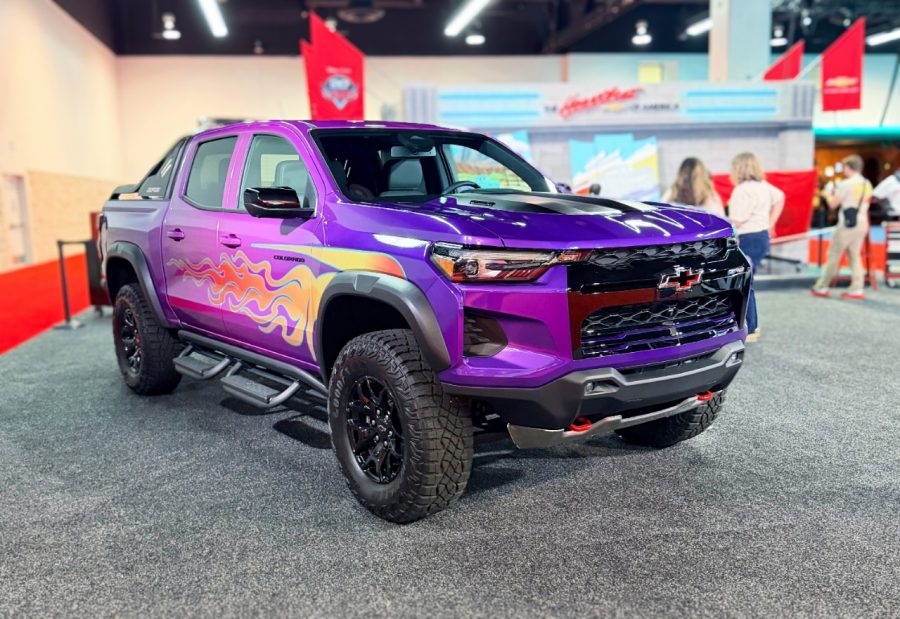
The 2026 Chevrolet Colorado was transformed into a modern interpretation of Ramone from Pixar’s Cars.
The choice of Ramone was particularly fitting because the character is portrayed as a 1959 Chevrolet Impala in the original movie.
Flo, meanwhile, was partly inspired by the 1951 Buick XP-300, which helped guide the visual treatment of the Bolt.
The project was also designed around D23’s theme of iconic duos while celebrating two decades of Cars.
One Gas Truck and One EV
Chevrolet deliberately chose two vehicles with different powertrains.
The Colorado represents GM’s continued commitment to gas-powered vehicles, while the Bolt highlights its growing electric lineup.
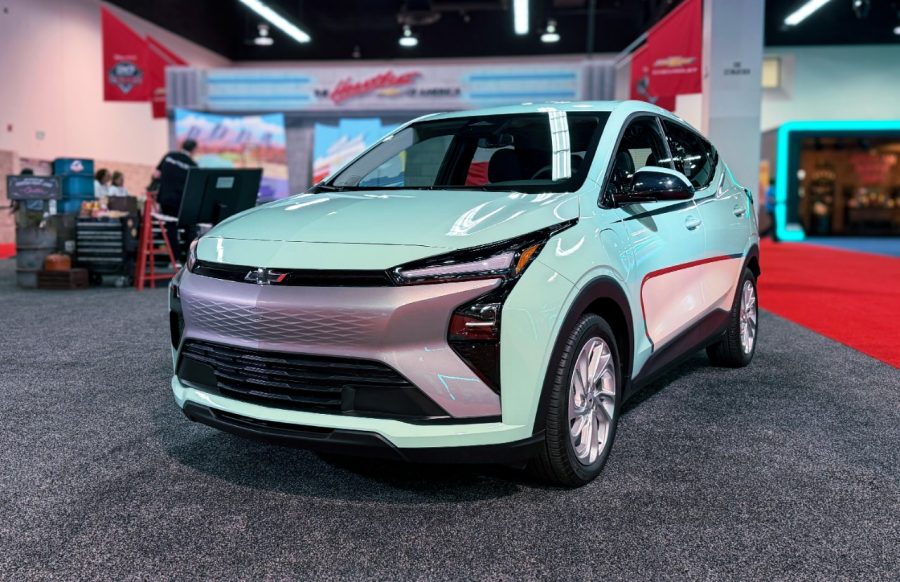
The 2027 Chevrolet Bolt became Flo, giving the Pixar character an electric Chevrolet interpretation.
GM said the approach reflects the company’s emphasis on customer choice.
Disney developed the creative direction, while GM worked with the team to adapt the character designs to actual vehicles without hiding their original shapes.
The goal was to make the characters immediately recognizable while allowing the underlying Chevrolet designs to remain visible.
Creating the Character Wraps
Transforming the two vehicles required considerably more work than simply applying graphics.
Both the Colorado and Bolt were thoroughly washed and prepared before the wrapping process began. Any contaminants, dust, or oils could interfere with the vinyl installation.
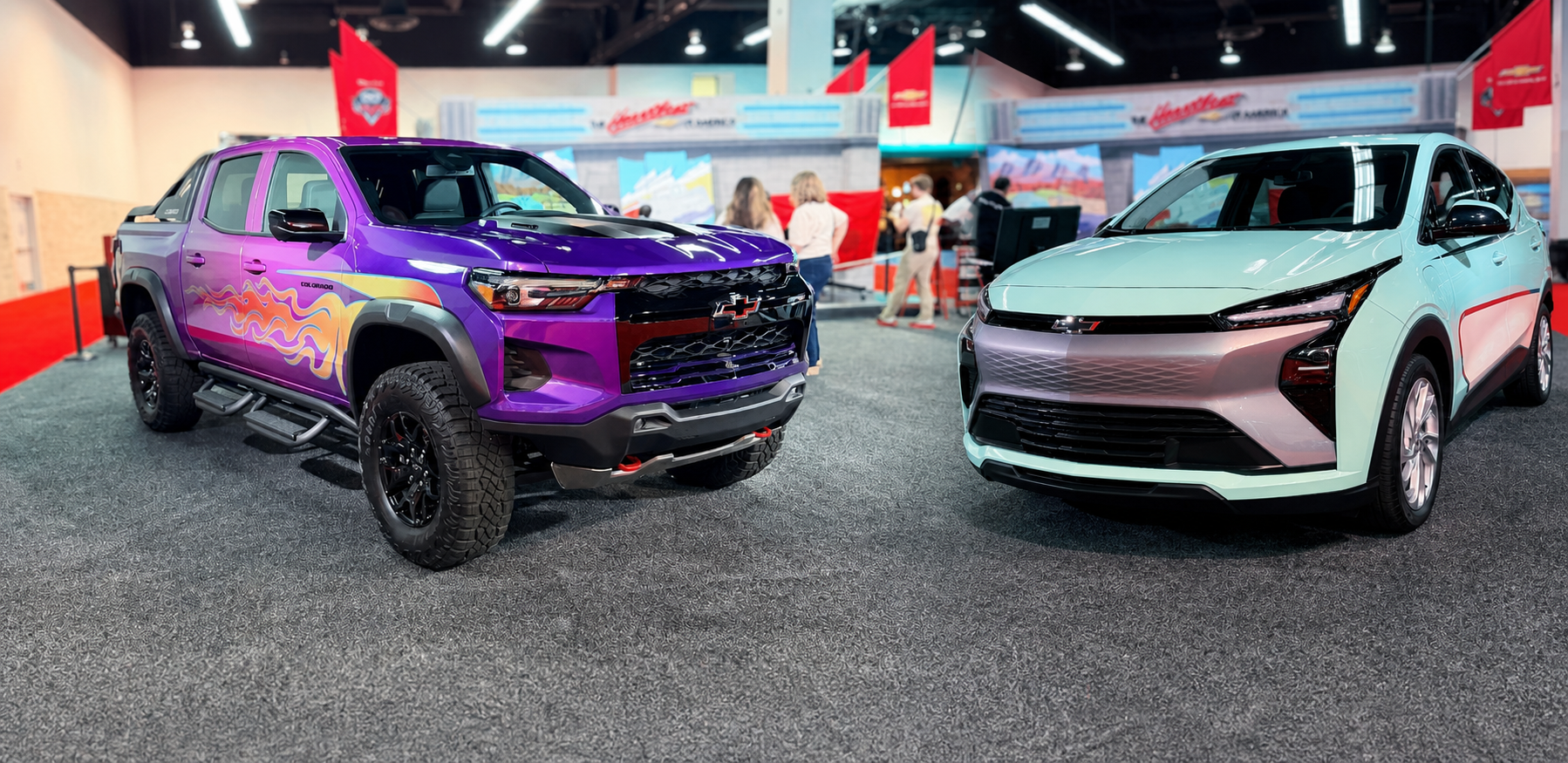
Graphix Concepts spent roughly a week applying the custom wraps to the Colorado and Bolt.
The Bolt’s wrap used a continuous-color film divided into panels according to the size of each body section.
The Colorado required a more complicated process because of its gradient colors and detailed graphics. Even the door handles required individually printed panels.
Graphix Concepts used a printable metallic silver film on the Colorado to create an appearance closer to painted metal with metallic flake.
A Week to Build Two Life-Size Characters
The specialized wrapping company has just 12 employees, with every member contributing to the project at some stage.
Overall, the installation process took approximately one week for both vehicles.
The finished Colorado and Bolt provided D23 attendees with life-size interpretations of Ramone and Flo while highlighting Chevrolet’s current mix of internal-combustion and electric vehicles.
For Chevrolet Pixar Cars, the project offers a modern interpretation of two characters that have remained popular since the original film premiered in 2006.
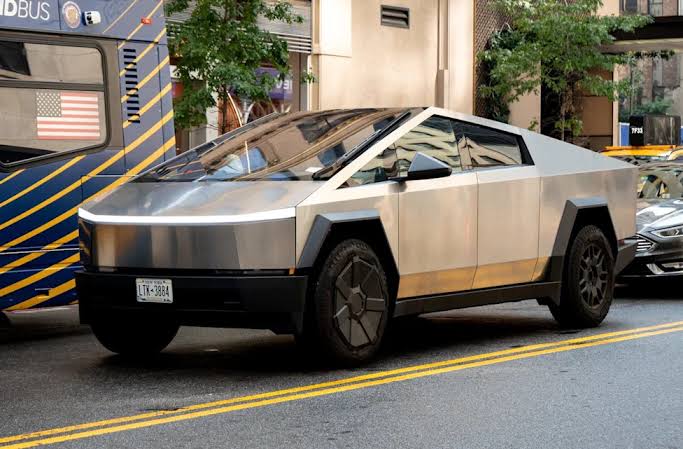
Tesla has increased the price of its two cheapest Cybertruck versions by $5,000, pushing the base model to $77,235 with no apparent mechanical or equipment upgrades.
Tesla has raised the price of the Cybertruck by $5,000, making the controversial electric pickup even more expensive to enter.
The increase affects both of the two lower Cybertruck trims, while the range-topping Cyberbeast remains unchanged.
Cybertruck now starts at $77,235
The Dual Motor All-Wheel Drive model now starts at $77,235, up from $72,235.
The Premium All-Wheel Drive version also received a $5,000 increase, moving from $82,235 to $87,235.
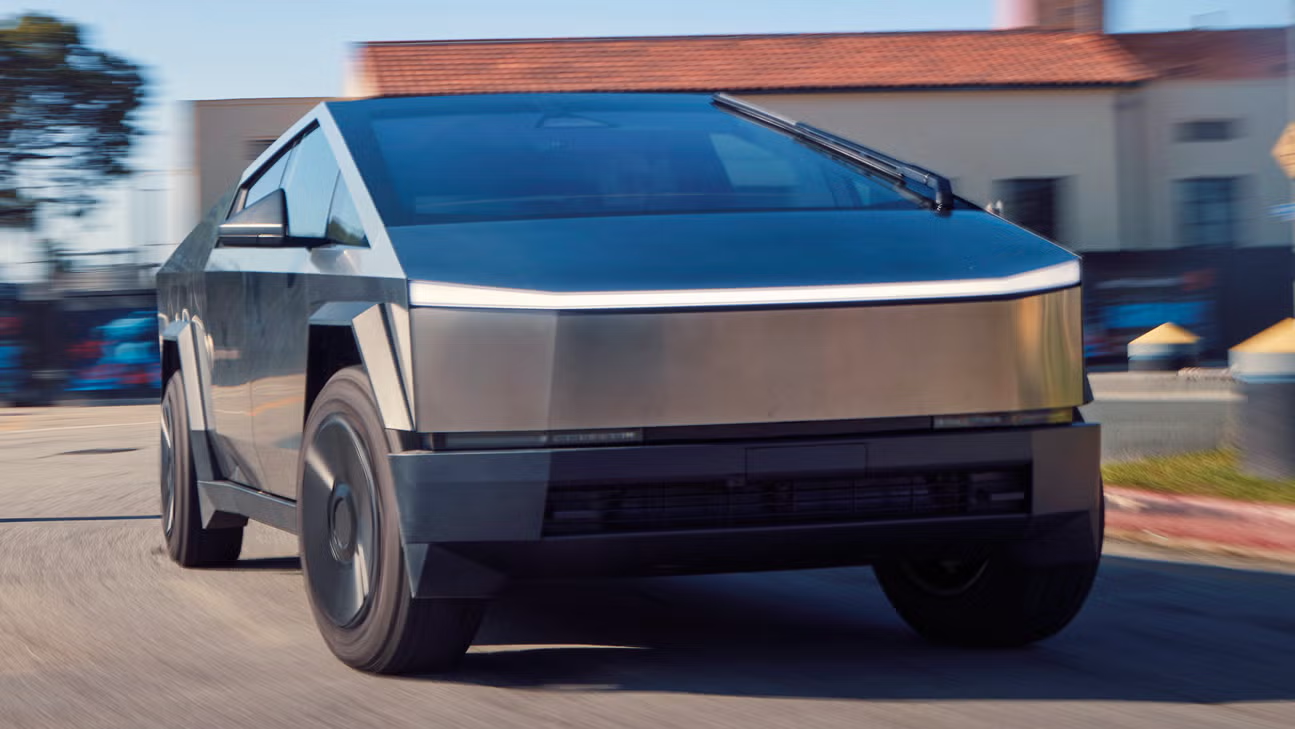
Tesla has increased the Cybertruck Dual Motor AWD price to $77,235.
The top-of-the-line Cyberbeast remains priced at $102,235.
Tesla did not issue a formal announcement explaining the increase. Instead, the new prices appeared in the company’s online configurator.
There are also no obvious changes to the powertrain, equipment, or features of the affected models.
That means buyers are paying more without receiving an apparent increase in performance or standard equipment.
The Cybertruck is far more expensive than originally promised
The latest increase is another step away from the prices Tesla originally promised for the Cybertruck.
When the pickup was unveiled in 2019, Tesla said the single-motor rear-wheel-drive version would start at $39,000, while the dual-motor AWD model would begin at $49,000.
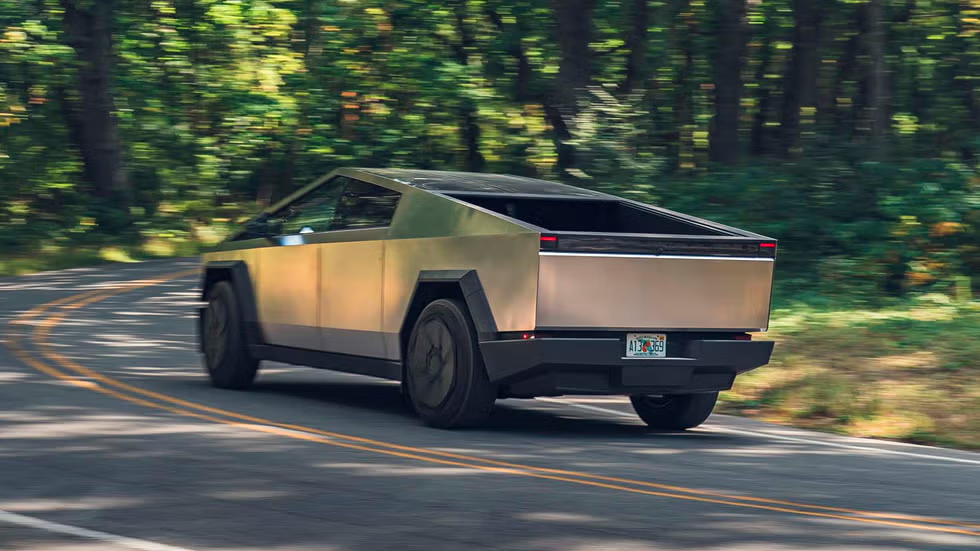
The Cybertruck is now dramatically more expensive than the prices Tesla announced when it debuted in 2019.
Those prices never became reality.
When Tesla eventually launched a single-motor Long Range model in 2025, its starting price was $71,985. That version remained available for only a few months.
Tesla then introduced a new base dual-motor model in February with a $62,235 starting price.
That figure lasted just 10 days before increasing to $72,235.
Now, another $5,000 increase has pushed the entry point even higher.
Cybertruck faces a tougher sales challenge
The rising price comes at a difficult time for the Cybertruck.
Tesla CEO Elon Musk previously said the company could eventually sell 250,000 to 500,000 Cybertrucks annually once production reached full capacity.
Three years after deliveries began, however, sales have still not reached an estimated 100,000 units.
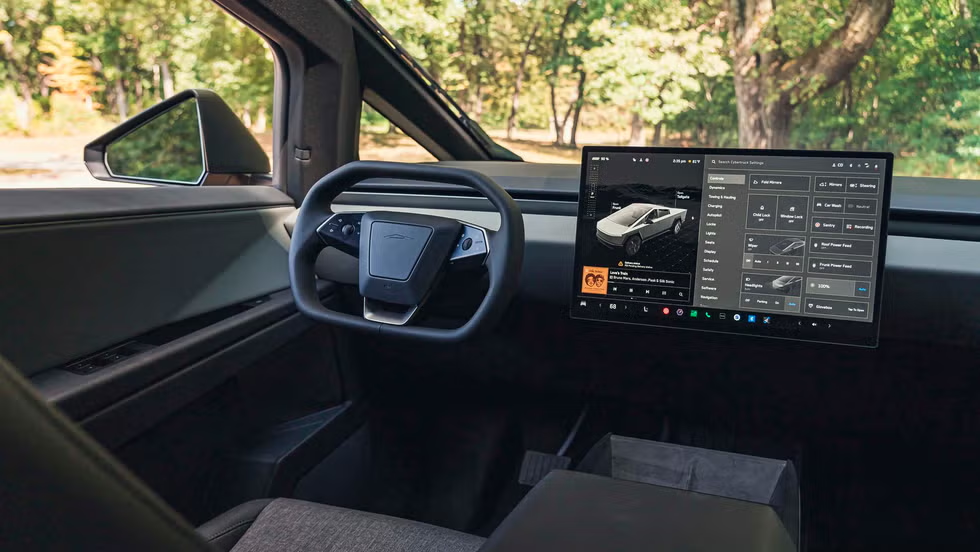
Tesla has struggled to match its original Cybertruck sales expectations as the pickup becomes increasingly expensive.
The latest price increase could make it even harder for Tesla to expand demand.
The Cybertruck now starts at more than $77,000, placing it far above the original price target and limiting its appeal to buyers who may already have numerous electric and gasoline-powered pickup alternatives.
For the Tesla Cybertruck, the latest $5,000 increase is another reminder of how far the production truck has moved from the pricing strategy announced when the vehicle was first revealed.
-

 NOW TRENDING2 months ago
Polestar to Exit U.S. Market After 2026 Due to Connected Vehicle Rules
-
 NOW TRENDING2 months ago
Tesla Model Y L Arrives in the U.S. With More Space and Three Rows
-

 RACING2 months ago
McLaren F1 Unveils Special Silverstone Livery Honoring Its History
-
 INTELLIGENT MOBILITY2 months ago
Audi A4 E-tron and Q7 E-tron Confirmed as New Electric Models
-
 TEST DRIVES2 months ago
A Week Driving Honda’s New Hybrid Coupe
-
 TEST DRIVES2 months ago
Ford Recalls More Than 741,000 Trucks and SUVs Over Rollaway Risk
-
 NOW TRENDING2 months ago
Toyota Reports Strong June and Q2 2026 U.S. Sales Growth
-
 TEST DRIVES1 month ago
The Last Great V8 Audi Wagon Deserves Future Classic Status
You must be logged in to post a comment Login