
NOW TRENDING
From Small-Block Roots To Modern Crate Power, Chevrolet Performance Still Knows How To Feed The Builder Culture

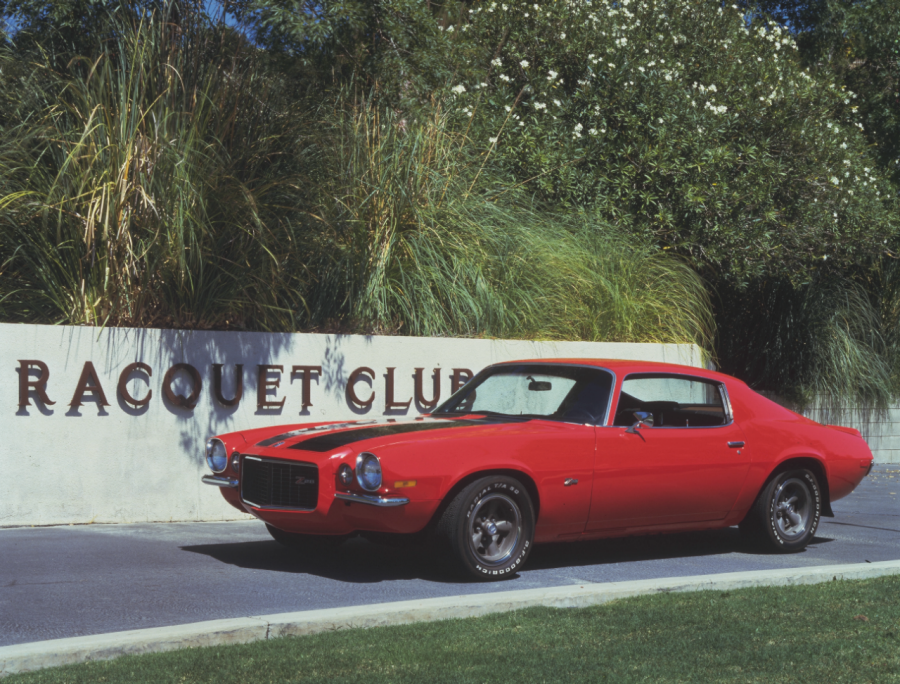
Chevrolet Performance is not just selling engines. It is selling continuity. In an automotive world increasingly dominated by software, electrification and sealed factory ecosystems, Chevrolet remains one of the few major manufacturers still deeply invested in the people who build, swap, restore and modify their own vehicles. That matters, because for generations of enthusiasts, Chevy performance was never only about what left the showroom. It was also about what could be built in a garage, dropped into a project car or transformed into something far beyond stock.
That is why Chevrolet Performance still holds a unique place in American car culture. Through crate engines, transmissions, controllers and factory-developed support parts, GM has kept one foot firmly planted in the enthusiast world while much of the industry has moved in other directions. The result is a performance business that connects 1950s small-block history, the LS swap era and modern LT crate power into one continuous story — and one that still has real relevance today for hot rodders, restorers, racers and truck builders.
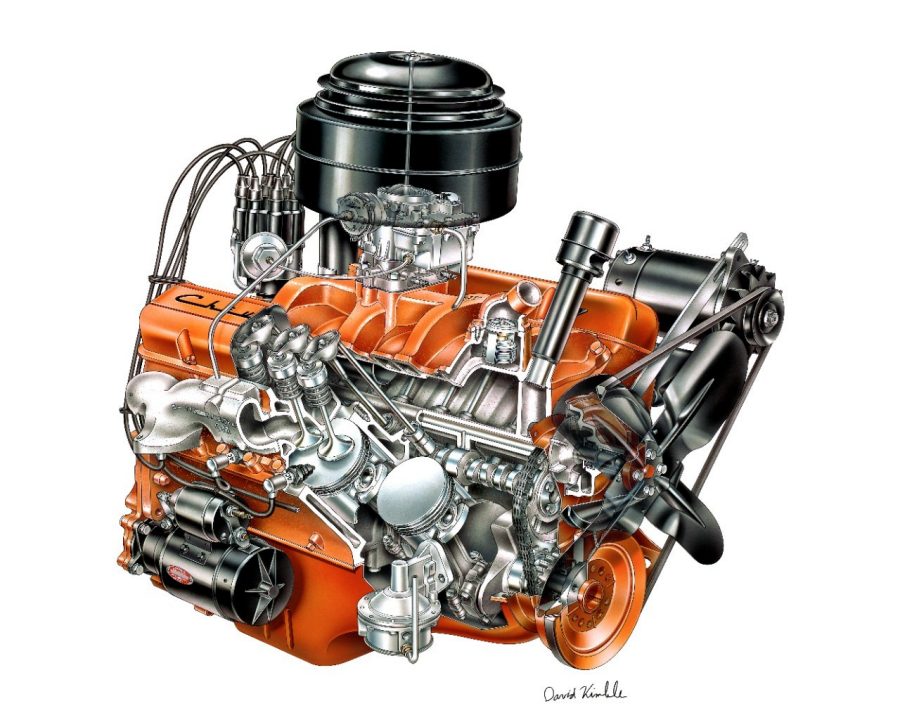
Chevrolet Performance’s story begins with the small-block V8, the engine family that helped define Chevy’s performance identity and laid the foundation for decades of builder culture.
Chevrolet Performance Still Matters Because It Never Walked Away From Builders
The easiest way to underestimate Chevrolet Performance is to think of it as a niche catalog business for hardcore gearheads. In reality, it represents something much bigger: one of the clearest examples of a major automaker continuing to support the enthusiast aftermarket from inside the factory walls.
Chevrolet Performance supplies crate engines, transmissions, controllers and supporting components engineered and tested by GM itself, giving builders access to factory-backed hardware for street builds, drag cars, truck projects and restorations. That matters because it allows enthusiasts to work with modern Chevy power without relying entirely on junkyard parts, pieced-together swaps or custom one-off solutions. In a world where building a project vehicle has become more complex, Chevrolet has kept the entry point relatively straightforward: if you want V8 power for a hot rod, a restomod or a custom truck, the company still wants to be part of that process.
And that is the key to the whole story. Chevrolet Performance is not simply preserving old-school nostalgia. It is actively giving modern builders new ways to keep the culture alive.
The Small Block Created The Blueprint Chevrolet Still Uses Today
Every story about Chevrolet crate engines really begins in 1955.
That was the year Chevy introduced the 265-cubic-inch Small Block V8, an engine that would become one of the most influential powerplants in American automotive history. It powered icons like the Chevrolet Corvette and Bel Air, but its legacy went far beyond the cars that originally received it. The small-block formula — compact dimensions, tunability, wide parts availability and huge performance potential — became the backbone of Chevrolet performance culture for decades.
From there, the story kept growing. The arrival of the Camaro in 1967 and the first 350 V8 expanded Chevy’s performance identity well beyond one engine family. Then came the LT1 in 1970, giving the small-block another defining chapter in cars like the Camaro Z/28 and Corvette. By the time the muscle-car era had matured, Chevrolet had already established a reputation that would outlast emissions crackdowns, fuel crises and changing performance trends: if you wanted a V8 platform that could be raced, swapped, tuned and endlessly reworked, Chevy had one of the best starting points in the business.
That foundation still matters because it explains why Chevrolet Performance has remained so durable. The company is not inventing builder culture from scratch. It is building on one of the deepest performance bloodlines in the American market.
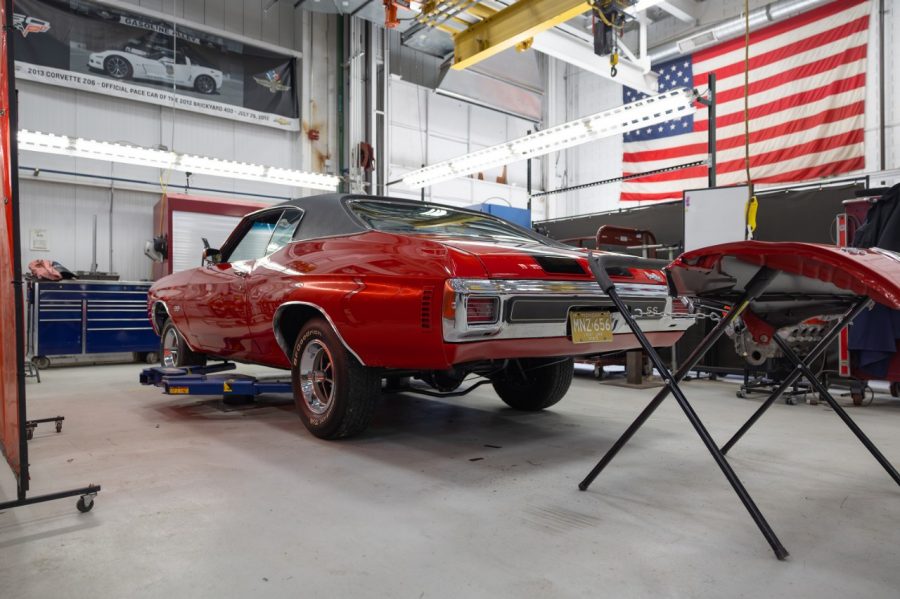
The Camaro, the 350 V8 and later the LT1 helped turn Chevy’s small-block legacy into a much broader performance identity that reached far beyond the showroom.
The LS Changed Modern Hot-Rodding, And Chevrolet Never Lost Control Of The Narrative
If the small-block created the foundation, the LS crate engine reinvented it for the modern era.
When GM’s LS architecture arrived in the late 1990s, it did more than replace an old engine family. It gave enthusiasts a new performance platform that was compact, powerful, relatively lightweight and remarkably adaptable. The LS became the engine of the modern swap era — the powerplant that found its way into restomods, drag builds, drift cars, off-road trucks, classic muscle cars and custom projects of every kind.
That is where Chevrolet Performance made one of its smartest moves. Instead of letting the LS become purely an aftermarket phenomenon disconnected from the factory, GM embraced it. By offering LS crate engines directly through Chevrolet Performance, the company effectively turned one of the most important swap motors of the last 25 years into a factory-supported ecosystem. That kept Chevy at the center of a builder movement that might otherwise have drifted away from the brand.
The same thing happened again with the Gen V LT engine family. Rather than treating the LT as just a modern OE powertrain, Chevrolet turned it into the next chapter of its crate-engine business, bringing updated technology, stronger drivability and more performance options into the same builder-friendly framework. In that sense, Chevrolet Performance has done something few automakers manage well: it has kept evolving without abandoning the people who made its older engines legendary in the first place.
Crate Engines Are Still Relevant Because They Solve A Real Problem For Enthusiasts
There is a reason Chevrolet crate engines still matter in 2026, and it is not just nostalgia.
Building a project car today is harder than it used to be. Modern vehicles are more electronically complex, emissions regulations are tighter, donor vehicles are more expensive and complete swap packages are harder to piece together cleanly. In that environment, a crate engine is not just a cool enthusiast indulgence. It is often the most practical way to put reliable V8 power into a project.
That is part of what keeps Chevrolet Performance relevant. A factory-built engine package offers a cleaner path for builders who want modern Chevy power without spending months chasing compatibility issues, missing components or uncertain donor-engine histories. When that engine can also be paired with factory-supported transmissions, controllers and accessory solutions, the appeal becomes even stronger.
It is easy to think of crate engines as a relic of the old hot-rod world, but they are arguably just as relevant now as they were years ago — perhaps even more so. In a market where DIY performance has become more technically demanding, Chevrolet’s ability to offer relatively complete, credible and well-known powertrain solutions still gives it a major advantage.
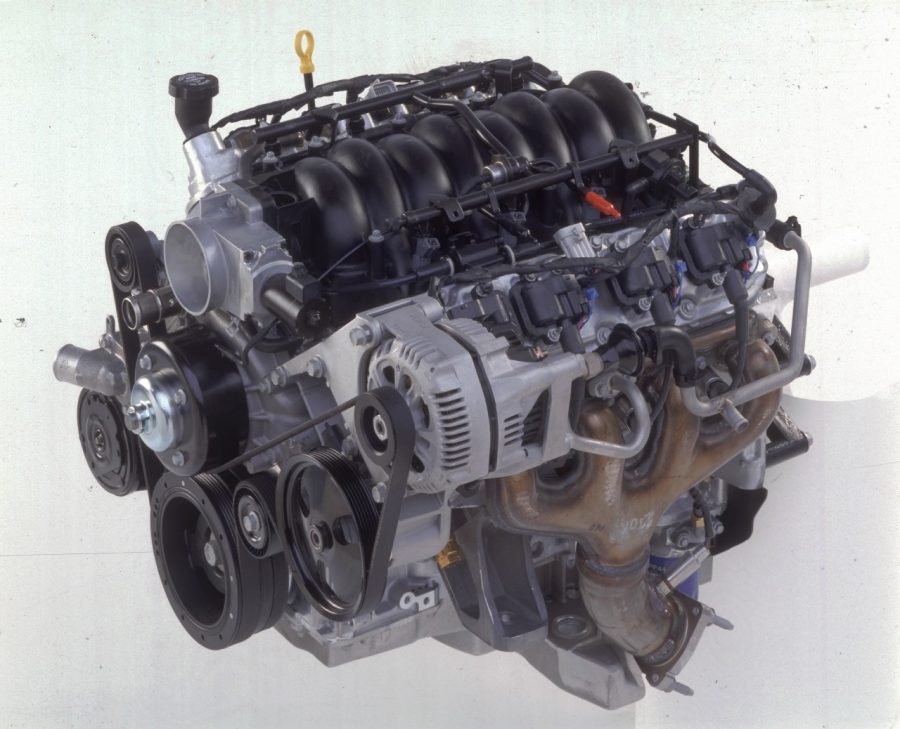
The LS and LT crate-engine programs helped Chevrolet stay at the center of modern builder culture by giving enthusiasts factory-backed swap power for everything from hot rods to performance trucks.
Hot Rod Power Tour Shows Why Chevrolet Performance Still Feels Alive
This is also why events like Hot Rod Power Tour matter so much to the brand.
For Chevrolet Performance, the tour is more than a sponsorship opportunity. It is a live demonstration that the company’s builder culture strategy still works in the real world. The event brings together the exact kinds of owners who keep crate engines and performance components relevant: people building Chevelles, Camaros, pickups, Suburbans and custom street machines powered by combinations that mix old-school style with modern Chevy hardware.
That connection between heritage and current product is what makes the business feel authentic rather than corporate. Chevrolet is not just talking about performance history in a press release. It is showing up in the same spaces where people are still actively building with LS, LT, small-block and big-block power. That matters because the enthusiast market can smell fake nostalgia instantly. The reason Chevrolet Performance still resonates is that it continues to offer actual products for actual builders, not just branded merch and museum storytelling.
And that is why the company’s presence at Power Tour still makes sense. It reinforces the idea that Chevrolet Performance is not a side business built around memory. It is a living extension of the brand’s performance identity.
Chevrolet Performance Is Really Selling Continuity In An Industry That Keeps Moving On
That may be the best way to understand why this story still matters.
The modern auto industry is moving fast toward electrification, digital interfaces and increasingly closed vehicle architectures. None of that automatically kills enthusiast culture, but it does make old-school building, swapping and modifying more difficult. In that environment, a business like Chevrolet Performance becomes more valuable because it preserves a rare kind of continuity. It tells builders that even as the rest of the industry changes, there is still a path to creating something mechanical, loud, analog and personal with factory-backed Chevy power.
That does not mean Chevrolet is ignoring the future. It means the company understands something many automakers have forgotten: performance culture is not only about selling a fast car. It is also about giving people the tools to build one themselves.
And that is why Chevrolet Performance still matters in 2026. From the first small-block V8 to modern LT crate engines, Chevy has managed to keep feeding the same instinct that built its reputation in the first place — the instinct to take something good, open the garage door and make it your own.
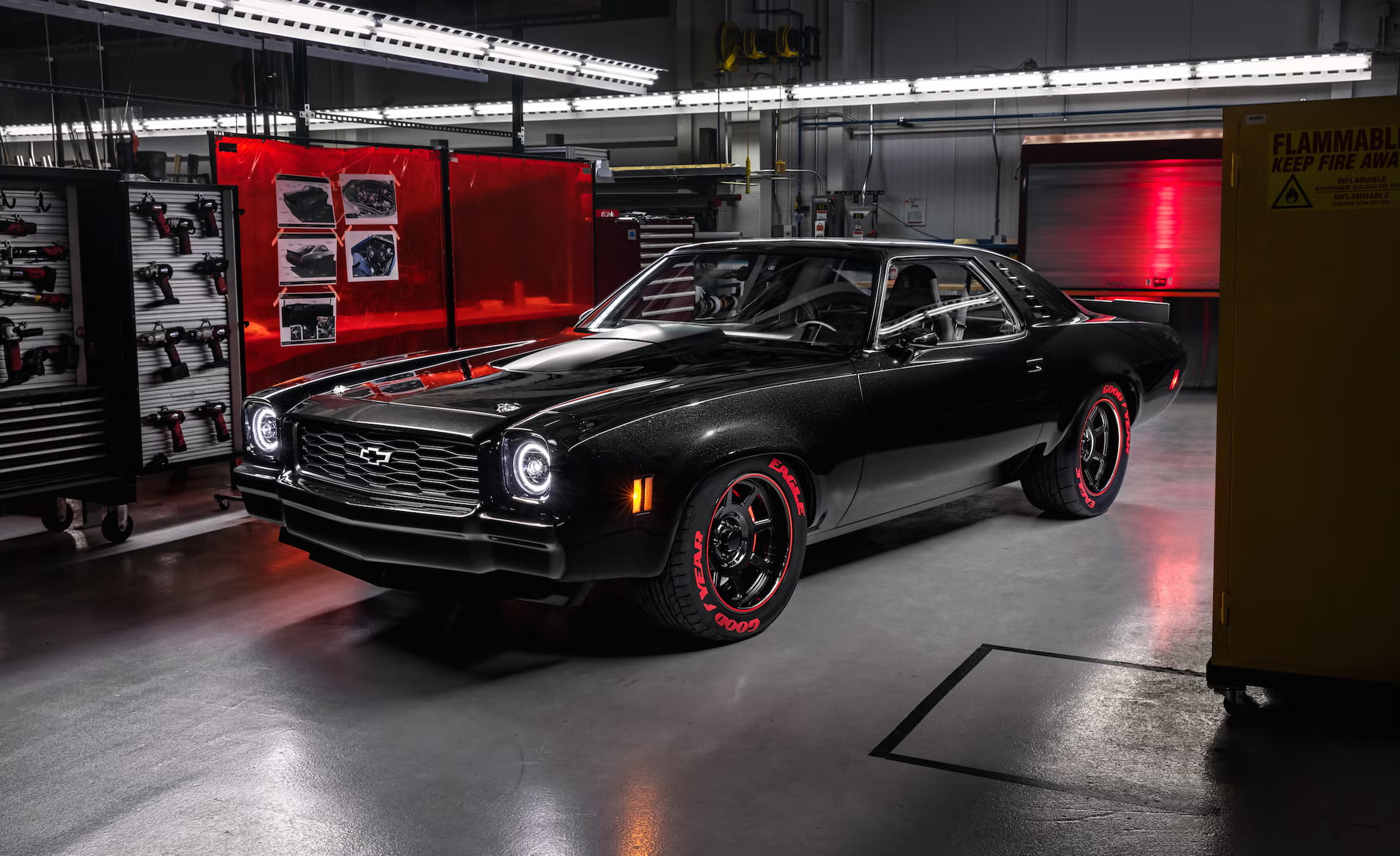
Chevrolet Performance’s modern relevance comes from the fact that it still supports real builders with real hardware, connecting factory engineering to the custom-car culture that helped define the brand.












Oscar Piastri will start third at the 2026 Azerbaijan Grand Prix after McLaren found a late step in performance, although George Russell remained out of reach in the final phase of qualifying.
McLaren found its speed when it mattered
Oscar Piastri will start the 2026 Azerbaijan Grand Prix from P3 after a strong qualifying session at the Baku City Circuit.
McLaren had struggled to show its full potential during practice. The team then unlocked more performance in Q3, allowing Piastri and Lando Norris to briefly move to the front of the timing screen.
Piastri eventually stopped the clock at 1:43.364, just 0.001 seconds behind Charles Leclerc. George Russell claimed pole position with a 1:42.526.
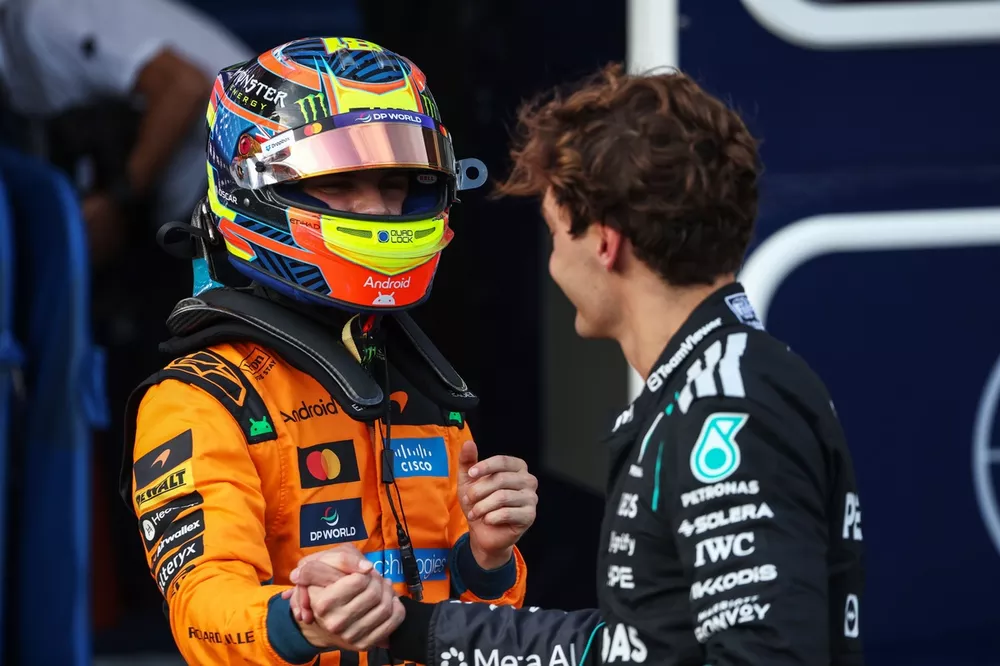
Piastri’s MCL40 looked stronger as qualifying progressed, despite McLaren starting the session on the back foot.
The jump in performance was familiar to Piastri.
“We seem like we’re a bit on the back foot through practice,” the Australian explained after qualifying. He added that McLaren repeatedly finds an extra step once qualifying begins.
The first Q3 runs created even more optimism.
Piastri and Norris temporarily occupied the top two positions. Russell then produced a much faster final run and took pole by 0.837 seconds over Leclerc.
For Piastri, the difference was clear.
He said there was “no hope against George” after seeing the Mercedes driver complete his final lap.
The wind made Baku even harder
Piastri also pointed to the strong and changing wind as one of the biggest challenges around Baku.
The conditions were already noticeable in practice. McLaren reported stronger gusts on Friday, with the wind contributing to several yellow flags during FP3.
The Australian said that keeping the car stable was difficult even on the straights.
A sudden gust could change the balance of the MCL40 from one lap to the next. Piastri also noted that wind-speed differences could be substantial, forcing drivers to adapt constantly.
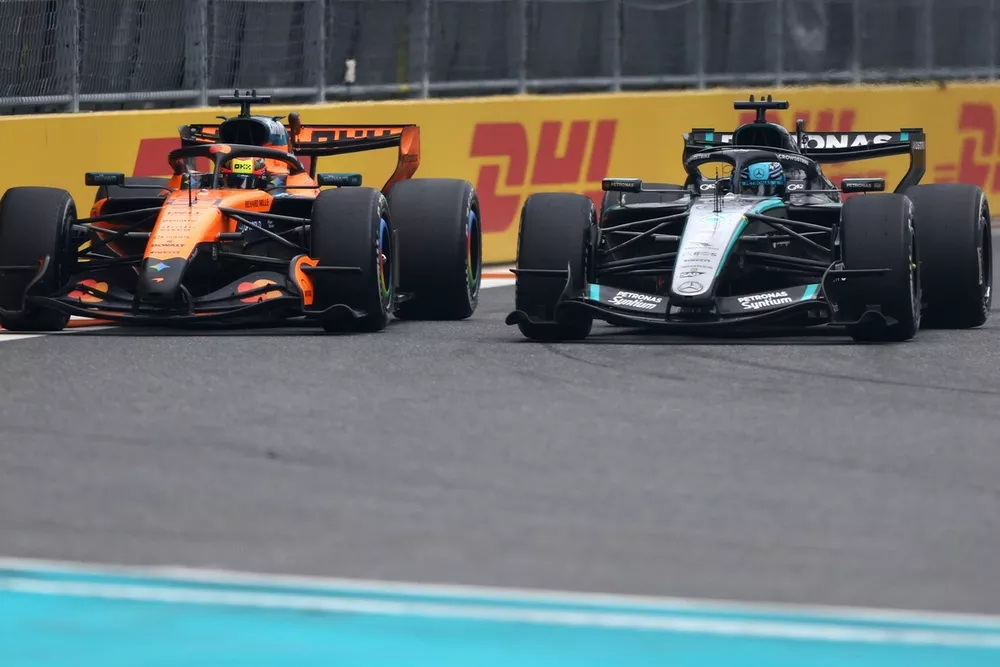
Piastri will start on the second row alongside Leclerc, with Russell taking pole position in Baku.
That is especially important at a street circuit.
Baku combines long straights with slow corners and very little margin for error. McLaren’s technical team described the circuit as a difficult compromise between straight-line speed and corner performance.
The team also introduced upgrades this weekend.
McLaren said the new package was performing as expected, while an overnight revision to the floorboards proved effective during Friday’s running.
That progress helped Piastri find the final tenths he needed.
McLaren has a strong starting position for the race
Starting third gives Piastri a clear opportunity to fight at the front.
McLaren expects the race to be complicated. The team highlighted tire degradation, Safety Cars and changing race conditions as factors that could alter the order.
That creates an important difference from qualifying.
Russell may have been far ahead over one lap, but McLaren’s own analysis suggests its race pace looked stronger than its qualifying pace during Thursday’s running.
Piastri also has a strong record at this circuit.
He won the 2024 Azerbaijan Grand Prix after a long battle with Charles Leclerc. McLaren is therefore returning to a venue that has already produced one of the Australian’s best Formula 1 results.
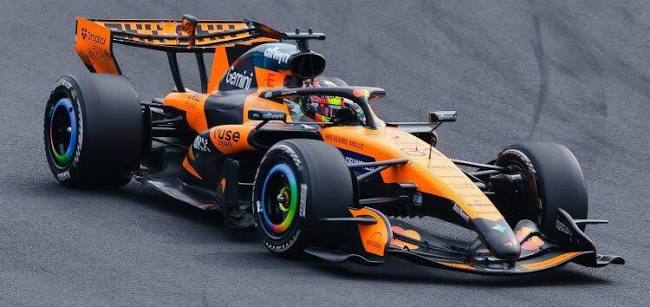
The MCL40 takes on the narrow castle section of Baku, one of the most demanding parts of the circuit.
The second McLaren will start further back.
Norris qualified P5 after locking up on his final qualifying lap. He also admitted that McLaren still has some straight-line performance issues to solve.
That leaves Piastri as McLaren’s best-placed driver on the Baku grid.
The Australian’s objective is now straightforward: stay in the leading group and be ready when the race changes shape.
The Oscar Piastri Baku qualifying result gives McLaren a strong starting position after a difficult practice period. Piastri will line up third behind Russell and Leclerc, with the race offering another chance to turn McLaren’s late qualifying pace into a podium challenge.
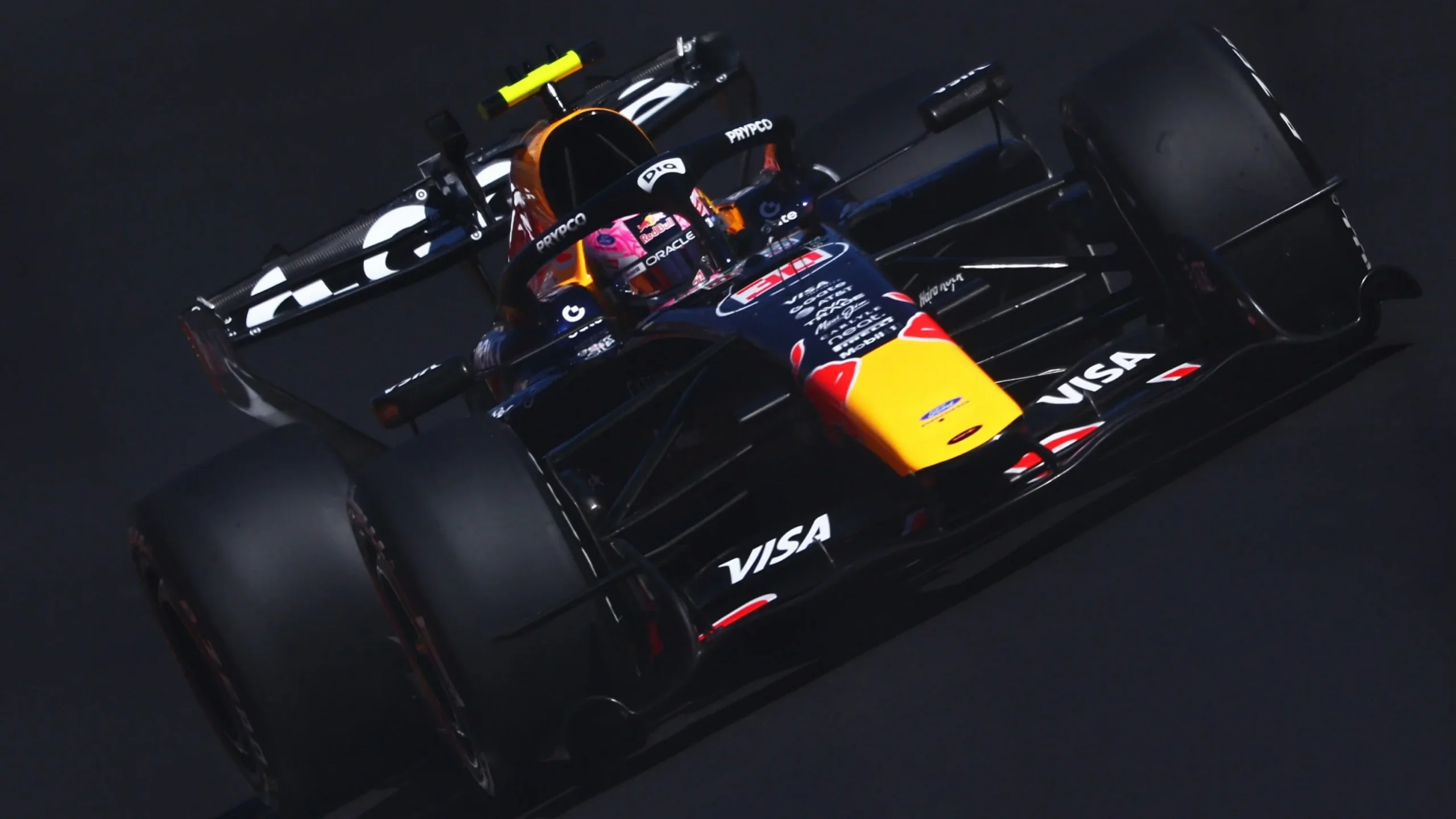
Isack Hadjar returned to Formula 1 after missing three races and delivered fourth place in Baku qualifying, just 0.137 seconds from Charles Leclerc.
Hadjar makes an impressive F1 comeback
Isack Hadjar made a strong return to Formula 1 in Azerbaijan, qualifying fourth for Red Bull at the Baku City Circuit.
The Frenchman had not raced since the Hungarian Grand Prix in July. He then missed the races in Zandvoort, Monza and Madrid because of a wrist injury.
Despite that long absence, Hadjar immediately reached Q3 and posted a 1:43.500. That placed him fourth on the grid behind George Russell, Charles Leclerc and Oscar Piastri.
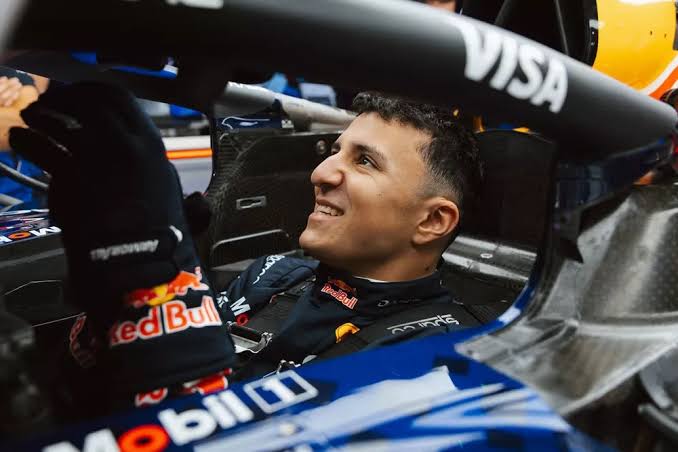
Hadjar returned to competition in Baku and qualified fourth on his first weekend back after his wrist injury.
The gap to second place was particularly small.
Hadjar finished only 0.137 seconds behind Leclerc. He was also ahead of Max Verstappen, who qualified eighth in the second Red Bull.
Russell was in a different league during the final phase. The Mercedes driver took pole with a 1:42.526, beating Leclerc by 0.837 seconds.
For Hadjar, however, the most important part of the session was how he managed his own return.
Hadjar chose a cautious approach
Hadjar admitted that the Baku weekend required a different mindset.
After almost two months away from racing, he deliberately avoided taking unnecessary risks during the narrow sections of the circuit. The objective was to build confidence step by step before pushing harder in qualifying.
He said he wanted to make sure he did not touch the walls.
That approach allowed him to increase his commitment throughout the weekend. By Q2, Hadjar felt comfortable enough to take more risks and eventually pushed closer to the limit in Q3.
The result was his best qualifying position since the season-opening Australian Grand Prix, where he had started third.
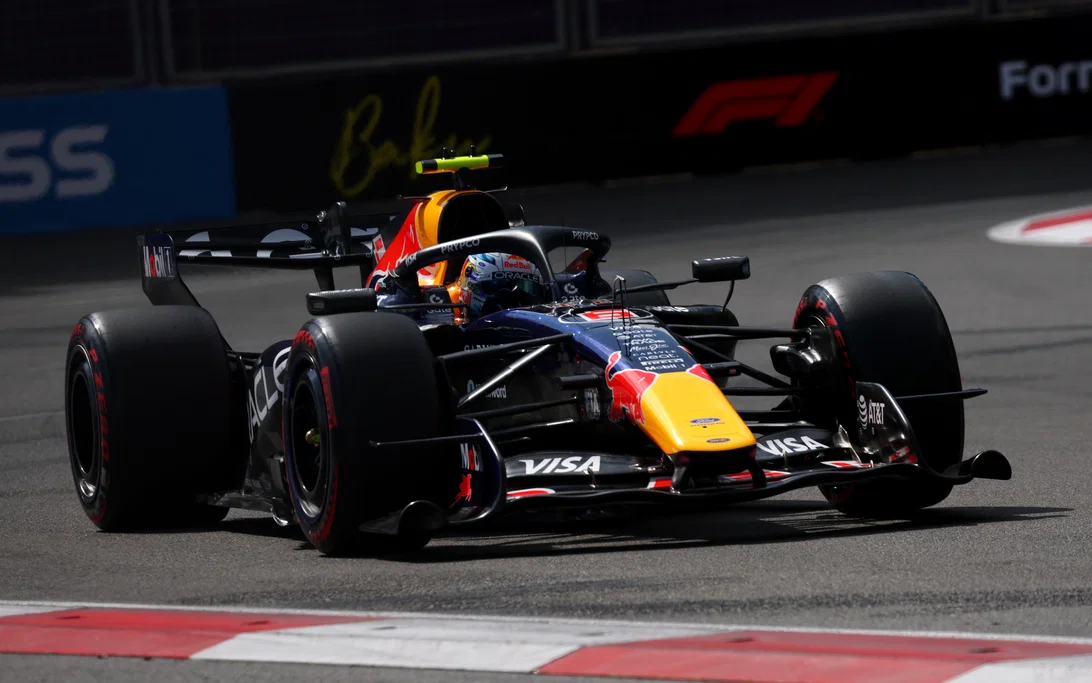
Hadjar is continuing his first season with Red Bull after moving from Racing Bulls at the start of 2026.
His comments after qualifying also revealed how much he believes he left on the table.
Hadjar said that, had he raced the three weekends he missed, he felt he would have been second on the grid.
That is his own assessment rather than a result that can be measured directly. What can be measured is the qualifying gap: only 0.137 seconds separated him from Leclerc.
The Red Bull feels better than before
Hadjar also noticed a change in his Red Bull since his last race.
The Frenchman said the car felt better through the corners than it had when he last drove it in Budapest. He also highlighted an improvement in balance.
That progress was important at Baku.
The circuit combines extremely long straights with slow corners and almost no margin for error. A driver needs confidence in the rear of the car before committing fully between the walls.
Red Bull’s official assessment was similarly positive. The team said Hadjar had built his rhythm “very cleverly” throughout the weekend and delivered the P4 it had hoped for on his return.
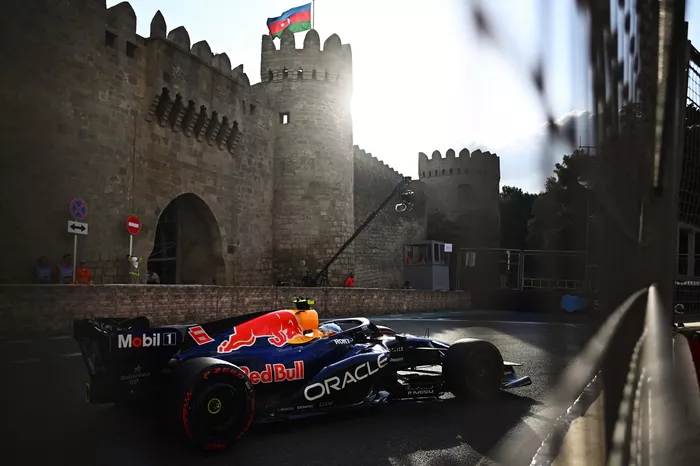
The Baku City Circuit provided Hadjar with a demanding test immediately after his return to F1 competition.
There is still a clear performance gap to Mercedes.
Hadjar said Mercedes was particularly strong on the long straight in the third sector. That difference could become important during the race because Baku offers several opportunities to gain or lose time through straight-line speed.
For Red Bull, the P4 starting position nevertheless gives the team a strong opportunity to fight near the front.
Hadjar returns without setting a specific target
Hadjar is not putting a specific finishing position on his return.
Instead, he wants to be close to the drivers ahead and make the most of the Red Bull’s pace. His priority is to build on the confidence gained during qualifying.
The fact that he completed a full qualifying session without major issues is already significant after his long absence.
The official starting grid confirms that Hadjar will line up fourth, behind Russell, Leclerc and Piastri.
That puts him directly in the fight at the front.
A strong start to Hadjar’s second Red Bull chapter
Hadjar’s Baku qualifying also arrives as Red Bull confirms that he will remain with the team for 2027. Team principal Laurent Mekies said the objective is for the young driver to continue progressing at his current rate.
His return therefore carries more significance than a single qualifying result.
Hadjar came back after three missed races, managed the physical and competitive challenge carefully and finished fourth in qualifying. He also closed the session with a gap of just 0.137 seconds to the front row.
The Isack Hadjar Baku comeback has therefore started with a clear result: P4 on the grid and a competitive Red Bull underneath him.
Now the next test is Saturday’s race, where Hadjar will have his first opportunity in almost two months to turn that qualifying pace into a Grand Prix result.
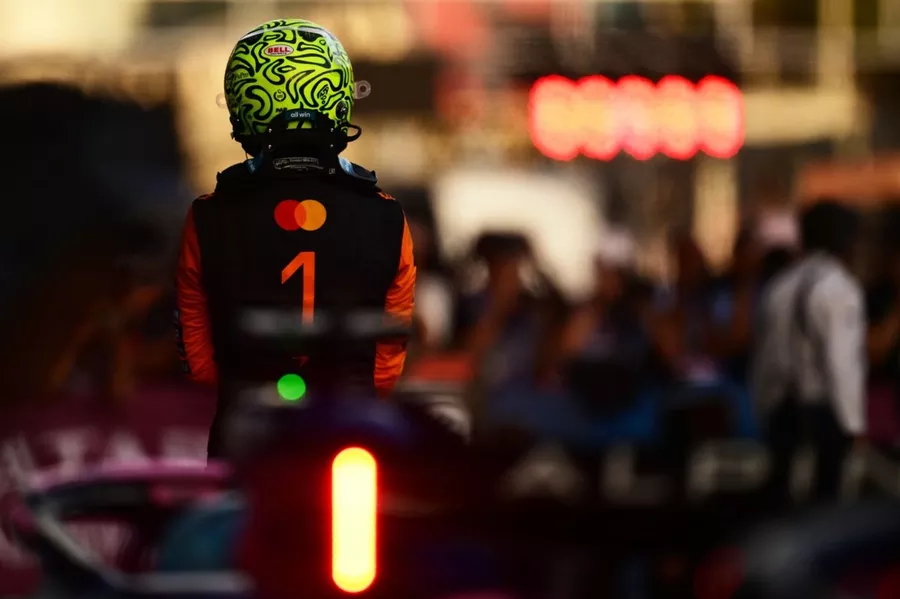
Lando Norris qualified fifth in Baku after a final-lap lock-up, but the McLaren driver says straight-line speed remains one of the team’s biggest problems.
Norris leaves Baku qualifying frustrated
Lando Norris will start the 2026 Azerbaijan Grand Prix from fifth place after a difficult qualifying session in Baku.
The McLaren driver said the car felt competitive enough to attack the session. However, he believes the MCL40 is still losing too much time on the long straights of the Baku City Circuit.
Norris ended qualifying with a 1:43.672. His teammate Oscar Piastri took third with a 1:43.364, only 0.001 seconds behind Charles Leclerc in second. George Russell claimed pole by more than eight tenths.
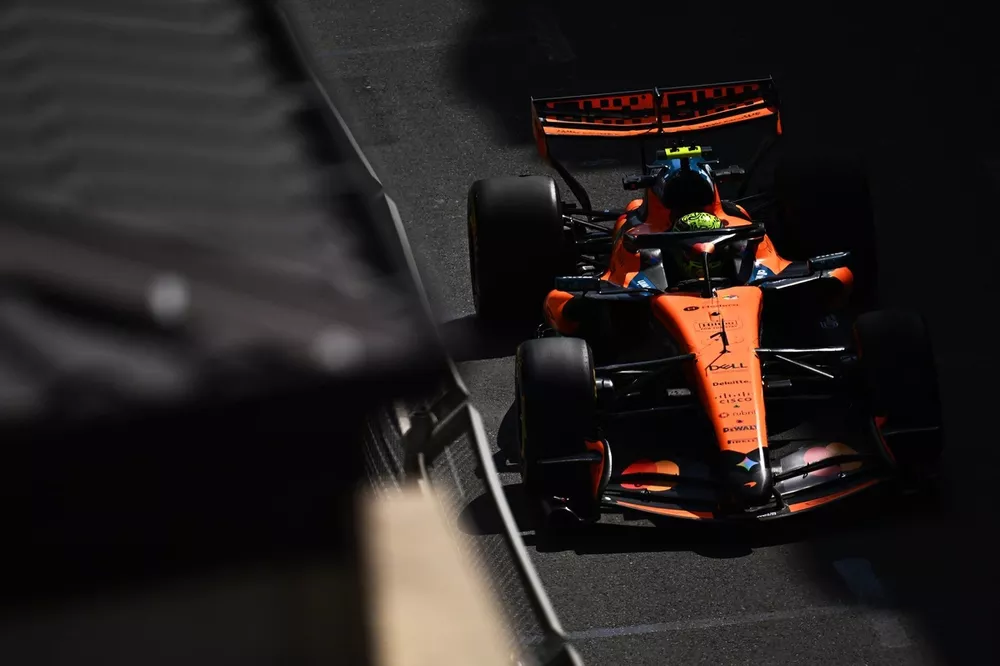
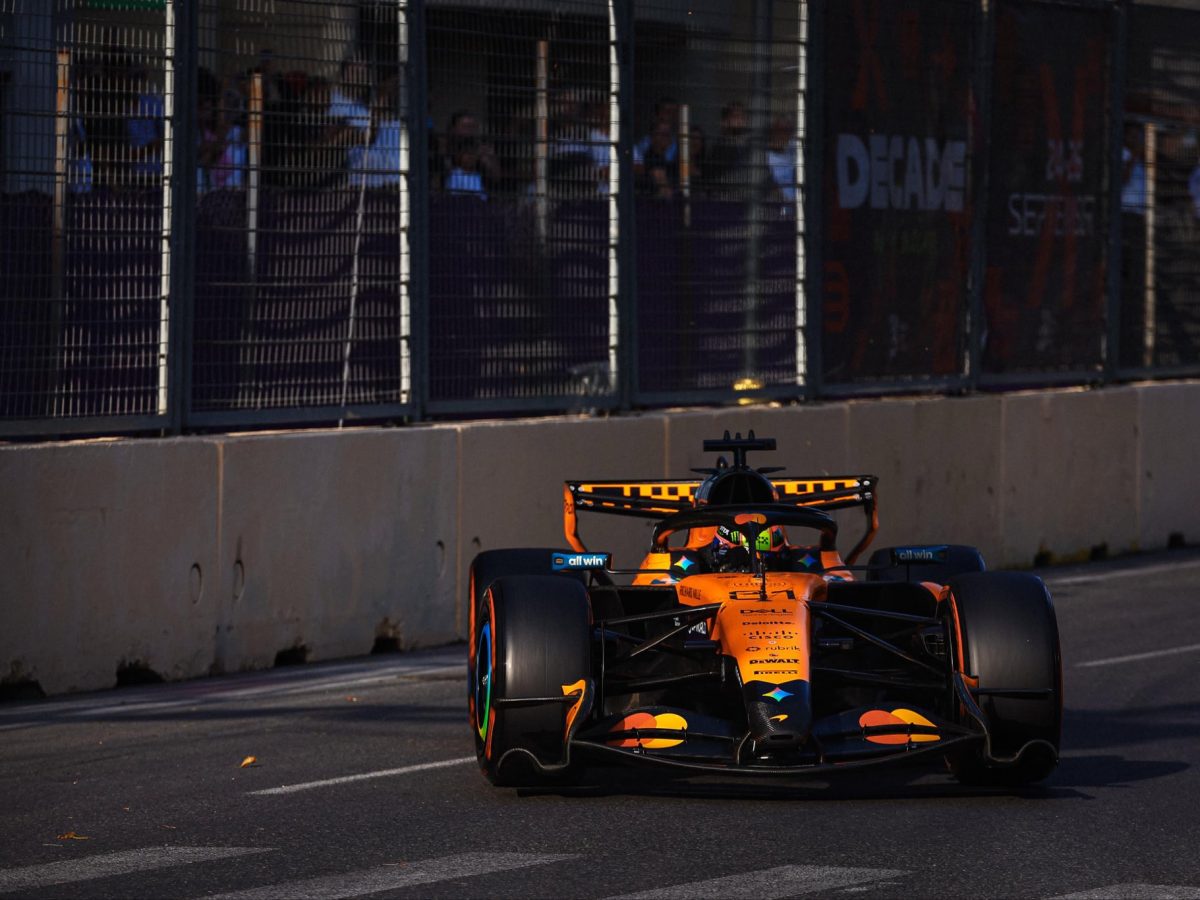
Norris found McLaren in a better window during qualifying, but the team continued to lose performance on Baku’s long straights.
McLaren had struggled during Thursday practice. Its new upgrade package showed encouraging signs, but the circuit’s characteristics did not suit the car particularly well.
The team made overnight changes and continued working on the new floor. McLaren said the revised floorboards performed as expected during Friday running.
That work helped the team unlock more performance in qualifying.
Norris reached Q3 and initially put himself in a strong position. His final attempt, however, went wrong when he locked up at Turn 3 while pushing for a better grid position.
Straight-line speed remains the key problem
The lock-up was not the only reason Norris finished fifth.
After qualifying, he highlighted the car’s lack of straight-line speed as a major limitation. That is especially costly in Baku because the circuit features one of the longest flat-out sections on the Formula 1 calendar.
Norris said the car felt good during the session. The problem was extracting enough lap time from it when compared with Mercedes.
The gap to pole was therefore difficult to overcome.
McLaren’s own qualifying report confirms that the MCL40 was affected by the characteristics of the circuit. The team also expects Mercedes and Red Bull to remain strong during the race.
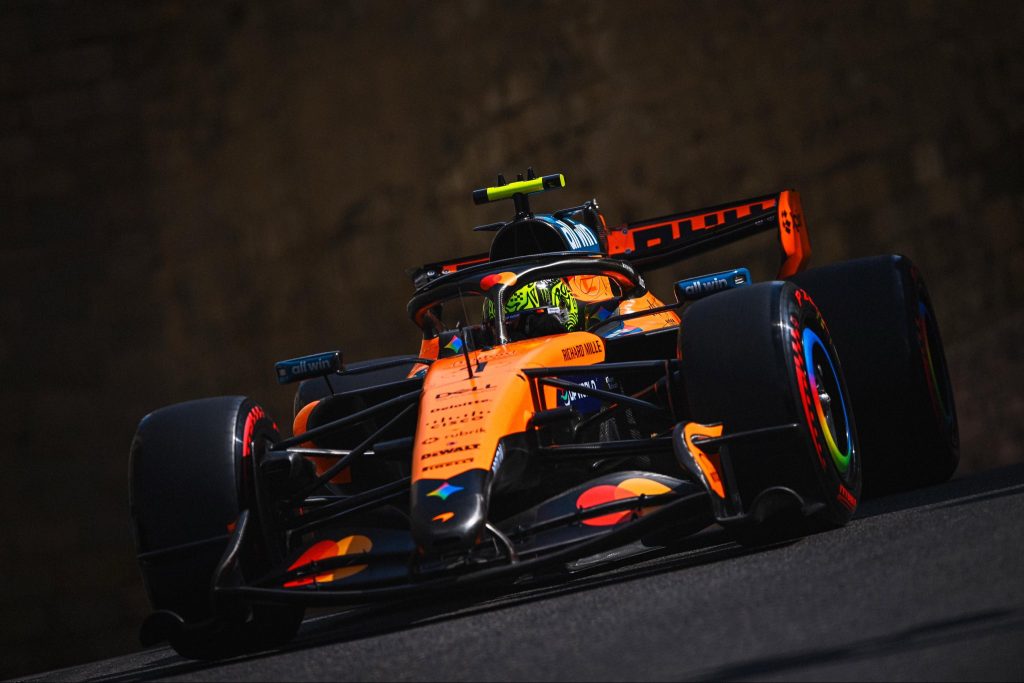
Oscar Piastri put the second McLaren third on the grid, giving the team a stronger qualifying result than its practice pace had suggested.
The comparison with Piastri is also significant.
Piastri qualified third, while Norris ended up fifth. The Australian’s lap was just one thousandth away from Leclerc’s Ferrari.
That means the McLaren does have enough performance to challenge near the front. It simply has not been able to deliver that pace consistently across both cars and every part of the circuit.
Norris also acknowledged that his teammate’s car appeared to have a stronger balance in Baku.
That difference has made the situation more frustrating for the reigning World Champion. The problem is not simply the overall speed of the McLaren. It is how the car converts its performance into lap time at this particular circuit.
The final lap was a calculated risk
Norris did not hide his responsibility for the fifth-place result.
He knew that improving on the Mercedes cars would require an aggressive approach. Instead of settling for a guaranteed position, he pushed for a much stronger final lap.
That decision produced the lock-up.
McLaren says Norris was on course to challenge for a higher position before the mistake compromised his final run.
There was also a strategic element.
Mercedes was operating at another level in qualifying. Russell took pole with a huge margin, while Kimi Antonelli’s crash in Q1 and Max Verstappen’s yellow-flag-affected final run changed the normal order at the front.
Norris therefore had little to lose by trying something aggressive.
McLaren still has a chance in the race
Starting fifth does not eliminate McLaren’s chances in Baku.
The circuit often produces unusual races. Safety Cars, tire management and changing track conditions can alter the order quickly.
Piastri also believes the team’s race pace could be stronger than its one-lap performance. McLaren’s official report says the team expects a close fight with Red Bull and Ferrari, while Mercedes appears to have a clear advantage at the front after qualifying.
Overtaking, however, could remain difficult.
That makes starting position important. Norris will need a clean opening phase and a strong strategy to move toward the podium.
For McLaren, the bigger concern goes beyond one race.
The team brought a new upgrade package to Baku. Its performance has met expectations, but the circuit has exposed weaknesses that the engineers still need to address.
Norris therefore leaves qualifying with a mixed result.
Fifth place keeps him in contention, but the straight-line speed deficit remains a clear obstacle. His aggressive final lap showed how hard he was willing to push, yet the Mercedes pace and the characteristics of the Baku circuit prevented McLaren from fighting for pole.
-

 NOW TRENDING1 month ago
Tesla Cybercab Gets September 3 Austin Launch Date
-

 INTELLIGENT MOBILITY2 months ago
GM Updates Infotainment System With Smarter Features
-
 NOW TRENDING2 months ago
2027 Audi Q9 and SQ9 Debut as Brand’s Largest SUVs
-
 NOW TRENDING2 months ago
2027 Hyundai Tucson Spied With New Design and Hybrid Power
-
 NOW TRENDING2 months ago
2026 Toyota GRMN Corolla Debuts as the Ultimate Hot Hatch
-
 NOW TRENDING2 months ago
Every GM Assembly Plant Operating in the U.S. in 2026
-
 NOW TRENDING2 months ago
Ferrari Sold Out Through 2027 as Demand Hits New High
-

 NOW TRENDING1 month ago
Audi’s New SUVs Could Help Reverse Its Sales Decline in 2026
You must be logged in to post a comment Login