
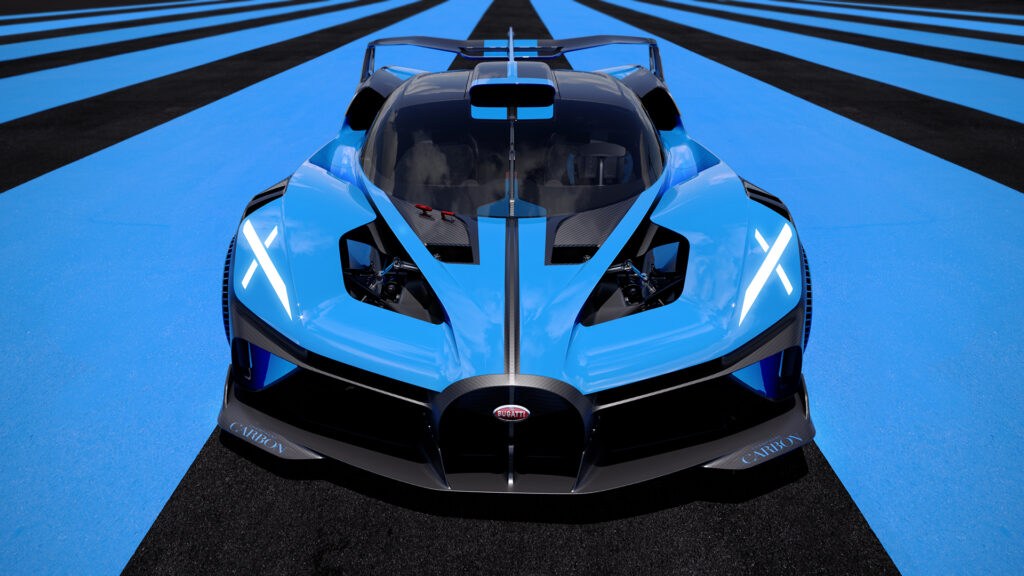
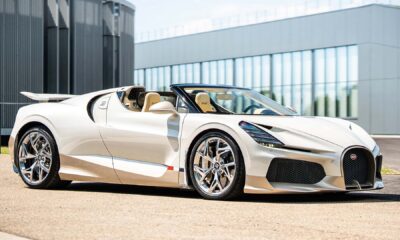
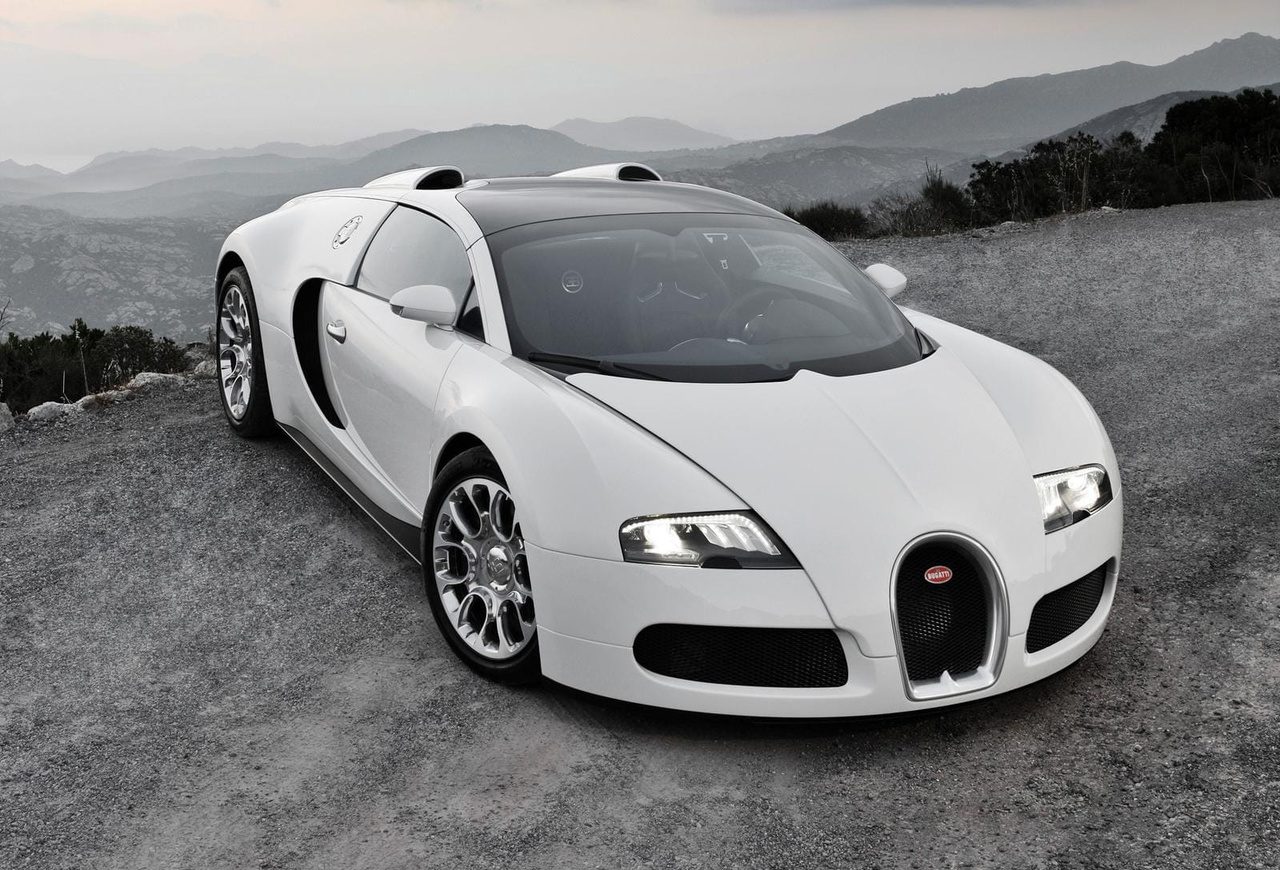
Reduced, raw, authentic. With the technological concept of the Bugatti Bolide, the French luxury car manufacturer is now providing the answer to the question what if Bugatti built a radically light vehicle around its iconic 8.0-litre W16 engine? The experimental study of the Bugatti Bolide is a track-oriented hyper sports car featuring a W16 engine derived from series production as powertrain combined with a minimal body for maximum downforce. It therefore promises to offer the ultimate Bugatti performance kick.
At the same time, the Bugatti Bolide is the most extreme, uncompromising, fastest and lightest vehicle concept in the company’s recent history – with an incredible weight-to-power ratio of 0.67 kg per PS. This is made possible by the combination of the W16 engine with 1,850 PS and a vehicle weight of just 1,240 kilograms. The Bugatti Bolide achieves figures that are almost on par with Formula 1 while its top speed is well above 500 km/h – without compromising maximum handling and maximum agility. The Bolide takes 3:07.1 minutes to complete a lap of Le Mans and 5:23.1 minutes to get around the Nordschleife.
The idea – what if? An experiment.
“Bugatti stands for the continuous quest for technological innovations – in alignment with the company’s brand values of excellence, courage, dedication. And Bugatti never stands still. We are perpetually aiming for new and exciting goals, and the question that we always keep in mind is: what if?†says Stephan Winkelmann, President of Bugatti. “We asked ourselves how we could realise the mighty W16 engine as a technical symbol of the brand in its purest form – with solely four wheels, engine, gearbox, steering wheel and, as the only luxury, two seats. Important aspects of our considerations were fine-tuning our iconic powertrain without any limitations as regards the weight-to-power ratio. These considerations resulted in the Bugatti Bolide. An uncompromising experiment, a thoroughbred, a Pur Sang that, in its brute exclusivity, impresses above all with high performance, low weight, and a driving experience in a whole new dimension. Driving the Bolide is like riding on a cannonball.â€
The technology – powertrain designed specifically for the racetrack
“The Bolide is the ultimate answer to the question of what if Bugatti built a track-focused hyper sports car that met the FIA’s safety requirements. Designed around the W16 powertrain with the minimum body structure and unbelievable performance data. The result: the smallest possible shell for a breathtaking performance vehicle that allows the W16 to truly come into its own,†explains Stefan Ellrott, member of the Board of Management of Bugatti and Head of Technical Development. “All of Bugatti’s expertise has been condensed into the Bugatti Bolide. It is therefore an innovative information source for future technologies. The Bolide is thus more than just an intellectual exercise.
“In terms of technology and organisation, the Bolide was one of the most ambitious projects of my career,†says Frank Götzke. After playing a crucial role in the development of the Veyron 16.4 and the Chiron, the engineer was also responsible for the technical concept of the Bolide. In only eight months, he created a completely new vehicle around the well-known Bugatti W16 all-wheel powertrain, which was highly modified for the project.
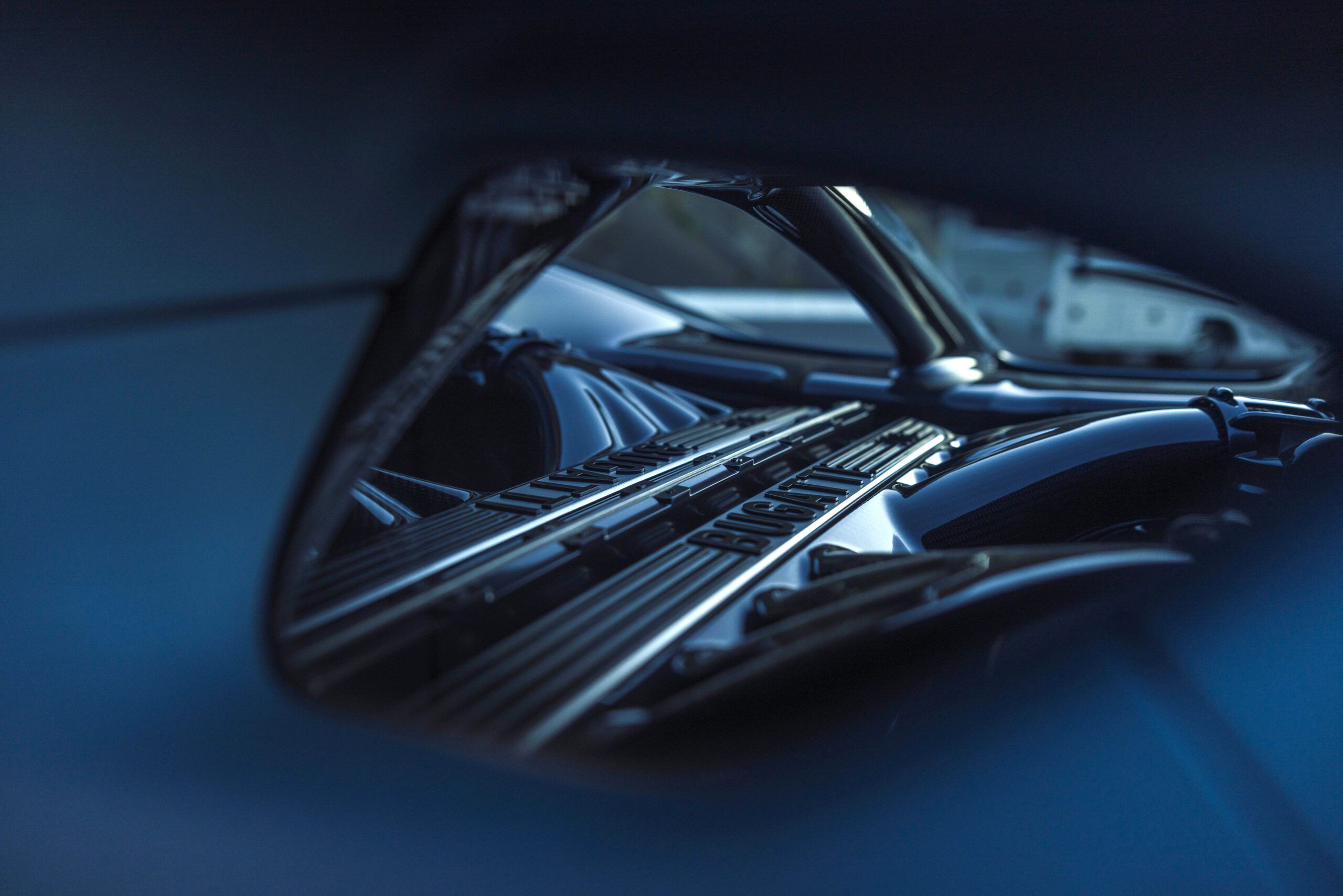
The 8.0-litre W16-cylinder engine with 1,850 PS and 1,850 newton-metres of torque is at its heart. Bugatti has designed the drive specifically for use on the racetrack and has optimised the engine and gearbox in particular for higher engine speeds. Among other things, this includes dethrottling the intake and exhaust system to achieve an even faster, more spontaneous, and extreme response characteristic. The four newly developed turbochargers are fitted with optimised blades in order to build up more boost pressure and power at higher engine speeds. In order to achieve optimum lubrication even under extremely high centrifugal forces, the oil circuit, oil pressure, check valves, baffles, oil tanks, oil reservoirs, and pump design of the dry sump lubrication have been optimised. The weight of the drive system is also significantly reduced at the same time.
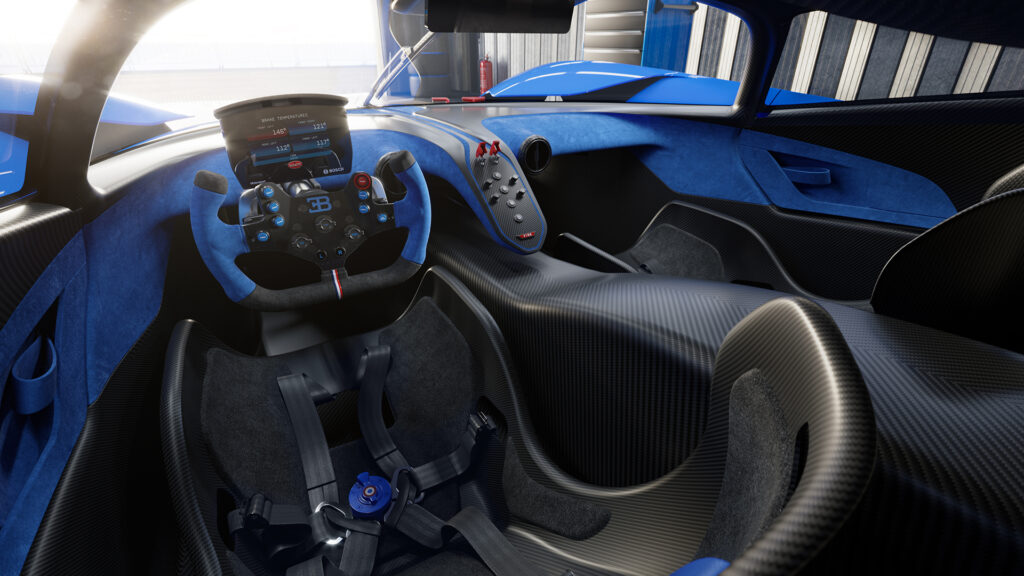
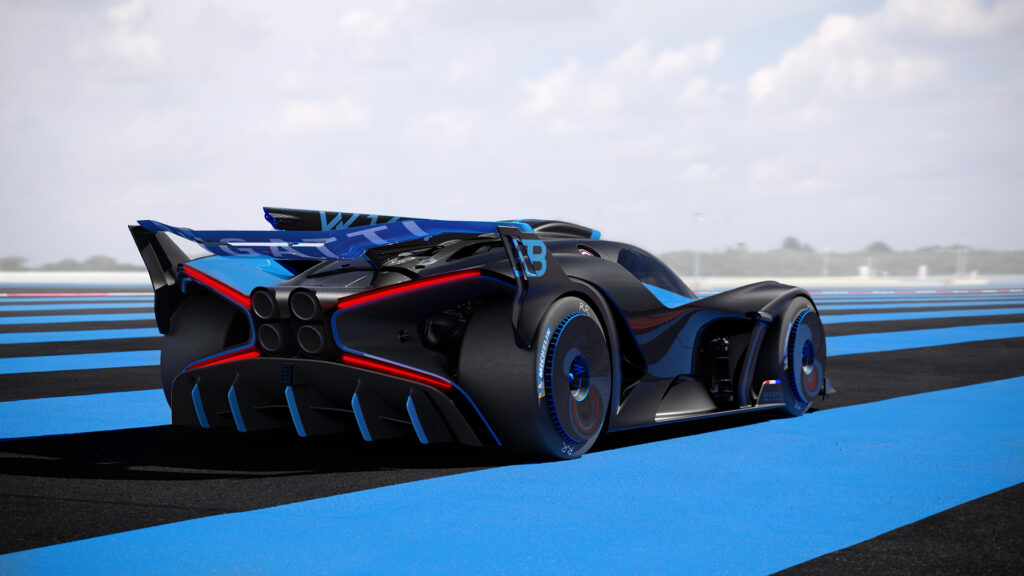
Instead of water-to-air intercooling, the Bugatti Bolide has air-to-air intercooling with water pre-cooling for optimal performance on the racetrack. The inflow takes place from the front via one internal and one external air duct on each side of the vehicle. The two water coolers, which are arranged in front of the front axle, provide a more effective radiator system in terms of flow than is customary even in Formula 1. Three air-cooled oil coolers for engine, transmission, and differential with water pre-cooling reduce the temperature even on dynamically demanding race laps. Newly developed and hybrid carbon titanium turbofan radial compressors ventilate and cool the high-performance racing brake system.
1,850 PS and 1,240 kilograms – weight-to-power ratio of 0.67 kg/PS
In order to achieve a dry weight of 1,240 kilograms, all the stops have been pulled out with regard to the materials and production processes used, both in terms of what is currently feasible and what will be possible in the future.
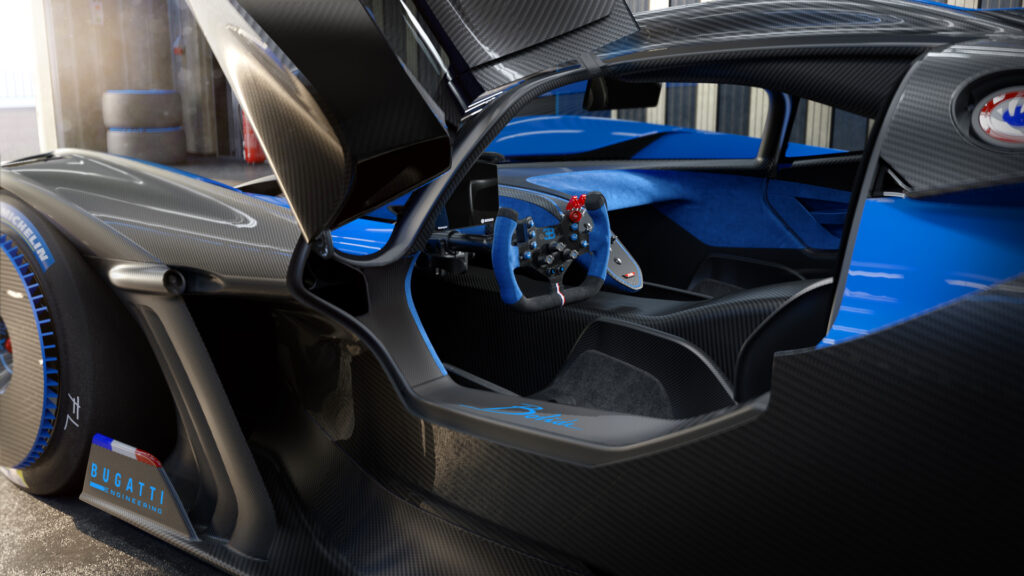
All the screw and fastening elements of the Bolide are made completely out of titanium. In addition, hollow, thin-walled functional components made of an aerospace titanium alloy are used in many places. These originate from a 3D printer and are extremely thin with wall thicknesses of up to 0.5 millimetres. However, they are still very stable with a tensile strength of 1,250 newtons per square millimetre. Hybrid components, such as the 0.5-metre-long auxiliary drive shaft, combine wound high-strength and ultra-stiff carbon fibres with 3D-printed titanium end fittings and can withstand a continuous operating temperature of up to 260 degrees Celsius. In this example, this reduces the weight by around half to 1.5 kilograms and, due to the reduction of the rotating masses, increases the revving ability of the engine at the same time. The forces acting on the front and rear wings are transferred by ultralight but very solid titanium elements. They weigh a mere 600 grams at the front and an astounding 325 grams at the rear.
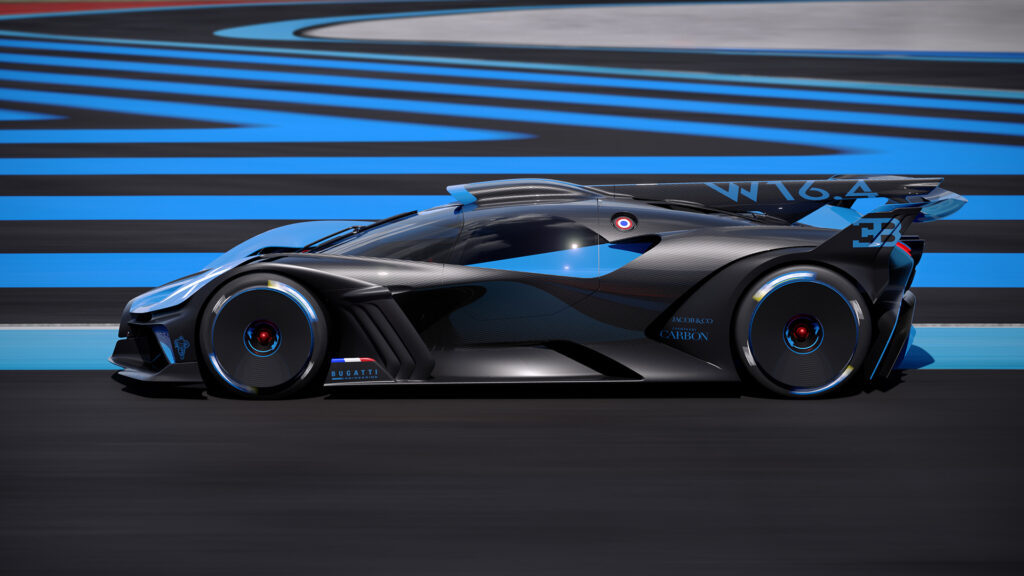
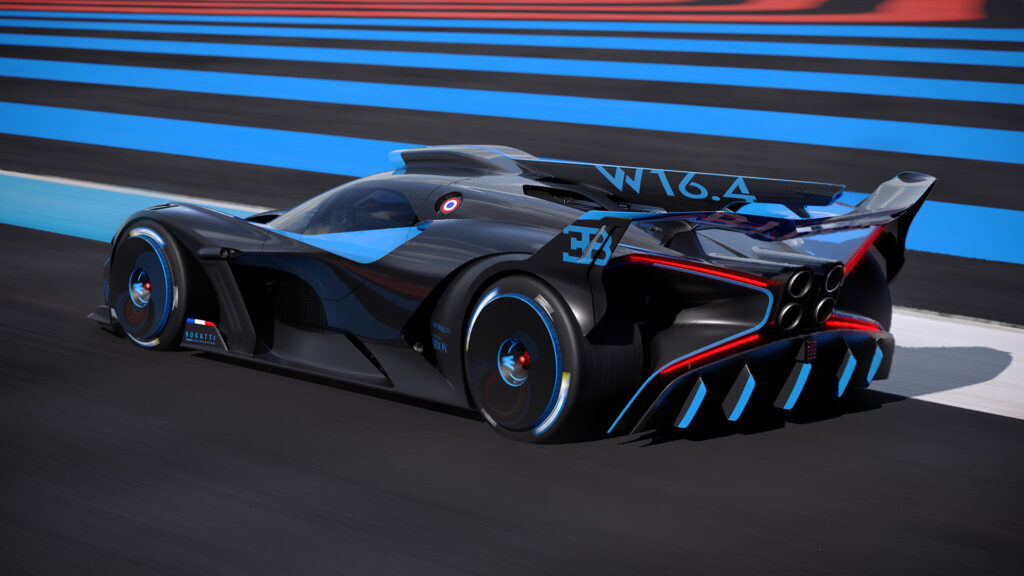
A worldwide innovation is the morphable outer skin of the intake scoop on the roof, which provides active airflow optimisation. If the vehicle is driven at a slow speed, the surface of the scoop remains smooth. In contrast, a field of bubbles bulges out when driven at fast speeds. This reduces the aerodynamic drag of the scoop by 10 percent and ensures a 17 percent reduction in lift forces. In addition, the flow onto the rear wing is optimised. At 320 km/h, the downforce is at 1,800 kilograms at the rear wing and 800 kilograms at the front wing.
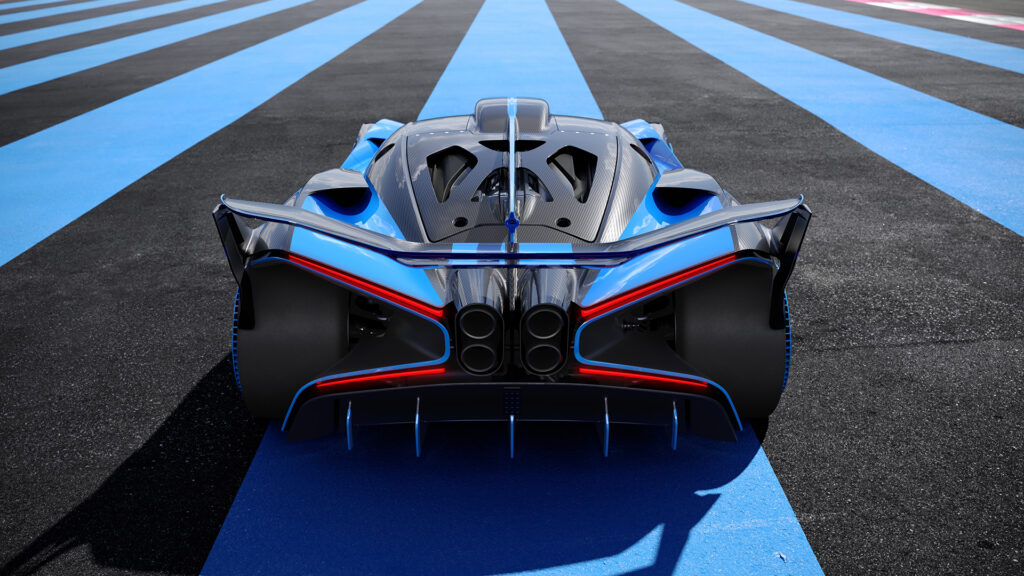
As in Formula 1, the Bolide decelerates with racing brakes with ceramic discs and coatings. The brake callipers weigh only 2.4 kilograms each. The front forged magnesium rims with central lock weigh 7.4 kilograms, while the ones at the rear weigh 8.4 kilograms – with a very wide tyre size of 340 millimetres on the front axle and 400 millimetres on the rear axle (Chiron: 285 mm at the front and 355 mm at the rear). A compressed-air-driven jack system with four rams makes tyre changing easier, a quick refuelling system allows pressure refuelling.
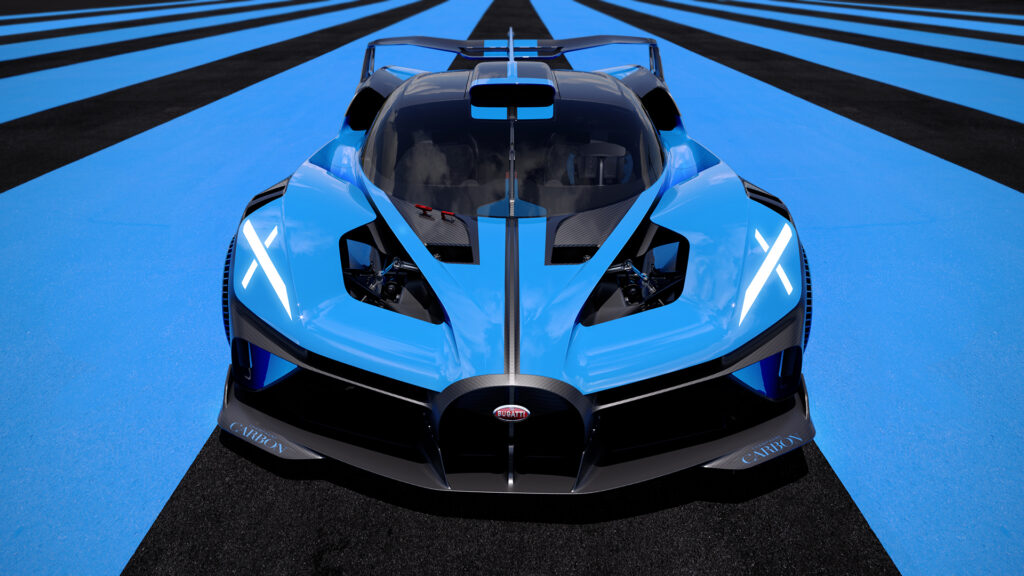
Among other things, a push rod kinematics system with horizontal dampers ensures precise handling. The oil reservoirs are arranged inside the dampers, which improves aerodynamics. Weighing only 100 grams, the push-rods are designed as a thin-walled and flow-optimised titanium lightweight construction with a buckling load of 3.5 tonnes, which corresponds to a dry weight of nearly two Chirons. The welded control arms made of aerospace-grade stainless steel have a tensile strength of 1,200 newtons per square millimetre and are also designed as wing profiles.
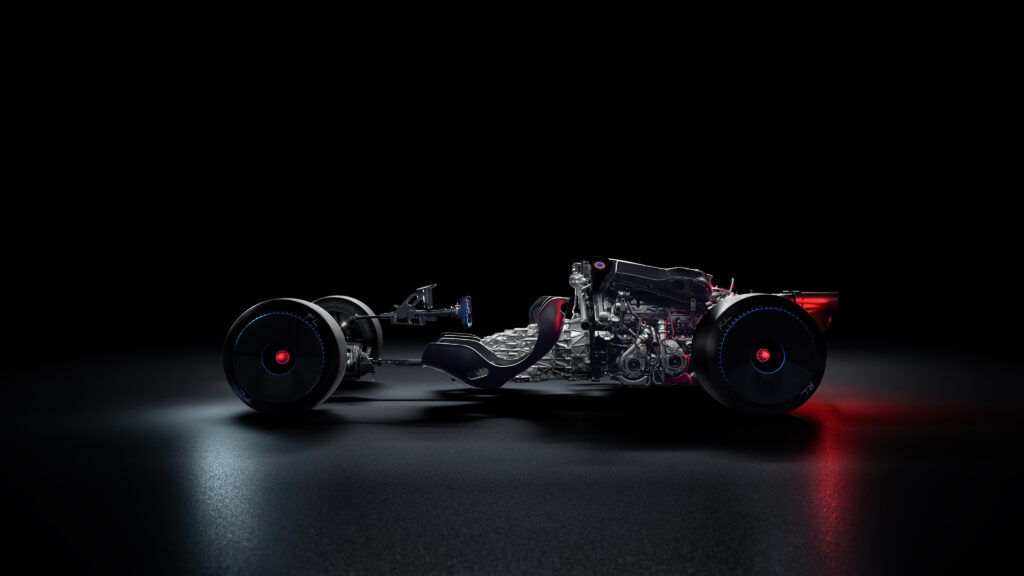
Light monocoque made of carbon
The Bugatti team developed a light monocoque made of carbon around the drive. The integral front end flanged to it is also made of high-strength carbon fibres, as are the fully aerodynamically effective underbody and the monocoque itself. The single-fibre tensile strength of the fibres used is 6,750 newtons per square millimetre, the single-fibre stiffness is 350,000 newtons per square millimetre. These represent figures that are only reached in the aerospace industry. The rear frame, designed as a welded steel assembly, offers a maximum tensile strength of 1,200 newtons per square millimetre, despite a wall thickness of only 1 millimetre – this is made possible by the use of high-strength stainless steel, which is otherwise only used in aviation.
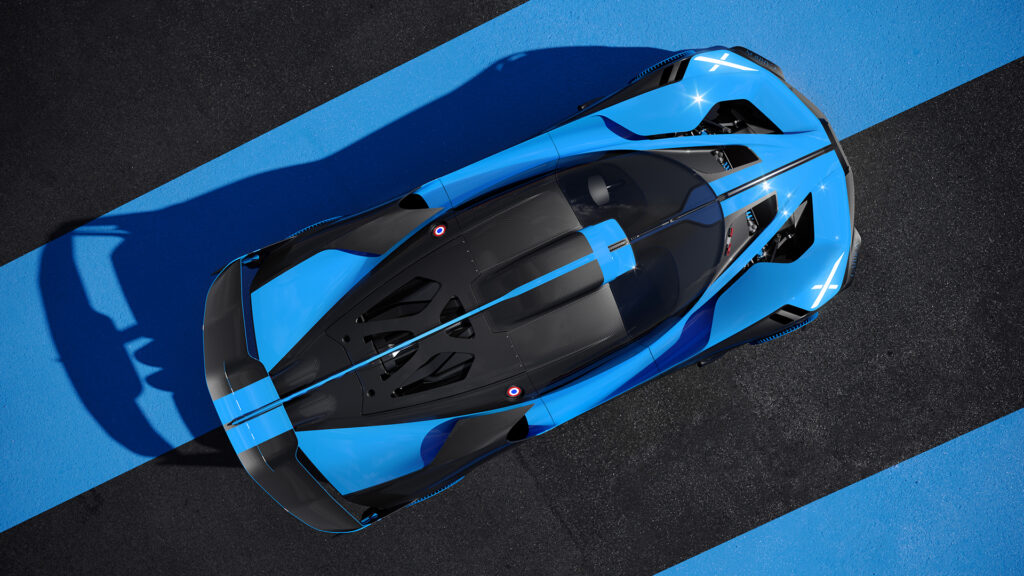
With an overall height of only 995 millimetres, the Bugatti Bolide is exactly the same height as the historic Bugatti Type 35, depending on the steering wheel and truncated windscreen, and about 300 millimetres flatter than the Chiron. The wheelbase is 2.75 metres and the width 1.99 metres. Like in an LMP1 racing car, the occupants fold up the doors that are hinged at the front at an angle, sit on a sill that is only 70 millimetres wide, as in a Type 35, and then position their feet in the interior. Thanks to a side wall that is about 150 millimetres lower than that of the Type 35, the procedure is quick and easy – for drivers up to a body height of 2 metres.
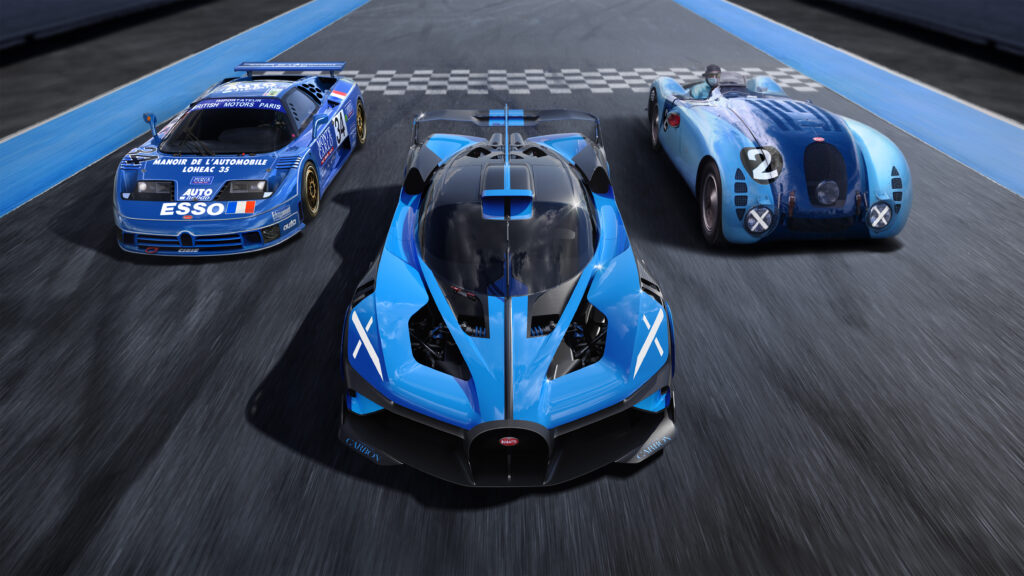
Safety is ensured with safety equipment designed in accordance with FIA regulations. These include HANS device compatibility, an automatic fire extinguishing system, a towing device, pressure refuelling with fuel bladder, central locks for the wheels, lightweight polycarbonate windows, and a six-point harness system. The monocoque side floors with integrated carbon coolant pipes are simultaneously designed as side impact structures and structural reinforcement of the monocoque. The driver can see all the relevant data on a motorsport display. For an optimum sitting position, both the pedals and the passenger footrest can be moved by 150 millimetres.
The design – the quintessence of form follows performance
The experimental study of the Bugatti Bolide is also a very special project for Achim Anscheidt, Director of Design at Bugatti. “In my 16 years at Bugatti, I have never worked on a more extreme concept.†The design of the Bolide is radically tailored to the idea of lightweight construction, and the design principle therefore follows on from the overriding goal of achieving a fascinating weight-to-power ratio of 0.67 kilograms per PS.
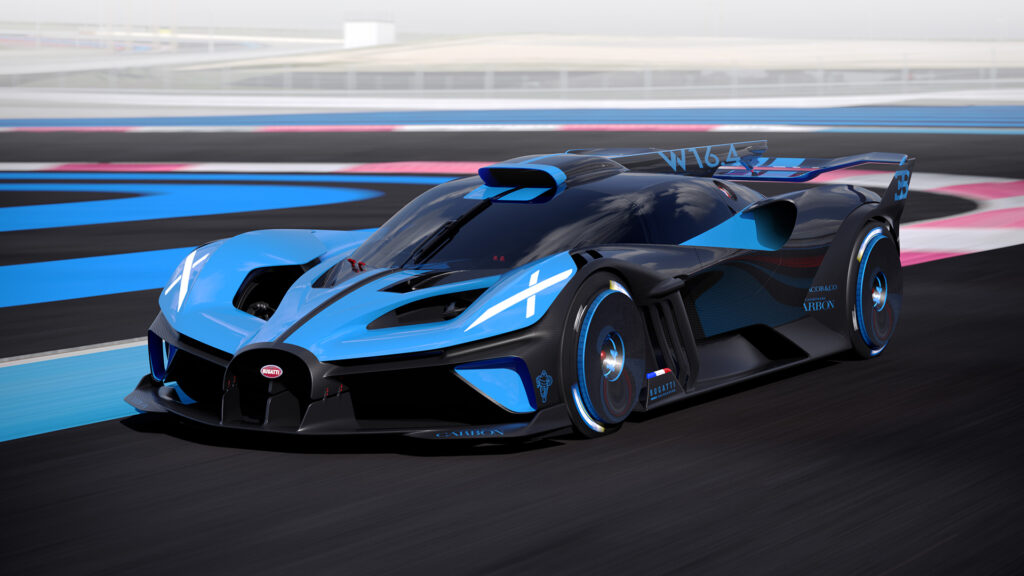
“It is the very first time that my team had the freedom of creating an absolutely minimalistic design around the W16 engine. The result is the most provocative proportion of a modern Bugatti ever and the distilled quintessence of our Bugatti design ethos that form follows performance,†says Anscheidt. “The Bugatti Bolide, however, is a project more technically driven than shaped by style.â€
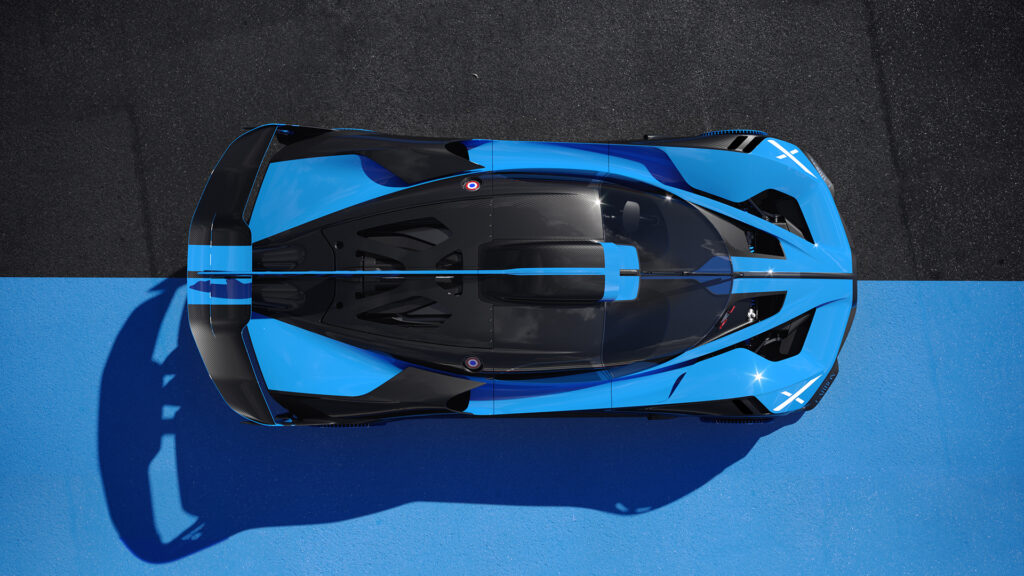
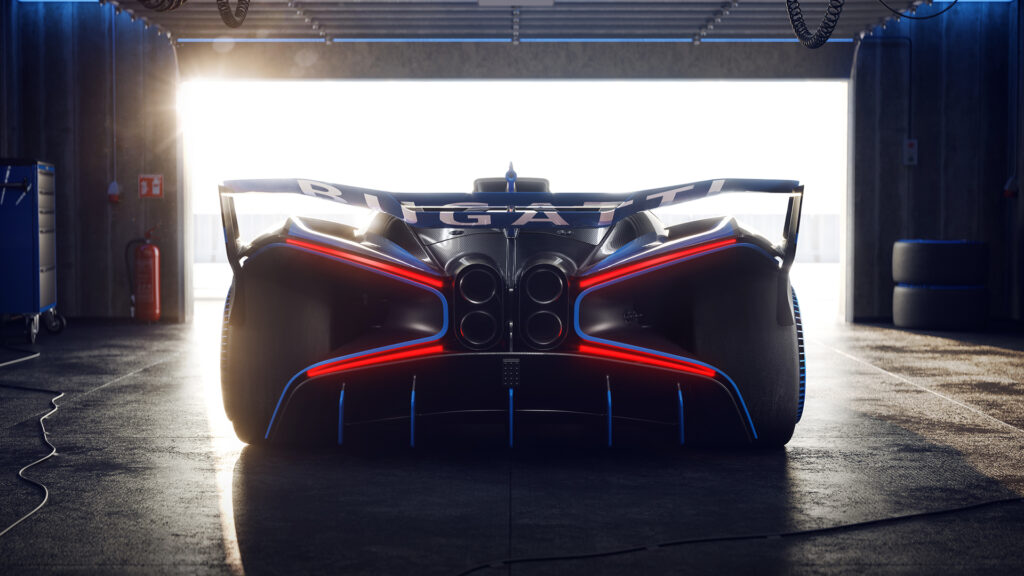
The stylistic challenge was to transform the unyielding demands of aerodynamics and lightweight construction into an aesthetic that reflects the unique Bugatti DNA, but at the same time illustrates the ambition of an impressive weight-to-power ratio. The overall appearance is dominated by air ducts that are more reminiscent of aerodynamically sophisticated Formula 1 racing cars than classic sports cars. The seemingly filigree and half-open front end is a striking example of the combination of air duct expertise, lightweight construction requirements, and aesthetic dynamics.
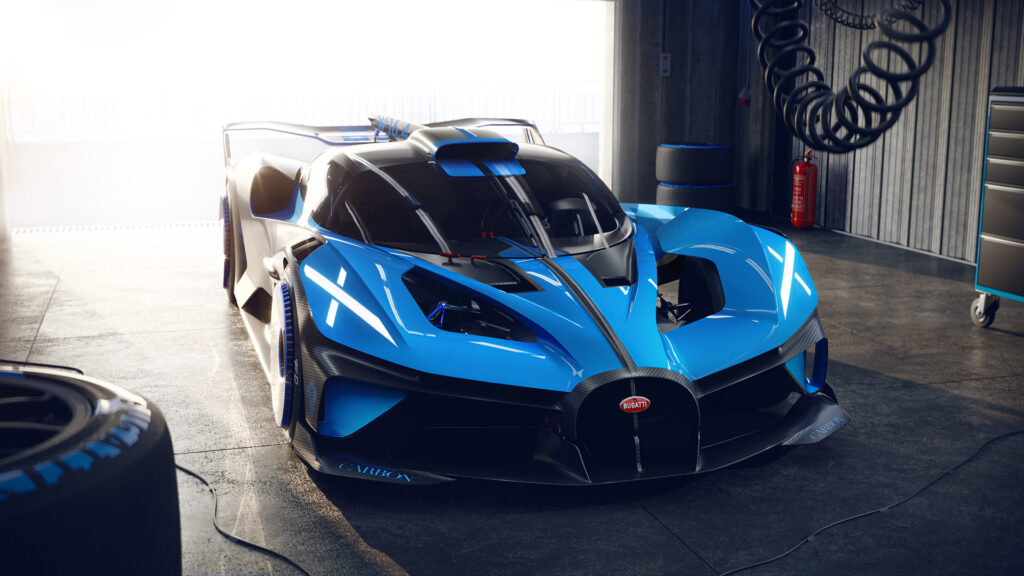
The dramatic effect of the overall proportions is made clear by the aerodynamically favourable overall height of only 995 millimetres. The driver’s ultra-sporty seating permits the low-slung shape of an automotive low-flying aircraft. It is therefore not surprising that the appearance of the Bugatti Bolide invokes the so-called X-planes of aviation history and shows a clear X signature from every perspective. It is indirectly reminiscent of the Bell X-1 jet aircraft which was flown by Captain Charles “Chuck†Yeager 1947, the first person to break the sound barrier at Mach 1.06. The Bugatti Bolide “X-periment†has the shape of an aerodynamically optimised, uncompromising racing car and offers ultra-sporty, superlative performance – with no hint of luxury.
As with other Bugatti vehicles, the Bugatti design team also makes use of a colour split in the Bolide. Compared with other models, the share of visible carbon parts is increased by up to 60 percent. Only around 40 percent of the surfaces are painted – in a re-interpretation of the historic French Racing Blue.
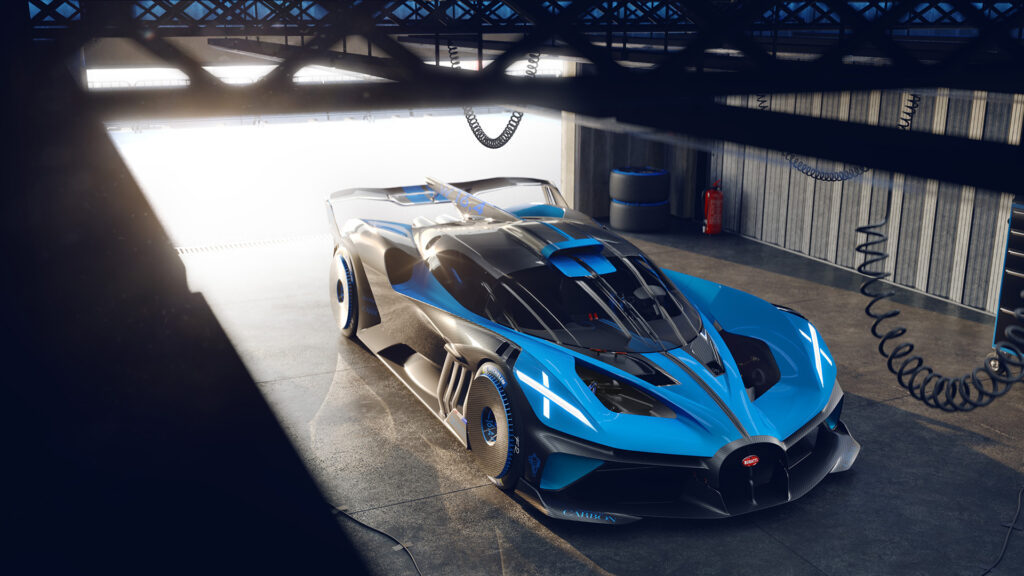
“Fifteen years ago, Bugatti succeeded in creating a new segment with the Veyron 16.4: that of the superior hyper sports car. With the Chiron launched in 2016, we systematically developed this segment further. The models bear witness to power and elegance, uniquely combining technology, design, luxury, and quality in a hitherto unknown combination,†explains Anscheidt. “In contrast, the Bugatti Bolide is an absolute rebel. It is clear to see that its only aim is to convey the pure power of the W16 engine in a visually and technically unadulterated form. Reduced, raw, and authentic – like freshly-caught sashimiâ€.
The DNA – Bugatti Type 35
With the Type 35, Bugatti produced one of the most successful racing cars of all time. The open-top sports car achieved over 2,000 victories between 1924 and 1930. Today, the Type 35 is a legend in racing history. It was inimitable in terms of technology, design, and performance in its time – and still is today. Ettore Bugatti used a double roller bearing and triple ball bearing crank mechanism for the first time. This allowed the engine to rotate at up to 6,000 rpm to move the eight pistons. Two carburettors increased the power to an initial 95 PS. With this engine, the first Type 35 cars were able to reach speeds of over 190 km/h. In the later Type 35 B evolutionary models with a 2.3-litre eight-cylinder engine and compressor, the power output increased to 140 PS, and the Bugatti achieved a top speed of more than 215 km/h.
As well as their incredible power, the engines were primarily renowned for their reliability and endurance. And their lightness. Ettore Bugatti did not compromise when it came to lightweight construction and best possible driveability. He developed special smooth-running wheels to reduce the unsprung masses and, as a result, improve the response of the suspension. The new hollow-bored and forged front axle weighed only 10 kilograms and was nevertheless still stable. A race-ready Bugatti Type 35 weighed only around 750 kilograms. A masterpiece in terms of the weight-to-power ratio.
The verdict – a track-oriented thoroughbred of modern times
The Bugatti Bolide is the unrivalled technological concept of a track-focused Bugatti hyper sports car. The combination of 1,850 PS and 1,240 kilograms dry weight ensures an unbelievable weight-to-power ratio. This puts the Bolide with its W16 engine at the absolute pinnacle in terms of combustion engines used in automotive engineering. “For the first time, we are showing what the W16 engine is really capable of. We have freed the vehicle of all baggage and have illustrated and combined the engine with the lightest possible chassis to create the ultimate Bugatti and to ensure the ultimate driving experience. With the Bolide, we are presenting our interpretation of a Bugatti track car of modern times to Bugatti enthusiasts all over the world and finally make their most fervent wishes come true,†explains Stephan Winkelmann.
Whether the Bugatti Bolide will go into series production, has not been decided yet.







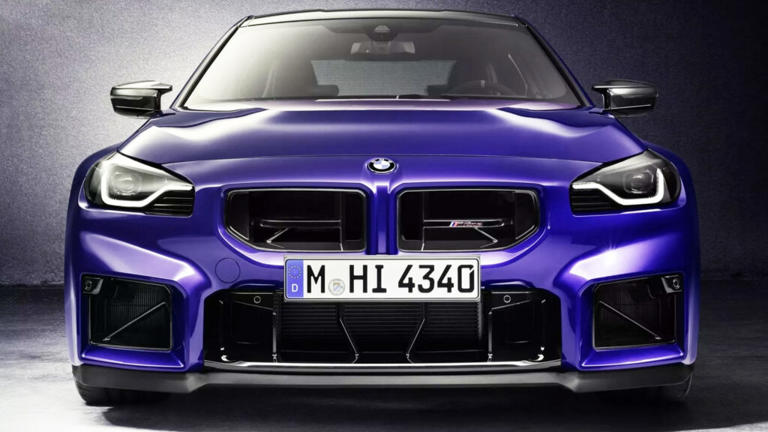
BMW is reportedly preparing another special M2 before the current generation ends, with an all-wheel-drive M2 CS, manual version, or hardcore CSL among the possibilities.
BMW may not be finished expanding the M2 lineup.
With roughly two years remaining in the current M2’s production cycle, a new report suggests that another special version could arrive before the compact performance coupe is replaced.
The information comes from BimmerPost member Ynguldyn, who has previously reported accurate details about BMW’s future product plans. According to the report, BMW is preparing a “special model” of the M2, although specific details remain unknown.
BMW could push the M2 even further
The current M2 CS already takes the compact sports car to another level.
It uses the same basic engine family as the M3 and M4 Competition while combining it with a smaller body and rear-wheel drive.
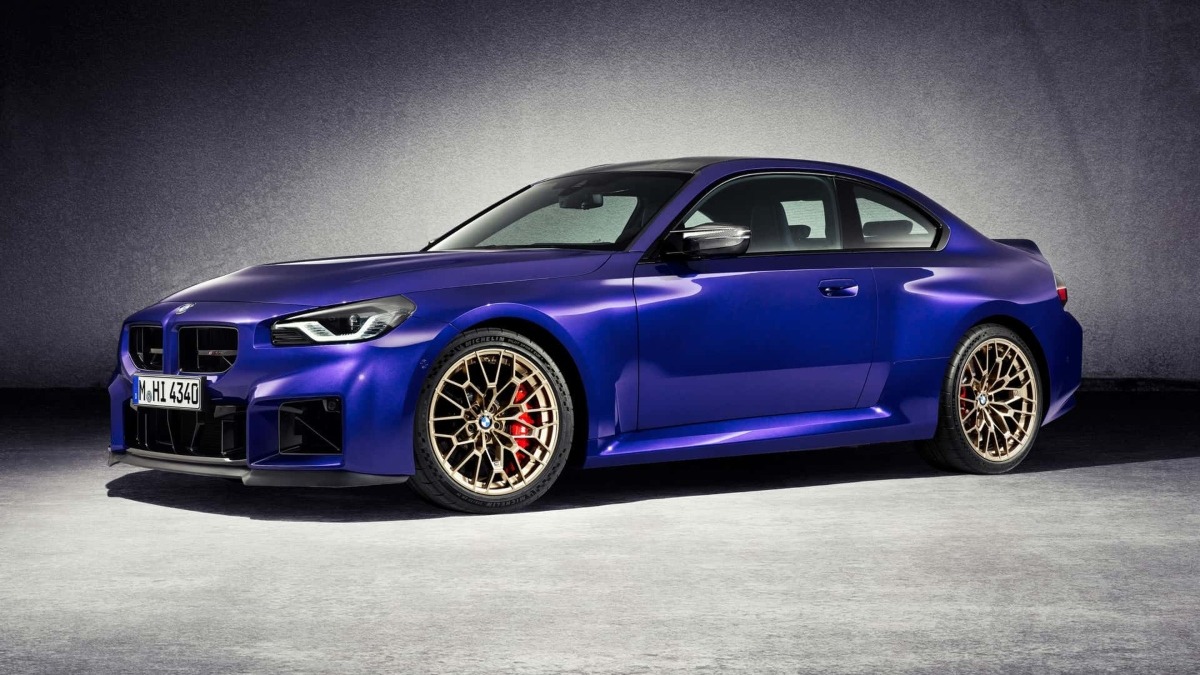
The BMW M2 CS could provide the foundation for another, even more specialized version.
The M2 CS produces 523 horsepower and 479 lb-ft of torque, leaving BMW several potential directions for another special edition.
One obvious possibility would be to add all-wheel drive.
BMW has already introduced an xDrive version of the regular M2, proving that the hardware exists to combine the drivetrain with the more powerful engine used in the CS.
Could the M2 CS get xDrive?
The regular M2’s all-wheel-drive version produces 473 horsepower and 443 lb-ft of torque.
Adding the same system to the M2 CS could give the car even stronger acceleration and greater traction.
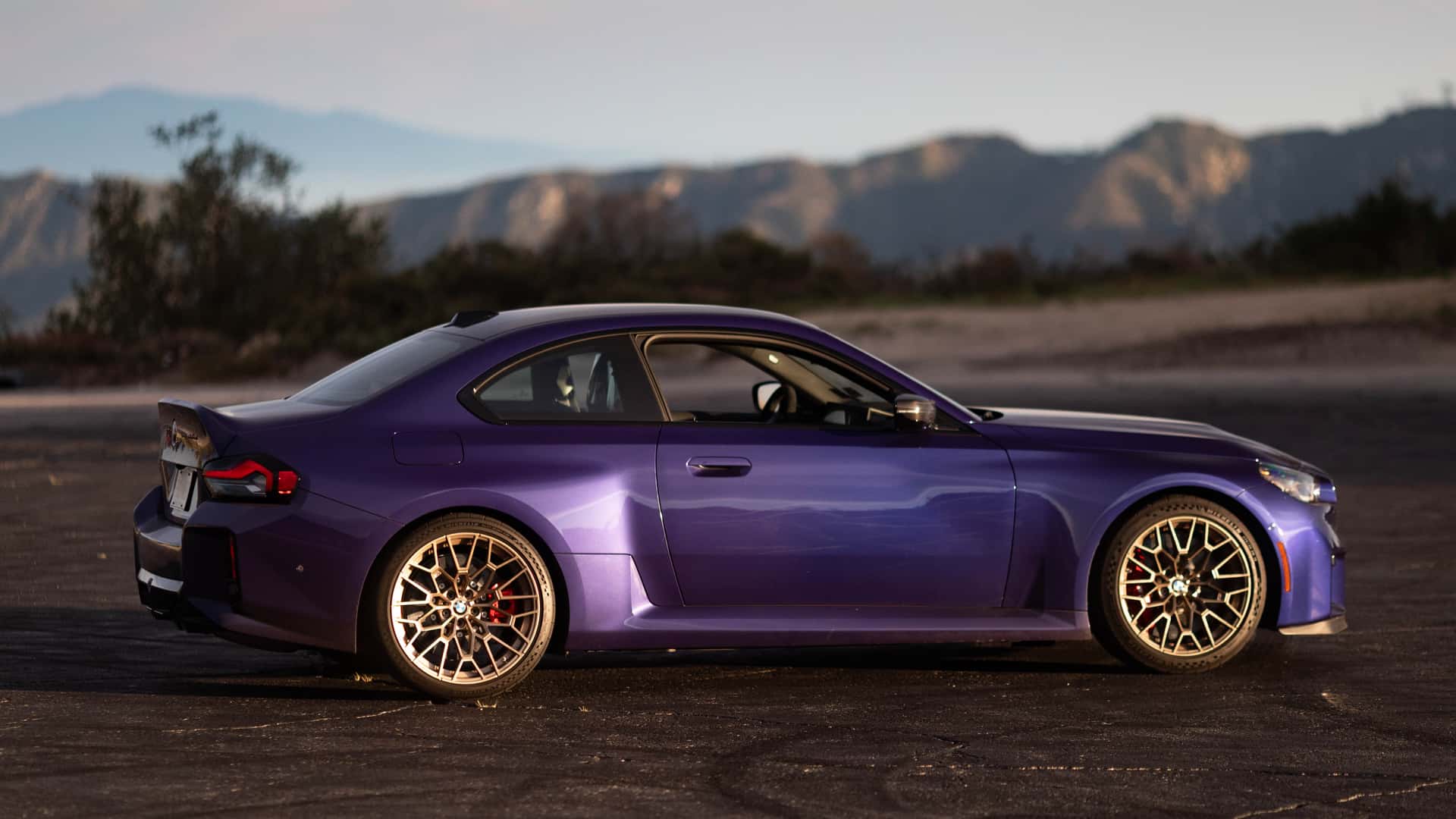
BMW already offers an all-wheel-drive M2, creating a potential path for an M2 CS xDrive.
The standard M2’s move to all-wheel drive cuts its 0-to-62-mph time by 0.3 seconds compared with the rear-wheel-drive version.
An all-wheel-drive CS could potentially make an even larger difference, particularly during launches and corner exits.
However, BMW has not confirmed that an M2 CS xDrive is in development.
A manual M2 or CSL are also possibilities
BMW could take the special-edition M2 in another direction instead.
One possibility would be a manual M2, following the approach used by special M3 and M4 variants.
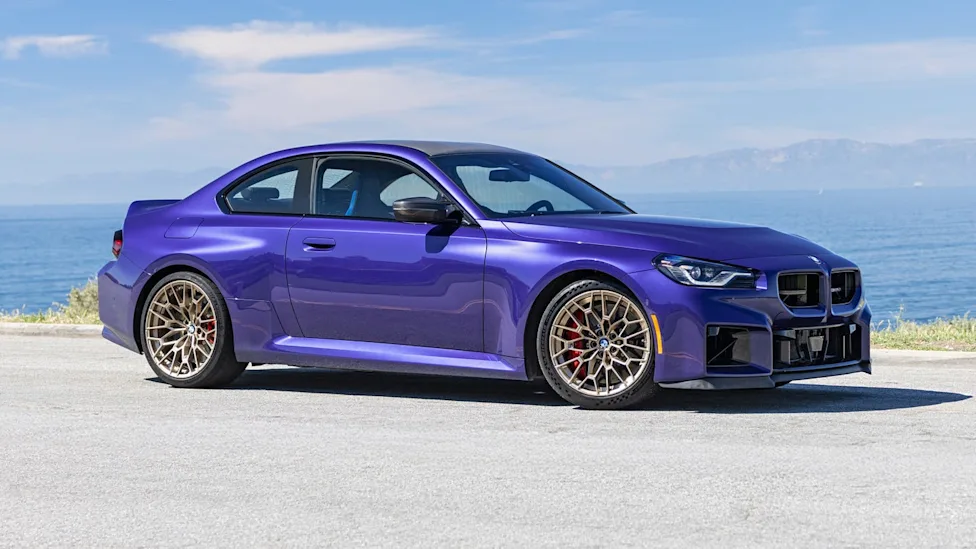
A manual-focused M2 could follow the strategy BMW has used for other special M models.
Another possibility would be an even more extreme M2 CSL.
That version could focus on reducing weight, sharpening the chassis, and potentially extracting even more power from the twin-turbocharged engine.
Such a car would sit above the already potent M2 CS and could become the ultimate version of the current-generation M2.
BMW appears to have more M2 plans
For now, there is no confirmation of what BMW’s reported special model will actually be.
The company has several options, ranging from increased traction with xDrive to a more driver-focused manual version or a lightweight CSL.
What seems increasingly likely is that BMW M2 development is not finished yet.
With the current generation expected to remain in production until around 2029, enthusiasts may have one more major M2 variant to look forward to before the next generation arrives.
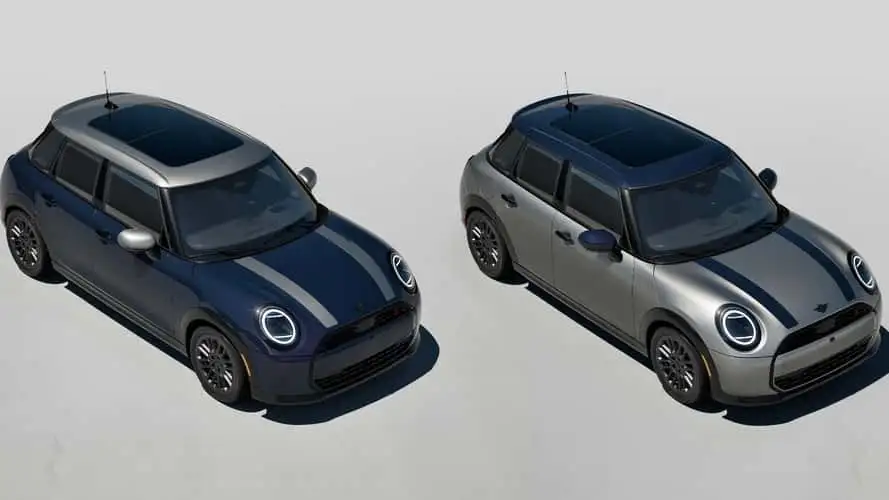
The 2026 MINI Rooftop Edition reverses its signature body-and-roof color scheme on Cooper S hatchbacks while adding exclusive equipment and styling.
MINI is putting a fresh spin on one of its most recognizable design elements with the 2026 MINI Rooftop Edition.
Created for the U.S. market, the special edition is based on the Cooper S 2 Door and 4 Door and reverses the traditional contrast between the body and roof colors.
The model is part of MINI’s Icon Drops anniversary campaign and focuses entirely on design rather than performance upgrades.
MINI Turns Its Signature Roof Upside Down
The Rooftop Edition keeps the standard Cooper S powertrain, including its turbocharged four-cylinder engine and seven-speed dual-clutch transmission.
Instead, the special edition’s main attraction is the unusual paint treatment.

The MINI Rooftop Edition reverses the traditional body-and-roof color combination.
MINI offers two metallic colors: Indigo Sunset Blue and Melting Silver III.
One configuration features an Indigo Sunset Blue body with a Melting Silver III roof and matching mirror caps.
The second reverses the combination, placing the darker blue finish on the roof while the silver covers the body.
Both versions receive Piano Black exterior trim and 17-inch U-Spoke Grey wheels.
The Cabin Gets Sportier Details
The interior retains the latest Cooper S cabin design but adds several exclusive touches.
MINI fits the Rooftop Edition with John Cooper Works sport seats, complete with MINI badges on the backrests.
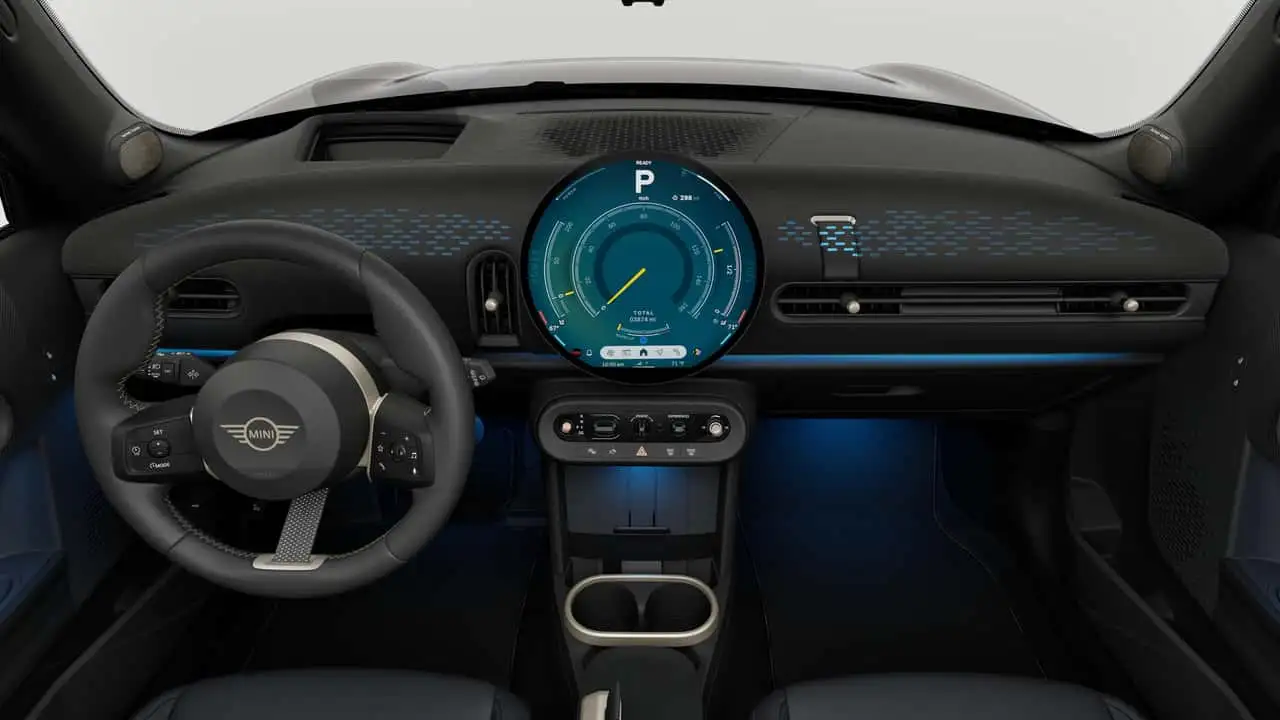
John Cooper Works sport seats and black Vescin upholstery give the Rooftop Edition a sportier cabin.
The seats are finished in black Vescin upholstery with contrast stitching and blue accents.
The overall approach keeps the minimalist character of the modern MINI interior while giving the limited edition a more distinctive appearance.
Loaded With Standard Equipment
Although the Rooftop Edition does not add horsepower or chassis upgrades, MINI has equipped it with a substantial amount of technology.
Standard equipment includes adaptive cruise control with stop-and-go, augmented-reality navigation, Parking Assist Plus, wireless smartphone charging, and Harman Kardon premium audio.
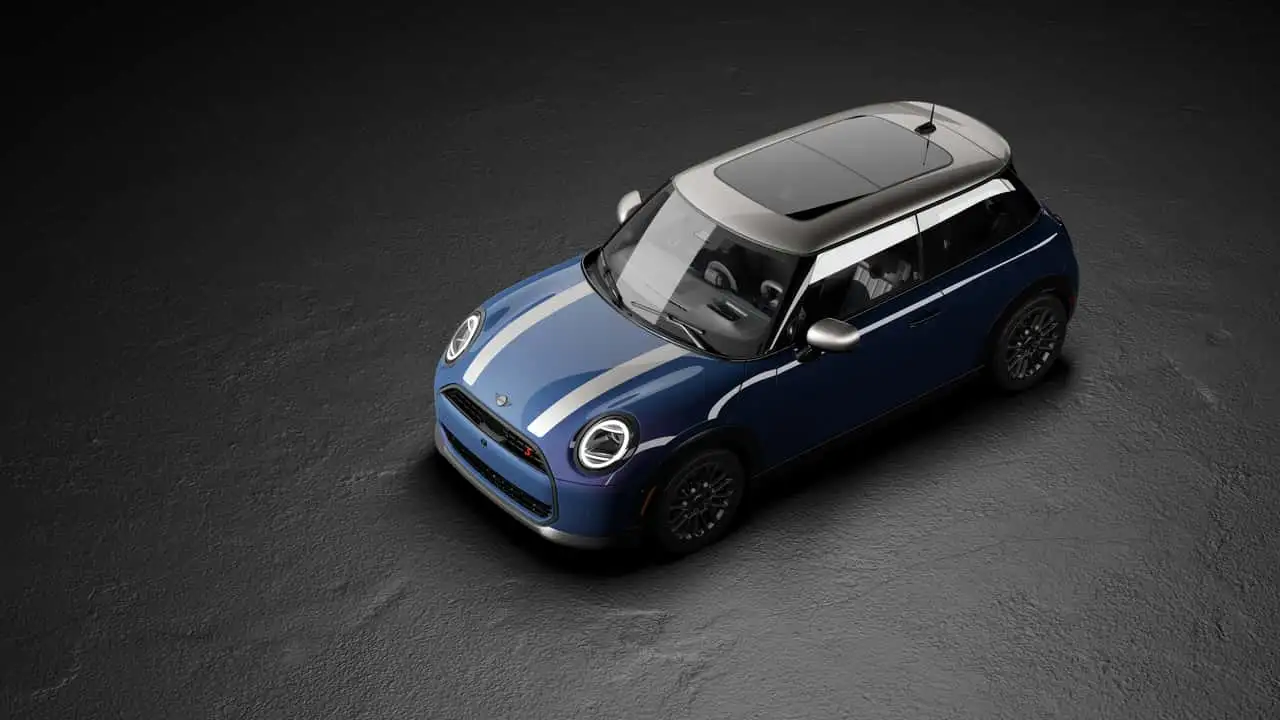
The Rooftop Edition combines its distinctive paint treatment with a long list of standard technology and comfort features.
The package is built on top of the Iconic Trim, Comfort Package Plus, Favoured Style package, and other equipment.
MINI says the combined value of the added equipment exceeds $4,100, while the Rooftop Edition content itself represents a $1,595 package.
Pricing and U.S. Availability
The MINI Rooftop Edition starts at $39,995 for the Cooper S 2 Door and $40,995 for the Cooper S 4 Door.
Those prices exclude the $1,350 destination charge.
Production is scheduled to begin in September 2026, with U.S. dealer arrivals expected in October.
The Rooftop Edition will be the fifth of eight Icon Drops planned for 2026 as MINI celebrates the 25th anniversary of the modern Cooper in the United States.
Rather than changing the mechanical formula, MINI is using limited-run design themes to make the Cooper S feel more exclusive.
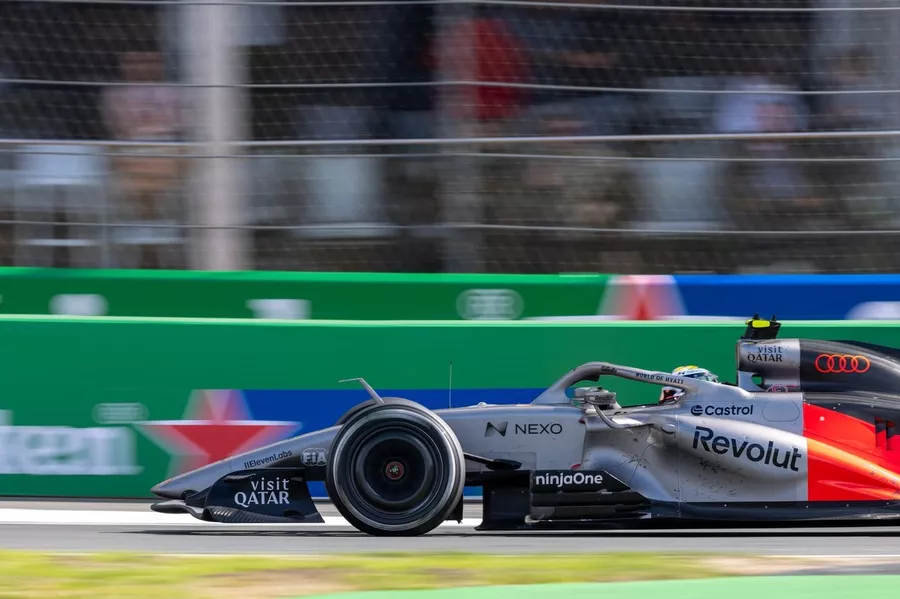
Nico Hülkenberg narrowly avoided hitting Audi teammate Gabriel Bortoleto after the Brazilian spun across the track during the opening lap of the Dutch Grand Prix.
Nico Hülkenberg revealed how he narrowly avoided a potentially huge accident with Audi teammate Gabriel Bortoleto during the opening lap of the 2026 Dutch Grand Prix.
The incident happened shortly after Max Verstappen crashed at the final corner. With the track still wet in places, Bortoleto lost control of his Audi and spun 360 degrees before coming to a stop in the middle of the circuit.
Hülkenberg arrived moments later and managed to avoid his teammate by passing around the left side of the stranded car.
Hülkenberg had almost no time to react
The track was mostly dry, but the final banked corner remained significantly wetter following the earlier rain.
That caught several drivers by surprise, including Bortoleto.
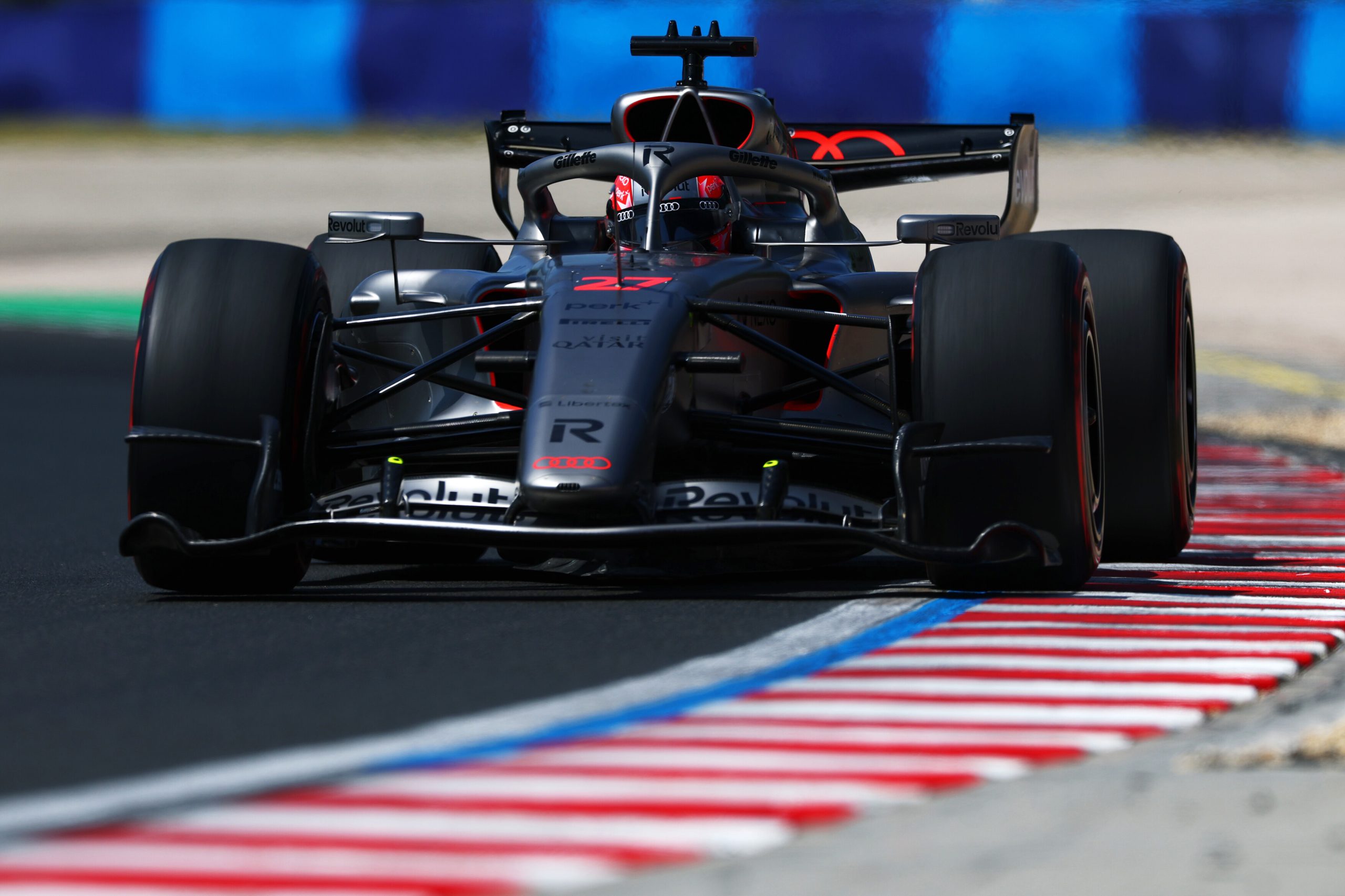
Nico Hülkenberg narrowly avoided Gabriel Bortoleto after the Brazilian spun across the track at Zandvoort.
Hülkenberg said the situation was extremely difficult because he could not immediately predict which direction Bortoleto’s car would move.
He waited as long as possible before committing to an escape route.
According to the Audi driver, luck also played a major role.
The gap between the two cars was so small that Hülkenberg said it felt as though “a sheet of paper” could have separated them.
Audi team principal calls it an incredible save
Audi competition director Allan McNish watched the incident from the pit wall while monitoring the onboard cameras from both cars.
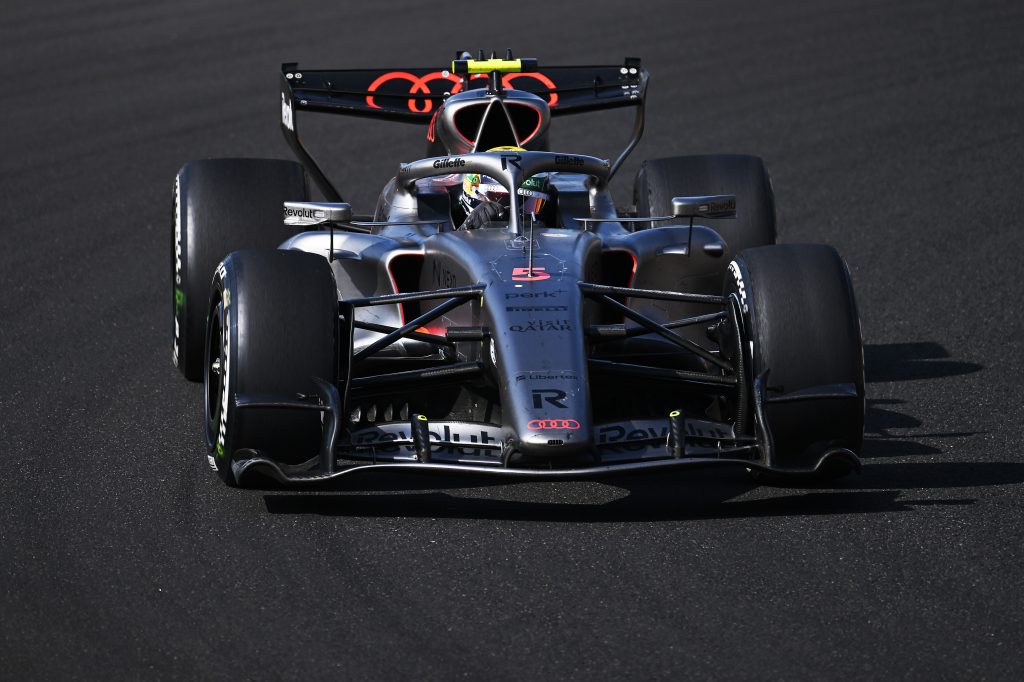
Audi competition director Allan McNish said the incident was even more alarming after reviewing the onboard footage.
McNish admitted that he initially did not realize just how close the two Audi cars had come to each other.
He compared the moment to a scene from “Days of Thunder”, highlighting how little margin Hülkenberg had for error.
From his experience as a former driver, McNish explained that avoiding an accident in such a situation requires a combination of instinct and judgment.
Drivers have to react immediately, but they must also determine how far they can move and which direction offers the safest escape.
Hülkenberg escaped while Bortoleto recovered
Bortoleto’s spin was particularly difficult to handle because the banking of the corner could have sent the car in an unpredictable direction.
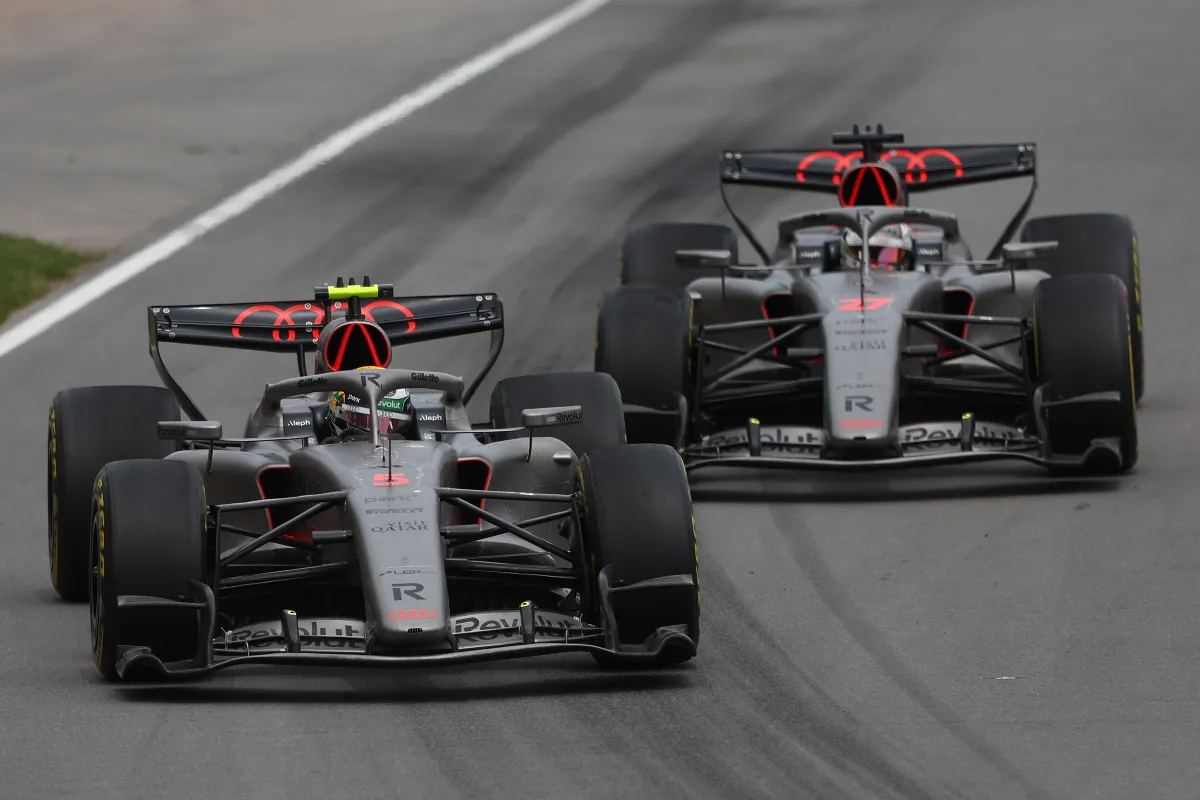
Bortoleto recovered from the spin while Hülkenberg escaped through the narrow gap beside his teammate.
McNish praised Bortoleto for keeping the car away from the wall and preventing an even bigger incident.
He also described Hülkenberg’s avoidance maneuver as an incredible save, saying it was difficult to determine whether instinct, skill, concentration, or a combination of all three made the difference.
The incident ultimately had no major consequences for either Audi driver.
Hülkenberg scored more points for Audi
Hülkenberg went on to finish eighth, scoring four points for Audi.
The result marked the team’s fourth consecutive points-scoring weekend.
Bortoleto had a more difficult afternoon and finished 13th after the opening-lap incident.
For Nico Hülkenberg Audi, the most memorable moment of the weekend was therefore not the final result but the extraordinary escape from what could have been a major teammate collision.
-

 NOW TRENDING2 months ago
Polestar to Exit U.S. Market After 2026 Due to Connected Vehicle Rules
-

 NOW TRENDING2 months ago
Tesla Model Y L Arrives in the U.S. With More Space and Three Rows
-

 RACING2 months ago
McLaren F1 Unveils Special Silverstone Livery Honoring Its History
-
 INTELLIGENT MOBILITY2 months ago
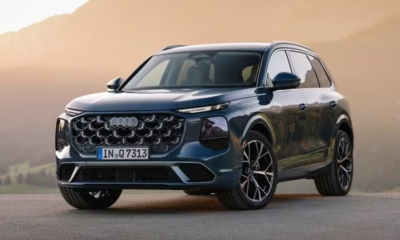
Audi A4 E-tron and Q7 E-tron Confirmed as New Electric Models
-

 TEST DRIVES2 months ago
A Week Driving Honda’s New Hybrid Coupe
-

 TEST DRIVES2 months ago
Ford Recalls More Than 741,000 Trucks and SUVs Over Rollaway Risk
-

 NOW TRENDING2 months ago
Toyota Reports Strong June and Q2 2026 U.S. Sales Growth
-

 INTELLIGENT MOBILITY2 months ago
GM Expands Super Cruise With Exclusive Hands-Free Towing Technology
You must be logged in to post a comment Login