
The British marque revives a historic name with the most radical Continental GT ever built: lighter, more powerful, and engineered entirely around the driver.

Bentley has revived one of its most iconic badges: Supersports, a name born nearly a century ago on the legendary 4½ Litre models that dominated Le Mans. Now, the brand shows its wildest side once again with the new Continental GT Supersports, a machine that pushes the British grand tourer’s performance far beyond anything seen before. With 657 horsepower sent exclusively to the rear wheels, this is the most aggressive Conti ever created.
A 657-HP Twin-Turbo V8, Rear-Wheel Drive and–Crucially–No Hybrid Tech

The new Supersports raises the bar with a twin-turbo V8 delivering 657 hp and 590 lb-ft of torque, paired with an eight-speed dual-clutch gearbox and rear-wheel drive. Bentley proudly highlights that this is the only non-hybrid Continental GT, which also makes it the lightest ever: under 2,000 kg (4,409 lbs)–more than 1,000 lbs lighter than a GT Speed. The result is brutal: 0–62 mph in 3.7 seconds and a 192-mph top speed.
To keep all that power in check, Bentley equips the car with an electronic limited-slip differential, a 16-mm wider rear track, and torque-vectoring with rear-wheel steering. The suspension has been completely recalibrated, featuring double wishbones at the front and a multi-link setup at the rear, supported by a 48-volt anti-roll system capable of reacting in just 0.3 seconds. The brakes are the largest ever fitted to a road-going Bentley: 10-piston calipers with 440-mm carbon-silicon-carbide rotors up front.
All this engineering muscle is paired with three dedicated driving modes: Touring for comfort, Bentley for a balanced sporting feel, and Sport, which unleashes the car’s full aggression–perfect for mountain passes like the infamous Transfăgărășan Highway. According to Bentley, the Supersports corners 30% quicker than a Continental GT Speed and can reach 1.3 G of lateral grip, numbers usually reserved for hypercars.
Visually, Bentley didn’t hold back. The Supersports wears a full carbon-fiber aerodynamic package, including the largest front bumper ever fitted to a Bentley, along with dive planes, side skirts, an oversized rear diffuser, and a fixed rear wing capable of adding 661 pounds of downforce. Completing the package are 22-inch lightweight forged wheels developed specifically for this model by Manthey Racing.
Inside, the weight-saving continues. Bentley has removed the rear seats, the rear audio system, and part of the sound insulation. The front seats are now ultra-lightweight bucket seats, mounted low and available in mono-tone, dual-tone, or tri-tone configurations with leather, Dinamica, and carbon-fiber accents. CEO Frank-Steffen Walliser describes it as “the most driver-focused Bentley ever built.”
As expected for a collector piece, Bentley will produce only 500 units, each individually numbered. Order books open in March 2026, with production kicking off later that year. Pricing remains undisclosed, but expect it to sit well above the current Continental GT’s $285,000 starting price.








INTELLIGENT MOBILITY
The 2027 Porsche Taycan Isn’t Just Chasing More Range — It’s Trying To Put Emotion Back Into The EV Performance Formula

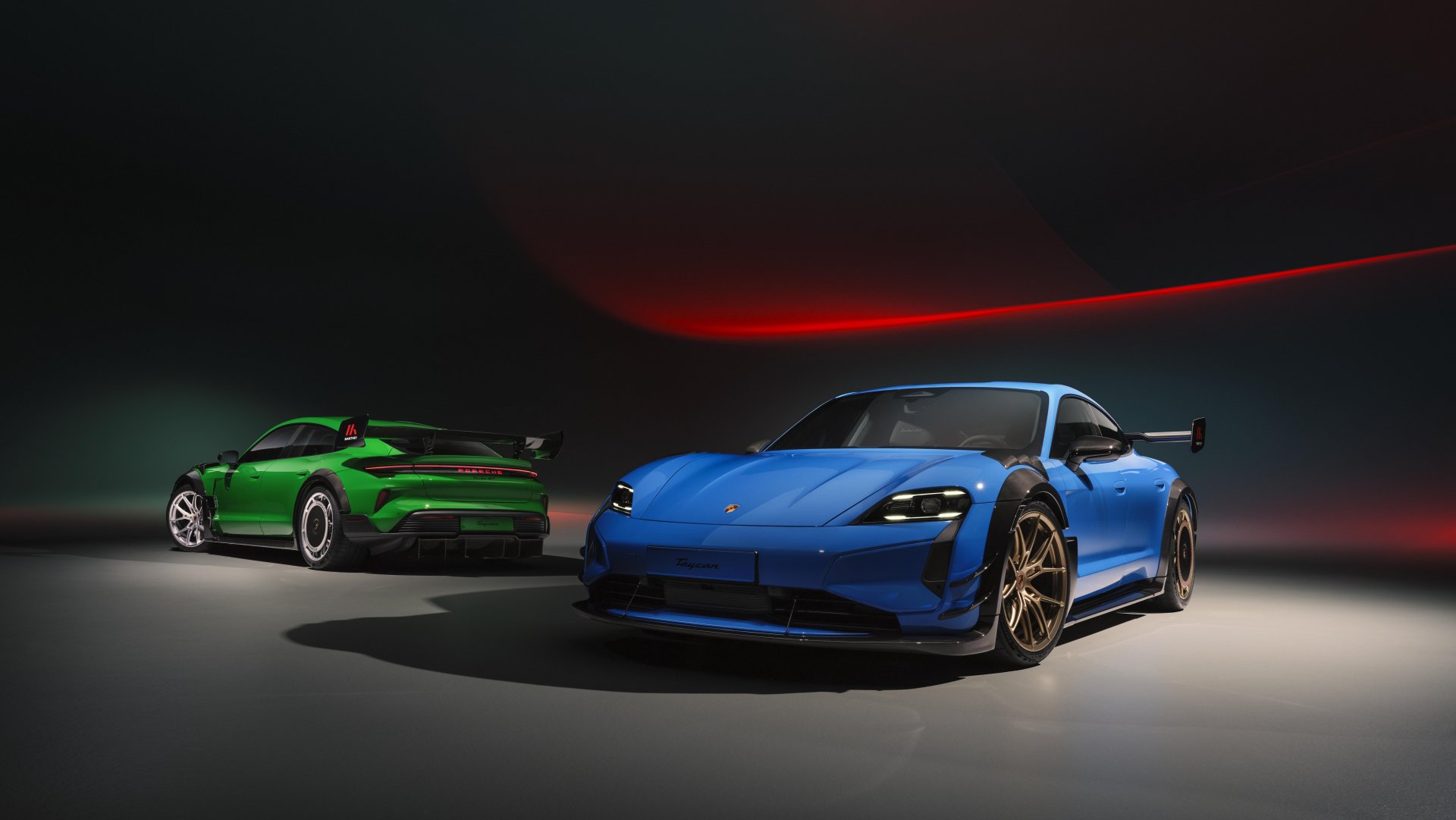
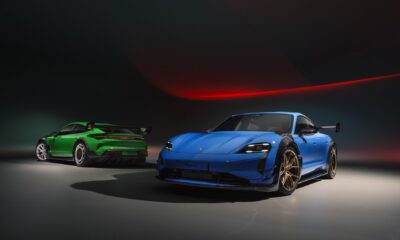
Porsche is updating the Taycan for the 2027 model year, but the most interesting part of the story is not just the bigger battery, the native NACS charging port or the new infotainment system. It is the fact that Porsche is trying to make its flagship EV feel more alive. With the introduction of E-Shift, a new system that simulates gear changes through steering-wheel paddles, perceptible shift sensations, a virtual rev counter and a more emotive Electric Sport Sound, Porsche is making a clear statement about where it thinks electric performance cars need to go next. Faster charging and smarter software matter, of course. But so does driver engagement, and the 2027 Porsche Taycan is now being positioned as an EV that wants to appeal not only to reason, but also to instinct.
That makes this update more significant than a routine model-year refresh. Porsche is touching nearly every part of the Taycan experience at once: driving feel, battery strategy, charging hardware, infotainment performance, AI voice control and digital personalization. For the U.S. market, where premium EV buyers increasingly expect both cutting-edge technology and genuine brand character, that matters. The 2027 Taycan is not trying to reinvent the car from scratch. It is trying to sharpen the areas that will determine whether Porsche’s electric sports sedan can keep feeling special as the EV segment becomes more crowded, more software-driven and more competitive.
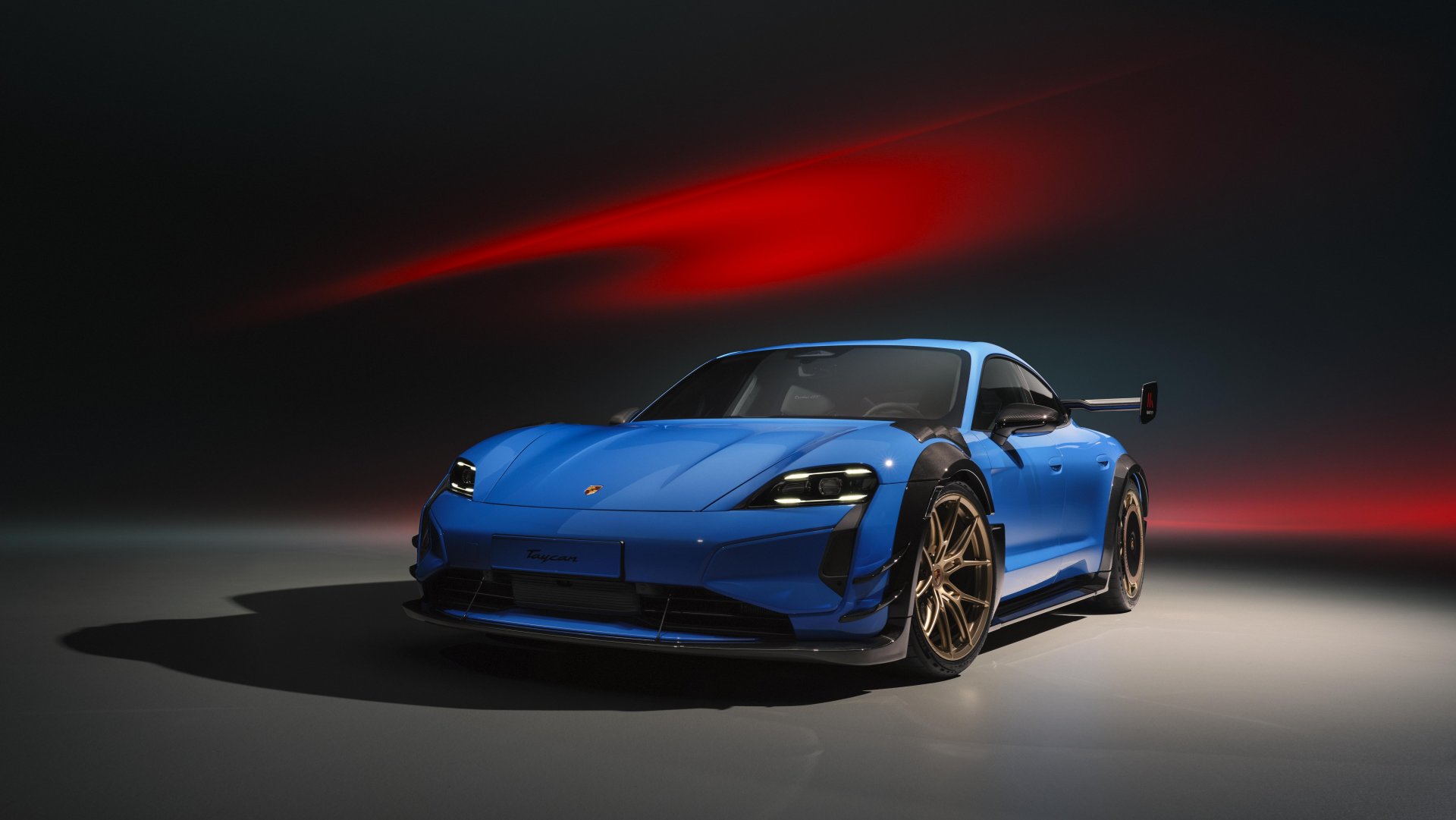
The 2027 Porsche Taycan arrives with one of its boldest updates yet: a new E-Shift system designed to make Porsche’s flagship EV feel more emotional, more interactive and more like a driver’s car.
Porsche’s Big Taycan Update Is Really About Making An EV Feel Less Digital And More Mechanical
The headline feature of the 2027 Porsche Taycan is easy to understand, but it is also a little provocative.
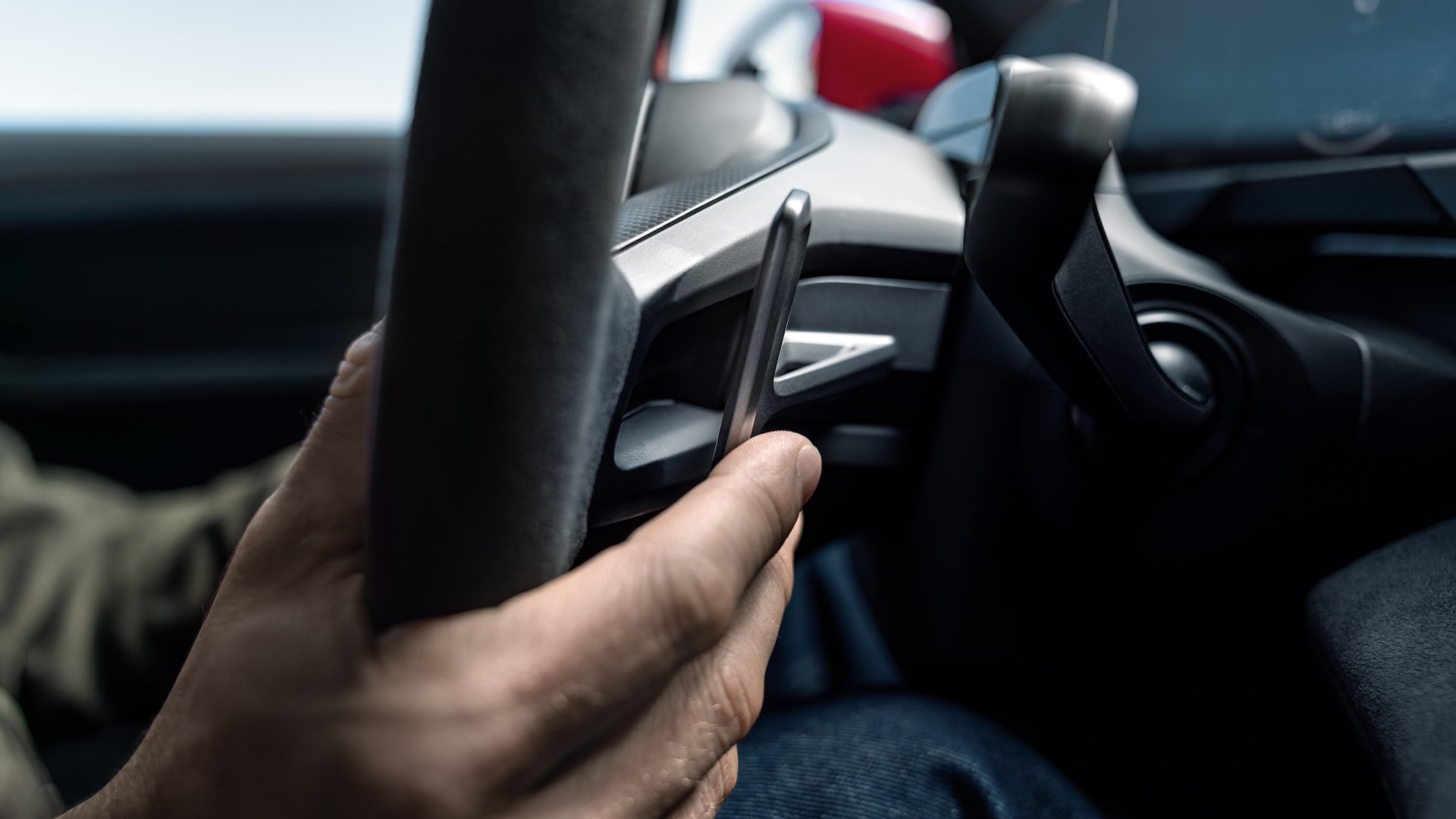
Porsche has created a system called E-Shift, available across the Taycan lineup, that introduces virtual gear changes into an electric car that does not actually need them. In manual mode, drivers can use paddles on the GT Sport steering wheel to cycle through eight simulated gears, while the system adds noticeable shift motion, gear-specific drag torque, a virtual rev limiter, a gear indicator with shift lights and a revised sound profile that changes depending on load and wheel speed. On paper, it sounds almost contradictory: an EV trying to recreate some of the sensations of a combustion performance car. But that is exactly why it matters.
Porsche clearly believes that one of the next big battles in the EV performance world will not be fought only on range, charging speed or 0–60 numbers. It will also be fought over emotion. Electric cars are already brutally quick. What many of them still struggle to deliver is the layered, interactive feel that makes a driver want to engage with the machine beyond simply pressing the accelerator. With E-Shift, Porsche is effectively acknowledging that reality and trying to answer it in its own way.
E-Shift Tells You A Lot About How Porsche Thinks EV Performance Should Evolve
This is not the first time an automaker has tried to add synthetic drama to an EV, but Porsche’s approach feels more serious than a gimmick.
The E-Shift system is not just adding a fake sound effect or a decorative animation on the instrument cluster. It is trying to build a more complete sensory experience around the driver. The Taycan now responds to paddle inputs with simulated gear changes, perceived shift motion and a soundtrack that adapts to the way the car is being driven. Porsche is effectively borrowing the rhythm and emotional punctuation of a traditional sports car, then translating those sensations into an electric format that still remains unmistakably a Taycan.
That matters because Porsche has always sold more than speed. It sells a very specific kind of connection between car and driver. The challenge with EVs is that their instant torque and single-speed smoothness can sometimes flatten that relationship into something that feels efficient rather than dramatic. E-Shift is Porsche’s way of putting some of that drama back in. It is a recognition that even in an electric future, the brand still wants its performance cars to feel like machines you actively work with, not just high-speed devices that happen to be very competent.
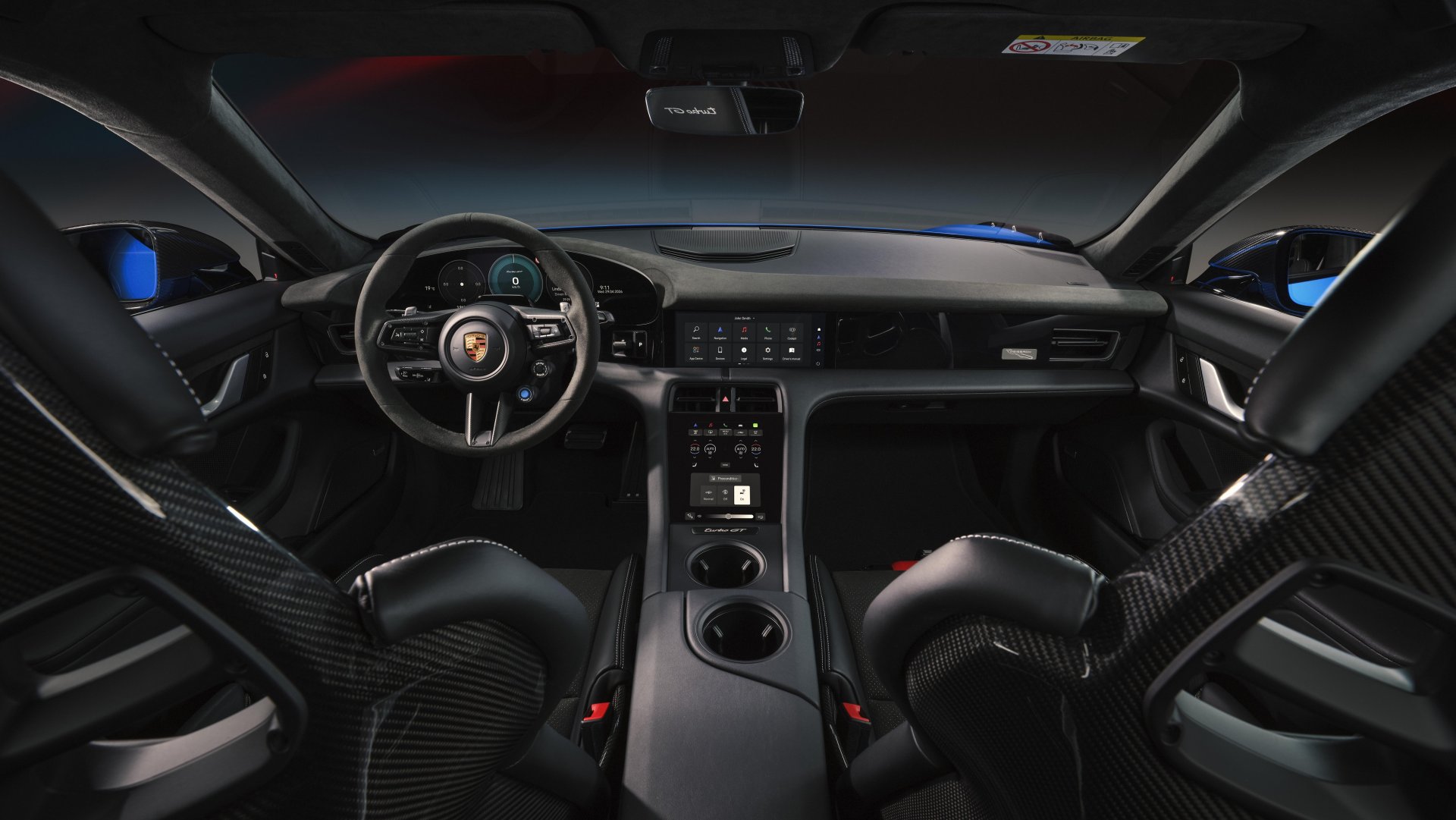
The new E-Shift system adds eight simulated gears, paddle inputs, shift sensations and a virtual rev counter in an effort to make the Taycan feel more interactive from behind the wheel.
The 2027 Porsche Taycan Also Gets The Kind Of Hardware Updates U.S. Buyers Will Actually Notice Every Day
As interesting as E-Shift is, Porsche did not stop at driver engagement.
For the U.S. market, one of the most meaningful changes may be the battery and charging update. Taycan, Taycan 4 and Taycan 4S now come standard with the larger Performance Battery Plus, a 105-kWh pack that not only increases the Taycan’s energy reserve but also supports a higher maximum DC fast-charging rate of 320 kW on compatible 800-volt chargers. Porsche has also added a battery state-of-health display, a small but increasingly important feature as EV buyers become more aware of long-term battery condition and resale value.
Just as important is the charging-port change. Taycan models — excluding the Taycan Turbo GT with Weissach Package — now gain a native NACS DC fast-charging port on the passenger-side fender, while the driver’s side remains a J1772 AC port. A CCS adapter will still be included. That is a major usability upgrade for North America because it aligns the Taycan more directly with the growing NACS charging ecosystem while still preserving compatibility for home and AC charging needs. It is exactly the kind of market-specific update Porsche needed to make if it wants the Taycan to feel less like a premium EV with a separate charging routine and more like a first-class citizen of the U.S. charging landscape.
Porsche Is Quietly Turning The Taycan Into A More Complete Everyday EV, Not Just A Fast One
That battery and charging story matters because it broadens what the 2027 Taycan is trying to be.
Porsche has never had trouble making the Taycan feel special from a performance perspective. The harder task is making it feel equally convincing as a daily luxury EV in a market where usability now matters almost as much as speed. By standardizing the larger battery on more versions of the lineup, adding a battery health display and improving charging flexibility through NACS, Porsche is doing exactly that. It is making the Taycan easier to justify not only as an emotional purchase, but as a practical one.
That is a subtle but important shift. The first phase of premium EVs often focused on proving that electric cars could be fast, beautiful and technologically advanced. The next phase is about making them feel complete. That means better route planning, easier public charging, more transparent battery information and fewer ownership compromises. The 2027 Porsche Taycan update suggests Porsche understands that very clearly.
The New PCM And Porsche Digital Interaction System Show Where The Taycan’s Cabin Is Heading Next
The other big piece of this update is the interior technology overhaul.
Porsche is introducing a new generation of infotainment software built around what it calls Porsche Digital Interaction, and it is a meaningful step beyond a simple graphics refresh. The new system brings a modernized operating concept, freely configurable widgets, a 3D vehicle model in the customer’s actual car color, expanded Apple CarPlay and Android Auto integration, and a new AI-supported Voice Pilot capable of more natural voice interactions. Porsche says the new PCM delivers up to five times more computing power than before, which should translate into faster response times, smoother menus and a much less frustrating everyday digital experience.
That is a big deal because luxury EV buyers are increasingly judging cars by how well their software works, not just by how quickly they accelerate. In that sense, Porsche is doing what it has to do. The Taycan cannot rely solely on chassis engineering and badge value anymore. It needs a cabin experience that feels just as advanced as the hardware underneath it. The new PCM, OTA capability, stronger smartphone integration and voice assistant improvements all push the Taycan further in that direction.
Porsche’s new PCM and Digital Interaction interface bring faster computing, more personalization, stronger smartphone integration and AI-backed voice control to the Taycan cabin.
Porsche Is Also Using Software To Make The Taycan Feel More Personal, Not Just More Functional
One of the smarter parts of the update is that Porsche is not treating the infotainment refresh purely as a spec-sheet exercise.
The new Themes app and broader personalization tools show that Porsche wants the Taycan’s digital environment to feel curated rather than generic. Owners can tailor the color world of the display content and ambient lighting, while widgets and app layouts can be configured more freely than before. The App Center expands the car’s digital ecosystem with a broader mix of Porsche and third-party apps, while voice control now extends to more vehicle functions, media controls and even opening the electric charging flap.
That matters because personalization is becoming a bigger part of the premium EV experience. Buyers are no longer comparing only horsepower, leather quality and ride comfort. They are comparing how much the car feels like their space — how well the screens work, how fast the system responds, how easily the car integrates with their phone, and whether the software feels current rather than dated. Porsche is clearly trying to make the Taycan feel more modern on that front without turning the interior into a cluttered tech demo.
The 2027 Porsche Taycan Is Not Just Getting More Tech — It’s Getting A Stronger U.S. Case
That is really the cleanest way to read the whole update.
For American buyers, the 2027 Porsche Taycan is now easier to understand as a premium EV because Porsche has improved both the emotional side and the ownership side at the same time. The car becomes more theatrical through E-Shift, more useful through NACS and the larger battery, and more competitive inside through the new PCM and AI voice control. Those are not random upgrades. They directly address the areas where premium EV buyers in the U.S. are becoming more demanding: charging convenience, software quality, personalization and the simple question of whether an EV can still feel genuinely exciting to drive.
That is why the Taycan update feels more ambitious than a normal model-year change. Porsche is not just adding features. It is refining the identity of the Taycan at a moment when the EV market is becoming more crowded and more mature. The message is clear: the Taycan should still feel like a Porsche first, but it also needs to feel like a smarter, easier and more emotionally rewarding EV to live with in 2027.
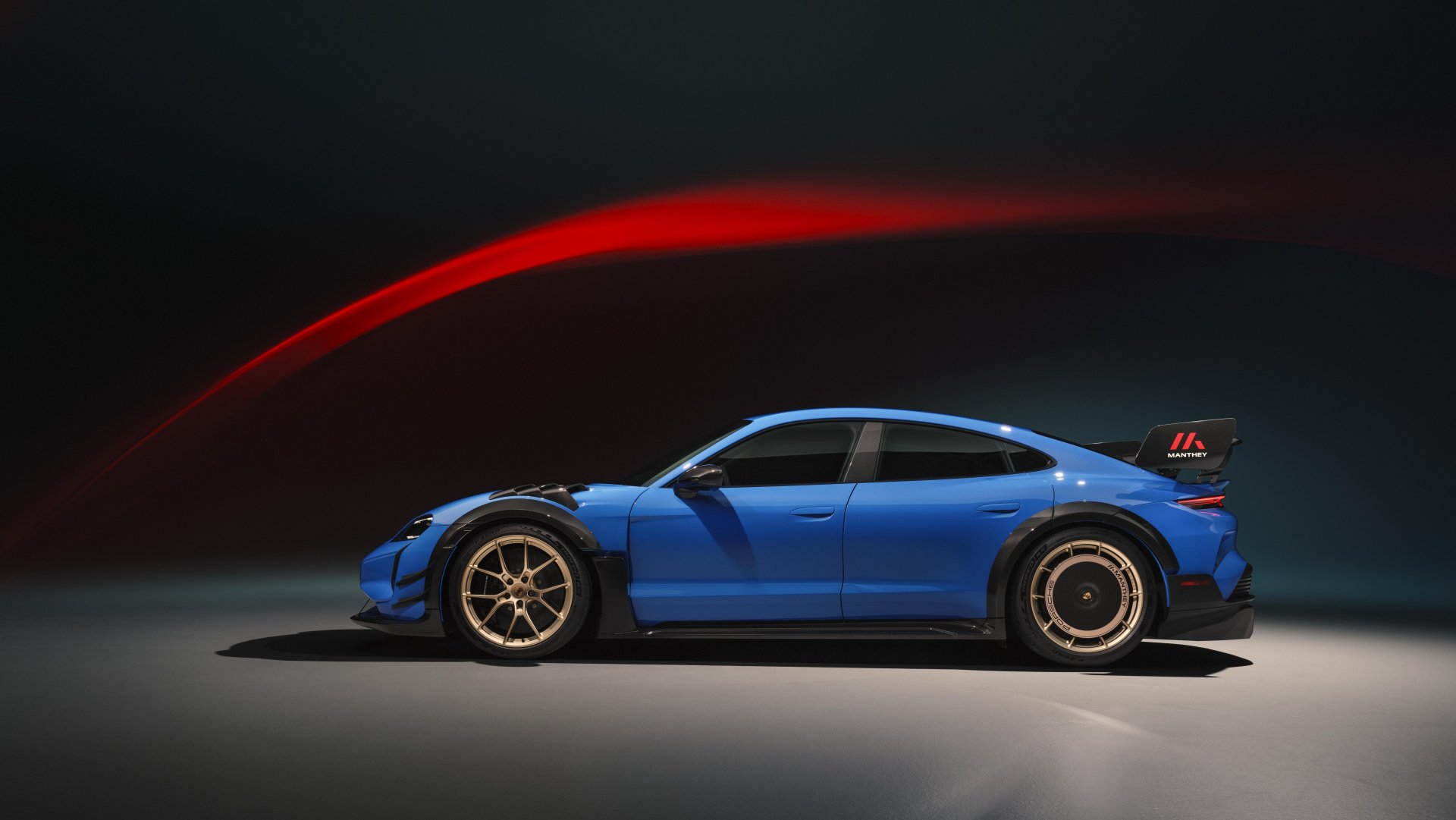
With a larger standard battery on more trims, a native NACS DC port and a more expressive E-Shift system, the updated Taycan is being reshaped for both emotional appeal and everyday EV usability in the U.S.
And that may be the most important takeaway from the entire update. The 2027 Porsche Taycan is not trying to win the EV conversation on one single metric. It is not just about range, or just about charging, or just about infotainment. Porsche is trying to build a more rounded electric sports sedan — one that charges more conveniently in North America, feels more modern inside, gives owners better visibility into battery health and, crucially, still finds a way to make the act of driving feel special.
Whether buyers embrace E-Shift as a brilliant idea or a synthetic one will depend on personal taste, but the logic behind it is hard to miss. Porsche knows that EV performance can no longer rely on silence and instant torque alone if it wants to stay emotionally compelling. By giving the Taycan more theater without walking away from the benefits of electrification, Porsche is making a broader argument about what the next phase of premium EVs should look like. Faster charging and smarter software are part of the formula. But so is the simple idea that an electric Porsche should still make you want to grab the wheel, hit the paddles and drive it for the sheer fun of it.
NOW TRENDING
JLR Is Rewriting Its Growth Plan Around North America, More Hybrids And A Bigger Role For Defender
Jaguar Land Rover is not simply tweaking its electrification roadmap — it is reshaping its growth strategy around a much more pragmatic idea of what luxury SUV buyers actually want right now, especially in North America. In its latest strategic update, JLR laid out a plan to chase double-digit revenue growth by doing two things at once: giving Range Rover, Defender and Discovery more propulsion flexibility, and putting a much sharper commercial focus on the U.S. and wider North American market. That is a meaningful shift because it confirms JLR no longer sees electrification as a one-size-fits-all story. Instead, it is building a broader portfolio of MHEV, PHEV, HEV and BEV options while leaning harder into the region where luxury demand still looks strongest.
That makes this much more than an investor presentation. It is a clear sign that JLR’s Reimagine strategy is entering a more flexible and more commercially grounded phase. The company is still committed to electric vehicles, software-defined platforms and long-term investment in next-generation technology, but it is also acknowledging a reality that many global automakers are now being forced to confront: the transition to EVs is not moving at the same speed in every segment or every market. For JLR, the answer is not to back away from electrification altogether. It is to widen the menu, keep Jaguar fully electric, and let Range Rover, Defender and Discovery cover more of the middle ground — especially for buyers in the U.S. who still want luxury, size, presence and choice.
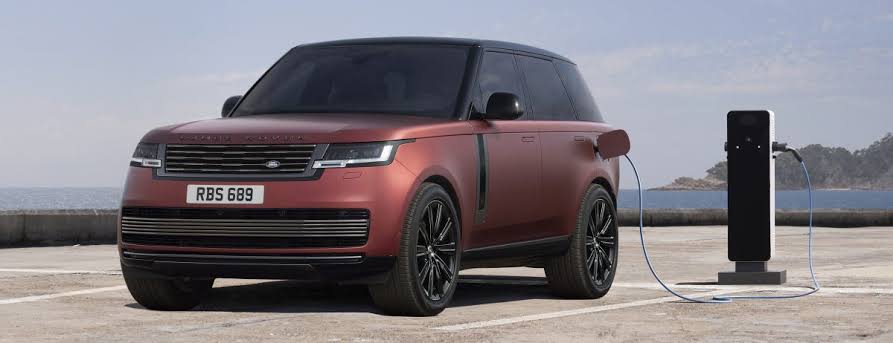
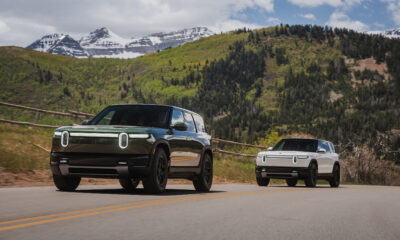
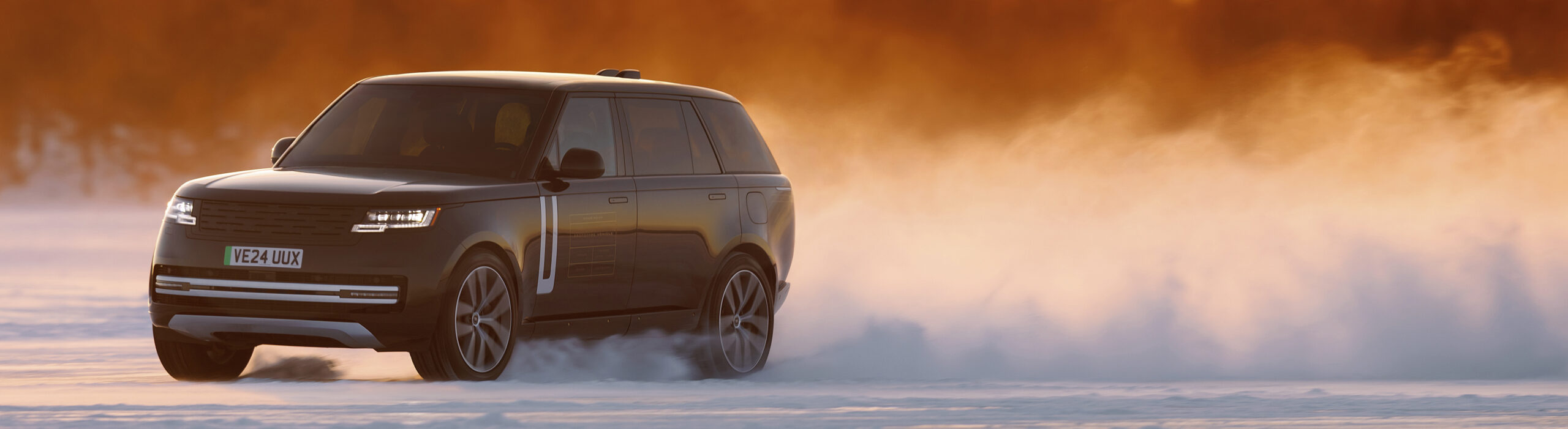
JLR’s new growth plan centers on a more flexible luxury SUV portfolio, with North America becoming a much bigger priority for brands like Range Rover and Defender.
JLR’s New Plan Is Really About Accepting That Luxury Buyers Still Want More Than One Electrification Path
The biggest takeaway from JLR’s announcement is not simply that more electric models are coming. It is that the company is deliberately broadening its powertrain strategy instead of narrowing it.
Under the updated roadmap, Range Rover, Defender and Discovery are all set to offer a wider mix of propulsion choices, spanning mild hybrid (MHEV), plug-in hybrid (PHEV), full hybrid (HEV) and battery-electric (BEV) depending on the model and platform. Jaguar, by contrast, remains the outlier in the portfolio as JLR’s uniquely electric brand, with the upcoming Type 01 positioned as the next major step in that reinvention.
That distinction matters because it tells you how JLR now sees its own brands. Jaguar is being treated as the company’s bold EV-led luxury experiment, while Range Rover, Defender and Discovery are being positioned more pragmatically — as premium SUVs that need to meet buyers where they are, not where policy or corporate ambition once assumed they would be by now. In other words, JLR is no longer betting that every luxury customer is ready to jump straight from combustion to full electric. It is betting that flexibility itself can become a competitive advantage.
The Range Rover And Defender Strategy Says A Lot About Where JLR Thinks The Market Is Going
The product roadmap makes that even clearer.
JLR says Range Rover and Range Rover Sport will continue on the MLA architecture, supporting MHEV, PHEV and BEV configurations, with Range Rover Electric and Range Rover Sport Electric both due later this year. But the bigger strategic detail is what happens next on the EMA platform. JLR has confirmed that future EMA-based vehicles from the Range Rover and Defender families will not be electric-only propositions. They are now planned to add HEV flexibility as well, broadening the powertrain mix beyond the earlier all-electric emphasis.
That is not a small detail. It effectively means JLR is building its future around more propulsion optionality, not less. The company is still investing heavily in BEVs, but it is also creating room for hybrid solutions in vehicle lines where customer demand, pricing realities and regional infrastructure may not support a pure-EV strategy as quickly as originally hoped.
For a company whose most important products are still large luxury SUVs, that is a rational move. The buyers shopping Range Rover or Defender in the U.S. are not always looking for the same thing as a premium EV early adopter in Europe or China. Some want a plug-in. Some want a mild hybrid. Some may be ready for a BEV. JLR’s new strategy is essentially an admission that it would rather capture all of those buyers than force them into a narrower product funnel.
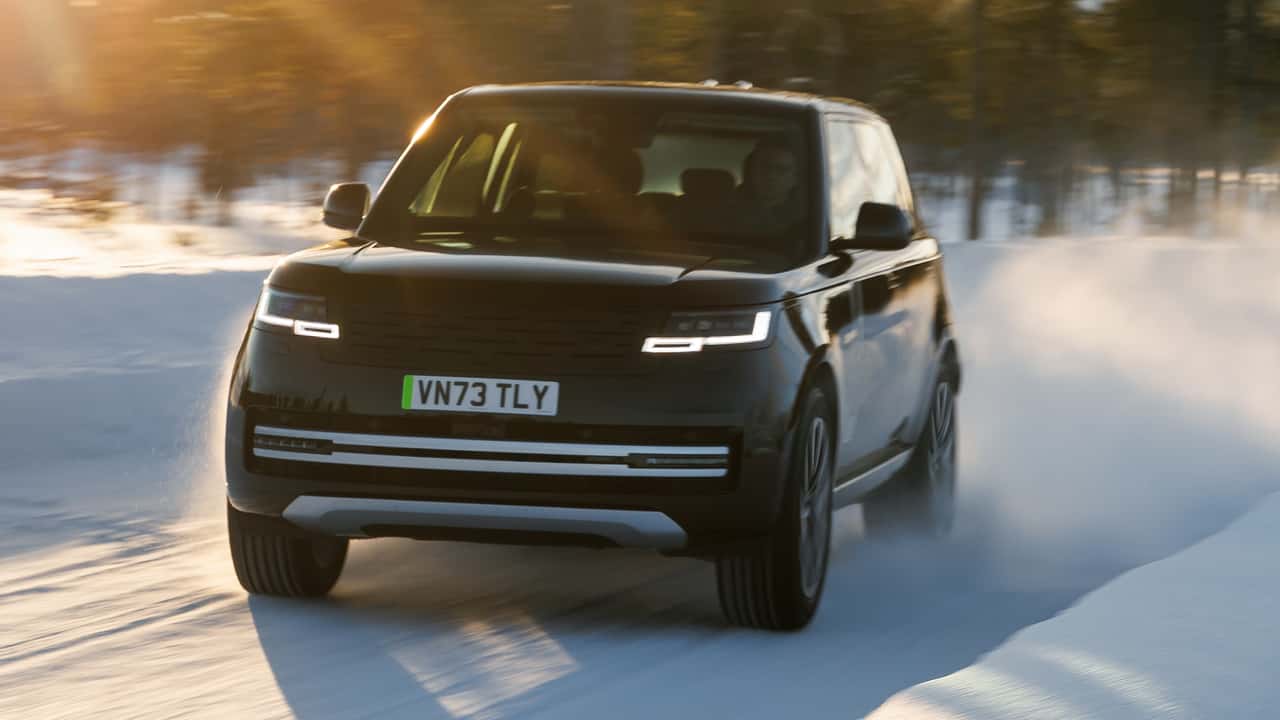
JLR’s revised roadmap gives future Range Rover and Defender products more mechanical flexibility, with hybrids joining EVs as part of the long-term plan.
Defender May Be The Most Important Brand In JLR’s U.S. Growth Story
If there is one brand sitting at the center of JLR’s North American ambitions, it is clearly Defender.
JLR has confirmed that Defender will play a leading role in its U.S. expansion strategy, and that matters because Defender is already one of the company’s most commercially powerful products. It is JLR’s best-selling brand family, and unlike Jaguar — which is being rebuilt around a radical EV-first luxury identity — Defender already has the kind of visual strength, margin potential and cultural recognition that can travel well in the American market.
That is also why the recently announced non-binding MOU with Stellantis matters so much. JLR says it wants to explore product and technology collaboration opportunities in the U.S., with Defender specifically identified as the brand that could help unlock new growth in North America. The company has not laid out the full product details yet, but the signal is obvious: JLR believes Defender can stretch beyond its current role and become a much bigger pillar of its U.S. business, potentially through new segments, new formats or more market-specific offerings aimed directly at American luxury buyers.
That is a fascinating move because Defender occupies a very valuable space in today’s SUV market. It has luxury pricing power, strong brand cachet, genuine off-road credibility and a shape that feels rugged without being anonymous. In the U.S., where high-end SUVs continue to dominate and image matters almost as much as engineering, that combination gives JLR a very strong foundation to build from.
North America Is No Longer Just An Important Market For JLR — It Is Becoming The Core Growth Engine
This may be the most important business message in the whole announcement.
JLR is not talking about North America as one growth market among many. It is increasingly talking about it as the priority growth region capable of carrying the next phase of the business. CEO P.B. Balaji was unusually direct on that point, saying the company’s aspiration is to grow its U.S. business to the size of the entire JLR business as it exists today. That is an enormous statement, and it underlines just how central the American luxury market has become to the company’s thinking.
The logic is easy to follow. The U.S. remains one of the most profitable places in the world to sell high-end SUVs, large luxury vehicles and premium lifestyle products. It is also a market where Range Rover and Defender already have real brand equity, and where the appetite for expensive, high-margin SUVs remains far healthier than in some of the regions where JLR has faced tougher conditions. China, for example, has become a much more difficult market for many foreign brands because of economic softness and intense local competition. North America, by contrast, still offers a very attractive runway if JLR can get the product mix right.
That helps explain why the new strategy feels so product-led. JLR is not only talking about brand storytelling or abstract luxury positioning. It is talking about specific propulsion choices, specific platforms and specific North America-focused opportunities because that is what will decide whether this growth plan actually works.

Defender has been singled out as a key brand for JLR’s U.S. ambitions, highlighting how central North America has become to the company’s growth plan.
JLR’s Strategy Shift Is Also A Quiet Admission That The EV Transition Needs More Breathing Room
There is another layer to this story, and it is one of the most interesting parts of the whole announcement.
JLR is not abandoning electrification. In fact, it reaffirmed a £18 billion investment plan through FY29 focused on future technologies, software, platforms and transformation. But by adding HEV flexibility to future EMA-based Range Rover and Defender models, the company is clearly acknowledging that a pure EV ramp may not be enough on its own to maximize growth in the medium term.
That is a significant shift in tone from the period when many premium brands seemed determined to map out a much cleaner and faster all-electric transition. The market has since become more complicated. Charging infrastructure is still uneven, luxury SUV buyers remain split in their preferences, and hybrids have regained strategic importance because they offer a way to reduce emissions and fuel consumption without asking customers to change their lives as dramatically as a BEV can.
For JLR, the answer appears to be segmentation by brand and by buyer type. Jaguar gets to become the all-electric disruptor. Range Rover, Defender and Discovery get to remain broader luxury SUV businesses with a much wider mechanical toolkit. That is not a retreat. It is a recalibration around the products that actually make the money.
The Cost-Cutting And Resilience Side Of The Plan Matters Too — Because JLR Is Still Trying To Rebuild Profitability
The flashy part of the announcement is all about North America, Defender and hybrid flexibility, but the financial side matters just as much.
JLR says it is targeting £1.7 billion in savings over the next two years and wants to reduce breakeven volumes toward 300,000 vehicles by tightening material costs, warranty spending and fixed expenses. That is a reminder that this strategy is not being launched from a position of total comfort. JLR is still trying to build a more resilient, more predictable business after a period in which profitability has come under real pressure.
That is one reason the U.S. focus matters so much. Selling more high-margin luxury SUVs into North America is not just about bragging rights or market share. It is about building a stronger earnings mix around products and customers that can support the investment JLR still needs to make in EVs, software, AI-enabled systems and future vehicle platforms.
In that sense, the updated plan is trying to solve two problems at once. It needs to prepare JLR for a software-defined, electrified future, but it also needs to make sure the company has a strong enough and profitable enough business in the present to fund that transition. More hybrid flexibility and a bigger Defender play in the U.S. are both part of that answer.
JLR Is No Longer Selling A Simple EV Story — It’s Selling Luxury Choice, Brand Clarity And A U.S.-Led Growth Plan
That is ultimately the cleanest way to understand what JLR just announced.
The company is not walking away from the future. It is trying to make the path to that future more commercially realistic. That means Jaguar goes all-in on EV identity, while Range Rover, Defender and Discovery become more flexible luxury SUV brands capable of offering MHEV, PHEV, HEV and BEV depending on what buyers actually want. It also means North America — and especially the U.S. — becomes the market where JLR intends to push hardest for growth, higher-margin product expansion and a bigger Defender business.
That is why this announcement matters. It is not just a corporate update. It is a reset in emphasis for one of the most recognizable luxury SUV groups in the industry. JLR is telling the market that the next phase of growth will not come from betting everything on one propulsion answer or one geography. It will come from giving customers more choice, using each brand more deliberately, and aiming the most important parts of the portfolio at the market where luxury demand still looks most lucrative.
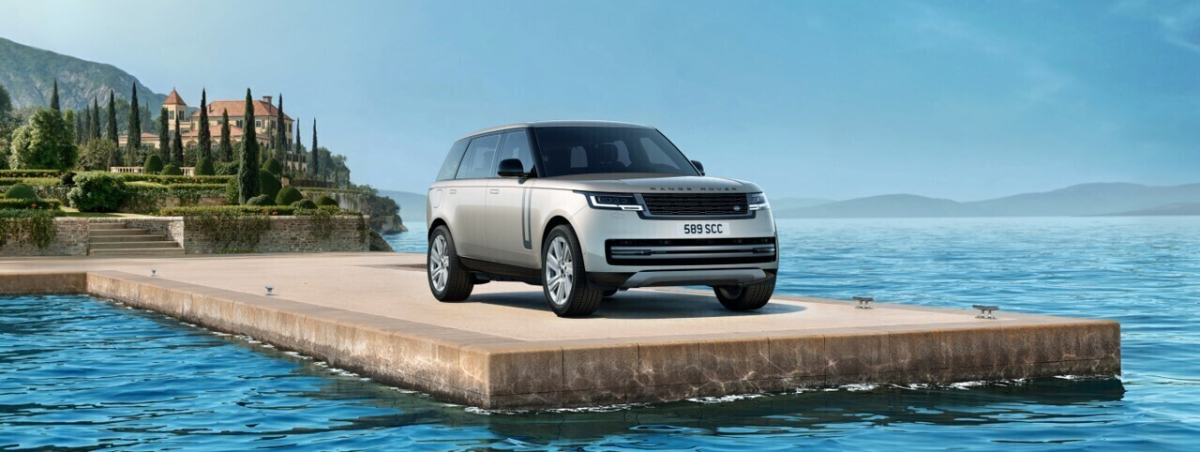
JLR’s latest strategic reset puts North America, Defender and broader hybrid flexibility at the center of the company’s next growth phase.
And that is why the Defender angle may end up being the piece to watch most closely. Range Rover will remain the brand halo, Jaguar will remain the bold EV experiment, and Discovery still has a role to play — but Defender is the one that looks best positioned to translate JLR’s new priorities into real U.S. volume and real margin. It already has the image, the recognition and the product credibility. If JLR can stretch that formula into new North America-focused opportunities without diluting what makes Defender desirable in the first place, it could become the brand that defines the company’s next chapter.
The bigger point, though, is that JLR now seems far less interested in telling a neat, idealized electrification story than in building a luxury business that can actually win under current market conditions. That means more hybrids, more flexibility, more U.S. focus and a much more targeted use of its brands. For a company trying to restore stronger growth while still funding an expensive long-term transformation, that may be the most realistic strategy it has put on the table in years.
NOW TRENDING
The 2026 Kia Sportage Is More Than A Mid-Cycle Refresh — It’s Kia’s Play To Keep Its Best-Seller At The Center Of America’s SUV Market
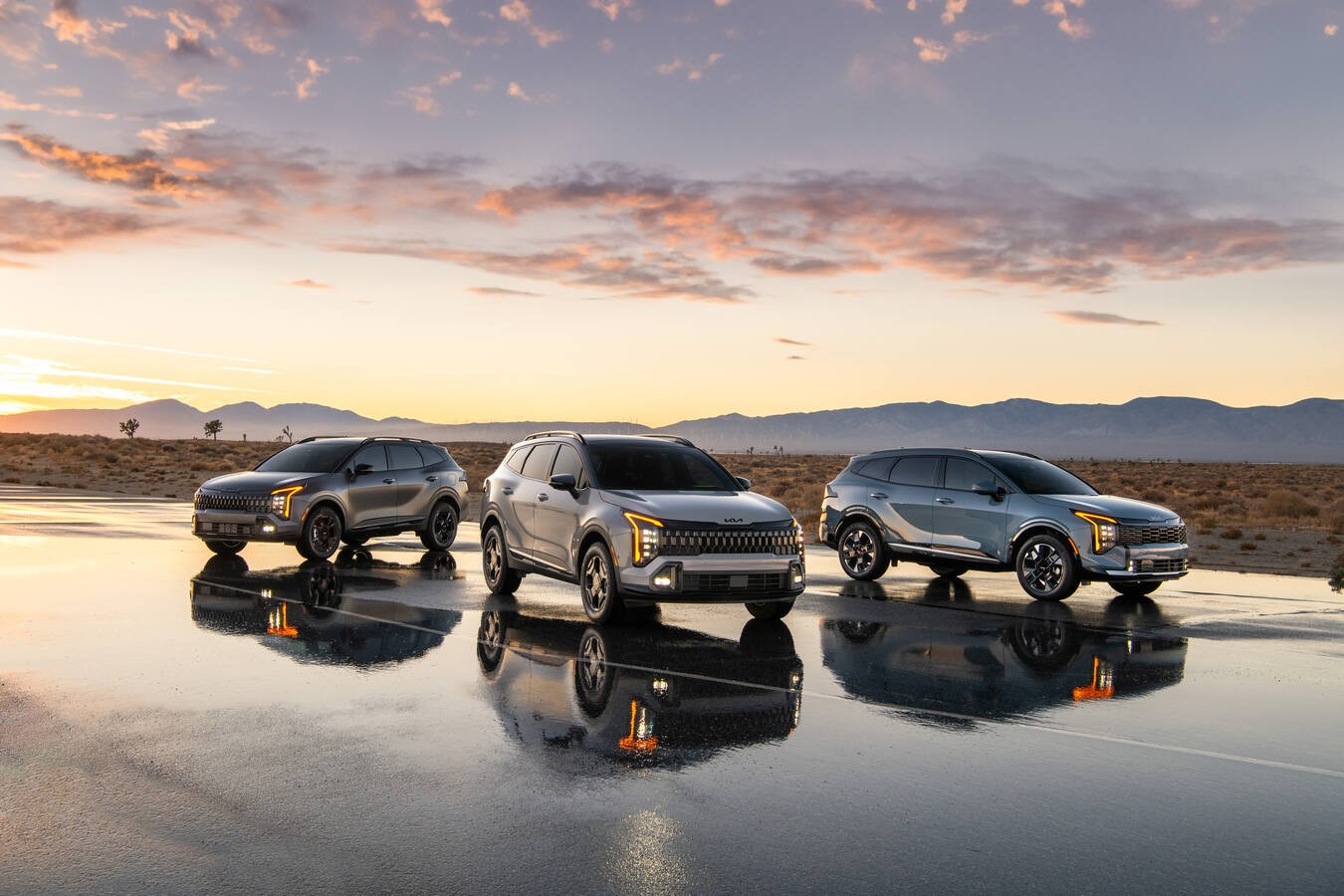
The Kia Sportage has become far too important to the brand in the United States for a routine refresh to be enough, and the 2026 model makes that clear almost immediately. On paper, this is a facelift for the fifth-generation Sportage. In practice, it looks much more like Kia tightening the screws on one of the most important products in its American lineup. The exterior has been reworked, the cabin technology takes another step forward, and the broader Sportage family still stretches across gasoline, hybrid and plug-in hybrid powertrains — a strategy that gives Kia far more flexibility than many rivals in the compact SUV segment.
That broader context matters because the 2026 Kia Sportage is not just another compact crossover update. It sits in one of the most crowded and commercially important parts of the U.S. market, where buyers are comparing everything from the Toyota RAV4 and Honda CR-V to the Hyundai Tucson, Subaru Forester and Chevrolet Equinox. For Kia, keeping the Sportage fresh is not optional. It is essential. And the 2026 model suggests the brand knows exactly that: instead of reinventing the SUV, Kia has tried to sharpen the areas that matter most in this class — design presence, interior usability, powertrain choice, perceived value and tech content.

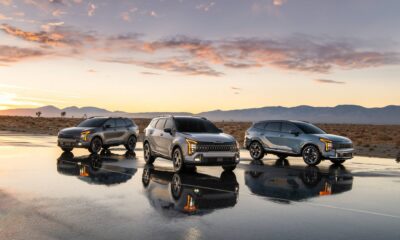
The 2026 Kia Sportage arrives with updated styling, a more tech-focused cabin and the same broad multi-powertrain strategy that has helped make it one of Kia’s most important SUVs in the U.S.
The 2026 Kia Sportage Has A Bigger Job Than Just Looking New
The easiest mistake to make with the 2026 Kia Sportage is to treat it like a styling update and move on. In reality, the Sportage now carries a lot more strategic weight than that.
This is Kia’s longest-running nameplate, but more importantly, it has become one of the brand’s key volume players in the U.S. market. That means every update to the Sportage has to do two things at once: keep existing buyers interested while also making the SUV competitive against newer rivals that continue to raise the bar on screens, safety tech, hybrid availability and overall perceived sophistication. The 2026 update seems built around exactly that challenge. Kia has not thrown out the formula that already worked, but it has clearly tried to make the Sportage feel more modern, more upscale and more aligned with where the segment is heading.
That is why the refresh feels more significant than a typical mid-cycle nip-and-tuck. The Sportage is no longer just one of several compact crossovers in Kia showrooms. It is one of the products that helps define how mainstream American buyers see the brand: as a value play, a design-forward option, a hybrid-friendly alternative or, ideally for Kia, all three at once.
Kia Is Using Design To Make The Sportage Feel More Confident, Not Just More Aggressive
One of the clearest changes for 2026 is the visual one.
Kia says the 2026 Sportage pushes its “Opposites United” design language in a more confident and refined direction, and that is a fair way to describe it. The front end adopts a broader, more upright look with revised lighting signatures and a stronger sense of visual width, helping the SUV appear more planted and a little more mature than before. This matters because compact SUVs increasingly need to project more than basic practicality. Buyers in this segment want something that feels modern and distinctive, but not so experimental that it becomes polarizing. Kia appears to be aiming for that middle ground: enough visual drama to stand out in a parking lot, but with cleaner surfacing and a more premium overall impression than a simple styling gimmick.
That’s a smart move for the U.S. market. The compact SUV class is full of vehicles that are competent but visually forgettable, and Kia has spent the last several years proving that sharper design can be a real competitive advantage. The 2026 Kia Sportage continues that approach, but with a little more restraint and polish than some of Kia’s more theatrical recent efforts.

The updated Sportage design leans into a more upright, confident look, helping Kia keep its best-selling compact SUV visually fresh in a crowded U.S. segment.
The Cabin May Be Where The 2026 Kia Sportage Makes Its Strongest Case
If the exterior is about staying visible, the interior is about staying competitive.
Kia has continued to push the Sportage toward a more tech-centered cabin experience, and that matters because compact SUV buyers now expect much more than a simple touchscreen and a few USB ports. The 2026 model gets an updated cabin layout with a cleaner presentation, revised interface elements and the kind of connected features that are becoming essential in this price band. In other words, Kia understands that the modern compact SUV is judged as much by its digital environment as by its cargo area or ride quality.
That is one reason the Sportage remains such an interesting vehicle in the U.S. market. Kia has gotten very good at making mainstream products feel richer than their badge position might suggest. The cabin is a major part of that. The more the Sportage can feel airy, well-equipped and intuitively laid out (especially in higher trims) the easier it becomes for Kia to convince shoppers that they are getting something more thoughtful than a basic family crossover.
There is also a broader brand benefit here. Interior execution has become one of the fastest ways for automakers to either justify a higher transaction price or lose a buyer to a competitor. If the 2026 Kia Sportage feels more premium, more usable and more current inside, that directly strengthens Kia’s position in one of the hardest-fought segments in America.
The Real Advantage Of The Sportage Lineup Is That Kia Still Isn’t Forcing Buyers Into One Electrification Answer
This is where the 2026 Kia Sportage becomes more strategically interesting than a normal facelift.
Kia continues to position the Sportage across three distinct powertrain paths: traditional internal combustion, turbo hybrid (HEV) and turbo plug-in hybrid (PHEV). That matters because the U.S. market still isn’t moving in a single, clean electrification direction. Some buyers want a familiar gas-powered SUV. Others want better fuel economy without changing their charging habits. Others are ready for plug-in capability but not a full EV. By keeping the Sportage available across all three lanes, Kia gives itself a much broader net to cast than brands that ask customers to make a harder all-or-nothing choice.
From a business standpoint, that is one of the smartest things Kia is doing with this nameplate. The Sportage is not trying to be one perfect answer for every buyer. It is trying to be a flexible platform that can absorb different kinds of demand depending on fuel prices, EV adoption, incentives and regional preferences. In a U.S. market where consumer behavior still varies wildly from state to state, that flexibility is a real advantage.
It also helps the Sportage maintain relevance against the biggest players in the segment. Toyota has leaned heavily on hybrids. Honda has made hybrid CR-Vs increasingly central to the lineup. Hyundai has broadened the Tucson family in similar ways. Kia’s response is not to simplify the Sportage — it is to keep expanding the reasons someone might choose one.

The updated cabin is a major part of the Sportage’s appeal, as Kia continues to make one of its core U.S. SUVs feel more digital, more premium and more competitive.
The X-Line And X-Pro Trims Show Kia Still Understands How American Buyers Shop This Segment
Another reason the 2026 Kia Sportage matters is that Kia has not lost sight of how compact SUVs are actually sold in the U.S.
A huge part of the market now revolves around image and lifestyle positioning, not just raw practicality. That is where the X-Line and X-Pro Prestige trims continue to matter. These versions help Kia push the Sportage beyond the role of “default commuter crossover” and into something more adventure-coded, even for buyers who may never leave pavement. It’s a formula that has worked across the industry — offer the visual cues, the stance and the branding of rugged capability, then let buyers decide how much of that identity they want.
Kia has been especially good at using trims this way. Rather than forcing the entire Sportage range to lean rugged or premium, it can segment the lineup so that one buyer sees a smart, efficient family SUV while another sees a more outdoorsy weekend machine. In a segment where emotional positioning often matters almost as much as spec sheets, that’s not a small detail. It’s one of the reasons the Sportage continues to punch above its weight in terms of showroom appeal.
Pricing Helps Explain Why Kia Can’t Afford To Miss With The 2026 Sportage
The pricing side of the story also matters, because it reinforces just how central the Sportage is to Kia’s mainstream U.S. business.
Kia announced 2026 Sportage pricing for the gasoline model in spring 2025, positioning the refreshed SUV to stay in the heart of the compact-crossover market rather than drifting too far upscale. That’s important because the Sportage has to walk a careful line: it needs enough design, technology and trim variety to feel more polished than a bargain-basement utility vehicle, but it also cannot lose the value proposition that helped build its audience in the first place.
That balance is one of the Sportage’s biggest strengths. Kia has spent years building a reputation for offering more visible content per dollar than many rivals, and the Sportage plays a major role in that identity. If the 2026 model can keep that value equation intact while also delivering a more mature design and better cabin tech, it gives Kia a very strong case against both legacy segment leaders and newer challengers.
The 2026 Kia Sportage Is Really About Keeping A Winning Formula Relevant For What U.S. Buyers Want Right Now
That may be the clearest way to read the whole update.
The 2026 Kia Sportage does not appear to be chasing reinvention for its own sake. It is doing something more disciplined: taking a vehicle that already matters in the market and tightening the areas that will decide whether it can keep mattering for another few years. That means bolder design without becoming messy, more technology without turning the cabin into a usability nightmare, and a powertrain strategy broad enough to meet buyers wherever they currently sit on the electrification spectrum.
And that’s why this update is more important than it first looks. Compact SUVs are brutal products to keep competitive because buyers expect them to do everything: haul family gear, deliver decent fuel economy, offer a modern cabin, feel safe, look stylish and still land at a realistic monthly payment. The 2026 Kia Sportage is Kia’s answer to that pressure. It is not trying to be a radical departure from the current model. It is trying to be a sharper, more polished and more market-aware version of a product that already sits near the center of the brand’s U.S. story.

The refreshed Sportage isn’t just about styling; it is Kia’s attempt to keep one of its most important U.S. SUVs competitive across design, technology, value and powertrain choice.
That is what makes the 2026 Kia Sportage worth watching. It may not be the flashiest launch in Kia’s lineup, and it does not need to be. Its job is much bigger than that. The Sportage has to keep winning in one of the hardest-fought corners of the American market, and that means staying broad enough to appeal to gas buyers, hybrid shoppers, tech-focused families and image-conscious crossover customers all at once.
If Kia gets that balance right, the Sportage should remain one of the brand’s most valuable mainstream assets in the U.S. And based on the direction of this update, that seems to be exactly the point: not to reinvent the compact SUV formula, but to make sure one of Kia’s most important nameplates stays right in the middle of it.
-
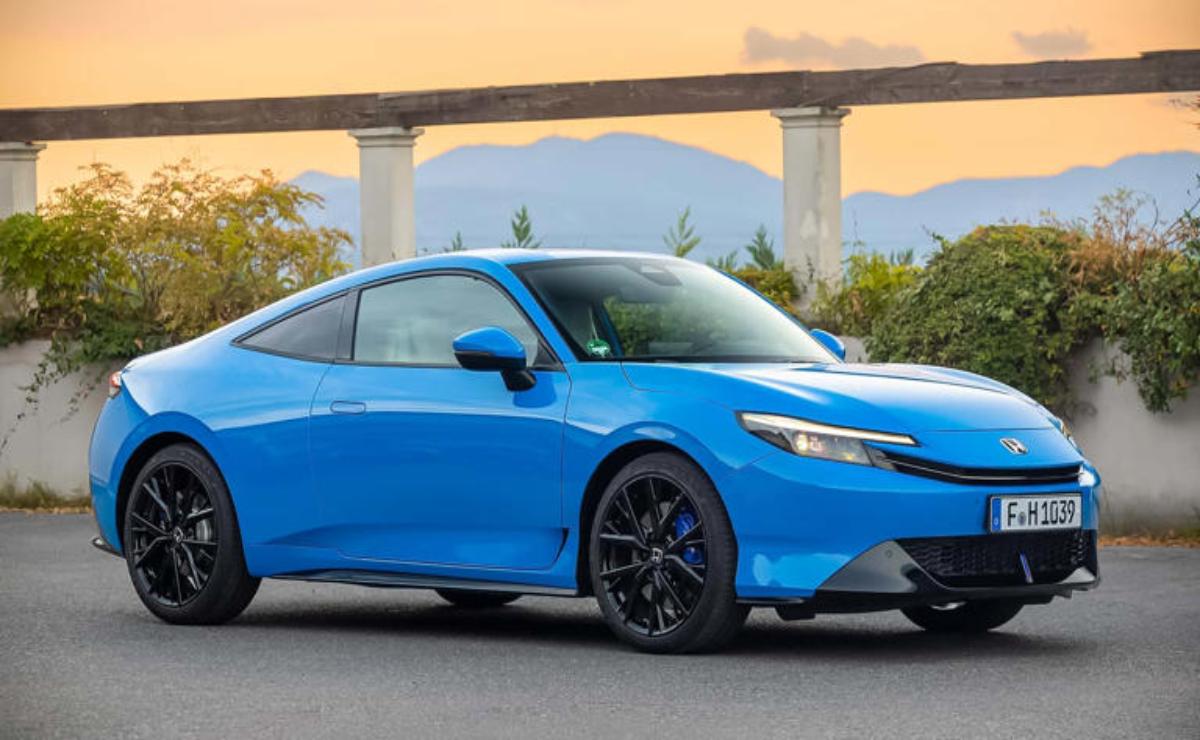 INTELLIGENT MOBILITY8 months ago
Customers Demand a Manual Honda Prelude: Will It Ever Happen?
-
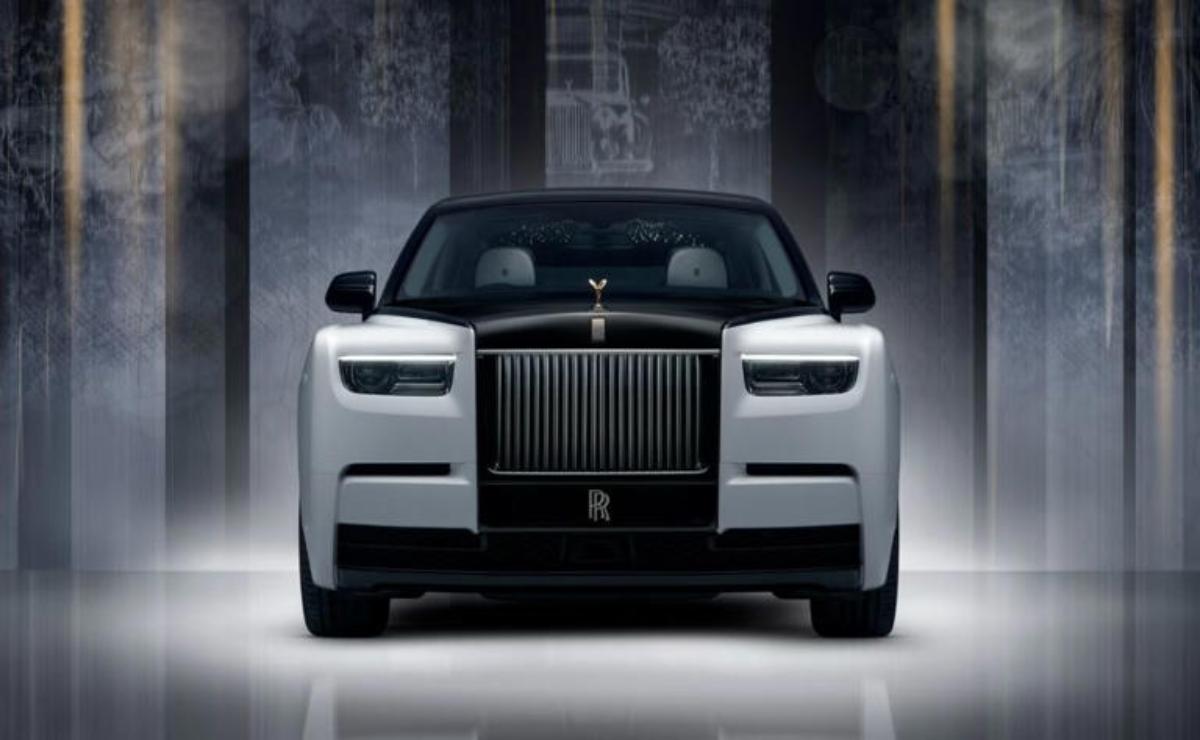 INTELLIGENT MOBILITY8 months ago
Rolls-Royce Phantom Centenary Edition: A Century of Luxury Taken to the Next Level
-
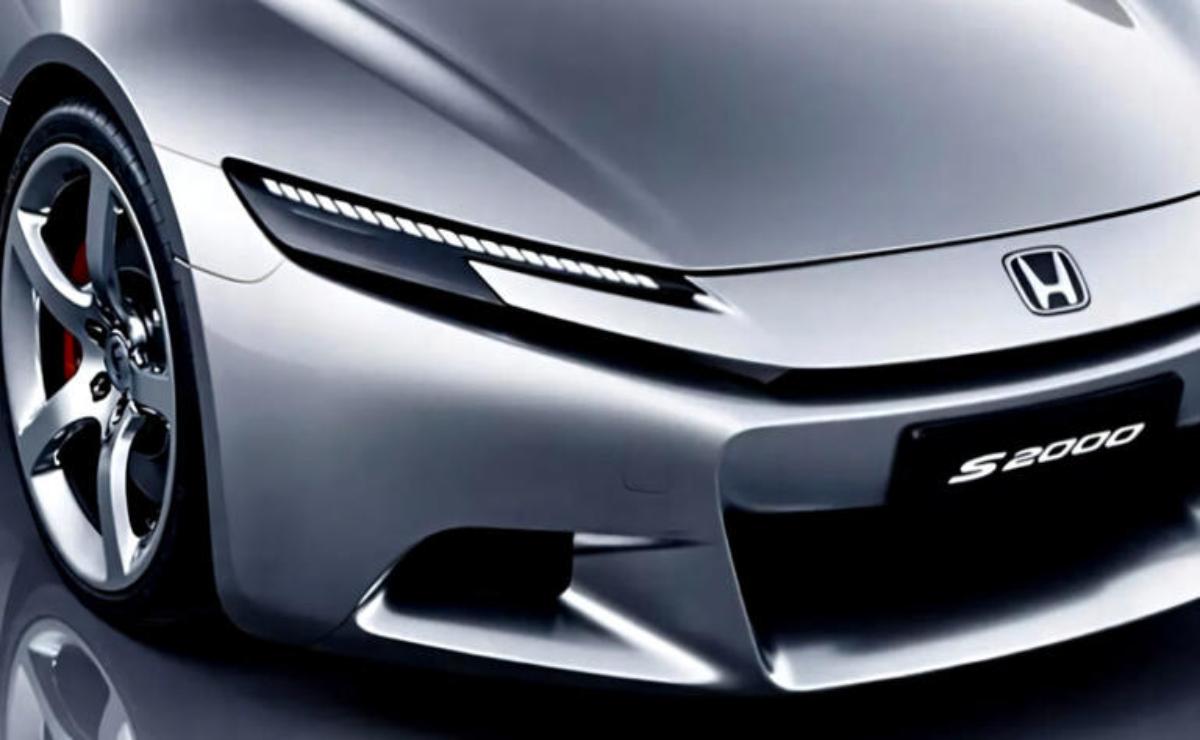 INTELLIGENT MOBILITY8 months ago
Honda S2000: The Iconic Roadster Could Return, But Challenges Remain
-
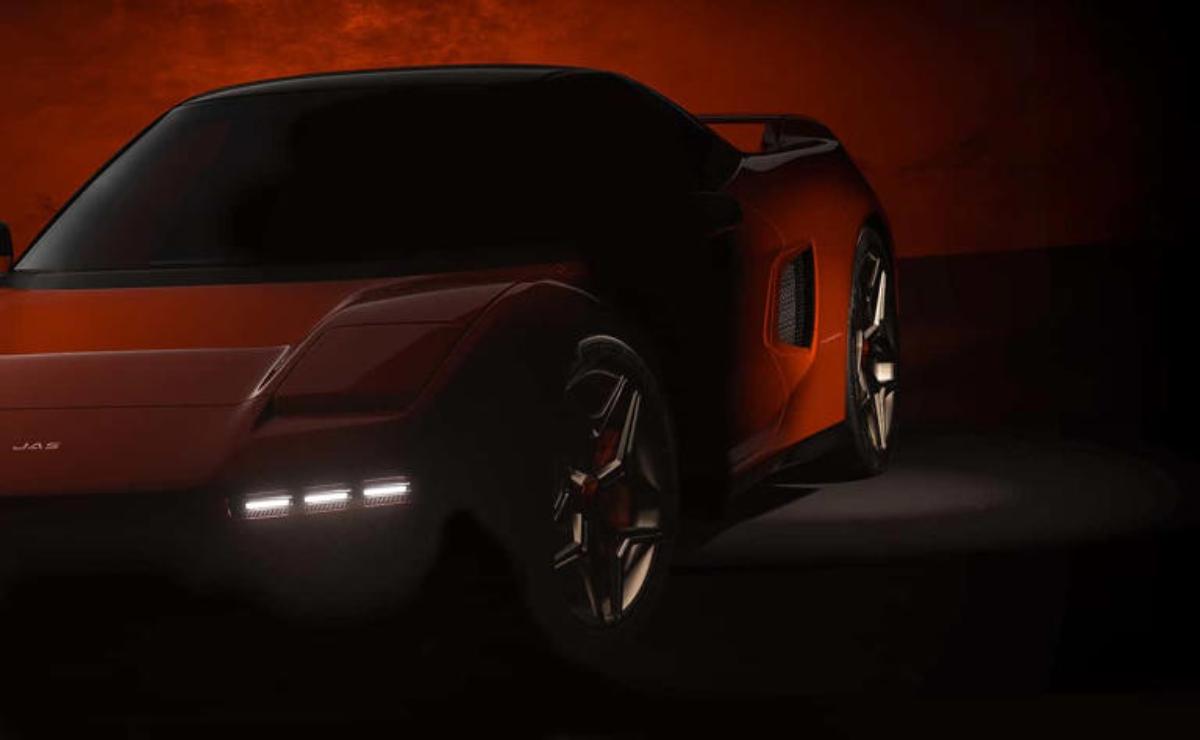 INTELLIGENT MOBILITY8 months ago
Honda NSX Reborn: Pininfarina and JAS Bring Back the V6 Legend with a Modern Twist
-
 NOW TRENDING12 years ago
Toyota Partners goes Glam with Fashion
-
 INTELLIGENT MOBILITY7 months ago
10,000 RPM Madness: The Honda S2000 Resurrected with 580 HP and a Supercharged Heart
-
 INTELLIGENT MOBILITY8 months ago
FIFA World Cup 2026: The Importance of Electric Vehicles
-
 INTELLIGENT MOBILITY8 months ago
BYD Atto 8: The New 7-Seater PHEV SUV Arrives in Mexico
You must be logged in to post a comment Login