
RACING
Alonso Shines at Zandvoort With Bold One-Stop Strategy

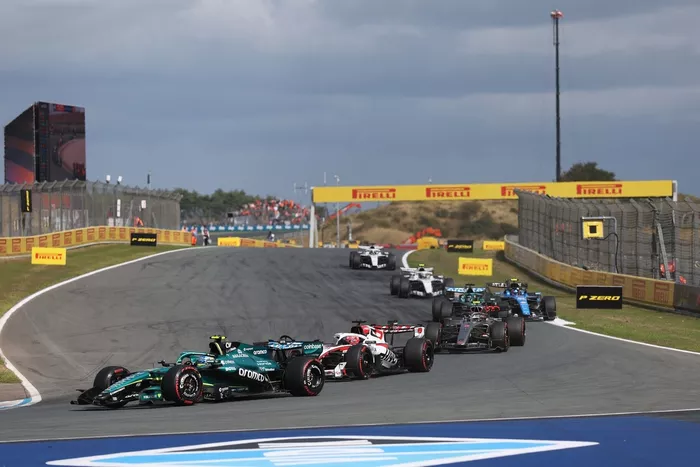
Fernando Alonso scored a ninth-place finish at Zandvoort after switching to a one-stop strategy and defending brilliantly despite heavily worn tires.
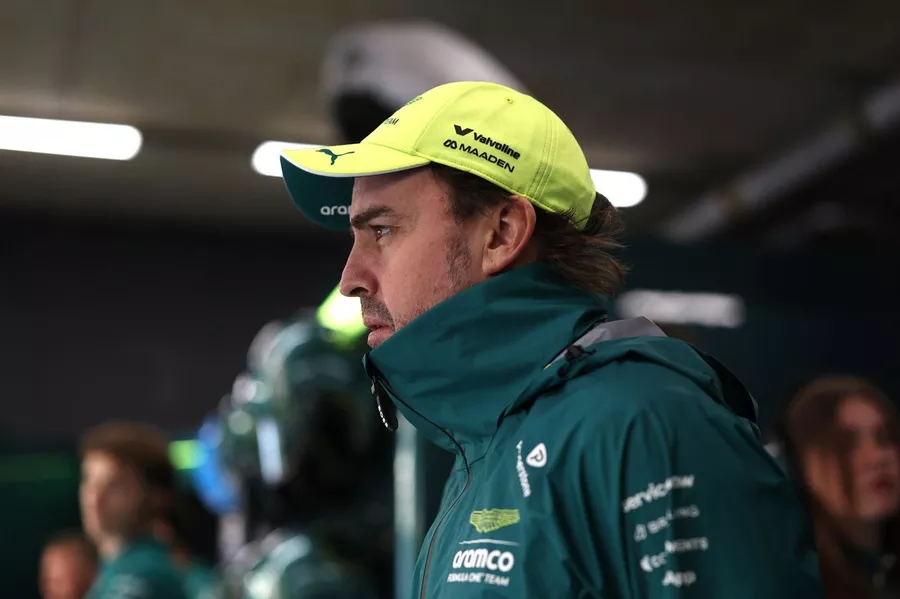
Fernando Alonso produced one of the standout performances of the 2026 Dutch Grand Prix, scoring points for Aston Martin with a ninth-place finish.
The Spaniard made just one pit stop, despite the original plan calling for two, and then defended his position during the closing laps with significantly more worn tires than his rivals.
The result gave Aston Martin its best finish of the season so far.
Alonso changes strategy during the race
Aston Martin had initially expected Alonso to use a conventional two-stop strategy. However, the team changed its approach as the race developed.
The decision to remain on track longer allowed Alonso to take advantage of clear air, an important factor given the strengths and weaknesses of the AMR26.
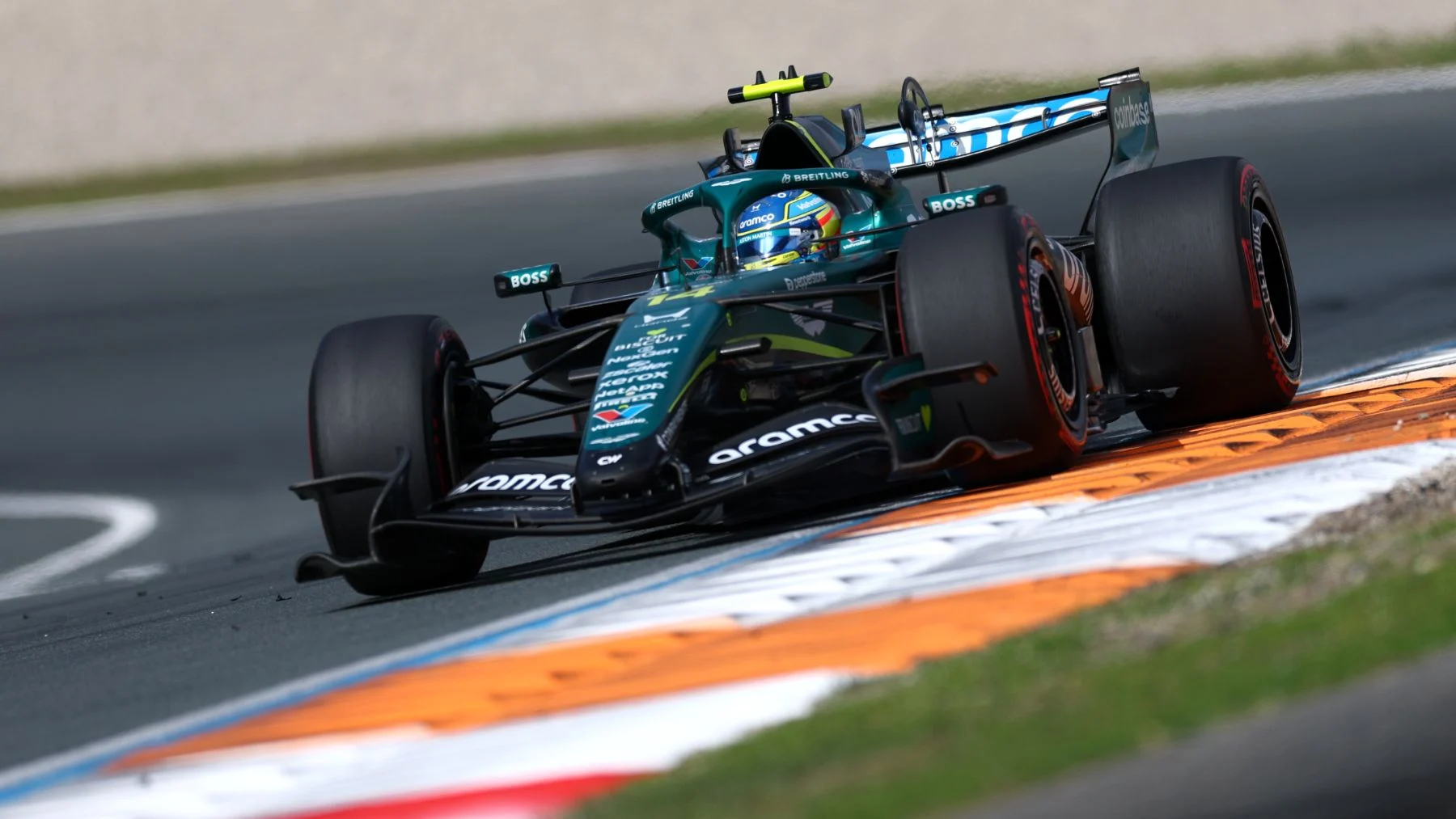
Fernando Alonso scored ninth at Zandvoort after Aston Martin changed its original two-stop strategy during the race.
Alonso explained that the team could not fully exploit its pace when running behind other cars.
The Aston Martin was particularly strong through the corners, but continued to lose time on the straights despite the introduction of Honda’s updated power unit.
That made overtaking and following closely more difficult.
Clean air was more valuable than a perfect strategy
With the car losing performance while trapped in traffic, Alonso and Aston Martin decided to prioritize clean air.
Staying out on track meant Alonso could use the car’s stronger cornering performance without being immediately compromised by the speed difference on the straights.
Alonso used the Aston Martin’s strong cornering performance to maintain his position while running in clean air.
The strategy created a significant tire-management challenge.
By the final stages, Alonso’s tires were much more worn than those of the drivers around him. Despite that disadvantage, he managed to defend ninth place until the checkered flag.
Aston Martin earned the points
Alonso was clear that the result was not simply the product of unusual circumstances.
He contrasted the Zandvoort finish with the point Aston Martin scored in Monaco, where a large number of retirements influenced the result.
Alonso believes Aston Martin genuinely deserved its two points at Zandvoort.
At Zandvoort, he felt the result reflected the team’s actual performance rather than an unusually high number of retirements.
He also warned that Aston Martin’s competitiveness will continue to depend heavily on the characteristics of each circuit.
Tracks with more straights are likely to expose the AMR26’s weaknesses, while circuits with more corners could provide stronger opportunities.
Alonso expects Monza to be difficult
The Spaniard does not expect Aston Martin to be particularly competitive at Monza.
The Italian circuit places a greater emphasis on straight-line speed, which could expose the team’s remaining weaknesses even with the new Honda power unit.
However, Alonso believes other circuits could provide further opportunities to score points.
For Fernando Alonso Zandvoort, the ninth-place finish represents a significant achievement. The combination of strategic flexibility, tire management, and late-race defense allowed him to extract an excellent result from a car that remains highly circuit-dependent.
After the race, when journalists praised his performance, Alonso summed up his approach with characteristic confidence: “It’s very difficult, but I’m a very good driver.”


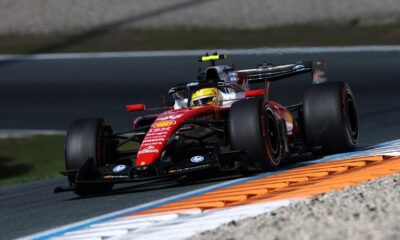






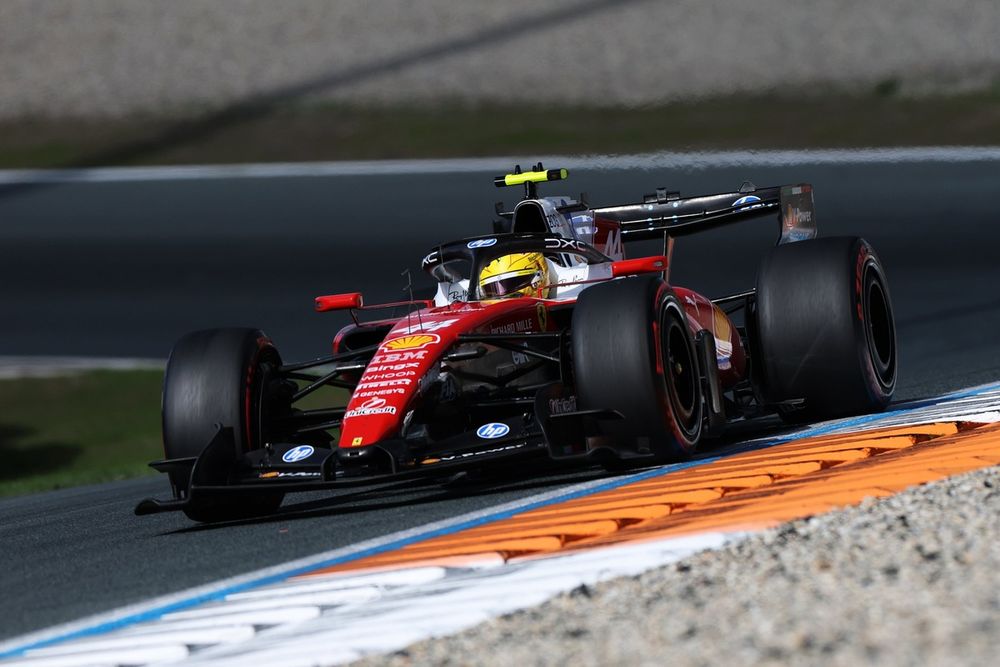
Lewis Hamilton believes Ferrari should have used team orders at Zandvoort, arguing that Charles Leclerc cost him valuable time during the Dutch Grand Prix.
Hamilton wanted Ferrari to act
Hamilton moved up to fifth after overtaking Oscar Piastri on lap 35. He then found himself behind a slower Leclerc, which prevented him from maintaining his progress.
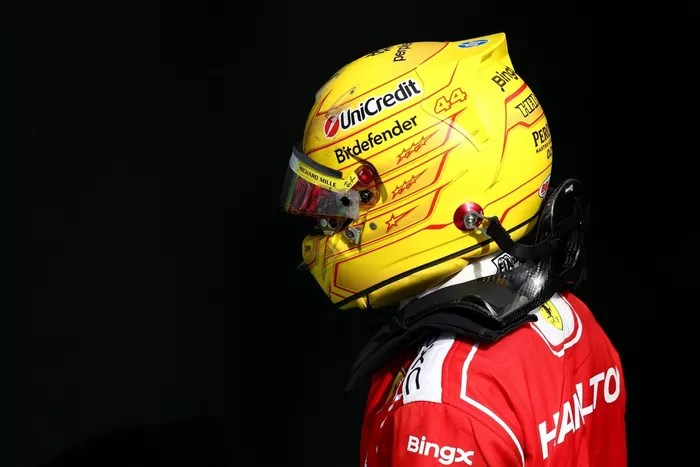
Lewis Hamilton became frustrated after getting stuck behind Charles Leclerc during the Dutch Grand Prix.
The Ferrari driver eventually complained over the radio, sarcastically criticizing the amount of time being lost.
Leclerc remained ahead until he made his pit stop on lap 43, finally freeing Hamilton to continue his recovery.
Hamilton later compared Ferrari’s approach with Mercedes, which instructed George Russell to give second place to Kimi Antonelli with seven laps remaining.
Mercedes’ decision influenced Hamilton’s frustration
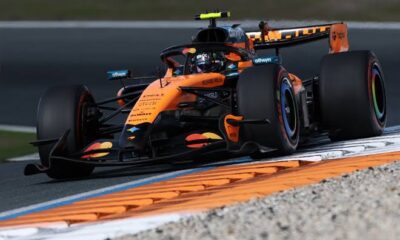
Mercedes made the decision because Antonelli had significantly fresher tires and could potentially challenge Lando Norris for the lead.
Although Norris ultimately won, both Mercedes drivers accepted the decision and finished second and third.
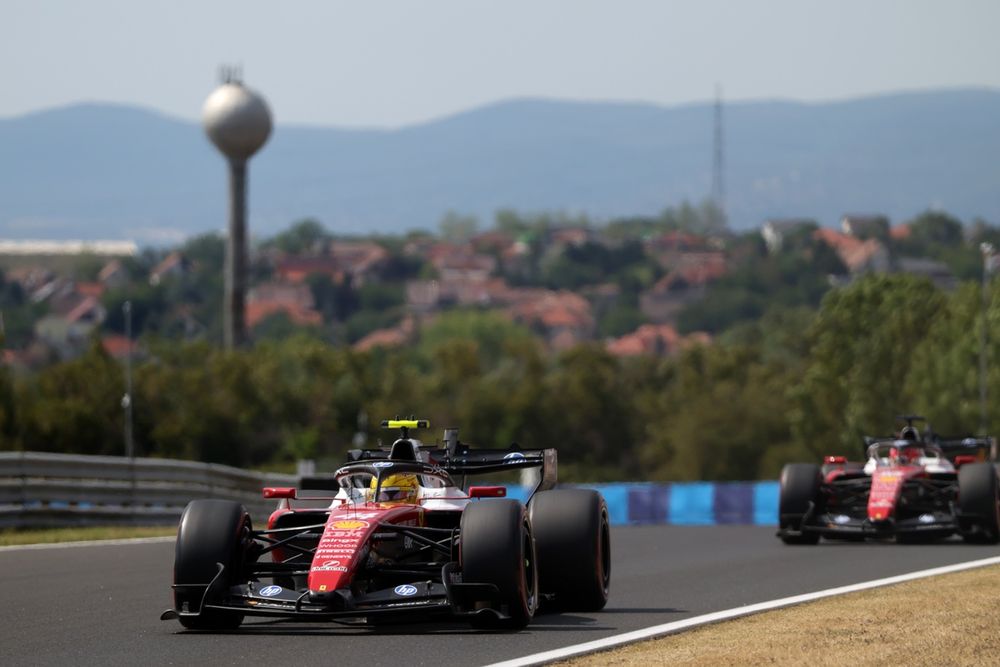
Hamilton pointed to Mercedes’ decision to swap Russell and Antonelli as an example of more effective team management.
Hamilton believes Ferrari could have acted similarly when Leclerc was slowing his progress.
He said he wants to win and finds it difficult when he sees another team making an immediate strategic decision while Ferrari does not react in the same way.
Hamilton also said he intends to discuss the matter with Ferrari when he returns to the team.
Lost time behind Leclerc hurt Hamilton’s podium hopes
Hamilton eventually had a chance to fight Russell for third place, but a late Virtual Safety Car made the opportunity even harder.
The British driver said he was getting close to the Mercedes when the VSC was deployed on lap 70.
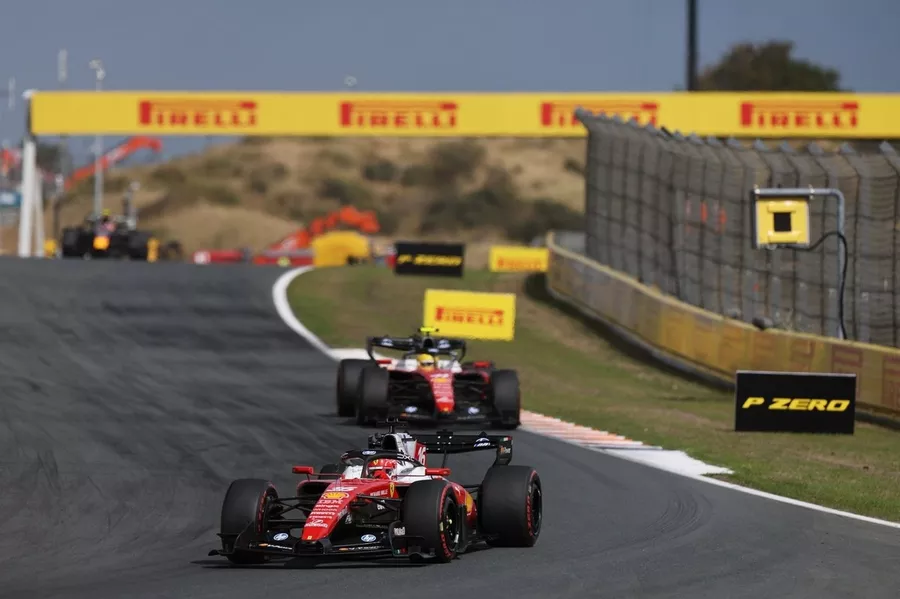
Hamilton believes the time lost behind Leclerc ultimately reduced his chances of challenging Russell for the final podium position.
He also pointed to Ferrari’s lack of straight-line speed.
Hamilton estimated Ferrari was losing around four tenths of a second per lap on the straights compared with Mercedes and McLaren.
That made overtaking particularly difficult and increased the importance of avoiding traffic.
Hamilton wants more engine performance from Ferrari
Despite his criticism, Hamilton praised Ferrari for bringing an upgrade to Zandvoort.
The seven-time world champion believes the team is moving closer to Mercedes, but he also thinks Ferrari must address its power deficit.
Hamilton praised Ferrari’s latest upgrade but believes the team still needs more engine performance to challenge Mercedes.
According to Hamilton, Ferrari has spent much of the season giving away performance on the straights.
He believes finding additional engine power is essential if Ferrari wants to close the gap and fight Mercedes consistently.
For Lewis Hamilton Ferrari, Zandvoort therefore produced a mixed result. The fourth-place finish was solid, but Hamilton believes Ferrari’s handling of team orders and its remaining power deficit prevented an even stronger result.
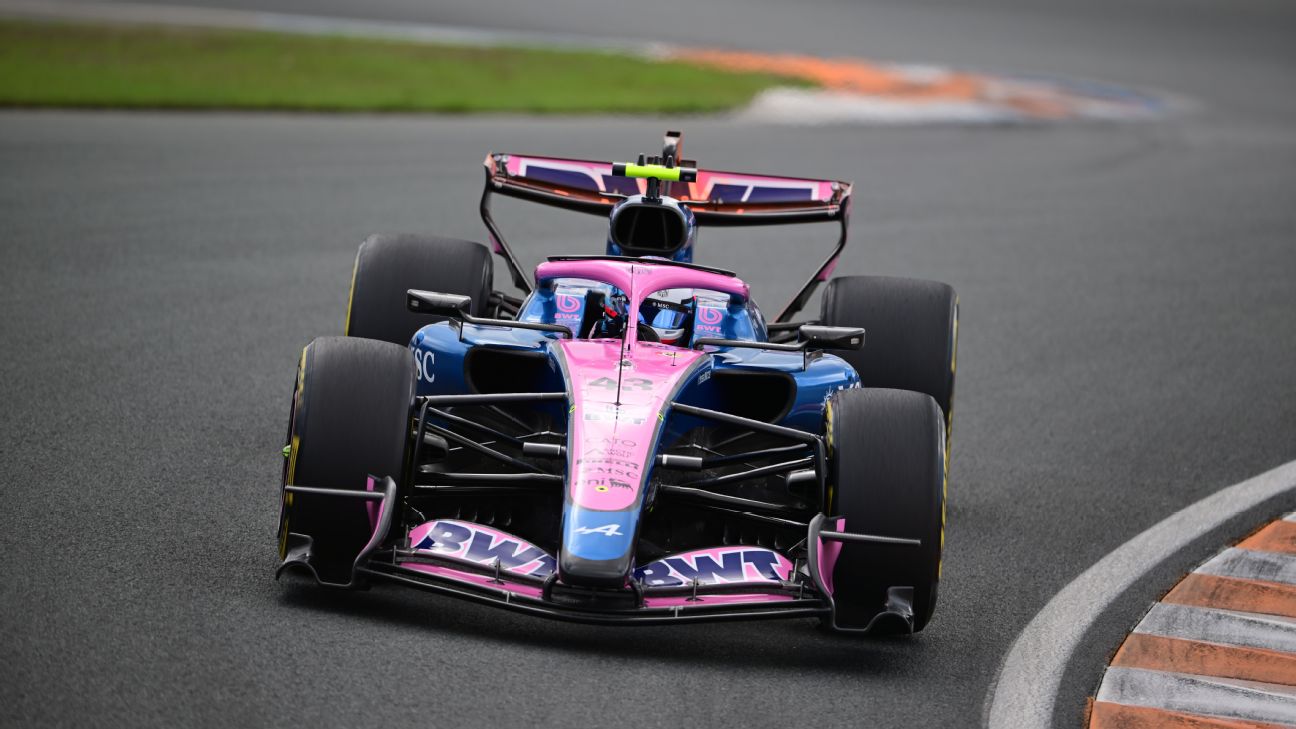
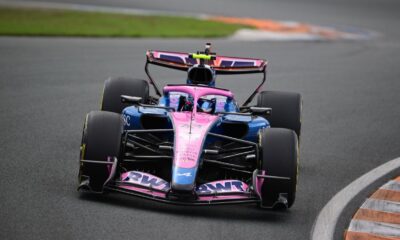
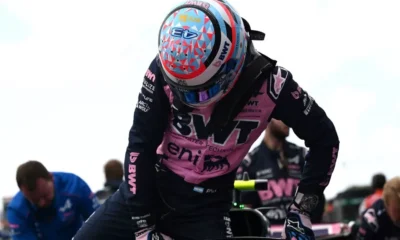
Franco Colapinto criticized the FIA stewards after a drive-through penalty ruined his Dutch Grand Prix, calling the decision excessively harsh.
Franco Colapinto left the 2026 Dutch Grand Prix frustrated after a promising start at Zandvoort was undone by a drive-through penalty.
The Alpine driver briefly moved into the top 10 during a chaotic opening lap, but he was penalized for overtaking under yellow flags. A later 10-second penalty made the situation even worse, leaving him 14th at the finish.
Colapinto questions the drive-through penalty
The first penalty came after Max Verstappen crashed at the final corner, leaving debris across the circuit and creating difficult conditions.
The track was wet, visibility was complicated, and Colapinto passed Yuki Tsunoda while completing an overtaking move.
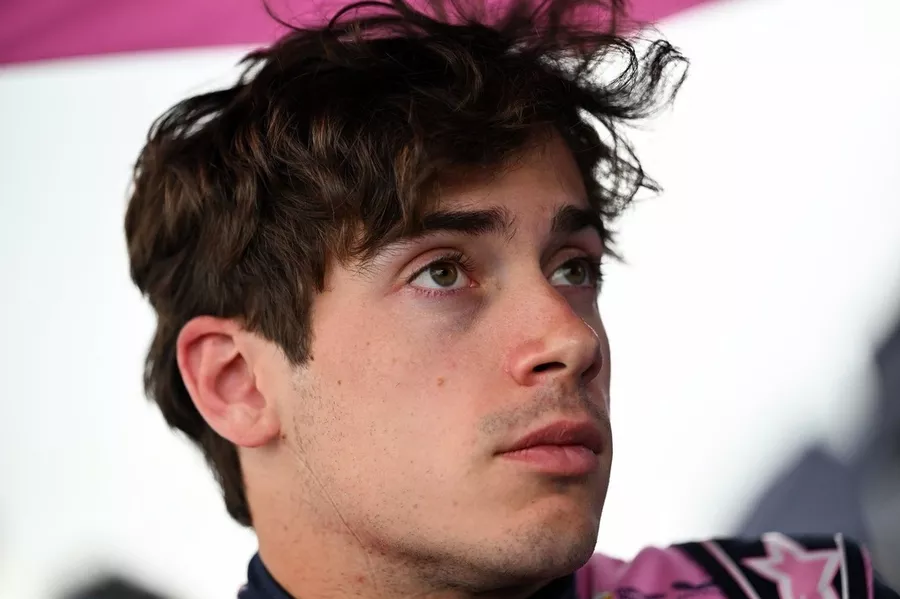
Franco Colapinto was penalized for overtaking under double yellow flags during a chaotic opening lap at Zandvoort.
The stewards determined that Colapinto had overtaken under double yellow flags and issued a drive-through penalty.
However, Colapinto argued that the circumstances made the situation extremely difficult to judge from inside the car.
He said the penalty effectively destroyed what had been a strong opening to the race.
Colapinto says braking could have been more dangerous
The Alpine driver believes the timing of the yellow flag was crucial.
According to Colapinto, the warning appeared very late while he was already completing the overtaking maneuver on a wet track.
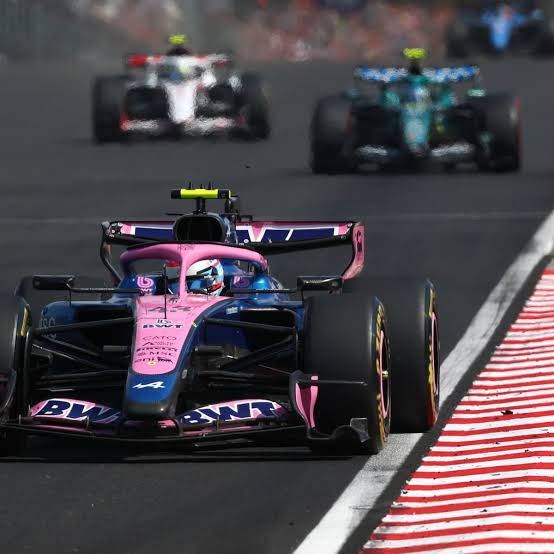
Colapinto argued that sudden braking on the wet track could have created an even more dangerous situation.
He said abruptly hitting the brakes or accelerating sharply in the middle of the straight could have created additional risks, particularly because several cars were already struggling for grip.
Colapinto believes the rules should allow stewards to consider the specific circumstances rather than applying them rigidly in every situation.
His argument was that safety should remain the priority when conditions deteriorate rapidly.
The Alpine driver calls the decision too harsh
When asked whether the stewards had been too strict, Colapinto gave a direct answer.
He said the stewards had been “extremely harsh” in this particular situation.
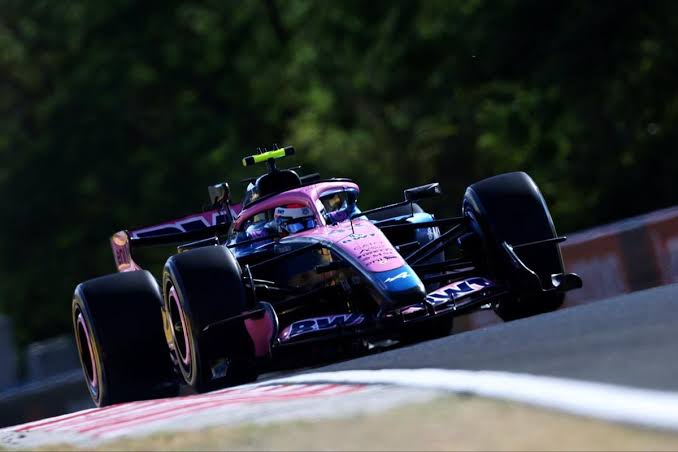
Colapinto believes the FIA stewards should have considered the difficult conditions before issuing such a severe penalty.
The Argentine acknowledged that applying the rules is part of the stewards’ responsibility, but argued that they must also use judgment when track conditions are exceptionally difficult.
He particularly questioned the severity of the punishment.
A drive-through penalty can cost a driver a significant amount of time and effectively eliminate any chance of fighting for points.
Colapinto believes the punishment was excessive
The weekend therefore ended with a frustrating result for Colapinto.
The Alpine driver believes he had the opportunity to fight for a better position after making a strong start, but the penalty prevented him from converting that pace into a meaningful result.
For Franco Colapinto FIA, the Zandvoort controversy highlights his belief that stewards should have more flexibility when incidents occur during the opening lap and under rapidly changing conditions.
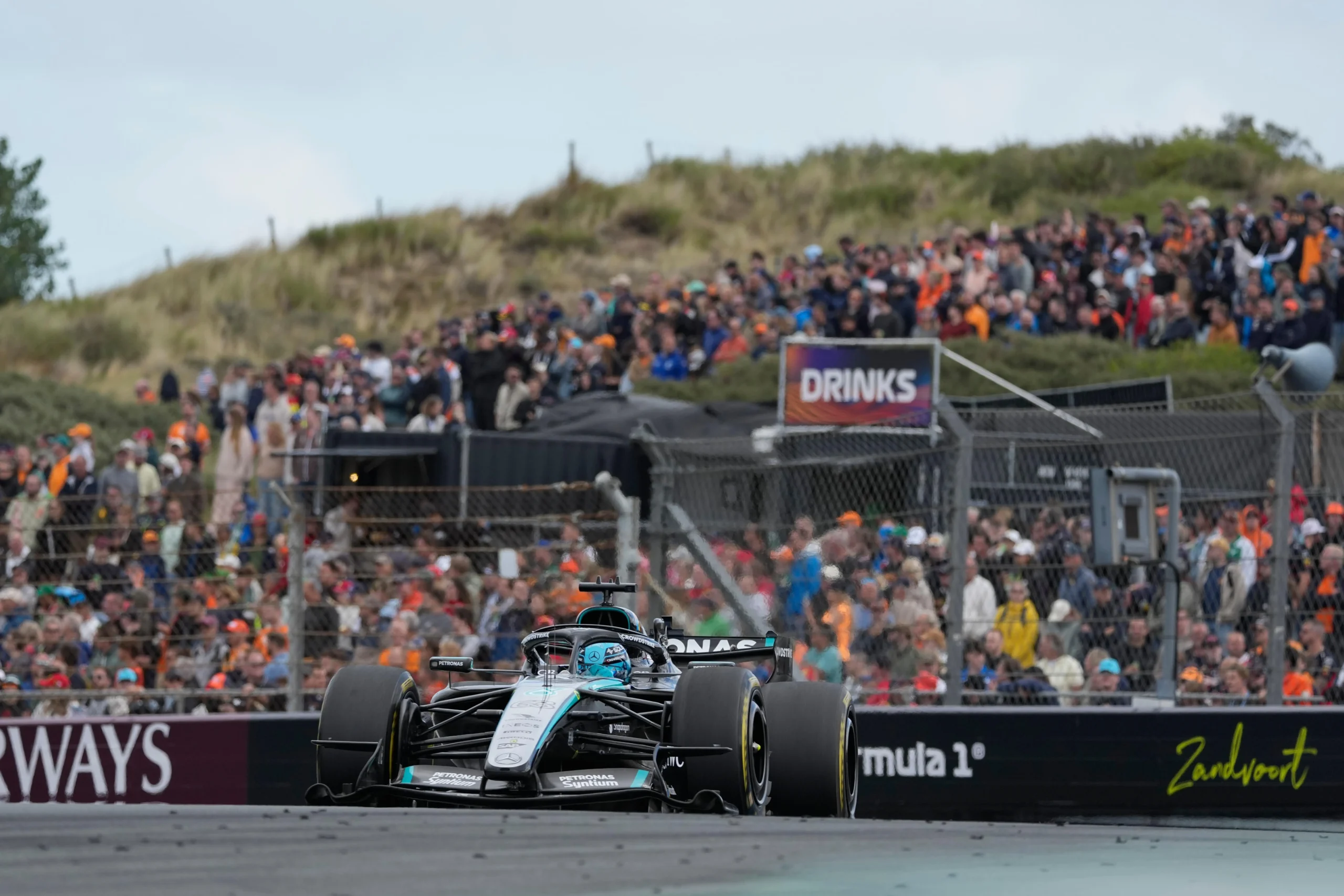
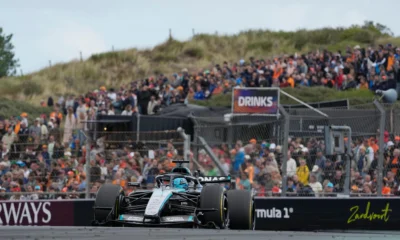
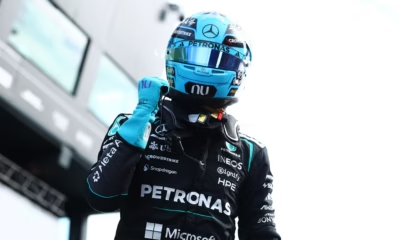
George Russell says Mercedes made the right call by asking him to give second place to Andrea Kimi Antonelli during the Dutch Grand Prix.
George Russell has admitted that Mercedes made the correct decision by swapping positions with Andrea Kimi Antonelli during the closing stages of the Dutch Grand Prix.
The two Mercedes drivers were fighting for the remaining podium positions behind race winner Lando Norris when a late Virtual Safety Car changed the strategy.
Mercedes made the strategic call
Antonelli was running second, while Russell was fourth behind Ferrari’s Lewis Hamilton when the Virtual Safety Car was deployed following Esteban Ocon’s incident.
Hamilton used the opportunity to make a cheaper pit stop and switch to used soft tires.
Mercedes reacted by calling Antonelli into the pits to protect his position, while Russell remained on track.
George Russell and Kimi Antonelli battled for the final podium positions during the closing stages at Zandvoort.
That strategy temporarily moved Russell into second place on the circuit, with Antonelli and Hamilton behind him.
However, Russell was running on older hard tires and quickly came under pressure from his teammate.
Mercedes then instructed Russell to allow Antonelli through.
Although Russell questioned the call while defending his position, he eventually accepted that Antonelli had the stronger race pace.
Russell believes Antonelli would have passed anyway
Looking back after the race, Russell said Mercedes had made the right decision.
Antonelli had much fresher tires and significantly more pace than his teammate in the closing laps.
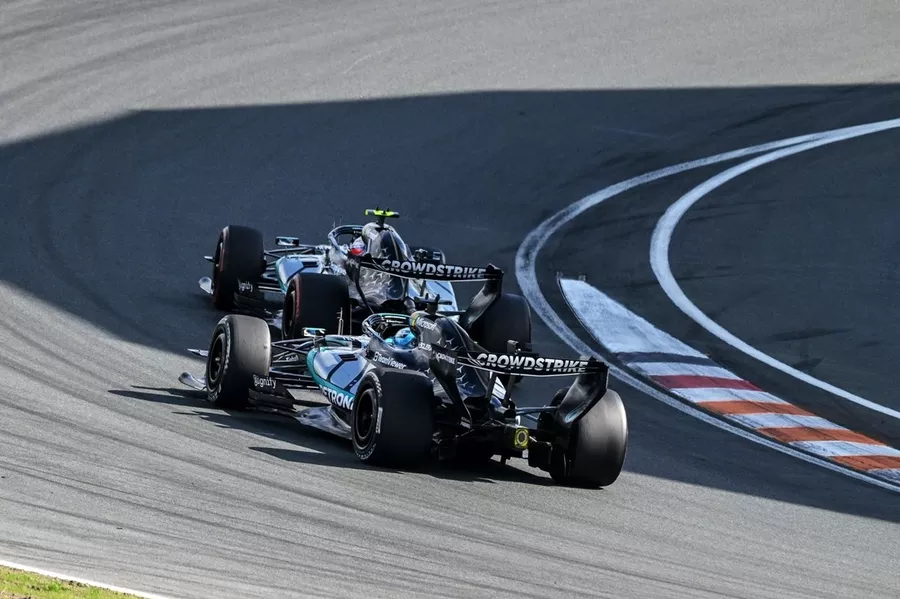
Antonelli used fresher tires to overtake Russell as Mercedes prioritized the championship leader.
Russell acknowledged that he wanted to fight for every position while he was inside the car, but admitted the outcome would probably have been the same.
He also took satisfaction from finishing on the podium after going through a period without a top-three result.
The third-place finish gave Russell another solid result in his championship campaign.
Antonelli praises Russell’s team play
Antonelli also thanked Russell for cooperating with the team’s decision.
The Italian extended his championship advantage over Hamilton with his second-place finish, while Mercedes secured a double podium.
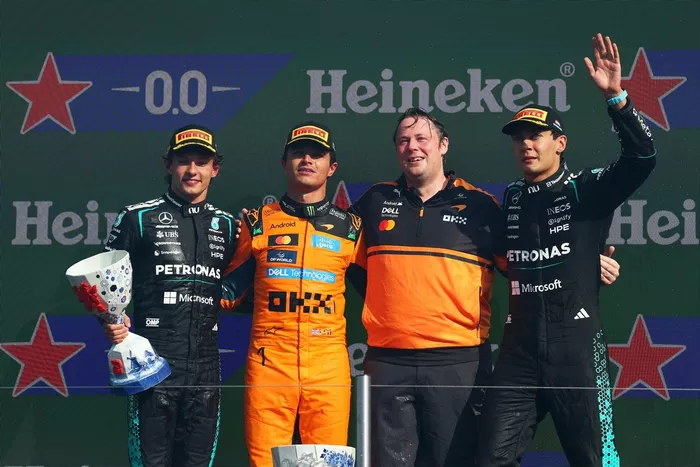
Kimi Antonelli thanked Russell for supporting Mercedes’ strategy as he extended his championship lead.
However, Antonelli was less positive about Mercedes’ overall performance compared with McLaren.
He said the car felt competitive during the opening stint, but his confidence dropped during the second part of the race as the Mercedes became difficult to control.
According to Antonelli, the car began sliding more and more, leaving him unable to challenge Norris after the McLaren driver moved into the lead.
Mercedes leaves Zandvoort with a double podium
The result still represented a strong weekend for Mercedes.
Antonelli finished second, Russell third, and the team increased its points haul while keeping both drivers on the podium.
For George Russell Mercedes, the Dutch Grand Prix showed that the team is willing to prioritize the championship fight when circumstances demand it.
Russell may have lost a position that he was initially trying to defend, but he ultimately recognized that Antonelli had the fresher tires and the stronger pace to take it anyway.
-

 NOW TRENDING2 months ago
Polestar to Exit U.S. Market After 2026 Due to Connected Vehicle Rules
-
 NOW TRENDING2 months ago
Tesla Model Y L Arrives in the U.S. With More Space and Three Rows
-

 INTELLIGENT MOBILITY2 months ago
Bolt, Pony.ai and Stellantis launch autonomous mobility pilot in Luxembourg
-

 RACING2 months ago
McLaren F1 Unveils Special Silverstone Livery Honoring Its History
-
 NOW TRENDING2 months ago
Audi Q9 interior revealed: Audi previews its new flagship SUV cabin ahead of 2026 debut
-
 NOW TRENDING2 months ago
2026 Mazda CX-5 pricing starts at $29,990 as Mazda reveals all-new SUV for the U.S.
-

 INTELLIGENT MOBILITY2 months ago
Audi A4 E-tron and Q7 E-tron Confirmed as New Electric Models
-

 NOW TRENDING2 months ago
2026 Hyundai IONIQ 9 arrives in the U.S. with 335 miles of range
You must be logged in to post a comment Login