
“The new Honda Accord Hybrid is the ultimate Accord – the most refined, technologically sophisticated and, of course, most fuel efficient in the lineup,” said John Mendel, Executive Vice President of the American Honda Motor Co., Inc. “With Accord already America’s most popular car three years running and the best-selling midsize car to younger buyers, we think this new hybrid model will add considerable momentum for the Honda brand.”
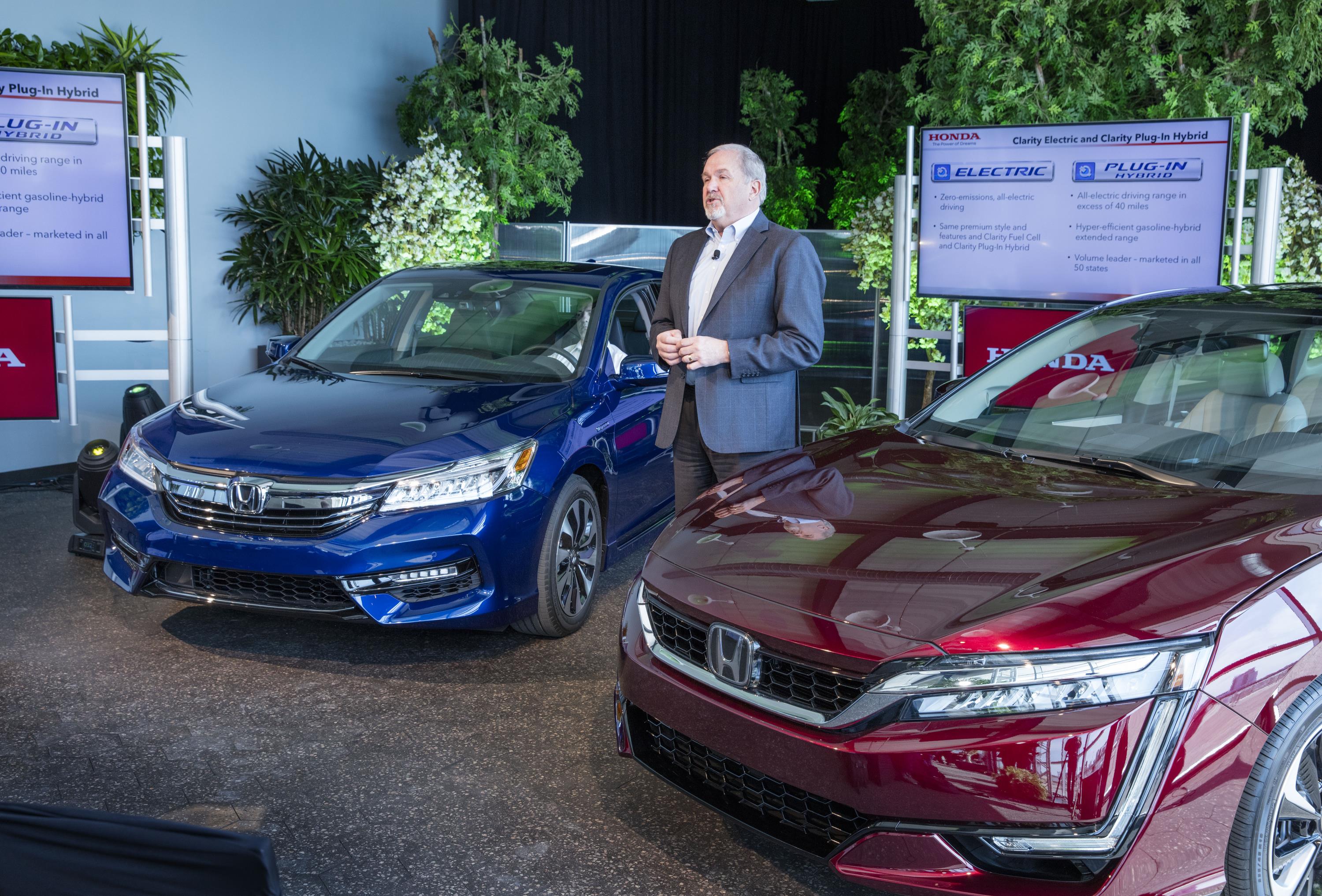
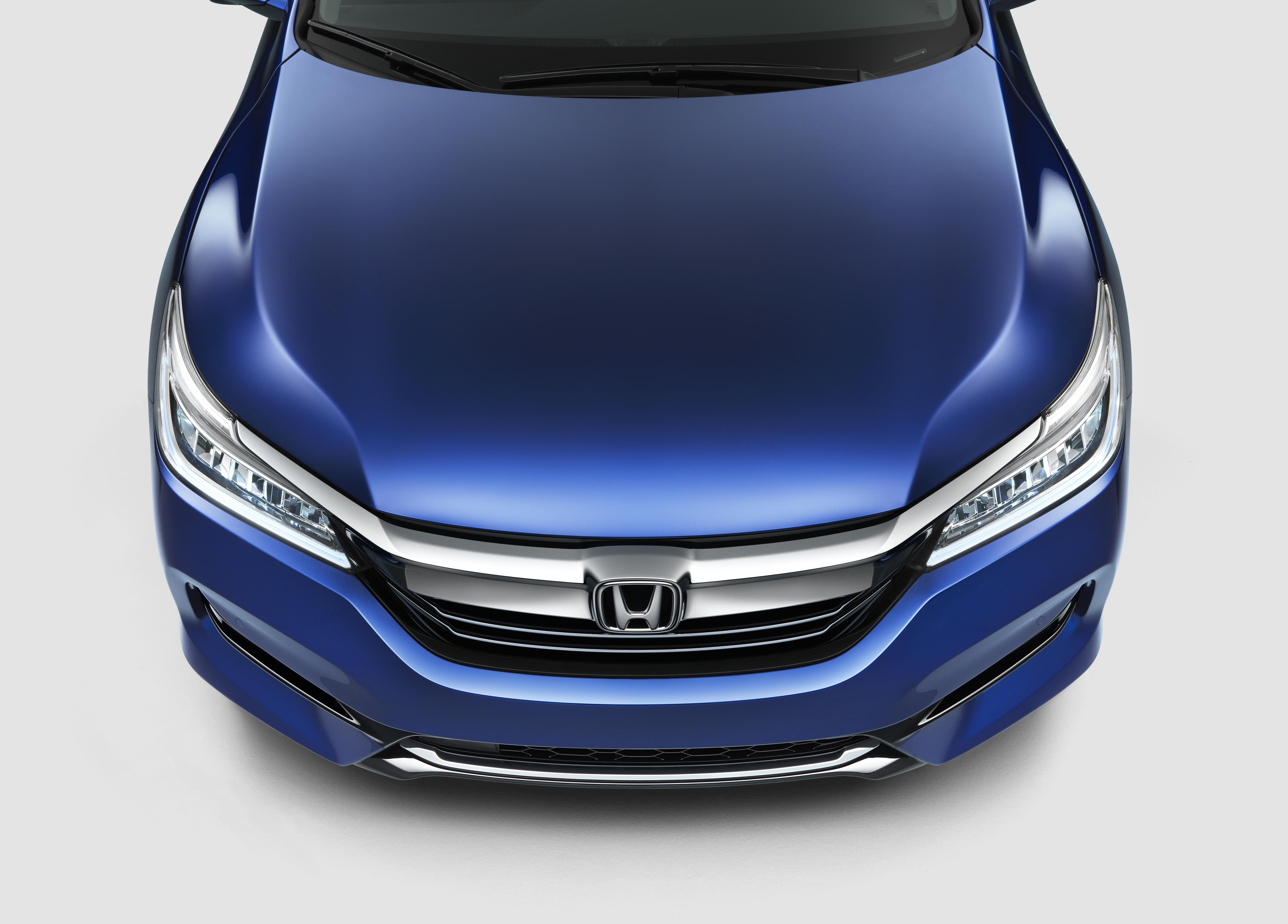
In addition to its more powerful and fuel efficient hybrid powertrain, the 2017 Accord Hybrid carries the substantial upgrades made to the entire Accord lineup for model year 2016. This includes the latest technology Honda has to offer, including the available Display Audio with Apple CarPlay® and Android Autoâ„¢, and the Honda Sensingâ„¢ suite of advanced safety and driver-assistive technologies, to be offered as standard equipment on all new 2017 Accord Hybrids. Hybrid-exclusive design features include a special aluminum hood and wheels, blue highlighted LED headlights and taillights and “Hybrid” exterior badging. A more compact hybrid battery pack increases trunk capacity to a midsize hybrid class-leading 13.5 cu.-ft.
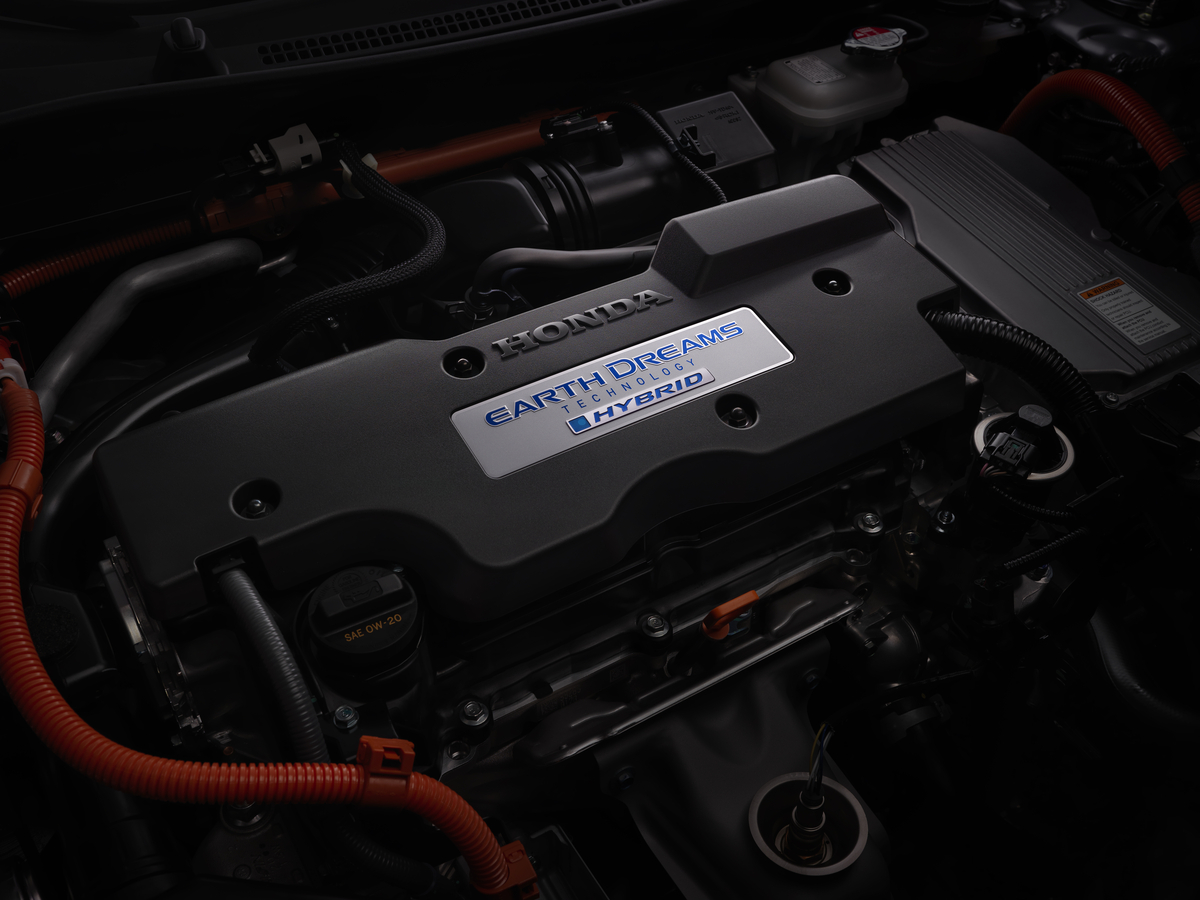
Combining the next generation of Honda’s two-motor hybrid system with an ultra-efficient 2.0-liter i-VTEC Atkinson Cycle engine, the 2017 Accord Hybrid powertrain will achieve peak combined output of 212 horsepower, the highest of any midsize hybrid sedan and up 16 horsepower over the 2015 Accord Hybrid. EPA fuel economy ratings of 49/47/48 (city/highway/combined)1 put the Accord Hybrid at the top of the class for ratings, making it the most powerful and fuel efficient midsize hybrid sedan in America. These EPA fuel economy ratings are based on new, more stringent ratings requirements enacted by the U.S. EPA for the 2017 model year. Based on the new requirements, Honda estimates the 2015 Accord Hybrid ratings would be 48/45/47 (actually rated at 50/45/47 under the previous method), indicating a +1/+2/+1 increase for the 2017 model over the previous version.
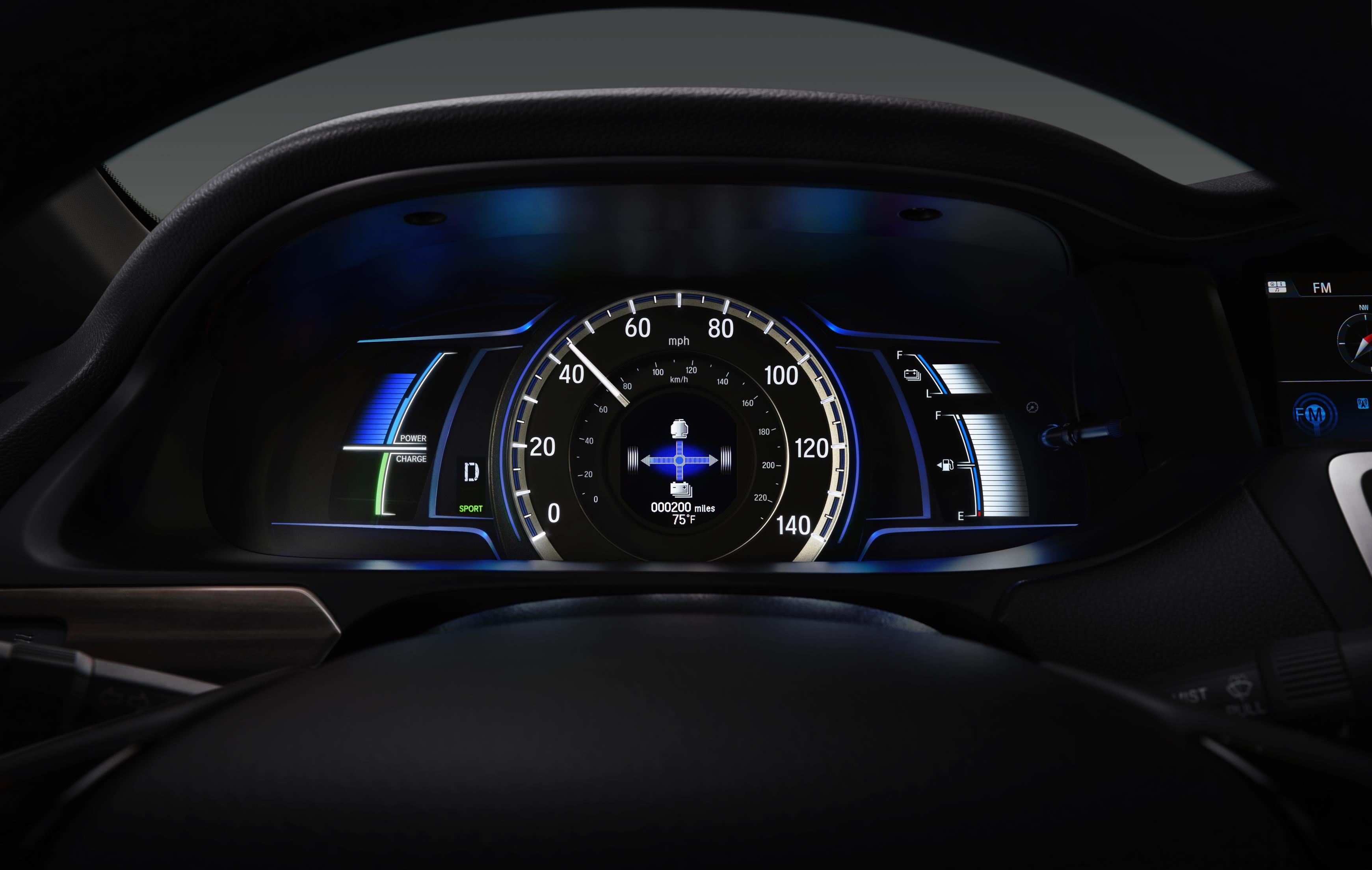
The Accord Hybrid’s two-motor hybrid powertrain takes an elegant and innovative approach to hybrid power, eliminating the need for a conventional mechanical transmission. The Accord Hybrid’s powertrain seamlessly transitions between three operations:
EV Drive – using its electric propulsion motor and lithium ion battery pack drives the front wheels for short distances under light loads (with the engine turned off)
Hybrid Drive – the electric propulsion motor drives the front wheels while the gasoline engine powers a second motor/generator to supplement electrical current drawn from the battery pack
Engine Drive – using a lock-up clutch mechanism to connect the engine and propulsion motor, the front wheels are driven by both the motor and gasoline engine.
With its next-generation Advanced Compatibility Engineering™ (ACE™) body structure and Honda Sensing™ technology, the 2017 Accord is anticipated to receive the highest available crash safety rating from the U.S. government – a 5-Star Overall Vehicle Score from the NHTSA – and a similar top rating of TOP SAFETY PICK+ from the Insurance Institute for Highway Safety (IIHS).
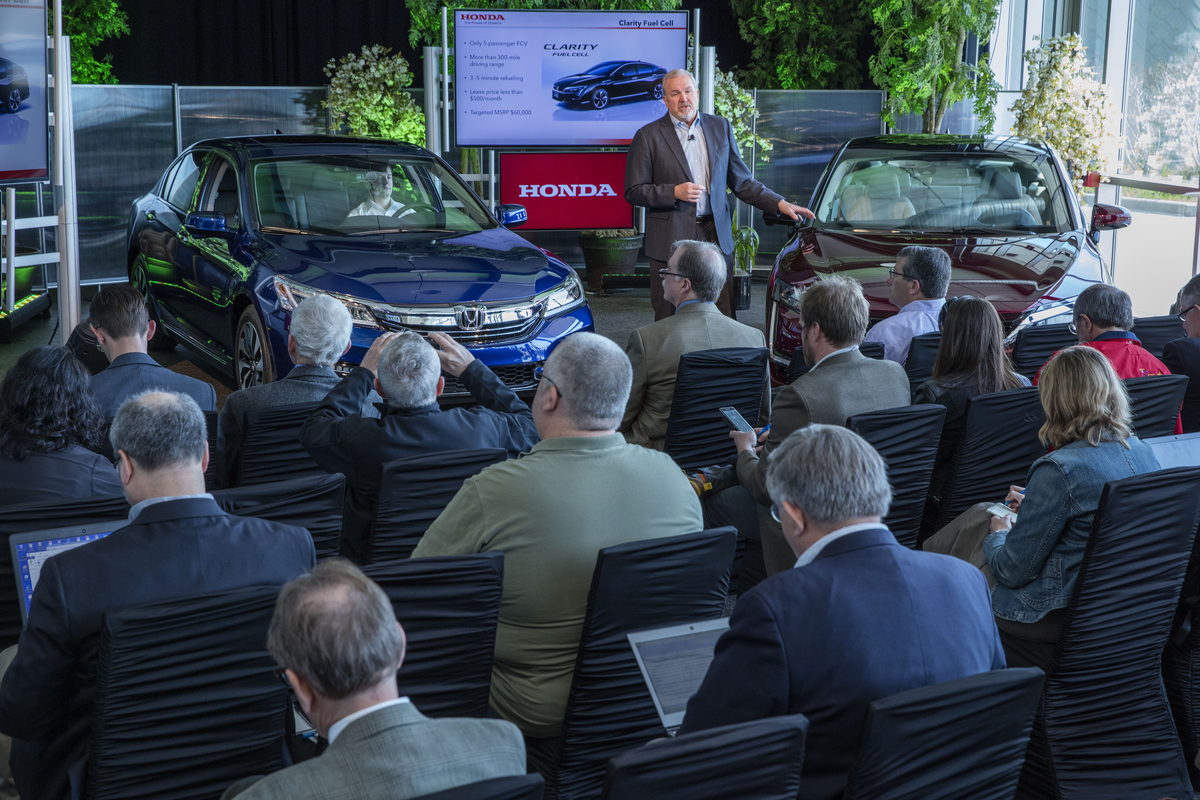
The 2017 Accord Hybrid will be available in three trims – Hybrid, Hybrid EX-L and Hybrid Touring – and all grades will feature increased levels of standard and available equipment. New standard features include a wide angle rearview camera, remote engine start and Honda Sensing™, which includes Collision Mitigation Braking System™ (CMBS™), Lane Keeping Assist (LKAS), Adaptive Cruise Control (ACC), Road Departure Mitigation (RDM), Lane Departure Warning (LDW) and Forward Collision Warning (FCW). Available new features on upper trims include a 7-inch Display Audio touchscreen with Android Auto™ and Apple CarPlayâ compatibility, heated rear seats, and front and rear parking sensors.








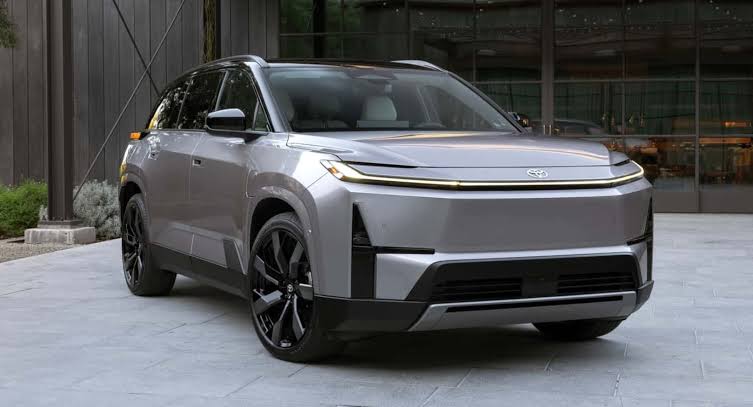
Toyota is increasing its commitment to electric mobility in the United States through a major investment aimed at expanding production capacity and supporting the launch of future battery-electric vehicles.
The initiative highlights the automaker’s long-term strategy to strengthen its EV presence while continuing to invest in domestic manufacturing and advanced vehicle technologies.
As demand for electrified transportation continues to evolve, Toyota is positioning itself for the next phase of growth in the North American market.
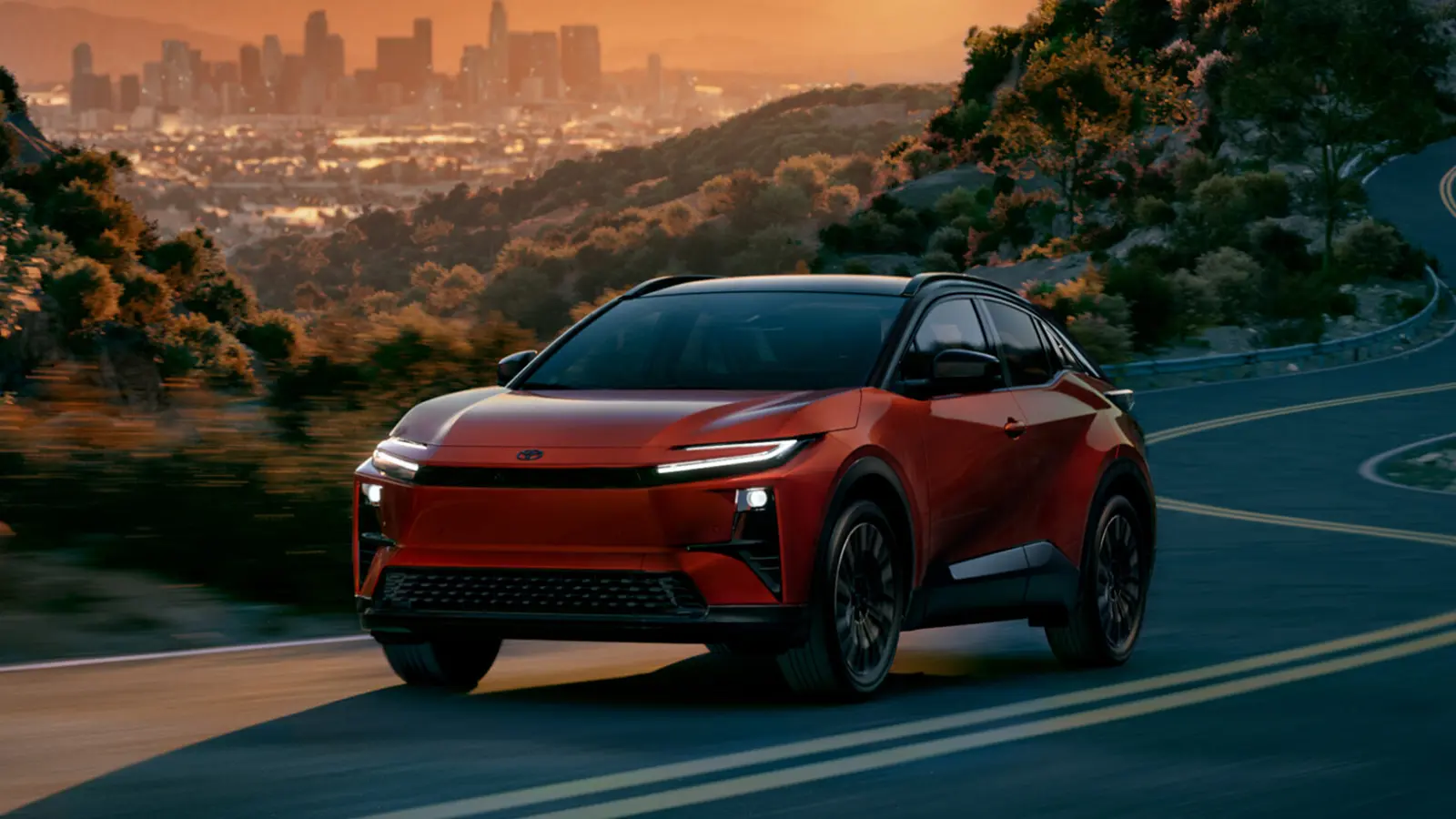
Toyota is expanding its U.S. manufacturing footprint as part of its electric vehicle strategy.
$800 Million Investment Supports Future EV Production
Toyota is investing approximately $800 million in its Kentucky manufacturing operations to prepare for future electric vehicle production.
The investment will support facility upgrades, advanced manufacturing technologies and additional production capabilities designed to accommodate the company’s growing electrified vehicle portfolio.
The Kentucky plant remains one of Toyota’s most important production centers in North America and will play a key role in the company’s future plans.
New Electric Models Planned For The U.S. Market
The investment is closely tied to Toyota’s expanding lineup of battery-electric vehicles.
The automaker is preparing several new EV models aimed at American consumers, broadening a portfolio that already includes hybrid, plug-in hybrid and fully electric offerings.
Toyota’s strategy focuses on providing customers with multiple powertrain options while gradually increasing the availability of battery-electric vehicles across different segments.
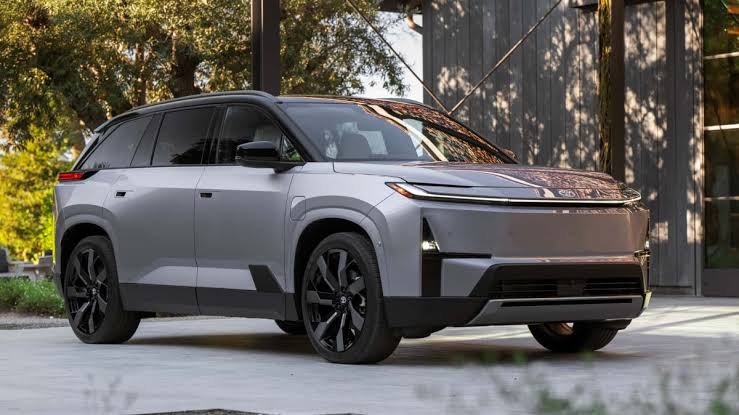
Toyota continues to expand its electric vehicle portfolio for North American customers.
Domestic Manufacturing Remains A Priority
Building vehicles closer to consumers remains a major objective for Toyota.
By increasing investment in U.S. production facilities, the company aims to improve supply chain efficiency while supporting local jobs and manufacturing operations.
Domestic production also allows Toyota to respond more quickly to changing market conditions and future demand for electric vehicles.
Electrification Strategy Continues To Expand
Toyota has traditionally focused on hybrid technology, but the company is now accelerating efforts across multiple electrified vehicle categories.
Alongside battery-electric vehicles, Toyota continues investing in hybrid systems, plug-in hybrids and other advanced mobility solutions designed to reduce emissions and improve efficiency.
This diversified approach allows the automaker to adapt to different consumer preferences and regional market requirements.
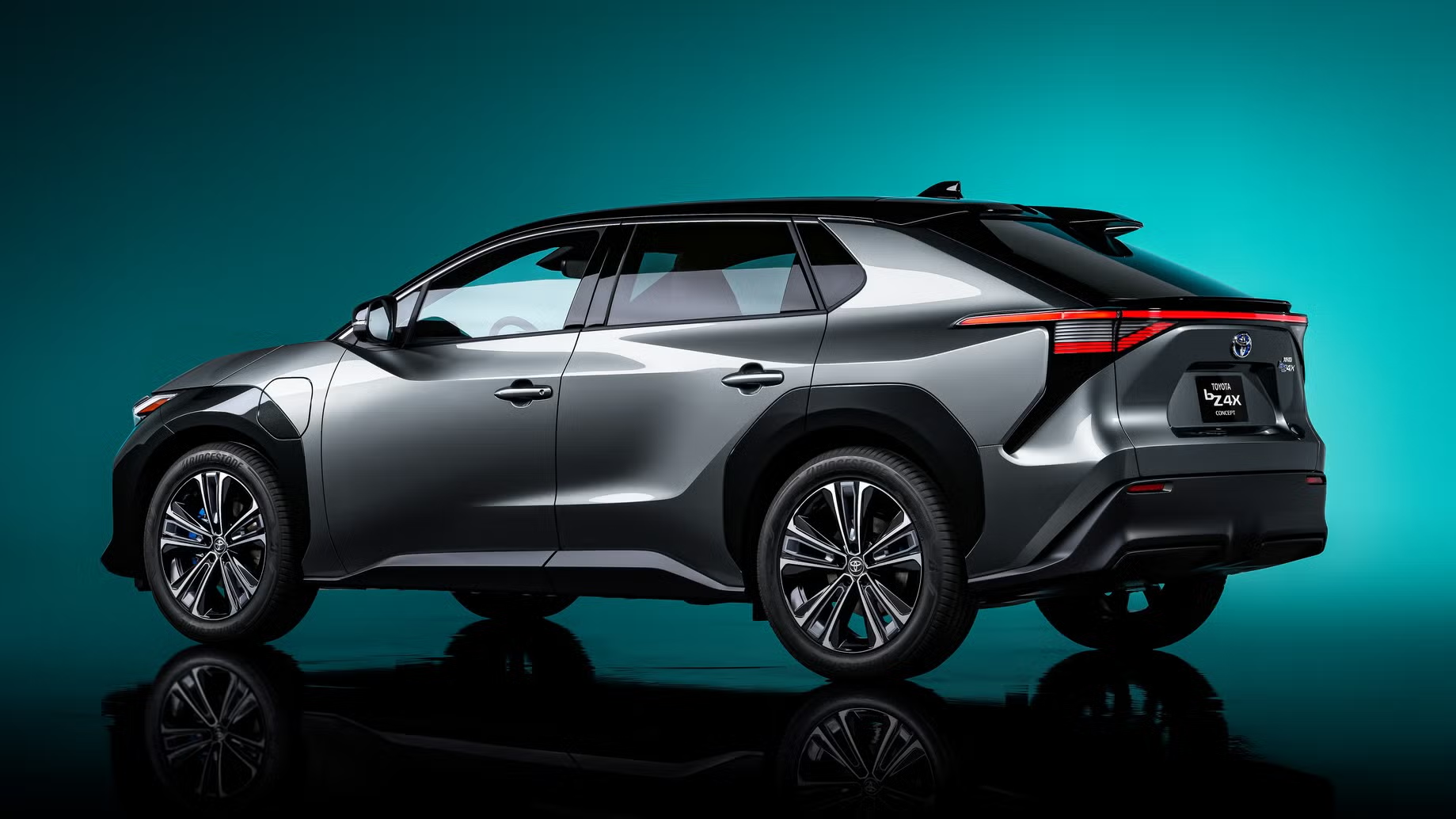
Electrification remains a central pillar of Toyota’s long-term product strategy.
Future Growth Focused On Advanced Mobility
The automotive industry is undergoing one of the largest transformations in its history, with manufacturers investing heavily in new technologies and electrified platforms.
Toyota’s latest investment reflects the growing importance of advanced mobility solutions and the company’s efforts to remain competitive in an increasingly electrified market.
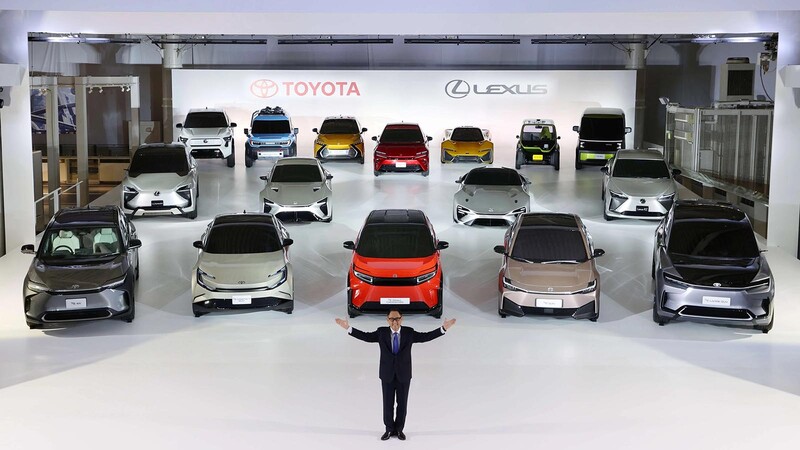
Toyota is preparing the next generation of electric vehicles for the U.S. market.
The Kentucky expansion is expected to support future vehicle programs while reinforcing Toyota’s position as one of the largest automotive manufacturers operating in North America. The project also demonstrates the company’s continued confidence in U.S. manufacturing as demand for electrified vehicles continues to grow.
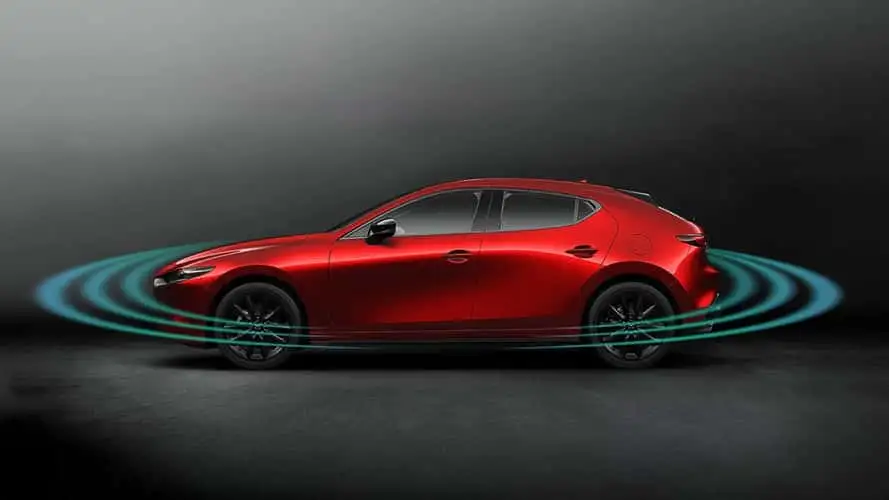
Advanced driver assistance systems have become one of the fastest-growing areas of vehicle development, but a new study shows that not all technologies deliver the same level of performance.
As automakers continue investing in safety innovations, organizations such as the Insurance Institute for Highway Safety (IIHS) are increasing efforts to evaluate how these systems perform in real-world situations. The latest findings reveal significant differences between manufacturers when it comes to accident prevention and driver support.

Driver assistance systems continue to play a growing role in modern vehicle safety.
Safety Technology Continues To Evolve
Modern vehicles are equipped with a wide range of advanced safety features designed to help drivers avoid collisions.
These technologies include automatic emergency braking, lane-keeping assistance, adaptive cruise control and blind-spot monitoring systems. Together, they form the foundation of what is commonly known as Advanced Driver Assistance Systems, or ADAS.
The goal is not to replace drivers, but to provide an additional layer of protection during everyday driving situations.
Real-World Performance Remains A Key Challenge
While many systems perform well under controlled conditions, real-world environments present far greater challenges.
Traffic density, weather conditions, visibility and unexpected obstacles can all influence how effectively safety technologies operate. For that reason, independent testing organizations continue to place increasing emphasis on evaluating performance beyond laboratory conditions.
Manufacturers are now focusing on improving sensor accuracy, software processing and response times to help vehicles react more effectively to complex traffic situations.
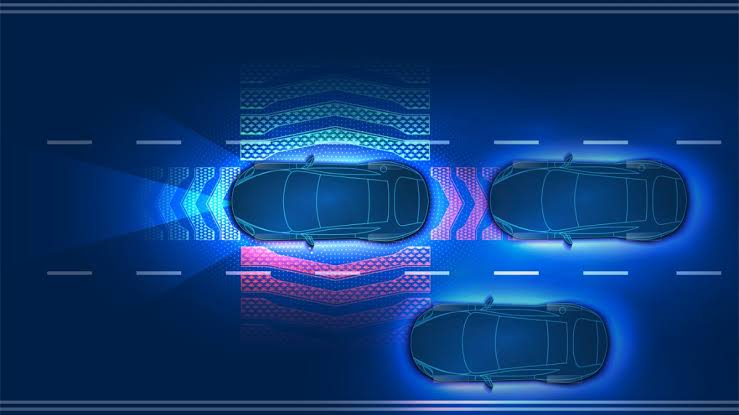
Automatic emergency braking remains one of the most important safety technologies available today.
Cameras, Sensors And Artificial Intelligence
Today’s driver assistance systems rely on a combination of cameras, radar sensors and advanced software.
Many vehicles now use artificial intelligence and machine learning technologies to better interpret road conditions and identify potential hazards.
This allows safety systems to process large amounts of information in real time and provide faster responses when drivers encounter unexpected situations.
Automakers Continue Expanding ADAS Capabilities
The automotive industry is investing heavily in the development of increasingly sophisticated driver assistance technologies.
Features that were once reserved for luxury vehicles are now becoming common across mainstream segments, including compact SUVs, sedans and pickup trucks.
As competition increases, manufacturers continue introducing new capabilities designed to improve safety, convenience and overall driver confidence.
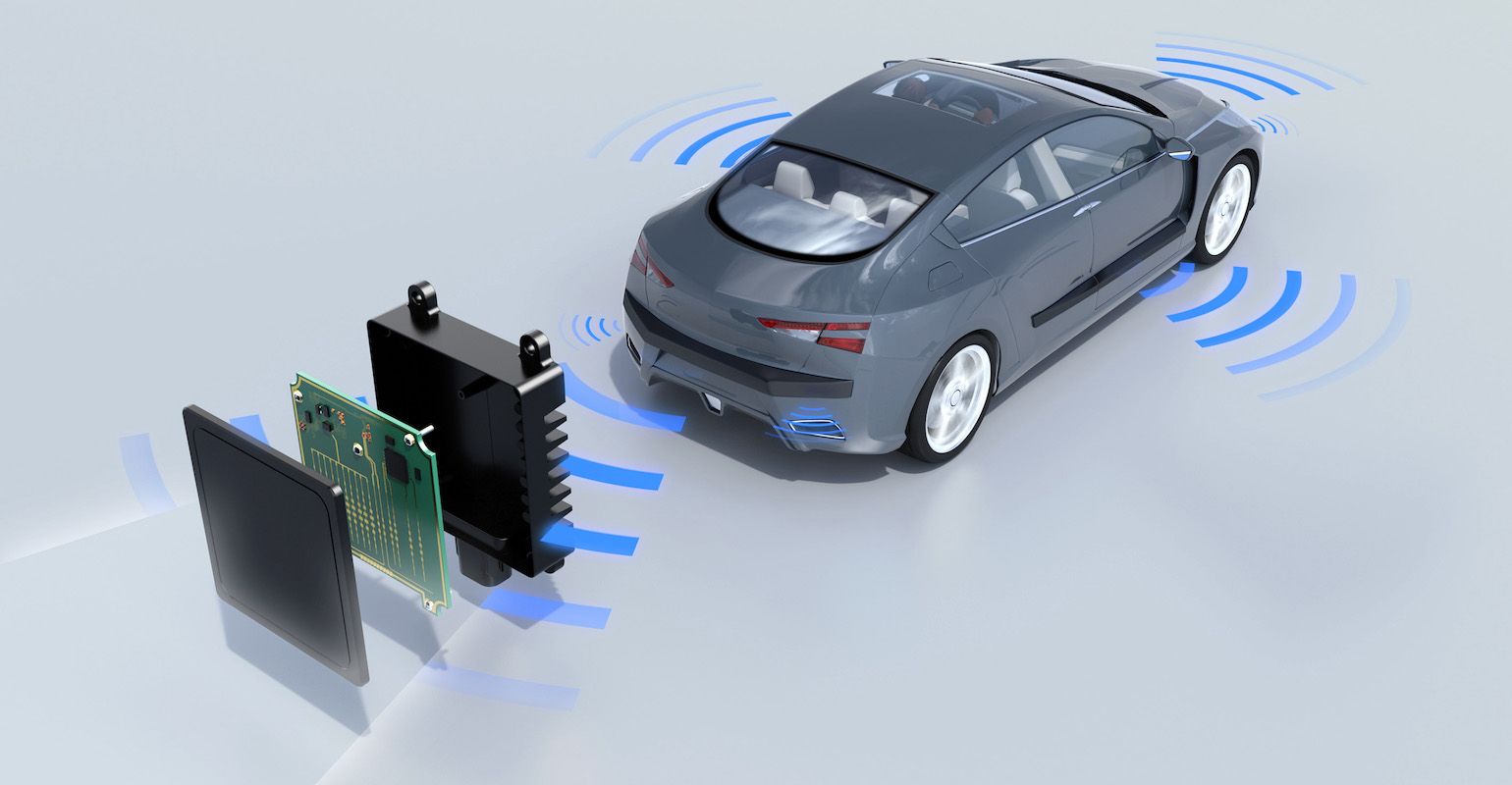
Modern safety systems rely on cameras, radar and advanced software to monitor road conditions.
Driver Assistance Systems Are Becoming A Key Buying Factor
For many consumers, safety technology now ranks alongside performance, efficiency and design when choosing a new vehicle.
As ADAS systems become more advanced, buyers are paying closer attention to how effectively these features perform in everyday driving situations.
The growing importance of vehicle safety is expected to drive further innovation as automakers continue refining the technologies that support drivers on the road.
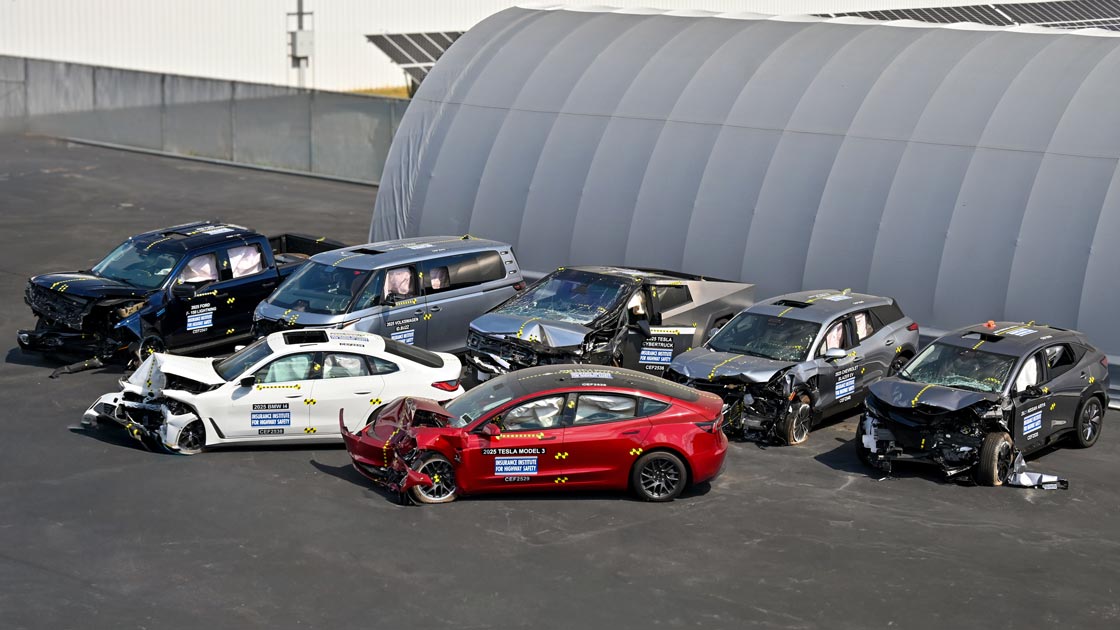
Driver assistance technology is rapidly becoming one of the most important areas of automotive development.
INTELLIGENT MOBILITY
Cadillac VISTIQ Expands Luxury EV Options With Three Rows And Up To 305 Miles Of Range

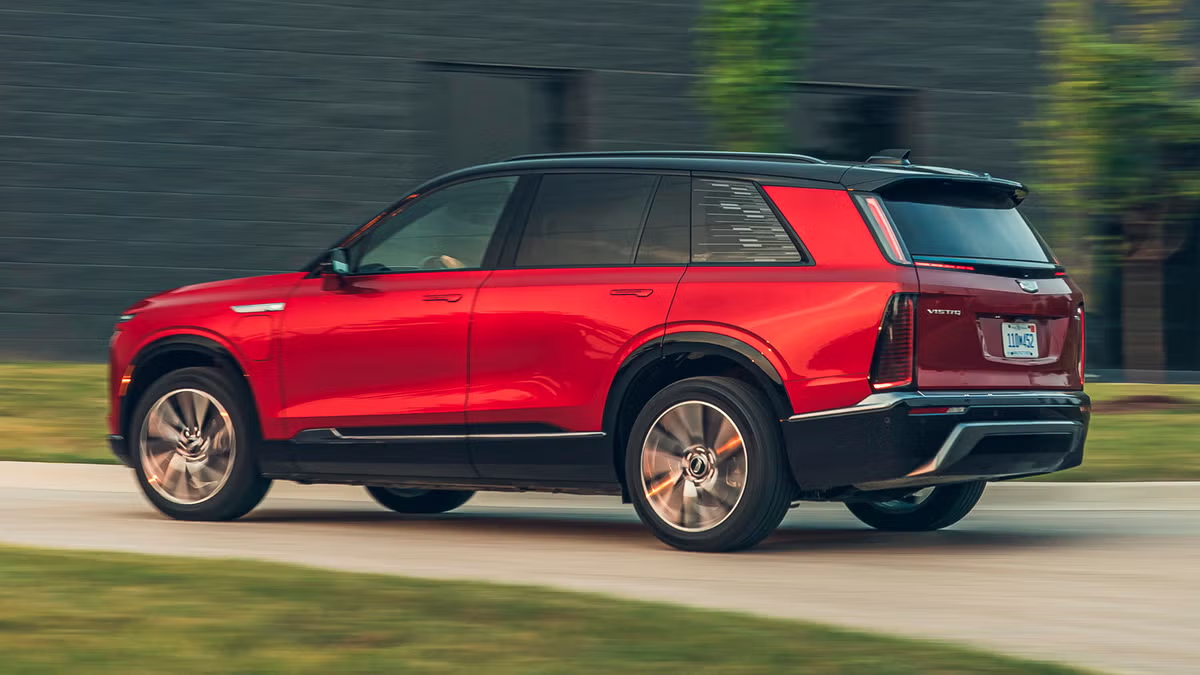
Cadillac continues to strengthen its electric vehicle portfolio with the VISTIQ, a three-row luxury SUV designed to bridge the gap between the Lyriq and the flagship Escalade IQ.
Blending premium comfort, advanced technology and impressive performance, the VISTIQ aims to offer families and luxury SUV buyers a compelling all-electric alternative without sacrificing space, capability or long-distance usability.
With seating for up to seven passengers and more than 300 miles of estimated range, the VISTIQ becomes one of the most important additions to Cadillac’s growing EV lineup.
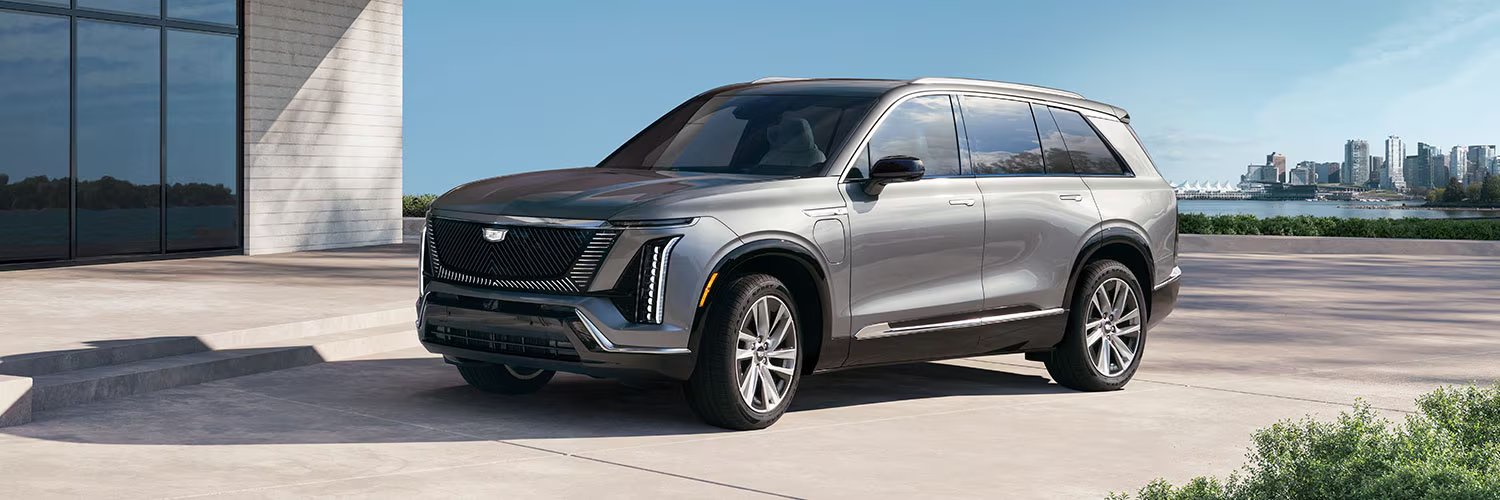
The Cadillac VISTIQ brings three-row practicality to the brand’s expanding electric vehicle family.
Up To 615 Horsepower And Rapid Acceleration
Power comes from a dual-motor all-wheel-drive system that delivers impressive performance figures for a luxury SUV of its size.
Cadillac estimates the VISTIQ produces up to 615 horsepower and 650 lb-ft of torque when operating in Velocity Max mode.
Those numbers allow the SUV to accelerate from 0 to 60 mph in an estimated 3.7 seconds, placing it among the quickest three-row electric SUVs currently available.
Designed For Long-Distance Driving
Range remains one of the VISTIQ’s strongest selling points.
Models equipped with the standard 11.5-kW charging system offer an EPA-estimated driving range of up to 305 miles, while versions fitted with the available 19.2-kW charging system provide an estimated 300 miles.
The SUV utilizes a 102-kWh battery pack and adopts the North American Charging Standard (NACS), giving drivers access to a growing charging network throughout the United States and Canada.
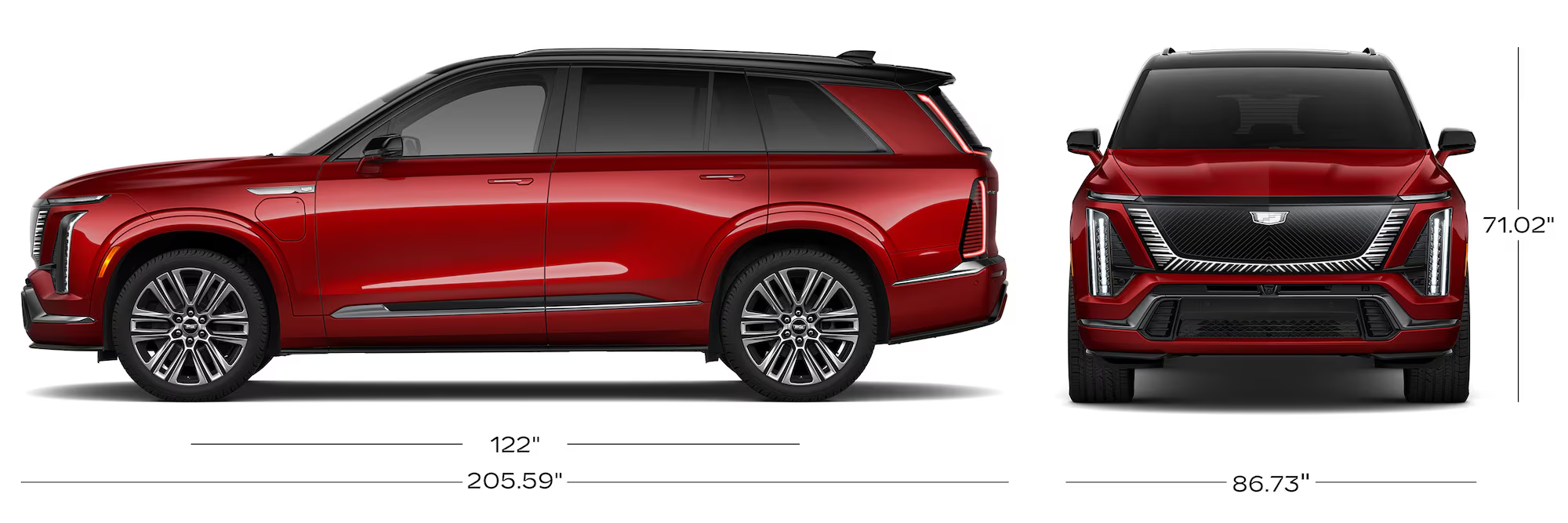
The VISTIQ combines long-range capability with premium SUV proportions and three-row versatility.
Fast Charging For Everyday Convenience
Cadillac has designed the VISTIQ to make charging as convenient as possible.
Using DC fast charging, the SUV can add up to 80 miles of driving range in approximately 10 minutes, with charging speeds reaching up to 190 kW.
For home charging, the available 19.2-kW Level 2 system can add up to 47 miles of range per hour, while the standard 11.5-kW setup can recover approximately 29 miles per hour.
The VISTIQ also comes equipped with a dual-level charging cord compatible with both standard household outlets and higher-capacity home charging connections.
Spacious Cabin With Three Rows Of Seating
Inside, the VISTIQ focuses on comfort and versatility.
The SUV accommodates up to seven passengers and offers generous interior dimensions throughout all three rows.
Front passengers benefit from more than 43 inches of legroom, while second-row occupants receive over 40 inches. Even the third row provides more than 30 inches of legroom, helping improve comfort for passengers during longer trips.
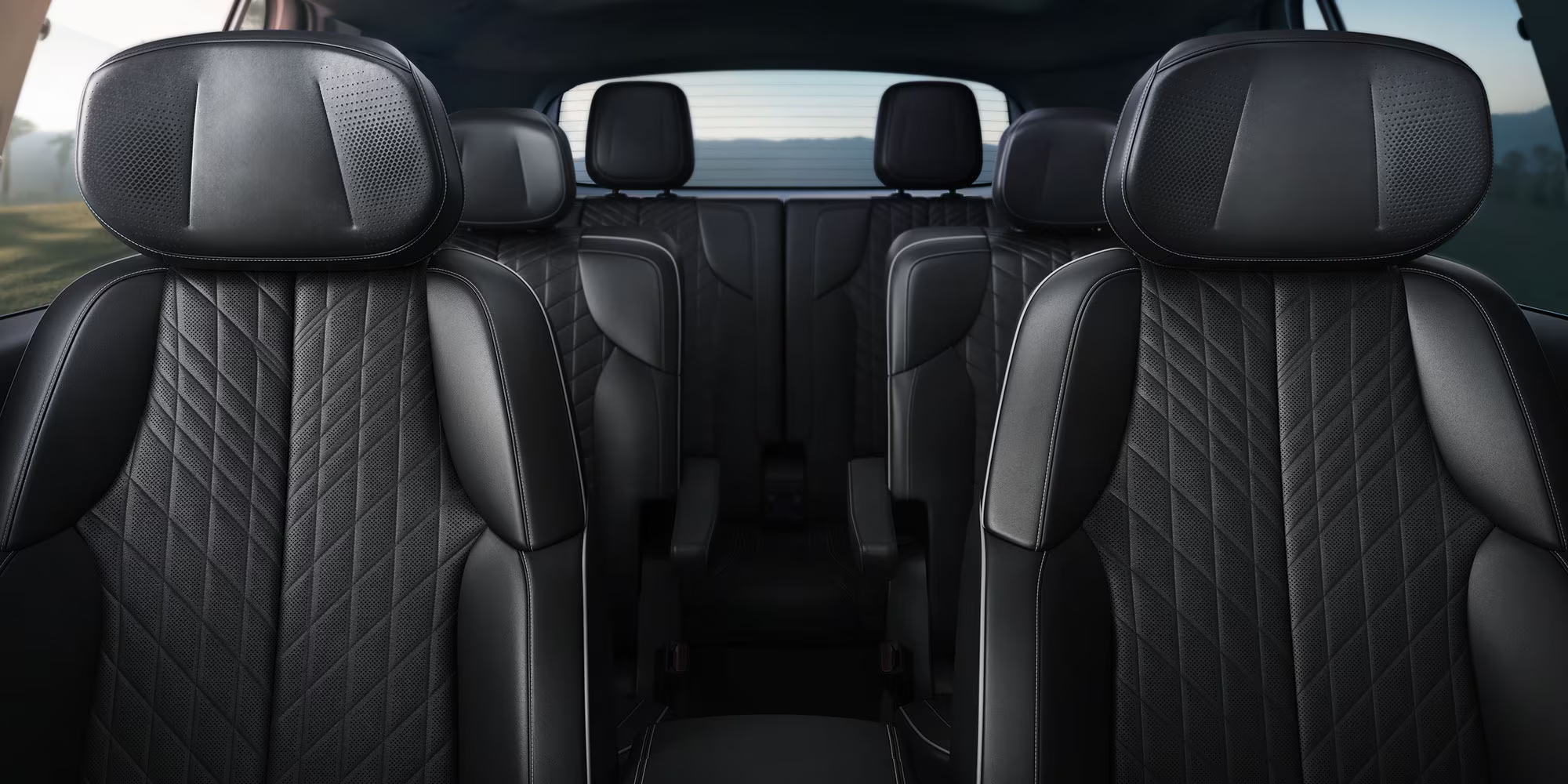
The three-row cabin is designed to provide premium comfort for up to seven occupants.
Cargo Capacity Built For Family Adventures
Practicality remains a key part of the VISTIQ package.
Behind the third row, the SUV provides 15.2 cubic feet of cargo space. Folding the third row expands capacity to 43 cubic feet, while lowering both rear seating rows unlocks up to 80.2 cubic feet of total cargo volume.
Those figures position the VISTIQ as a strong option for families seeking both luxury and utility in a fully electric vehicle.
Cadillac’s Growing Electric SUV Portfolio
Measuring more than 205 inches in length and riding on a 122-inch wheelbase, the VISTIQ occupies an important position within Cadillac’s EV lineup.
The model gives buyers a spacious three-row alternative while continuing the brand’s push toward an increasingly electrified future. Combined with strong performance, extensive charging capability and premium accommodations, the VISTIQ represents another major step in Cadillac’s electric transformation.
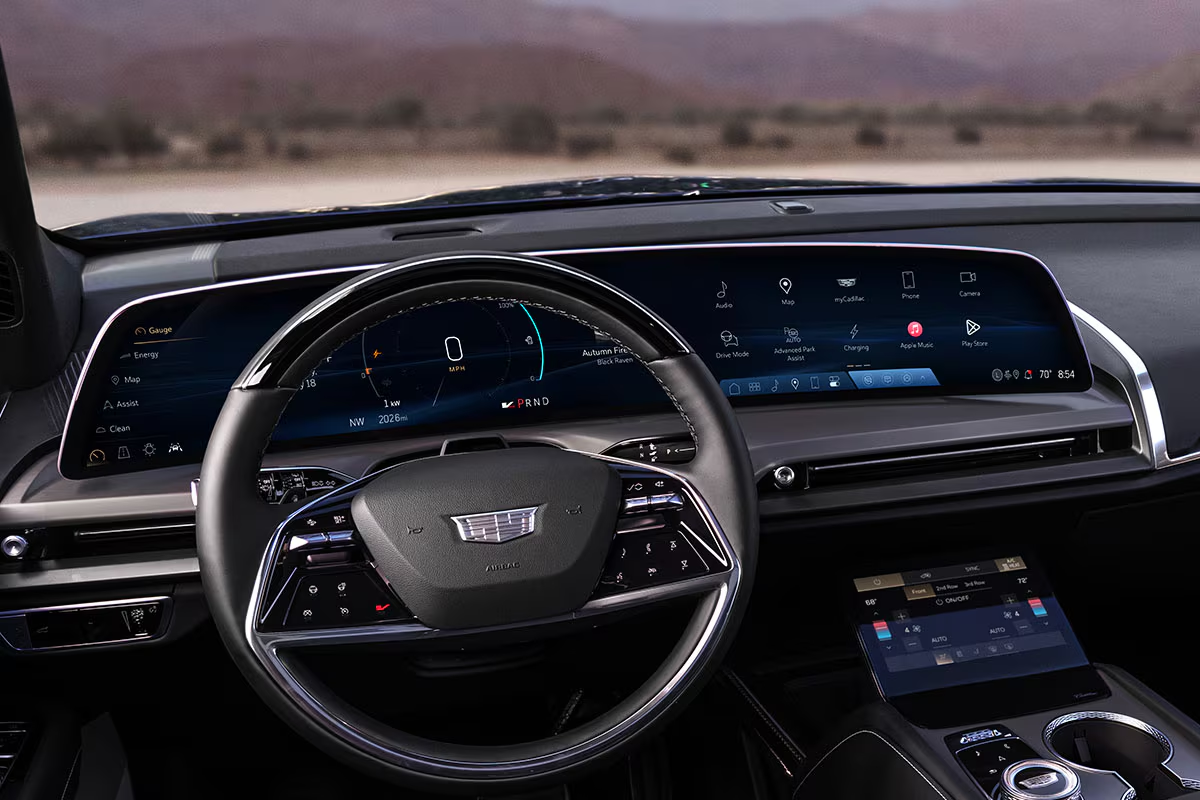
The VISTIQ strengthens Cadillac’s electric SUV range with luxury, performance and family-focused practicality.
-
 INTELLIGENT MOBILITY7 months ago
Customers Demand a Manual Honda Prelude: Will It Ever Happen?
-
 INTELLIGENT MOBILITY7 months ago
10,000 RPM Madness: The Honda S2000 Resurrected with 580 HP and a Supercharged Heart
-
 INTELLIGENT MOBILITY7 months ago
Rolls-Royce Phantom Centenary Edition: A Century of Luxury Taken to the Next Level
-
 INTELLIGENT MOBILITY7 months ago
Honda S2000: The Iconic Roadster Could Return, But Challenges Remain
-
 INTELLIGENT MOBILITY7 months ago
Honda NSX Reborn: Pininfarina and JAS Bring Back the V6 Legend with a Modern Twist
-
 NOW TRENDING12 years ago
Toyota Partners goes Glam with Fashion
-
 INTELLIGENT MOBILITY7 months ago
FIFA World Cup 2026: The Importance of Electric Vehicles
-
 INTELLIGENT MOBILITY7 months ago
BYD Atto 8: The New 7-Seater PHEV SUV Arrives in Mexico
You must be logged in to post a comment Login