
NOW TRENDING
Used Lexus LS 600h L Offers Flagship Luxury for Camry Money

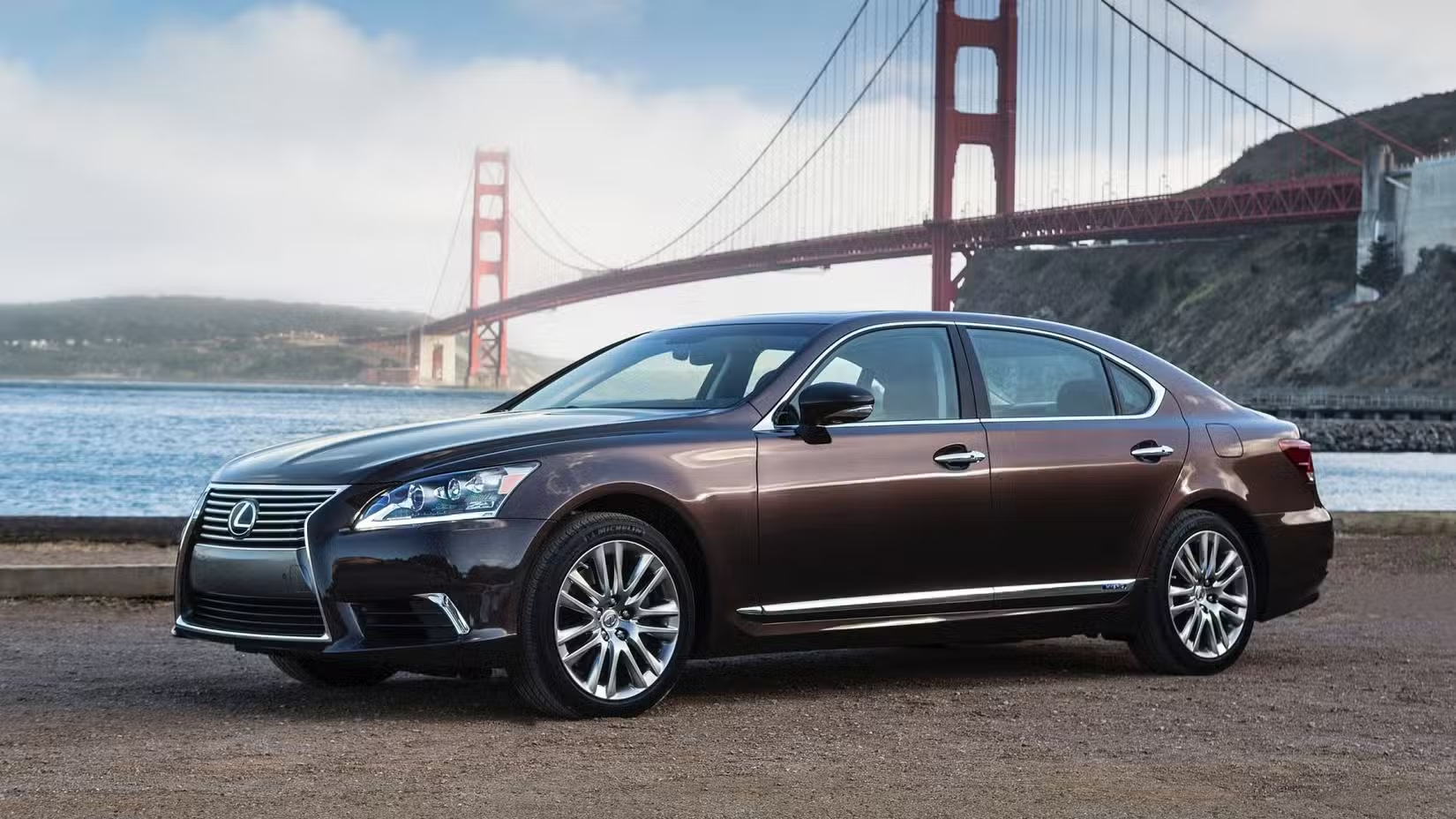
The once-$135,000 Lexus LS 600h L has become one of the luxury car market’s best bargains, combining a V8 hybrid powertrain, executive comfort and premium technology at used-car prices.
Used Lexus LS 600h L Offers Flagship Luxury for Camry Money
The used Lexus LS 600h L has become one of the most intriguing bargains in today’s luxury car market. What was once a flagship sedan priced at nearly $135,000 can now be found for roughly the same price as a new Toyota Camry.
Although ownership costs remain significant, buyers willing to maintain this sophisticated luxury sedan can enjoy one of Lexus’ most ambitious engineering projects at a fraction of its original price.
A flagship Lexus designed to rival Europe’s best luxury sedans
When Lexus introduced the LS 600h L, it targeted premium rivals such as the Mercedes-Benz S-Class, BMW 7 Series and Audi A8.
The long-wheelbase luxury sedan featured a 5.0-liter V8 Hybrid Drive system, full-time all-wheel drive and an exceptionally refined cabin focused on comfort, technology and quietness.
With a total system output of 438 horsepower, the LS 600h L combined strong performance with advanced hybrid technology years before electrified luxury sedans became common.
The Lexus LS 600h L combined flagship luxury with advanced V8 hybrid technology.
Luxury features that justified its six-figure price
The used Lexus LS 600h L still impresses thanks to the extensive equipment that originally justified its premium price tag.
Available Executive-Class Seating transformed the rear cabin into a limousine-like experience with:
- Four-passenger executive seating
- Rear reclining seats with massage function
- Ottoman footrest
- Rear entertainment system
- Wood-trimmed folding table
- Infrared climate control monitoring
- Exceptional cabin sound insulation
Lexus focused heavily on passenger comfort, making the LS 600h L one of the quietest luxury sedans of its era.
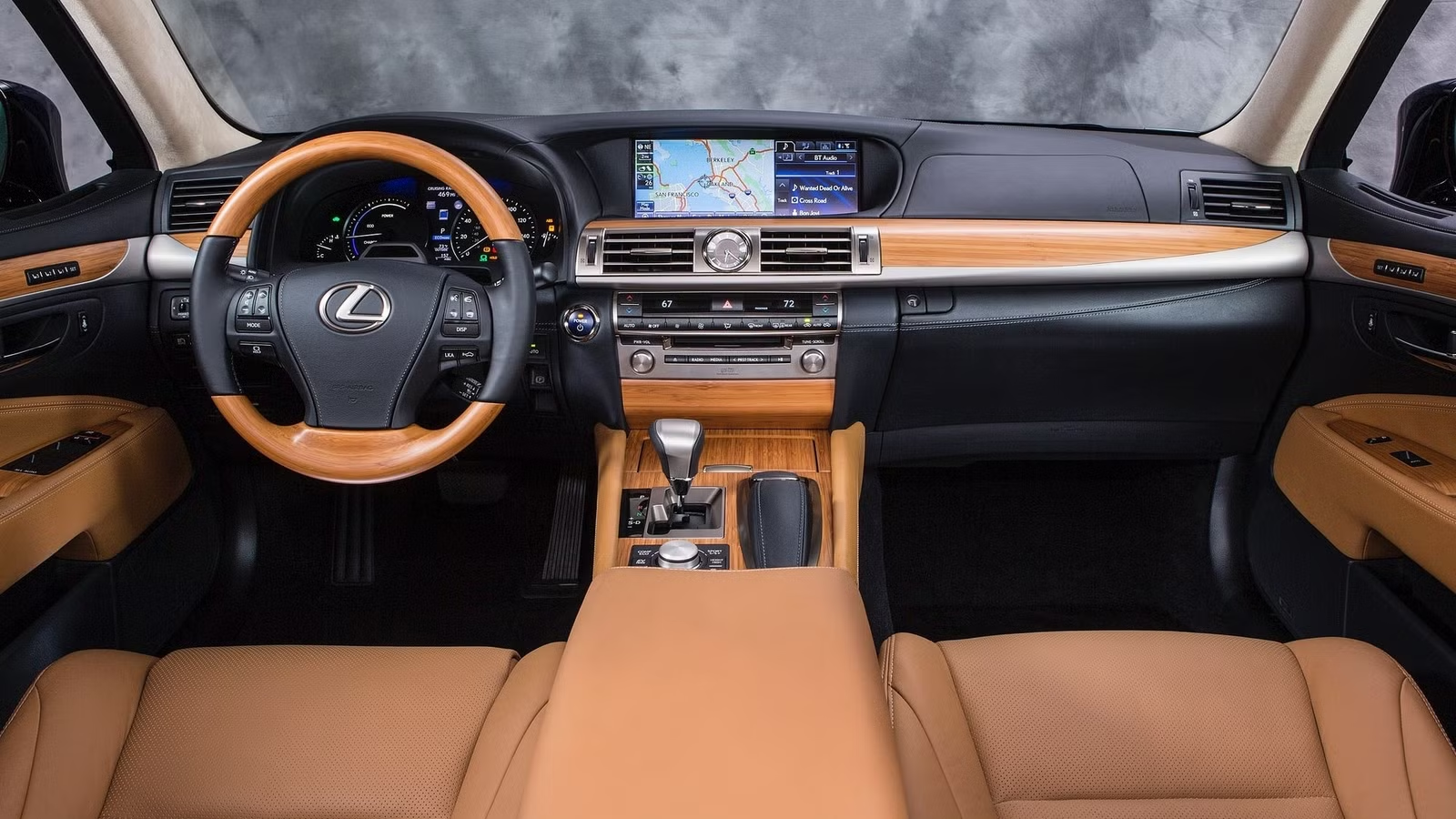
The Executive-Class interior remains one of the highlights of the LS 600h L.
Depreciation creates opportunity—but ownership requires planning
Today, many examples of the used Lexus LS 600h L sell for around $24,000, placing them in the same price range as a new midsize family sedan.
However, buyers should remember that maintenance costs remain consistent with a flagship luxury vehicle.
Potential expenses include:
- High-voltage hybrid battery replacement
- Adaptive air suspension repairs
- Premium electronic components
- Specialized hybrid maintenance
A complete service history, documented battery condition and properly functioning suspension are essential when shopping for one of these vehicles.
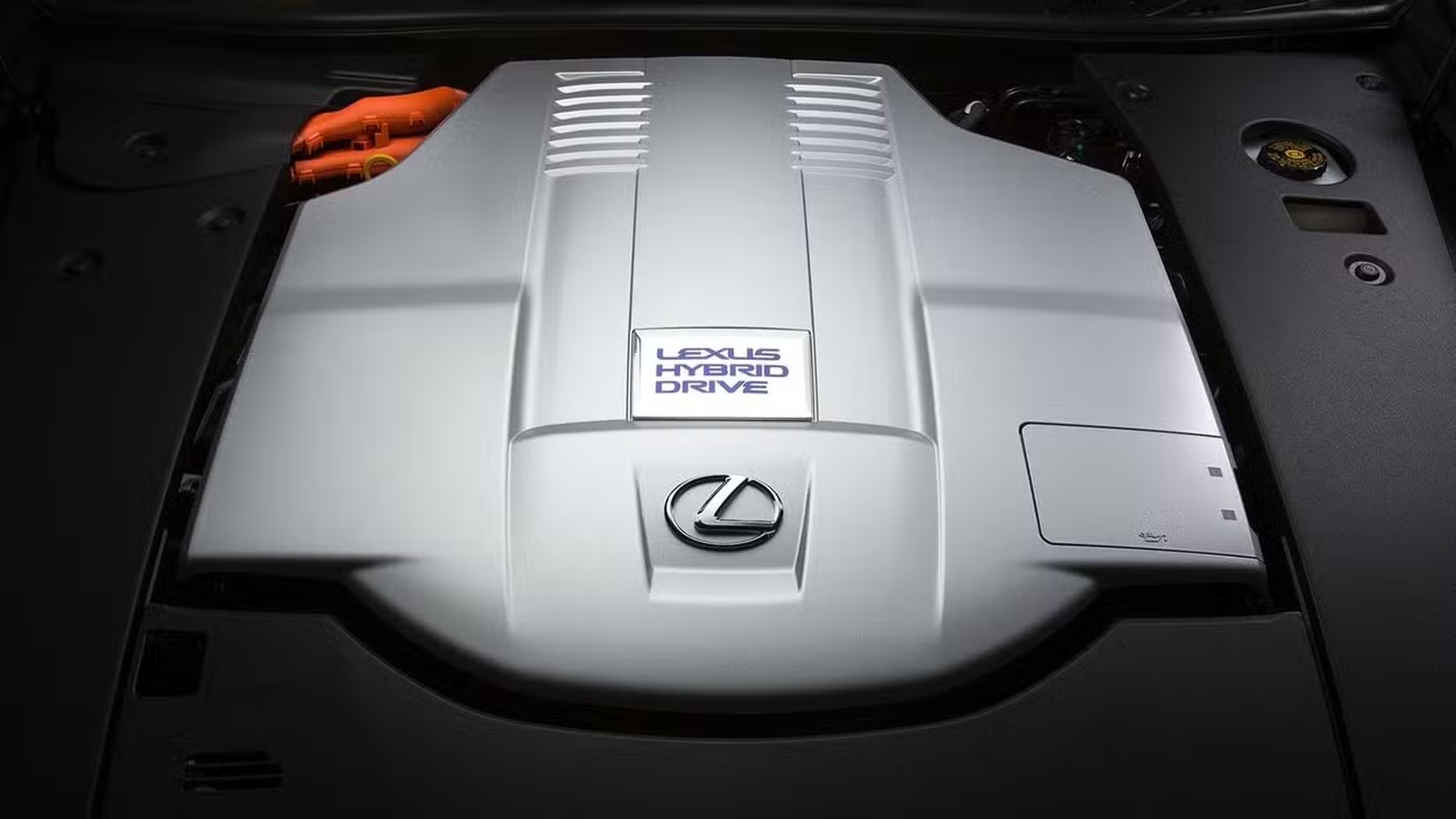
A well-maintained LS 600h L can still deliver flagship luxury at an affordable purchase price.
Despite its steep depreciation, the used Lexus LS 600h L remains an impressive showcase of Lexus engineering. Its V8 hybrid system, advanced all-wheel-drive technology and limousine-like interior continue to stand out more than a decade after its debut. While maintenance costs require careful consideration, buyers who find a well-maintained example can own one of Lexus’ most sophisticated flagship sedans for a fraction of its original six-figure price.










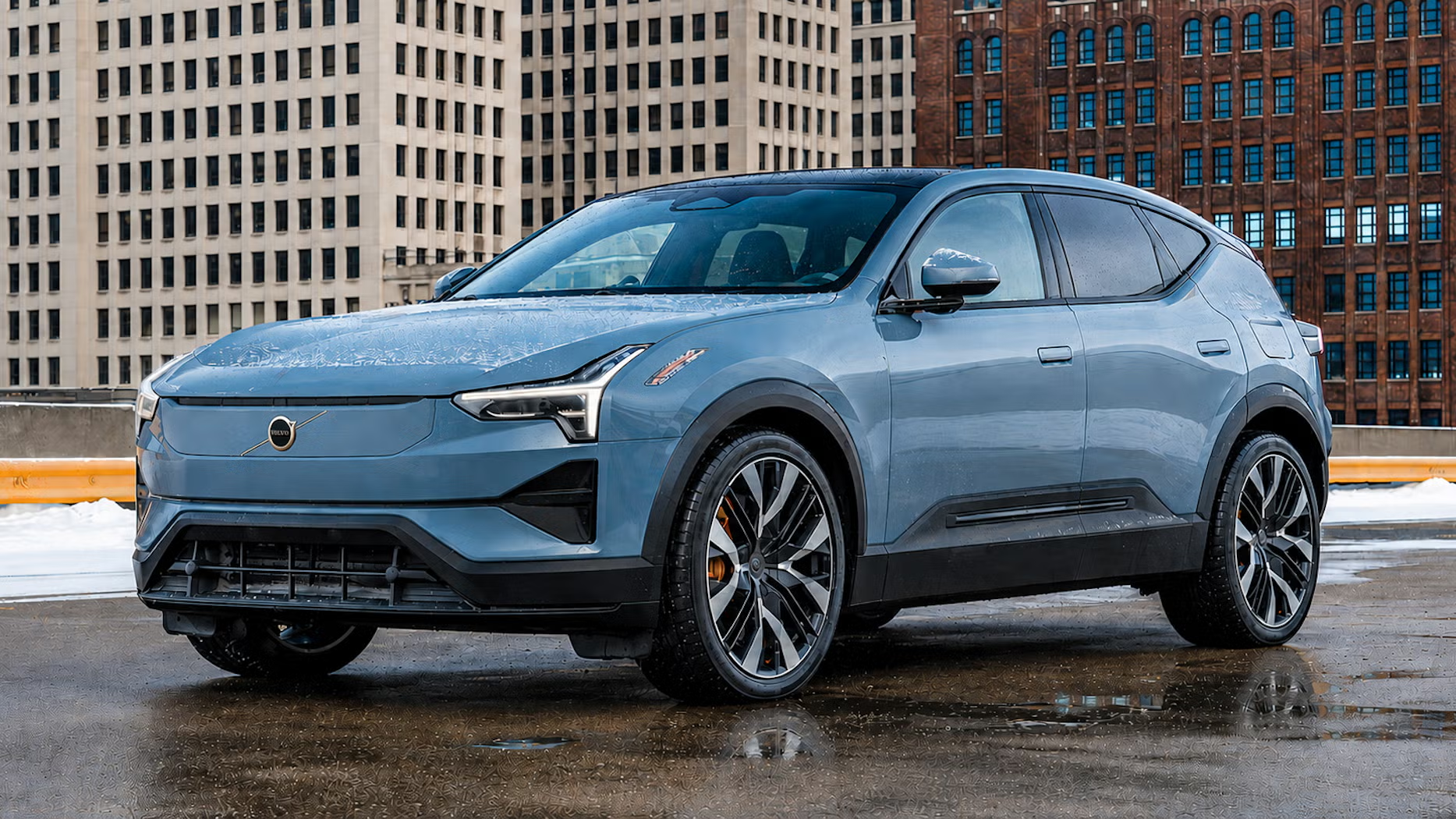
The Polestar 3 could reportedly survive in the U.S. under a Volvo badge, thanks to its shared platform, software and production at Volvo’s South Carolina factory.
The future of the Polestar 3 in the United States may not be over after all. Although the electric SUV is expected to disappear from the U.S. market following new federal connected vehicle regulations, its close relationship with the Volvo EX90 has sparked speculation that the model could eventually return wearing Volvo badges.
Since both vehicles share key technology and are built at Volvo’s manufacturing plant in South Carolina, a rebadged version could allow the company to continue offering the vehicle in the U.S. while keeping production running.
The Polestar 3 shares its platform and production facility with the Volvo EX90.
Why the Polestar 3 could become a Volvo
The Polestar 3 and Volvo EX90 are closely related. Both electric SUVs share the same architecture, core software, battery technology and major mechanical components, while production for both models takes place at Volvo’s factory in Ridgeville, South Carolina.
Unlike Polestar, Volvo received approval to continue selling its vehicles in the United States under the latest connected vehicle regulations. That distinction has fueled speculation that Volvo could introduce a version of the Polestar 3 under its own brand if market conditions require it.
Such a move would also help maximize production at the South Carolina facility while reducing the financial impact of Polestar’s exit from the U.S. market.
Shared technology could simplify a transition
From a technical perspective, converting the Polestar 3 into a Volvo model would require relatively few changes. Aside from exterior branding and a handful of styling details, the two SUVs already share most of their engineering.
If such a strategy were approved, the model could potentially arrive as a new Volvo SUV for the 2028 model year, allowing Volvo to expand its electric lineup while preserving manufacturing jobs in the United States.
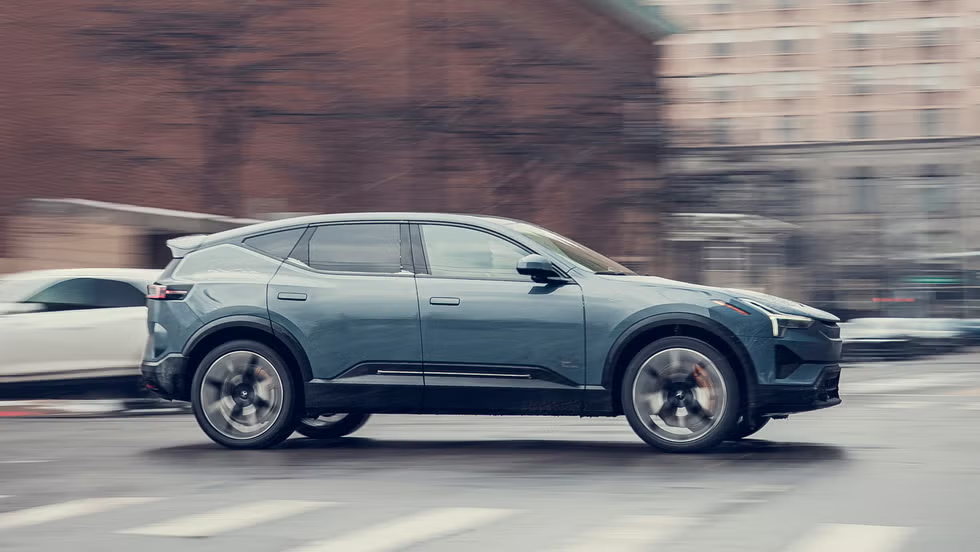
Both electric SUVs share key hardware, software and manufacturing in South Carolina.
Nothing has been confirmed
At this stage, neither Volvo nor Polestar has confirmed any plans to rebadge the Polestar 3 for the U.S. market. The possibility remains purely speculative, and the final outcome could depend on future regulatory decisions as well as the long-term strategy of both brands.
If no alternative solution emerges, Polestar may eventually relocate production of the 3 outside the United States after its expected departure from the American market.

The future of the Polestar 3 in the U.S. remains uncertain as regulations continue to evolve.
Even without official confirmation, the close technical relationship between the Polestar 3 and the Volvo EX90 makes the idea of a rebadged model one of the most logical scenarios. Whether Volvo ultimately takes that step or not, the decision could play an important role in the future of electric vehicle production at its South Carolina plant and in preserving consumer choice in the U.S. EV market.
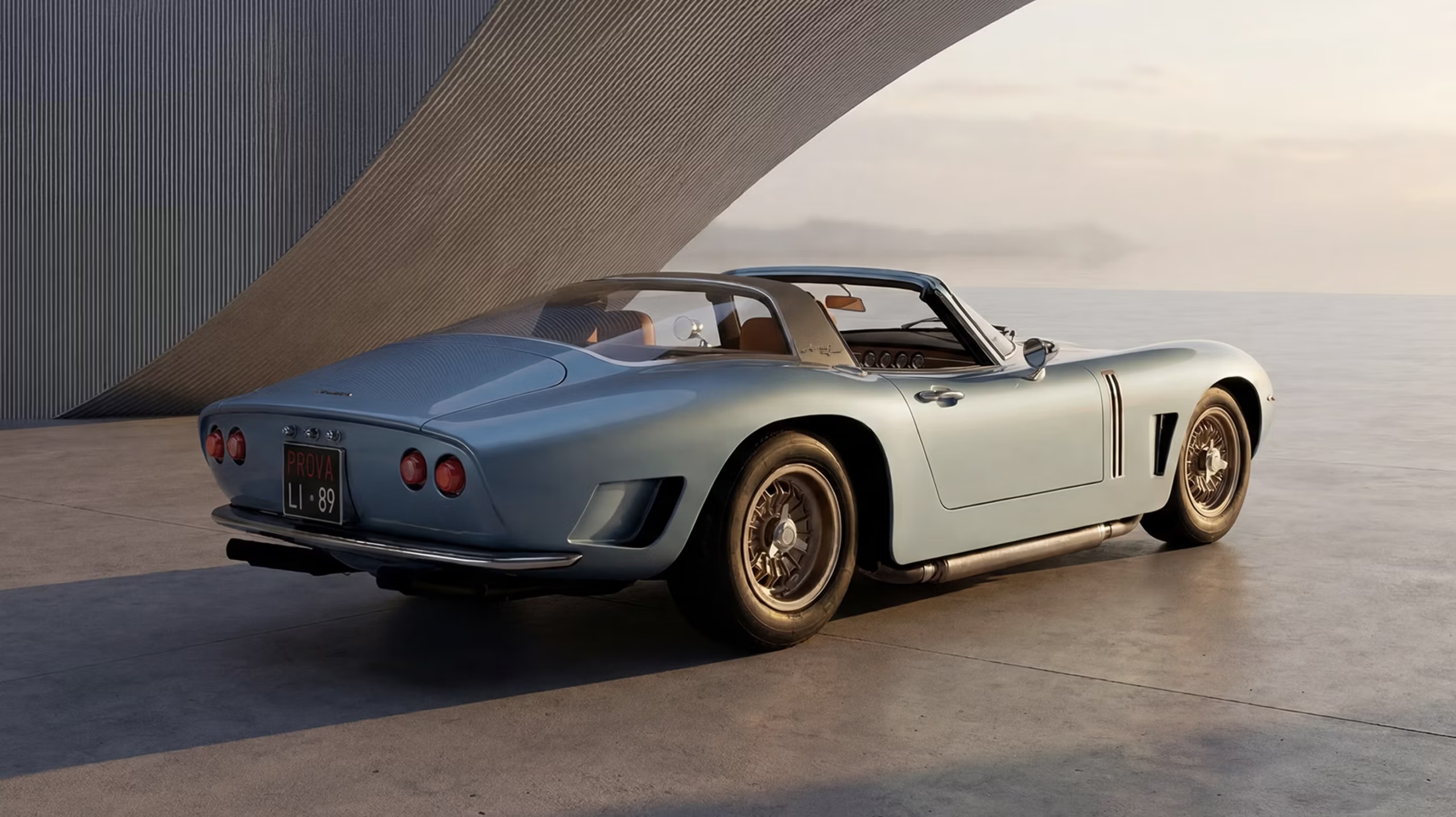
The legendary Italian marque has revived the stunning 5300 GT Aptera Lusso with modern engineering, a V8 engine and production limited to just 10 handcrafted examples.
Bizzarrini 5300 GT Aptera Lusso Revives a 1960s Icon for 2026
More than 60 years after it was originally conceived, the Bizzarrini 5300 GT Aptera Lusso has finally become a reality. The reborn Italian manufacturer has transformed one of Giotto Bizzarrini’s unfinished projects into an exclusive grand tourer that combines timeless 1960s styling with modern engineering, premium materials and improved performance.
Production will be strictly limited to 10 handcrafted examples, making it one of the rarest collector cars introduced in 2026.
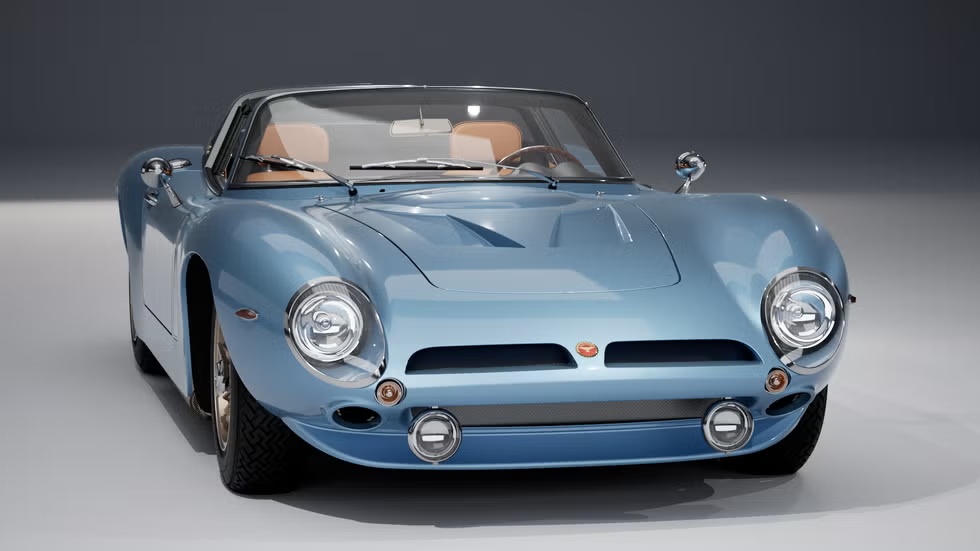
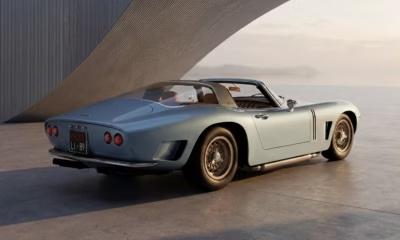
The Bizzarrini 5300 GT Aptera Lusso combines classic Italian design with modern engineering.
A legendary design finally comes to life
Originally envisioned in the mid-1960s, the Aptera Lusso was designed as a targa version of the iconic 5300 GT Strada, but it never progressed beyond the drawing board.
Following the revival of the Bizzarrini brand, engineers have completed the project while preserving its unmistakable proportions and elegant design. Although it looks like a vintage Italian sports car, the new model features an entirely modern structure with a full carbon-fiber body mounted on a semi-monocoque chassis reinforced with steel for improved rigidity and safety.
The removable carbon-fiber roof panels can be stored behind the seats, allowing drivers to enjoy an open-air driving experience without compromising the car’s classic silhouette.
Classic V8 character meets modern performance
Power comes from a naturally aspirated 5.3-liter V8 equipped with modern electronic fuel injection, producing approximately 400 horsepower.
Customers can choose between a five-speed or six-speed manual transmission, preserving the analog driving experience that defines the car. Thanks to its lightweight construction, the Aptera Lusso is capable of reaching a top speed of 175 mph (282 km/h).
Modern mechanical upgrades include adjustable Koni suspension, ventilated disc brakes and a limited-slip differential, delivering significantly improved handling while maintaining the spirit of the original model.
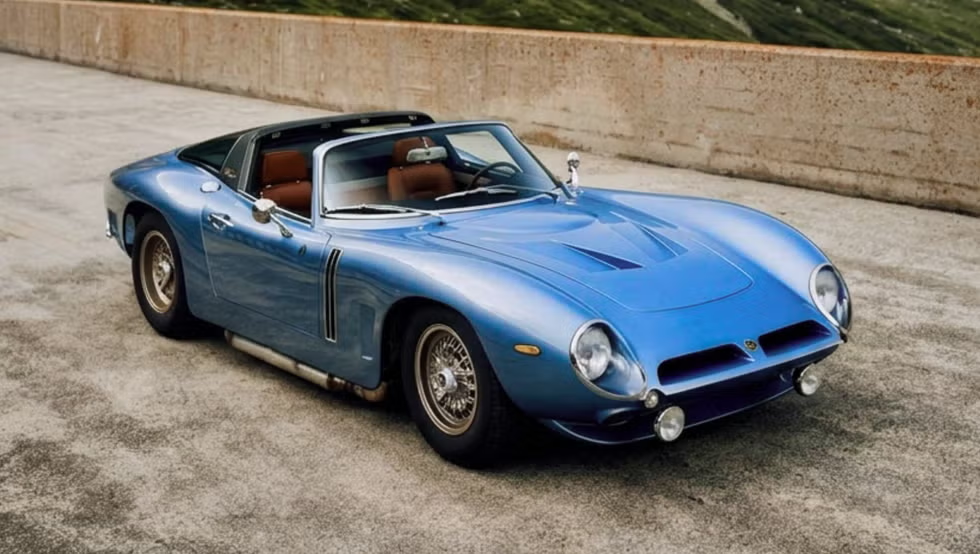
The naturally aspirated 5.3-liter V8 delivers 400 horsepower through a manual transmission.
Luxury craftsmanship with modern technology
Inside, the cabin blends handcrafted Italian luxury with modern convenience. Premium leather, wood trim and exclusive materials developed with Italian fashion house Zegna create an elegant atmosphere inspired by classic grand tourers.
Despite its vintage appearance, the cabin incorporates features expected from a modern performance car, including automatic climate control, a contemporary audio system and smartphone charging.
The result is a vehicle that delivers authentic 1960s character without sacrificing everyday comfort.
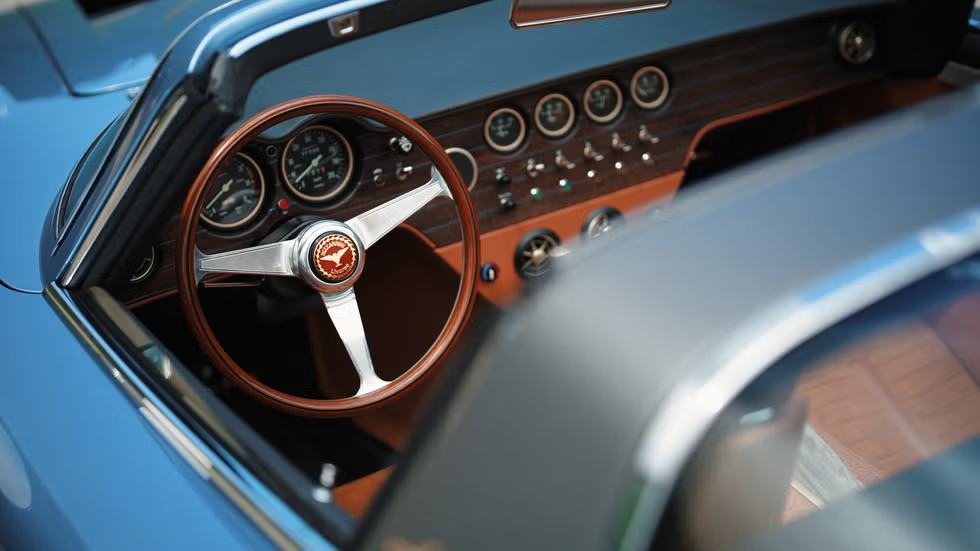
The handcrafted interior combines premium leather, wood and modern technology.
The Bizzarrini 5300 GT Aptera Lusso represents a remarkable tribute to one of Italy’s greatest automotive engineers. By combining an iconic design with carbon-fiber construction, a naturally aspirated V8 and modern chassis technology, the company has finally completed a project that remained unfinished for more than six decades. With only 10 units planned, it is destined to become one of the most exclusive collector cars in the world.
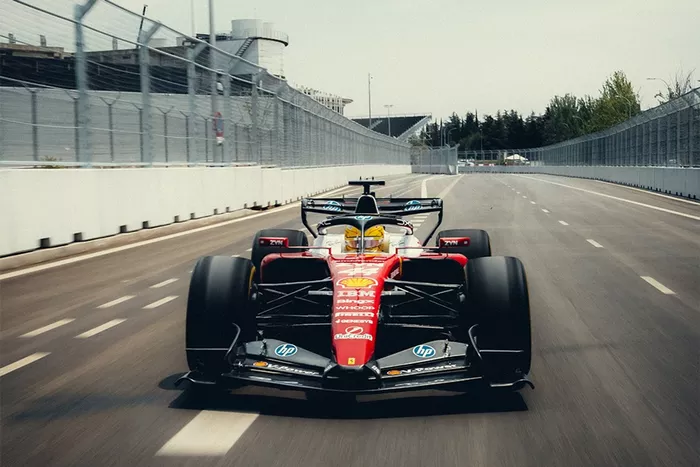
Ferrari became the first Formula 1 team to run on the new Madring circuit, helping organizers validate key systems ahead of the 2026 Spanish Grand Prix.
The Madring circuit reached one of its most important milestones before the 2026 Formula 1 Spanish Grand Prix after Ferrari completed the first-ever F1 test on the new layout. While the Italian team used the session as a filming day, the event also gave organizers a valuable opportunity to evaluate the circuit under real Formula 1 conditions.
With the debut of the Madrid street circuit drawing closer, the successful test reinforced confidence that the venue will be fully prepared for its first Formula 1 race.
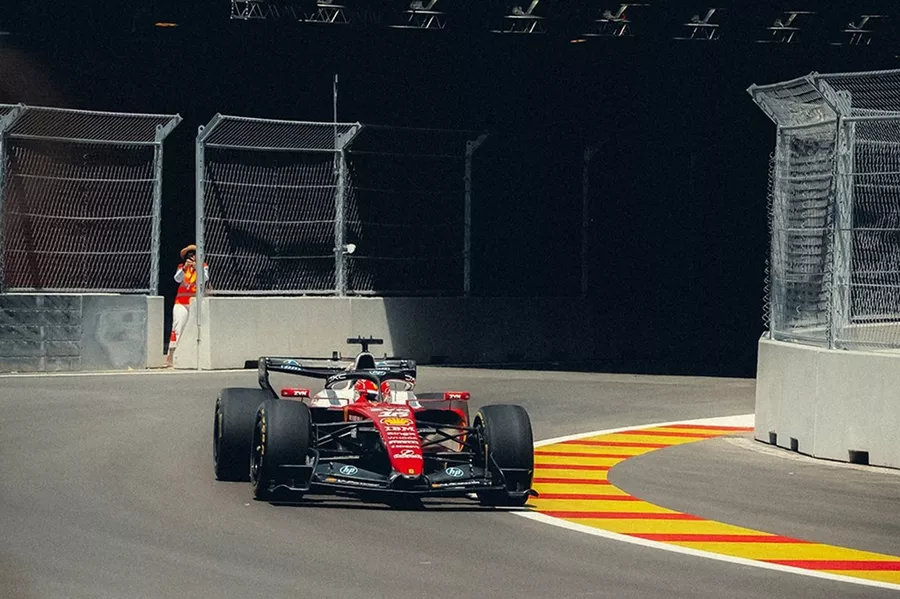
Ferrari became the first Formula 1 team to complete laps on the new Madring circuit.
Ferrari helps validate the new Madring circuit
Using the maximum distance allowed for a filming day, Ferrari completed nearly 200 kilometers with Charles Leclerc and Lewis Hamilton behind the wheel. Although these sessions are limited by Formula 1 regulations, they provided critical information for both Ferrari and the circuit’s organizers.
During the 18 laps, officials evaluated the new asphalt, kerbs, run-off areas, communications systems, race control procedures and trackside operations. Marshals and safety personnel also carried out key operational checks that will be essential during the Spanish Grand Prix weekend.
A major step toward the 2026 Spanish Grand Prix
Beyond Ferrari’s own preparations, the filming day represented a significant milestone for the Madrid circuit. Organizers were able to simulate several aspects of a Formula 1 event months before the championship arrives, allowing engineers and officials to identify any final adjustments required.
The successful session also helped silence doubts about whether the circuit would be completed in time for its Formula 1 debut, demonstrating that construction and operational planning remain on schedule.
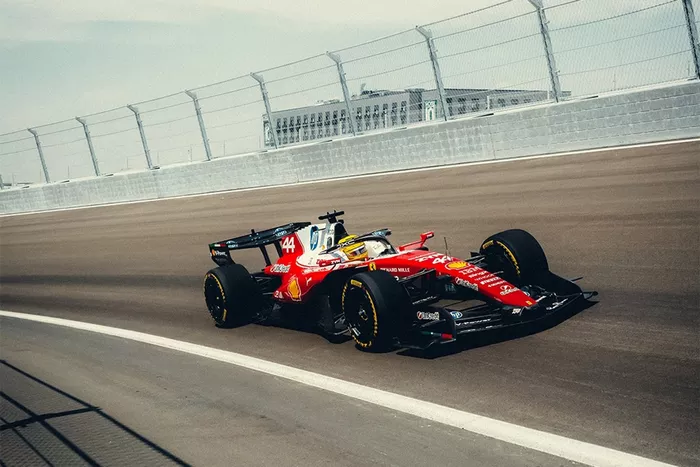
The test allowed organizers to evaluate track operations ahead of Formula 1’s arrival.
More work remains before Formula 1 arrives
Although the circuit itself passed an important test, work continues on grandstands, fan facilities and surrounding infrastructure. Those areas will be completed before Formula 1 returns to Spain later this season.
For Ferrari, the outing also offered valuable experience on a completely new circuit. Even within the restrictions of a filming day, every lap provided useful data while giving Formula 1 its first real look at Madrid’s newest venue.
Madring remains on schedule to host its first Formula 1 Spanish Grand Prix in 2026.
The successful Ferrari Madring test represents far more than a promotional event. It confirms that the circuit is progressing according to plan while allowing organizers to validate essential operational systems ahead of the 2026 Formula 1 Spanish Grand Prix. With several months still remaining before race weekend, Madrid has taken another significant step toward joining the Formula 1 calendar.
-
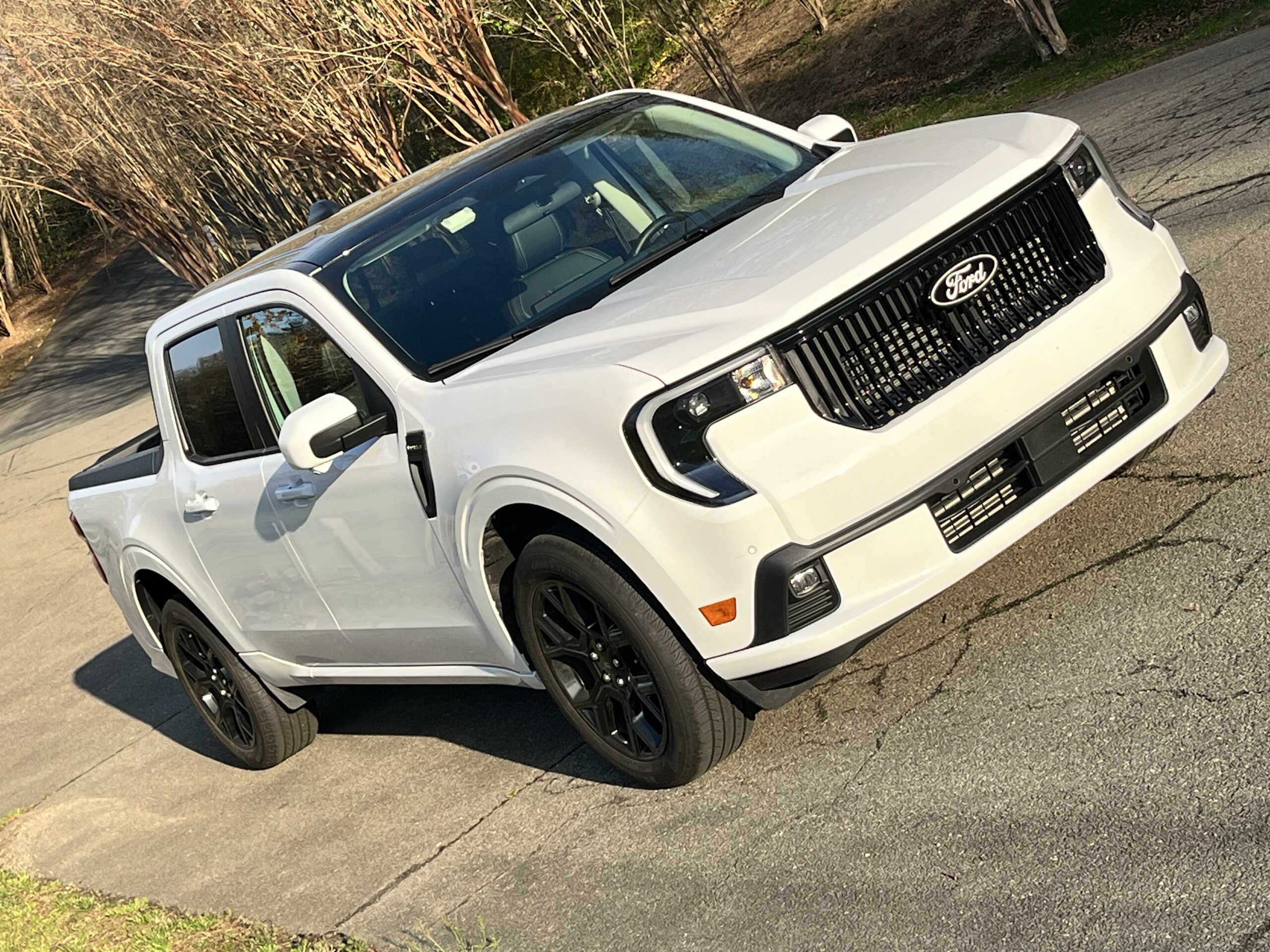 TEST DRIVES2 months ago
2025 Ford Maverick Lobo
-
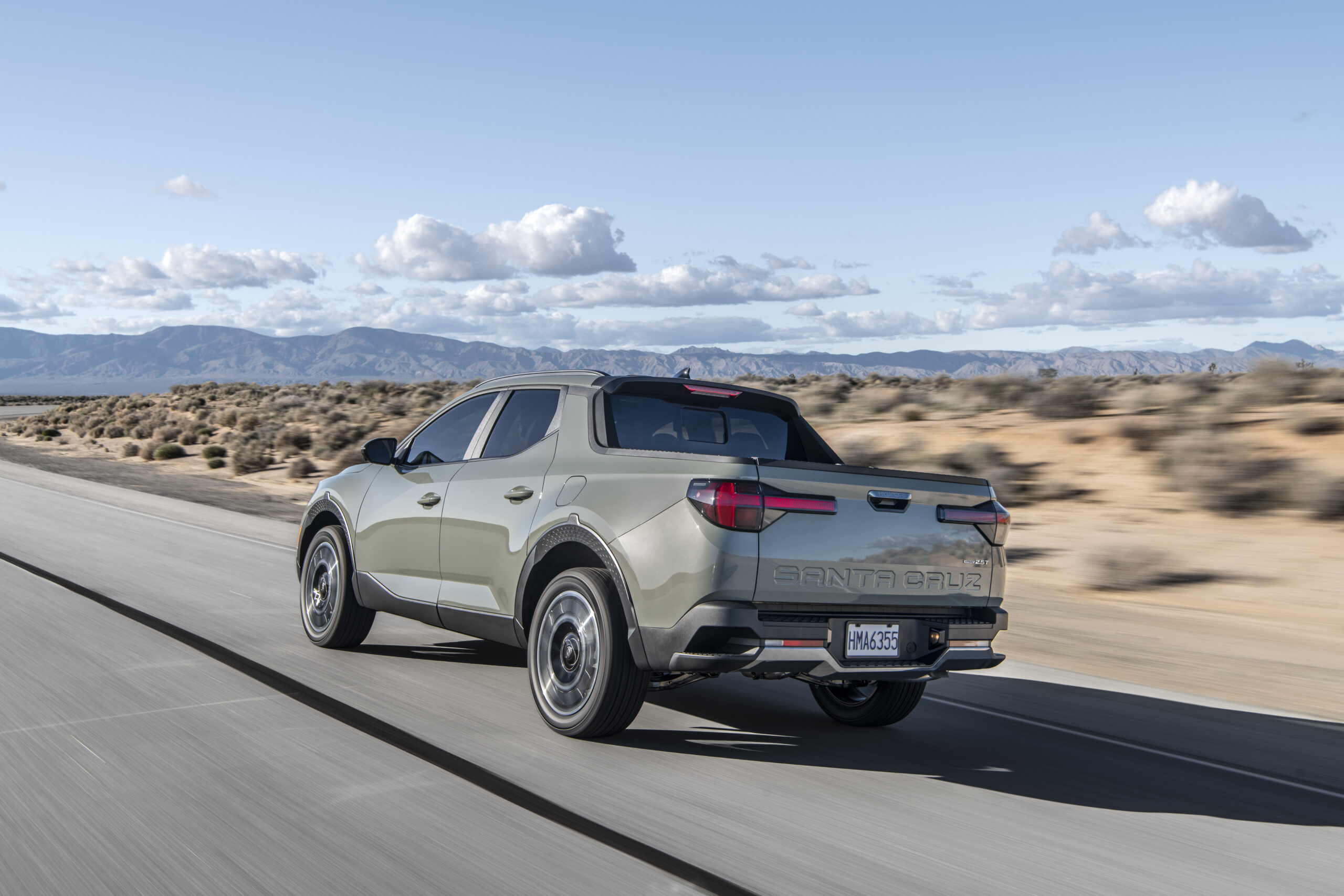 TEST DRIVES1 month ago
2026 Hyundai Santa Cruz Limited AWD
-
 TEST DRIVES1 month ago
2026 Subaru Outback Touring
-
 TEST DRIVES4 weeks ago
Lamborghini prepares multiple launches for 2026 as electrification plans continue
-
 RACING4 weeks ago
George Russell Leads Final Barcelona Practice As Kimi Antonelli Receives Reprimand
-
 RACING1 month ago
Why Formula 1 Has Pit Lane Speed Limits And How They Are Measured
-
 TEST DRIVES2 months ago
Why America’s Heavy-Duty King Still Dominates
-

 NOW TRENDING1 month ago
Porsche Creates A Buzz Lightyear-Inspired 911 GT3 RS That Looks Ready To Go “To Infinity And Beyond”
You must be logged in to post a comment Login