
INTELLIGENT MOBILITY
U.S. EV Charging Network Expands as Fast Chargers Surge

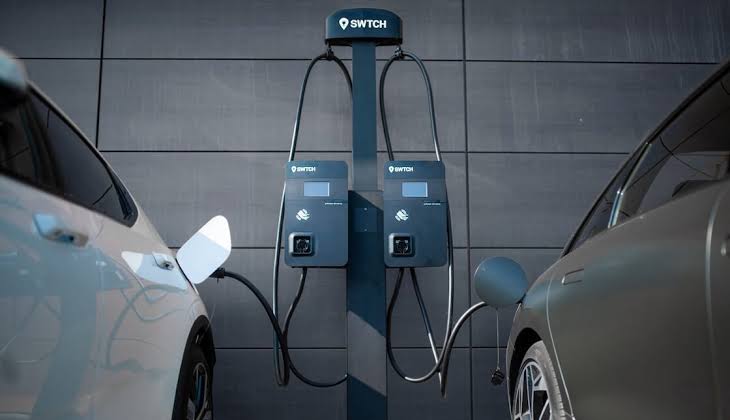
Public EV charging infrastructure continues to expand across the United States, with high-power stations growing even as electric vehicle sales face a slower market.
U.S. charging infrastructure keeps expanding
The American EV market is going through a complicated period.
Electric vehicle sales have softened, but public charging infrastructure continues to grow. The result is a rapidly expanding network that is becoming more important for drivers who cannot rely entirely on home charging.
As of August, the U.S. had more than 80,000 public charging locations and over 250,000 individual charging ports, according to the data cited in the source material. Thousands more ports are being added each quarter.
The growth matters because access to charging remains one of the key concerns for people considering an EV.
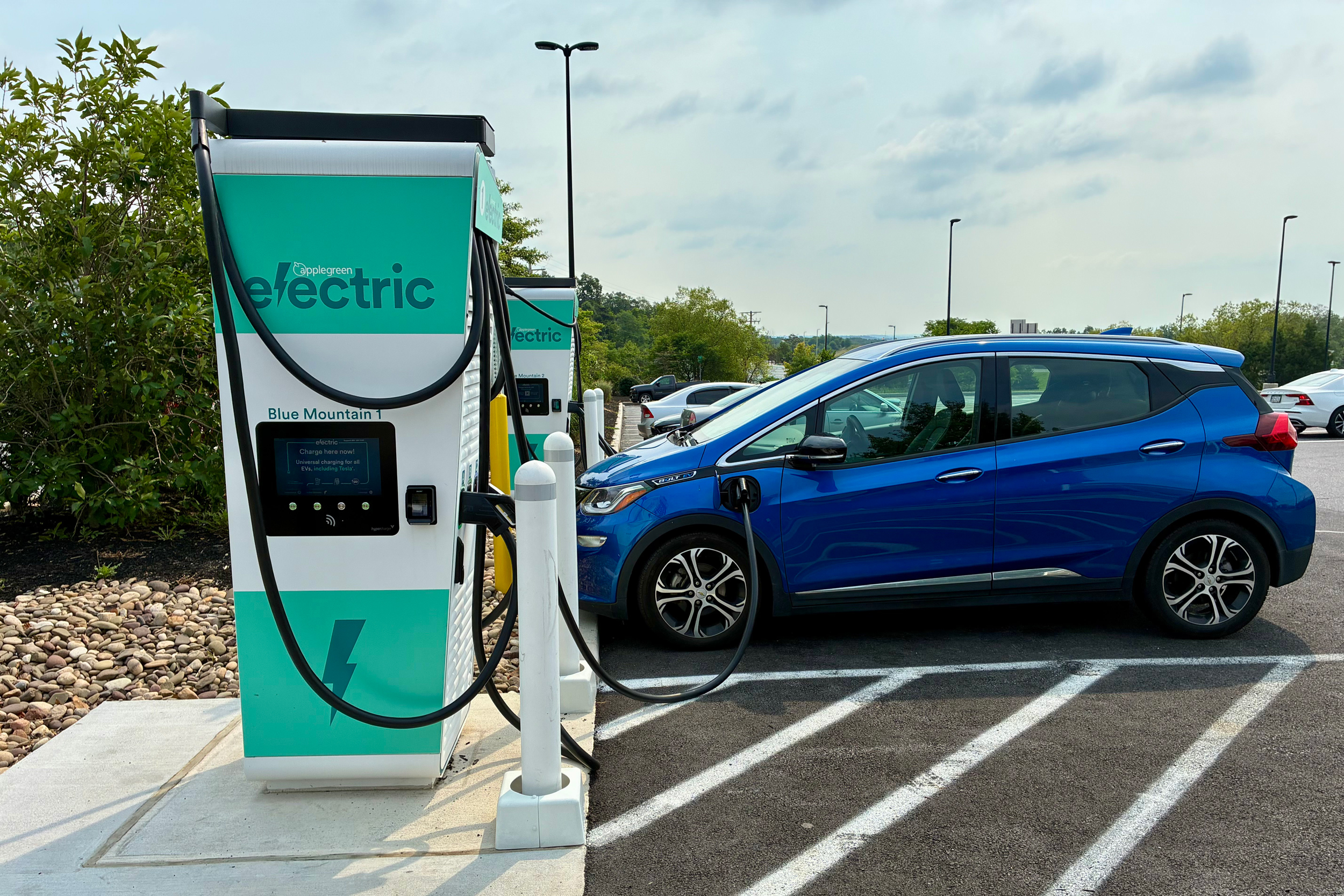
An EVgo fast-charging installation operates at a Meijer location as charging networks expand across the U.S.
The industry is also building larger charging sites.
In Warren, Michigan, EVgo and General Motors opened a 12-stall flagship charging station at a Meijer store. The site supports both CCS and NACS connections and can deliver up to 350 kW. EVgo says compatible vehicles can recover a full charge in as little as 15 minutes, depending on the vehicle and conditions.
The station is part of a broader expansion.
EVgo says more than 40 flagship stalls were already operating nationwide in August, with more than 100 expected by the end of 2026. GM is supporting the expansion as part of its effort to improve EV charging access.
Not all chargers work the same way
Charging speed depends heavily on the type of equipment.
There are three main charging levels.
Level 1 uses a standard 120-volt household outlet. It is the slowest option and is generally better suited to long charging sessions at home.
Level 2 uses 240-volt power. It is much faster and is commonly installed at homes, workplaces and public destinations.
DC fast charging, sometimes called Level 3, is designed for much shorter stops. Depending on the vehicle and charger, a significant amount of range can be added in minutes rather than hours. The U.S. Department of Energy notes that DC fast equipment can reach power levels of up to 500 kW.
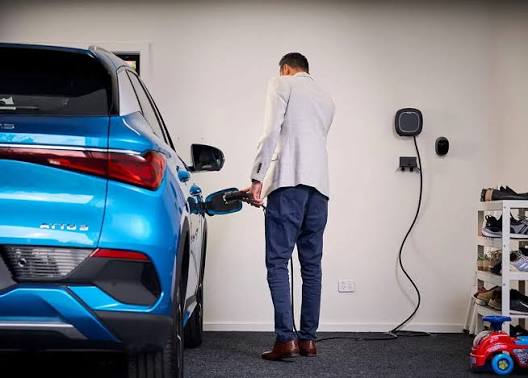
EVgo is expanding its fast-charging network with larger sites designed to improve access and reliability.
That distinction is increasingly important.
A driver making a long-distance trip needs a different charging experience from someone leaving an EV connected overnight at home.
Public DC fast chargers are therefore becoming a major part of the national charging strategy.
More chargers could help EV adoption
The relationship between charging infrastructure and EV sales is not simple.
More chargers can reduce range anxiety. They can also make EV ownership easier for drivers who live in apartments or homes without dedicated charging.
The 2026 JD Power EVX Ownership Study found that satisfaction with public-charging availability increased substantially year over year. The study said availability was the most improved public-charging factor for both premium and mass-market BEV owners.
But charging is not the only obstacle.
Vehicle price remains a major issue for many shoppers. A larger charging network can solve one barrier without necessarily solving affordability.
That creates a two-part challenge for automakers and charging companies: make charging easier while also bringing EV prices closer to what mainstream buyers can afford.
Retail locations are becoming charging destinations
One of the biggest changes is where chargers are being installed.
Large retail locations can offer several advantages. Drivers can shop, eat or use other services while the vehicle charges.
That is exactly what EVgo and GM are doing with the Meijer flagship site in Michigan. The location combines high-power chargers with access to groceries and other amenities.
EVgo is also expanding its relationship with Meijer across the Midwest.
The companies announced plans for up to 480 additional fast-charging stalls at as many as 60 Meijer properties across Michigan, Illinois, Wisconsin, Indiana, Ohio and Kentucky.
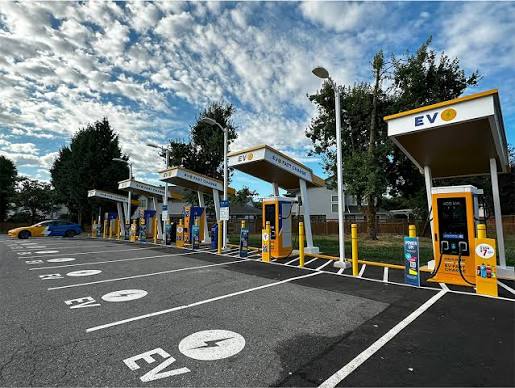
Large public charging sites are increasingly being integrated into shopping and commercial areas.
This model also addresses one of the practical problems with charging.
A long charging stop does not necessarily have to mean sitting in a parking lot.
When chargers are located at supermarkets, restaurants, hotels or shopping centers, drivers can use that time for other activities.
Reliability matters as much as speed
More chargers do not automatically mean a better charging experience.
The 2025 JD Power EVX Public Charging Study found that non-charging visits had fallen to their lowest level in four years, suggesting that reliability was improving. However, the study also found that satisfaction with DC fast charging remained sensitive to cost and payment experience.
That is an important distinction.
A broken 350-kW charger is still a problem.
A functioning charger that is too expensive can also discourage repeat use.
For charging networks, the next phase is therefore not only about adding more hardware. It is also about reliability, availability, payment systems and location convenience.
Charging infrastructure is growing despite a softer EV market
The U.S. charging network is expanding during a period of uncertainty for EV demand.
That may seem contradictory, but infrastructure projects often take years to plan and build. Companies are making decisions based not only on today’s sales but also on the number of EVs expected to use the network in the future.
EVgo and GM are one example.
Their new flagship sites use more stalls, higher charging power and better access to nearby amenities. The idea is to make public charging feel more like a normal stop during a road trip.
The Department of Energy also continues to describe a robust public charging network as an important part of wider EV adoption in the United States.
EV charging still has room to improve
The U.S. network is much larger than it was several years ago.
Yet the industry still has major work ahead.
Drivers want chargers that are available, reliable, fast and affordable. They also need infrastructure in the places where they actually live, work and travel.
That includes apartment-heavy areas, highways, shopping centers and smaller communities.
The U.S. EV charging network is clearly expanding, even as EV sales face a period of slower growth. The next challenge will be making that larger network consistent enough that charging becomes a routine part of owning an electric vehicle rather than one of the biggest concerns surrounding the technology.






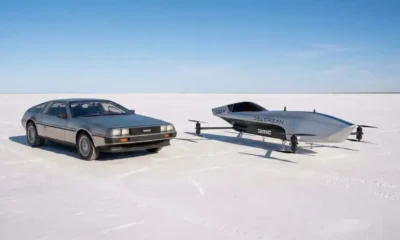



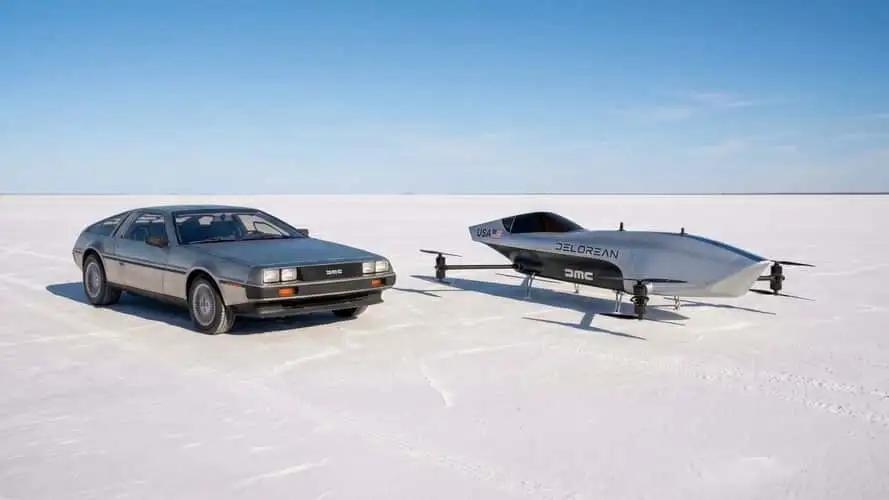
DeLorean will represent the United States in the Airspeeder electric aircraft racing series.
DeLorean Motor Company is entering electric aircraft racing as the constructor behind the U.S. team in the Airspeeder International Series. The program begins in November 2026, with DeLorean initially competing using a standardized electric racing aircraft before developing its own design for the 2027-28 season.
DeLorean Joins the Airspeeder International Series
DeLorean announced its entry at TechCrunch Disrupt 2026, marking a new direction for a brand best known for its iconic stainless-steel sports car. Rather than launching another conventional road vehicle, the company is joining a racing championship built around electric vertical takeoff and landing aircraft, known as eVTOLs.
The DeLorean Airspeeder Team will represent the United States when the 2026-27 season begins in November. It will compete against national teams from other countries in a series designed to explore the possibilities of high-performance electric flight.
Airspeeder races use three-dimensional courses marked by virtual gates instead of conventional painted track boundaries. Pilots navigate these courses using onboard sensors and collision-avoidance technology designed to help manage the risks of high-speed competition.
The championship was created by Australian entrepreneur Matt Pearson, who sees racing as a way to develop and demonstrate emerging electric aviation technology. For DeLorean, the partnership also offers an opportunity to expand its brand into a new category of motorsport.

The Airspeeder International Series brings electric vertical takeoff and landing aircraft into competitive racing.
DeLorean Will Race the Standardized Mk3C First
For its debut season, the DeLorean Airspeeder Team will compete with the standardized Airspeeder Mk3C. The aircraft uses the series’ established technical platform, allowing DeLorean to enter the championship without immediately developing a completely new racing machine.
During this initial phase, DeLorean’s primary responsibility will be the team’s branding and visual identity rather than the core engineering of the aircraft. This arrangement gives the company time to learn from competition before moving toward a more independent technical program.
The standardized approach also provides a common starting point for the championship’s competitors. It allows the series to focus on racing while giving participating constructors an opportunity to develop their own designs in subsequent seasons.
The pilot lineup, detailed aircraft specifications and complete sporting program for DeLorean’s debut remain to be announced.
DeLorean Plans Its Own Electric Racing Aircraft for 2027-28
The longer-term ambition is to move beyond the standardized aircraft. Starting with the 2027-28 season, DeLorean plans to develop its own racing aircraft in collaboration with engineering students from the University of California, Berkeley, and Georgia Institute of Technology.
The academic partnerships are expected to contribute engineering knowledge and design analysis to the development process. However, the final aircraft configuration, performance targets and technical specifications have not yet been disclosed.

DeLorean plans to develop a dedicated racing aircraft after its first season using the standardized Mk3C.
The project could give DeLorean a more substantial role in electric aviation by moving from team branding toward aircraft development. That transition will depend on engineering progress, testing, regulatory requirements and the series’ technical framework.
DeLorean has also highlighted the importance of safety standards and regulatory compliance. Chief brand officer Cameron Wynne described the program as an opportunity to contribute to the frameworks needed for advanced air mobility, alongside the development of flight technology.
Why DeLorean Is Expanding Beyond Road Cars
The Airspeeder partnership reflects an effort to broaden DeLorean’s identity beyond its best-known vehicle. The original DeLorean sports car became a cultural icon, while the company’s more recent reinvention has sought to establish a wider presence in modern automotive and mobility technology.
Electric aircraft racing provides a different platform for that ambition. It connects the brand with electric propulsion, advanced engineering and a motorsport audience interested in emerging forms of transportation.
The partnership does not, however, establish that DeLorean is developing a consumer flying car. The announced program concerns competitive electric aircraft, and the company has not confirmed plans to sell a road-and-air vehicle to the public.

The new racing program gives DeLorean a presence in electric aviation without confirming a consumer flying-car project.

Cadillac’s F1 car sends real-time performance data to engineers across two continents.
Cadillac’s Formula 1 team relies on an advanced data network to monitor its race car, analyze performance and help engineers make decisions during a Grand Prix. The system connects the trackside operation with technical teams in Silverstone, England, and Charlotte, North Carolina.
Cadillac’s F1 Car Is a Supercomputer on Wheels
A modern Formula 1 car collects enormous amounts of information while running on track. Cadillac’s MAC-26 is equipped with sensors and electronic systems that monitor vehicle performance, providing engineers with detailed information about how individual components behave.
According to General Motors, the car could contain more than 10 miles of wiring. That network connects systems responsible for measuring everything from power output and tire pressures to airflow around the vehicle.
The sensors capture changes in the car’s behavior with millisecond-level precision, allowing engineers to examine performance in detail. Even small variations can provide useful information when the team is searching for improvements in speed, efficiency and consistency.

Cadillac’s F1 car uses extensive electronic systems to monitor performance on track.
The information is not limited to the engineers working at the circuit. Data is also shared with specialists at Cadillac’s engineering facilities, connecting the trackside operation with teams working thousands of miles away.
How Cadillac Sends Race Data Around the World
The data network links the race car with engineers at the circuit and technical teams in Silverstone and Charlotte. This allows specialists to analyze information from different locations and contribute to the team’s understanding of the car’s performance.
Engineers use the incoming data to identify patterns, investigate technical issues and assess whether changes could improve the car. Their work supports decisions made during a race as well as preparations for future events.
Engineers analyze live telemetry to understand how the car performs under racing conditions.
The system also supports collaboration between departments. While trackside engineers focus on immediate performance and race operations, specialists elsewhere can examine the data and help investigate problems that require deeper analysis.
This connection is especially important in Formula 1, where teams must process complex information under tight deadlines. The ability to distribute data quickly helps engineers coordinate their work and prepare for changing conditions.
Data Helps Cadillac Prepare for Every Race
The information collected on track also contributes to Cadillac’s simulator programme in Charlotte. General Motors says the team uses a highly accurate driver-in-the-loop simulator to practice and prepare for upcoming races.
A driver-in-the-loop simulator combines a virtual racing environment with a physical driving interface, allowing a driver to experience simulated circuit conditions while engineers evaluate the car’s behavior. Data from the real car can help inform this preparation, although the precise information and workflows used by Cadillac have not been publicly detailed.

Simulator work allows Cadillac’s engineers and drivers to prepare for future race weekends.
This process helps the team study different scenarios before arriving at a circuit. Engineers can evaluate setup options, understand vehicle behavior and support the driver’s preparation without using valuable track time.
The work also places significant responsibility on the technical staff. Ryan Tincher, GM Motorsports’ IT operations manager, has described the pressure involved in maintaining the systems that support the team’s performance.
For Cadillac, data collection is only one part of the challenge. The team must also transmit, interpret and apply that information effectively. In a sport where small performance differences can influence results, reliable communication between the car and engineers around the world is an essential part of the operation.
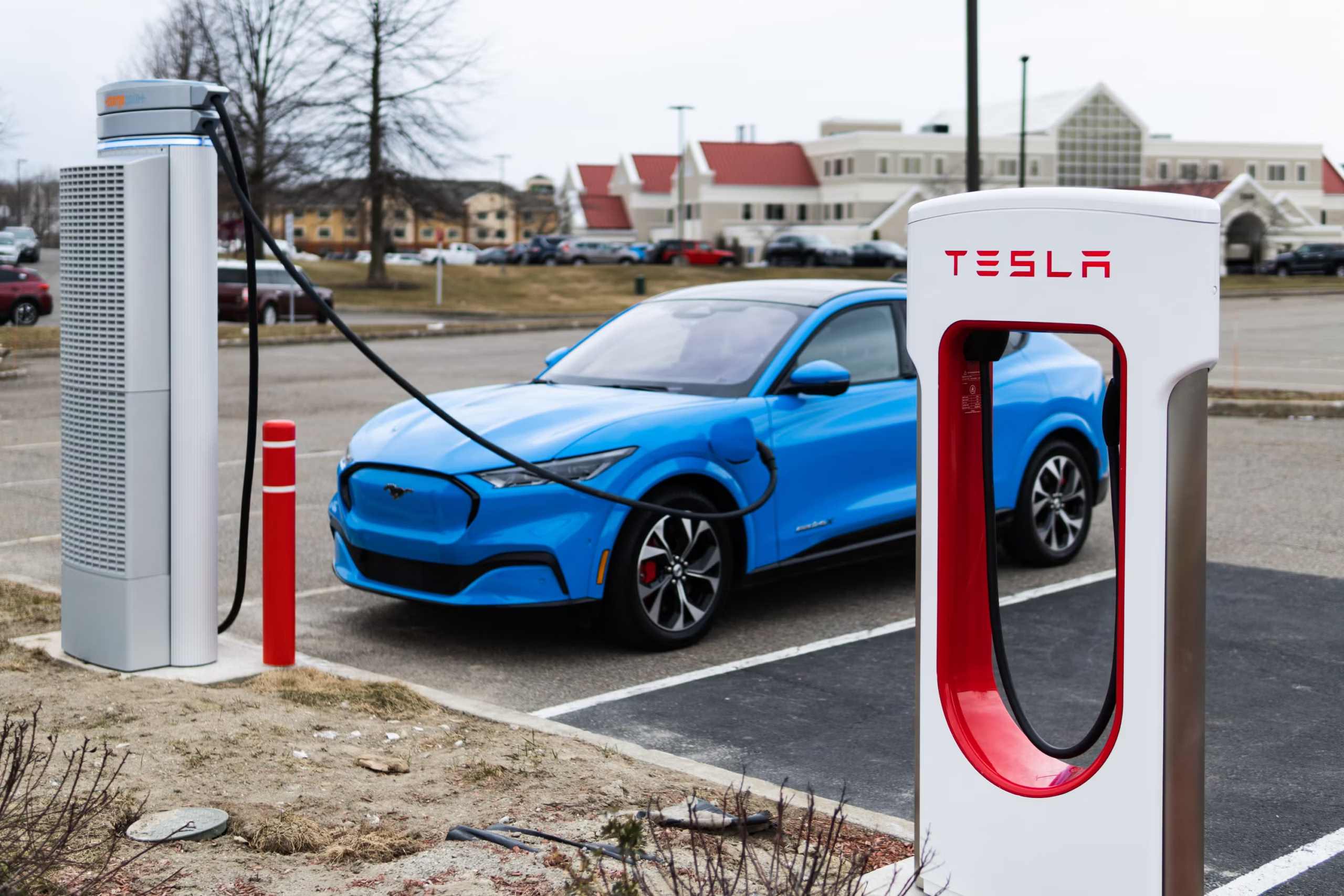
America’s EV market is slowing, but public charging infrastructure continues to expand with more plugs, faster charging and improved reliability.
The U.S. electric vehicle market is facing a difficult period, but its charging infrastructure is moving in the opposite direction. Even as EV sales decline, charging companies continue to add public stations, install more plugs and improve the experience for drivers. The expansion could help existing EV owners today while preparing the country for a possible recovery in electric car demand.
EV Sales Fall as Charging Infrastructure Expands
Electric vehicle demand in the United States has weakened following the removal of federal tax incentives and changes to policies supporting electrification. EVs accounted for around 12% of the new-car market at their peak in the third quarter of 2025, but their share has hovered around 6% during 2026.
Despite that slowdown, charging providers are continuing to expand their networks. By early October, the industry had added nearly 2,000 public charging stations and more than 12,000 plugs during the year. The pace puts the sector on track to approach the record number of public plugs installed in 2025.

Public charging infrastructure continues to expand despite weaker electric vehicle sales.
The contrast highlights a significant shift in the market. Automakers are reassessing some electric vehicle plans, while charging companies continue investing in infrastructure that could support future demand.
Faster Chargers and Better Locations Improve the Experience
The expansion is not just about adding more charging points. Providers are also installing stations with more plugs, higher charging speeds and locations that offer useful amenities nearby.
These improvements address common frustrations experienced by EV drivers, including waiting for an available charger, dealing with unreliable equipment and stopping at locations with limited facilities. More charging points at each site can also help reduce congestion during busy travel periods.

Higher-power chargers and additional plugs can make electric road trips more convenient.
Tesla remains a major player in the U.S. charging market, while companies such as ChargePoint and EVgo are also investing in network expansion. Their challenge is to make charging more convenient while building sustainable businesses. Infrastructure growth alone does not guarantee profitability, particularly when installation, maintenance and operating costs remain substantial.
The Charging Build-Out Could Help Used EV Buyers
A stronger public charging network could benefit drivers who already own electric vehicles, as well as people considering a used EV. Better access to charging can make daily driving and longer trips more practical, particularly for households without convenient home charging.
The infrastructure expansion also addresses a longstanding challenge for EV adoption: drivers may hesitate to buy an electric car if they are uncertain about finding a reliable charger. A broader network can help reduce that concern, although charging access remains uneven across the country.
Much of the recent expansion has been concentrated in coastal states, where EV adoption and charging demand are relatively established. However, infrastructure deployment is also accelerating in states such as Texas and Florida.

Convenient charging locations can make EV ownership more practical for a wider range of drivers.
For used EV shoppers, a more accessible charging network may help make electric ownership a more realistic option. The benefit will depend on local coverage, charger reliability, charging prices and whether the available equipment is compatible with a particular vehicle.
Can Charging Infrastructure Outlast the EV Slowdown?
The central question is whether charging companies are building capacity for a future recovery in demand or risking investment ahead of a market that may take longer to rebound.
Industry executives remain optimistic that more affordable electric vehicles could attract new buyers. Higher gasoline prices could also improve the appeal of EVs, although consumer demand will depend on several factors, including vehicle prices, financing costs, public policy and charging convenience.
For now, the charging industry is continuing to expand even as the wider EV market faces headwinds. More stations, additional plugs and improved equipment represent tangible progress for drivers, regardless of how quickly new-car sales recover.
The long-term outcome remains uncertain. However, if electric vehicle demand strengthens again, a larger and more reliable charging network could help the U.S. market accommodate that growth. If the recovery takes longer than expected, charging providers will need to ensure that their investments can be supported by actual usage and sustainable business models.
-
 NOW TRENDING2 months ago
Tesla Cybercab Gets September 3 Austin Launch Date
-
 INTELLIGENT MOBILITY2 months ago
GM Super Cruise: How It Works and What Comes Next in 2028
-

 TEST DRIVES1 month ago
2026 Toyota GR Supra MkV Final Edition
-

 TEST DRIVES2 months ago
2025 Ford Bronco Sport Badlands: The Adventure SUV You Can Drive Every Day
-
 NOW TRENDING2 months ago
2027 Toyota Corolla Celebrates 60 Years With Special Edition
-
 NOW TRENDING2 months ago
Aston Martin Valen: The Most Powerful Front-Engined Supercar
-
 RACING2 months ago
FIA Reveals Second ADUO Results With Red Bull-Ford Still on Top
-

 NOW TRENDING2 months ago
2027 Jeep Wrangler Smoky Mountain Edition Debuts With 4×4
You must be logged in to post a comment Login