
Formula1
Ferrari Baku Struggles: Vasseur Explains the Overtaking Problem


Ferrari left Baku with fourth and sixth, but Fred Vasseur says the SF-26 lacked the straight-line performance needed to attack its rivals.
Ferrari knew Baku would be difficult
Ferrari entered the 2026 Azerbaijan Grand Prix expecting a demanding weekend. The long Baku straights exposed one of the SF-26’s main weaknesses, especially against cars with stronger top-speed performance.
Charles Leclerc finished fourth after starting from the front row, while Lewis Hamilton came home sixth. Ferrari still scored valuable points, but the team was unable to challenge Mercedes and Red Bull for the podium.
Fred Vasseur had already warned before the race that Baku could be difficult because of Ferrari’s expected deficit on the long straights.
The race confirmed those concerns.
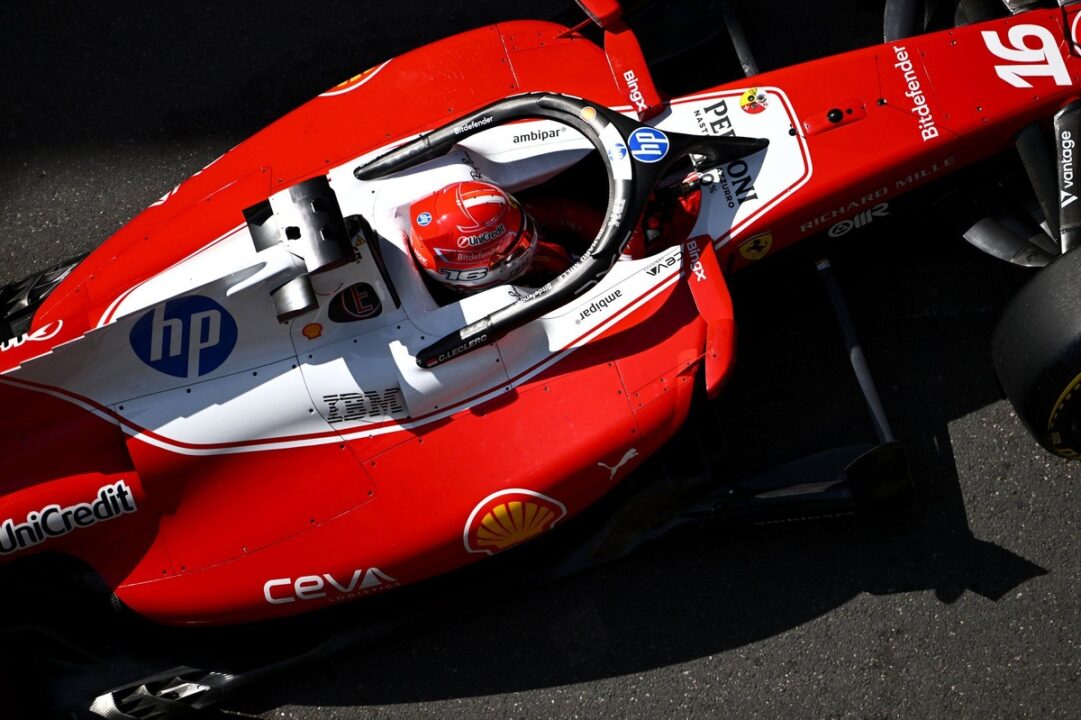
Charles Leclerc finished fourth in Baku after starting second.
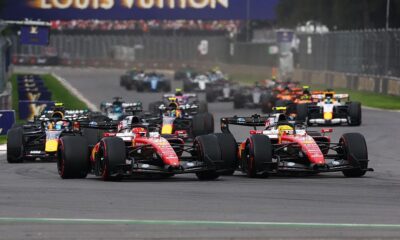
Ferrari’s single-lap pace was strong enough to put Leclerc on the front row. He qualified second behind George Russell, while Hamilton started sixth.
The problem appeared more clearly during the race.
Vasseur explained that Ferrari was losing ground repeatedly and could not use its pace effectively to attack cars ahead. The SF-26 was forced into a defensive race rather than one based on overtaking.
Straight-line speed limited Ferrari’s options
Baku places a huge emphasis on efficiency and energy deployment.
The circuit combines slow 90-degree corners with a very long full-throttle section. That makes straight-line speed especially important when a driver is trying to complete a pass.
Ferrari did not have enough of that advantage.
Vasseur said the team was losing positions and eventually had to concentrate on defending. Formula 1’s official race report also highlighted Ferrari’s performance deficit on the long straights and noted that the team was missing several tenths per lap compared with its main competitors.
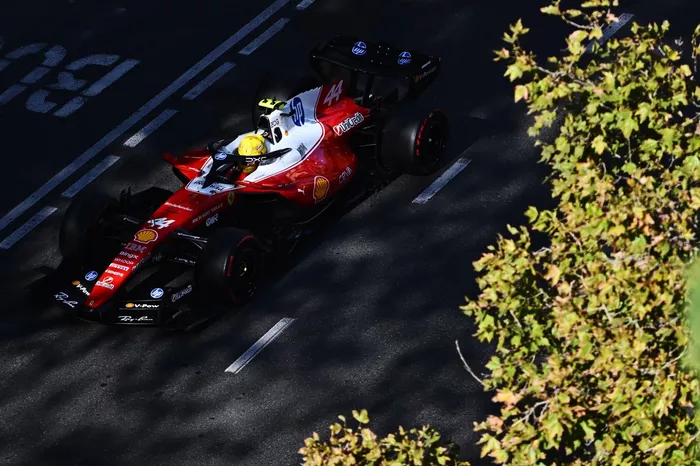
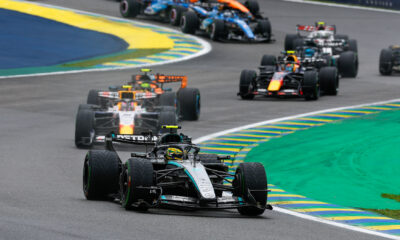
Lewis Hamilton finished sixth after struggling for pace on the straights during the Baku race.
Hamilton’s race reflected the same limitation.
The Ferrari driver battled Lando Norris for position at one stage, but the car struggled to maintain the advantage through the faster sections of the circuit. He ultimately finished behind Leclerc and Kimi Antonelli.
The result was not a disaster.
Ferrari scored 20 points in Azerbaijan and extended its advantage over McLaren in the Constructors’ Championship. McLaren left Baku without a point after Oscar Piastri finished 13th and Lando Norris retired.
Still, Ferrari expected more after Leclerc qualified second.
Ferrari sees a different opportunity in Malaysia
The next race will take place at Sepang in Malaysia, a circuit with very different characteristics from Baku.
That change could help Ferrari.
Vasseur said the importance of the engine should be lower in the next two races. Ferrari therefore expects the car to be more competitive in Malaysia and Singapore than it was on the streets of Baku.
The team still needs to analyze what happened.
Vasseur acknowledged that Ferrari could have executed the weekend better, even though the basic limitations of the car were visible on Sunday.
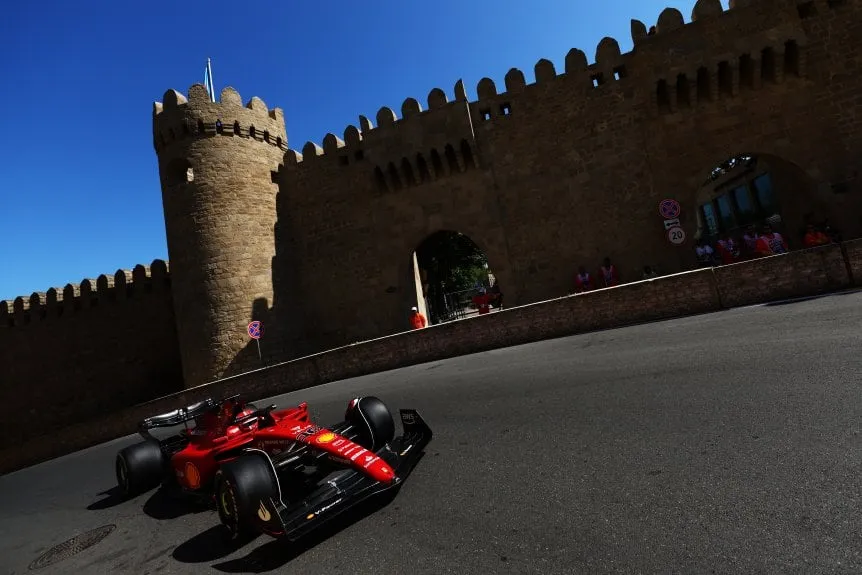
Leclerc placed Ferrari on the front row before the team’s race-day pace deficit became more apparent.
The contrast between qualifying and the race is one of the clearest points from Ferrari’s weekend.
Leclerc put the SF-26 second on the grid, proving that the car had enough one-lap performance to fight near the front. On Sunday, however, Ferrari could not maintain the same level against Mercedes and Red Bull over a full stint.
Tyre behavior also played a role.
Hamilton said Ferrari struggled to keep the tyres consistently inside the correct operating window. He added that energy management would be another area for the team to study before Sepang.
That gives Ferrari several areas to investigate.
Ferrari leaves Baku with points and questions
Ferrari achieved an important secondary objective by extending its Constructors’ Championship advantage over McLaren.
However, the gap to Mercedes and Red Bull remains the bigger concern.
Baku showed that Ferrari’s performance can look competitive over a single lap but become more limited when straight-line efficiency becomes critical. That difference will be important as the team evaluates the remaining races of the 2026 season.
The next two rounds should provide a different test.
For Ferrari, the goal is to use the lessons from Baku and return to a circuit where engine performance and top speed carry less weight.
Vasseur’s message is clear: Ferrari scored useful points in Baku, but the SF-26 still needs more performance if the team wants to turn strong qualifying pace into race victories.










-

 NOW TRENDING2 months ago
Land Rover Defender Recall 2026: 23,677 JLR SUVs Affected
-

 NOW TRENDING2 months ago
Hyundai September 2026 Sales Hit Record 77,439
-

 NOW TRENDING2 months ago
2027 Silverado HD: New 8.3L Duramax V8 Revealed
-

 NOW TRENDING2 months ago
Cadillac EVs 2026: All Five Electric Models Explained
-

 NOW TRENDING2 months ago
Porsche Gas Macan Returns in 2028 as EV Plans Evolve
-

 INTELLIGENT MOBILITY2 months ago
GM and PG&E Make Home EV Charging Easier for Buyers
-

 INTELLIGENT MOBILITY2 months ago
Waymo Safety Data Shows 82% Fewer Injury Crashes
-

 NOW TRENDING2 months ago
2027 Toyota Grand Highlander Woodland Adds Adventure