
Formula1
Las Vegas GP 2026: Verstappen and Russell’s Unfinished Fight

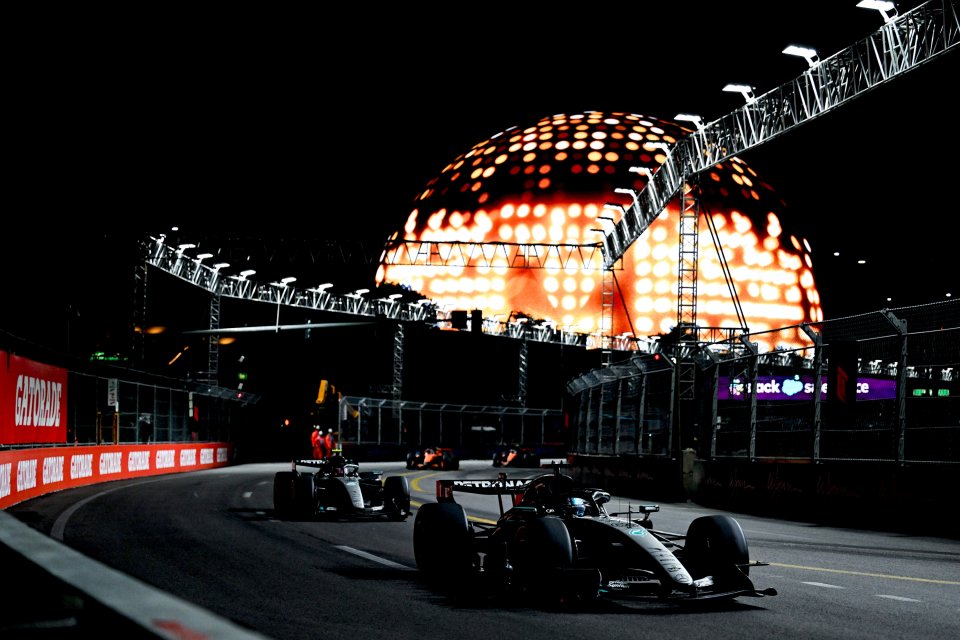
Max Verstappen won in Las Vegas. George Russell finished ninth. Between those two results lies a rivalry that keeps testing the difference between racing hard and making a fight personal.
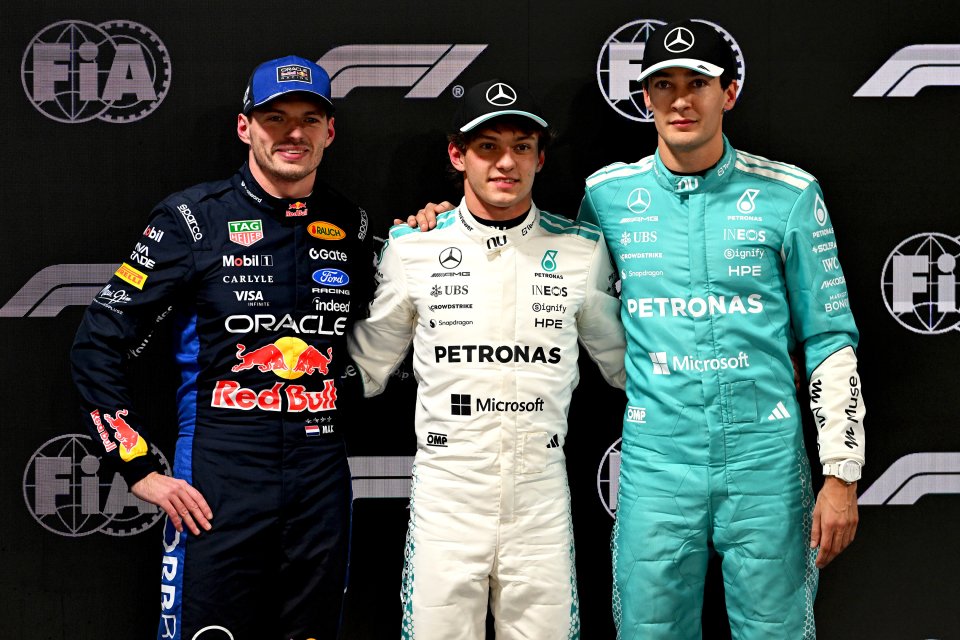
Max Verstappen and George Russell spent the 2026 Las Vegas Grand Prix taking the lead away from each other. Then Russell locked up late in the race, and a contest that had repeatedly brought them together ended with the Mercedes driver down in ninth. Verstappen won, with Lando Norris and Oscar Piastri completing the podium.
For American fans watching Formula 1 on the Strip, the attraction was obvious: two drivers with history, close enough to challenge each other again and again. But reading the evening only as another episode of their feud misses its most useful lesson. Their racing, their relationship and the stewards’ decisions need to be judged separately.
The argument started before the race
The weekend had already produced a confrontation in final practice. According to the FIA’s Document 37, Verstappen braked earlier than expected approaching Turn 14 and changed direction under braking. Russell moved left and attempted to pass on the inside. The cars made contact.
The stewards issued Verstappen a warning. They considered his change of direction unpredictable and below the expected driving standard, while deciding that the circumstances did not justify a stronger penalty.
One detail deserves attention: the drivers discussed informal agreements about preparing a flying lap, but the stewards gave those understandings limited relevance. The cars’ movements and relative positions carried more weight. That distinction matters in a rivalry where both men have repeatedly disagreed over what the other should have done.
Baku made the disagreement visible
Their 2023 Azerbaijan Sprint supplied an early public flashpoint. Russell attacked Verstappen through the opening corners, with contact at Turn 2 damaging the Red Bull’s sidepod. Verstappen later recovered the position and finished third, ahead of Russell.
Afterward, they offered incompatible readings of the same exchange. Verstappen questioned the risk Russell had taken on the first lap. Russell defended fighting for the corner and rejected the idea that Verstappen’s status should make him yield.
That is the recurring tension: each expects the other to recognize a boundary that the other does not necessarily accept. The argument survives because finishing positions cannot settle that disagreement.
Qatar moved the fight into the hearing room
In Qatar in 2024, Verstappen received a one-place grid penalty for driving unnecessarily slowly during qualifying. Russell inherited pole position. Verstappen passed him at the start and won, but the sporting recovery did not end the dispute.
Verstappen said he had “lost all respect” for Russell after the stewards’ hearing. His objection concerned Russell’s conduct in that room as well as the penalty itself. The comment was Verstappen’s assessment of his rival, not an independent finding about Russell’s behavior.
Qatar widened the conflict. The question was no longer simply who had left enough room on track. It was also how aggressively one driver should argue a case against another. Winning the race could reverse the competitive disadvantage; it could not erase what had been said.
Spain showed the cost in points
At the 2025 Spanish Grand Prix, the dispute returned to contact. Following a late restart, Verstappen’s engineer advised him to let Russell pass after Verstappen had retained position by going off track. Verstappen appeared to slow at Turn 5, then accelerated and collided with the Mercedes.
A 10-second penalty dropped Verstappen from fifth to tenth. Russell finished fourth. Whatever interpretation viewers placed on the incident, its measurable consequence was straightforward: the Red Bull driver surrendered points.
Their disagreements have also extended beyond overtaking. Carsfera previously examined their contrasting positions in the F1 cooling-vest debate. That background shows why a new exchange between them attracts attention, but it should never replace evidence about the incident being discussed.
Why Las Vegas demanded a different reading
Saturday’s race repeatedly put the two drivers back within reach of each other. Passing for the lead did not necessarily produce an escape. The powerful slipstream made their next meeting part of the race’s structure, rather than proof that either driver was deliberately prolonging a personal confrontation.
Carsfera’s analysis of Monza’s slipstream battles provides useful context for that pattern. A pass can change the order without ending the contest. For viewers, the better question becomes who can make a position last, not simply who completes the most dramatic move.
Russell’s late lock-up settled his challenge. It does not, by itself, establish that anger caused the mistake. Equally, Verstappen’s victory does not cancel the practice warning. Keeping those conclusions separate gives both drivers a fairer assessment and makes the story more revealing than a scoreboard attached to an argument.
There is a practical way to follow their next encounter: identify the session, establish the maneuver, then check the official outcome. Practice etiquette, a qualifying penalty and a racing collision are different questions. Treating them as one continuous offense encourages us to pick a side before examining what happened. Las Vegas offered enough genuine competition to deserve a closer reading than that.
Las Vegas GP 2026 Gallery: Mercedes After Dark
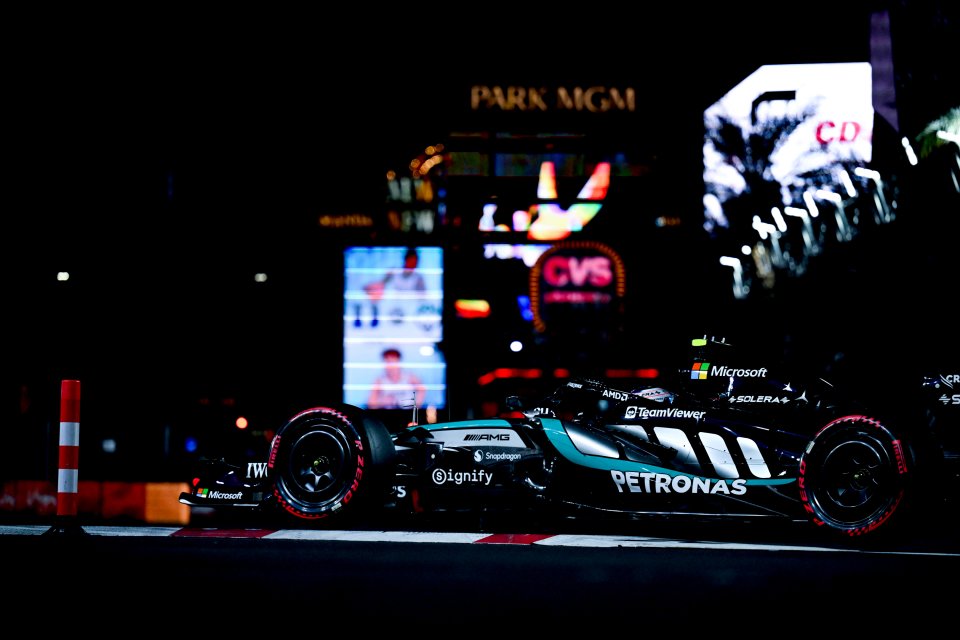
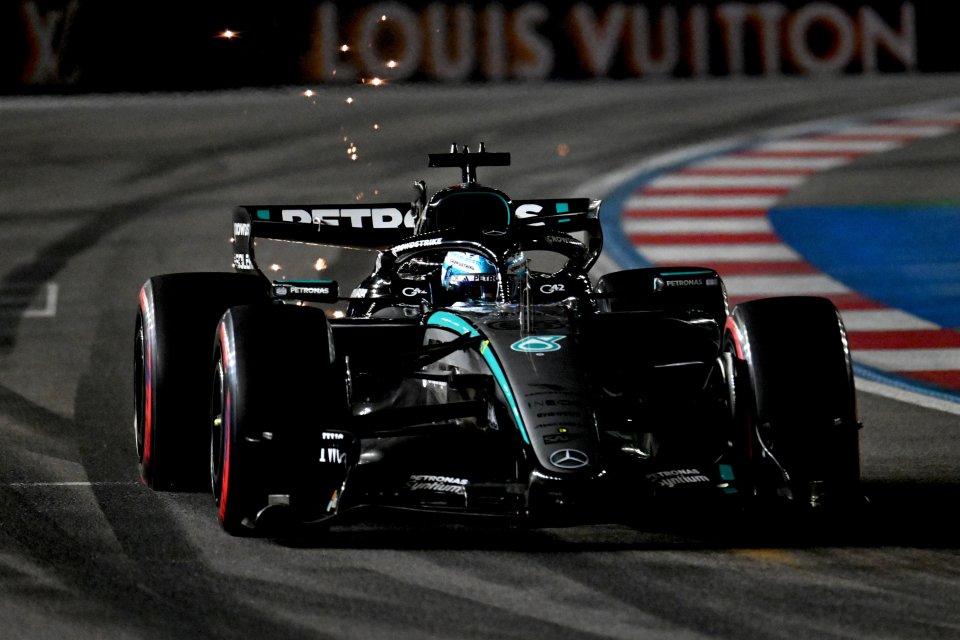
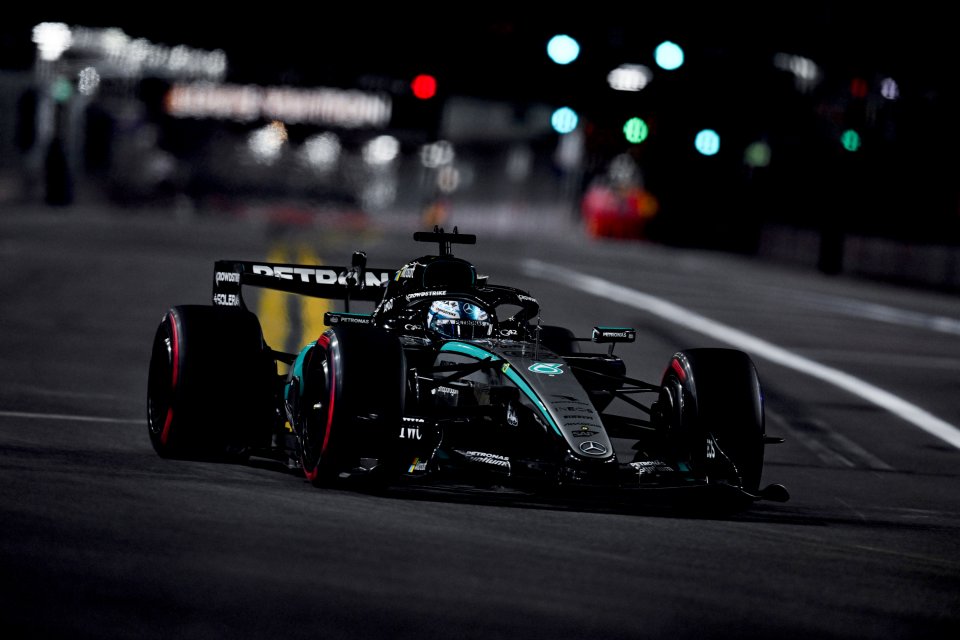
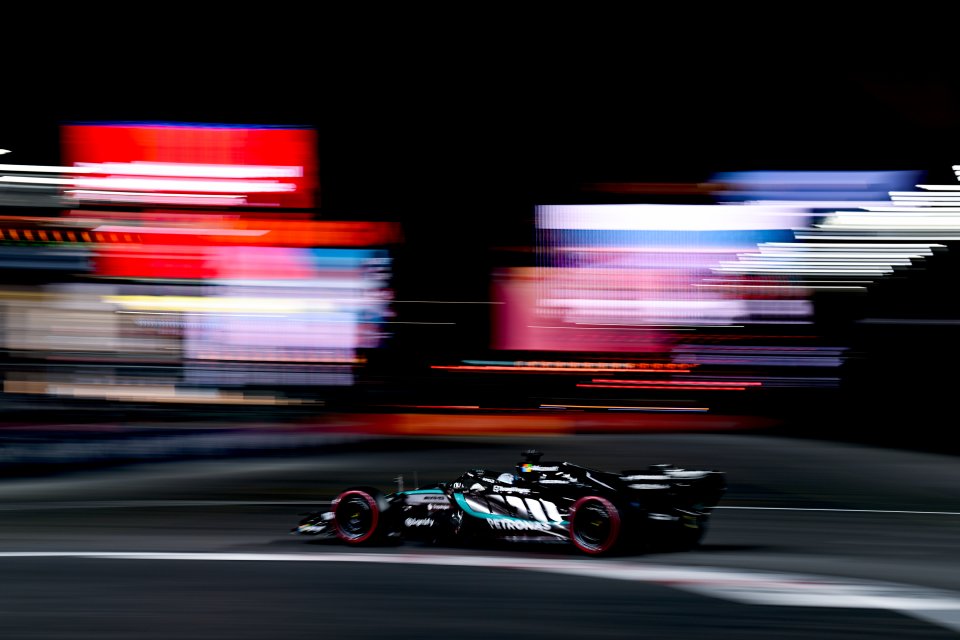
Las Vegas makes the setting part of every photograph. This selection follows the Mercedes through Friday’s running, from a tightly framed frontal view to a side profile beneath the city’s illuminated signs. Look at how the camera changes the impression of speed: blurred backgrounds emphasize movement, while the head-on images reveal the front wing, suspension and tire markings. The sparks and nearby curbing add another view of the car’s relationship with the street circuit.
Las Vegas GP 2026 Gallery: Faces Behind the Fight
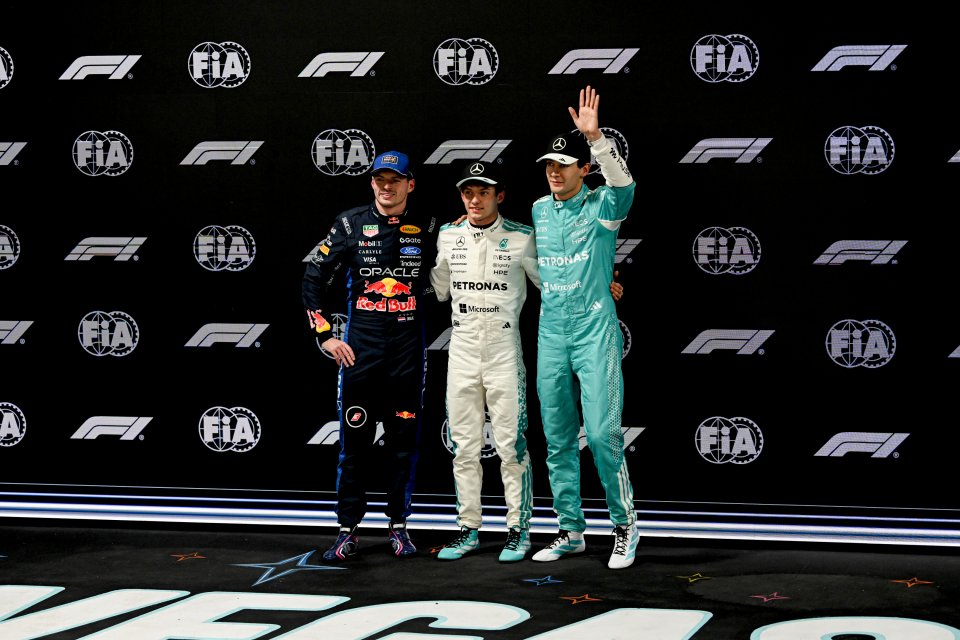
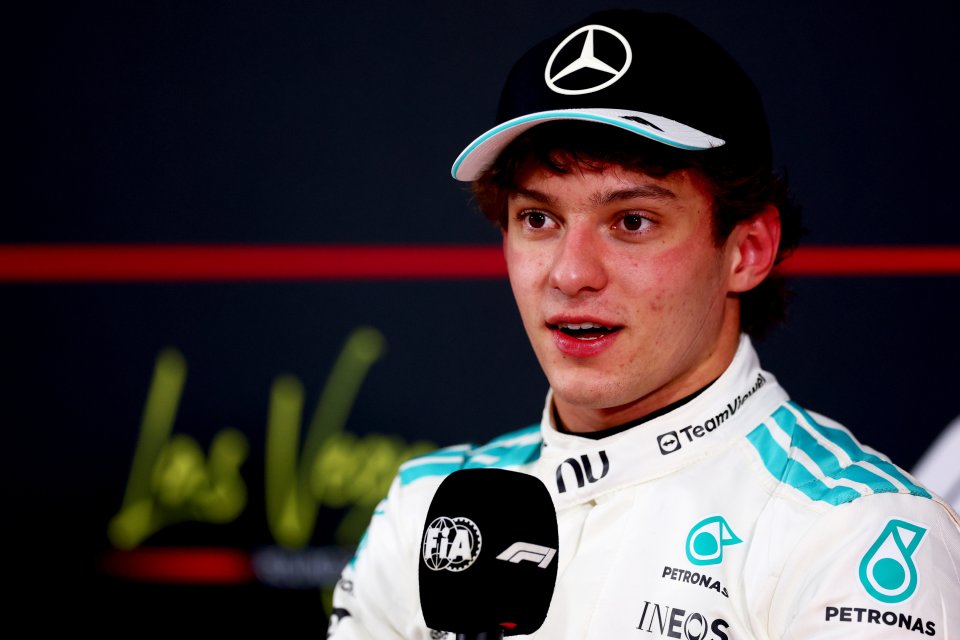
The second selection moves from the circuit to the people inside and around the cars. Helmet and cockpit details narrow the view to the driver’s immediate surroundings; the interview and group photograph widen it again to the public side of the weekend. Verstappen appears alongside both Mercedes drivers in the post-qualifying image, a useful reminder that rivalry and routine professional appearances coexist. A still photograph cannot establish what anyone is thinking, and these captions make no such claim.
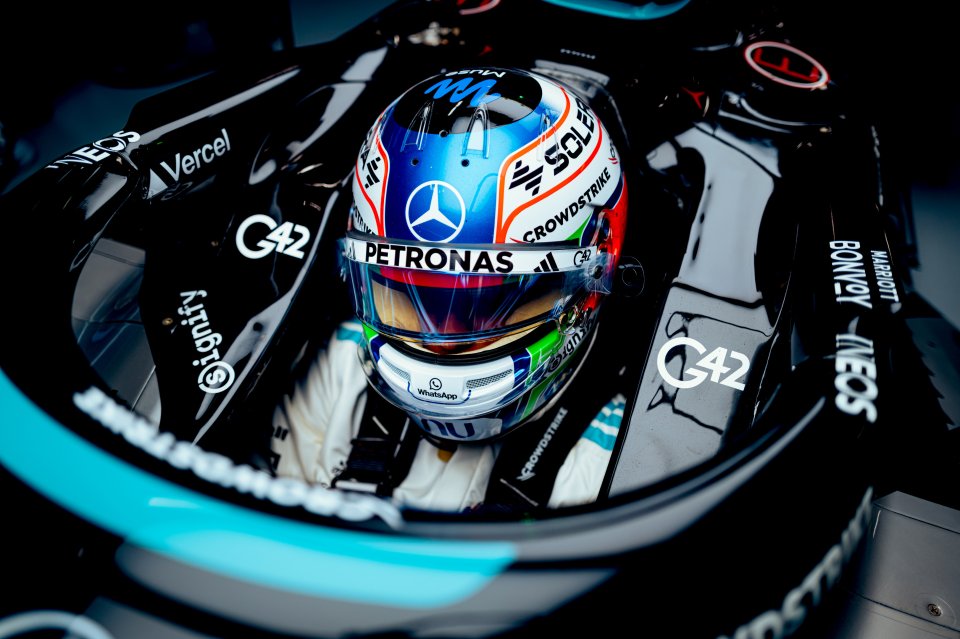
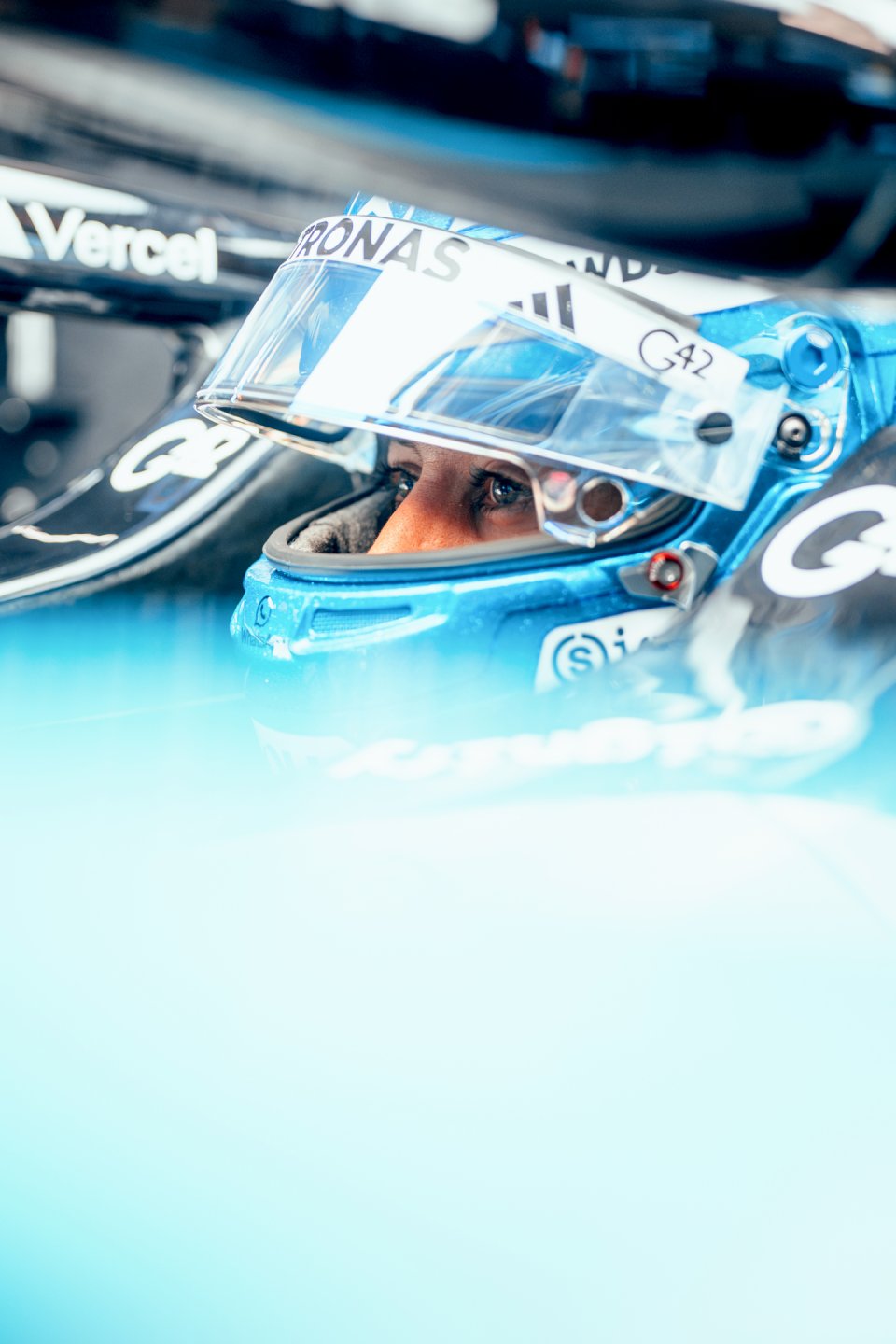
Carsfera’s assessment: Las Vegas strengthened Verstappen’s result against Russell, but it did not settle their long-running disagreement over acceptable conduct. The rivalry is most compelling when we measure the racing precisely and resist using the personal history to explain every mistake.








-
 NOW TRENDING2 months ago
Land Rover Defender Recall 2026: 23,677 JLR SUVs Affected
-
 NOW TRENDING2 months ago
Hyundai September 2026 Sales Hit Record 77,439
-
 NOW TRENDING2 months ago
2027 Silverado HD: New 8.3L Duramax V8 Revealed
-

 NOW TRENDING2 months ago
Porsche Gas Macan Returns in 2028 as EV Plans Evolve
-
 NOW TRENDING2 months ago
Cadillac EVs 2026: All Five Electric Models Explained
-
 INTELLIGENT MOBILITY2 months ago
Waymo Safety Data Shows 82% Fewer Injury Crashes
-
 NOW TRENDING2 months ago
2027 Toyota Grand Highlander Woodland Adds Adventure
-
 INTELLIGENT MOBILITY2 months ago
GM and PG&E Make Home EV Charging Easier for Buyers