
The Peugeot 408 debuts its 100% electric version, completing the multi-energy offering of this striking crossover with a coupé design. This option is crowned as the most powerful and efficient in the range.
The Peugeot 408 is positioned as an optimal solution for those seeking an electrified model with a daring approach. It takes the place of the brand’s extinct sedans. It is a car with fastback inspiration and a crossover approach with a coupé line. It presents a harmonious and stylized line, more dynamic than a conventional SUV. Furthermore, it maintains a generous ground clearance of 189 mm.
Developed on the EMP2 platform , the 408 measures 4.69 meters long, 1.85 meters wide, and 1.49 meters high. The wheelbase is 2.79 m. Notable design details include the elaborate grille, sharp daytime running lights, and the large front logo. The extremely attractive rear, with an almost straight cut and a curious spoiler with two aerodynamic appendages, also stands out.
Multi-Energy Range: Hybrid, PHEV, and 100% Electric
Peugeot maintains its multi-energy commitment in the 408 , offering options with the DGT’s Eco or ZERO environmental label. The entry-level version is the 408 Hybrid mild hybrid with 145 hp , which registers an average consumption of 5.1 liters per 100 km. Above this sits the 408 Plug-In Hybrid, which delivers 225 hp and achieves an all-electric range of up to 84 km.
Crowning the range is the electric E-408, which delivers 210 hp of power and 343 Nm of maximum torque. This electric model reaches a maximum speed of 160 km/h (self-limited) and accelerates from 0 to 100 km/h in 7.2 seconds.
E-408 Range and Charging
The E-408 is equipped with an NMC battery with 58.2 kWh of usable capacity. It announces an average consumption of 15.1 kWh per 100 km , which allows it to reach up to 451 km of range.
Regarding charging, the car includes an 11 kW AC charger as standard. Additionally, it accepts DC fast charging up to 120 kW. This figure allows it to go from 20 to 80% battery charge in about 30 minutes, in the best case. Thanks to this, the E-408 could gain 100 km of range in just over 10 minutes.

Interior and Technological Equipment
Inside, the design focuses on the latest evolution of Peugeot’s i-Cockpit concept. This solution integrates a raised instrument cluster and a small steering wheel. It is complemented by customizable shortcuts, called i-toggles, which facilitate access to the most frequent functions.
The car offers good ergonomics in the front. The driving position feels closer to that of a coupé than an SUV. As for the rear space, it is good for two people. The E-408’s trunk offers 471 liters of capacity , a figure identical to the PHEV version. However, the hybrid version offers 65 liters more trunk space.
In terms of equipment, the GT version includes 19-inch Graphite alloy wheels. It also incorporates the heat pump , as well as the heated steering wheel and seats. It features AGR-certified seats and a 10-speaker Focal Hi-Fi Premium sound system. Various driving aids are also included, such as blind spot monitoring and adaptive cruise control.









BMW says younger customers increasingly prefer voice and touchscreen controls, helping push the brand toward fewer physical buttons in its newest models.
BMW is moving further away from traditional physical controls in its newest vehicles, and one executive says younger buyers are helping drive the change.
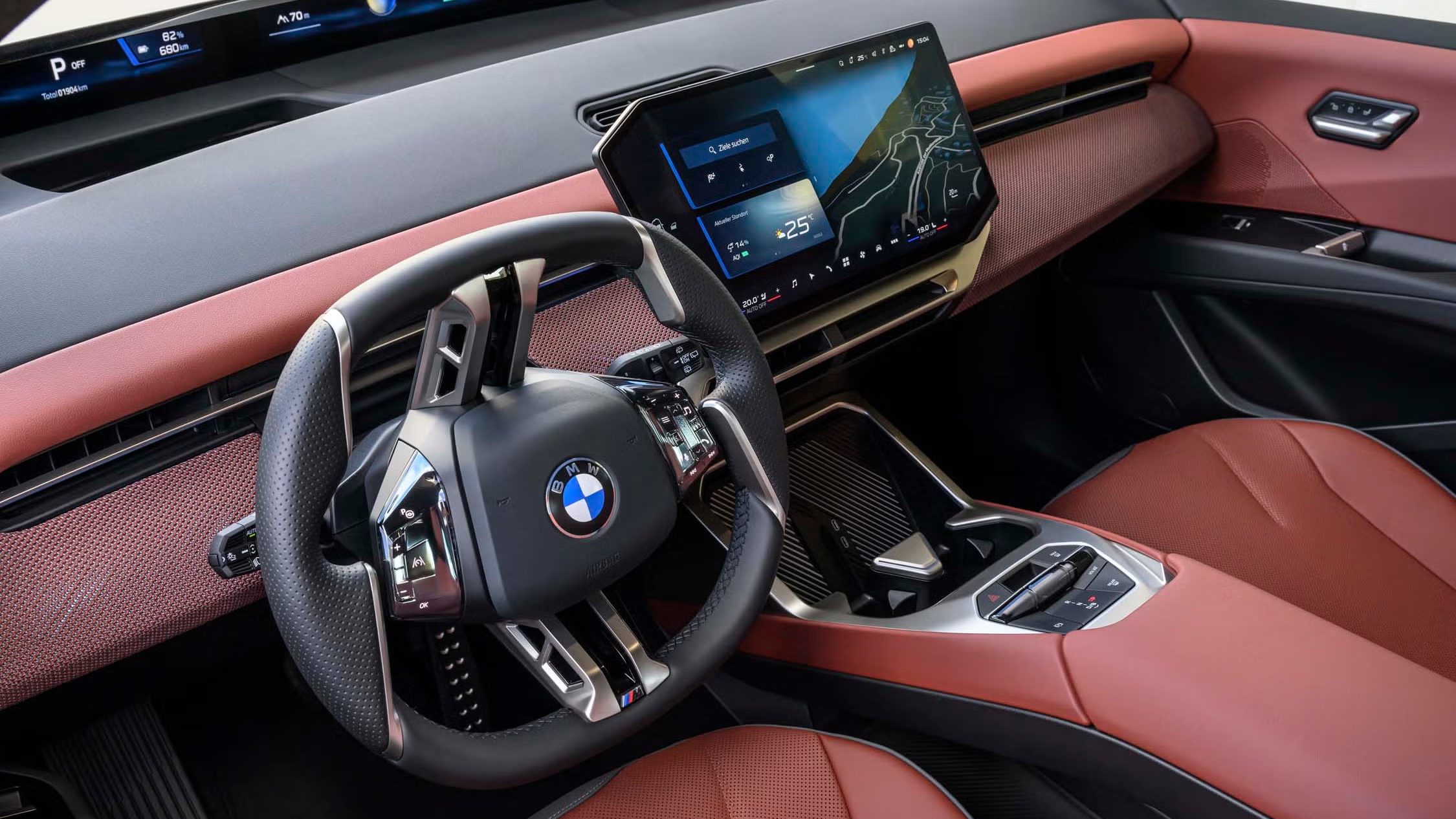
The shift is particularly noticeable in the BMW iX3, one of the first models built around the company’s Neue Klasse platform. The electric SUV places many functions on its central display, including climate controls.
While BMW is far from the only automaker reducing the number of buttons, the company believes changing customer habits are an important reason for the transition.
BMW says younger buyers prefer digital controls
Vikram Pawah, CEO of BMW Group Australia, said younger customers are increasingly comfortable using voice commands and touchscreens instead of traditional switches and knobs.
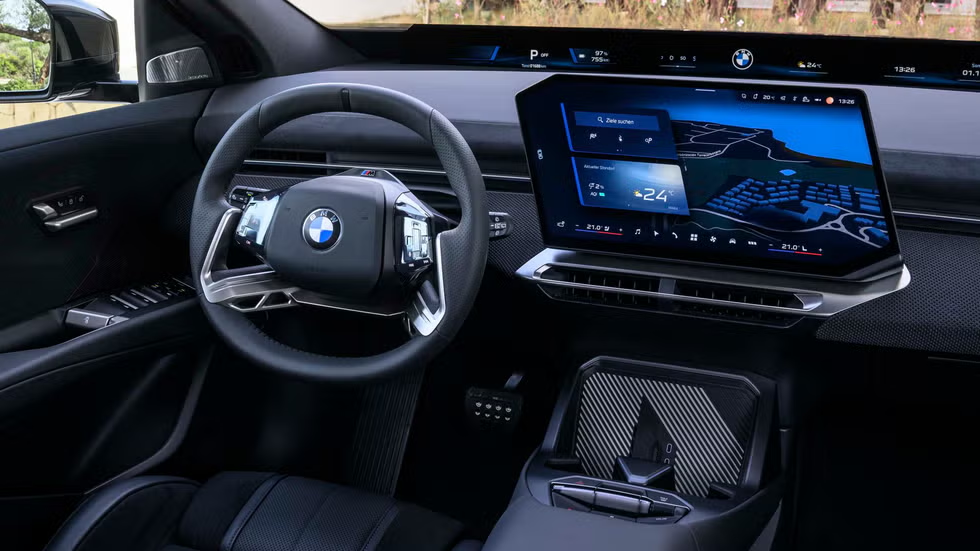
The BMW iX3 uses a touchscreen-heavy interior with fewer traditional physical controls.
Pawah pointed to customers 45 and younger as a group that has adopted these technologies particularly quickly.
According to the executive, younger buyers are also more accustomed to multitasking and expect technology to complete tasks quickly.
That means automakers are increasingly designing vehicle interfaces around the same habits people already have with smartphones and other connected devices.
The Neue Klasse pushes BMW further toward screens
BMW’s Neue Klasse platform represents a major change in the brand’s approach to vehicle interiors.
The iX3 is among the clearest examples, with many functions integrated into the center display rather than controlled through dedicated physical switches.
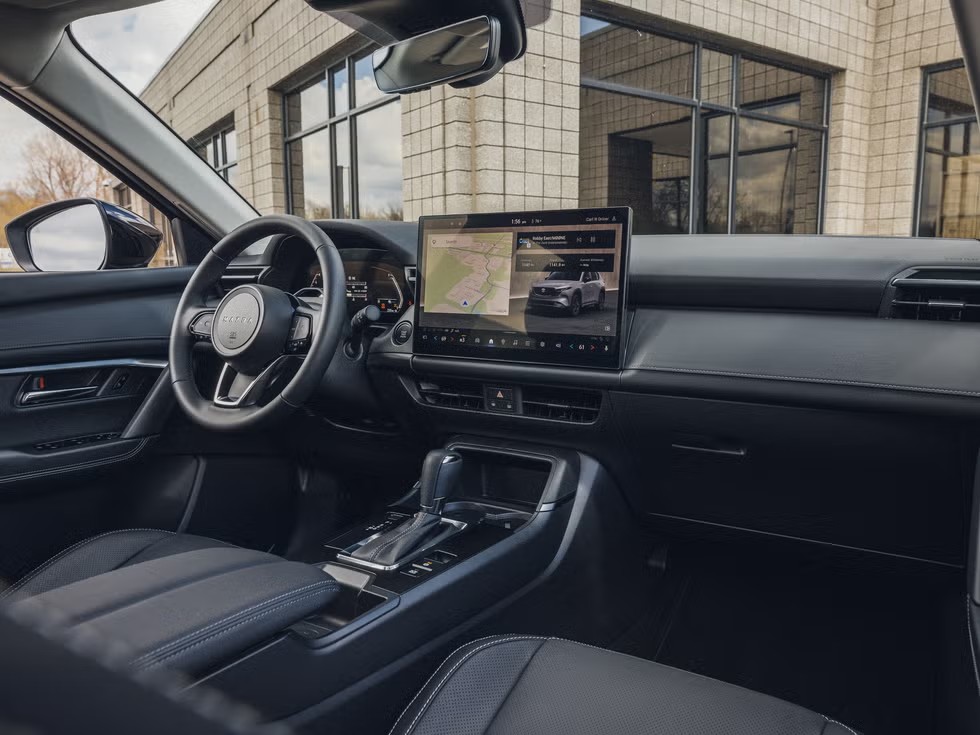
BMW’s Neue Klasse models are reducing traditional switchgear in favor of touchscreen and voice controls.
BMW is not alone in taking this approach.
Tesla has relied heavily on central touchscreens for years, while newer manufacturers such as Rivian have also adopted screen-based controls.
Established automakers including Mazda and Mercedes-Benz have similarly moved more functions into digital interfaces.
The result is a broader industry trend toward software-defined vehicle cabins.
Convenience versus physical controls
The move away from buttons is not without controversy.
Physical controls can be operated by feel, while touchscreen menus often require drivers to look away from the road to locate a function.
That creates an important debate over whether the convenience of a digital interface outweighs the potential drawbacks.
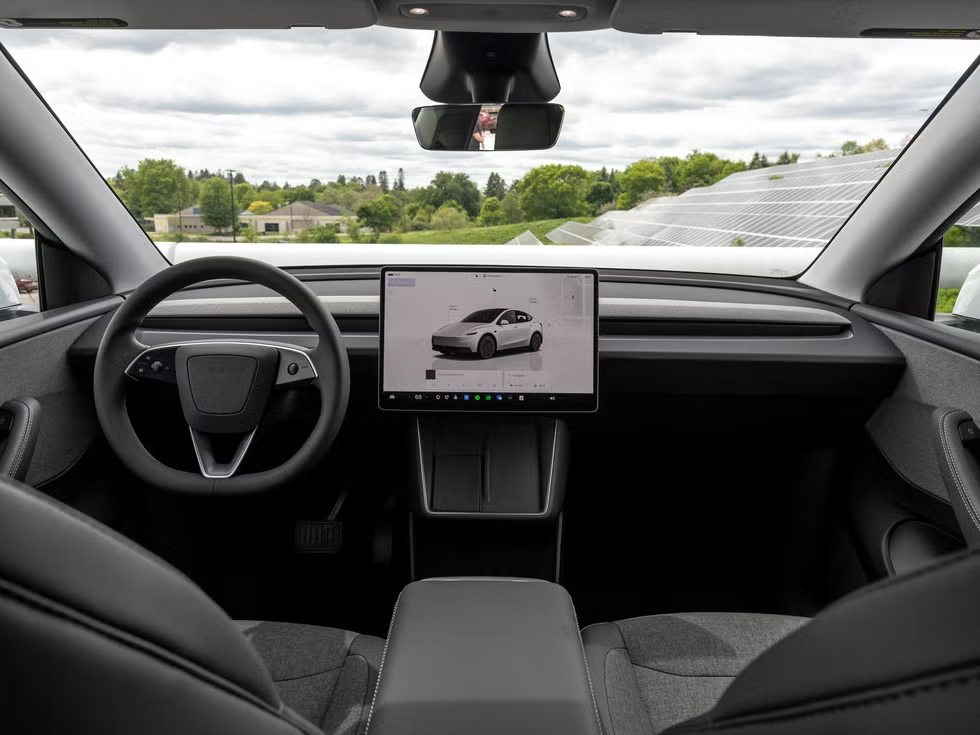
BMW is increasingly replacing dedicated controls with touchscreen and voice interfaces as vehicle interiors become more software-driven.
BMW’s argument is that vehicle technology needs to reflect how society is changing.
Pawah described the modern automobile as something that is increasingly connected to the wider digital environment rather than functioning as a completely standalone product.
That philosophy suggests BMW’s newest interiors will continue moving toward voice interaction, touch controls, and software-based functions.
For BMW physical buttons, the trend is clear: traditional knobs and switches are becoming less common as automakers try to match the digital habits of newer generations.
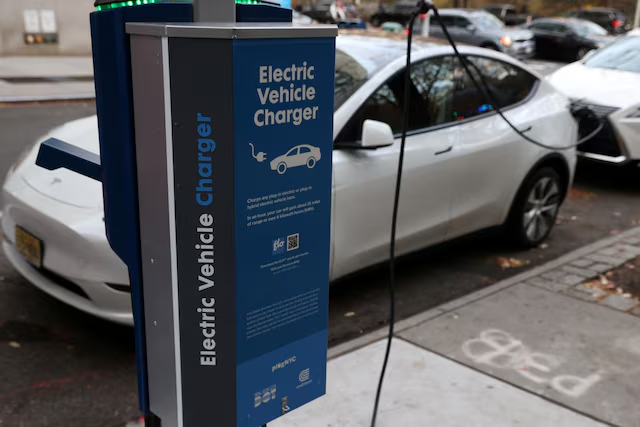
Higher oil prices, faster battery innovation, and new government support could push electric vehicle adoption well beyond current forecasts by 2040.
The global electric vehicle market could accelerate significantly if higher oil prices, faster battery innovation, and stronger government support develop at the same time.
Wood Mackenzie calls this potential outcome its “electric shock” scenario, arguing that several economic forces could push EV adoption substantially beyond its current base-case forecast.
The timing is particularly relevant because the global EV market is already expanding rapidly in several regions. The IEA now expects electric cars to account for 29% of global car sales in 2026, while Europe continues to post strong growth despite weaker demand in some other major markets.
Higher oil prices could push buyers toward EVs
One of the biggest potential catalysts is the cost of gasoline and diesel.
Geopolitical conflicts involving major oil-producing regions can create supply disruptions and increase fuel-price volatility. Wood Mackenzie says that prolonged energy volatility could encourage governments to strengthen domestic EV supply chains while giving consumers another reason to consider switching away from combustion-powered vehicles.
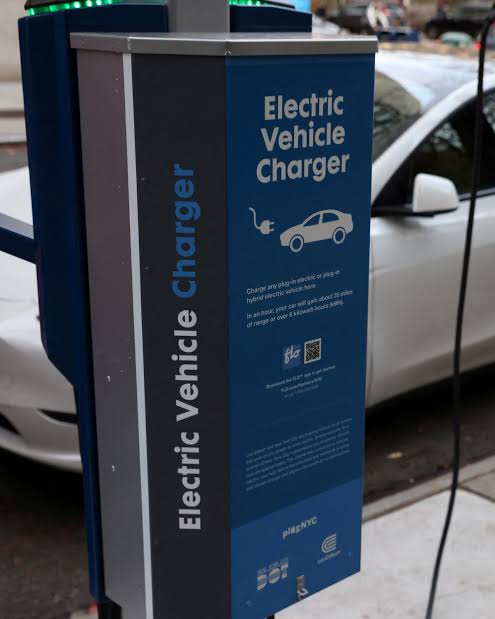
Higher fuel prices could encourage more consumers to consider electric vehicles as governments strengthen domestic supply chains.
The effect is already visible in parts of the global market.
The IEA says road transportation accounts for nearly half of global oil use, meaning changes in vehicle technology can have significant consequences for petroleum demand.
Wood Mackenzie’s base case projects EVs rising from 4% of the global passenger and commercial vehicle fleet in 2025 to 25% by 2040. Its faster-adoption scenario would push the transition considerably further.
China is accelerating battery and EV technology
Technology is another major factor.
China continues to advance rapidly in battery technology, EV manufacturing, and charging, creating pressure on other markets and automakers to keep pace.
Wood Mackenzie highlights developments including five-minute charging, sodium-ion batteries, and lithium-iron-phosphate technology as examples of innovations that could improve the economics and usability of EVs.
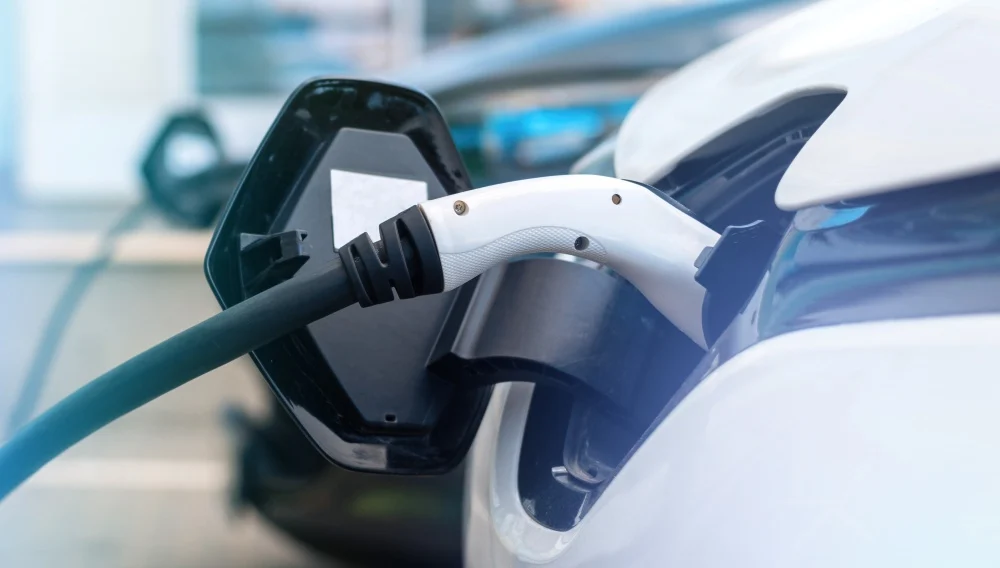
Battery innovation in China is helping improve charging speeds, costs, and the overall competitiveness of electric vehicles.
China is already the world’s largest EV market. Electric vehicles represented 42% of Chinese car sales in the second quarter of 2026, according to Wood Mackenzie.
The broader market is also seeing strong growth outside China. The IEA says EV sales in Europe increased close to 30% year over year during the first half of 2026, while several emerging markets recorded even faster growth.
The U.S. could face a different EV trajectory
The United States presents a more complicated picture.
Wood Mackenzie expects U.S. EV adoption to remain slower than in Europe under its base assumptions, although faster global innovation could increase competitive pressure on American automakers.
The firm argues that the United States may need greater investment in EV manufacturing, technology, and domestic supply chains to remain competitive as Chinese and other international manufacturers continue developing electric vehicles.
Europe, meanwhile, is already experiencing stronger EV momentum. Recent data showed battery-electric vehicles reached 25.7% of new-car registrations across 16 major European markets in July 2026, with France and Germany among the strongest large markets.
Copper could become the biggest bottleneck
Faster EV adoption would not come without challenges.
Battery and electric-drive manufacturing require large quantities of critical minerals, and Wood Mackenzie says the problem is not necessarily a lack of resources. The bigger question is how quickly new mining and processing capacity can be developed.
The firm estimates that an additional $45 billion in investment over the next decade could support the metals supply needed for its faster EV scenario.
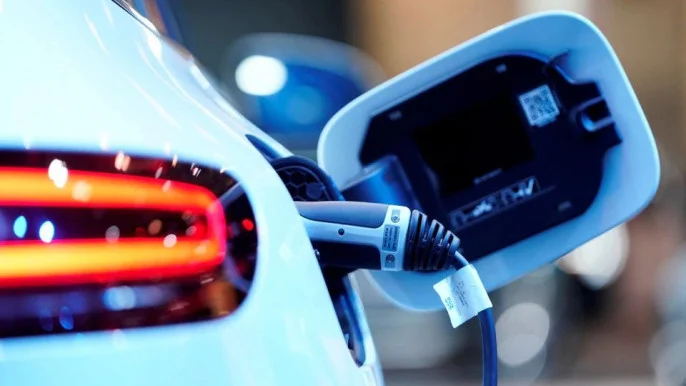
Copper is expected to become the most important mineral bottleneck if global EV adoption accelerates.
Copper is the biggest concern. Wood Mackenzie estimates annual copper-mining capacity additions would need to rise from roughly 850,000 metric tons per year to around 960,000 tons through 2040.
Around $25 billion of additional investment would be required for that extra copper capacity.
That investment could increasingly need to reach higher-risk mining jurisdictions, adding another layer of geopolitical and financial complexity to the EV transition.
Electricity grids will also need to adapt
A rapid increase in EVs would place additional demand on electricity networks.
Wood Mackenzie argues that widespread adoption of managed charging will be critical. Utilities and regulators could encourage vehicles to charge when electricity supply is abundant rather than when the grid is under the most pressure.
This could also help consumers reduce charging costs by shifting electricity consumption toward cheaper periods.
The challenge therefore extends beyond producing more electric vehicles. Charging infrastructure, power generation, transmission networks, and grid-management technology will all need to keep pace.
EVs could reshape the oil market by 2040
The consequences could ultimately reach far beyond the automotive industry.
Under Wood Mackenzie’s base case, global oil demand reaches about 104 million barrels per day in 2040. In its faster EV “electric shock” scenario, demand falls to 99 million barrels per day, roughly 5 million barrels below the base case.
That reduction could have major consequences for the refining industry. Wood Mackenzie estimates that around 40 refineries could face earlier closure if transportation fuel demand falls that quickly.
The global EV adoption story is therefore becoming about much more than car sales. Higher fuel prices, technological advances, government policy, mineral investment, and electricity infrastructure could collectively determine how quickly the world moves away from gasoline and diesel.
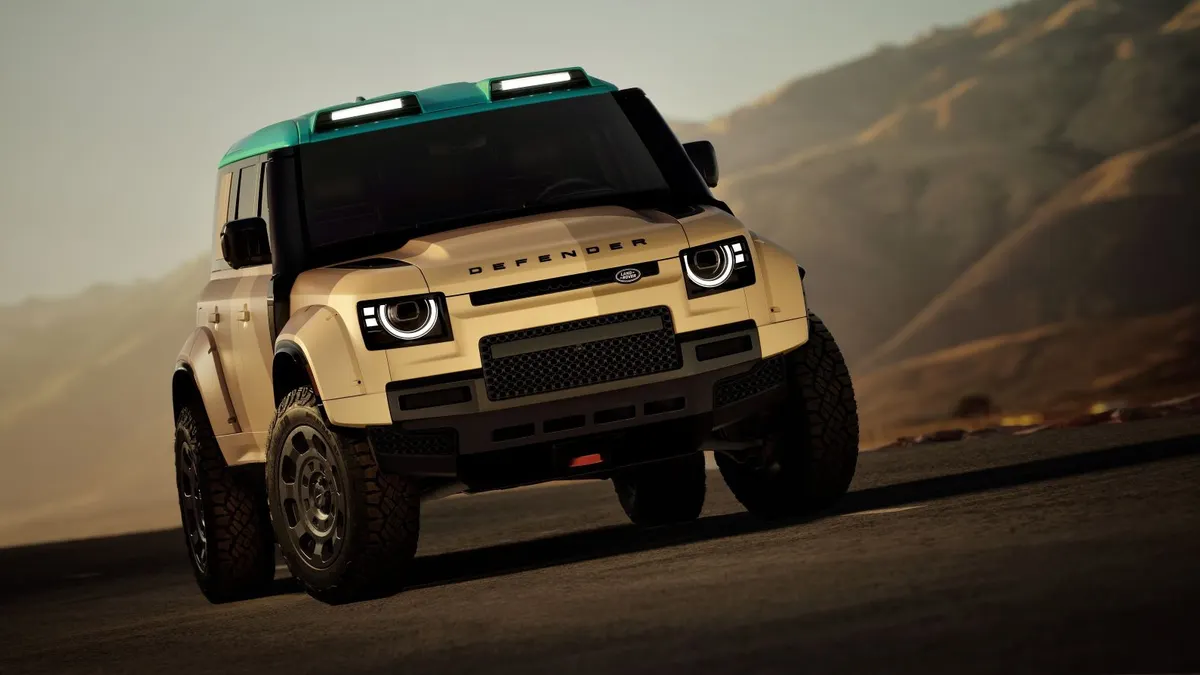
Land Rover is developing the limited-edition Defender Dakar, a road-legal version inspired by the D7X-R that won the 2026 Dakar Rally, with 636 hp and extreme off-road hardware.
Land Rover is turning its Dakar-winning Defender D7X-R into a road-legal special edition. The new Defender Dakar was unveiled as a prototype during Monterey Car Week and is planned for global markets in 2027.
The limited-run SUV will retain many of the features developed for the competition vehicle, while gaining a more powerful road-going version of its 4.4-liter twin-turbo V8.
Dakar technology for the road
The Defender Dakar will keep the same D7X body architecture, transmission, and driveline used by the D7X-R competition vehicle.
The racing-inspired SUV is based on the Defender OCTA, giving the new road version a strong foundation for extreme off-road driving.
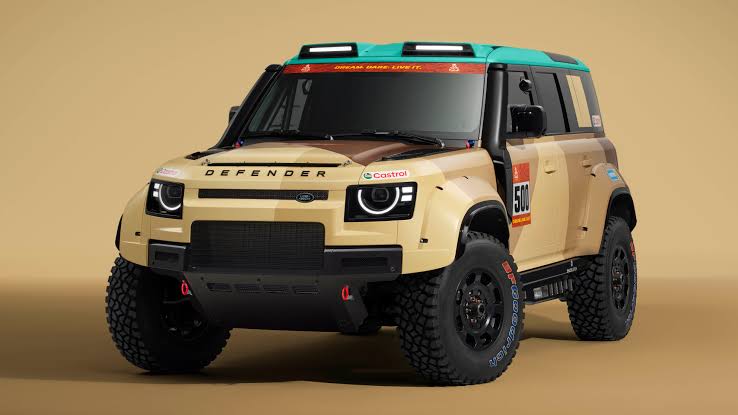
The Defender Dakar takes direct inspiration from the D7X-R that won the 2026 Dakar Rally.
Land Rover says three D7X-R competition vehicles finished first, second, and fourth in the Stock class during the 2026 Dakar Rally.
The road-going Defender will use the same basic architecture while adapting the hardware for road registration and regular customer use.
636 horsepower from a twin-turbo V8
The Defender Dakar will be powered by a 4.4-liter twin-turbocharged V8 producing 636 horsepower and 553 lb-ft of torque.
That gives the road car more power than the competition version, which is restricted by racing regulations.
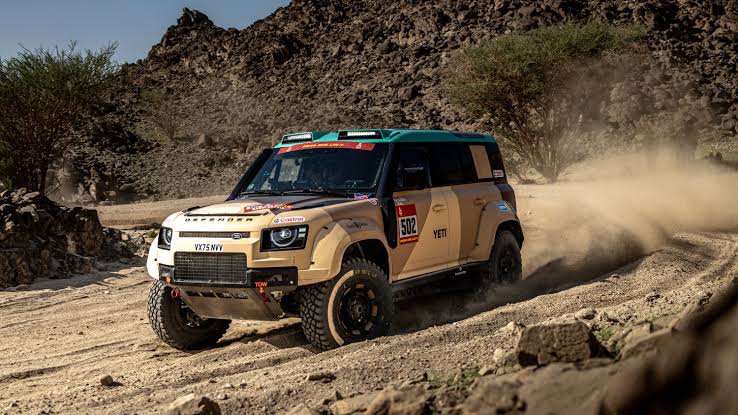
The Defender Dakar uses a 4.4-liter twin-turbo V8 producing 636 horsepower and 553 lb-ft of torque.
Land Rover has also upgraded the cooling system to support the higher output.
The SUV will ride on 35-inch all-terrain tires mounted on new forged 20-inch wheels. The suspension combines coil springs with motorsport-proven Bilstein Advanced dampers.
The result is a Defender designed to handle demanding terrain while maintaining the mechanical character of the Dakar racer.
Built for jumps, dunes, and gravel
The Defender Dakar receives several drive modes specifically developed around off-road performance.
New Dunes and Gravel modes are joined by a Flight Mode, which was originally developed for the competition vehicle to help manage jumps and landings.
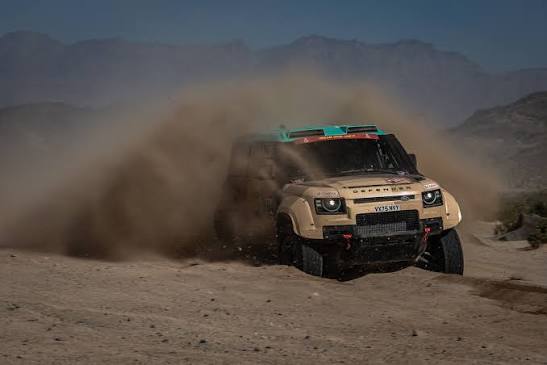
Dunes, Gravel, and Flight modes bring Dakar-inspired off-road technology to the road-legal Defender.
The exterior also receives extensive competition-inspired equipment.
Highlights include roof-mounted light pods, carbon-fiber raised air intakes, a carbon-fiber hood, extended wheel arches with exposed rivets, signature mud flaps, and a race-inspired metal front undershield.
The signature color combination is Dakar Sand with a Yanbu Turquoise roof, inspired directly by the D7X-R racing livery. Narvik Black and Alaska White will also be available, with an optional matte protective film.
A racing-inspired four-seat cabin
Inside, the Defender Dakar uses a 2+2 seating layout.
The front seats are specially designed for the vehicle, while optional four-point racing harnesses can be specified. Rear storage areas are designed to accommodate racing helmets.
The cargo area also receives dedicated hardware for carrying the spare wheel and an air compressor.
Land Rover is currently gauging customer interest in the limited-edition model, with a global launch planned for 2027.
The Defender Dakar is therefore shaping up to be one of the most extreme road-going versions of the SUV yet, combining a 636-hp V8, 35-inch tires, motorsport suspension technology, and direct influence from a vehicle that has already proven itself at the Dakar Rally.
-

 NOW TRENDING2 months ago
Polestar to Exit U.S. Market After 2026 Due to Connected Vehicle Rules
-
 NOW TRENDING2 months ago
Tesla Model Y L Arrives in the U.S. With More Space and Three Rows
-

 RACING2 months ago
McLaren F1 Unveils Special Silverstone Livery Honoring Its History
-
 INTELLIGENT MOBILITY2 months ago
Audi A4 E-tron and Q7 E-tron Confirmed as New Electric Models
-
 TEST DRIVES2 months ago
A Week Driving Honda’s New Hybrid Coupe
-
 TEST DRIVES2 months ago
Ford Recalls More Than 741,000 Trucks and SUVs Over Rollaway Risk
-
 NOW TRENDING2 months ago
Toyota Reports Strong June and Q2 2026 U.S. Sales Growth
-

 INTELLIGENT MOBILITY2 months ago
GM Expands Super Cruise With Exclusive Hands-Free Towing Technology
You must be logged in to post a comment Login