
NOW TRENDING
Nissan Z Kaze: 1990s T-Top Nostalgia Returns to ZCON

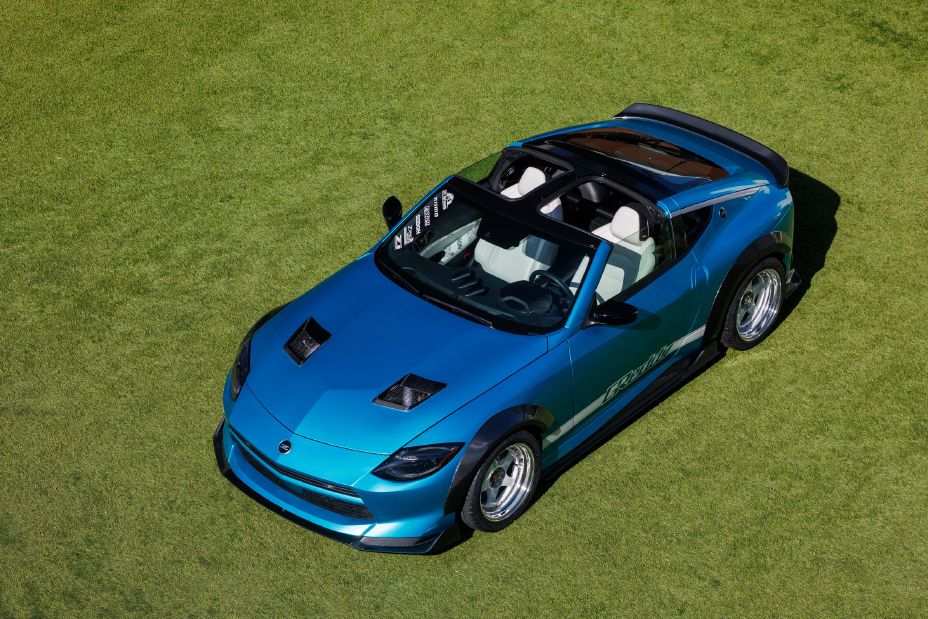
The Nissan Z Kaze concept brings back the T-top roof, 1990s tuner styling and NISMO hardware in a one-off sports car unveiled at ZCON 2026.
Nissan brings the T-top back with the Z Kaze
Nissan has unveiled the Z Kaze concept at ZCON 2026 in Phoenix, Arizona. The one-off project combines modern Z performance with styling inspired by the brand’s open-roof sports cars and the tuner culture of the 1990s.
The most important feature is above the occupants.
Nissan created a custom-engineered T-top roof with removable panels. The design is meant to bring back the open-air feeling associated with earlier Z models, including the 280ZX and 300ZX.
The name also fits the concept. “Kaze” means “wind” in Japanese, a direct reference to the feeling Nissan wanted the roof to deliver.
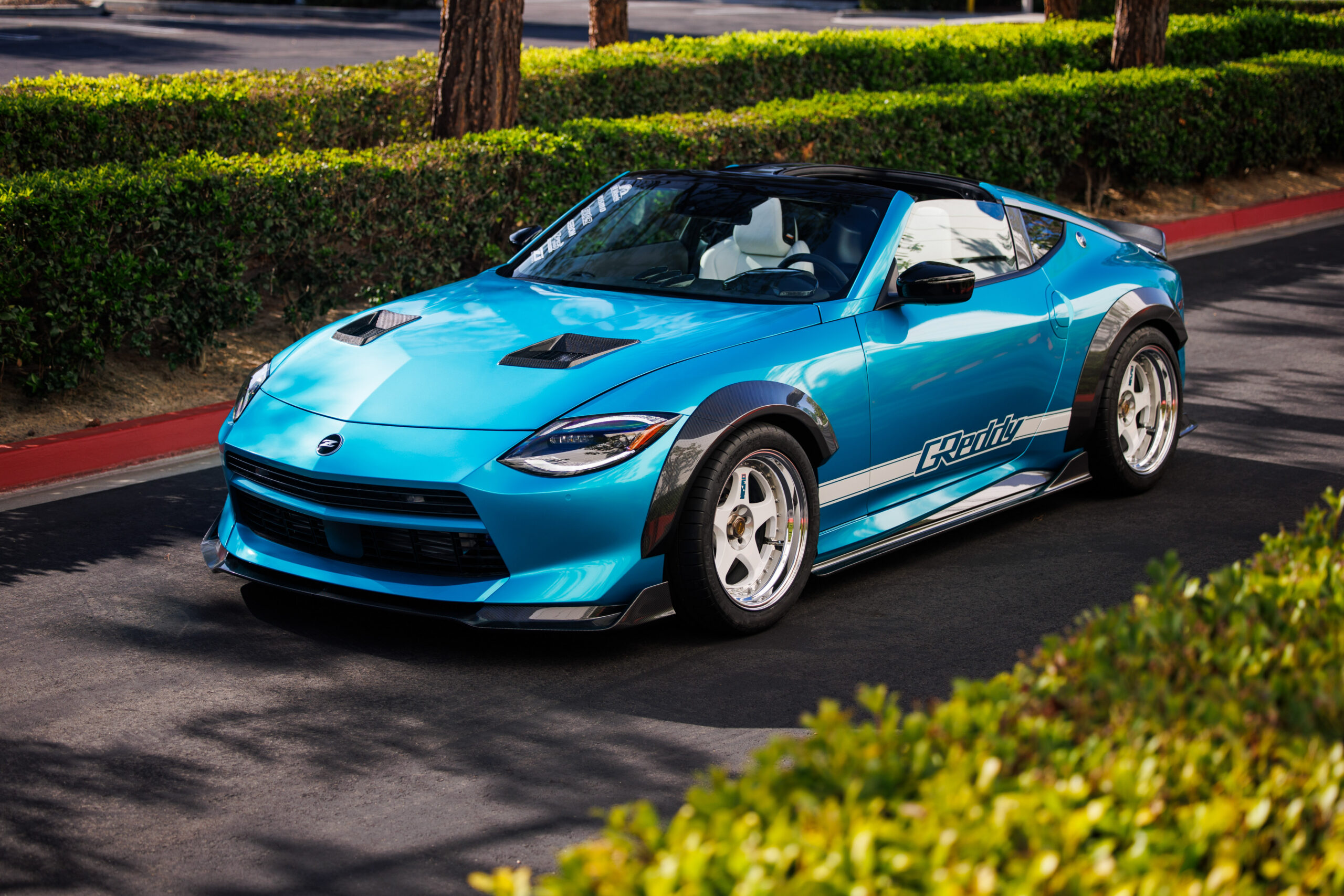
The Z Kaze’s removable T-top roof is the centerpiece of the concept.
Nissan says the project was created by a team of product planners and designers as a passion project.
Their inspiration came from the idea of driving along California’s Pacific Coast Highway on a perfect summer day. That vision also influenced the concept’s Pacific Teal paint.
The design goes well beyond the roof.
A Z built around 1990s tuner culture
The Z Kaze wears a Pacific Teal exterior with a more aggressive body. Nissan added a vented carbon-fiber hood, wider fenders and a custom carbon-fiber aerodynamic kit.
Those changes give the Z a wider stance.
They also connect the concept to the import-tuner scene that influenced many Japanese performance cars during the 1990s.
The wheels are another major part of the theme. Nissan sourced an original set of 18-inch NISMO LMGT2 forged multi-piece wheels, then restored and rebuilt them specifically for the Z Kaze.
They measure 10 inches wide at the front and 11 inches at the rear.
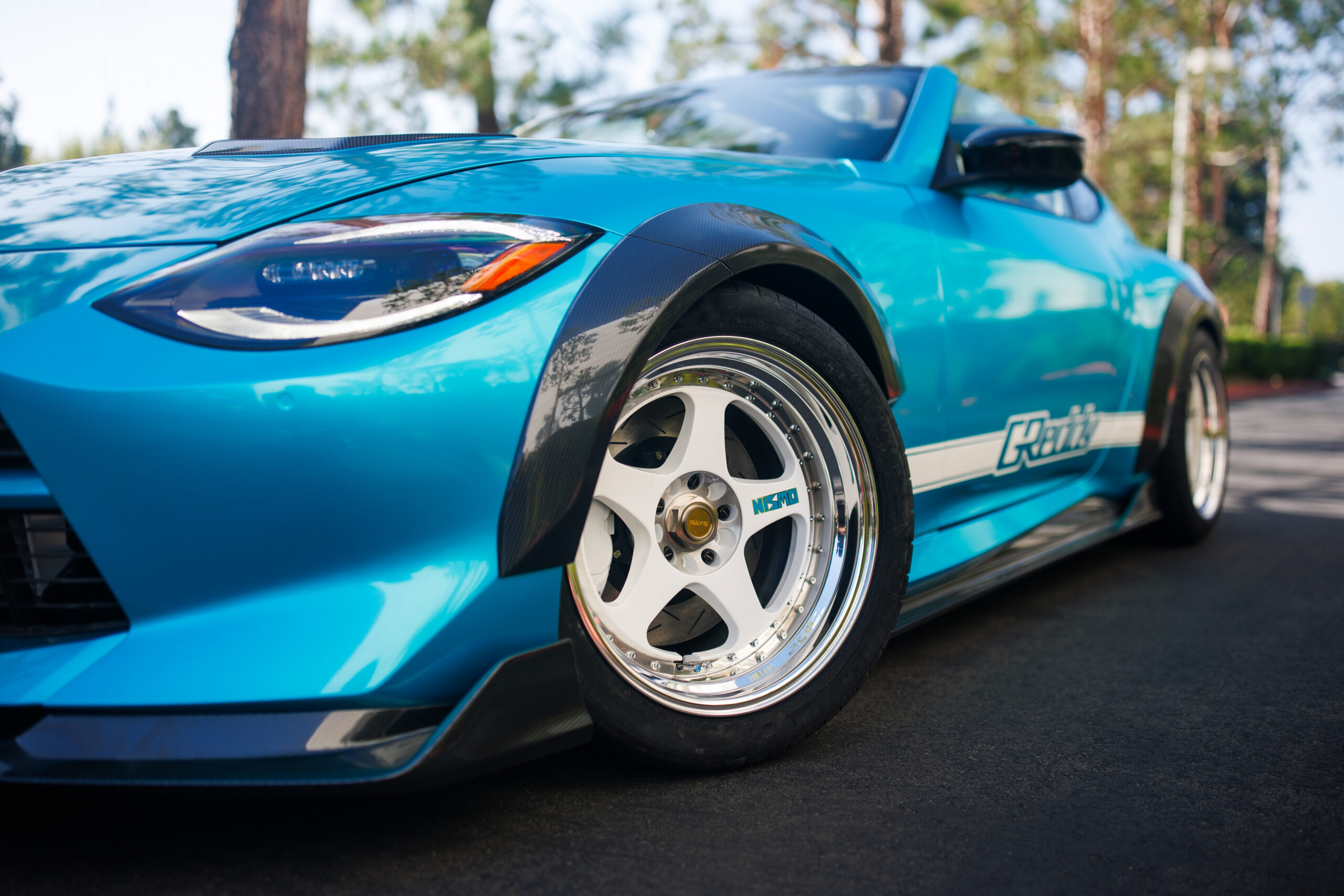
The widened bodywork and restored 18-inch NISMO LMGT2 wheels give the Z Kaze its strong 1990s tuner character.
The concept also changes the cabin.
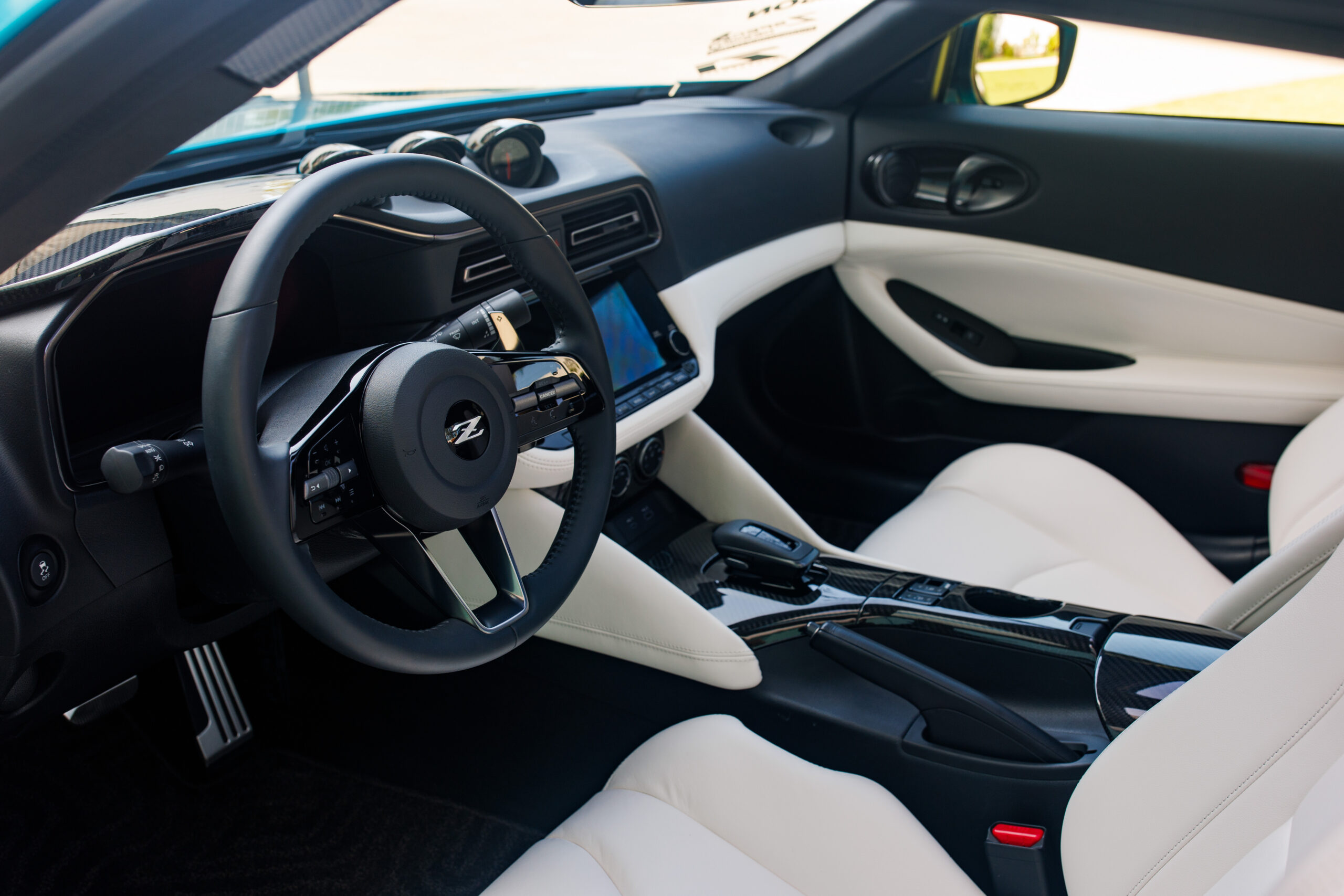
Nissan fitted the Z Kaze with custom white leather-appointed seats and carbon-fiber interior trim. The lighter upholstery creates a strong contrast with the Pacific Teal exterior and makes the open-roof layout more noticeable.
There is also a technology upgrade designed specifically for open-air driving.
The seats feature Bose Personal Plus headrest speakers. That setup is intended to keep the audio experience clear when the roof panels are removed.
GReddy and NISMO upgrade the performance hardware
The nostalgia theme continues underneath the body.
Nissan says the Z Kaze receives an upgraded suspension using NISMO components. The engine also receives a number of parts from performance specialist GReddy.
The twin-turbocharged 3.0-liter V6 is paired with a GReddy SUPREME SP exhaust system, a front-mount air-to-air intercooler kit and an Airinx air filter kit.
Nissan has not announced a specific horsepower figure for the concept.
That is important because the Z Kaze is a show car rather than a production model. Its upgraded components suggest a performance focus, but Nissan has not published a final output number for this particular build.
The rear of the Z Kaze adds a pronounced spoiler, carbon-fiber elements and the same restored NISMO wheel package.
The concept also connects modern Nissan performance with the brand’s previous open-top Z cars.
That history is important because the T-top was once a defining feature of the Z family. The new concept uses that idea as a starting point, then combines it with modern materials and 1990s-inspired tuning details.
The Z Kaze is not a production model yet
For now, Nissan has presented the Z Kaze as a one-off concept.
The company has not announced plans to put the T-top design into series production. The concept is instead being used to explore heritage, customization and enthusiast-focused design.
That distinction matters.
The Z Kaze shows what Nissan can create around the current Z platform, but it does not confirm a future production T-top Z.
The project will remain on display at ZCON in Phoenix through September 26. Nissan also plans to show the concept at the Japanese Classic Car Show later this year.
The Nissan Z Kaze brings together a T-top roof, Pacific Teal paint, carbon-fiber bodywork, restored NISMO wheels and GReddy hardware in one enthusiast-focused package.
It is a clear reminder that Nissan’s Z heritage can still be reinterpreted through modern engineering while preserving the character that made the sports car famous.


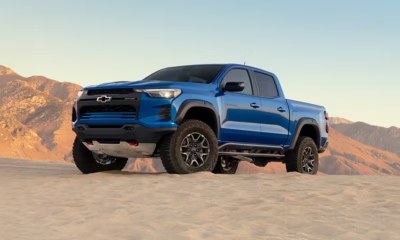








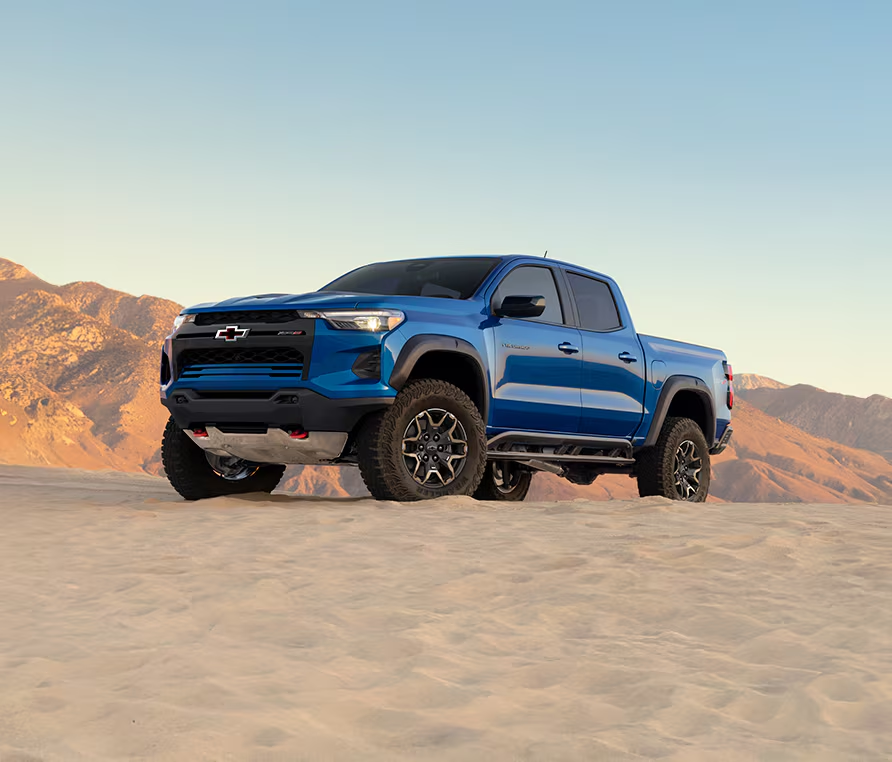
The 2027 Chevrolet Colorado and GMC Canyon could receive GM’s new TurboMax upgrade, raising output to 350 horsepower and 455 lb-ft of torque.
GM prepares a major TurboMax upgrade
The 2027 Chevrolet Colorado and GMC Canyon are expected to receive a more powerful version of GM’s 2.7-liter TurboMax four-cylinder.
The engine would use the L4B code and deliver 350 horsepower and 455 lb-ft of torque. Those figures match the enhanced TurboMax introduced for the 2027 Chevrolet Silverado 1500 and GMC Sierra 1500.
However, there is an important detail.
GM has not yet published a dedicated consumer-facing specifications sheet confirming the 350-hp rating for the 2027 Colorado and Canyon. The application is supported by GM documentation and order information, so the final public specifications could still change.
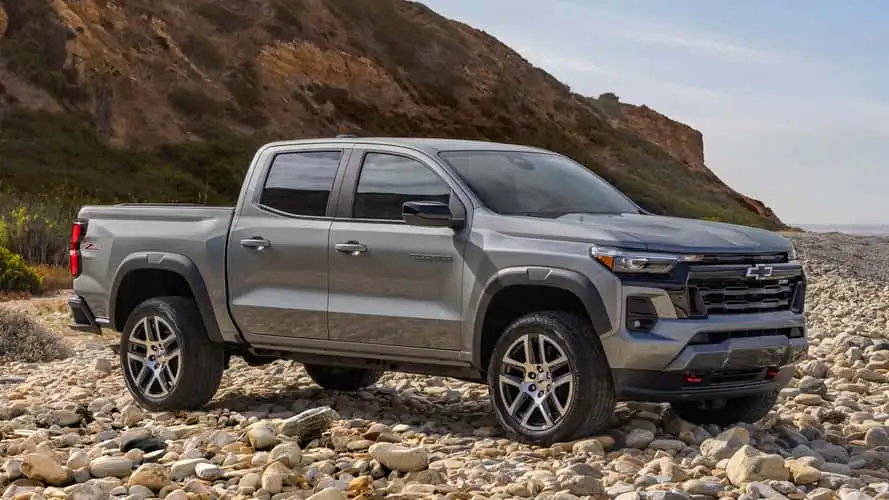
The current Colorado provides the visual basis for the upcoming 2027 truck. Chevrolet currently lists the 2.7-liter TurboMax at 310 horsepower and 430 lb-ft.
If the L4B figures arrive unchanged, the new Colorado would gain a substantial increase over the current truck.
The existing 2.7-liter TurboMax produces 310 horsepower and 430 lb-ft of torque. The reported 2027 rating would add 40 horsepower and 25 lb-ft.
That would also move the Colorado closer to the output of GM’s full-size half-ton pickups.
350 horsepower and 455 lb-ft of torque
GM’s official 2027 light-duty powertrain data lists the enhanced TurboMax at 350 horsepower at 5,200 rpm and 455 lb-ft of torque at 3,000 rpm.
GM says the updated engine uses a new turbocharger, upgraded fuel injection, improved active thermal management and redesigned pistons.
Those changes are designed to improve more than peak output.
GM also says the enhanced engine brings improvements in drivability, performance and noise and vibration refinement. The 455 lb-ft figure is also listed as best-in-class standard torque for the affected light-duty truck applications.
The key question is whether the same calibration will be used in the midsize Colorado and Canyon.
Current documentation points in that direction, but GM has not yet published the complete 2027 specifications for both trucks.
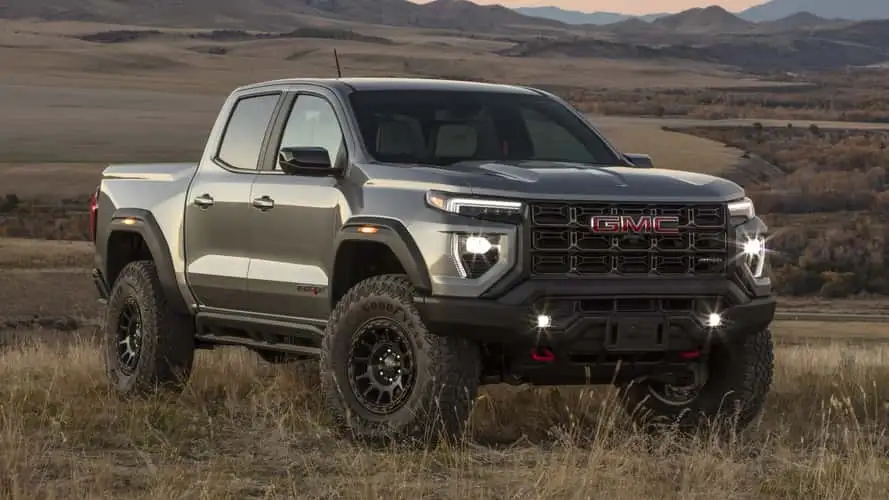
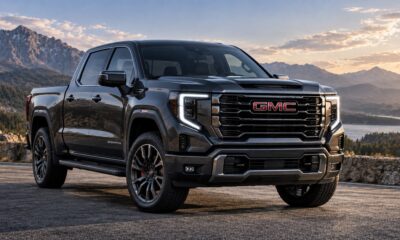
The current GMC Canyon uses the same 2.7-liter TurboMax family and is rated at 310 horsepower and 430 lb-ft in its current U.S. specification.
The Canyon currently uses the TurboMax as its standard engine.
GMC lists 310 horsepower, 430 lb-ft and up to 7,700 pounds of maximum towing capacity for the current truck. An eight-speed automatic transmission is standard.
The reported 2027 upgrade would therefore increase the Canyon’s power without changing its basic engine family.
That could make the midsize truck more competitive against newer rivals while also giving buyers more performance without moving to a larger pickup.
Towing and payload figures remain unclear
The engine upgrade raises another important question.
The available documentation points to a maximum towing figure of 7,700 pounds for properly equipped 2027 Colorado and Canyon models. That would be consistent with the published capability of the current trucks.
However, GM has not released a full breakdown for every 2027 configuration.
That means the final towing and payload ratings could vary by cab, drivetrain, trim and equipment.
For buyers who use these trucks for work or recreation, that information will matter as much as horsepower.
How much stronger is the new engine?
The change is easy to measure.
| Engine | Horsepower | Torque |
|---|---|---|
| Current L3B TurboMax | 310 hp | 430 lb-ft |
| Reported 2027 L4B TurboMax | 350 hp | 455 lb-ft |
| Difference | +40 hp | +25 lb-ft |
The increase is roughly 13% more horsepower and nearly 6% more torque.
The torque curve is also important. GM’s new enhanced TurboMax reaches its 455 lb-ft peak at 3,000 rpm, the same engine-speed point used by the current TurboMax for peak torque.
That could help preserve the strong low-speed response that has made the TurboMax a key part of GM’s midsize-truck strategy.
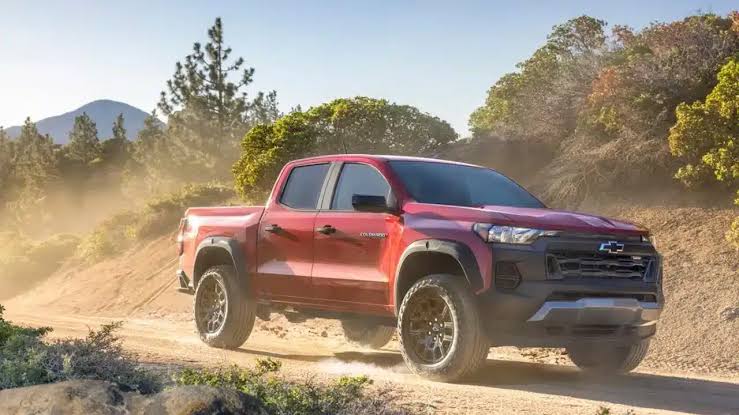
The TurboMax is already the standard engine in the current GMC Canyon. The reported L4B version would bring a new turbocharger and other hardware changes.
The broader powertrain strategy is also worth watching.
GM has now introduced the 350-hp enhanced TurboMax for its next-generation Silverado and Sierra. The same truck program also adds new 5.7-liter and 6.6-liter V8 engines.
Applying similar hardware to the Colorado and Canyon would give GM a more consistent TurboMax family across its truck lineup.
The midsize trucks could enter a new power bracket
The potential change would make the 2027 Colorado and Canyon notably stronger than their current versions.
It would also create an unusual overlap within GM’s lineup. A midsize Colorado or Canyon could approach the same horsepower figure offered by the enhanced TurboMax in a full-size Silverado or Sierra.
That does not necessarily mean the trucks would perform identically.
Weight, gearing, suspension, tires and chassis calibration all affect real-world performance. The final Colorado and Canyon specifications will determine how the extra power translates on the road and while towing.
For now, the most important figure is the reported 350 horsepower and 455 lb-ft of torque.
The 2027 Chevrolet Colorado and GMC Canyon TurboMax upgrade appears set to move GM’s midsize pickups into a higher power bracket, although the automaker still needs to publish the complete consumer-facing specifications for the new L4B application.
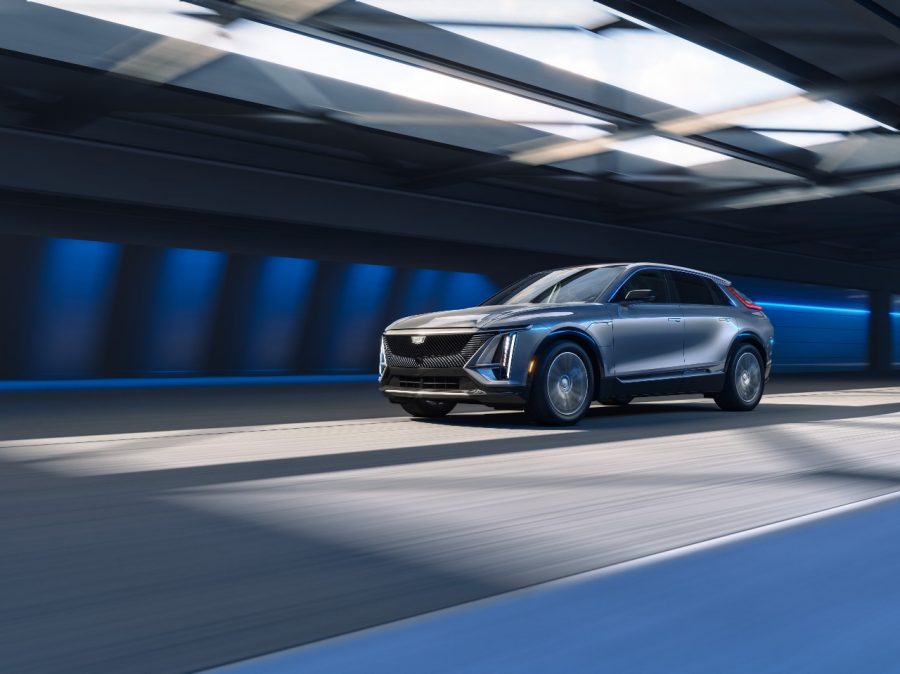
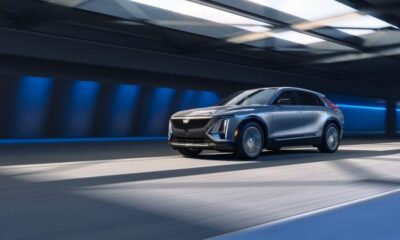
Cadillac’s 2026 U.S. EV lineup covers five electric vehicle lines, from the compact OPTIQ to the hand-built CELESTIQ and the 465-mile Escalade IQ.
Cadillac now offers five electric vehicle lines
Cadillac has expanded its electric lineup quickly.
For the 2026 model year, the U.S. range includes the OPTIQ, LYRIQ, VISTIQ, ESCALADE IQ/IQL and CELESTIQ. Each model targets a different part of the luxury EV market.
The range also covers a huge price spread. The OPTIQ starts below $50,000, while the hand-built CELESTIQ begins in the low-$400,000 range.
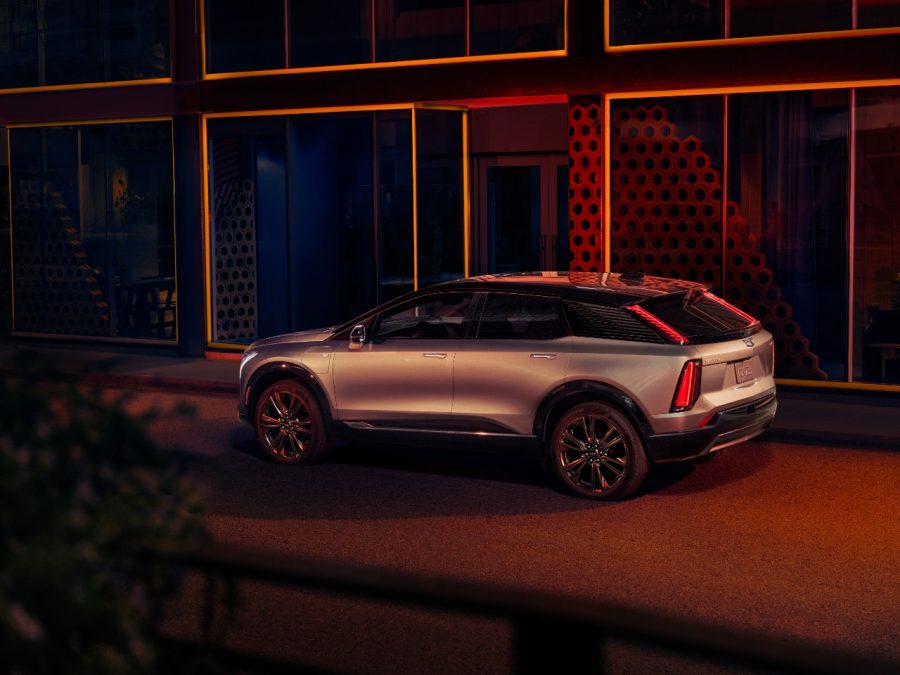
2026 Cadillac OPTIQ
The OPTIQ is Cadillac’s entry point into its U.S. electric lineup.
The 2026 model starts at $49,995. Rear-wheel-drive versions offer an EPA-estimated 317 miles of range, while available dual-motor AWD produces up to 440 horsepower.
The OPTIQ also has a performance version.
The OPTIQ-V uses standard all-wheel drive and produces up to 519 horsepower and 650 lb-ft of torque with Velocity Max. It also adds performance-focused suspension technology.
Technology is another major part of the package.
The OPTIQ includes Super Cruise, a 33-inch Horizon Display and a 19-speaker AKG audio system. Its maximum cargo capacity reaches 57 cubic feet with the rear seats folded.
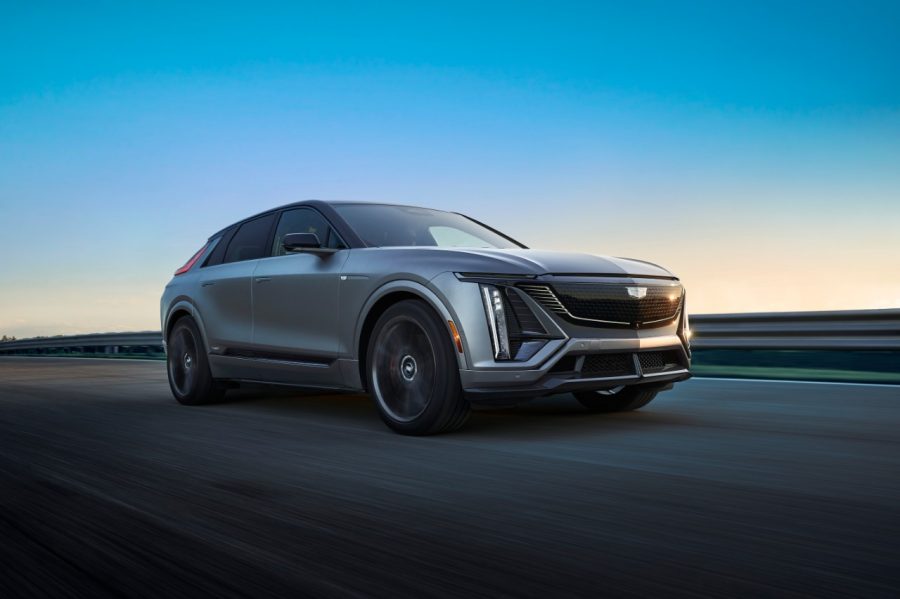
2026 Cadillac LYRIQ
The LYRIQ moves Cadillac into the midsize luxury EV SUV segment.
The 2026 model starts at $59,200. Rear-wheel-drive versions offer up to 326 miles of EPA-estimated range, while AWD models reach up to 319 miles.
The LYRIQ also has a high-performance option.
The LYRIQ-V produces 615 horsepower with dual-motor AWD. Cadillac says it is its quickest model, with a claimed 0-60 mph time of 3.3 seconds.
Inside, the LYRIQ focuses on technology.
Its cabin features a 33-inch Horizon Display, Super Cruise, Google built-in compatibility and available 23-speaker AKG audio.
2026 Cadillac VISTIQ
The VISTIQ fills a different role.
It is Cadillac’s three-row electric SUV, with room for up to seven passengers. The 2026 model starts at $77,395.
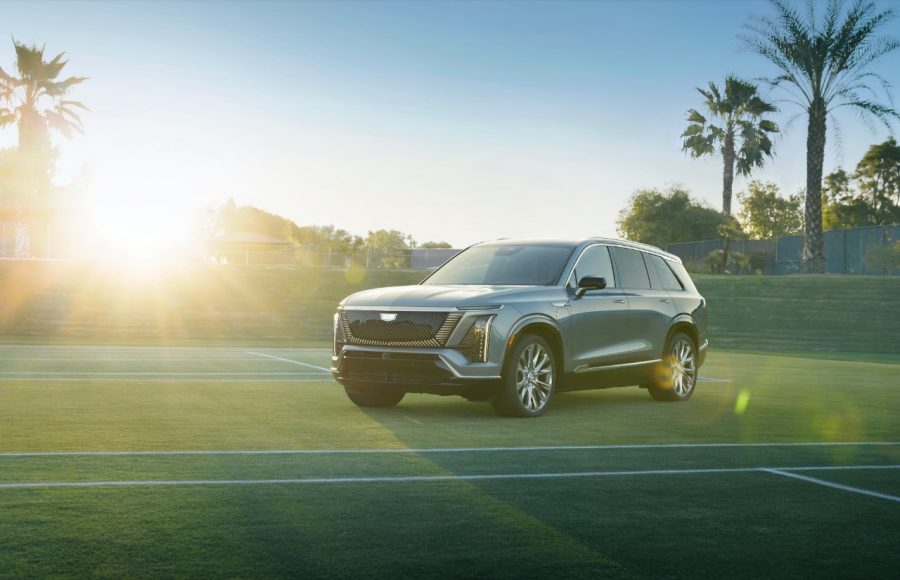
Every VISTIQ uses dual-motor all-wheel drive.
Cadillac estimates up to 615 horsepower and 650 lb-ft of torque in Velocity Max. The company also quotes a 3.7-second 0-60 mph time.
Range reaches 305 miles on the EPA cycle.
The VISTIQ also offers a 23-speaker AKG audio system, a 33-inch Horizon Display and standard Super Cruise.
The third row is a major part of its appeal.
Cadillac lists up to 80.2 cubic feet of cargo space behind the first row. That gives the VISTIQ a more family-focused role within the EV lineup.
2026 Cadillac ESCALADE IQ and IQL
The ESCALADE IQ takes Cadillac’s electric strategy into the full-size luxury SUV segment.
The 2026 ESCALADE IQ starts at $127,405. Cadillac estimates 465 miles of range, making it the brand’s longest-range electric SUV.
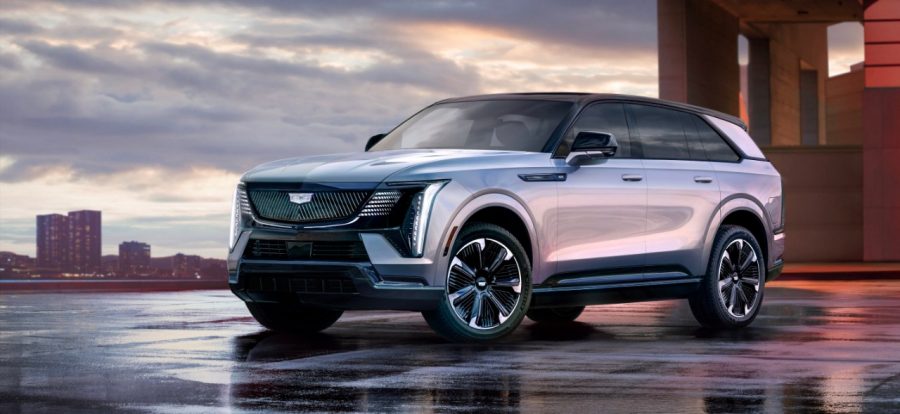
The powertrain is also substantial.
Cadillac estimates 750 horsepower and 785 lb-ft of torque with Velocity Max. The SUV can reach 60 mph in 4.7 seconds.
The battery has a capacity of 205 kWh.
The ESCALADE IQ also offers a 55-inch Horizon Display and standard Super Cruise. It can seat seven passengers.
The ESCALADE IQL stretches the same formula.
It adds 4.2 inches of overall length, increasing third-row space and cargo room. Cadillac estimates up to 460 miles of range for the IQL.
2026 Cadillac CELESTIQ
At the top of the range sits the CELESTIQ.
This is not a conventional series-production luxury sedan. Cadillac describes it as a custom-commissioned, hand-built EV assembled in Detroit. Its starting price is in the low-$400,000 range.
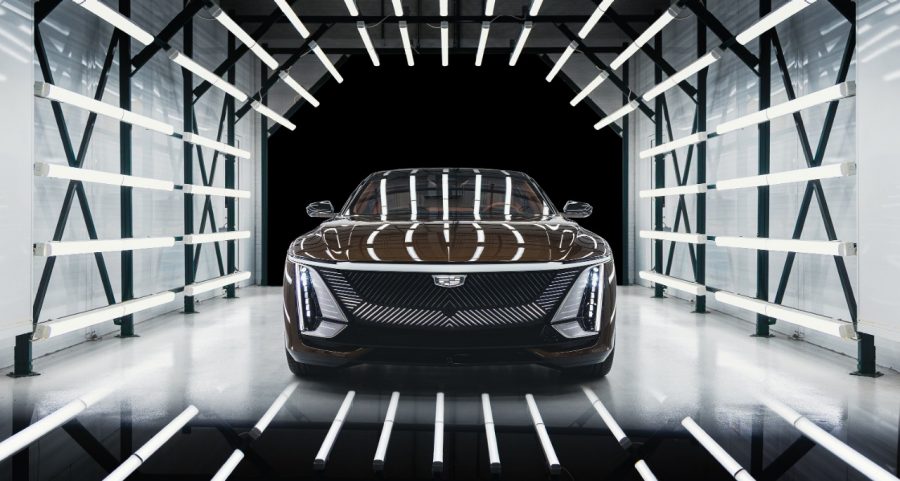
The CELESTIQ uses an electric all-wheel-drive system with 655 horsepower and 646 lb-ft of torque.
Cadillac estimates a 3.7-second 0-60 mph time with Velocity Max.
Its focus is different from the other four models.
The CELESTIQ is built around personalization. Cadillac works with each customer through a dedicated design concierge and offers bespoke materials, finishes and configurations.
The technology list is also extensive.
The sedan has five interactive HD displays, a four-zone Smart Glass roof, adaptive air suspension, rear-wheel steering and Super Cruise availability. Cadillac says the vehicle includes more than 275 patented and patent-pending technologies and executions.
Five Cadillac EVs with five different missions
Cadillac’s electric strategy is no longer limited to one or two models.
The OPTIQ provides the most accessible entry point. The LYRIQ sits in the midsize SUV segment. The VISTIQ adds three-row practicality.
The ESCALADE IQ and IQL bring Cadillac’s largest SUV into the EV market. Finally, the CELESTIQ serves customers looking for a hand-built luxury sedan with extensive personalization.
That gives Cadillac a broad U.S. electric portfolio.
The 2026 Cadillac EV lineup now spans compact, midsize and full-size SUVs, along with an ultra-luxury sedan. At the top of the range, the Escalade IQ offers a Cadillac-estimated 465 miles, while the CELESTIQ pushes the brand into a completely different level of customization and price.
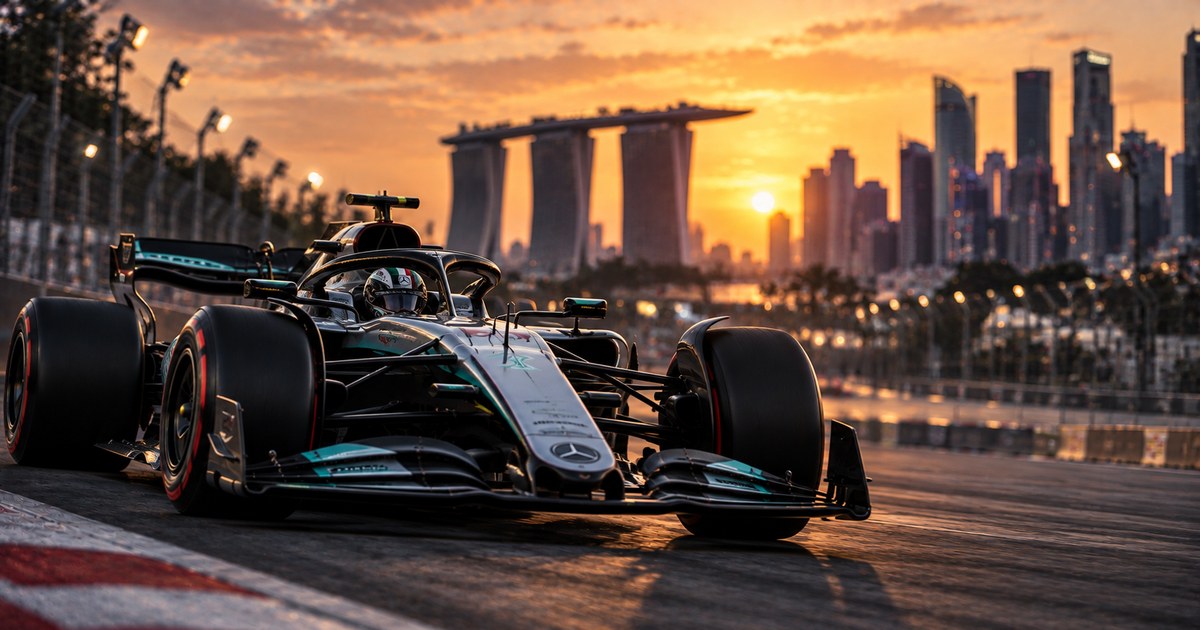
Kimi Antonelli leads the 2026 Formula 1 standings by 81 points and could mathematically secure his maiden World Championship as early as the Singapore Grand Prix.
Antonelli has the title within mathematical reach
Kimi Antonelli has held the lead of the 2026 Formula 1 Drivers’ Championship since the Japanese Grand Prix. His victory in Spain strengthened that advantage and moved the Mercedes driver closer to his first world title.
After 14 rounds, Antonelli has 292 points. George Russell is second with 211, while Lewis Hamilton sits third with 191. That gives Antonelli an 81-point lead over Russell and a 101-point advantage over Hamilton.
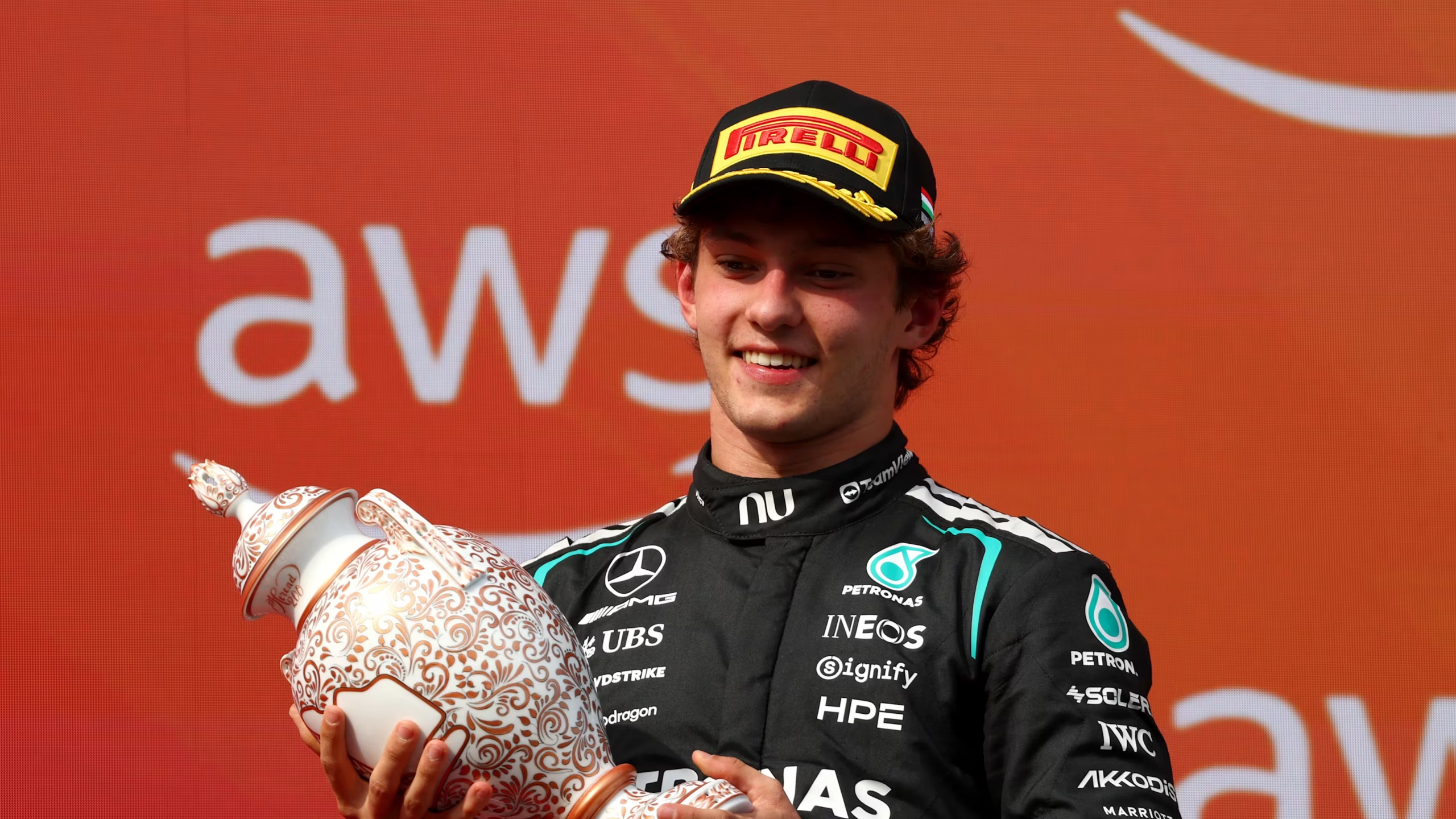
Kimi Antonelli remains at the top of the 2026 Drivers’ Championship after 14 rounds.
There are 233 points still available to a driver who wins every remaining Grand Prix and the Singapore Sprint.
That means the championship is not mathematically over. However, Antonelli already has enough of a cushion to create several possible title-clinching scenarios.
The official F1 calculations show that the earliest possible clinching point is Round 17 in Singapore.
Eight other drivers remain mathematically alive
Antonelli is not the only driver who can still win the championship on paper.
The list includes George Russell, Lewis Hamilton, Lando Norris, Charles Leclerc, Max Verstappen, Oscar Piastri, Isack Hadjar and Liam Lawson.
The situation is very different across the standings.
Drivers farther down the order would need Antonelli to stop scoring entirely. They would also need their own results to remain strong enough to pass his current total of 292 points.
Under those mathematical conditions, Russell could first become champion in São Paulo. Hamilton, Norris and Leclerc could do it in Las Vegas. Verstappen and Piastri would have to wait until Qatar.
That shows how large Antonelli’s current advantage has become.
Singapore is Antonelli’s earliest possible title venue
The earliest possible championship clincher comes at the Singapore Grand Prix.
To make that happen, Antonelli would need to win Azerbaijan, Bahrain and Singapore, while also winning the Singapore Sprint. At the same time, Russell would have to score zero points across those events.
That extreme combination would give Antonelli a total of 375 points.
Russell would then be 164 points behind.
With only 150 points remaining after Singapore, Russell would no longer be able to catch his Mercedes team-mate.
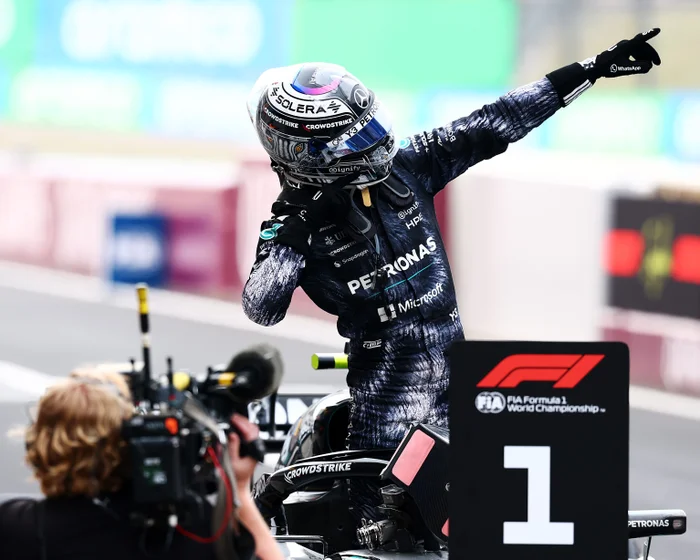
Antonelli took control of the championship after winning in Japan earlier in the 2026 season.
The scenario is extreme, but it establishes the earliest mathematical date.
The Singapore Grand Prix takes place on October 9-11, according to the official 2026 F1 calendar.
The Azerbaijan and Bahrain rounds come immediately before it. Bahrain will be held at the Sepang International Circuit in Malaysia in the revised 2026 calendar.
That creates a demanding three-race sequence before the championship calculation reaches Singapore.
A more realistic scenario points to Mexico
There is another calculation that produces a later title-clinching date.
F1’s data team also looked at what would happen if Antonelli and Russell continued around their median finishing positions from the season so far. Antonelli’s average finishing position is currently P1, while Russell’s is 3.5.
Under that model, Antonelli would first become champion at Round 19 in Mexico.
The calculation gives him a 112-point advantage at that stage.
Russell would then have too few points available in the remaining rounds to mathematically close the gap.

Antonelli has built his championship lead through a string of strong results during his second Formula 1 season.
The difference between the two scenarios is important.
Singapore is the earliest mathematical possibility. Mexico is the projected clinching point in the median-finish scenario.
Neither scenario guarantees what will happen on track. The first is based on a highly specific set of results, while the second depends on the continuation of the season’s median finishing patterns.
The championship still has several races ahead, including Azerbaijan, Bahrain, Singapore, the United States, Mexico, Brazil, Las Vegas, Qatar and Abu Dhabi.
Antonelli therefore remains in control of the mathematical equation, but the exact date of his first Formula 1 world championship will depend on how the remaining races unfold.
For now, the Kimi Antonelli 2026 title calculation is clear: he can become World Champion at the earliest in Singapore, while the median-results model points to Mexico as the next major possibility.
-

 NOW TRENDING4 weeks ago
Tesla Cybercab Gets September 3 Austin Launch Date
-

 INTELLIGENT MOBILITY2 months ago
GM Updates Infotainment System With Smarter Features
-
 NOW TRENDING2 months ago
2027 Audi Q9 and SQ9 Debut as Brand’s Largest SUVs
-
 NOW TRENDING2 months ago
2027 Hyundai Tucson Spied With New Design and Hybrid Power
-
 INTELLIGENT MOBILITY2 months ago
Hyundai Opens UX Studio Shanghai to Drive Global Innovation
-
 NOW TRENDING2 months ago
Low-Mileage Audi S4 Avant Brings V8 Wagon Dream Back
-
 NOW TRENDING2 months ago
2026 Toyota GRMN Corolla Debuts as the Ultimate Hot Hatch
-

 NOW TRENDING2 months ago
Every GM Assembly Plant Operating in the U.S. in 2026
You must be logged in to post a comment Login