
NOW TRENDING
Hybrid vs. Plug-In Hybrid: Which Saves U.S. Drivers More?

Access to charging, electricity rates, and daily mileage will determine whether a plug-in hybrid vehicle can offer greater savings than a conventional hybrid.
A charging spot, your daily mileage and your electricity rate can matter more than the badge. Here is how to compare the two before buying.
A plug-in hybrid can reduce gasoline use on your commute, but that does not automatically make it cheaper to own than a conventional hybrid. For U.S. shoppers, the useful comparison starts with three questions: Where will you charge, how many miles will you drive between charges, and how much extra will the vehicle cost?
If reliable charging is unavailable, start your search with a conventional hybrid. If you can plug in regularly, a plug-in hybrid deserves a closer look. The calculation below shows why the electricity rate can change the answer even when the vehicles and mileage stay the same.
What is the difference between a hybrid vehicle and a plug-in hybrid?
A conventional hybrid vehicle combines a gasoline engine with an electric motor and a battery. It is refueled at a gas station but is not plugged into a charger. The battery is recharged by the engine itself and through a regenerative braking system. According to the U.S. Department of Energy’s guide on hybrid vehicles, regenerative braking recovers some of the energy that would otherwise be lost when the vehicle slows down.
A plug-in hybrid vehicle adds the capability to be charged via an external electricity source and typically features a larger-capacity battery. This type of vehicle can travel a significant distance using only electric power, while still retaining a gasoline engine. Depending on the vehicle and driving conditions, the gasoline engine may engage during hard acceleration or when the climate control system requires more power. Therefore, the stated electric range does not guarantee that the gasoline engine will remain off throughout every trip.
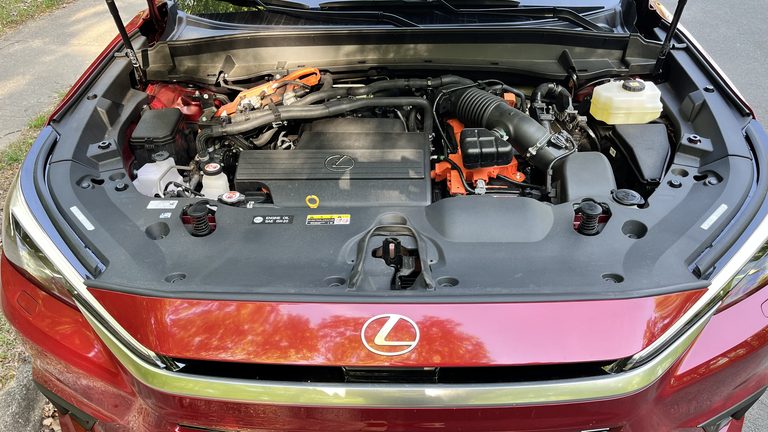
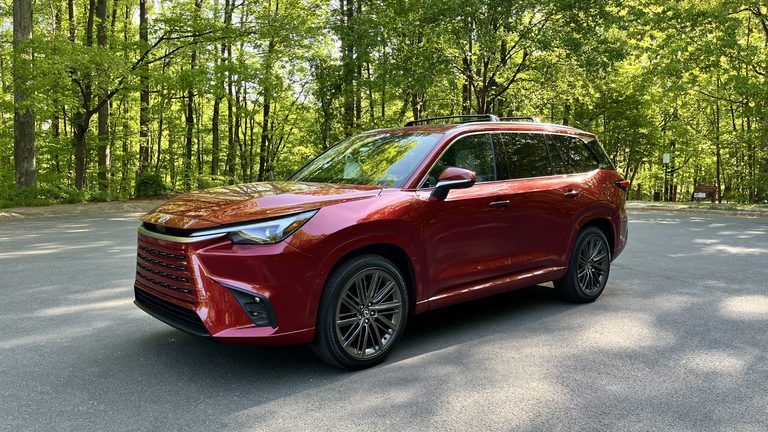
The TX 550h+ illustrates the PHEV formula: a gasoline engine works alongside electric propulsion. Photo: © Carsfera.com / Carsfera Media.
Check your parking spot before the electric range
Map out a normal week, including school runs, errands and weekend driving. Then identify where charging would actually happen. A charger near your office is useful only if you can access it when needed, stay long enough and accept its price.
Home charging can use 120-volt Level 1 or 240-volt Level 2 equipment, depending on the vehicle and installation. The DOE’s consumer guidance recommends checking compatibility and considering daily driving needs. Before budgeting for an installation, confirm the vehicle’s requirements and obtain a quote for your property.
The U.S.-market 2026 Lexus TX 550h+ provides a concrete example. Lexus lists a manufacturer-estimated 33-mile electric range and approximately three hours for a full charge using its maximum 240-volt charging current under ideal conditions. Those figures come from Lexus’s U.S. specifications; they are not charging times for every PHEV.
A 25-mile daily route fits inside that published range on paper. A 70-mile day does not. That distinction helps frame a purchase, but actual electric miles still depend on conditions and vehicle operation. For the cabin and driving experience of this specific SUV, see Carsfera’s 2026 Lexus TX 550h+ review.

Use the vehicle’s range information alongside your actual daily route when planning charging. Photo: © Carsfera.com / Carsfera Media.
Compare cost per mile, not MPG versus MPGe
The EPA’s labeling guide for plug-in hybrid electric vehicles (PHEVs) distinguishes between MPGe and MPG (miles per gallon) when operating in gasoline mode. A high MPGe figure does not represent the number of miles a vehicle can travel on a gallon of gasoline once its usable electric range has been exhausted.
Let’s assume an annual driving distance of 12,000 miles, a gasoline price of $4 per gallon, a conventional hybrid vehicle with a fuel economy of 40 MPG, and a PHEV with a fuel economy of 35 MPG when running on gasoline. Let’s also assume that the PHEV travels 8,000 miles in electric mode (consuming 35 kWh per 100 miles) and the remaining 4,000 miles using gasoline.
| Annual energy cost | Hybrid | PHEV at $0.16/kWh | PHEV at $0.40/kWh |
|---|---|---|---|
| Gasoline | $1,200 | $457 | $457 |
| Electricity | $0 | $448 | $1,120 |
| Total | $1,200 | $905 | $1,577 |
| PHEV difference versus hybrid | Baseline | $295 less | $377 more |
Through this calculation, a hybrid vehicle consumes 300 gallons per year. A plug-in hybrid electric vehicle (PHEV) consumes approximately 114.3 gallons, in addition to 2,800 kWh. A simple change in the electricity rate can flip the outcome regarding energy costs. Under these specific parameters, annual energy costs become equal at a price of approximately 26.5 cents per kWh, excluding any additional charging-related fees.
Now, let’s consider the purchase price. If a PHEV and its charging system entail an additional cost of $3,000, then (assuming a lower electricity rate) it would take about 10 years to recover that difference through energy savings alone.
Evaluate the vehicle as a whole before paying a premium.
Request written price quotes for the specific vehicles you intend to purchase. Ensure that the equipment, seating configuration, and powertrain are as similar as possible; otherwise, part of the price difference might be due to luxury features rather than the plug-in capability. Furthermore, be sure to include any installation costs for the charging system in your analysis of the PHEV.
Also check the gasoline-mode rating for longer trips. The miles you drive after the initial electric range still contribute to the annual bill. A household with frequent long journeys should model those journeys separately from a short weekday commute.
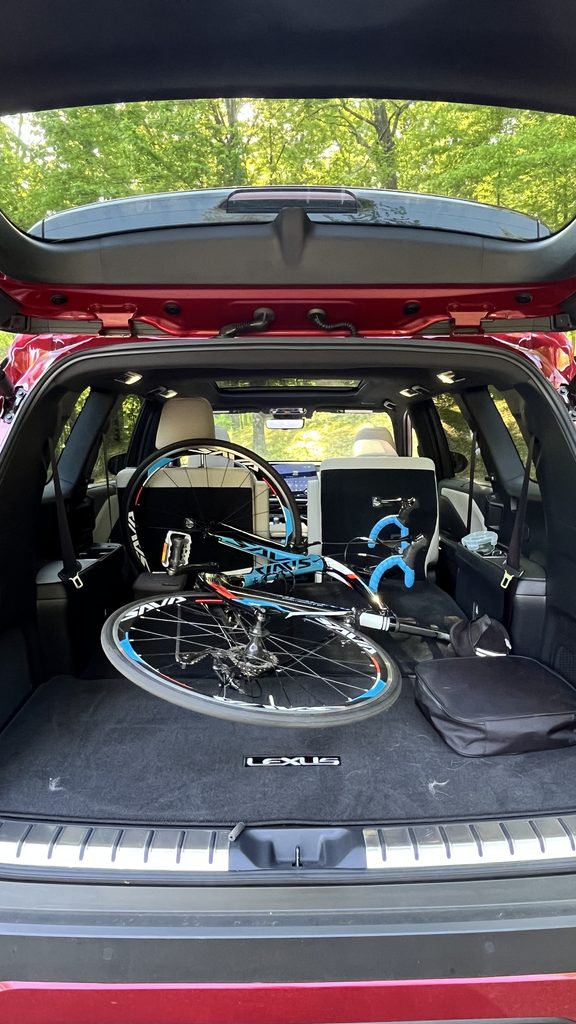
Passenger and cargo requirements belong in the comparison alongside energy costs. Photo: © Carsfera.com / Carsfera Media.
Set your maximum price premium
Before visiting a dealership, work out how much extra you can justify paying for a plug-in hybrid (PHEV). Start with the energy savings you expect during your ownership.
For example, with a lower electricity rate, a PHEV could save about $295 a year. That adds up to $1,475 over five years. If the vehicle’s extra purchase price and charging setup total $3,000, energy savings would leave $1,525 unrecovered.
This calculation assumes that mileage, efficiency, and energy prices stay the same. It also excludes financing, resale value, and other ownership costs. Based on energy savings alone, the maximum premium would be $1,475 over five years. You may choose to pay more for certain features or electric-only driving, but those savings would not cover the difference.
To build a realistic estimate, track your driving for seven days. Record your daily mileage, where you park, and when you could charge. Then use that information to estimate your annual electric-only mileage. Allow for vacations and longer trips, too.
Next, multiply your estimated annual energy savings by the number of years you plan to keep the vehicle. Compare the total with the PHEV’s extra purchase price, including charging installation costs.
A conventional hybrid may be more practical if you cannot charge regularly. Consider a PHEV if charging fits your routine and its price matches your calculations. If you expect no energy savings, those savings cannot justify paying a premium. Use that figure to guide your negotiations.












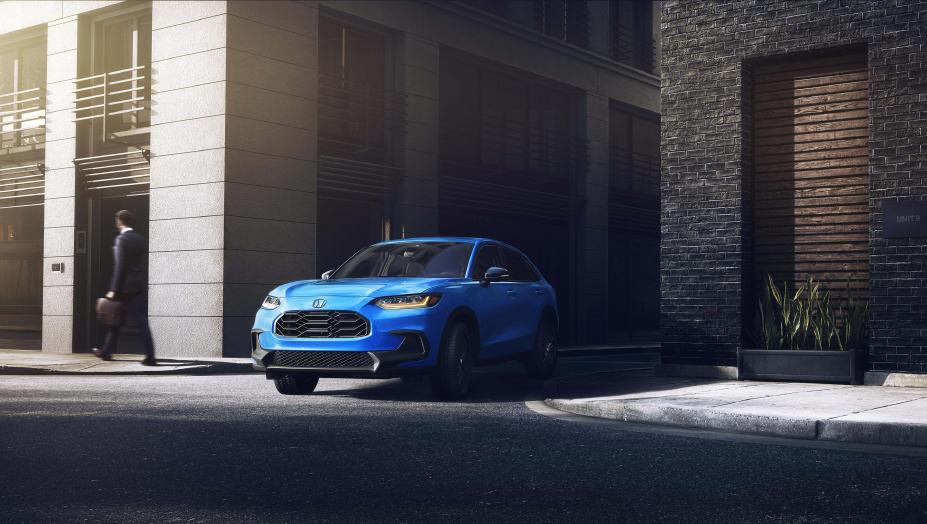
The 2027 Honda HR-V starts below $30,000, but taxes and fees can quickly push your final price over budget.
Honda HR-V Sport 2026. Foto: American Honda Motor Co., Inc. / Honda Newsroom.
The LX and front-wheel-drive Sport stay below $30,000 before taxes, but destination charges leave very different amounts of room in your budget.
The 2027 Honda HR-V starts at $26,600 in the United States, but the more useful shopping figure is $28,150 including Honda’s currently listed $1,550 destination charge. At that price, the front-wheel-drive LX leaves $1,850 beneath a $30,000 ceiling. The front-wheel-drive Sport leaves just $50.
That small gap matters when comparing affordable SUVs. A vehicle advertised below $30,000 can exceed that amount before the buyer adds a single accessory. This guide separates the starting MSRP, delivery-inclusive price and the final amount a dealer would ask you to pay.
2027 Honda HR-V prices, including destination
Honda offers the U.S. HR-V in LX, Sport and EX-L trims, each with front-wheel drive or available all-wheel drive. The following totals combine the published trim MSRPs with the $1,550 destination charge shown on Honda’s current U.S. consumer page.
| 2027 HR-V configuration | Base MSRP | With destination | Below $30,000? |
|---|---|---|---|
| LX FWD | $26,600 | $28,150 | Yes: $1,850 remaining |
| LX AWD | $28,100 | $29,650 | Yes: $350 remaining |
| Sport FWD | $28,400 | $29,950 | Yes: $50 remaining |
| Sport AWD | $29,900 | $31,450 | No |
| EX-L FWD | $30,450 | $32,000 | No |
| EX-L AWD | $31,950 | $33,500 | No |
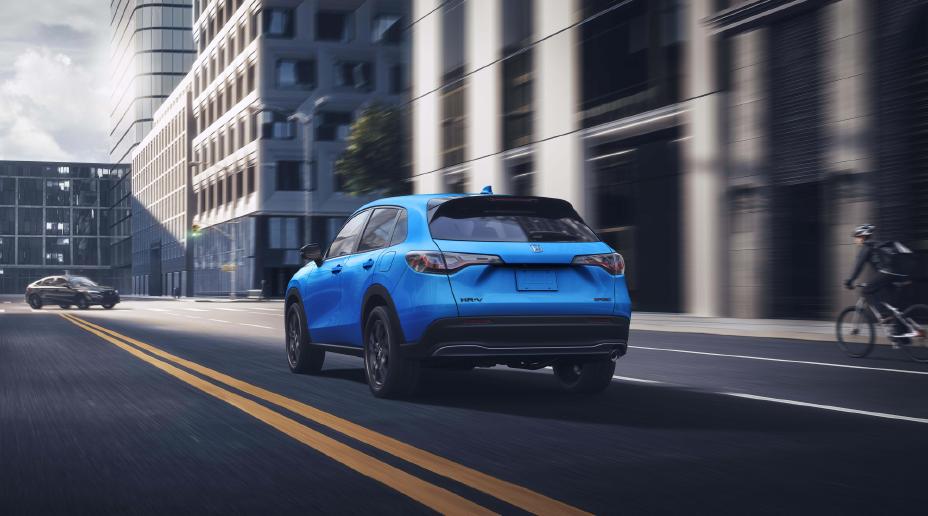
2026 Honda HR-V Sport. Photo: American Honda Motor Co., Inc. / Honda Newsroom.
LX or Sport: where does the extra money go?
Honda’s current equipment overview lists a 9-inch touchscreen and wireless Apple CarPlay compatibility on the LX. Sport adds features including heated front seats, remote engine start and 18-inch gloss-black alloy wheels. EX-L moves further upmarket with leather-trimmed seats, a power-adjustable driver’s seat and dual-zone automatic climate control.
For a buyer deciding between the two lower trims, the important price step is $1,800 from LX FWD to Sport FWD. Choose the features you would actually use before treating that step as essential. A buyer who wants all-wheel drive can instead select LX AWD for $300 less than Sport FWD at the listed starting prices.
The Sport badge does not bring a stronger engine. Honda’s U.S. specifications list the same 158-hp, 2.0-liter four-cylinder and continuously variable transmission across the lineup. This makes the LX-versus-Sport decision primarily about equipment and appearance, rather than an engine upgrade.
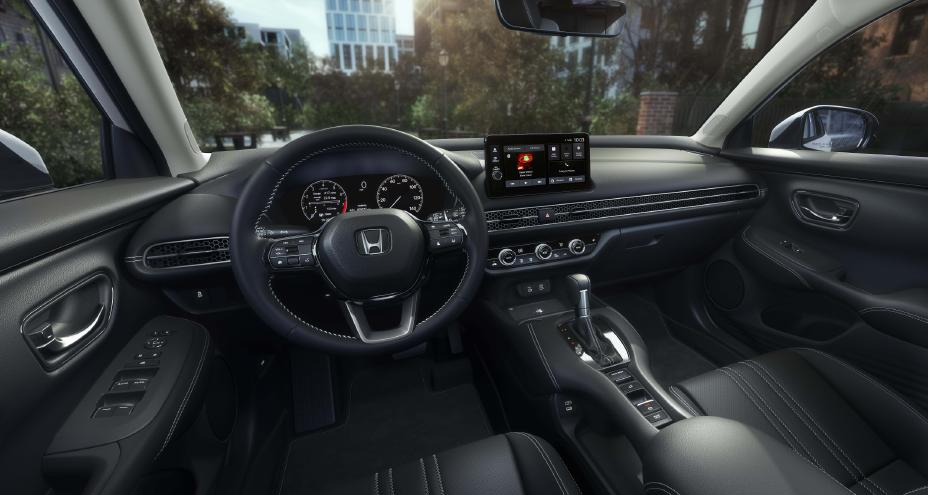
A 2026 HR-V cabin. Photo: American Honda Motor Co., Inc. / Honda Newsroom.
Does AWD change the fuel-economy calculation?
The 2027 HR-V’s published EPA ratings are 26 mpg city, 32 highway and 28 combined with front-wheel drive. AWD versions are rated at 25 city, 30 highway and 27 combined. Actual results depend on driving and conditions.
AWD adds $1,500 to the MSRP of each trim. It also leaves the LX AWD only $350 below the headline budget before taxes or fees. If AWD is on your must-have list, compare that configuration directly with other AWD vehicles rather than using a rival’s least-expensive front-wheel-drive price.
Honda lists 24.4 cubic feet of cargo space behind the rear seats and 55.1 cubic feet with them folded. Those figures provide a starting point, but bring your stroller, luggage or other regularly carried items to the dealer. A suitable price and drivetrain do not settle whether the vehicle fits your routine.
Where does it sit against the Toyota Corolla Cross?
Toyota’s October 2 U.S. announcement places the 2027 Corolla Cross L FWD at $25,535 before delivery, compared with $26,600 for the HR-V LX FWD. That is a $1,065 difference in base MSRP. It is not the final difference between dealer quotes, because delivery charges, equipment and other costs must also be included.
Toyota lists 169 horsepower for its gasoline Corolla Cross and offers both FWD and AWD. Its hybrid lineup begins at $31,415 before delivery, already beyond this article’s budget at MSRP. For the model’s lineup context, read Carsfera’s 2027 Toyota Corolla Cross coverage.
For shoppers comparing these two models near $30,000, the practical shortlist starts with the gasoline versions and exact equipment needs. Request equivalent quotes, sit in both vehicles and compare the space you will use. The figures here support a price comparison; they do not establish a ride-quality or reliability winner.

the 2026 HR-V touchscreen. Photo: American Honda Motor Co., Inc. / Honda Newsroom.
Carsfera’s budget test: work backward from $30,000
A hard $30,000 out-the-door limit calls for a different shopping target from a $30,000 sticker-price limit. Start with the amount you can spend in total, then leave room for the taxes and fees that apply to your purchase.
Our illustrative calculation: assume a 6% tax on the negotiated vehicle price including destination, plus $300 in other charges added afterward. These are hypothetical inputs, not a statement of any state’s tax rules. Dividing ($30,000 minus $300) by 1.06 gives a vehicle-and-destination ceiling of approximately $28,018.87. Round down to a whole-dollar shopping target of $28,018 or lower to stay within the budget.
Under those assumptions, the LX FWD at its listed starting price would total $30,139. The Sport FWD would total $32,047. To meet that whole-dollar target, the LX would need at least $132 off, while the Sport would need at least $1,932 off, with no additional equipment or charges. These are calculated negotiating targets, not advertised discounts or predictions that a dealer will accept them.
Request an itemized out-the-door quote for an identified vehicle before discussing the monthly payment. Keep trade-in value, down payment and financing terms separate so they do not conceal the vehicle’s actual price. For a strict budget, the LX FWD gives you the most room; the Sport’s $50 cushion is a reason to check the final quote carefully.
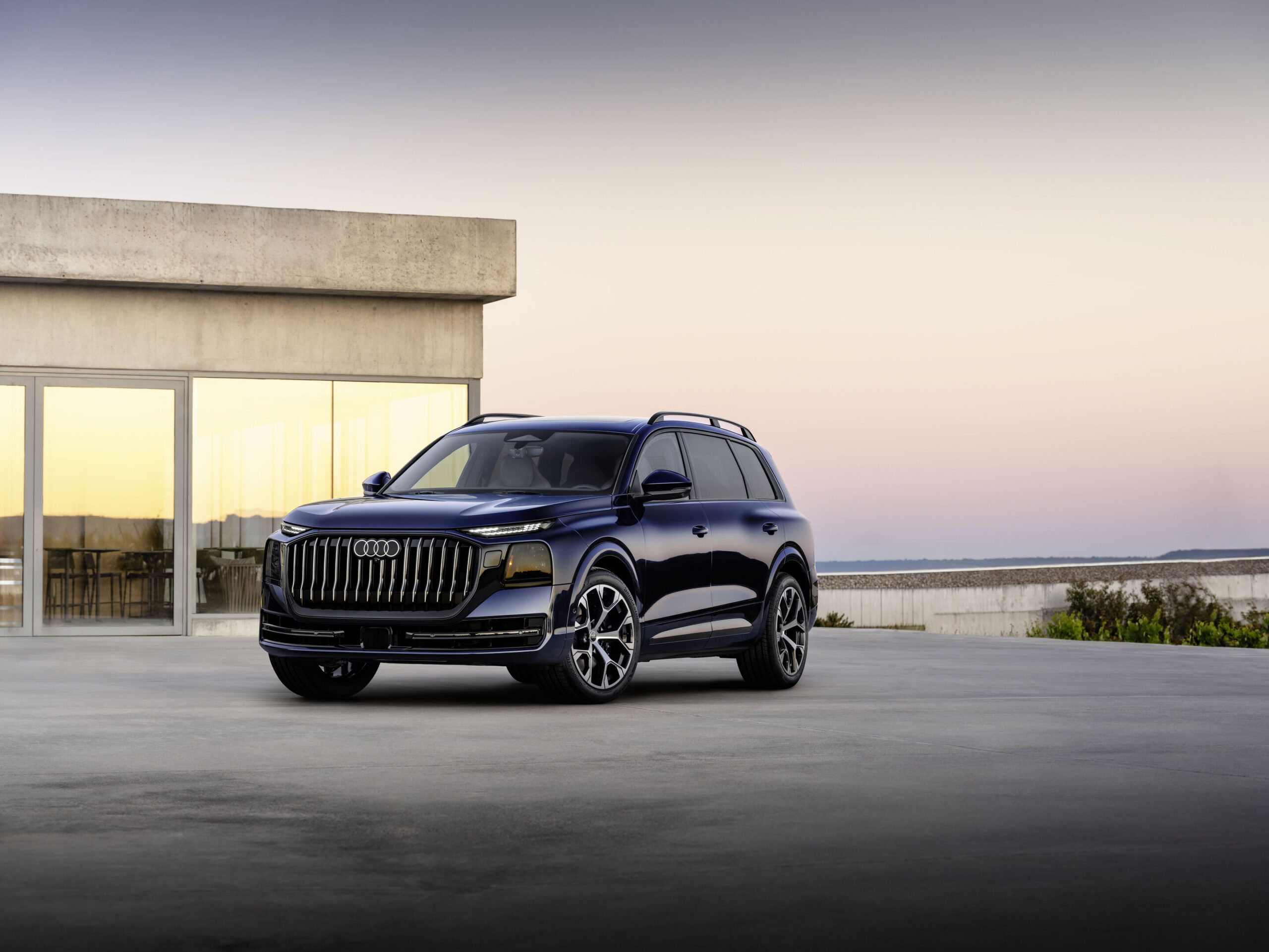
Audi plans to invest nearly $4 billion in its first vehicle manufacturing plant in the United States, a new facility in Peach County, Georgia, dedicated to producing high-end SUVs for North American customers.
The company and the state estimate roughly 4,500 jobs and a maximum annual capacity of 200,000 vehicles. For American shoppers, though, the announcement is a long-range signal: production is not expected to begin until 2031, and Audi has not named the models that will be assembled there.
Where will Audi build its first U.S. vehicles?
The planned factory will sit at the Middle Georgia Megasite in Peach County, near Perry and Macon. Georgia’s economic development agency says Audi expects to begin grading the site in 2027, start construction in 2028 and reach full production in 2031. The state says the facility could build up to 200,000 vehicles per year.
Audi’s own October 25 announcement describes construction as beginning in 2027 and says production should start in the early 2030s. The two releases do not use the same level of detail for the construction schedule, so the clearest public timeline is the state’s sequence: site grading in 2027, building work in 2028 and production expected in 2031.

Audi says the Georgia investment is part of a wider effort to strengthen its business in the United States. Photo: AUDI AG.
Which Audi SUVs will be made in Georgia?
Audi says the plant will focus on premium SUVs tailored to North American customers. It has not announced a production model, powertrain, trim or price. That means it is too early to connect the project to a specific vehicle, including the Q9, which Audi has presented as a U.S.-specification flagship SUV. A product photo can illustrate the kind of vehicle Audi sells here; it does not confirm the future factory lineup.
The announcement also does not promise lower sticker prices or faster delivery. Local production could give Audi a different way to manage its supply chain and exposure to trade and currency changes. The company itself says a North American production base should help make its business more resilient and competitive. Whether that eventually changes the price, equipment or availability of a particular SUV will depend on decisions Audi has not yet disclosed.
For a present-day reference in the premium three-row SUV space, see 2026 Lexus TX 550h+ test drive. While this is not a direct comparison to an Audi manufactured in Georgia, it can showcase the type of family-friendly versatility and electrified powertrain that American buyers might already value.
How does Georgia fit Audi’s North American footprint?
The “first U.S. plant” wording matters: Audi already manufactures vehicles in North America. Its official information for the San José Chiapa site in Mexico lists the Q5 SUV and Q5 Sportback as current production models. The Georgia facility would add U.S. production to that footprint; it would not mark the company’s first factory anywhere on the continent.

Audi’s San José Chiapa plant in Mexico currently builds the Q5 SUV and Q5 Sportback. Photo: AUDI AG.
Audi and Georgia point to a skilled workforce, suppliers, transportation links and access to U.S. customers as reasons for the location. The state says the project will include customized training developed with Georgia Quick Start and local technical colleges. That could create a pipeline for production and supplier jobs, but the public announcement does not yet include hiring dates, wage ranges or a detailed job-by-job breakdown.
Will the new factory change Audi prices soon?
There is no announced near-term price change. The factory is several years from production, no Georgia-built model has been identified, and Audi has not tied future U.S. prices to the site. Current shoppers should compare the vehicles, equipment and dealer pricing available now instead of waiting for a plant that is still in the planning stage.
Local production may give Audi more flexibility over where it builds vehicles and how it serves North American customers. The company presents the plant as part of a broader effort to strengthen its U.S. business. That is a long-term strategy, not a promise of lower sticker prices, shorter waits or a specific change in vehicle equipment.
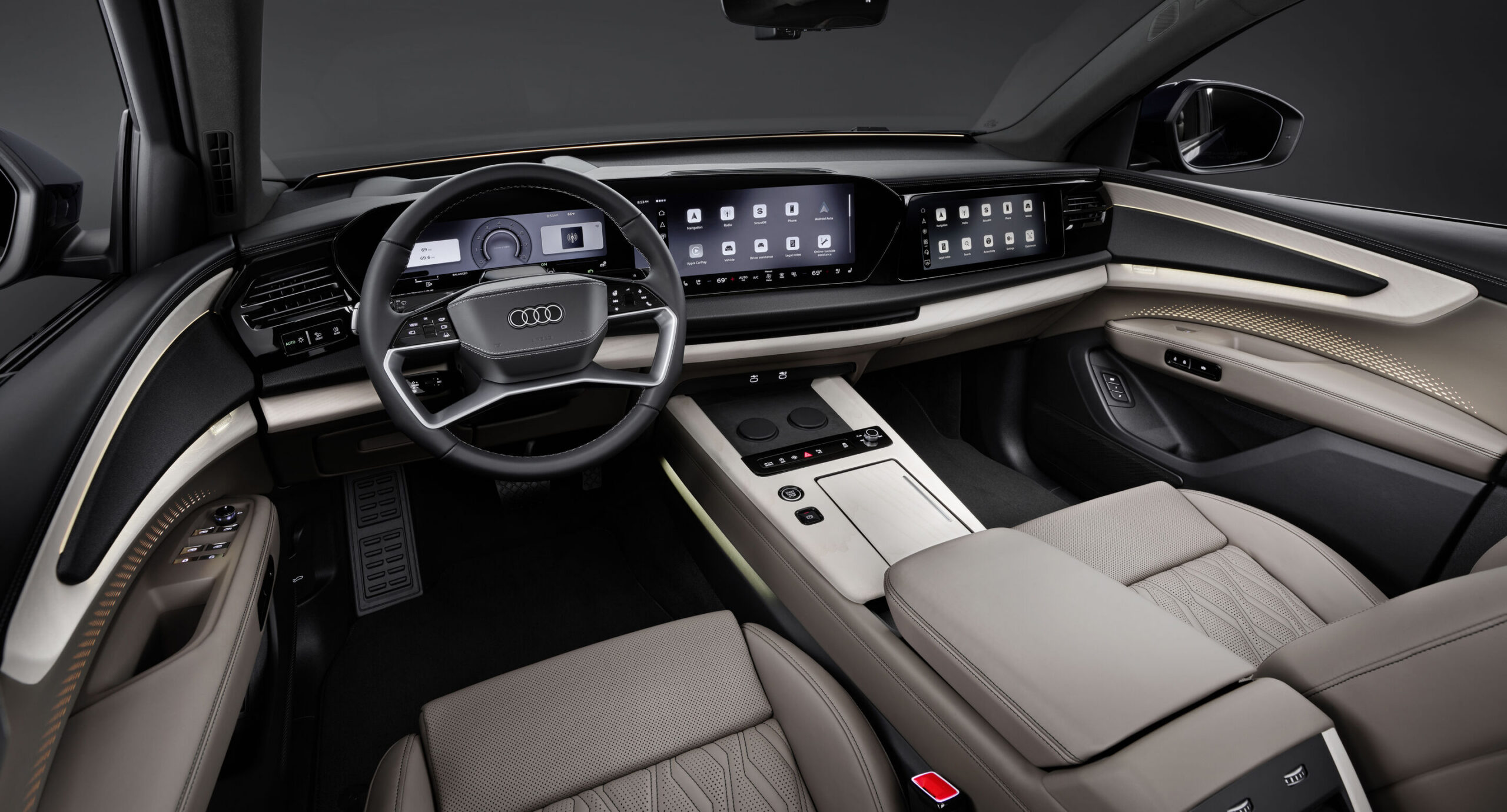
Audi’s U.S.-specification Q9 interior is another view of the brand’s current large-SUV direction. Photo: AUDI AG.*
What should U.S. buyers watch next?
The next useful updates will be the factory’s construction progress, Audi’s model assignment and the timing of supplier and employee training. Georgia says workforce programs will be developed with Georgia Quick Start and local technical colleges. The public announcement does not yet include hiring dates, wage ranges or a job-by-job breakdown.
Audi’s Georgia plan is significant for its long-term U.S. strategy, but it is not a near-term shopping development. The confirmed details are an investment of about $4 billion, approximately 4,500 planned jobs, capacity of up to 200,000 vehicles per year and a 2031 production target from the state. The lineup, pricing and effect on showroom inventory remain open questions.
For now, buyers should make decisions based on vehicles actually available in the U.S. Audi’s announcement establishes the direction of a future manufacturing project; the practical impact on a particular SUV will become clearer only after the company names the models and confirms the production schedule.
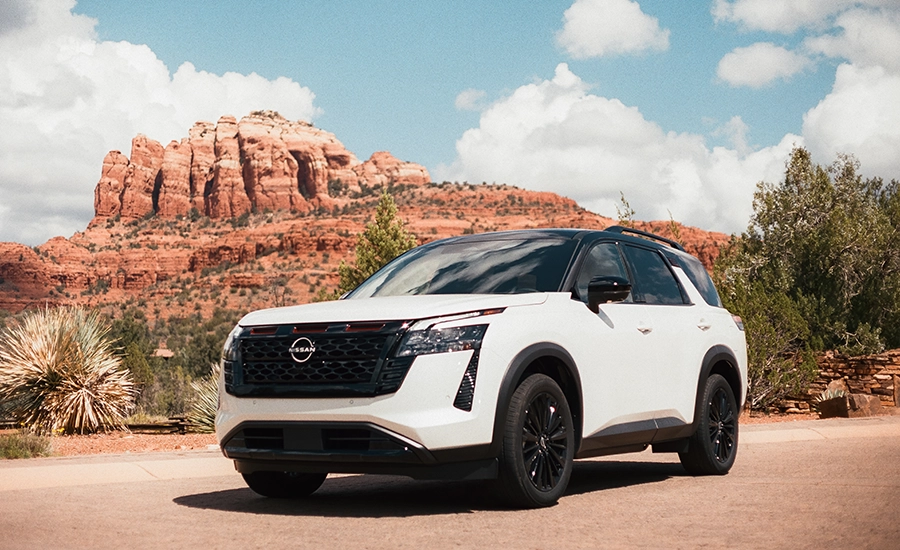
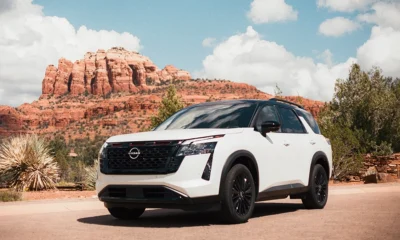
The 2027 Nissan Pathfinder special edition will arrive at U.S. dealerships in November, with a manufacturer’s suggested retail price (MSRP) starting at $47,390.
The 2027 Nissan Pathfinder special edition will arrive at U.S. dealerships in November, with a manufacturer’s suggested retail price (MSRP) starting at $47,390. Nissan is commemorating the model’s 40th anniversary with an interior featuring burgundy and black tones, red exterior accents, and an expanded list of comfort-oriented features. Given that the Pathfinder is, at its core, a V6-powered SUV with three rows of seats, the question is whether the additional equipment and heritage-inspired aesthetics justify its place within the lineup.
The 2027 Pathfinder Special Edition uses a two-tone exterior color option and dark wheels. Credit: Nissan North America / Nissan Newsroom.
How does the Special Edition trim compare to the other equipment levels of the Pathfinder?
The front-wheel-drive (FWD) Special Edition costs $4,600 more than the 2027 Pathfinder SL FWD, which has a starting price of $42,790. Conversely, it is $2,500 less expensive than the Platinum FWD trim, priced at $49,890. The all-wheel-drive (AWD) Special Edition is also positioned $2,500 below the Platinum AWD trim. All these figures represent the manufacturer’s suggested retail price (MSRP) and do not include the $1,575 destination charge.
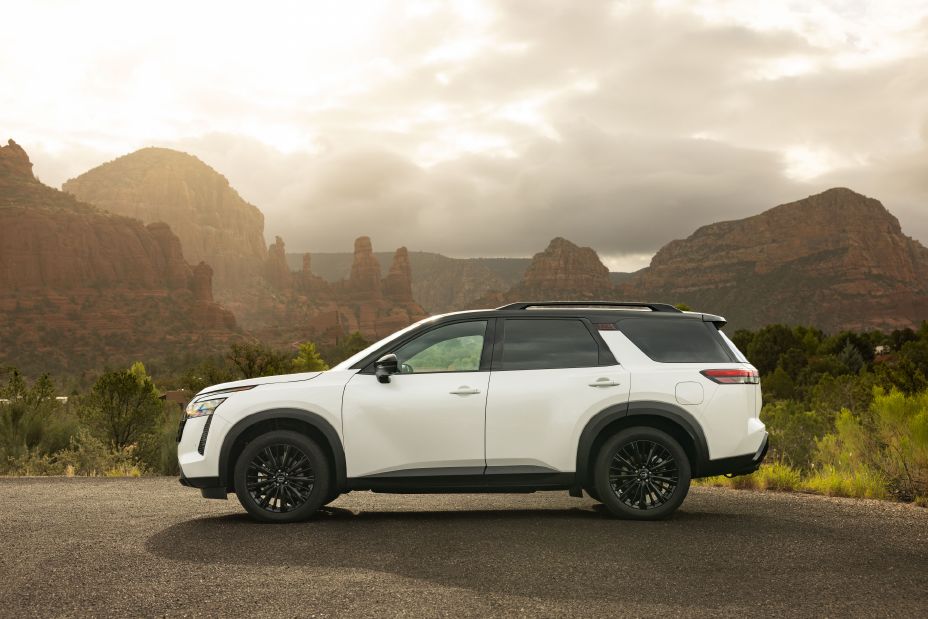
This price positioning helps clarify the purpose of this trim, as it includes distinct commemorative details and features that customers would typically associate with higher-priced versions. Nissan highlights 20-inch black alloy wheels, red exterior accents, a panoramic sunroof, second-row captain’s chairs, rear-door sunshades, and a 12-speaker Bose audio system.
The two-tone interior serves as the clearest nod to the original Pathfinder. The black and burgundy TailorFit upholstery evokes the burgundy fabric found in the 1987 model. The Special Edition is available in Gun Metallic, Super Black, and Everest White Pearl Tricoat; for the white paint option, a black-colored roof is also available.
The Special Edition pairs black 20-inch wheels with red accents and unique badging. Credit: Nissan North America / Nissan Newsroom.
Does this Nissan offer more power or greater off-road capability?
No specific powertrain improvements have been announced for this version. The 2027 Pathfinder uses a 3.5-liter V6 engine that produces 284 horsepower and 259 lb-ft of torque, paired with a nine-speed automatic transmission. Nissan specifies a standard towing capacity of 3,500 pounds, which can increase to 6,000 pounds if the vehicle is properly equipped; the exact figure depends on the configuration and the towing accessories installed.
This distinction is important, especially if the commemorative aesthetic implies the inclusion of additional components for rugged terrain. The Rock Creek trim remains the off-road-oriented variant of the Pathfinder, as it features all-terrain tires and a suspension system designed for such use. The “Special Edition,” meanwhile, focuses on interior features and exterior appearance. Buyers who frequently travel on poor-quality roads should consider the components offered in the Rock Creek trim before opting solely for the commemorative version.
The Pathfinder features three rows of seating, with a capacity for seven passengers (if equipped with second-row captain’s chairs) or up to eight passengers (if configured with a second-row bench seat). In the “Special Edition,” the inclusion of captain’s chairs limits capacity to seven occupants. Additionally, across the entire 2027 lineup, Nissan includes a 12.3-inch touchscreen as standard equipment, along with wireless compatibility for Apple CarPlay and Android Auto.
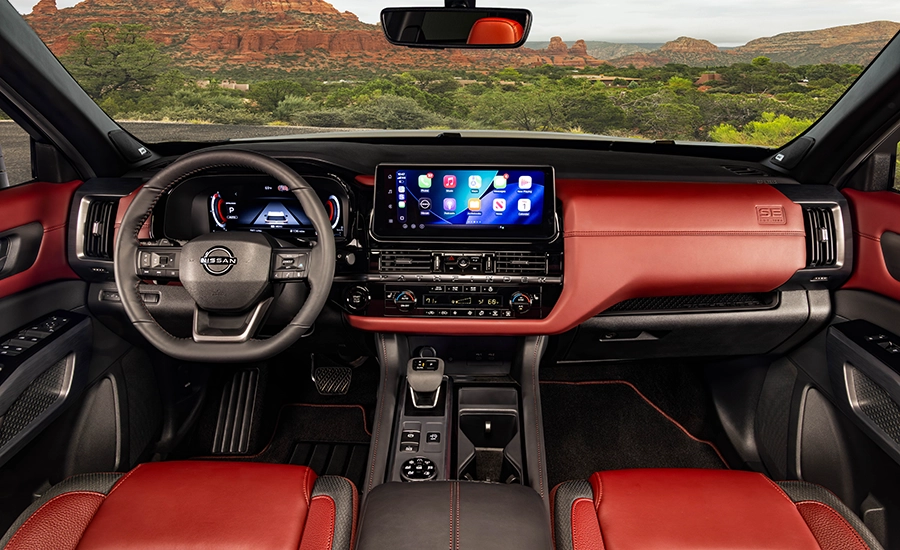
The Special Edition’s black-and-burgundy interior is the main visual link to the first-generation Pathfinder. Credit: Nissan North America / Nissan Newsroom.
Why does the Nissan Pathfinder’s 40th anniversary matter?
The Nissan Pathfinder’s 40th anniversary celebrates its evolution from a two-door compact SUV, introduced for the 1987 model year, into today’s three-row family vehicle. V6 power has remained a defining feature across its generations. Nissan reports more than two million Pathfinder sales, with production based in Smyrna, Tennessee, since 2004, using a combination of U.S.-sourced and imported parts.
The 2027 Nissan Pathfinder carries forward the refresh introduced for 2026, including revised front and rear styling, a standard 12.3-inch touchscreen and wireless smartphone integration. The anniversary edition adds a nostalgic cabin design and more standard comfort features, giving the milestone a distinctive identity without introducing a new generation or major mechanical changes.
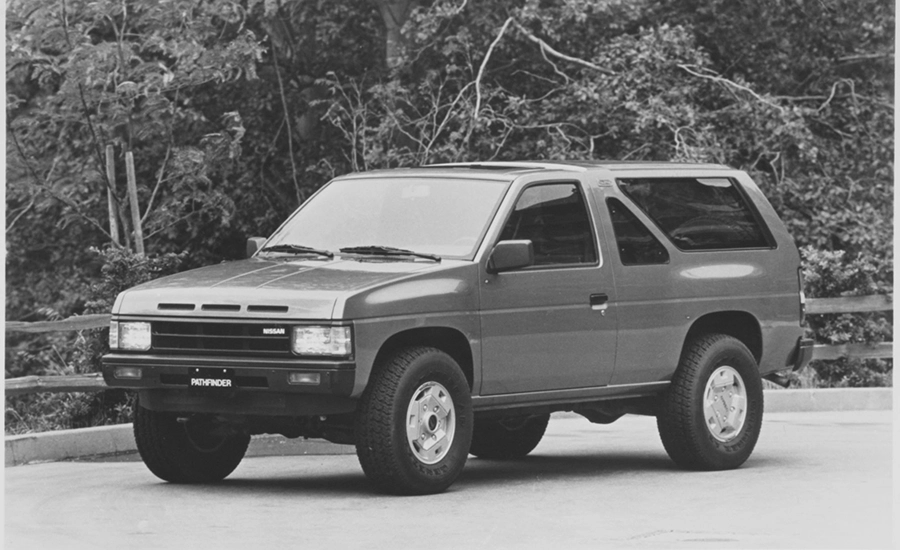
The original Pathfinder launched for the 1987 model year. Credit: Nissan North America / Nissan Newsroom.
Is the 2027 Nissan Pathfinder Special Edition worth the extra cost?
The 2027 Nissan Pathfinder Special Edition makes a compelling case for buyers who value distinctive styling and a well-equipped cabin. It combines a burgundy interior, captain’s chairs, a sunroof and a Bose audio system with commemorative design details. With the Platinum trim priced just $2,500 higher in MSRP, comparing standard equipment and dealer quotes is essential: the Special Edition’s appeal lies in its exclusive appearance, while the Platinum focuses more on upscale amenities.
For buyers who primarily need a three-row SUV, the more affordable Pathfinder SL may offer better value, while the Rock Creek caters to those seeking greater off-road capability. The Special Edition is best suited to drivers who want its specific combination of styling and comfort features while retaining the Pathfinder’s familiar V6 engine.
-

 TEST DRIVES2 months ago
2026 Toyota GR Supra MkV Final Edition
-

 NOW TRENDING1 month ago
Aston Martin DBX Becomes Harry Da Souza’s Ride in MobLand
-

 NOW TRENDING2 months ago
Tesla Cybercab Puts U.S. Regulations to the Test
-

 TEST DRIVES1 month ago
2026 Maserati GranTurismo Trofeo Review: Miami
-

 INTELLIGENT MOBILITY1 month ago
Tesla Cybercab Navigation Problem Hits Austin Robotaxis
-
 NOW TRENDING2 months ago
Hyundai Reports Strong Hybrid Sales in August 2026
-

 INTELLIGENT MOBILITY1 month ago
Tesla Cybercab Cannot Be Charged at Home—Here’s Why
-

 NOW TRENDING2 months ago
This Lotus Elise Restomod Weighs Just 1,320 Pounds
You must be logged in to post a comment Login