
With a zero-emission label, up to seven seats, and an advanced hybrid system, the new SWM G03F EDi 2026 arrives ready to revolutionize the compact SUV segment in Spain.
The SWM G03F EDi 2026, also known as the Super Hybrid, makes a bold entrance into the Spanish market with its range-extender hybrid system, offering an unbeatable mix of performance, efficiency, and affordability. Measuring 4.60 metres in length, it stands alongside models like the Toyota RAV4, Hyundai Tucson, and Peugeot 3008, but with a far more compelling value proposition.
On the technical side, it features a 1.5-litre Xiaoyun petrol engine producing 102 hp, which works solely as an electricity generator, paired with a 105 kW (143 hp, 210 Nm) electric motor. Mated to an eCVT automatic transmission, the SUV can sprint from 0 to 100 km/h in just 7.5 seconds and reach a top speed of 156 km/h.
A hybrid unlike any other
The most fascinating aspect of this system is that the petrol engine never drives the wheels directly – it only generates electricity. This means the G03F EDi operates as a battery-electric vehicle with extended range, delivering up to 50 km of pure-electric driving thanks to its 8.8 kWh battery, while achieving an official consumption of just 0.88 l/100 km under the WLTP cycle. Overall, it offers 1,000 km of combined range, complete with the zero-emissions badge and all the associated urban advantages.

Buyers can choose between five- and seven-seat layouts, with the former offering a 705-litre boot capacity. Inside, the G03F EDi boasts an impressive level of equipment, including 17-inch alloy wheels, automatic climate control, a 10.25-inch infotainment system with navigation, eco-leather upholstery, rear-view camera, and a panoramic sunroof.
Aggressive pricing and offers in Spain
The SWM G03F EDi 2026 lands in Spain with an extremely competitive pricing strategy. The five-seat version starts at €26,990, but with launch offers, the MOVES Plan, and dealership financing, the price drops to just €19,990. Prefer the seven-seater version? No problem – it’s also available locally, with a base price of €27,990, or an even more tempting €20,990 after applying the same discounts. With its innovative hybrid setup and exceptionally low pricing, the new SWM G03F EDi 2026 is set to shake up the Spanish SUV market, positioning itself as one of the smartest and most efficient choices in its class.










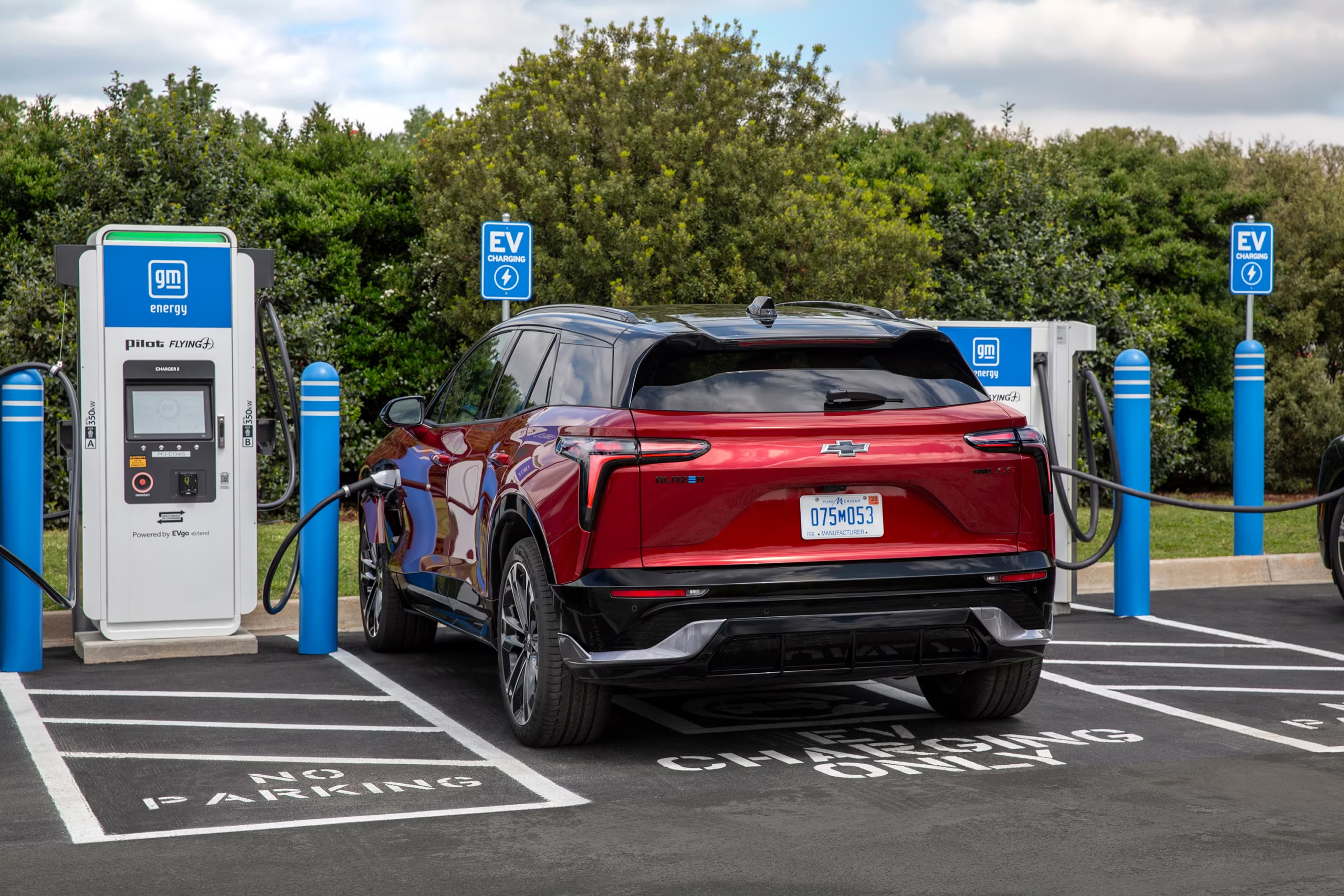
GM EV drivers can now access more than 120 IONNA fast-charging stations across the United States with seamless charging through Energy Pass.
Electric vehicle owners driving Chevrolet, Cadillac and GMC models now have access to an even larger public charging network as IONNA continues expanding across the United States. Backed by General Motors and seven other major automakers, the fast-growing charging network now operates 122 charging locations nationwide with 1,166 DC fast-charging stalls, making long-distance EV travel more convenient than ever.
The expansion also strengthens GM’s charging ecosystem by integrating IONNA directly into the company’s Energy Pass platform, allowing drivers to locate chargers, start charging sessions and pay without downloading additional apps.
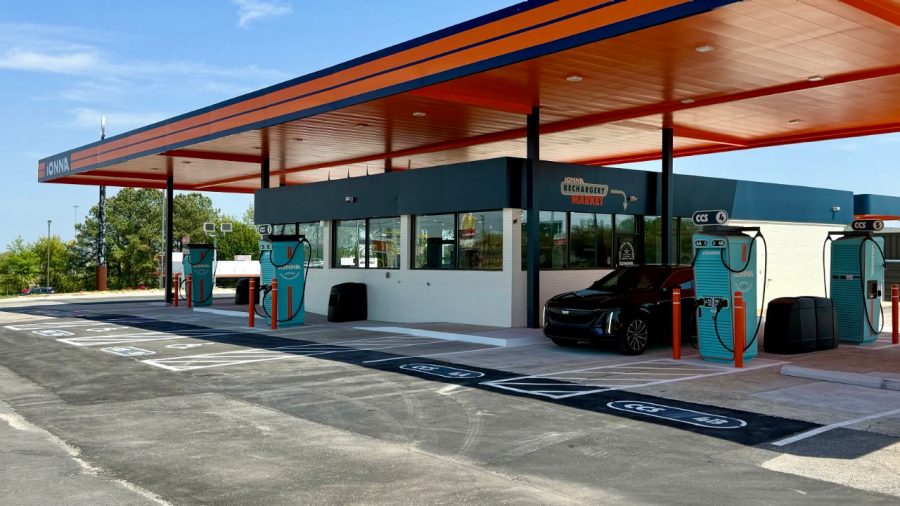
GM EV drivers now have access to more than 120 IONNA fast-charging stations across the United States.
GM expands fast charging across the United States
IONNA continues rapidly expanding its footprint with stations strategically located across major travel corridors.
Many of the new locations feature IONNA Rechargeries, offering drivers amenities such as:
- Fast charging up to 400 kW
- Food and beverage options
- Modern restrooms
- Well-lit charging areas
- Comfortable rest stops during charging sessions
The network is designed to reduce charging times while providing a better experience for EV owners traveling long distances.

IONNA Rechargery locations combine ultra-fast charging with convenient traveler amenities.
Energy Pass simplifies public EV charging
GM’s new Energy Pass integrates public charging directly into the MyChevrolet, MyCadillac, and MyGMC mobile apps.
Instead of creating multiple charging accounts, drivers can:
- Find compatible charging stations
- Start charging remotely
- Pay directly through one account
- Use Plug & Charge for automatic authentication
- Receive a 10% discount when charging at participating IONNA stations
The system also provides access to multiple charging providers through a single interface.
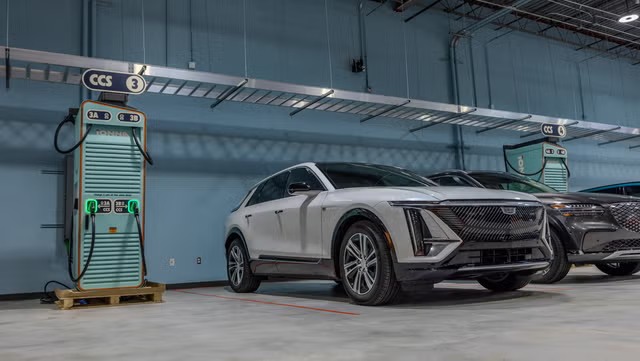
Energy Pass allows GM EV owners to access multiple charging networks from one app.
More charging options for GM electric vehicles
Beyond IONNA, Energy Pass also connects GM customers with several of the nation’s largest charging networks, including Tesla Supercharger, Electrify America, and additional providers that continue expanding throughout the country.
Combined, these networks provide access to nearly 70% of all DC fast chargers in the United States, giving GM EV owners significantly greater charging flexibility whether commuting daily or taking longer road trips.
As IONNA continues opening new locations nationwide, General Motors is strengthening one of the most important aspects of EV ownership: convenient, reliable and easy-to-use public charging infrastructure.

Hyundai expands its connected car experience by integrating myQ Connected Garage technology, allowing drivers to monitor and control compatible garage doors directly from the vehicle’s touchscreen.
Hyundai Motor America has announced a new partnership with Chamberlain Group to introduce Hyundai myQ Connected Garage, a feature that allows drivers to monitor and operate compatible garage doors directly from the vehicle’s infotainment system.
Available on select 2024-2026 Hyundai models in the U.S., the new connected service enhances convenience by integrating smart home technology with Hyundai’s Bluelink platform.
Hyundai myQ Connected Garage adds smarter vehicle connectivity
The new Hyundai myQ Connected Garage system enables owners to check whether their garage door is open or closed and control it remotely without leaving the vehicle.
Once linked to a compatible myQ account and Hyundai Bluelink, the service provides seamless access through the vehicle’s touchscreen display.
Among the new features are:
- Automatic garage door opening and closing through customizable geofencing.
- Remote monitoring and control from virtually anywhere.
- Personalized opening and closing distance settings.
- Valet Mode to temporarily disable garage access.
- Support for multiple garage doors and multiple properties.
- Close Door Reminder notifications if the garage remains open.
Hyundai introduces myQ Connected Garage technology for compatible vehicles.
Compatible with leading smart garage systems
The Hyundai myQ Connected Garage platform works with several of the most popular smart garage door brands in North America, including:
- LiftMaster
- Chamberlain
- Craftsman
Garage door systems from many other manufacturers can also become compatible by adding the myQ Smart Garage Control device, eliminating the need for additional vehicle hardware or manual programming.
Once connected through a Hyundai Bluelink account, drivers can access their garage controls directly from the infotainment screen for a more integrated ownership experience.

The system supports multiple garage doors through a single myQ account.
Three-month free trial available on select Hyundai models
Hyundai is offering a three-month complimentary trial of myQ Connected Garage for eligible customers.
The service is available on select 2024, 2025 and 2026 Hyundai vehicles, depending on model and trim level, giving owners the opportunity to experience expanded smart home integration through their vehicle.
This latest technology further strengthens Hyundai’s connected ecosystem by combining vehicle convenience, home automation and remote accessibility into a single seamless platform.

Eligible Hyundai owners receive a complimentary three-month trial of myQ Connected Garage.
As connected vehicle technology continues to evolve, Hyundai myQ Connected Garage represents another step toward integrating everyday digital services into the driving experience. By allowing drivers to manage their garage doors directly from the vehicle, Hyundai expands its smart mobility ecosystem while offering greater convenience, security and peace of mind for customers across the U.S. market.
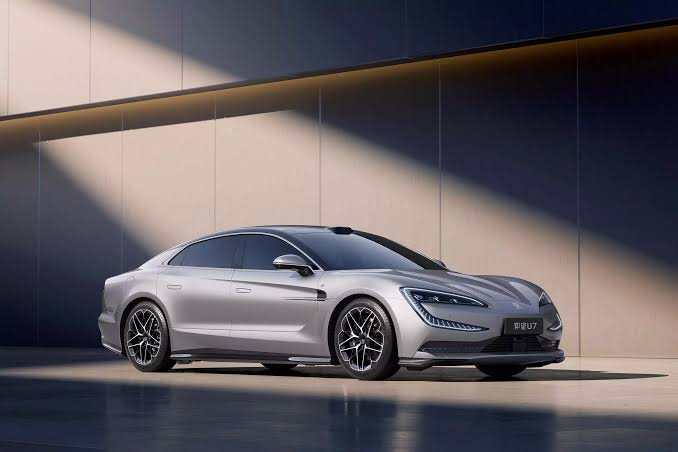
Chinese automakers are accelerating the development of in-house AI chips as they seek to lower costs, improve autonomous driving technology and reduce their dependence on suppliers such as Nvidia.
China’s automotive industry is entering a new phase of competition. After becoming the global leader in electric vehicle battery production, several manufacturers are now investing heavily in proprietary AI chips designed to power advanced driver-assistance systems (ADAS) and future autonomous driving technologies.
Companies including BYD, NIO, XPeng and Li Auto believe developing their own processors will allow them to control costs, speed up innovation and better integrate hardware with software.
Chinese automakers are investing heavily in AI chips
The Chinese automakers AI chips strategy reflects how modern vehicles are becoming software-defined products.
Instead of relying entirely on technology companies, manufacturers are creating processors specifically optimized for their own vehicles and autonomous driving systems.
These custom chips process data from cameras, radar, lidar and driver-monitoring systems while supporting increasingly advanced driving features.
As more affordable electric vehicles receive sophisticated driver-assistance technology, reducing hardware costs has become a major competitive advantage.

Chinese automakers are investing billions to develop their own AI chips for future electric vehicles.
BYD leads the race with its own autonomous driving chip
Among all manufacturers, BYD has made one of the biggest moves.
The company recently introduced its Xuanji A3, a 4-nanometer AI chip designed to support Level 3 and Level 4 autonomous driving.
According to BYD, the processor delivers performance comparable to Nvidia’s Thor platform while costing significantly less to produce.
The automaker also announced plans to invest more than $14.7 billion in intelligent vehicle technologies over the next three years.

BYD’s Xuanji A3 chip is designed to power next-generation intelligent vehicles.
NIO, XPeng and Li Auto expand their chip programs
BYD is not alone in pursuing this strategy.
NIO already uses its 5-nanometer Shenji NX9031 processor in production vehicles and estimates it can reduce hardware costs by roughly $1,400 per vehicle compared with Nvidia-based systems.
Meanwhile, XPeng continues expanding development of its Turing AI chip, which could eventually be supplied to other manufacturers. The company is already collaborating with Volkswagen on China-market electric vehicles.
Li Auto has also entered the race with its Mach M100 processor, developed specifically for its flagship L9 SUV and future intelligent driving systems.

Several Chinese automakers are designing proprietary chips to power future autonomous driving systems.
The rapid expansion of Chinese automakers AI chips highlights how competition in the electric vehicle industry is moving beyond batteries and into software and semiconductor technology. As manufacturers gain greater control over both hardware and software, they can reduce production costs while accelerating the development of advanced driver-assistance systems.
For global automakers, this trend represents a significant challenge. Companies that continue relying exclusively on third-party suppliers such as Nvidia, Qualcomm or Mobileye could find themselves at a growing cost disadvantage as Chinese brands strengthen their technological leadership in the global EV market.
-
 TEST DRIVES1 month ago
2026 Subaru Outback Touring
-
 TEST DRIVES1 month ago
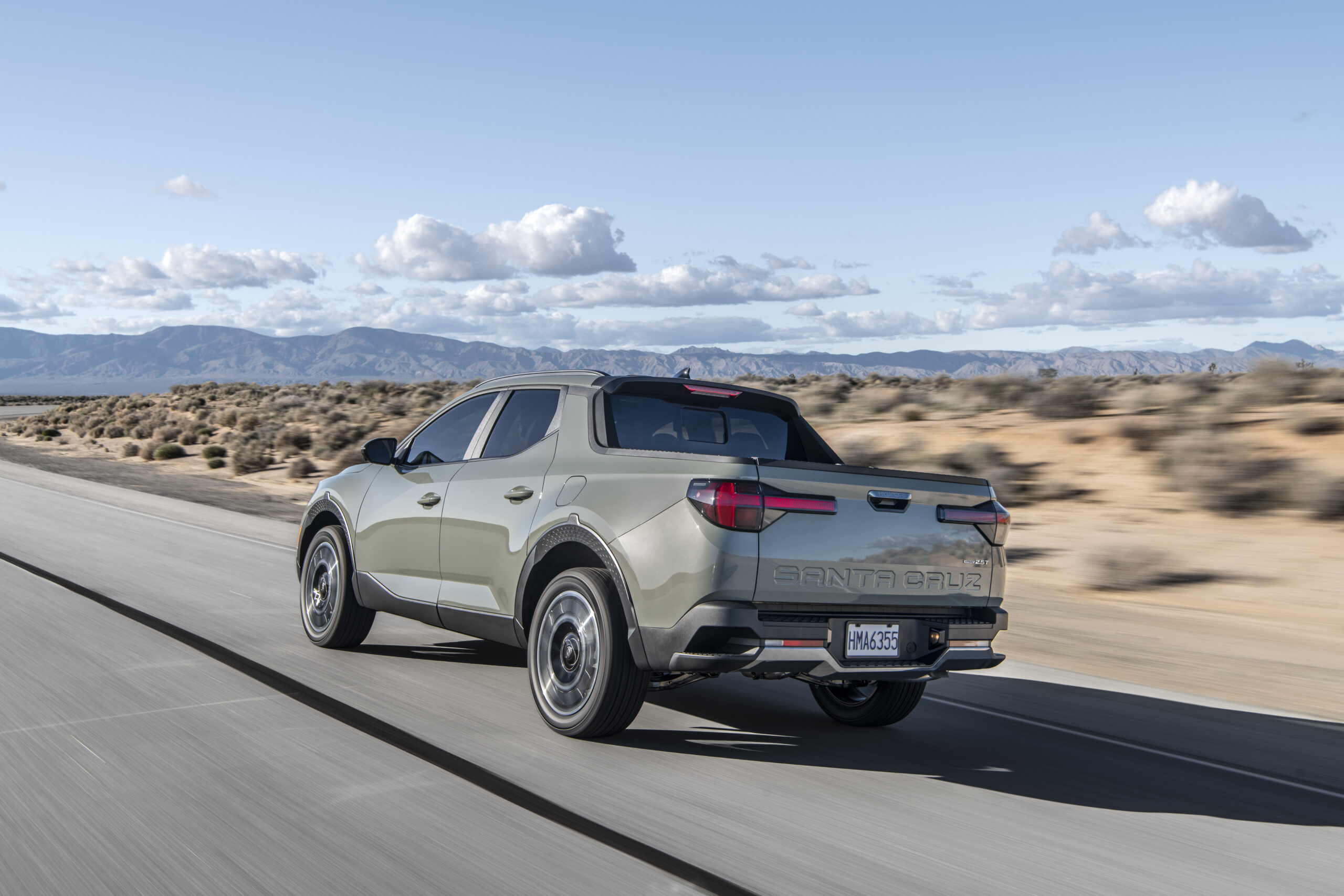
2026 Hyundai Santa Cruz Limited AWD
-
 TEST DRIVES1 month ago
Lamborghini prepares multiple launches for 2026 as electrification plans continue
-
 RACING1 month ago
George Russell Leads Final Barcelona Practice As Kimi Antonelli Receives Reprimand
-

 RACING1 month ago
Barcelona-Catalunya Grand Prix: Everything You Need To Know About Formula 1’s Ultimate Benchmark Circuit
-

 NOW TRENDING1 month ago
Porsche Creates A Buzz Lightyear-Inspired 911 GT3 RS That Looks Ready To Go “To Infinity And Beyond”
-

 RACING1 month ago
Why Formula 1 Has Pit Lane Speed Limits And How They Are Measured
-
 NOW TRENDING1 month ago
2026 Audi Q7 Brings New Design, Smarter Technology, And Greater Versatility
You must be logged in to post a comment Login