
NOW TRENDING
Hyundai and Kia Reliability Now Rivals Toyota

New J.D. Power studies show Hyundai and Kia outperform the industry average, making their industry-leading warranty even more impressive.
Hyundai and Kia have spent decades using their industry-leading warranties to reassure buyers. Now, new J.D. Power studies suggest those long warranties are no longer just a safety net—they’ve become proof of how much the Korean automakers have improved in quality and long-term dependability.
With reliability scores now matching or even surpassing some long-established rivals, Hyundai and Kia continue to strengthen their position in the U.S. automotive market.
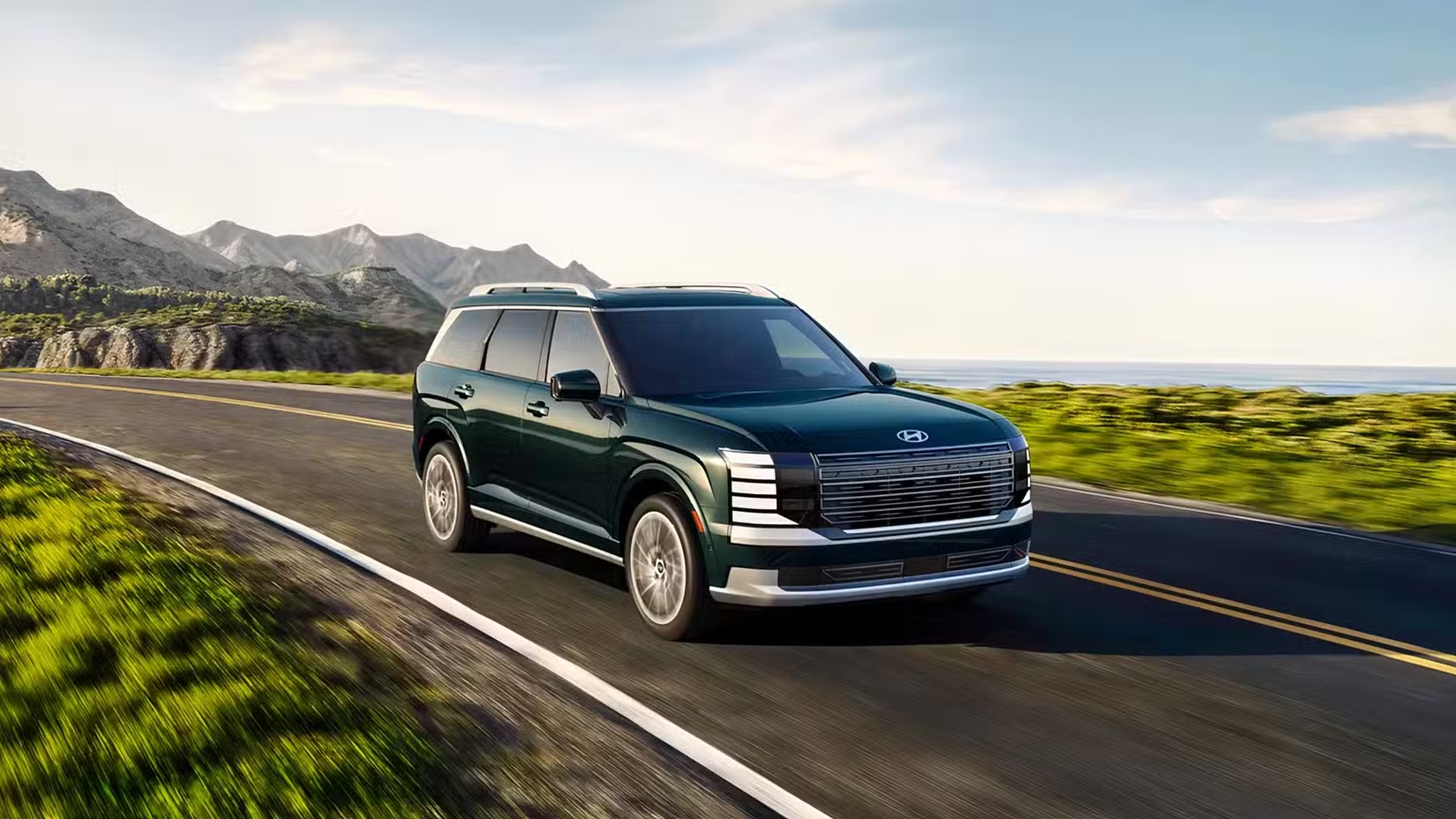
Hyundai and Kia continue to pair industry-leading warranties with improving reliability scores.
The industry’s best warranty still stands out
Hyundai and Kia continue to offer one of the strongest warranty packages available in the United States:
- 10-year/100,000-mile powertrain warranty
- 5-year/60,000-mile limited bumper-to-bumper warranty
Very few automakers match that coverage. Only Genesis, Mitsubishi, and Ram currently offer similar powertrain protection, while most mainstream brands provide only 5 years or 60,000 miles.
The bumper-to-bumper warranty also remains among the longest in the industry, covering more components as vehicles become increasingly dependent on advanced electronics and software.
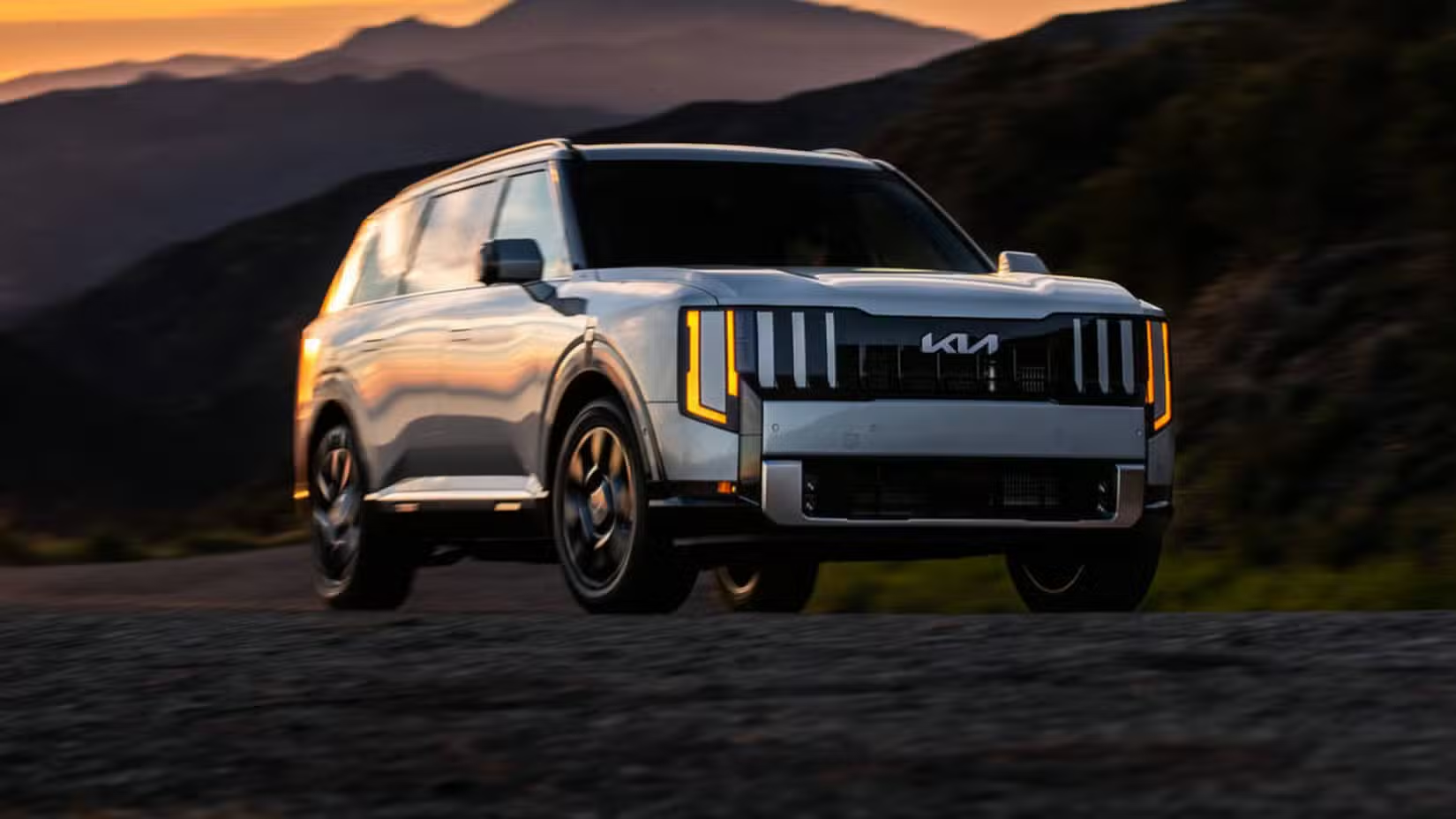
Hyundai and Kia still offer one of the longest factory warranties available in the U.S.
J.D. Power shows Hyundai and Kia outperform the industry average
Recent J.D. Power studies reinforce the improvements made by both brands.
In the 2025 Initial Quality Study, Hyundai ranked third overall with 173 problems per 100 vehicles, while Kia placed eighth with 181 problems per 100 vehicles. Both scored better than the industry average of 192.
The 2026 Vehicle Dependability Study, which measures reliability over the first three years of ownership, also delivered strong results:
- Kia: 193 problems per 100 vehicles
- Hyundai: 198 problems per 100 vehicles
- Industry average: 204 problems per 100 vehicles
Those results place both brands ahead of the industry average and close to several manufacturers traditionally recognized for reliability.
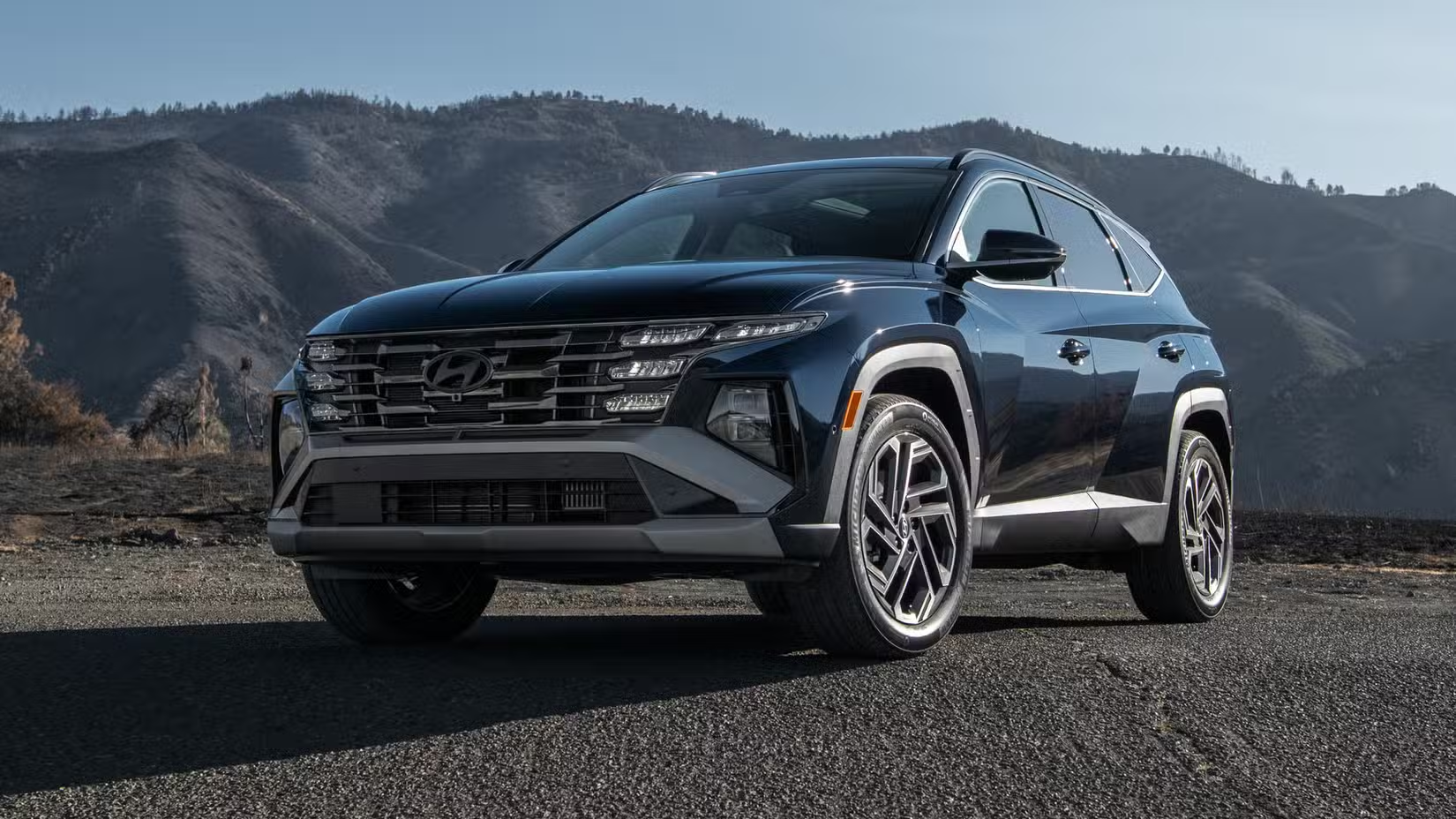
Resale value remains the biggest challenge
Despite their improving quality, Hyundai and Kia continue to trail brands like Toyota and Honda in resale value.
Industry analysts point to several contributing factors, including aggressive manufacturer incentives, larger fleet sales and long-standing consumer perceptions that no longer fully reflect today’s vehicles.
As newer models such as the Hyundai Palisade and Kia Telluride continue attracting strong demand, both automakers are gradually changing that perception. Combined with class-leading warranty coverage and increasingly competitive reliability ratings, Hyundai and Kia have positioned themselves as two of the strongest value brands currently available in the U.S. market.








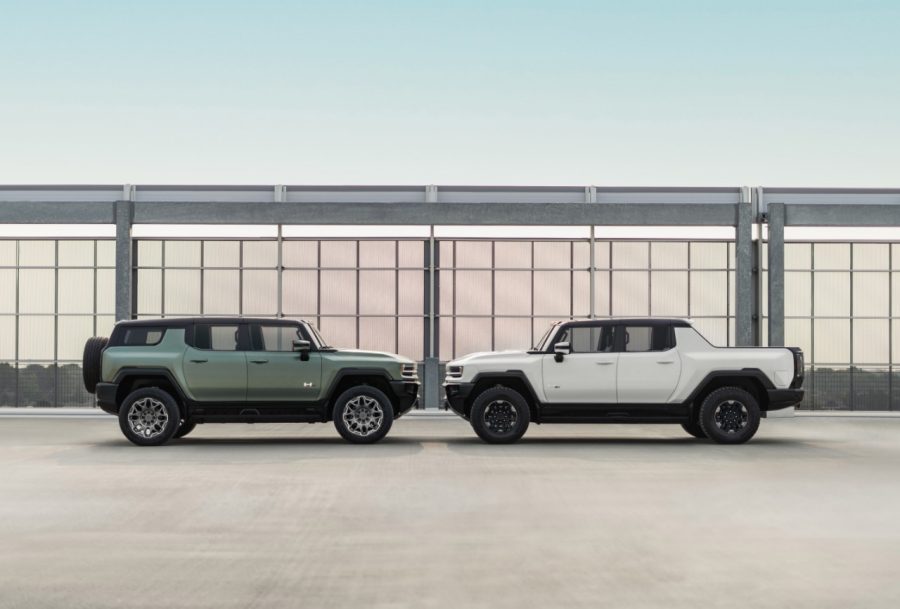
GMC’s current EV lineup includes the Sierra EV, HUMMER EV SUV, and HUMMER EV Pickup, with up to 478 miles of range and 1,160 horsepower available.
GMC currently offers three electric vehicles for 2026: the Sierra EV, HUMMER EV SUV, and HUMMER EV Pickup.
The lineup covers everything from a full-size electric pickup to high-performance off-road models.
2026 GMC Sierra EV
The Sierra EV is available in Elevation, AT4, and Denali trims.
The entry-level Elevation starts at $64,995 and includes a 16.8-inch screen, heated front seats, MultiPro Tailgate, eTrunk, and wireless charging.
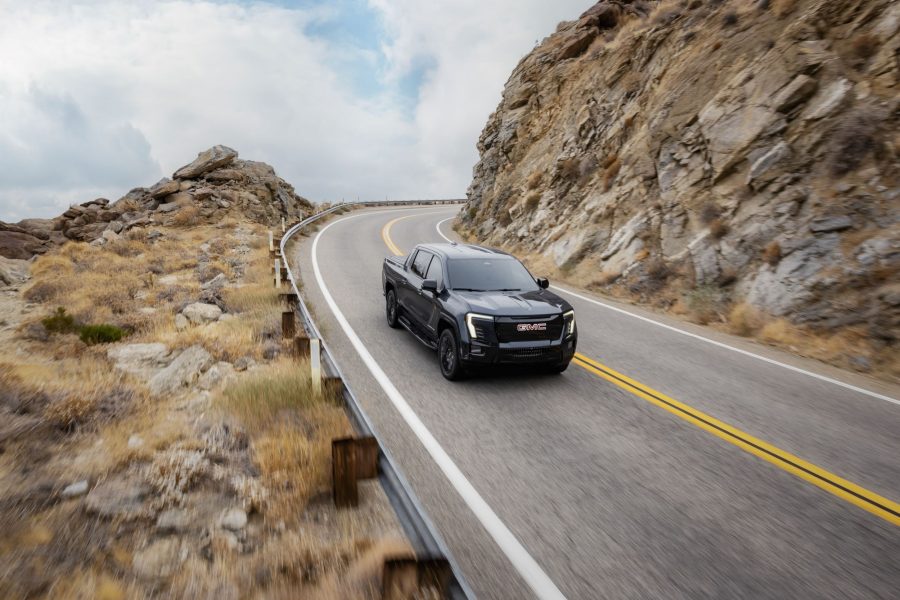
The 2026 GMC Sierra EV starts at $64,995 and is available with up to 478 miles of range.
The AT4 adds off-road-focused features, including a Terrain Mode.
The Max Range versions of the AT4 and Denali can deliver up to 478 miles of GM-estimated range.
The Sierra EV can also tow up to 12,500 pounds and produce up to 760 horsepower in Max Power mode.
2026 GMC HUMMER EV SUV
The HUMMER EV SUV comes in 2X and 3X trims.
The 2X starts at $99,895 and offers up to 319 miles of range, Super Cruise, CrabWalk, a 13.4-inch infotainment screen, and heated front and rear outboard seats.
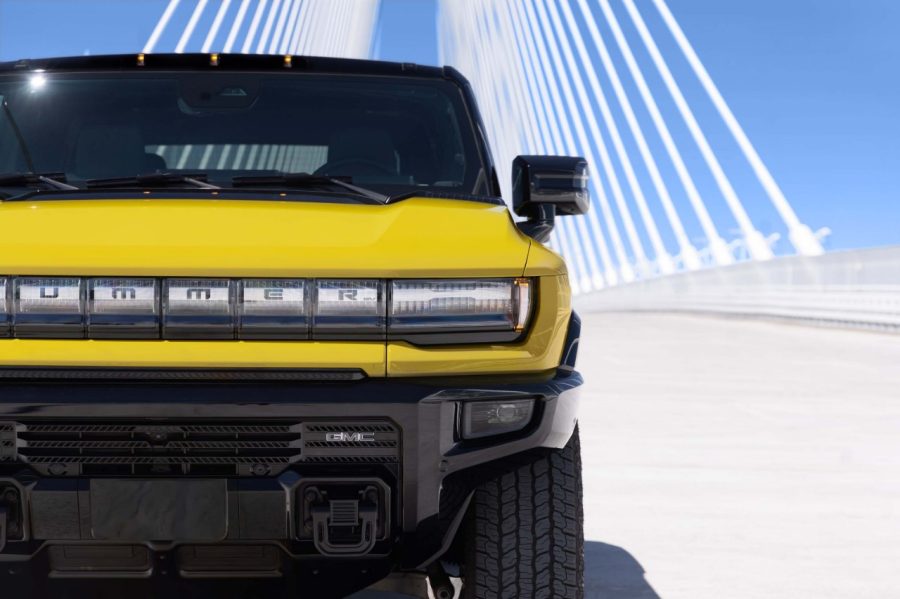
The HUMMER EV SUV 3X delivers up to 830 horsepower and offers an available Extreme Off-Road Package.
The 3X uses a three-motor setup producing up to 830 horsepower.
With the Extreme Off-Road Package, buyers get 35-inch mud-terrain tires, skid plates, locking differentials, and a rear recovery hook.
2026 GMC HUMMER EV Pickup
The HUMMER EV Pickup also uses 2X and 3X trims.
The 2X starts at $99,895 and comes standard with Super Cruise, four-wheel steering with CrabWalk, removable Sky Panels, a MultiPro Tailgate, and a 13.4-inch infotainment display.
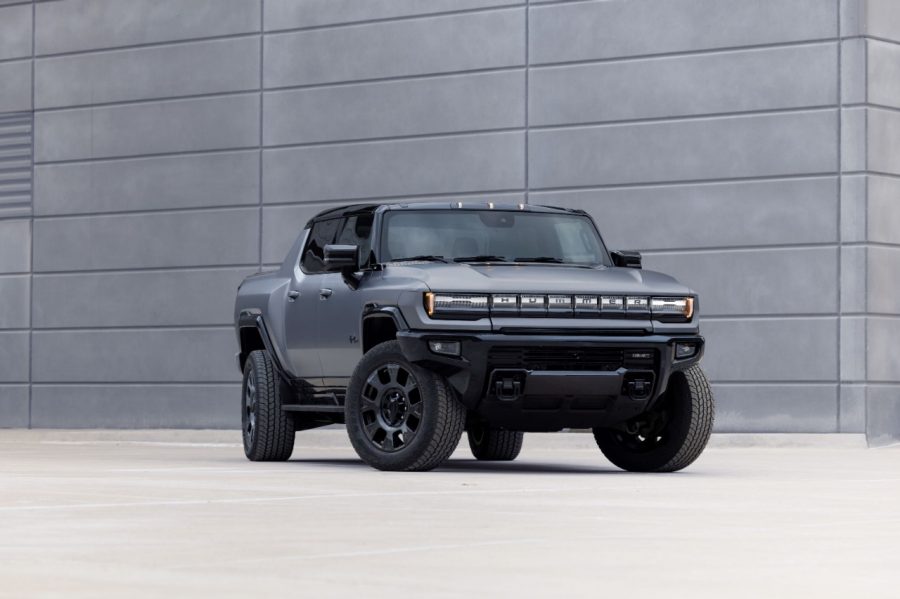
The HUMMER EV Pickup 3X offers up to 363 miles of range and 1,160 horsepower.
The 3X can deliver up to 363 miles of GM-estimated range and an available 1,160 horsepower.
That makes it the most powerful model in GMC’s current EV lineup.
For GMC electric vehicles, the 2026 lineup covers three very different missions: long-distance electric pickup capability with the Sierra EV and extreme performance and off-road technology with the HUMMER EV models.
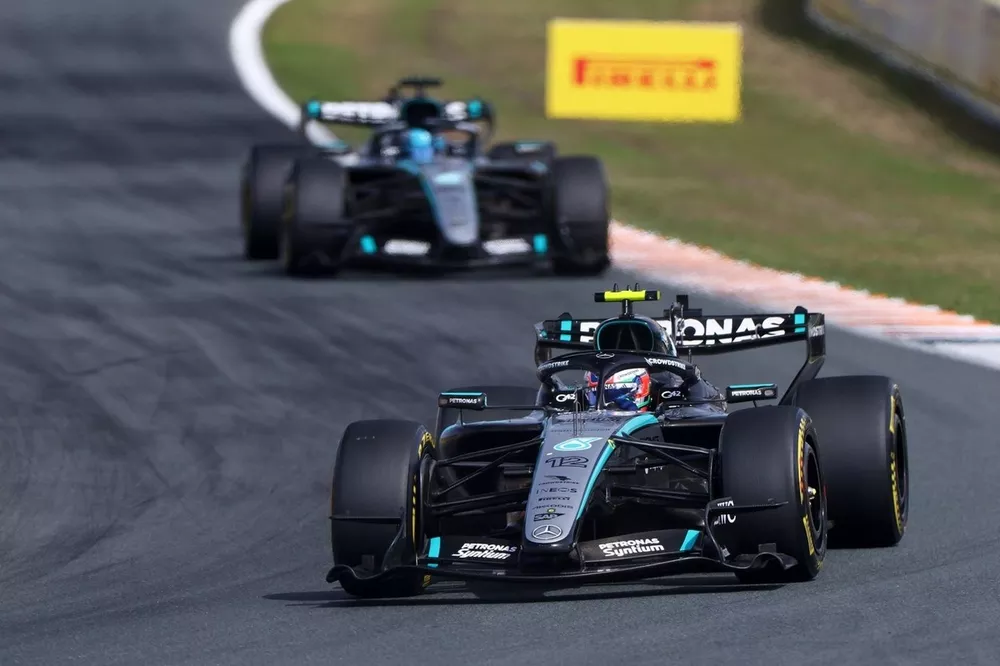
Mercedes left Zandvoort with questions about its inconsistent cornering performance, especially through the fast Turns 7, 8 and 9.
Mercedes heads toward Monza with an unusual problem to solve.
The W17 looked extremely strong at the beginning of the Zandvoort weekend, but its performance dropped in the faster sections as the event progressed.
Mercedes Was Too Slow in the Fastest Corners
George Russell took pole and won the Sprint, but Mercedes could not maintain that level in the main event.
Lando Norris eventually claimed pole and victory, leaving Russell and Kimi Antonelli in second and third.
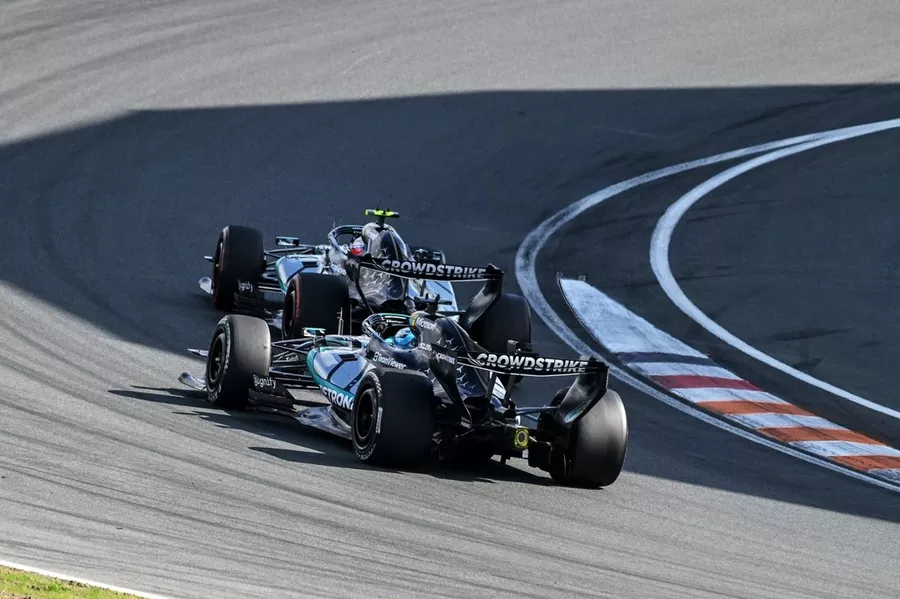
Mercedes was unable to maintain its early Zandvoort pace in the fastest corners.
Trackside engineering director Andrew Shovlin said some parts of the circuit were particularly difficult.
The biggest problem appeared through the Turns 7, 8 and 9 sequence, where Mercedes lacked pace and placed significant load on the left-side tires.
The team still does not fully understand why.
The Cars Changed Behavior Without Major Setup Changes
The mystery became even greater because Mercedes made only minor changes between sessions.
Different tire compounds naturally influenced performance, but Shovlin said the magnitude of the changes was unusual.
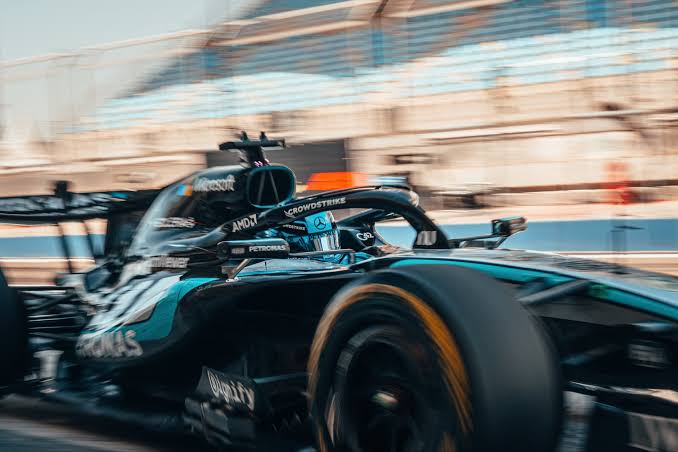
Russell’s first stint was more conservative before his pace improved later.
Antonelli experienced almost the opposite pattern, with his performance dropping through the second and third stints before recovering slightly.
Mercedes says it was not constantly changing electronic settings or wing angles.
Yet the balance of the cars still appeared to change significantly from one run to another.
Russell Had Understeer, Antonelli Had Oversteer
Perhaps the strangest element was that the two Mercedes drivers did not experience the same car.
Russell reported a tendency toward understeer, while Antonelli’s W17 showed more oversteer.
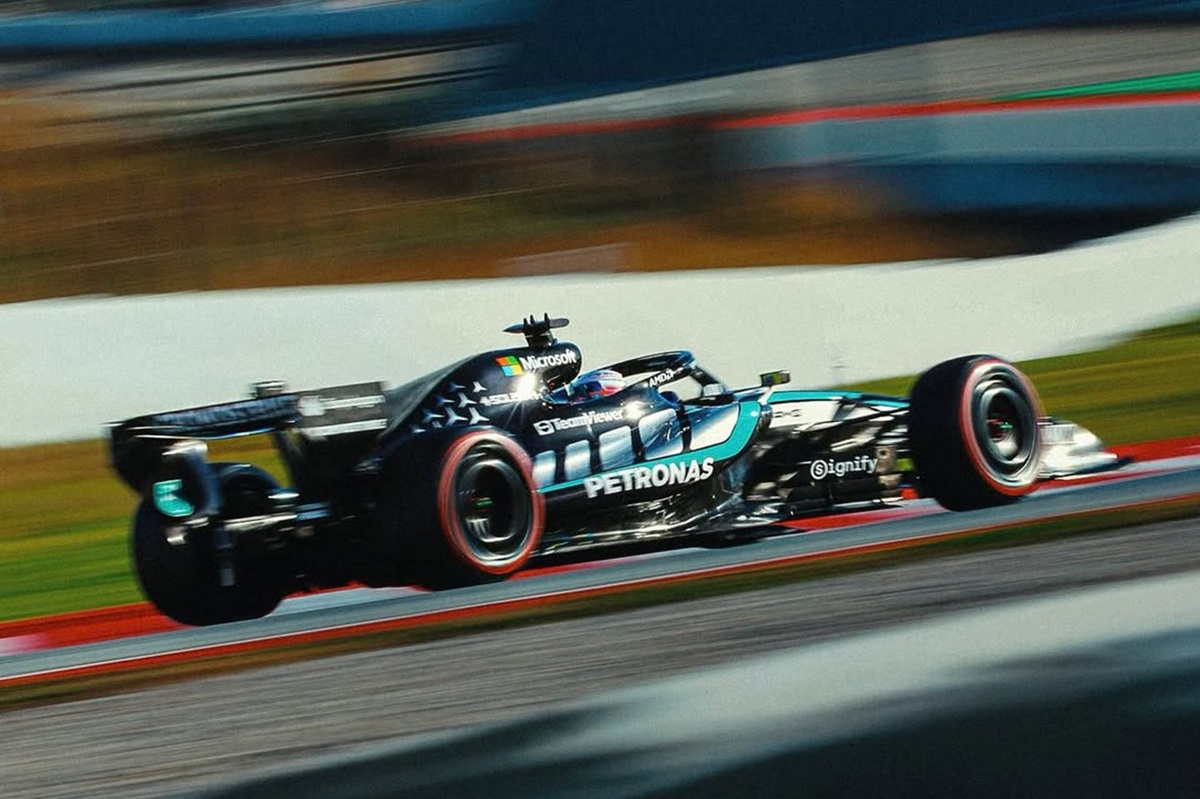
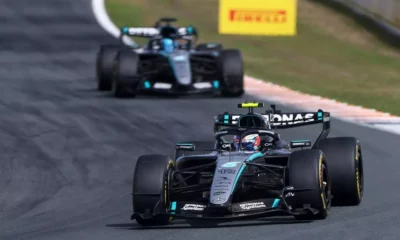
Mercedes says Russell and Antonelli experienced opposite handling characteristics during the Dutch Grand Prix.
Shovlin admitted that the team still does not understand why the difference was so large.
That makes the problem particularly important to solve before Monza, where Mercedes will need to understand exactly how the W17 reacts to different tire compounds and track conditions.
For the Mercedes W17, the challenge is no longer simply finding more performance. The team first needs to understand why its balance and pace can change so dramatically without major setup adjustments.
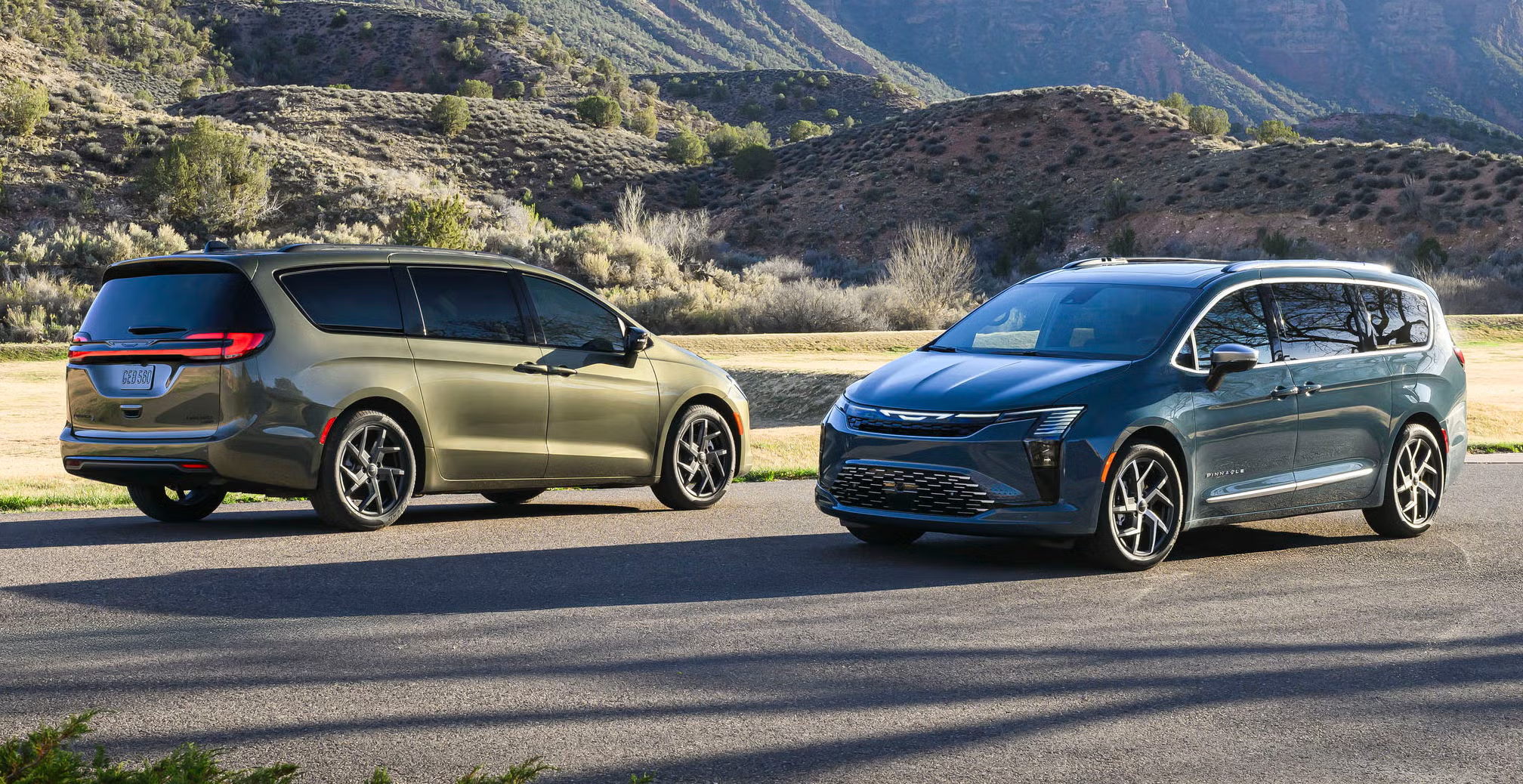
The refreshed Pacifica brings a redesigned front end and new Chrysler branding, while most of the minivan remains unchanged.
Chrysler has updated the 2027 Pacifica, but the changes are surprisingly limited for a minivan that has been on sale since the 2017 model year.
After years of development and extensive prototype testing, the refreshed model receives a revised front end and updated Chrysler branding.
Most of the Pacifica Stays the Same
The exterior changes are concentrated at the front.
The cabin, basic body design, and powertrain remain largely unchanged from the previous Pacifica.
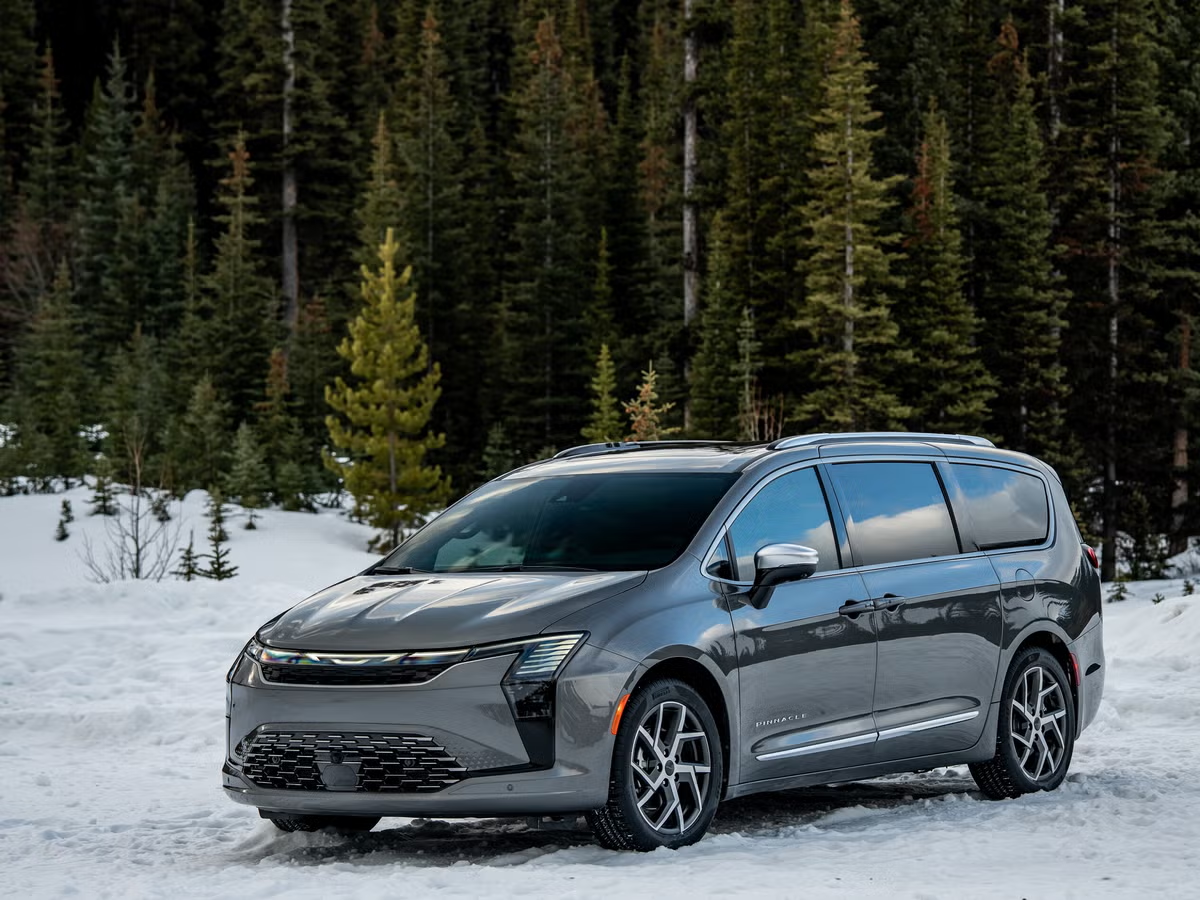
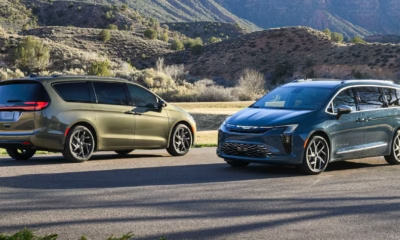
The 2027 Chrysler Pacifica receives a redesigned front end and updated Chrysler branding.
Even some of the vehicle graphics inside the infotainment system continue to show the previous front-end design.
That makes the refresh feel more conservative than expected.
The Pacifica LX Gets a Strange Badge Mix
The entry-level Pacifica LX makes the situation even more unusual.
It continues using the older Pacifica exterior design associated with the previous-generation model, while the steering wheel carries Chrysler’s newer emblem.
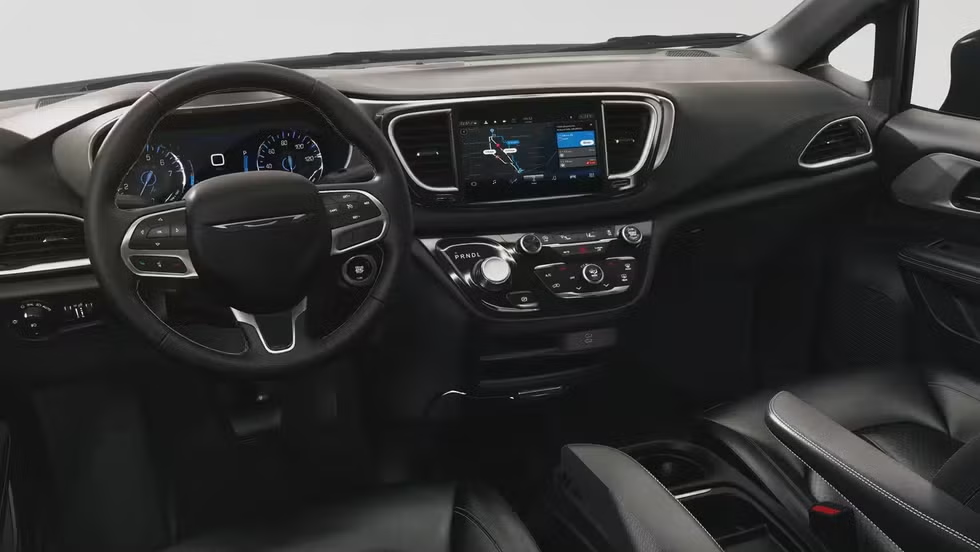
The Pacifica LX combines the previous exterior badge design with Chrysler’s newer steering-wheel emblem.
The mismatch does not affect functionality, but it creates an obvious inconsistency between the exterior and interior.
The arrangement is particularly unusual because Chrysler presents its new winged logo as the foundation for its future vehicle designs.
A Refresh That Raises Questions
The 2027 Pacifica’s limited changes suggest Chrysler is taking a cautious approach with its aging minivan.
The model remains focused on family practicality, but the refresh does little to fundamentally change the vehicle.
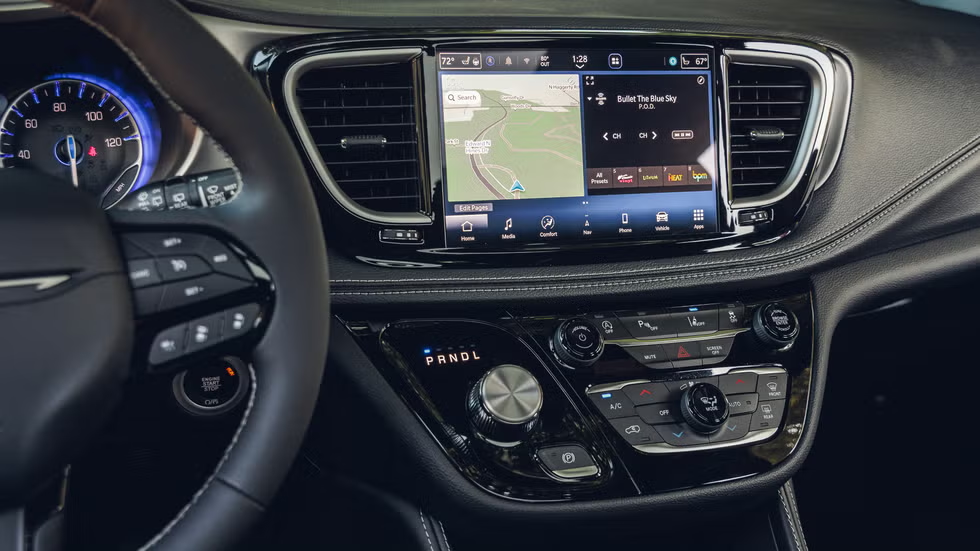
The 2027 Pacifica retains the familiar cabin and overall design of the current-generation minivan.
For buyers, the differences are mainly visual rather than mechanical.
The 2027 Chrysler Pacifica therefore arrives as a modest update rather than a major redesign, with the new front end and branding doing most of the work.
-
 NOW TRENDING2 months ago
Tesla Model Y L Arrives in the U.S. With More Space and Three Rows
-
 TEST DRIVES2 months ago
A Week Driving Honda’s New Hybrid Coupe
-
 NOW TRENDING2 months ago
Toyota Reports Strong June and Q2 2026 U.S. Sales Growth
-
 TEST DRIVES2 months ago
The Last Great V8 Audi Wagon Deserves Future Classic Status
-
 NOW TRENDING2 months ago
Average New Car Prices Reach Record High in 2026
-

 TEST DRIVES1 month ago
2026 Maserati MCPura Cielo
-
 NOW TRENDING2 months ago
American Honda Reports Record June and First Half 2026 Sales
-
 NOW TRENDING2 months ago
Audi Sales Fall in 2026 Despite Strong Demand for New Models
You must be logged in to post a comment Login