
NOW TRENDING
2022–2024 Lexus NX Recall: What Owners Can Check Today

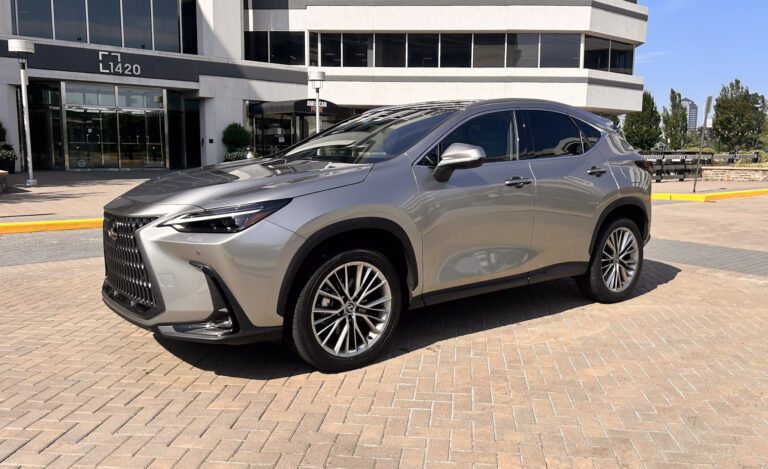
A newly filed U.S. recall covers certain NX models with a seven-inch instrument display. Here is how to check the campaign, distinguish the screens and arrange the next step.
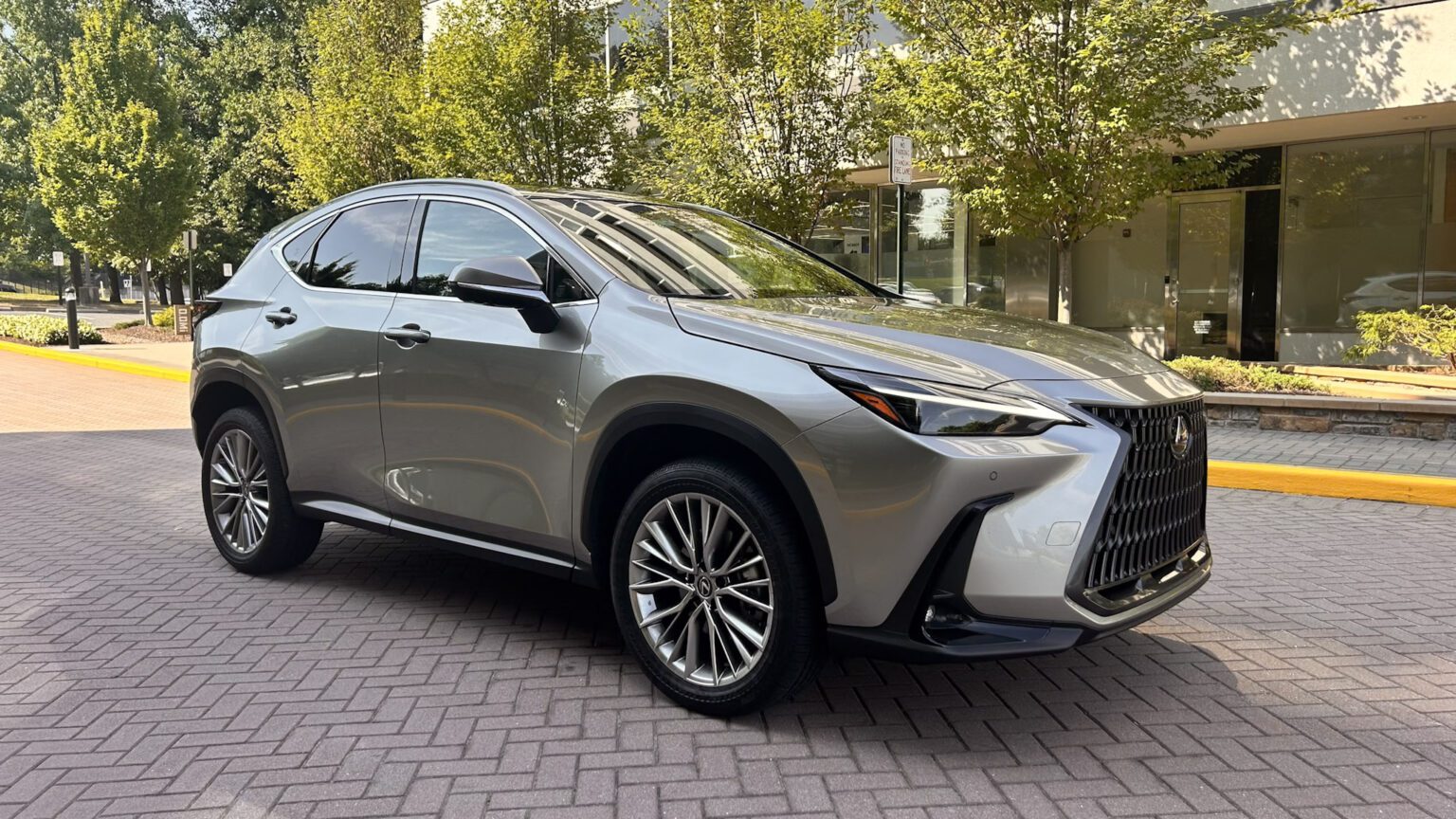
2024 Lexus NX 350h Luxury test vehicle from Carsfera. Photo: Carsfera.
Lexus NX owners have a new reason to check their vehicle identification number this week. A U.S. recall filed on October 20 covers 68,356 potentially affected vehicles from model years 2022–2024 because the instrument display may fail to show important warnings. NHTSA acknowledged the filing on October 23, and the remedy is a free software update through dealers.
The campaign is NHTSA 26V687, also searchable as 26V687000, and Lexus identifies it as 26LA10. Keeping both numbers with your VIN makes a service conversation more precise than asking whether your NX has a screen problem.
Which NX models are included?
Toyota’s report identifies the following populations. Eligibility depends on the specific vehicle, including its instrument-cluster hardware and software.
| Model | Model years | Vehicles |
|---|---|---|
| NX 250 | 2022–2024 | 1,245 |
| NX 350 | 2022–2024 | 29,099 |
| NX 350h | 2022–2024 | 26,554 |
| NX 450h+ | 2022–2024 | 11,458 |
| Total | 68,356 | |
Those rows show why an owner should not rule out the campaign simply because the vehicle is a hybrid or a plug-in hybrid. Use the model name to recognize the relevant group, then use the VIN to establish the individual vehicle’s status.
The seven-inch display is behind the steering wheel
The manufacturer’s report describes a startup software error in certain seven-inch combination meters, the instrument displays facing the driver. Portions may go blank, potentially hiding oil-pressure, coolant-temperature or electrical-charge warnings when those underlying conditions occur. NHTSA says missing those indications can increase crash risk.
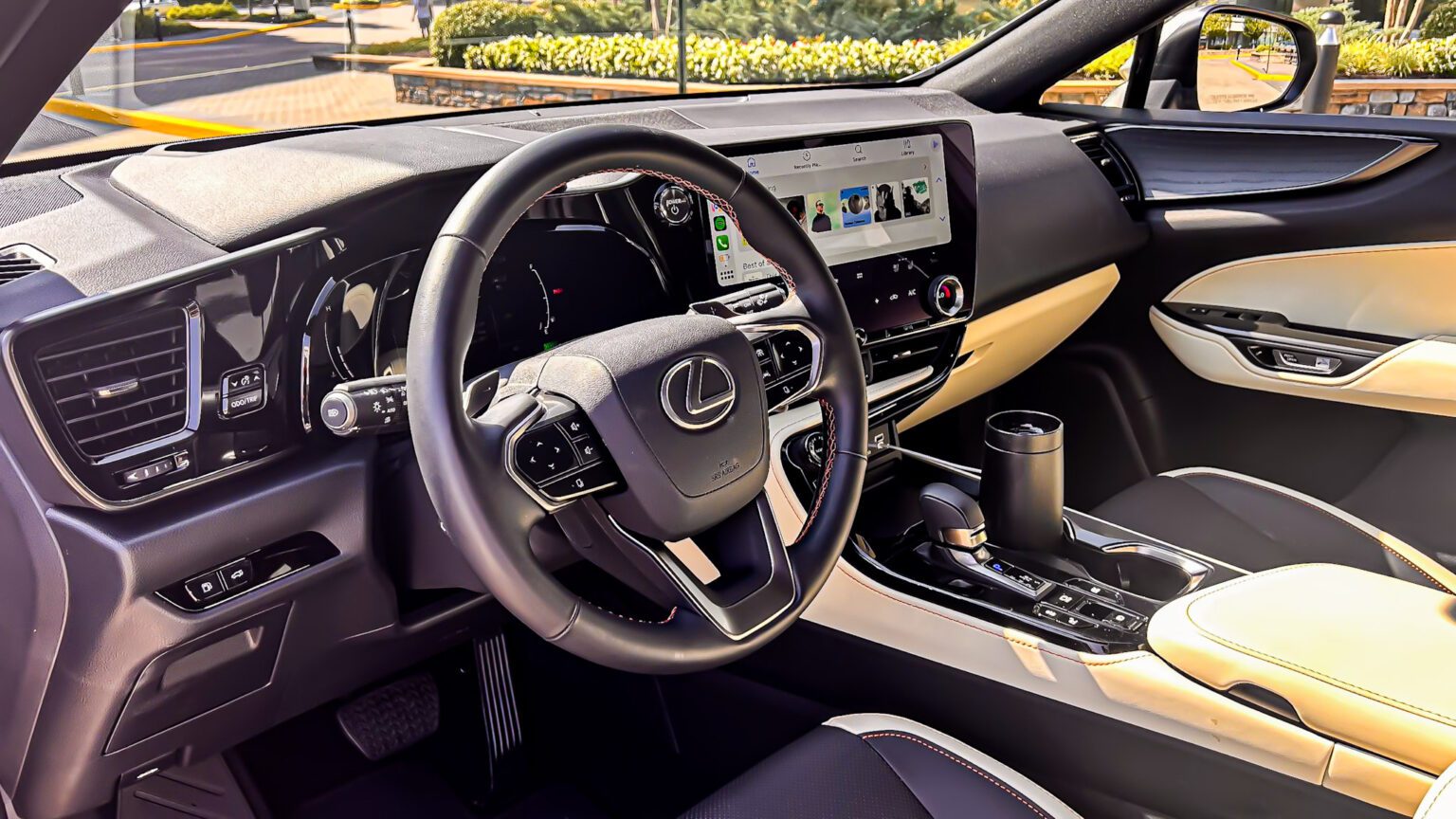
The instrument cluster is located behind the steering wheel; the multimedia screen is positioned further to the right. File photo from Carsfera’s review of the NX. Photo: Carsfera.
The screen distinction matters when describing the vehicle to a service adviser. Lexus’s original U.S. specifications list a 9.8-inch standard multimedia touchscreen and an optional 14-inch version for the 2024 NX. These are separate from the instrument display named in the recall.
Carsfera’s 2024 NX 350h Luxury review provides an archive view of that cabin layout. The size of the central touchscreen in a sales listing does not answer the recall question. Nor does a photograph of a functioning dashboard establish that the campaign has been completed.
Toyota says the startup issue can occur randomly. Consequently, an owner who has not noticed it should still check eligibility rather than wait to reproduce a blank display.
Check now, then confirm the repair arrangements
NHTSA explains that a VIN search identifies unrepaired recalls for an individual vehicle, while a year-and-model search gives general information. The 17-character VIN is visible near the lower left of the windshield and appears on the registration. Lexus also directs owners to its VIN Recall Lookup and offers direct assistance if the VIN is unavailable.
There is an important limitation: NHTSA says newly announced recalls may not immediately include every affected VIN. Its lookup also omits recalls already repaired. A result showing no open recalls therefore needs to be read in context. If you have a campaign notice or a conflicting dealer record, ask Lexus to reconcile the information for your vehicle.
The manufacturer’s filing schedules owner notifications for December 7–21, 2026. It describes a dealer software update and says an over-the-air option may become available later for vehicles supporting it. That wording does not establish that a wireless remedy is available today.
Contact a Lexus dealer with the VIN and campaign number to confirm eligibility and whether the update can be scheduled. Ask how long the appointment is expected to take and whether the vehicle needs to remain at the dealership. Keep unrelated maintenance requests separate so the work order clearly identifies the recall repair.
A useful record for owners and used-car shoppers
Before visiting, save a dated copy of the VIN lookup and write down the dealer’s response. If you are considering a used NX and the seller says the campaign was completed, request the repair order identifying the VIN and 26LA10. Compare that record with the current lookup instead of treating an advertisement or a verbal assurance as the final answer.
If the display has behaved abnormally, tell the service adviser what you observed and ask for vehicle-specific guidance. Describe which screen was affected and when it happened; avoid diagnosing the cause yourself. A photograph taken while safely parked can help explain the observation.
After the appointment, retain the completed repair order. Before leaving, ask the adviser to confirm that it identifies 26LA10, your VIN and the software update performed. Those three entries give you a concrete record to use if the campaign status later needs clarification or you sell the vehicle.











Nissan advertises a $35,490 starting MSRP, but the Rogue Hybrid scheduled to arrive first carries a $43,065 price with destination. Here is what waiting until January could change.
The 2027 Nissan Rogue Hybrid is expected to reach U.S. dealers in November, but shoppers budgeting for the advertised base model will need to look beyond that launch date. Nissan’s first scheduled configuration is the SR with Technology Package, priced at $41,490 before its $1,575 destination and handling charge. That puts its starting total at $43,065 before taxes, registration and other fees.
The entry-level SV costs $35,490, or $37,065 with the same destination charge. Nissan currently lists that version for January 2027. For buyers who can keep their present vehicle a little longer, the difference is $6,000. That gap buys a different equipment specification; it is not a dealer markup or a charge Nissan adds simply for taking delivery early.
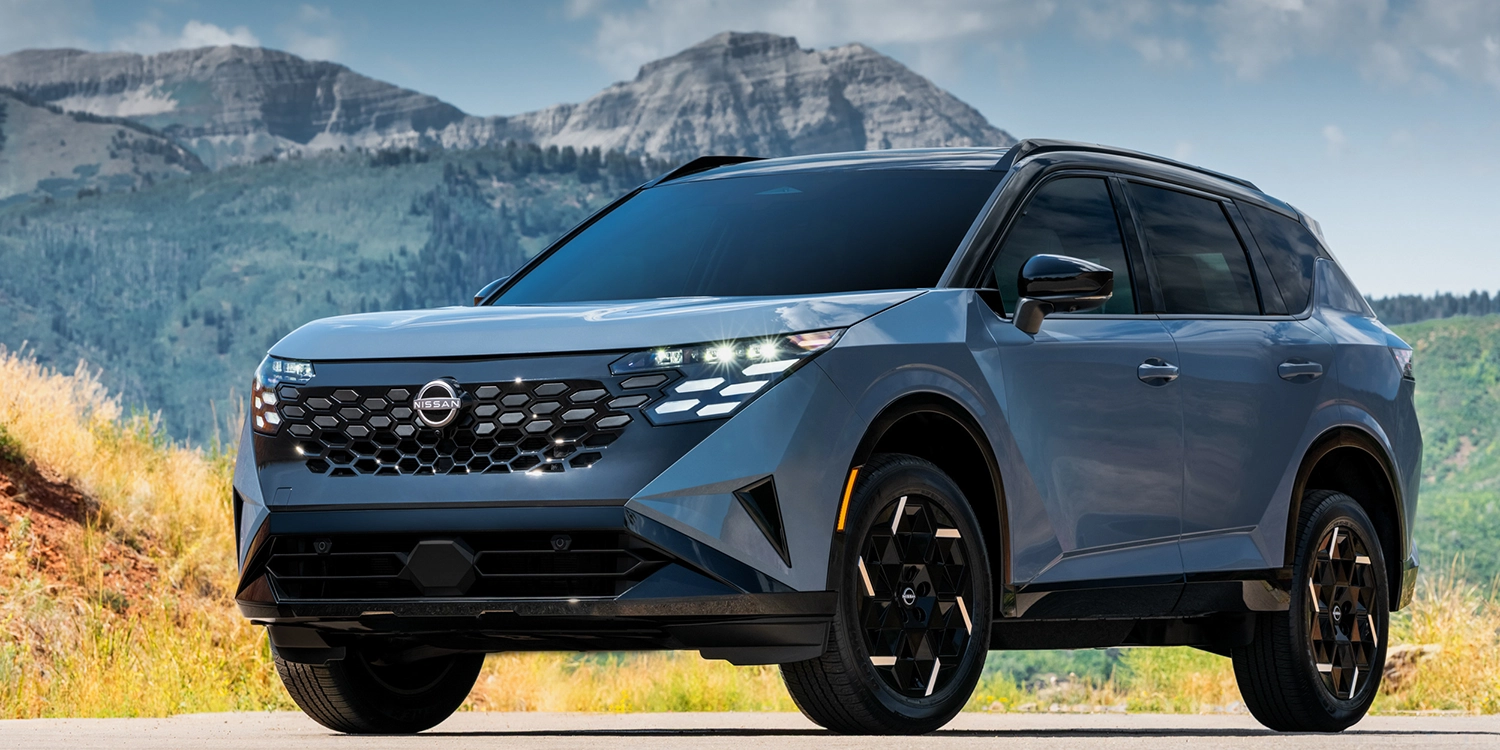
Nissan’s 2027 Rogue Hybrid SR is shown here. The first scheduled U.S. deliveries are SR models equipped with the Technology Package. Photo: Nissan.
Which Rogue Hybrid arrives first, and at what price?
Nissan’s current U.S. consumer page specifies limited quantities of the SR with Technology Package in November 2026, followed by the other configurations in January. Those are expected launch windows, so a shopper should confirm an individual dealer’s allocation and estimated delivery date before making plans around them.
The following totals add Nissan’s published destination charge to each announced MSRP. They do not include optional paint, accessories or dealer charges.
| Configuration: all AWD | MSRP | With destination | Expected arrival |
|---|---|---|---|
| SV | $35,490 | $37,065 | January 2027 |
| SR | $37,490 | $39,065 | January 2027 |
| SV + Premium Package | $37,590 | $39,165 | January 2027 |
| SR + Technology Package | $41,490 | $43,065 | November 2026; limited quantities |
| Platinum | $43,490 | $45,065 | January 2027 |
Waiting for the SV still gets you e-POWER and AWD
The lower-priced SV uses the same basic e-POWER arrangement: a gasoline engine generates electricity, while electric motors drive the wheels. Every grade has dual-motor all-wheel drive. Owners refuel with gasoline; this model does not plug in.
That makes the entry model particularly relevant to shoppers interested in the propulsion system rather than the larger screens or additional cabin equipment. Carsfera’s coverage of the Rogue Hybrid’s Wards powertrain award provides more background on the technology. The buying question here is how much equipment you want around it.
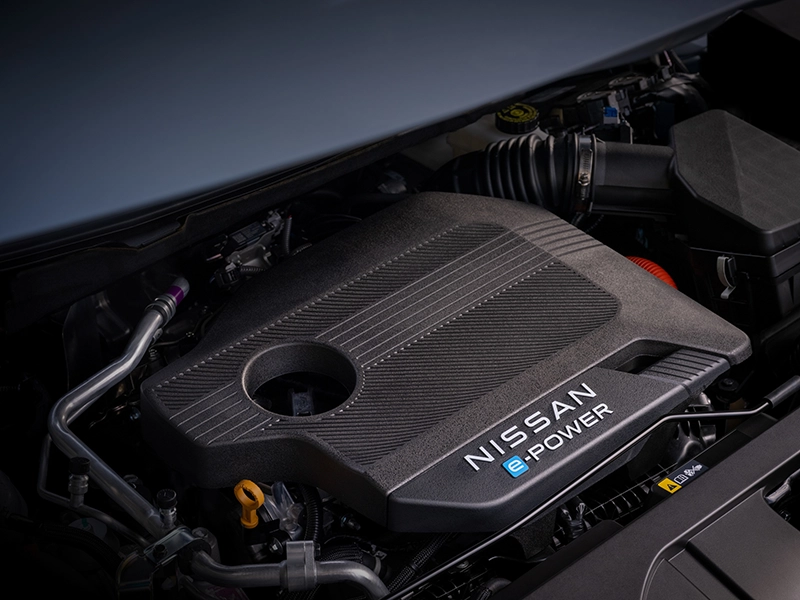
The e-POWER system uses a gasoline engine to generate electricity. Dual electric motors provide propulsion on every Rogue Hybrid grade. Photo: Nissan.
What does the extra $6,000 buy?
There are two steps between the SV and the launch configuration: $2,000 to move into the SR, then $4,000 for the Technology Package. Nissan lists 19-inch sport wheels, TailorFit upholstery and gloss-black exterior accents among the SR’s features.
The Technology Package adds equipment including a 14.3-inch center touchscreen with Google built-in, a larger digital instrument display, driver-seat and mirror memory, a heated steering wheel, a panoramic moonroof and an enhanced surround-view camera system. The SV already includes a 12.3-inch center touchscreen, wireless Apple CarPlay and Android Auto, and heated front seats.
There is also a useful alternative for buyers who prioritize upholstery and a glass roof: the SV with Premium Package. Its $39,165 total with destination is $3,900 below the launch configuration and just $100 above the regular SR. Comparing those two January choices by their equipment may be more productive than assuming the higher trim name automatically delivers the features you want.
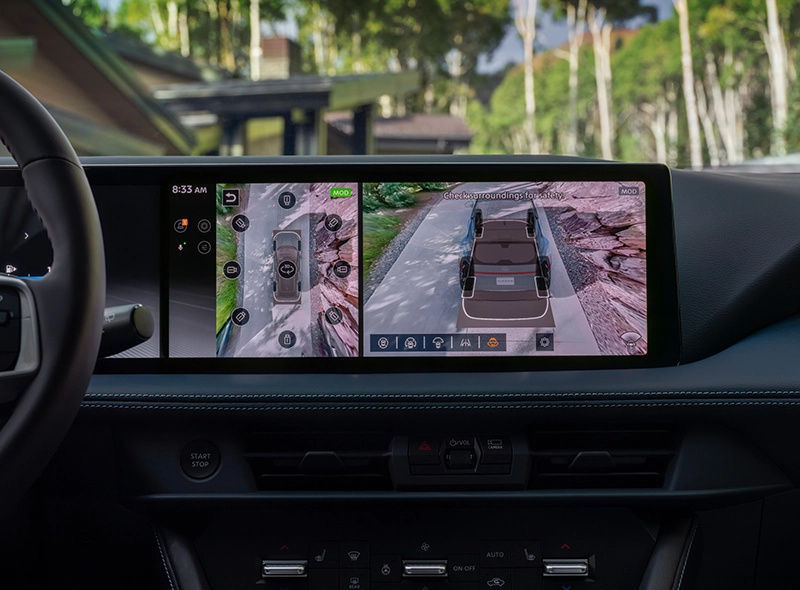
The surround-view camera display shown in Nissan’s SR press image illustrates one of the Technology Package’s parking aids. Photo: Nissan.
A $40,000 budget changes the decision
Before taxes and other fees, a $40,000 vehicle budget leaves $2,935 above the SV’s price with destination, $935 above the regular SR and $835 above the SV with Premium Package. The November launch configuration is already $3,065 beyond that ceiling.
Those figures are remaining budget, not estimates of tax or registration costs. If $40,000 is your absolute drive-away limit, request an itemized written quote before deciding that any configuration fits. A monthly payment alone will not tell you whether the dealer has added accessories, changed the loan term or included a markup.
All Rogue Hybrid grades include dual-motor AWD. Choosing a later, lower-priced configuration does not mean giving up that drivetrain layout. Photo: Nissan.
Put a dollar value on waiting
Start with the version you would choose if all five configurations were available today. If that is the regular SR, waiting for its planned January arrival reduces the published vehicle cost by $4,000 compared with the launch model. If it is the SV, the difference is $6,000. If you already want the SR’s Technology Package, waiting alone produces no announced price reduction for that same configuration.
For an illustrative two-month wait, the $6,000 SV difference works out to $3,000 per month; the regular SR difference works out to $2,000 per month. These are equipment-price differences spread over an assumed waiting period, not promised savings or rental allowances. Compare the relevant amount with your actual cost of keeping your current car or arranging temporary transport, then obtain written quotes for both configurations. That gives you a concrete test: whether earlier delivery and the extra equipment are worth the additional money in your own situation.
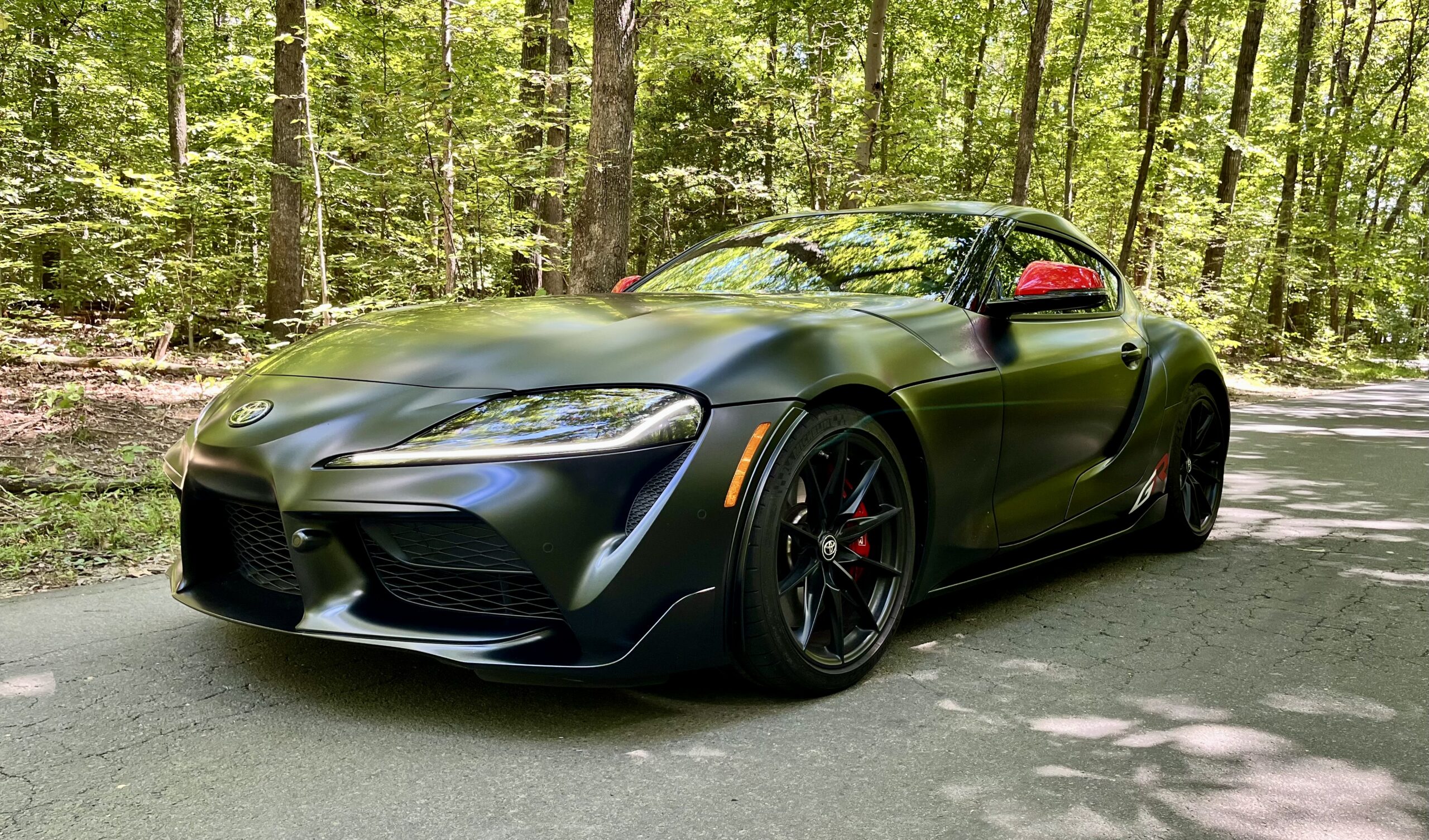
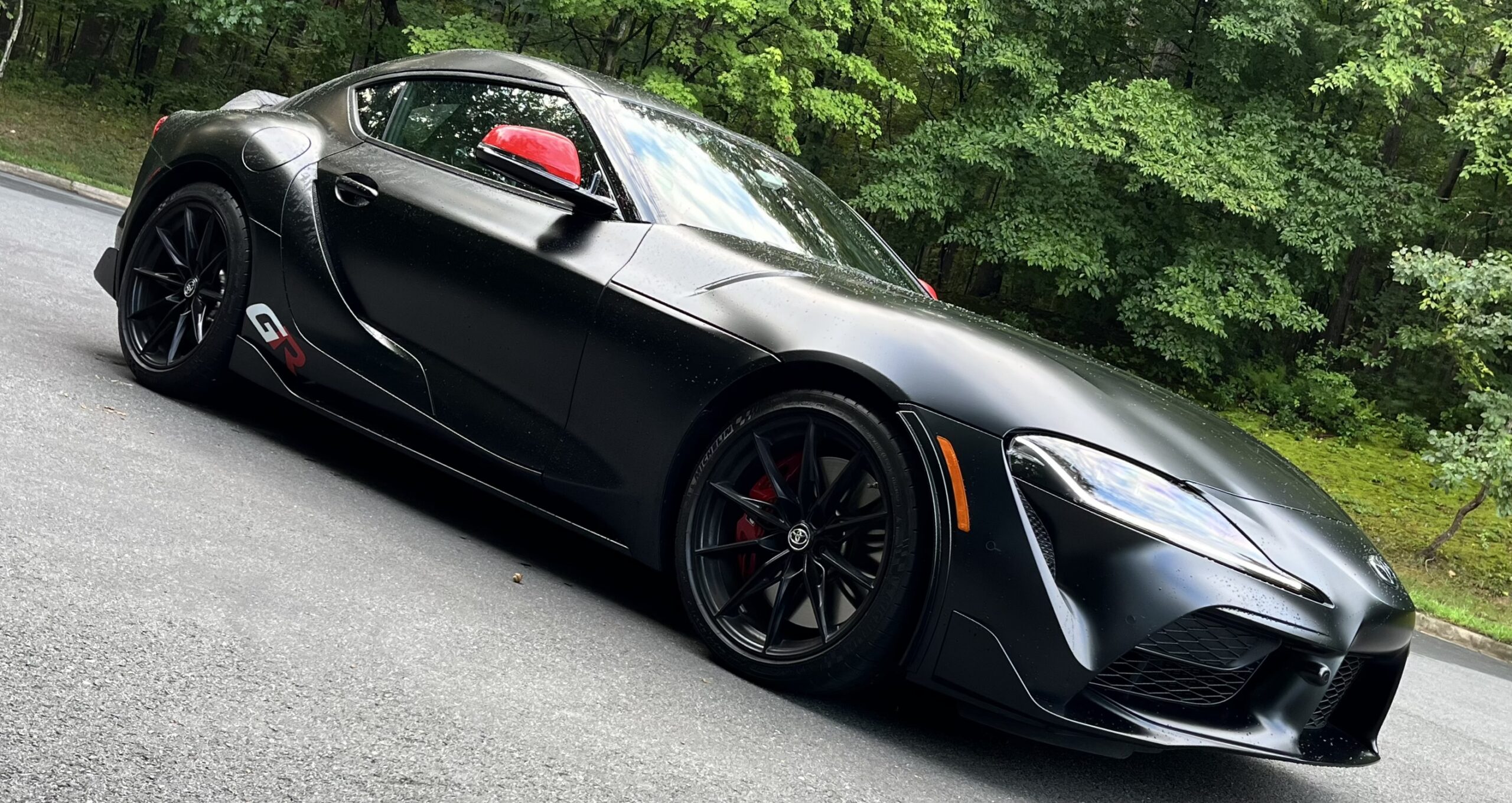
Eight Carsfera test-drive photos show the matte finish, red accents, chassis details and six-speed manual of this $73,300 Supra.
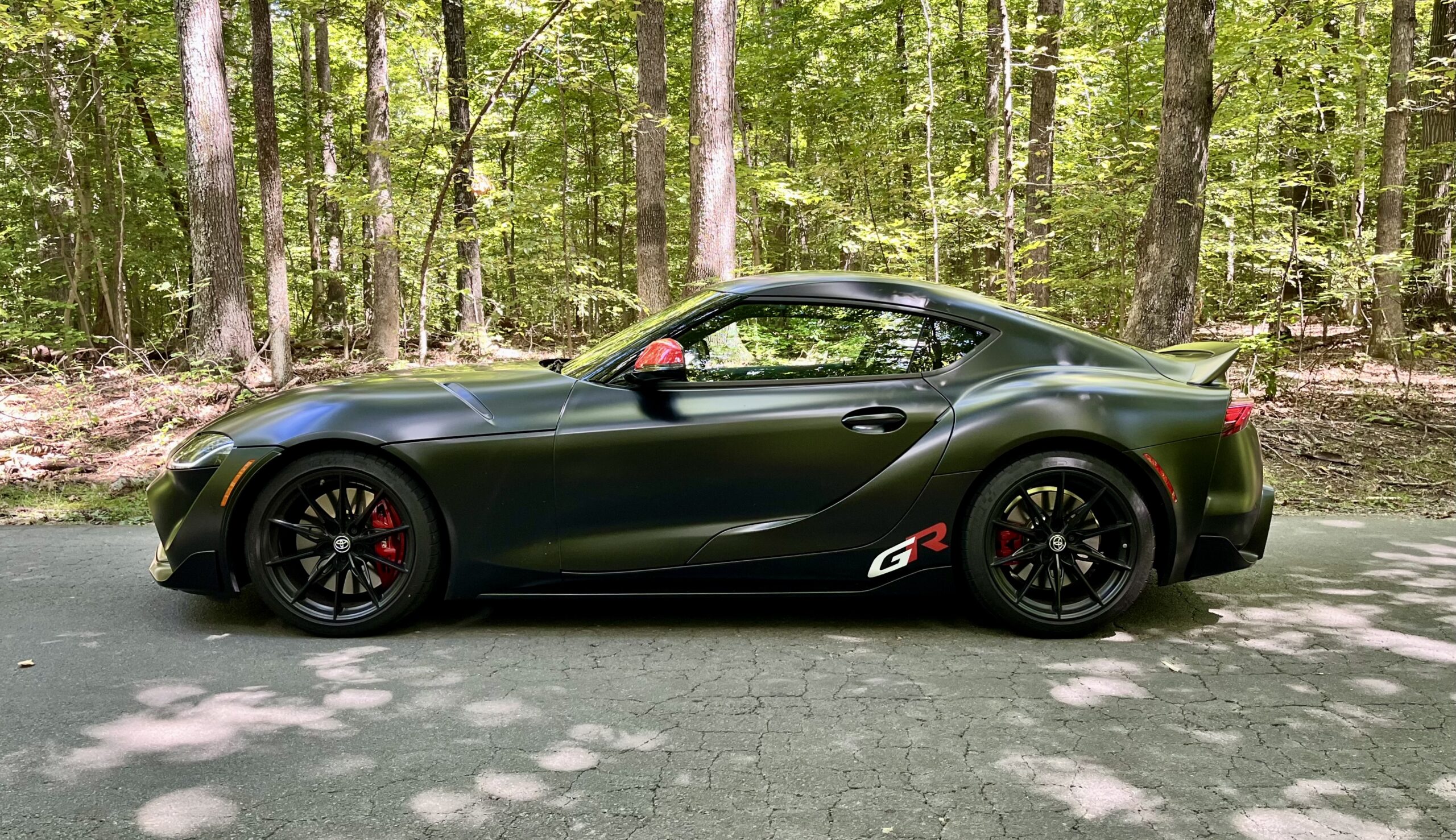
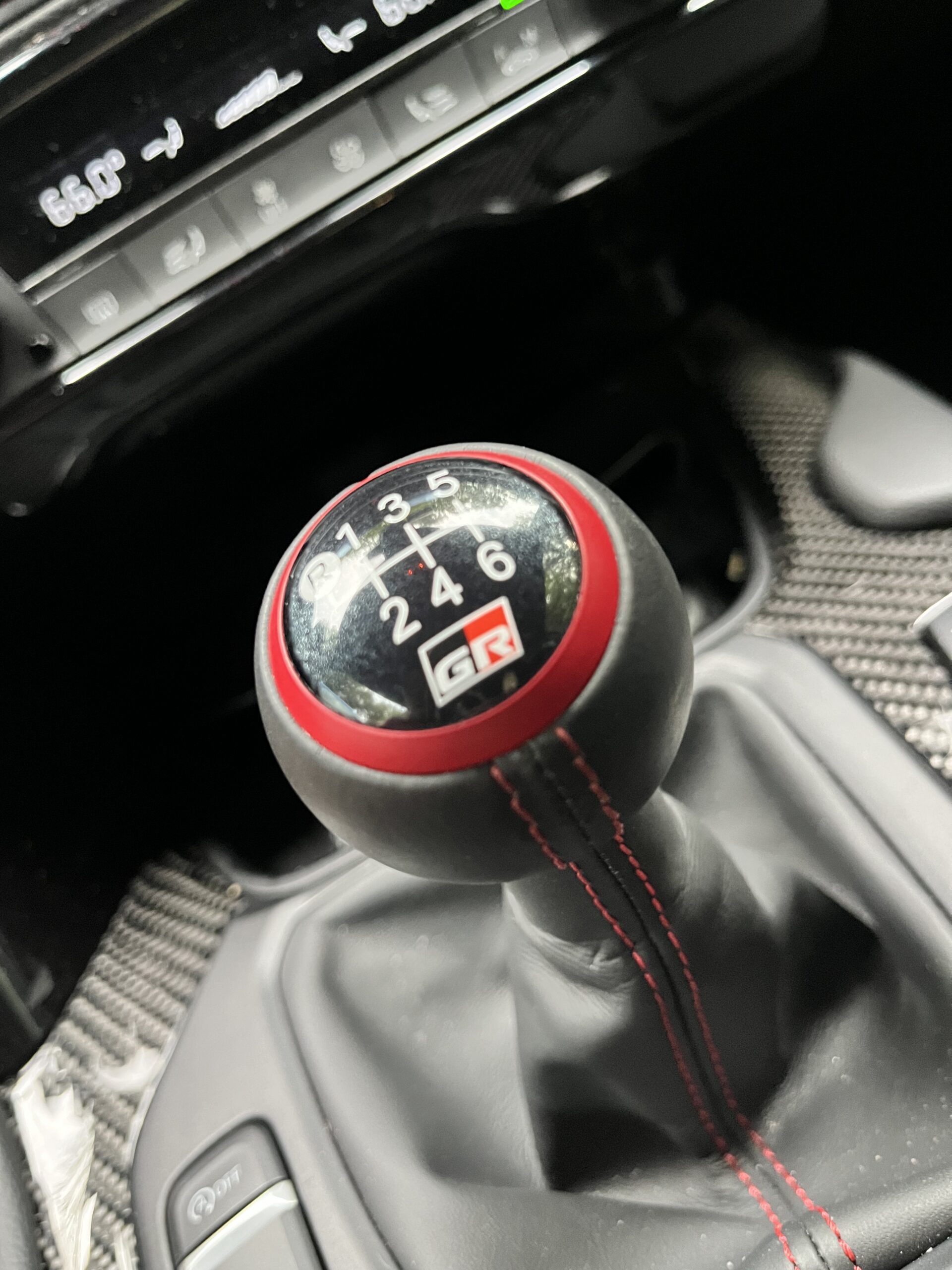
The 2026 Toyota GR Supra MkV Final Edition in Carsfera’s test drive pairs dark matte paint with red mirror caps and a six-speed manual gearbox. This gallery takes a closer look at that car through eight photographs. Start with its low nose and side profile. Then examine the black wheels, red brake calipers and rear spoiler before moving inside to the gear lever. Toyota gives the U.S. model a turbocharged 3.0-liter inline-six with 382 horsepower and 368 lb-ft of torque. Carsfera reported a total suggested retail price of $73,300 for the tested car. The photos help separate visible styling choices from the mechanical changes that define the Final Edition. For the full account of the week behind the wheel, follow the review link below.
Read the full Carsfera GR Supra MkV Final Edition test drive for the driving impressions.
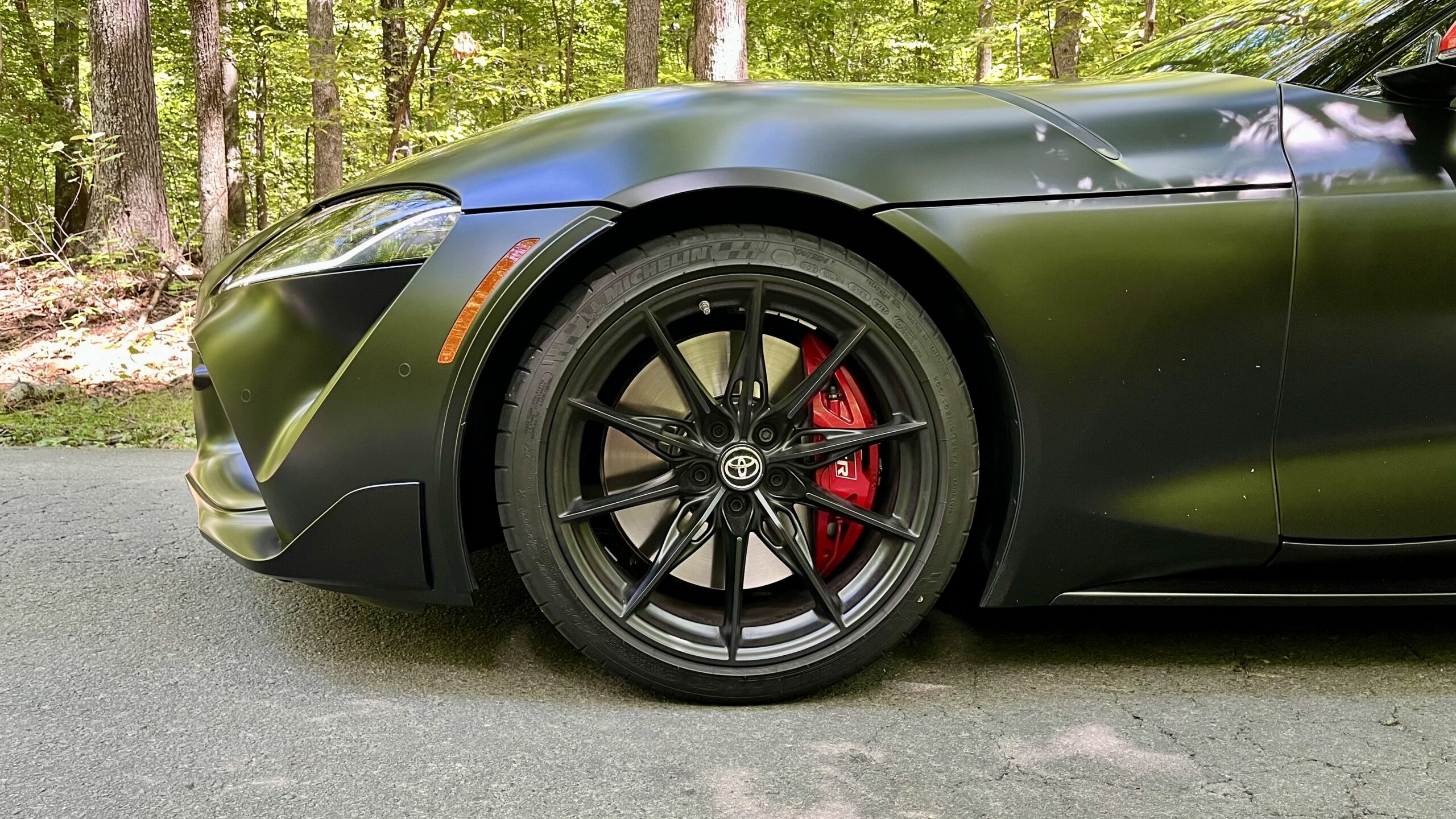
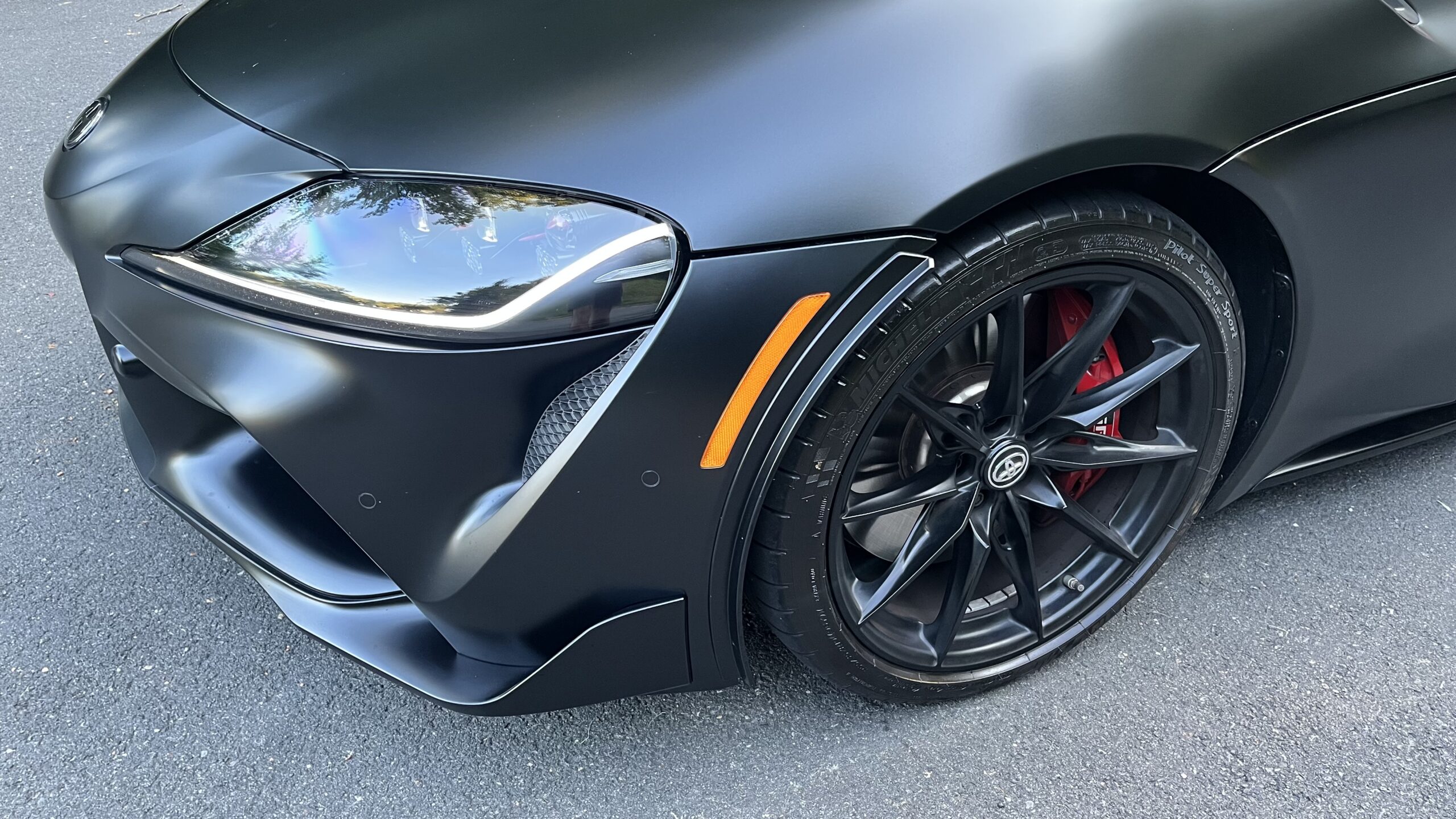
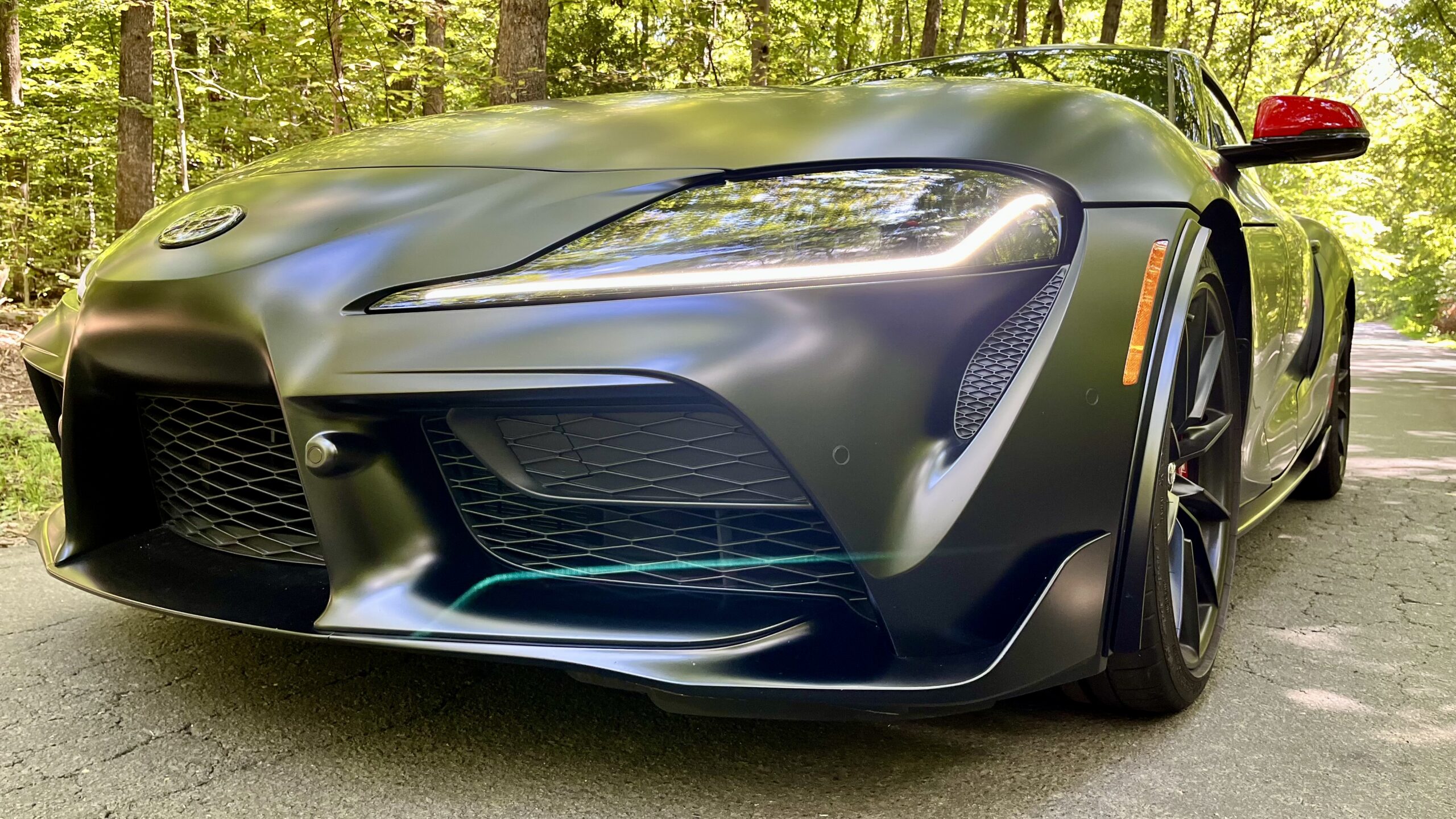
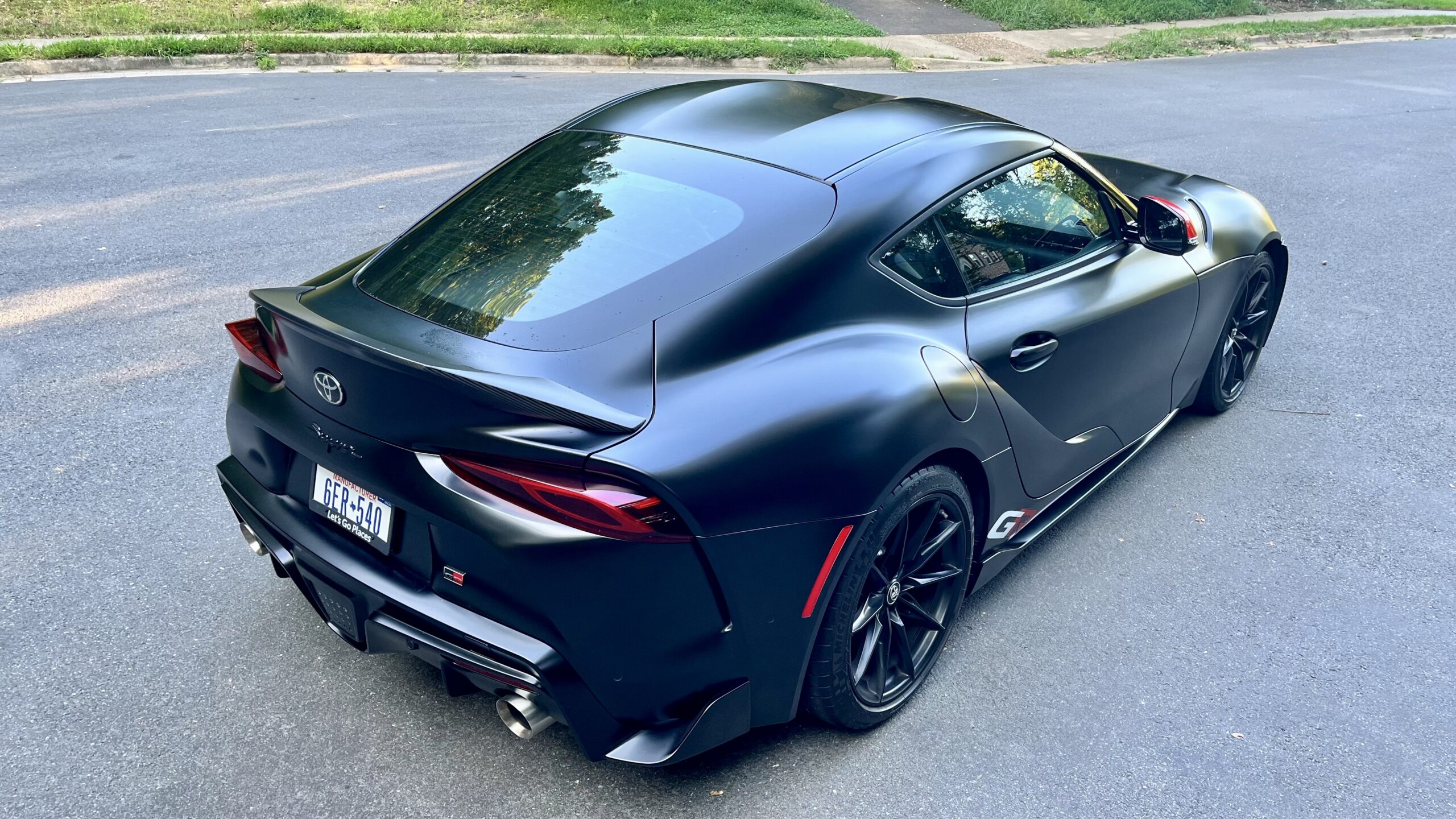
What the Manual’s Fuel Figures Mean
Carsfera reports a 21-mpg combined rating for the manual test car. At that rate, a 300-mile trip would use about 14.3 gallons. Using the 26-mpg highway rating instead gives about 11.5 gallons for the same distance. The gap is roughly 2.7 gallons before rounding the individual figures. This is a simple planning comparison based on the published ratings, not fuel use measured during the test. Traffic, speed and road conditions will change the result. When estimating a trip budget, choose the rating that best matches your route. Then multiply the gallons by the fuel price you expect to pay.
Before You Choose Your Final Edition
Use the gallery to make a short inspection list. First, check the front lip, wheels and paint in person. Next, adjust the seat and test your reach to the clutch and gear lever. Bring the bags you normally carry and try them in the cargo area. Finally, match the car’s equipment to its window sticker. Keep the quoted vehicle price, dealer fees and taxes on separate lines so you can compare the full cost.
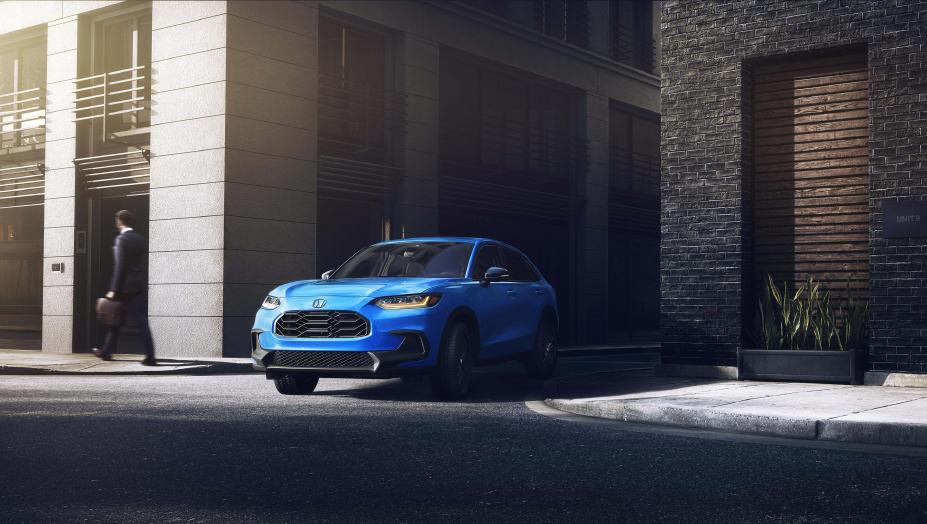
The 2027 Honda HR-V starts below $30,000, but taxes and fees can quickly push your final price over budget.
Honda HR-V Sport 2026. Foto: American Honda Motor Co., Inc. / Honda Newsroom.
The LX and front-wheel-drive Sport stay below $30,000 before taxes, but destination charges leave very different amounts of room in your budget.
The 2027 Honda HR-V starts at $26,600 in the United States, but the more useful shopping figure is $28,150 including Honda’s currently listed $1,550 destination charge. At that price, the front-wheel-drive LX leaves $1,850 beneath a $30,000 ceiling. The front-wheel-drive Sport leaves just $50.
That small gap matters when comparing affordable SUVs. A vehicle advertised below $30,000 can exceed that amount before the buyer adds a single accessory. This guide separates the starting MSRP, delivery-inclusive price and the final amount a dealer would ask you to pay.
2027 Honda HR-V prices, including destination
Honda offers the U.S. HR-V in LX, Sport and EX-L trims, each with front-wheel drive or available all-wheel drive. The following totals combine the published trim MSRPs with the $1,550 destination charge shown on Honda’s current U.S. consumer page.
| 2027 HR-V configuration | Base MSRP | With destination | Below $30,000? |
|---|---|---|---|
| LX FWD | $26,600 | $28,150 | Yes: $1,850 remaining |
| LX AWD | $28,100 | $29,650 | Yes: $350 remaining |
| Sport FWD | $28,400 | $29,950 | Yes: $50 remaining |
| Sport AWD | $29,900 | $31,450 | No |
| EX-L FWD | $30,450 | $32,000 | No |
| EX-L AWD | $31,950 | $33,500 | No |
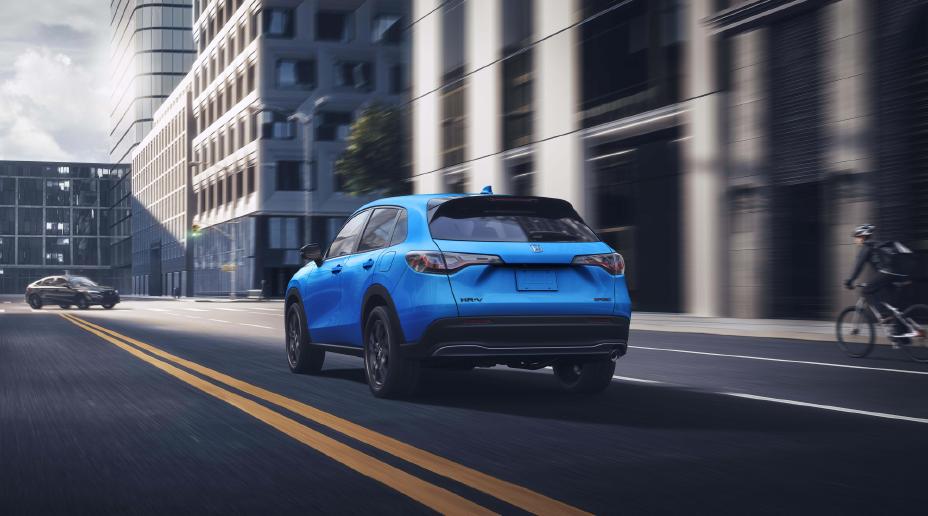
2026 Honda HR-V Sport. Photo: American Honda Motor Co., Inc. / Honda Newsroom.
LX or Sport: where does the extra money go?
Honda’s current equipment overview lists a 9-inch touchscreen and wireless Apple CarPlay compatibility on the LX. Sport adds features including heated front seats, remote engine start and 18-inch gloss-black alloy wheels. EX-L moves further upmarket with leather-trimmed seats, a power-adjustable driver’s seat and dual-zone automatic climate control.
For a buyer deciding between the two lower trims, the important price step is $1,800 from LX FWD to Sport FWD. Choose the features you would actually use before treating that step as essential. A buyer who wants all-wheel drive can instead select LX AWD for $300 less than Sport FWD at the listed starting prices.
The Sport badge does not bring a stronger engine. Honda’s U.S. specifications list the same 158-hp, 2.0-liter four-cylinder and continuously variable transmission across the lineup. This makes the LX-versus-Sport decision primarily about equipment and appearance, rather than an engine upgrade.
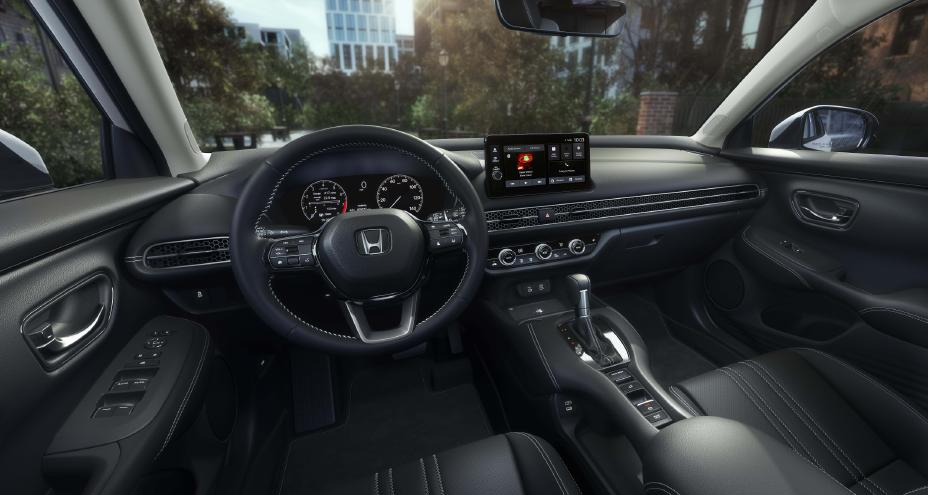
A 2026 HR-V cabin. Photo: American Honda Motor Co., Inc. / Honda Newsroom.
Does AWD change the fuel-economy calculation?
The 2027 HR-V’s published EPA ratings are 26 mpg city, 32 highway and 28 combined with front-wheel drive. AWD versions are rated at 25 city, 30 highway and 27 combined. Actual results depend on driving and conditions.
AWD adds $1,500 to the MSRP of each trim. It also leaves the LX AWD only $350 below the headline budget before taxes or fees. If AWD is on your must-have list, compare that configuration directly with other AWD vehicles rather than using a rival’s least-expensive front-wheel-drive price.
Honda lists 24.4 cubic feet of cargo space behind the rear seats and 55.1 cubic feet with them folded. Those figures provide a starting point, but bring your stroller, luggage or other regularly carried items to the dealer. A suitable price and drivetrain do not settle whether the vehicle fits your routine.
Where does it sit against the Toyota Corolla Cross?
Toyota’s October 2 U.S. announcement places the 2027 Corolla Cross L FWD at $25,535 before delivery, compared with $26,600 for the HR-V LX FWD. That is a $1,065 difference in base MSRP. It is not the final difference between dealer quotes, because delivery charges, equipment and other costs must also be included.
Toyota lists 169 horsepower for its gasoline Corolla Cross and offers both FWD and AWD. Its hybrid lineup begins at $31,415 before delivery, already beyond this article’s budget at MSRP. For the model’s lineup context, read Carsfera’s 2027 Toyota Corolla Cross coverage.
For shoppers comparing these two models near $30,000, the practical shortlist starts with the gasoline versions and exact equipment needs. Request equivalent quotes, sit in both vehicles and compare the space you will use. The figures here support a price comparison; they do not establish a ride-quality or reliability winner.
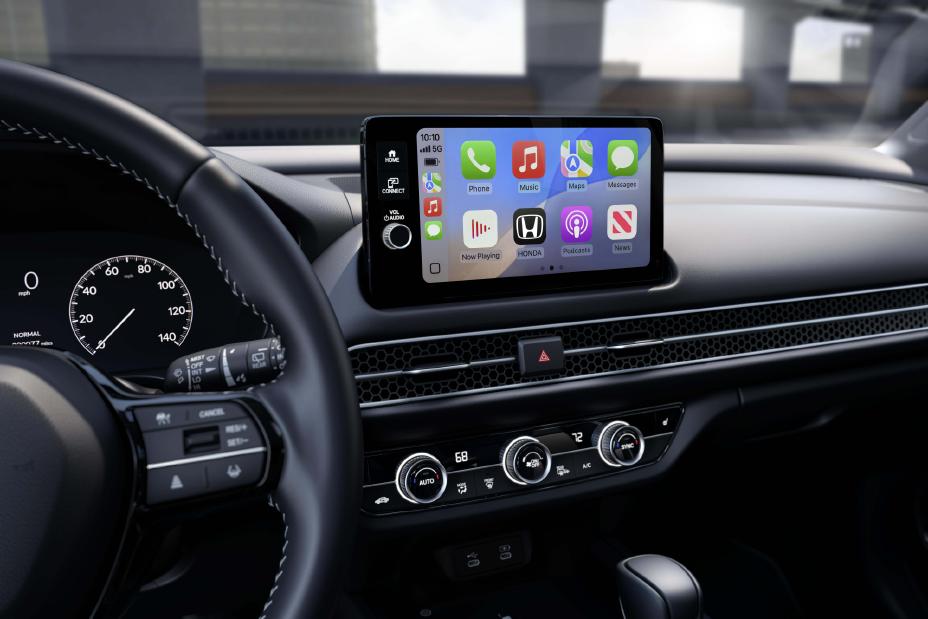
the 2026 HR-V touchscreen. Photo: American Honda Motor Co., Inc. / Honda Newsroom.
Carsfera’s budget test: work backward from $30,000
A hard $30,000 out-the-door limit calls for a different shopping target from a $30,000 sticker-price limit. Start with the amount you can spend in total, then leave room for the taxes and fees that apply to your purchase.
Our illustrative calculation: assume a 6% tax on the negotiated vehicle price including destination, plus $300 in other charges added afterward. These are hypothetical inputs, not a statement of any state’s tax rules. Dividing ($30,000 minus $300) by 1.06 gives a vehicle-and-destination ceiling of approximately $28,018.87. Round down to a whole-dollar shopping target of $28,018 or lower to stay within the budget.
Under those assumptions, the LX FWD at its listed starting price would total $30,139. The Sport FWD would total $32,047. To meet that whole-dollar target, the LX would need at least $132 off, while the Sport would need at least $1,932 off, with no additional equipment or charges. These are calculated negotiating targets, not advertised discounts or predictions that a dealer will accept them.
Request an itemized out-the-door quote for an identified vehicle before discussing the monthly payment. Keep trade-in value, down payment and financing terms separate so they do not conceal the vehicle’s actual price. For a strict budget, the LX FWD gives you the most room; the Sport’s $50 cushion is a reason to check the final quote carefully.
-

 TEST DRIVES2 months ago
2026 Toyota GR Supra MkV Final Edition
-

 NOW TRENDING1 month ago
Aston Martin DBX Becomes Harry Da Souza’s Ride in MobLand
-

 NOW TRENDING2 months ago
Tesla Cybercab Puts U.S. Regulations to the Test
-

 TEST DRIVES1 month ago
2026 Maserati GranTurismo Trofeo Review: Miami
-

 INTELLIGENT MOBILITY1 month ago
Tesla Cybercab Cannot Be Charged at Home—Here’s Why
-

 INTELLIGENT MOBILITY1 month ago
Tesla Cybercab Navigation Problem Hits Austin Robotaxis
-
 NOW TRENDING2 months ago
Hyundai Reports Strong Hybrid Sales in August 2026
-

 NOW TRENDING2 months ago
This Lotus Elise Restomod Weighs Just 1,320 Pounds
You must be logged in to post a comment Login