
Chinese scientists have developed a flexible protective layer that withstands both extreme cold and heat, extending the lifespan of the world’s most promising batteries.
Solid-state batteries are widely seen as the future of energy storage, offering greater capacity, faster charging, and enhanced safety compared to conventional lithium-ion packs. However, their progress has long been limited by a key issue – poor resistance to heat and extreme cold, especially during fast charging cycles. Now, a research team from Tsinghua and Tianjin Universities in China has unveiled a “flexible armor” coating that shields batteries from subzero temperatures while improving their overall performance.
The Secret Lies in Flexibility
Mass production of solid-state batteries has been slow due to their tendency to crack and lose efficiency under thermal or mechanical stress. To tackle this, the Chinese researchers replaced the traditional solid electrolyte interphase (SEI) – known for being hard yet brittle – with a new version that is both elastic and resilient.
Using silver-based materials (Agâ‚‚S and AgF), they created a coating that can bend slightly without breaking, maintaining a stable internal structure and allowing lithium ions to flow smoothly even under extreme conditions.

Impressive Results Under Harsh Temperatures
During testing, batteries treated with this innovative layer remained functional for over 4,500 hours of intensive use and stayed stable for more than 7,000 hours at -30°C. Under normal circumstances, such temperatures would typically cause severe degradation or structural failure. The design combines soft and rigid materials in a gradual layered structure, reducing internal stress, preventing cracks, and ensuring uniform lithium distribution throughout charging and discharging cycles.
A Key Step Toward Full Electrification
This discovery represents a major leap forward in battery technology and could directly impact the development of electric vehicles, high-performance sports cars, and even racing applications.
In fact, Formula 1 engineers and leading automakers are closely monitoring this kind of innovation, as it could enhance energy efficiency and reduce thermal limits in future electric powertrains. With this breakthrough, China strengthens its leadership in energy innovation, bringing the world one step closer to making solid-state batteries a reliable and commercially viable reality for everyone.











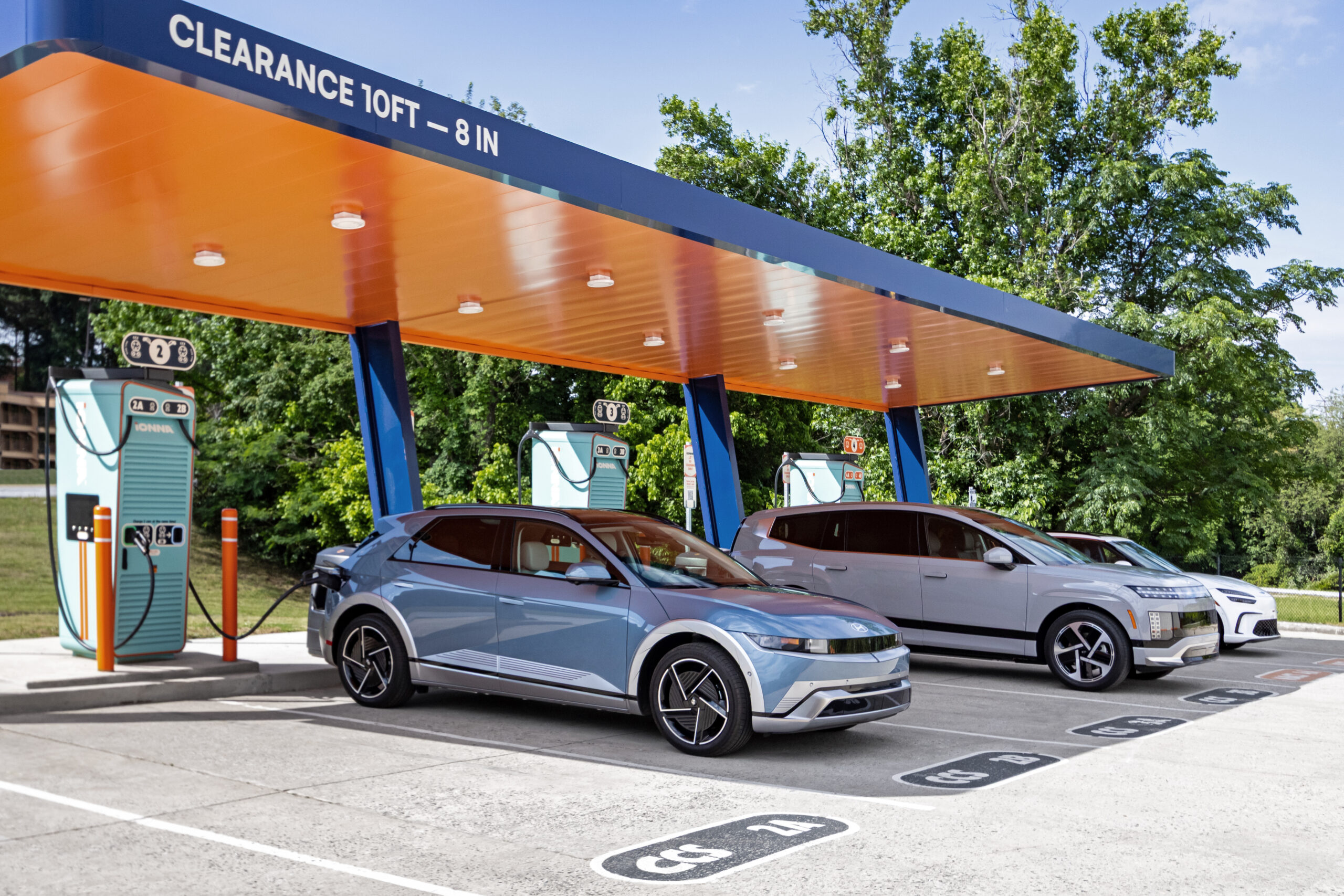
Eligible Hyundai EV owners now receive an automatic 10% discount at IONNA fast chargers, plus a limited-time bonus that brings total savings to 20% through September 30, 2026.
Hyundai is making public fast charging more affordable for its electric vehicle customers in the United States. Starting August 19, eligible Hyundai EV owners receive an automatic 10% discount at every IONNA fast-charging station.
For a limited time, IONNA is adding another 10% discount. That brings the total savings to 20% through September 30, 2026.
The discount is designed to work automatically through Hyundai’s charging technology, so customers do not need to enter a promotional code at the charger.
Automatic savings through Hyundai’s charging system
The ongoing 10% discount applies when customers start a charging session through Hyundai In-App Charging or Plug & Charge.
Both options can be accessed through the MyHyundai with Bluelink app on eligible vehicles.
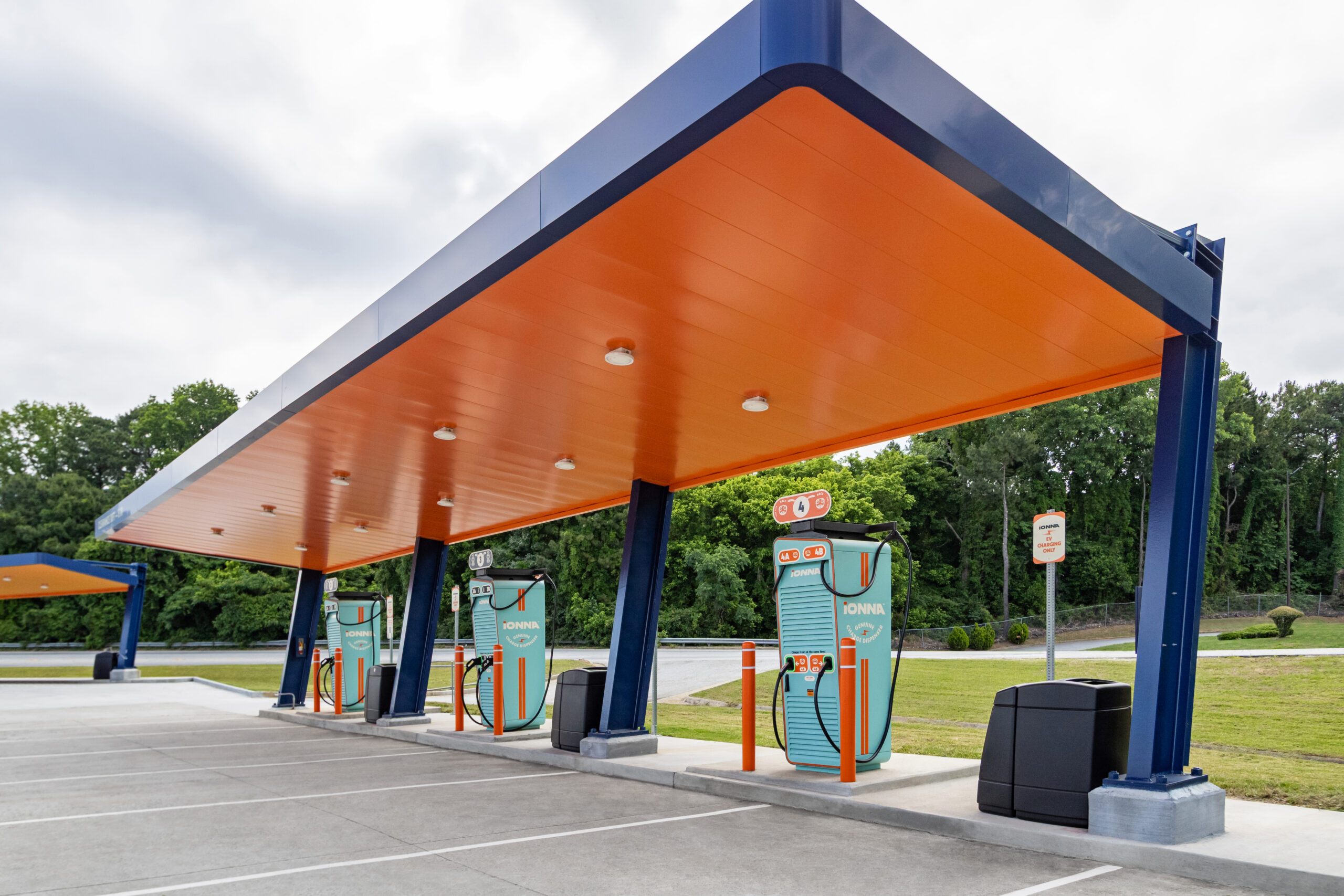
Hyundai EV owners can receive automatic discounts at IONNA fast-charging stations through the MyHyundai app or Plug & Charge.
The system is designed to make the process simple. Drivers can connect their vehicle and begin charging without manually entering a discount code.
Hyundai also says the ongoing 10% discount can be combined with other limited-time IONNA promotions.
That could make the savings even more attractive for drivers who regularly rely on public fast chargers.
The 20% promotion runs through September 30
The standard Hyundai benefit is 10%. However, IONNA is currently adding a second 10% bonus discount for eligible Hyundai EV customers.
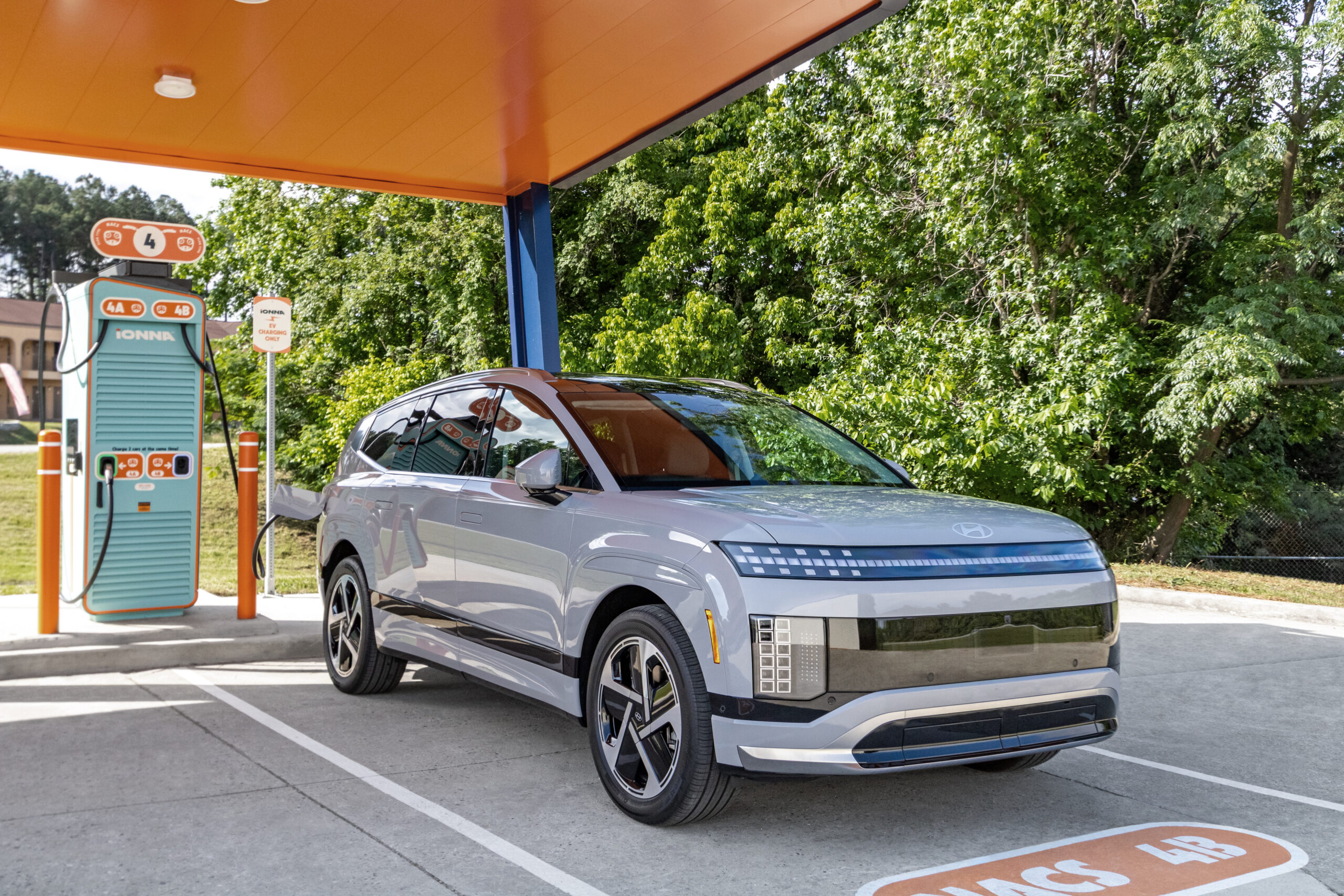
ONNA’s additional 10% promotion raises total charging savings to 20% through September 30, 2026.
The stacked discount applies through September 30, 2026. After that date, the temporary bonus ends, while the ongoing 10% Hyundai benefit remains available to eligible vehicles.
IONNA currently operates more than 150 locations in the United States, according to the companies.
The charging network is being developed by a group of major automakers, including BMW, General Motors, Honda, Hyundai, Mercedes-Benz, Kia, Stellantis, and Toyota.
Which Hyundai EVs qualify?
The automatic discount is available to selected Hyundai electric vehicles equipped with In-App Charging and/or Plug & Charge.
Eligible Hyundai models currently include:
- Hyundai IONIQ 5 — 2022 model year and newer
- Hyundai IONIQ 5 N — 2025 model year and newer
- Hyundai IONIQ 9 — 2026 model year and newer
- Hyundai KONA Electric — 2025 model year and newer
Hyundai says additional EVs will become eligible as In-App Charging expands to more models.
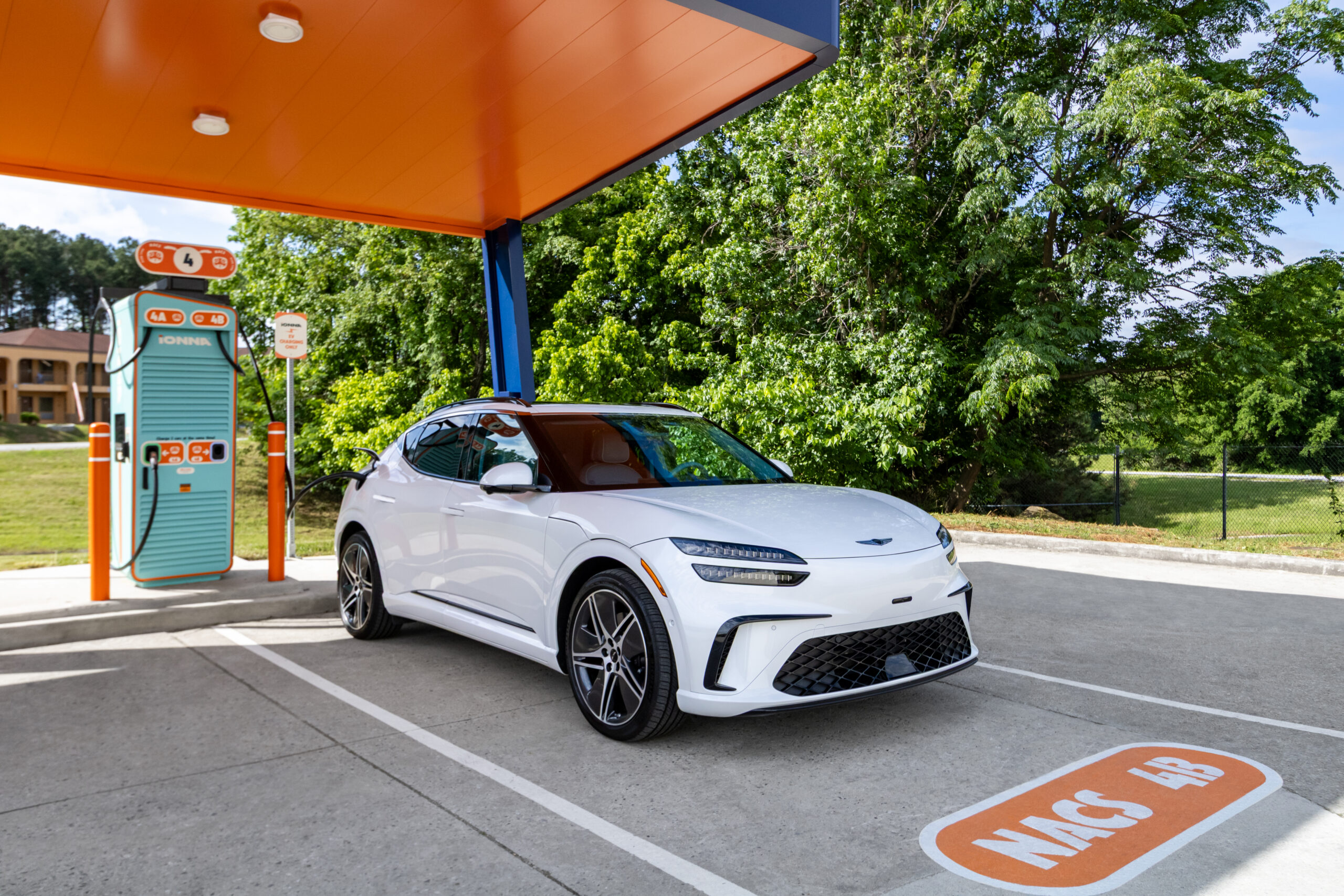
Selected Hyundai models, including the IONIQ 5, IONIQ 5 N, IONIQ 9, and KONA Electric, qualify for the discount.
The offer also extends to selected Genesis EVs equipped with the required charging technology.
Eligible Genesis vehicles include the GV60 and Electrified GV70, both from the 2026 model year and newer.
A push for easier public EV charging
Hyundai says the program is part of a broader effort to make EV ownership more convenient. The company believes charging confidence depends not only on vehicle range, but also on reliable infrastructure, simple payments, and predictable charging costs.
The partnership with IONNA is intended to address those areas by combining fast-charging access with automatic savings.
For eligible drivers, the Hyundai IONNA charging discount means lower costs without additional steps at the charger. The temporary bonus makes the offer even stronger in the short term, with total discounts reaching 20% until September 30.
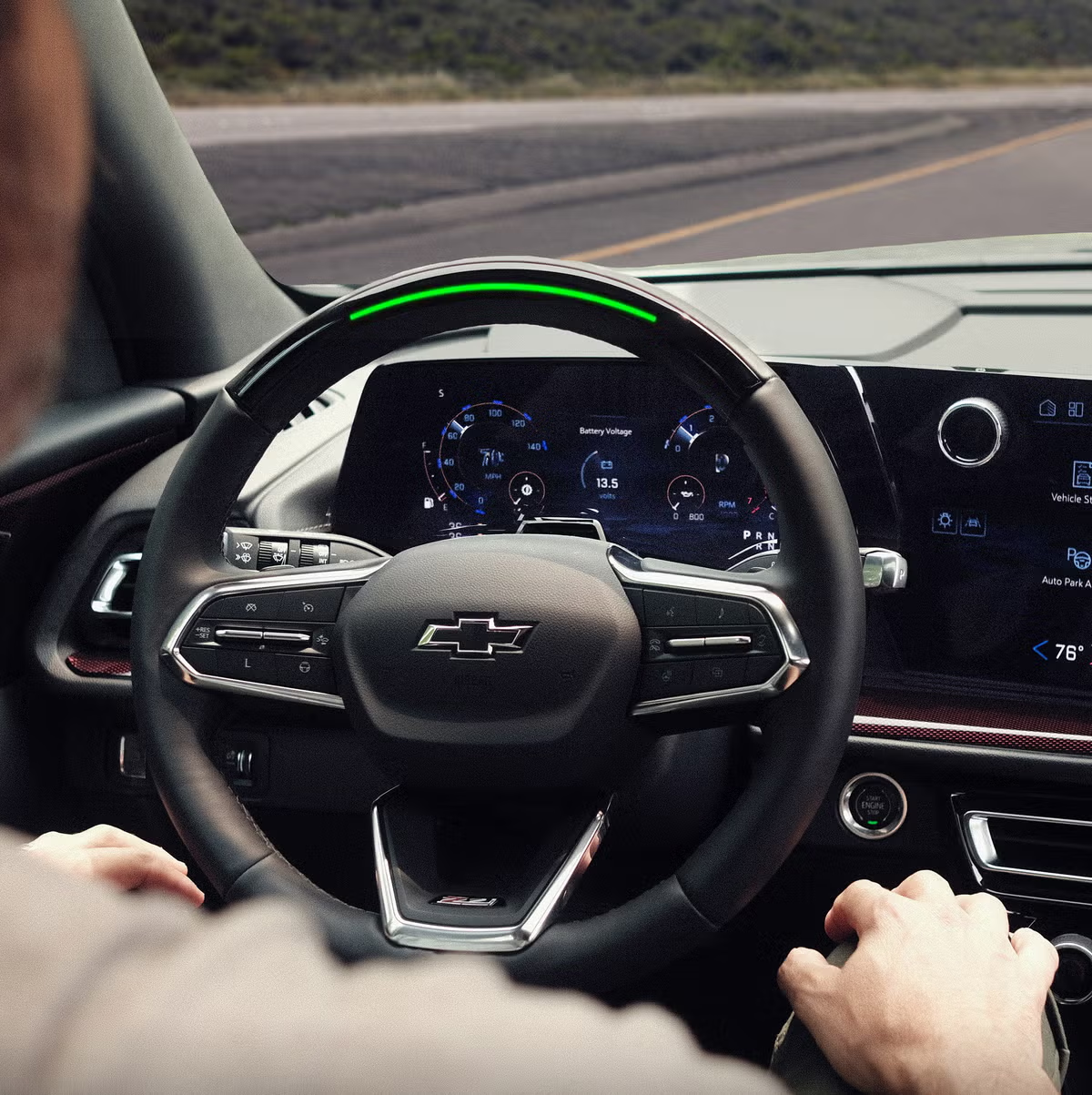
GM’s Super Cruise already offers hands-free driving on compatible roads, while a new generation aims to add eyes-off capability starting with the Cadillac Escalade IQ in 2028.
General Motors is continuing to expand Super Cruise, its advanced driver-assistance system for compatible roads in North America. Nearly 750,000 Super Cruise-equipped vehicles are already on the road, with the technology helping drivers manage steering, acceleration, and braking in certain conditions.
GM is now preparing the next stage. The future version is expected to let drivers take their eyes off the road on approved routes, beginning with highways and potentially expanding to additional road types later.
What is GM Super Cruise?
Super Cruise is a driver-assistance system that combines sensors, cameras, computers, and high-definition mapping to understand the road and surrounding traffic.
When activated, the system can control steering, acceleration, and braking on compatible roads. Drivers can take their hands off the steering wheel, but they must continue watching the road and remain ready to take control.
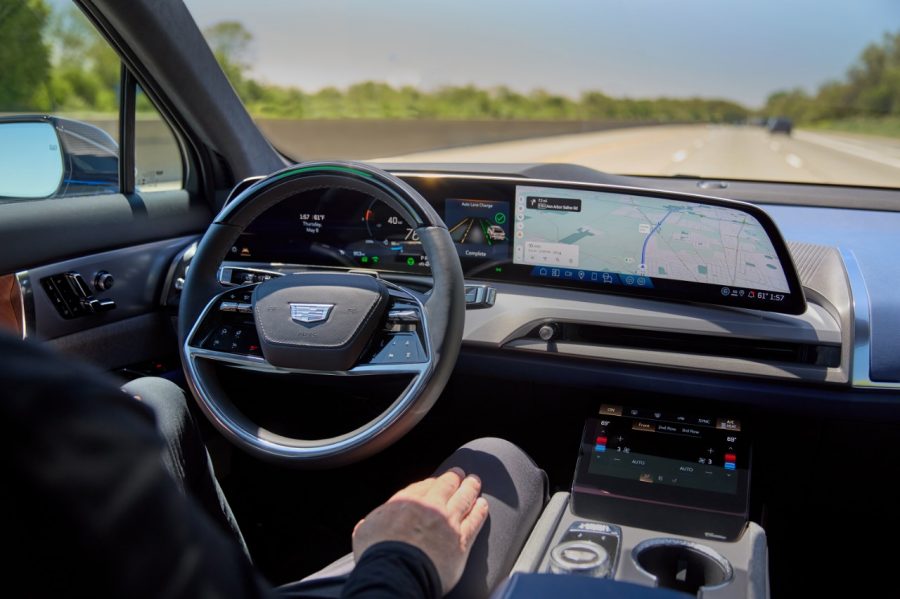
GM Super Cruise allows drivers to go hands-free on compatible mapped roads while maintaining attention on traffic.
The system originally focused on divided highways. Its capabilities have since expanded to additional mapped roads with clearly visible lane markings.
Super Cruise is available on more than 20 GM models across Cadillac, Chevrolet, and GMC. The technology ranges from vehicles such as the Chevrolet Bolt to high-end Cadillac models.
It can also support hands-free towing on equipped trucks.
Super Cruise is included for three years with eligible vehicles. After that period, GM offers subscription plans starting at $39.99 per month, with discounts available for annual billing.
How is Super Cruise different?
One of Super Cruise’s biggest advantages is its ability to determine the vehicle’s position with a high level of precision.
Rather than simply knowing which road the vehicle is traveling on, the system can identify the lane itself. That allows the vehicle to better understand lane markings, road geometry, and surrounding conditions.
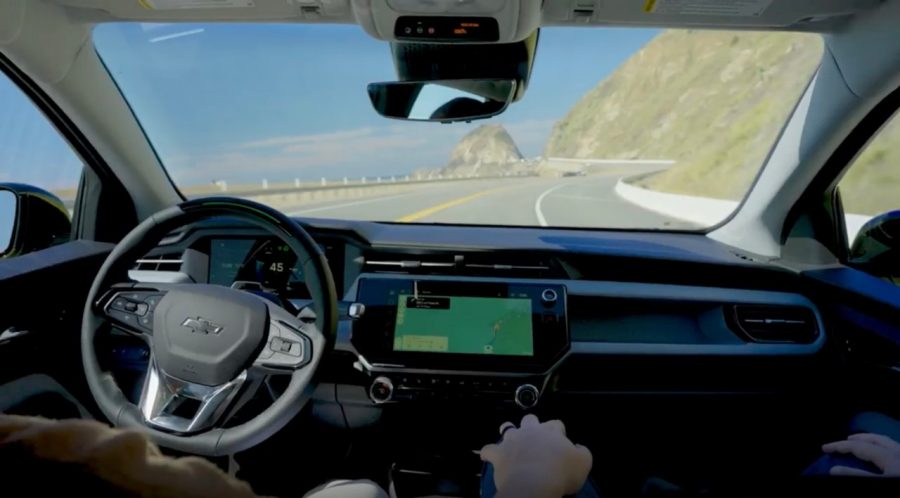
High-definition maps help Super Cruise understand lane positions, road geometry, and other details with greater precision.
GM creates its high-definition maps using specially equipped vehicles fitted with LiDAR sensors.
These sensors use reflected light to build a three-dimensional picture of the surrounding environment. The mapping data is then matched with information collected by the vehicle’s own sensors.
That combination helps Super Cruise determine where the vehicle is located and what it should expect from the road ahead.
What is next for Super Cruise?
GM is developing a new generation of the system that will eventually introduce eyes-off driving on certain mapped roads.
The company plans to launch the technology in 2028, with the Cadillac Escalade IQ expected to be the first model to receive it.
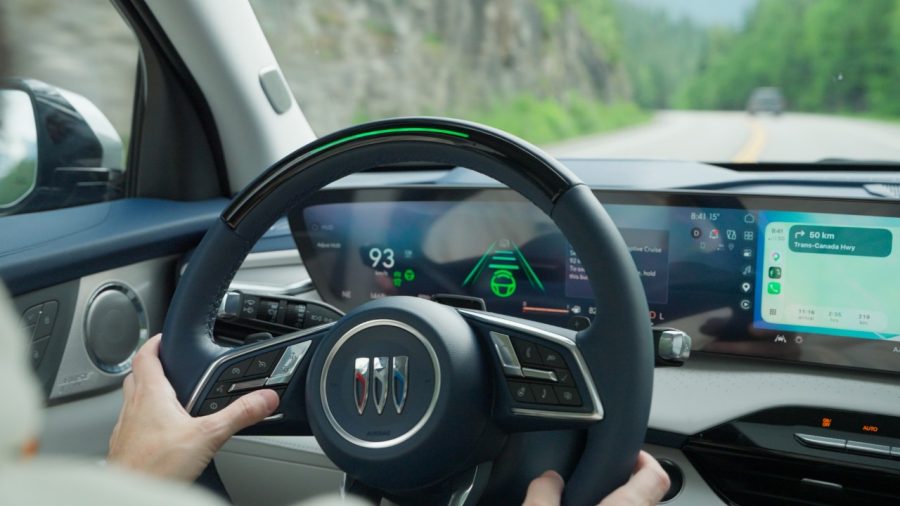
GM plans to introduce its next-generation eyes-off Super Cruise system on the Cadillac Escalade IQ in 2028.
The future system is already being tested on hundreds of prototype vehicles equipped with new sensors and electronic hardware.
Like the current system, the next generation is expected to expand across multiple GM brands and vehicle price points over time.
GM is also working toward a longer-term goal in which its vehicles could eventually drive on behalf of their owners.
How does GM test Super Cruise?
GM uses a broad testing strategy before introducing new autonomous driving features into production vehicles.
Engineers test systems through closed-course evaluations, supervised public-road driving, and computer simulations. A trained driver remains behind the wheel during public-road testing and can intervene whenever necessary.
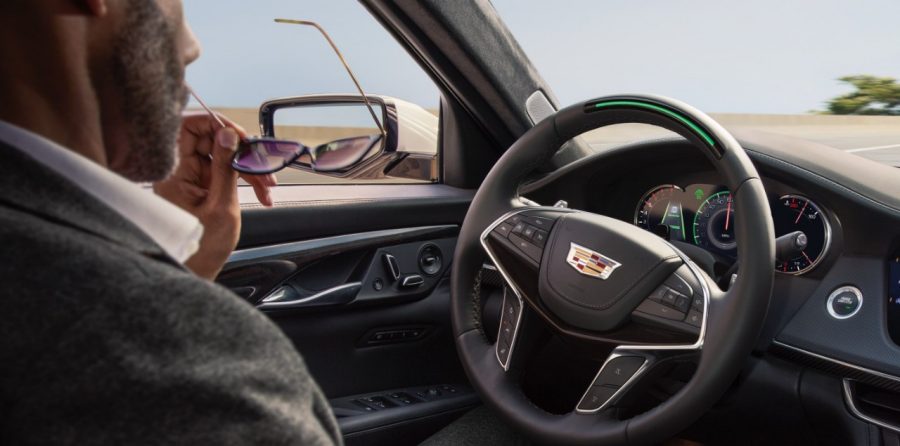
GM combines real-world road testing with large-scale simulations to validate new Super Cruise capabilities.
Simulation plays a major role in the development process. GM says its engineers can simulate the equivalent of 100 years of driving every day.
Those simulations allow engineers to test both common situations and rare edge cases. Examples include unexpected lane departures, complicated intersections, and interactions with other vehicles.
The company can also take situations identified by production vehicles and test fleets, recreate them in simulation, and modify them to evaluate different outcomes.
The GM Super Cruise system therefore continues to evolve through a combination of real-world data, high-definition mapping, hardware development, and simulation.
Today, it provides hands-free driving while requiring drivers to keep their eyes on the road. The next major milestone comes in 2028, when GM plans to introduce an eyes-off version and take another step toward its broader autonomous-driving ambitions
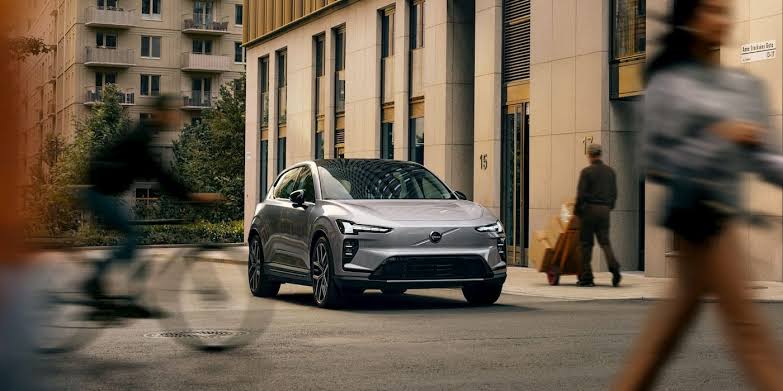
Volvo has launched Safety Coach, an optional app that analyzes driving behavior, provides personalized safety tips, and could help eligible drivers lower insurance costs.
Volvo Cars is introducing Safety Coach, a new optional app designed to help drivers develop safer habits while potentially reducing their insurance costs.
The system provides driving feedback through the vehicle’s infotainment display and the Volvo Cars mobile app. It analyzes everyday driving behavior, including braking, acceleration, and cornering.
Each driver receives a personalized Safety Coach score that changes based on their driving habits.
Personalized feedback for safer driving
The app uses Volvo’s decades of real-world safety research to generate individual driving insights.

Volvo Safety Coach provides personalized driving feedback through the vehicle’s infotainment system.
Drivers can receive real-time tips designed to encourage smoother and more predictable driving.
Volvo says behaviors such as excessive speed and sudden maneuvers can make vehicles less predictable for other road users. By encouraging drivers to avoid abrupt actions, the system aims to reduce potential collision risks.
The company sees this type of feedback as another tool for improving everyday road safety.
Insurance rewards could follow safer habits
Safety Coach is not limited to driving advice. Volvo is also connecting the program with usage-based insurance opportunities.
The first rollout is taking place in Sweden and Norway. Customers in those markets will be able to opt in to share their driving data with affiliated insurance providers.

Drivers in Sweden and Norway can opt in to share driving data for potential usage-based insurance benefits.
Volvo says eligible customers can receive offers from Volvia based on their driving behavior.
The approach gives drivers the possibility of receiving personalized insurance benefits when they demonstrate safer habits.
The company plans to expand Safety Coach to the United States and additional European markets after its initial launch. Insurance-related programs are also expected to become part of that wider rollout.
AI and telematics power the system
Safety Coach was developed through a collaboration between Volvo Cars and Cambridge Mobile Telematics (CMT).
CMT provides the algorithm used to calculate each driver’s Safety Coach score. The company specializes in telematics and AI systems focused on safer mobility.

Cambridge Mobile Telematics provides the technology used to calculate each Safety Coach score.
CMT says data from its safe-driving programs shows that participants often reduce behaviors such as speeding and hard braking.
For Volvo, that suggests personalized feedback can help drivers build better habits over time rather than simply providing information after an incident.
Drivers control their data
Privacy and transparency are also central to the system.
Drivers must first opt in to Safety Coach before using the service. They can then separately decide whether to share their driving information with participating insurance companies.
That second choice is optional and is intended to allow customers to receive potential usage-based insurance benefits without automatically sharing their information.
The Volvo Safety Coach therefore combines driving feedback, personalized scoring, telematics, and potential insurance rewards in a single system. Volvo says the goal is to help drivers become safer while giving them more control over their driving data and potential insurance savings.
-

 NOW TRENDING2 months ago
Polestar to Exit U.S. Market After 2026 Due to Connected Vehicle Rules
-
 NOW TRENDING2 months ago
Tesla Model Y L Arrives in the U.S. With More Space and Three Rows
-
 NOW TRENDING2 months ago
The 2026 Kia Sportage Is More Than A Mid-Cycle Refresh — It’s Kia’s Play To Keep Its Best-Seller At The Center Of America’s SUV Market
-
 RACING2 months ago
Why F1 2026 Batteries Have Become The Biggest Reliability Headache On The Grid
-
 NOW TRENDING2 months ago
The 2026 Lexus ES Is No Longer Just A Hybrid Sedan — It’s Now A Three-Way Luxury Play With Hybrid And EV Power
-
 INTELLIGENT MOBILITY2 months ago
Bolt, Pony.ai and Stellantis launch autonomous mobility pilot in Luxembourg
-

 RACING2 months ago
McLaren F1 Unveils Special Silverstone Livery Honoring Its History
-
 NOW TRENDING2 months ago
2026 Mazda CX-5 pricing starts at $29,990 as Mazda reveals all-new SUV for the U.S.
You must be logged in to post a comment Login