
RACING
Honda IndyCar Teams Ready for Washington GP Debut

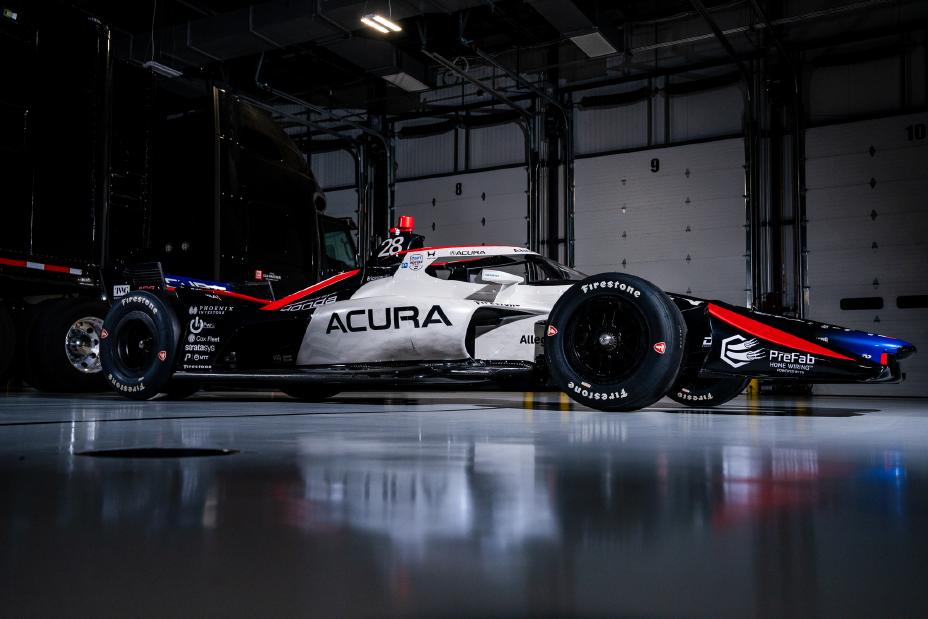
Honda-powered teams head to Washington, D.C., for the inaugural Freedom 250 Grand Prix with Alex Palou leading the title fight and Honda seeking another street-course win.
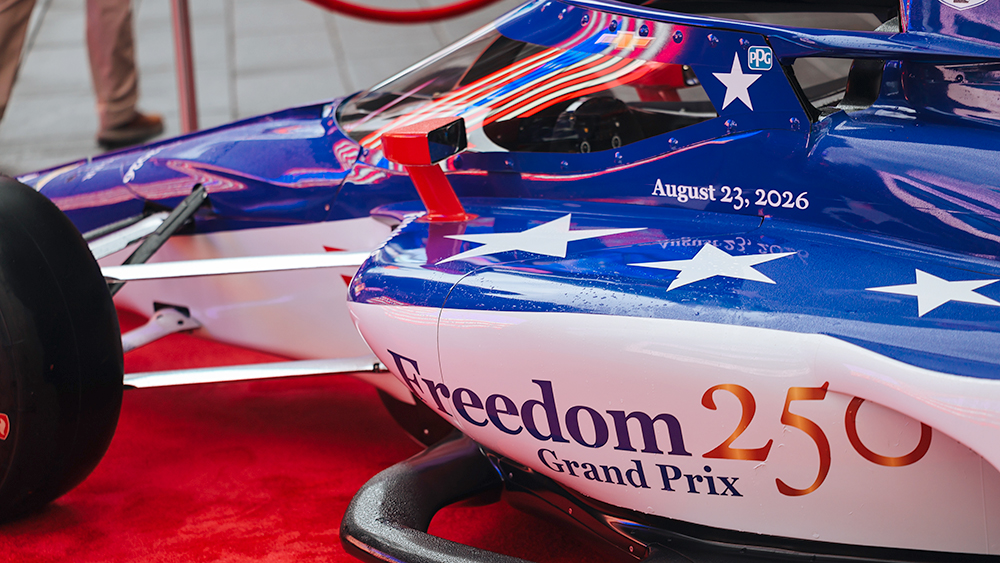
The Freedom 250 Grand Prix of Washington will bring the NTT INDYCAR SERIES to the streets of Washington, D.C., for the first time on Sunday, August 23, 2026.
The race will begin at 1 p.m. ET, with pre-race coverage starting at 11:30 a.m. ET and live coverage on Fox.
The inaugural event will take drivers around the nation’s capital and past some of its most recognizable museums and monuments. The race also celebrates 250 years since the signing of the Declaration of Independence.
Honda enters another major street-course test
Honda arrives in Washington with a strong record on street circuits during the 2026 season.
Honda-powered drivers have won all five street-course races held so far this year. Four of those victories were part of all-Honda podium sweeps.
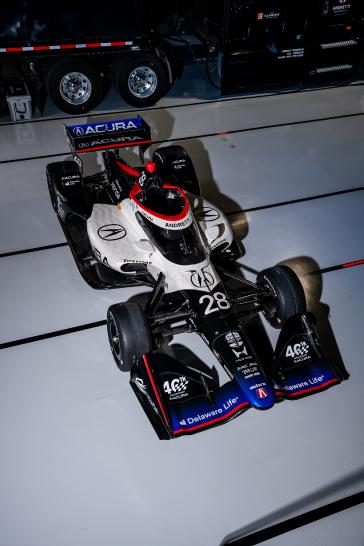
Honda-powered teams have won every street-course race of the 2026 IndyCar season ahead of the Washington debut.
Alex Palou opened the season with a victory at St. Petersburg before leading all-Honda podiums at Long Beach and Detroit.
Kyle Kirkwood then won the inaugural race in Arlington, while Marcus Ericsson followed with victory at Markham last weekend.
The results have helped Honda build a 169-point lead in the manufacturers’ championship.
Palou leads a major championship fight
The Washington race could also have a major impact on the 2026 drivers’ championship.
Alex Palou currently leads the standings by 133 points, giving the Chip Ganassi Racing driver a significant advantage heading into the second half of the season.
Alex Palou holds a 133-point championship lead heading into the inaugural Washington street race.
Palou has collected victories at St. Petersburg, Barber, Long Beach, Detroit, Nashville, and Portland during the 2026 campaign.
Andretti Global’s Kyle Kirkwood is currently second and represents one of the biggest threats to Palou’s championship advantage.
The Washington street circuit gives Palou’s rivals another opportunity to reduce the gap. A strong result for the championship leader, however, could bring him significantly closer to a fifth NTT INDYCAR SERIES title.
Acura joins the Washington celebration
The inaugural race will also feature an important Acura celebration.
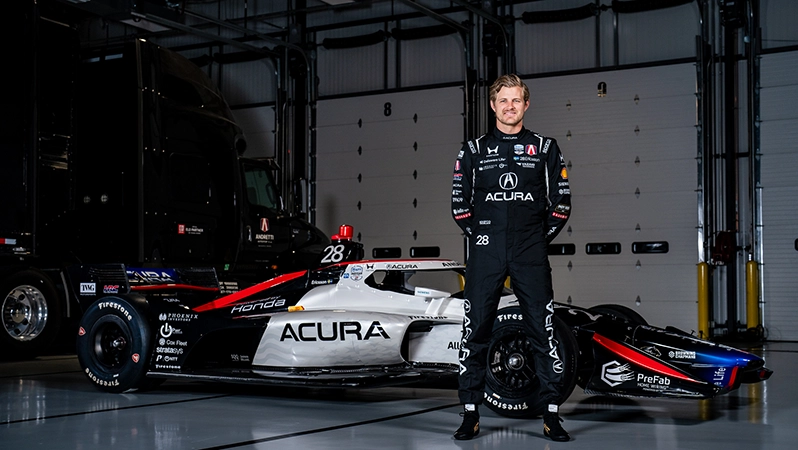
Marcus Ericsson’s No. 28 Andretti Global Honda will carry an Acura-themed livery during the Washington race.
Marcus Ericsson’s No. 28 will feature an Acura livery celebrating both America’s 250th anniversary and 40 years of Acura.
The special design celebrates 250 years of the United States while also marking 40 years of Acura, which entered the American market in 1986 as the first Japanese luxury car brand.
The partnership gives Acura another opportunity to connect with motorsport fans through the NTT INDYCAR SERIES.
Honda lineup for the Freedom 250 Grand Prix
Honda will field a strong group of drivers across its participating teams in Washington.
Andretti Global
- No. 26 Will Power — Series Champion, Indianapolis 500 winner, Race Winner
- No. 27 Kyle Kirkwood — Race Winner
- No. 28 Marcus Ericsson — Indianapolis 500 winner, Race Winner
Chip Ganassi Racing
- No. 8 Kyffin Simpson
- No. 9 Scott Dixon — Series Champion, Indianapolis 500 winner, Race Winner
- No. 10 Alex Palou — Series Champion, Indianapolis 500 winner, Race Winner
Dale Coyne Racing
- No. 18 Romain Grosjean
- No. 19 Dennis Hauger — Series Rookie
Meyer Shank Racing
- No. 60 Felix Rosenqvist — Indianapolis 500 winner, Race Winner
- No. 66 Marcus Armstrong
Rahal Letterman Lanigan Racing
- No. 15 Graham Rahal — Race Winner
- No. 45 Louis Foster
- No. 47 Mick Schumacher — Series Rookie
With Honda already dominant on street circuits and Palou holding a commanding championship lead, the Honda IndyCar Washington GP will provide another important test for both the manufacturer and its leading drivers.


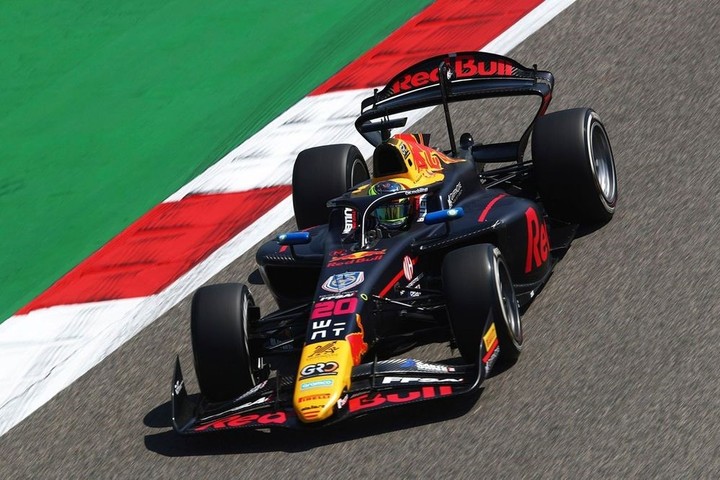
Isack Hadjar will miss the 2026 Dutch Grand Prix with a wrist injury, with Liam Lawson returning to Red Bull and Yuki Tsunoda moving back to Racing Bulls.
Red Bull has officially confirmed that Isack Hadjar will miss the 2026 Dutch Grand Prix this weekend after suffering a wrist injury during the summer break.
The French driver will be replaced by Liam Lawson, who returns to Red Bull for the race at Zandvoort. The change also triggers another move, with Yuki Tsunoda returning to Racing Bulls for the weekend.
Hadjar suffers wrist injury before Zandvoort
Hadjar injured his wrist during a gym training session during the summer break. The incident left Red Bull with little choice but to replace him for the return to action.
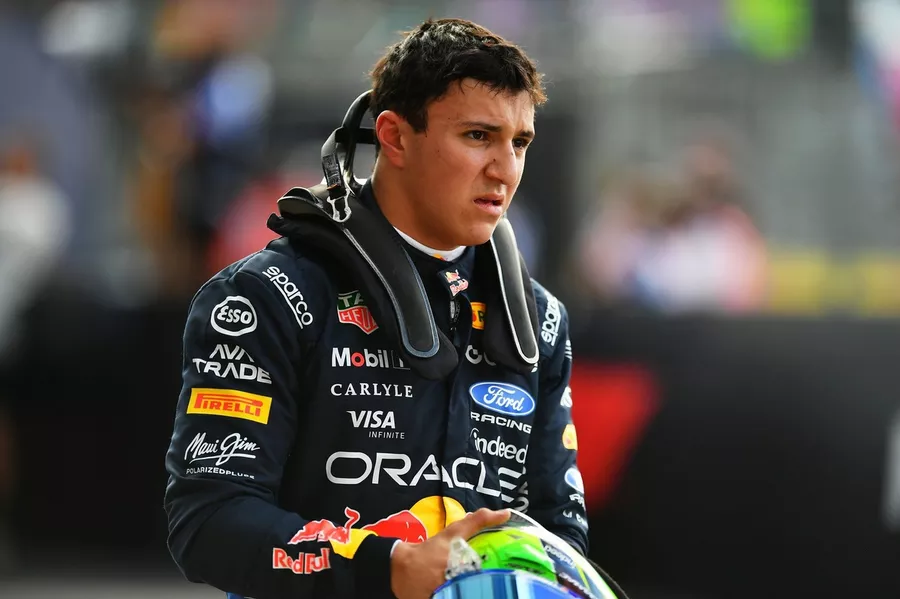
Isack Hadjar will miss the 2026 Dutch Grand Prix after suffering a wrist injury during the summer break.
The timing is particularly unfortunate for Hadjar because Zandvoort is the circuit where he scored his first and only Formula 1 podium so far.
The Frenchman finished third for Racing Bulls at the Dutch Grand Prix in 2025 during an impressive rookie campaign.
Red Bull confirmed that Hadjar will not compete this weekend and wished the 21-year-old a quick recovery.
Liam Lawson returns to Red Bull
Hadjar’s absence gives Liam Lawson another opportunity alongside Max Verstappen.
Lawson previously raced for Red Bull during the opening two rounds of the 2025 season before returning to the junior team.
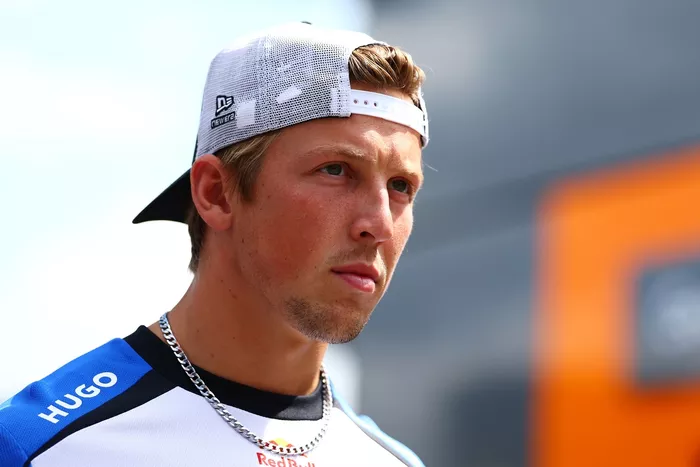
The New Zealander enters the weekend with considerably more experience than he had during his previous Red Bull stint.
After 11 races in 2026, Lawson sits ninth in the drivers’ championship. He has scored points in all but three Grands Prix, strengthening his case with a series of consistent performances at Racing Bulls.
The promotion gives Lawson another chance to demonstrate that he is ready for a permanent seat at the senior Red Bull team.
Tsunoda returns to Racing Bulls
Lawson’s promotion creates another opening at Racing Bulls.
Red Bull reserve driver Yuki Tsunoda will return to his former team and partner rookie Arvid Lindblad at Zandvoort.
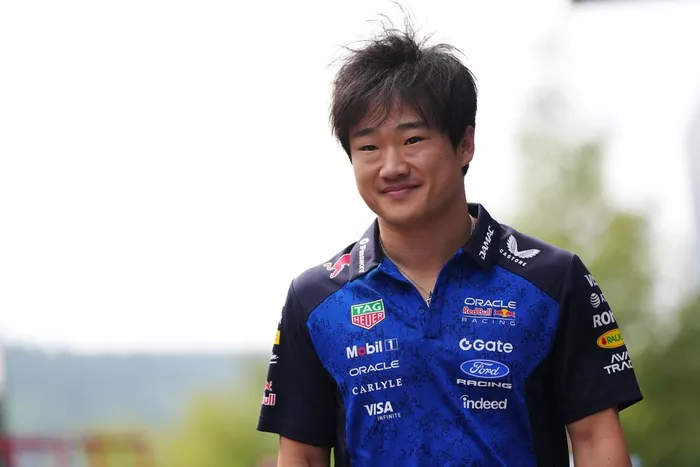
Yuki Tsunoda will return to Racing Bulls and race alongside Arvid Lindblad at Zandvoort.
Tsunoda, 26, has made 111 Grand Prix starts and knows the Racing Bulls operation well.
The Japanese driver lost his full-time Formula 1 seat after struggling alongside Verstappen at Red Bull in 2025. He subsequently became the team’s reserve driver.
His temporary return comes as questions continue around his future. Tsunoda has reportedly been discussing a potential move to IndyCar with Meyer Shank Racing for 2027.
A major opportunity for Lawson
The driver changes create an unusual situation for the Dutch Grand Prix. Hadjar will miss an event where he previously enjoyed one of the strongest weekends of his career, while Lawson gets another chance to prove himself at Red Bull.
At the same time, Tsunoda will return to the team where he developed his Formula 1 career.
For Isack Hadjar, the immediate priority is recovery. For Liam Lawson, however, the Dutch Grand Prix represents a major opportunity to show Red Bull exactly what he can deliver in a race seat.
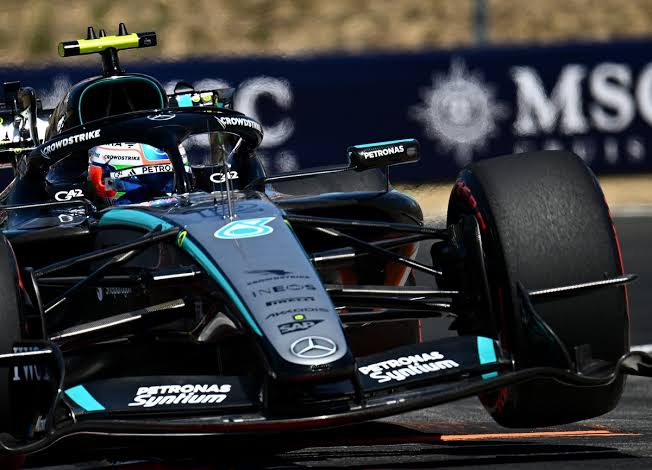
Mercedes has explained why its 2026 development program has fallen behind some rivals after delaying the W17’s design freeze to maximize its launch performance.
Mercedes has revealed why its 2026 Formula 1 development program is currently running behind several rivals. Technical director James Allison says the team deliberately pushed the W17’s initial development to the limit, allowing Mercedes to launch a very strong car but leaving less capacity for the next stages of the season.
The strategy worked immediately. Mercedes opened the new regulations with a one-two finish in Australia and won eight of the first 11 races.
However, Ferrari and McLaren have since closed the gap with their own major upgrades.
Mercedes delayed its W17 development cycle
According to Allison, Mercedes made an unusual decision during the final stages of developing the W17. The team delayed its normal design freeze to keep extracting performance from the new regulations for as long as possible.

Mercedes delayed the W17 design freeze to include as much late development performance as possible in the launch car.
A design freeze normally establishes the specification that will enter production. Later improvements are then introduced through scheduled upgrades during the season.
Mercedes chose to move that point later than usual.
The approach allowed the team to place more development into the launch specification. However, Allison said the plan left the project with almost no contingency if problems appeared during production.
Mercedes found much more performance than in 2025
The reason behind the strategy was the unusually steep development curve created by the 2026 regulations.
Allison said Mercedes was finding roughly six to seven times more lap time per week in the wind tunnel than it had during 2025.
He estimated that the team could find around half a second every two months, highlighting how quickly performance was developing under the new rules.

Mercedes says the 2026 regulations have created a much faster development curve than the mature rules used in 2025.
Mercedes took advantage of that situation before the season began.
The team pushed as much late-stage aerodynamic performance as possible into the first version of the W17. That helped create a major early advantage.
However, other teams froze their designs earlier and began preparing their first upgrades sooner.
Rivals caught up with earlier upgrades
Allison says that decision has left Mercedes roughly one or two races behind its rivals in the development cycle.
Ferrari demonstrated the effect in Barcelona after introducing a significant upgrade package. McLaren later made another major step with its new floor in Hungary.

Ferrari and McLaren have closed the gap with upgrades that arrived earlier in the 2026 development cycle.
The situation explains why the competitive order has changed throughout the season.
Mercedes may have had more performance at the start, but rivals had new parts ready sooner. As a result, the initial advantage could disappear quickly.
According to Allison, teams are currently developing at a similar rate, with roughly half a second of potential lap-time gain every two months.
That means being one development cycle behind can effectively cost around half a second.
Mercedes says more performance is coming
Despite the delay, Allison believes Mercedes still has further performance in development.
The team’s strategy now is to remain ahead of its rivals until the next major package arrives. Mercedes is effectively trying to protect its championship position while waiting for the next block of upgrades.
The early results give the team some margin for error. Mercedes holds a significant lead in both championships after the opening half of the season.
Still, the Mercedes F1 2026 development battle is becoming increasingly close. Ferrari and McLaren have shown that a single major upgrade can erase a large part of an early advantage.
Mercedes therefore needs its next package to deliver as expected.

Franco Colapinto says Alpine’s performance became difficult to understand after the winter tests, but a new chassis, better energy management, and deeper analysis helped him recover his pace after Miami.
Franco Colapinto believes he finally understood what had been holding him back at Alpine earlier in the 2026 Formula 1 season.
The Argentine driver felt very strong during the winter tests in Bahrain. However, his pace dropped once Alpine moved to two cars for the opening races. The problem was difficult to identify because the car still felt comfortable from the cockpit.
Since the Miami Grand Prix, Colapinto has made clear progress. He has scored points in five races and finished ahead of teammate Pierre Gasly four times on Sundays.
Alpine struggled to explain the early-season drop
Colapinto said the biggest problem was not a loss of confidence in the car. Instead, the lap times simply did not match his expectations.
He felt competitive while driving, but the stopwatch told a different story.
Franco Colapinto struggled to understand why his Alpine pace dropped after the winter tests.
That made the opening races especially difficult to analyze.
For a driver, understanding why performance changes is crucial. Colapinto admitted that he often could not explain why he was losing time despite feeling comfortable behind the wheel.
He described that uncertainty as one of the most difficult aspects of the early part of the season.
A new chassis helped Colapinto find more pace
Alpine gave Colapinto a new, lighter chassis in Miami. The Argentine does not believe that necessarily means the previous chassis was defective.
Instead, he said it was difficult to separate the effect of the chassis from the other changes Alpine was making.

Alpine introduced a new lighter chassis for Colapinto in Miami as part of a broader package of changes.
The team also introduced a larger development package around the same period.
According to Colapinto, once the complete package was installed, the missing performance began to return. He estimated that the changes eliminated around half a tenth of a second per corner.
He also acknowledged that it is difficult to identify one single cause when several parts of the car and setup change at the same time.
Better energy management became another key
The April break gave Colapinto and his engineers additional time to study the data.
One of the most important areas they analyzed was energy management, which has become a critical part of Formula 1 under the 2026 regulations.

Colapinto says improved energy management has helped Alpine become more consistent during the 2026 season.
Colapinto pointed to Japan as an example of how much performance could be lost through small differences in energy deployment.
He said he once lost around four tenths of a second from one lap to another simply because energy was used differently or because he changed how he accelerated out of the final corner.
The team has since improved its consistency in that area.
Colapinto also admitted that his own performance was inconsistent during the Japanese weekend. Those mistakes provided additional lessons that helped him improve later in the season.
Colapinto is now closer to Gasly
The combination of the new chassis, Alpine’s upgrades, improved energy management, and additional preparation time has helped Colapinto close the gap to Gasly.
The Argentine now regularly fights his teammate and has produced stronger results since Miami.
Alpine still faces a development deficit compared with Racing Bulls, however. The French team is therefore placing significant expectations on its next major upgrade package for Zandvoort.
The objective is clear: improve the car, maintain Colapinto’s progress, and give Alpine a stronger chance of challenging its rivals through the second half of the 2026 season.
-

 NOW TRENDING2 months ago
Polestar to Exit U.S. Market After 2026 Due to Connected Vehicle Rules
-
 TEST DRIVES2 months ago
Subaru’s New Uncharted GT Could Be The Brand’s Most Interesting Small EV Yet
-
 NOW TRENDING2 months ago
Tesla Model Y L Arrives in the U.S. With More Space and Three Rows
-
 NOW TRENDING2 months ago
The 2026 Lexus ES Is No Longer Just A Hybrid Sedan — It’s Now A Three-Way Luxury Play With Hybrid And EV Power
-

 NOW TRENDING2 months ago
The 2026 Kia Sportage Is More Than A Mid-Cycle Refresh — It’s Kia’s Play To Keep Its Best-Seller At The Center Of America’s SUV Market
-
 RACING2 months ago
Why F1 2026 Batteries Have Become The Biggest Reliability Headache On The Grid
-
 INTELLIGENT MOBILITY2 months ago
Bolt, Pony.ai and Stellantis launch autonomous mobility pilot in Luxembourg
-

 RACING2 months ago
McLaren F1 Unveils Special Silverstone Livery Honoring Its History
You must be logged in to post a comment Login