
Con un auto de producción en serie, algo que nunca antes se habÃa logrado, y hace exactamente 15 años, Bugatti fue el primer fabricante de la serie en lograr este récord, que todavÃa se mantiene en la actualidad, con el Veyron 16.4.
El fabricante francés de lujo de autos hÃper deportivos habÃa logrado uno de los objetivos de desarrollo que se habÃa fijado, algo que el público creÃa inalcanzable.
El primer automóvil hÃper deportivo fue diseñado para una potencia de más de 1,000 PS, para acelerar de 0 a 100 km / h (0 a 62 mph) en menos de 3 segundos, y para conducir a más de 406 km / h (252 mph).
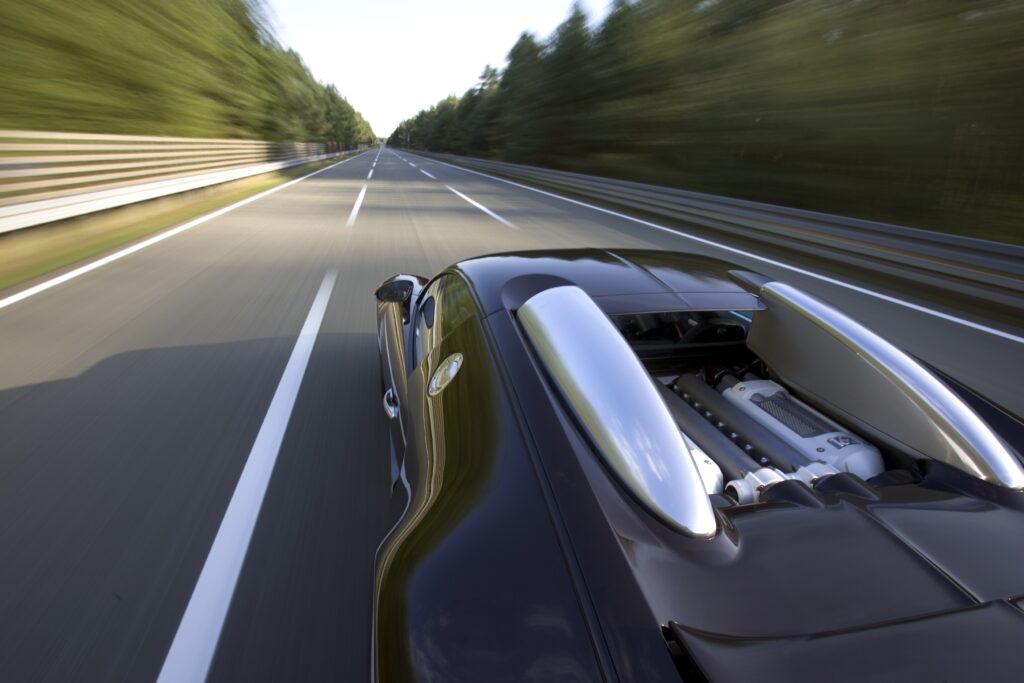
Fue impulsado por un motor completamente desarrollado desde cero: W16 con 16 cilindros, con una cilindrada de 8.0 litros y cuatro turbocompresores.
La salida de 1.001 PS y 1.250 newton metros de torque fueron distribuidos por una caja de cambios de doble embrague (DSG) de siete velocidades recientemente desarrollada a una tracción total permanente.
El Veyron 16.4 aceleró de 0 a 100 km / h (0 a 62 mph) en 2.5 segundos. Ningún otro vehÃculo de producción en serie pudo acelerar tan rápido en 2005. El hÃper deportivo alcanzó una velocidad de 200 km / h (124 mph) en 7.3 segundos, y 300 km / h (186 mph) en 16.7 segundos.
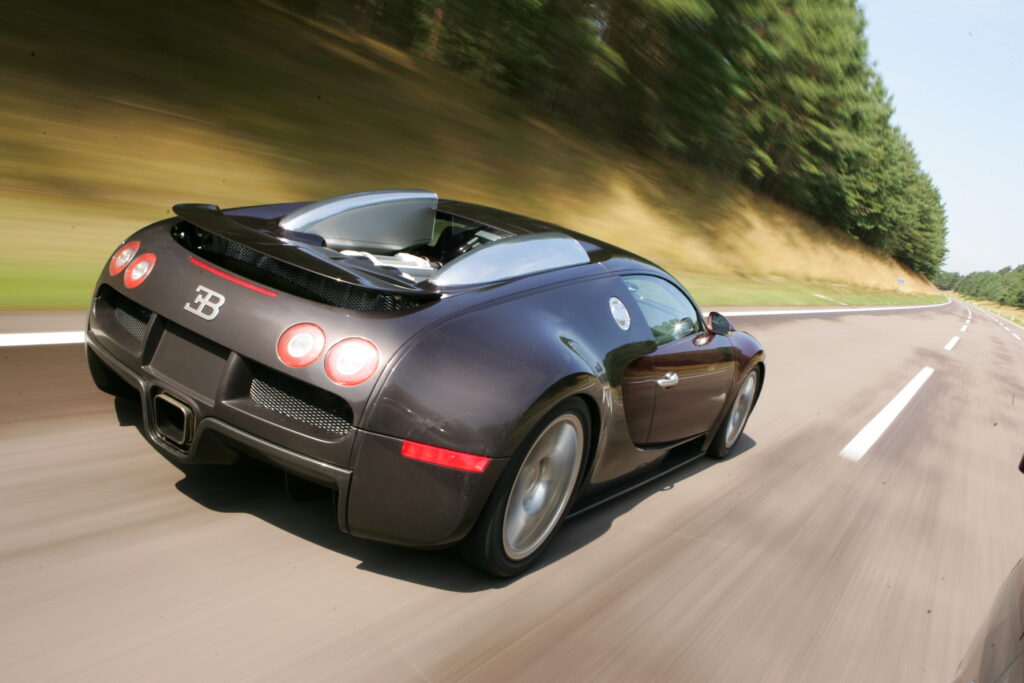
Sin embargo, el objetivo principal de desarrollo era la velocidad máxima de 407 km / h (253 mph). Ningún otro vehÃculo de producción en serie habÃa podido romper la barrera mágica de 400 km / h (249 mph) antes.
El ingenioso ingeniero y la fuerza impulsora detrás de Bugatti, Ferdinand Karl Piëch, desarrolló el legendario Porsche 917. El auto de carreras habÃa ganado las 24 Horas de Le Mans por primera vez para Porsche en la década de 1960 y conducÃa con una velocidad máxima de 406 km / h (252 mph) en la recta Hunaudières. El Veyron debÃa conducir aún más rápido.
“Bugatti ha estado en la cima de la ingenierÃa automotriz por más de 110 años. Con el Veyron 16.4, Bugatti no solo dio a conocer lo que podrÃa llamarse el primer automóvil hiperdeportivo del mundo en 2005, sino que también logró un récord de velocidad increÃble”, dice Stephan Winkelmann, Presidente de Bugatti.
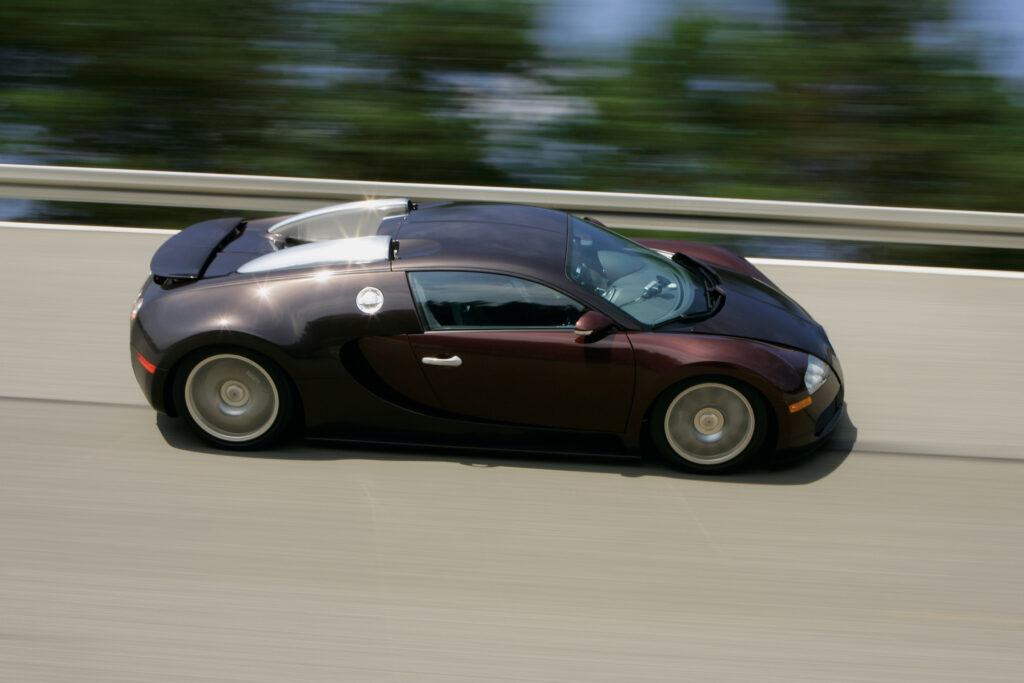
“Incluso 15 años después del récord, sigue siendo un automóvil de gran potencia, velocidad y elegancia en un diseño atemporal. Un Ãcono de la historia del automóvil. Tengo el mayor respeto por el logro, el coraje y la fuerza de voluntad del equipo en ese entonces. Ellos realmente creó un auto extraordinario”.
Sofisticada aerodinámica
Con la ayuda de la aerodinámica activa, el Veyron 16.4 cambia su capa exterior cuando alcanza una velocidad de 220 km / h (137 mph). Al igual que en un avión, el sistema hidráulico central ajusta el difusor, el alerón trasero y el borde de separación. La altura del vehÃculo también se reduce para alcanzar más de 380 km / h (236 mph).
El objetivo principal: mantener una excelente estabilidad del vehÃculo en todo el rango de velocidad. Sin embargo, como el arrastre tiene un aumento cuadrático y, por lo tanto, aumenta desproporcionadamente a velocidades más altas, se requiere una configuración aerodinámica adicional.
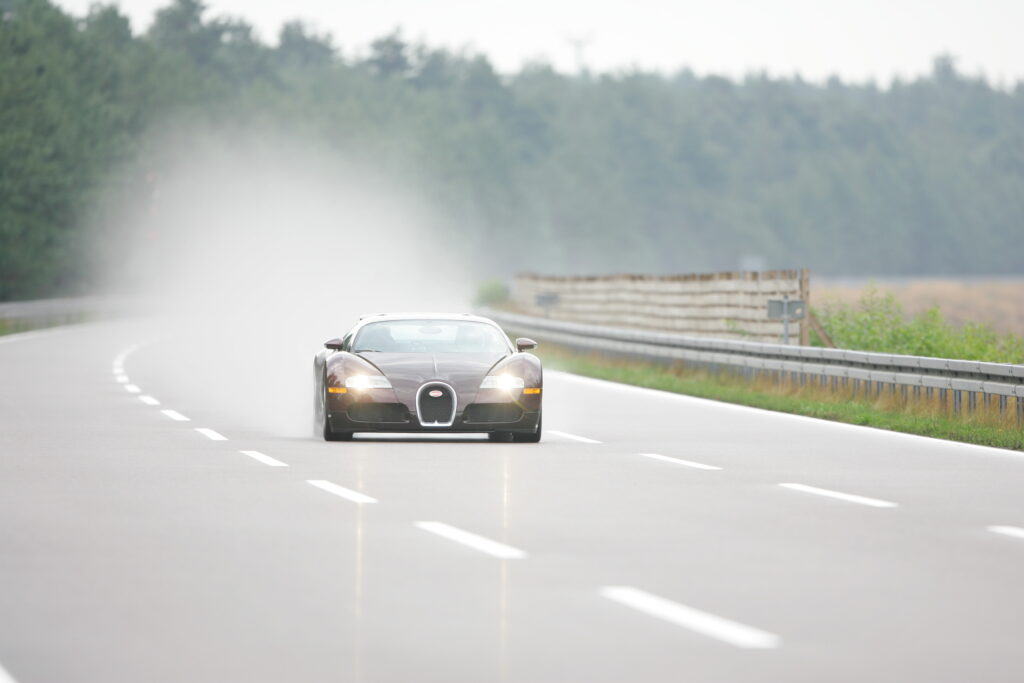
Después de meses de pruebas, dado que el modelado moderno por computadora aún no era posible, los ingenieros calcularon los valores de ajuste correspondientes.
Cuando el piloto de pruebas Uwe Novacki subió al Veyron 16.4 el 19 de abril de 2005, estaba relajado. Como instructor principal de seguridad de conducción de Volkswagen en ese momento, y como miembro del equipo de desarrollo técnico, entendió la conducción a alta velocidad, ya que conducÃa regularmente a velocidades superiores a la marca de 300 km / h (186 mph).
Era conocido por ser un experimentado instructor de seguridad de conducción que, en ese momento, ya habÃa conducido profesionalmente durante más de 30 años.
También estaba muy familiarizado con el sitio de prueba en Ehra-Lessien, con su pista de alta velocidad de casi nueve kilómetros de largo, tres carriles: entrenaba regularmente a otros conductores aquà a velocidades máximas.
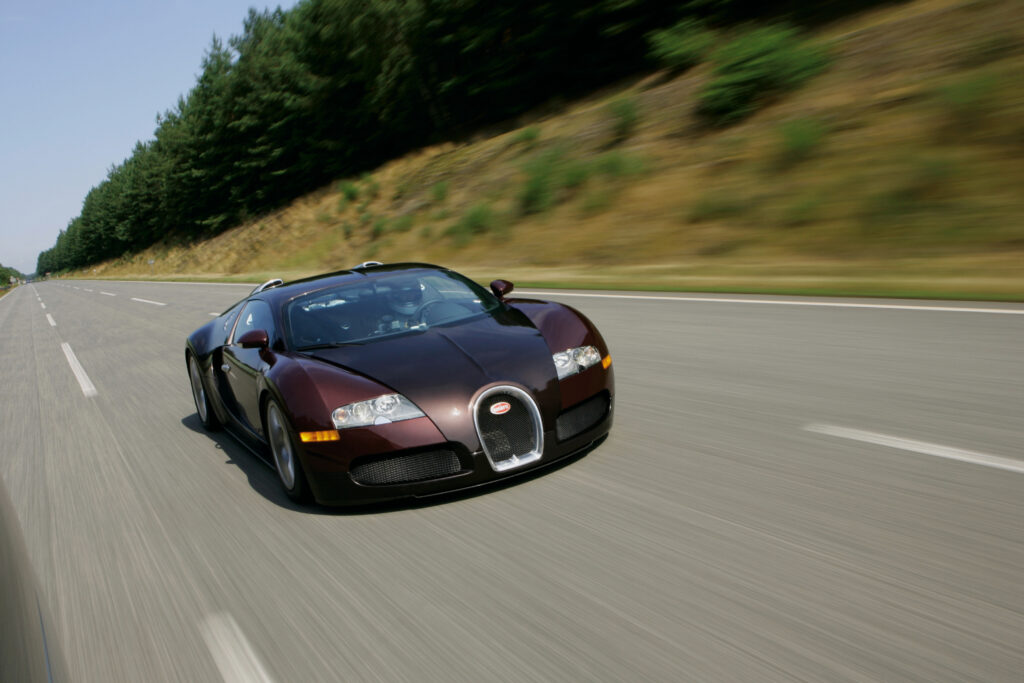
“Fue un gran honor para mà ser el primer piloto en intentar superar los 400 km / h con el Veyron. No estaba nervioso antes del viaje, y no tenÃa miedo, pero sentÃa respeto. .
Aunque estaba acostumbrado a conducir regularmente a altas velocidades, este rango de velocidad era una dimensión completamente nueva. Nadie tenÃa experiencia en esto “, explica hoy el joven de 71 años.
Solo unos pocos conductores habÃan conducido a más de 400 km / h (249 mph) en ese momento, y ninguno de los que se encontraban en un vehÃculo de producción en serie.
El momento de la unidad récord en abril no podrÃa haber sido mejor: pasaron solo unos meses antes de que la producción comenzara en el Veyron 16.4 en septiembre de 2005, y fue una señal importante para todos aquellos que dudaron de que El hÃper deportivo alcanzarÃa todos sus objetivos de desarrollo.
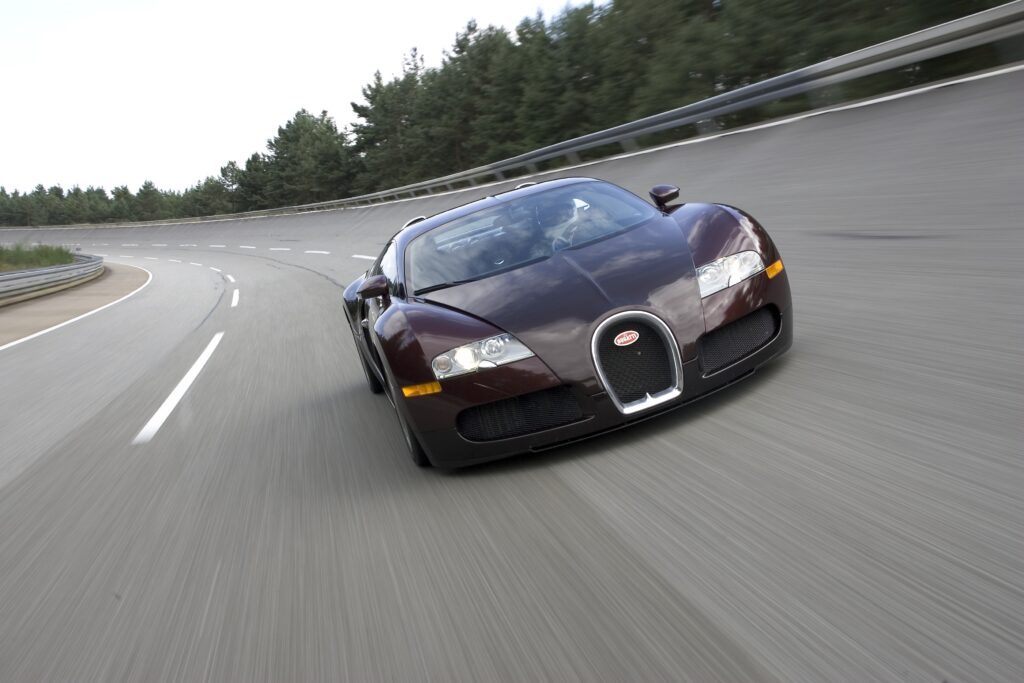
A máxima velocidad
Antes del viaje récord, Novacki se familiarizó con el Veyron 16.4 en la tierra natal de Bugatti, Francia, y se tomó el tiempo para conocer la tecnologÃa y el manejo del automóvil en una pista de carreras cerca del sitio de Molsheim.
Para alcanzar la increÃble velocidad de más de 400 km / h (249 mph) en Ehra-Lessien, Novacki activó una segunda tecla, la llamada Speed Key, para alcanzar el modo de velocidad máxima antes de su récord.
Cuando se activa esta tecla, el sistema hidráulico baja el Veyron a una forma de V, el alerón trasero se ajusta a dos grados y las aletas del difusor se cierran para reducir la resistencia. Sin embargo, durante el primer intento, Novacki solo alcanzó 380 km / h (236 mph).
Unos dÃas más tarde, en buenas condiciones climáticas, una vez más se puso su traje de carreras a prueba de fuego y su casco de seguridad y se ató al Veyron. “El auto estaba muy silencioso, perfectamente afinado, y pude notar de inmediato que el motor realmente estaba emitiendo mucha potencia”, dice Uwe Novacki.
Para alcanzar la máxima velocidad en la recta en Ehra-Lessien, también tuvo que conducir muy rápido en las curvas empinadas.
El problema: las fuerzas centrÃfugas hicieron que el vehÃculo presionase con fuerza la suspensión. Si Novacki condujera demasiado rápido, la suspensión se comprimirÃa demasiado y se extenderÃa por completo. Luego, la presión se transferirÃa a los neumáticos y el manejo del automóvil se volverÃa inestable.
“Me acerqué con cautela al rango de velocidad. En la primera vuelta, conduje alrededor de la curva empinada a 230 km / h (143 mph), que era demasiado rápida y el auto se volvió inestable. Tomé la siguiente curva a 220 km / h ( 137 mph) y el auto se sintió más estable “, explica.
Novacki continúa: “Antes de salir de la curva, aceleré lo más que pude para sacar los 1.001 CV completos del motor del Veyron. Estaba tan impresionado con lo estable, sin esfuerzo y seguro que se sentÃa el automóvil a 400 km / h (249 mph) “.
En el segundo intento, 411 km / h (255 mph)
Al final de la recta, el automóvil habÃa alcanzado unos increÃbles 411 km / h (255 mph). Una pantalla digital en el sitio de prueba incluso registró 427 km / h (265 mph), que luego resultó ser un error de cálculo, la pantalla generalmente solo mide con precisión hasta 300 km / h (186 mph), después de lo cual extrapola la velocidad.
“A esta velocidad, debes concentrarte mucho y saber leer la carretera y el automóvil. La irregularidad más pequeña o el movimiento repentino del volante pueden tener consecuencias dramáticas”, explica Uwe Novacki.
La organización de pruebas “TÃœV Süd” que se encontraba en el sitio midió la velocidad con precisión en ambas direcciones de la pista de alta velocidad utilizando un sistema de medición de precisión. Varias veces, el Veyron 16.4 alcanzó más de 408 km / h (254 mph).
Al final, el valor ingresado en los documentos de aprobación de tipo fue de 407 km / h (253 mph). Esto convirtió al Veyron en el auto deportivo de producción en serie más rápido del mundo en su lanzamiento de producción en 2005. “Para mà fue una sensación maravillosa haber sido parte de todo”, explica Novacki.
Siguieron más registros
Este no fue el único récord de velocidad para el Veyron. El auto rompió otros dos récords en los años siguientes. En junio de 2010, el Veyron 16.4 Super Sport mejorado incluso superó ese rendimiento.
Su motor ahora producÃa 1.200 CV y propulsaba el hÃper deportivo a velocidades de hasta 431 km / h (268 mph).
Detrás del volante estaba el piloto de carreras francés Pierre-Henri Raphanel, una vez más reclamando el récord mundial como el vehÃculo de producción en serie legal más rápido de la calle.
En abril de 2013, el descapotable Bugatti Veyron 16.4 Grand Sport Vitesse estableció otro récord de velocidad: llegando a 408.84 km / h (254.04 mph), se convirtió en el roadster más rápido del mundo.
Este no fue el último récord de velocidad que Bugatti romperÃa. En 2019, Bugatti fue el primer fabricante en superar la marca de 483 km / h (300 mph) con el último Chiron Super Sport 300 + 1.
Al mismo tiempo, Bugatti estableció un nuevo récord de velocidad en 490.484 km / h (304.773 mph). Nunca antes un vehÃculo de un fabricante de producción en serie habÃa alcanzado tales velocidades. “Sigue siendo un logro increÃble para Bugatti.
El nombre de Bugatti volverá a aparecer en los libros de historia como la primera marca en pasar la marca de 483 km / h (300 mph) “, dice Stephan Winkelmann.
Incluso si Bugatti ya no se enfoca en batir récords en el futuro, los récords que ya ha establecido permanecerán para siempre y nunca serán olvidados. Estos son hitos en la historia del automóvil.




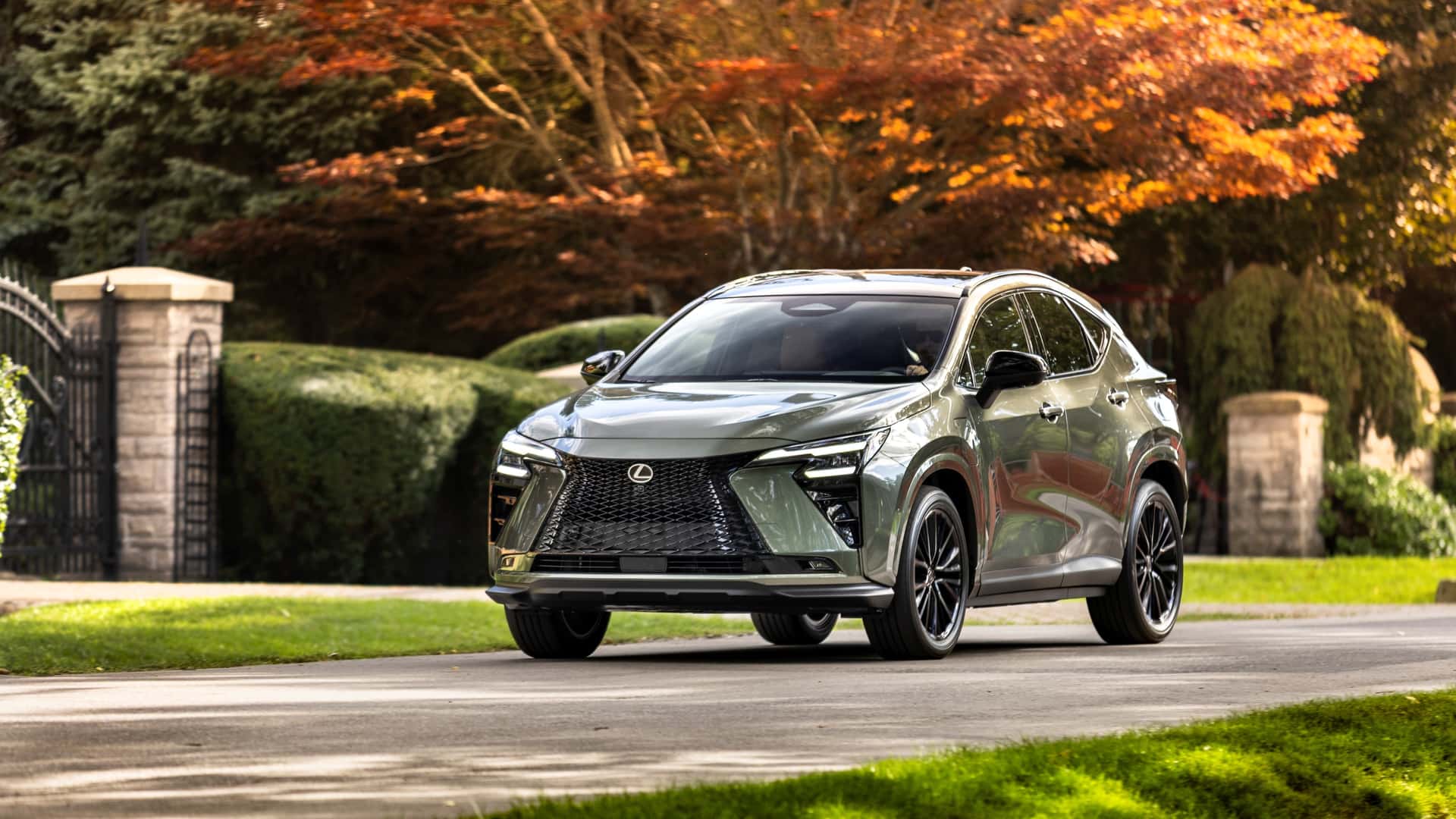
Lexus transforms its NX lineup for 2027 with more power, a redesigned cabin and an all-hybrid range.
The 2027 Lexus NX enters a new chapter as the luxury crossover drops its gasoline-only version. Buyers can now choose between the NX 350h hybrid and the NX 450h+ plug-in hybrid, with four trim levels and updated technology across the lineup.
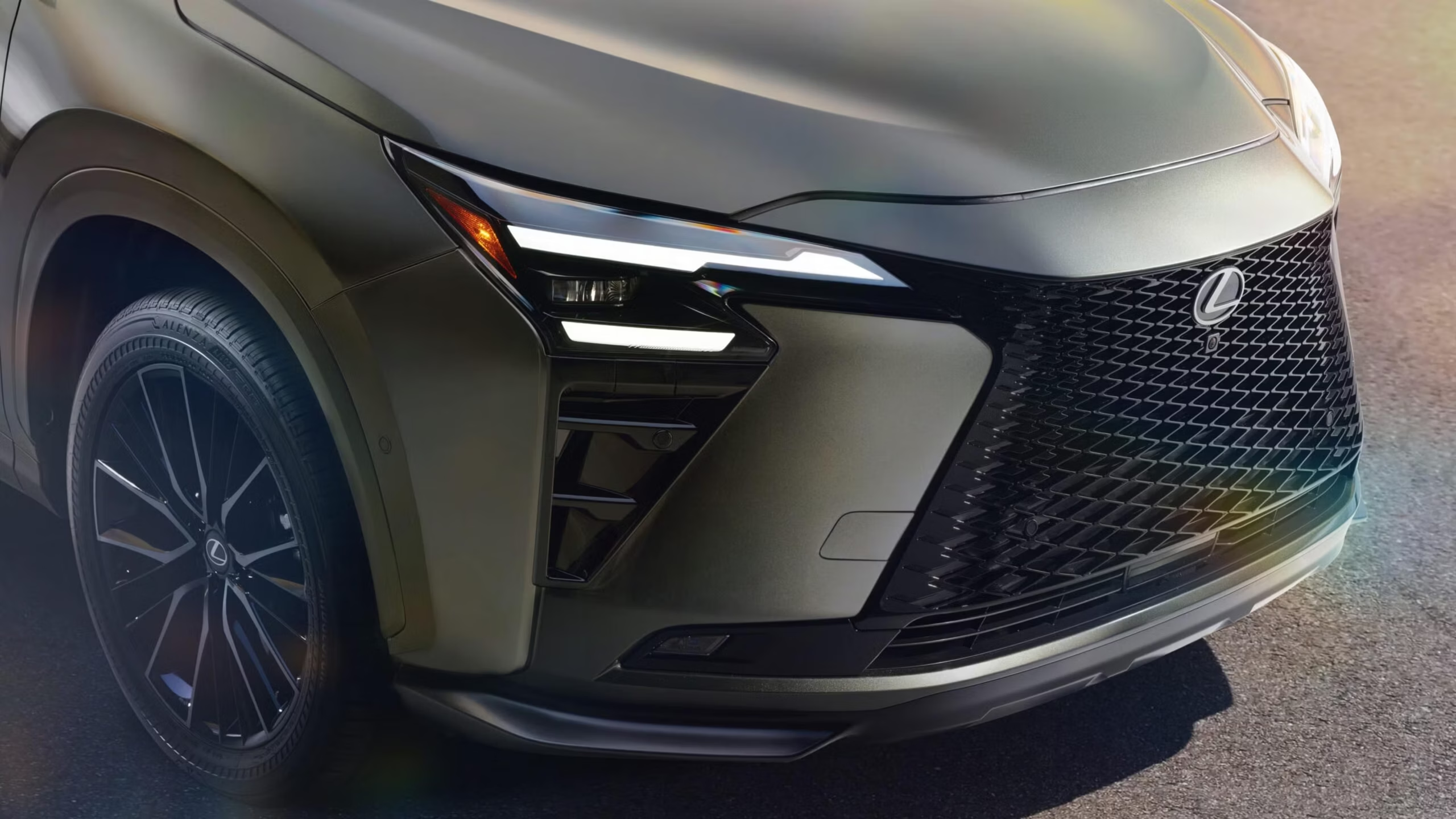
The 2027 Lexus NX adopts a sharper design with a new headlight signature and cleaner exterior details.
More Power Across the Hybrid Range
The NX 350h now delivers 244 horsepower, a 4-hp increase over the previous model. The NX 450h+ plug-in hybrid makes 324 horsepower, up from 304 hp, and offers an estimated 40 miles of electric-only range.
Both versions benefit from a revised e-Axle system and updated power electronics designed to improve efficiency and reduce weight.
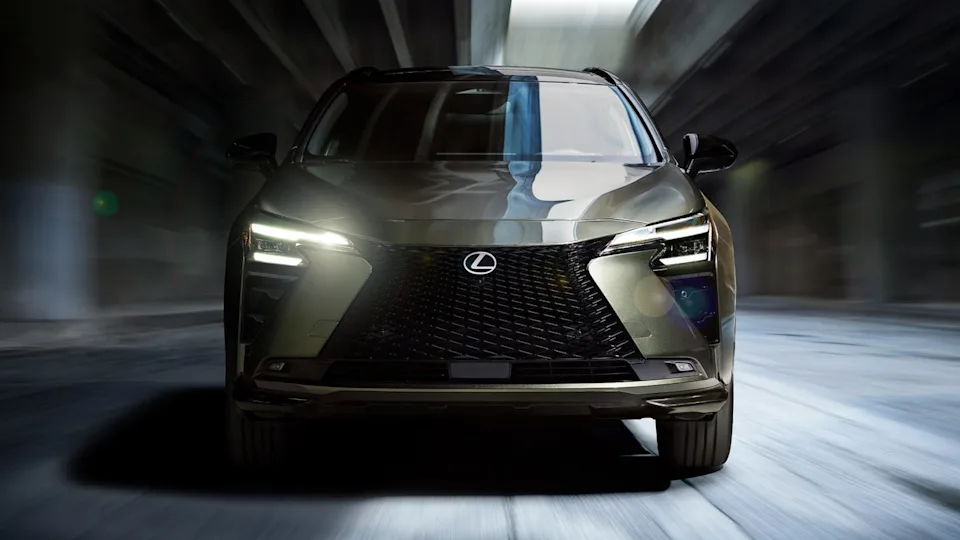
The NX 350h combines a 244-hp hybrid powertrain with a choice of front-wheel or all-wheel drive, depending on trim.
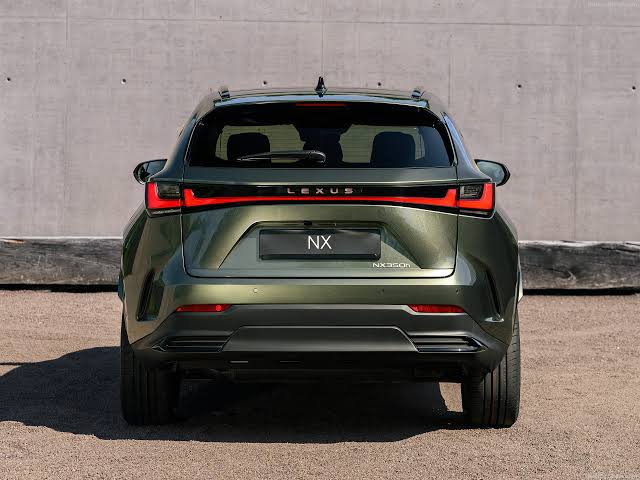
Updated rear lighting and a distinctive illuminated badge give the redesigned NX a more recognizable appearance.
A More Digital Cabin
Inside, every 2027 NX features a 14-inch central touchscreen and a 12.3-inch digital instrument cluster. Lexus Interface adds a customizable home screen, dual Bluetooth phone connectivity, a built-in drive recorder and standard over-the-air updates.
The Luxury and F Sport grades also offer Sensory Concierge, which coordinates cabin lighting, climate, seat temperature and fragrance through three selectable modes.
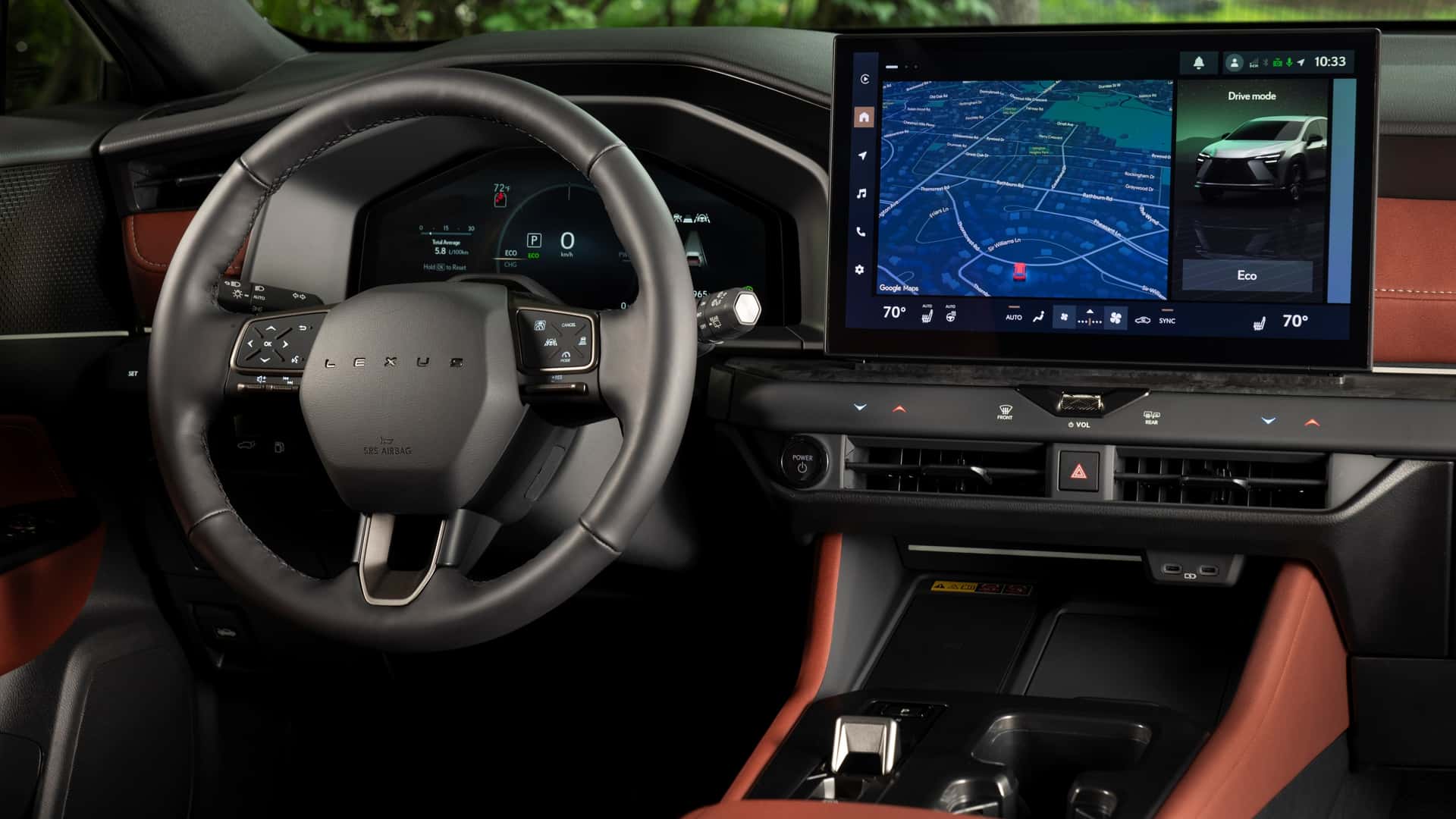
The updated interior makes a larger touchscreen and digital instrumentation standard across the lineup.
Four Grades and Expanded Driver Assistance
The 2027 Lexus NX lineup consists of Premium, Premium+, F Sport and Luxury. The NX 350h offers front-wheel or all-wheel drive on selected grades, while the NX 450h+ comes with all-wheel drive.
Lexus Safety System+ 4.0 is standard, bringing adaptive cruise control, automatic emergency braking with pedestrian detection, intersection assistance and emergency steering support.
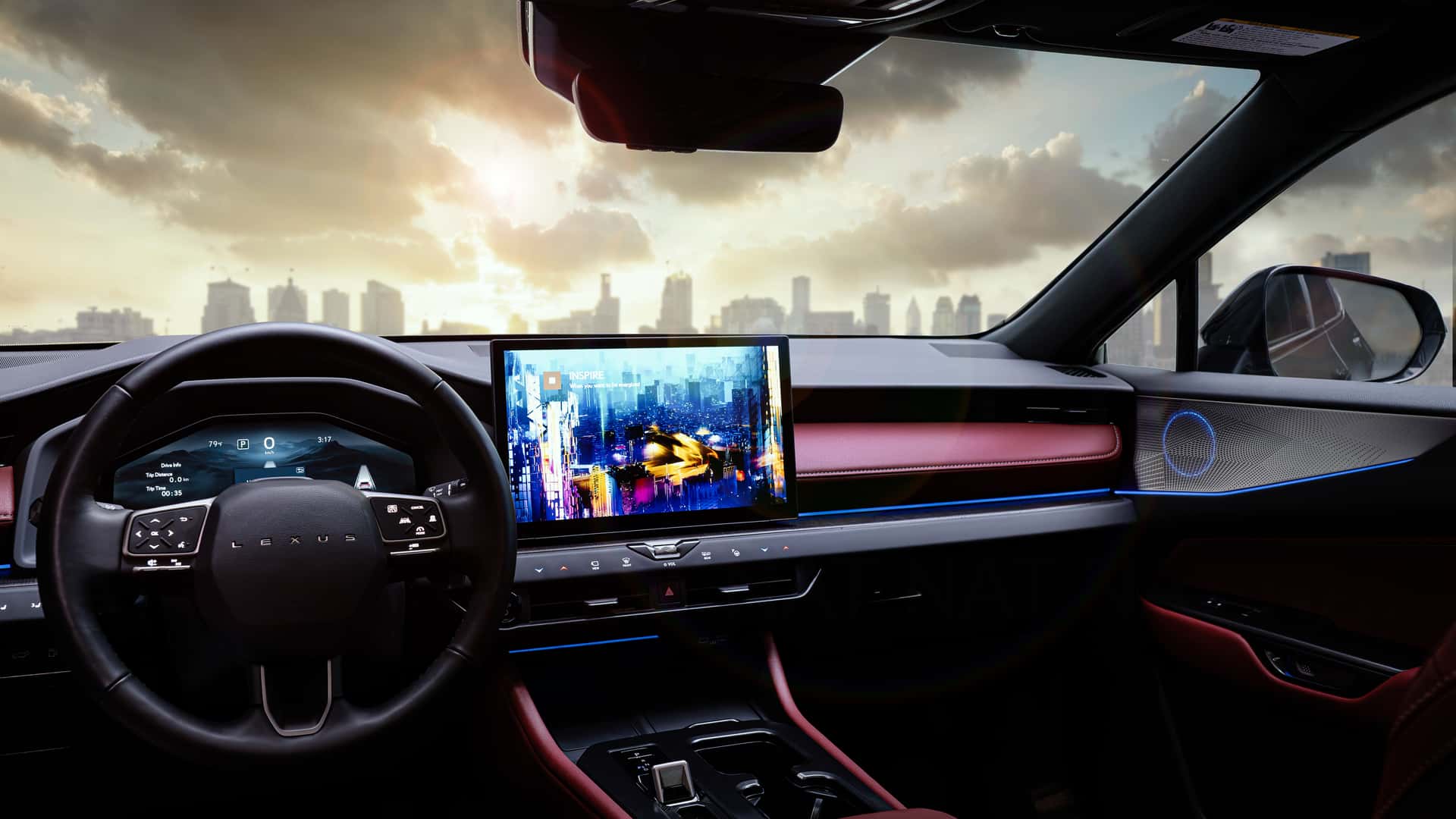
The 2027 NX combines its updated hybrid powertrains with standard driver-assistance technology.
Lexus has not yet announced pricing for the refreshed NX. Final prices for all four grades are expected closer to the model’s on-sale date.

Subaru’s new electric SUV combines 375 horsepower, standard all-wheel drive and up to 281 miles of estimated range.
The 2026 Subaru Trailseeker brings a new level of performance to the brand’s electric SUV lineup. With dual electric motors, 375 horsepower and standard all-wheel drive, the new crossover combines the utility Subaru buyers expect with acceleration that makes it the quickest vehicle the automaker has produced, according to the company.
The Trailseeker arrives as U.S. buyers gain more electric SUV options across different sizes, performance levels and price points. Its combination of power, ground clearance and cargo versatility gives Subaru a new way to appeal to drivers who want electric performance without giving up the capabilities associated with the brand.
2026 Subaru Trailseeker Offers 375 Horsepower
The Trailseeker uses two AC synchronous permanent-magnet electric motors, one mounted on each axle. Each motor produces 224 horsepower and 198 lb-ft of torque, while the combined system delivers up to 375 horsepower and 396 lb-ft of torque.

The 2026 Subaru Trailseeker combines a streamlined crossover design with a dual-motor electric powertrain.
Each motor forms part of an integrated transaxle that includes a single-speed reduction gear and power inverter. This configuration allows the vehicle to distribute power between the front and rear axles while supporting electronic torque management.
The result is a significant performance step for Subaru. The company says the Trailseeker can accelerate from 0 to 60 mph in 4.4 seconds, making it the brand’s quickest vehicle yet. Instant electric torque and the combined output of the two motors are central to that performance.
Subaru Trailseeker AWD Adds Off-Road Capability
All-wheel drive is a key part of the Trailseeker’s setup. Its electric motors drive both axles, while Subaru’s revised Symmetrical All-Wheel Drive system works with a dual-mode X-MODE system designed to improve traction on challenging surfaces.
Drivers can select Snow/Dirt or Deep Snow/Mud settings. The SUV also includes Grip Control and Hill Descent Control, features intended to help maintain control on slippery roads and uneven terrain.

The Trailseeker’s dual-motor AWD system and X-MODE settings are designed to support traction on varied surfaces.
Acceleration sensors at the front and rear provide information that helps the vehicle manage torque distribution and maintain stability. The system is designed to combine the rapid response of electric motors with Subaru’s focus on all-weather capability.
However, the Trailseeker’s specific off-road performance will depend on terrain, tires, ground clearance and driving conditions. Its traction technology should not be interpreted as a guarantee of capability on every surface.
Battery, Range and Charging Efficiency
The 2026 Trailseeker uses a 74.7-kWh lithium-ion battery pack containing 104 cells. The battery supplies energy to both electric motors, supporting the SUV’s combined power output while providing an estimated driving range of up to 281 miles.

The Trailseeker pairs its electric powertrain with the space and everyday utility expected from a Subaru crossover.

Larte Design gives Cadillac’s 682-hp luxury SUV an aggressive makeover with red accents and oversized aerodynamic elements.
The Cadillac Escalade-V already stands out for its supercharged V-8 and imposing size, but Larte Design has created an even more dramatic version. The Esthete body kit adds extensive carbon-fiber components, contrasting red details and an exterior design intended for owners who want their luxury SUV to attract attention.
The modified Escalade-V retains the model’s bold proportions while introducing a more extreme appearance. Its combination of gloss-black surfaces, red accents and oversized aerodynamic elements creates a sharp contrast with the relatively restrained styling of the standard SUV.
Cadillac Escalade-V Gets an Aggressive New Look
Cadillac updated the Escalade for the 2025 model year, but the Escalade-V maintained much of the same exterior design as other versions. Its performance credentials are less subtle: a supercharged 6.2-liter V-8 produces 682 horsepower, making it one of the most powerful versions of Cadillac’s full-size luxury SUV.

Larte Design gives the Cadillac Escalade-V a more dramatic appearance than the standard factory styling.
For buyers who want the vehicle’s exterior to reflect its performance, Larte Design offers the Esthete package. The body kit changes the SUV’s visual character through redesigned bodywork and contrasting finishes rather than relying on the factory design alone.
Dry Carbon Fiber and Red Exterior Details
The Esthete package features a two-tone exterior combining gloss black with red accents. Larte Design uses dry carbon fiber for the exterior components, including a vented hood, a redesigned front grille and extended wheel arches.

The Esthete package combines carbon-fiber components with gloss-black finishes and red detailing.
The modifications continue along the sides, where carbon-fiber rings surround the 24-inch multispoke wheels. At the rear, a spoiler and diffuser add further visual emphasis, giving the Escalade-V a more motorsport-inspired appearance.
The prominent front splitter is another defining feature. Although it contributes to the kit’s aggressive styling, its low, projecting shape could require extra care around steep driveways, parking curbs and other obstacles. Owners considering the package should also confirm ground clearance and any practical limitations associated with the added bodywork.
Larte Design Focuses on Visual Impact
Larte Design has built a reputation for bold exterior modifications for high-performance luxury vehicles, including the Mercedes-AMG G 63, BMW X6 M and Lamborghini Urus. The company’s approach generally emphasizes a more distinctive appearance than the original factory styling.

The rear design adds a prominent spoiler and diffuser to the modified luxury SUV.
The company has also explored unconventional finishes in previous projects. One earlier Escalade-related design featured pink carbon fiber, with the color incorporated into the material’s weave rather than applied only as a tinted surface coating.
The Esthete package follows that same emphasis on visual differentiation. Its combination of dry carbon-fiber components, red detailing and oversized exterior elements is aimed at customers who want their Escalade-V to be immediately recognizable.
The modifications are primarily about styling, and the supplied information does not establish any additional engine output or performance gains from the body kit. The Escalade-V’s headline specification remains its factory-rated 682-horsepower supercharged V-8. For buyers who prefer a more understated luxury SUV, the standard design may be the better fit; for those seeking maximum visual impact, Larte Design offers a far more conspicuous alternative.
-
 NOW TRENDING2 months ago
Tesla Cybercab Gets September 3 Austin Launch Date
-
 TEST DRIVES2 months ago
2025 Ford Bronco Sport Badlands: The Adventure SUV You Can Drive Every Day
-
 TEST DRIVES2 months ago
2026 Toyota GR Supra MkV Final Edition
-
 NOW TRENDING2 months ago
Tesla Cybercab Puts U.S. Regulations to the Test
-
 NOW TRENDING1 month ago
Aston Martin DBX Becomes Harry Da Souza’s Ride in MobLand
-
 Formula12 months ago
FIA Reveals Second ADUO Results With Red Bull-Ford Still on Top
-
 NOW TRENDING2 months ago
2027 Hyundai Tucson Hybrid Gets a Power Boost
-
 NOW TRENDING2 months ago
Hyundai Reports Strong Hybrid Sales in August 2026
You must be logged in to post a comment Login