
El nuevo Acura TLX Type S del 2021, el primero de una nueva generación de variantes de rendimiento Type S, comenzará a llegar a los concesionarios Acura en todo el paÃs el próximo mes con un precio minorista sugerido por el fabricante (MSRP) de $52,300 dólares.
A partir de hoy, los posibles compradores del Type S pueden obtener más información sobre el TLX Type S del 2021 visitando Acura.com/Type-S, crear y fijar el precio de la configuración deseada y ponerse en contacto con un distribuidor local para reservar su lugar en la fila.

El TLX Type S del 2021 está disponible en dos variantes bien equipadas. A partir de $52,300 dólares, el TLX Type S cuenta con rines de radios múltiples de 20 pulgadas con neumáticos Pirelli Cinturato P7 para todas las estaciones.
Los compradores que buscan aún más rendimiento pueden optar por el TLX Type S con paquete de llantas y llantas de alto rendimiento por $ 53,100 dólares, , que ofrece llantas de 5 radios divididas inspiradas en NSX, que reducen la masa no suspendida en más de 21 libras, y Pirelli P- serie 255. Neumáticos de verano cero.
El TLX Type S refuerza los fundamentos de Precision Crafted Performance con mejoras significativas en todos los elementos de la experiencia de conducción y un carácter visual distintivo por dentro y por fuera.
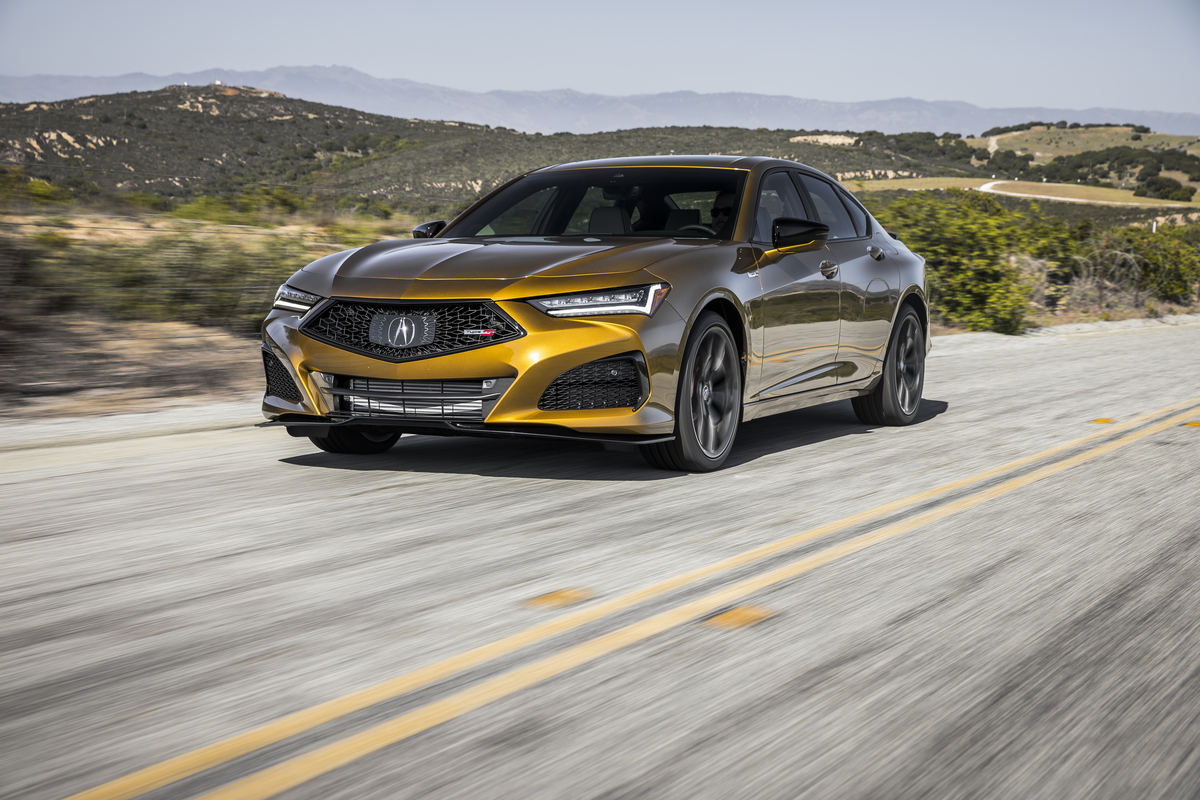
Con un rendimiento validado en la pista, los modelos Type S se adaptan a los entusiastas de la conducción y el TLX Type S bien equipado presenta una impresionante lista de hardware estándar de alto rendimiento.
El nuevo motor V6 Type S Turbo V6 de 3.0 litros y 355 caballos de fuerza fue desarrollado por algunos de los ingenieros de sistemas de propulsión más experimentados de la compañÃa, incluidos los miembros del equipo que desarrollaron la unidad de potencia hÃbrida V6 biturbo a medida que impulsa el NSX.
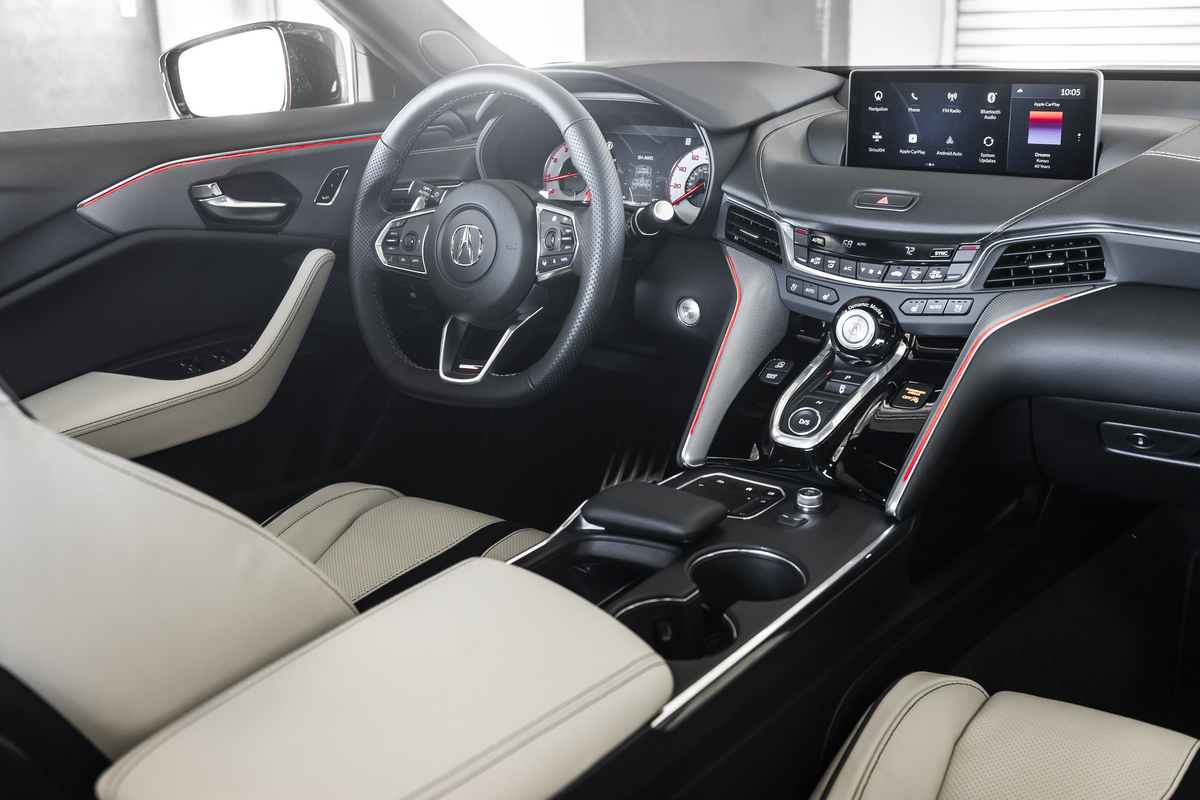
Una transmisión automática de 10 velocidades especialmente ajustada también es estándar, junto con Super Handling All-Wheel Drive (SH-AWD) con vectorización de par real.
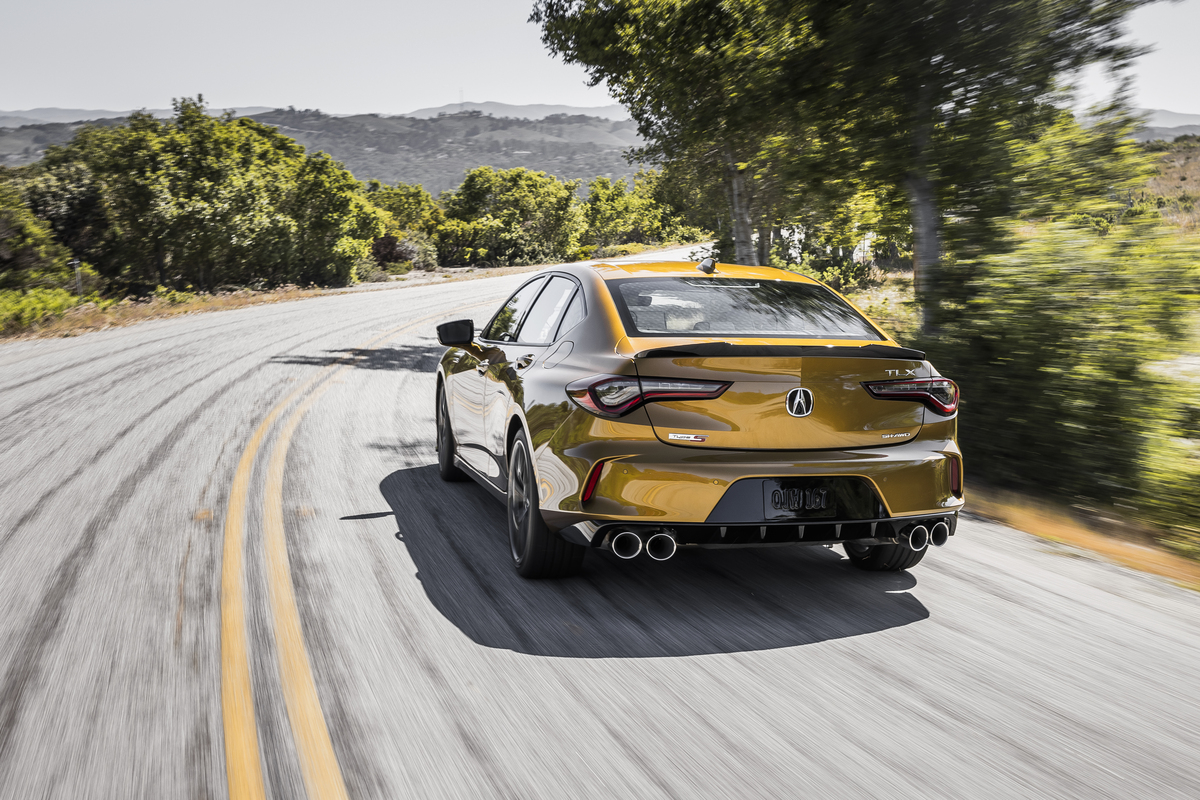
El chasis deportivo del TLX Type S cuenta con una suspensión delantera de doble horquilla, amortiguadores adaptables, sistema de frenado electro-servo derivado del NSX y pinzas delanteras Brembo de 4 pistones con rotores delanteros más grandes y pinzas rojas a juego en la parte trasera.

Los ingenieros de Acura crearon el TLX Type S como un sedán de rendimiento premium emocionante y emocionante sin sacrificar la facilidad de uso y la comodidad diarias del TLX de segunda generación, aclamado por la crÃtica.
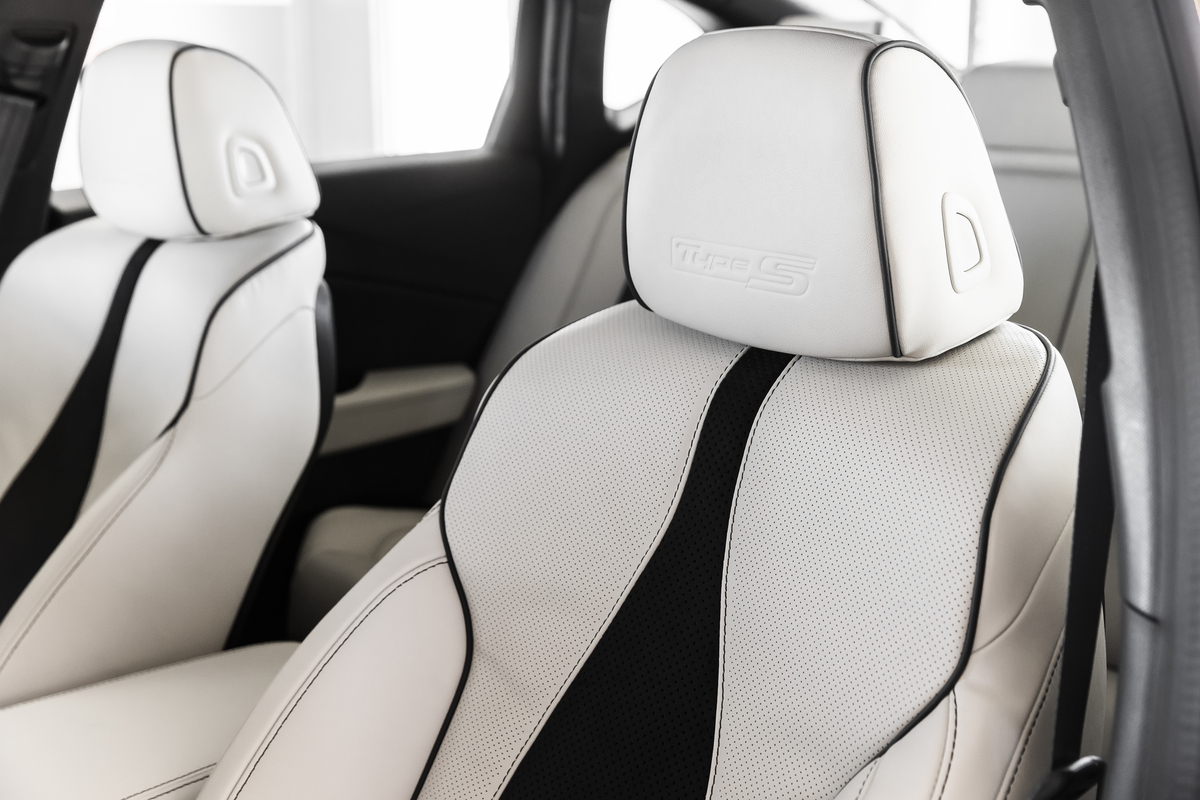
El TLX Type S del 2021 también viene con asientos deportivos de 16 posiciones para el conductor y el pasajero delantero con refuerzos eléctricos ajustables, cuero Milano flexible con inserciones de Ultrasuede, estampado Type S en los reposacabezas, un sistema de audio premium ELS STUDIO 3D de 17 bocinas y un Pantalla de audio e información de pulgadas operada con la galardonada interfaz True Touch de Acura.
El equipo estándar de seguridad y asistencia al conductor incluye el conjunto de tecnologÃas de seguridad y asistencia al conductor AcuraWatch, y el primer airbag del pasajero delantero del mundo diseñado para reducir la rotación de la cabeza en caso de colisión.


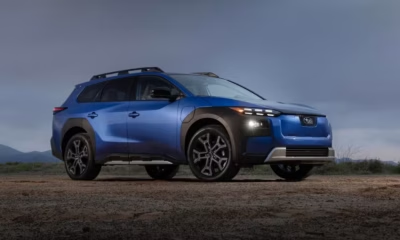







Subaru’s new electric SUV combines 375 horsepower, standard all-wheel drive and up to 281 miles of estimated range.
The 2026 Subaru Trailseeker brings a new level of performance to the brand’s electric SUV lineup. With dual electric motors, 375 horsepower and standard all-wheel drive, the new crossover combines the utility Subaru buyers expect with acceleration that makes it the quickest vehicle the automaker has produced, according to the company.
The Trailseeker arrives as U.S. buyers gain more electric SUV options across different sizes, performance levels and price points. Its combination of power, ground clearance and cargo versatility gives Subaru a new way to appeal to drivers who want electric performance without giving up the capabilities associated with the brand.
2026 Subaru Trailseeker Offers 375 Horsepower
The Trailseeker uses two AC synchronous permanent-magnet electric motors, one mounted on each axle. Each motor produces 224 horsepower and 198 lb-ft of torque, while the combined system delivers up to 375 horsepower and 396 lb-ft of torque.

The 2026 Subaru Trailseeker combines a streamlined crossover design with a dual-motor electric powertrain.
Each motor forms part of an integrated transaxle that includes a single-speed reduction gear and power inverter. This configuration allows the vehicle to distribute power between the front and rear axles while supporting electronic torque management.
The result is a significant performance step for Subaru. The company says the Trailseeker can accelerate from 0 to 60 mph in 4.4 seconds, making it the brand’s quickest vehicle yet. Instant electric torque and the combined output of the two motors are central to that performance.
Subaru Trailseeker AWD Adds Off-Road Capability
All-wheel drive is a key part of the Trailseeker’s setup. Its electric motors drive both axles, while Subaru’s revised Symmetrical All-Wheel Drive system works with a dual-mode X-MODE system designed to improve traction on challenging surfaces.
Drivers can select Snow/Dirt or Deep Snow/Mud settings. The SUV also includes Grip Control and Hill Descent Control, features intended to help maintain control on slippery roads and uneven terrain.

The Trailseeker’s dual-motor AWD system and X-MODE settings are designed to support traction on varied surfaces.
Acceleration sensors at the front and rear provide information that helps the vehicle manage torque distribution and maintain stability. The system is designed to combine the rapid response of electric motors with Subaru’s focus on all-weather capability.
However, the Trailseeker’s specific off-road performance will depend on terrain, tires, ground clearance and driving conditions. Its traction technology should not be interpreted as a guarantee of capability on every surface.
Battery, Range and Charging Efficiency
The 2026 Trailseeker uses a 74.7-kWh lithium-ion battery pack containing 104 cells. The battery supplies energy to both electric motors, supporting the SUV’s combined power output while providing an estimated driving range of up to 281 miles.

The Trailseeker pairs its electric powertrain with the space and everyday utility expected from a Subaru crossover.

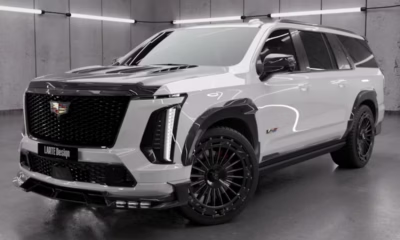
Larte Design gives Cadillac’s 682-hp luxury SUV an aggressive makeover with red accents and oversized aerodynamic elements.
The Cadillac Escalade-V already stands out for its supercharged V-8 and imposing size, but Larte Design has created an even more dramatic version. The Esthete body kit adds extensive carbon-fiber components, contrasting red details and an exterior design intended for owners who want their luxury SUV to attract attention.
The modified Escalade-V retains the model’s bold proportions while introducing a more extreme appearance. Its combination of gloss-black surfaces, red accents and oversized aerodynamic elements creates a sharp contrast with the relatively restrained styling of the standard SUV.
Cadillac Escalade-V Gets an Aggressive New Look
Cadillac updated the Escalade for the 2025 model year, but the Escalade-V maintained much of the same exterior design as other versions. Its performance credentials are less subtle: a supercharged 6.2-liter V-8 produces 682 horsepower, making it one of the most powerful versions of Cadillac’s full-size luxury SUV.

Larte Design gives the Cadillac Escalade-V a more dramatic appearance than the standard factory styling.
For buyers who want the vehicle’s exterior to reflect its performance, Larte Design offers the Esthete package. The body kit changes the SUV’s visual character through redesigned bodywork and contrasting finishes rather than relying on the factory design alone.
Dry Carbon Fiber and Red Exterior Details
The Esthete package features a two-tone exterior combining gloss black with red accents. Larte Design uses dry carbon fiber for the exterior components, including a vented hood, a redesigned front grille and extended wheel arches.

The Esthete package combines carbon-fiber components with gloss-black finishes and red detailing.
The modifications continue along the sides, where carbon-fiber rings surround the 24-inch multispoke wheels. At the rear, a spoiler and diffuser add further visual emphasis, giving the Escalade-V a more motorsport-inspired appearance.
The prominent front splitter is another defining feature. Although it contributes to the kit’s aggressive styling, its low, projecting shape could require extra care around steep driveways, parking curbs and other obstacles. Owners considering the package should also confirm ground clearance and any practical limitations associated with the added bodywork.
Larte Design Focuses on Visual Impact
Larte Design has built a reputation for bold exterior modifications for high-performance luxury vehicles, including the Mercedes-AMG G 63, BMW X6 M and Lamborghini Urus. The company’s approach generally emphasizes a more distinctive appearance than the original factory styling.

The rear design adds a prominent spoiler and diffuser to the modified luxury SUV.
The company has also explored unconventional finishes in previous projects. One earlier Escalade-related design featured pink carbon fiber, with the color incorporated into the material’s weave rather than applied only as a tinted surface coating.
The Esthete package follows that same emphasis on visual differentiation. Its combination of dry carbon-fiber components, red detailing and oversized exterior elements is aimed at customers who want their Escalade-V to be immediately recognizable.
The modifications are primarily about styling, and the supplied information does not establish any additional engine output or performance gains from the body kit. The Escalade-V’s headline specification remains its factory-rated 682-horsepower supercharged V-8. For buyers who prefer a more understated luxury SUV, the standard design may be the better fit; for those seeking maximum visual impact, Larte Design offers a far more conspicuous alternative.

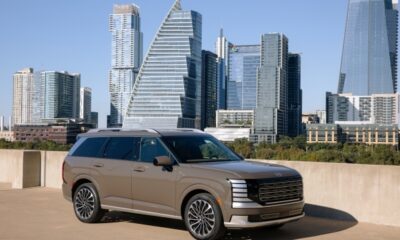
The three-row SUV earns recognition for its 329-hp hybrid system, all-wheel-drive capability and long estimated driving range.
The 2026 Hyundai Palisade Hybrid has earned a place on WardsAuto’s 10 Best Engines & Propulsion Systems list, highlighting the SUV’s combination of power, efficiency and everyday utility. Its turbocharged hybrid powertrain delivers 329 horsepower and an estimated driving range of up to 619 miles, according to Hyundai.
The award marks Hyundai’s 18th product win in the competition and the second time one of its three-row SUVs has received recognition from the program. The annual awards evaluate powertrain technology, performance and efficiency, giving manufacturers an opportunity to demonstrate advances in conventional, hybrid and electric propulsion.
Hyundai Palisade Hybrid Combines Power and Efficiency
The 2026 Hyundai Palisade Hybrid uses a 2.5-liter turbocharged four-cylinder engine paired with an electrified powertrain. The system produces a combined 329 horsepower and 339 lb-ft of torque, giving the large SUV performance intended to suit family travel and longer journeys.

The 2026 Hyundai Palisade Hybrid combines a three-row layout with a turbocharged hybrid powertrain.
Power is delivered through a six-speed automatic transmission. Buyers can choose front-wheel drive or Hyundai’s HTRAC all-wheel-drive system, allowing the Palisade Hybrid to serve drivers with different traction and driving requirements.
Hyundai estimates more than 30 mpg on the highway, while the SUV’s estimated 619-mile driving range is intended to reduce the need for frequent fuel stops. These figures are manufacturer estimates, and actual results can vary depending on driving conditions, configuration and driving style.
All-Wheel Drive and Towing Capability
The Palisade Hybrid is designed to combine improved fuel efficiency with the utility expected of a three-row SUV. Its available HTRAC all-wheel-drive system uses a mechanical arrangement intended to provide traction on slippery surfaces, according to Hyundai and WardsAuto’s award commentary.

The available HTRAC all-wheel-drive system adds traction capability to the hybrid SUV.
The hybrid model also has an estimated maximum towing capacity of 4,000 pounds. That figure adds versatility for owners who need to tow compatible small trailers or recreational equipment, although the actual permissible load depends on vehicle configuration and applicable towing requirements.
Hyundai has also introduced Stay Mode, a function designed to monitor the hybrid battery system while the vehicle is parked. It allows extended use of selected features, including the infotainment system and climate controls, helping support an experience that draws on some of the conveniences associated with electric vehicles.
Why the Hyundai Palisade Hybrid Won the Award
WardsAuto judges assessed 26 powertrain nominees under real-world driving conditions. Their evaluation considered horsepower, torque, noise, vibration and harshness (NVH), observed efficiency and technological innovation.

The Palisade Hybrid pairs its electrified powertrain with technology designed for everyday family use.
The judges highlighted the combination of smooth, quiet hybrid operation and mechanical all-wheel-drive capability. That balance is particularly relevant in a large SUV, where buyers may want strong performance and traction without sacrificing fuel economy.
The award is part of a broader evaluation process in which only all-new or significantly improved powertrains, along with returning winners from the previous year, are eligible. Hyundai’s latest recognition reflects the engineering behind the Palisade Hybrid’s propulsion system rather than the vehicle’s design or technology package alone.
For the 2026 model year, the Palisade Hybrid strengthens Hyundai’s position in the three-row SUV segment by combining a 329-hp output, available all-wheel drive, an estimated 4,000-pound towing capacity and a long claimed driving range. The award recognizes that balance of performance and efficiency, while real-world fuel economy and range will depend on how and where the vehicle is driven.
-
 NOW TRENDING2 months ago
Tesla Cybercab Gets September 3 Austin Launch Date
-
 TEST DRIVES2 months ago
2025 Ford Bronco Sport Badlands: The Adventure SUV You Can Drive Every Day
-
 TEST DRIVES2 months ago
2026 Toyota GR Supra MkV Final Edition
-
 NOW TRENDING1 month ago
Aston Martin DBX Becomes Harry Da Souza’s Ride in MobLand
-

 NOW TRENDING2 months ago
Tesla Cybercab Puts U.S. Regulations to the Test
-
 Formula12 months ago
FIA Reveals Second ADUO Results With Red Bull-Ford Still on Top
-
 NOW TRENDING2 months ago
2027 Hyundai Tucson Hybrid Gets a Power Boost
-
 NOW TRENDING2 months ago
Hyundai Reports Strong Hybrid Sales in August 2026
You must be logged in to post a comment Login