
NOW TRENDING
Toyota Camry Apex Could Bring a Sportier Look for 2027

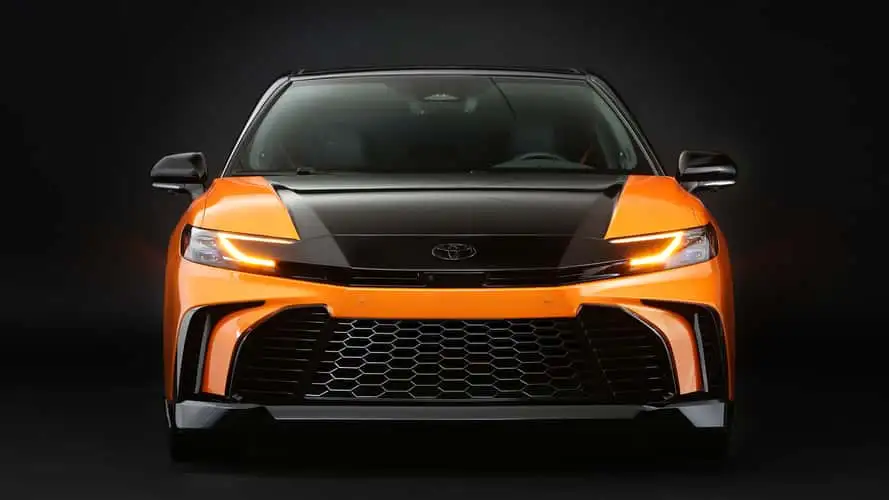
Toyota may be preparing a new Camry Apex model after filing a fresh trademark in the United States. While it may not deliver more horsepower, the sedan could receive sportier styling and suspension upgrades.
The Toyota Camry Apex could soon join the automaker’s growing lineup of sportier models. A new trademark filing submitted to the United States Patent and Trademark Office (USPTO) suggests Toyota is preparing a new version of its popular midsize sedan. Although the company has not confirmed any details, the filing has fueled speculation that the Toyota Camry Apex could revive the formula previously seen on the Corolla Apex Edition.
Rather than becoming a full-performance GR model, the new Camry variant is expected to focus on improved handling, unique styling, and a more engaging driving experience while retaining its efficient hybrid powertrain.
Toyota files Camry Apex trademark in the U.S.
Toyota submitted a trademark application for the Camry Apex name on June 30, 2026, covering automobiles and related vehicle components. While a trademark filing doesn’t guarantee production, it often signals that a manufacturer is preparing a future model or trim level.
The Apex name is already familiar to Toyota enthusiasts. The company introduced the Corolla Apex Edition for the 2021 model year, offering a sportier suspension, unique wheels, aerodynamic upgrades, and exclusive styling without increasing engine output.
If Toyota follows the same strategy, the Toyota Camry Apex would target buyers looking for a sharper driving experience without sacrificing fuel economy.
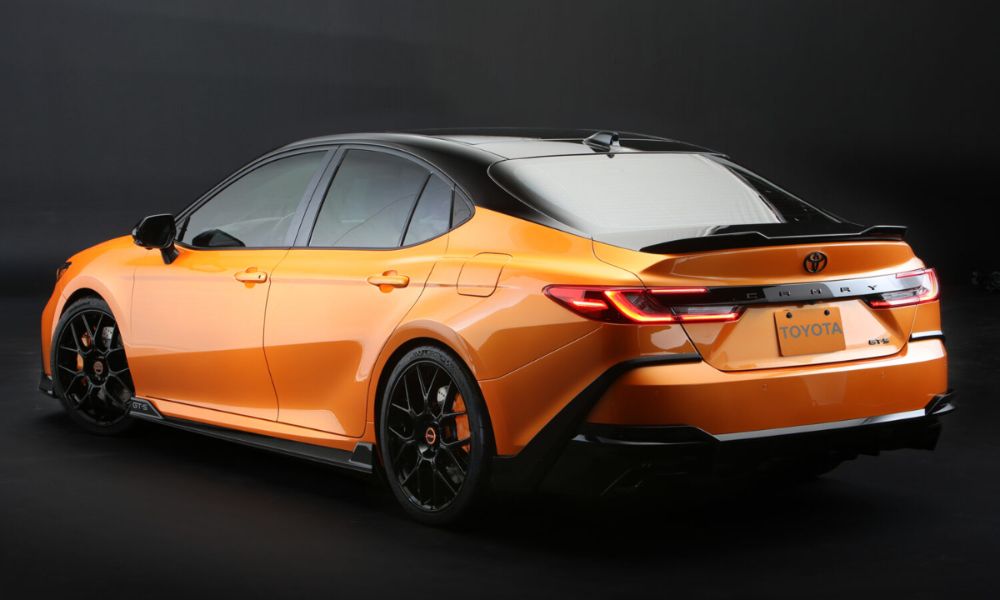
Toyota has trademarked the Camry Apex name in the United States.
Expected suspension and styling upgrades
Reports suggest the Toyota Camry Apex will likely keep the standard hybrid powertrain, producing 225 horsepower in front-wheel-drive models and 232 horsepower with all-wheel drive.
Instead of adding more power, Toyota could focus on chassis improvements similar to those found on the previous Corolla Apex Edition.
Potential upgrades may include:
- Lower sport suspension
- Retuned shock absorbers
- Revised steering calibration
- Exclusive alloy wheels
- Unique exterior styling
- Sport-inspired interior accents
These enhancements would allow the Camry to deliver more responsive handling while maintaining the comfort and efficiency that have made it one of America’s best-selling sedans.
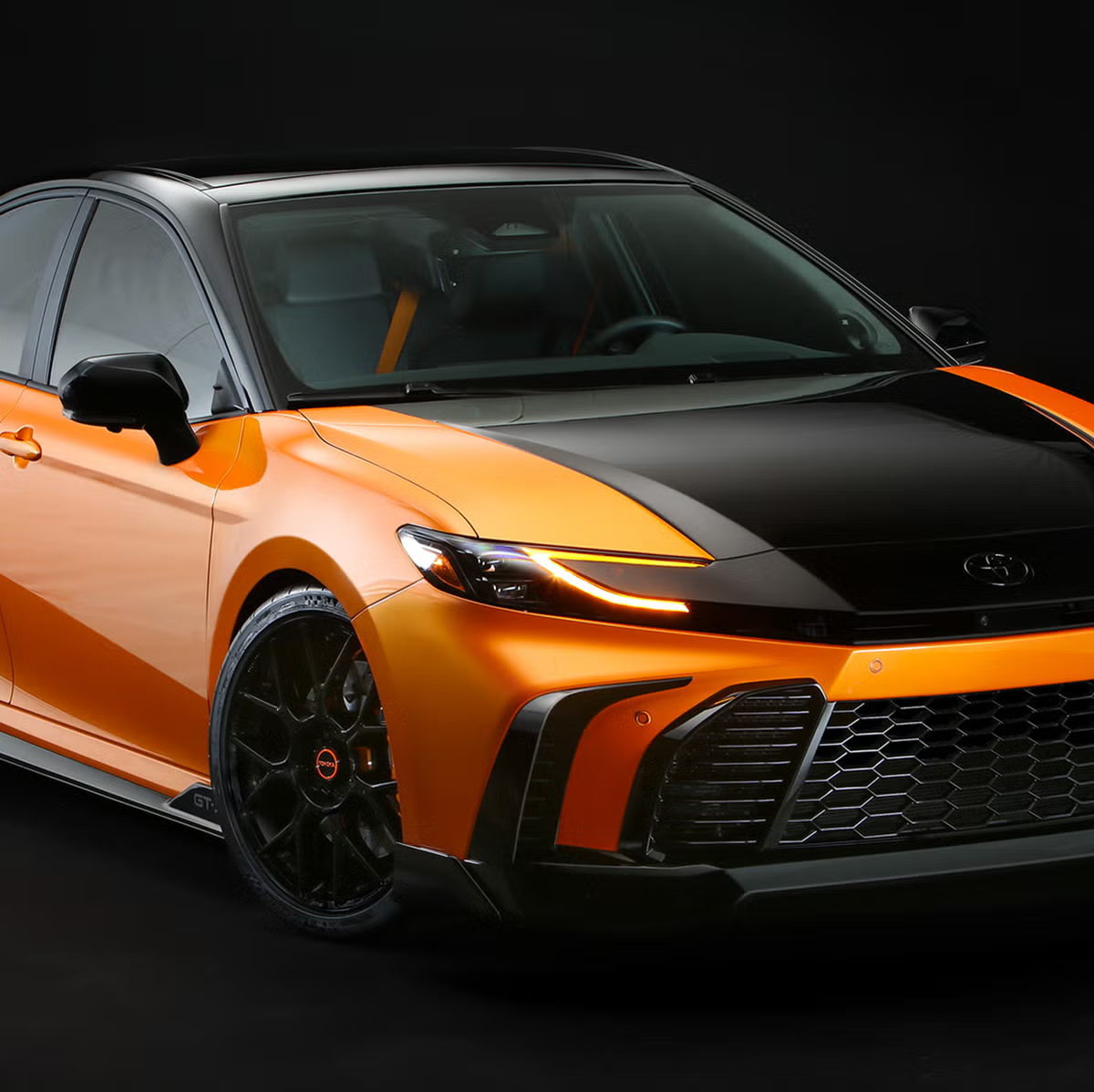
The Camry Apex could receive suspension and styling upgrades instead of more horsepower.
A sportier Camry without sacrificing efficiency
Unlike Toyota’s GR performance models, the Toyota Camry Apex is expected to prioritize driving dynamics over outright performance.
Because the current Camry is sold exclusively with a hybrid powertrain in the United States, Toyota is unlikely to modify the engine. Instead, the company could create a more engaging sedan through suspension tuning and cosmetic enhancements.
If the project moves forward, the Camry Apex would provide an appealing option for buyers who want a sportier appearance and improved handling without giving up the reliability and fuel efficiency of Toyota’s hybrid system.
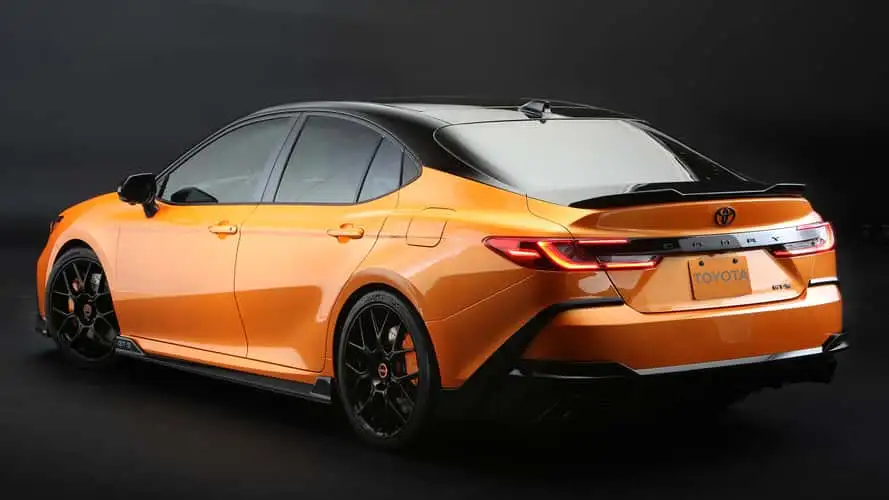
The Toyota Camry Apex could become the sportiest version of the hybrid sedan.
Will Toyota officially launch the Camry Apex?
Toyota has not confirmed whether the Toyota Camry Apex will enter production, but the trademark filing strongly suggests the company is exploring a new trim level for its bestselling sedan.
With consumers increasingly looking for vehicles that combine efficiency with sharper styling and better driving dynamics, the Camry Apex could fill an important gap between the standard model and Toyota’s GR performance lineup. If approved, it could become one of the most interesting additions to the Camry family in the coming years.


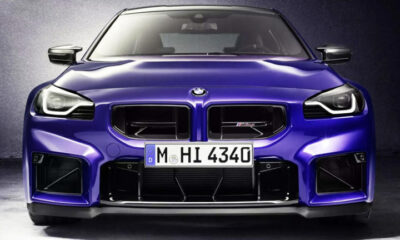






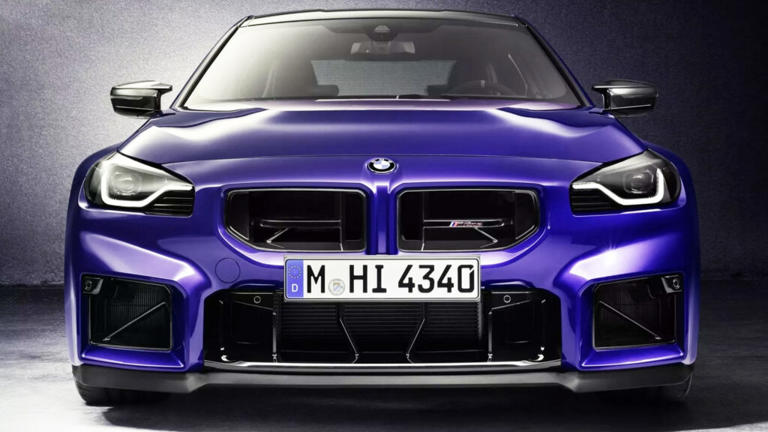
BMW is reportedly preparing another special M2 before the current generation ends, with an all-wheel-drive M2 CS, manual version, or hardcore CSL among the possibilities.
BMW may not be finished expanding the M2 lineup.
With roughly two years remaining in the current M2’s production cycle, a new report suggests that another special version could arrive before the compact performance coupe is replaced.
The information comes from BimmerPost member Ynguldyn, who has previously reported accurate details about BMW’s future product plans. According to the report, BMW is preparing a “special model” of the M2, although specific details remain unknown.
BMW could push the M2 even further
The current M2 CS already takes the compact sports car to another level.
It uses the same basic engine family as the M3 and M4 Competition while combining it with a smaller body and rear-wheel drive.
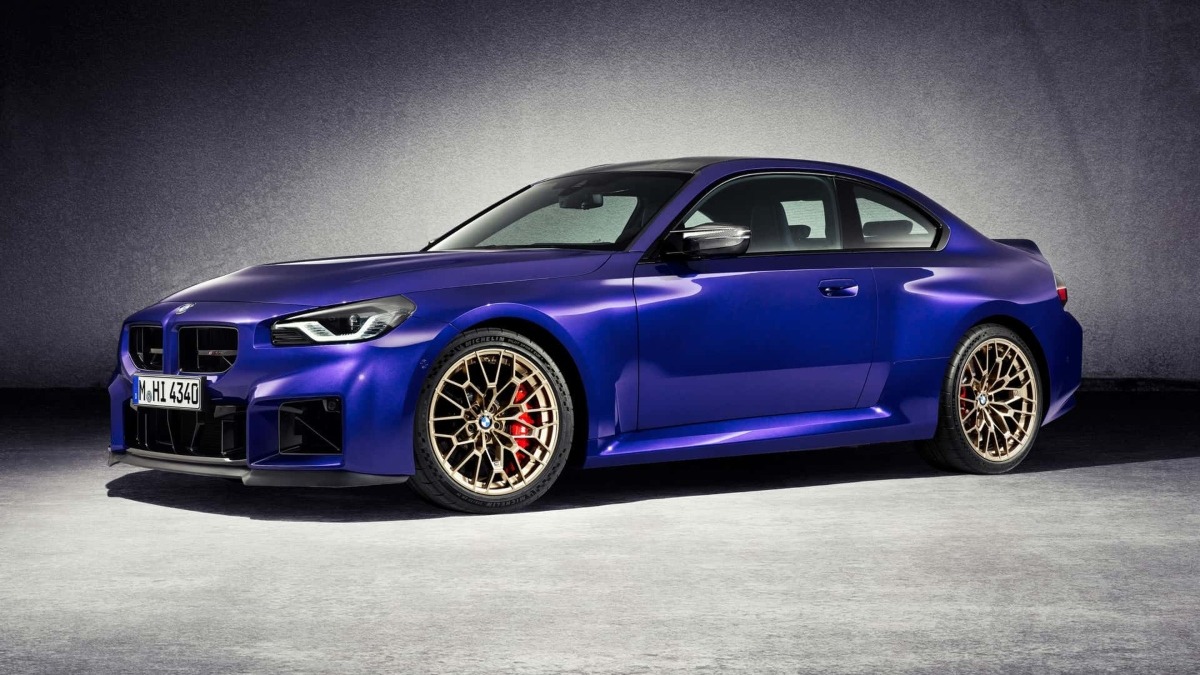
The BMW M2 CS could provide the foundation for another, even more specialized version.
The M2 CS produces 523 horsepower and 479 lb-ft of torque, leaving BMW several potential directions for another special edition.
One obvious possibility would be to add all-wheel drive.
BMW has already introduced an xDrive version of the regular M2, proving that the hardware exists to combine the drivetrain with the more powerful engine used in the CS.
Could the M2 CS get xDrive?
The regular M2’s all-wheel-drive version produces 473 horsepower and 443 lb-ft of torque.
Adding the same system to the M2 CS could give the car even stronger acceleration and greater traction.
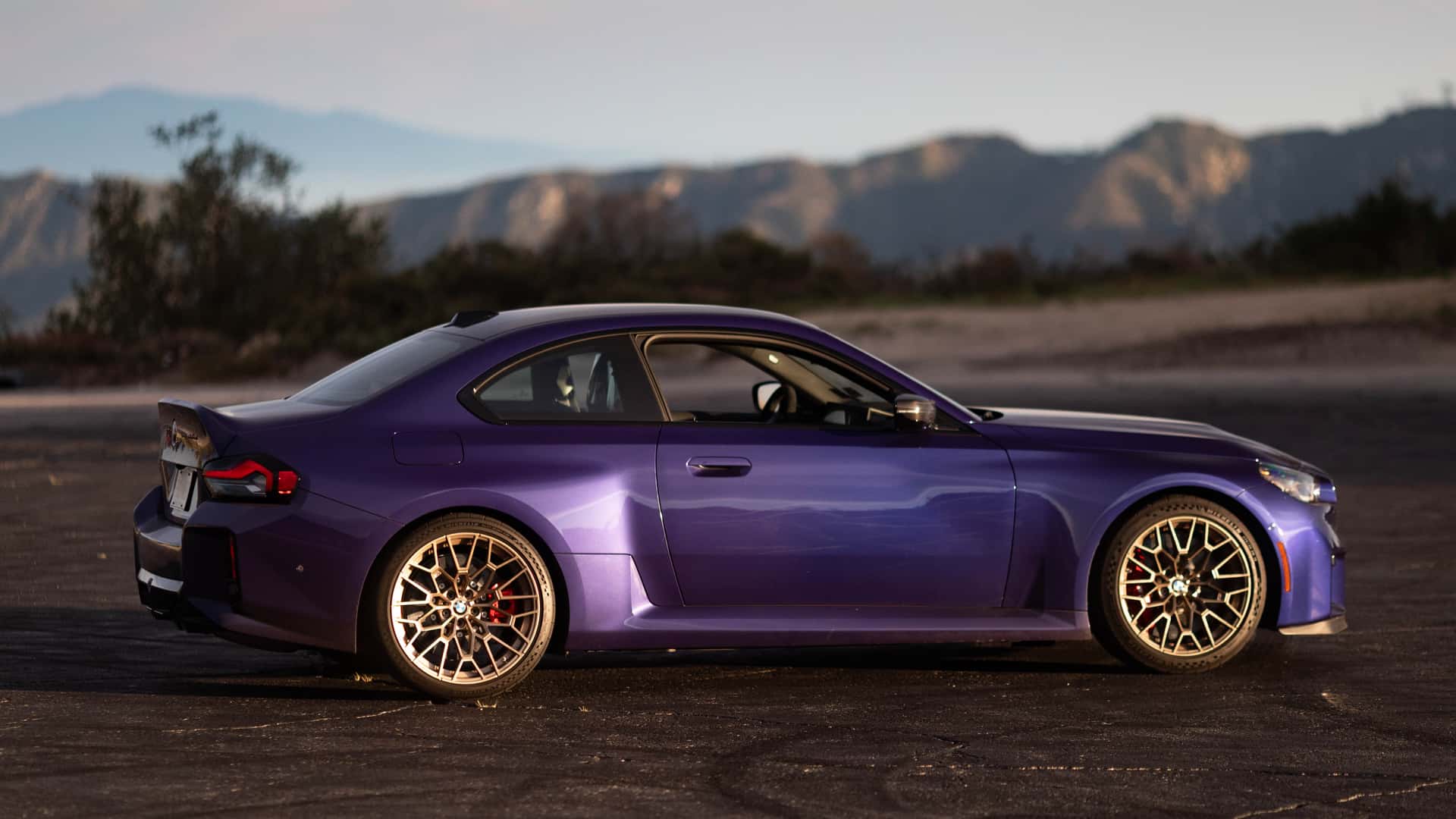
BMW already offers an all-wheel-drive M2, creating a potential path for an M2 CS xDrive.
The standard M2’s move to all-wheel drive cuts its 0-to-62-mph time by 0.3 seconds compared with the rear-wheel-drive version.
An all-wheel-drive CS could potentially make an even larger difference, particularly during launches and corner exits.
However, BMW has not confirmed that an M2 CS xDrive is in development.
A manual M2 or CSL are also possibilities
BMW could take the special-edition M2 in another direction instead.
One possibility would be a manual M2, following the approach used by special M3 and M4 variants.
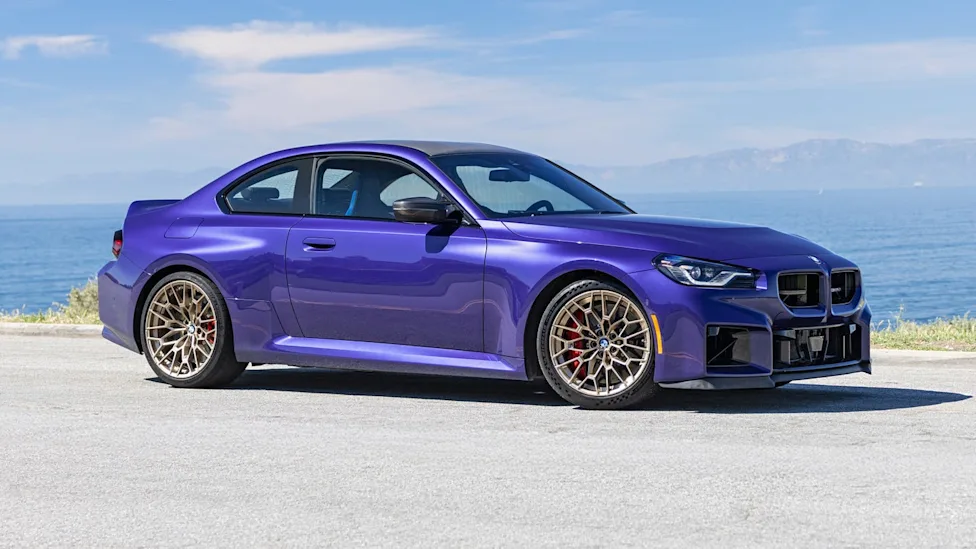
A manual-focused M2 could follow the strategy BMW has used for other special M models.
Another possibility would be an even more extreme M2 CSL.
That version could focus on reducing weight, sharpening the chassis, and potentially extracting even more power from the twin-turbocharged engine.
Such a car would sit above the already potent M2 CS and could become the ultimate version of the current-generation M2.
BMW appears to have more M2 plans
For now, there is no confirmation of what BMW’s reported special model will actually be.
The company has several options, ranging from increased traction with xDrive to a more driver-focused manual version or a lightweight CSL.
What seems increasingly likely is that BMW M2 development is not finished yet.
With the current generation expected to remain in production until around 2029, enthusiasts may have one more major M2 variant to look forward to before the next generation arrives.
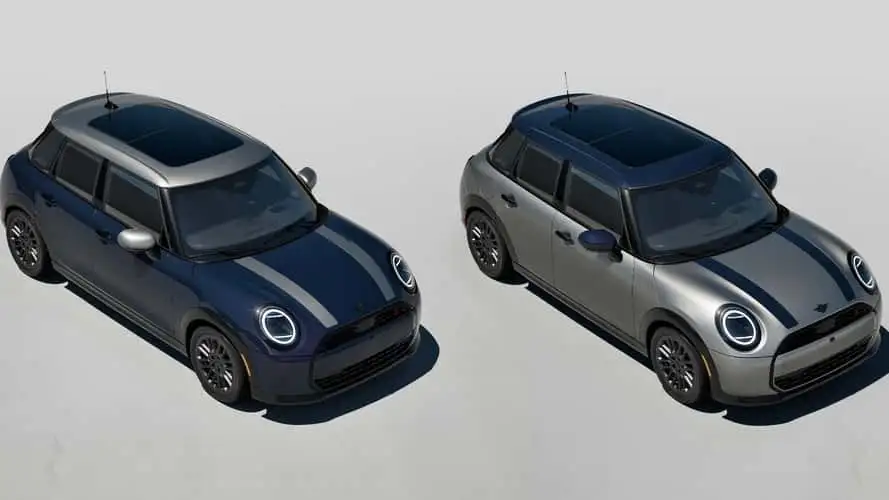
The 2026 MINI Rooftop Edition reverses its signature body-and-roof color scheme on Cooper S hatchbacks while adding exclusive equipment and styling.
MINI is putting a fresh spin on one of its most recognizable design elements with the 2026 MINI Rooftop Edition.
Created for the U.S. market, the special edition is based on the Cooper S 2 Door and 4 Door and reverses the traditional contrast between the body and roof colors.
The model is part of MINI’s Icon Drops anniversary campaign and focuses entirely on design rather than performance upgrades.
MINI Turns Its Signature Roof Upside Down
The Rooftop Edition keeps the standard Cooper S powertrain, including its turbocharged four-cylinder engine and seven-speed dual-clutch transmission.
Instead, the special edition’s main attraction is the unusual paint treatment.
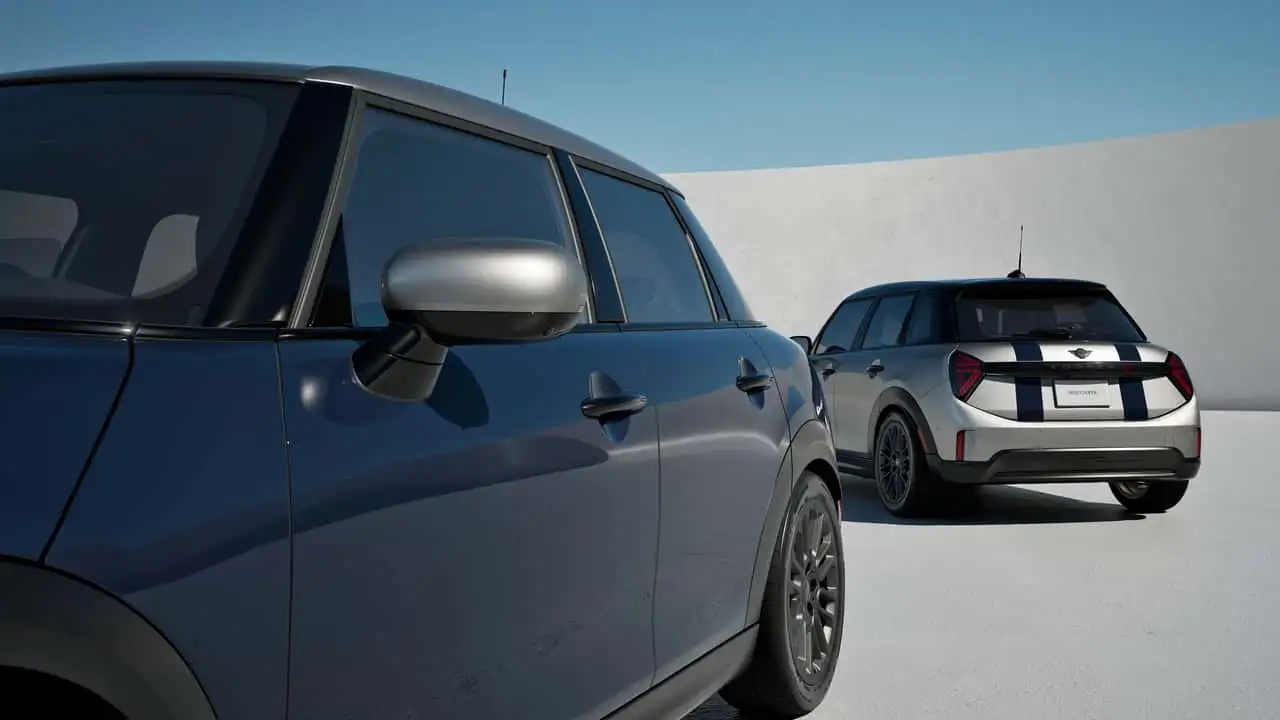
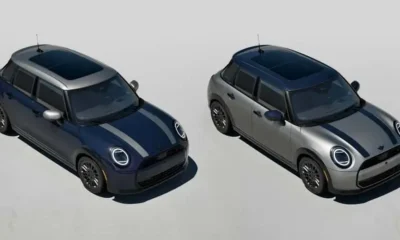
The MINI Rooftop Edition reverses the traditional body-and-roof color combination.
MINI offers two metallic colors: Indigo Sunset Blue and Melting Silver III.
One configuration features an Indigo Sunset Blue body with a Melting Silver III roof and matching mirror caps.
The second reverses the combination, placing the darker blue finish on the roof while the silver covers the body.
Both versions receive Piano Black exterior trim and 17-inch U-Spoke Grey wheels.
The Cabin Gets Sportier Details
The interior retains the latest Cooper S cabin design but adds several exclusive touches.
MINI fits the Rooftop Edition with John Cooper Works sport seats, complete with MINI badges on the backrests.
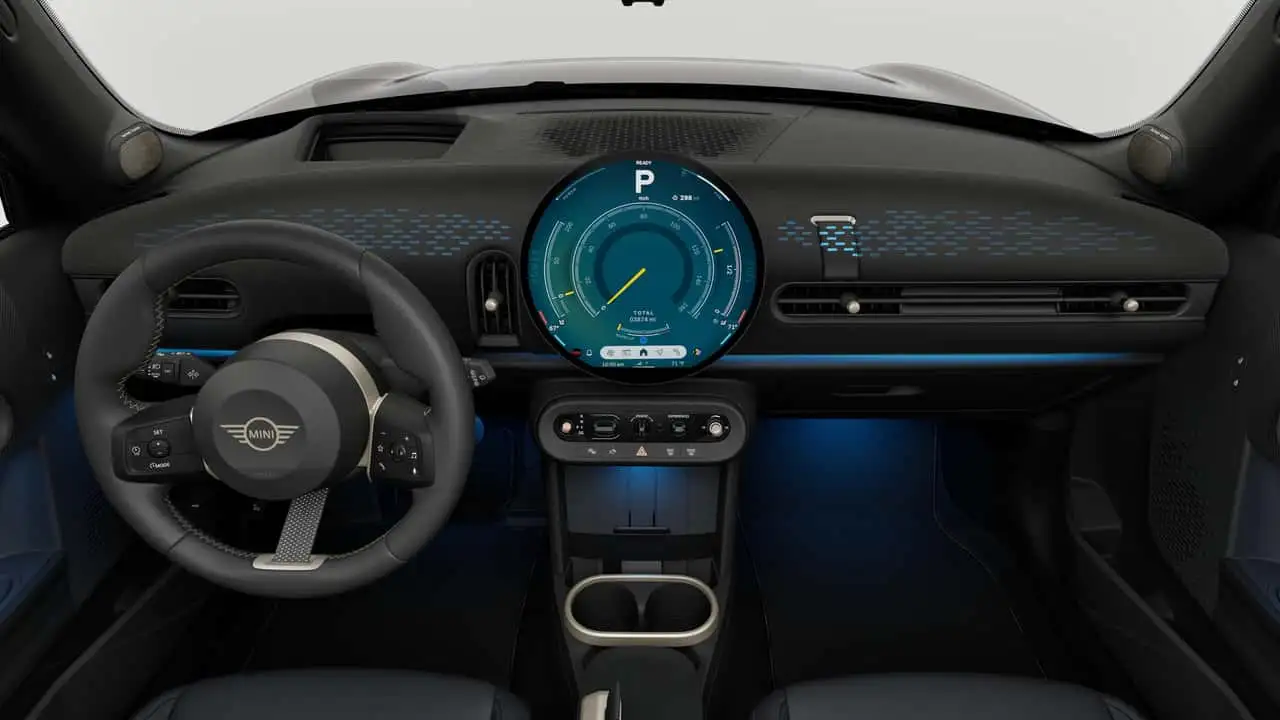
John Cooper Works sport seats and black Vescin upholstery give the Rooftop Edition a sportier cabin.
The seats are finished in black Vescin upholstery with contrast stitching and blue accents.
The overall approach keeps the minimalist character of the modern MINI interior while giving the limited edition a more distinctive appearance.
Loaded With Standard Equipment
Although the Rooftop Edition does not add horsepower or chassis upgrades, MINI has equipped it with a substantial amount of technology.
Standard equipment includes adaptive cruise control with stop-and-go, augmented-reality navigation, Parking Assist Plus, wireless smartphone charging, and Harman Kardon premium audio.
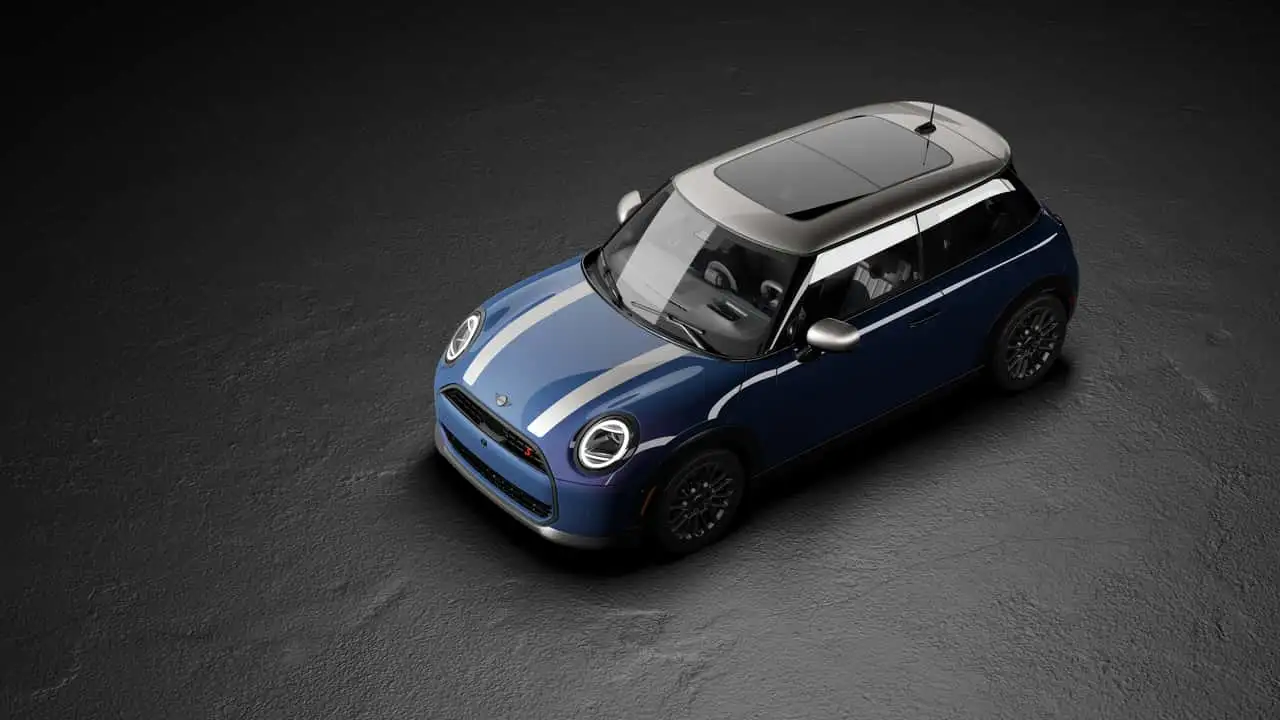
The Rooftop Edition combines its distinctive paint treatment with a long list of standard technology and comfort features.
The package is built on top of the Iconic Trim, Comfort Package Plus, Favoured Style package, and other equipment.
MINI says the combined value of the added equipment exceeds $4,100, while the Rooftop Edition content itself represents a $1,595 package.
Pricing and U.S. Availability
The MINI Rooftop Edition starts at $39,995 for the Cooper S 2 Door and $40,995 for the Cooper S 4 Door.
Those prices exclude the $1,350 destination charge.
Production is scheduled to begin in September 2026, with U.S. dealer arrivals expected in October.
The Rooftop Edition will be the fifth of eight Icon Drops planned for 2026 as MINI celebrates the 25th anniversary of the modern Cooper in the United States.
Rather than changing the mechanical formula, MINI is using limited-run design themes to make the Cooper S feel more exclusive.
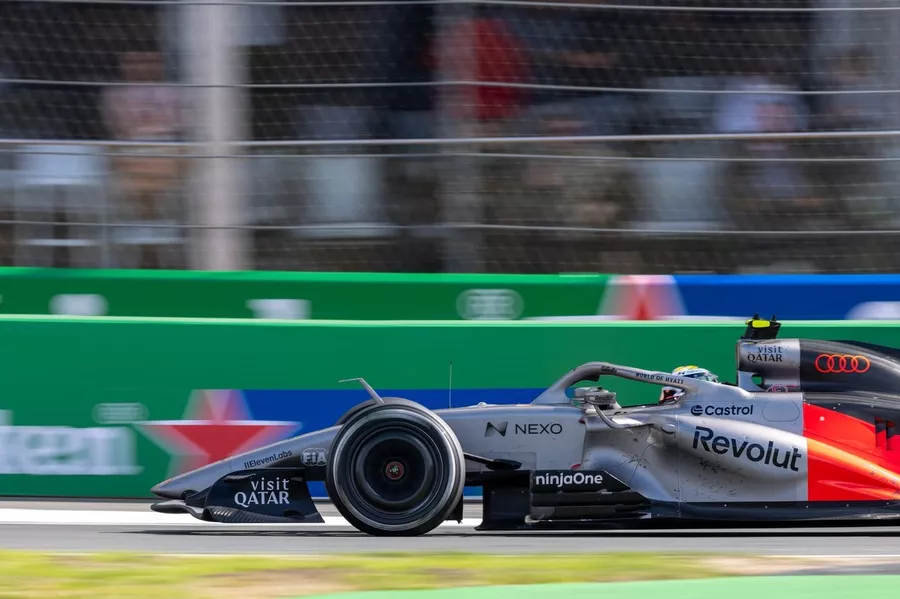
Nico Hülkenberg narrowly avoided hitting Audi teammate Gabriel Bortoleto after the Brazilian spun across the track during the opening lap of the Dutch Grand Prix.
Nico Hülkenberg revealed how he narrowly avoided a potentially huge accident with Audi teammate Gabriel Bortoleto during the opening lap of the 2026 Dutch Grand Prix.
The incident happened shortly after Max Verstappen crashed at the final corner. With the track still wet in places, Bortoleto lost control of his Audi and spun 360 degrees before coming to a stop in the middle of the circuit.
Hülkenberg arrived moments later and managed to avoid his teammate by passing around the left side of the stranded car.
Hülkenberg had almost no time to react
The track was mostly dry, but the final banked corner remained significantly wetter following the earlier rain.
That caught several drivers by surprise, including Bortoleto.
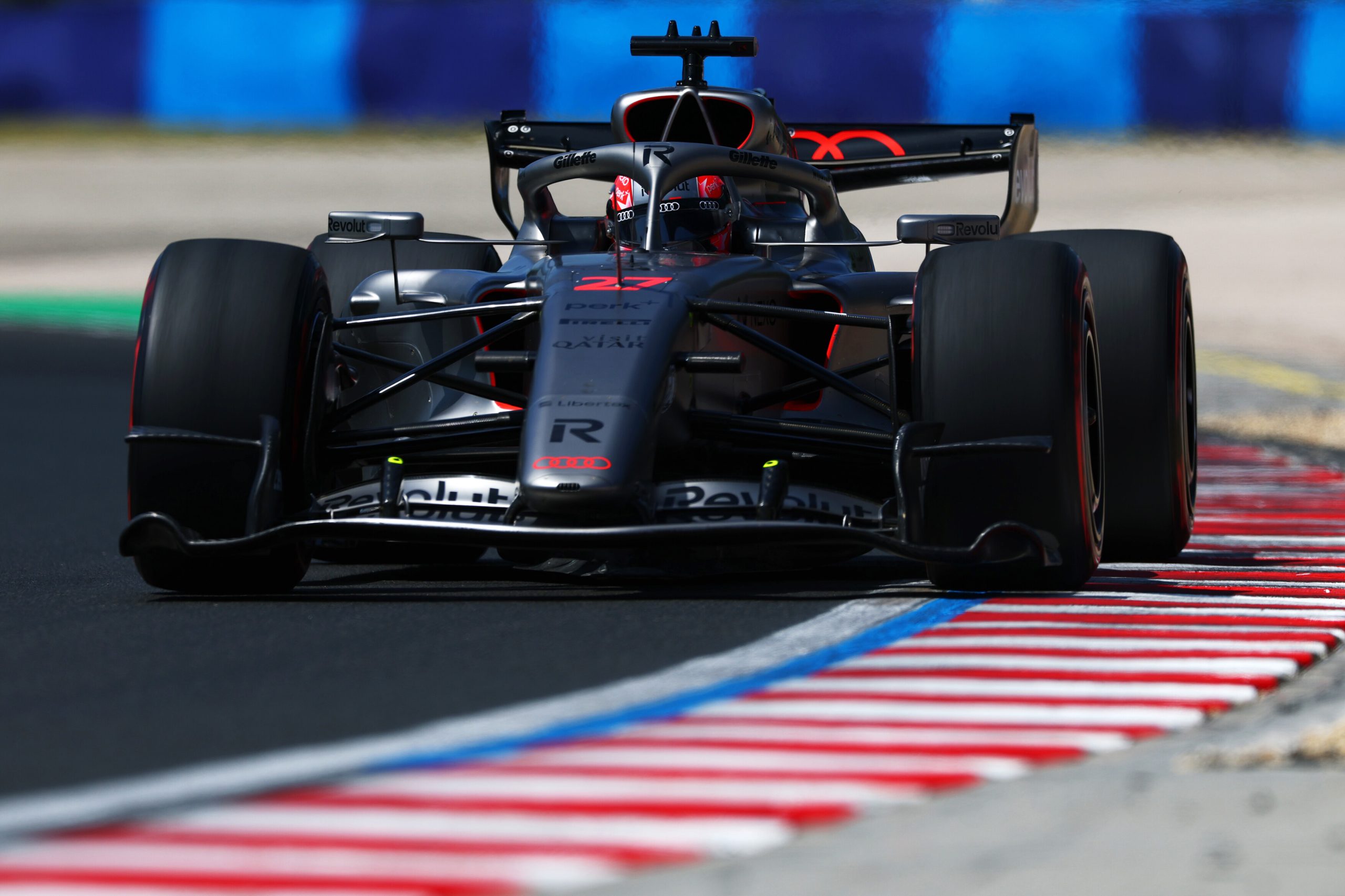
Nico Hülkenberg narrowly avoided Gabriel Bortoleto after the Brazilian spun across the track at Zandvoort.
Hülkenberg said the situation was extremely difficult because he could not immediately predict which direction Bortoleto’s car would move.
He waited as long as possible before committing to an escape route.
According to the Audi driver, luck also played a major role.
The gap between the two cars was so small that Hülkenberg said it felt as though “a sheet of paper” could have separated them.
Audi team principal calls it an incredible save
Audi competition director Allan McNish watched the incident from the pit wall while monitoring the onboard cameras from both cars.
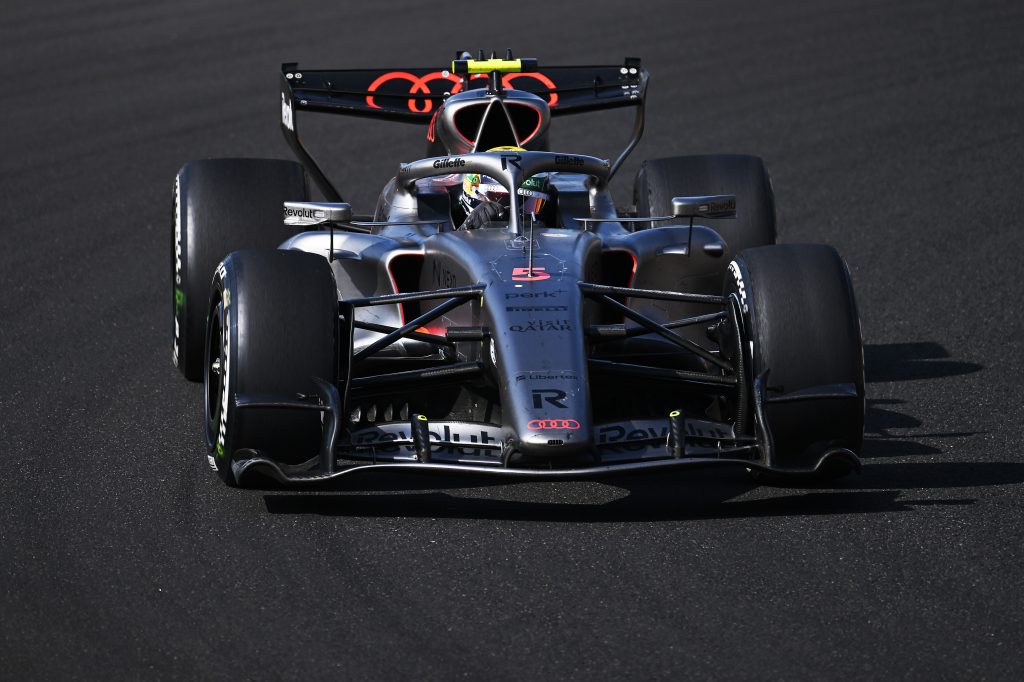
Audi competition director Allan McNish said the incident was even more alarming after reviewing the onboard footage.
McNish admitted that he initially did not realize just how close the two Audi cars had come to each other.
He compared the moment to a scene from “Days of Thunder”, highlighting how little margin Hülkenberg had for error.
From his experience as a former driver, McNish explained that avoiding an accident in such a situation requires a combination of instinct and judgment.
Drivers have to react immediately, but they must also determine how far they can move and which direction offers the safest escape.
Hülkenberg escaped while Bortoleto recovered
Bortoleto’s spin was particularly difficult to handle because the banking of the corner could have sent the car in an unpredictable direction.
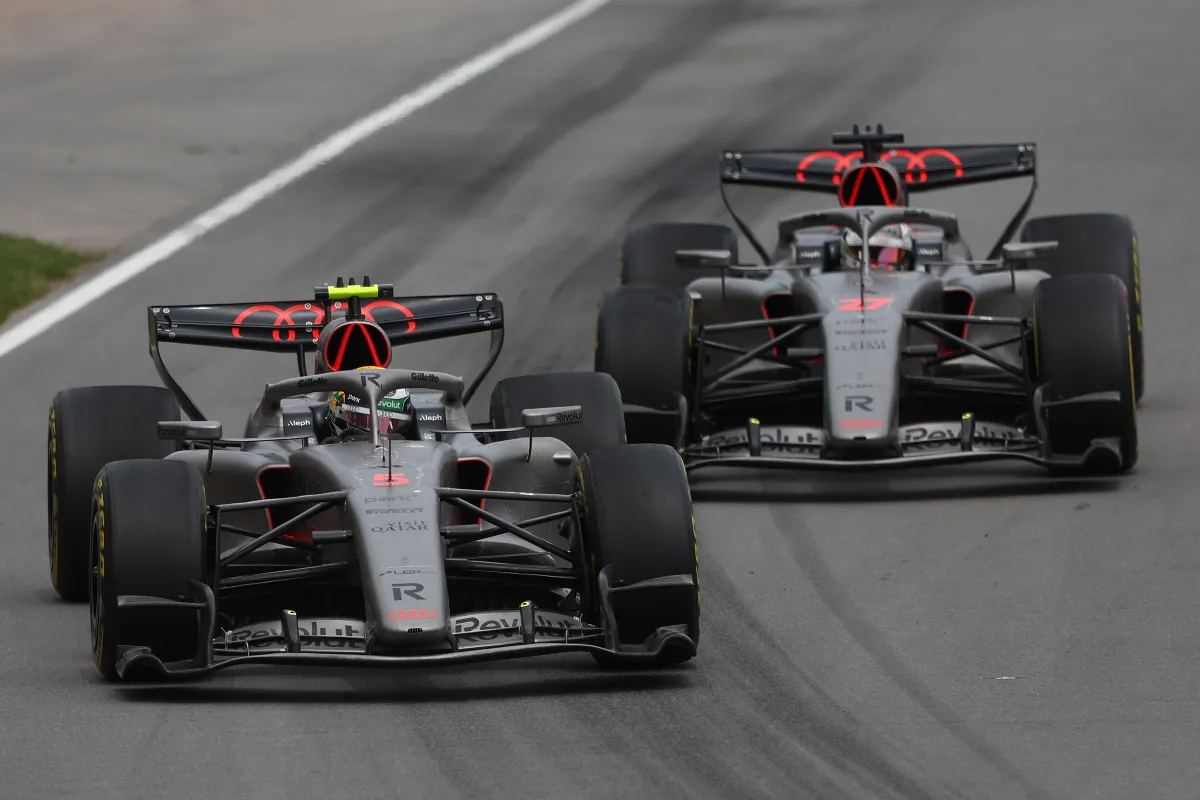
Bortoleto recovered from the spin while Hülkenberg escaped through the narrow gap beside his teammate.
McNish praised Bortoleto for keeping the car away from the wall and preventing an even bigger incident.
He also described Hülkenberg’s avoidance maneuver as an incredible save, saying it was difficult to determine whether instinct, skill, concentration, or a combination of all three made the difference.
The incident ultimately had no major consequences for either Audi driver.
Hülkenberg scored more points for Audi
Hülkenberg went on to finish eighth, scoring four points for Audi.
The result marked the team’s fourth consecutive points-scoring weekend.
Bortoleto had a more difficult afternoon and finished 13th after the opening-lap incident.
For Nico Hülkenberg Audi, the most memorable moment of the weekend was therefore not the final result but the extraordinary escape from what could have been a major teammate collision.
-

 NOW TRENDING2 months ago
Polestar to Exit U.S. Market After 2026 Due to Connected Vehicle Rules
-
 NOW TRENDING2 months ago
Tesla Model Y L Arrives in the U.S. With More Space and Three Rows
-

 RACING2 months ago
McLaren F1 Unveils Special Silverstone Livery Honoring Its History
-
 INTELLIGENT MOBILITY2 months ago
Audi A4 E-tron and Q7 E-tron Confirmed as New Electric Models
-
 TEST DRIVES2 months ago
A Week Driving Honda’s New Hybrid Coupe
-
 TEST DRIVES2 months ago
Ford Recalls More Than 741,000 Trucks and SUVs Over Rollaway Risk
-
 NOW TRENDING2 months ago
Toyota Reports Strong June and Q2 2026 U.S. Sales Growth
-

 INTELLIGENT MOBILITY2 months ago
GM Expands Super Cruise With Exclusive Hands-Free Towing Technology
You must be logged in to post a comment Login