
INTELLIGENT MOBILITY
Volkswagen Expands IQ.Drive With Smarter Safety Features for 2027

Volkswagen is expanding its IQ.Drive system for the 2027 model year with new lane-change assistance, smarter adaptive cruise control and additional safety technology across several U.S. models.
Volkswagen is giving its Volkswagen IQ.Drive driver-assistance system a significant technology upgrade for the 2027 model year. The latest improvements will arrive on the Atlas, Golf, ID. Buzz and Tiguan in the United States.
The updated system adds several features designed to make highway driving and low-speed maneuvers easier. Among them are driver-initiated automatic lane changes, predictive adaptive cruise control and a new rear camera system capable of detecting pedestrians.
Volkswagen is also introducing a cloud-based data system for the 2027 ID. Buzz designed to improve the performance of its advanced driver-assistance technology.
Travel Assist Gets Automatic Lane Changes
One of the biggest changes to IQ.Drive is an upgraded Travel Assist function that allows the driver to initiate an automatic lane change.
At speeds above 45 mph, the driver can activate the maneuver by using the turn-signal stalk. The system then checks the adjacent lane using rear radar sensors before proceeding.
Three turn-signal flashes confirm that the system has recognized the requested maneuver.
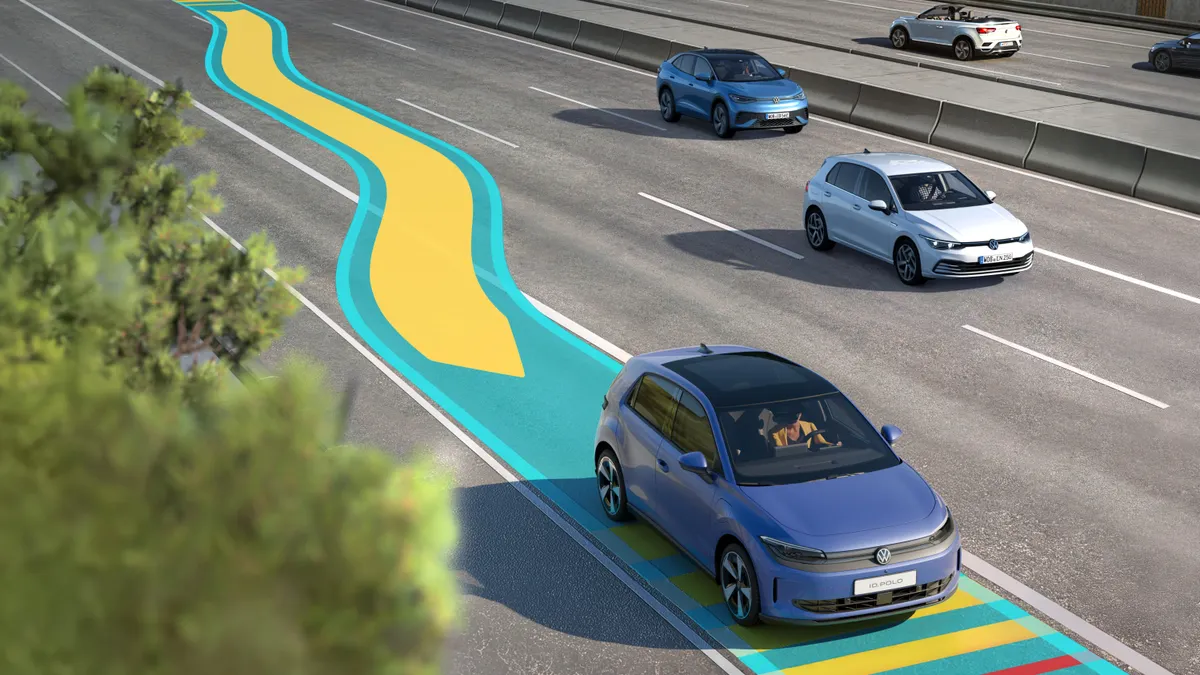
Volkswagen’s updated IQ.Drive system adds driver-initiated automatic lane changes through Travel Assist.
There is also a new “wait-to-clear” function. If another vehicle is blocking the desired lane, the system can pause the lane change for up to 12 seconds.
The driver receives an indication on the instrument cluster when the lane is occupied. Once it becomes clear, a green arrow signals that the automatic maneuver can proceed.
Predictive Adaptive Cruise Control Becomes More Responsive
Volkswagen is also changing how its predictive adaptive cruise control reacts to speed-limit changes.
The updated system is designed to recognize speed-limit increases earlier and reduce delays caused by traffic-sign recognition. That should make the system feel more natural during longer drives.
Before automatically adjusting the vehicle’s speed, the system displays a prompt asking the driver to accept or reject the new limit.
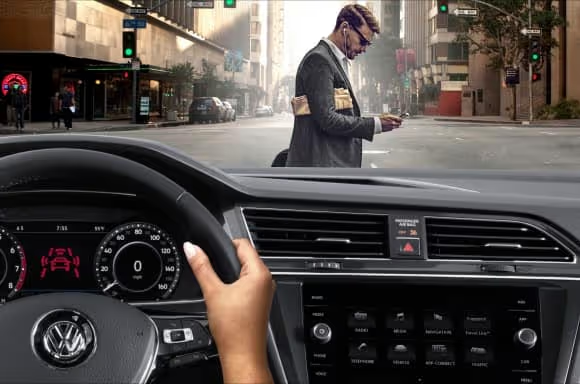
Volkswagen’s upgraded predictive adaptive cruise control is designed to respond more smoothly to changing speed limits.
Drivers can accept the change by pressing the accelerator or using the “Res” button on the steering wheel.
That preserves driver control while reducing the number of steps needed to manage changing speed limits on the road.
Emergency Assist Plus Can Pull the Vehicle Over
Another major addition is Emergency Assist Plus.
The system can steer the vehicle toward the side of the road if it detects a potential medical emergency involving the driver. However, Lane Assist or Travel Assist must already be activated for the function to operate.
Once the vehicle reaches the shoulder or far-right lane, it can automatically shift into Park, activate the hazard lights and sound the horn.
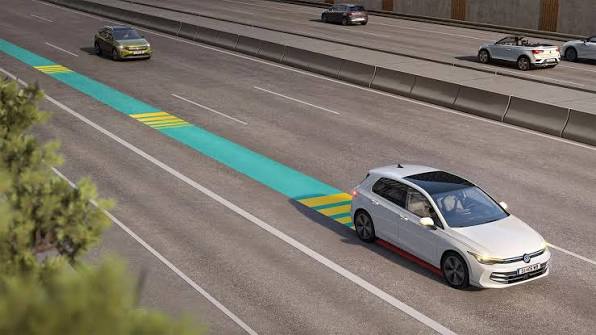
Volkswagen is adding additional emergency and pedestrian-detection technology to its 2027 IQ.Drive-equipped vehicles.
The system can also unlock the doors and switch on the vehicle’s lights before initiating an emergency call.
That makes Emergency Assist Plus different from conventional driver assistance because it is designed to respond to a situation in which the driver may no longer be able to operate the vehicle normally.
ID. Buzz Gets a Cloud-Based Driving Data System
The 2027 ID. Buzz receives another technology called Road Experience Management.
The feature will be part of Volkswagen’s In-Vehicle Premium subscription service. Buyers receive a one-year trial before a paid subscription is required.
The cloud-based system collects real-world information such as lane markings, road signs and street lighting. Volkswagen says that data can improve map quality and, in turn, improve the operation of the vehicle’s driver-assistance systems.
For example, if painted lane markings become difficult for cameras to identify, map data could help the vehicle maintain its lane position.
Rear Cameras Can Detect Pedestrians
Volkswagen is also adding a new rear camera system to select versions of the 2027 Atlas, ID. Buzz and Tiguan.
The system can detect pedestrians behind the vehicle while it is reversing between 1 and 6 mph. When a pedestrian is detected, the vehicle can automatically apply the brakes to help avoid a collision.
That expands IQ.Drive beyond highway assistance and into low-speed situations where visibility can be limited.
Volkswagen Continues Expanding IQ.Drive
The Volkswagen IQ.Drive updates show how automakers are increasingly adding more functions to existing driver-assistance systems rather than treating them as fixed packages.
The 2027 changes cover highway driving, emergency situations, speed-limit management, reversing and even cloud-based mapping data. At the same time, Volkswagen is using the same technology foundation across gasoline-powered and electric models.
For U.S. buyers, the biggest changes will arrive on the 2027 Atlas, Golf, ID. Buzz and Tiguan. The company is positioning the upgrades as a way to make advanced driver assistance more intuitive while giving drivers more information and support in everyday situations.








-
 NOW TRENDING2 months ago
Aston Martin DBX Becomes Harry Da Souza’s Ride in MobLand
-
 TEST DRIVES2 months ago
2026 Maserati GranTurismo Trofeo Review: Miami
-
 INTELLIGENT MOBILITY2 months ago
Tesla Cybercab Navigation Problem Hits Austin Robotaxis
-
 INTELLIGENT MOBILITY2 months ago
Tesla Cybercab Cannot Be Charged at Home—Here’s Why
-
 INTELLIGENT MOBILITY2 months ago
2027 Nissan Rogue Hybrid: e-POWER Comes to America
-
 TEST DRIVES2 months ago
2026 Maserati GranTurismo Coupe
-

 Formula12 months ago
Cadillac F1 2026 Faces an Eight-Race Logistics Challenge
-

 NOW TRENDING2 months ago
2027 Lexus LS Gets Another Update, But Not in America