
Formula1
Sebastian Vettel: F1 Can Mix V10 Emotion and Sustainability

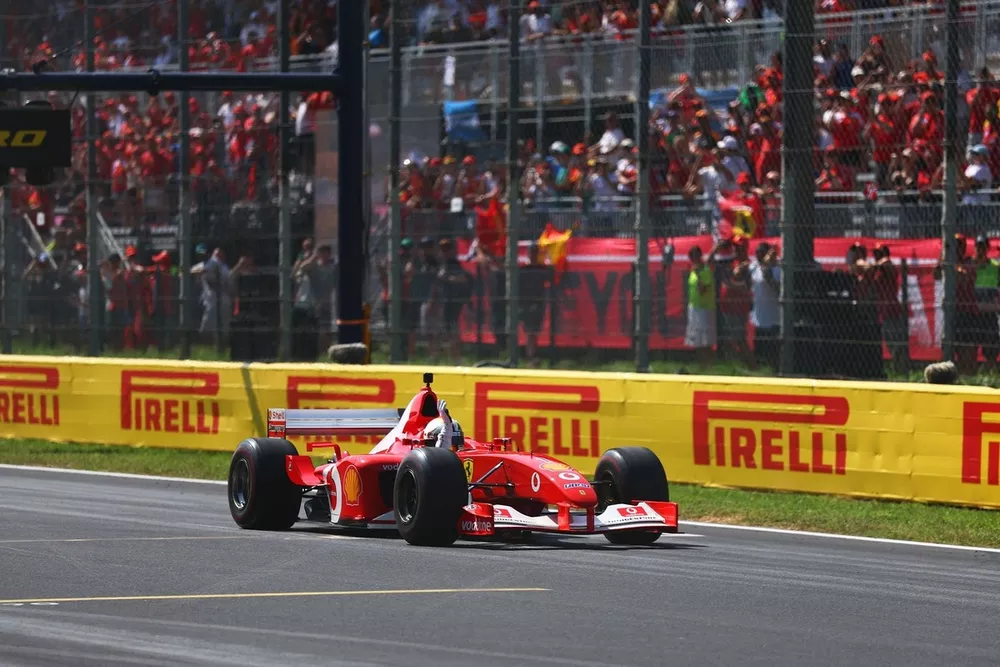
Sebastian Vettel believes Formula 1 can combine the excitement of its historic cars with modern sustainability after driving Michael Schumacher’s Ferrari F2002 at Monza.
Vettel sees a future for both performance and sustainability
Sebastian Vettel has offered his view on the F1 2026 regulations after returning to the track in one of Formula 1’s most iconic cars.
The four-time world champion drove Michael Schumacher’s Ferrari F2002 at Monza, bringing a 3.0-liter V10 back to one of the sport’s most historic circuits.
The experience gave Vettel a direct connection with the past. It also made him think about the future of Formula 1.
Vettel has never hidden his passion for older F1 cars. He was also critical of the turbo-hybrid era when it arrived in 2014, particularly because of the quieter engine sound.
In 2019, a hybrid failure during the Russian Grand Prix even led Vettel to call for the return of V12 engines over team radio.
However, his environmental views have developed alongside his passion for classic racing.
Vettel now believes that sustainability and driving excitement do not have to be opposing ideas. He sees modern technology as a way to combine both sides of Formula 1.

Vettel described the experience of driving the F2002 as especially meaningful.
The Ferrari was the car Schumacher used during his dominant 2002 championship season. Schumacher finished on the podium in all 17 races that year, an achievement that remains unmatched.
For Vettel, the car represents much more than an old racing machine.
He considers the F2002 a symbol of what Formula 1 represented during that period. It combined extreme performance, engineering precision and technological innovation.
At the same time, Vettel recognises that today’s cars represent the technological priorities of their own era.
The difference is not necessarily about which generation is better. Instead, Vettel believes Formula 1 should learn from its past while continuing to develop for the future.
That is why the 2026 regulations interest him.
Vettel does not agree with everything in F1 2026
Vettel has made clear that he does not support every aspect of the current regulations.
From a driving perspective, the former Ferrari driver believes there are elements he would change. However, he does not see that as a reason to reject the direction toward greater sustainability.
The German believes Formula 1 has enough technology to find a better balance.
“One thing does not have to exclude the other,” Vettel explained. His idea is to combine the elements that fans love with solutions that reduce the environmental impact of motorsport.
That philosophy has been part of his public position for years.
Vettel has repeatedly supported synthetic fuels and sustainable fuel technology. He sees them as one possible way to preserve internal-combustion engines while reducing their environmental impact.

The F2002 demonstration also provided a practical example of that idea.
Vettel’s run was completed using fuel made with advanced sustainable components, including molecules produced from renewable sources such as bio-waste and agricultural residues.
That allowed an early-2000s V10 engine to run with modern fuel technology.
The significance was clear.
A historic Formula 1 engine did not necessarily need to remain locked in the past. Modern fuel technology could help bring it back to the circuit while maintaining a different environmental approach.
For Vettel, that opens an interesting possibility for future motorsport regulations.
He believes sustainable fuels could help preserve some of the characteristics enthusiasts associate with traditional racing engines.
Sustainable fuels could keep the combustion engine relevant
Vettel sees sustainable fuels as an important part of motorsport’s future.
The former champion believes the technology has potential beyond Formula 1. It could also influence other racing categories and demonstrate how combustion engines might continue evolving.
This is especially relevant because Formula 1 is already looking toward future regulations that could change the balance between electric and combustion power.
Vettel’s position is therefore not simply a defence of V10 engines.
Instead, he wants Formula 1 to combine its heritage with new technology.

That philosophy also explains why Vettel believes historic demonstrations can have a purpose beyond nostalgia.
The F2002 represents one of Formula 1’s most important technical periods. The 2026 cars represent another.
Both generations are products of their own technological priorities, and Vettel believes the sport can take valuable lessons from each.
The German also sees Formula 1 as a platform with significant global influence. Because of that reach, he believes the championship can help promote ideas that extend beyond racing.
His goal is not simply to bring back older engines.
Instead, Vettel wants future regulations to preserve the things that make Formula 1 exciting while continuing to address sustainability.
The F2002 demonstration at Monza made that contrast especially visible. A legendary V10 returned to the circuit, but it was powered by modern sustainable fuel technology.
That combination reflects Vettel’s broader view of the sport.
Formula 1 does not necessarily have to choose between its past and its future.
For Vettel, the challenge is finding a way to combine performance, emotion and responsibility in the same technical package.








-

 NOW TRENDING2 months ago
Aston Martin DBX Becomes Harry Da Souza’s Ride in MobLand
-
 TEST DRIVES2 months ago
2026 Maserati GranTurismo Trofeo Review: Miami
-
 INTELLIGENT MOBILITY2 months ago
Tesla Cybercab Navigation Problem Hits Austin Robotaxis
-
 INTELLIGENT MOBILITY2 months ago
Tesla Cybercab Cannot Be Charged at Home—Here’s Why
-
 INTELLIGENT MOBILITY2 months ago
2027 Nissan Rogue Hybrid: e-POWER Comes to America
-
 TEST DRIVES2 months ago
2026 Maserati GranTurismo Coupe
-
 Formula12 months ago
Cadillac F1 2026 Faces an Eight-Race Logistics Challenge
-

 NOW TRENDING2 months ago
2027 Lexus LS Gets Another Update, But Not in America