
Formula1
Oscar Piastri Says F1 Qualifying Is Being Decided by Computers


Oscar Piastri believes Formula 1 qualifying is being shaped more by power unit software than driver performance, especially under the 2026 regulations.
The Oscar Piastri F1 qualifying debate took center stage after the Belgian Grand Prix, where the McLaren driver criticized the growing influence of power unit software on qualifying performance. According to Piastri, modern Formula 1 cars rely so heavily on automated energy management that drivers often have little control over the final result.
McLaren Team Principal Andrea Stella supported those concerns, explaining that the new-generation power units continuously learn and adapt throughout a lap, making performance increasingly dependent on software behavior rather than driver input.

Oscar Piastri believes software is playing a bigger role in Formula 1 qualifying.
Power Unit Software Creates Unpredictable Results
Spa-Francorchamps exposed one of the biggest challenges of the 2026 Formula 1 regulations. The circuit’s long straights and limited energy recovery zones forced teams to depend heavily on the internal combustion engine.
At the same time, the power units continuously adjusted their energy deployment using self-learning software. Even tiny changes in grip, wind direction or driving inputs could alter how the system managed electrical energy later in the lap.
As a result, two identical cars could produce very different straight-line performance despite using the same setup.
McLaren says the new power units continuously adapt their energy management.
Piastri Says Drivers Have Lost Too Much Control
Piastri admitted the situation is frustrating because qualifying results can now depend on factors beyond the driver’s control.
The Australian also pointed out that George Russell experienced similar issues during the Belgian Grand Prix weekend. Several drivers have reportedly encountered the same problem throughout the 2026 season.
According to Piastri, it is difficult to accept losing valuable time when every corner feels competitive, yet software behavior ultimately determines the final lap time.
Lando Norris Shares the Same Concerns
Lando Norris agreed with his teammate’s assessment. He explained that drivers can influence only a small part of the energy deployment process, while many other variables remain outside their control.
Norris added that this was the first race weekend all season where he felt competitive on the straights. In previous events, he struggled with the same software-related behavior affecting the power unit.

Lando Norris says software behavior has affected performance throughout the season.
McLaren Sees No Immediate Solution
Although Formula 1 plans to adjust the balance between combustion and electric power over the next two seasons, McLaren does not expect those changes to solve the issue.
Instead, the team believes the problem lies in how the power units are calibrated and how their self-learning systems manage energy during a lap. Until those systems improve, software will continue to play a major role in determining qualifying performance.


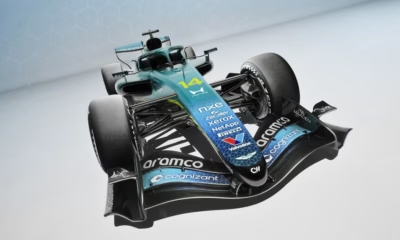






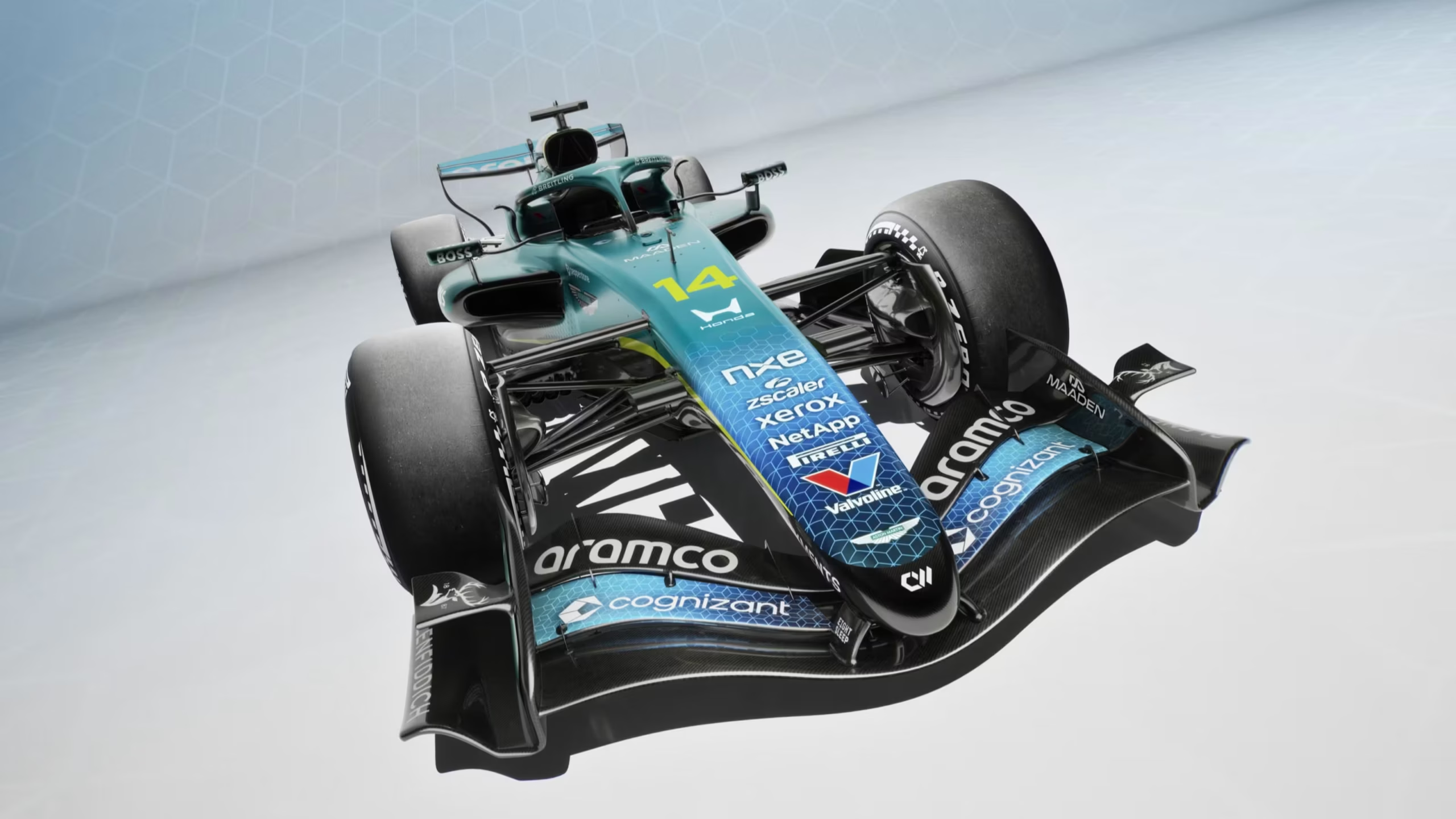
Aston Martin will showcase a special AMR26 livery at the United States Grand Prix, celebrating five years of its partnership with Cognizant.
Aston Martin is preparing a special appearance for the 2026 United States Grand Prix in Austin, where its AMR26 will mark five years of collaboration with Cognizant. The partnership began in 2021 and remains part of the team’s identity in Formula One.
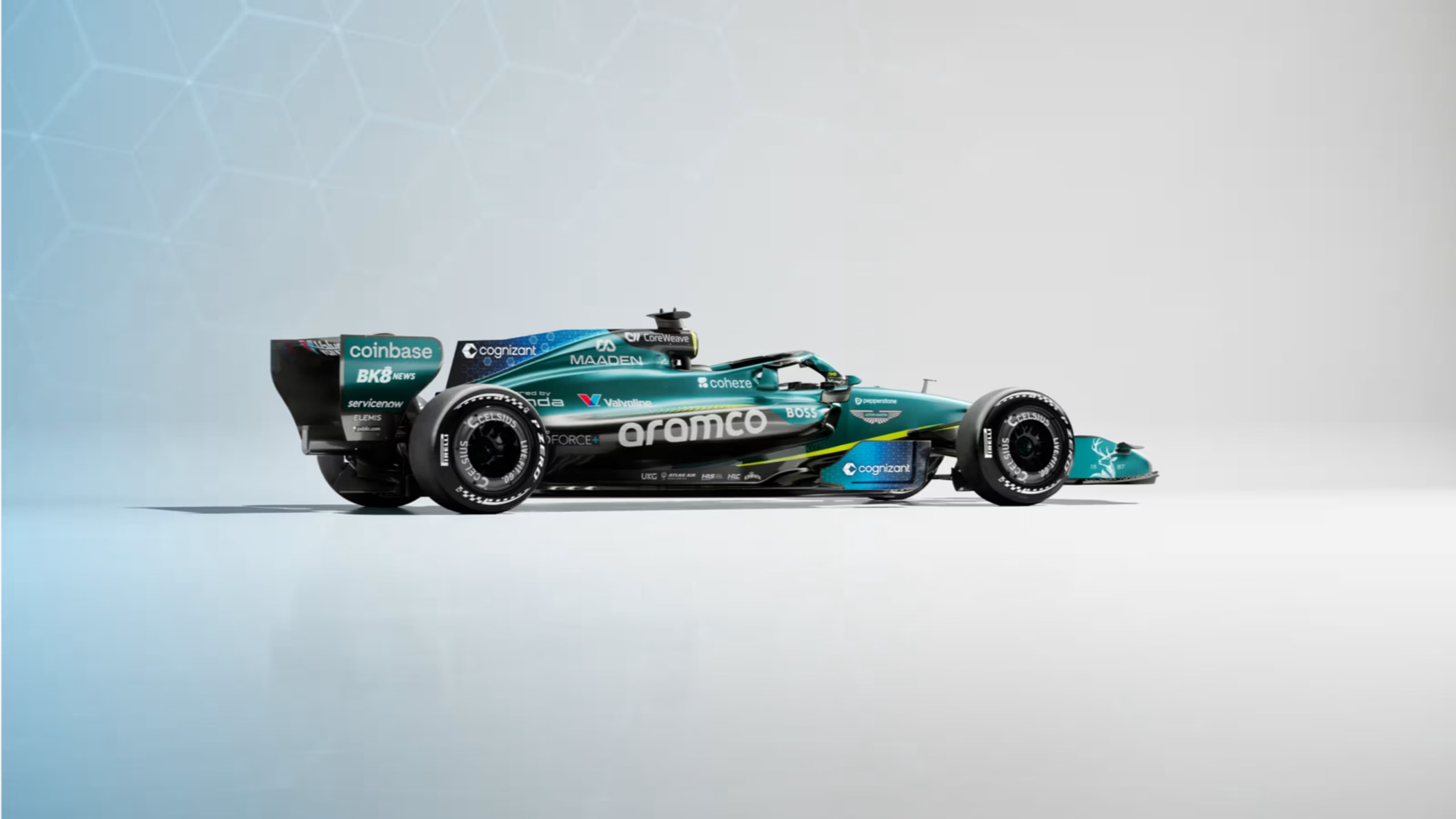
The AMR26 will carry a special design for the United States Grand Prix weekend.
Aston Martin Marks Five Years With Cognizant
The Austin Grand Prix provides the setting for Aston Martin to recognize the milestone. Since the partnership began in 2021, Cognizant has maintained a prominent association with the team’s Formula One program.
The anniversary also comes as the relationship expands into new areas of technology. Earlier in 2026, Cognizant became Aston Martin’s Global AI Services Partner, strengthening the technological dimension of the collaboration.
Technology and Formula One
Modern Formula One relies on data analysis, software and advanced computing to support decisions throughout a race weekend. Teams use these tools to evaluate performance, develop strategies and improve their operations.
Aston Martin’s expanded relationship with Cognizant reflects the growing role of artificial intelligence and digital technology in motorsport. However, the partnership’s announcement alone does not establish a specific performance gain for the AMR26.
Data analysis and digital tools are important parts of modern Formula One operations.
Austin Provides the Backdrop
The United States Grand Prix gives Aston Martin an opportunity to highlight the anniversary in front of American fans. The special livery will bring the partnership into focus during the Austin race weekend.
The design also connects the team’s on-track presence with a collaboration that has evolved since 2021. With Cognizant’s expanded role in artificial intelligence, the anniversary reflects both the history of the relationship and its continuing technological focus.
Aston Martin’s special AMR26 appearance will be one of the team’s key visual elements at the United States Grand Prix. Further details about the livery’s specific design features should be confirmed through the team’s official announcement.

Cadillac has confirmed its IMSA and WEC driver rosters for the 2027 endurance racing season.
Cadillac Racing has announced its driver lineup for the 2027 season, outlining its plans for the IMSA WeatherTech SportsCar Championship and the FIA World Endurance Championship (WEC). The manufacturer will build on its successful 2026 IMSA campaign while introducing changes to its Hypercar program.
The announcement comes with two rounds remaining in the current WEC season. Cadillac will continue competing with its V-Series.R prototype, relying on established driver partnerships and additional endurance-racing experience to prepare for another demanding year.
Cadillac Confirms Three IMSA GTP Lineups
Cadillac will enter its fifth season in IMSA GTP competition with three V-Series.R programs. The driver combinations retain experienced full-season pairings while adding specialist drivers for endurance events.
Cadillac Whelen: No. 31
Jack Aitken and Frederik Vesti will compete throughout the season, with Earl Bamber joining for endurance races. The fourth driver for the Rolex 24 at Daytona has yet to be announced.

The No. 31 Cadillac Whelen will retain Jack Aitken and add Frederik Vesti as its full-season pairing for 2027.
Cadillac Wayne Taylor Racing: No. 10
Ricky Taylor and Filipe Albuquerque will form the full-season pairing, with Will Stevens supporting the team during endurance events. The combination gives the No. 10 entry continuity while adding experience for longer races.
Cadillac Wayne Taylor Racing: No. 40
Jordan Taylor and Louis Deletraz will drive the No. 40 throughout the season, with Norman Nato joining for endurance races. Cadillac will therefore have three distinct GTP entries, each with a designated full-season combination.
Cadillac’s stated objective is to carry its 2026 championship momentum into the 2027 campaign and compete for further titles. The Rolex 24 at Daytona will be an early test of the revised lineups, particularly as the teams prepare for one of the most demanding events on the IMSA calendar.
Antonio Felix da Costa Joins Cadillac’s WEC Program
Cadillac Hertz Team JOTA will continue campaigning the V-Series.R in the WEC Hypercar class for a third year. Its announced roster for the No. 12 and No. 38 cars includes Antonio Felix da Costa, Earl Bamber, Jack Aitken, Norman Nato, Ricky Taylor and Will Stevens.

Cadillac Hertz Team JOTA will introduce Antonio Felix da Costa and Ricky Taylor as part of its 2027 driver changes.
Felix da Costa brings extensive experience across prototype and GT racing. The Portuguese driver has won the FIA World Endurance Championship and claimed a class victory at the 24 Hours of Le Mans. His previous experience with JOTA also gives him familiarity with the team’s operations.
Ricky Taylor is another addition with established ties to Cadillac. He previously raced with Cadillac Hertz Team JOTA at Circuit of the Americas earlier in 2026 while Alex Lynn recovered from surgery. Taylor has recorded 32 victories and 76 podium finishes in his IMSA career, according to the figures cited in the announcement.
The combination of Felix da Costa and Taylor adds experience and technical knowledge to Cadillac’s WEC effort. However, the announcement lists the six drivers across the two cars without specifying their individual No. 12 and No. 38 assignments. Those pairings should not be assumed until Cadillac confirms them.
Alex Lynn and Sébastien Bourdais to Leave the Team
The 2027 changes also mark the end of Alex Lynn and Sébastien Bourdais’ current chapter with Cadillac Hertz Team JOTA. Both drivers will depart the team at the end of the 2026 season.
Cadillac credited the pair with important contributions to the development of its endurance-racing program. Their departures represent a significant change to a lineup that has included experienced competitors in the WEC’s top Hypercar category.

Alex Lynn and Sébastien Bourdais will leave Cadillac Hertz Team JOTA at the end of the 2026 season.
Cadillac’s 2027 plans combine continuity in IMSA with a revised driver roster in the WEC. The manufacturer will aim to translate that experience into results across both championships, beginning with the Rolex 24 at Daytona and the next WEC campaign. The remaining details to watch include the fourth driver for the No. 31 at Daytona and the final allocation of drivers between the two WEC entries.
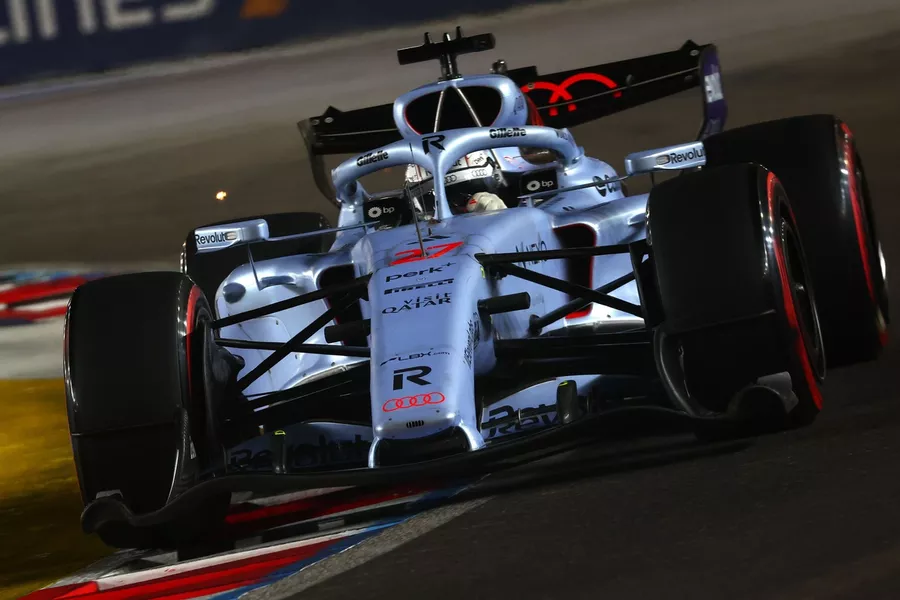
Nico Hulkenberg used racecraft and energy management to keep a faster George Russell behind in Singapore.
Nico Hulkenberg delivered one of Audi’s standout performances in Singapore by defending his position against a faster George Russell during the closing laps. The German combined precise positioning, strategic battery deployment and years of Formula 1 experience to protect a valuable result for the team.
Audi Found an Opportunity at Marina Bay
Singapore represented an important opportunity for Audi. The R26 had shown promising chassis performance throughout the season, with its aerodynamic efficiency helping compensate for weaknesses in the power unit. Although circuits with high temperatures had exposed some of those limitations, Marina Bay offered a different challenge that appeared better suited to the car’s strengths.
The circuit still features several straights where engine performance matters, but its slow corners, technical sections and limited overtaking opportunities place a premium on mechanical grip, aerodynamic balance and driver precision. Audi arrived hoping to convert that combination into valuable championship points.
The team ultimately achieved an important milestone by scoring in both Saturday’s sprint and Sunday’s Grand Prix. Hulkenberg played a central role in that success, making up positions at the start and then managing his race effectively despite facing rivals with different tyre strategies and stronger straight-line performance.

Nico Hulkenberg delivered a strong weekend for Audi at the Singapore Grand Prix.
Hulkenberg Made the Difference at the Start
Hulkenberg’s work began on the opening lap. Starting outside the top 10 in both events, the German needed to make immediate progress to put himself in contention for points.
During the wet sprint, he gained two positions by overtaking around the outside of Turn 5. In Sunday’s Grand Prix, he found space to pass Arvid Lindblad off the line before attacking Pierre Gasly at Turn 3. That move proved particularly important because both drivers had started on medium tyres, the same compound Audi selected for Hulkenberg.
The medium tyre initially left him at a disadvantage against competitors running softs. The softer compound offered additional grip throughout the weekend, helping some rivals find more pace in the opening phase of the race.
Nevertheless, Hulkenberg maintained a narrow gap to Liam Lawson while building a similar margin over Gasly. That balance allowed him to protect his position without compromising his entire race in an attempt to create a larger advantage.
Audi Reacted to Alpine’s Pit Stop Strategy
As the race progressed, Alpine needed a different approach to recover ground. The team became one of the first midfield contenders to stop in an attempt to gain an advantage through an undercut, hoping Gasly could emerge ahead after Hulkenberg made his own pit stop.
Audi responded by bringing Hulkenberg into the pits on the following lap. Although the stop was not particularly quick, it proved sufficient to keep him ahead of Gasly. The Alpine driver then lost further time in traffic behind Carlos Sainz and Isack Hadjar.
The sequence was significant because Singapore makes it difficult to recover positions once a driver becomes trapped behind another car. Track position, clean air and the timing of pit stops can therefore matter as much as outright pace.
By retaining his position, Hulkenberg put himself in a strong position for the closing stages. His remaining challenge was even tougher: keeping Russell behind despite the Mercedes driver’s apparent speed advantage.

Hulkenberg had to use every available advantage to defend against Russell’s faster Mercedes.
Race Intelligence Kept Russell Behind
The decisive phase came during the final laps, when Russell closed in on Hulkenberg. The Mercedes driver appeared to have enough pace to attack, but overtaking around Marina Bay remained difficult.
Allan McNish, Audi’s competition director, praised the German’s performance and highlighted his experience and tactical awareness.
McNish explained that Hulkenberg had to manage roughly 10 laps with Russell behind him. Although the Mercedes was faster, the Audi driver repeatedly found pace in the right parts of the circuit and defended without overcommitting.
That distinction was crucial. An overly aggressive defense could have compromised Hulkenberg’s exit speed, allowing Russell to gain the momentum needed to attempt a pass on the next straight. Instead, the German focused on leaving each corner in a position that made an attack difficult.
Russell came particularly close in the braking zone for Turn 7. However, Hulkenberg repeatedly emerged from the slower corners with enough of an advantage to protect the inside line under braking. That forced Russell toward the outside and limited his options.
Rather than trying to match the Mercedes at every point on the circuit, Hulkenberg concentrated on the sections where positioning mattered most. His defense became a calculated exercise in controlling the available space and preserving just enough speed to stay ahead.
Battery Deployment and a Helpful Tow
Hulkenberg’s defensive performance was not based on positioning alone. Energy management also played a significant role, as he strategically used electrical power to maximize his speed on the straights.
Instead of deploying energy uniformly around the lap, the German could sacrifice performance in selected corners to retain an additional boost for the sections where it was most useful. This approach helped him defend against Russell’s attacks while making the most of the Audi’s available power.
An additional benefit came from his position relative to Lawson. As the race developed, Hulkenberg moved closer to the car ahead and gained assistance from a tow on the straights. That aerodynamic benefit helped increase his speed and made it harder for Russell to complete an overtake.

Careful energy deployment and a tow helped Audi defend its track position in the closing stages.
Hulkenberg explained that he initially did not expect to keep Russell behind. However, he found a better rhythm as the stint progressed and reduced the gap to Lawson. The indirect tow then provided a further advantage on the straights.
Russell’s challenge was complicated by the need to manage his own car. With the battle continuing over several laps, he had to balance the pursuit with keeping his brakes within an effective operating range. That limited the extent to which he could attack continuously.
Why Hulkenberg’s Defense Matters for Audi
The Singapore performance showed how Audi can make the most of its strengths even when its car lacks the outright pace of a rival. The R26’s chassis characteristics, Hulkenberg’s experience and the team’s strategic response combined to protect a result that might otherwise have slipped away.
The weekend also highlighted the importance of energy management under the current technical regulations. Drivers must decide where to deploy electrical power, when to preserve it and how to coordinate those decisions with their positioning on track. In a circuit where overtaking opportunities are limited, those choices can determine the outcome of a battle.
For Audi, scoring in both the sprint and the Grand Prix represented a significant step forward. Hulkenberg’s defense against Russell was an especially clear example of how racecraft can narrow a performance gap without eliminating it.
The German did not need to make his Audi faster than the Mercedes everywhere. He needed to understand where Russell could attack, preserve enough energy to respond and exit the right corners with the advantage required to protect his position. That combination of precision and strategic thinking turned a difficult defensive assignment into one of Audi’s defining moments of the Singapore weekend.
-
 NOW TRENDING2 months ago
Tesla Cybercab Gets September 3 Austin Launch Date
-

 TEST DRIVES2 months ago
2025 Ford Bronco Sport Badlands: The Adventure SUV You Can Drive Every Day
-
 TEST DRIVES2 months ago
2026 Toyota GR Supra MkV Final Edition
-
 NOW TRENDING1 month ago
Aston Martin DBX Becomes Harry Da Souza’s Ride in MobLand
-
 NOW TRENDING2 months ago
Tesla Cybercab Puts U.S. Regulations to the Test
-
 Formula12 months ago
FIA Reveals Second ADUO Results With Red Bull-Ford Still on Top
-

 NOW TRENDING2 months ago
2027 Hyundai Tucson Hybrid Gets a Power Boost
-
 NOW TRENDING2 months ago
Hyundai Reports Strong Hybrid Sales in August 2026
You must be logged in to post a comment Login