
Changan formalized its return to Argentina with the presentation of the CS55 Plus PHEV, a plug-in hybrid SUV positioned by the Antelo Group as a solid alternative in the electrified segment.
The vehicle presentation took place at the National Museum of Decorative Art. The CS55 Plus PHEV proposes a minimalist style, featuring a high-strength steel body. It also boasts a low center of gravity that improves stability, comfort, and insulation. It measures 4,539 mm long, 1,865 mm wide, and 1,680 mm high. The exterior design is completed with 19-inch wheels, Full LED headlights, and an electric sunroof. Its 50-liter tank, combined with the hybrid mechanics, ensures excellent autonomy.
Technology and Interior Comfort
Inside, the SUV combines a modern environment with a 10-inch digital dashboard and a 12.3-inch central screen. It includes power front seats with memory for the driver. The equipment adds a wireless charger, automatic climate control, and a Pioneer audio system. In the section of daily assistance, the vehicle offers a 360° camera with automatic recording, perimeter sensors, and voice control.

High-Performance PHEV Mechanics and Great Range
The plug-in system integrates a 1.5 gasoline engine generating 109 HP and 14.6 kgm. This is complemented by an electric motor delivering 212 HP and 33.7 kgm. Both motors are managed by the DHT transmission. The CS55 Plus PHEV accelerates from 0 to 100 km/h in 7.3 seconds. It offers Eco, Normal, and Sport driving modes. The IDD Intelligent Dual Drive technology allows operation in four configurations: 100 percent electric, hybrid, extended range, or intelligent mode. The combined range reaches 1,215 km, with the ability to travel 125 km in pure electric mode.
Safety and Launch Price
In terms of safety, the model adds six airbags, stability control, and 12 proximity sensors. It incorporates a complete ADAS package that includes Adaptive Cruise Control (ACC), Autonomous Emergency Braking (AEB), forward collision warning, lane keep assist, blind spot monitoring, traffic sign recognition, rear cross-traffic alert, and parking assist. The vehicle costs $32,000. The warranty is five years or 150,000 km for the vehicle, and eight years or 150,000 km for the battery.






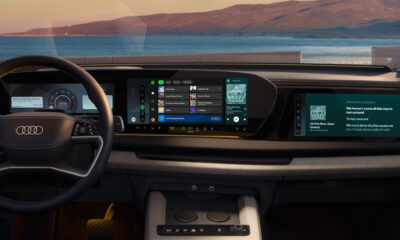





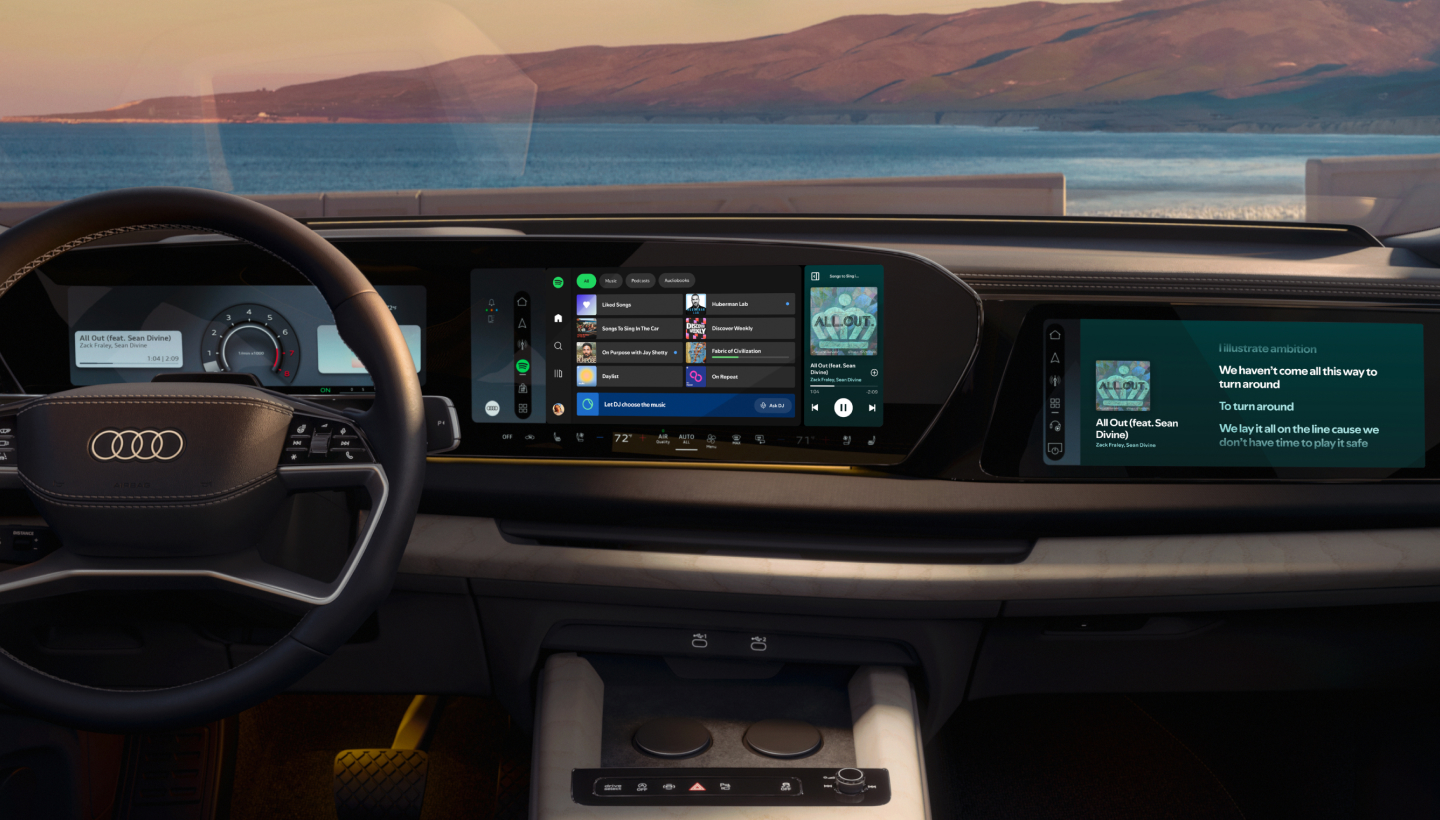
Audi is adding a native Spotify app to its infotainment system, letting drivers stream music directly while parked vehicles gain access to video podcasts, music videos and live lyrics.
Audi is making it easier to enjoy Spotify on the road by bringing the streaming service directly into its infotainment system. Launched on October 21, 2026, the new app eliminates the need to connect a smartphone just to access music, podcasts and other audio content.
The feature is available through the Audi Application Store in compatible vehicles built on the Premium Platform Electric (PPE) and Premium Platform Combustion (PPC) architectures. Supported models include the Audi A6 e-tron, Audi Q6 e-tron, 2026 Audi A5, Audi Q5 and Audi A6. The rollout is planned across 47 markets, although availability may vary by vehicle, equipment and market.
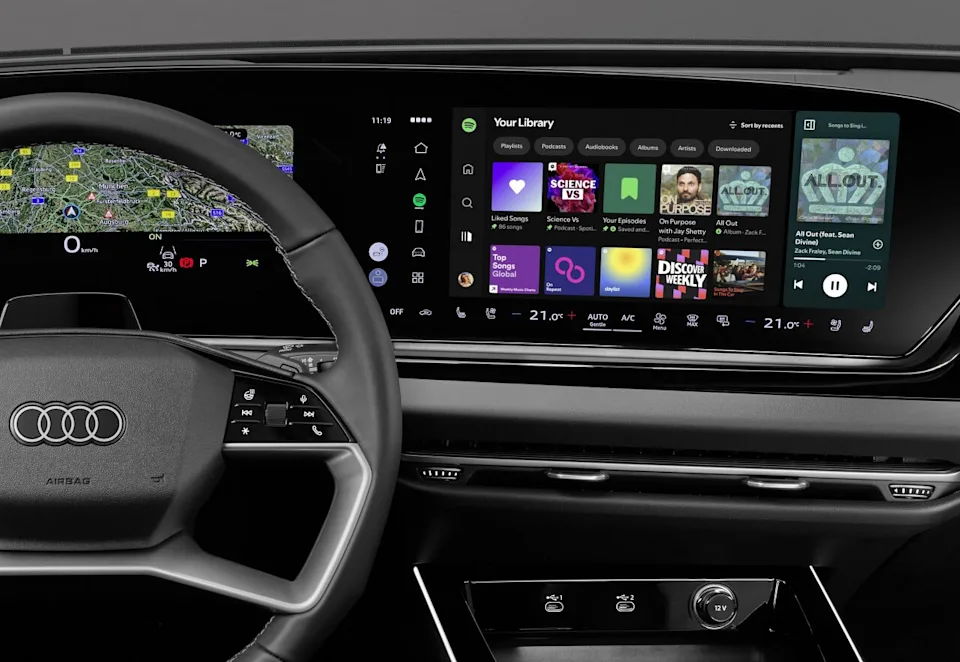
Audi integrates Spotify into its infotainment system, bringing streaming directly to the dashboard.
Spotify works directly through Audi’s infotainment system
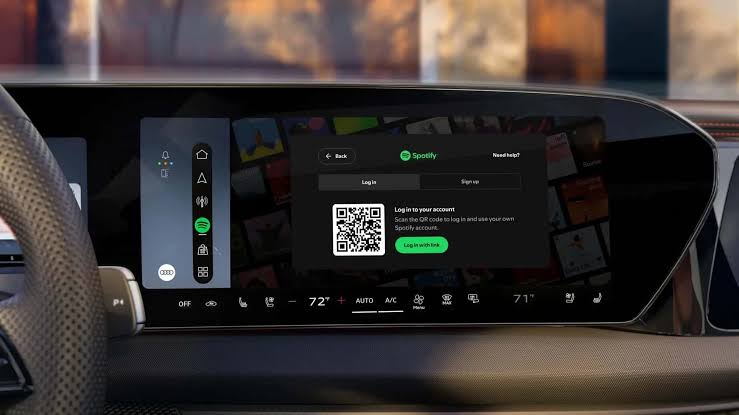
The native Spotify app lets occupants access their accounts through the car’s infotainment interface rather than relying on a connected phone. The application is free to download through the Audi Application Store, but users need a Spotify Free or Premium account to listen to content.
Once signed in, drivers can browse music and podcasts, manage playback and use supported voice controls. Audi’s voice assistant can respond to commands beginning with “Hey Audi,” while Spotify DJ provides another way to discover and play content. The available functions depend on the vehicle and its equipment.
Audi has also designed the interface around driving safety. Some account and settings functions remain unavailable while the vehicle is moving, keeping more complex interactions out of reach during a journey. The system therefore offers direct access to streaming without making every app feature available at all times.
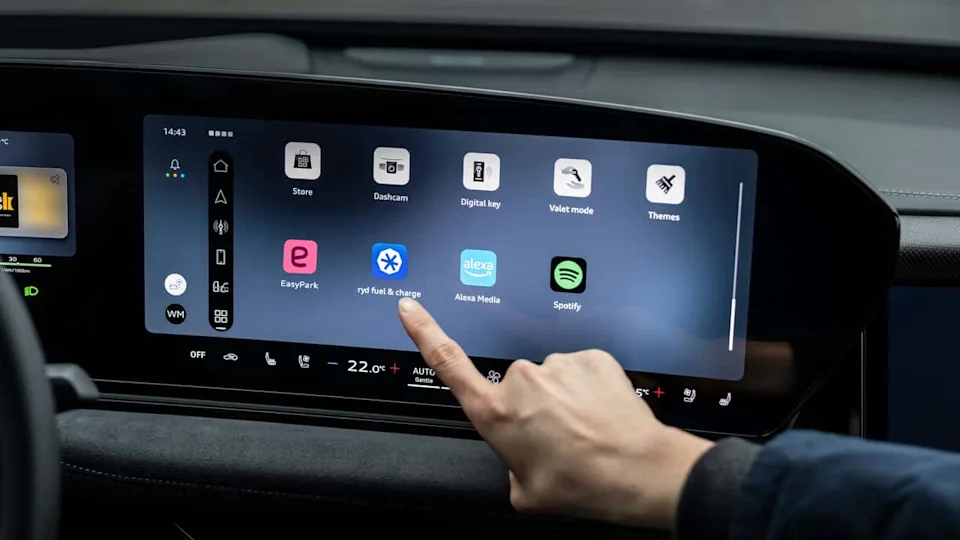
The integrated interface provides access to music and podcasts without requiring a smartphone connection.
Video podcasts and music videos are available when parked
The experience expands when the vehicle is stationary. In parked mode, compatible Audi models can display video podcasts, music videos and live lyrics on the infotainment screen. These additions turn the system into more than a conventional music player, particularly when occupants are waiting during a stop or while an electric vehicle charges.
Video playback is restricted to when the car is parked. That limitation separates entertainment features from the functions intended for use while driving, helping prevent video content from becoming a distraction behind the wheel.
The integration also includes Spotify Jam, which allows people to join a shared listening session by scanning a QR code. This feature can make it easier for passengers to contribute to the music selection without passing a phone around the cabin.
When parked, compatible vehicles can display video content and lyrics, including during an EV charging stop.
A separate passenger screen adds another option
Audi’s passenger display provides an additional way to use entertainment features in vehicles equipped with the relevant hardware. While the car is moving, a front passenger can browse content or watch supported video on the separate screen without displaying that video on the driver’s main display.
This arrangement gives passengers more freedom to choose entertainment while keeping the driver’s screen focused on the journey. However, the availability of the passenger display and its functions depends on the vehicle’s configuration.
The new Spotify integration is part of Audi’s broader effort to make its infotainment system more independent of smartphones. With music, podcasts, voice controls and selected parked-only video features available through the car itself, compatible Audi models can offer a more seamless in-car streaming experience.
What Audi drivers need to know
The native Spotify app is available through the Audi Application Store for supported vehicles using the PPE and PPC architectures. Drivers will need a Spotify account, and some features may require specific equipment or software. The planned rollout covers 47 markets, but not every function or model will necessarily be available in every market.
For Audi owners, the main change is straightforward: Spotify can run directly through the car’s infotainment system, reducing reliance on a connected phone for everyday listening. Video features remain limited to appropriate conditions, while the passenger display offers a separate entertainment option in suitably equipped vehicles.
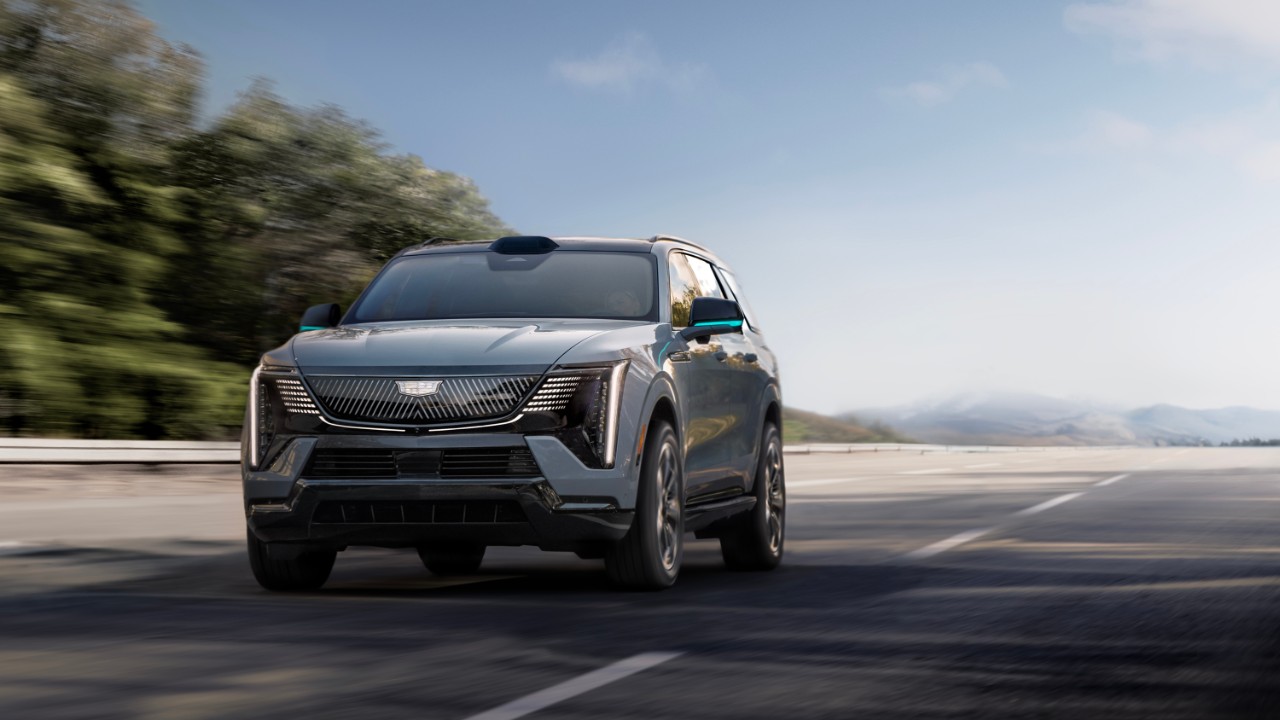
General Motors is combining artificial intelligence, a new electric vehicle platform and connected services to speed up development and bring more advanced technology to its vehicles.
General Motors is changing how it develops future vehicles. Its strategy combines AI-assisted engineering, new battery technology and centralized computing, while upgrades to OnStar aim to improve the digital experience for drivers.

AI could help GM develop future vehicles in less time.
GM aims to cut traditional vehicle development timelines in half. The company says this process typically takes four to five years. In battery engineering, it has tested more than 300,000 virtual designs using lithium manganese-rich (LMR) chemistry. One concept progressed from initial development to formal program approval in just one month.
The automaker is also preparing its fourth-generation EV platform for mainstream buyers. It will use LMR battery chemistry and redesigned drive units with 40% fewer parts, potentially simplifying manufacturing and reducing mechanical complexity.

The new platform aims to simplify EV engineering and expand electric vehicle offerings.
GM is also developing a Central Compute Unit that brings vehicle functions such as perception, propulsion, active safety and chassis controls into one computing architecture. According to the company, the system can deliver up to 40 times more computing power. GM also claims it can reduce wiring length and mass by 30% and enable cellular connectivity up to 50% faster.
The rollout is expected to begin with the 2028 Cadillac Escalade IQ. GM then plans to extend the technology to high-volume full-size SUVs and trucks, three-row crossovers and other fourth-generation EVs, including the Chevrolet Silverado.

GM plans to bring its new computing technology to multiple vehicle segments.
The strategy also covers connected services. OnStar is celebrating its 30th anniversary, with more than 12 million subscribers across 22 markets and over 20 million calls handled annually in North America. GM plans to introduce an OnStar AI Assistant in the 2027 Cadillac LYRIQ through an over-the-air software update in the coming months.
From 2027, a unified OnStar mobile app is expected to replace OnStar Guardian and the separate Buick, Cadillac, Chevrolet and GMC apps. The new app will bring vehicle management, safety recordings, live vehicle views, family connectivity and proactive safety features together in one place.

The updated OnStar experience will combine vehicle controls and connected safety features.
GM’s strategy connects AI-assisted engineering, electric vehicle development and digital services. Its success will depend on how effectively these technologies reach production vehicles and deliver practical benefits to drivers.
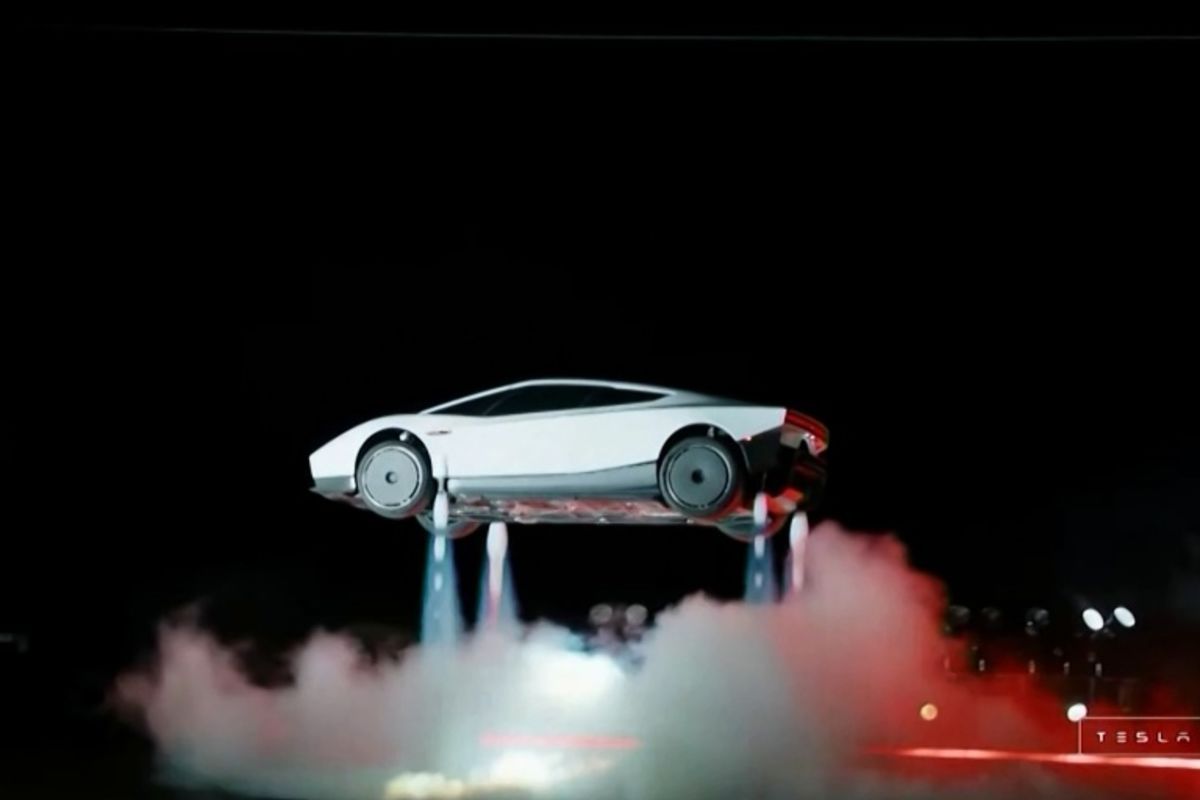
Wall Street sees a potential deal, but the price Tesla shareholders receive remains a major point of disagreement.
A possible merger between Tesla and SpaceX is becoming a major talking point on Wall Street. Investors see strategic advantages in bringing Elon Musk’s automotive and aerospace businesses closer together, particularly as both expand their investments in artificial intelligence. Yet one question remains unresolved: how much should Tesla shareholders receive if the two companies combine?
The financial stakes are enormous. Tesla has a reported market valuation of approximately $1.5 trillion, and estimates of the premium its shareholders could receive range from almost nothing to around 35%. Depending on the final terms, that difference could amount to hundreds of billions of dollars. The exchange ratio would therefore play a central role in determining how value is distributed between the two groups of shareholders.

Elon Musk’s leadership of both companies has intensified speculation about a possible merger.
The deal is not finalized. Musk has acknowledged that he faces a conflict of interest, and the committees involved have yet to agree on the terms. Some investors expect a proposal in the coming months, but a possible transaction should not be confused with an approved agreement. Any deal would need to address the valuation of each company and the interests of their respective shareholders.
Trading activity has reflected the market’s attention. Tesla shares rose more than 3% on Wednesday, while SpaceX gained 11%. If the SpaceX increase holds, it would add approximately $210 billion to its market capitalization. These movements show how strongly expectations about a potential transaction can influence investor sentiment, even before the companies establish a final structure.
Why a merger could make strategic sense
Tesla and SpaceX are developing businesses with increasingly overlapping interests in artificial intelligence, computing and advanced engineering. Their joint work on the Terafab chip plant is one example. AI-related activities reportedly account for more than half of SpaceX’s revenue, adding another connection between the companies’ technology ambitions.
Supporters argue that combining the businesses could reduce duplicated corporate expenses, simplify decision-making and improve coordination across major infrastructure projects. Shared services and financing could also help the companies manage the costs of developing advanced computing systems and other capital-intensive technologies. In theory, a combined organization could coordinate investments that currently require separate corporate planning.

The companies’ overlapping interests in AI and engineering form a central part of the merger argument.
The financial challenge, however, is considerable. Analysts have warned that SpaceX’s expanding investment in AI and space infrastructure could put pressure on free cash flow. The figures cited in the reporting point to another $35 billion to $40 billion in spending during the fourth quarter. A merger could create opportunities to coordinate funding, but it would not remove the cost of building and operating these systems.
The potential benefits also depend on whether the companies can turn their long-term plans into commercially successful products. A larger corporate structure may provide access to capital and shared resources, but it can also introduce complexity. Combining two businesses with different operations, investment cycles and financial needs would require careful planning and execution.
Ambitious technology, significant risks
The companies have already offered examples of how their technologies might intersect. Tesla’s next-generation Roadster presentation featured a vehicle equipped with SpaceX rocket-thruster technology, illustrating one possible area of collaboration. The demonstration attracted attention, but a shared technology showcase is not, by itself, evidence that a merger would produce a specific commercial advantage.

The Roadster presentation highlighted a potential connection between Tesla’s automotive engineering and SpaceX technology.
Several of the technologies underpinning the companies’ ambitious valuations remain in development or have yet to reach commercial scale. These include data centers in orbit, autonomous taxi fleets operating at scale and humanoid robots. Bringing such projects to market will require years of engineering, infrastructure investment, testing and commercial execution.
That uncertainty complicates the valuation debate. Investors must weigh the potential of future businesses against the spending required to develop them, as well as the possibility that commercial adoption could take longer than expected. A merger could strengthen coordination, but it would not guarantee that these projects meet their targets or generate the returns anticipated by investors.

Humanoid robots and AI infrastructure represent part of the longer-term technological ambitions behind the merger discussion.
Governance is another critical issue. Since Musk leads both companies, investors will want transparency around the valuation process, the proposed exchange ratio and the safeguards used to manage conflicts of interest. The premium offered to Tesla shareholders could determine how value is distributed between the two investor groups, while the final structure would also shape the risks shareholders take on.
For Wall Street, the potential Tesla-SpaceX merger presents a balance between strategic opportunity and financial uncertainty. Supporters see a way to connect AI, automotive and aerospace operations, while skeptics must consider the cost, execution challenges and fairness of the proposed terms. Until the companies disclose an agreed structure, the premium Tesla shareholders might receive (and whether a transaction will proceed) remains uncertain.
-

 TEST DRIVES2 months ago
2025 Ford Bronco Sport Badlands: The Adventure SUV You Can Drive Every Day
-

 TEST DRIVES2 months ago
2026 Toyota GR Supra MkV Final Edition
-

 NOW TRENDING1 month ago
Aston Martin DBX Becomes Harry Da Souza’s Ride in MobLand
-
 Formula12 months ago
FIA Reveals Second ADUO Results With Red Bull-Ford Still on Top
-

 NOW TRENDING2 months ago
Tesla Cybercab Puts U.S. Regulations to the Test
-
 NOW TRENDING2 months ago
2027 Hyundai Tucson Hybrid Gets a Power Boost
-
 NOW TRENDING2 months ago
Hyundai Reports Strong Hybrid Sales in August 2026
-
 NOW TRENDING2 months ago
Nissan Z Nismo Finally Gets a Manual Transmission in Japan
You must be logged in to post a comment Login