
NOW TRENDING
Hyundai and Genesis Prepare Long-Range EREVs for 2027

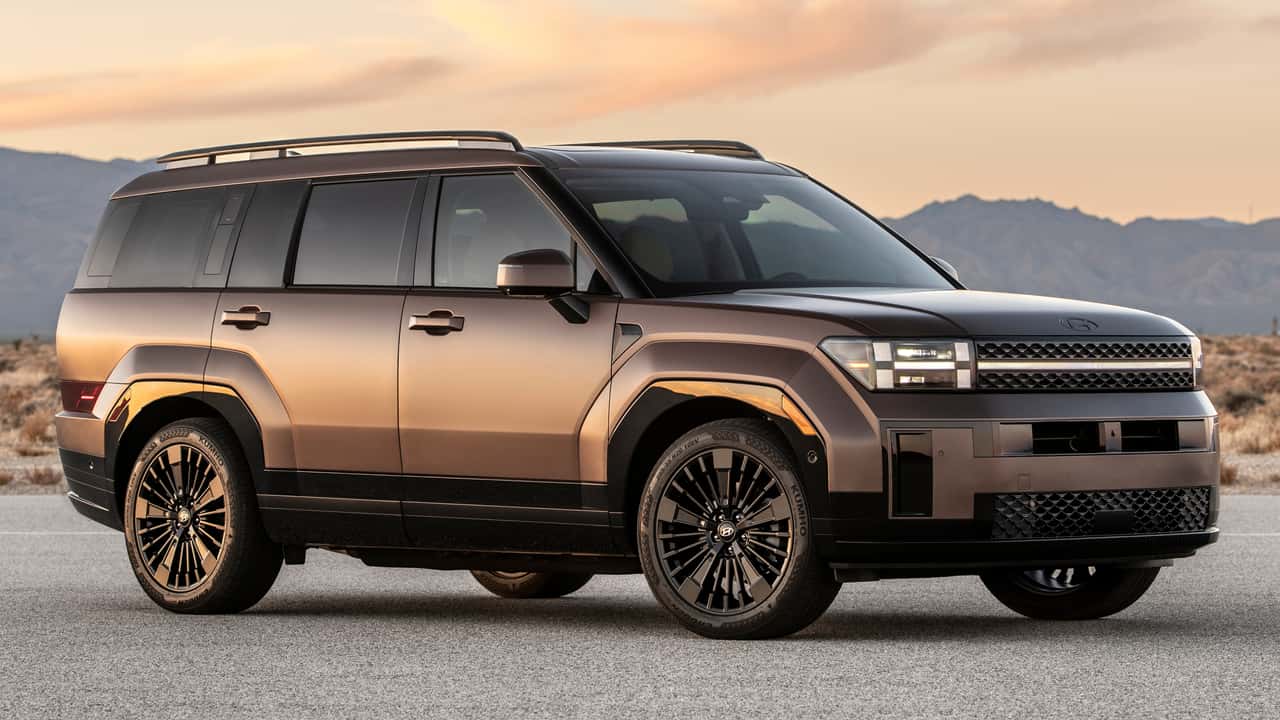
Hyundai will launch the Santa Fe EREV in the U.S. in 2027, while Genesis is developing an even longer-range extended-range electric SUV.
Hyundai Motor Group is preparing to enter the extended-range electric vehicle (EREV) market with new models from Hyundai and Genesis.
The first to arrive in the United States will be the Hyundai Santa Fe EREV, scheduled for the first half of 2027. Genesis will follow with its own extended-range electric SUV.
Santa Fe EREV promises more than 600 miles
The Santa Fe EREV will be assembled in the United States beginning early next year alongside conventional versions of the midsize SUV at Hyundai’s Alabama plant.
The headline specification is a projected driving range of more than 600 miles, or approximately 965 kilometers.
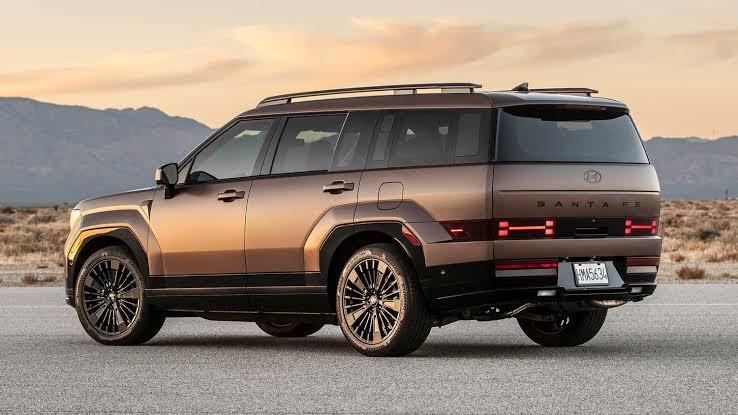
The Hyundai Santa Fe EREV is scheduled to arrive in the U.S. during the first half of 2027.
Hyundai says that figure is roughly 1.6 times the range of a conventionally powered Santa Fe.
The EREV approach uses a smaller battery than a comparable fully electric vehicle. Hyundai says its in-house-developed battery will have approximately half the capacity of the battery it would use in a full EV version.
That could reduce the weight penalty while still providing a substantial amount of electric driving capability.
Two electric motors and likely all-wheel drive
The Santa Fe EREV will use two electric motors, likely positioned at each axle to provide all-wheel drive.
Hyundai has not yet revealed the combustion engine’s exact specifications, but the system is expected to operate differently from a conventional hybrid.
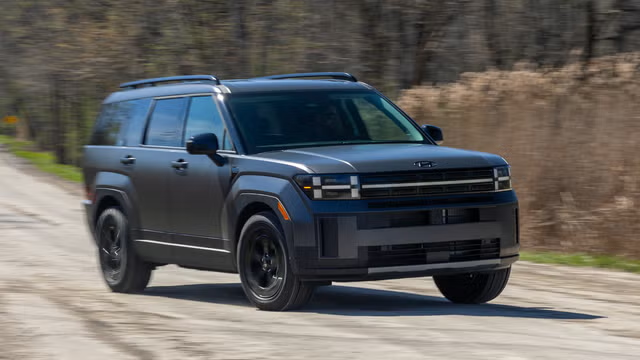
The Santa Fe EREV will use two electric motors and is expected to provide an EV-like driving experience.
In an EREV system, the gasoline engine typically acts as a generator, producing electricity to charge the battery rather than mechanically driving the wheels.
Hyundai says the dual-motor system is designed to provide EV-like acceleration and driving characteristics.
The company has not yet disclosed the battery capacity, engine output, or final performance figures.
Hyundai plans more EREV models
The technology will not be limited to the Santa Fe.
Hyundai says it intends to introduce extended-range electric vehicles across multiple vehicle segments.
The recently introduced Ioniq V will also receive an EREV version for China, while another compact crossover using the technology is planned for the Chinese market.
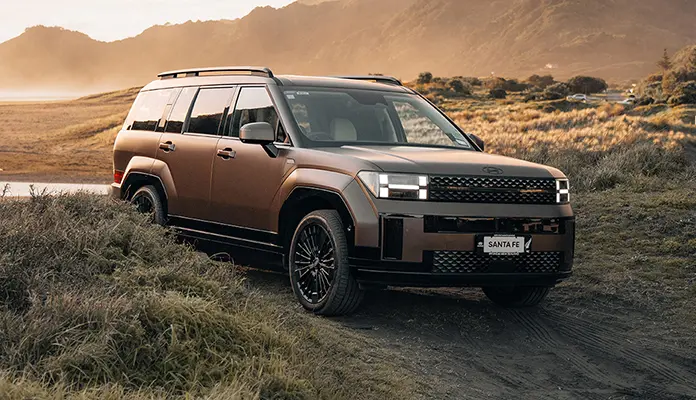
Hyundai plans to expand EREV technology beyond the Santa Fe and into other segments and markets.
The strategy gives Hyundai another option between conventional hybrids and fully electric vehicles, particularly in markets where charging infrastructure is still developing.
Genesis is preparing an even longer-range EREV
Genesis is also developing its own extended-range electric vehicle.
The first teaser suggests the model will be based on the GV80, following the luxury brand’s recent introduction of its first conventional hybrid, the GV80 Hybrid.
Genesis is developing an EREV believed to be based on the GV80 and targeting more than 640 miles of total range.
Production is scheduled to begin early next year.
Genesis says its EREV will use an all-new high-performance battery and deliver more than 640 miles of combined range, or approximately 1,030 kilometers, from a full battery charge and a tank of fuel.
That would give the Genesis model an even greater range target than the Santa Fe EREV.
The arrival of the Hyundai EREV and Genesis extended-range EVs represents a significant expansion of Hyundai Motor Group’s electrification strategy. Rather than choosing exclusively between gasoline engines, conventional hybrids, and full EVs, the group is adding another technology aimed at combining electric driving characteristics with the flexibility of gasoline-powered energy generation.









-

 NOW TRENDING2 months ago
Aston Martin DBX Becomes Harry Da Souza’s Ride in MobLand
-
 TEST DRIVES2 months ago
2026 Maserati GranTurismo Trofeo Review: Miami
-
 INTELLIGENT MOBILITY2 months ago
Tesla Cybercab Navigation Problem Hits Austin Robotaxis
-
 INTELLIGENT MOBILITY2 months ago
2027 Nissan Rogue Hybrid: e-POWER Comes to America
-
 TEST DRIVES2 months ago
2026 Maserati GranTurismo Coupe
-
 Formula12 months ago
Cadillac F1 2026 Faces an Eight-Race Logistics Challenge
-
 NOW TRENDING2 months ago
Land Rover Defender Recall 2026: 23,677 JLR SUVs Affected
-
 NOW TRENDING2 months ago
Every 2026 Chevrolet With AWD or 4WD